We took a winter trip to the “Red Centre” – Alice Springs and surrounds, and down to Uluru and Kata Tjuta – from June 9 to 22, 2023, to see what birds we could find. If this area conjures up images of the desert in your mind, you’re not far off – it’s arid all right, but far from deserted, as we discovered.
We Need To Talk About Corvids. And Sewage Ponds.
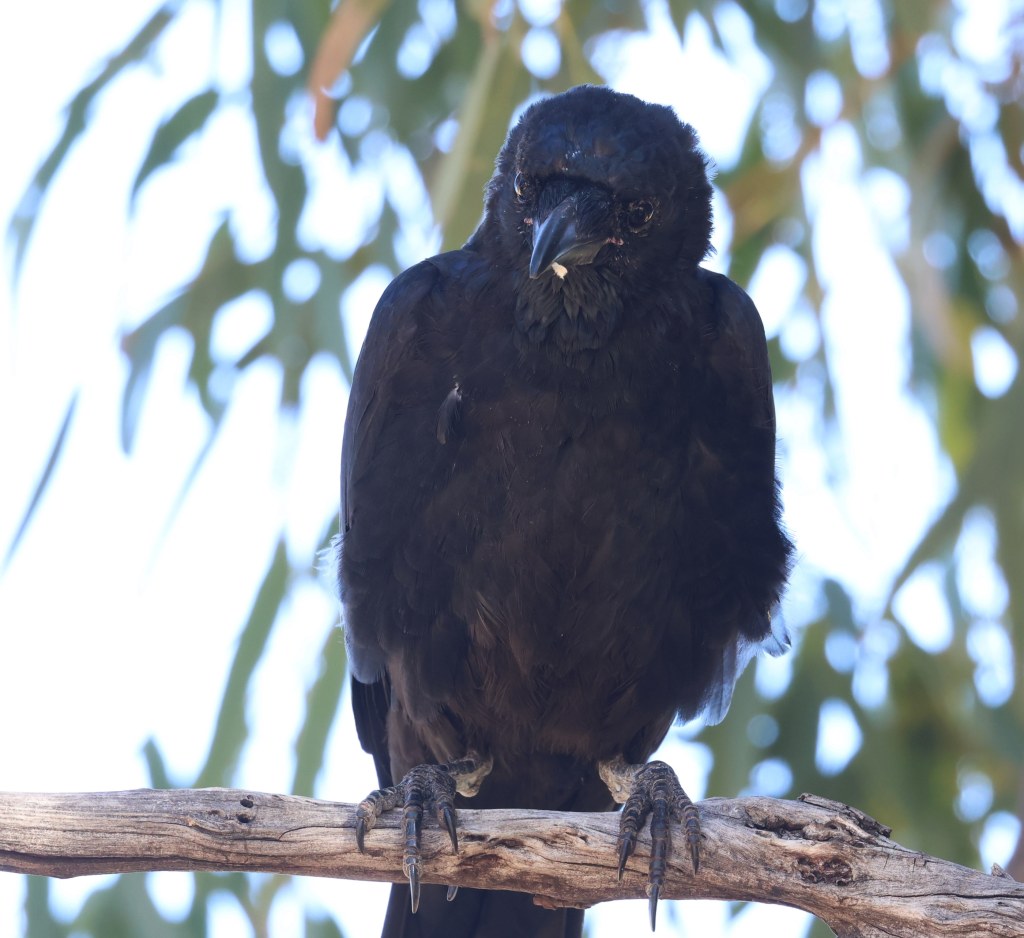
The Little Crow is one of Australia’s raven-like birds, and is difficult to tell apart from other corvids like the Torresian Crow and Australian Raven, both of which can also be found in Alice Springs. But we had it on good authority that the many, many crows at the Alice Springs Sewage Ponds were Little Crows, so we counted that we’d seen them. In general, there were a lot of crows around, no matter what type they were!
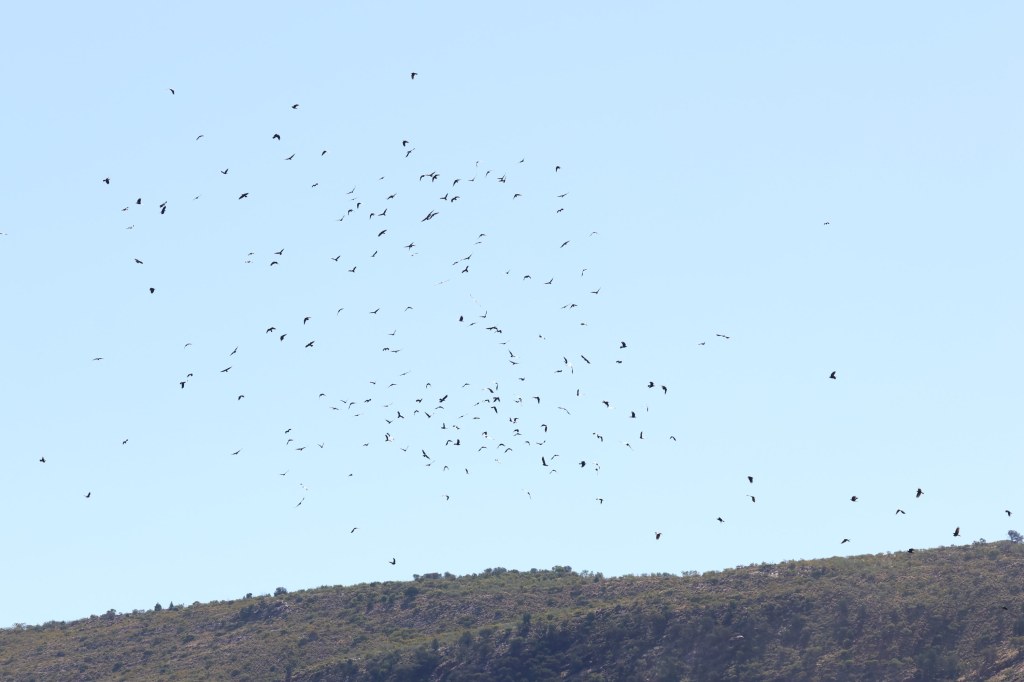
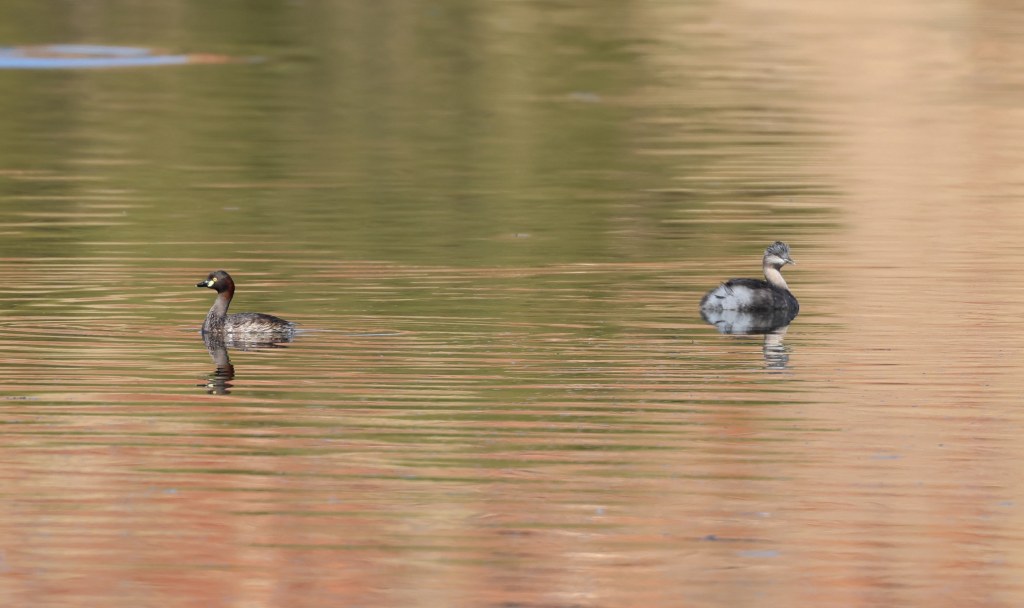
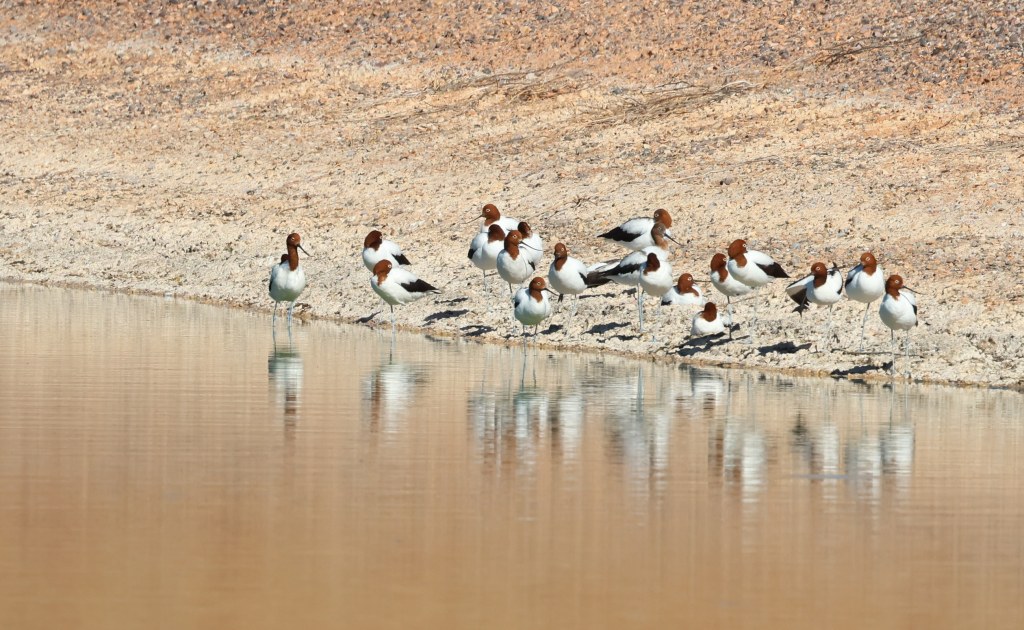
This is probably a Little Crow. But, it may not be. But it probably is.There are 215 Little Crows (wheeling above the Alice Springs Sewage Ponds) in this picture. I know, because I counted ’em!Speaking of the Alice Springs Sewage Ponds, here we found an Australasian Grebe and a Hoary-Headed Grebe, conveniently posed for us in one picture!Red-Necked Avocets, also hanging out at the Sewage Ponds
Olive Pink: A Lady, Not A Weird Colour. But Also A Botanic Garden. Named After A Lady.
Yep, Olive Pink Botanic Gardens is named after a person, because “olive pink” is a colour that might wreck your brain if you think about it too hard. It’s a nice enough place, pretty dry like everything else, but conveniently located on the edge of town – close enough for us to walk from our hotel!
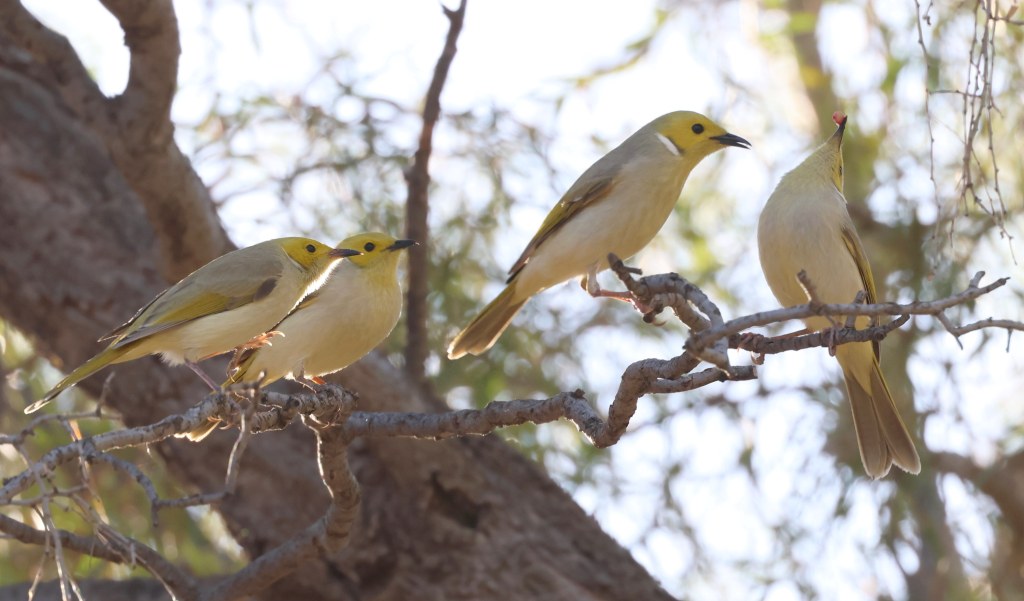
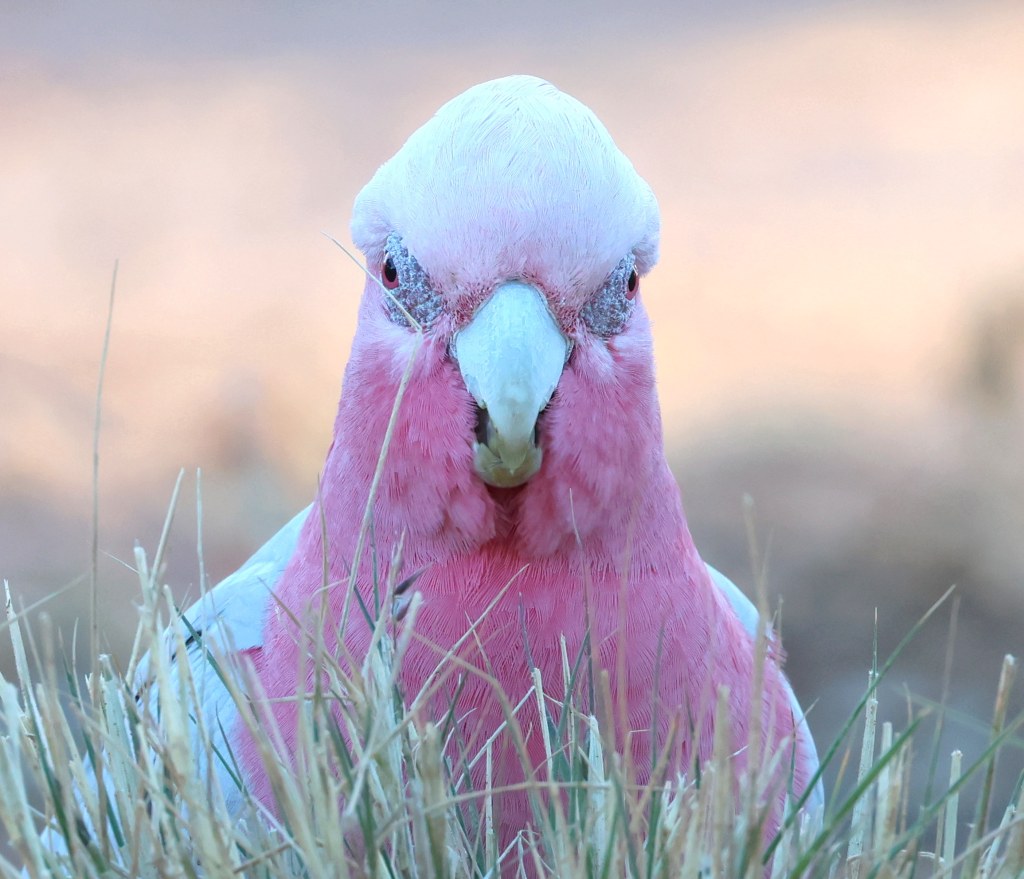
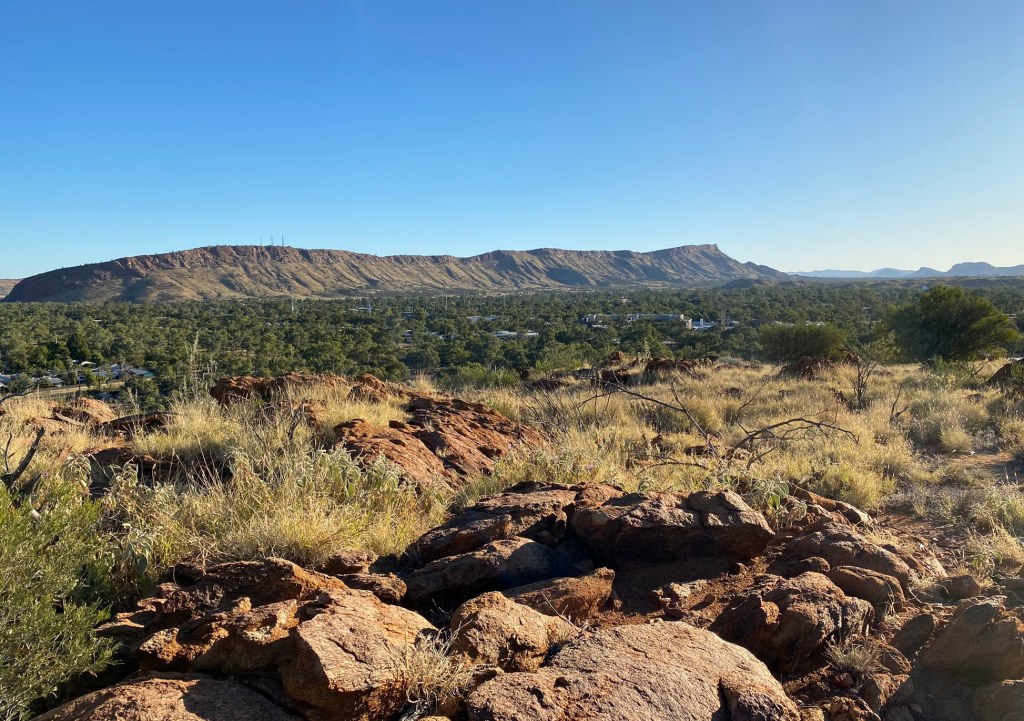
First lifer bird of the trip: Western Bowerbird!White-Plumed Honeyeaters putting the pressure on the one bird with some foodA Rock Wallaby reminds us how cute Australian marsupials can be. And furry too!Australian Ringnecks are super common throughout Alice Springs, kind of like the Rainbow Lorikeet of the region, but less rainbowySomehow I managed to get a photo of a Galah that makes it look menacing rather than jaunty and slightly sillyA view of Alice Springs and the MacDonnell Ranges from a viewpoint in Olive Pink Botanic Gardens
Desert Park: A Place That Doesn’t Sound Like It Makes Sense
The Alice Springs Desert Park is a wildlife park not far from town, and is actually pretty darned good at showcasing the birds, animals, and generally the life-in-the-desert of the Red Centre. There are talks about dingoes, a bird of prey show, plenty of walk-in aviaries, and even a very watchable – if flowery in its prose – movie about the evolution of central Australia.
The area around the road leading into the park is a very good hotspot for birds, as is the park itself (outside the aviaries) – the photos below are all wild (non-captive birds).
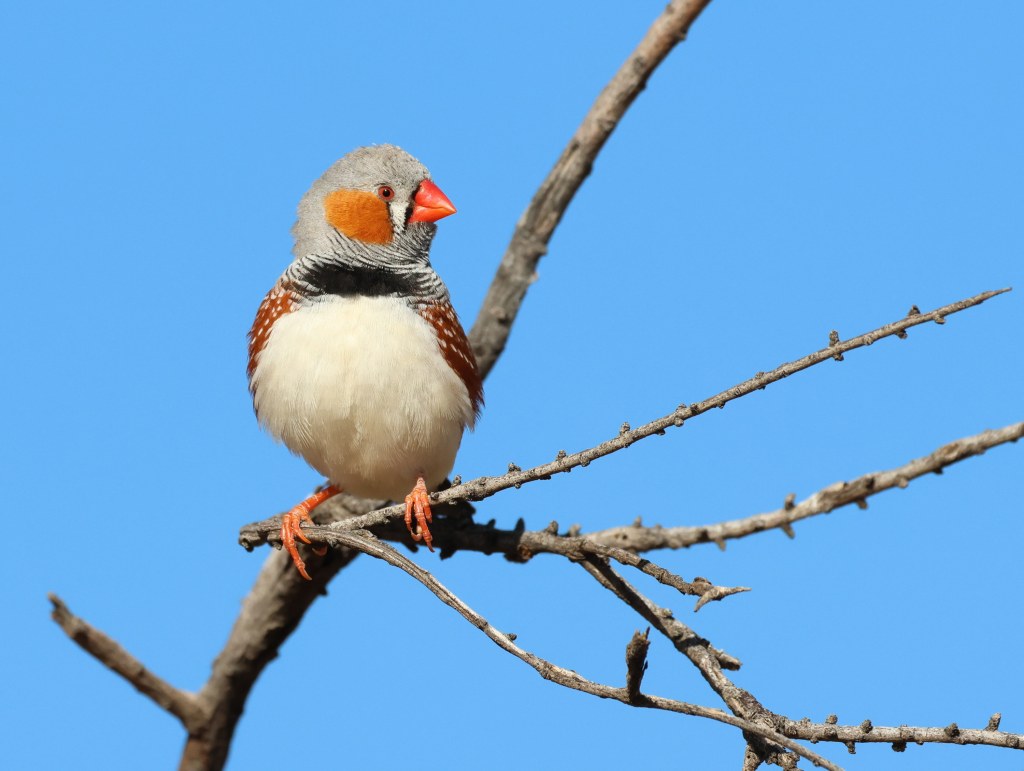
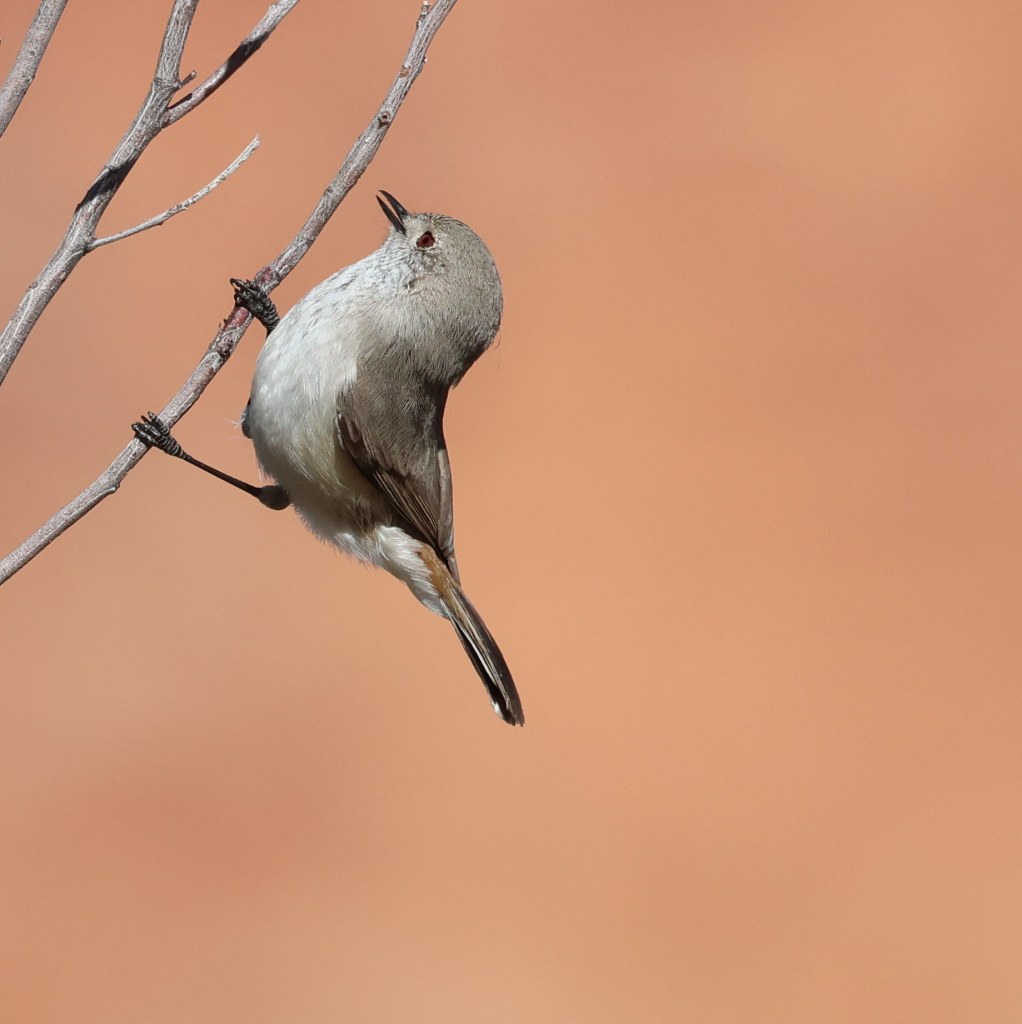
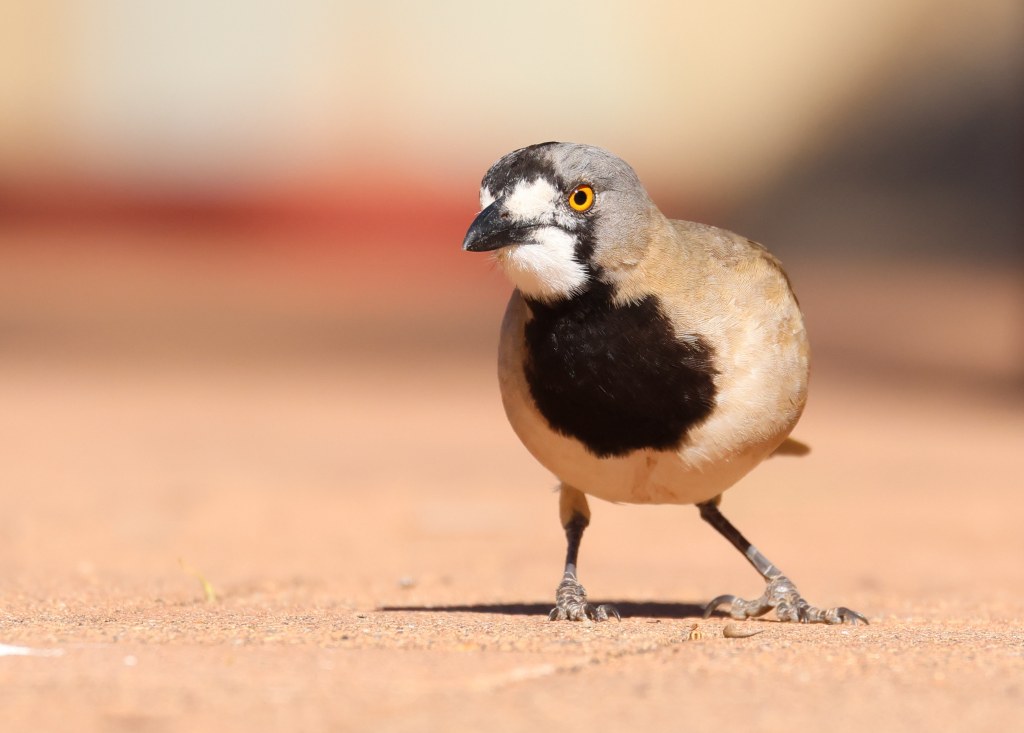
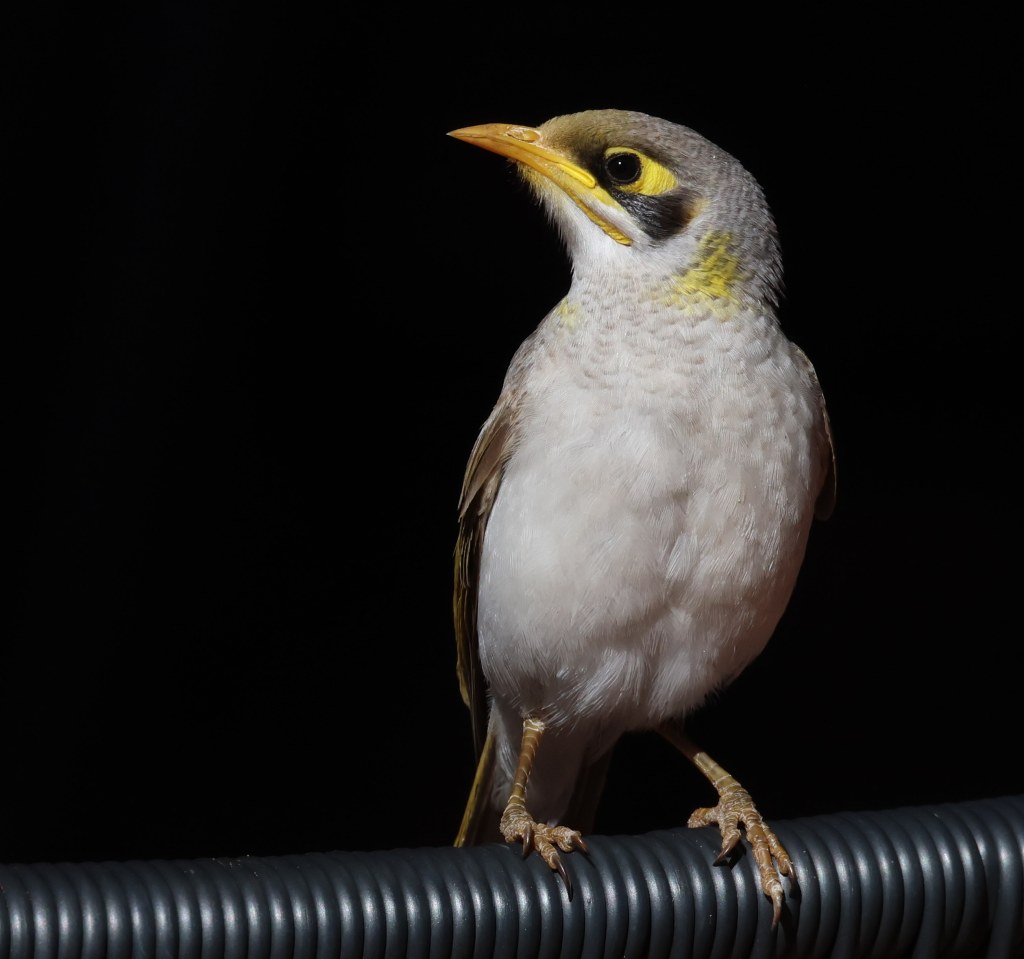
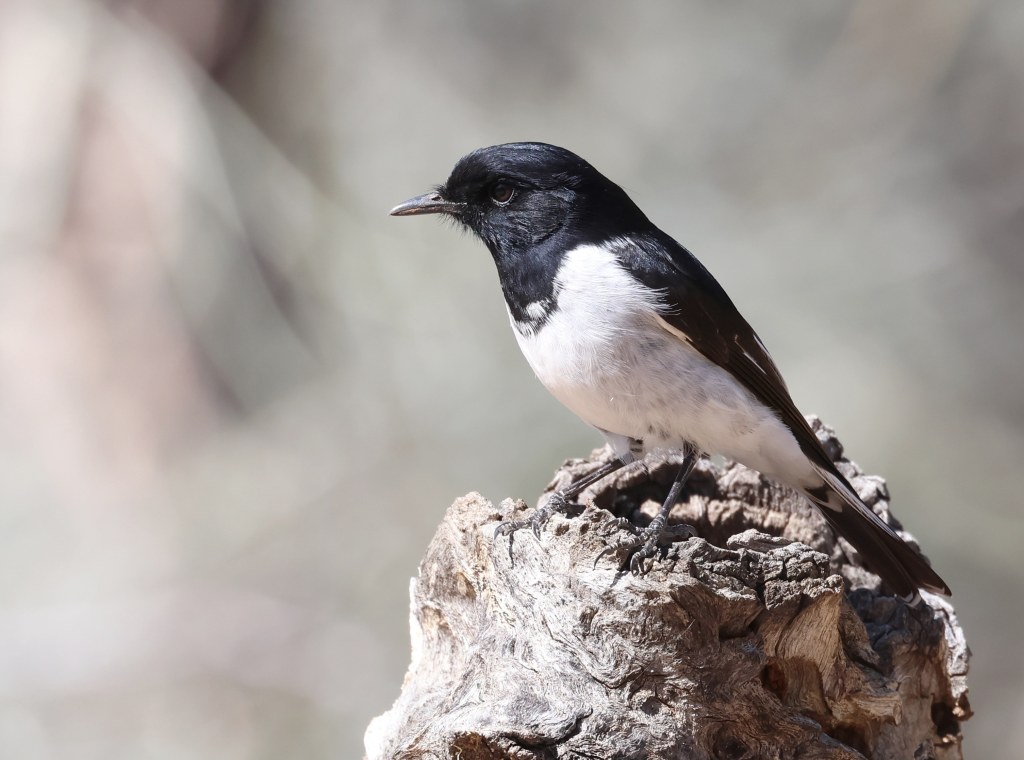
Zebra Finches are a strong candidate for being Australia’s most abundant bird, and indeed we saw them at nearly every site we visitedAn Inland Thornbill just hangin’ out on a tree branchWe watched in disbelief/awe as this Crested Bellbird pecked around on the ground just outside the main front doors to Desert Park. Though when I say “watched”, I suppose I really mean “watched through the viewfinder of my camera as I took dozens of photos and videos”.Yellow-Throated Miners are very common in and around the Alice, and along with crows fulfill a scavenger role, at least around man-made areasA male Hooded Robin, a super nice bird to be sure. Put it this way: I’m never not happy to see one.Black-Faced Woodswallows are the main woodswallow in these parts, and they are in the same taxonomic bird family as Magpies and Butcherbirds which, I dunno man, I just think is kinda interestingThe wonderful (and very elusive) Grey Honeyeater, a bird we barely dared to hope to find on the trip, but did!
Dipping In And Out Of Various Sites Along And Near The MacDonnell Ranges
The MacDonnell Ranges span to the west and east of Alice Springs, giving rise to the “West Macs” and “East Macs” as the locals say it. Both Macs feature tasty rocky scenery and have various “gaps” where the mountains briefly drop down to ground level, and often these are where there are permanent or semi-permanent waterholes. And where there’s water, there’s birds!
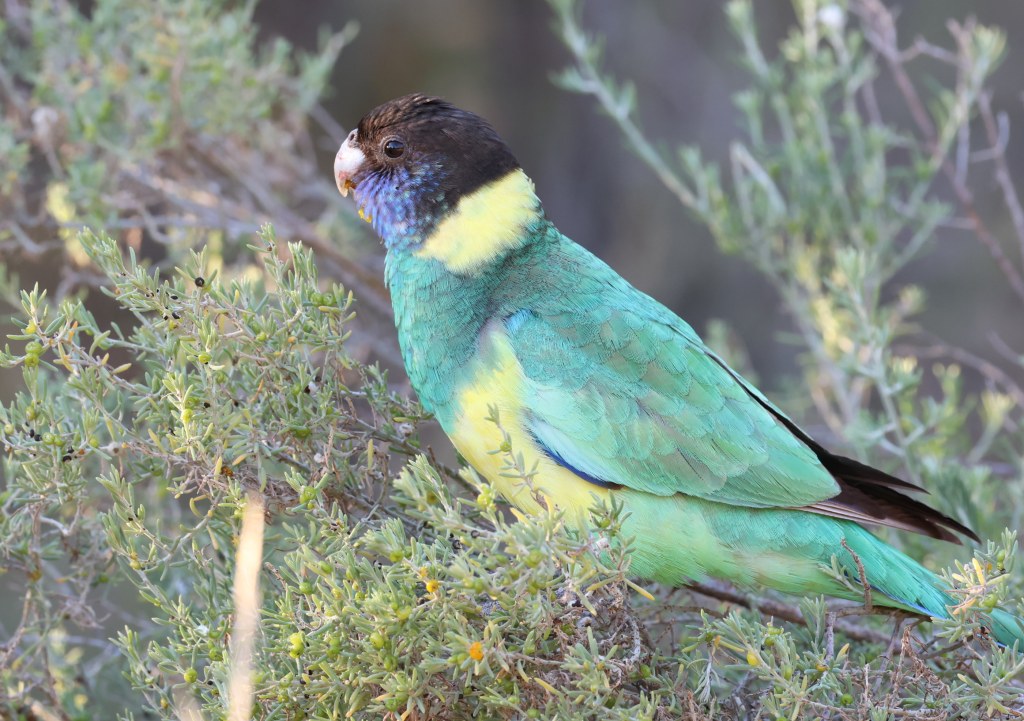
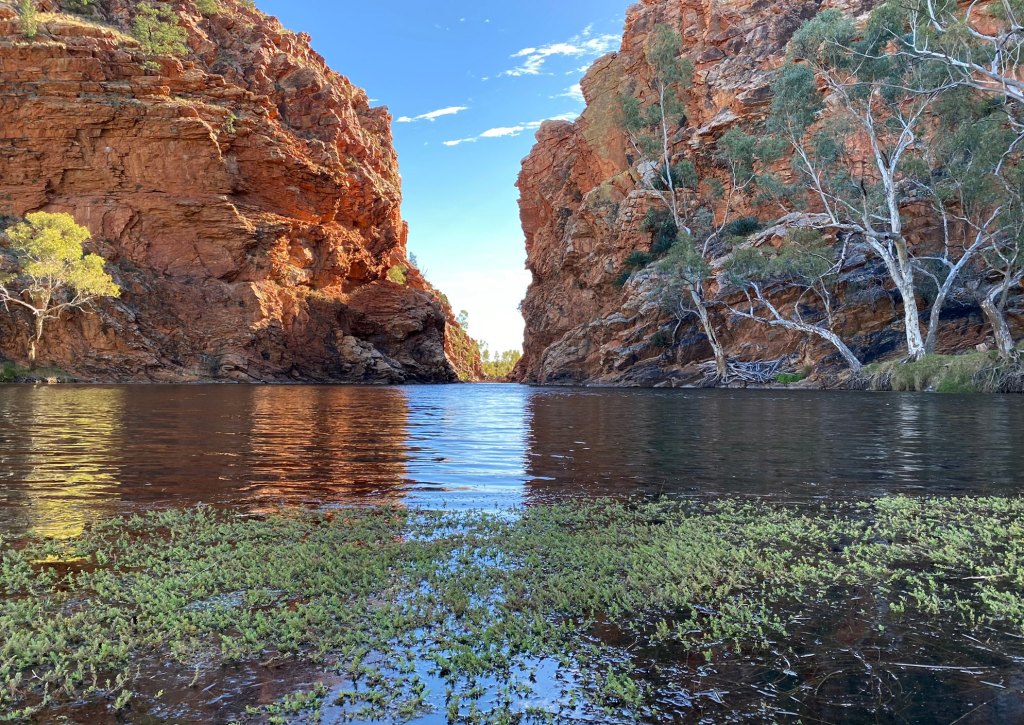
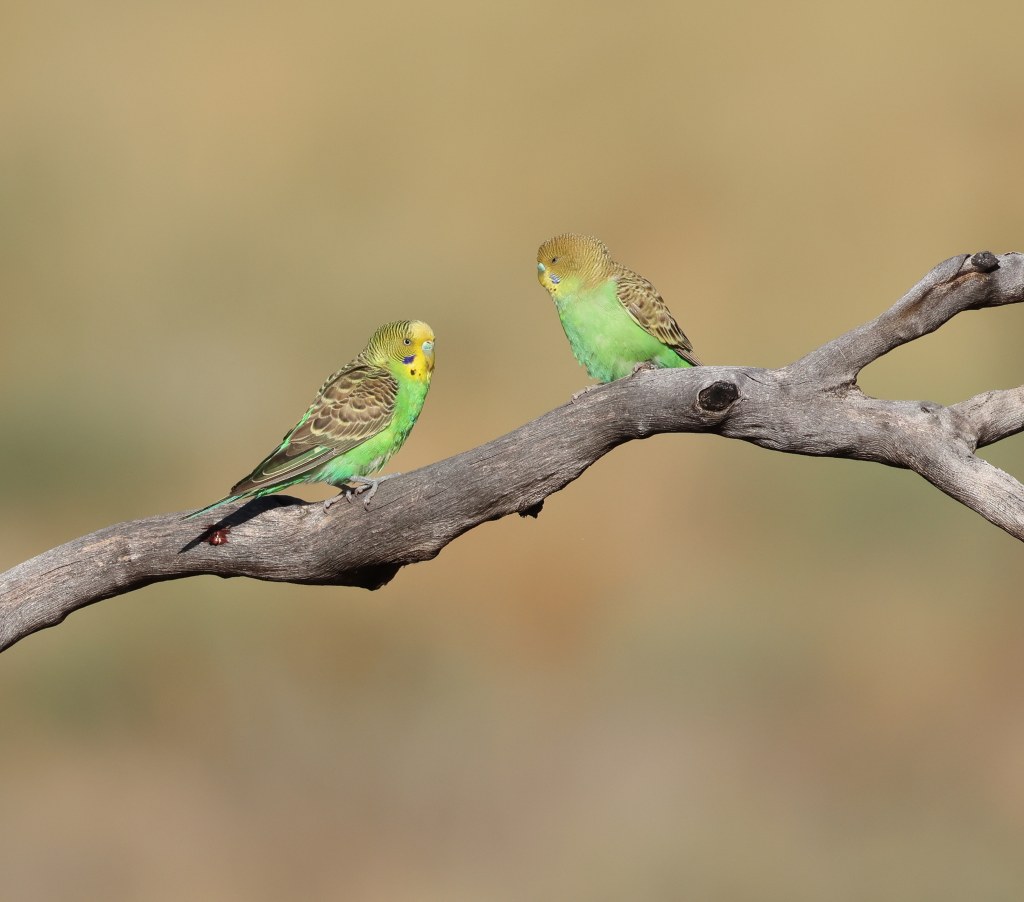
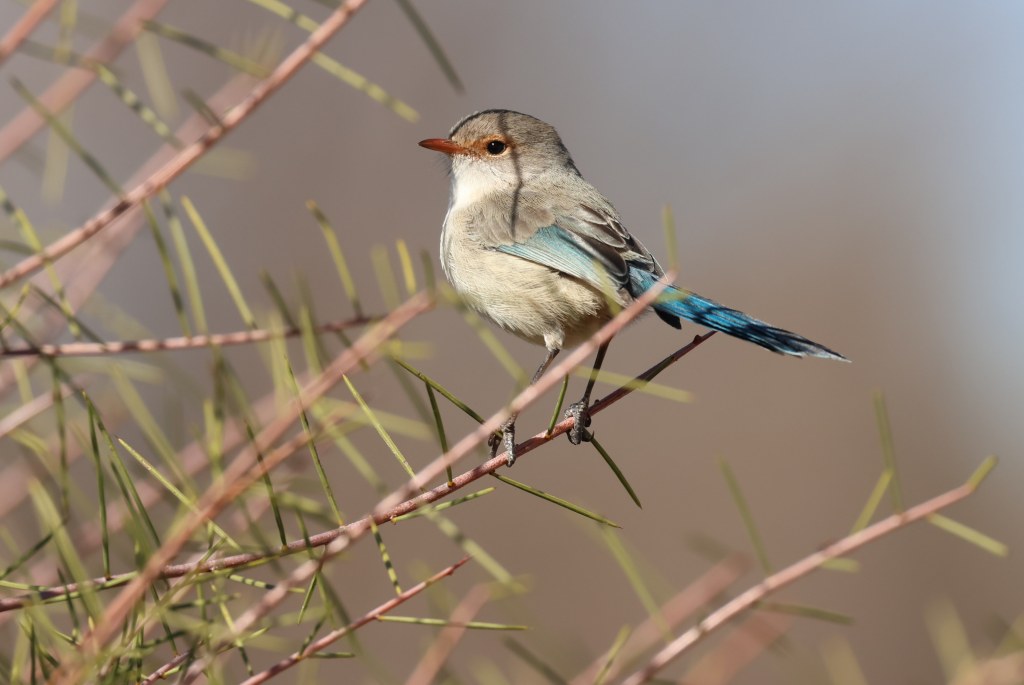
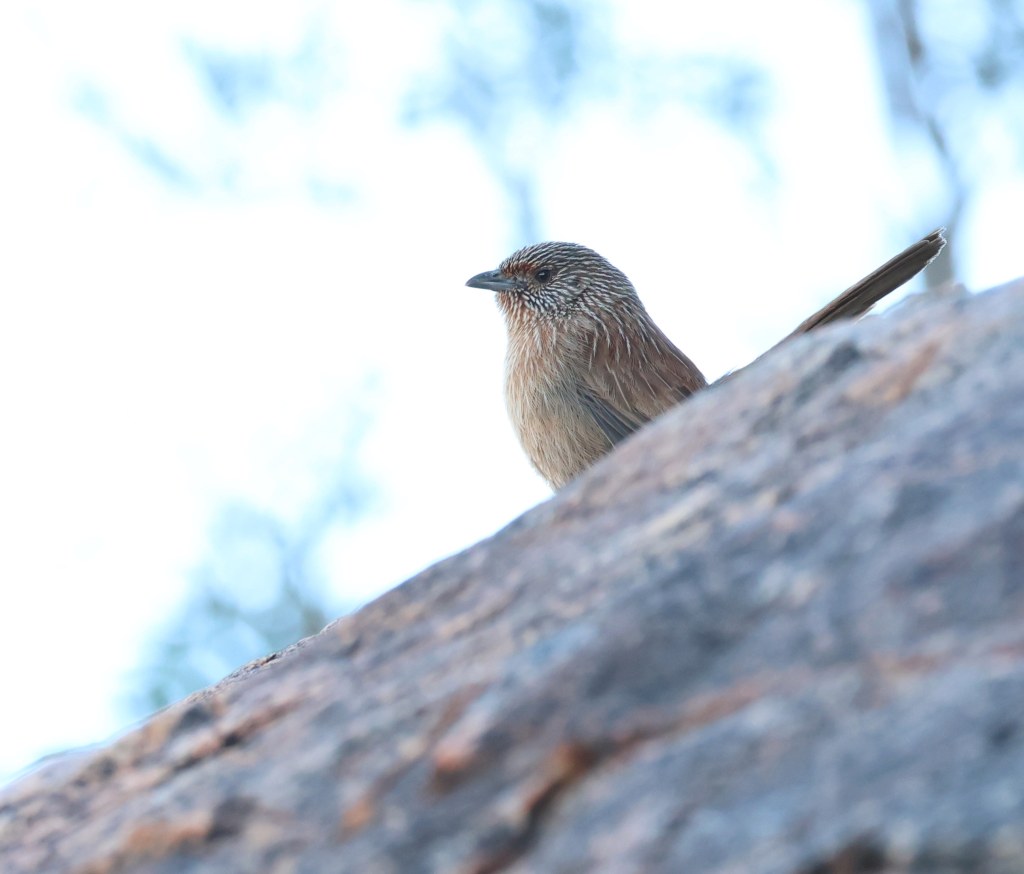
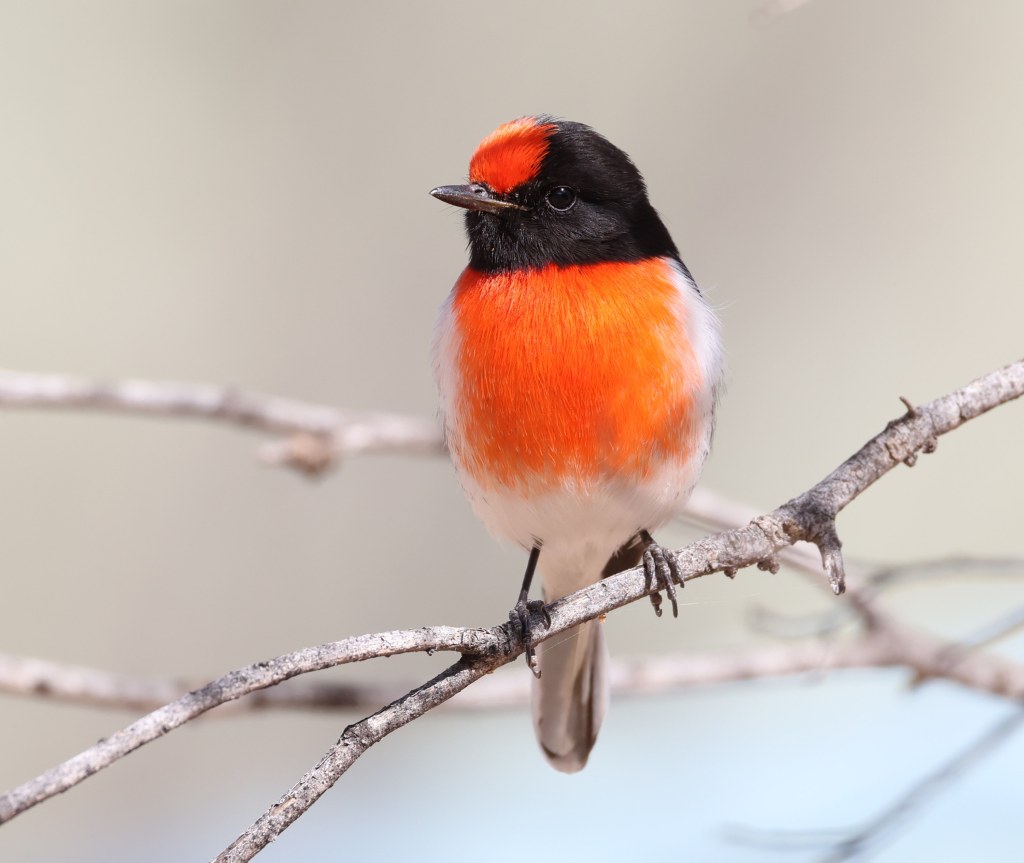
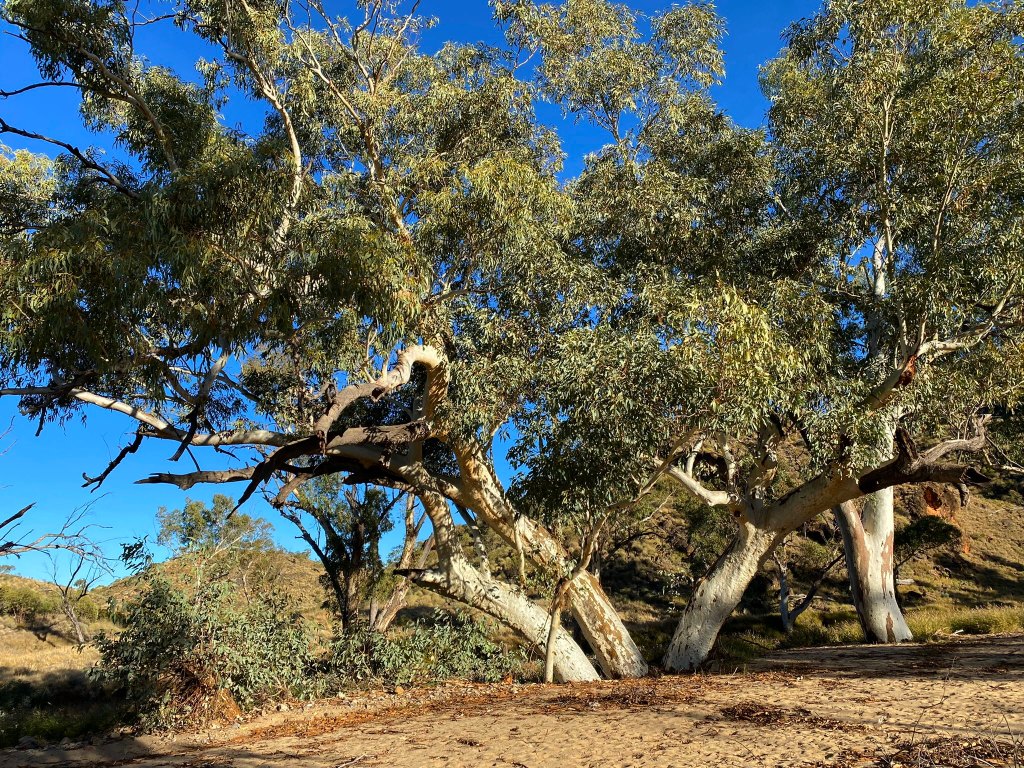
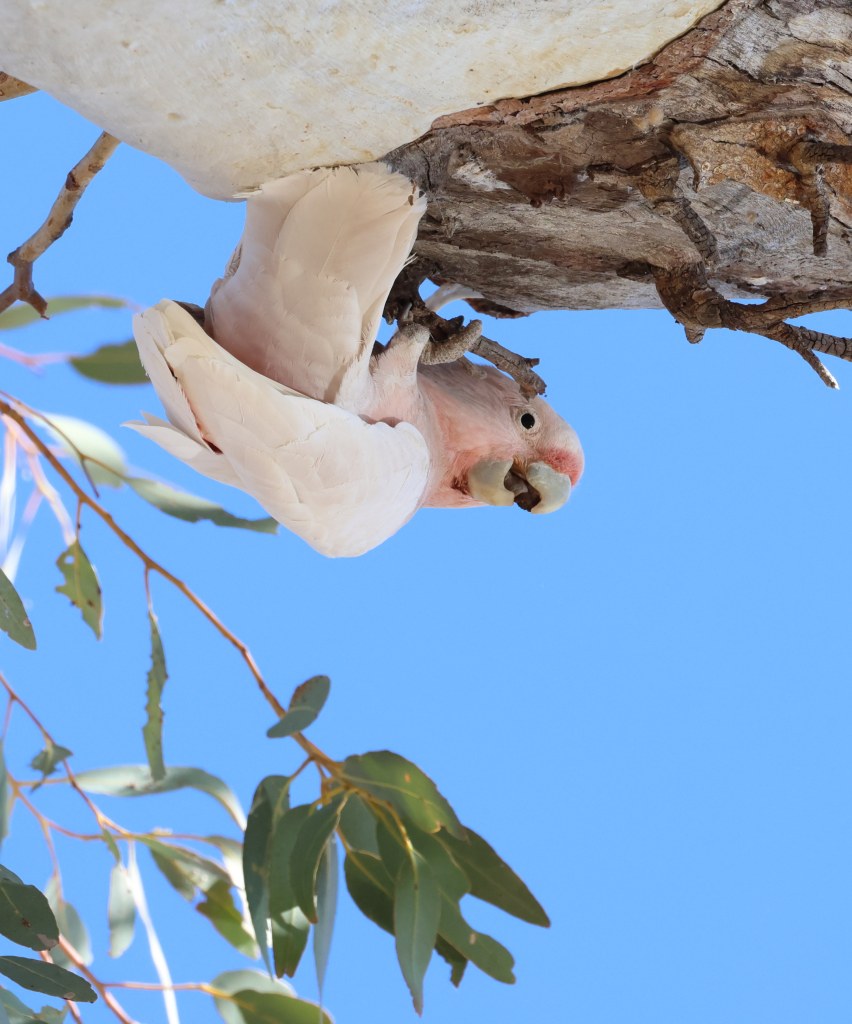
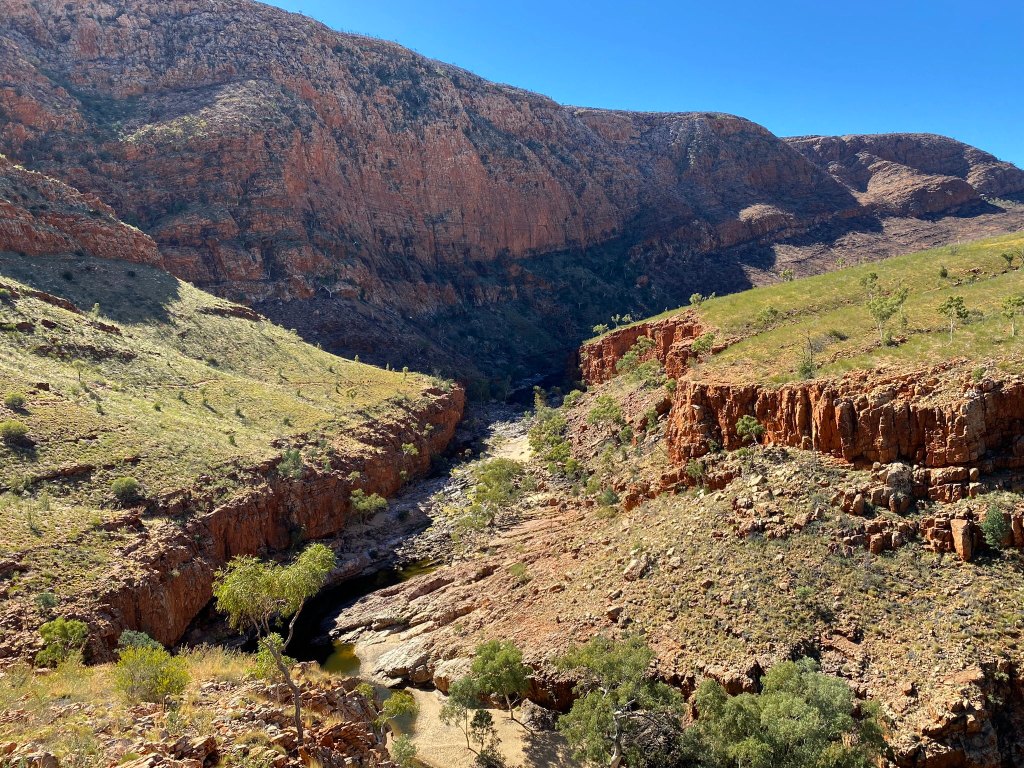
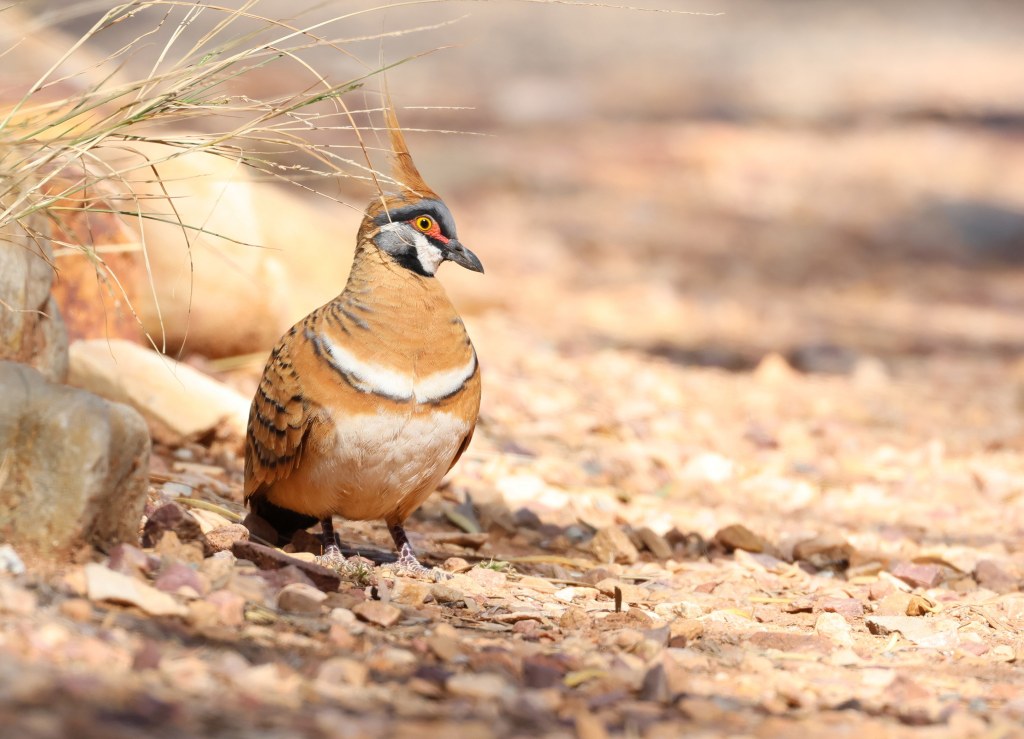
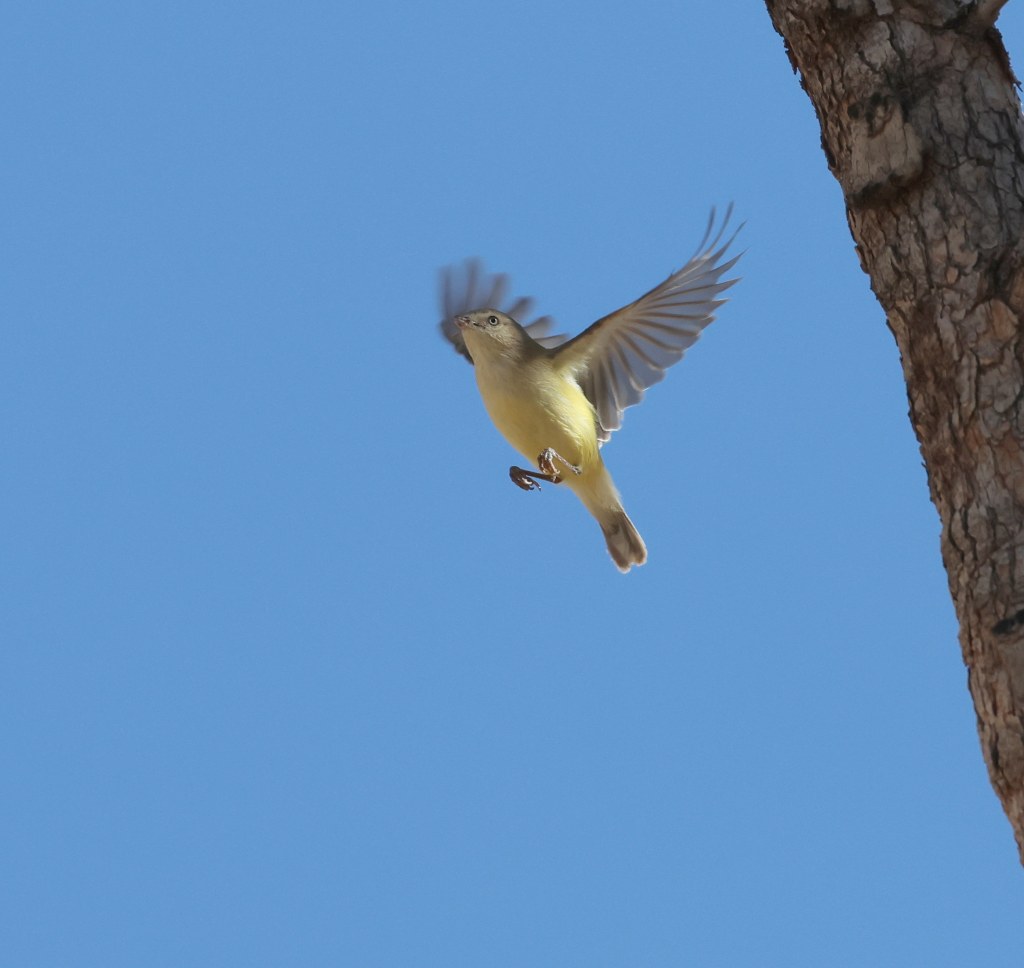
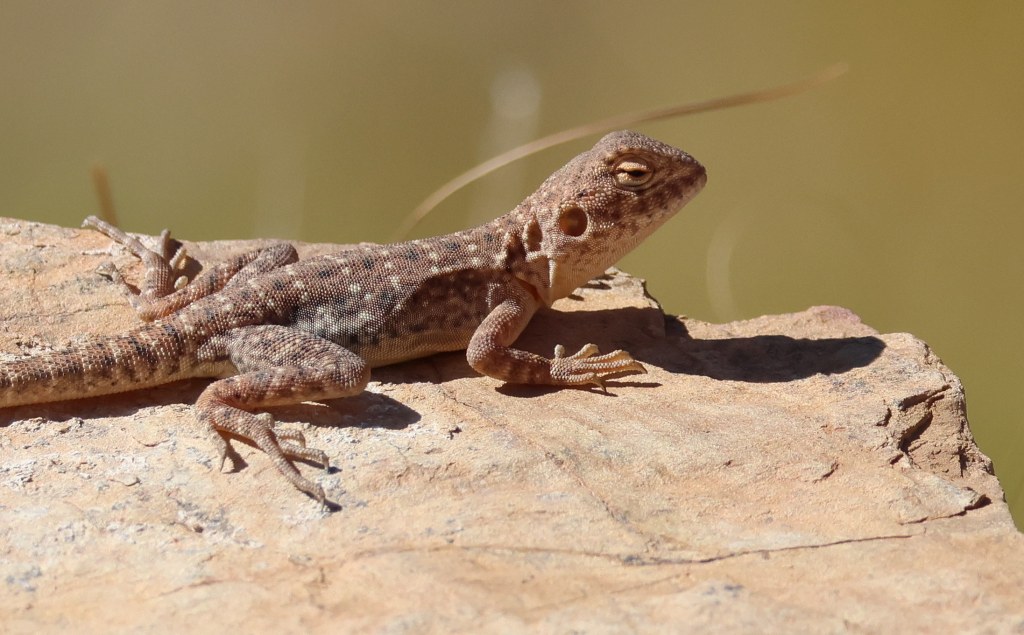
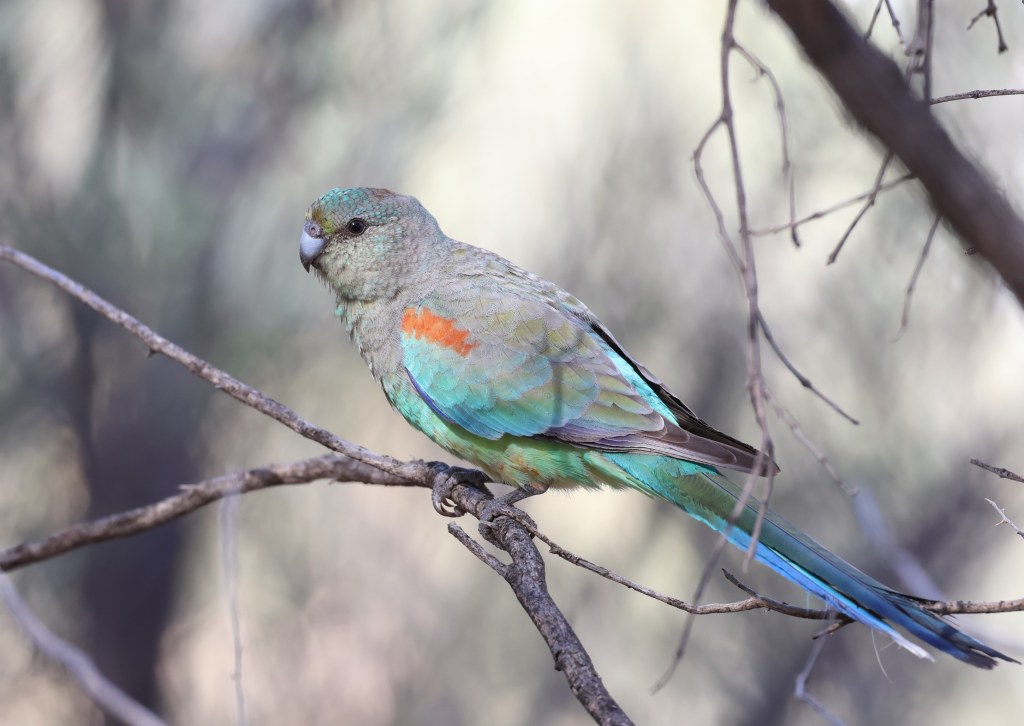
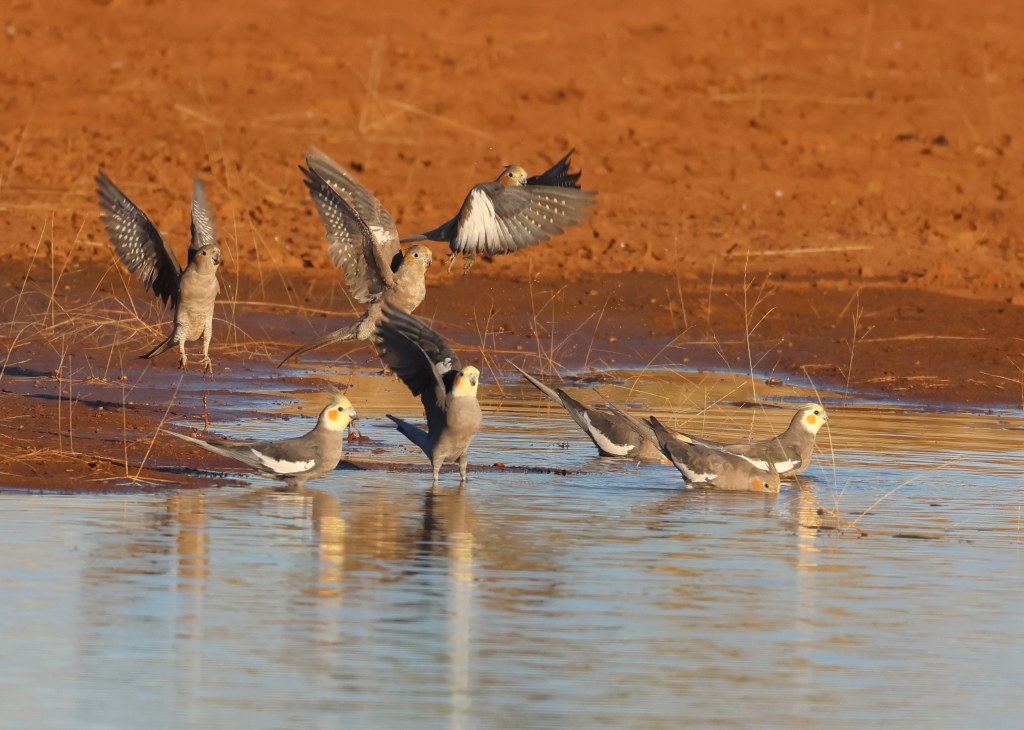
Actual example of gap and waterholeWild Budgies in the… erm… wild.More Budgies… and a couple of Black-Faced Woodswallows… and a Crested Bellbird! A popular tree, indeed.Cinnamon Quail-Thrush. It is never easy to see a Quail-Thrush, but we got a reasonably decent (though far-off) look at a pair of these. They blend in so well with the red rocks and dirt, that it’s doubtful we would have seen them if they remained still.Splendid Fairywren female. Has the same lores (colour between bill and eye) as female Superb Fairywrens, but more vibrant tail feathers.After much searching, finally a Dusky Grasswren! Possibly my favourite bird of the trip.A close-up with a Red-Capped Robin was the order of the day at the otherwise-fairly-quiet Ochre PitsEpic gum trees along a dry river bed… a common sight when birding in these partsPink Cockatoo playfully chewing and picking at bark – at Redbank Waterhole in Owen Springs National ParkThe dramatic landscape of Ormiston Gorge. There are worse places to go birding…Spinifex Pigeons basically scurry around your feet at the little café at Ormiston Gorge, and sometimes they even stop long enough to have their photo takenThe teensy Weebill is Australia’s smallest bird, but is rather widespread!Lizards enjoying a sunny rock at Ormiston Gorge.The humble Mulga Parrot, with a bluey-green sheen reminiscent of a Red-Rumped ParrotCockatiels coming down to drink at a bore waterhole
If It Feels Like The Middle Of Nowhere… That’s Probably Because It Is
The 200km road from Alice Springs to Erldunda is pretty boring, though you can drive at 130km/h, which is nice. The bird hotspots along here are very innocuous looking: it’s a case of surreptiously jumping a barbed wire fence into a giant cattle property, or wandering among low dry scrubby bushes hearing the lovely almost continuous singing of a Chiming Wedgebill and wondering Just where the heck is that bird?!
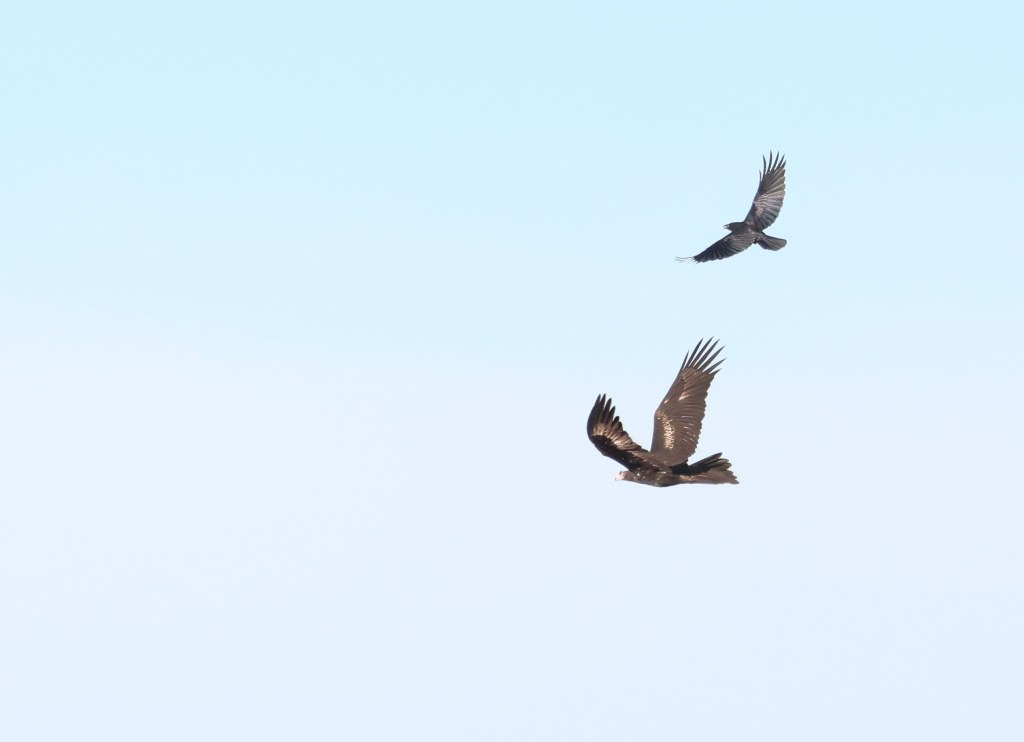
Pied Honeyeaters, 21km north of Erldunda: these birds are nomadic wanderers, and we were lucky enough to see a group of 14The Chiming Wedgebill makes itself visible at last!Nankeen Kestrel – a raptor, also known as a bird of prey, also known as “death from above” if you’re a mouse, reptile, or large insectMore raptor action in the skies above as a crow takes on a Wedge-Tailed Eagle, successfully driving it out of its territory
Onward, To Uluru And Other Gigantic Monolithic Rock Structures!
From Erldunda to Uluru is about 260km, barely a stone’s throw as distances go in this part of the world. OK, so it’s a bit of a drive. The Ayers Rock Resort is a cluster of different accommodation types 15km from the rock itself, and is an alarmingly luxurious oasis with everything you could want… hundreds of kilometres from anything like it. And it was cold and rainy while we were there, which was also interesting and anomalous… and therefore memorable!
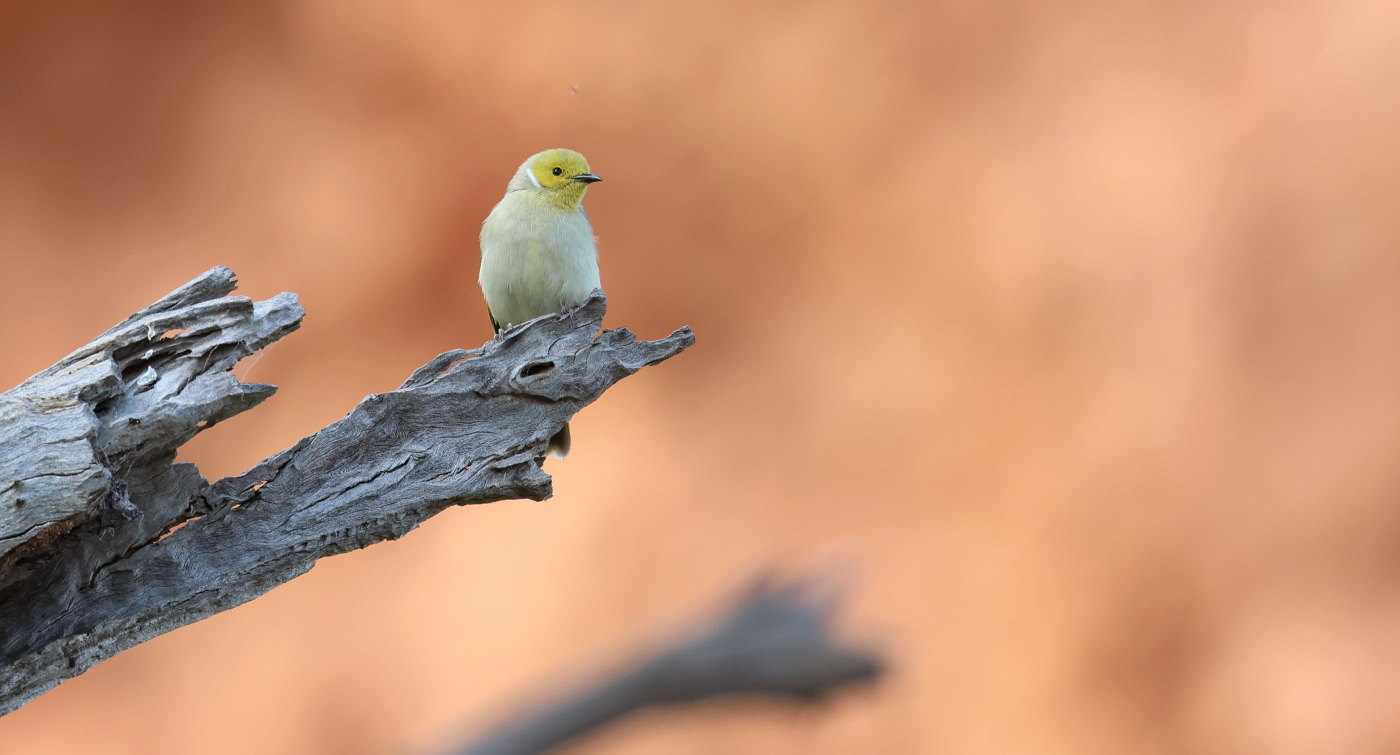
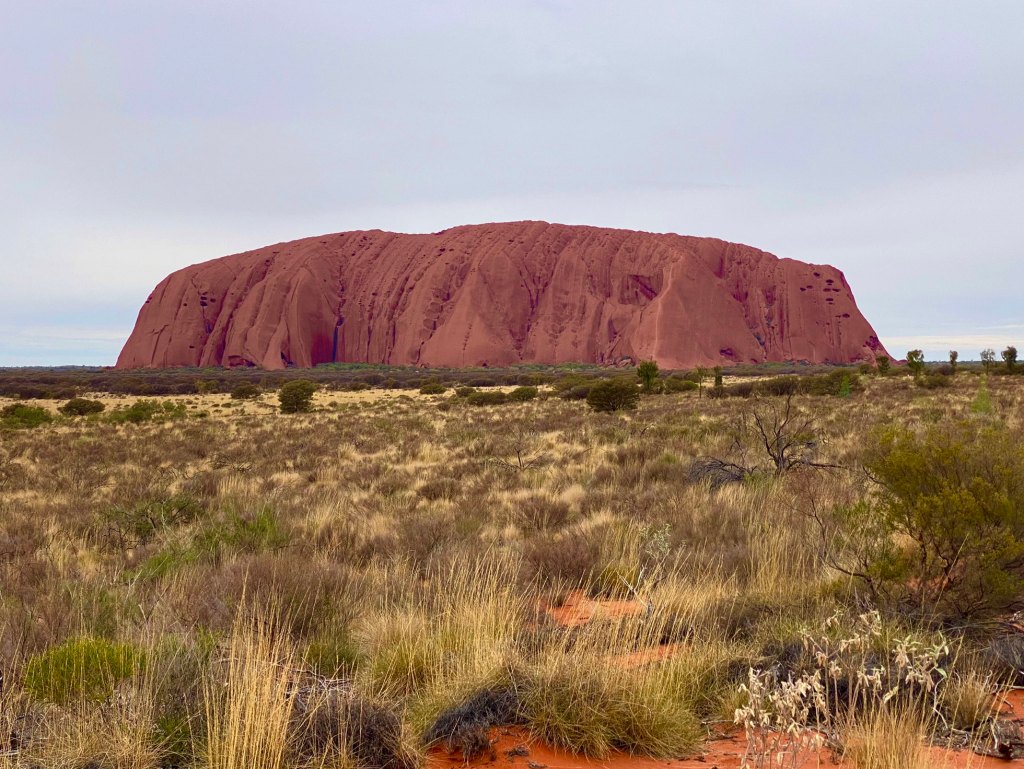
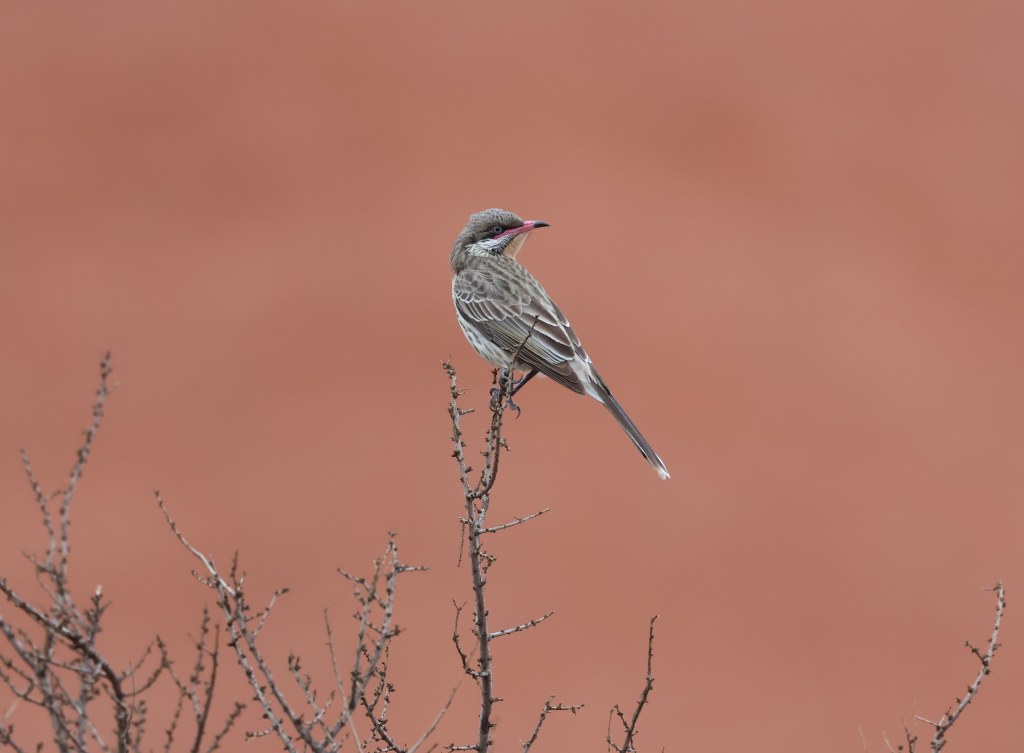
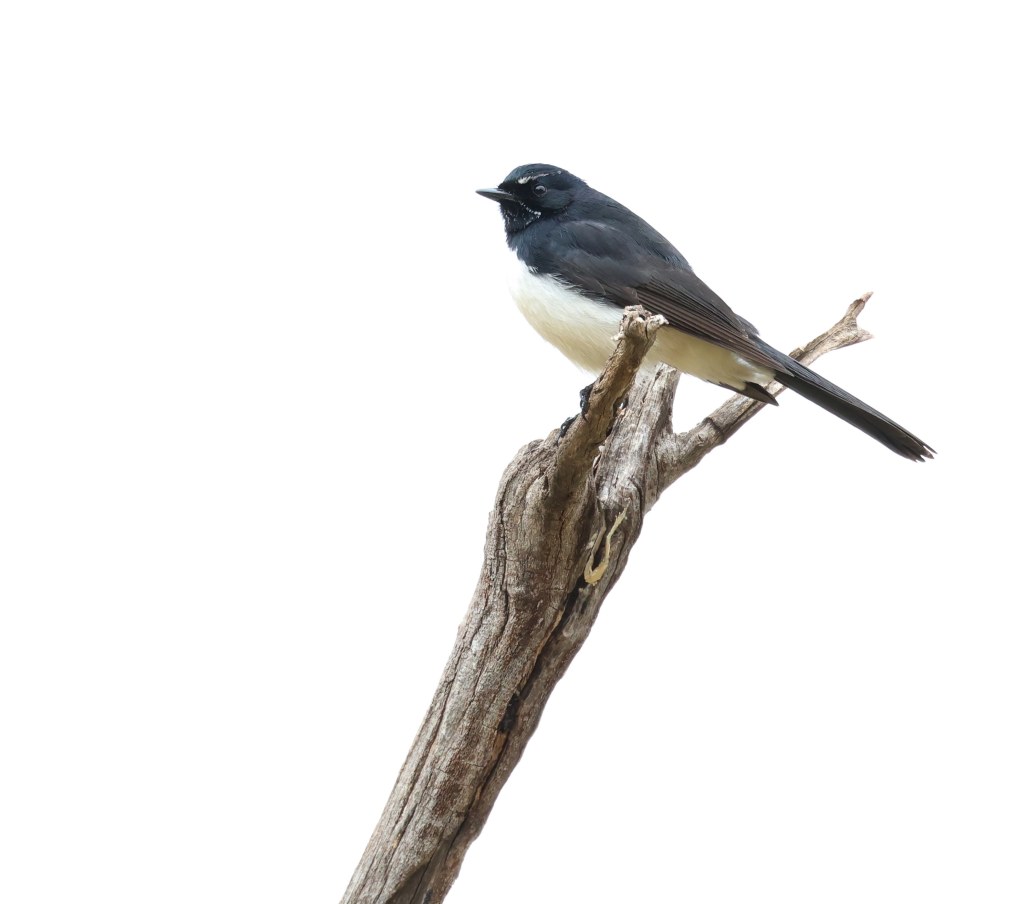
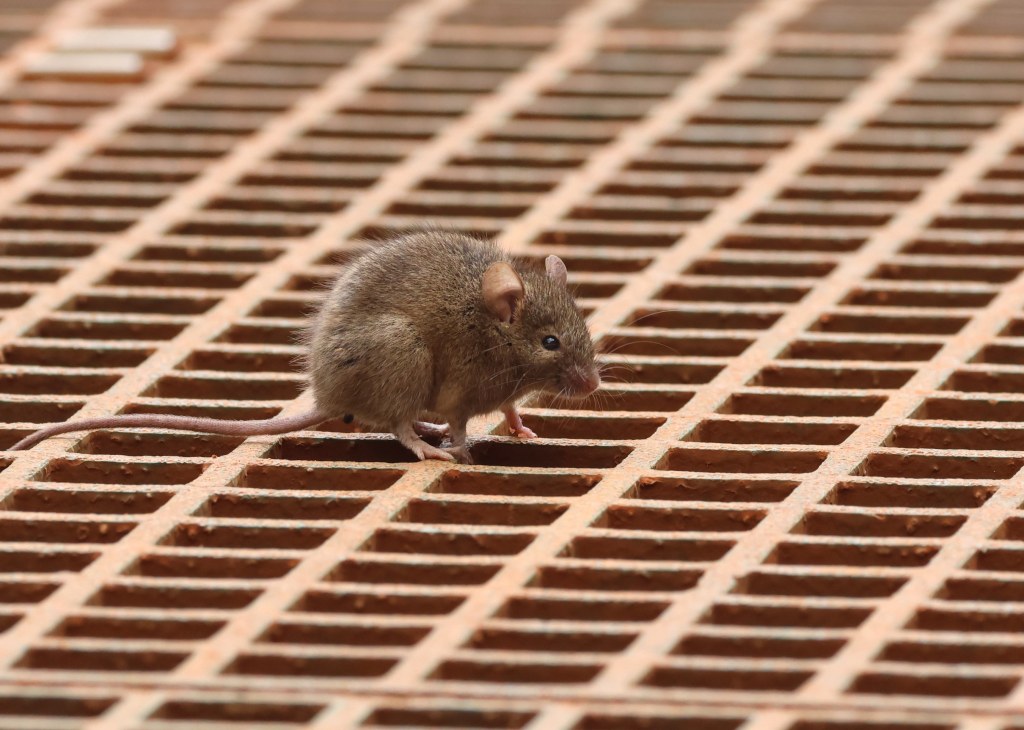
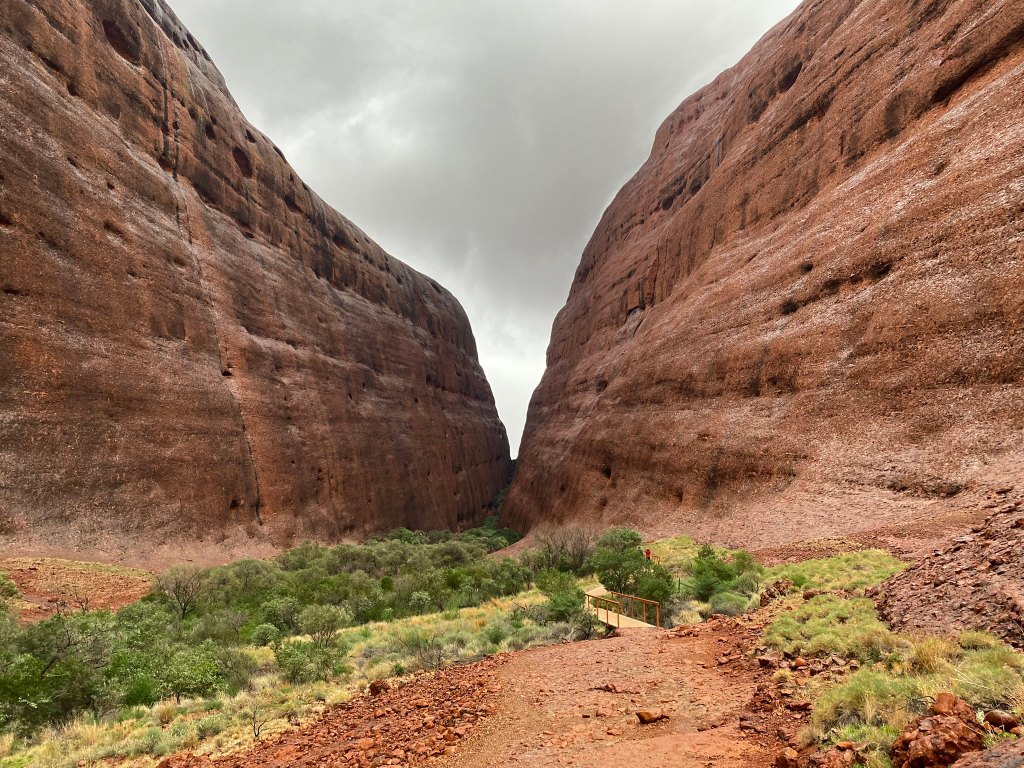
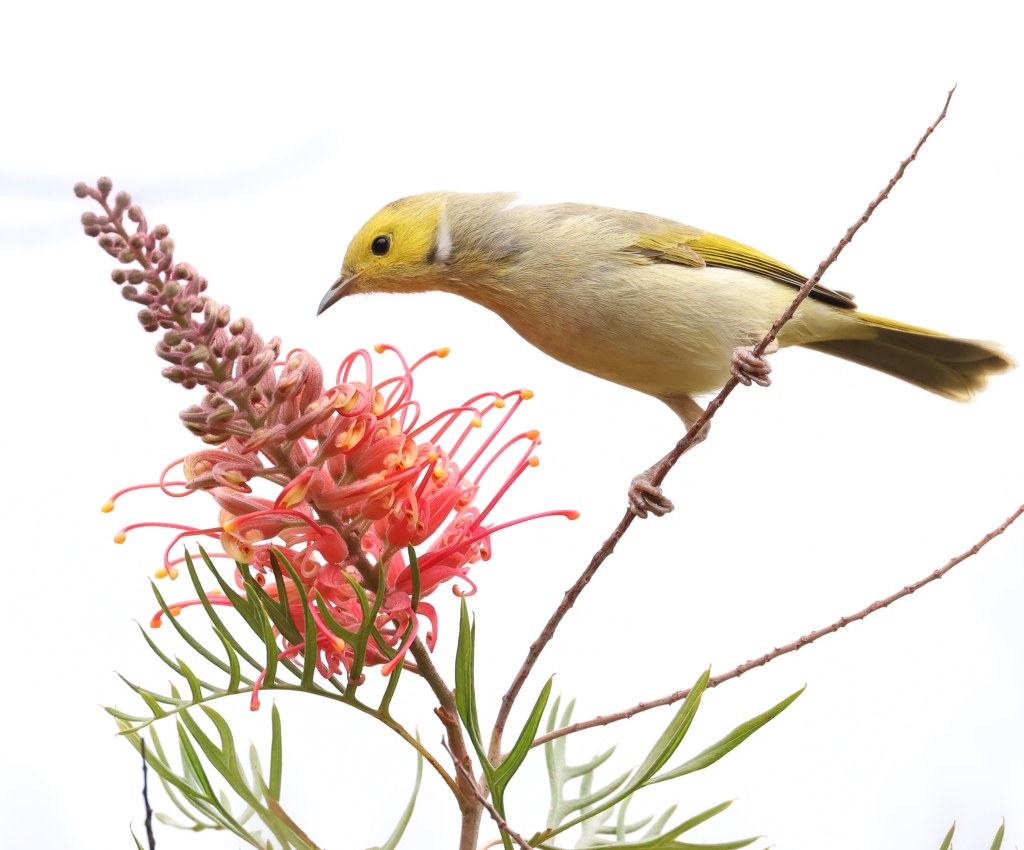
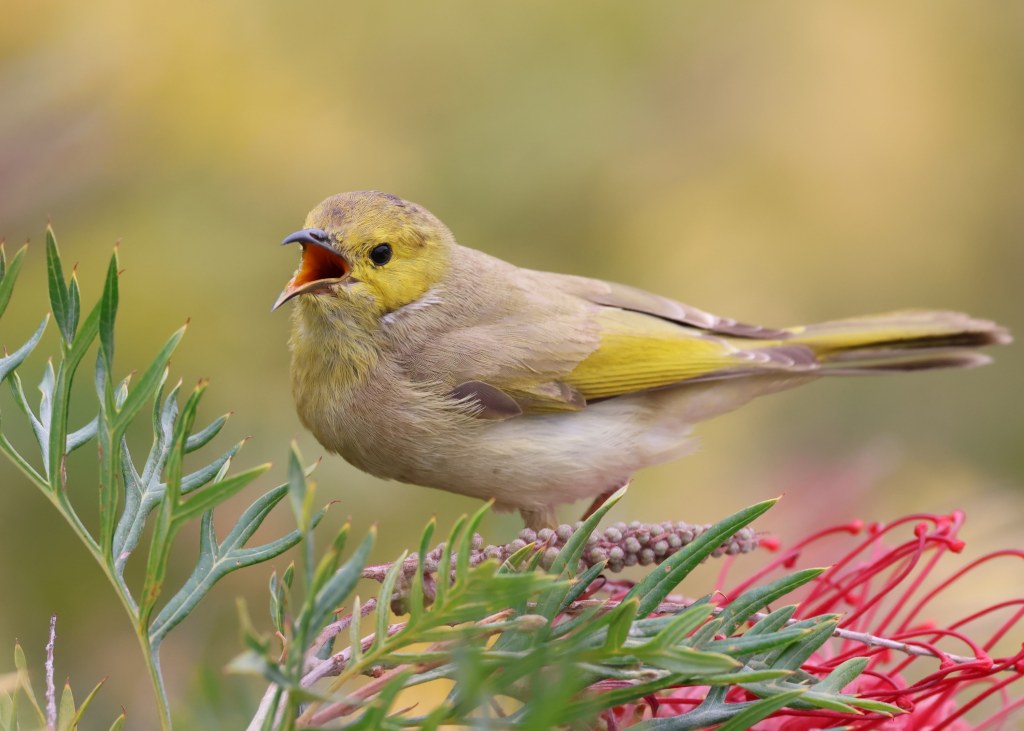
Uluru is so iconic it needs no introductionA Spiny-Cheeked Honeyeater with the red rock of Uluru in the backgroundThe Redthroat is a very well-named bird, you’d have to say. This male bird was calling to other males on the Uluru base walk.Impressively, it seems like wherever you go in Australia, there’s a Willie Wagtail already there. Except Tasmania. But still.We think this was a Spinifex Hopping Mouse, which are apparently quite common around UluruWalpa Gorge walk at Kata Tjuta, 50km from Uluru. It was a maximum of 20 degrees during the day, and rainy. Some desert, huh.One practises one’s bird photography with the humble White-Plumed Honeyeater in the grounds of the Ayers Rock ResortAnother White-Plumed Honeyeater, because… why not!?!
The Red Centre is truly the middle-of-it-all of Outback Australia and even though it’s dry (some would say, arid), there’s still plenty to see what with arresting rocky landscapes, vast (though usually dry) river systems, never-ending landscapes of Desert Oak and Spinifex, and of course that rock. We had some great bird encounters with a variety of species: our meetings with Dusky Grasswren, Redthroat, Crested Bellbird, Mulga Parrot and Chiming Wedgebill will linger long in the memory. We can definitely see ourselves returning to spend some time walking those gorgeous gorge trails, perhaps at a leisurely pace, keeping an eye or two out for those few birds we missed out on this time.
The Trip in Stats! Number of species observed: 91 Number of checklists: 34 Biggest checklist: Alice Springs Sewage Ponds (29 species) Most numerous birdsoverall: Zebra Finch (517), Budgerigar (258), Little Crow (246), Crested Pigeon (214) Biggest “dips” (birds hoped-for but not seen): Red-Browed Pardalote (dipped again!), Slaty-Backed Thornbill, Painted Finch Bird we usually find just once on every trip but this time inexplicably saw eight times: Mistletoebird









 Bird Spots
Hi Andy, Luke and others
Well compiled and written article. Well done.
Very useful information, particularly for those intending to visit the Northern Territory.
Regards
Alvin
>
LikeLike
Great read! And beautiful snaps.
LikeLike