The Colca Valley, and in particular the Colca Canyon, is on the tourist trail in Peru, though it doesn’t quite garner the kind of accolades of say, Macchu Pichu or other well-trodden historical/scenic Peruvian sites.
The altitude here is about 3600m, and the region’s main population centre, Chivay, has about 5,000 residents. It’s about 3 hours north of Arequipa, the city where most people will come from to get here – usually by some form of tourist bus.
I’ll cover the general experience and birding experience at two sites: the well-known Mirador Cruz del Condor lookout, and at Colca Lodge Spa & Hot Springs, which is where I stayed. So this won’t be a comprehensive look at birding in the Colca Valley, but hopefully it will be somewhat representative.

Mirador Cruz del Condor
Mirador Cruz del Condor is the jewel in the crown of the region, with sweeping views of the Colca Canyon in both directions. The lookout (mirador) is not actually situated where the canyon is deepest, but it’s where the majority of the tour operators go as it is the biggest drawcard for tourists. Consequently there are often plenty of people there – on the morning I was there, at least a hundred, maybe two hundred.
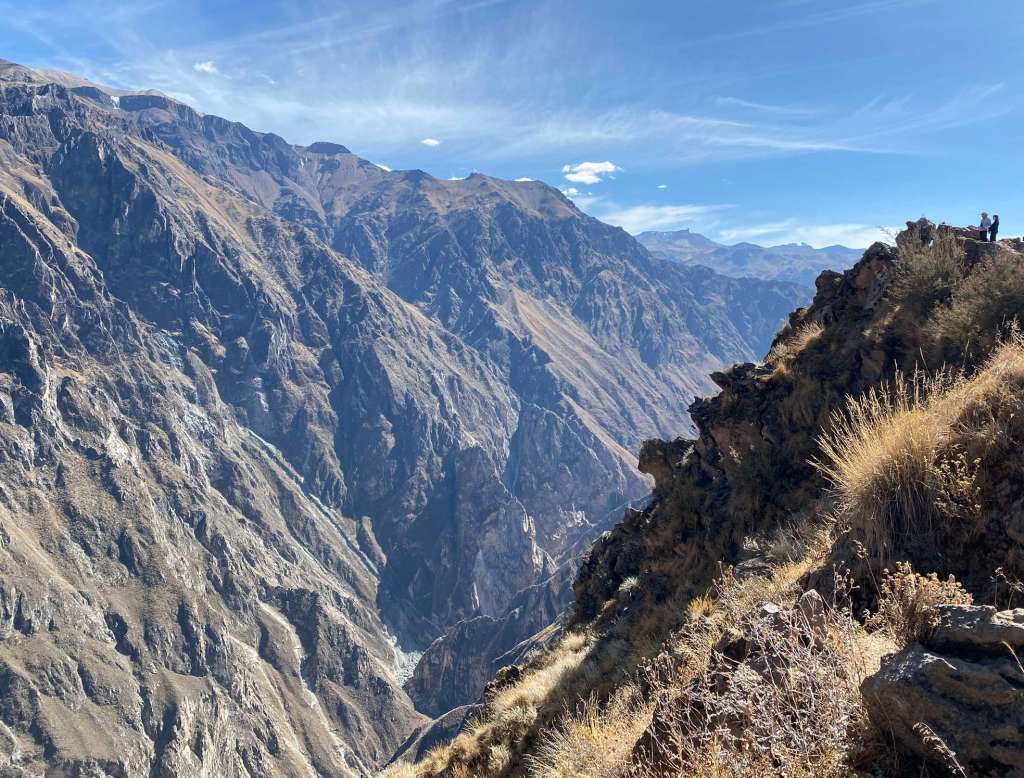
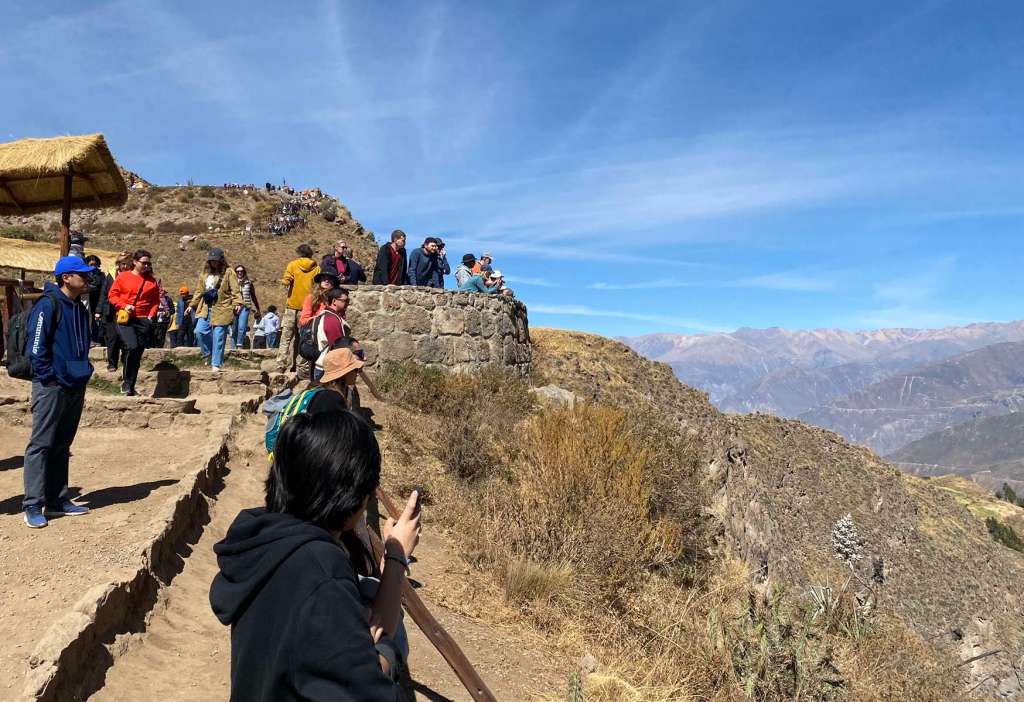
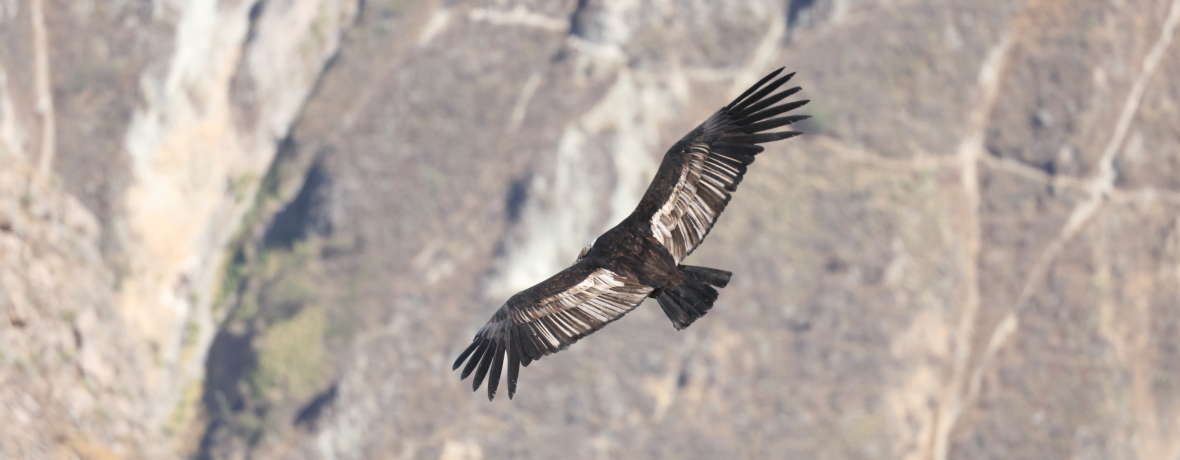
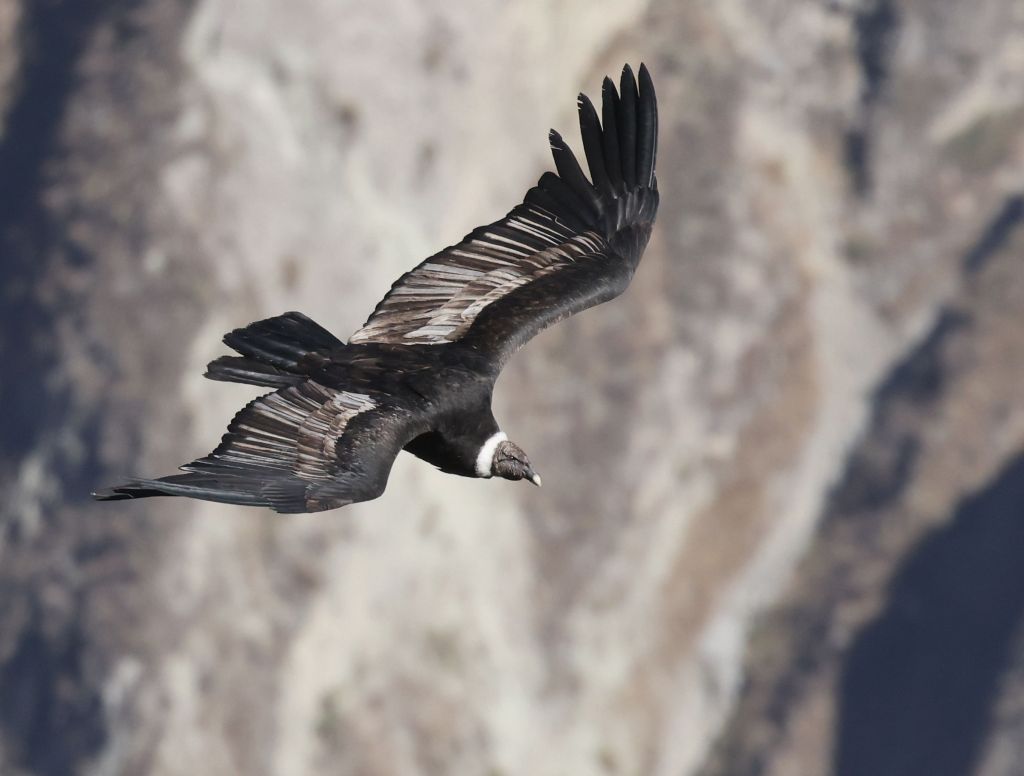
Apart from the impressive canyon scenery, the key bird here is obviously the Andean Condor, and you have excellent chances to see these birds at this location. I saw four. With their enormous 3 metre wingspan, it was quite thrilling to have one cruise imperiously past the clifftop viewpoint; otherwise it can be hard to judge their true size when they are circling further away.

The much, much smaller Andean Swift is also often seen zipping by the clifftops, as well as the less common White-Collared Swift.
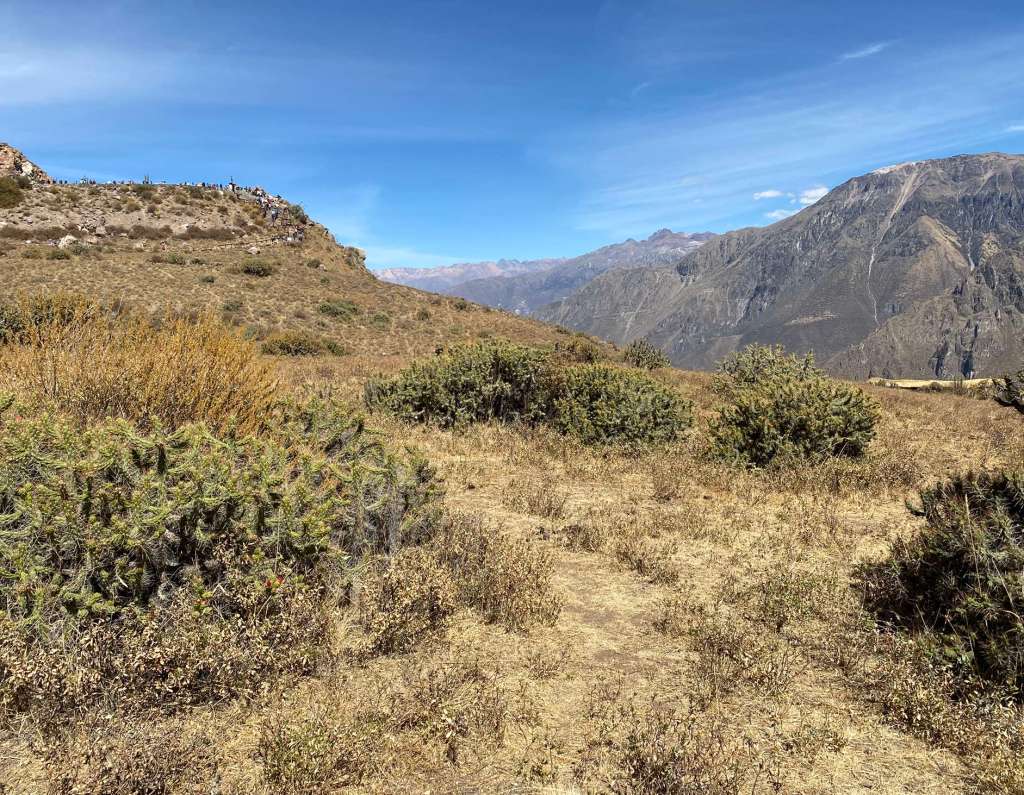
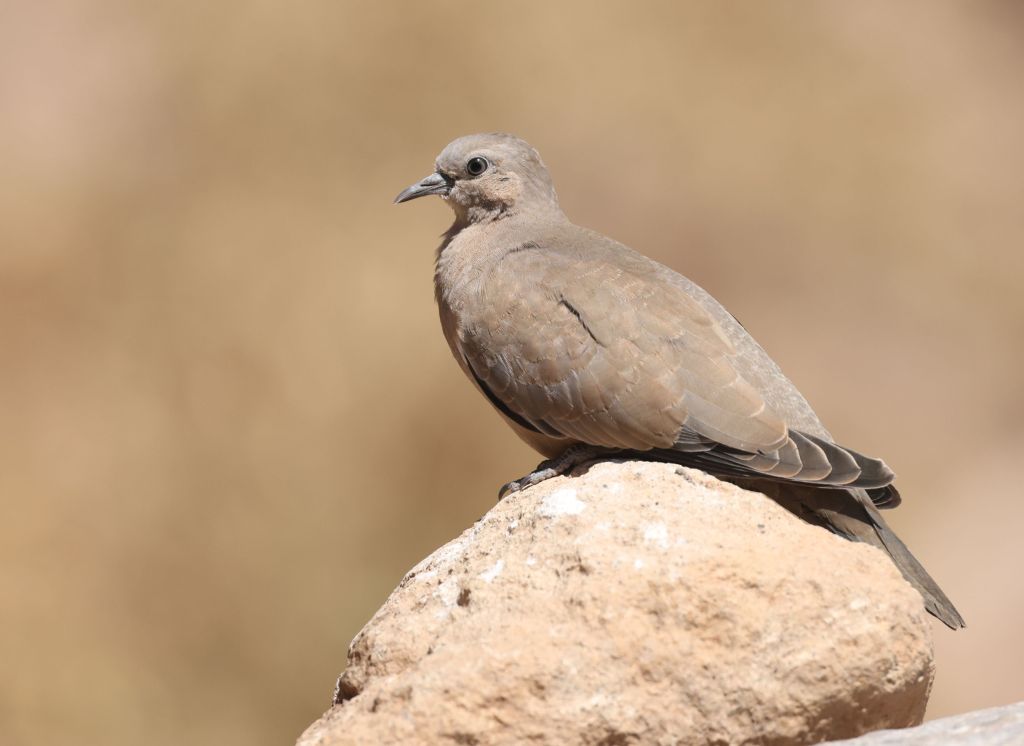
There is a network of trails to the east of the main mirador site, and there is plenty of cactus and grasses there. Here a Mourning Sierra Finch sat politely on top of a cactus, while a Black-Winged Ground Dove perched quietly on the side of the path, unconcerned as people walked past.

With only 6 species seen at the mirador site, I wondered if I had just had one of those unlucky mornings. Other checklists on eBird ranged upwards of a dozen or even twenty species. I would have particularly liked to see an Andean Hillstar there, which shows as pretty common on eBird. Oh well.
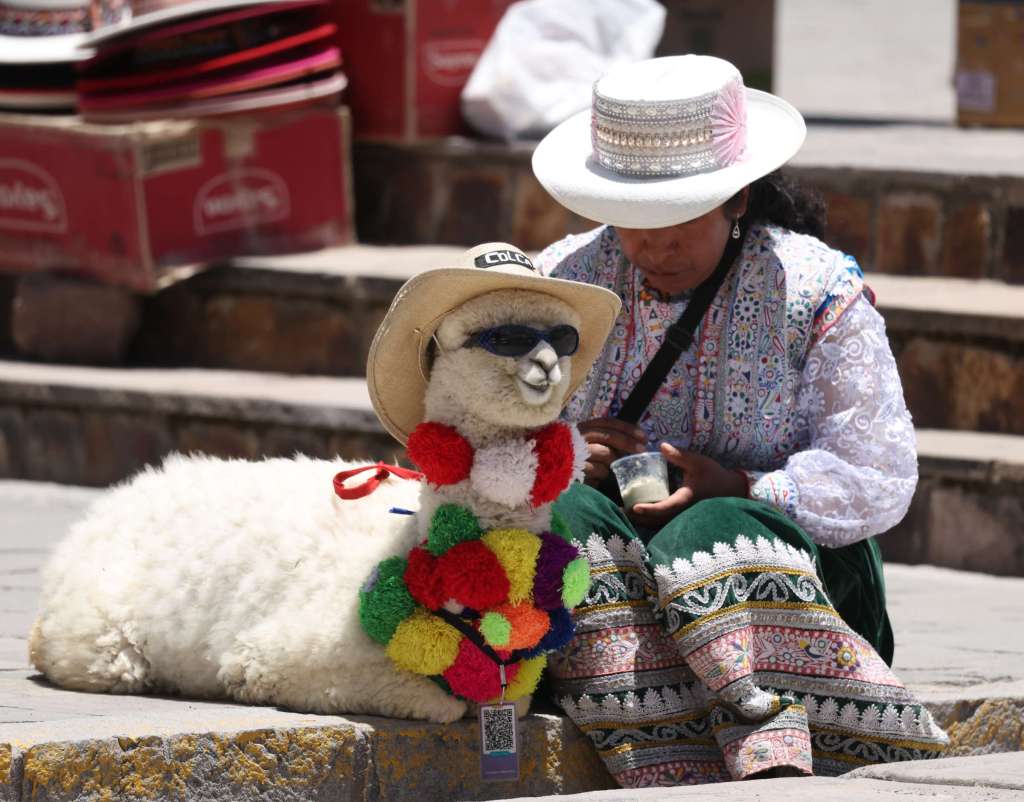
On the way to Colca Canyon, our bus (one of many) had stopped at a small town where schoolchildren dressed in traditional costume danced in the town square. There is quite some commerce going on here with plenty of competition for tourist dollars from the market stalls, shops, and hawkers. I also spied the coolest alpaca in the world here, sporting a jaunty hat and shades.

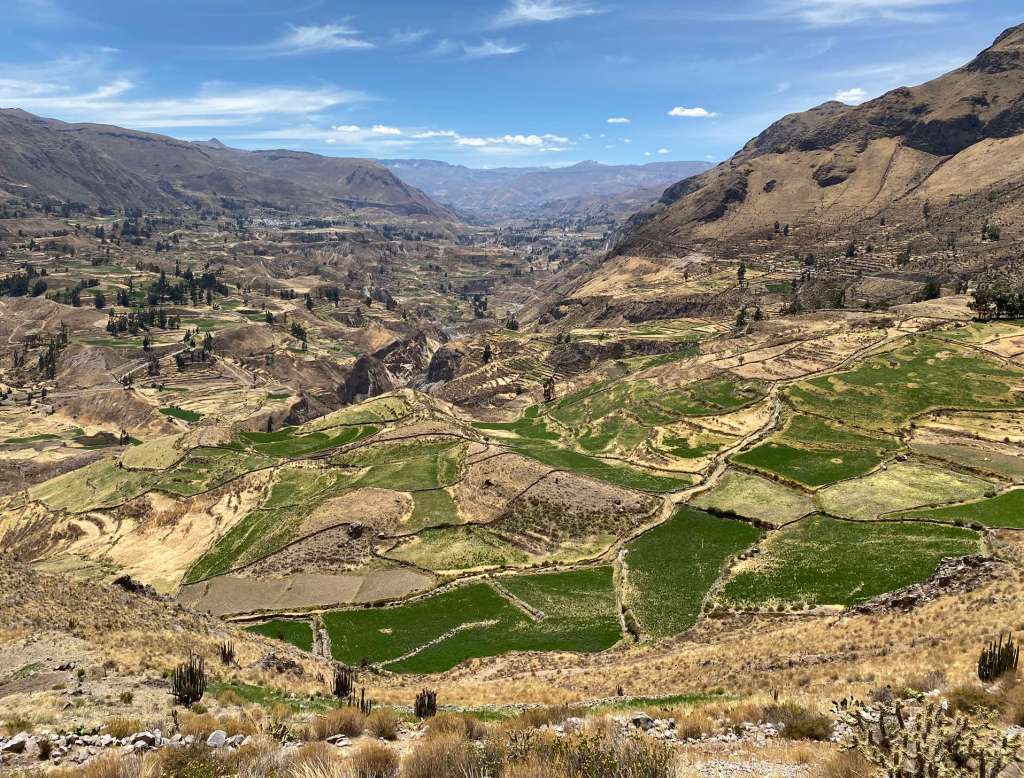
The commerce continues at various other viewpoints our bus stopped at, where there were grand views across the valley and more opportunities to buy stuff I didn’t need.
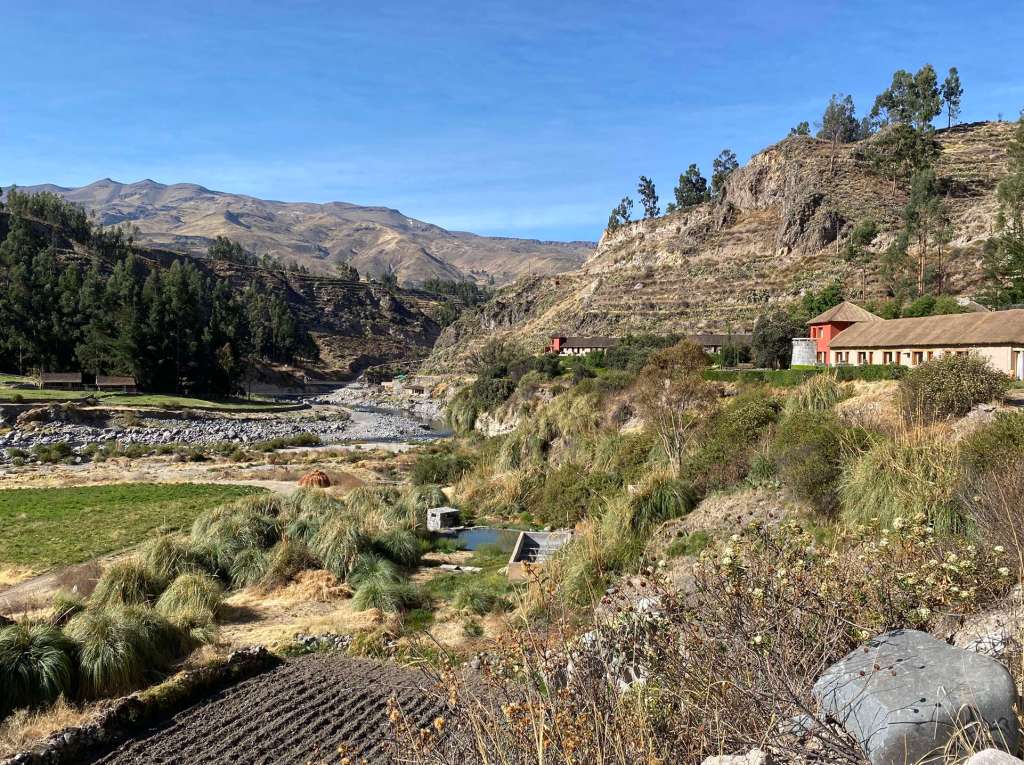
Colca Lodge
I admit it, I am guilty of using eBird to plan accommodation. A fancy lodge in a scenic area that is also a decent eBird hotspot with 101 species? Sign me up! Colca Lodge Spa & Hot Springs isn’t a cheap option, but it was definitely a pleasant place to spend four days. I even used the hot springs… ahhh, so relaxing.
Access is by road via the nearby town of Yanque, though frustratingly you can see the lodge perched just over the Rio Colca river when you have just left the town, but have to drive around 3.5km in a big loop of unsealed road to get there! Just up from the lodge is the Uyo Uyo historical site, which I did not visit (I was a bit under the weather at the time so wasn’t looking to do anything strenuous at all).
It was very dry when I visited in late October 2025. There were big clouds of midge-like bugs particularly nearer the river that were something a problem, as you’d be swatting them away all the time; fortunately they didn’t seem to bite. One afternoon there was also a substantial brushfire on nearby hillside, I estimated no more than a kilometre away. It had me worried as it seemed to be spreading quickly and generating lots of flame and smoke, but it mostly fizzled out, leaving large blackened patches afterwards.


The Colca Lodge grounds include a several hundred metres of trails with various habitats including the river, bamboo stands, plenty of grasses, some stands of trees (particularly loved by doves, especially Eared Doves and Many-Spotted Pigeons). Around the lodge buildings the gardens are very manicured, with well-watered lawns and flower beds, and those parts attract birds that more or less comfortable around people and man-made structures.
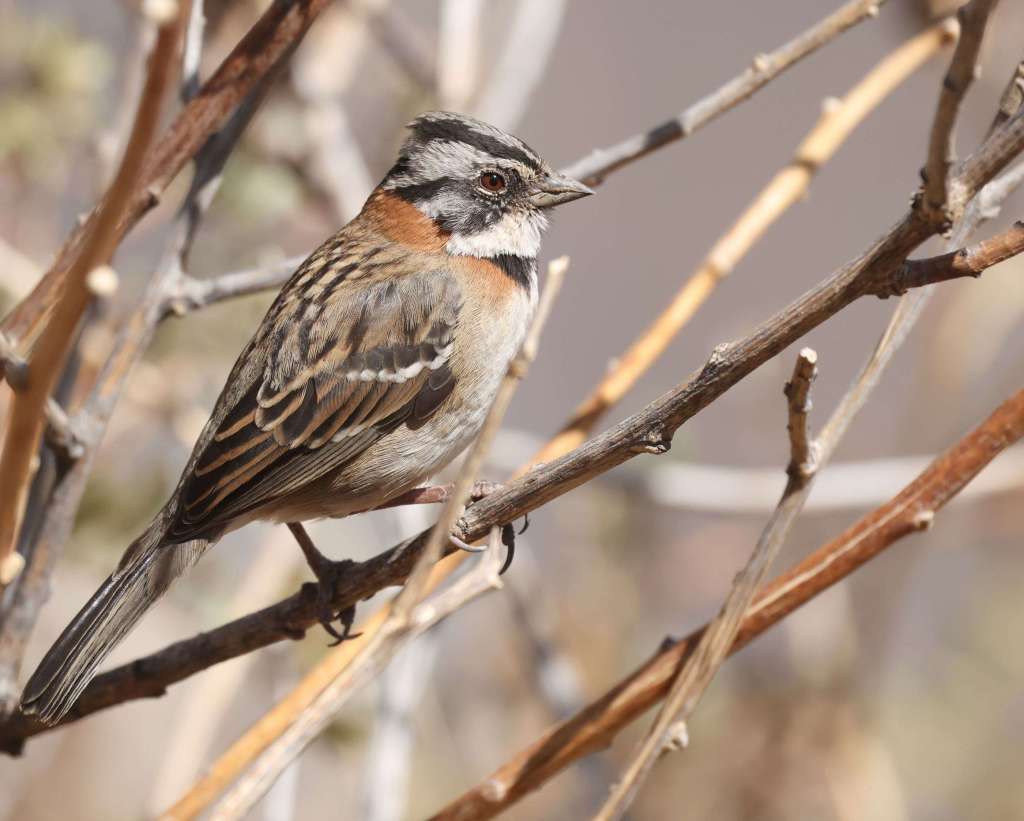
In that vein, let’s talk about Rufous-Collared Sparrows. They are just everywhere in Central and South America, at both high and low altitudes, and the grounds of Colca Lodge are no exception. On one casual “birding around the grounds” session I counted 85 of them!

Chiguanco Thrush is another super-common bird in this region of Peru, and they were bold around the lodge grounds, as were Southern House Wrens (though the latter were more noisily bold than visually bold).
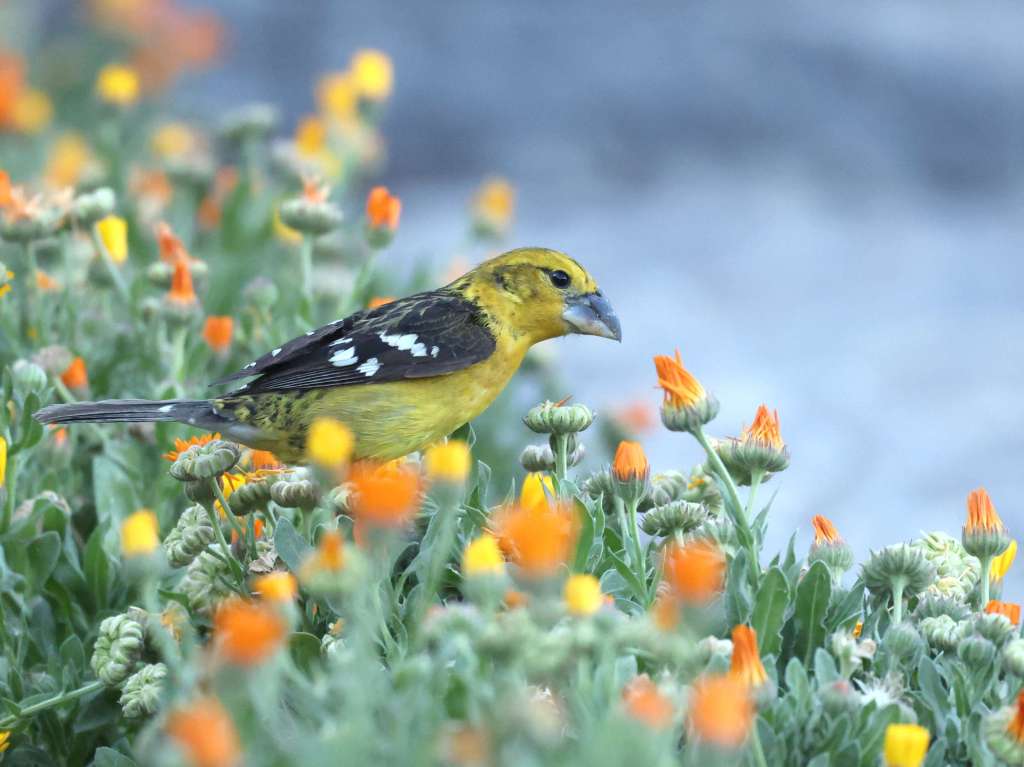
A less common bird I saw – in fact, a lifer – was the wonderful Golden Grosbeak. There were at least seven of them happily munching on bits of flowers. Strangely, they came up as a rare bird when I checklisted them in eBird, despite seeing them a few times in the next day or two around the grounds.

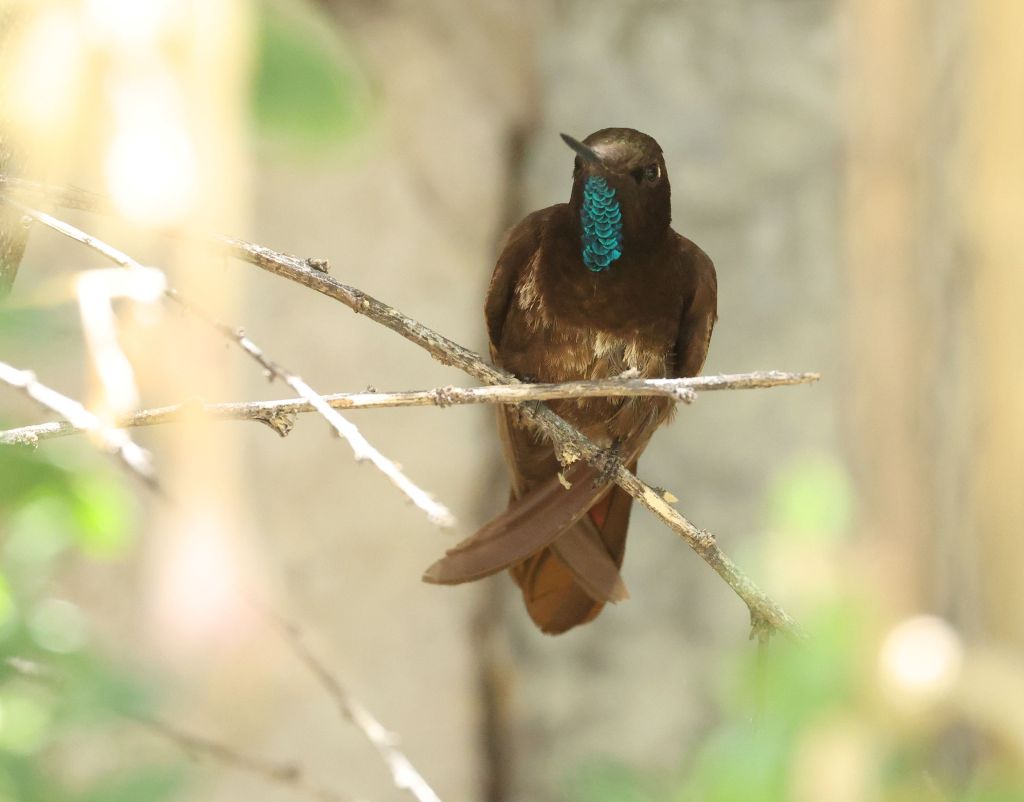
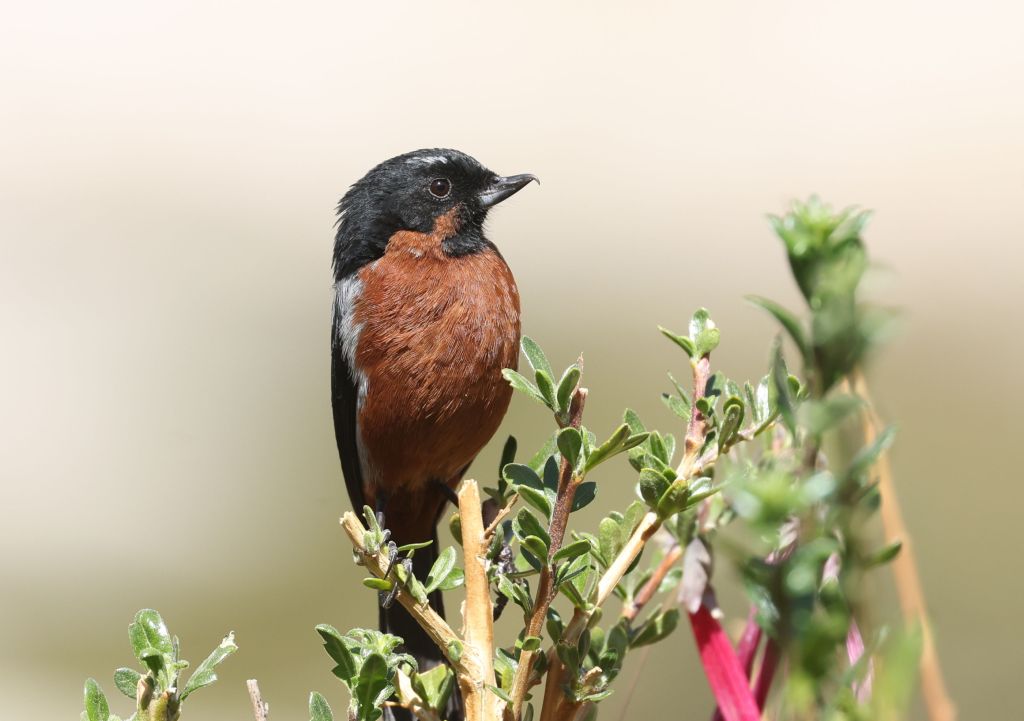
There are some large stands of Cantua buxifolia, commonly known as the “sacred flower of the Incas” and their vibrant pink flowers attracted Giant Hummingbirds, though, having seen them many times before (they were almost the first bird I saw in Peru, in Pisac), I didn’t concentrate on taking any pictures of them. More intriguing for me was the potential lifer Black Metaltail, which I managed to see well a few times in the lodge grounds. However, photographing them proved quite tricky – they are black, and prefer to rest in the shadows, as far as I could tell.

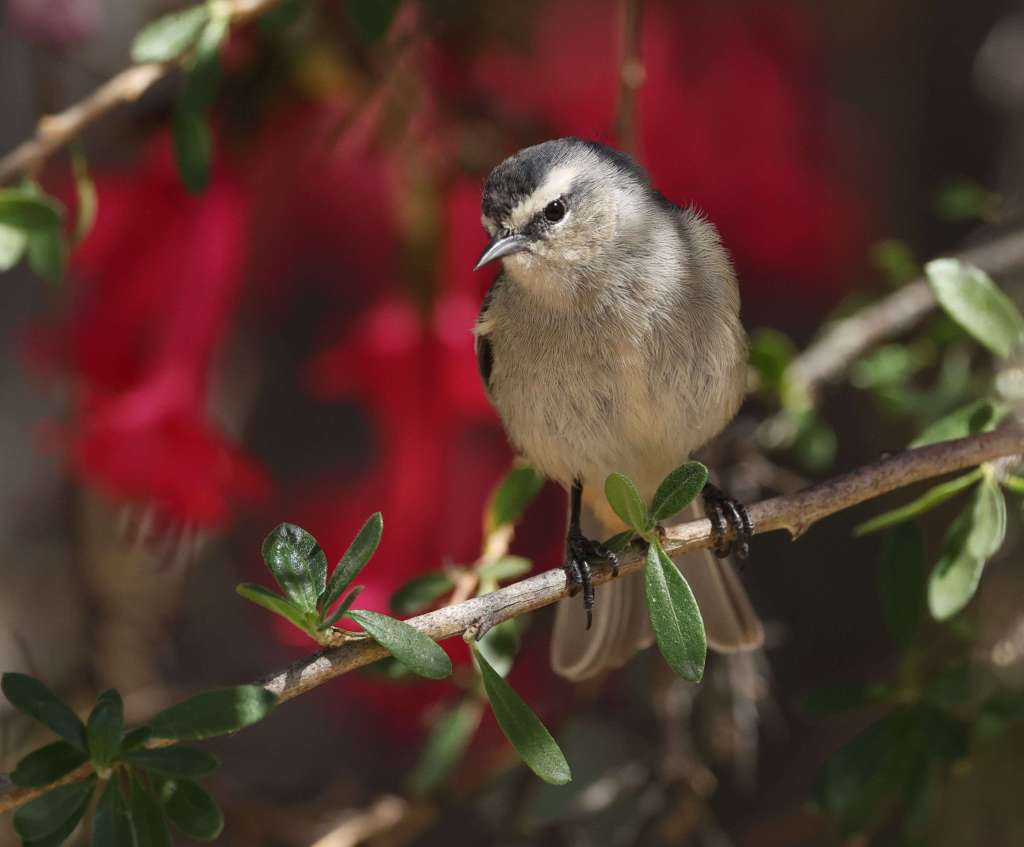
Also conspicuously around the flowers throughout the day were Black-Throated Flowerpiercers. Cinereous Conebills, too, occasionally turned up and much patience was required to get a good shot of them, as they are flitty and like staying within the foliage a little more than the flowerpiercers.
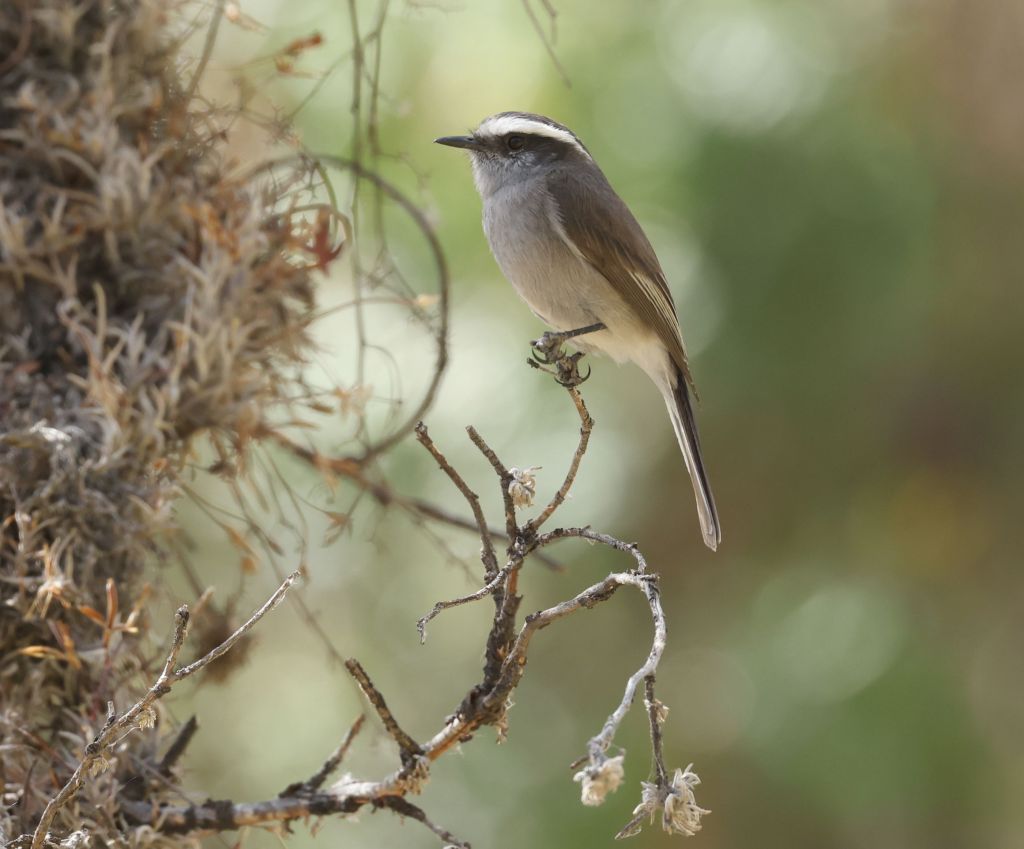
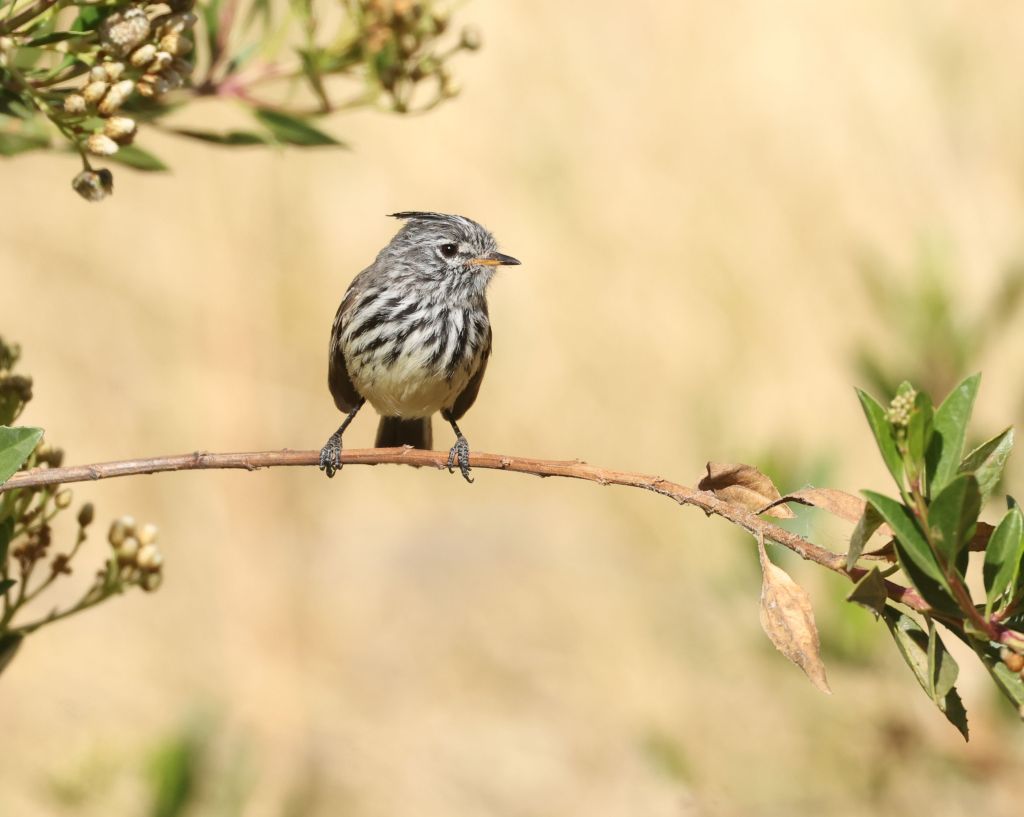
A couple of other, harder-to-find birds are also worth mentioning. I finally found a White-Browed Chat-Tyrant, which had eluded me despite seeing it on eBird checklists for various places I had previously visited. I also saw a pair of Yellow-Billed Tit-Tyrants, down by the river. I took an instant liking to these wee birds with their plucky little crests.
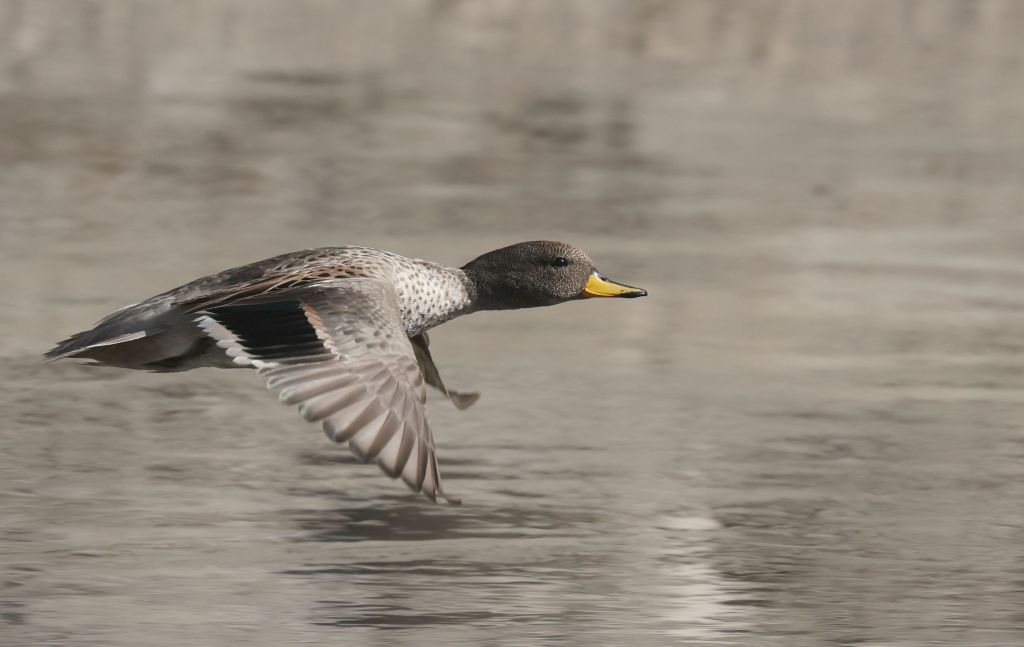
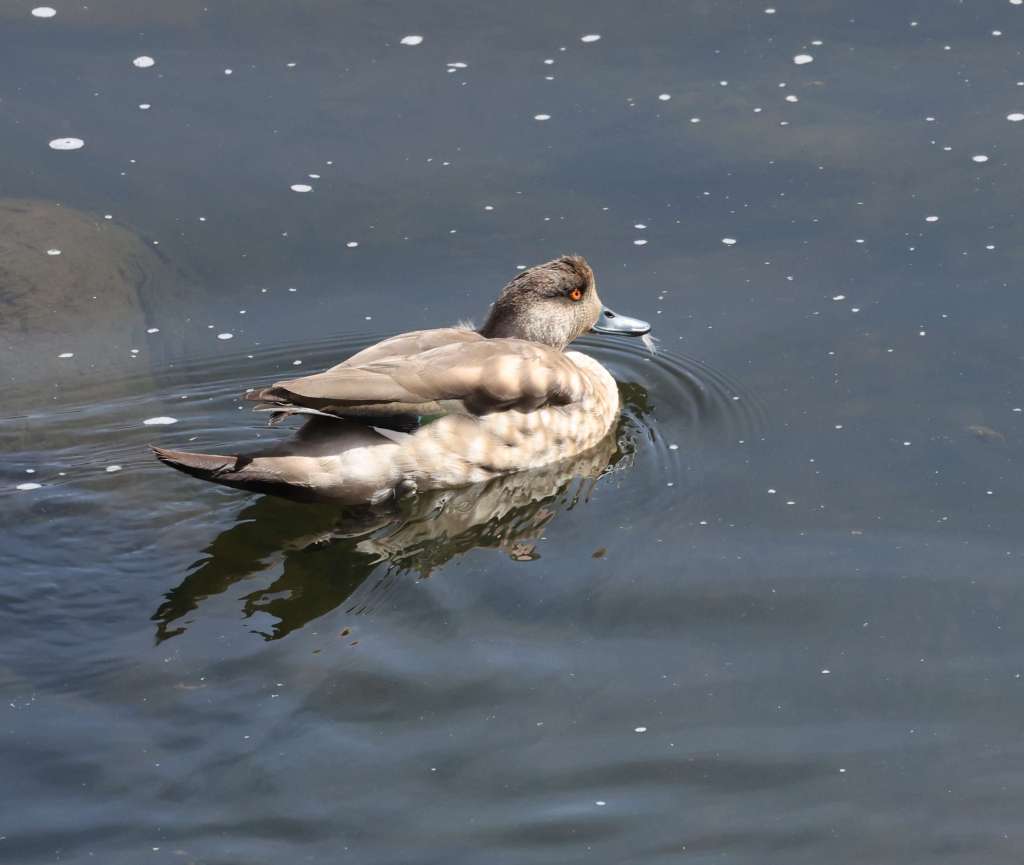
The river itself didn’t deliver much in the way of birds, with Yellow-Billed Teals (including some youngsters) being the only regulars, and I had a one-off sighting of a pair of Crested Ducks. In wetter times I think Torrent Duck and White-Capped Dipper are possible here.

In terms of raptors, American Kestrel was a mainstay and the only other raptor sighting I had was a Black-Chested Buzzard Eagle up high.

On the north-eastern side of the lodge’s grounds, the other side of the river is inaccessible and can only be seen by peering across the water. This distant birding yielded Cream-Winged Cinclodes and Ash-Breasted Sierra Finch and a few unidentifiable smaller birds. It was pleasant sitting on the warm boulders in the morning though with the sound of the river gurgling by.
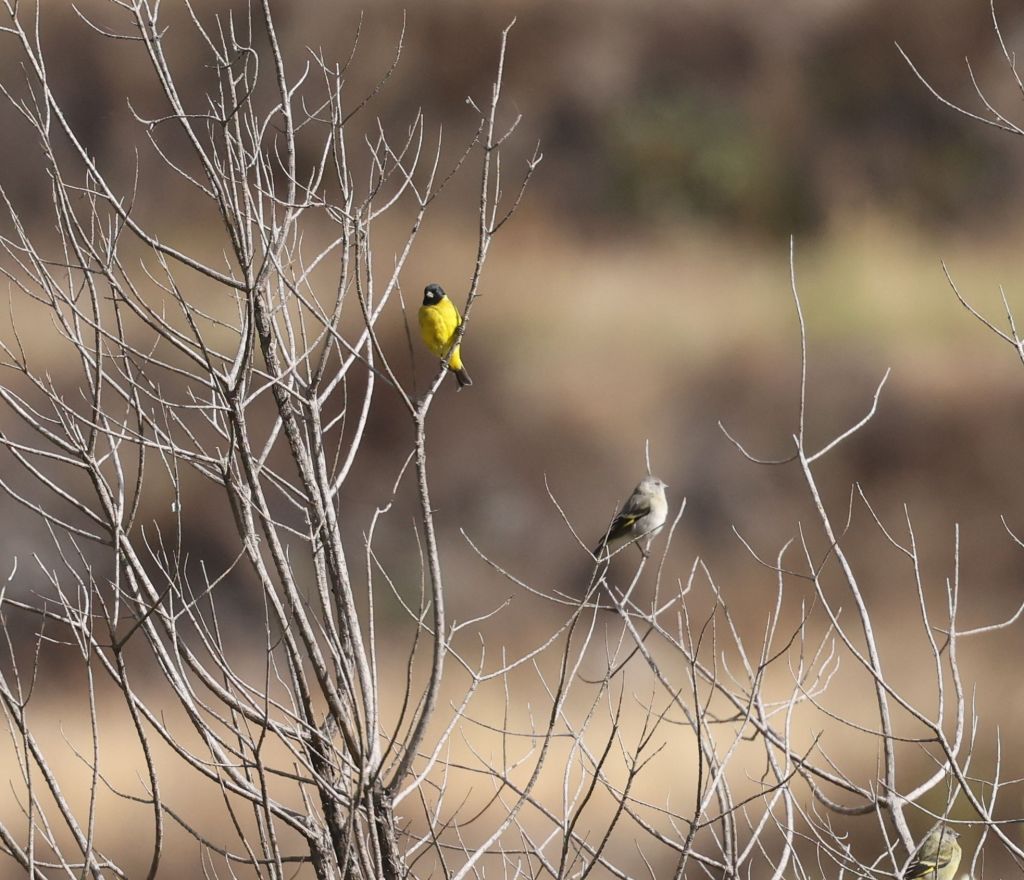
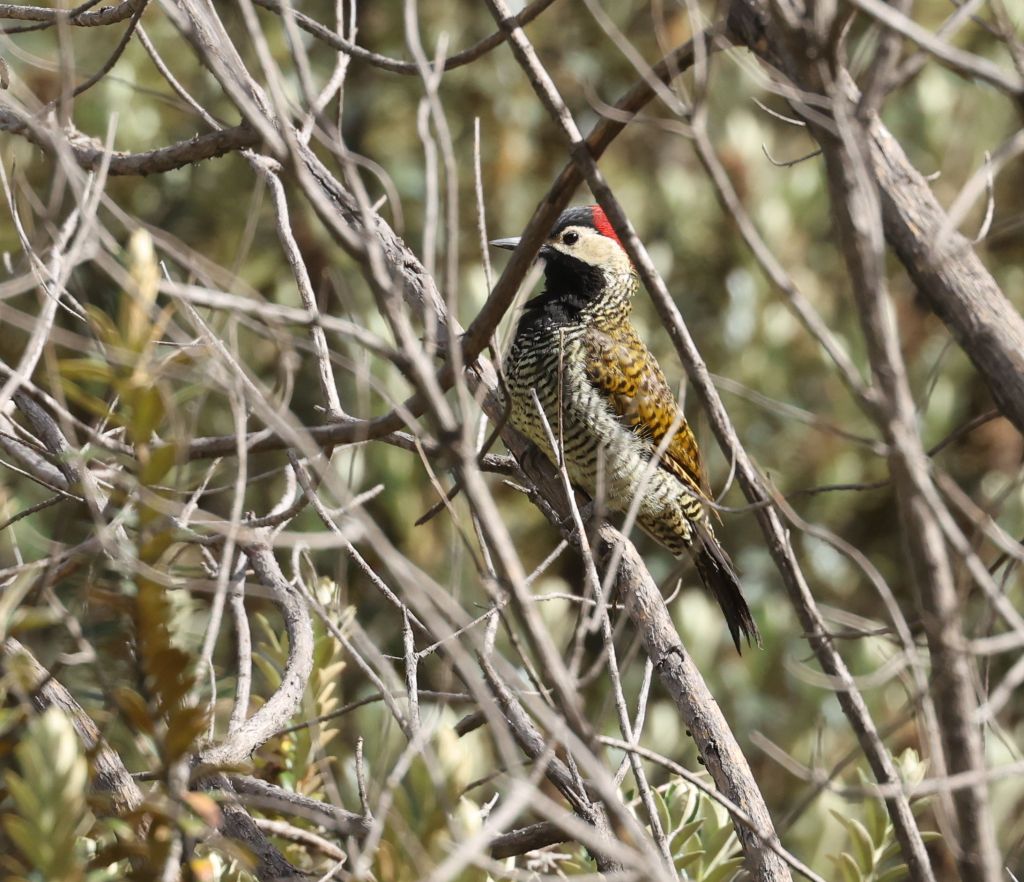
Towards the lodge’s south-eastern corner there is an impressive stand of tall trees that shades a couple of llama/alpaca pens. Around this area I spotted a Black-Necked Woodpecker, which was kinda exciting to see as I hadn’t seen a woodpecker for a while, and a few Hooded Siskins. Sadly, the Siskins did not seem keen for a close-up photo and were in and out of the area quick smart.
Summary
Colca Valley provided some reasonably decent birding, though I only really canvassed two sites with any depth. Being a dry and high altitude region, there aren’t any seriously biodiverse bird locations – most eBird hotspots aren’t more than 100 species. The Mirador Cruz del Condor provided the condors to me and a few hundred other awestruck onlookers, while I spent a cruisy four days at Colca Lodge Spa & Hot Springs doing some relaxing, and very relaxed birding.
AUTHOR: ANDY GEE
BIRDERS: ANDY GEE, K-A
 Bird Spots