After birding in a few places in inland Peru, it was time to hit the coast… the capital Lima! I had nine days there, and managed to fit a few day trips in up and down the coastline to visit a few choice nature hotspots.
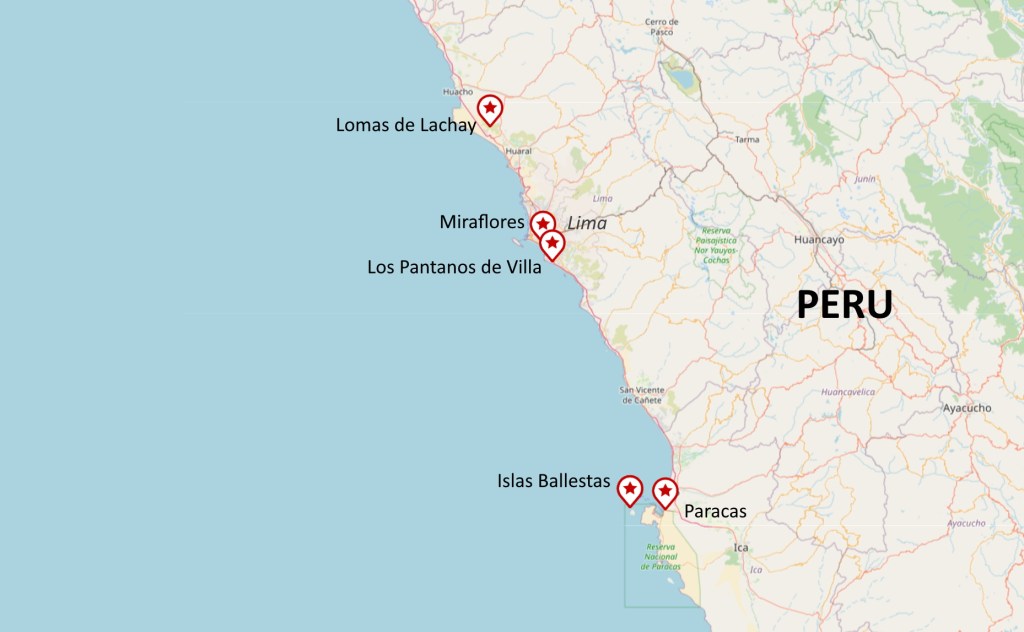
This blog post covers the spots on the map: birding within the city of Lima itself (surprisingly enjoyable), Paracas and the Islas Ballestas to the south (big drawcard of Humboldt Penguins), and Lomas de Lachay to the north (microclimate with some interesting species).
Despite this coastline being technically arid – Lima gets only 6mm of rain per year – you will still find plenty of productive birding in the region.
Base Your Stay In Miraflores, They Said. OK, Why Not, I Said.
Many blogs encourage tourists to Lima to stay in the upmarket Lima suburb of Miraflores (or neighbouring Barranco to the south)… so I took the advice and did so. I found it was quite safe (I quickly got used to carrying my birding camera around despite occasional cautions online suggesting to hide valuables), full of great restaurants, much greener than I expected, and more filled with bird life than I could have possibly imagined!


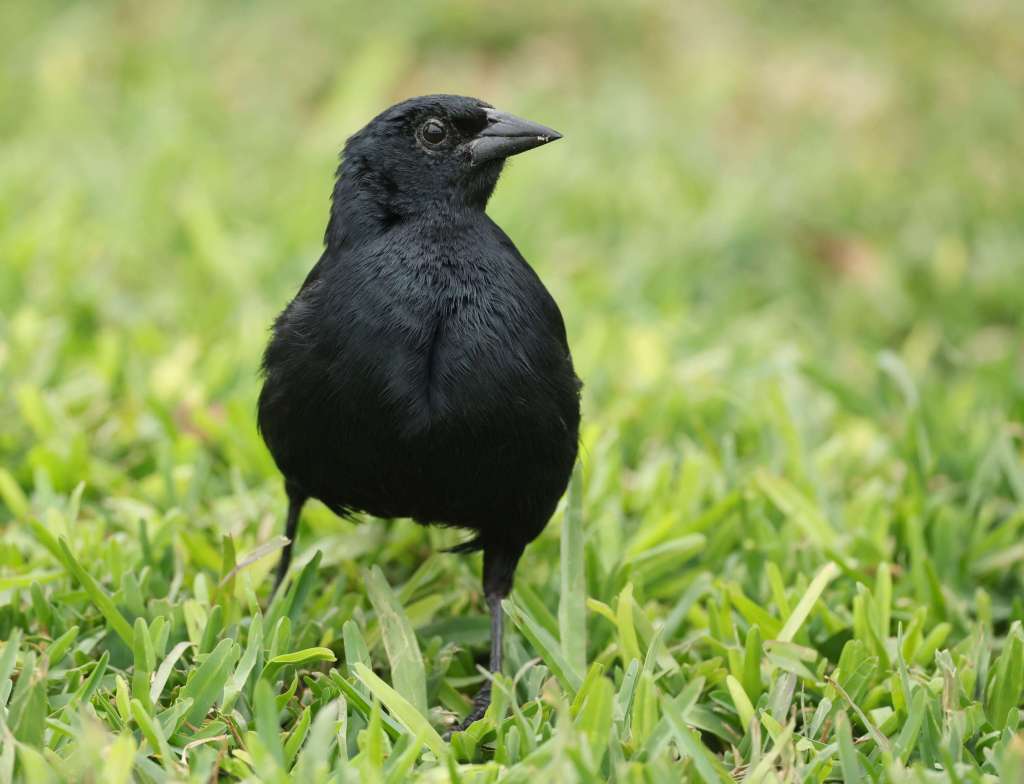
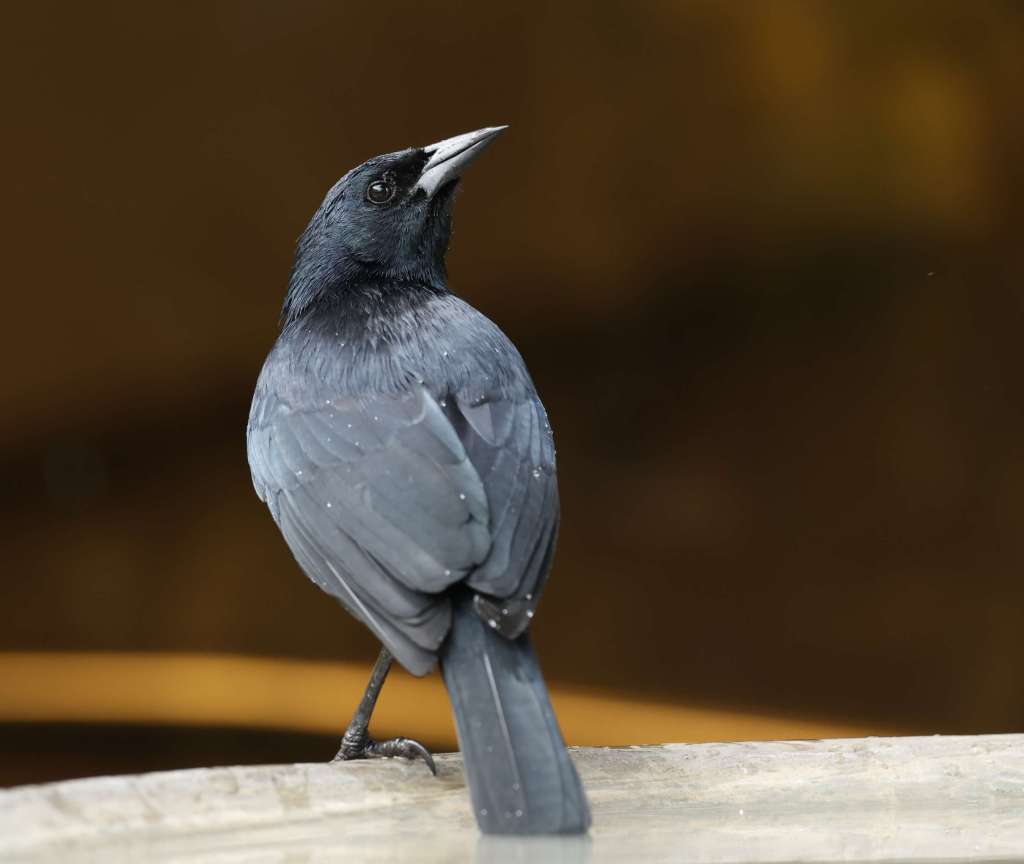
There are plenty of urban birds here that have made their homes in various niches of the city – Rock Doves, Black Vultures, and I even saw a pair of Harris’s Hawks in a large tree on a busy street. The most vocal and numerous of the street birds has to be the Scrub Blackbird, whose “electrical whirring” call can be heard all day long.
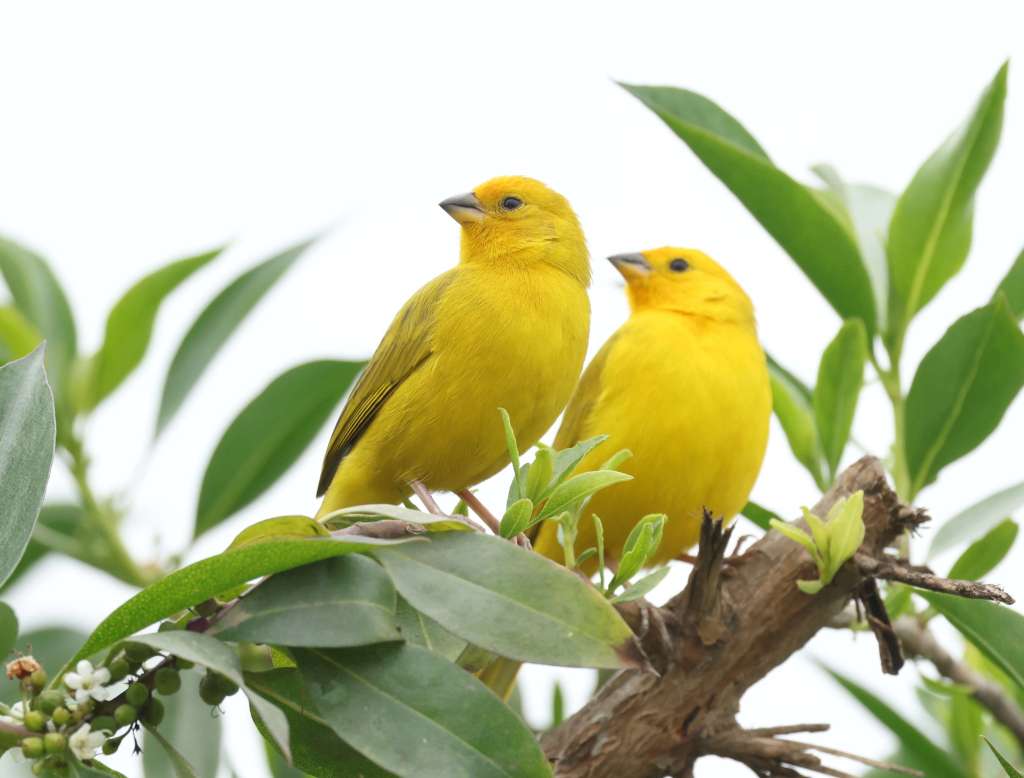
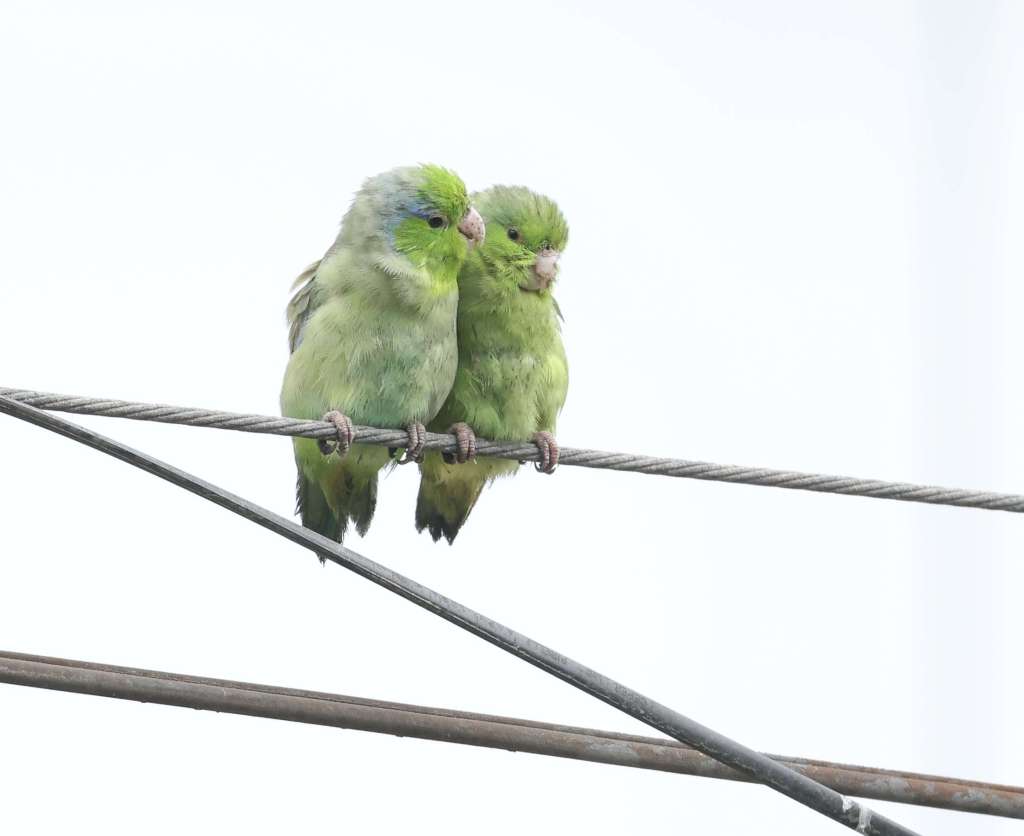
There are a few parks and a large waterfront in Miraflores, which we’ll get to in a minute, but be sure not to underestimate what you can find on seemingly innocuous streets. A gaggle of ultra-adorable Pacific Parrotlets perched on power lines is one example, while it is scarcely believable that the vibrant Saffron Finch with its bright yellow colours makes its home right in the thick of the city. I have even seen Saffron Finches perched on traffic lights!
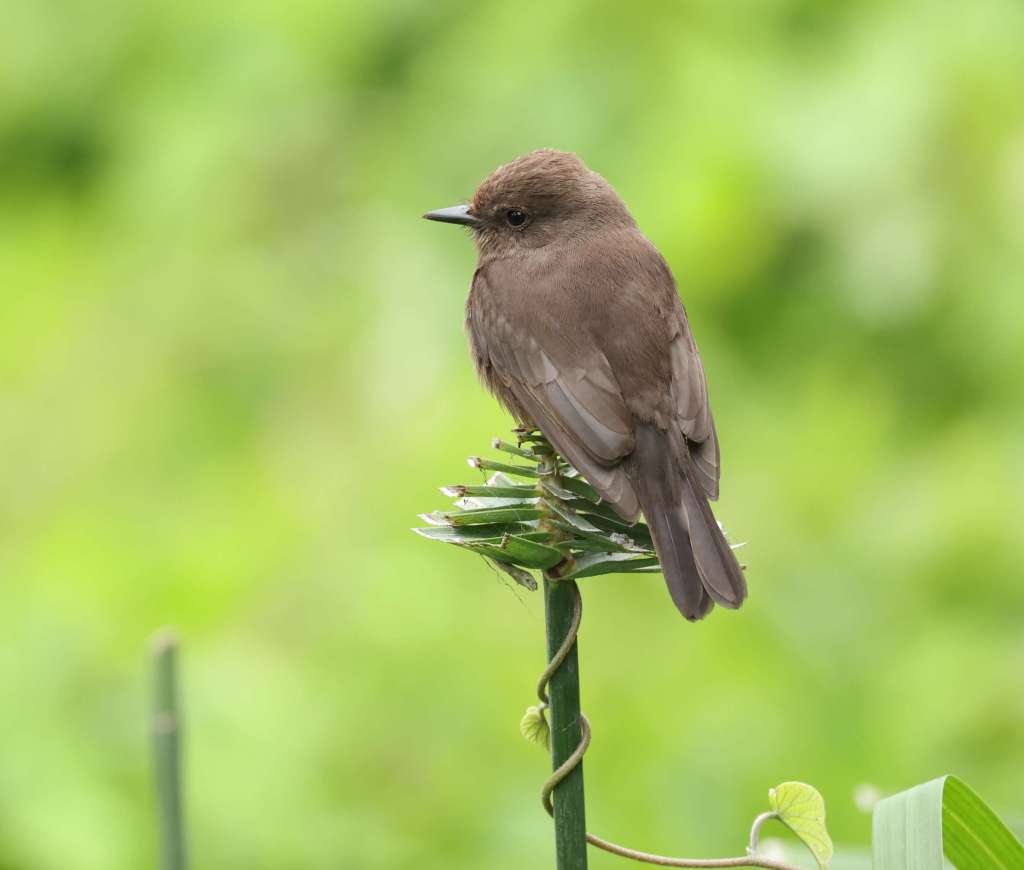
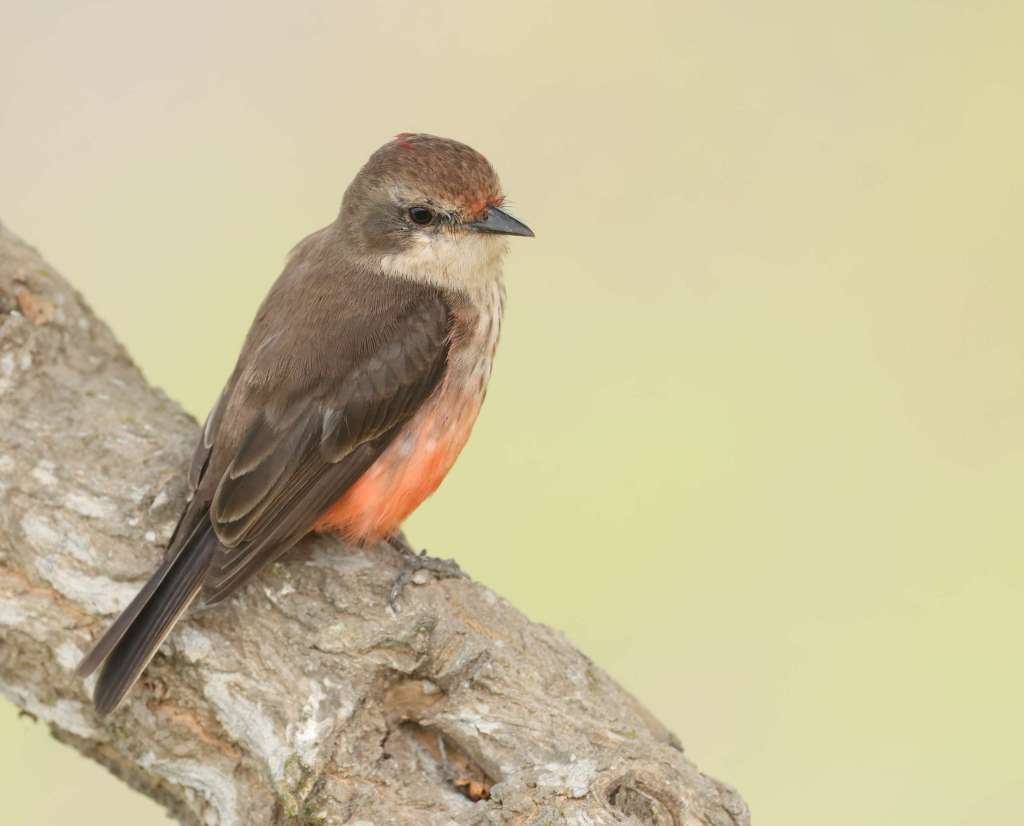
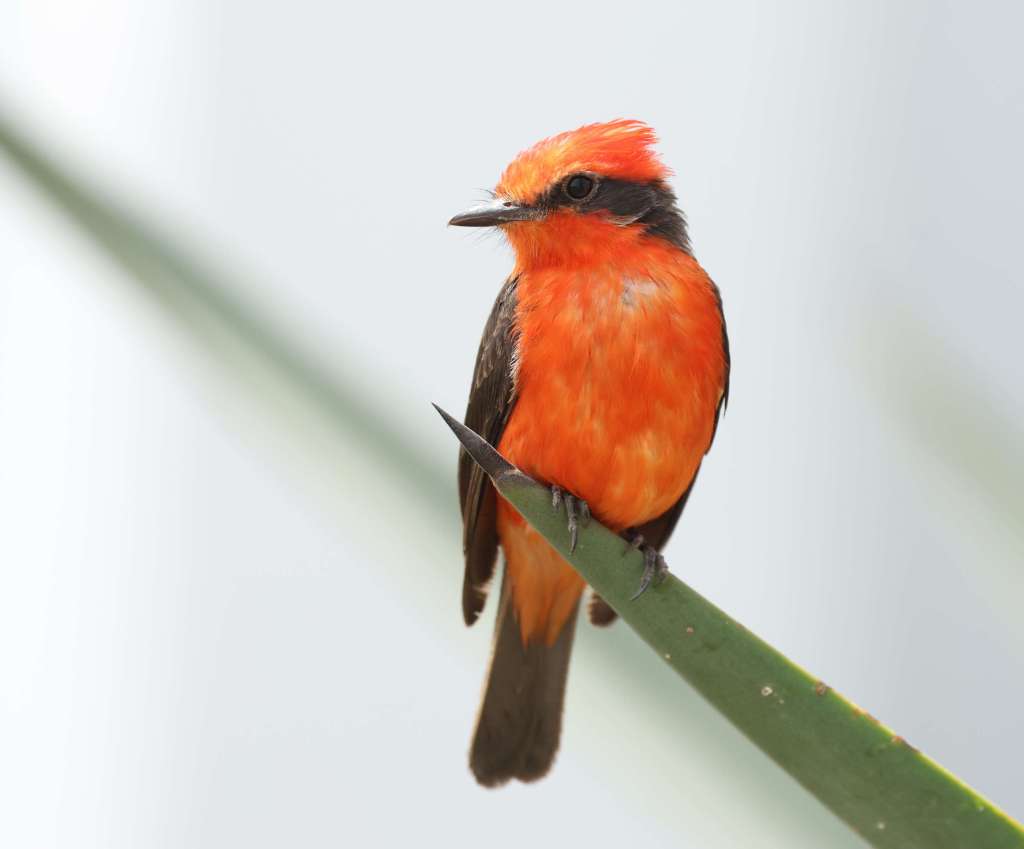
There is an interesting characteristic of Vermilion Flycatchers in Lima (and, I presume, in the wider region). Whereas in various places in the US I was awed by the bright red colours of this bird, here in Lima most of them are… a dull dark brown. These are dark morph Vermilion Flycatchers.
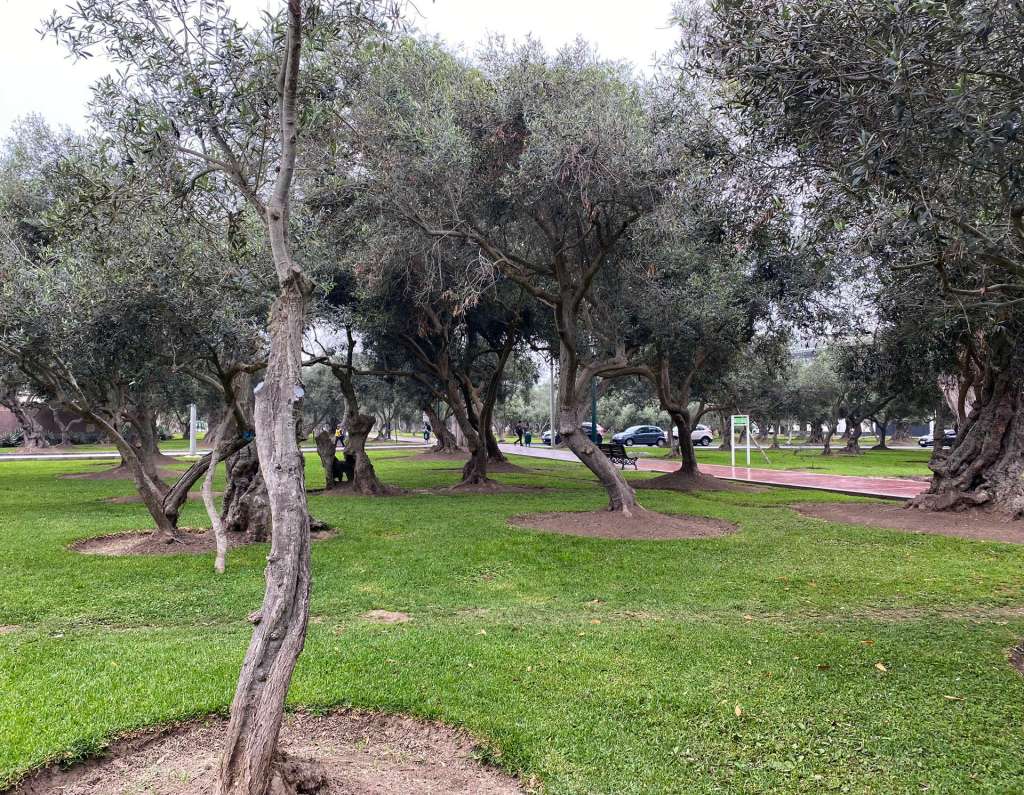
One reasonably large park at the very north edge of Miraflores is El Olivar de San Isidro Park, known as Parque El Olivar in eBird. Google’s regular street map for some reason doesn’t show the green space there (it’s more obvious on the satellite view), but there’s plenty of trees and even a big pond. I found lots of Lima’s resident bird species here, at least the non-coastal ones.


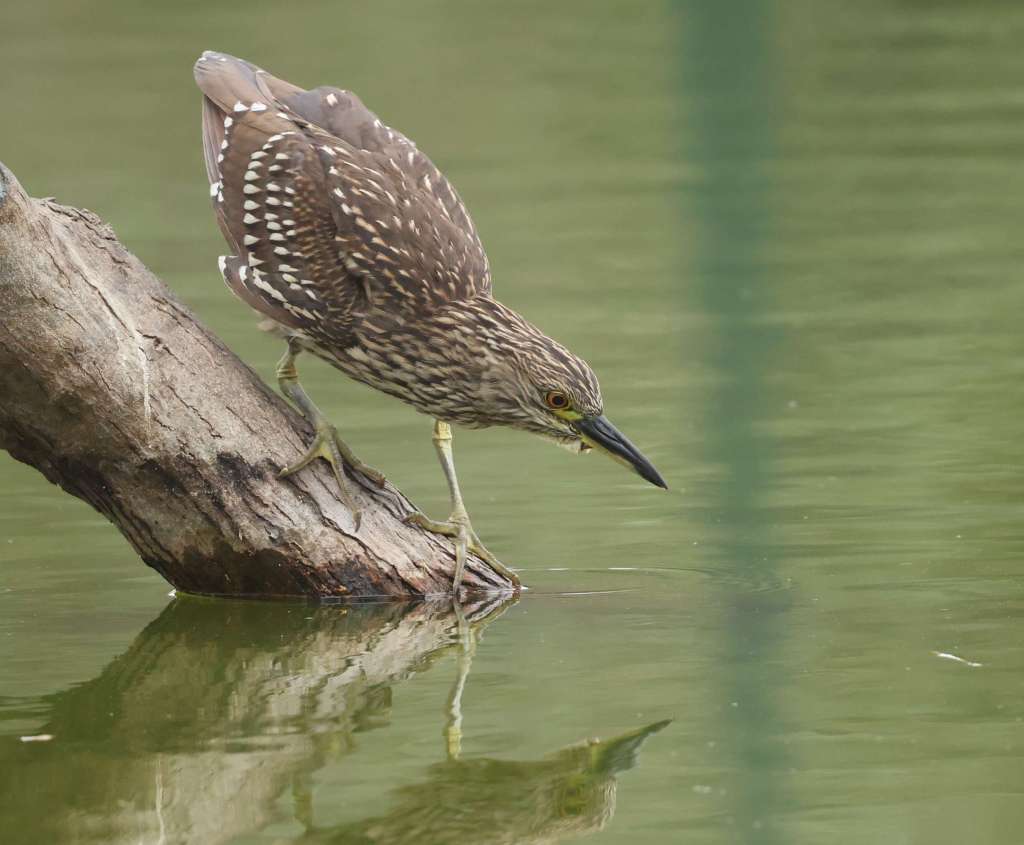
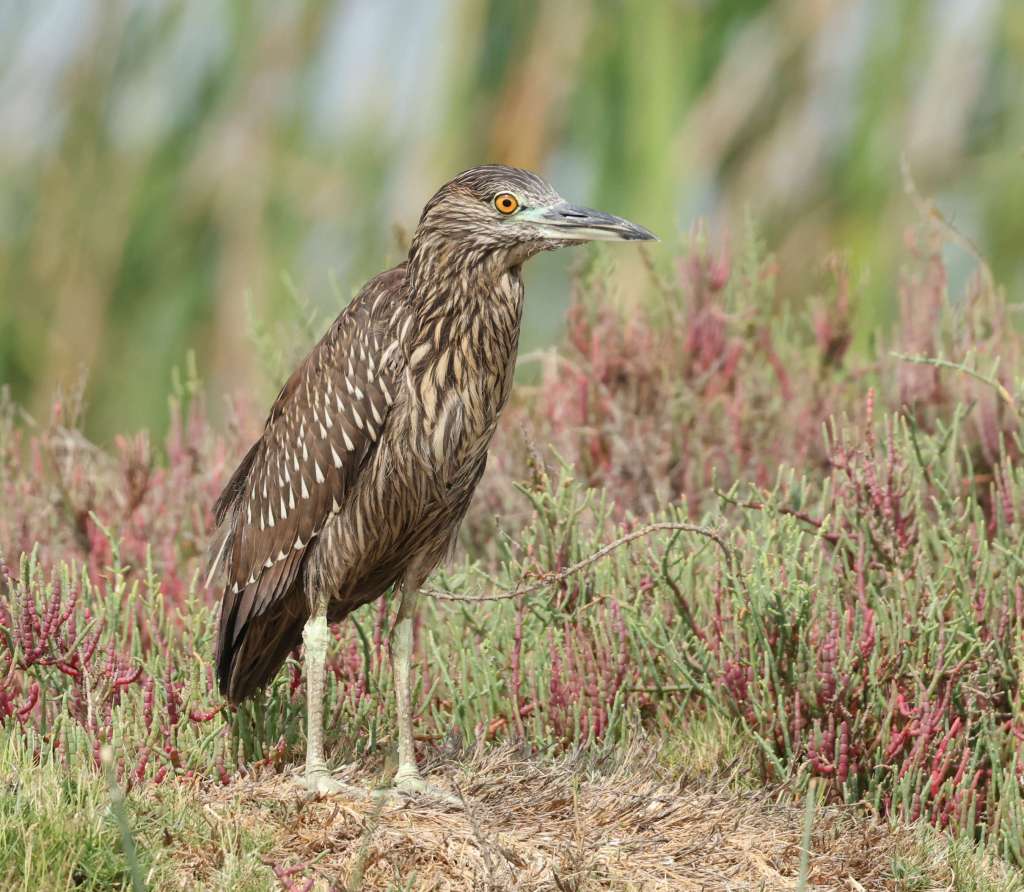
At this pond I saw several Black-Crowned Night Herons, nearly all of them juvenile. I watched the slow, deliberate hunting technique of one of them for quite a while, though I never saw it catch a fish.
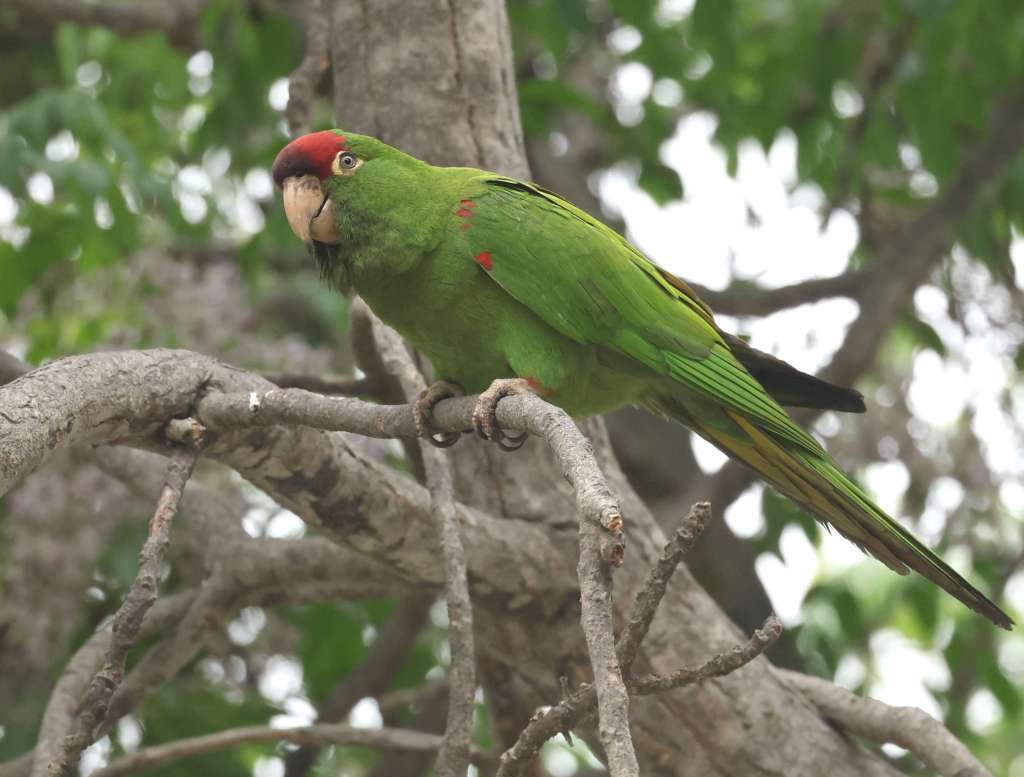
One of the identification challenges in this region is picking out parakeets. There are three similar species: Cordilleran Parakeet, Mitred Parakeet and Red-Masked Parakeet. While sometimes ID’ing is straightforward – you are supposed to look primarily at the amount and type of red on the bird’s head – other times left me wondering, particularly when I couldn’t get a good view of the top of the parakeet’s head in the higher branches.
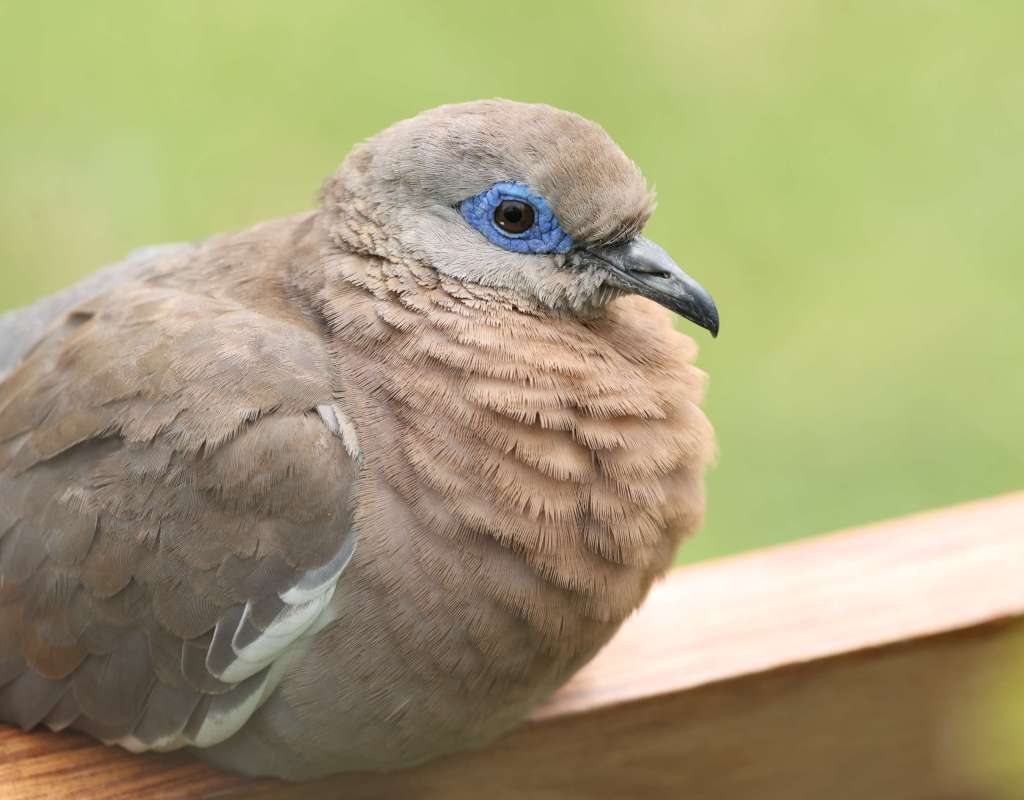
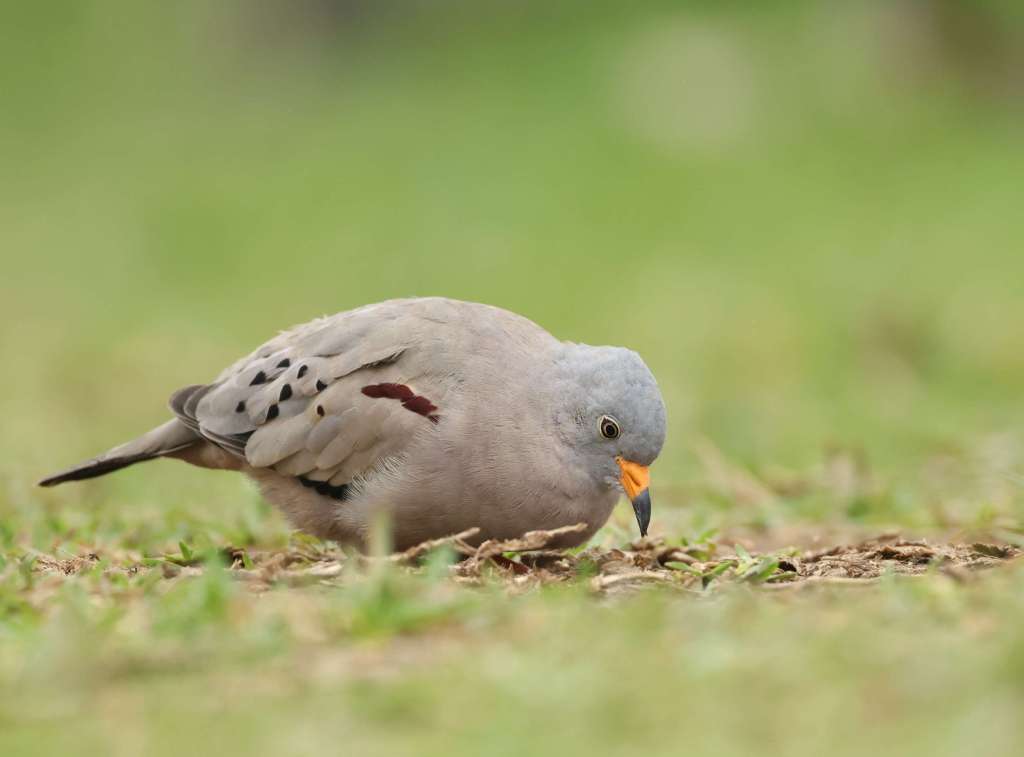
There are plenty of doves all over Lima (including Rock Doves, it goes without saying…), and Parque El Olivar is particularly good for them, especially the diminutive and utterly adorable Croaking Ground Dove. I had first met this bird in Peru at Arequipa, and instantly joined the fan club. And yes, this dove’s call really does sound like a plaintive frog. The common West Peruvian Dove is quite a bit larger, and has a striking blue eye ring.
For “forest” birds it does not matter too much which green space you bird at in Miraflores. I spent most of my birding time there along the string of parks that sit atop the coastal cliffs (Parque Antonio Raimondi through to Parque Los Pinos, about 2km), and saw much the same species there as at, say Parque El Olivar.
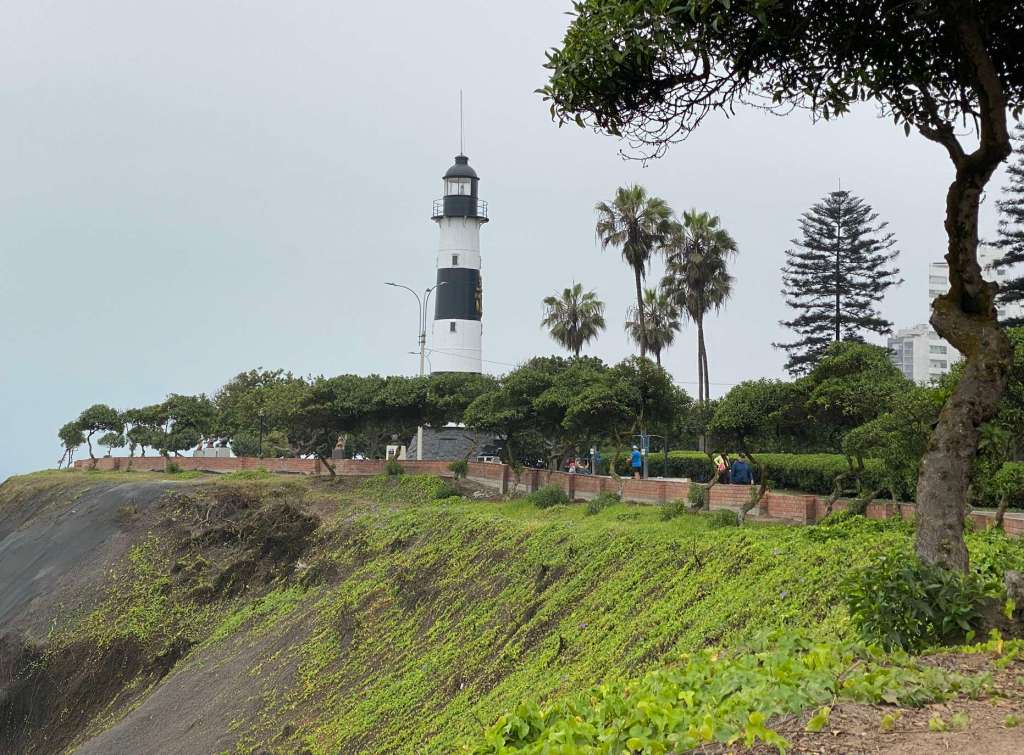

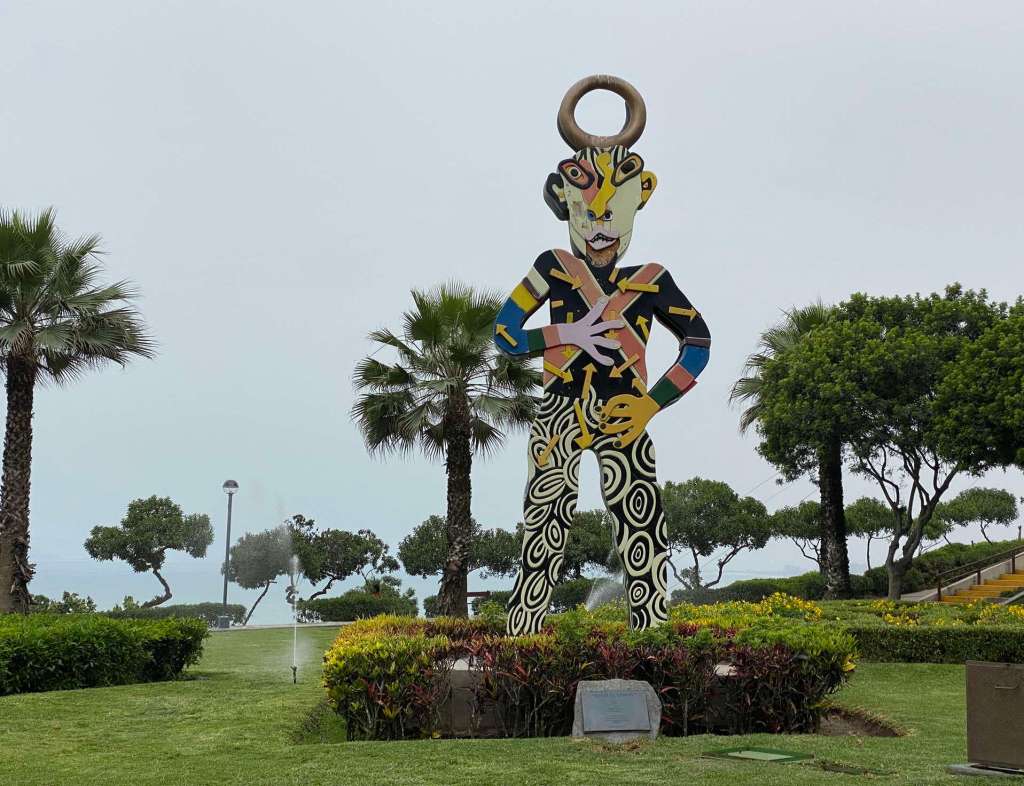
You might notice many of the context photos here showing grey skies, and thought “oh, it must be a bit rainy”… not so. Lima gets miniscule annual rainfall, but not for nothing is it called the “Grey City”. The offshore currents bring up cold air from the south (keeping the temperature surprisingly cool given the latitude), which hits the nearby mountainous regions and basically causes cloud and fog coverage without turning into rain. I had maybe a day and a half where I saw the sun in the week or so I was there.
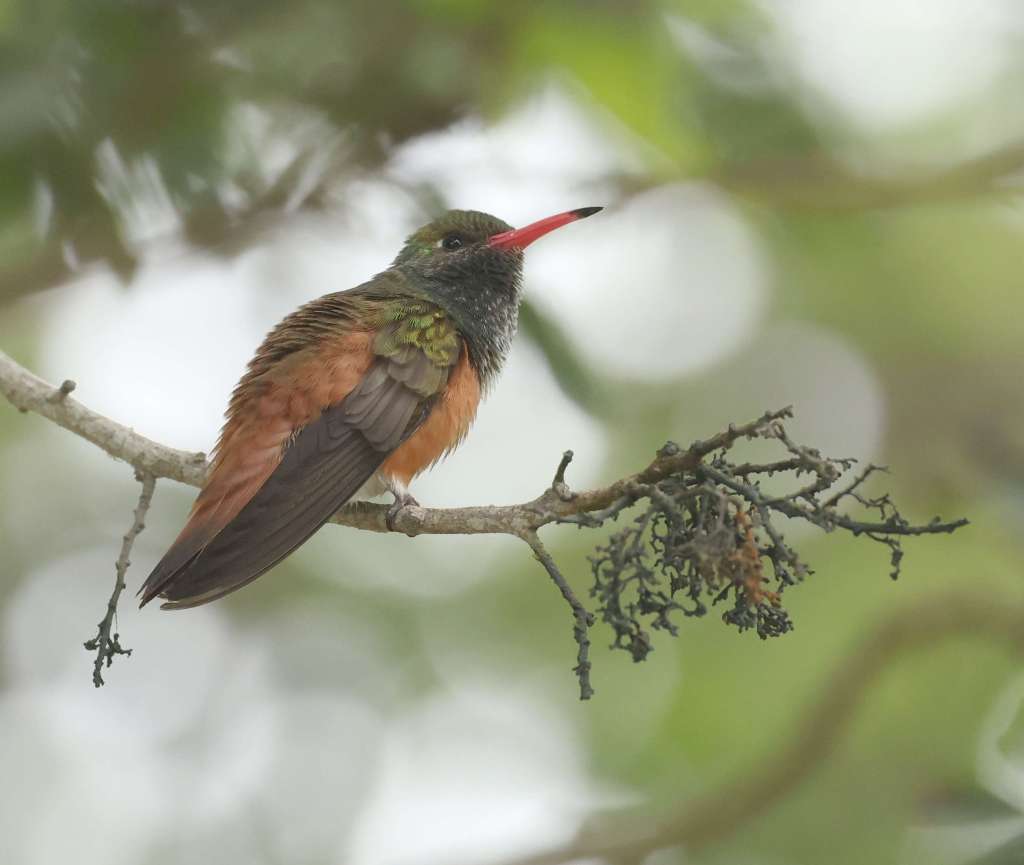
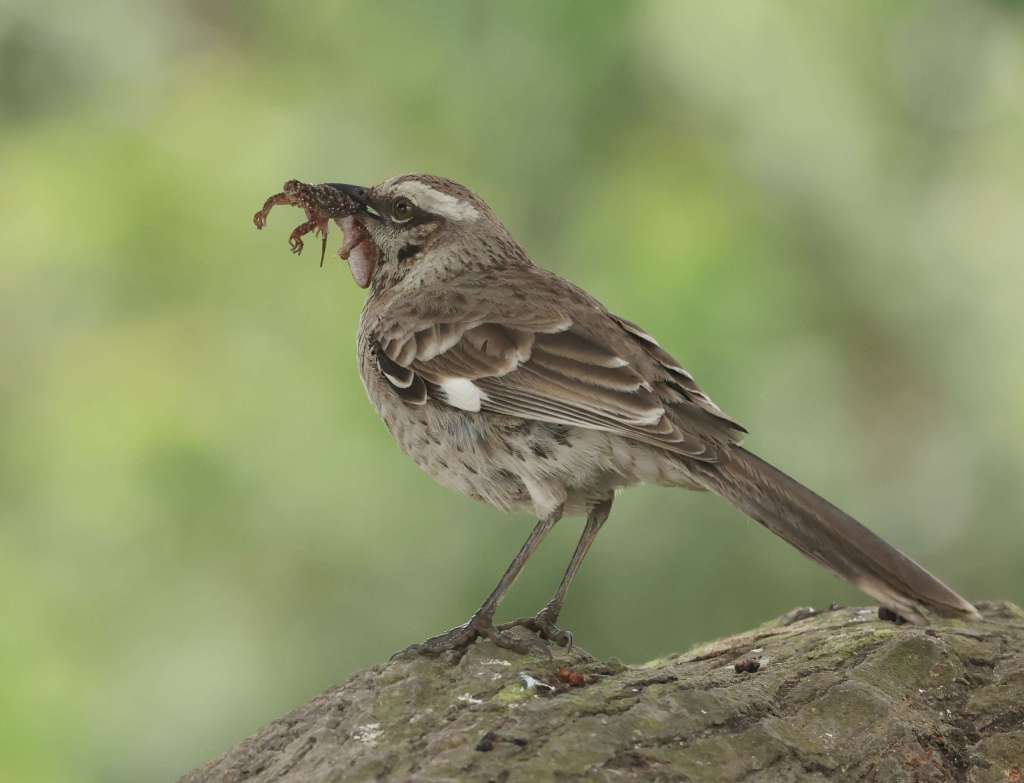
The brash Long-Tailed Mockingbird is one of the more obvious birds (apart from all the doves, that is) in the clifftop parks, while the Amazilia Hummingbird is by far the most common of the hummingbirds and reminds me of the Rufous-Tailed Hummingbird found in many countries in South America.
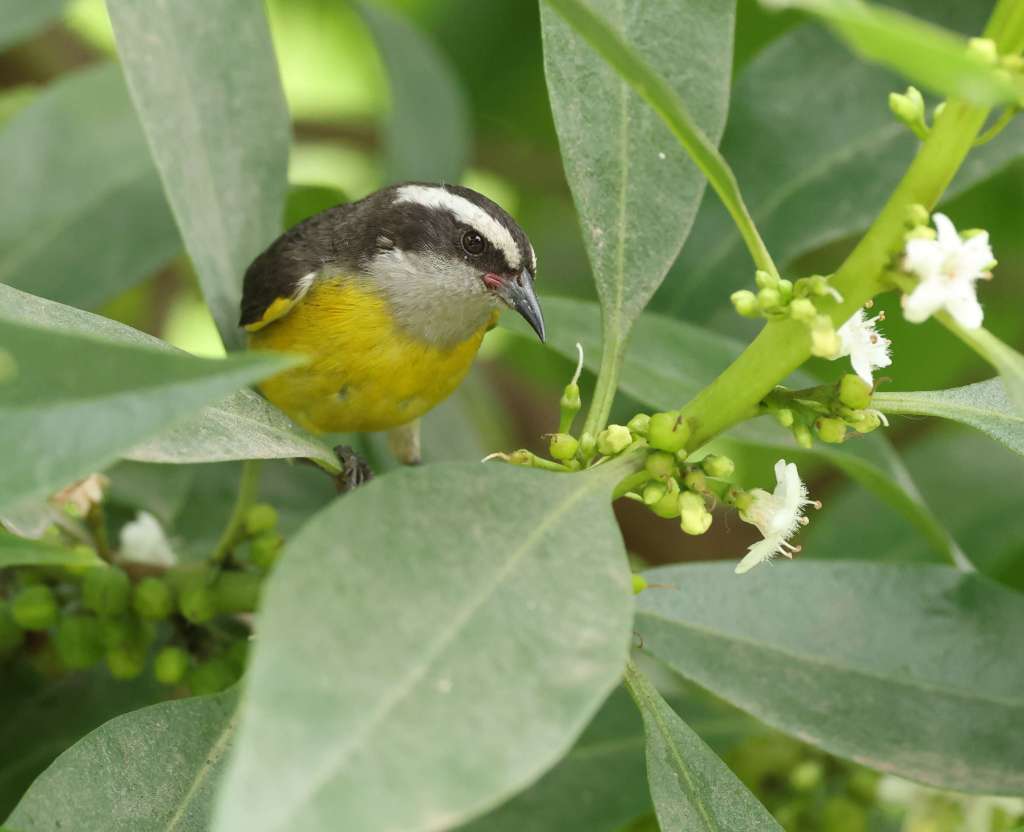
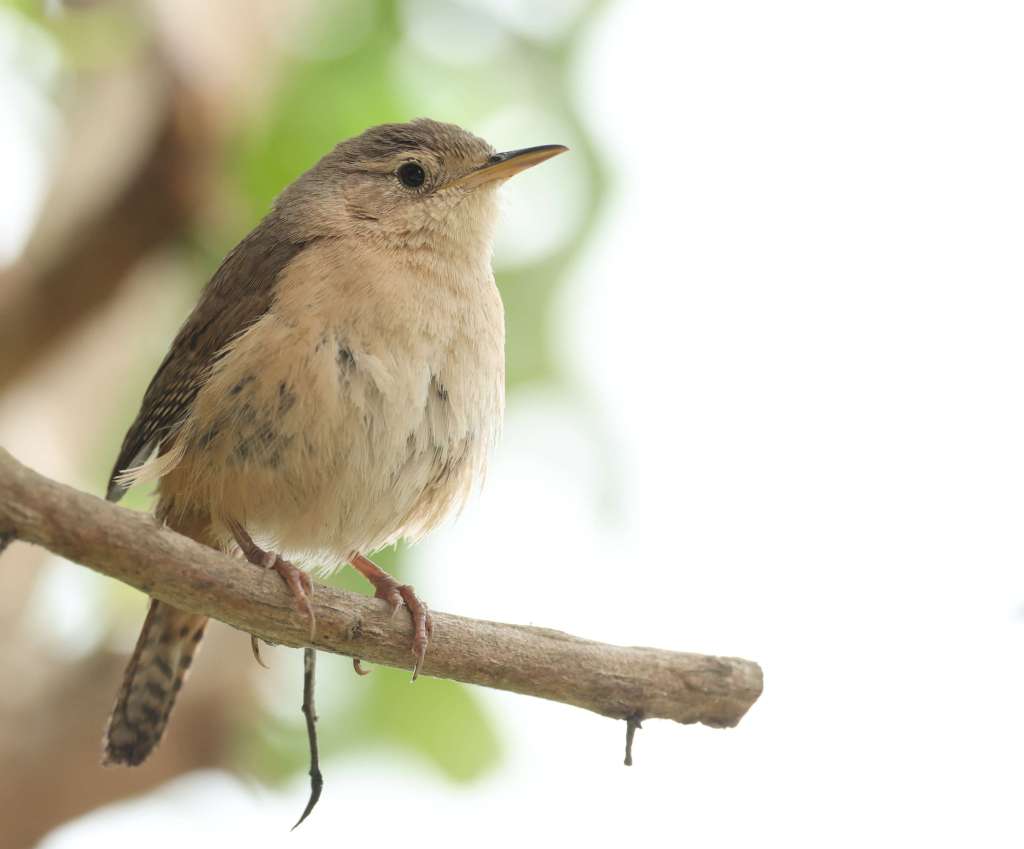
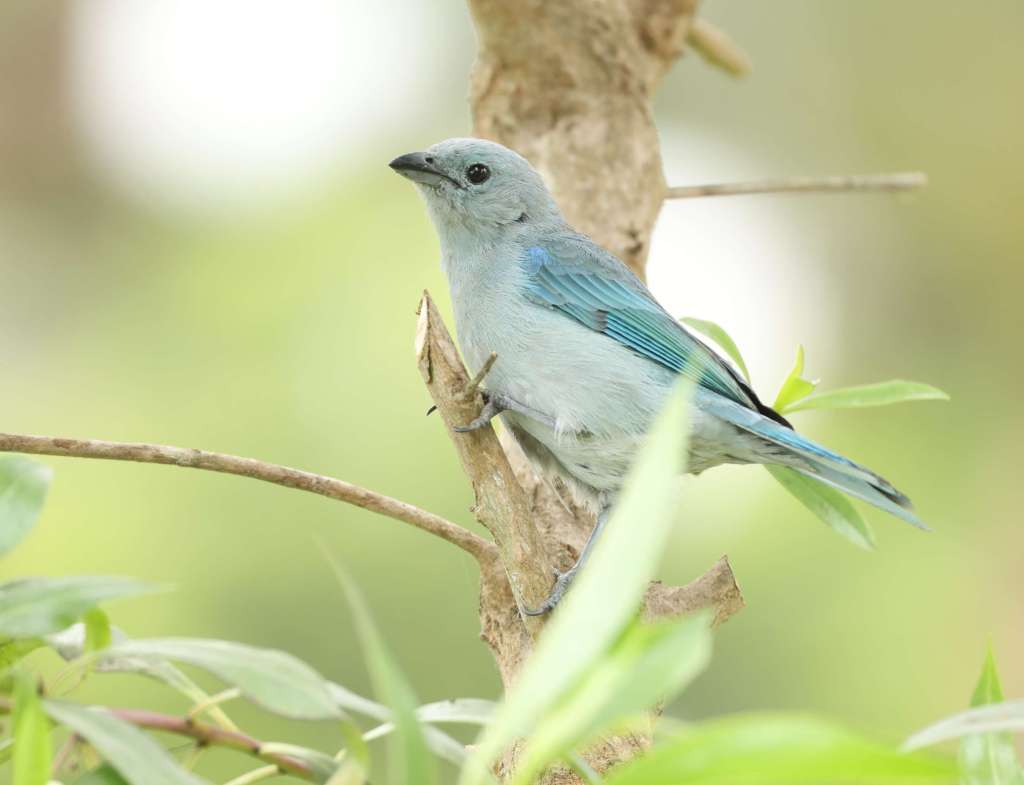
Other small birds to look out for include the tiny but vocal Bananquit, which I saw often in denser bushes, Southern House Wren and – speaking of common South American birds – the ubiquitous Blue-Grey Tanager.
The scenery along the cliffs makes it a pleasant place to stroll, though in many months of the year it is grey and cloudy.



Closer to the water, traffic poles and wires are festooned with dozens of Neotropic Cormorants. Red-Legged and Guanay Cormorants are also possible along this coastline, and though I kept a good look out for them and saw them sporadically on eBird checklists, I never saw any.
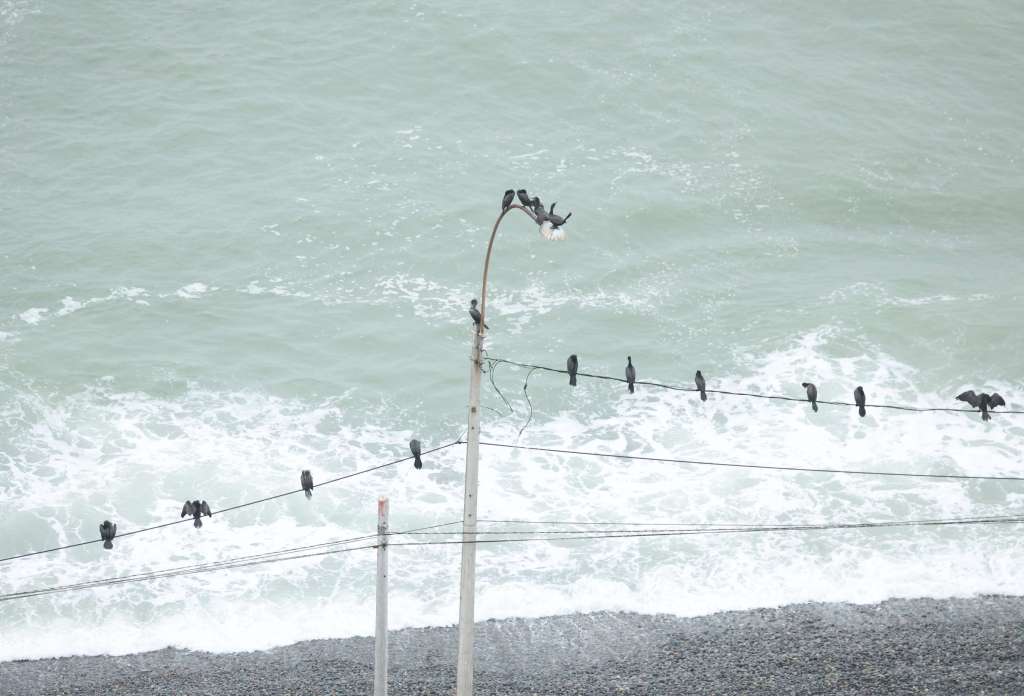
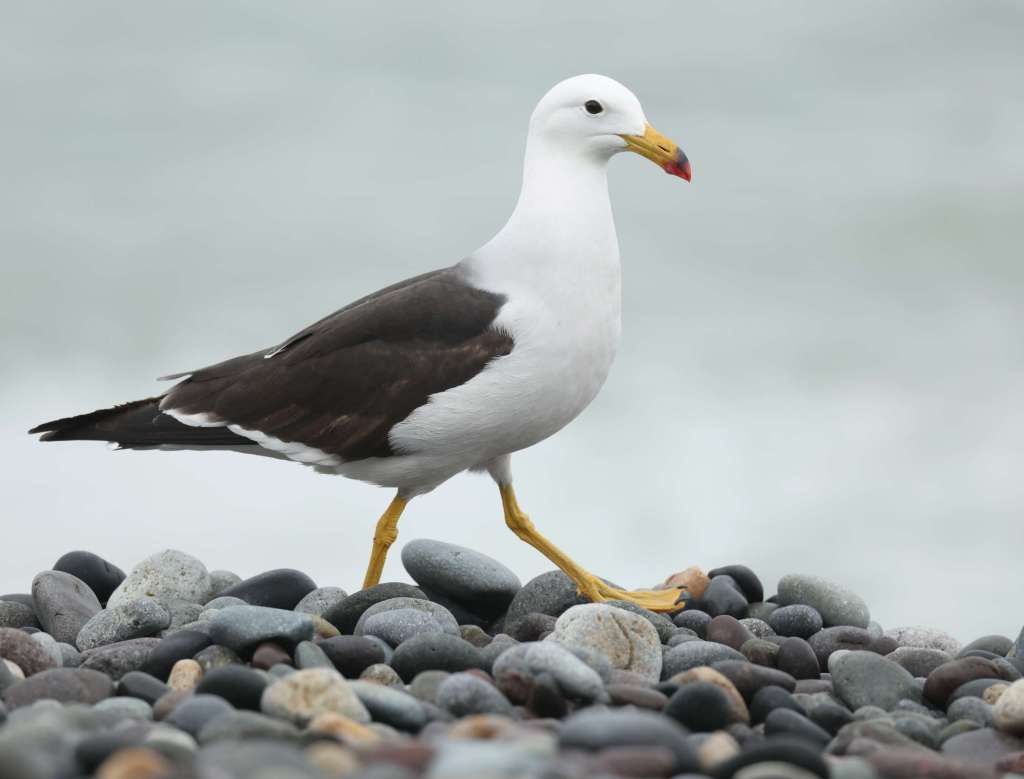
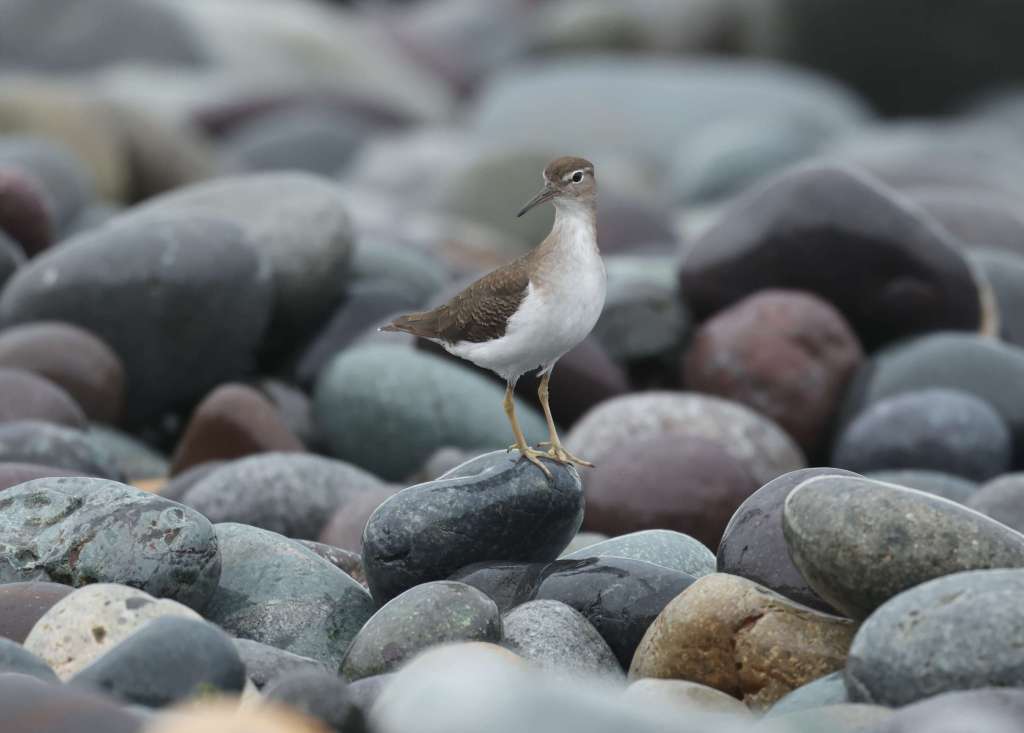
Plenty of people actually surf in these waters, despite the exceptionally cold water produced from that famed Humboldt current sweeping up from way down south. Along the pebbly shoreline (mmm, the whooshing sound of waves on shingle), where cormorants and occasional Peruvian Boobies can be seen zipping by further out, are Belcher’s Gull, a large gull which resembles a Kelp Gull (which also occurs here), and Spotted Sandpipers.
The longest pier in the area includes a restaurant, Restaurante La Rosa Náutica, which has its own eBird hotspot. I foolishly (in hindsight) left it until the last day before I visited this pier, and the restaurant was closed and the guard wouldn’t let anyone go further than a few metres down the jetty…



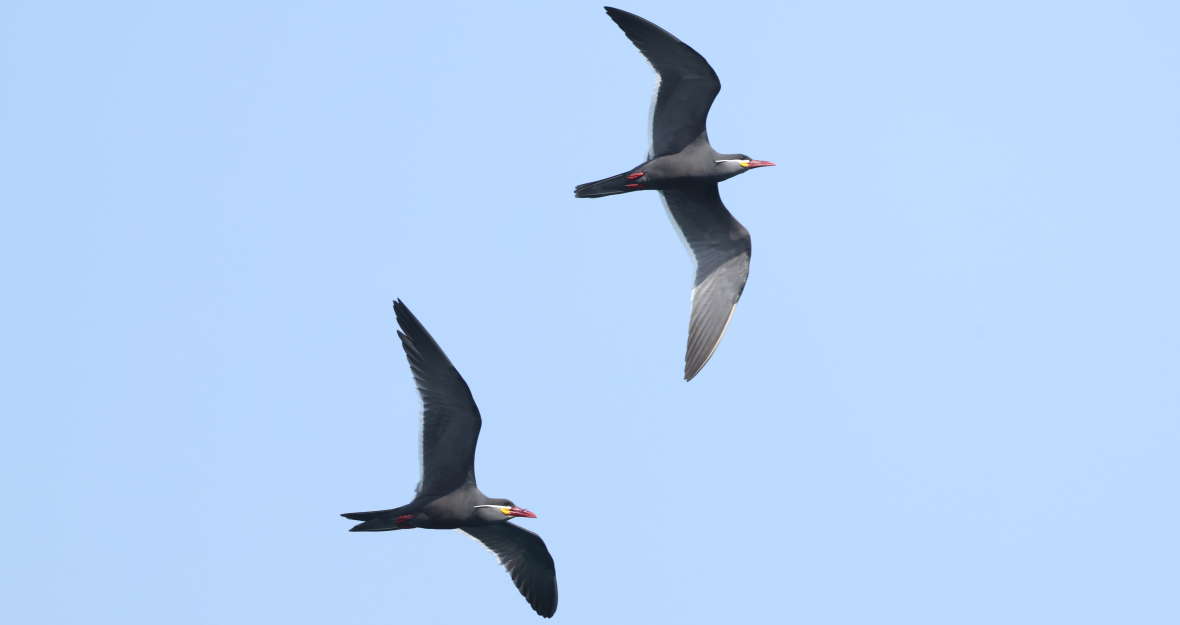
…which was a real bummer, because I could see at least 20 Inca Terns circling around the restaurant and even landing on the roof and the wooden supports underneath. Now these terns are just incredible with their trademark epic white “moustache”, and are quite large and a bit chunky too. Fortunately a few swooped in closer to the shoreline and a couple even alighted on the rocks under the jetty. Birds like the Inca Tern are what I live for (okay, but only a slight exaggeration).
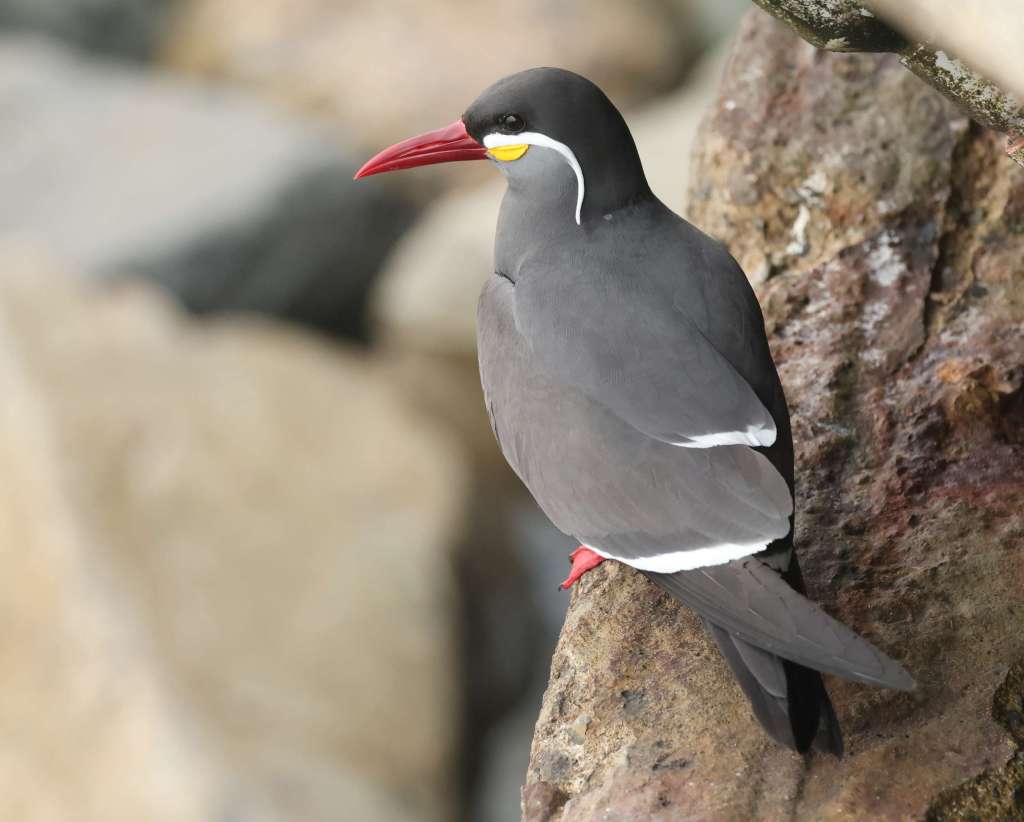
Looking more closely at eBird, it seems this pier is the spot in Miraflores to see Inca Terns. I really wish I had been able to go further down the jetty. Damn.
Anyway.
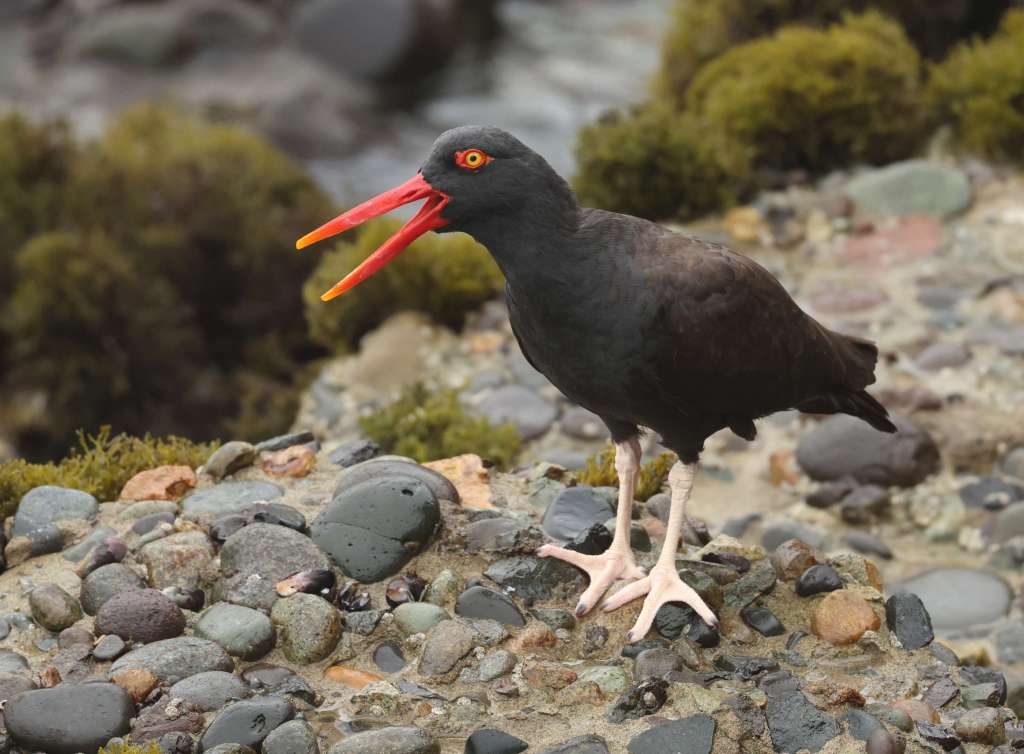
From my limited vantage point I could also see two Blackish Oystercatchers foraging amongst the mussel-encrusted rocks, and it was fun to watch them hopping amongst the rocks and avoiding (mostly!) the encroaching waves. Shout-out to the ornithologists who named it too, “blackish” is fitting as it’s not quite black… it’s… black-ish.
Wetland Paradise: Los Pantanos de Villa
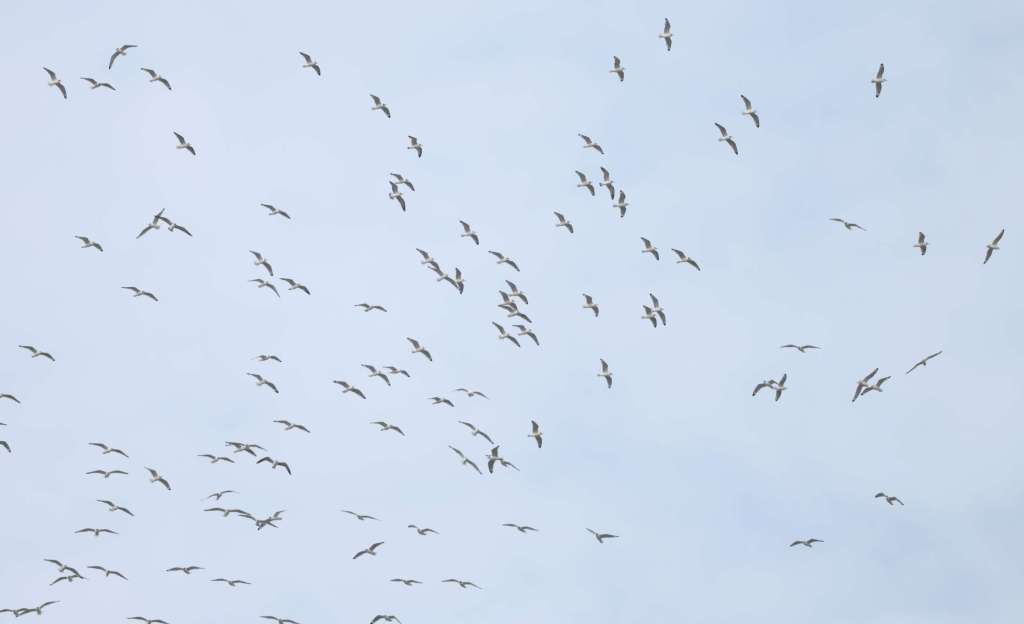
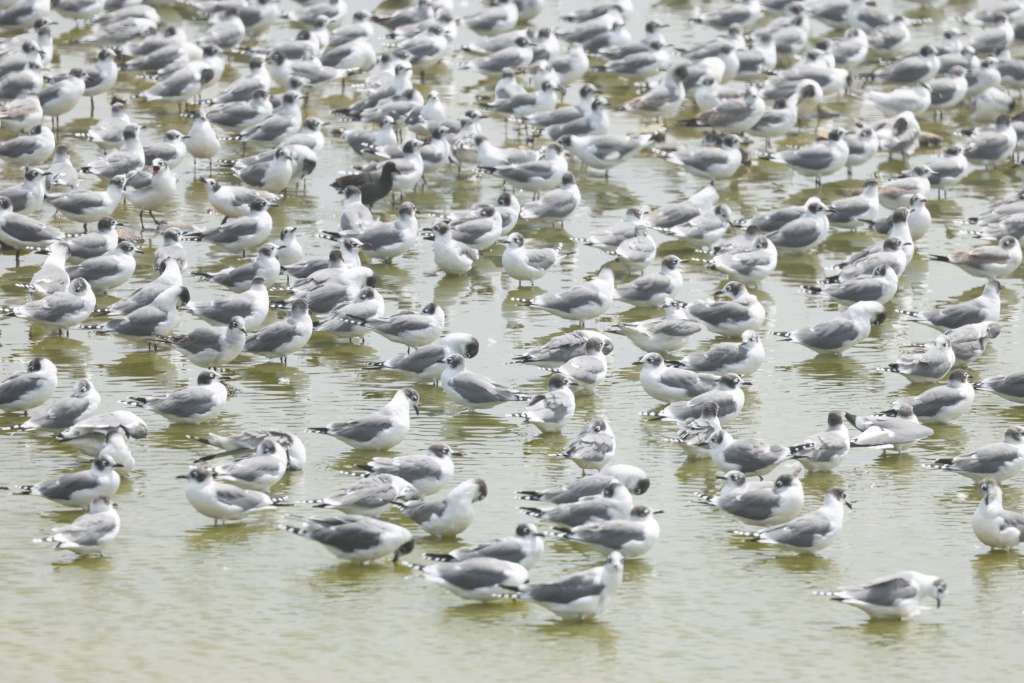
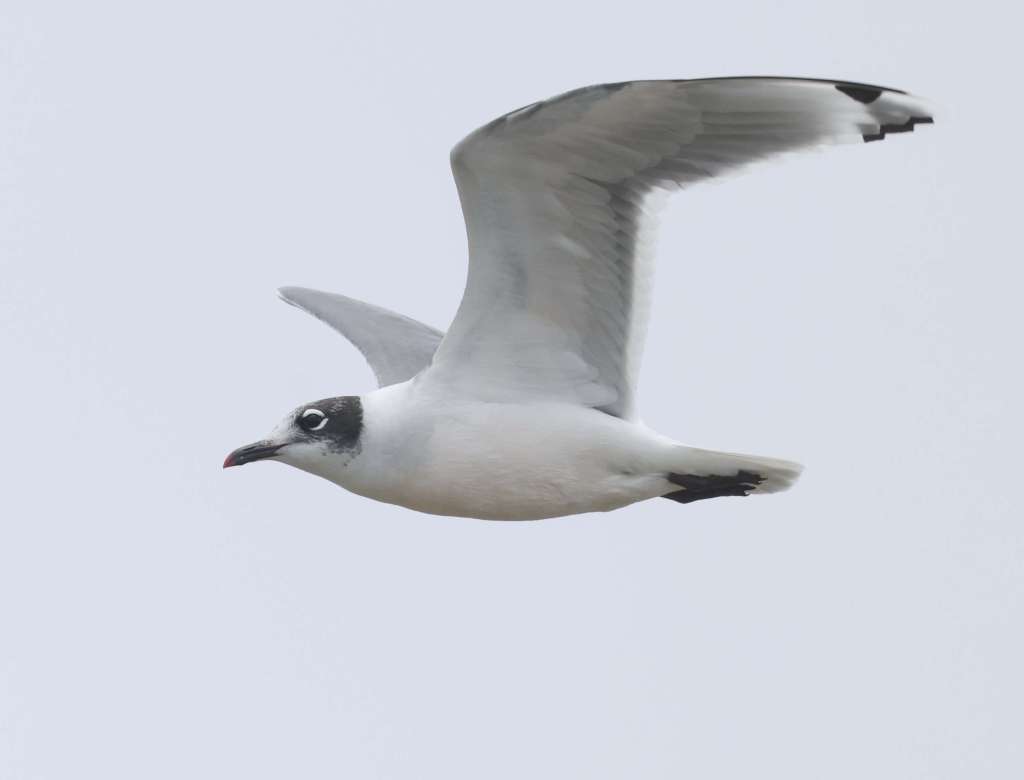
Los Pantanos de Villa on the coast to the south of Lima is the premier wetland site in the city and any serious birder should make time to go here. Vibes were good when we arrived at 8:50am (twenty minutes after the opening time of 8:30), with literally thousands of Franklin’s Gulls circling overhead (an amazing sight!) and who-knew-what beckoning from the swampy reed-lined waterways.
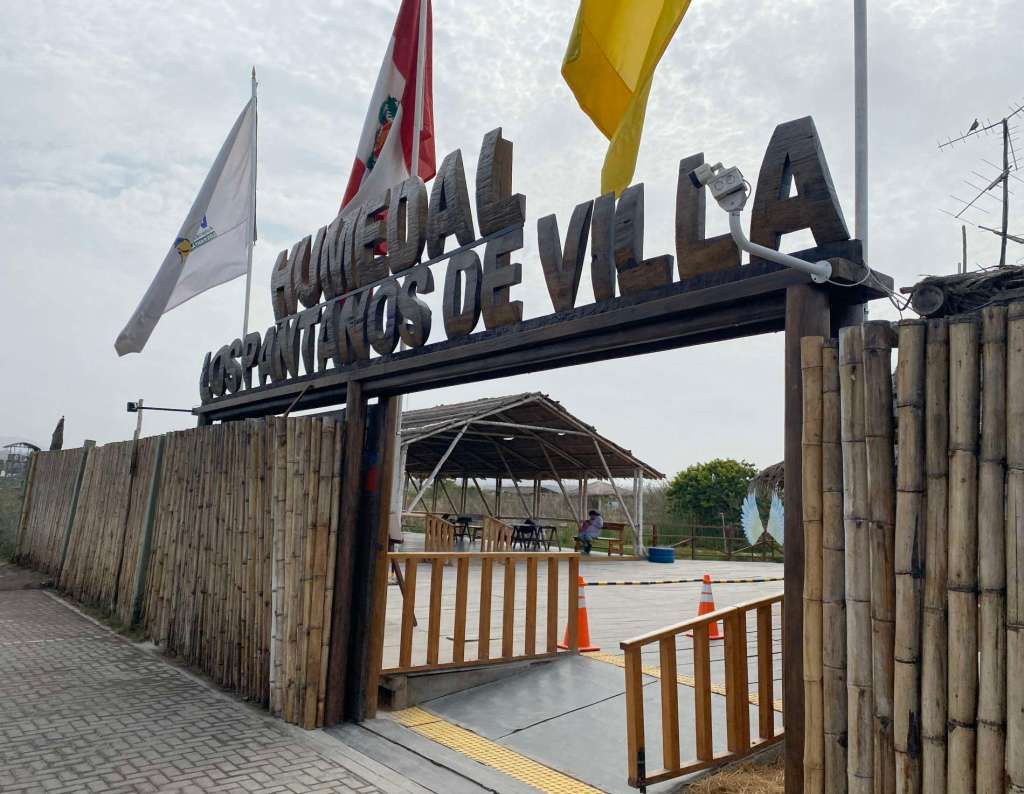
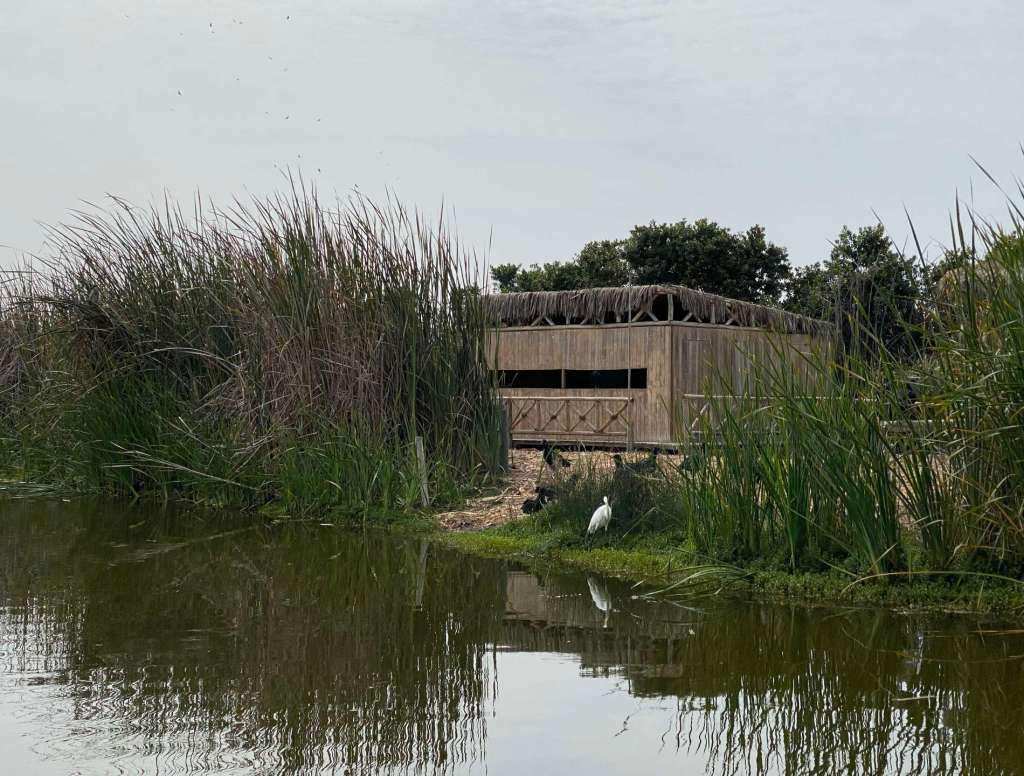
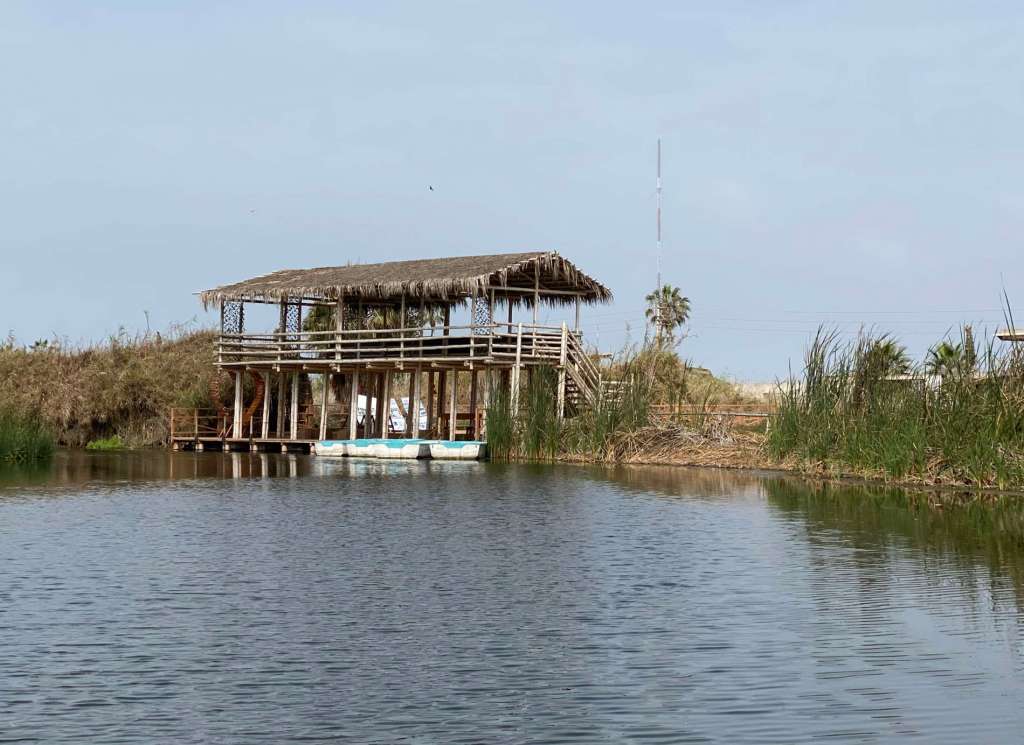
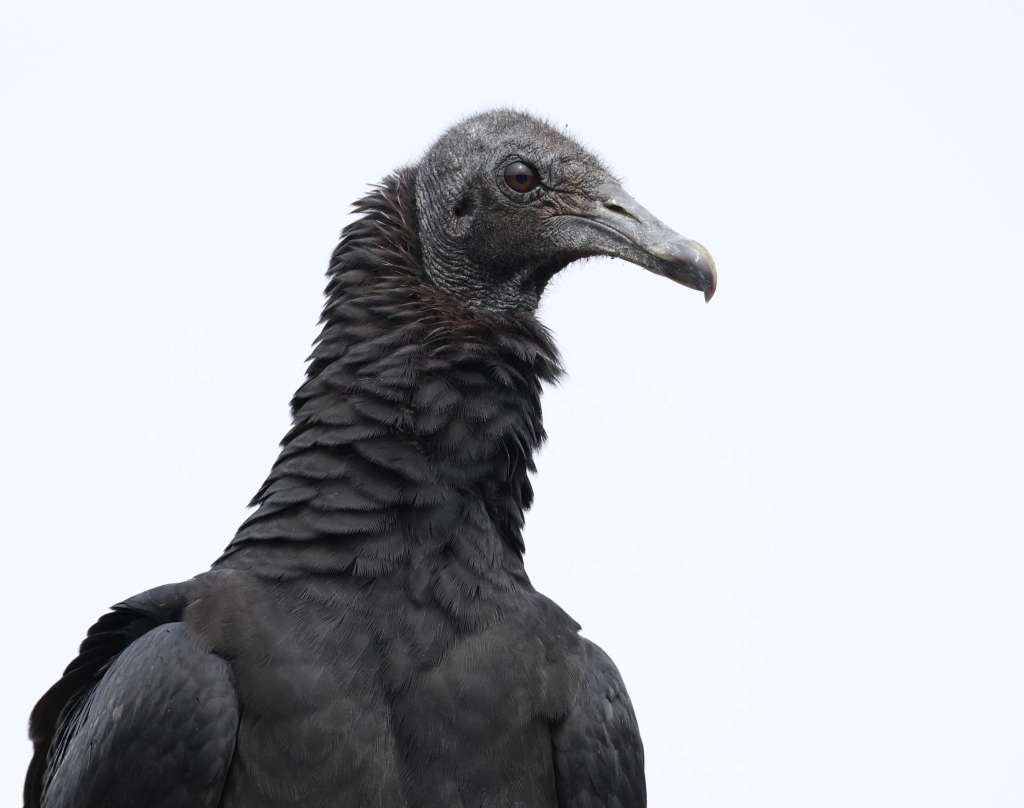
Dozens of Black Vultures were also around including a few perched on artificial structures, allowing close-up appreciation of these impressive scavengers.
Now, I don’t often get spiritual in this blog, but if you Google “Black Vulture” for funsies, I do like where you end up: “The black vulture spiritual meaning centers on transformation, purification, and the cycle of death and rebirth. Often seen as a powerful, patient guide, it represents letting go of the past to allow for renewal. It symbolizes resourcefulness, adaptability, and the clearing of negative energy to restore balance in life.”
Okay, cool.
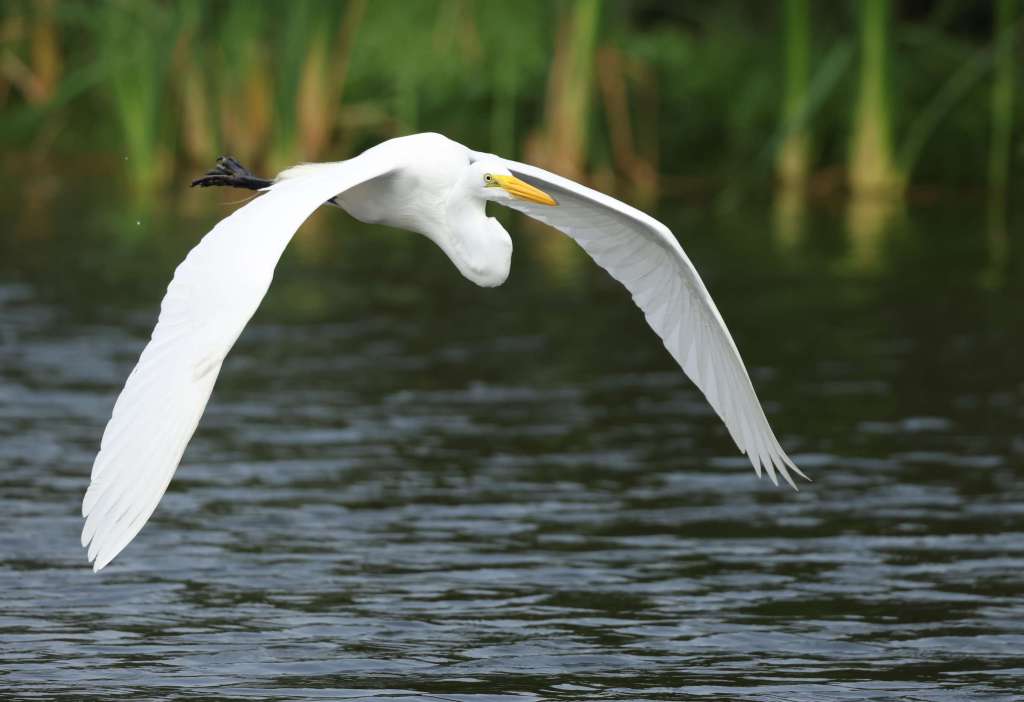
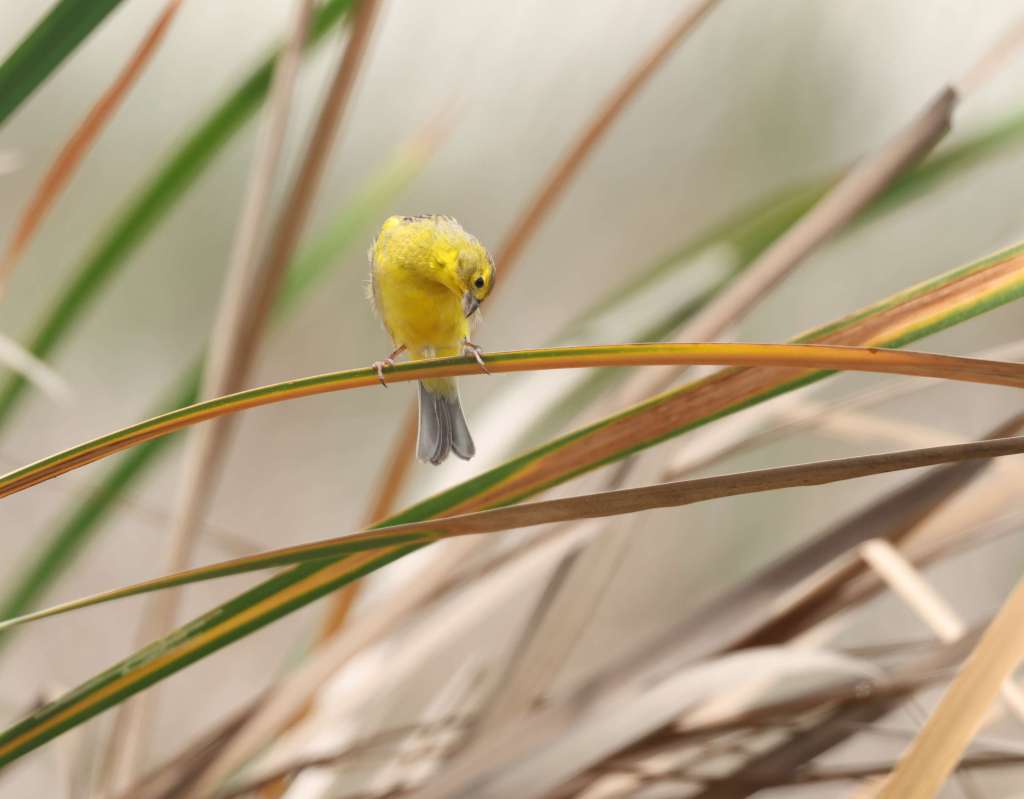
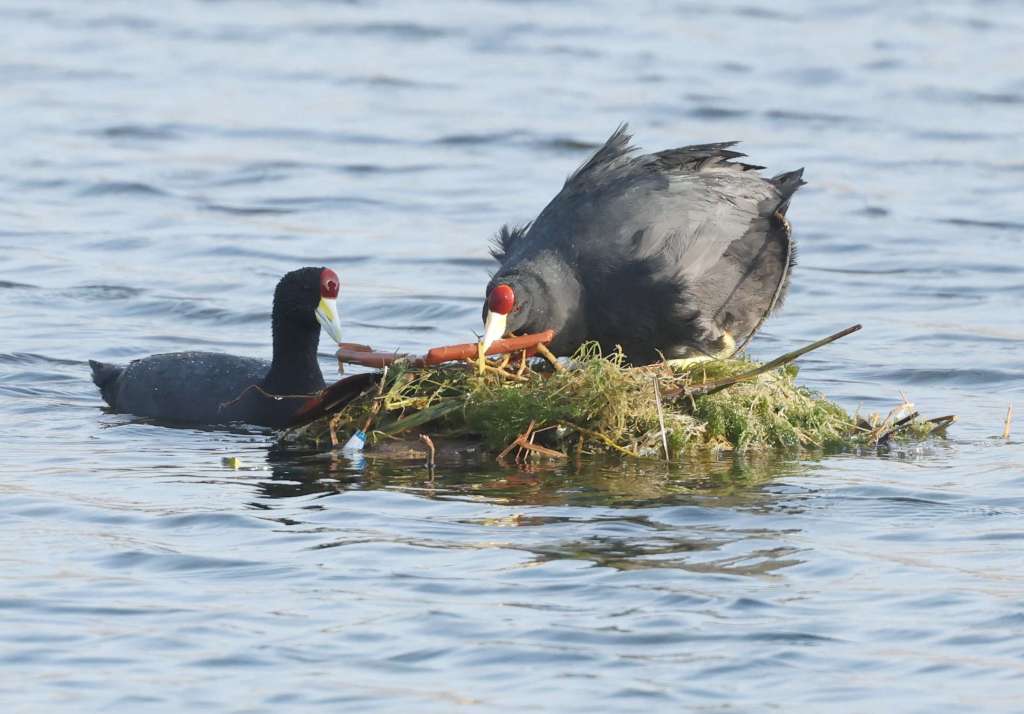
Our entry ticket included a guided boat ride (in the “Laguna Génesis”) which was fairly short and yielded quite a few common species in the reeds and waterways, along with three lifers for us. Species included Common Gallinules (with chicks), plenty of Black-Crowned Night Herons (ie, over twenty), Neotropic Cormorants, Cinnamon Teals, Slate-Coloured Coots, Snowy and Great Egret, a couple of Grassland Yellow-Finches and a Many-Coloured Rush Tyrant (always very nice to see). We also were lucky enough to briefly spy a Least Bittern skulking in the deeper reeds.
After the boat ride, we wanted to explore the other sections of the wetlands. We headed south along the road, expecting to see more entrances… but instead we followed a fence line for quite a while, noting a (lifer!) Peruvian Meadowlark (crap photo, cool bird), then coming across a security-guard-patrolled gate which seemed to enclose some sort of private beachside estate. We showed them our cameras to indicate we were birders, and due to non-fluency in Spanish, there was some confusion and they seemed to want to see our passports at one point, then just waved us through anyway. It was super-weird.
I mean, surely plenty of birders go through here?!?
Past the security gate, a few Vermilion Flycatchers in traditional brilliant red colours (remember, most of the Lima ones are dark brown morphs) kept us entertained as we continued in what we hoped was the right direction.
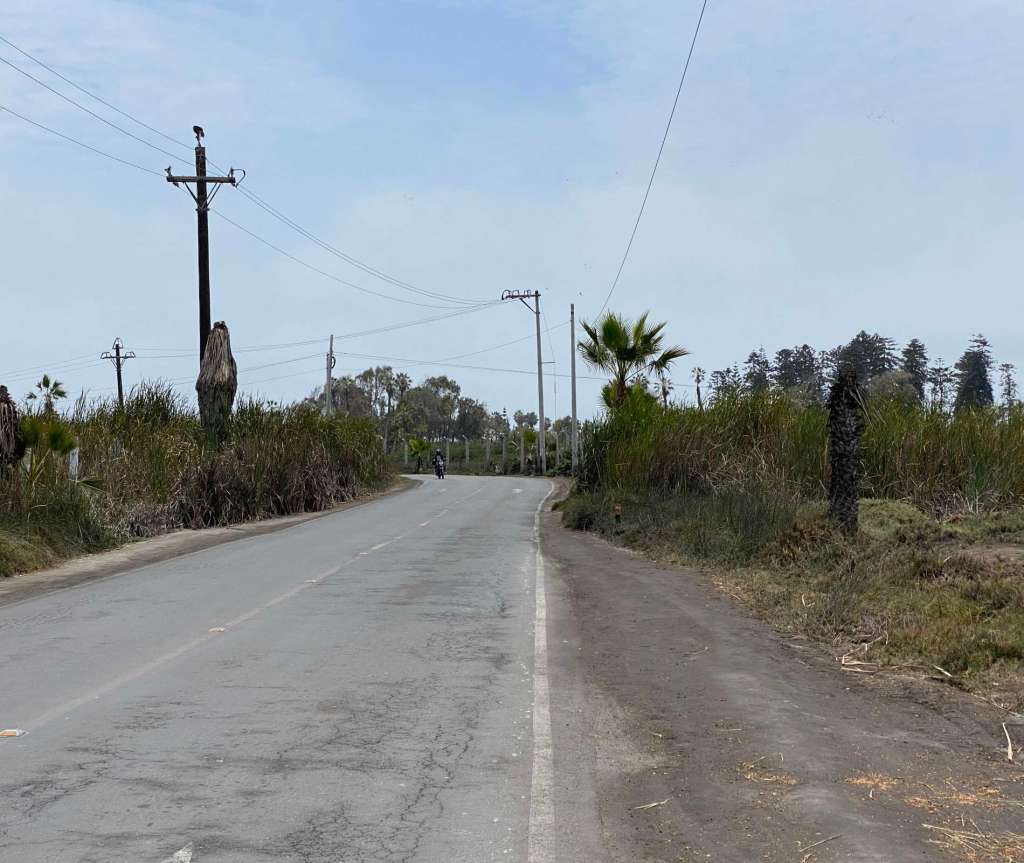
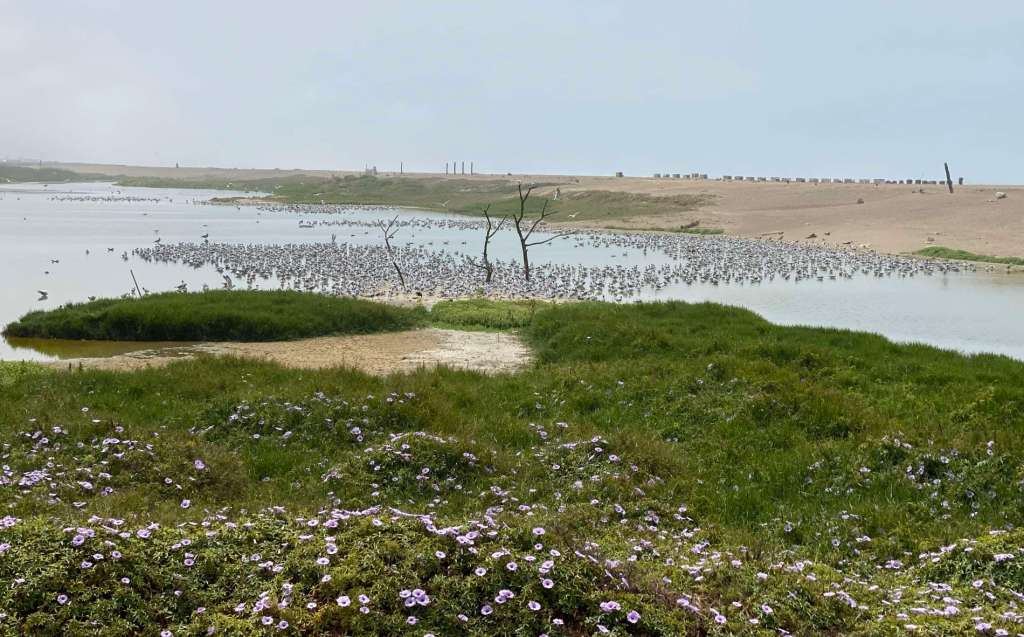

It was over 1.5km of walking (and no signage) to finally arrive at what was obviously the lagunas-by-the-beach, with many more Franklin’s Gulls (we estimated at least 4000) dominating the scene.
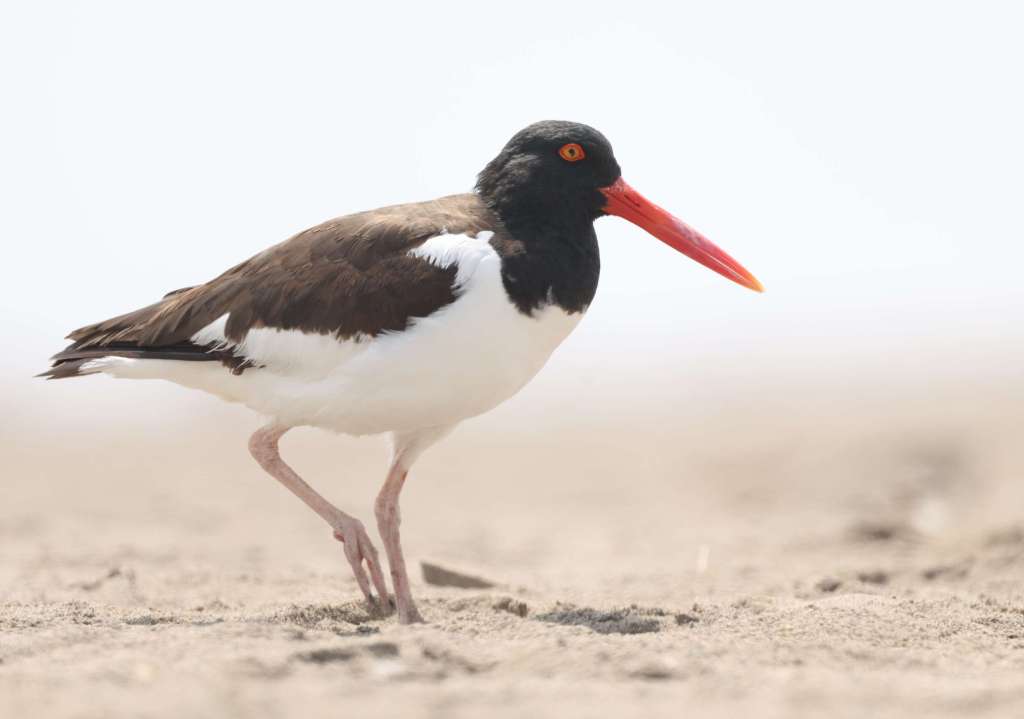
There is a tall wire fence here but you can just walk around it on the sand (American Oystercatchers keeping a wary eye on you) to find the circumnavigating trail.
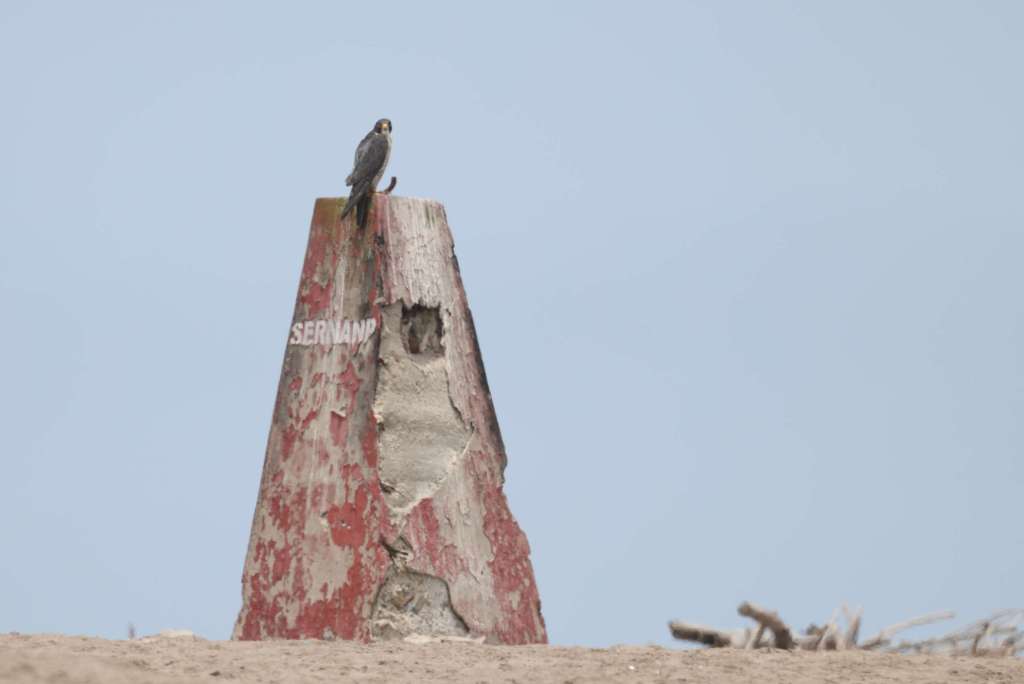
It was mid-morning by this point and getting quite warm. Away from the lagoon it was a case of hoping to see grassland birds or Yellow-Hooded Blackbird, and we did see a few Grassland Yellow-Finches, but mostly it was a bit of a slog along the sandy trail all the way round to the beach again. A bonus on nearing the beach was a Peregrine Falcon – always a thrill, as it is the world’s fastest animal – though it flew away before we could get close.
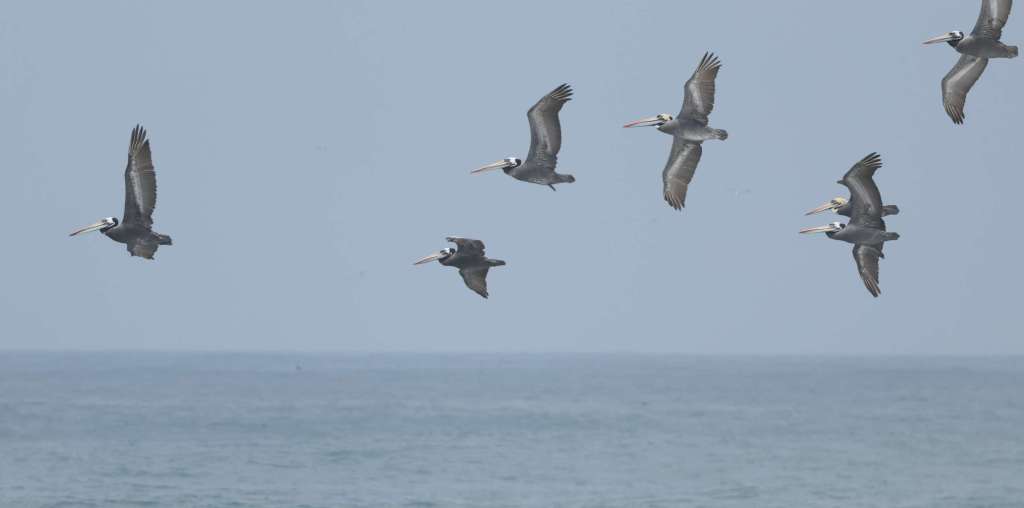
On the beach the waves looked quite inviting, and a squadron of Brown Pelicans cruised over them, while several dozen Hudsonian Whimbrels patrolled the tide line. These Whimbrels were recently split from Eurasian Whimbrel, meaning it made another lifer for us.
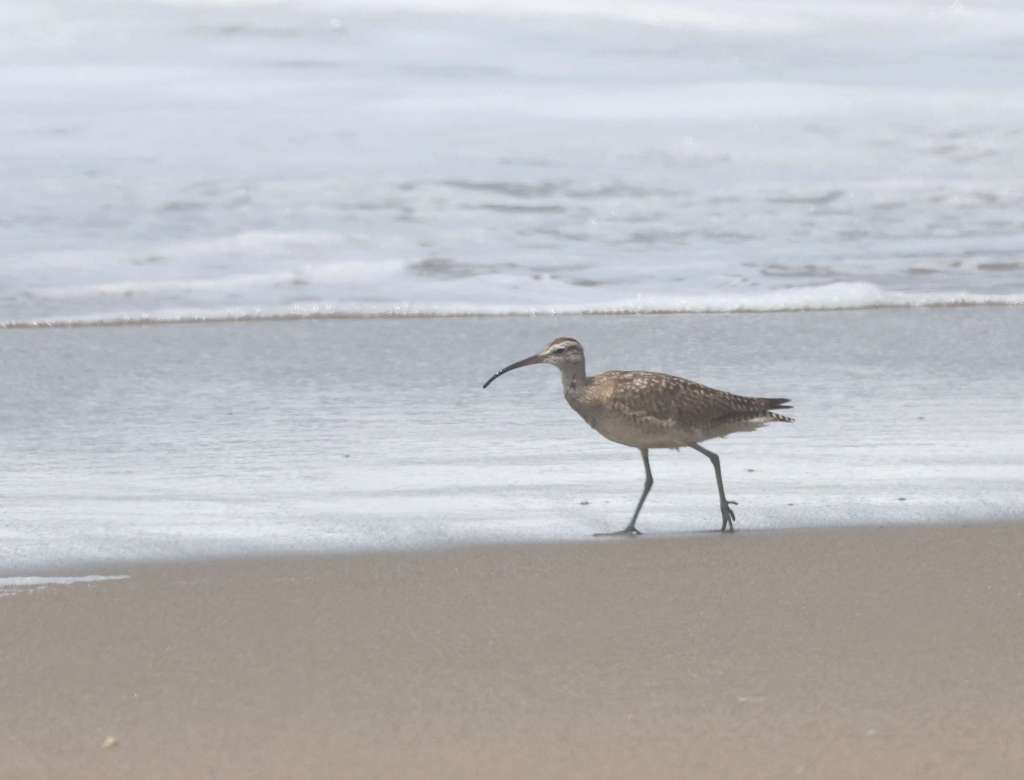
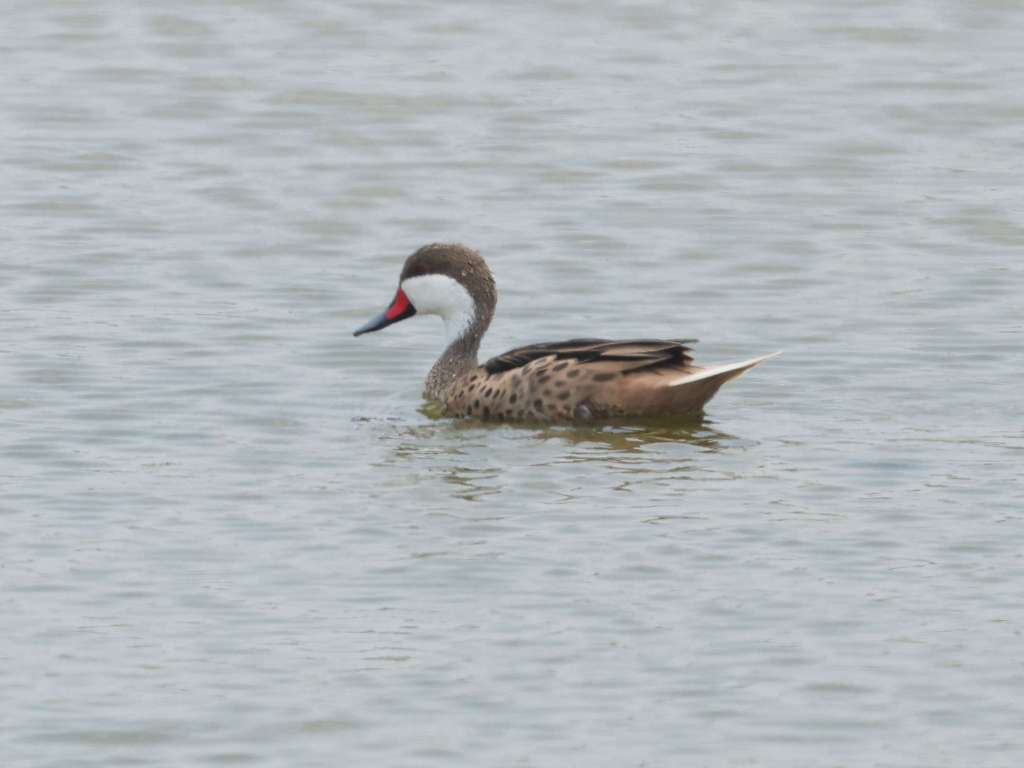
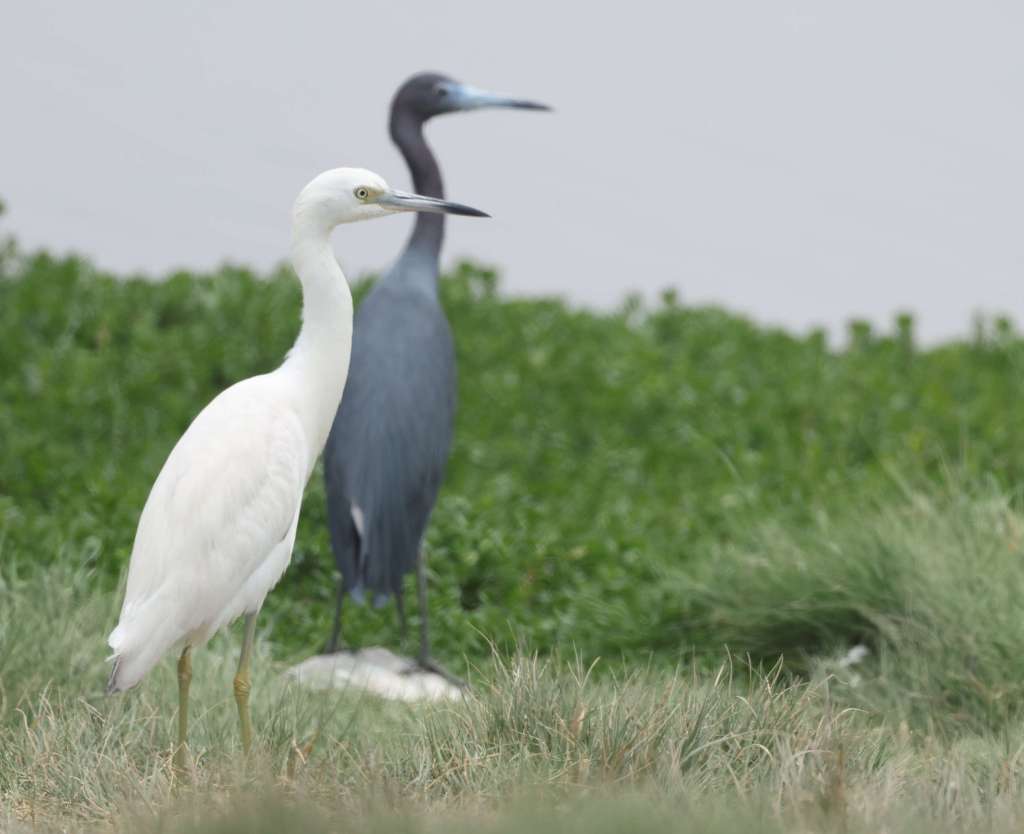
A more thorough scan of the lagoon here revealed Ruddy Turnstones, a couple of White-Cheeked Pintails, many Grey-Hooded Gulls, ten Black Skimmers, a few Puna Ibis, many Snowy Egrets (like, 38), and some Little Blue Herons (both white and dark morphs). Quite a mixture, really!
We walked the 1.5km back to the entrance area, and finished off our time at Los Pantanos de Villa at “Laguna Principal”, just across the road from the ticket booth. This section features a few short trails, a modest watchtower, and another sizeable lagoon. Like the other sections, it has its own eBird hotspot.
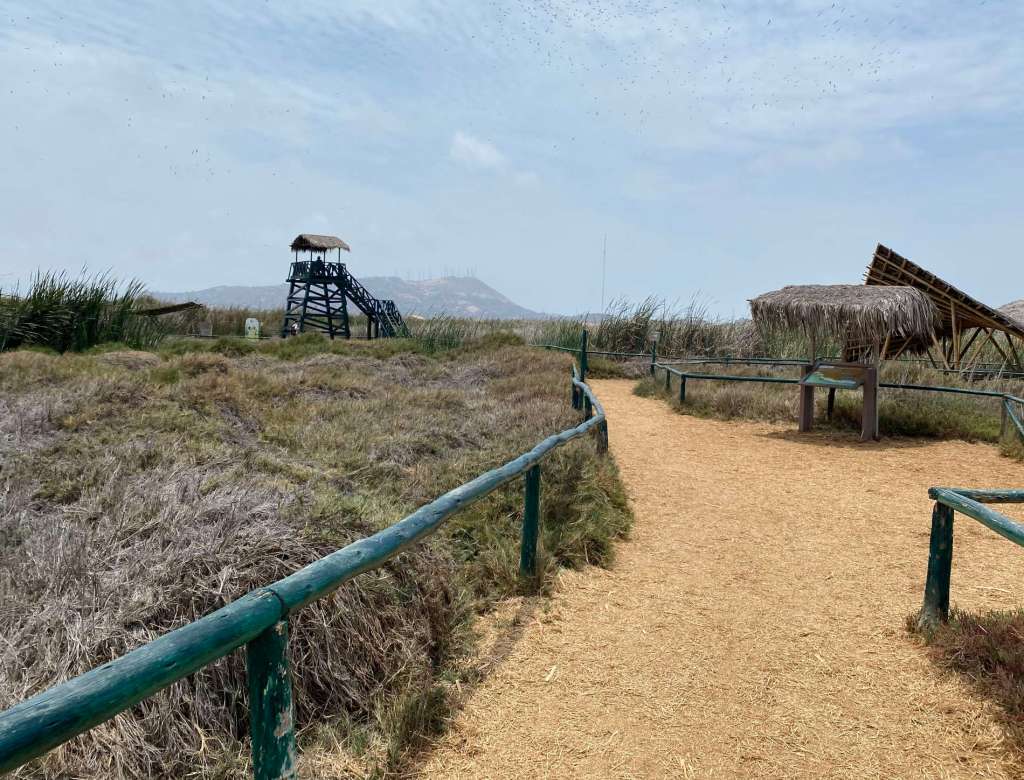
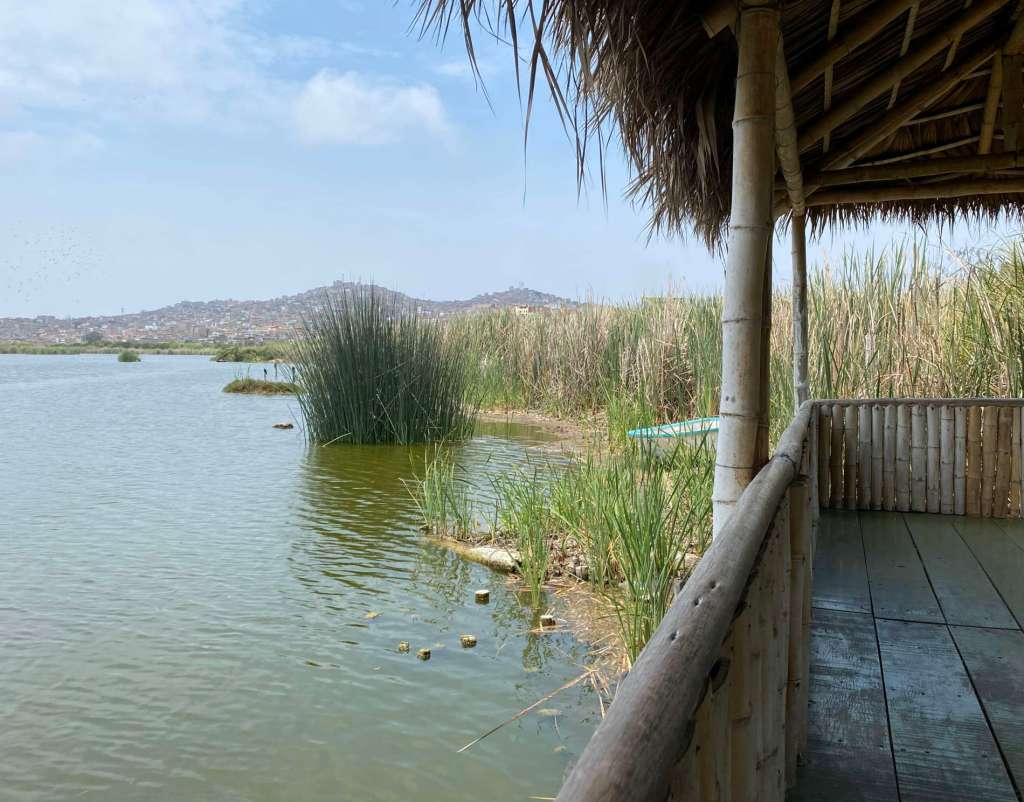
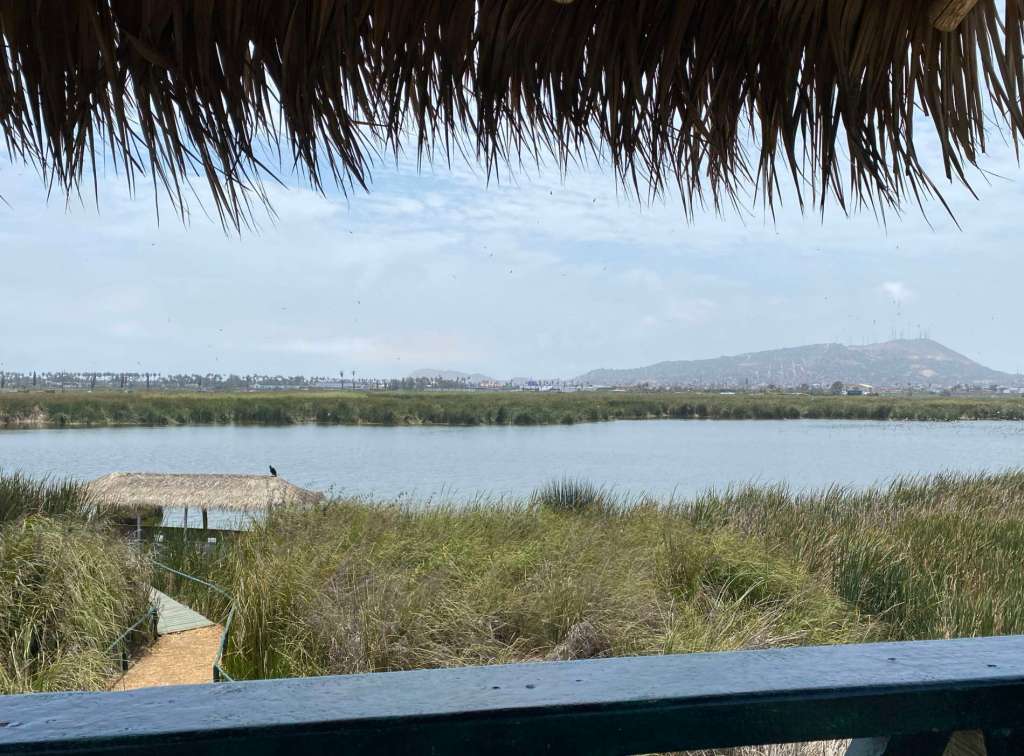
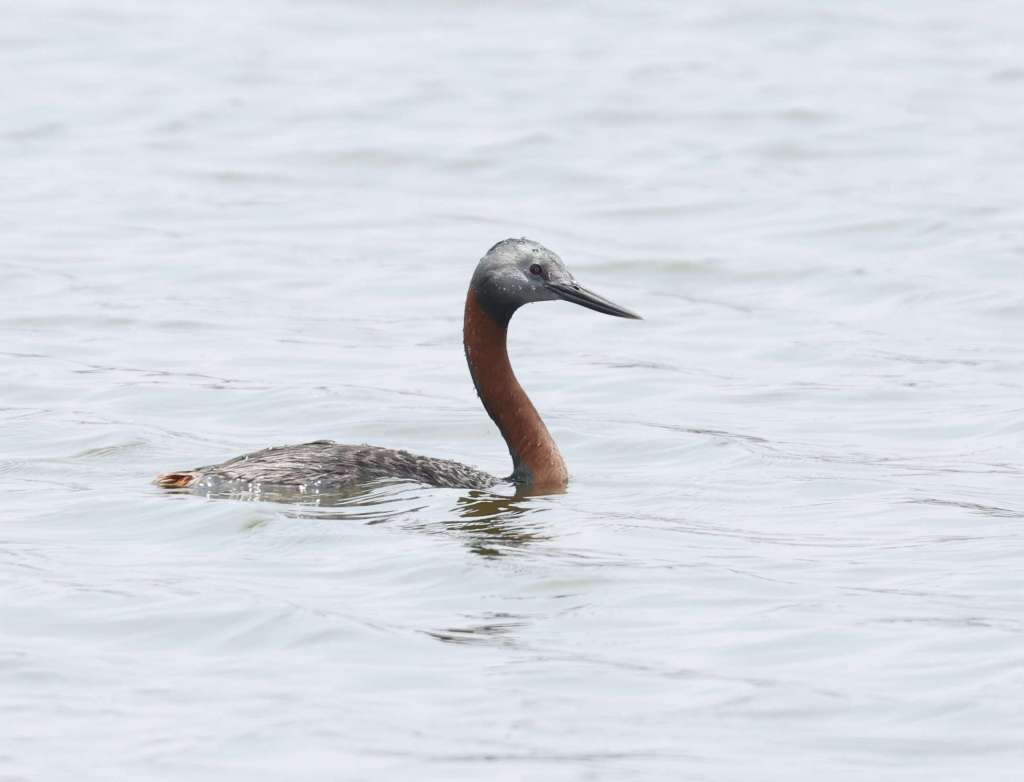
At this lagoon Franklin’s Gulls were also in huge numbers (we thought at least 1200). We watched them wheel and dip from the wonderfully breezy bird hide (which disconcertingly had a few Black Vultures walking menacingly about on the roof), and we also saw four Great Grebes out on the water, including a youngster. A Many-Coloured Rush Tyrant hopped about on the water’s edge, and a Chestnut-throated Seedeater sat placidly not far away. It was a good way to end our long morning here after 3km of solid and unexpected walking.
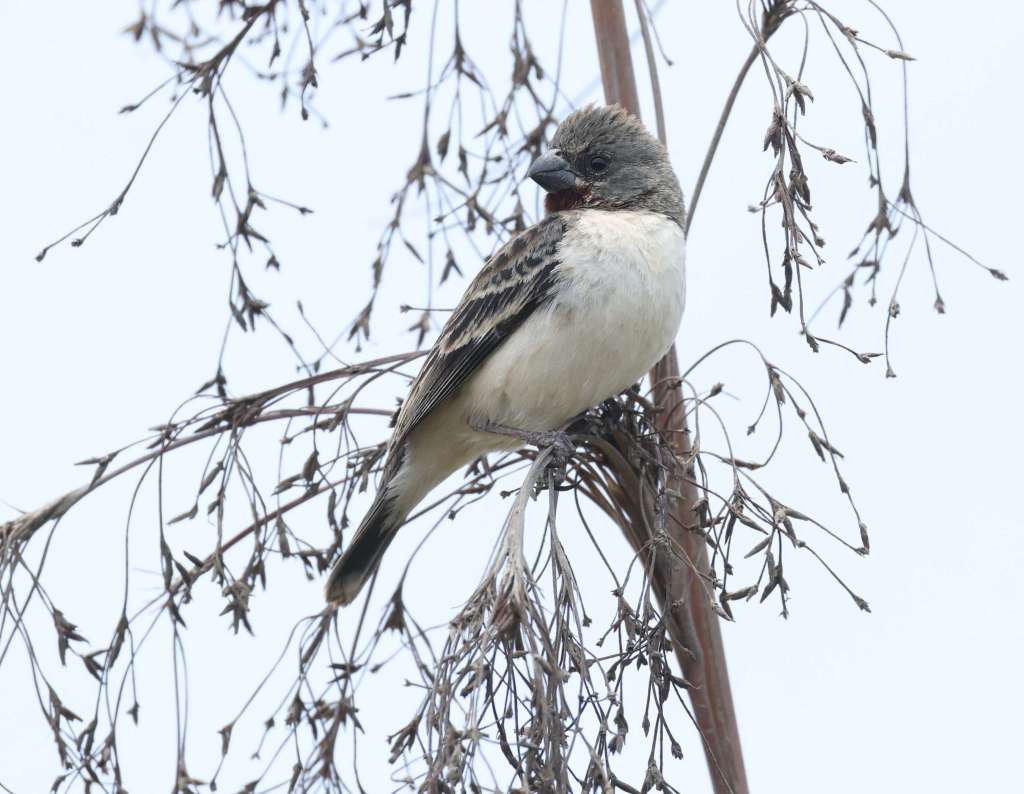
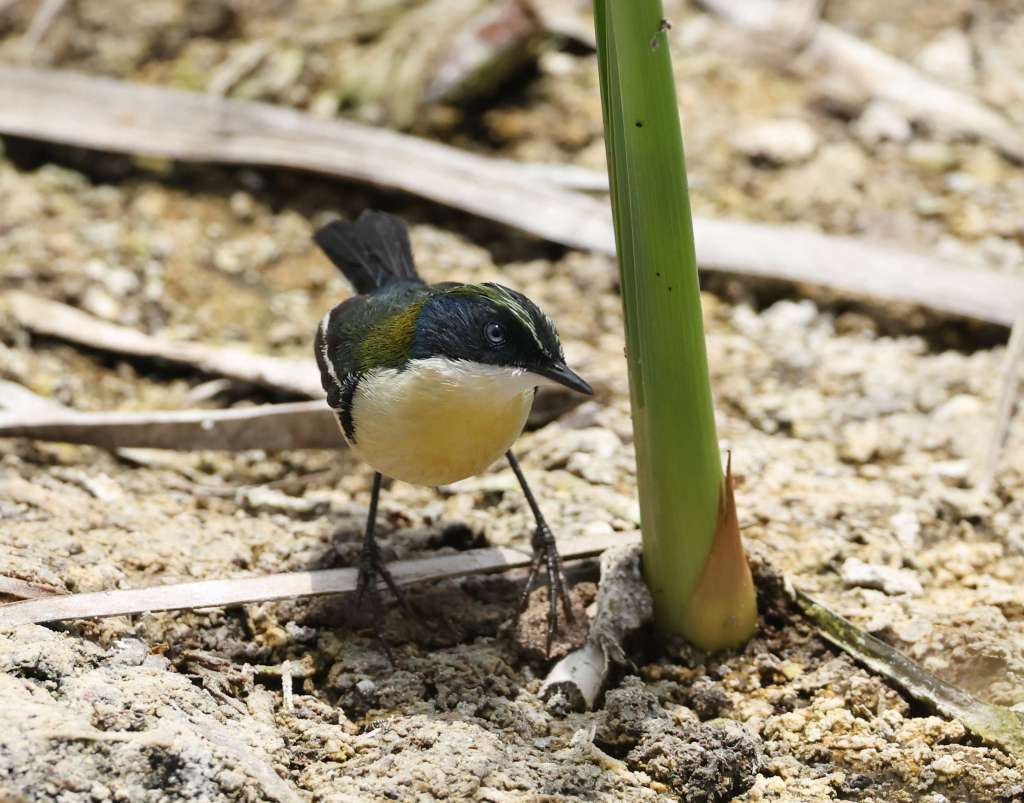
We’d picked up eleven lifers, not bad considering we’d already canvassed a few wetland and river sites in Peru by that point. We did look ruefully at other checklists where birders had found Peruvian Thick-Knee, Guanay Cormorant, and Yellow-Hooded Blackbird, aware that this was one of the prime sites to find birds like these. I guess you can’t have it all 🙂
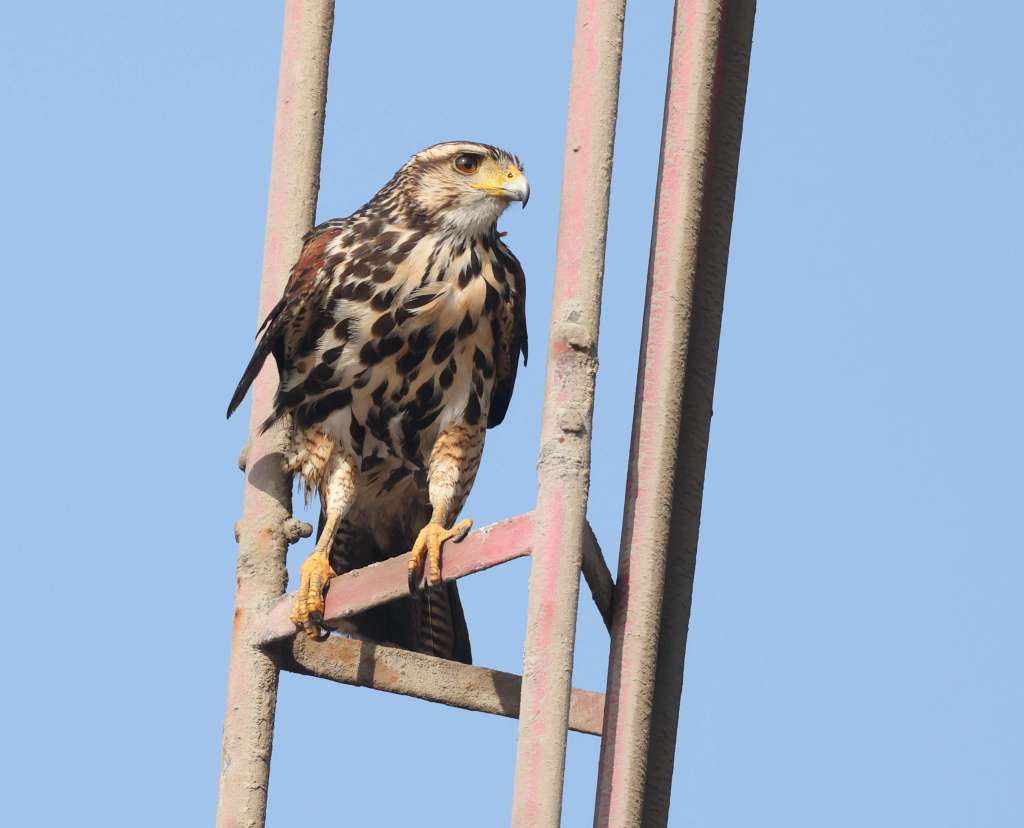
We also visited another wetland system to the north of Lima – ACR Humedales de Ventanilla. The two biggest lagoons were actually closed so we could only observe from the surrounding fence lines, but that proved to be adequate. Species we saw there were all ones we’d seen at Los Pantanos de Villa, with the amusing addition of a juvenile Harrs’s Hawk who was watching nearby beachgoers come and go from its perch on a tall communication tower.
Road Trip, Boat Trip: Paracas and Islas Ballestas
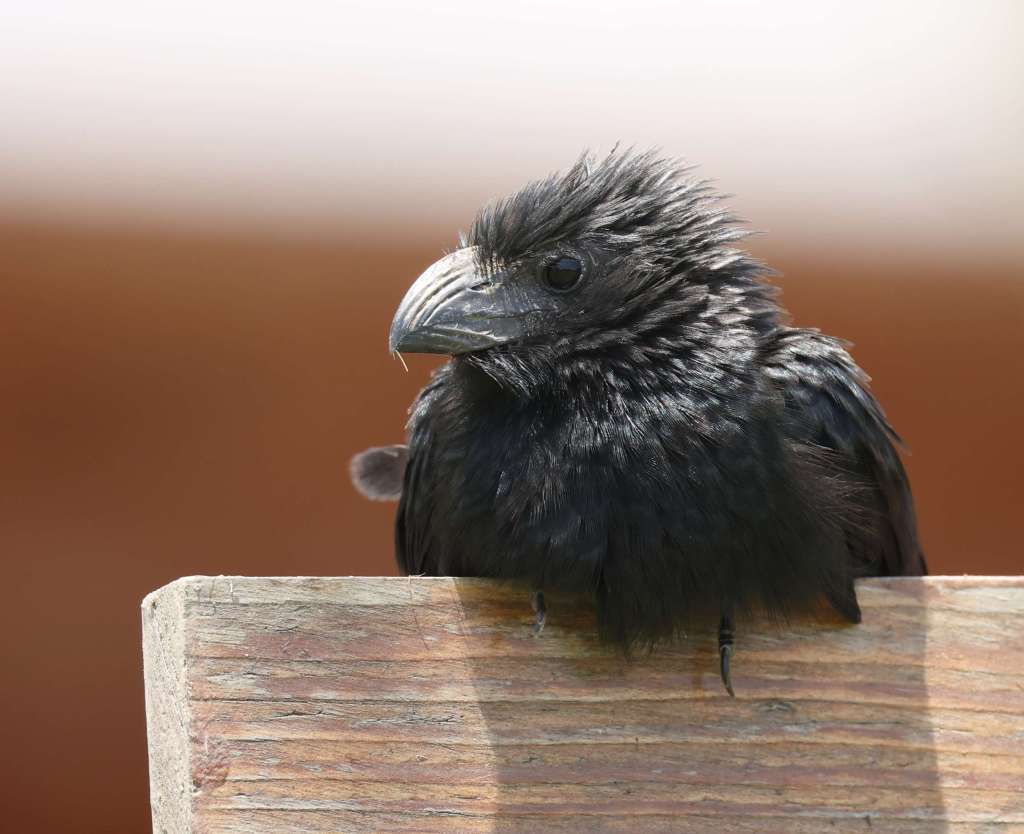
We used the tourist bus company PeruHop to head down to the town of Paracas, about 3.5 hours south of Lima. Well, that would be the travel time if you were to travel straight there… the PeruHop bus makes a few touristy stops and takes a lot longer. At one of these stops I found a couple of cooperative Groove-Billed Anis.
And then, a massive sandstorm had hit the area and was still blowing (think, almost zero visibility) when we arrived in Paracas at around 3pm, which was… interesting. Miraculously, the wind dropped completely by about 5:30pm and we managed a stroll along the beach coupled with a spot of birdwatching followed by a tasty dinner at one of the beachside restaurants.



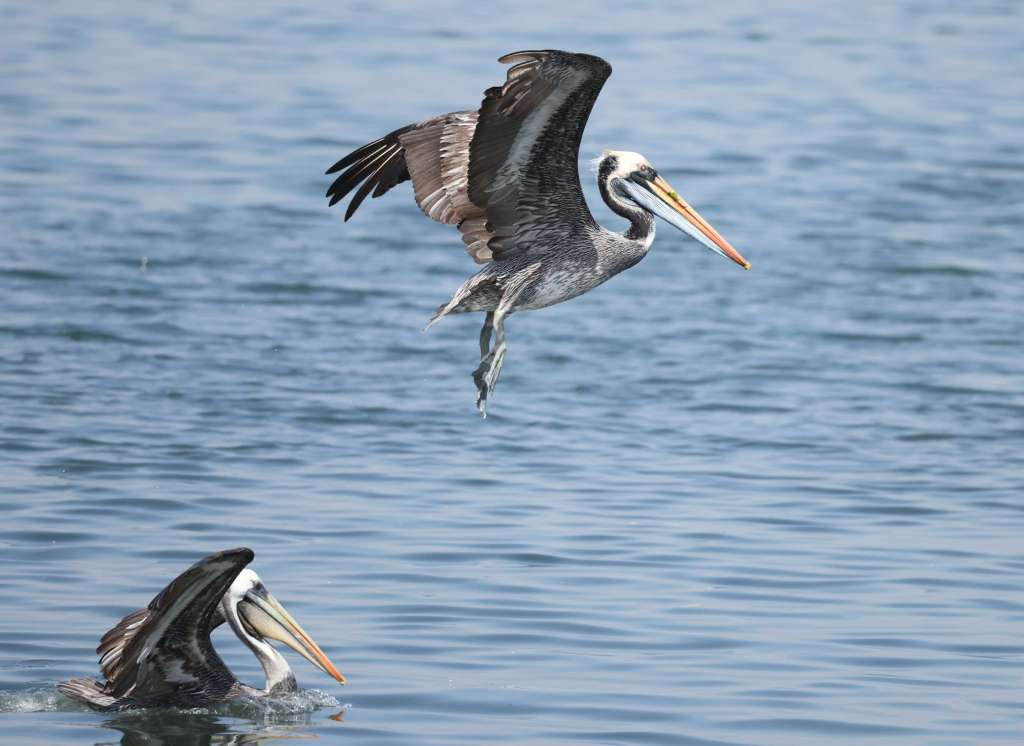
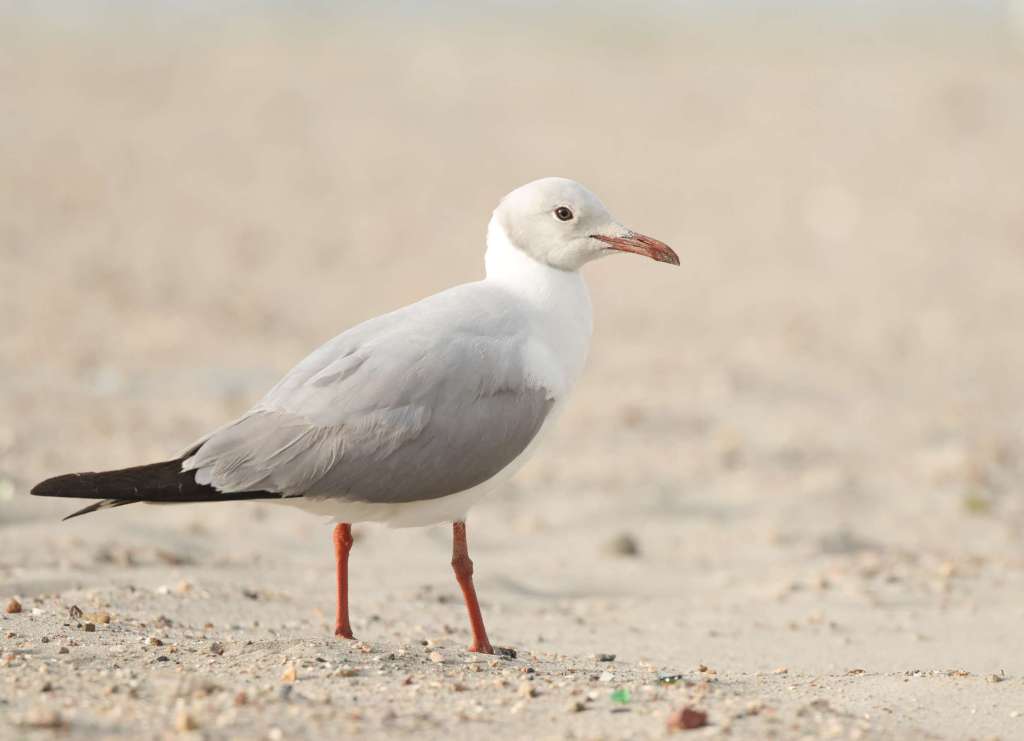
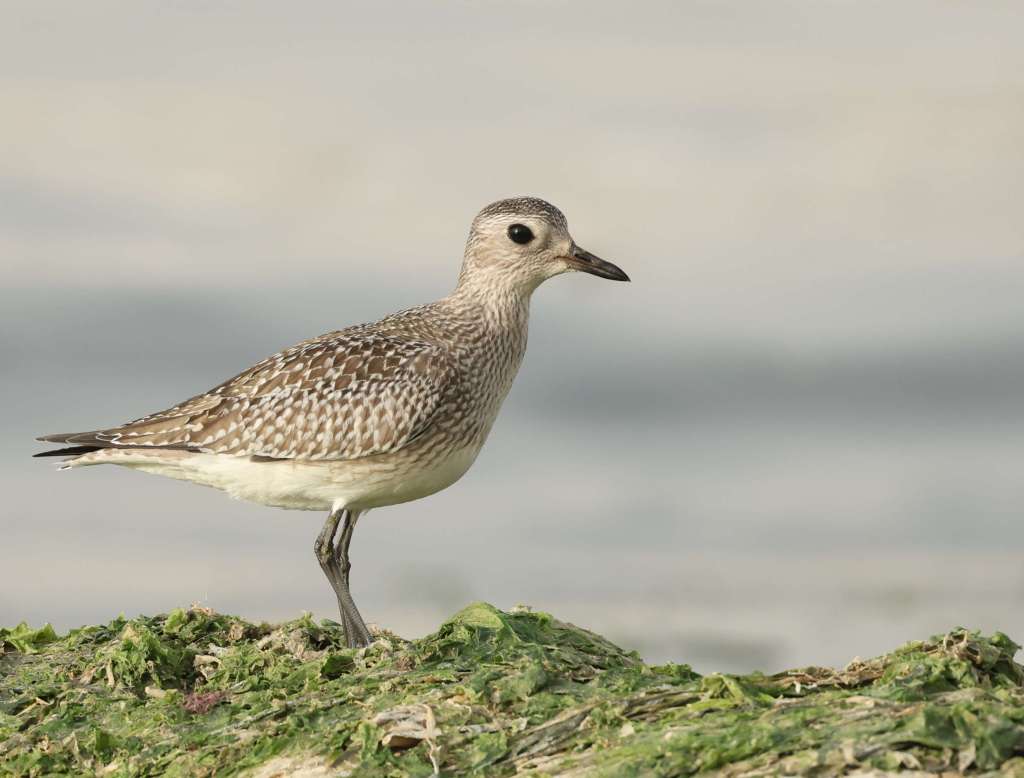
With not much green space in this arid landscape, the main drawcards here are shorebirds and seabirds. These included Grey-Hooded Gull, Grey Plover, Brown Pelicans, Sanderlings and plenty more. The shoreline is a bit uninspiring and messy; it ain’t exactly the prettiest beach in the world, but then I’m from Australia and we are spoiled with the best beaches in the world 🙂
There are a plethora of vessels willing to separate you from your money in order to get you to the group of rocky island known as Islas Ballestas, sometimes also called “the poor man’s Galapagos”.
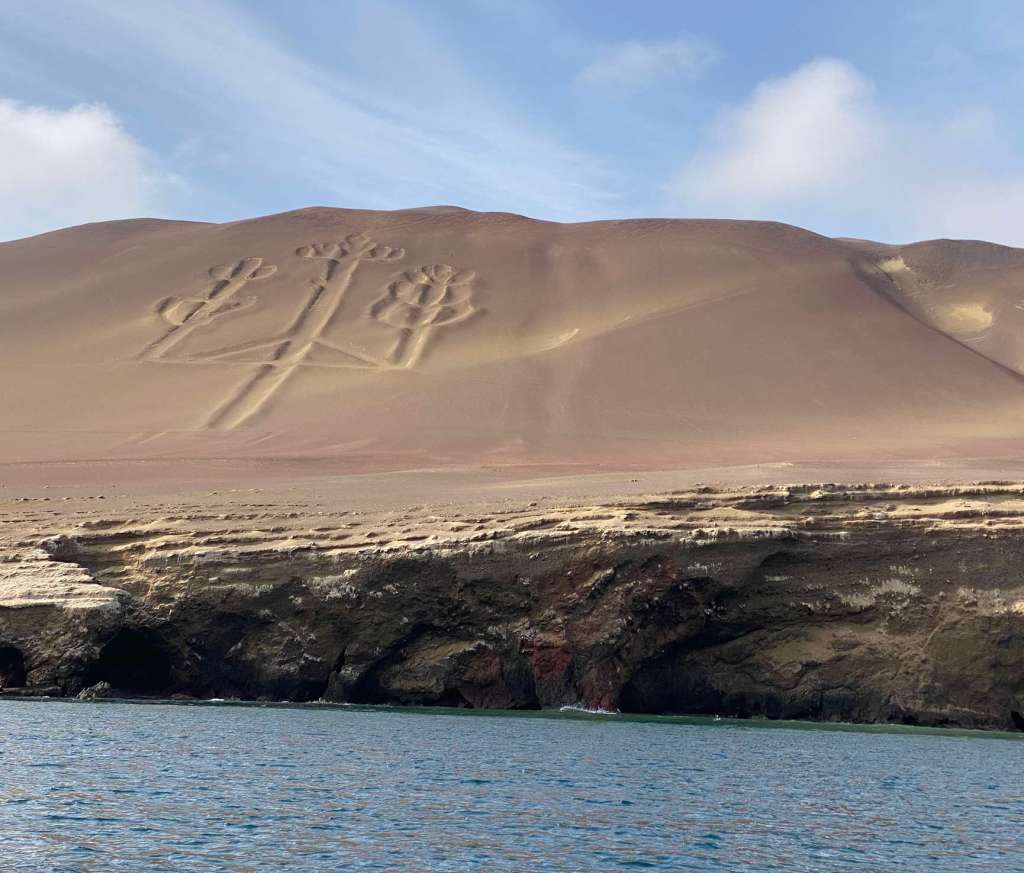
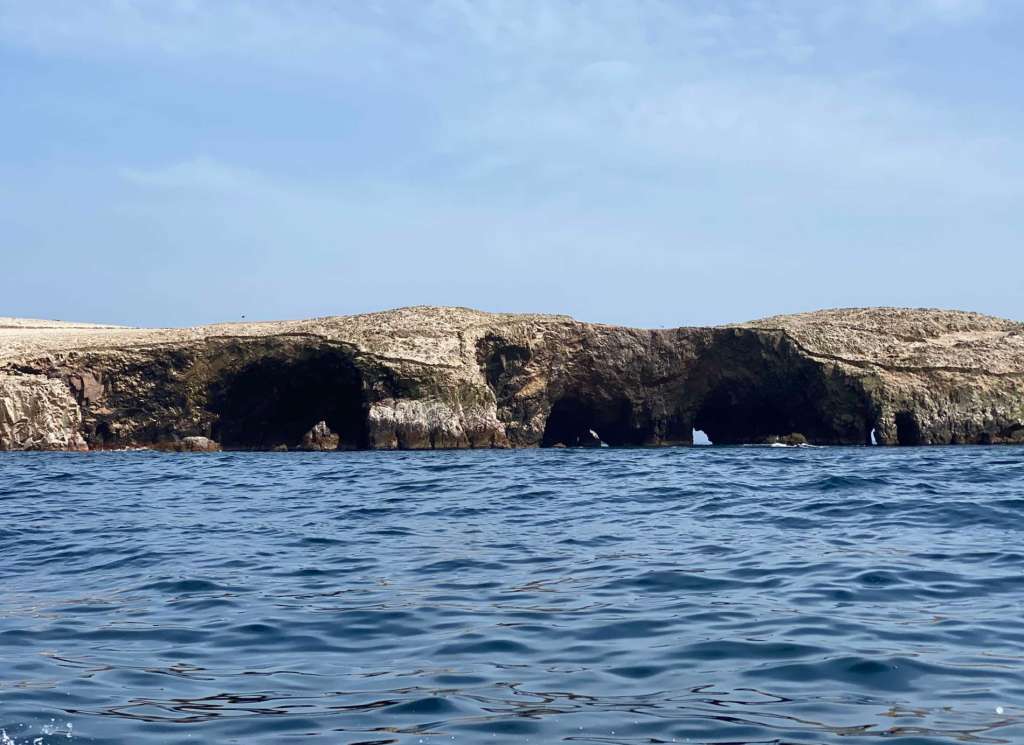
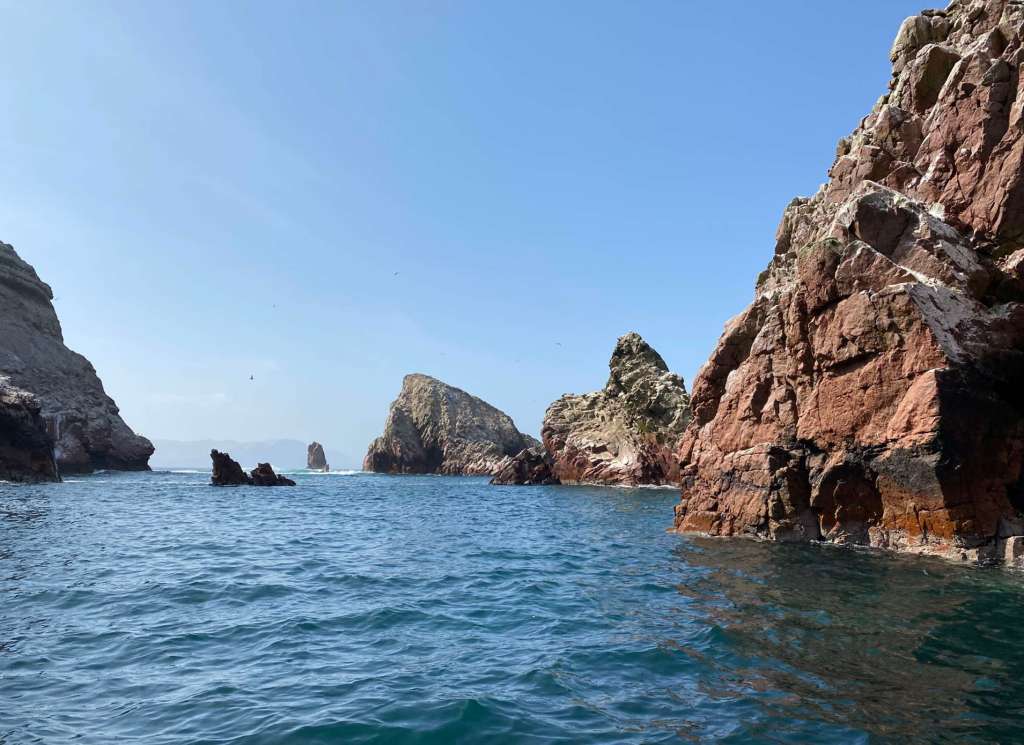
Most of these boats are designed to cram in as many passengers as possible and they’re not particularly amenable to bird photography, so I had to do the best I could. There’s also a guy at the front with a loud microphone narrating the proceedings who thinks he’s a stand-up comic as well, but hey, at least it was in English (and Spanish too actually).
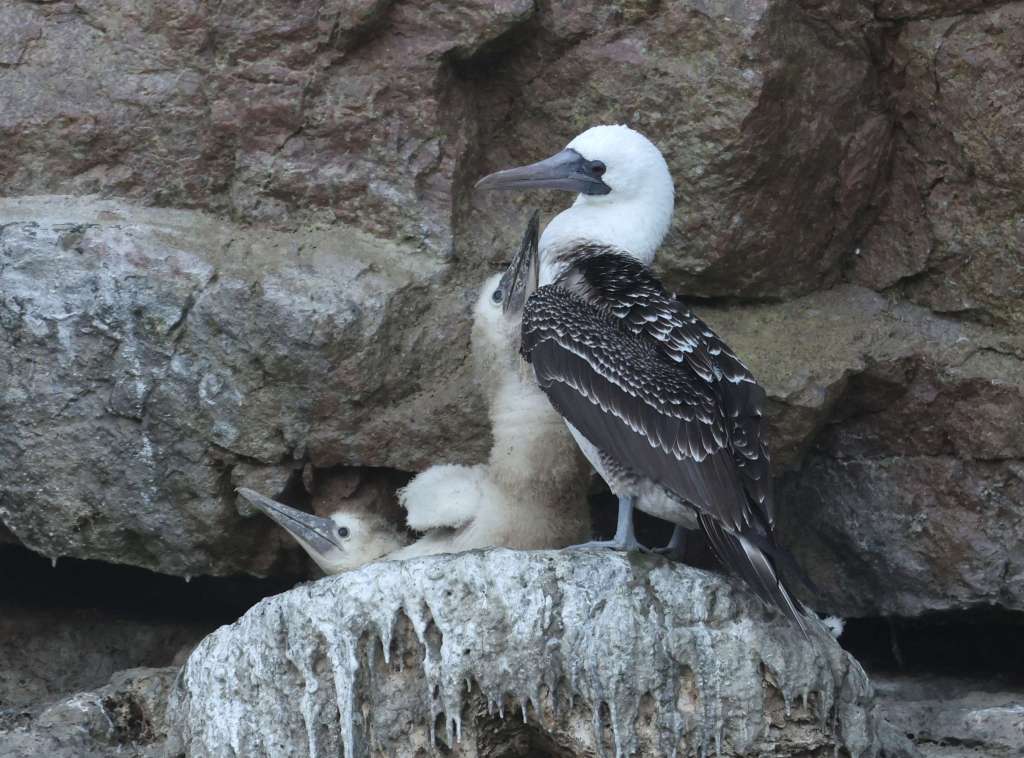
Once at the islands (about 45 minutes to get there), the boat whizzes around fairly quickly (around 40 minutes, which positively flew by), and you get to see lots of seabirds: Peruvian Boobies (we estimated 250), cormorants, gulls, and of course those lovely Inca Terns (we estimated at least 450).
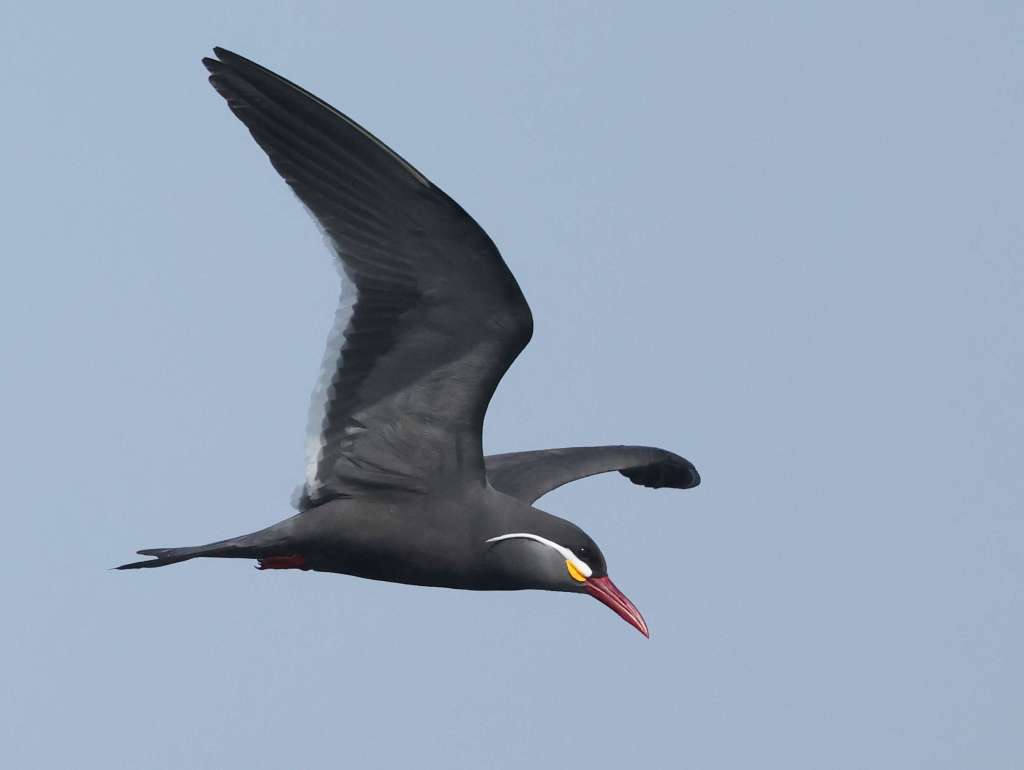
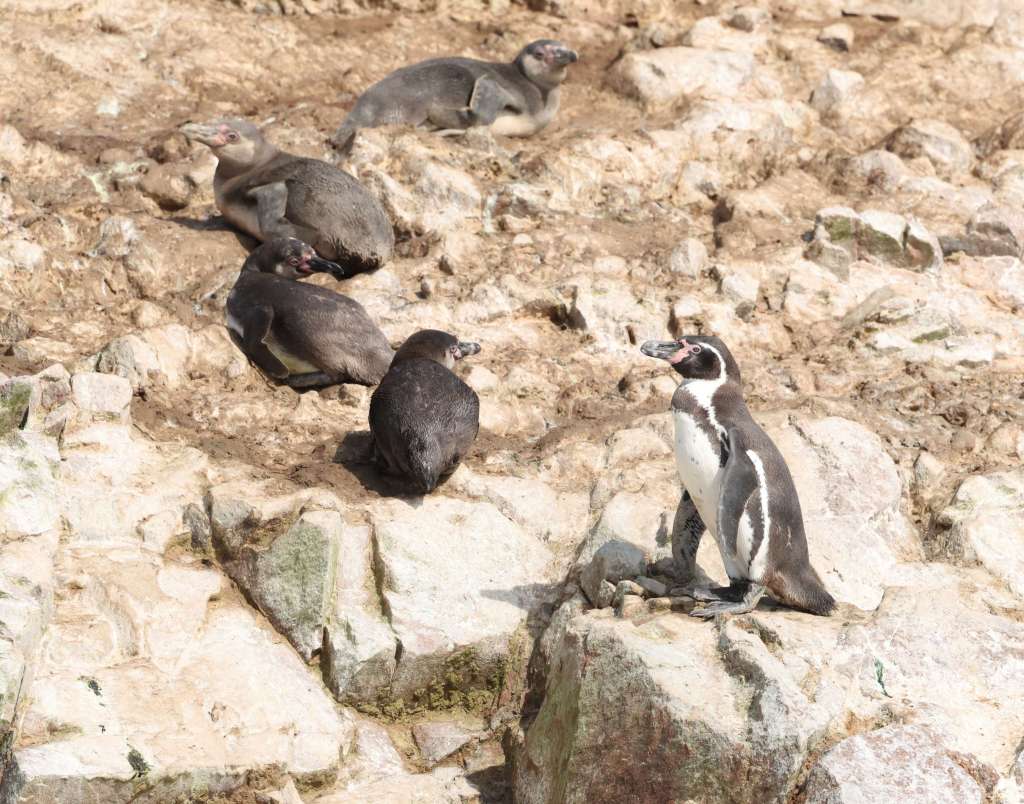
The stars of the show are undoubtedly the Humboldt Penguins, now an endangered species which face a variety of threats. We only saw 8 penguins total on the islands.
On the return boat trip we managed to see a couple of bonus lifers – four Swallow-Tailed Gulls and an Elegant Tern.
Lomas de Lachay: Lomas de What-Now?
Despite the mostly arid coastline, the Lima region also hosts small “ecological islands” called lomas. These are unique “fog oases” where moisture from Pacific fog greens up the hills between June and October. There are quite a few of these lomas dotted up and down the coast, with Lomas de Asia south of Lima also being a good birding hotspot. We chose Lomas de Lachay because Wild Andes tours does a day trip there from Lima, and, well, they had a really cute picture of a Burrowing Owl on that web page. They turned out to be a really good tour operator, though be warned: birding tours from Lima are more expensive than you’re probably expecting.

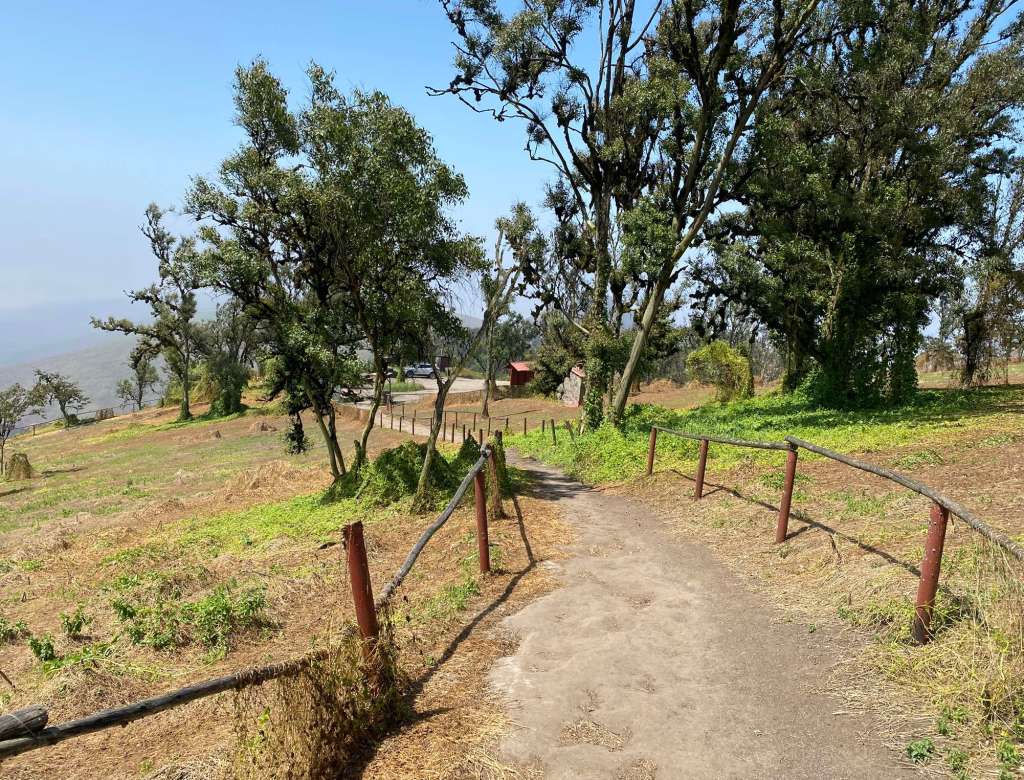

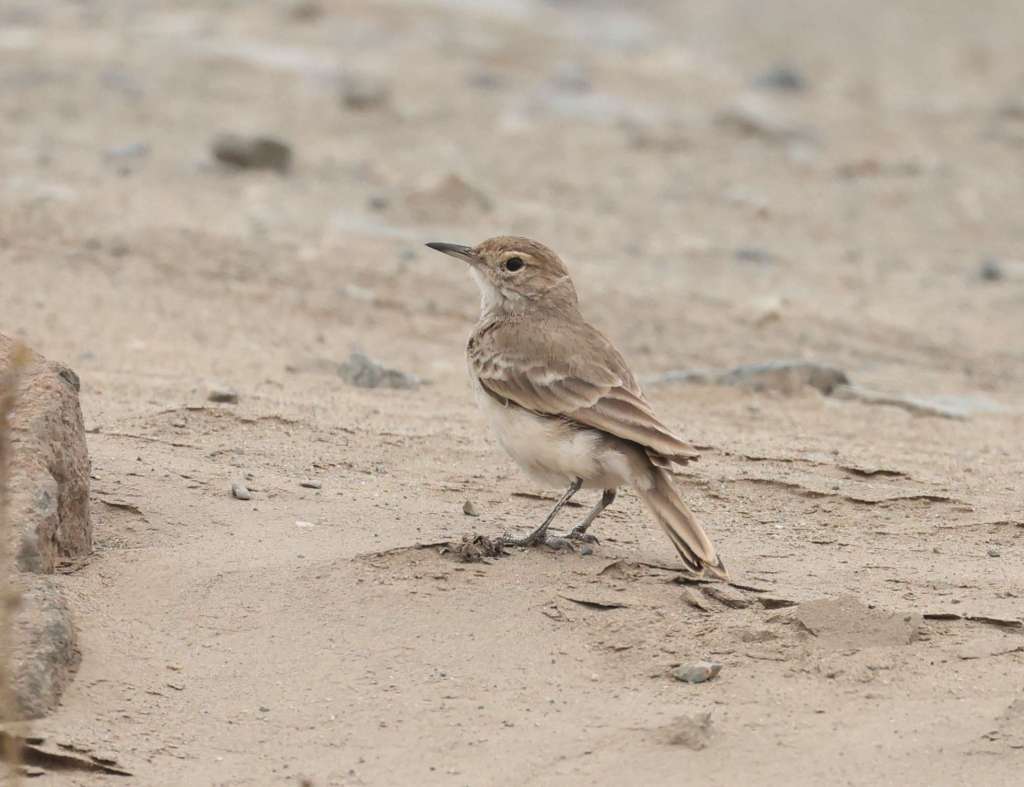
Once off the busy (and fog-drenched!) main highway, a long straight sandy road climbs slowly, and despite the scant and very dry scrubby vegetation, there are a few birds to see along this stretch: the drab-but-hey-I-like-the-bird-anyway Coastal Miner, and the aforementioned cute-but-also-serious Burrowing Owl. We also saw a skittish Least Seedsnipe, actually a freaking cool-looking bird but yeah, due to skittishness, not one that wanted to be photographed. Peruvian Thick-Knee is often seen here too, but we didn’t spot one.
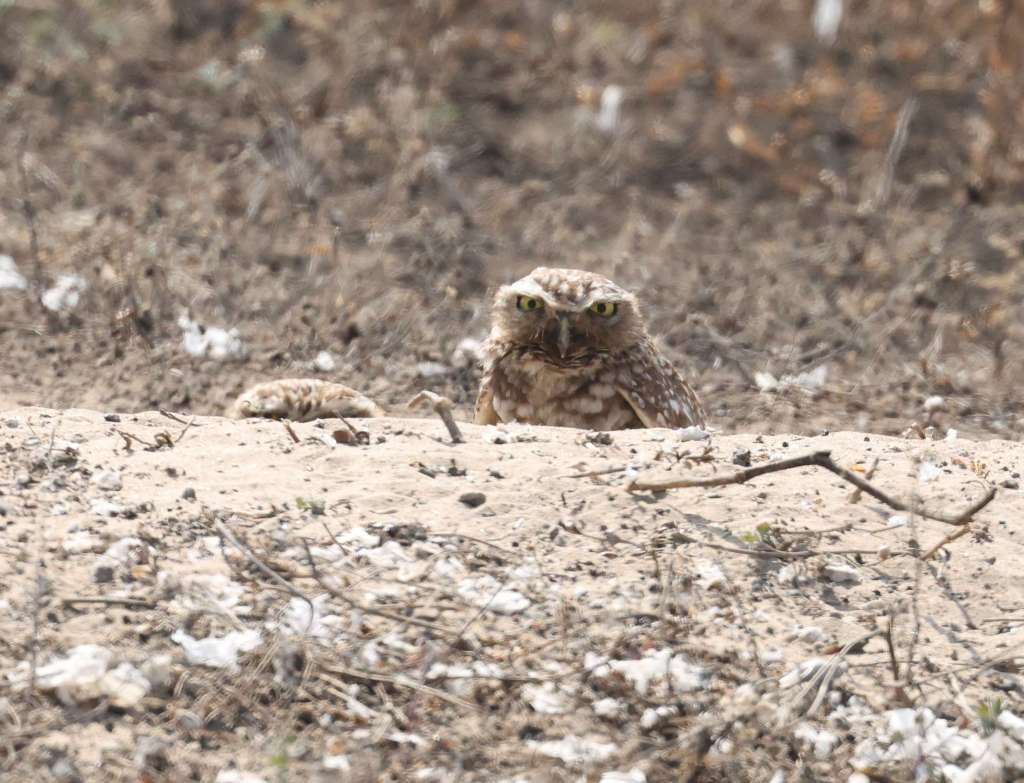
Deeper into the reserve it gets improbably greener, with dark green trees and a lovely trail to walk. The general ambience actually became really, really pleasant.
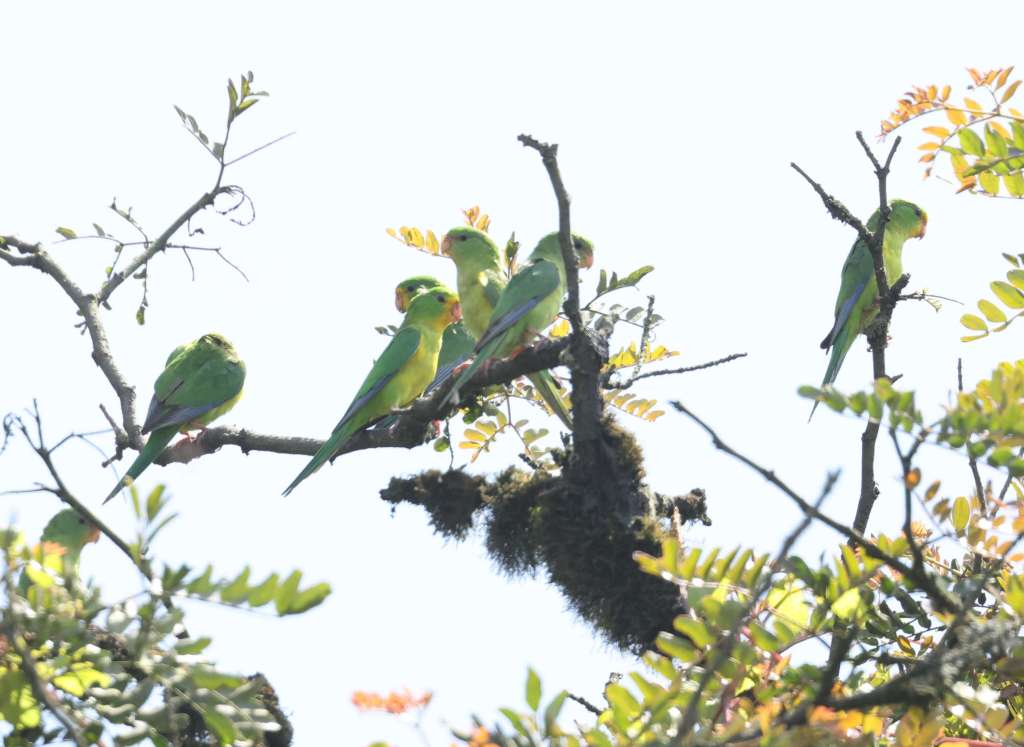
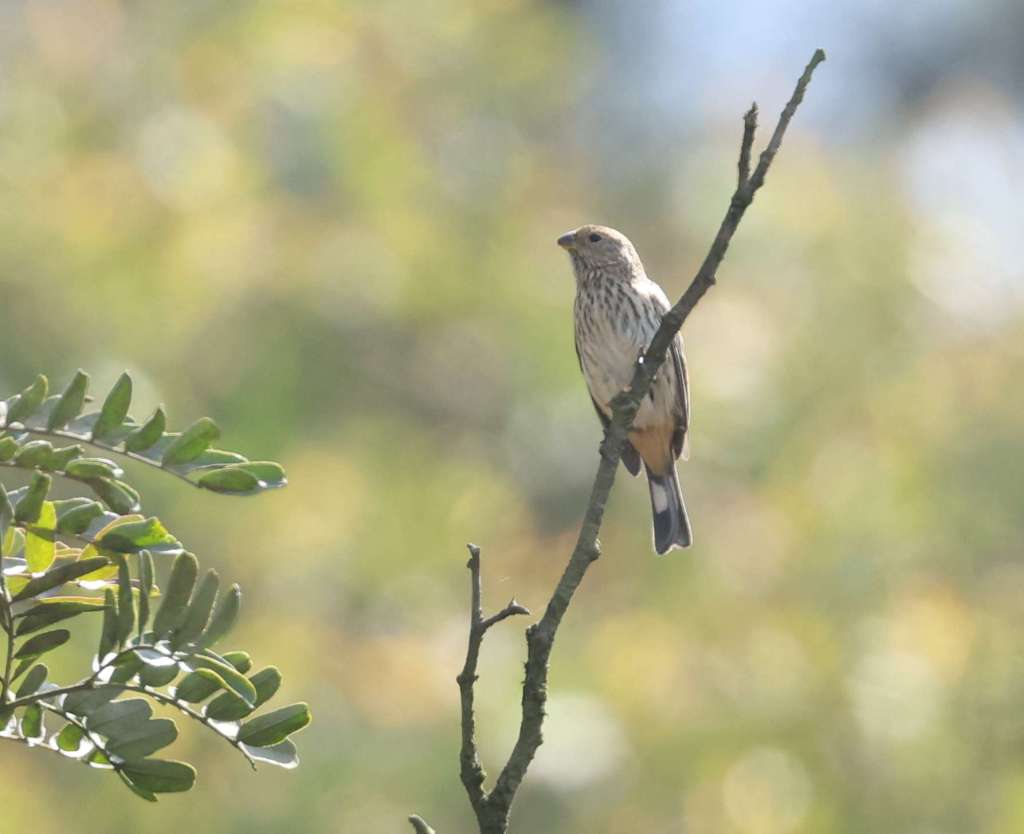
And there were birds! Hooded Siskins, Rufous-Collared Sparrows and Band-Tailed Seedeaters flew in every which direction from the ground, and adorable Mountain Parakeets – their call reminding me of budgerigars – called from the trees. We reckoned about 70 Mountain Parakeets in several flocks (cue “bird of the day” music).
The trail winds gently upwards through the low growth which is characteristic of these lomas – spongy and thick and a little green on top, but basically drying out fast as the wet season has well and truly finished; in fact our guide said in a couple of weeks it would all be brown.
I was still marveling at how pleasant the birding area was – winding sun-drenched trail with hilly scenery and a cool breeze – when an Andean Tinamou popped out from the undergrowth, quite close and in the open. It didn’t feel like being so exposed though, and quickly scurried back to the shadowy safety of the foliage. While I was crouched down peering in trying to nab a photo, three more did the same thing, and I ended up getting no good photo at all. Ah well!
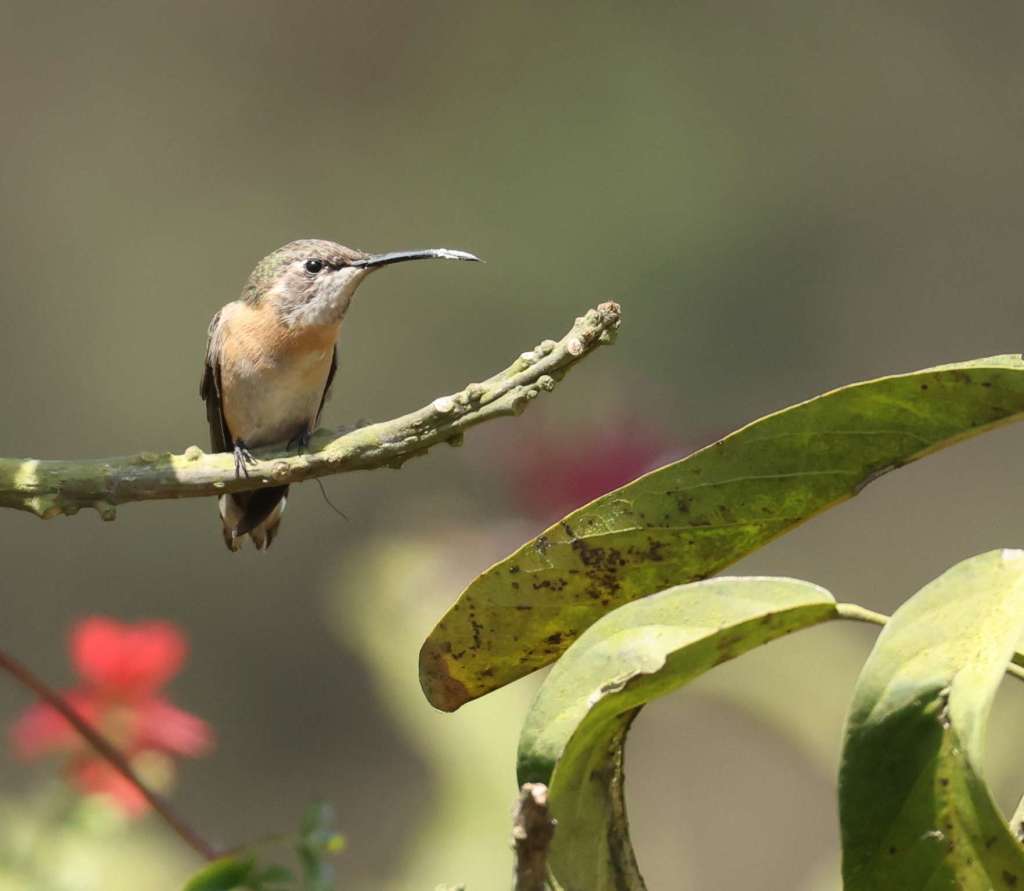
We also saw three hummingbirds along the trail: Peruvian Sheartail, Purple-Collared Woodstar, and Oasis Hummingbird. Amazilia Hummingbird is apparently often seen too.
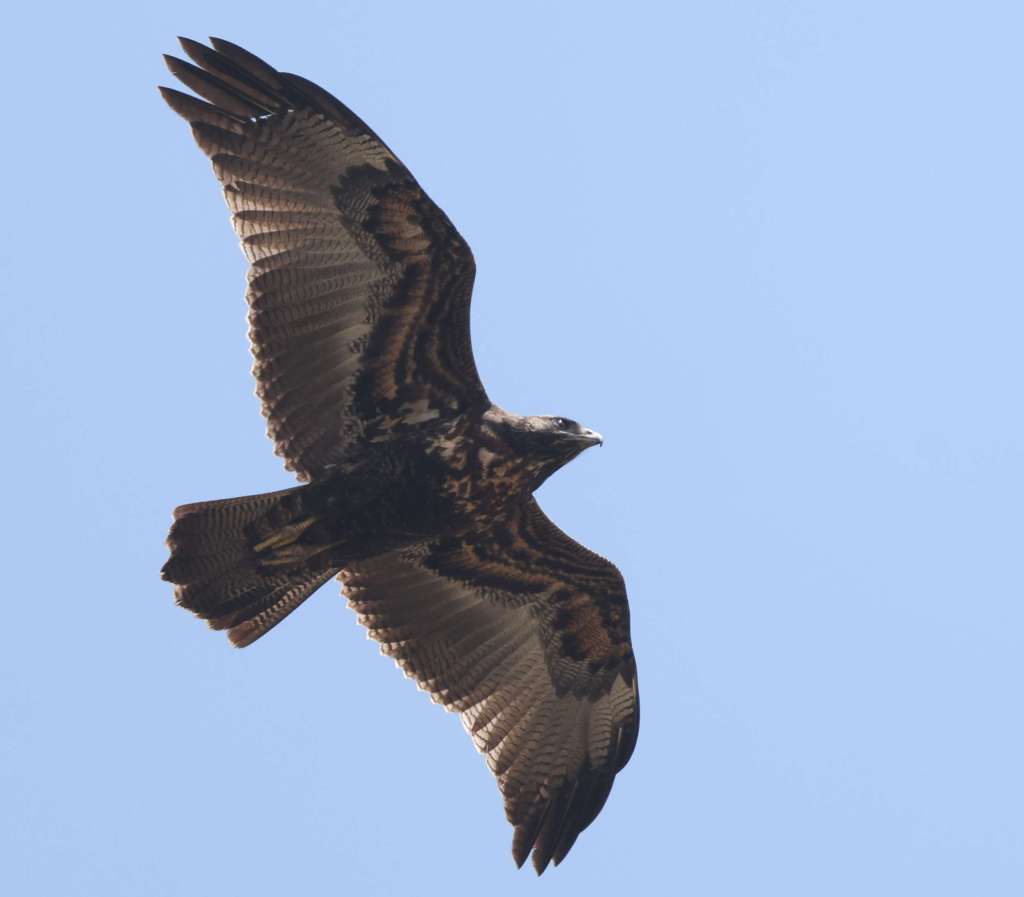
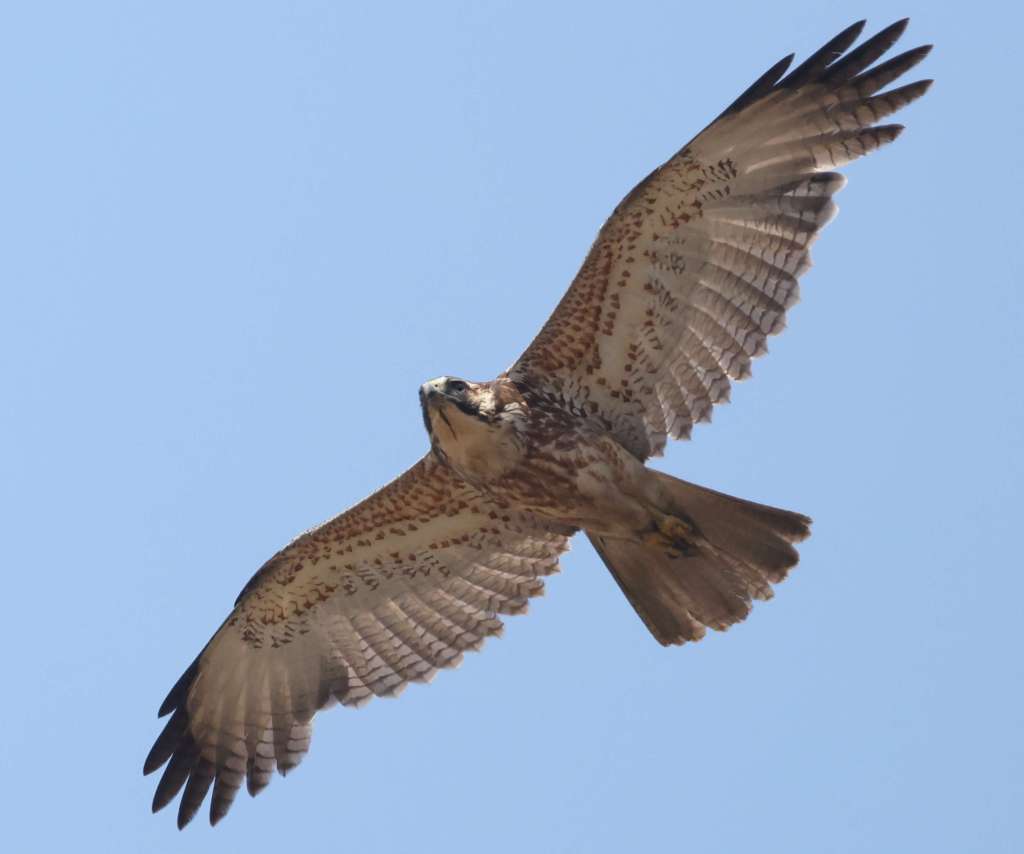
Black-Chested Buzzard Eagles were a common raptor riding the thermals, while a head-scratching-what-exactly-is-that-raptor we eventually deemed to be a Variable Hawk.
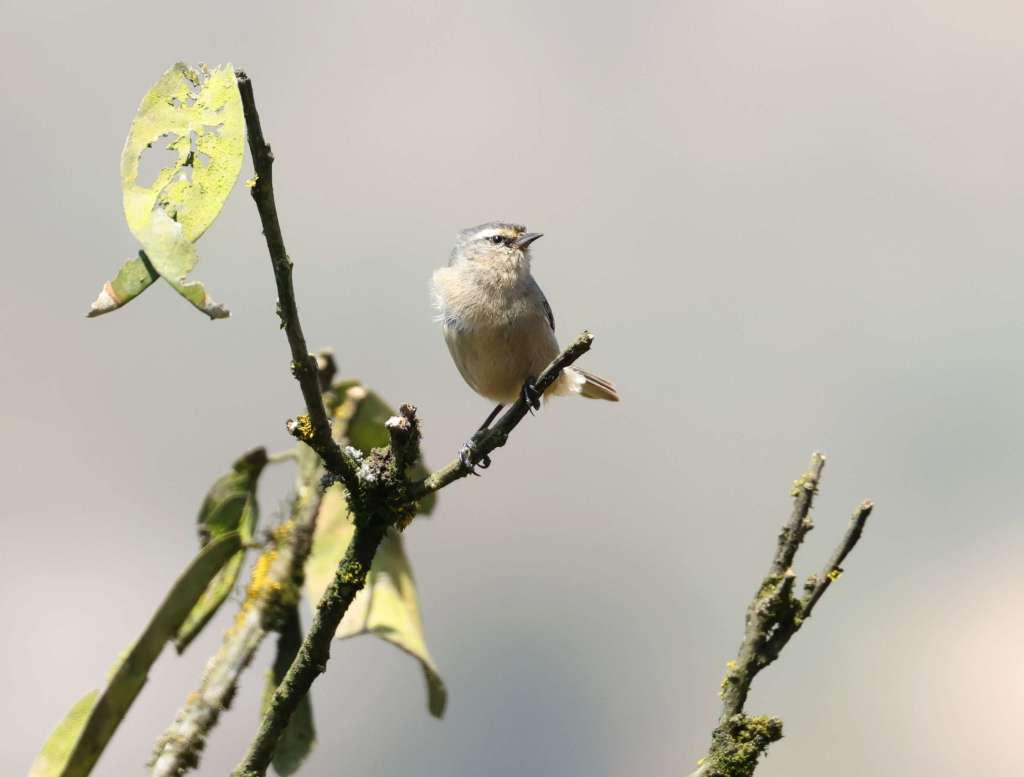
It’s not far to the top of the hill here but once the trail passes the peak, conditions become a lot drier – there are no more trees, but there are plenty of cactus. Here is the habitat of Peruvian Pipit, of which we saw 7, and lots of finches and finch-like birds: Black-Lored Yellowthroat and Raimondi’s Yellow-Finch, Band-Tailed Sierra Finch, and Thick-Billed and Greyish Miner.


If I remember correctly, one of the big targets our guide was trying to find for us was Cactus Canastero, but despite a few attempts at playback, and much scanning of the thickest cactus clusters from several vantage points, we didn’t see that bird.
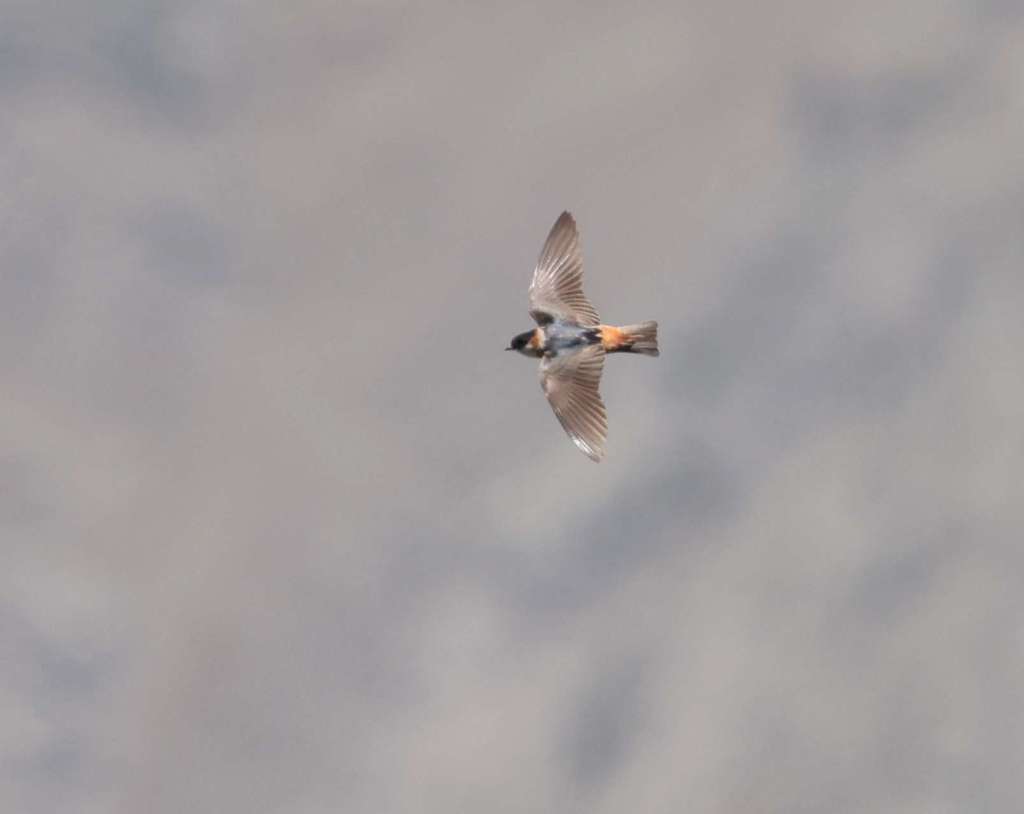
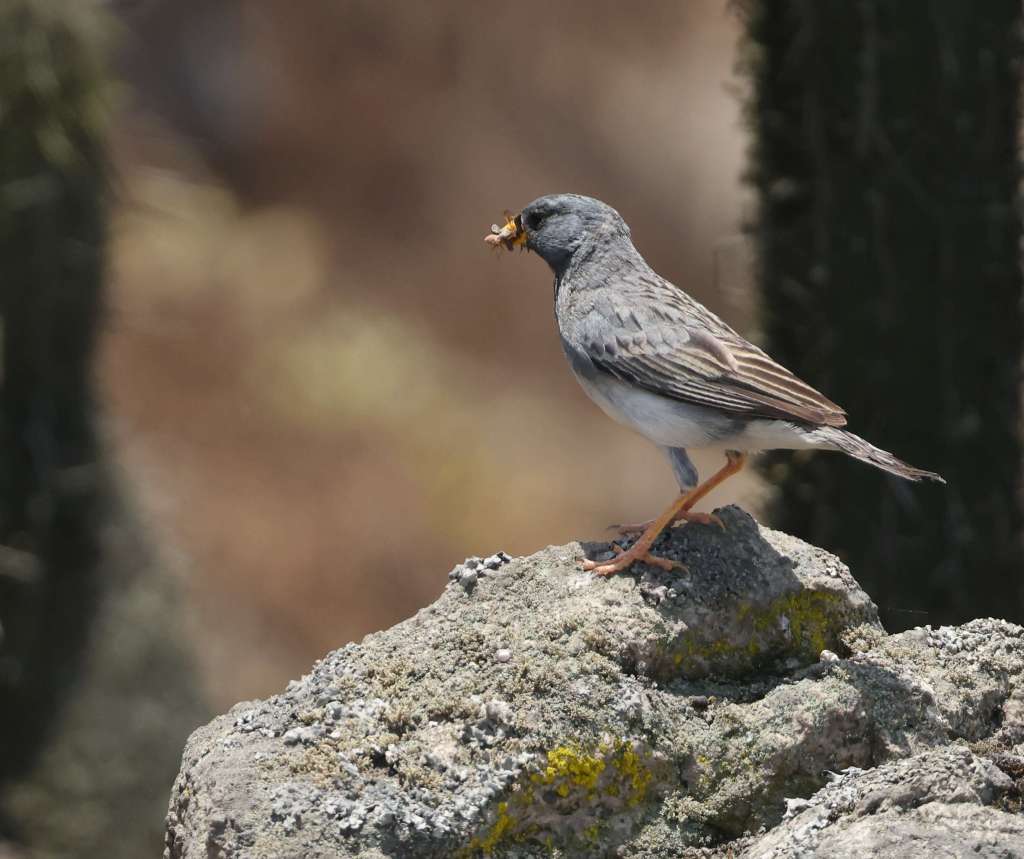
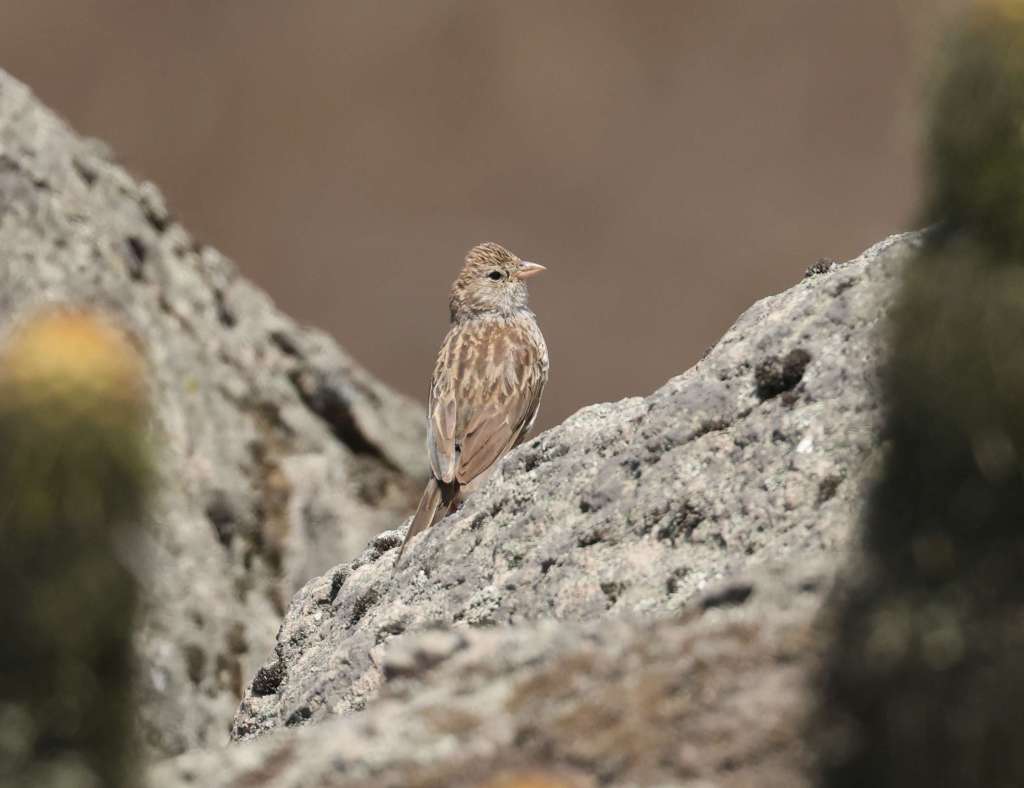
We actually had four types of swallow up here too: Chestnut-Collared Swallow, Barn Swallow, Bank Swallow, and Blue-and-White Swallow. That’s a lot to – wait for it – swallow!
Even though this day trip was at the end of our time in Lima (and indeed, of our month in Peru), and we had seen tons of birds in that time, we still picked up a whopping 13 lifers at Lomas de Lachay, so going there was well worth it not just for lifers but for appreciating these precious little biodiversity islands and their special birds.
Summary
There was much more to like about birding around Lima than I had expected, and I would definitely recommend spending some time here rather than just using Lima as a waypoint to other travel destinations. I’m not 100% sure why I planned a full 9 days stop here before heading to Ecuador, but in hindsight I’m really glad I had that time to explore Miraflores, with its urban birds and coastline, the diversity at Los Pantanos de Villa, and also have enough time for short side trips to Lomas de Lachay and Islas Ballestas too.
AUTHOR: ANDY GEE
BIRDERS: ANDY GEE, K-A
 Bird Spots