You might go birding in the lush rainforests of Ecuador’s Andes eastern slopes and end up saying to yourself: “Wow, what just happened?!”
It’s that fabulous.
The Andes East Slope refers to the range of the Andes mountains to the east of Quito, Ecuador’s capital city. The Andes rises from Quito’s 2800m elevation to over 4300m and then descends again all the way into the Amazon basin. Bird species vary somewhat according to elevation – you will see a largely different set of hummingbirds, for example, by ascending or descending only a few hundred metres.
We covered these east slope sites on a 10-day tour organised by the fine folk at WildSumaco Lodge (see next post), on our way to and from that lodge from Quito. Our guide was Byron Gualavisi, possibly the best birding guide I have ever accompanied, with almost supernatural powers (and a lovely person, to boot!) Please use the Bird Spots Contact Page if you’d like Byron’s details.
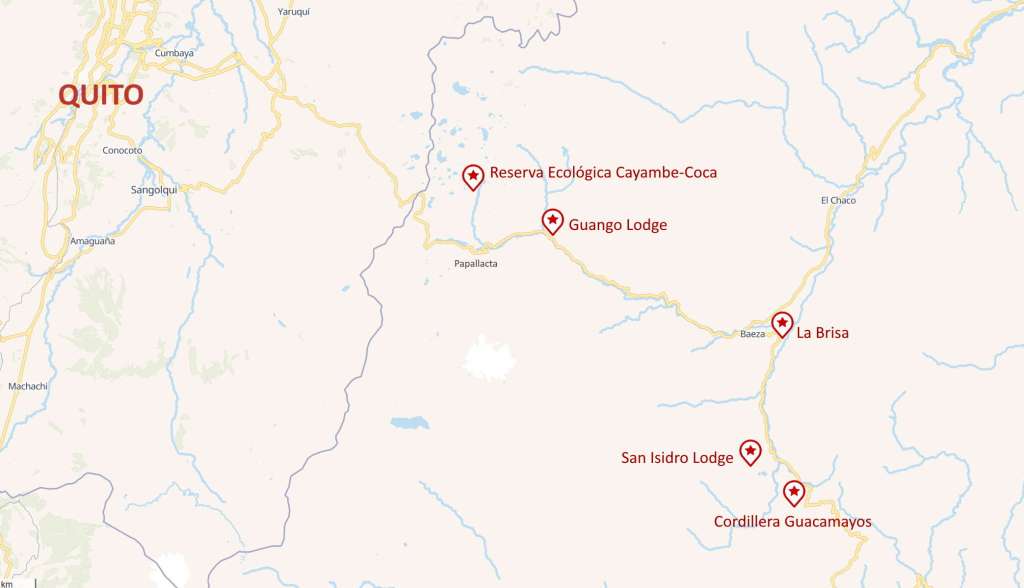
This post covers all the locations shown on the map above: the high-altitude Reserva Ecologica Cayambe-Coca (near Papallacta), Guango Lodge, the La Brisa hummingbird garden, San Isidro Lodge and the nearby nature reserve Cordillera Guacamayos (the latter three sites situated around 2000m to 2200m altitude).
We’ll also mention some delightfully weird bird names – be prepared to find out what “lacrimose”, “carunculated”, “flavescent” and “tourmaline” mean!
Moth Traps and Mud Tracks: San Isidro Lodge
San Isidro Lodge: thy name evokes nirvana. Let me explain.
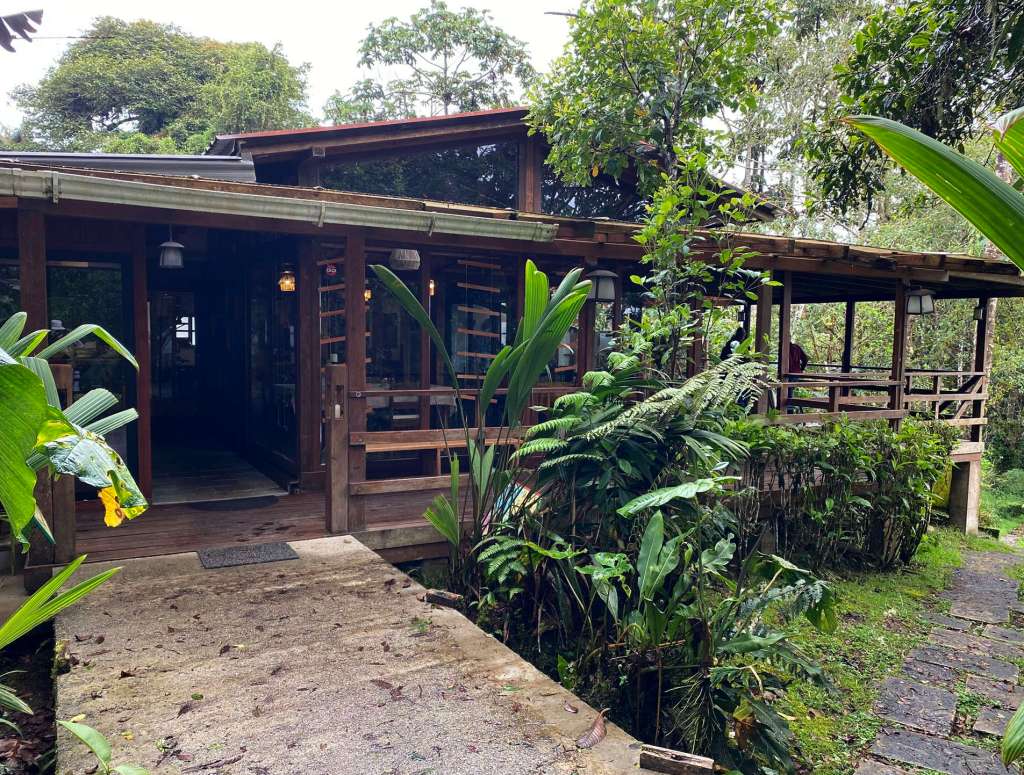
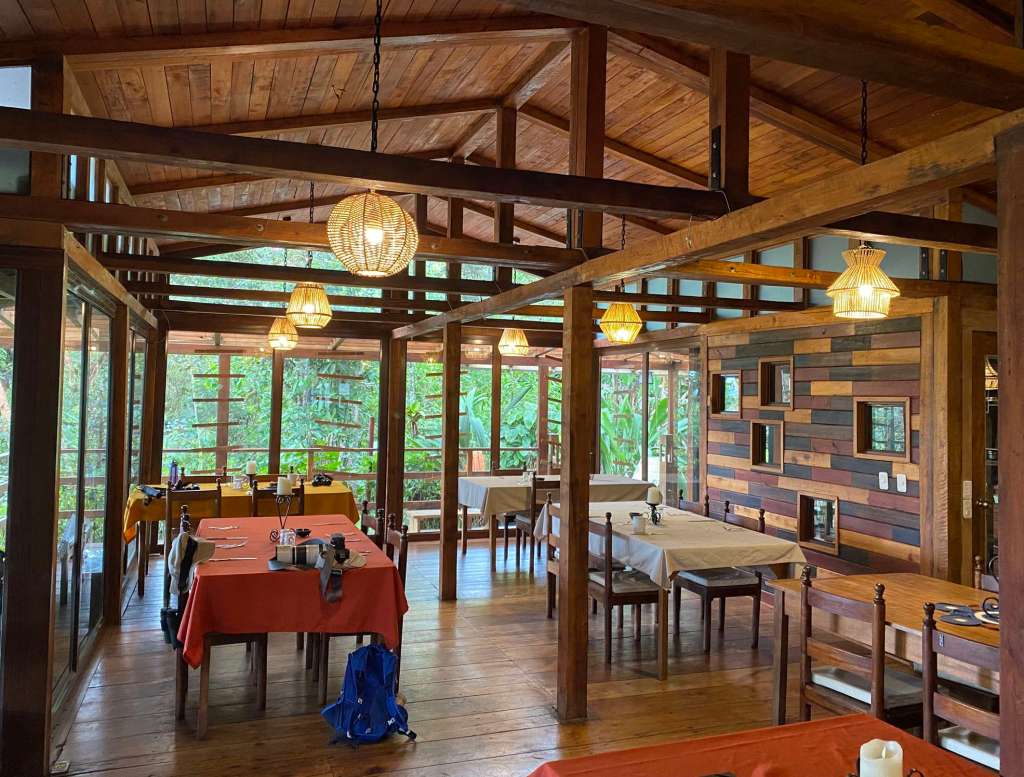
This was our first proper birding lodge in Ecuador, and it just seemed to have everything the (let’s admit it) luxury-loving birder might want: large comfortable rooms with bird-watching-friendly balconies; a spacious and welcoming lodge hall; really, really nice meals; and of course tons of wonderful birds (563 species on eBird – that’s a lot, folks).
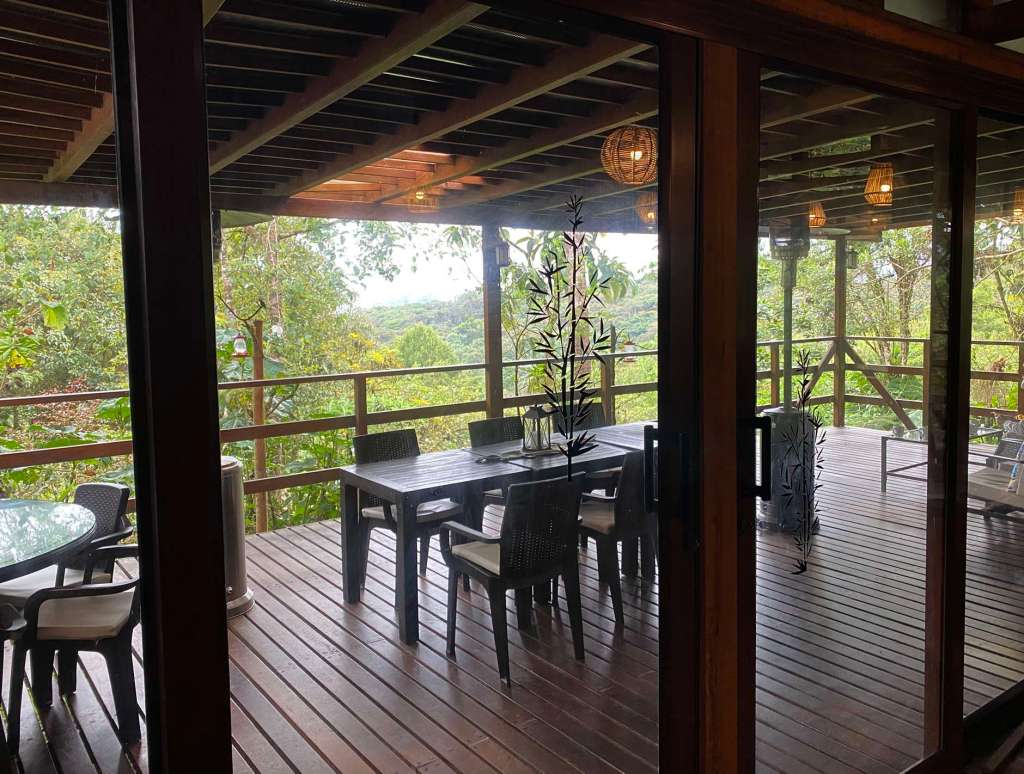
And an incredible……… moth light.
What’s a moth light? It’s simply a white sheet lit up with a strong light, designed to attract insects (especially moths), which in turn attracts birds. It’s a common practice in Ecuador. I’m not sure of the ethics of it (those poor moths!), but it sure does work.
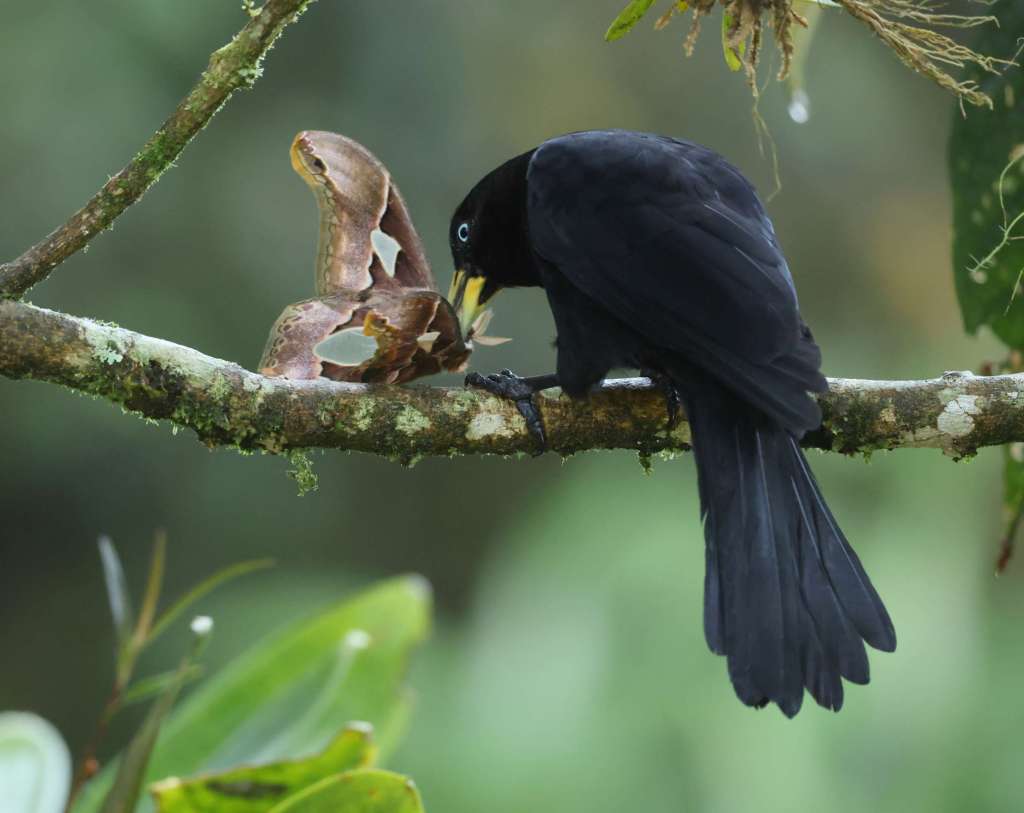
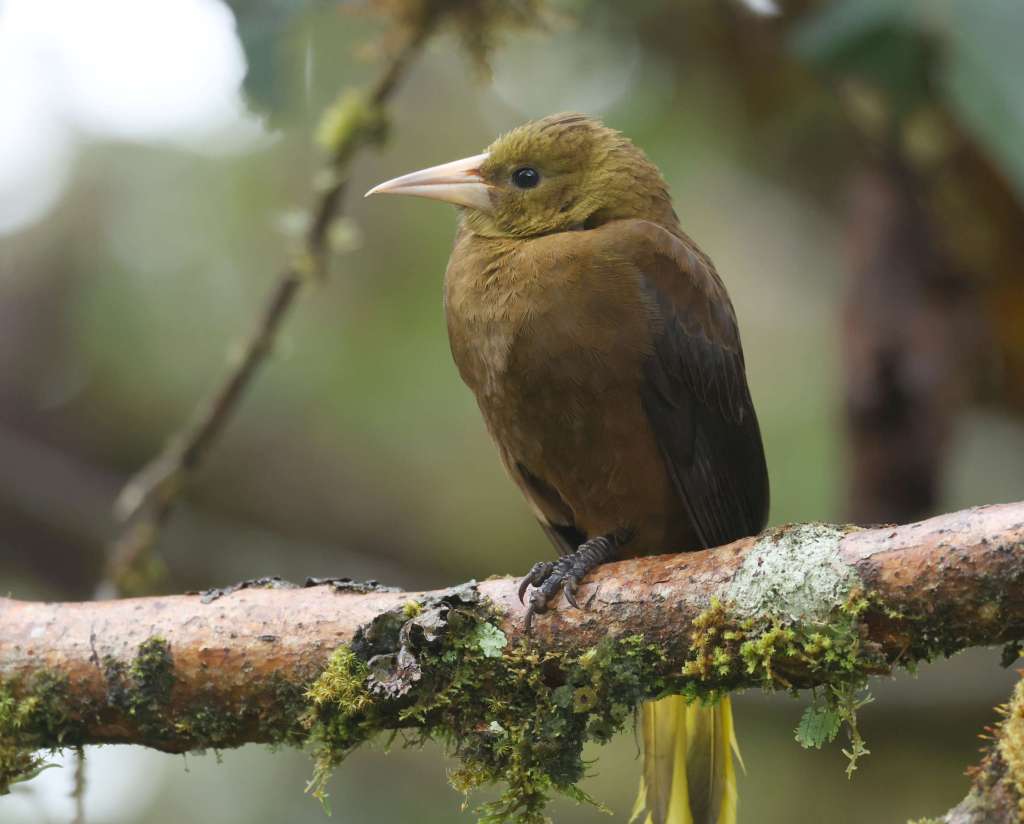
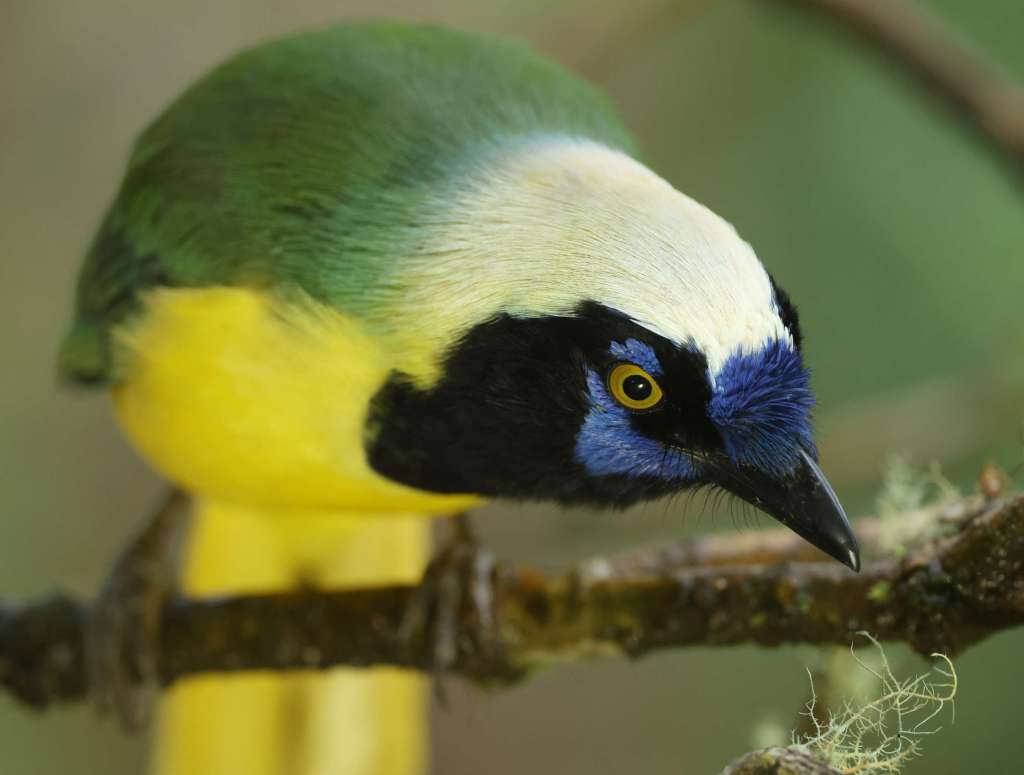
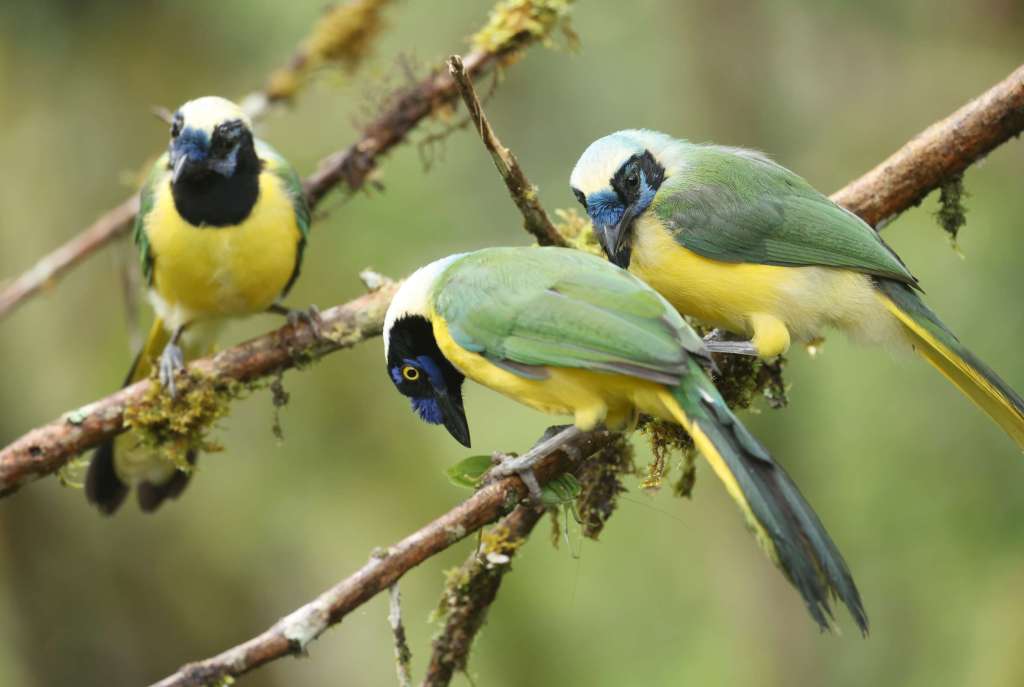
Because the lodge left the light on all night, it attracted tons of moths, and come dawn the birds arrived and absolutely feasted. The bigger and most obvious birds taking on the bigger prey were the Scarlet-Rumped Cacique (the scarlet rump really only apparent in flight), the Russet-Backed Oropendola (gotta have an Oropendola of some kind in the vicinity, this is South America, after all), and the Green Jay (also, as I found out, known as the Inca Jay in its southern range, and indeed is split in some taxonomies, as this article discusses well).
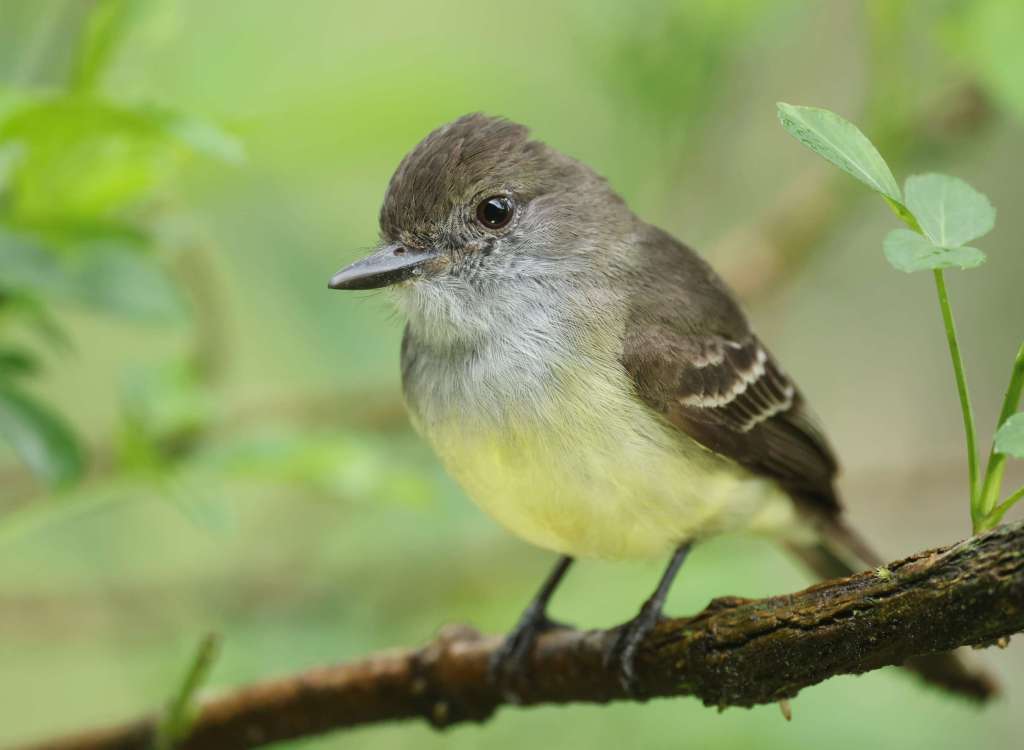
Of course moths and insects are going to attract flycatchers, which don’t have much work to do to catch their prey here. The incredibly confiding Pale-Edged Flycatcher is one; the photo below of it is completely uncropped! The balcony of the main building at San Isidro is generously wide and the moth light is directly below, so a good number of the birds alight on trees within a few metres of the railing before snatching their mothy meals.
This, folks, is bird photography heaven.
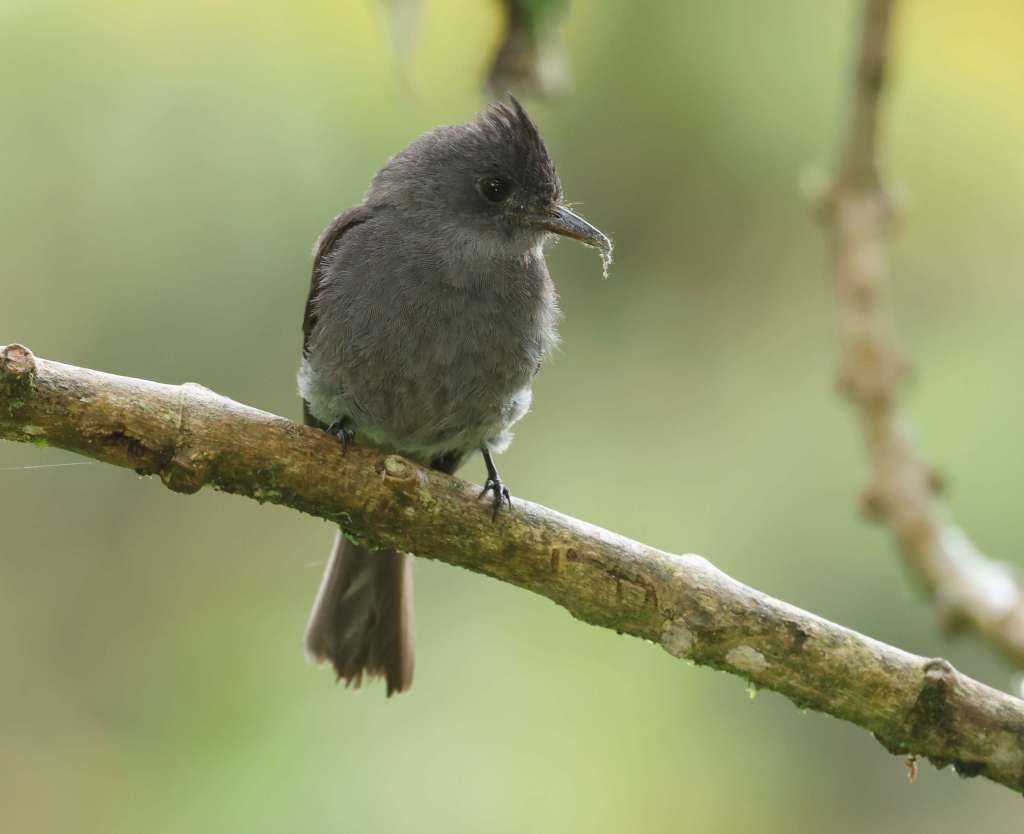
Another regular is the Smoke-Coloured Pewee (in the Tyrant-flycatcher family), and I gotta say, it does remind me of smoke, albeit pretty dark and dirty smoke. A less common flycatcher (at least in my experience across a couple of mornings of balcony-birding) is the Flavescent Flycatcher, an interesting shade of olive-yellow – flavescent means “yellow or turning yellow”.
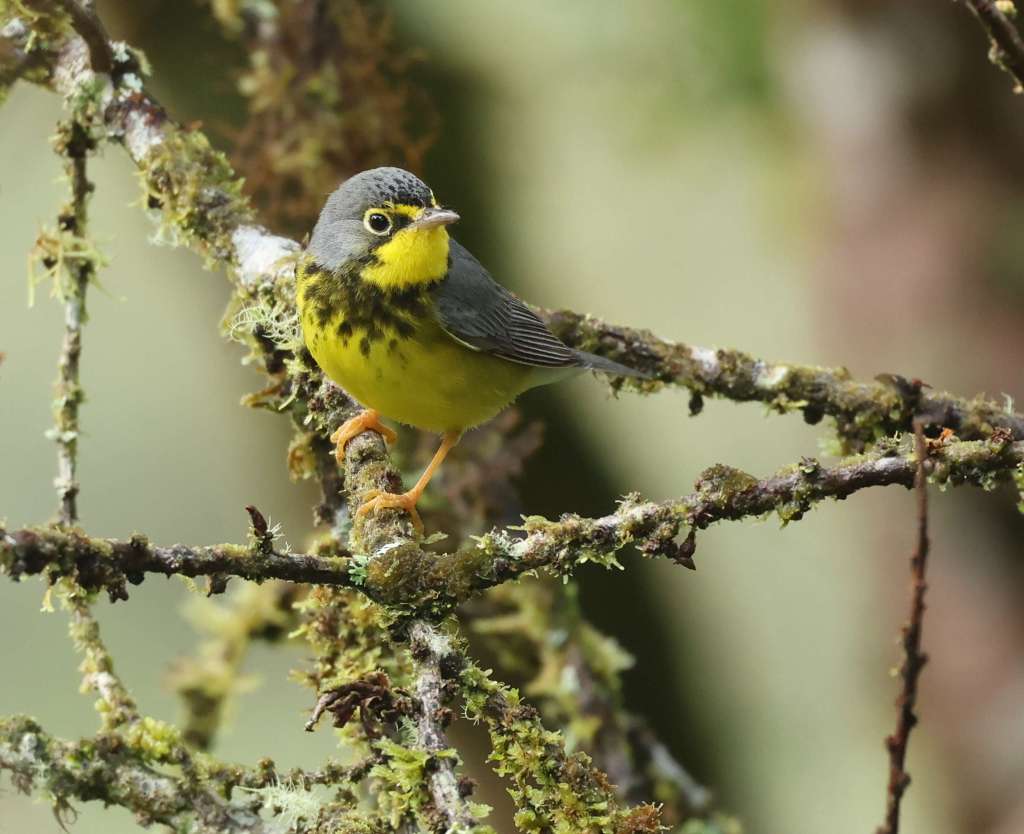
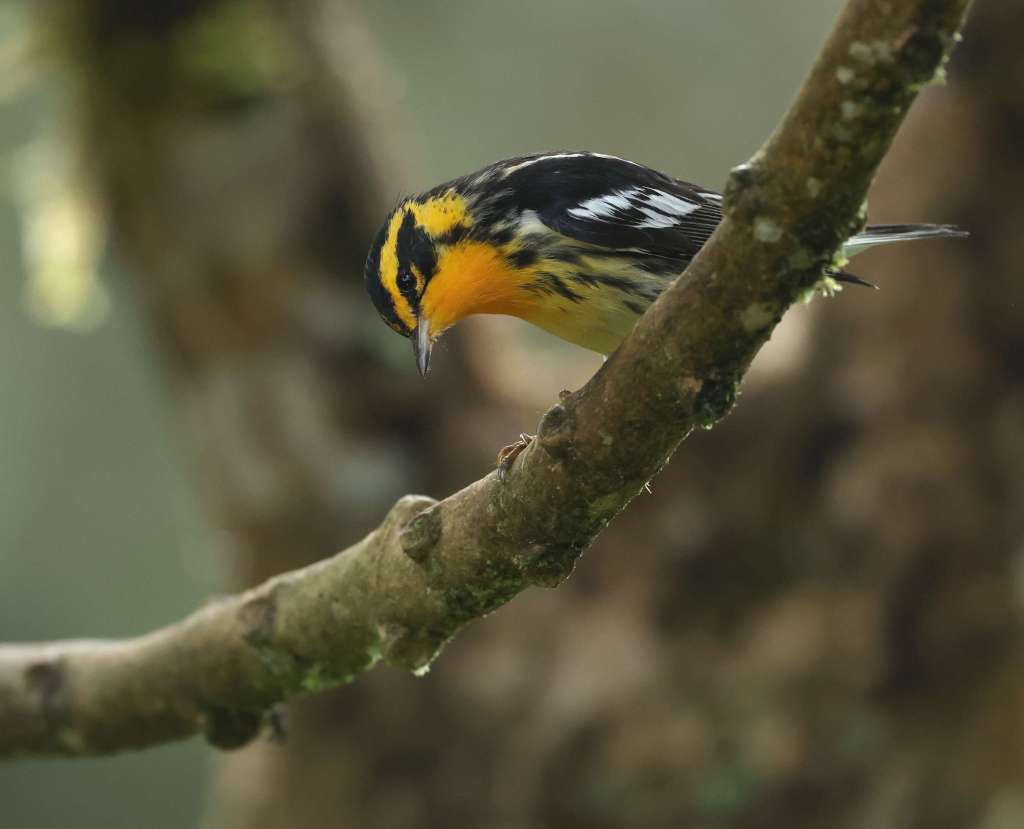
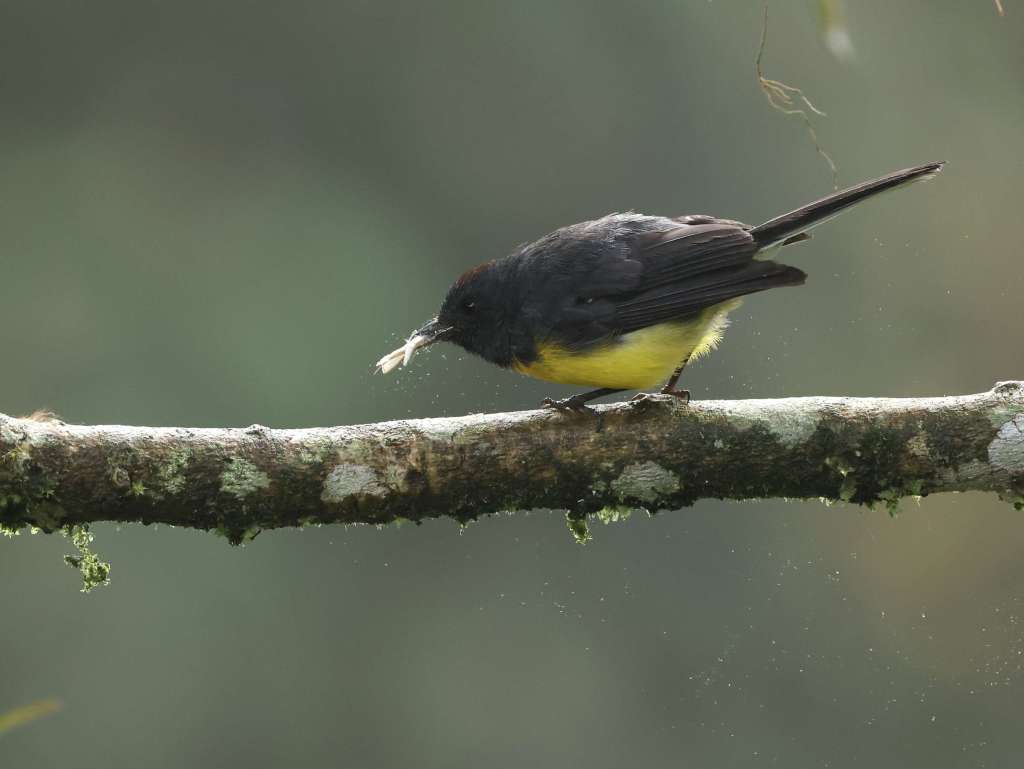
Phew! We’re barely getting started here. Blackburnian Warblers and Canada Warblers represented the warbler family (and many more warblers have been seen here by others). Lovely wee birds these are too (hello Canada Warbler lifer, also!), while the Slate-Throated Redstart was a real balcony mainstay, venturing into the rafters for moths and bugs other birds were too timid to try for.
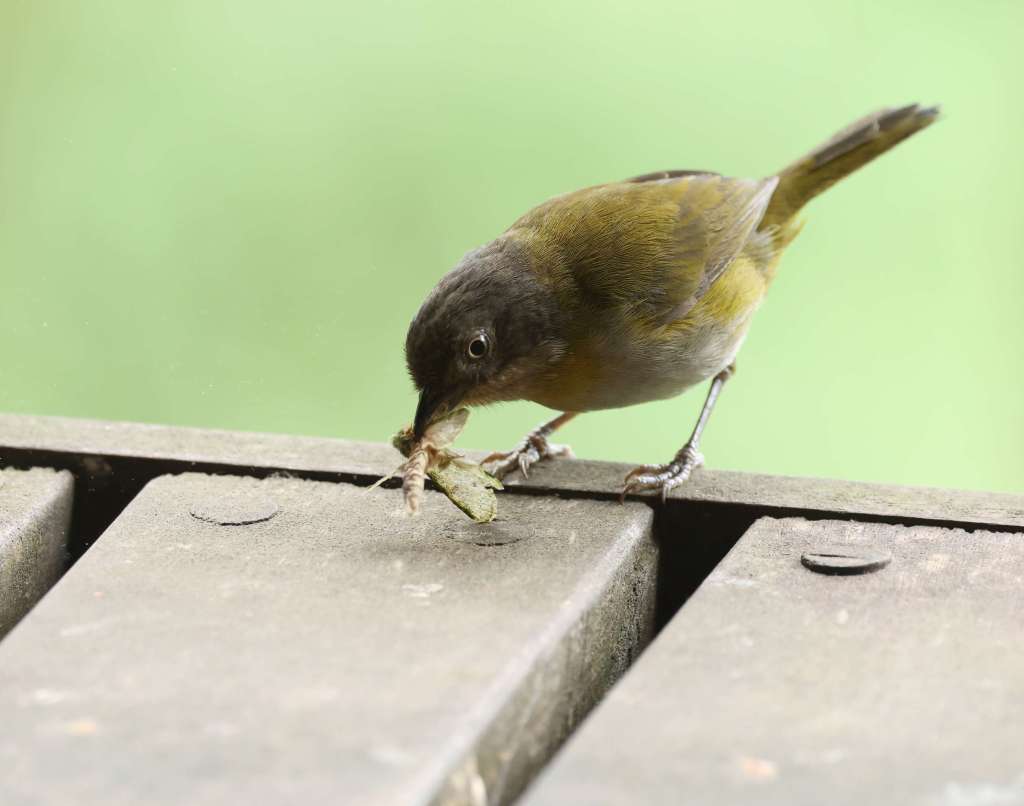
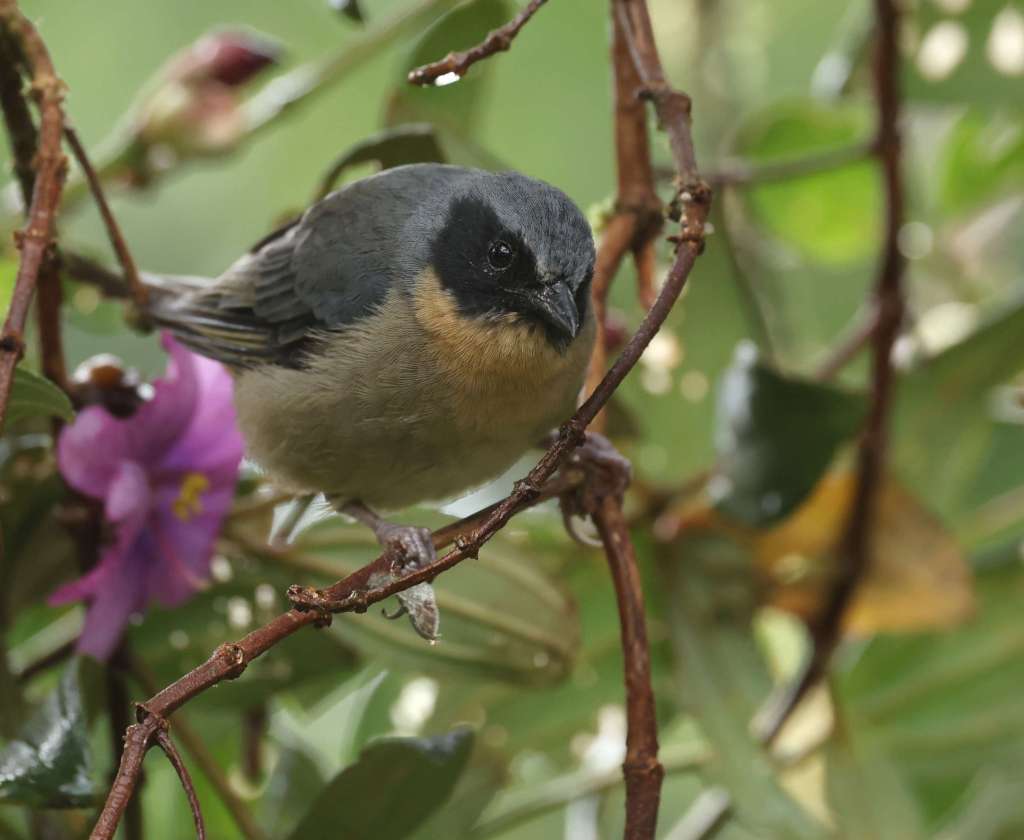
Common Chlorospingus, often a core member of mixed-species feeding flocks, was a similarly brave bird that even hopped around the balcony deck, happily munching down moths it found. Another bird with a mouthful of a name, the Black-Eared Hemispingus, also paid a visit, displaying its cool black face mask.
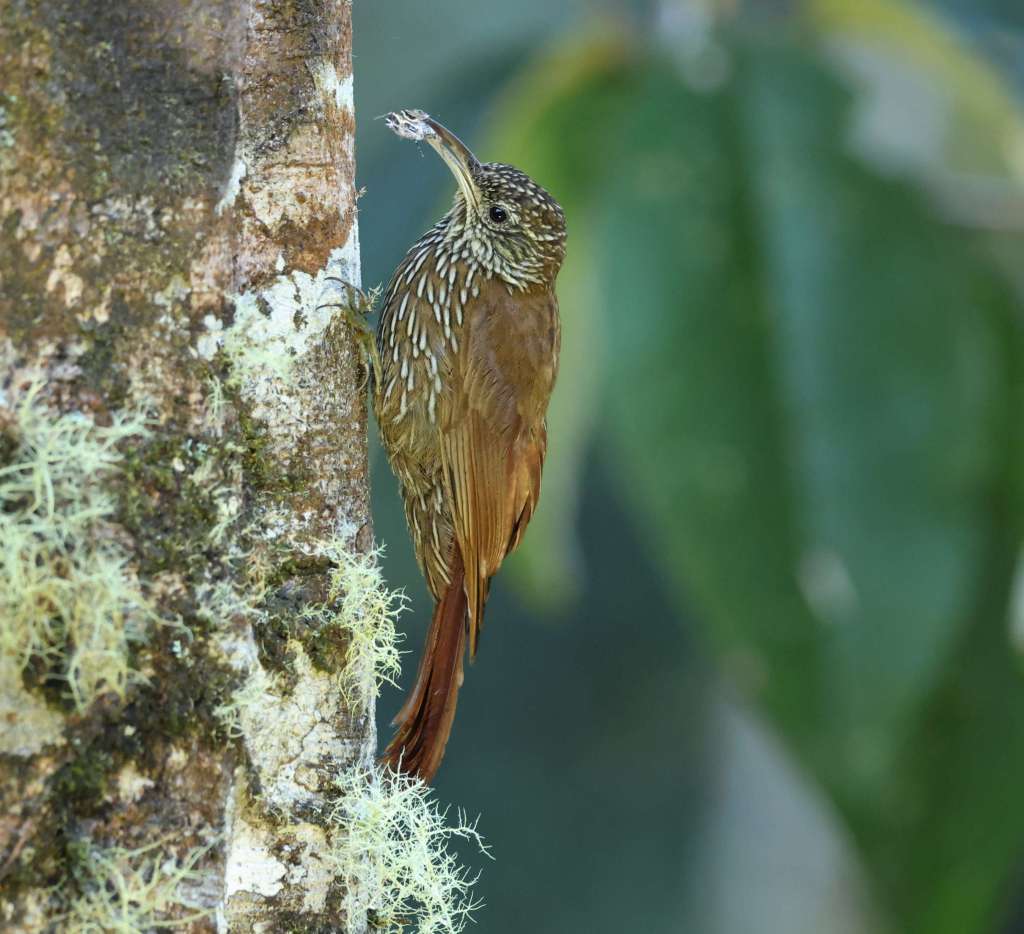
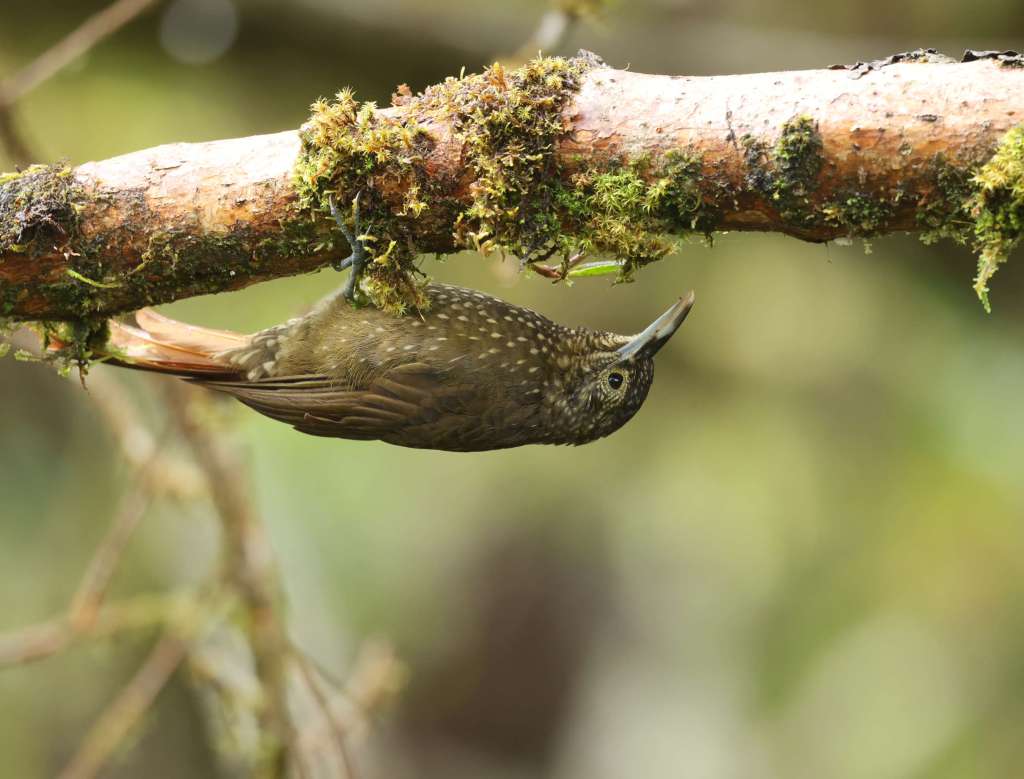
Woodcreepers, those charming crawlers of tree trunks, also enjoyed the easy food on offer. eBird shows an amazing nine species of woodcreeper seen here, three quite commonly.
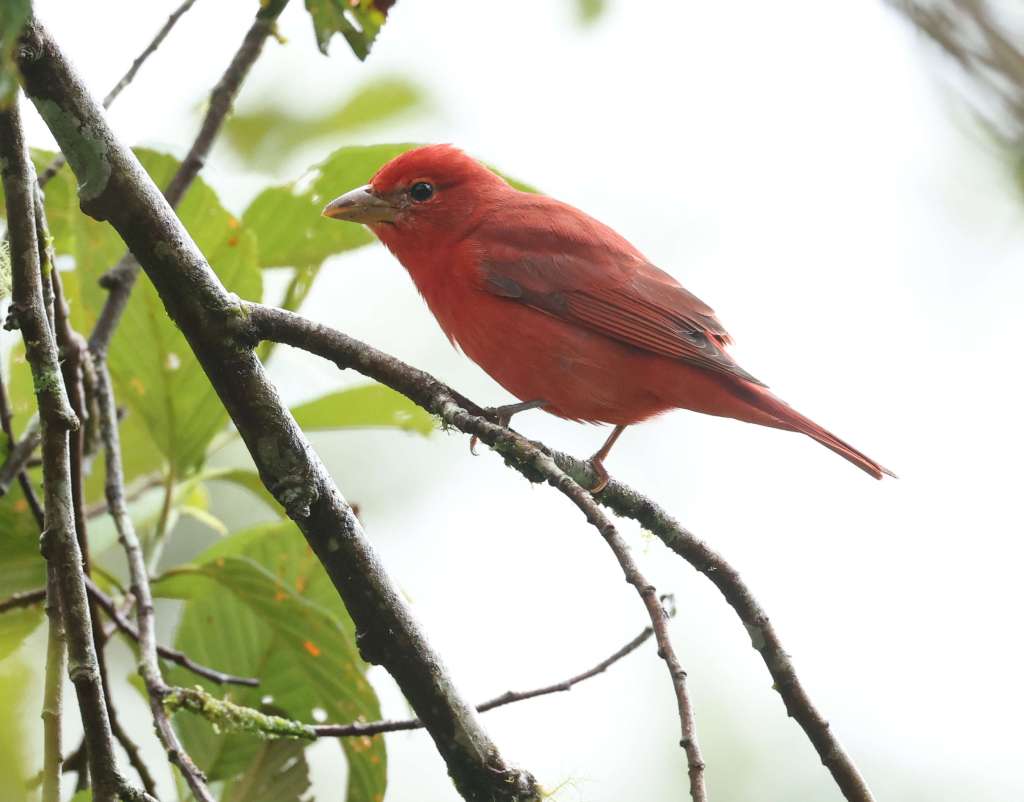
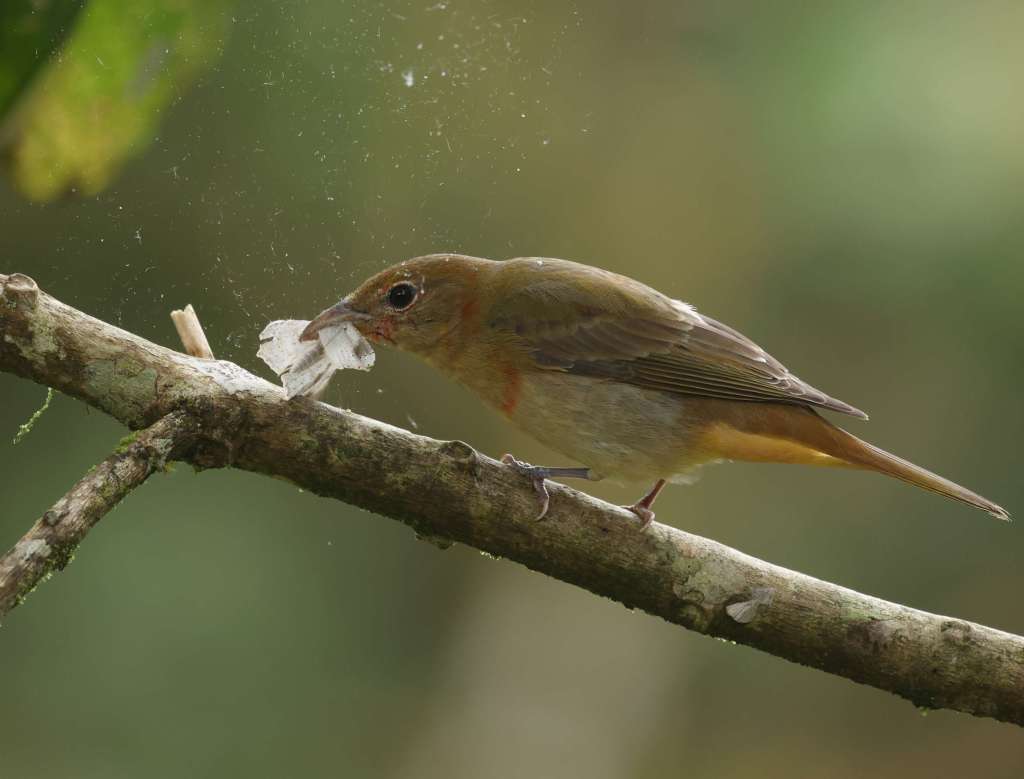
Unlike many other quality Ecuadorian birding hotspots, San Isidro lodge isn’t much of a site for tanagers, with Summer Tanager (here mainly from November to March) being the main representative. The young one I saw here was really getting into the whole “thrash the heck out of the moth on the branch causing moth dust to go flying everywhere” thing, and I recorded that action on video too (watch the YouTube video, go on!)
Of particular note near the moth light are the cute little wrens. The main two I saw were Grey-Breasted Wood-Wren, sometimes tricky to see well due to its love of heavy foliage cover, and the Mountain Wren, which puts me in mind of a House Wren.
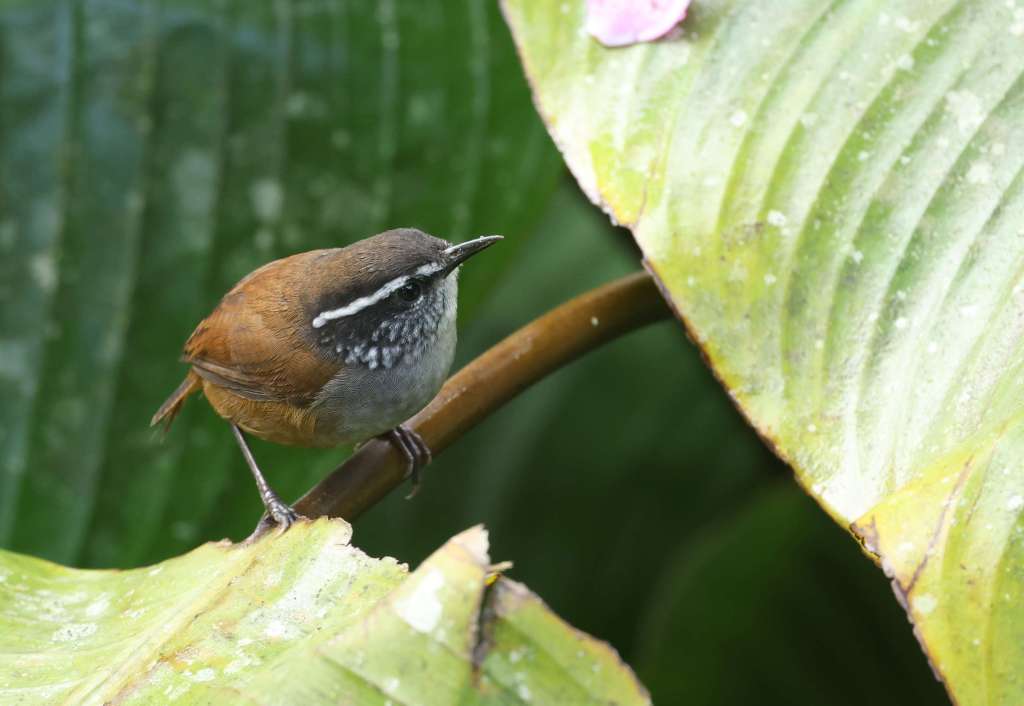
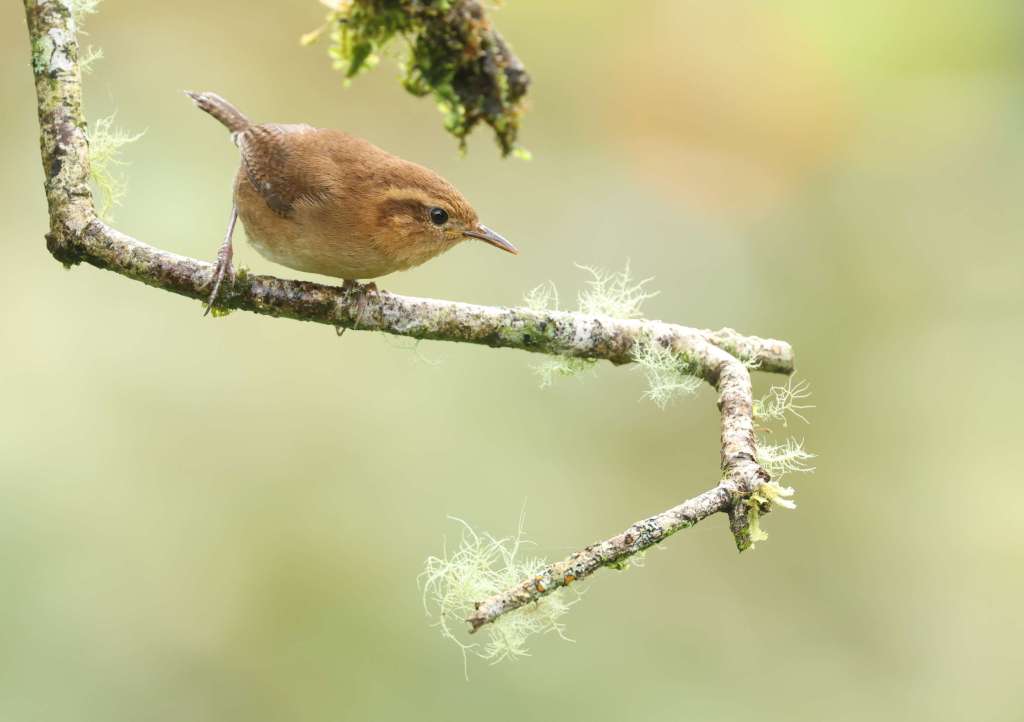
With only a couple of hummingbird feeders, the lodge isn’t quite as spectacular for those hovering little gems, with the Chestnut-Breasted Coronets being most prominent and zealously guarding their favourite feeders from incursions by Speckled Hummingbirds and Long-Tailed Sylphs, among others. We were waiting very patiently with only a short time left before leaving the lodge and hoping to see Fawn-Breasted Brilliant, shown in the eBird checklist for the site as one of the most common of all the birds there, with no luck.
I can handle missing out on seeing birds… mostly… but when everyone else sees it but you, that just makes you feel like a crap birder!
Anyway, we got a brief glimpse of the Fawn-Breasted Brilliant before the resident Chestnut-Breasted Coronet chased it off, so yay.
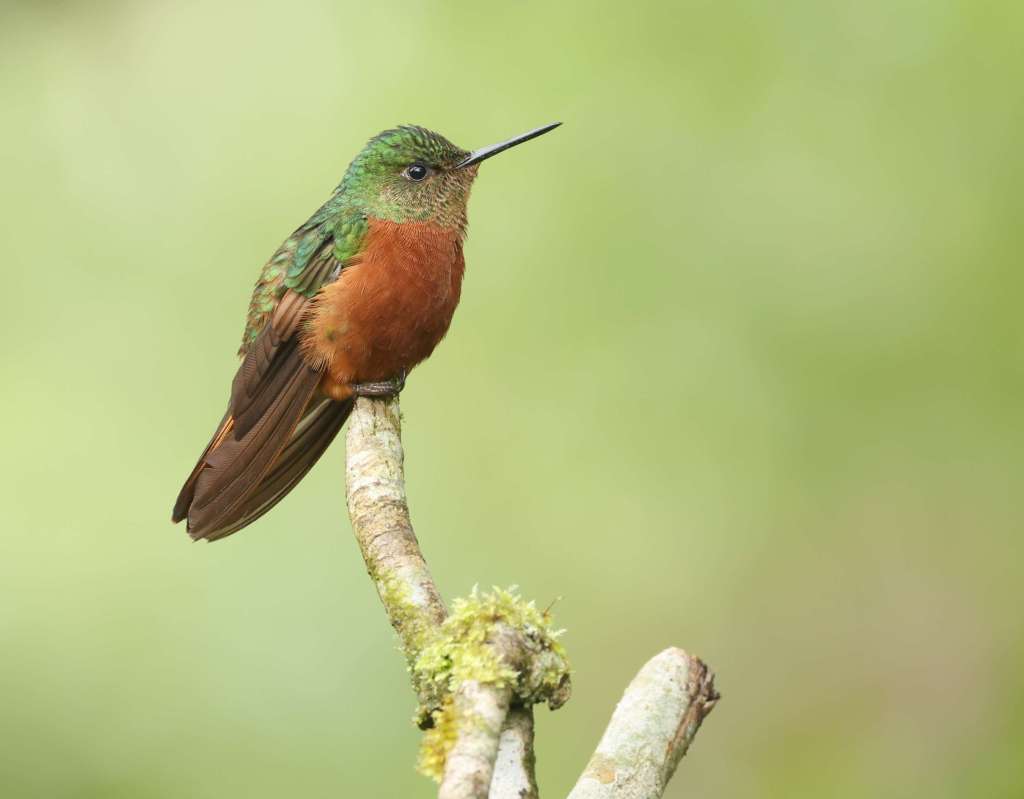
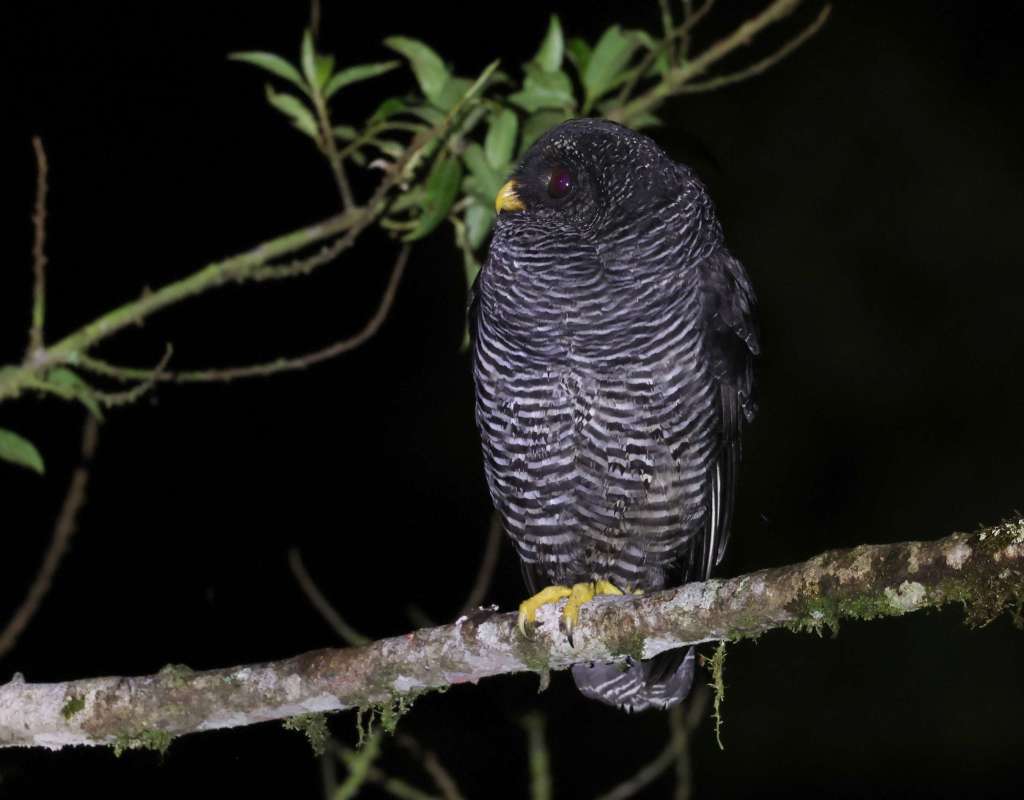
With the abundance of insects near the moth light, a Black-Banded Owl was a real possibility here – we saw one the first night, but it was AWOL the second. Nearly half of all eBird’s photos of this species are from San Isidro, so this feels like the place to find that species. We tried for Rufous-Banded Owl along the lodge’s access road too but no luck there.
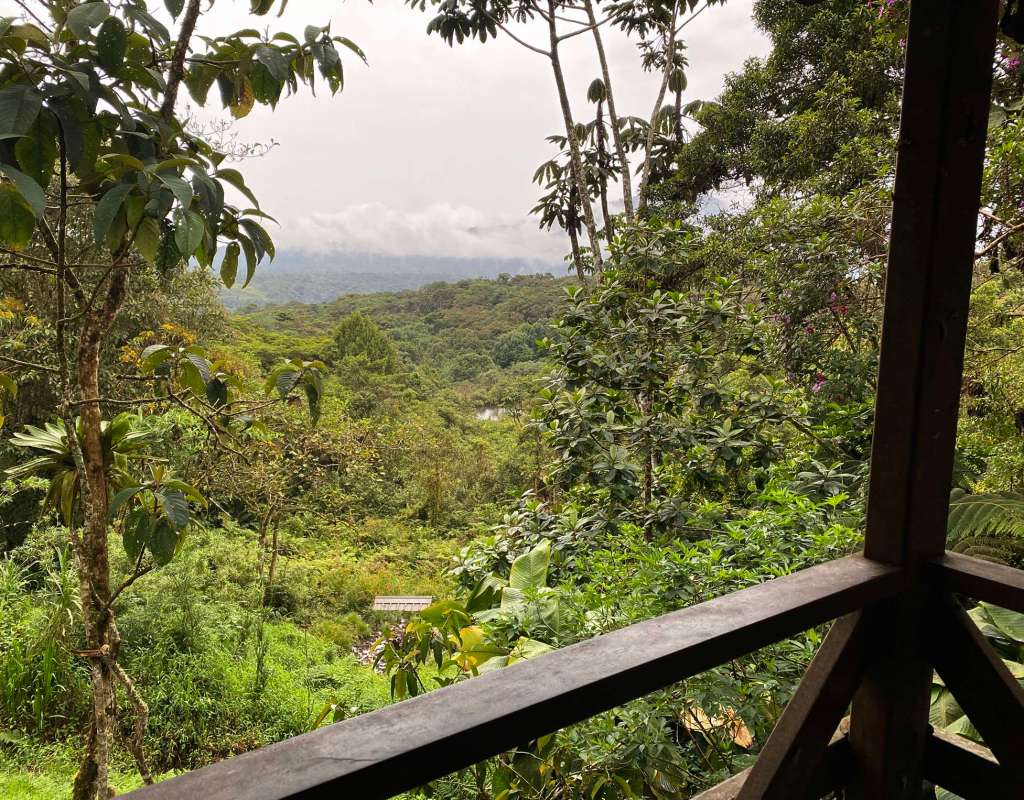
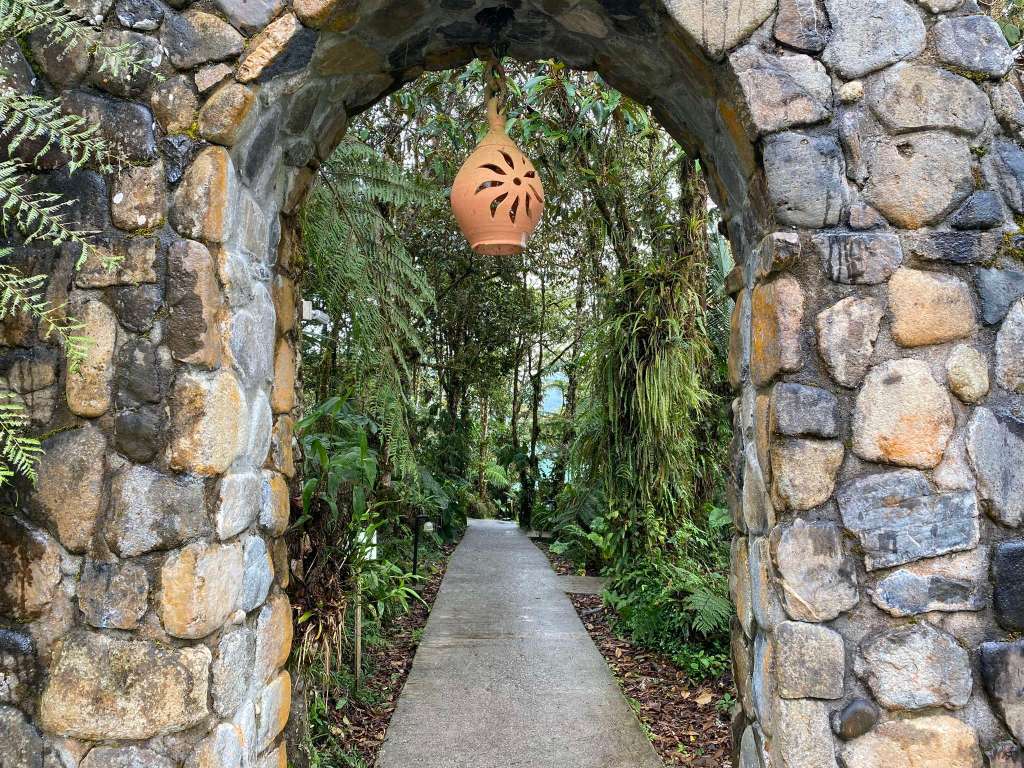
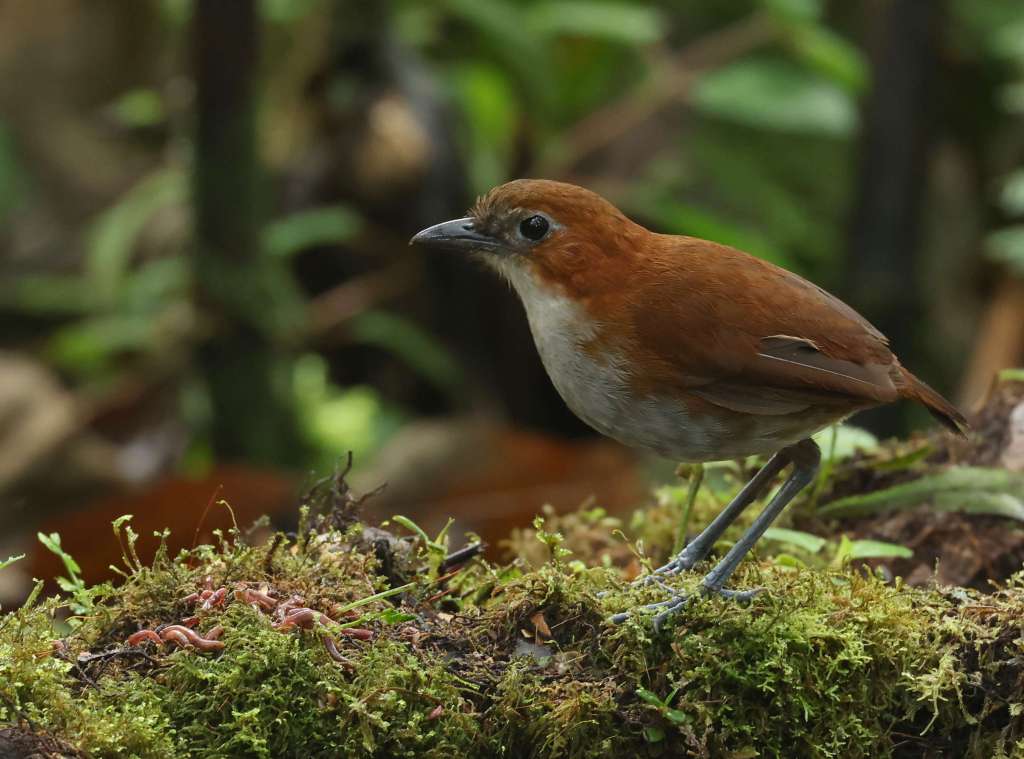
Not far down from the main lodge building they feed a White-Bellied Antpitta, and we duly saw that bird one morning. A pretty cute one, it is too. On the asphalt paths that link the main lodge building with the cabins (oh, should also mention there is actually a swimming pool here too…), we saw an Andean Motmot, and – thanks to a tip-off from another bird guide – a Southern Emerald-Toucanet high up. Good stuff.
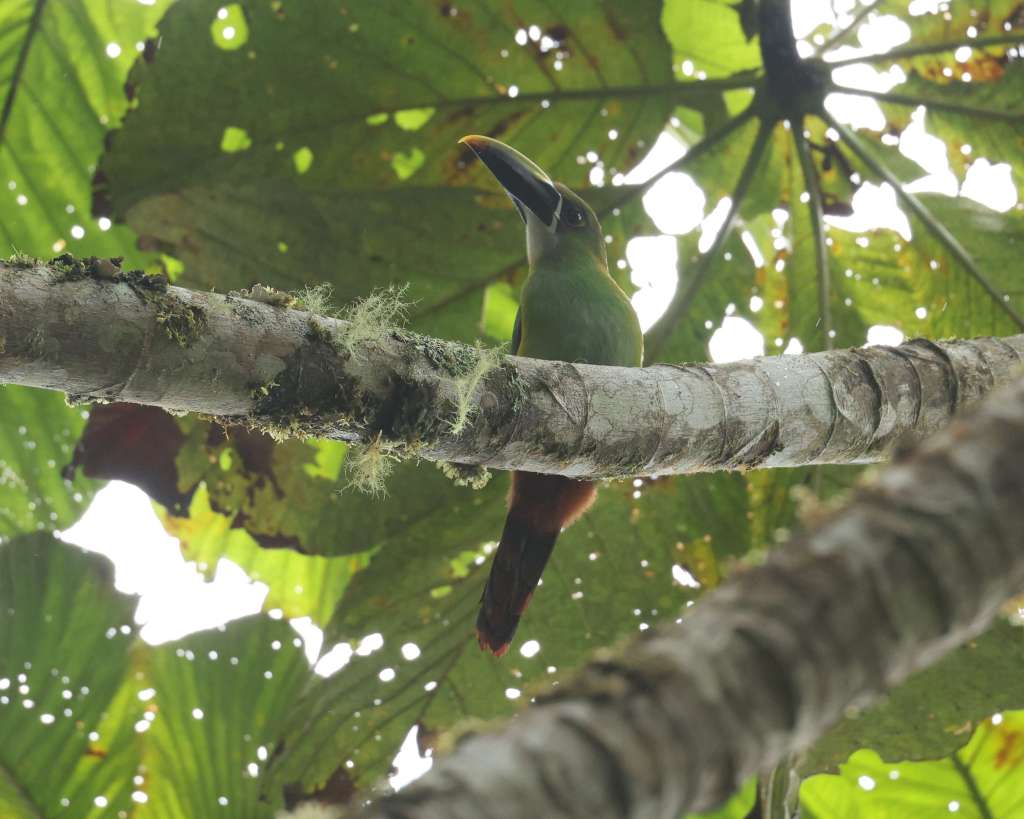
As if the grounds of the lodge and its moth light and feeders weren’t enough, San Isidro Lodge also has a decent network of walkable trails. The rainforest here is super-lush and has a really, really high canopy, so you’re absolutely going to have to work hard for trail birds. Also, it’s terrifically muddy, so you’re going to need gumboots, no question.
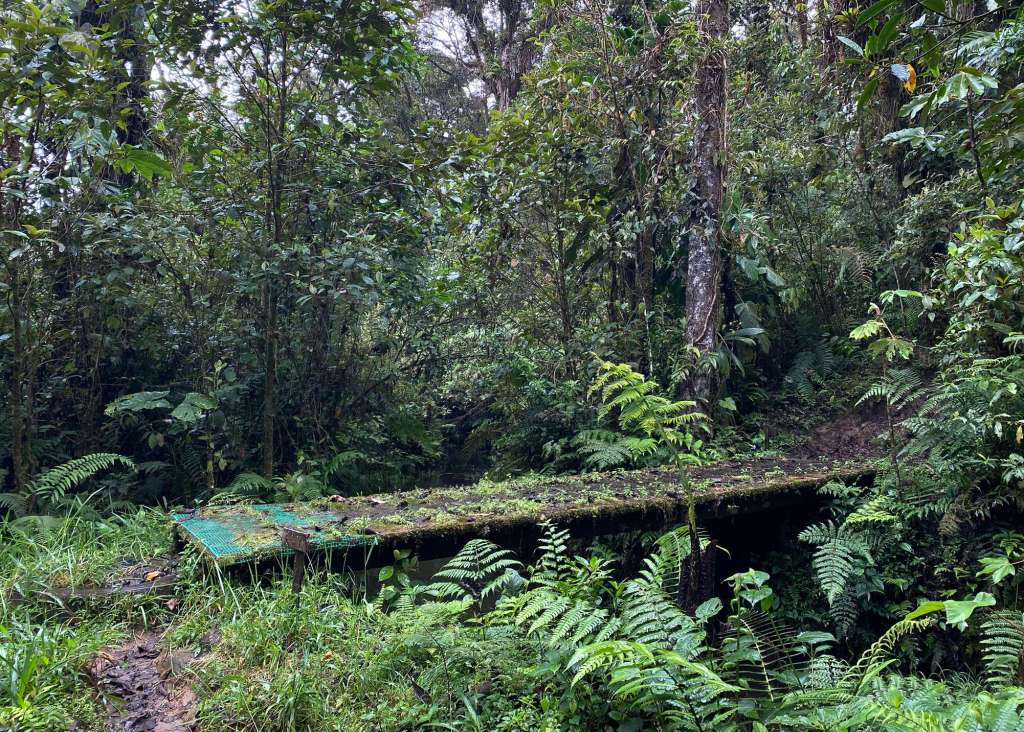
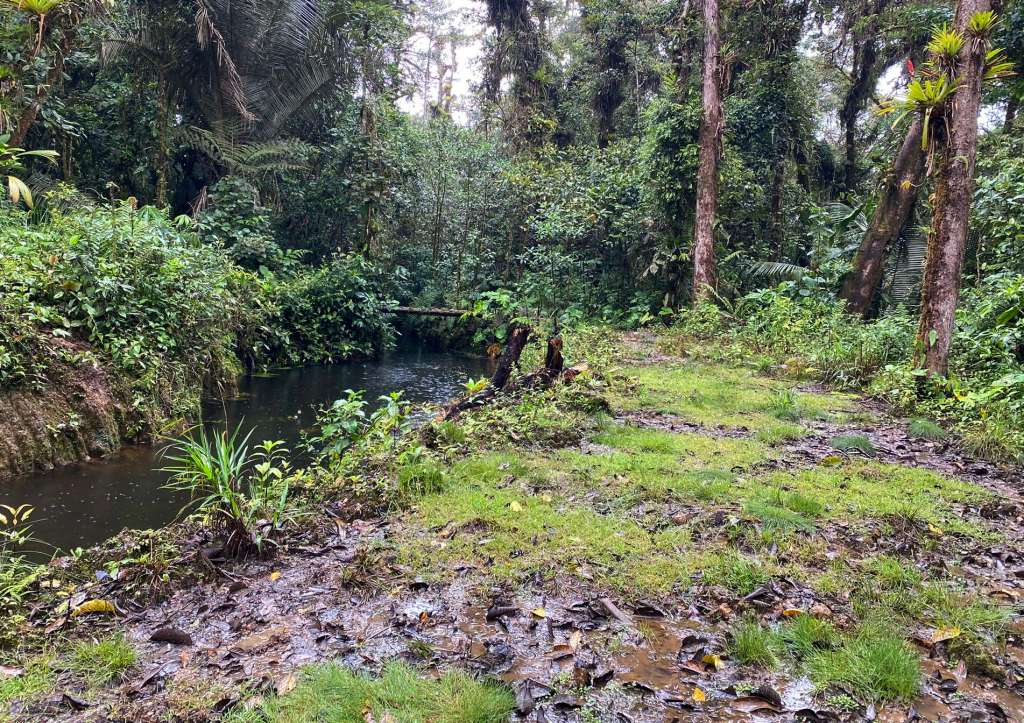
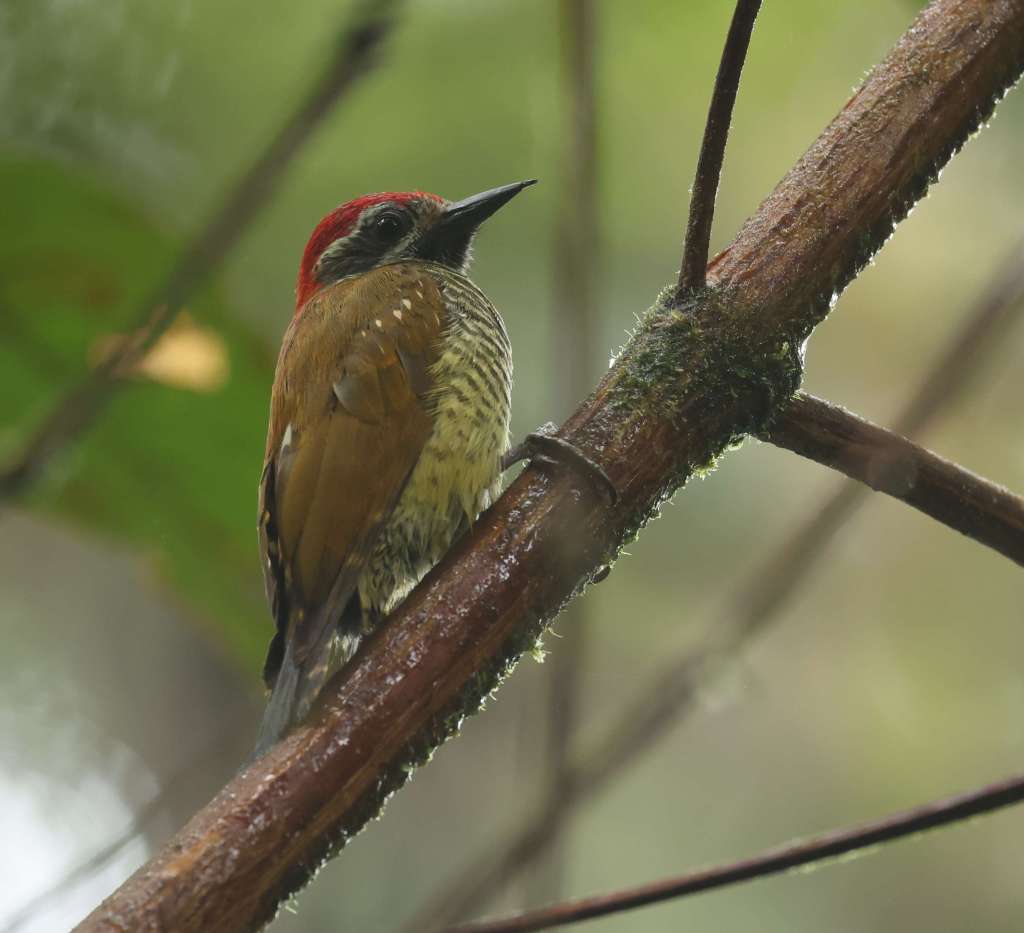
Birds we saw on the trail included Blackish Tapaculo, Black-Billed Peppershrike and Streaked Tuftedcheek, all glimpsed with difficulty and often part of a mixed flock well up in the treetops – zero chance of a magazine cover-worthy photo. A Yellow-Vented Woodpecker did come down to say hello though, perching on a branch in the rain four or five metres up for quite a while.
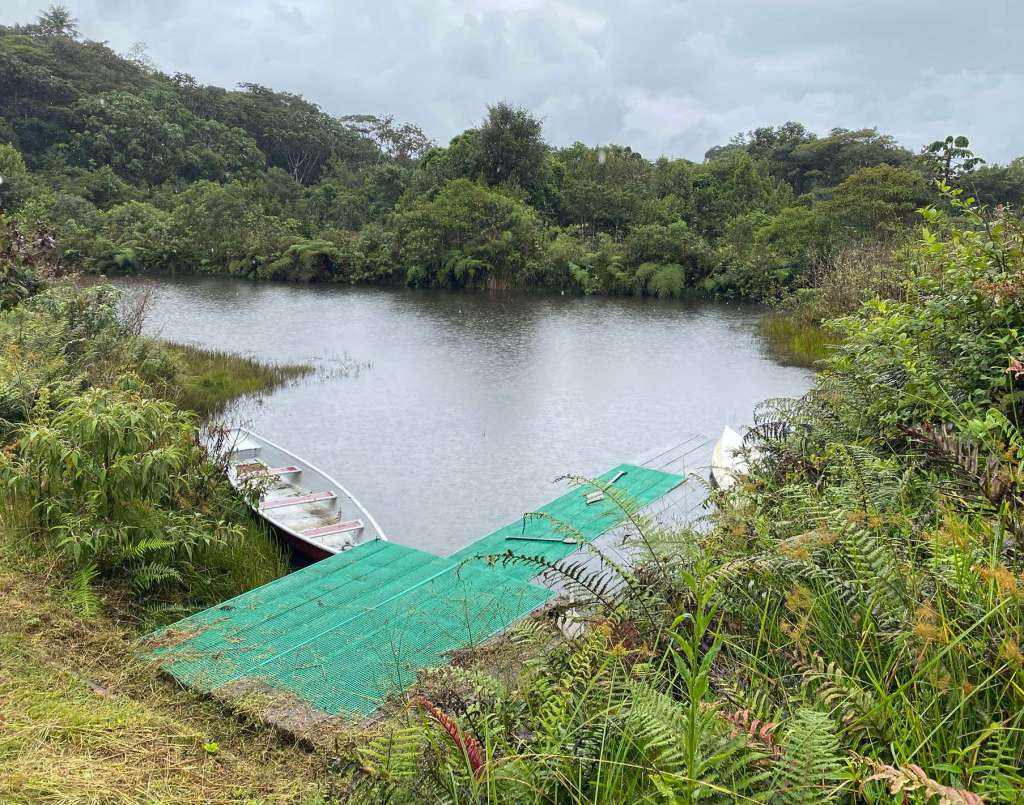
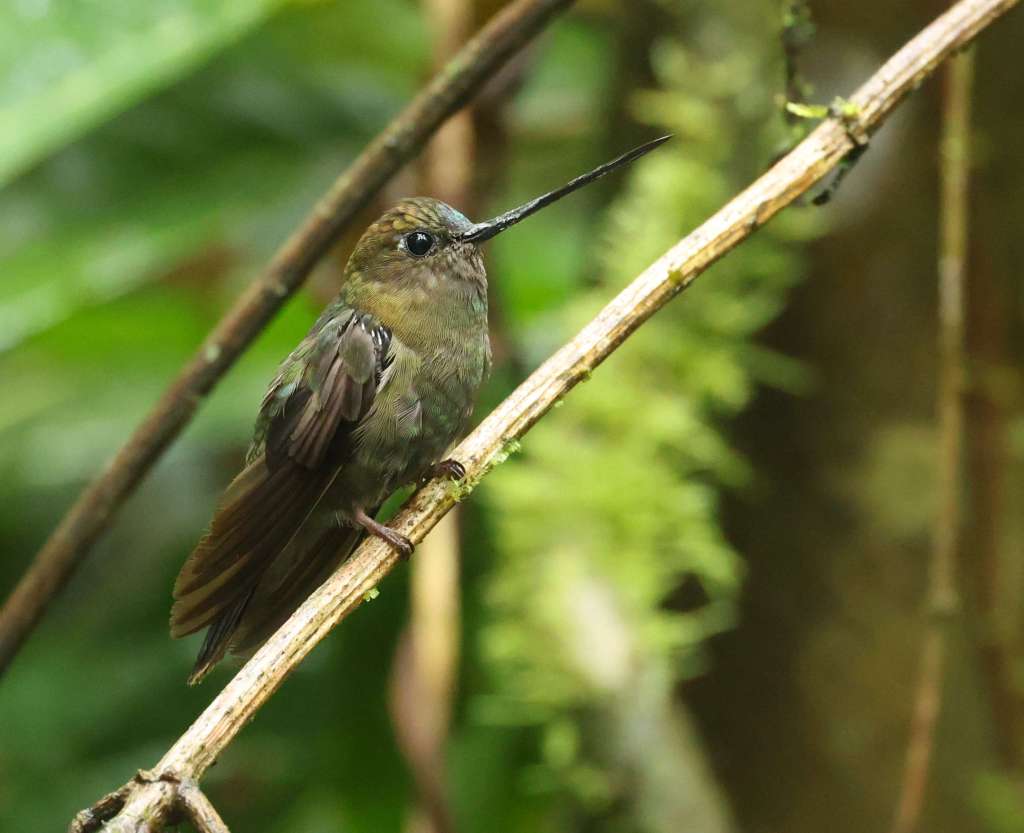
The trail at times follows a small creek (connecting to a small lagoon on the property), and along this creek we saw a Green-Fronted Lancebill flitting over the water and constantly returning to the same twig. That sharp bill, wow!
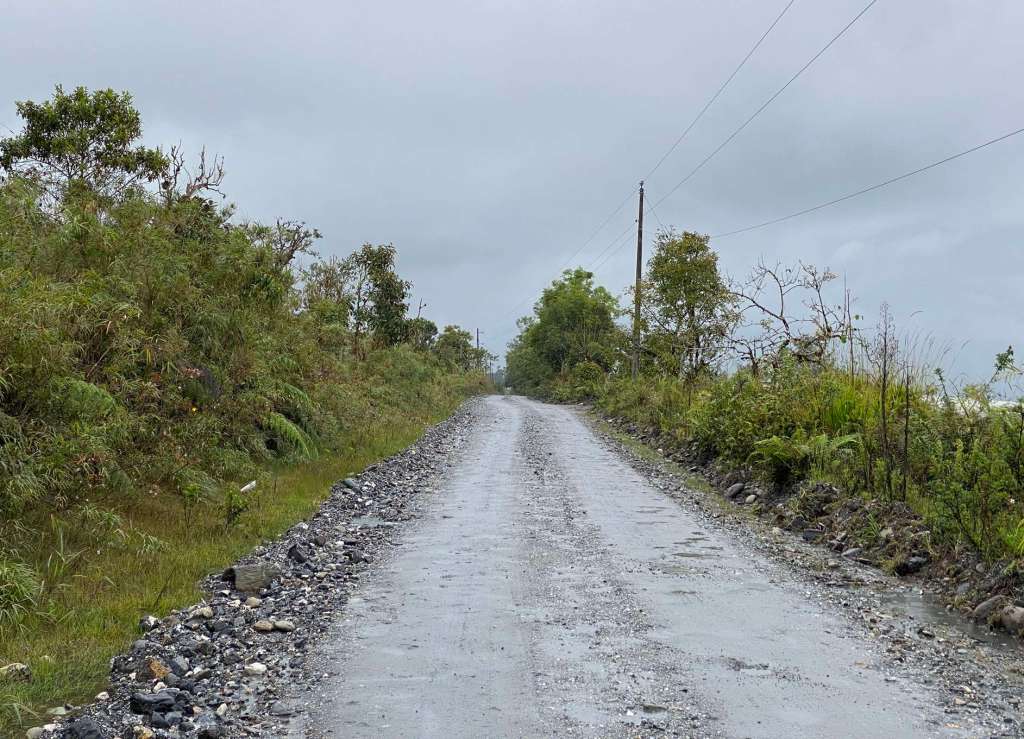
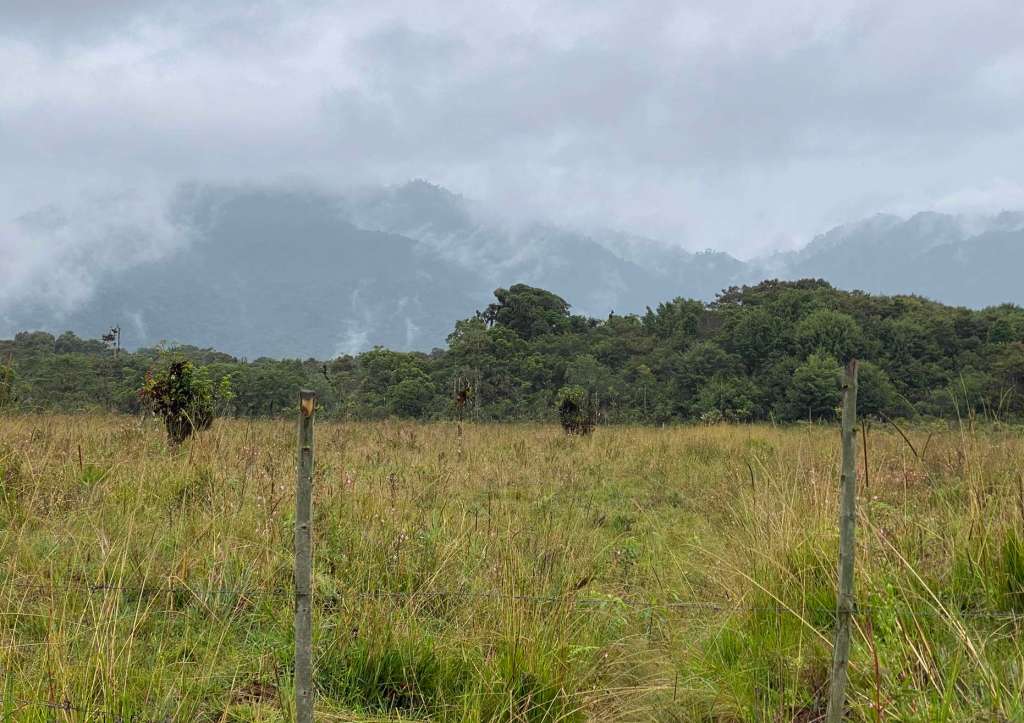
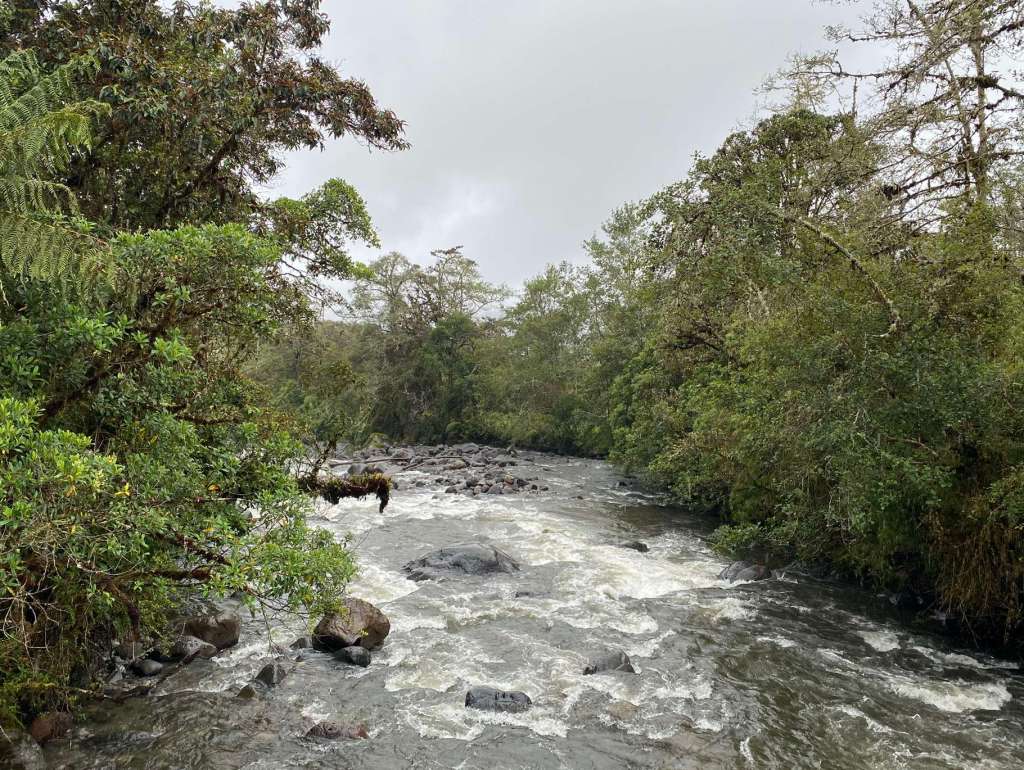
The (unsealed) roads around San Isidro, particularly to the north where there’s grassy countryside interspersed with patches of dense bush and roaring rivers, were also pretty good to us, despite persistent rain.
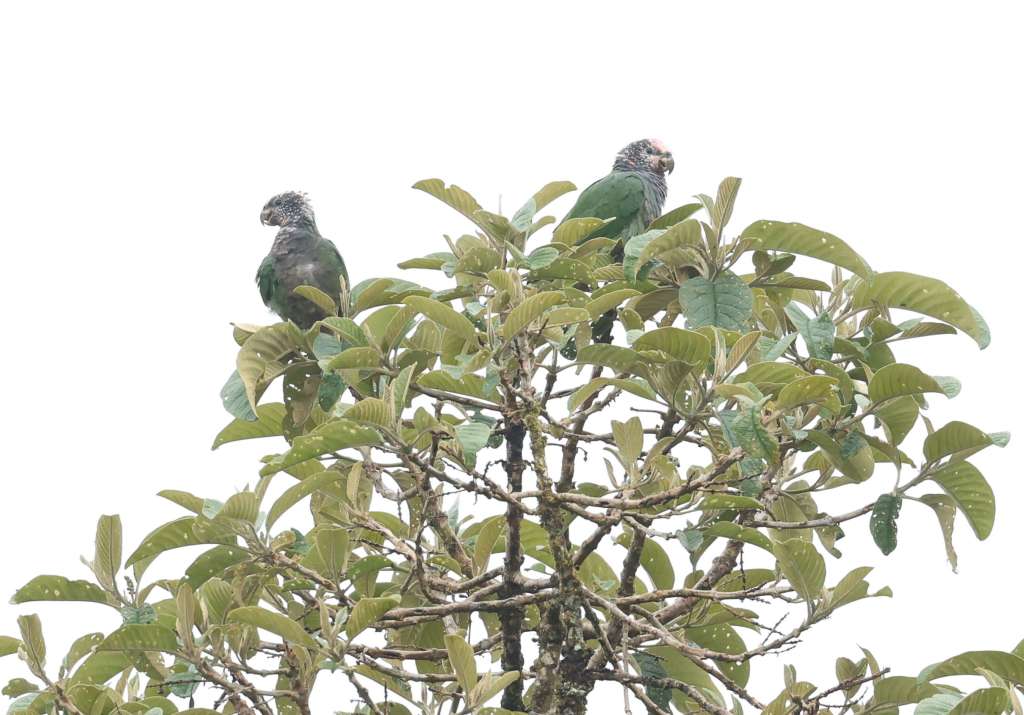
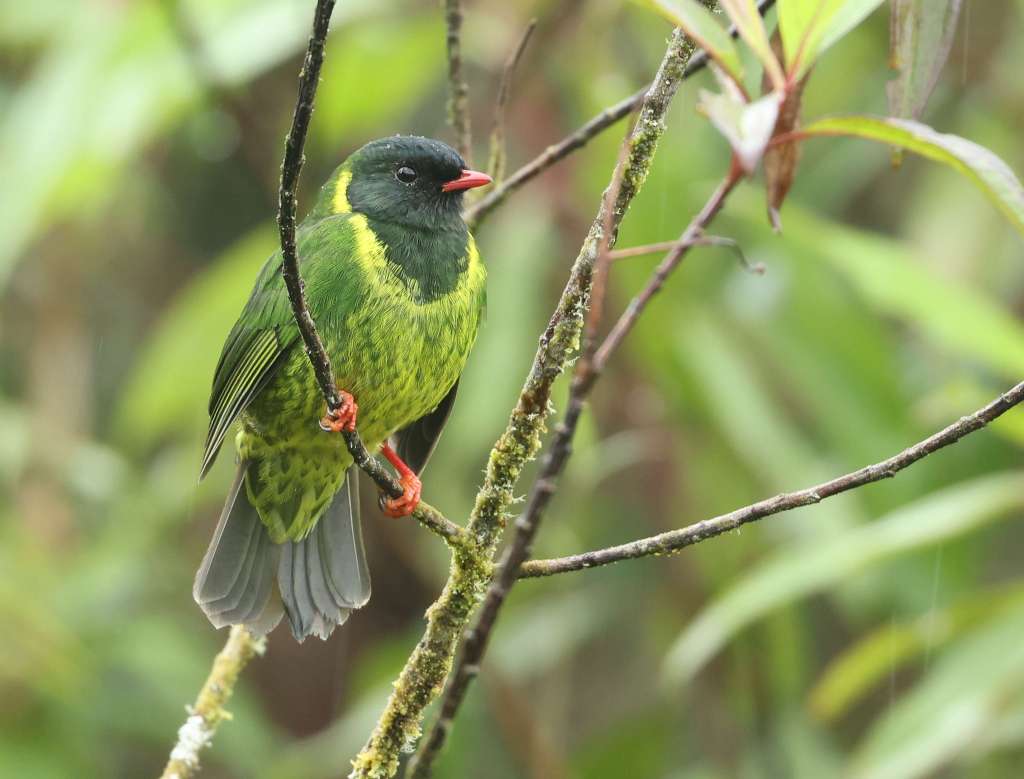
Pretty near the lodge we saw some Speckle-Faced Parrots, nice to see resting atop a tree rather than speeding in small groups across the grey skies. A gorgeous Rufous-Crowned Tody-Flycatcher was at eye level but refused to look at the camera (the cheek of the bird!) The highlight of the roads though was definitely a sedate Green-and-Black Fruiteater, candidate for my favourite bird of the site, and that’s saying something.
I know I’ve been raving about the birds at San Isidro Lodge, but I have to give a big shout-out to the chefs and wait staff. The three-course meals were spectacular, catered well to us vegetarians, and featured local ingredients prepared with imagination and real flair. It sets a very high bar for other eco-lodges to meet, I reckon.
Epic Ecuadorian Forest And Crying Tanagers: Cordillera Guacamayos
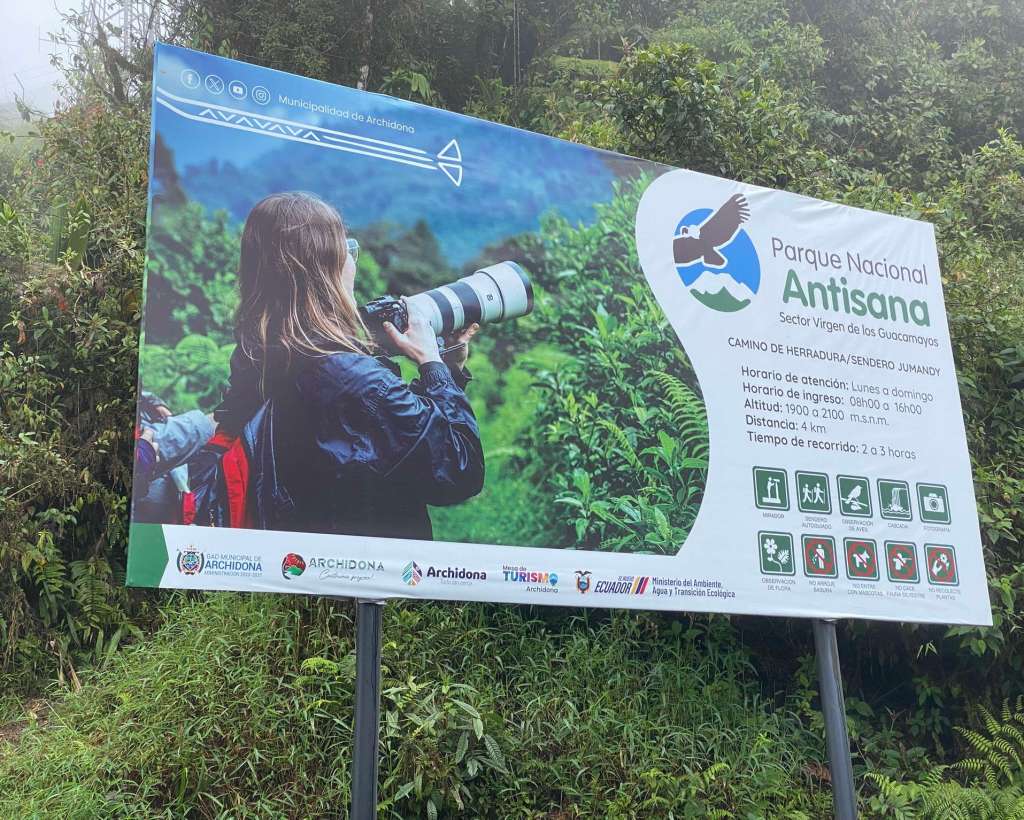
Just 9km south-east of San Isidro Lodge is the Sendero Jumandy (translating to something like “trail of the wise man”), part of the Cordillera Guacamayos (Guacamayos mountains), in turn sitting inside the enormous Antisana National Park. We concentrated on birding the roadside entry area here one foggy evening, hoping for (and hearing but not really seeing) screech owls. We returned for a proper birding expedition to the trail in the morning.
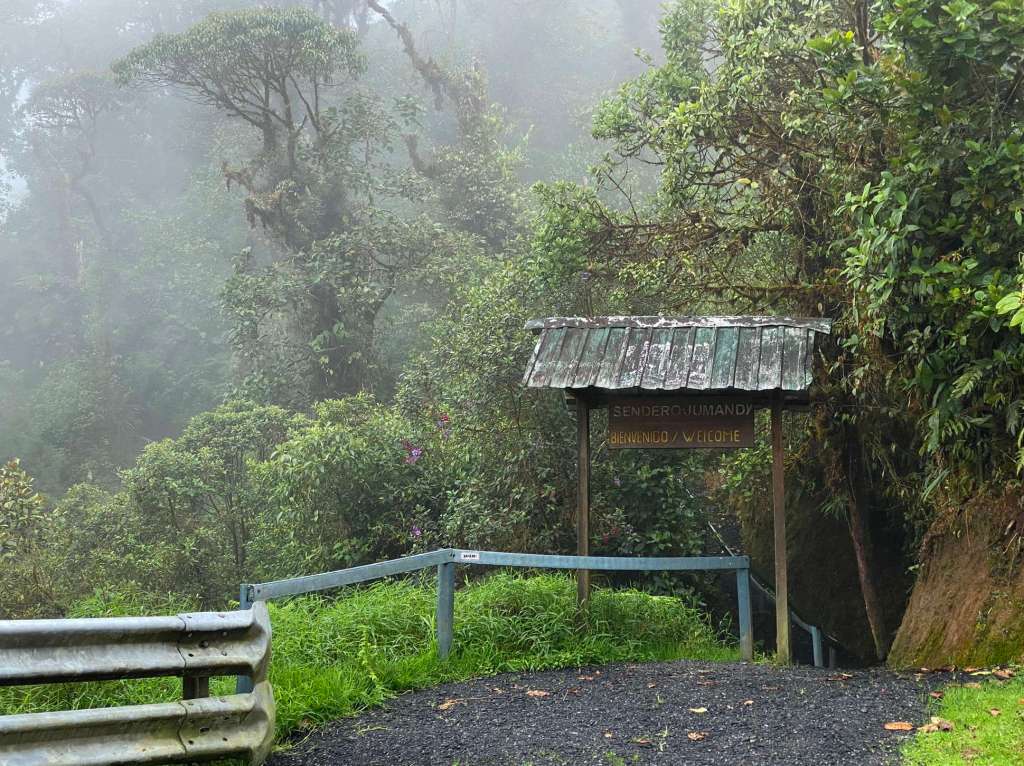
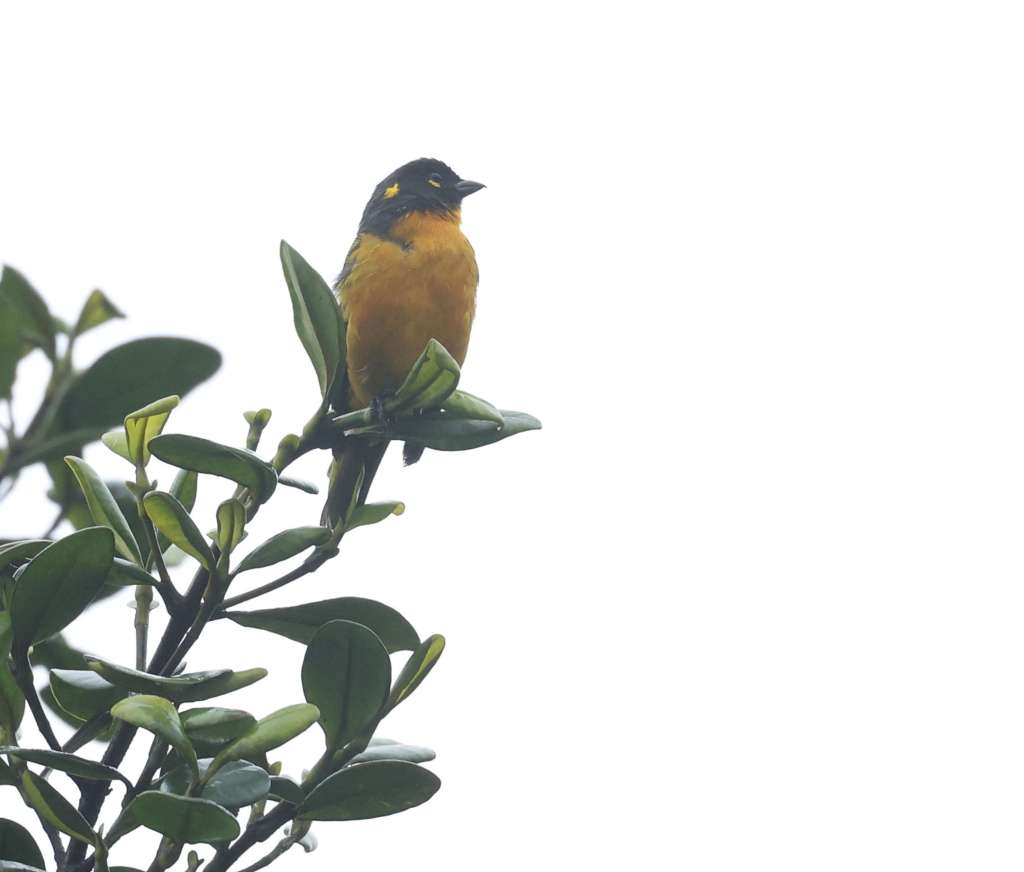
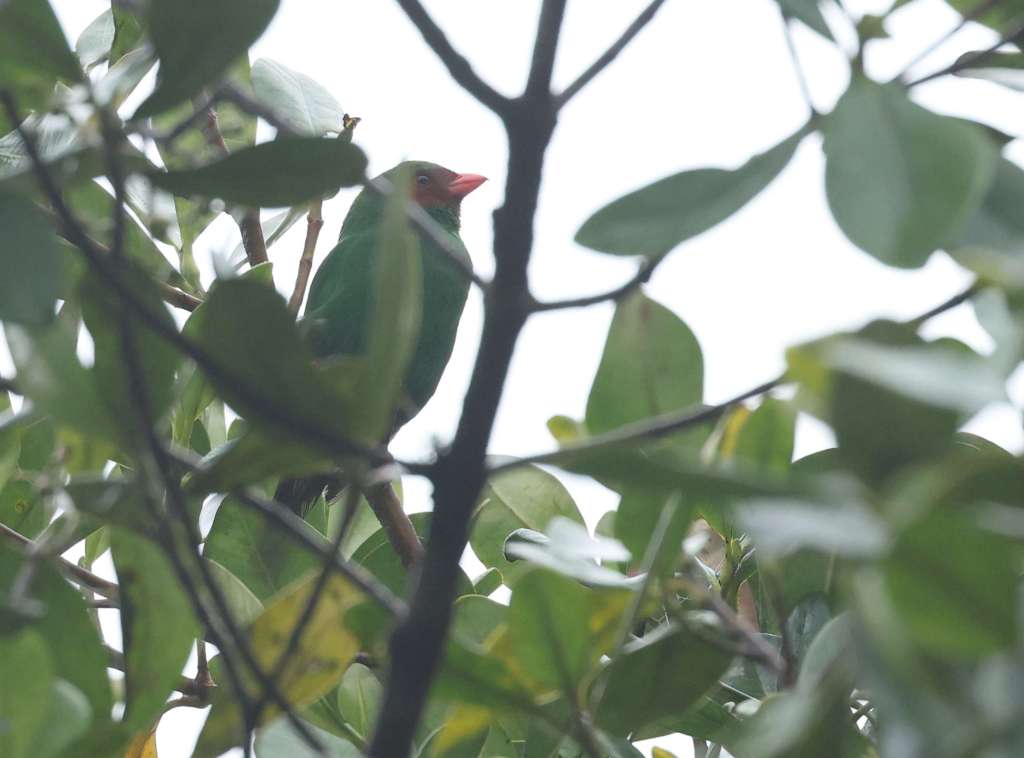
The first few birds I saw reminded me of the breadth of colours in the Tanager family: a superb Grass-Green Tanager (not the best photo, I’ll admit) with its largely green plumage and red face, and – right by the road – a Lacrimose Mountain Tanager. My spell-checker really wants to correct this to “lachrymose”; in any case, it means “tearful or sad”. It has a jaunty yellowy-orange colour, and a small golden “teardrop” which gives it its name.
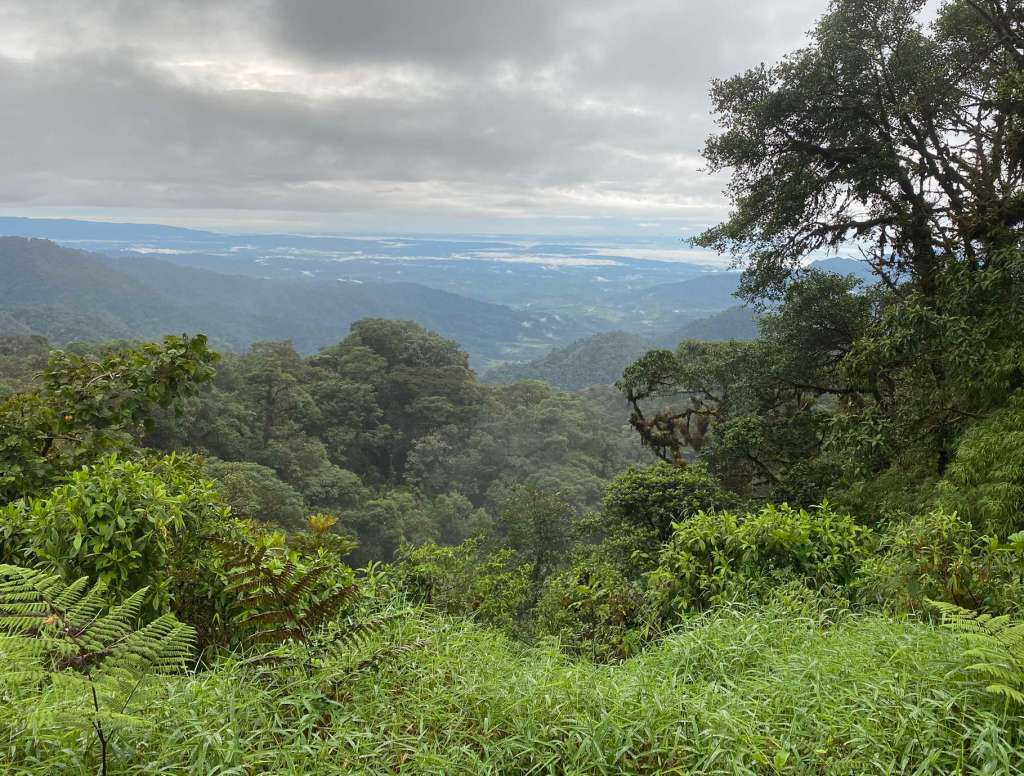
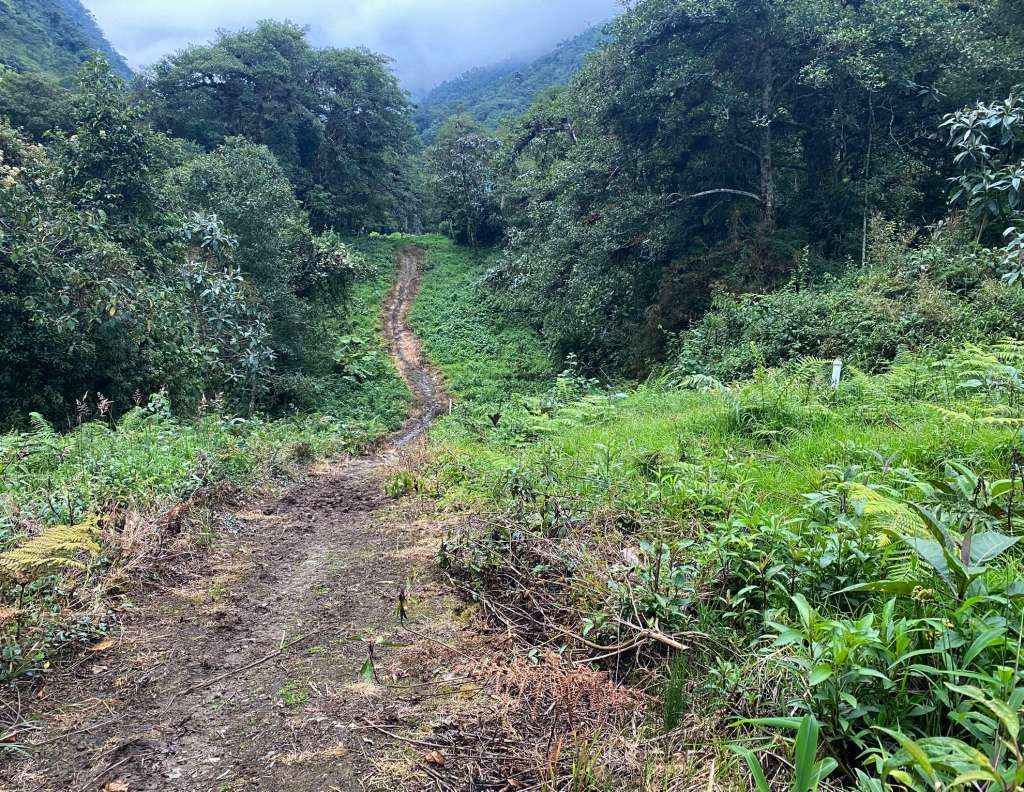
Onto the trail. It mostly follows the mountainside, and on the occasion when the clouds parted a little, you could see green trees stretching for many miles. Photos don’t do justice to how seriously lush and beautiful this rainforest is.
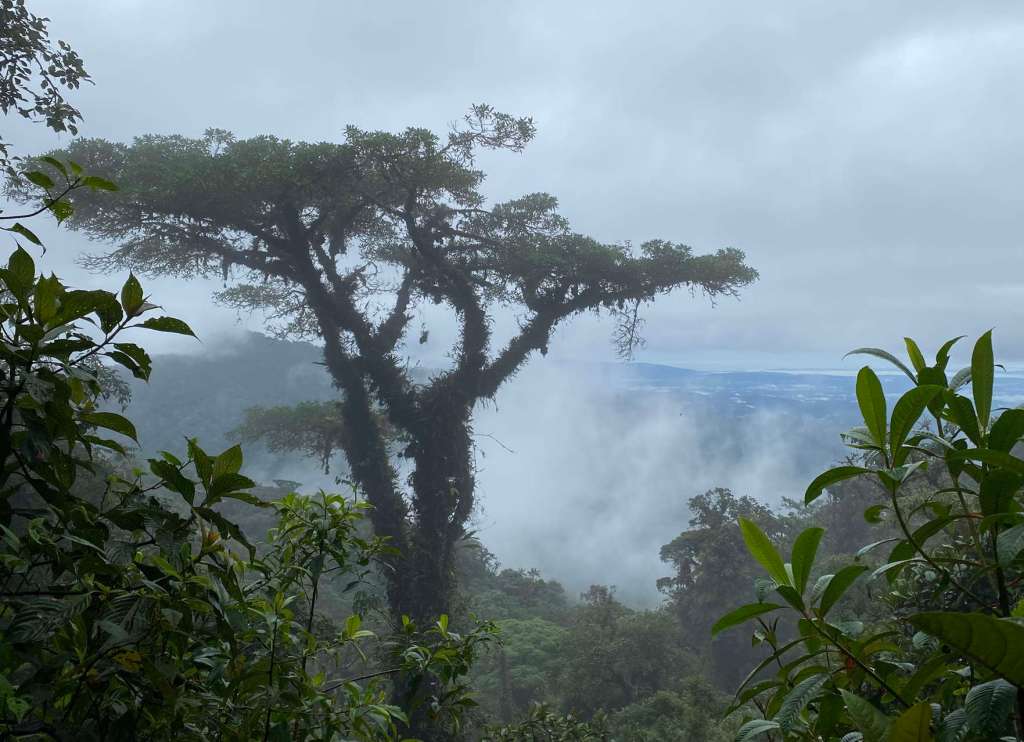
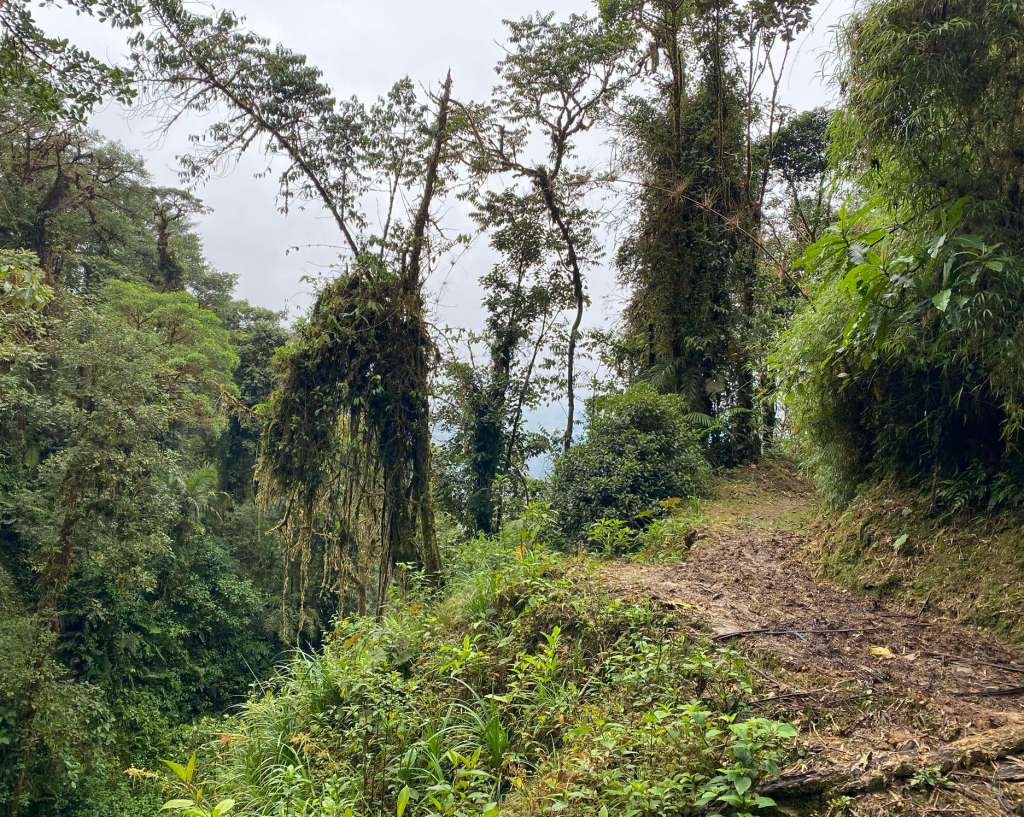
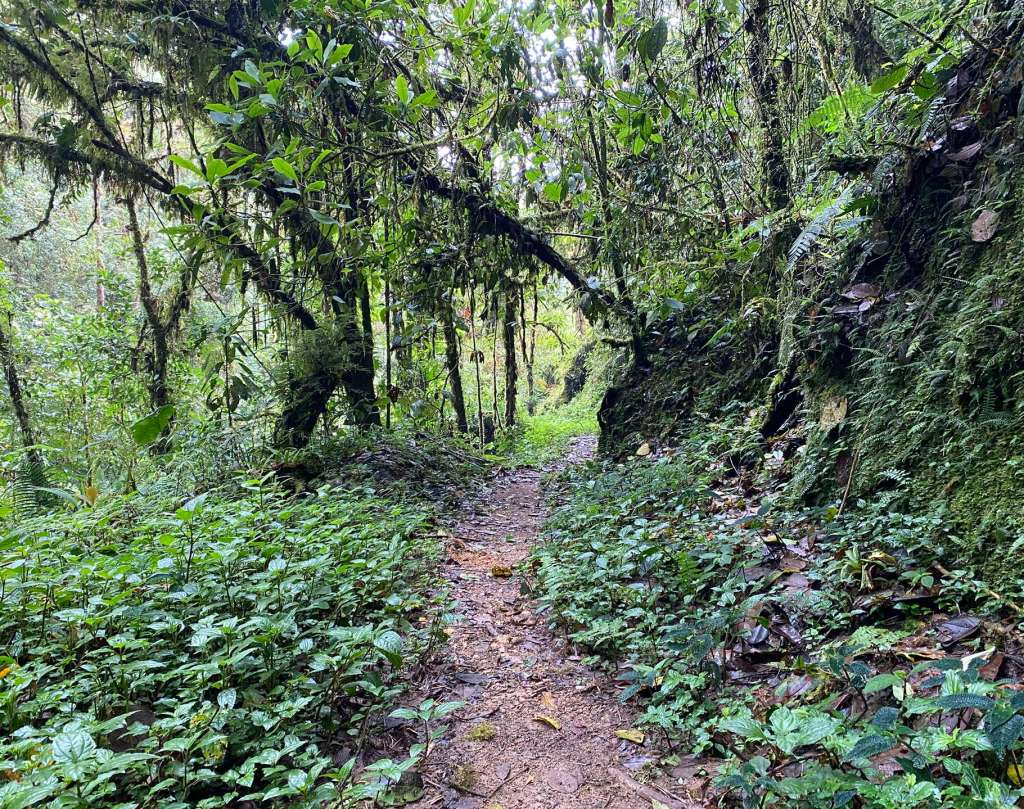
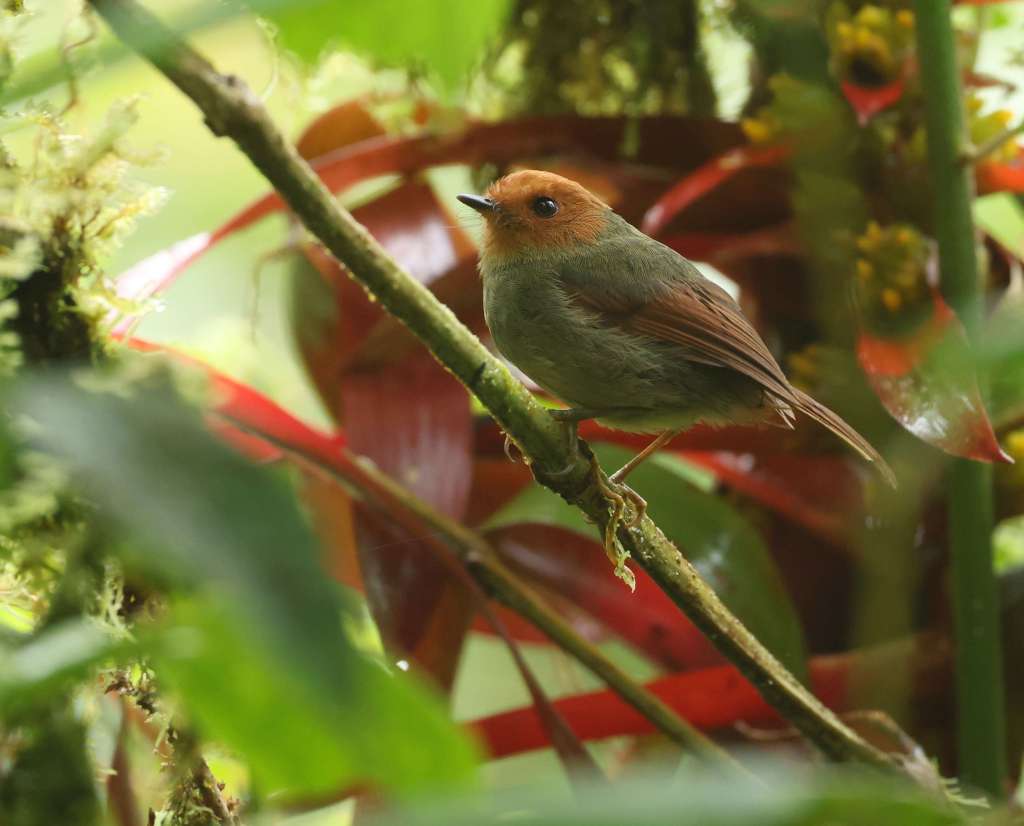
We expected this type of habitat to be fairly hard birding, which it largely was. Just about every bird felt hard-fought for. We heard incessant the calls of Plain-Tailed Wrens but could never see one. The hardest bird we actually saw was probably the Rufous Wren, which flitted through the canopy refusing to sit still for a moment. We managed just a short peek to visually identify the bird. I also felt extremely lucky to get a clear shot of the tiny Rufous-Headed Pygmy-Tyrant.
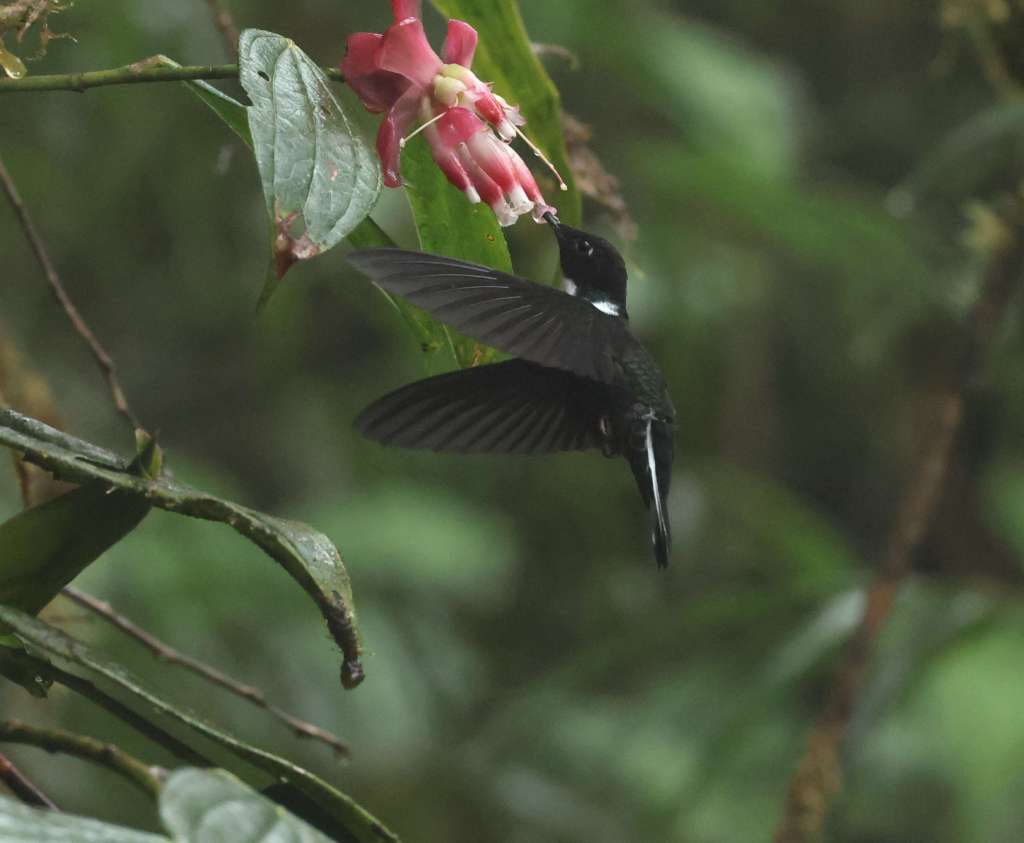
A Collared Inca was the main hummingbird of note, while seeing two Powerful Woodpeckers, though extremely high up, was still awesome (“pairs wander widely throughout the forest, so they are infrequently encountered” declares eBird). Of the 23 species we counted, the bird of the morning however was a White-Throated Quail-Dove, who wandered onto the trail without much of a care, and even strolled towards us. When it became clear the bird wasn’t going to spook, I sat down (quietly!) on the path to get some lower-angle shots and video, and the bird just kept approaching… and only when it was taking up most of my viewfinder did it decide it had gotten too close.
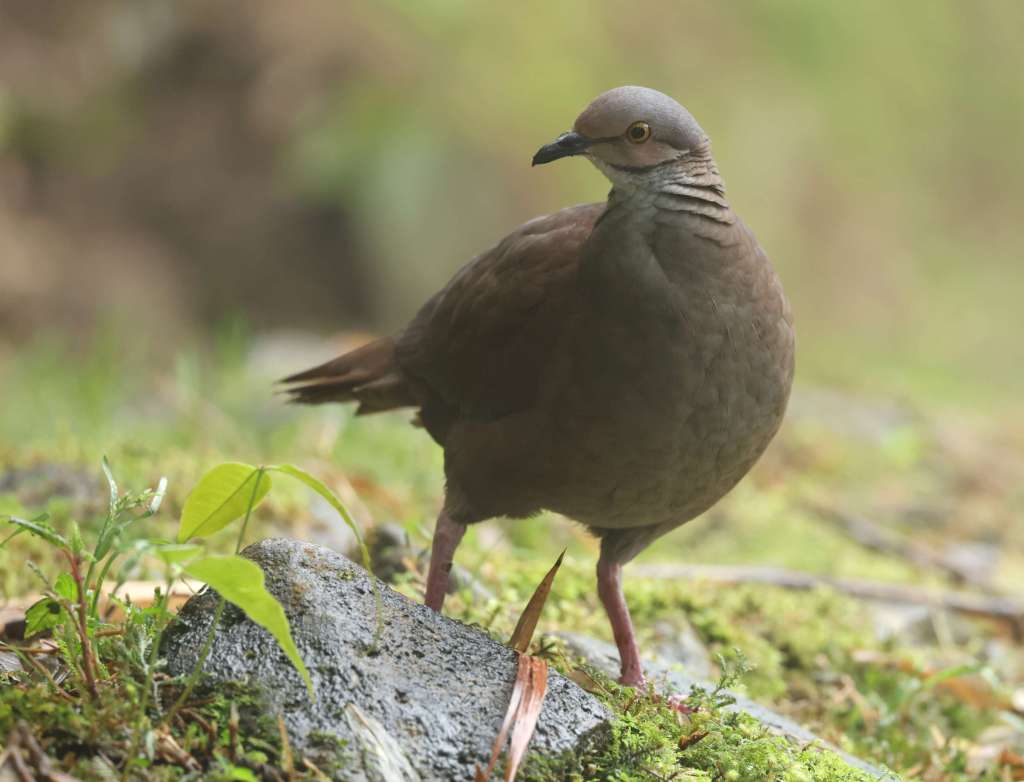
I love it when birds just aren’t scared of you. As long as they’re not actively attacking you, I suppose.
Here Tis Hummingbird Heaven: La Brisa
Stay with me, because this gets good… really, really good.
If you’ve been following the Peru sections of this blog, you’ll know I love a good hummingbird garden, and have waxed lyrical over the Sacred Garden in Pisac, and Ensifera Camp in the Sacred Valley. Well, move on over, Peru, there’s a new hummer garden in town!
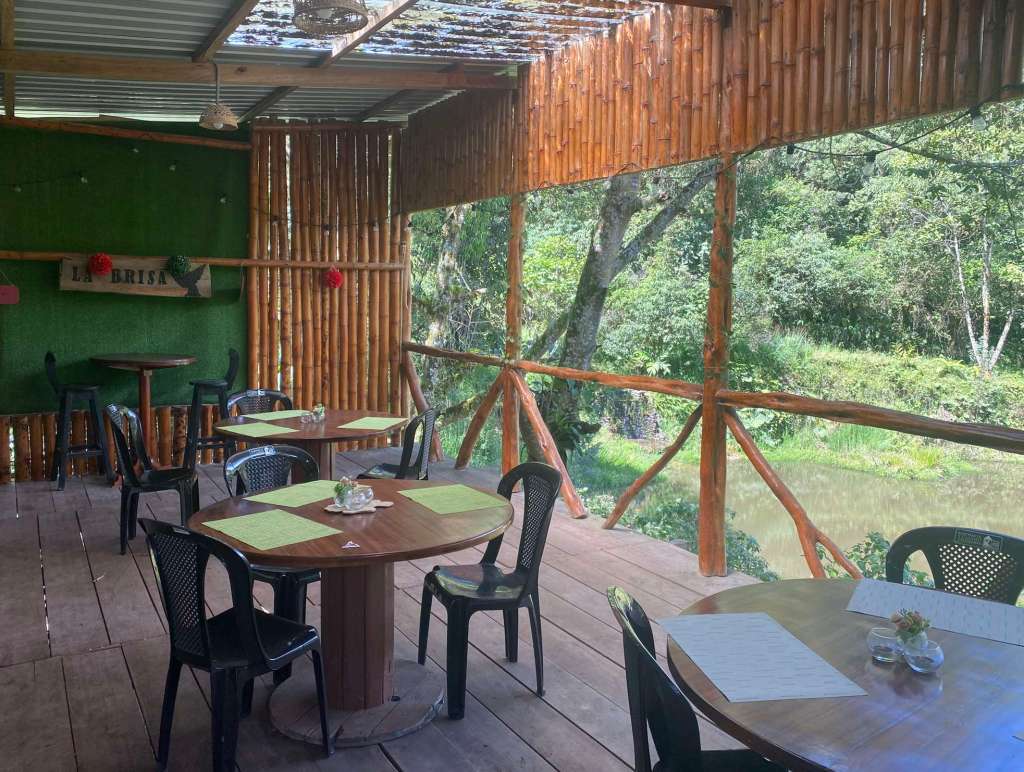
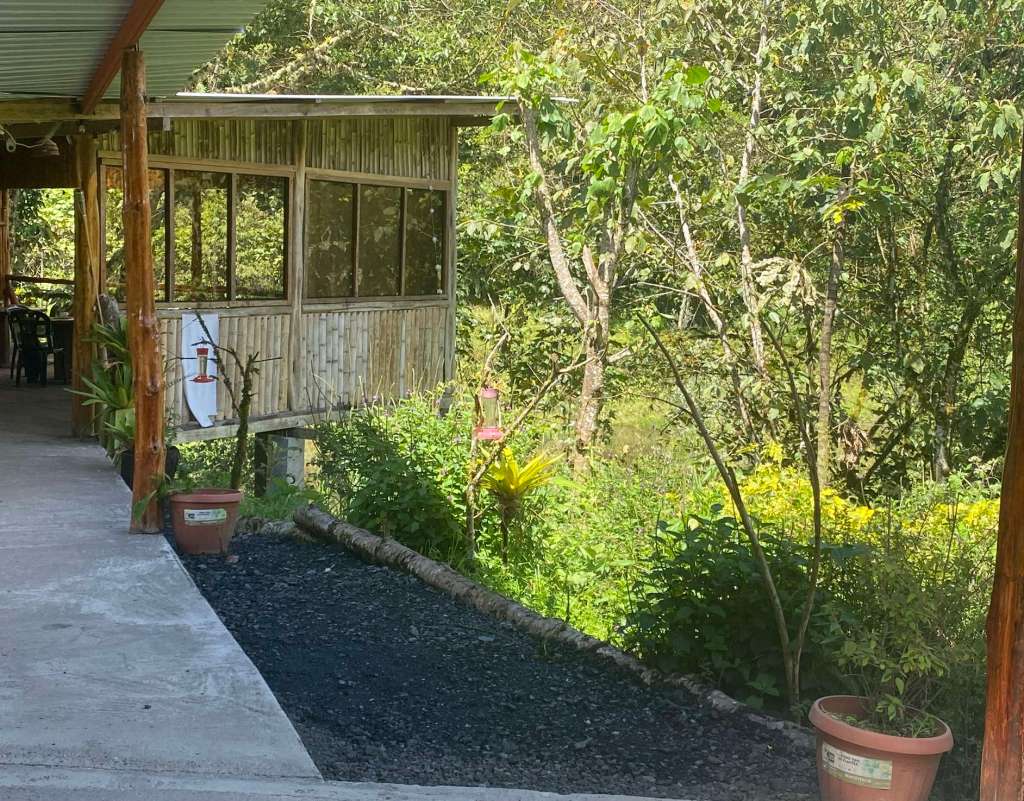
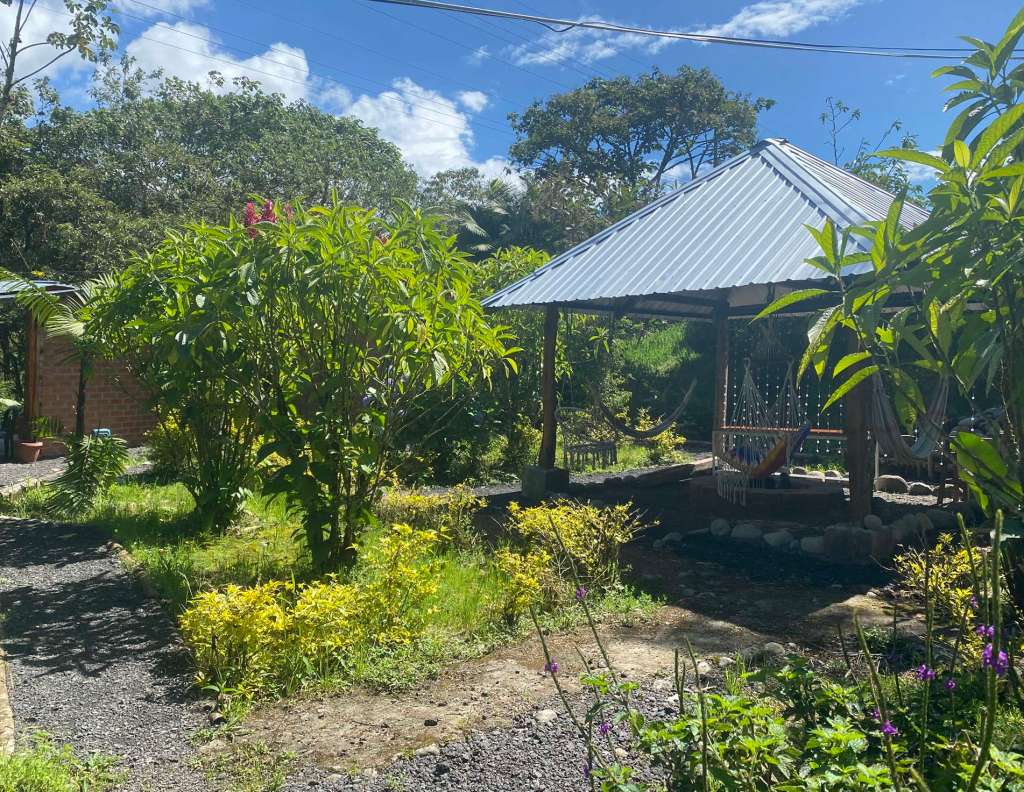
La Brisa (meaning “the breeze”) is 14km north of the turnoff to San Isidro Lodge. You’re best using its eBird hotspot to find it, because even though it is on Google Maps (as “LA BRISA”), the maps search will take you to other “brisa”-related locations unless you are already zoomed in on the region.
It’s the usual deal here where you rock on in and informally pay to visit (there’s also a tip box) and can seemingly stay as long as you like (though “forever”, as much as I would like to, is probably a stretch…) There seems to be a cafe there overlooking the local pond; we had a box lunch so didn’t partake of that so I can’t comment on the food.
Oh boy, what hummingbirds. In two hours we found eleven species, still just a fraction of the insane 42 species of hummer that have been spotted at this location.
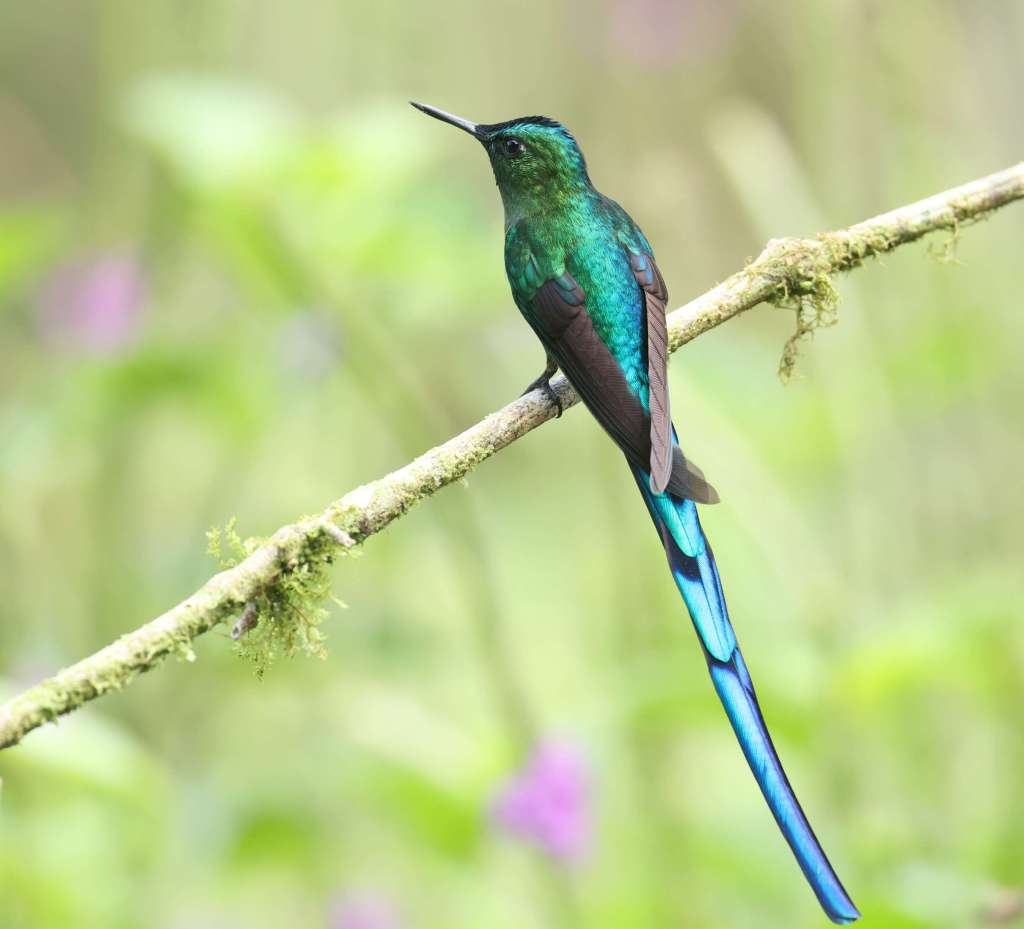
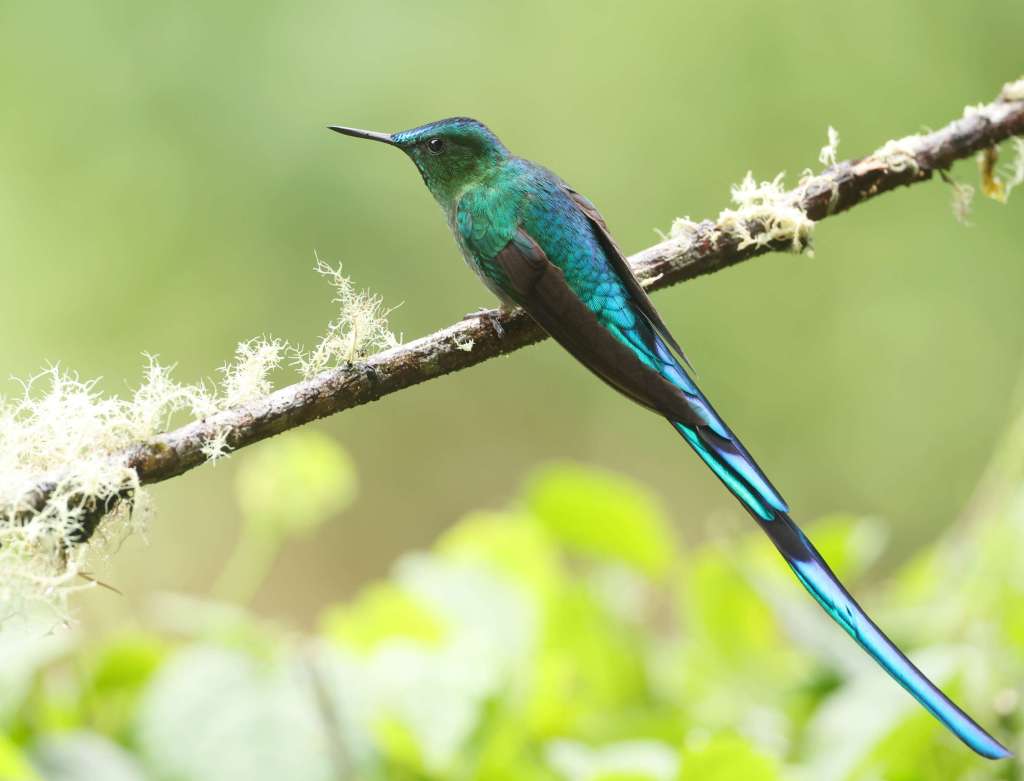
I had only seen Long-Tailed Sylph a couple of tantalising times up until La Brisa, and I finally was able to watch the bird at leisure, in the sunshine, and be awed by its electric-blue tail. My favourite photo of it is pretty much the dream shot you want to get when you go to Ecuador. Happy-making? More like, ecstatic-making!
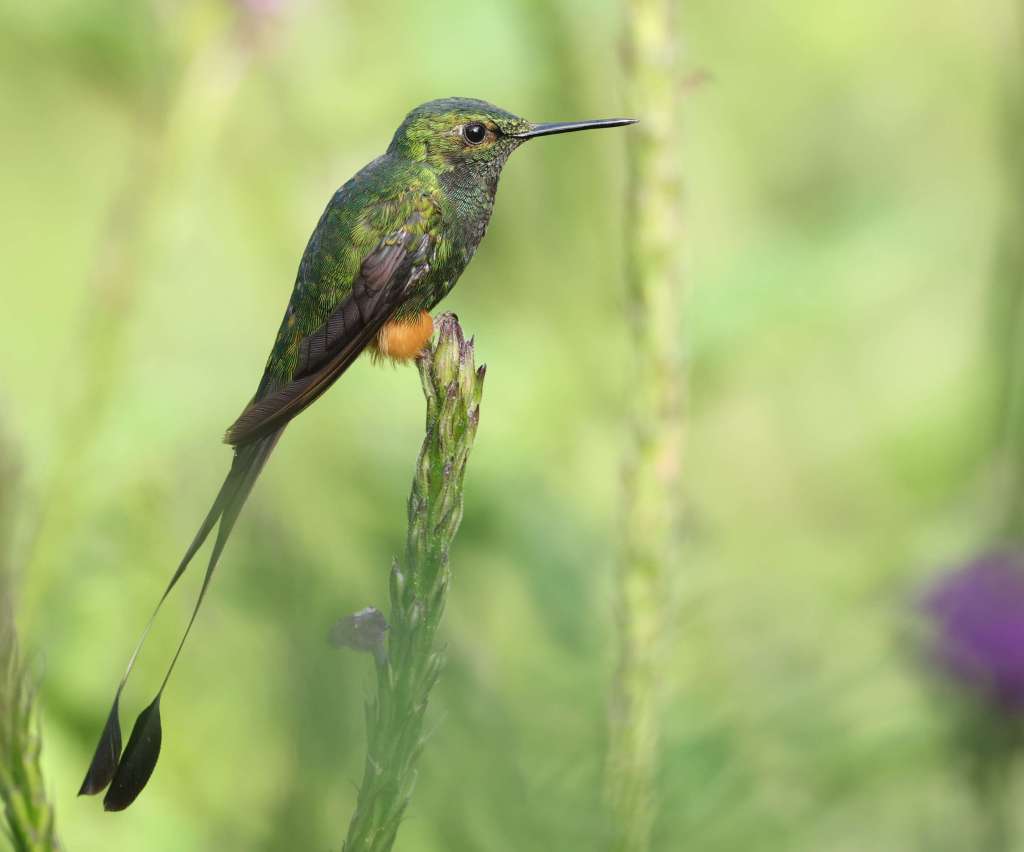
Close behind the Long-Tailed Sylph for showy good looks is the Peruvian Racket-Tail, despite its name found in both Ecuador and Peru, and related to the Rufous-Booted Racket-Tail I saw in Manu Rd, Peru. (Confused by the naming? Me too). The orange-coloured “booties” on this bird are just adorable.
Violet-Fronted Brilliant is another hummer you’ll definitely find here, along with Gorgeted Woodstar. The Violet-Fronted Brilliant is super shiny, even in the shade.
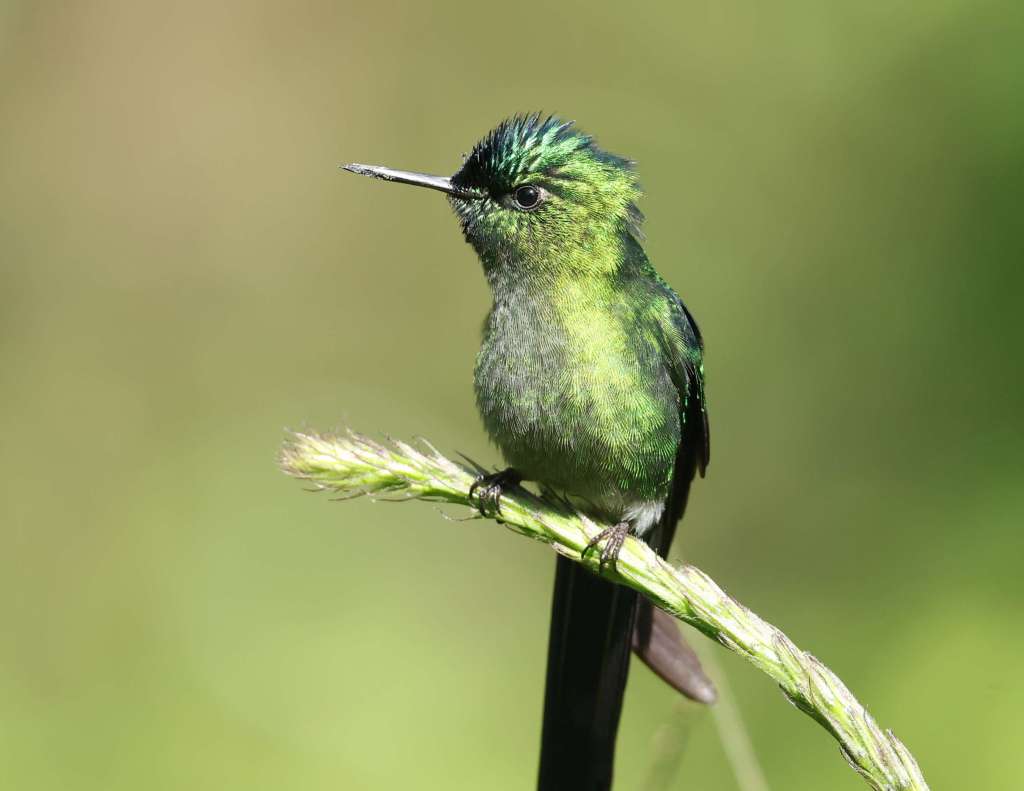
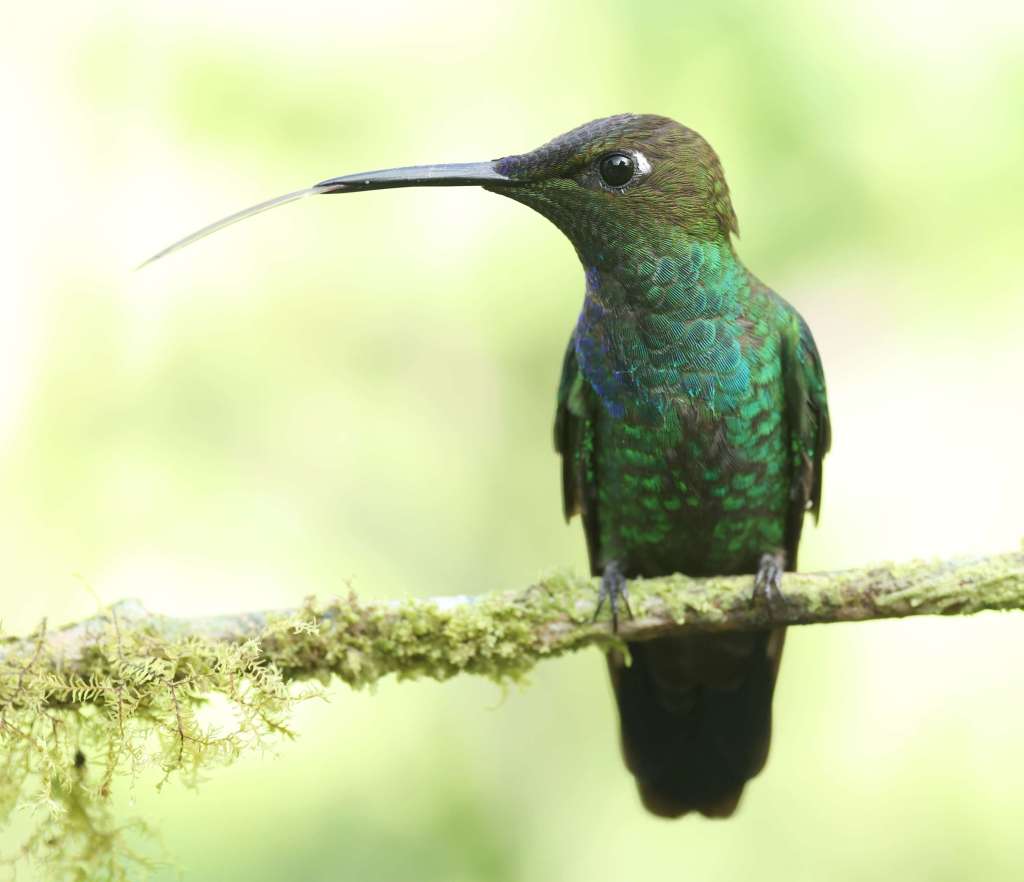
Although the feeders are what mostly attract the hummingbirds, I much prefer to capture photos of them not sitting on those red plastic trays. I’d rather have flight shots (with a decent camera rig, not that hard at all with so many hummingbirds around), or see them resting on nearby foliage. Such are the number of hummingbirds, the bright light (it was early afternoon when I was there), and the layout incorporating surrounding bushes and flowers, that makes La Brisa a veritable utopia for bird photography.
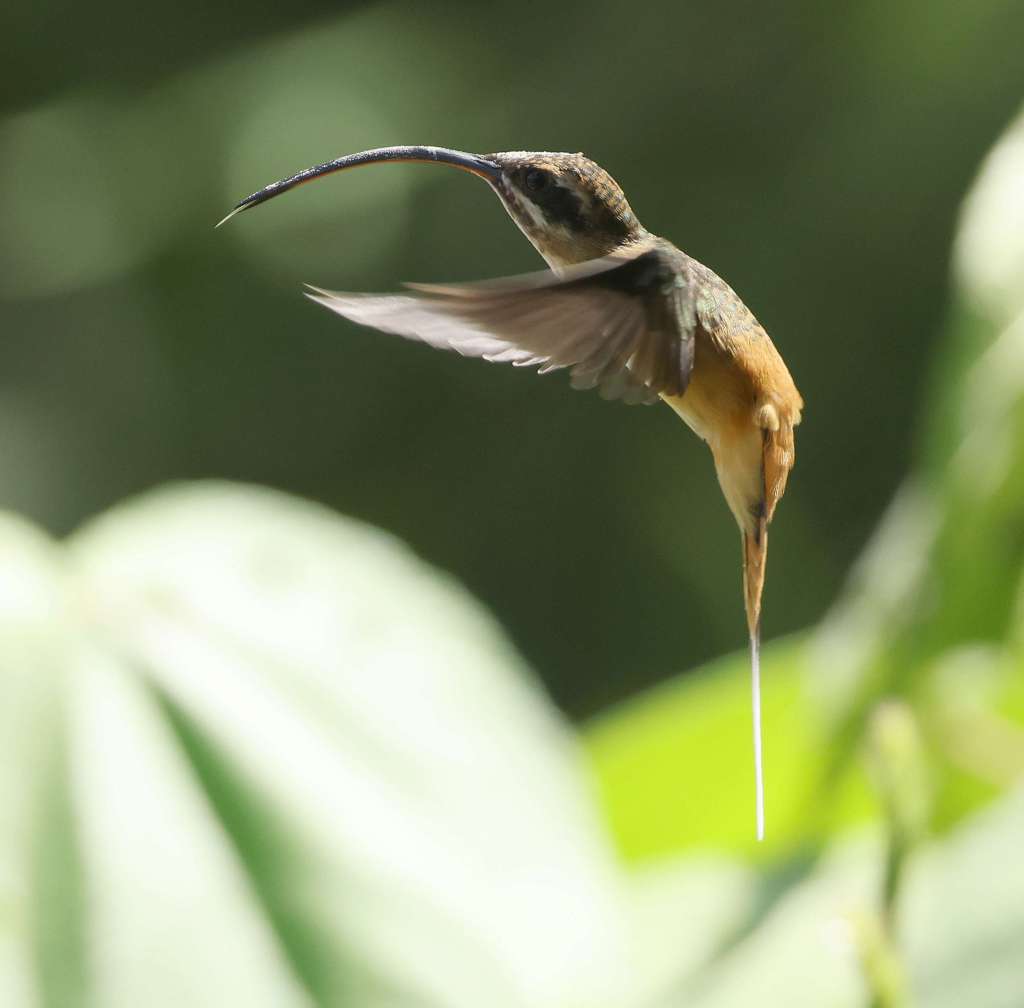
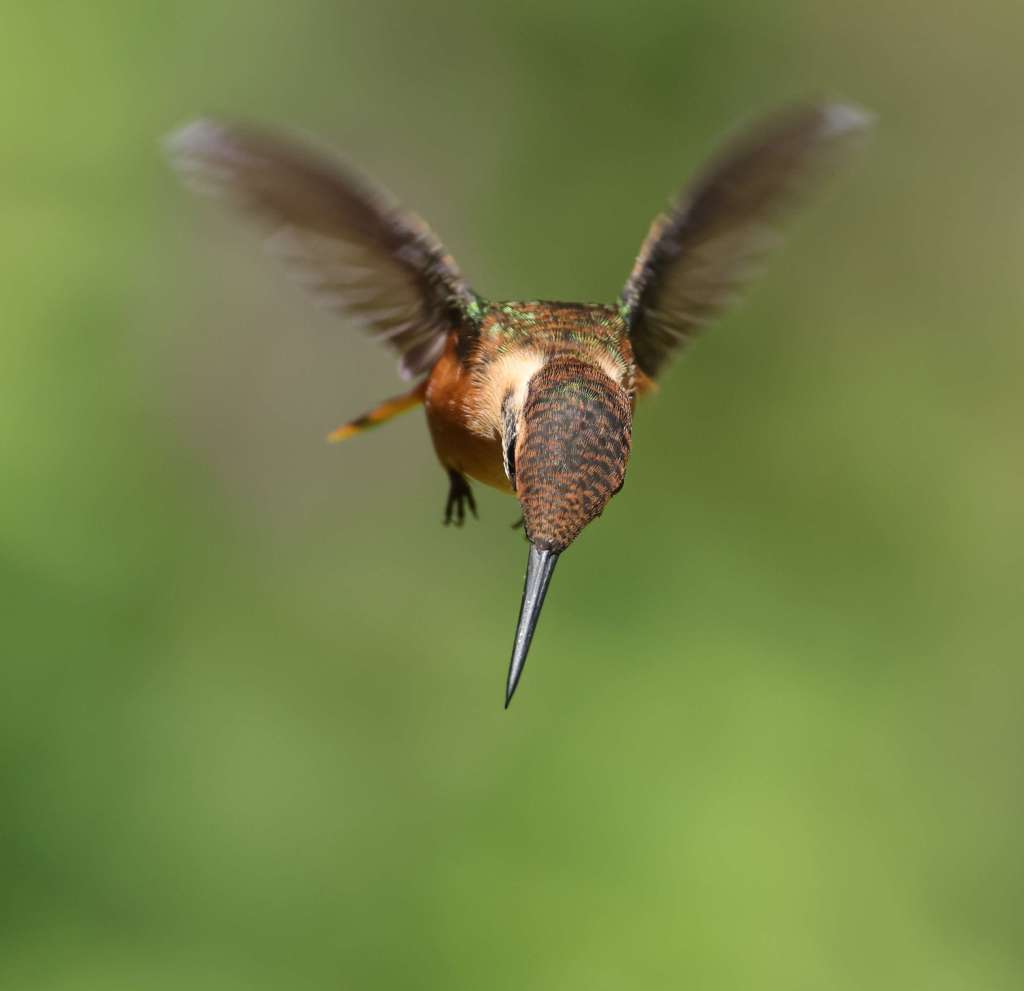
Onto the other birds. Hilariously, Bananaquits occasionally joined in at the hummingbird feeders, sipping away awkwardly, while in the nearby trees we spotted a few of the many tanagers possible here, including Black-Capped Tanager and lifer Flame-Faced Tanager. Little did I know how many Flame-Faced Tanagers I would see over the next few weeks in the Mindo region, but that’s another story…
A couple of Green Jays were there too, with one feeding the other, always a nice behaviour to observe. We also got a decent look at an Olivaceous Siskin (hmm, there’s another interesting bird-colour word), a species which I had hitherto dumped into the category of “seen really briefly once with unfortunately no real appreciation of the bird”.

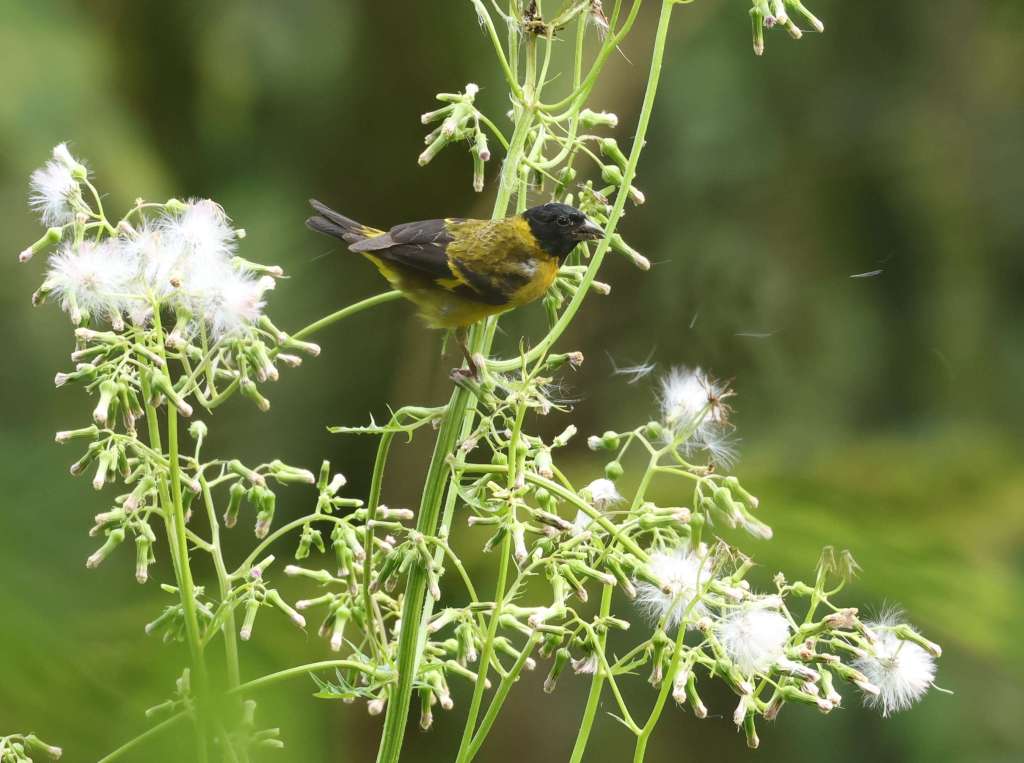
Yep, La Brisa was pretty spectacular. It’s only now, looking through eBird’s bird list for the site, that I realise how many species are actually possible there. I may have spent too much time indulging in photography trying to get that perfect shot and consequently less time finding other species that may have been lurking about the property (good chances of Geoffroy’s Daggerbill… Chestnut-Bellied Thrush… various pigeons). Oh well, no regrets and all that.
Do You Like Your Soup With Popcorn? And Rain? Guango Lodge.
At about 2700m in elevation on the Andes east slope is Guango Lodge, owned by the same people as San Isidro Lodge. So expectations were understandably high.
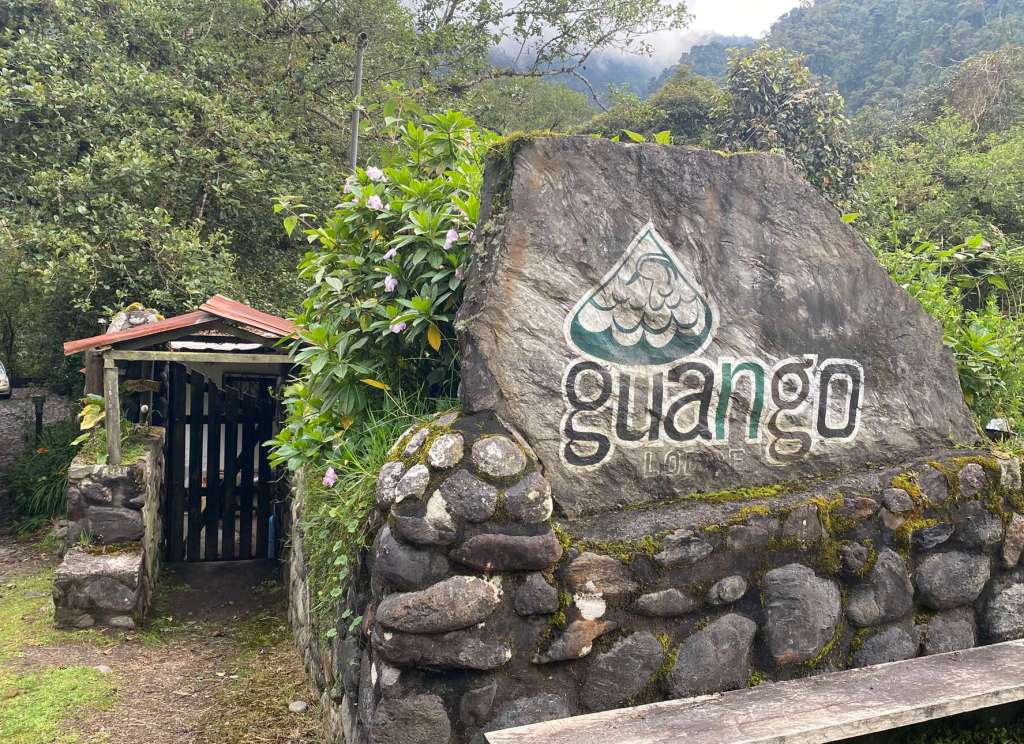
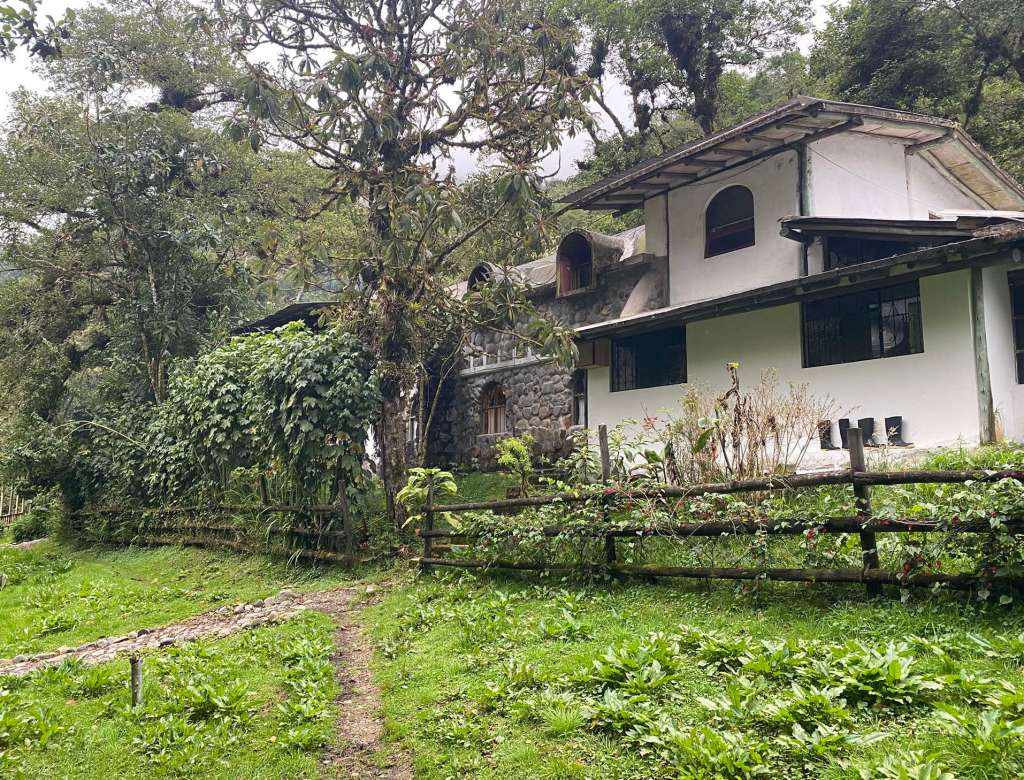
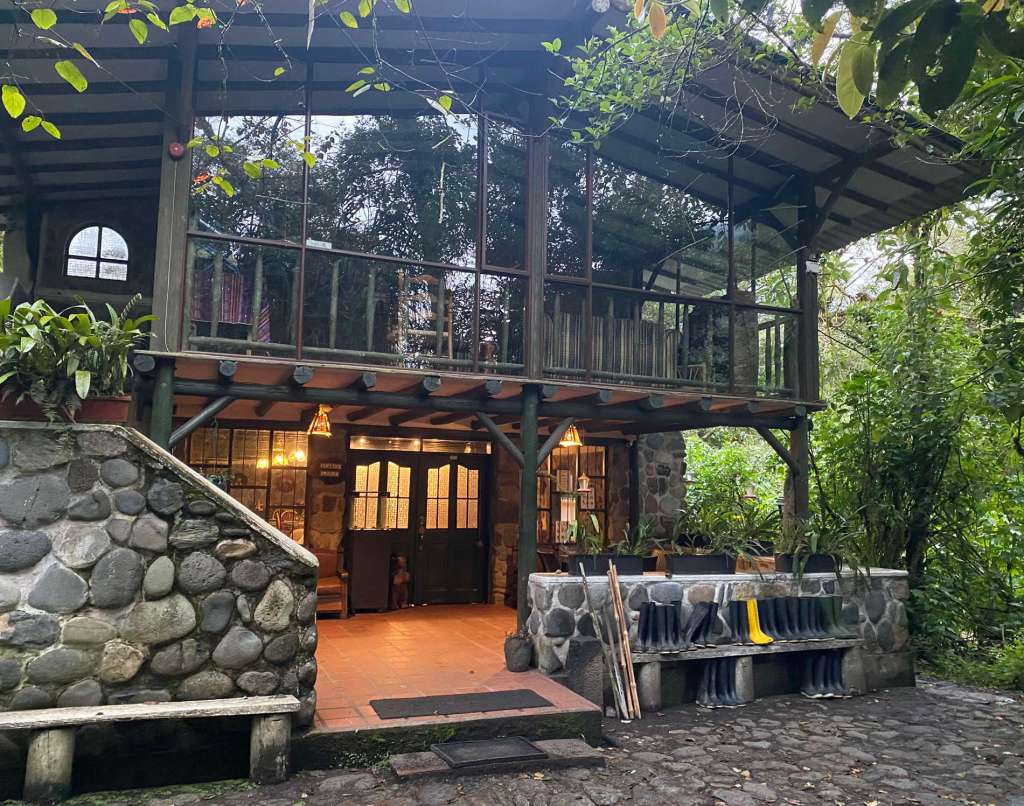
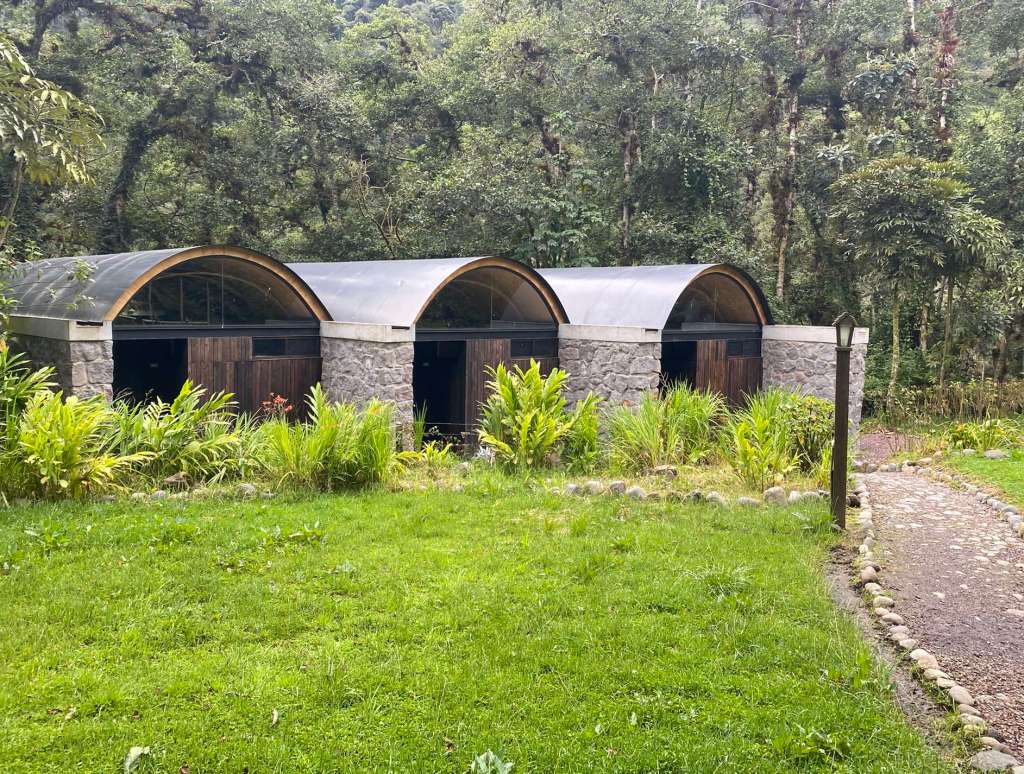
However, it’s a rather different lodge – the main building is much smaller and has more of a “dark log cabin” vibe, and the meals were fine, without being particularly impressive. Yes, like some other places in Ecuador, they serve their soup with popcorn… I kinda liked it. There are two types of room accommodation, and we stayed in one of the “new” ones down near the creek – with huge windows and an arched roof with golden lighting, it was very nicely appointed indeed.
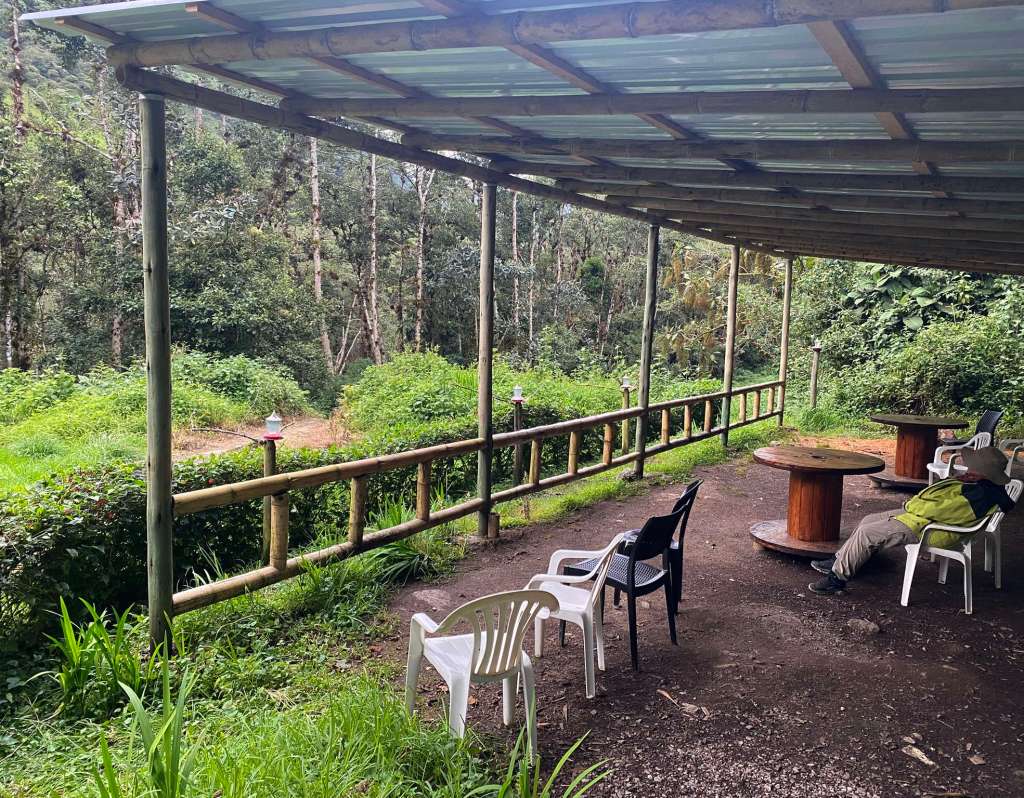
So, to the birds here. It’s only 600m elevation difference to San Isidro Lodge, but that’s plenty enough to yield many different types of birds – Turquoise Jay, for example; the beautiful Mountain Cacique; Black-Crested and Russet-Crowned Warblers. They have a modest moth trap and a little hide to observe from, which wasn’t nearly as spectacular as San Isidro’s, but still held its own. Things were not helped by quite dreary weather – making this observation spot quite dark – hello, high ISO and low shutter speeds.
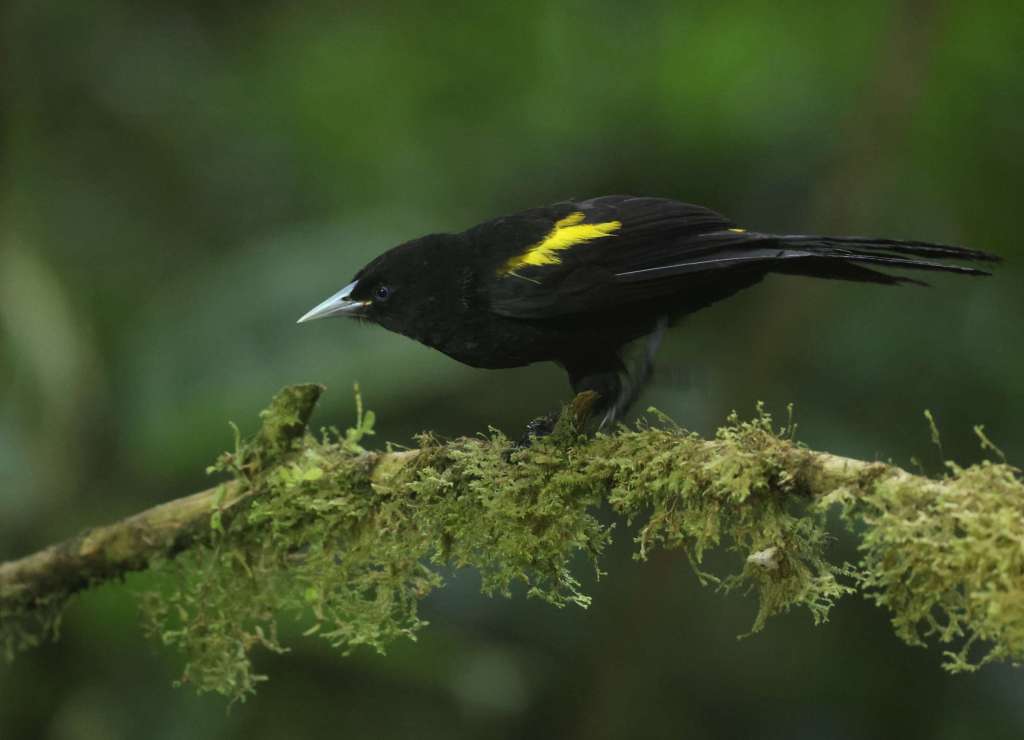
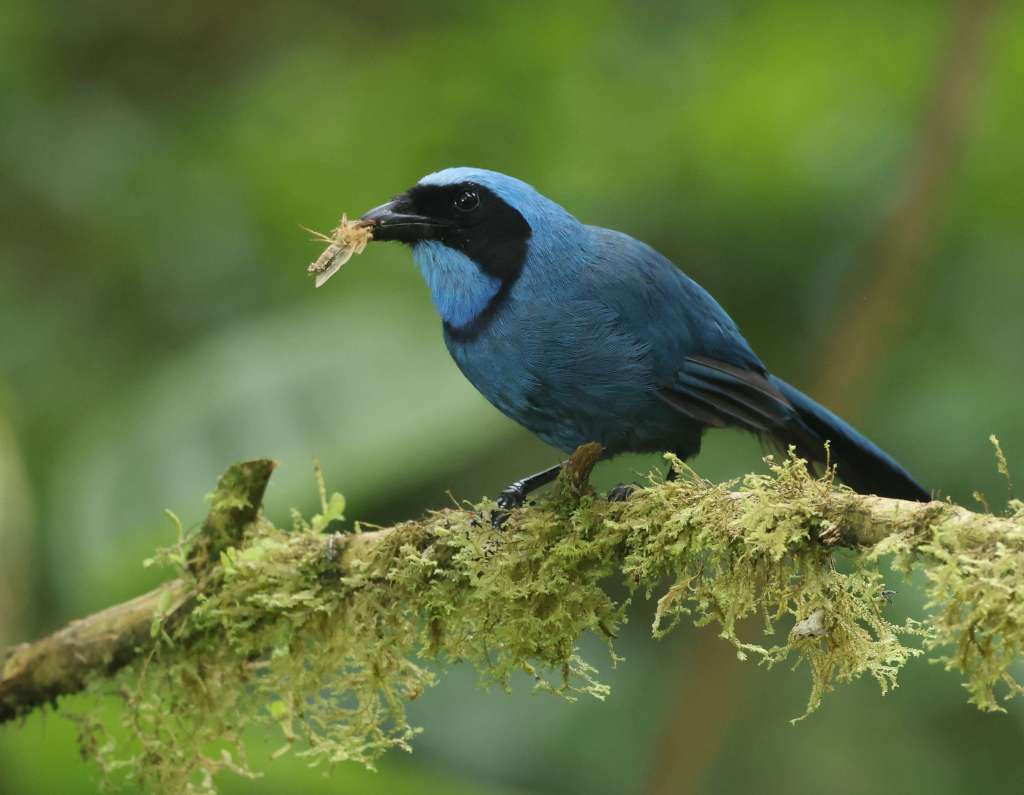
The lodge grounds have a riverside trail, with the water rushing through many rocks giving a decent chance of Torrent Duck and White-Capped Dipper. The main path, however, runs through open ground parallel to the main road, with slabs of forest on either side. This gives some pretty good viewing access, though there’s also plenty of instances of birds flying across this open ground from side to another, with only the fastest of reflexes giving you a chance at ID’ing. Look for tanager flocks in the taller trees, with the inevitable Spectacled Redstart and most likely a Pearled Treerunner in the mix too. I was particularly keen to get onto a Blue-and-Black Tanager, which we did, though without an opportunity for a good photo, such is the difficulty of observing high canopy tanager flocks, especially in damp conditions.
There is also a tanager-which-is-no-longer-a-tanager here, too: the former Gray-Hooded Bush Tanager was recently split into two species, with the northern population named Pink-Billed Cnemoscopus. This caused our group quite some confusion trying to get this bird into the checklist (indignant cries of “it’s not in Merlin!”), until we worked out there had been a name change. Cnemoscopus, huh?!
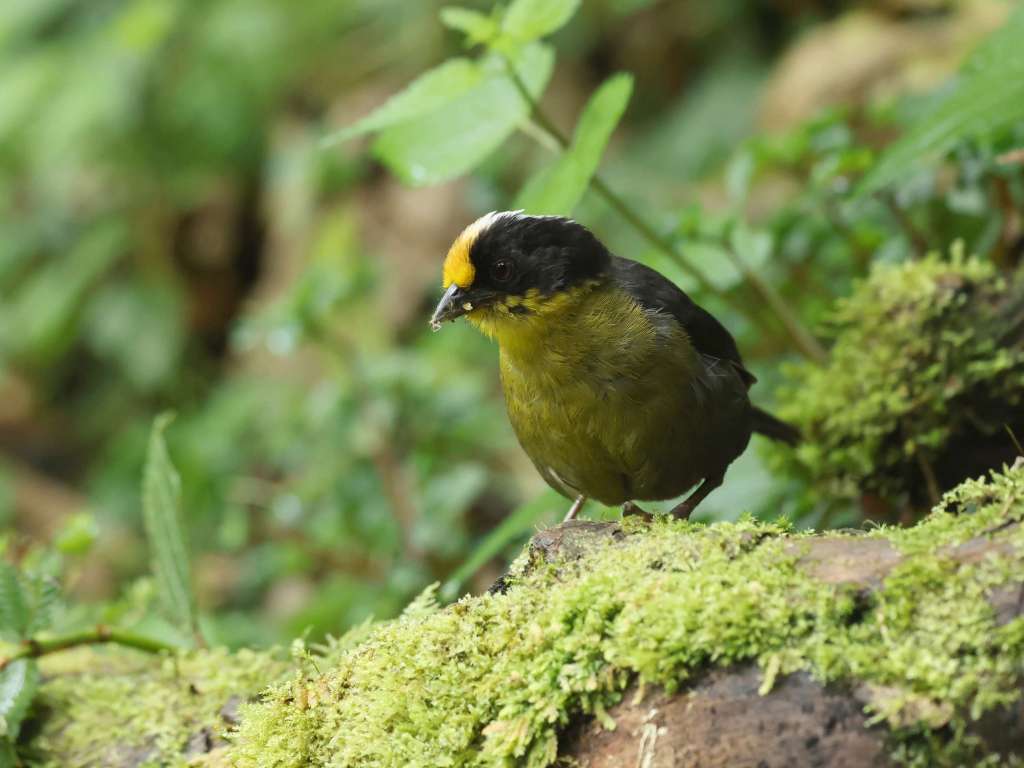
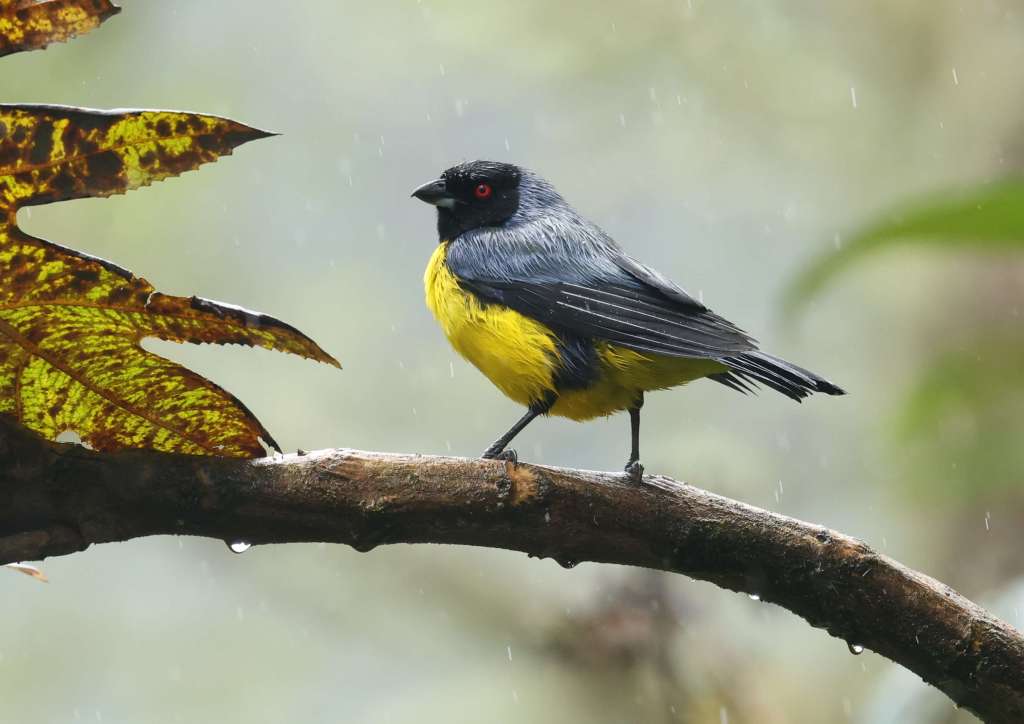
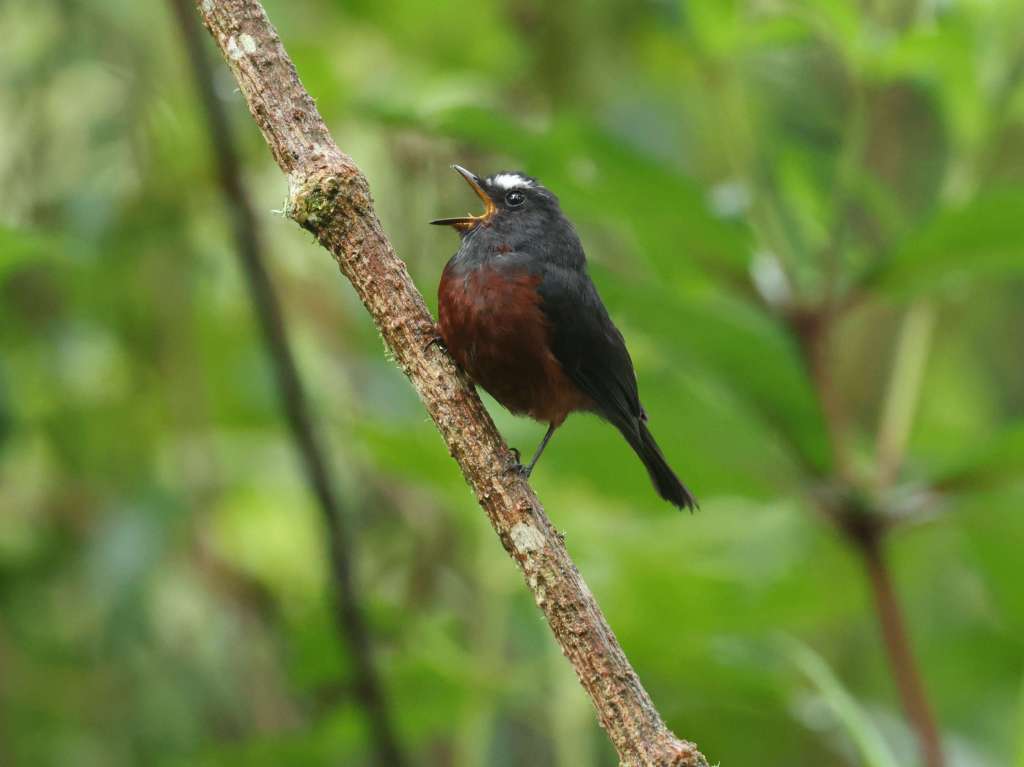
Pale-Naped Brushfinch was a very common species here, while we also saw Northern Slaty Brushfinch and Chestnut-Capped Brushfinch as well. Good times.
There are a few hummingbird feeders scattered in the grounds as well as a row of five of them next to a roofed viewing area. I actually found the hummingbirds here a little more skittish than I expected, perhaps due to the lack of surrounding protective foliage at the feeder row.
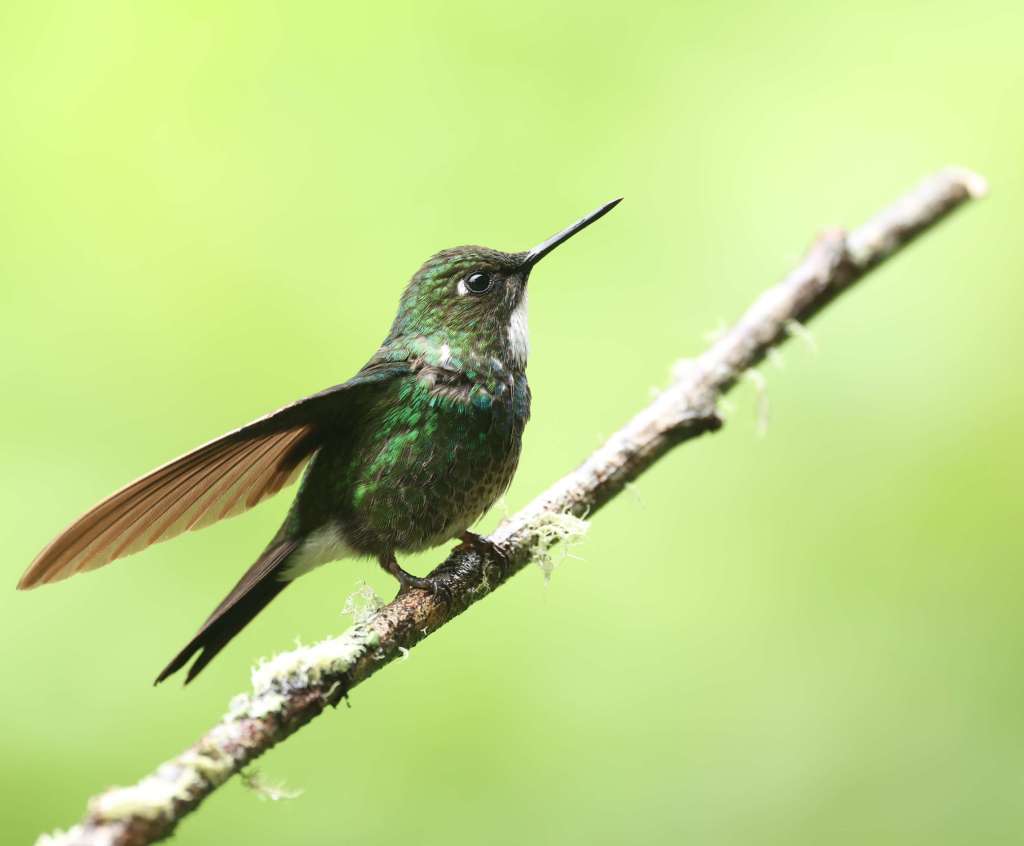
Of the 40 (!) species of hummer recorded, Mountain Velvetbreast is semi-common, as is the adorable Glowing Puffleg (those ultra-cute fluffy leg feathers!)… and then there is the Tourmaline Sunangel. “Tourmaline” is actually a “rainbow” gemstone and I guess the name is used to refer to the blackish-but-also-sort-of-colourful nature of the bird… somehow. It looks mostly green to me, with a trademark iridescent purple throat patch that many hummers have. This hummingbird is the only species of any bird for which “tourmaline” is used for the name, so it has that privilege, anyway.
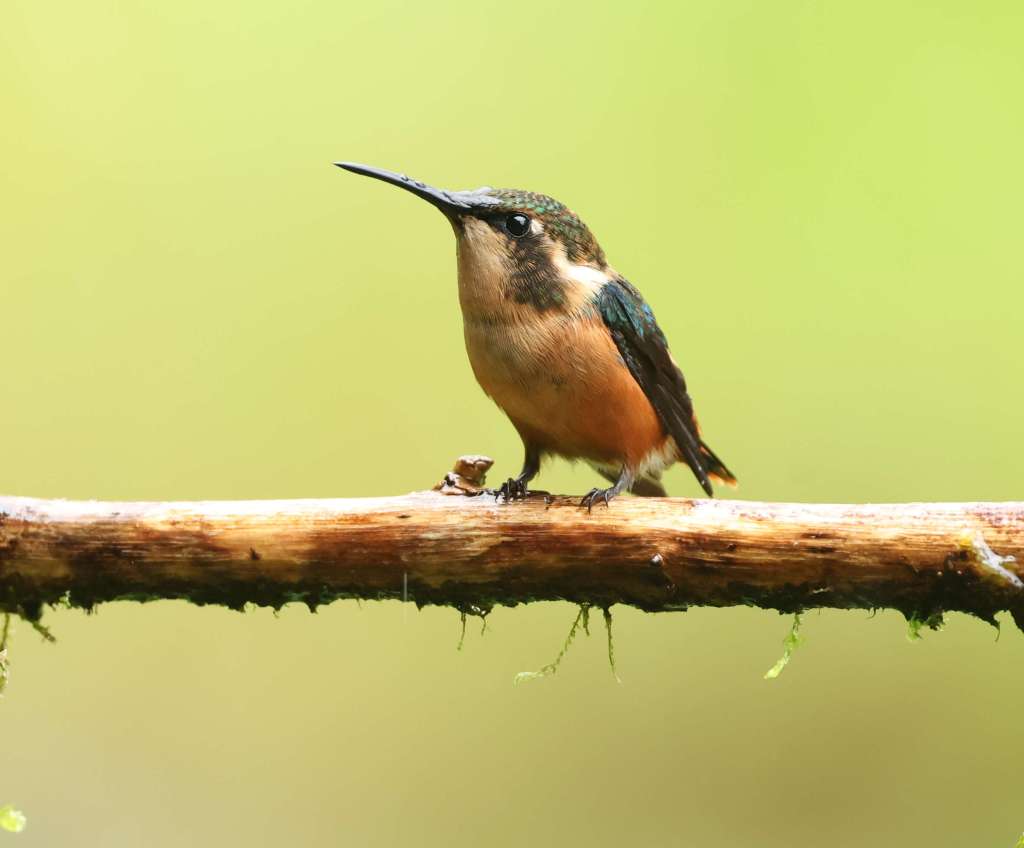
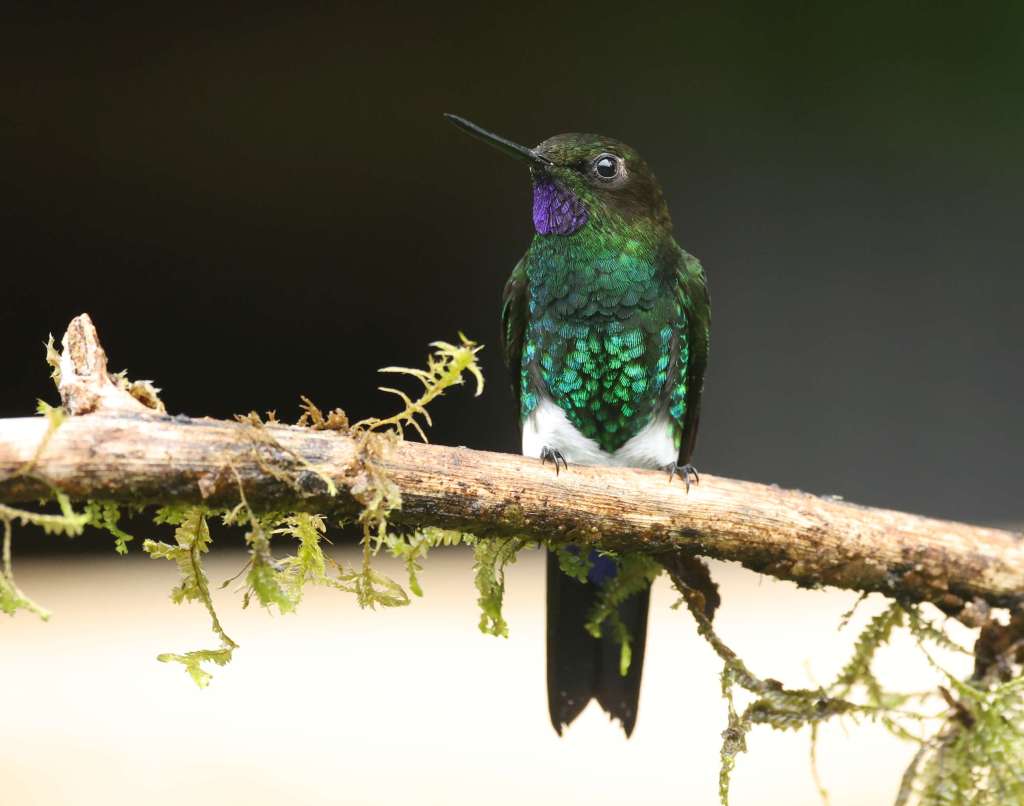
Oh yeah, and also Long-Tailed Sylph.
Mmmmmmmmm.
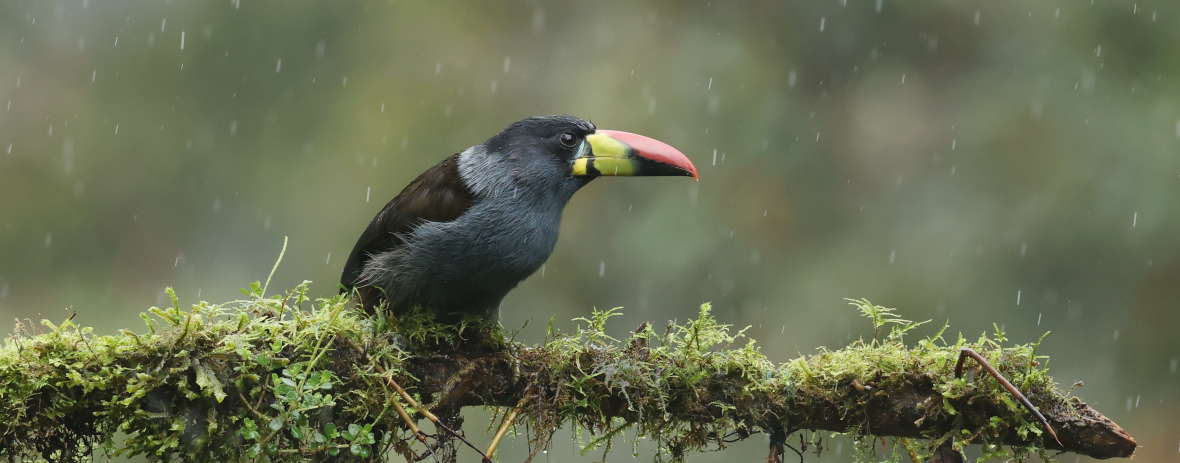
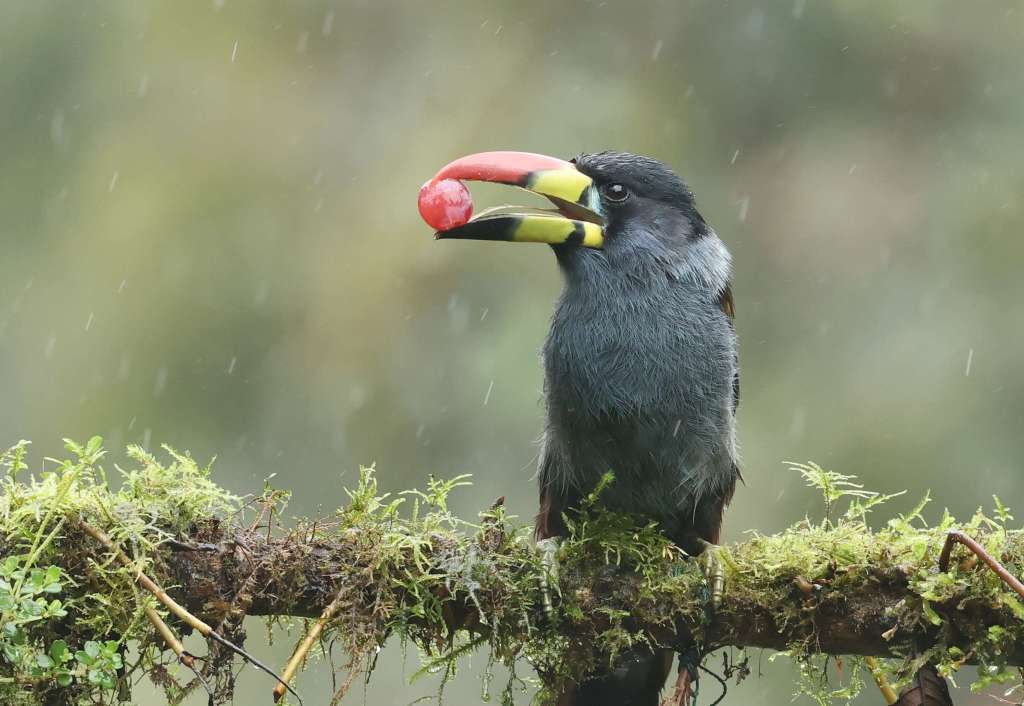
One of the real stand-out birds at Guango Lodge is the charismatic Grey-Breasted Mountain-Toucan. Across the main road from the lodge area is a set of forest trails (super-muddy in places) where there is a feeder branch set up with bananas and what looks like cherries or similar (grapes?). The bananas attracted the – hilariously, because they look gawky on isolated branches – Andean Guans, and the cherries seem designed for the toucans. It was a real buzz seeing the toucan swoop in and feed, it was like a cartoon bird come to life.
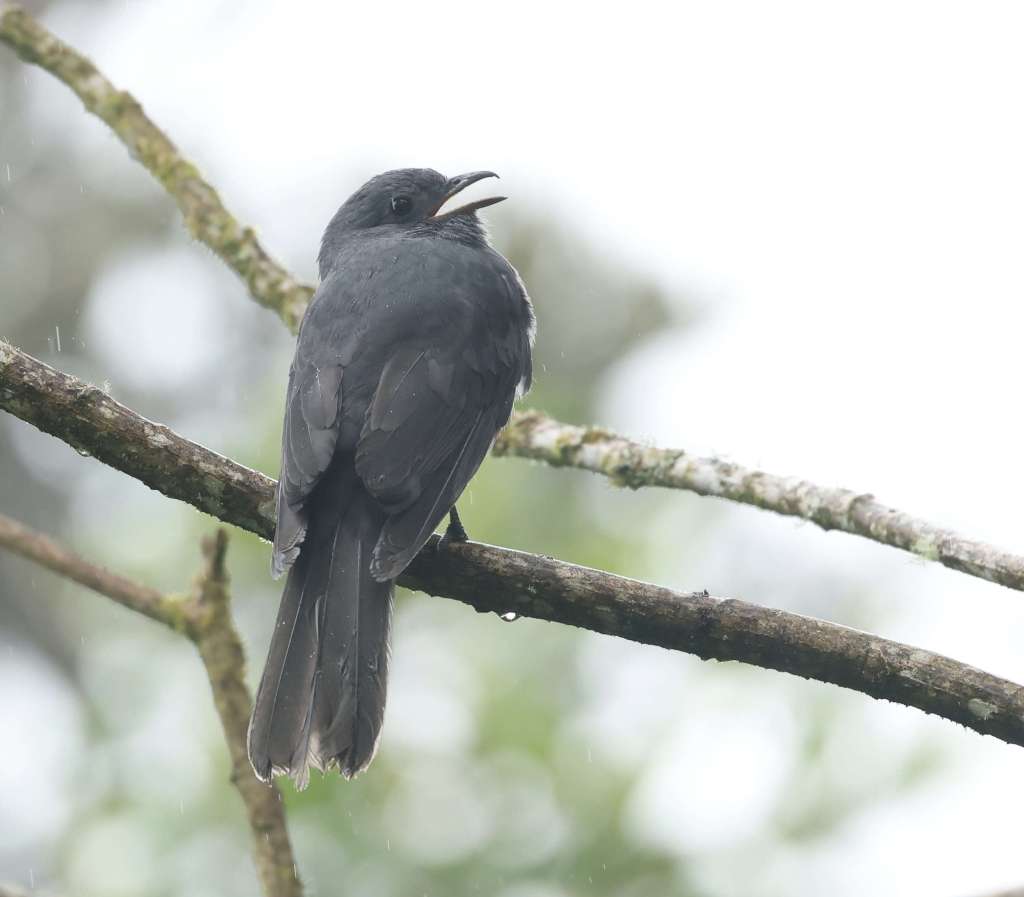
Another notable bird we saw on this trail was Dusky Piha, apparently fairly uncommon and found in the 2000m-3000m altitude range. Insistent rain kept us from exploring too far on these trails; who knows what else might have turned up.
Papallacta Paradise: Parque Nacional Cayambe-Coca. Also, More Rain.
This huge national park is 400,000 hectares in size and we birded the drivable area from the town of Papallacta a couple of times. When you enter you go through a hot springs resort (including a security gate) with a string of restaurants and other commerce bits and pieces. We stopped briefly at the car park there where we found a Shining Sunbeam and a Black Flowerpiercer.
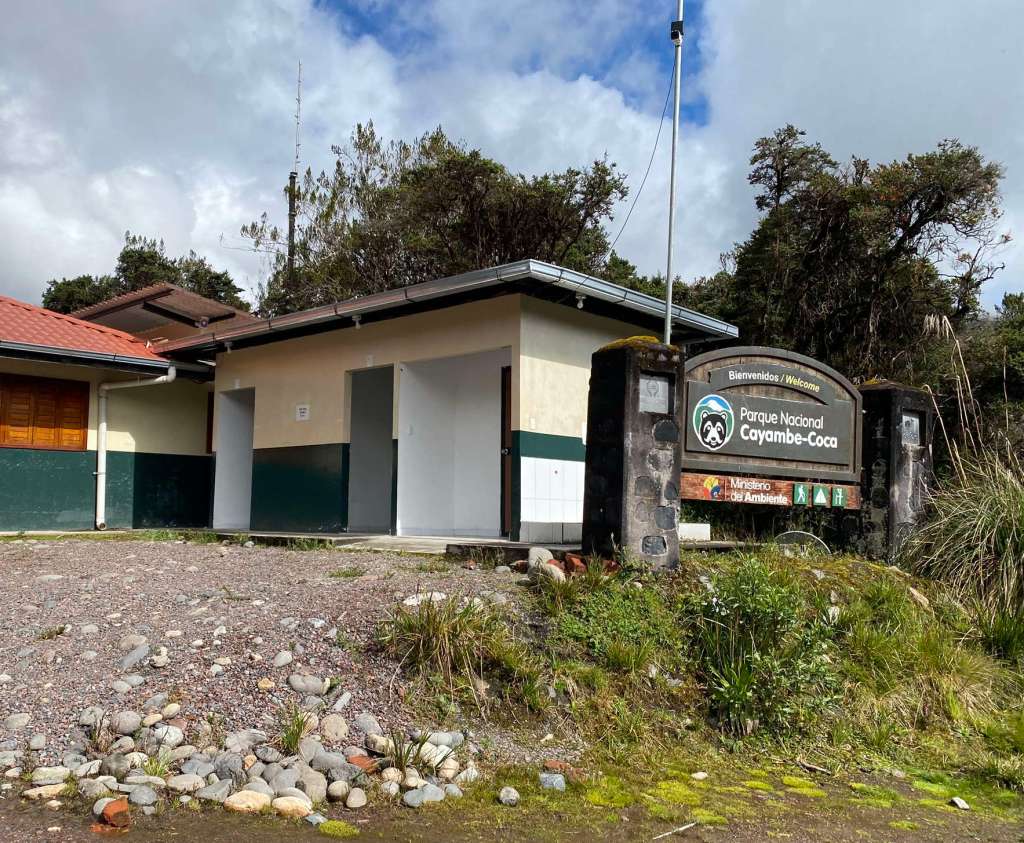
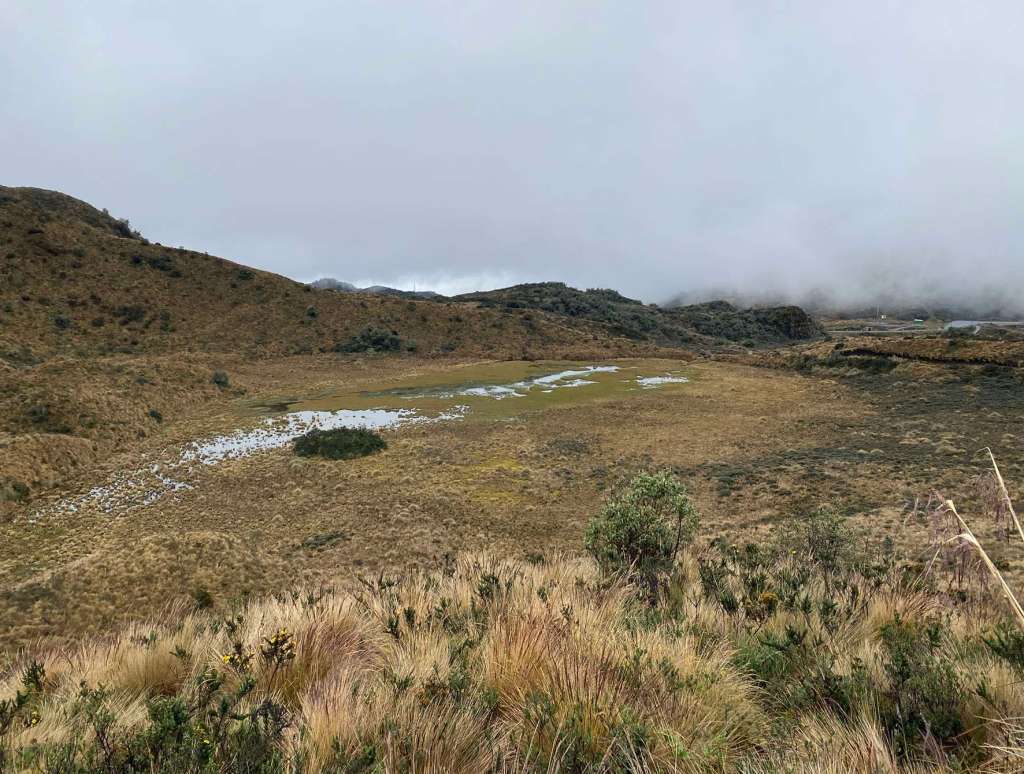
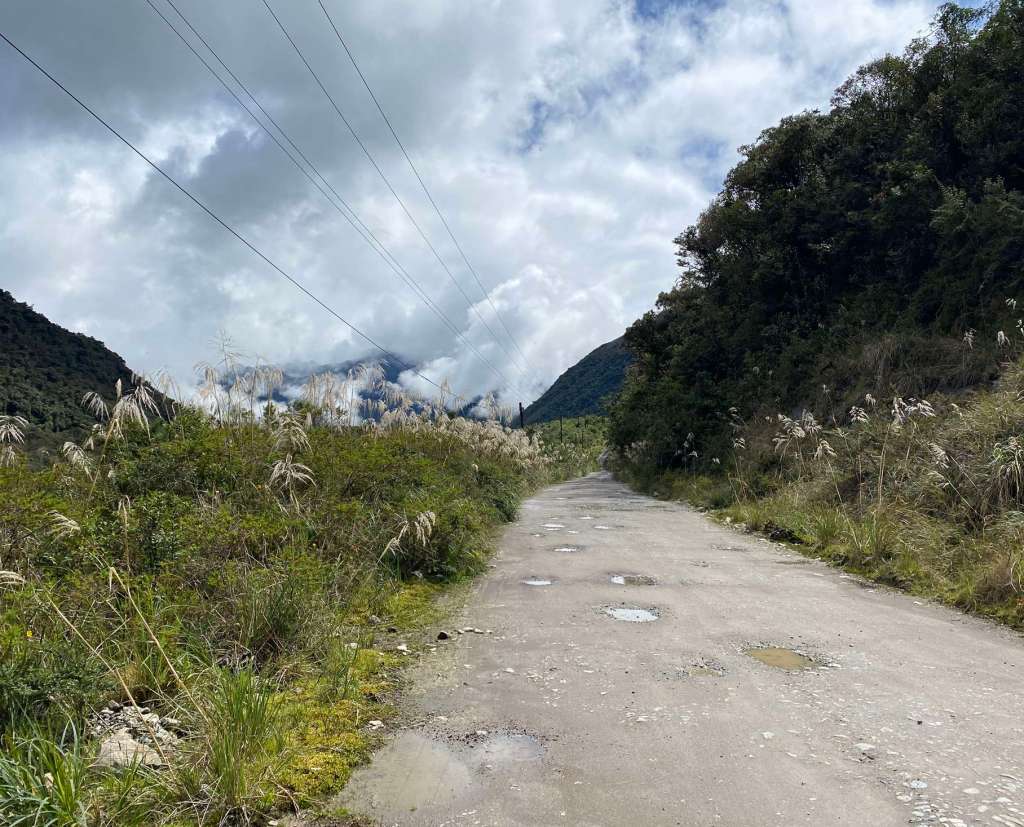
Once past the resort area it was much less busy (perhaps due to the drizzly rain). From the car we saw a Tawny Antpitta in the fog; apparently this antpitta is one of the more confiding of that bird family and that was certainly our experience – no tame-the-bird-through-feeding required. We also saw a Many-Striped Canastero, and confirmed that it does indeed have many stripes. A pretty cute and striking little bird!
Following the unsealed road upwards, zigzagging and dodging potholes, the rainy drizzle – kind of like a really wet fog – eventually led to a couple of buildings and a set of radio antennas, at altitude above 4300m. The reason to go up here even in terrible weather conditions is that it’s a reliable place to find the intricately plumaged Rufous-Bellied Seedsnipe; over a third of the photos of this species on eBird are from this site.
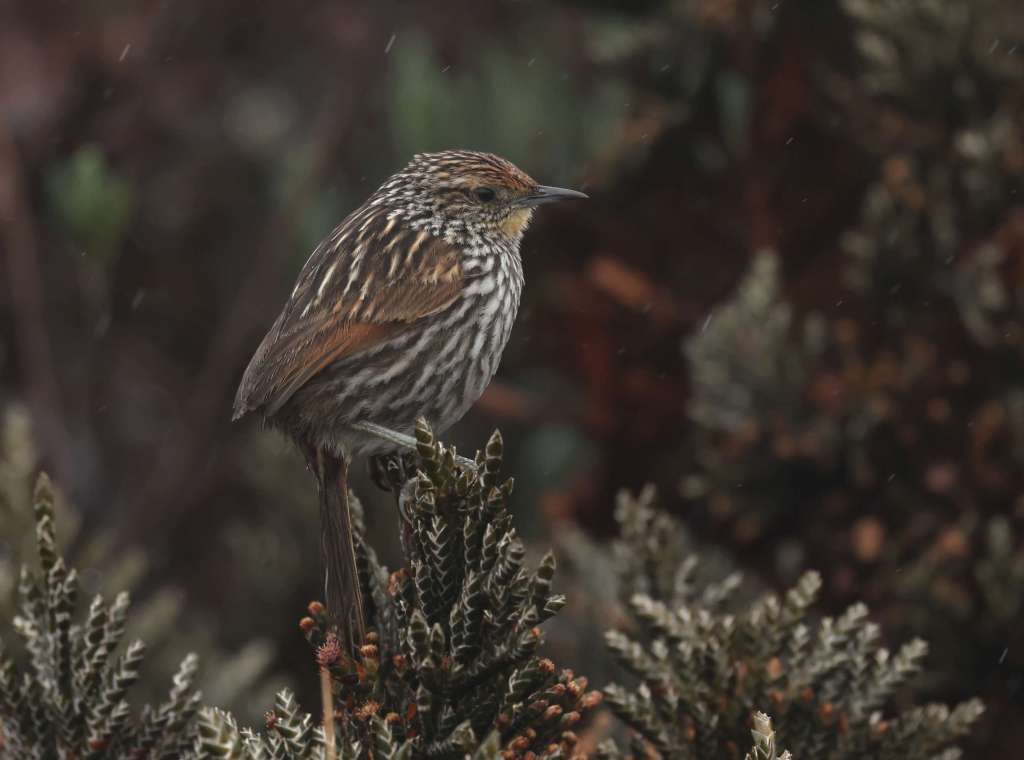
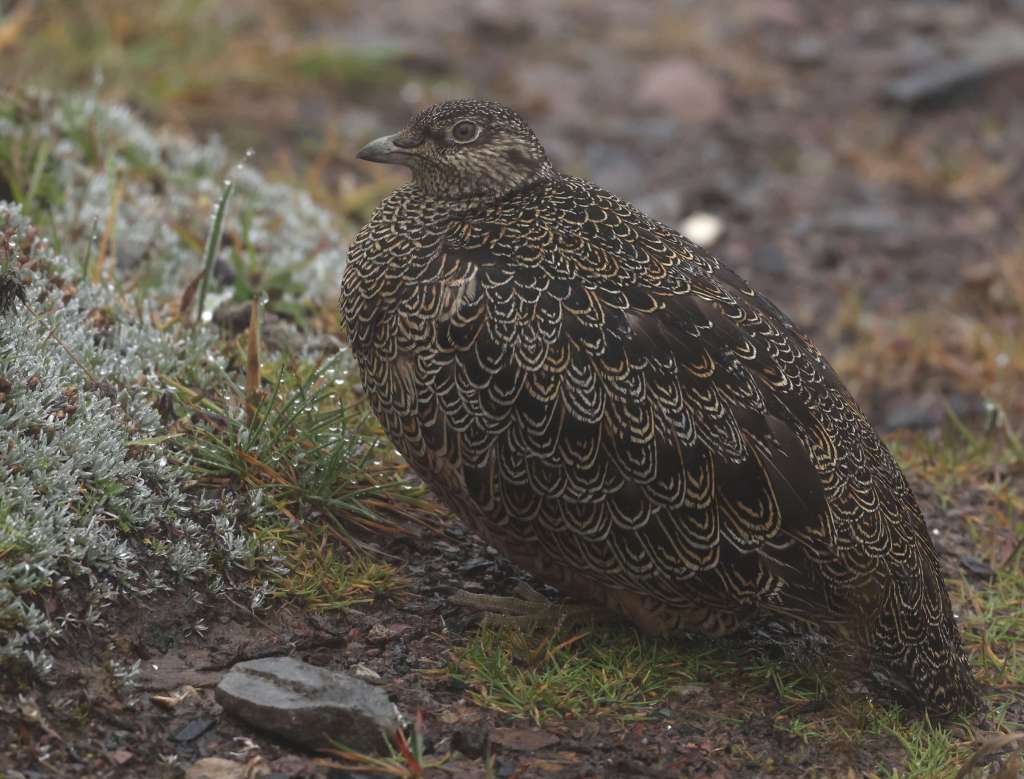
We thought we had seen just a pair of Rufous-Bellied Seedsnipe. They were sitting very still. Then we noticed a chick just a foot or two away – so well camouflaged (fog-assisted, I suppose) that we hadn’t seen it at first. And then we saw another, and another a little further away – for 5 birds in all.
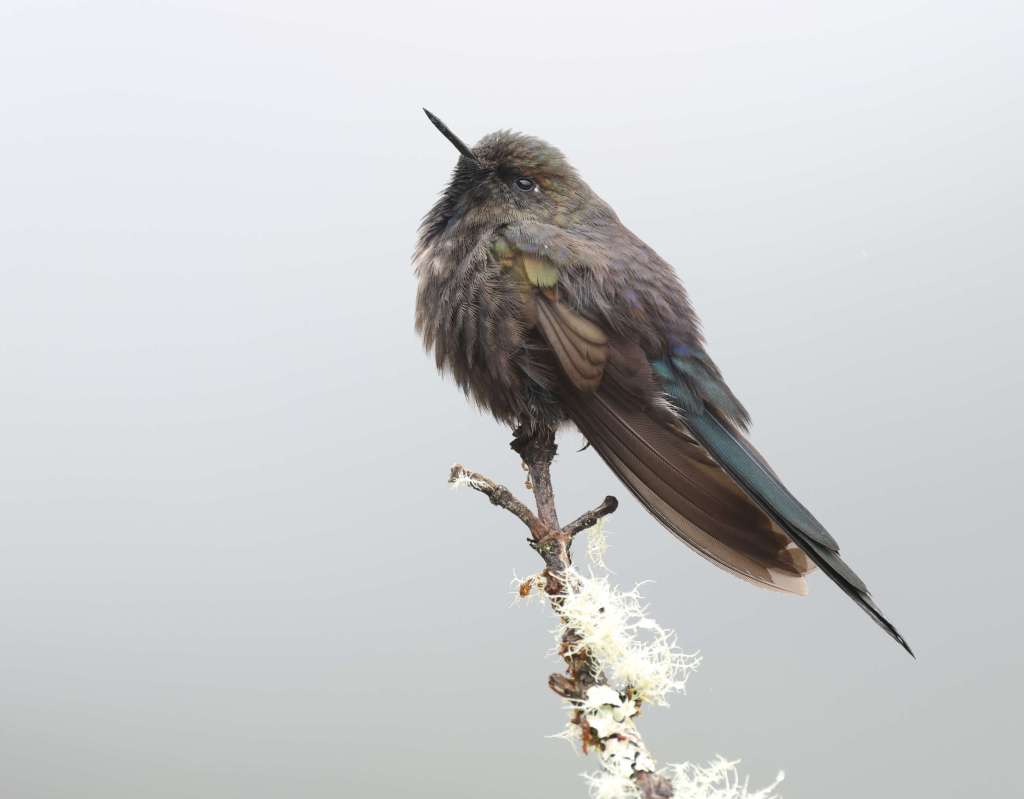
High-altitude hummingbirds here include the fairly common Tyrian Metaltail, but there is also a good chance of the very similar Viridian Metaltail. We also saw a Sword-Billed Hummingbird on an exposed branch, distantly in the rain. The hummingbird of the day though was without a doubt a Blue-Mantled Thornbill, mainly because the bird sat super-obediently (if a little warily) on a branch for us photographers to get whatever shots we desired (and video, too, of course). The other thornbill to find here is the Rainbow-Bearded Thornbill, and we did see one briefly – enough for a shadowy, foliage-heavy photo and without getting an appreciation of its “rainbow beard” (seriously, check out the eBird reference photos!) That hummer gives the vaunted Bearded Mountaineer a run for its money in the hummingbird-with-colourful-beard-feathers stakes.
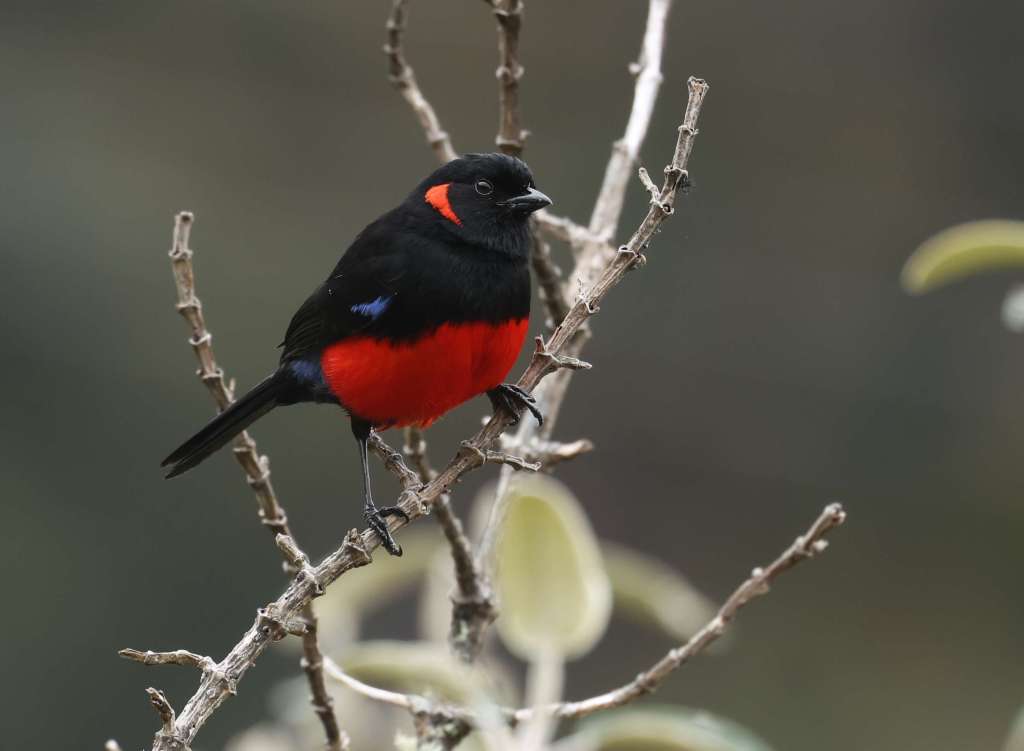
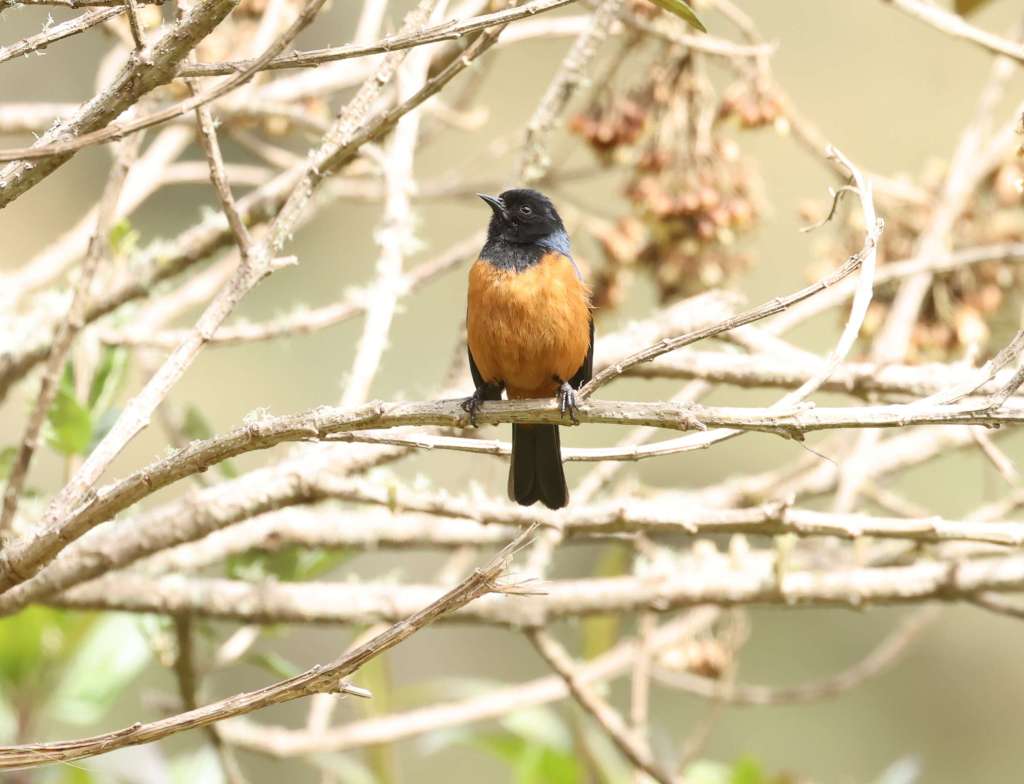
Some other birds here included a Black-Chested Mountain Tanager, a harder bird to find and one which I couldn’t get a good photo of. Not so the lovely Scarlet-Bellied Mountain Tanager, a bird I’d seen and admired before in Peru. Also, extremely distantly, we saw an Andean Condor. In terms of small birds, we saw a few Agile Tit-Tyrants and White-Throated Tyrannulets, as well as a Blue-Backed Conebill. Several White-Collared Swifts zipping by low and fast provided a bit of a thrill too, as these birds are usually higher up.
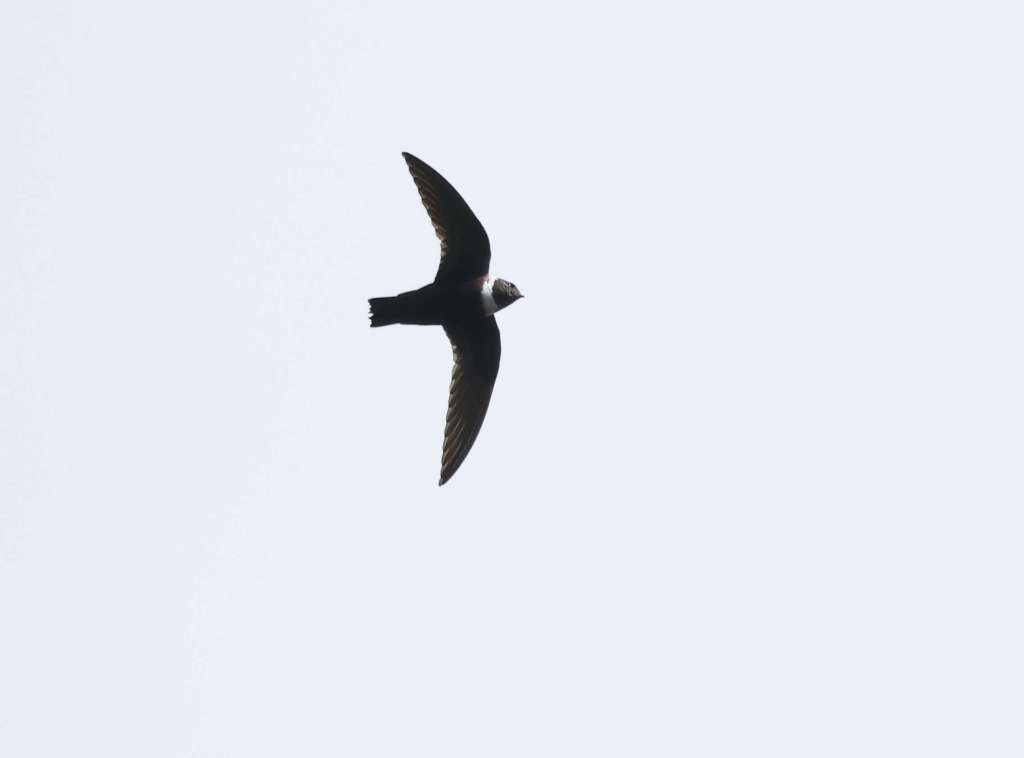
On the last day of our tour, our route through the national park descended down the “old Quito road”, birding by car and stopping whenever we saw something interesting. It rained on and off and we had left the car to watch two Carunculated Caracaras. Now, a “caruncle” is a small, fleshy protuberance or wattle, commonly found on the face of certain birds; this was not a word I knew before, or indeed a bird I’d even known about.
However that wasn’t the highlight of that late afternoon. That honour belongs to Aplomado Falcons – we saw one (of four of these birds in total) flying with some prey in its claws. Scrutinising the photos later, I believe the prey was a baby Great Thrush. In any case, one of the other falcons started to chase it, though it didn’t manage to steal the prey. Soon after that the most juvenile of the falcons sat on a tree top making “meep meep” sounds, not a very aggressively raptorish call.
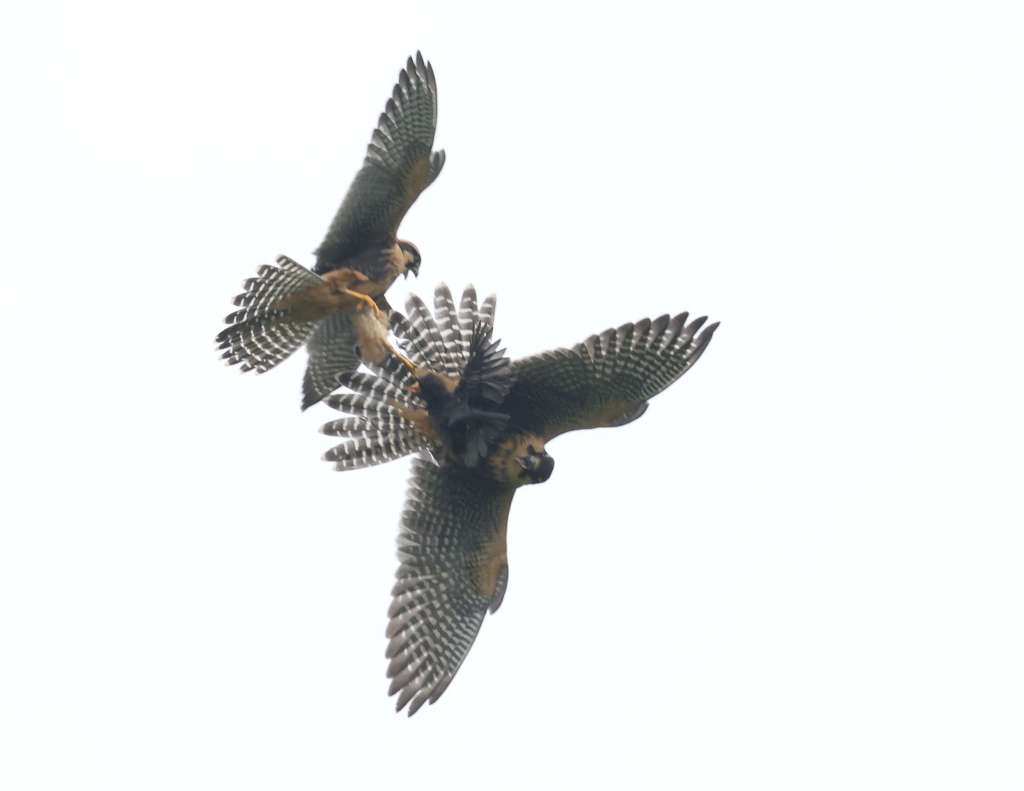
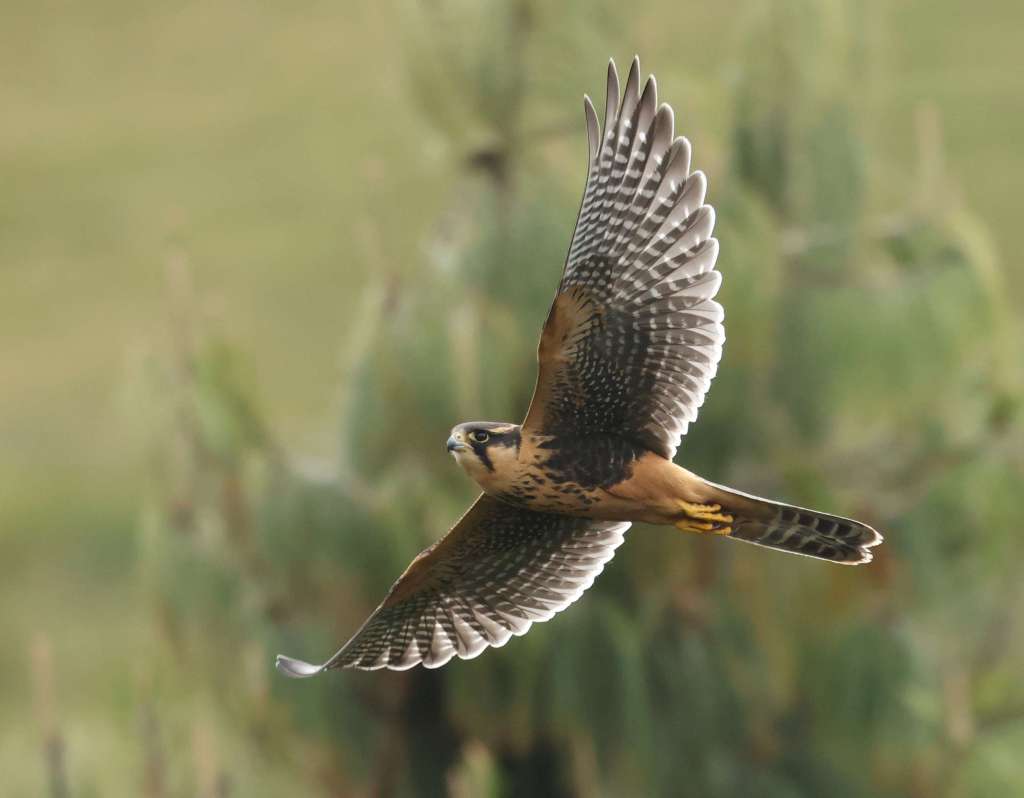
Witnessing the Aplomado Falcons interacting like this was a fantastic way to end our 10-day tour.
Summary
We had an amazing time birding at these sites on the Andes East Slope, with San Isidro Lodge and La Brisa being two absolute knock-out locations that I would love to visit again one day. The area certainly had its challenges, with tough rainforest conditions not helped by the kind of rain which, to be fair, you have to expect at least a bit of when in this region. But there is really amazing birding to be had, from hummingbirds to toucans to tanagers to everything in between.
This region isn’t as renowned as the Mindo Region to the west of Quito, and does not have anything like the number of lodges as Mindo. But those willing to venture to “the other side” of Quito will surely be delighted.
AUTHOR: ANDY GEE
BIRDERS: ANDY GEE, K-A
 Bird Spots