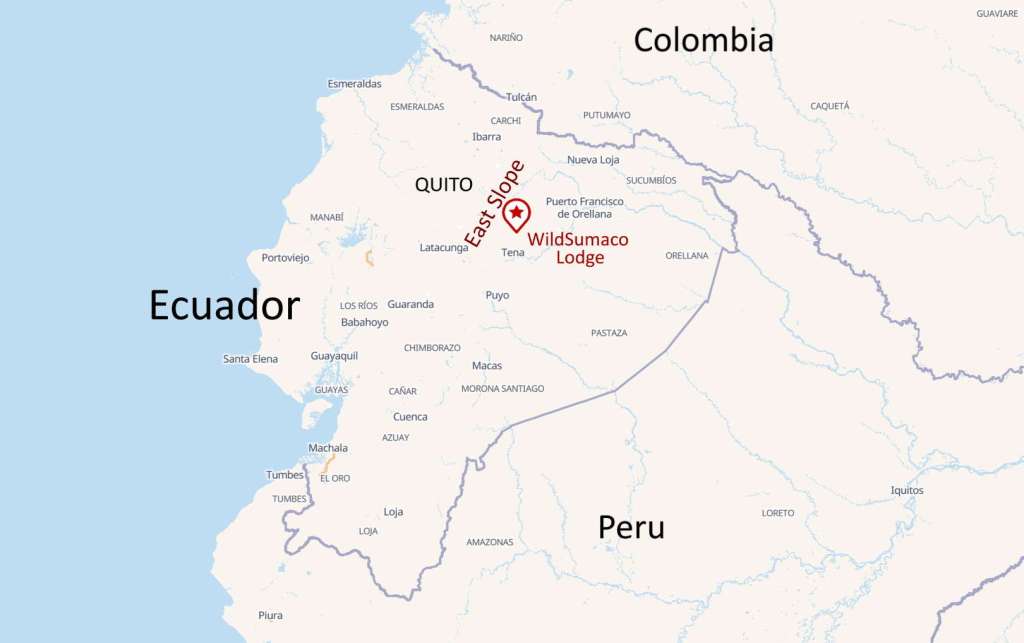
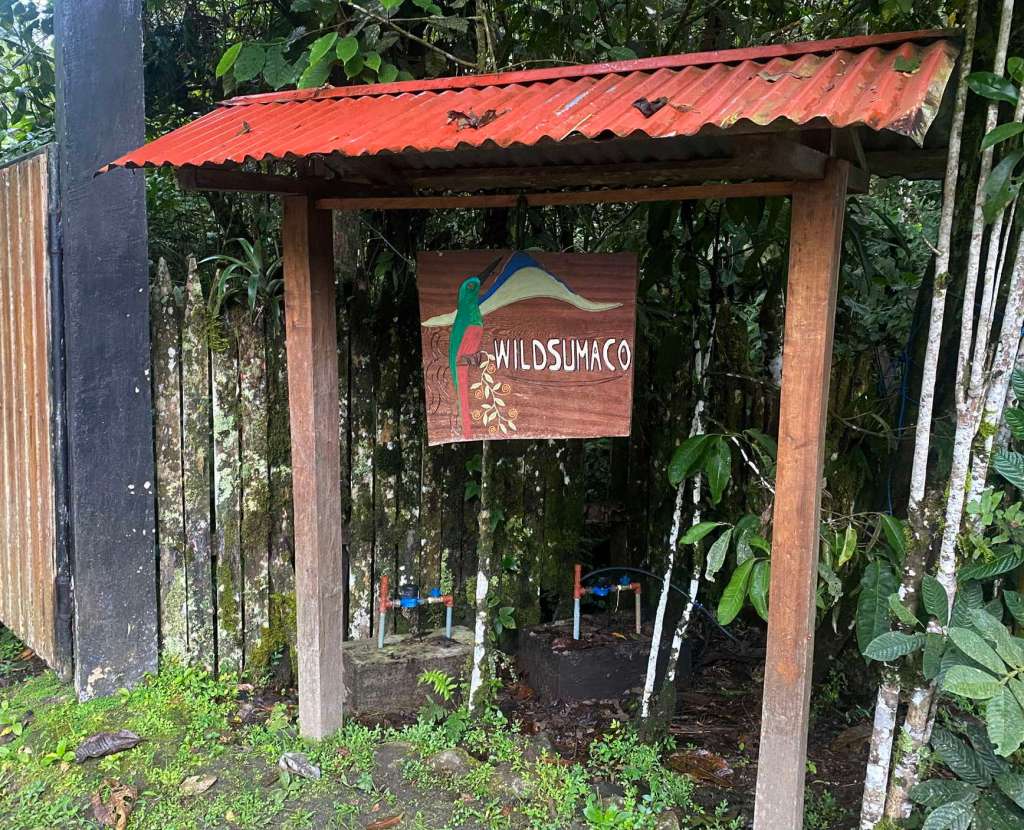
As part of a 10-day Andes East Slope birding tour (see last post), I stayed six nights at WildSumaco Lodge, which sits at 1500m in elevation and is around 4.5 hours east of Quito by road. With 675 bird species over all time according to eBird, it is the top hotspot by that measure in Ecuador – a position it holds over the second place by over 60 species.
Despite at times pelting persistent rain, WildSumaco Lodge and its surrounding region delivered an absolutely superlative birding experience.
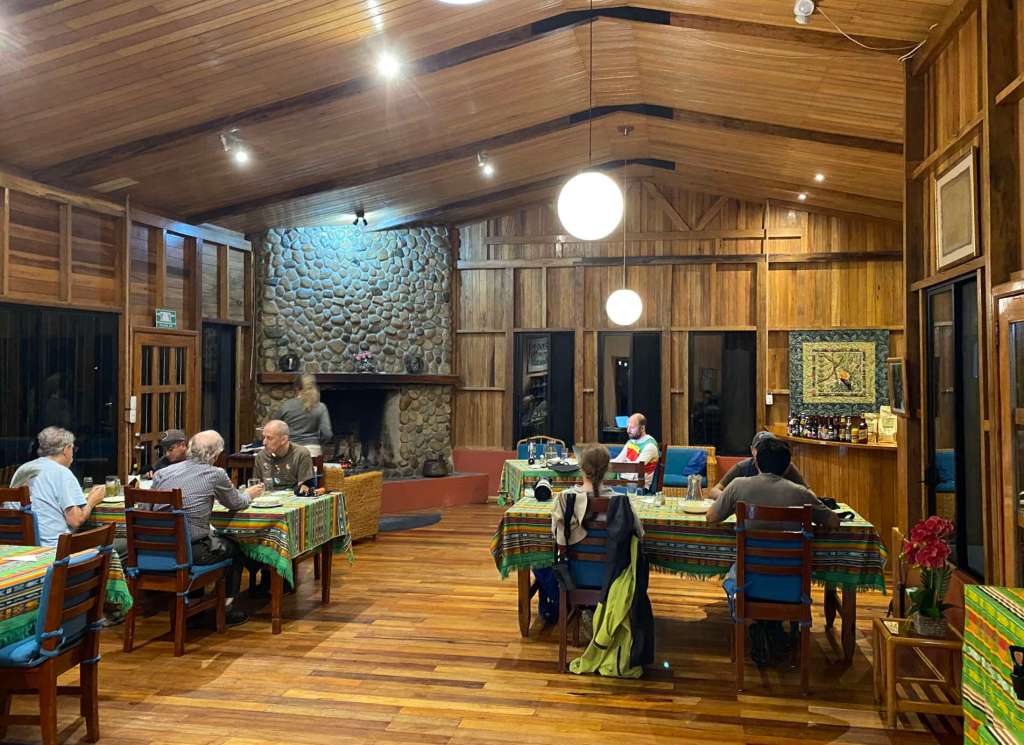
The lodge itself is comfortably appointed (they have their own merchandise!) and when the temperature drops they won’t hesitate to light a roaring fire. Meals are pretty good (soup with popcorn made an appearance), and the staff and management are super-friendly.
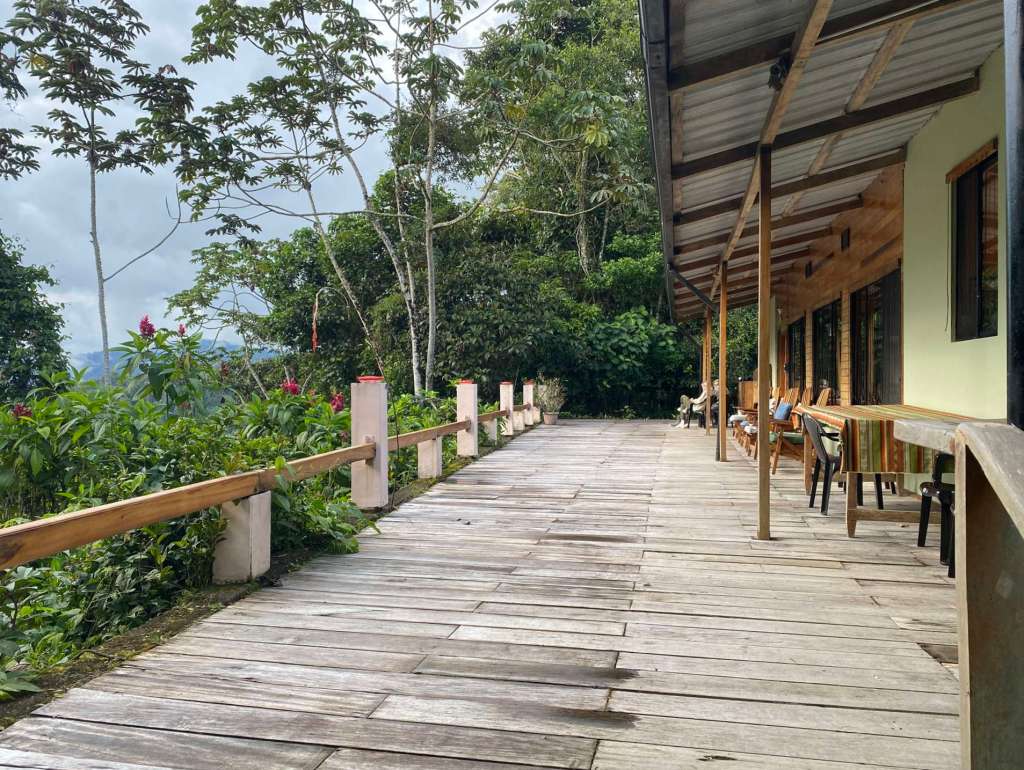
Along one side of the main building is a huge deck with a dozen hummingbird feeders set up at regular intervals, and there is epic hummer action along here. The air is thick with the buzzing of many birds zipping in and out of the feeders and jostling for the prime resting spots nearby, not to mention regularly getting angrily territorial at each other.
It’s seriously over-the-top.
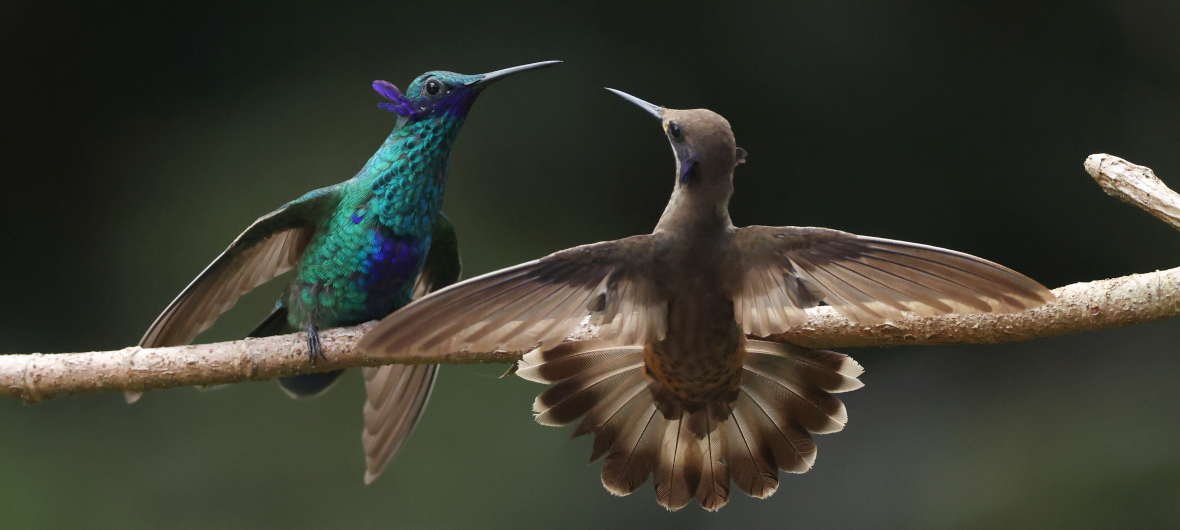
Inspired by an amazing framed photo hanging in the lodge showing two Brown Violetears in full aggressive display, backlit with tail feathers fully spread, I tried my luck taking photos of hummingbirds competing and sparring (we might call it “shirt-fronting” in Australia) near the feeders. Two hours and several thousand photos later thanks to Canon’s high-speed continuous shot feature (also known as burst shooting), I had a handful of happy-making keepers. From a bird photography standpoint, this is as good as it gets!
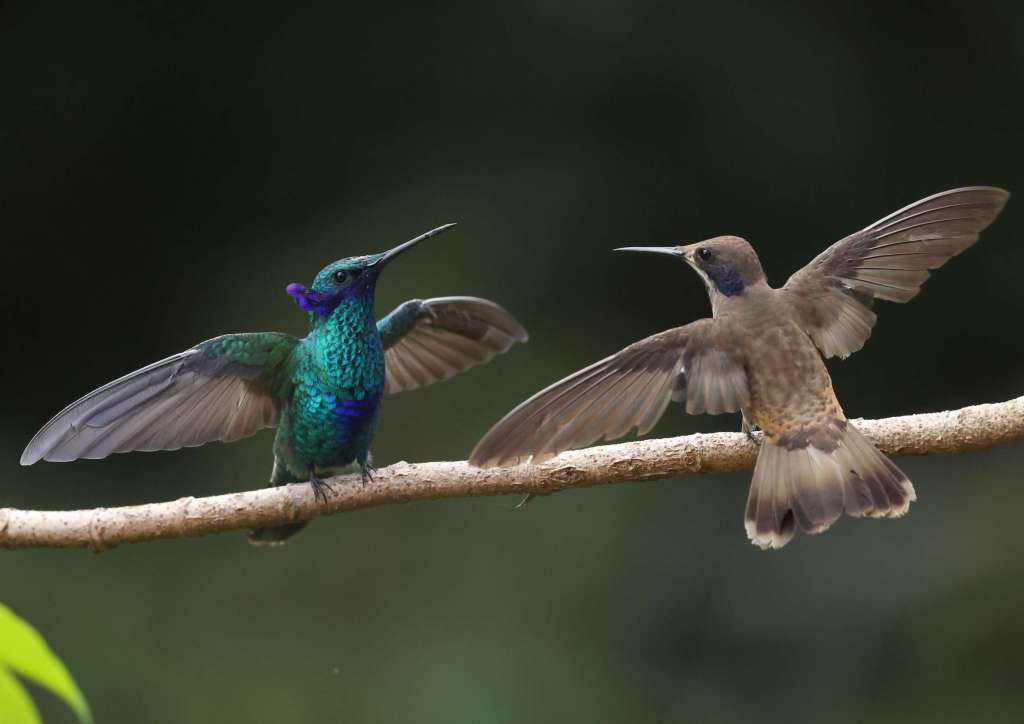
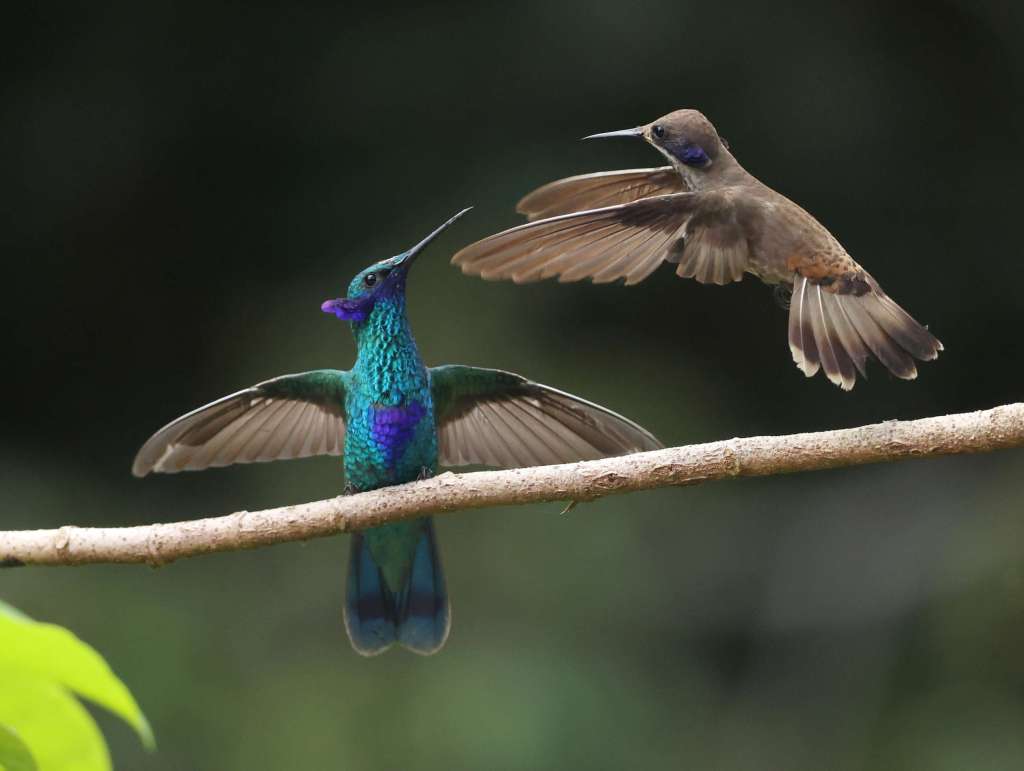
Predictably, most of these photos feature either Brown Violetear or Sparkling Violetear skirmishing, as they are the largest of the hummingbirds here and tend to be the biggest bullies. They will often flare out their “ear” feathers when provoked (or provoking) as well, adding to the drama.
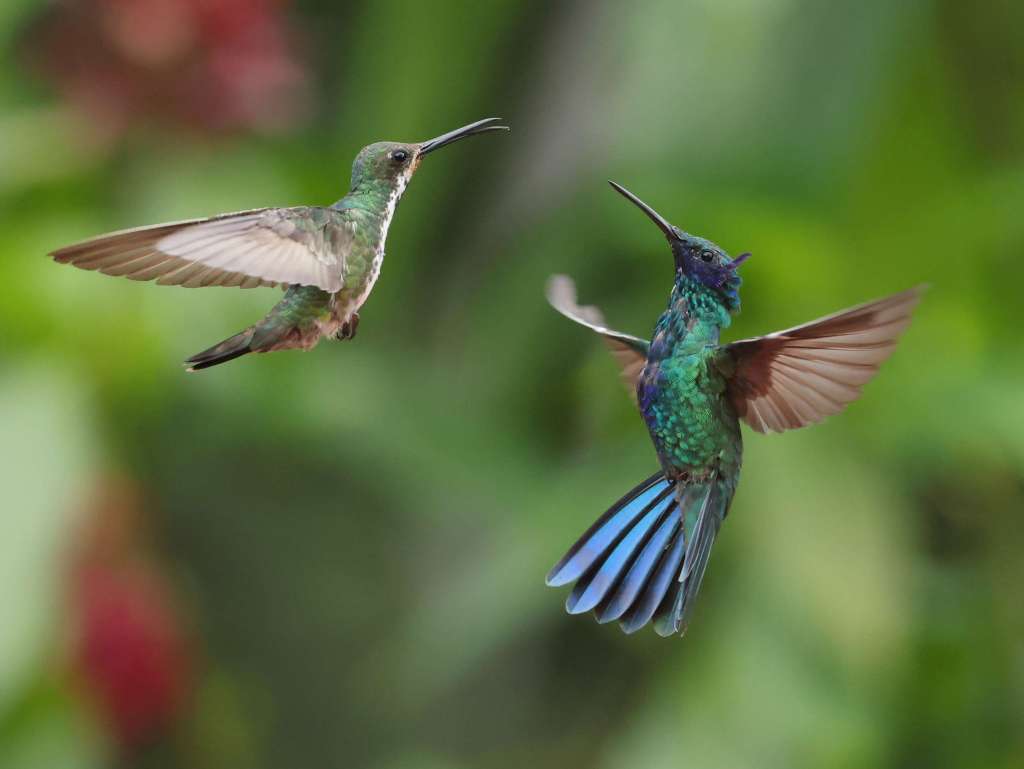
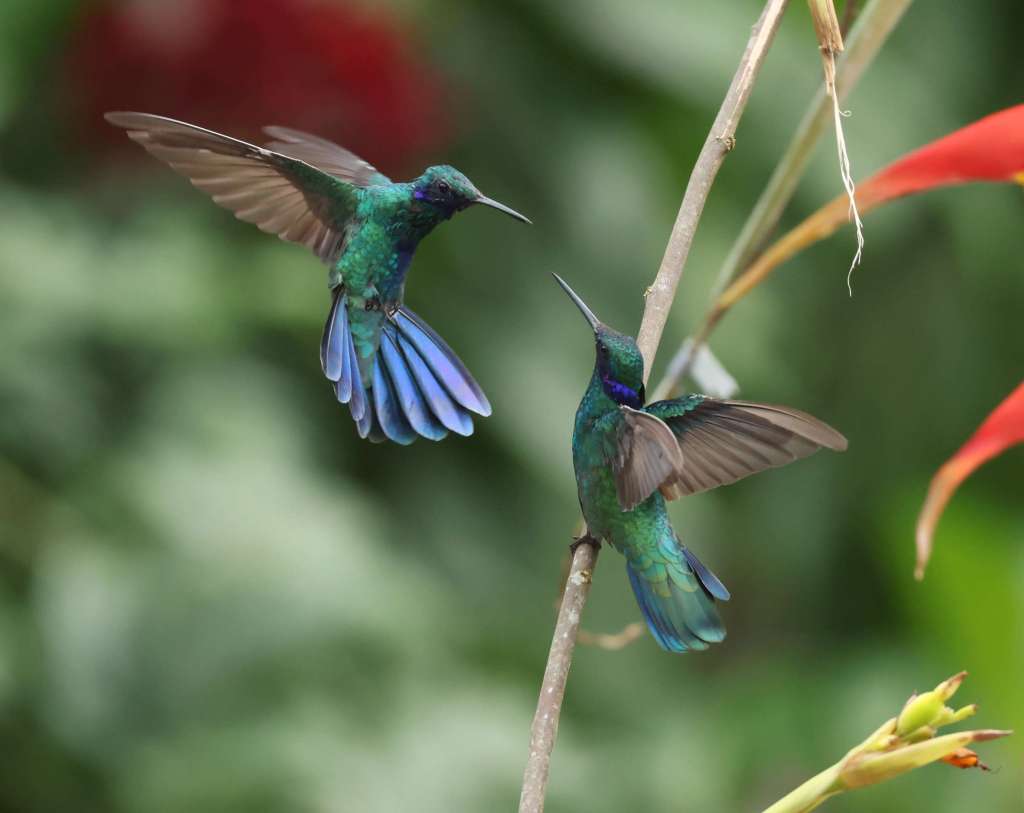
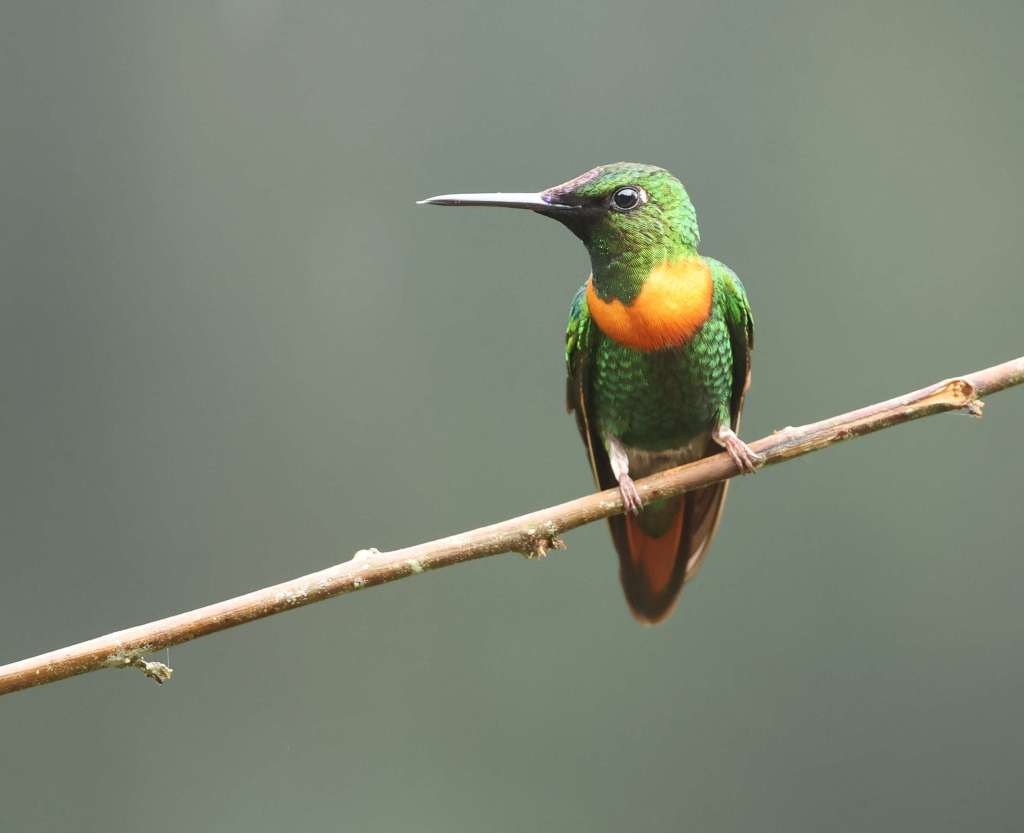
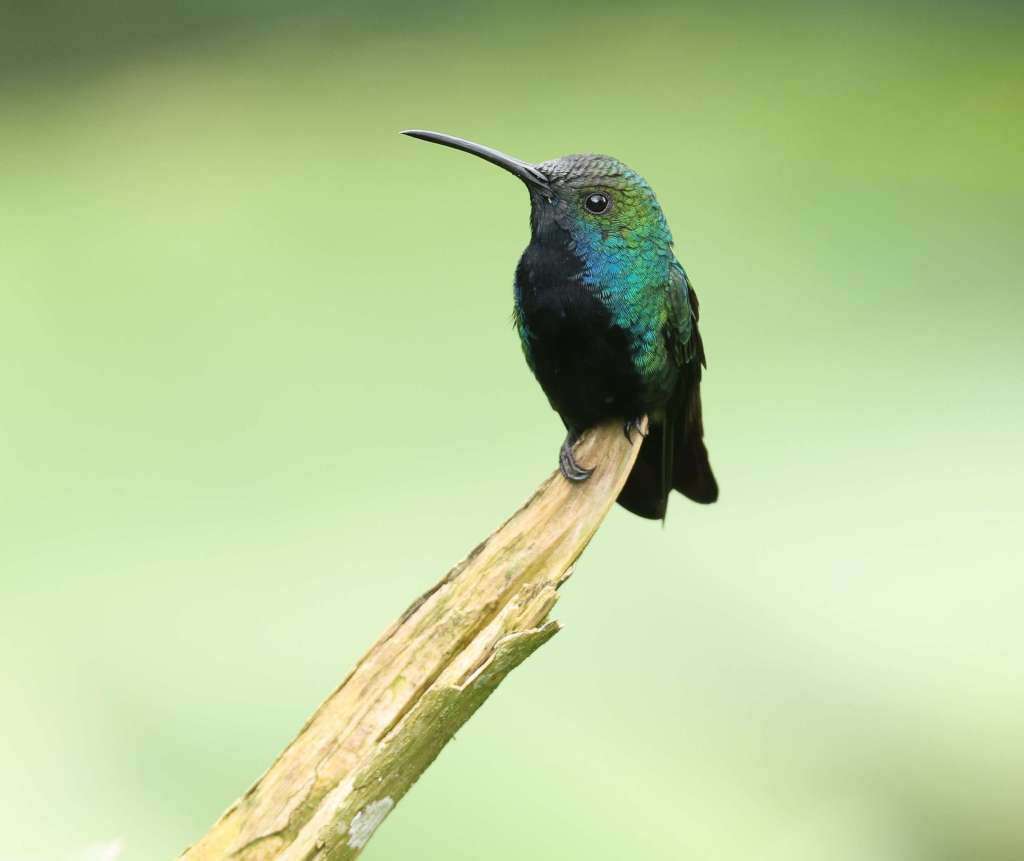
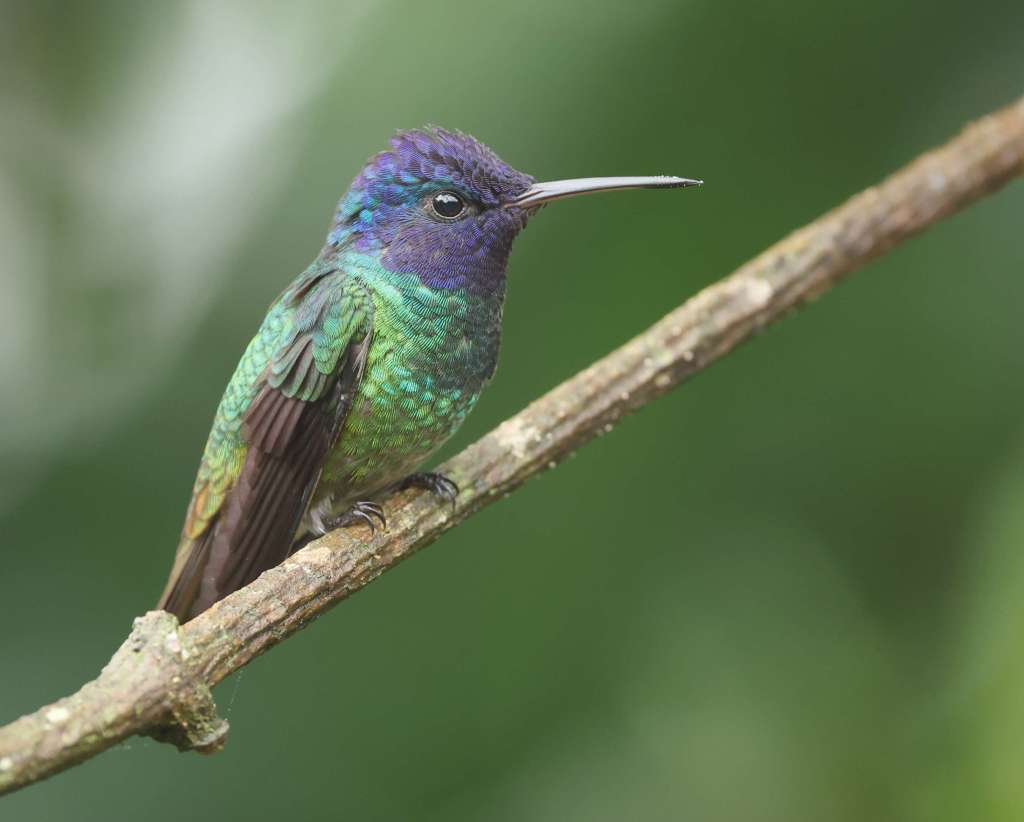
Of course there are a number of other, smaller hummer species too including Gould’s Jewelfront, Black-Throated Mango, Black-throated Brilliant, and quite numerously when I was there, the very lovely Golden-Tailed Sapphire. White-Necked Jacobins were around too, and they’re usually one of the bigger bullies of the hummingbird world, but weren’t dominant here like they can be elsewhere. It was a riot of colour and luminiscence.
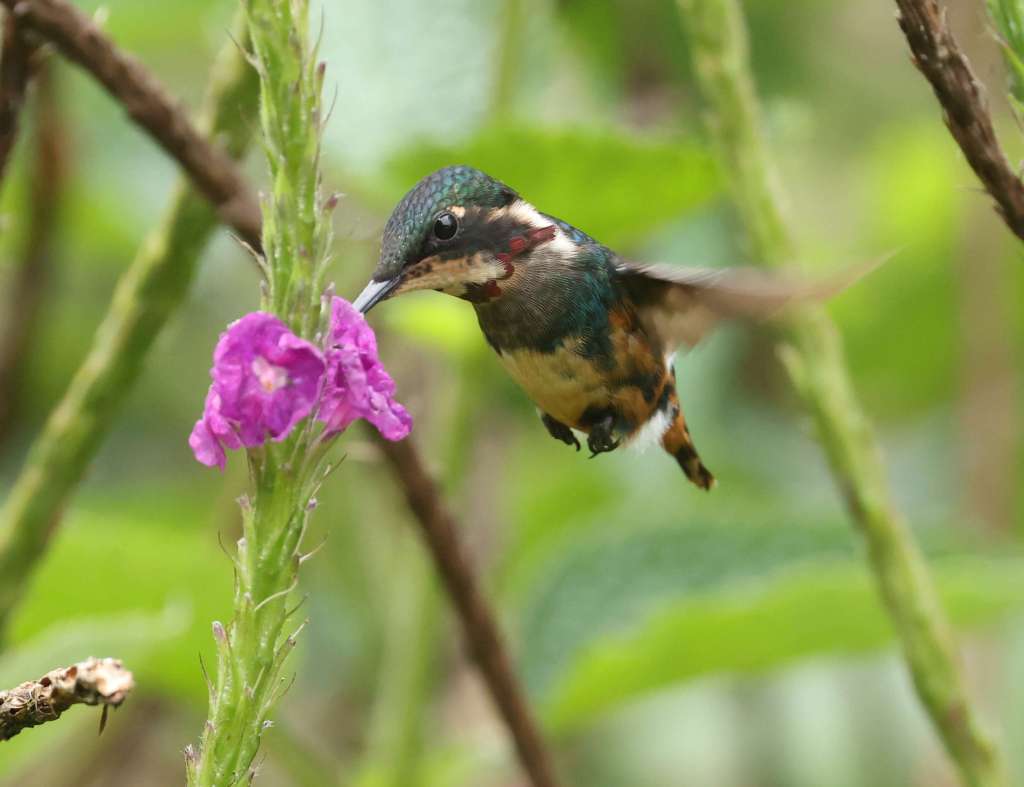
It took a while before we saw our first Gorgeted Woodstar, a very small hummingbird we had been on the lookout for. We finally saw it in the bushes right in front of our cabin, as this tiny hummer seemed to much prefer feeding from there (and sometimes hiding in its foliage) rather than near the artificial feeders. At a prime birding location like this, it was good reminder to scan everywhere for target birds, not just in the “obvious” spots.
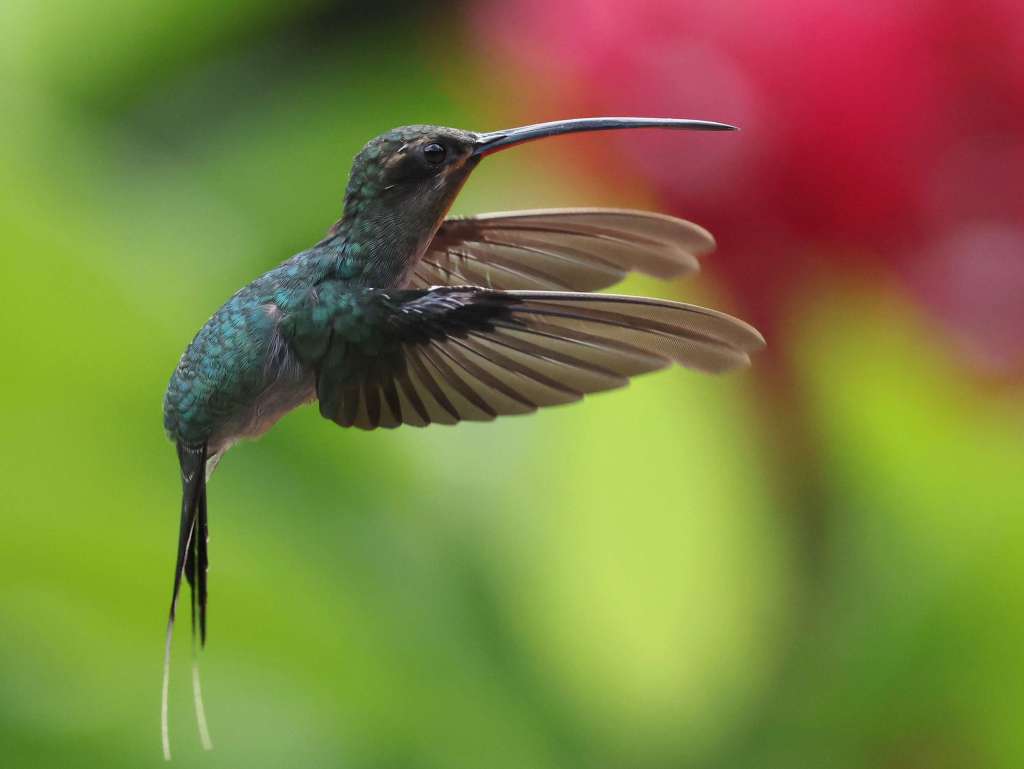
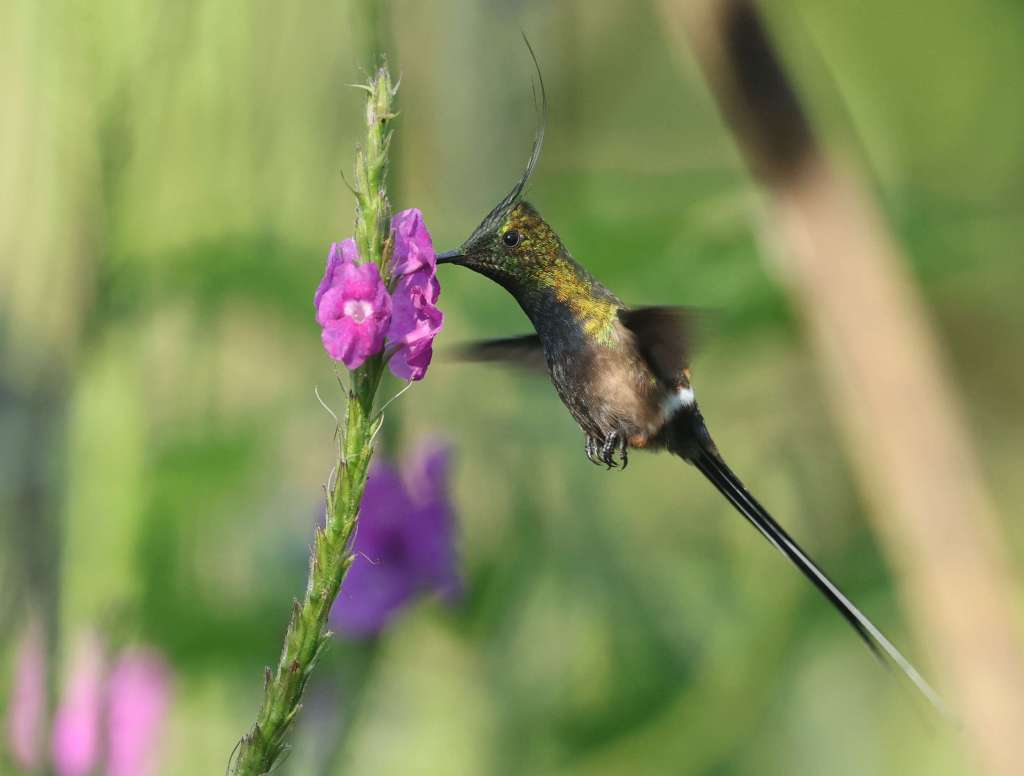
We eventually saw a Wire-Crested Thorntail in this same bush as well… so it was kindof a two-for-one deal. That “wire crest” is quite something to behold.
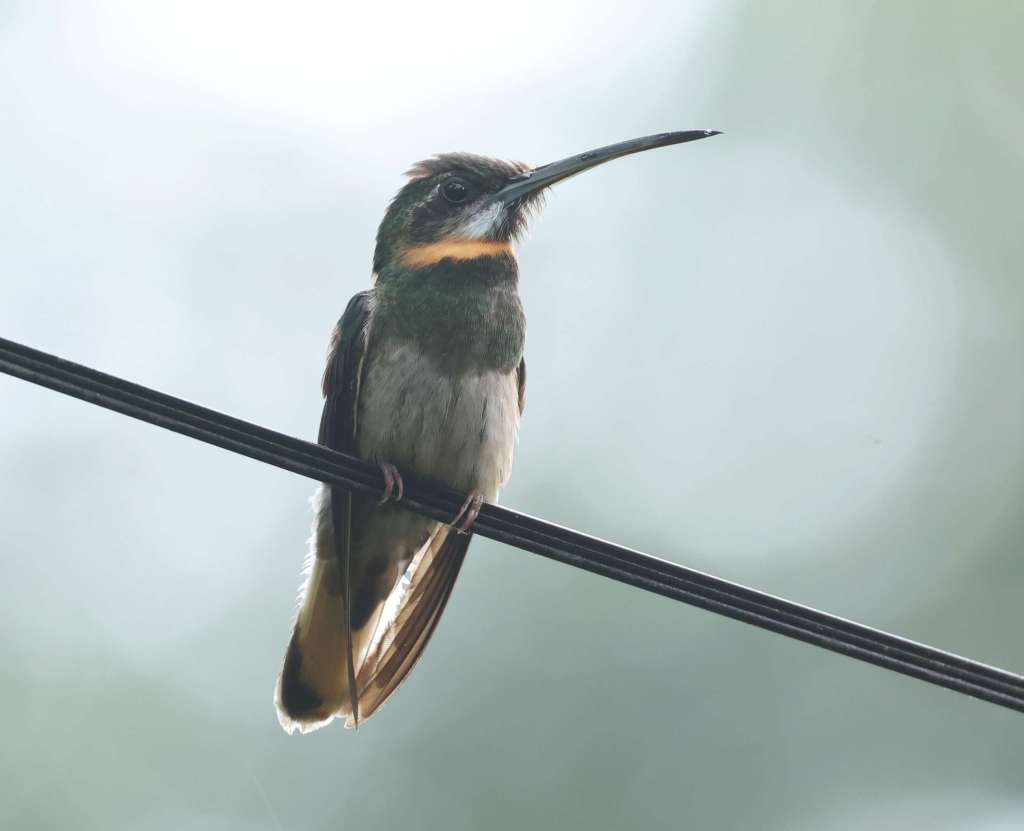
Another hummingbird which avoided feeders was the Pale-Tailed Barbthroat; we saw that just once in a Heliconica bush in the lodge grounds. We looked in these bushes too for White-Tipped Sicklebill (as it supposedly has an affinity for Heliconica) but didn’t see one. Can’t have ’em all, I guess.
OK, that’s a quick summary of the hummingbirds, and we’re only just getting started!
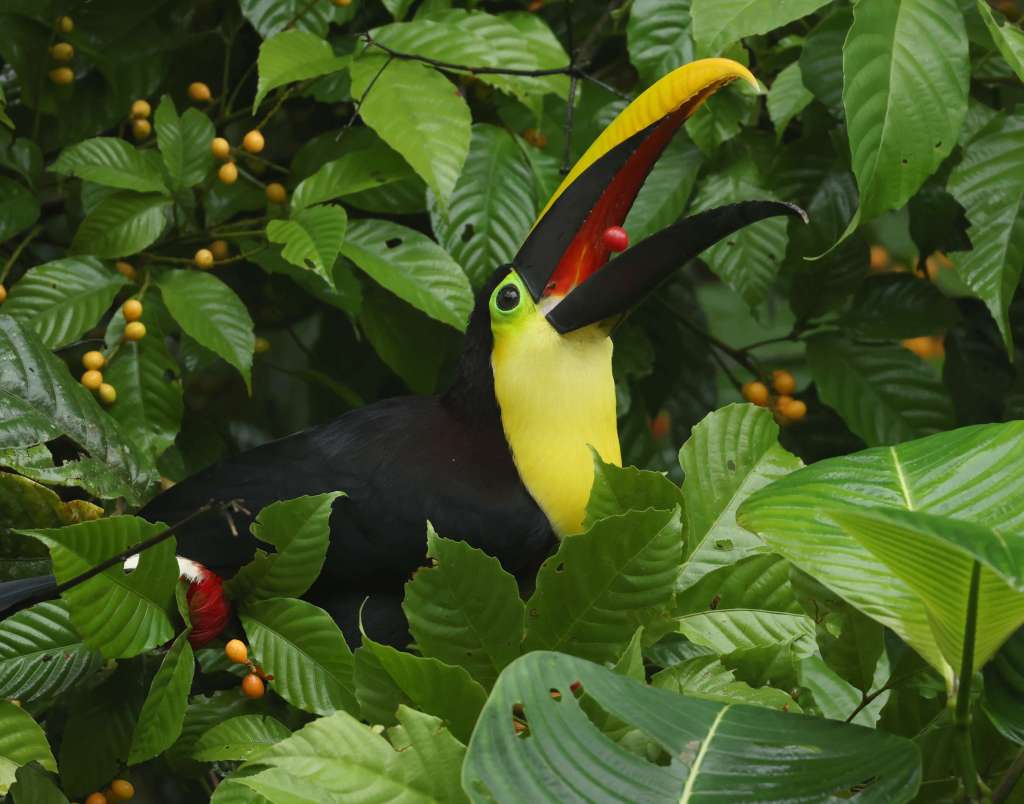
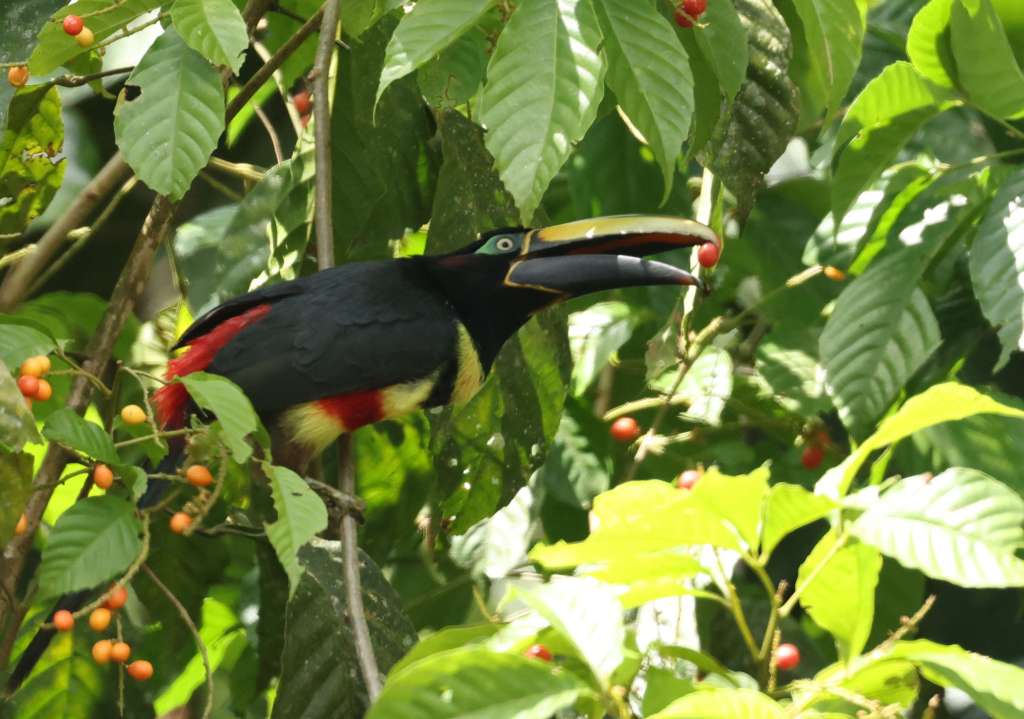
We were lucky to be present at WildSumaco at a time when Yellow-Throated Toucans were close to the lodge. The reason for this was one of their favourite berry trees was fruiting. I got my answer to “how do toucans eat with that huge bill?” by watching them delicately pick up a berry with the tip of their bill, then throw it up and open wide to scoff it down. Similarly too the smaller Many-Banded Aracari, though it showed up much less frequently. Check out the video above to see this feeding technique in action.
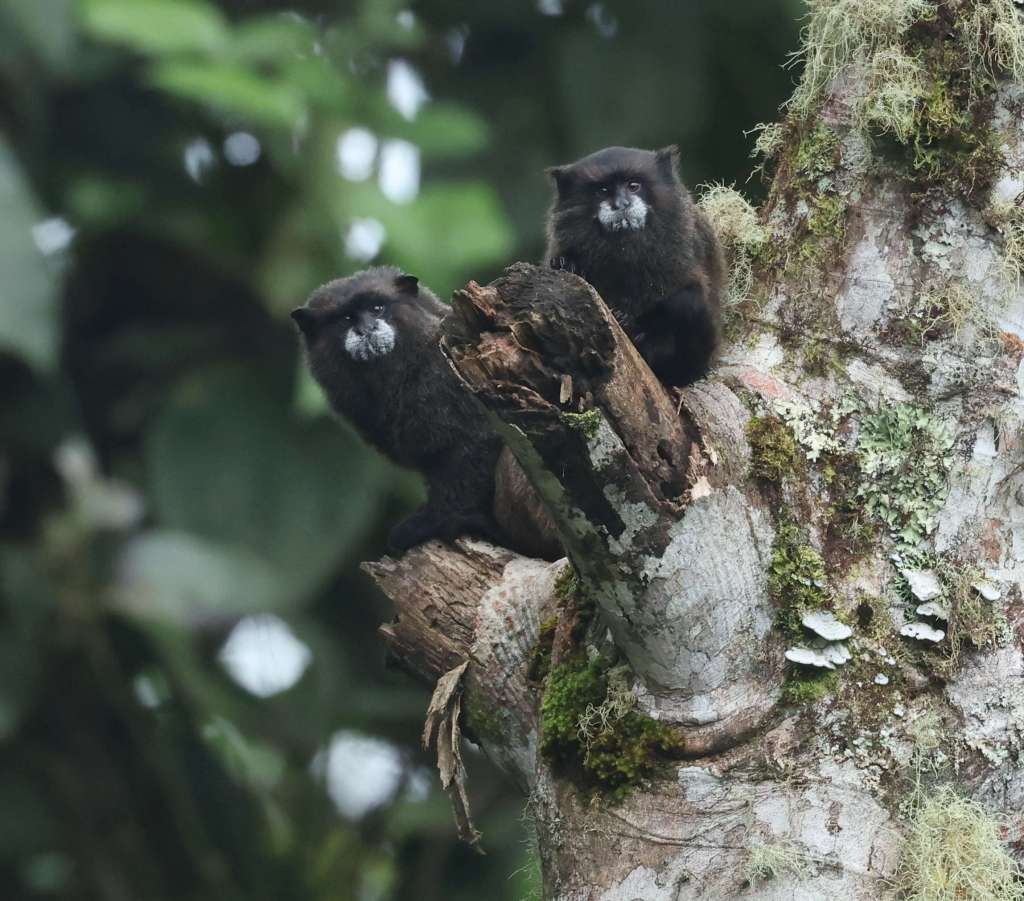
There were more than just birds viewable from the deck area – some bananas placed high up across from there attracted Black-Mantled Tamarin. I found them pretty cute, and apparently they are one of the prey species for Barred Forest-Falcons – now that kind of interaction is something I’d like to witness (though it would be unfortunate for the tamarin).
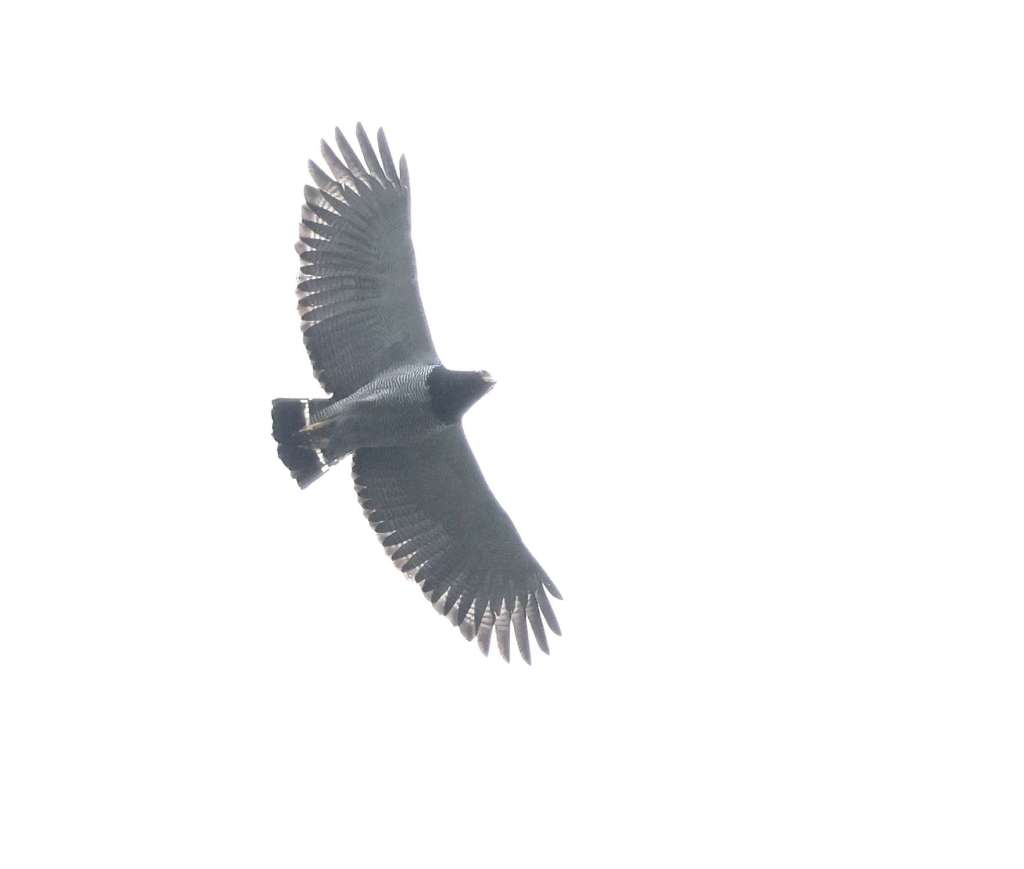
Speaking of raptors, we spotted a Barred Hawk from the lodge’s deck. Very cool! On finer days, you can also see the far mountain ranges to the west, a range which includes the conical Sumaco Volcano at nearly 4,000m.
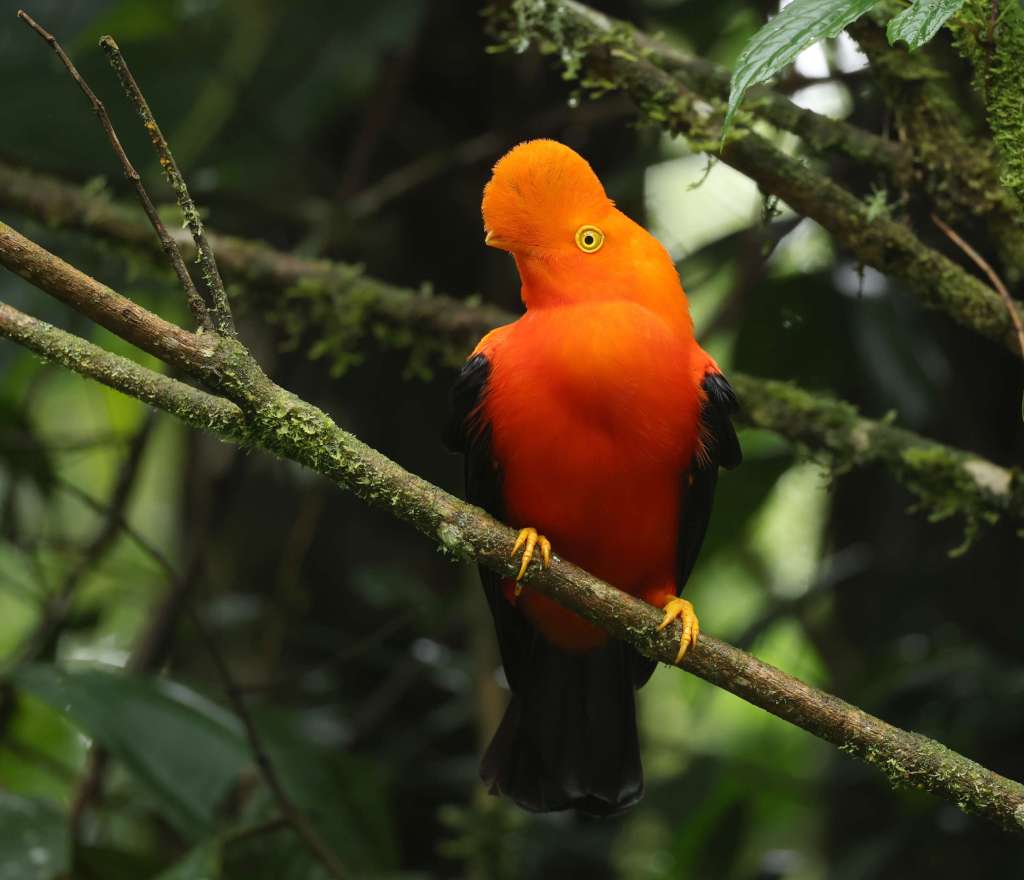
You have to love a location where you see a vibrant male Andean Cock-of-the-Rock chilling in a tree just above eye level right in the lodge’s car park. In fact, all around the lodge grounds (including the car park) is very good for birds as there are a variety of trees and bushes everywhere. There are some terrifically tall trees, so not every bird will offer stunning close views, but that’s life – some species just want to stick to the high canopy (like those mixed tanager flocks, more often than not…)
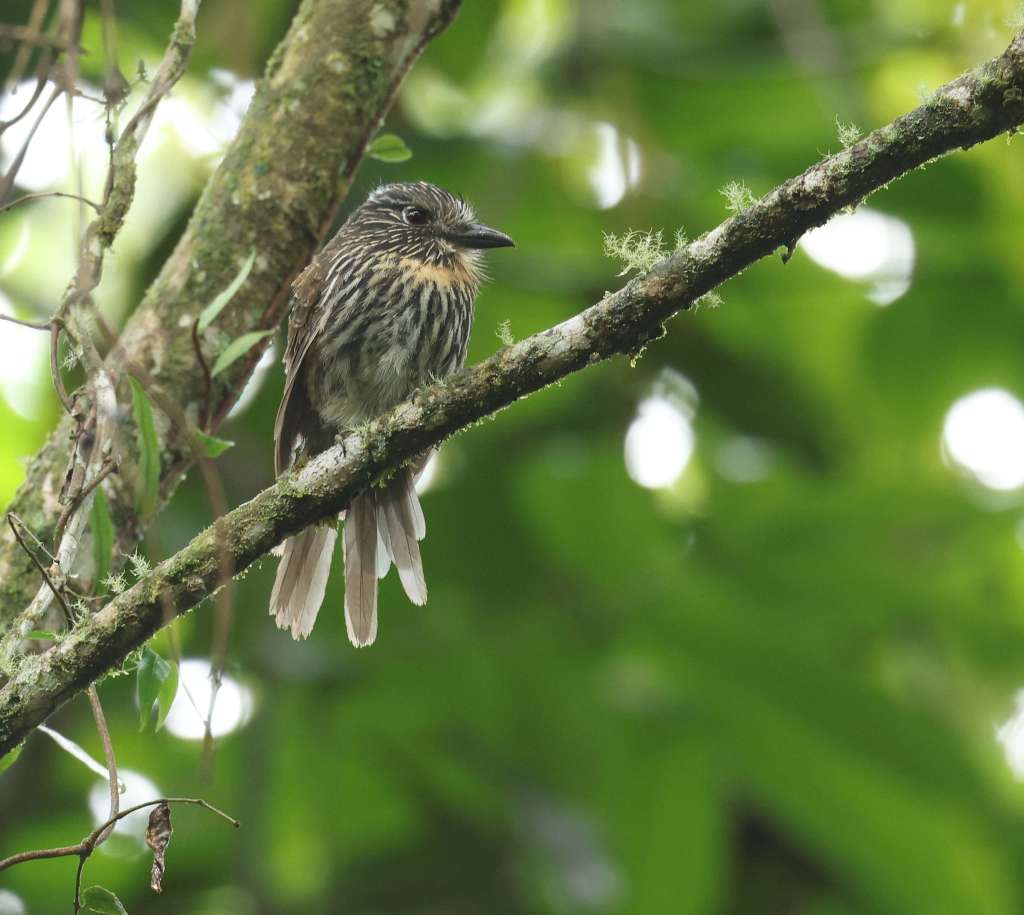
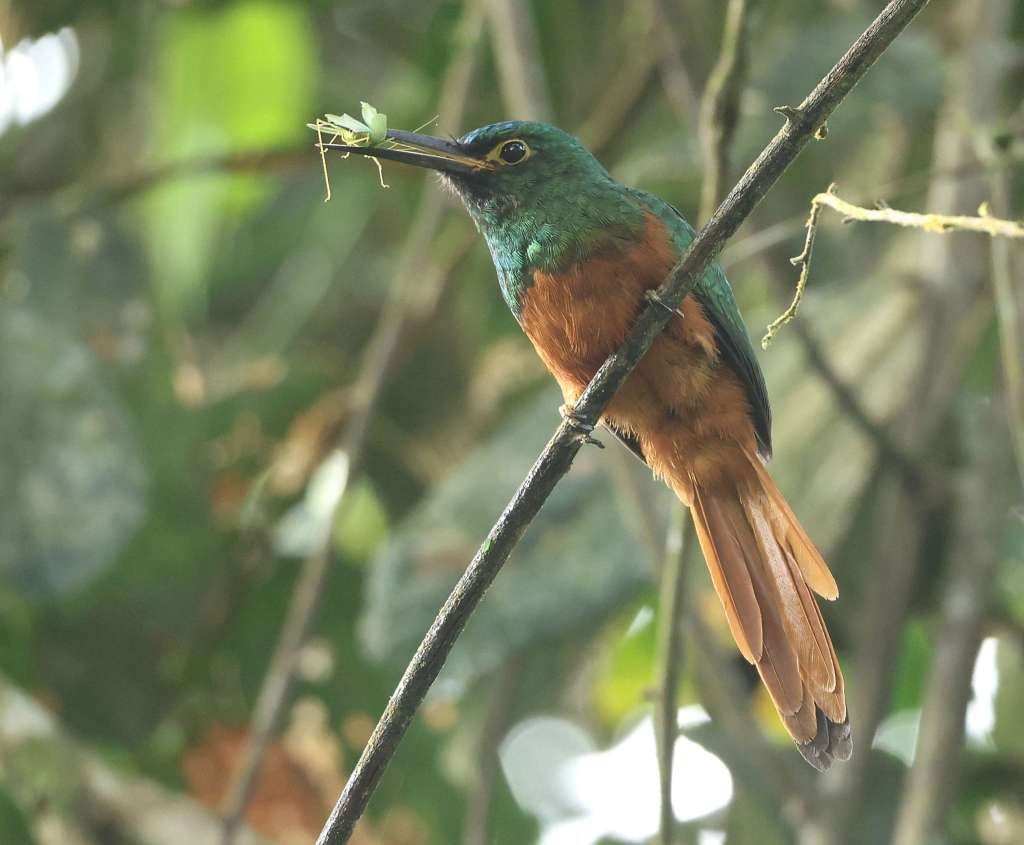
Two wonderful species that come to mind from the lodge grounds include Coppery-Chested Jacamar, and Black-Streaked Puffbird, which I was happy to get decent photos of, while Black-Faced Dacnis was also a treat to find without getting much of a photo.
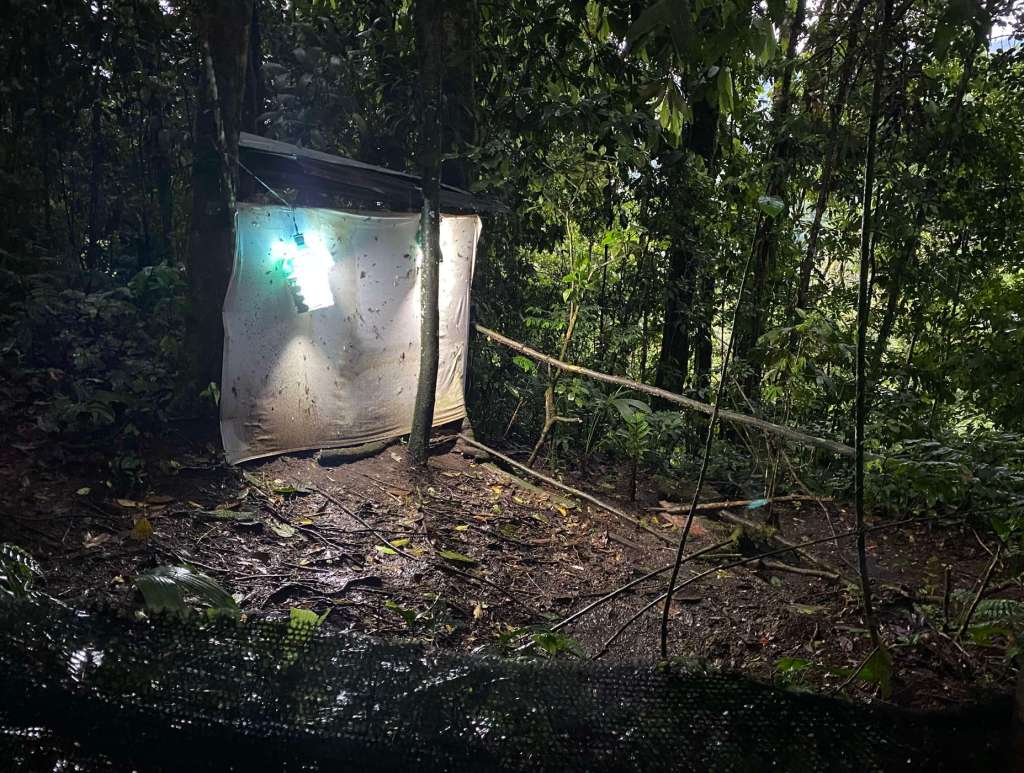
WildSumaco has its own moth light set-up, which is down a short path not far from the lodge. There’s a shelter here in case it rains (oh, and it will). The insects drawn by the light in turn attract birds and it’s especially worth visiting in the early morning, though it is quite dark there, making photography a challenge.
Birds at the moth trap include Western Fire-Eye, a black bird with trademark red eyes, Black-Faced Antbird, and the chicken-like Short-Tailed Antthrush. The “Ant-” birds, by the way, are from the Antbird family, of some 230 species, and are named from the 18 species of that group which eat the small invertebrates that are flushed by swarms of army ants.
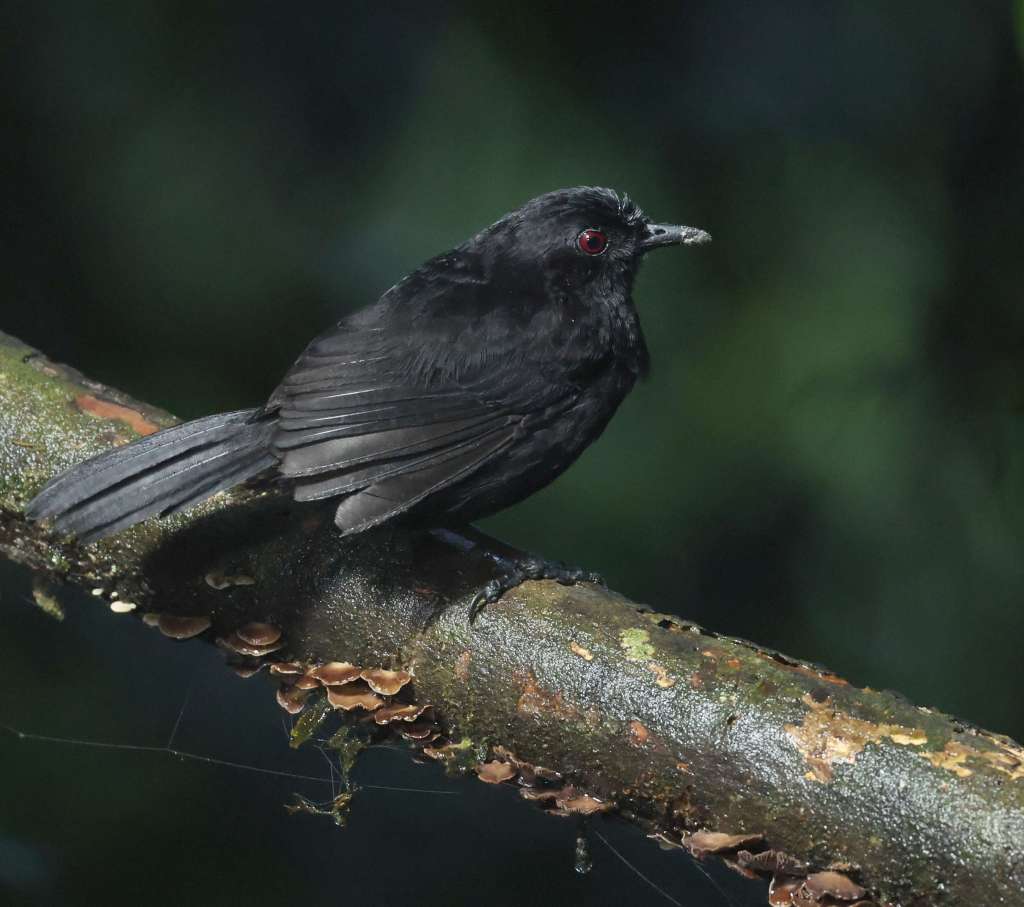
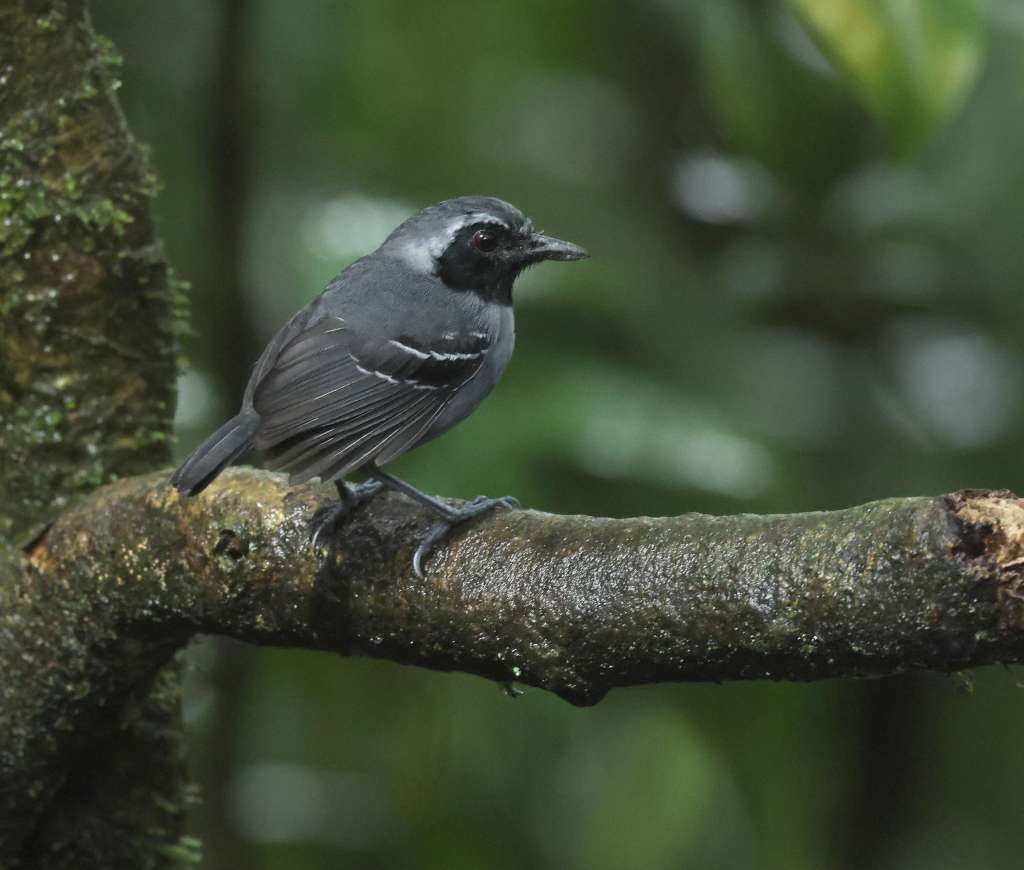
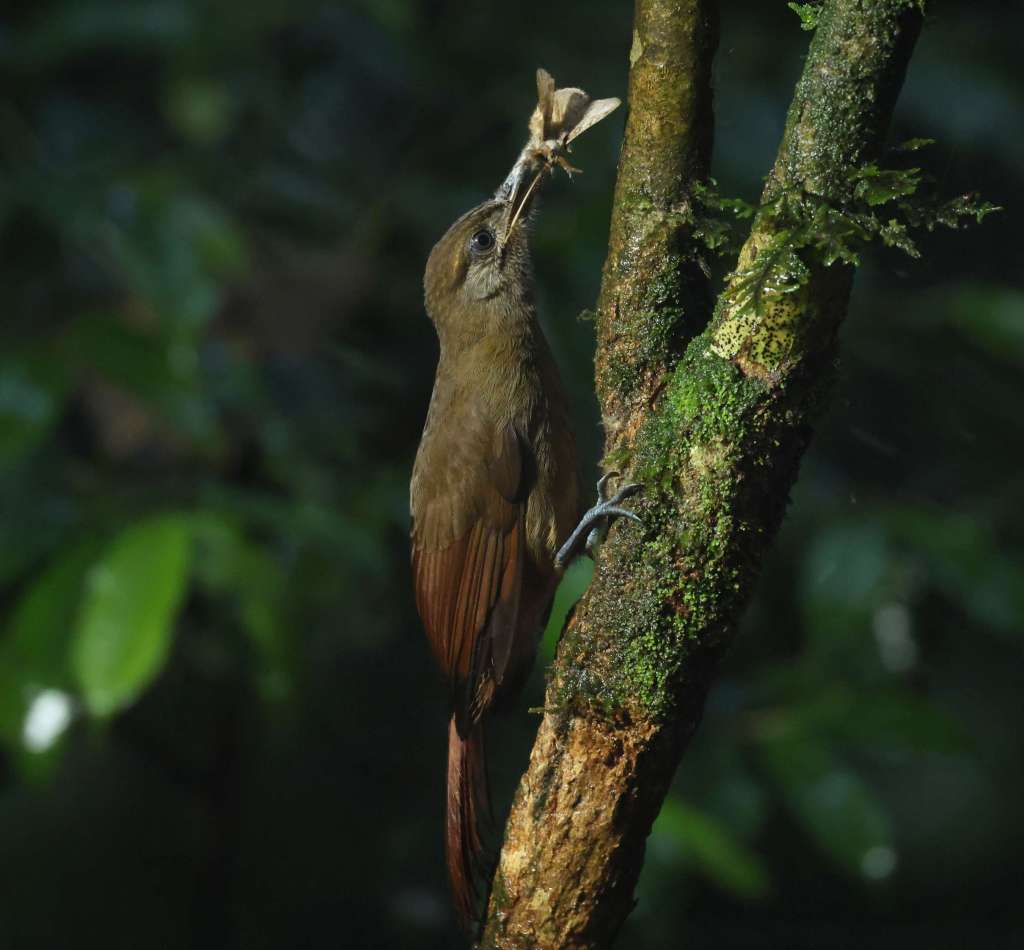
These birds all surreptitiously scurried into the moth light area and snatched moths and bugs. So too the woodcreepers, like the Plain-Brown Woodcreeper, though they hung around a bit more.
On the east side of WildSumaco, across the access road, there is a bit more open land with some grass and more sparse bushes and trees. We had a neat time birding around here a couple of times, in between rain showers, with a sighting of a Fiery-Throated Fruiteater proving a particularly special treat. A Dusky Spinetail lived up to its eBird description as “exceptionally shy” and I contributed my half-obscured photo of it to the existing paltry 31 photos eBird has on record of that species.
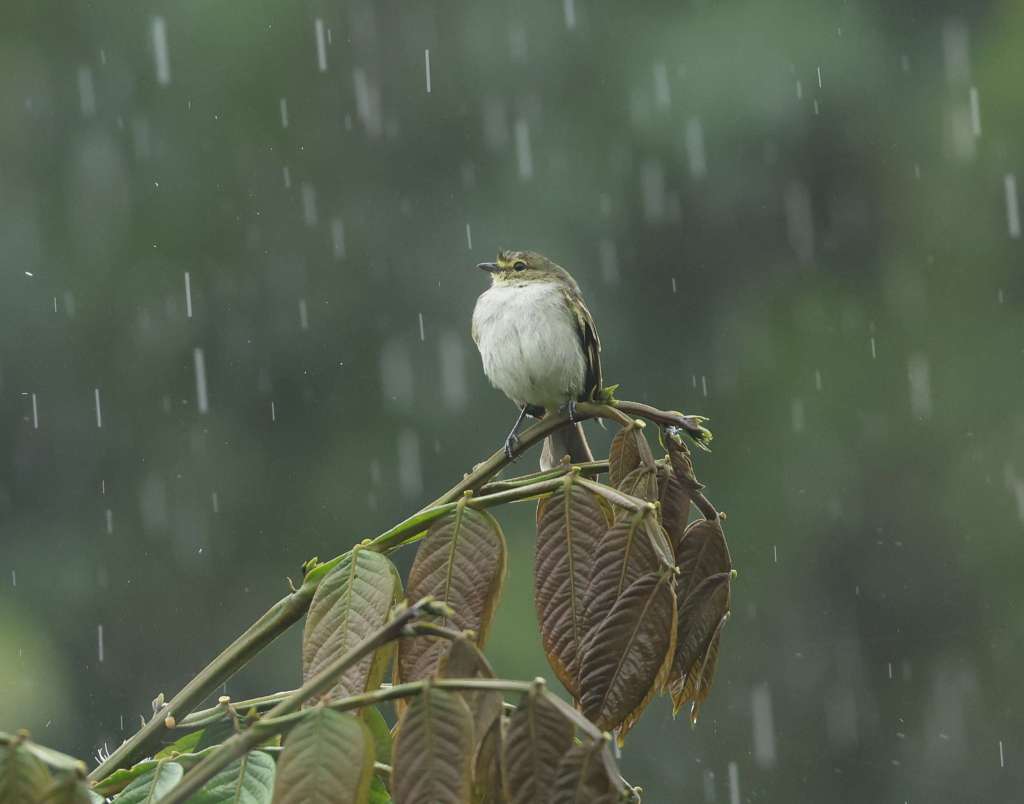
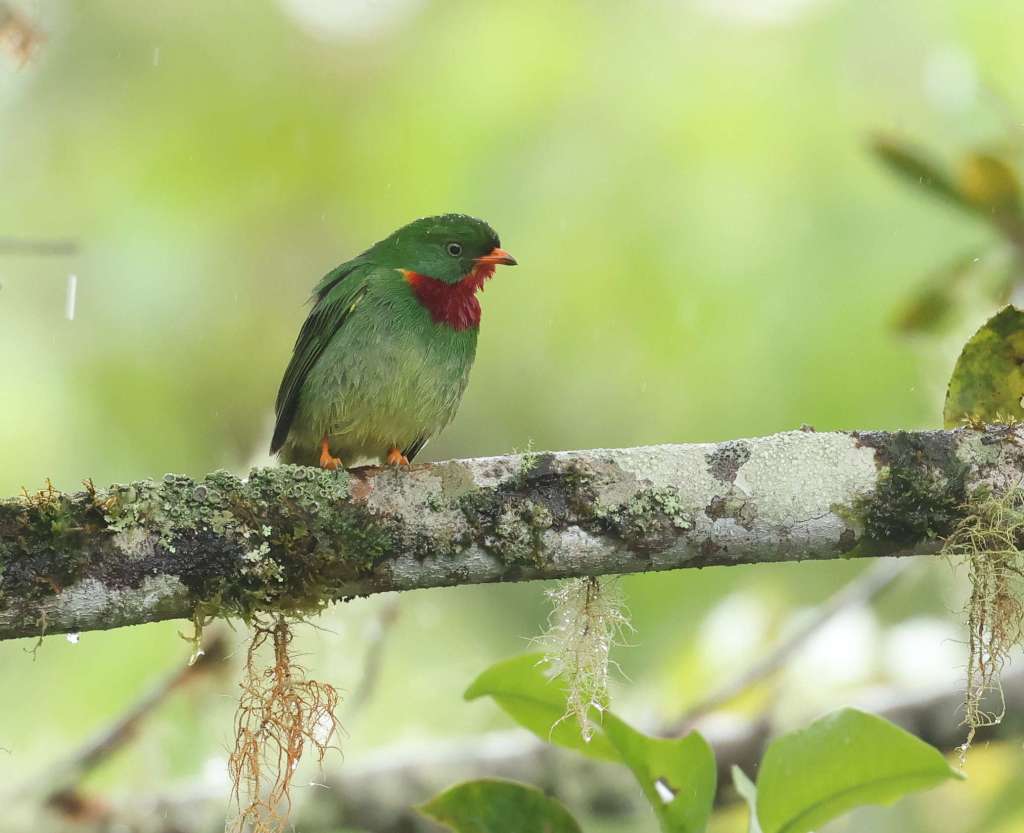
A Montane Foliage-Gleaner was surprisingly acrobatic, sometimes hanging off a branch with one claw to probe clumps of leaves for prey.
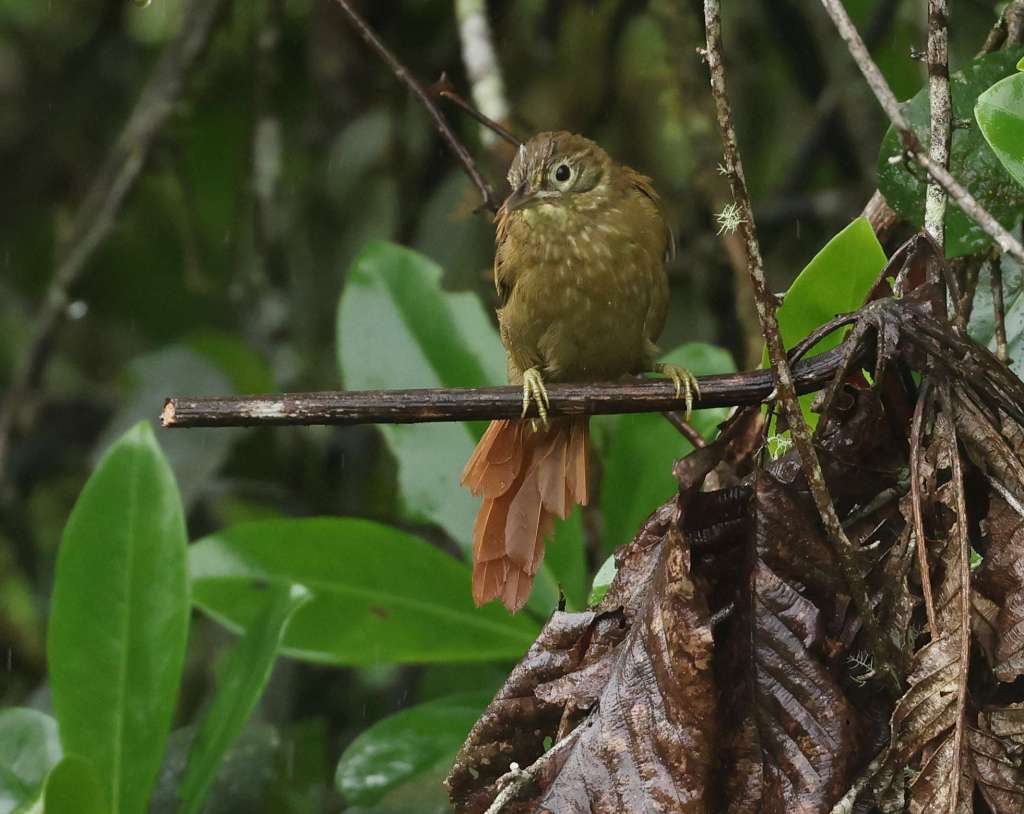
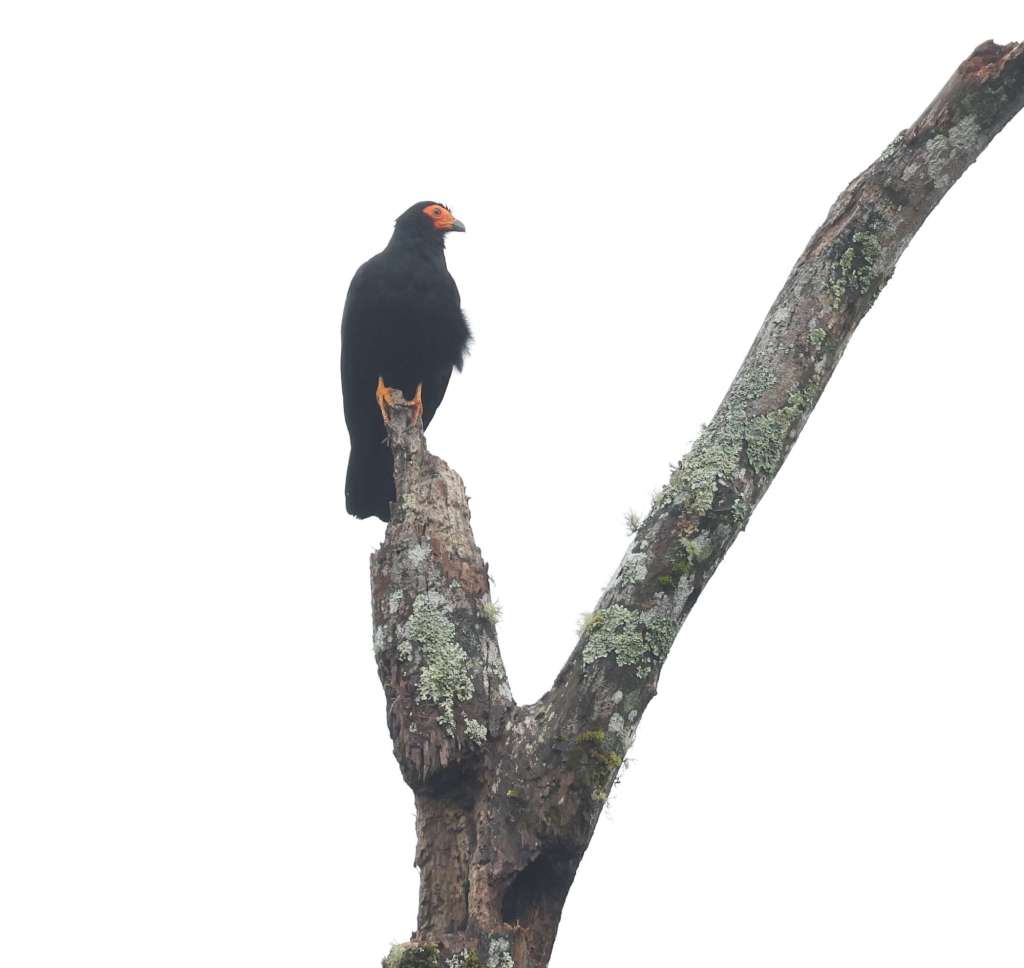
You could bird just around the lodge for days and keep finding new species. In the first full day I was there, I picked up 90 to 100 species, 40 of which were lifers. Crazy (and amazing) stuff.
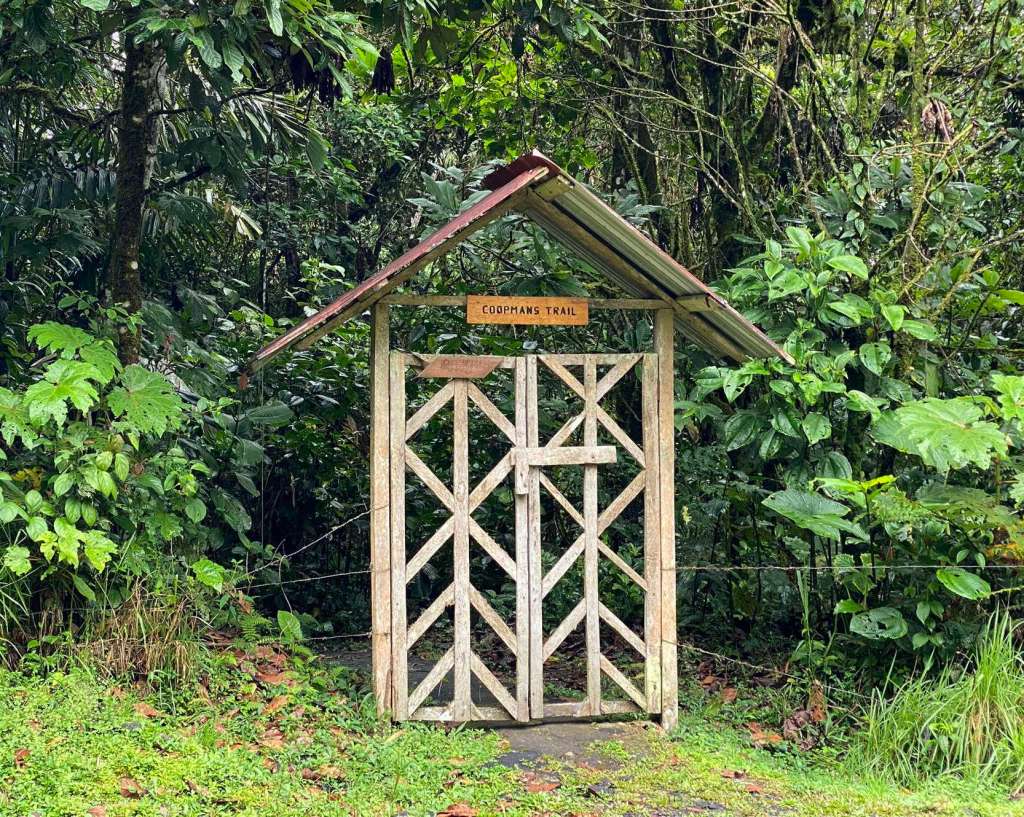
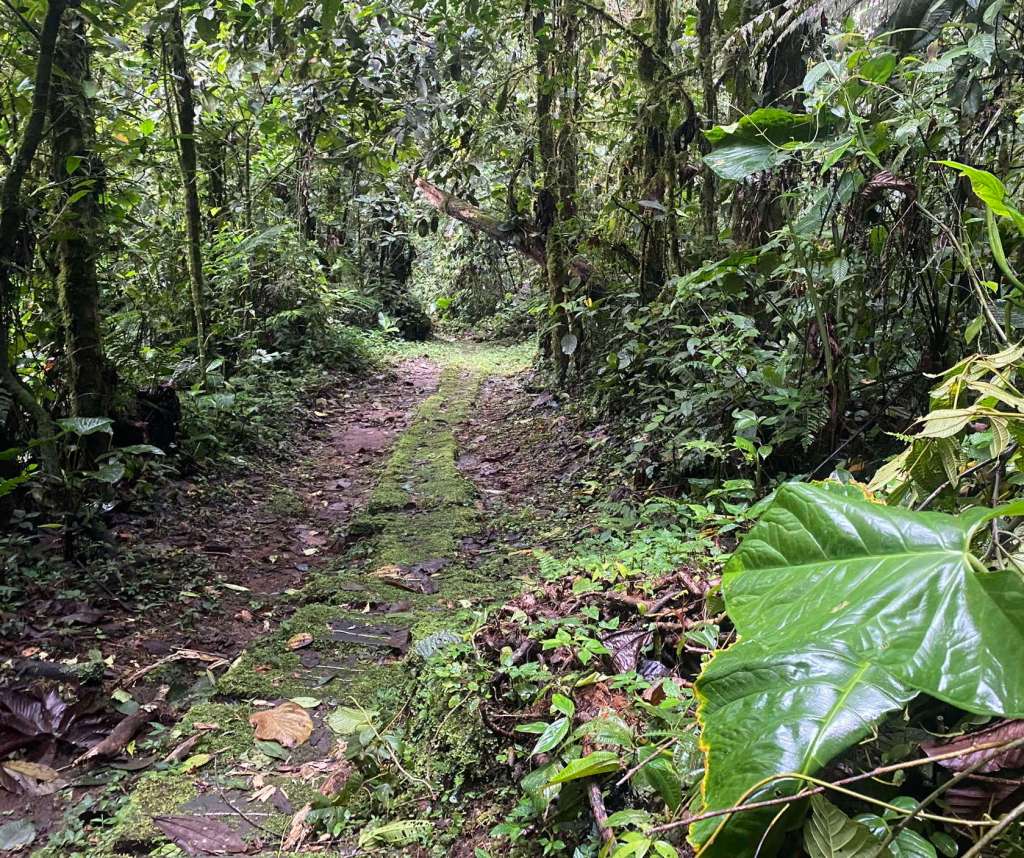
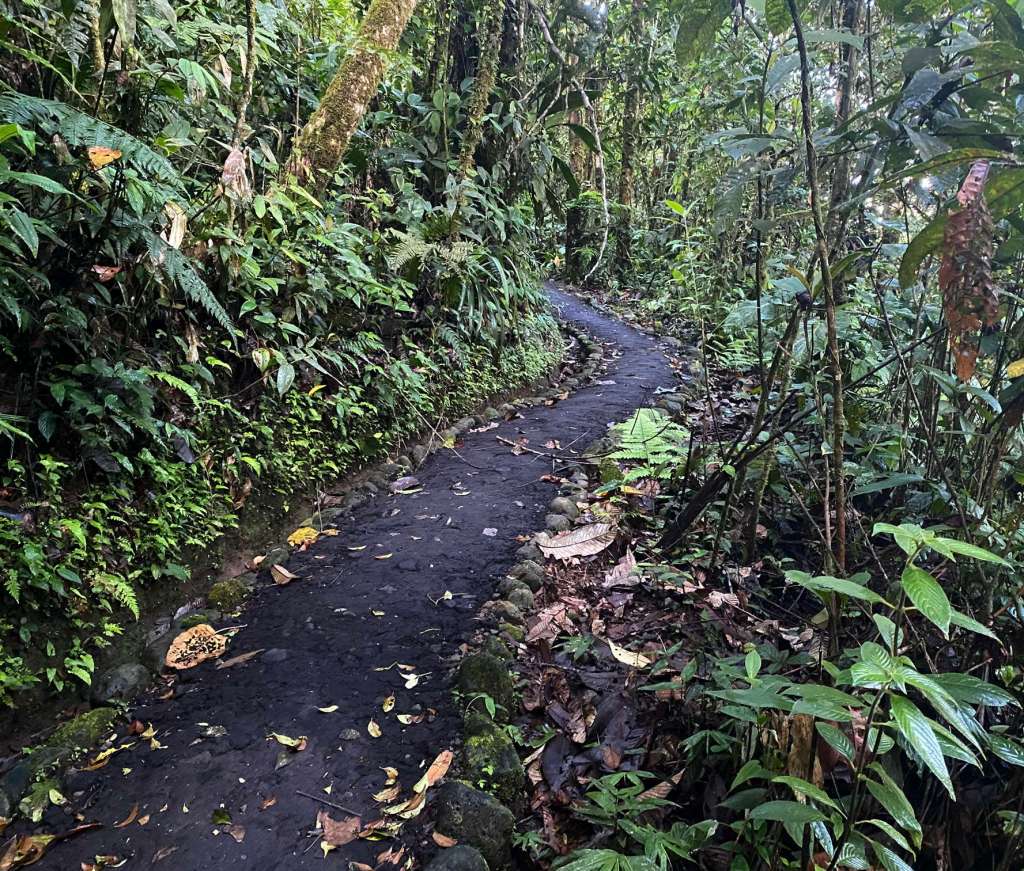
WildSumaco’s formal trail network has several named trails of various length and all wind through heavy rainforest. Birding here will typically be more difficult with uneven ground, dark conditions, and few open areas (think: dense foliage). Each of the four or five trails has a name and a gate/entryway. I couldn’t find a trail map online, but there are paper maps at the lodge to help you find your way.
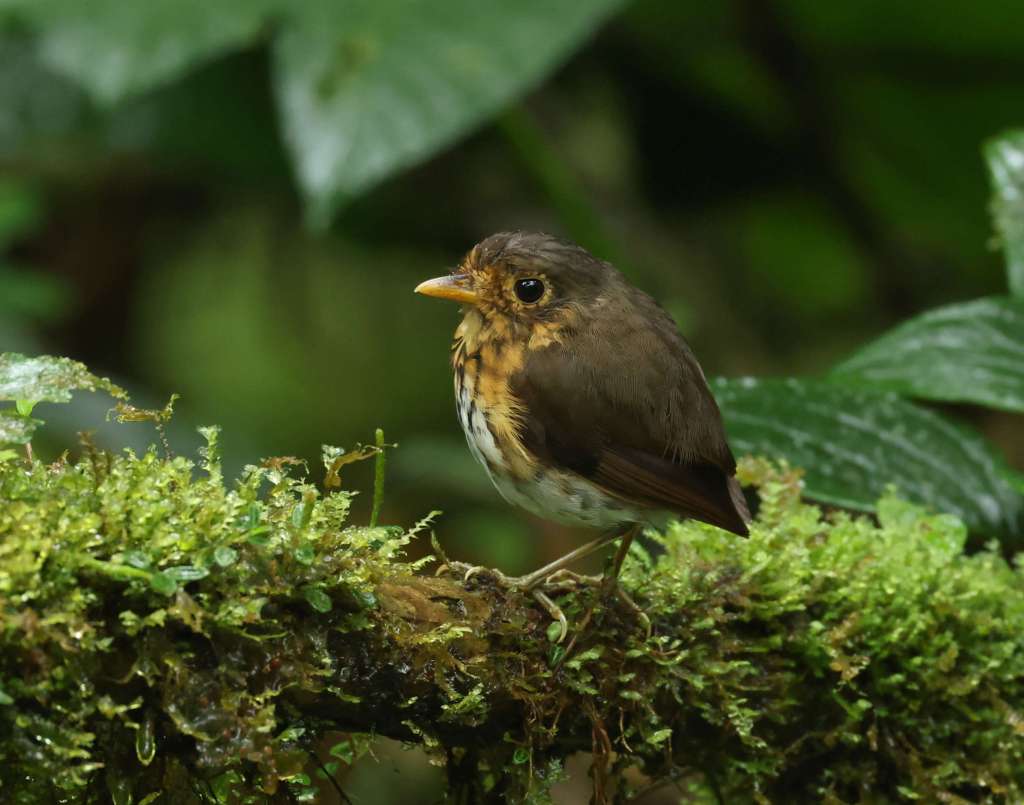
Down one of the trails they feed an Ochre-Breasted Antpitta, a species affectionatey known by birders as the “Shakira bird” for its habit of “wiggling its hips”… though in reality it’s a little more subtle than that, more of a “regular slow twitching of shoulders”. It’s still endearing, and super-cute in shape with big plaintive eyes.
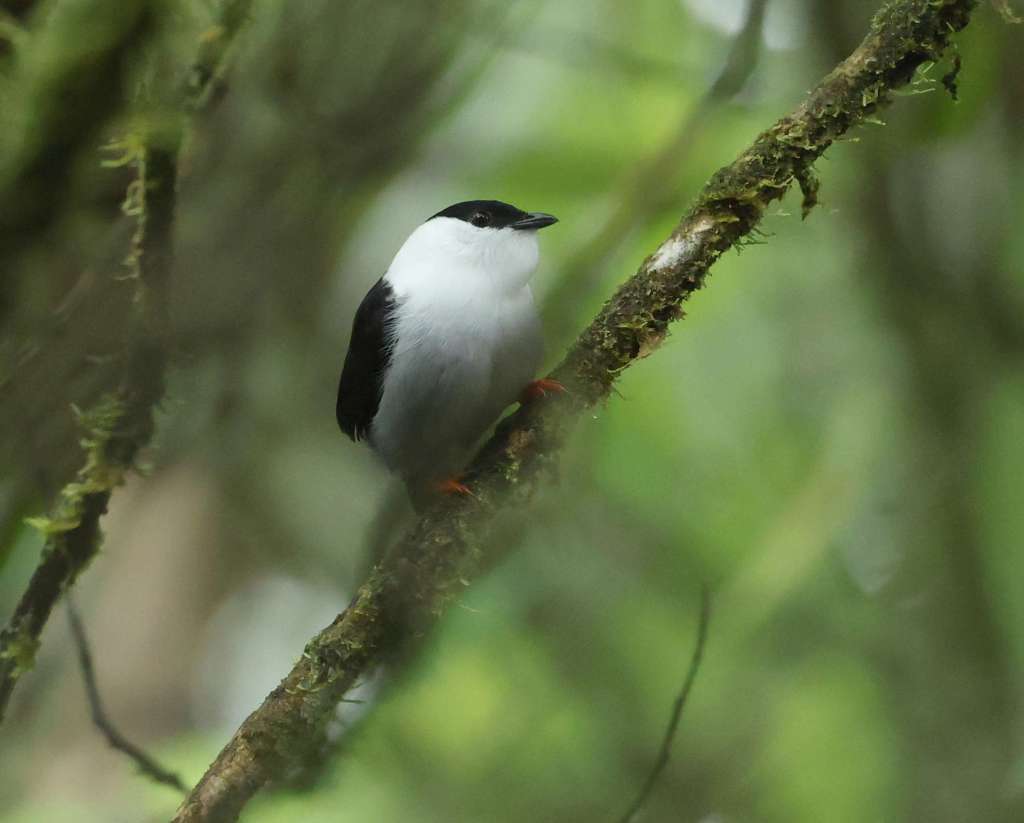
Super-observant followers of this blog may have noticed that I haven’t mentioned any Manakins in my posts, not even from Costa Rica. The reason for this is simple – much as I have desired to, I’d never actually seen any up until my time at WildSumaco!
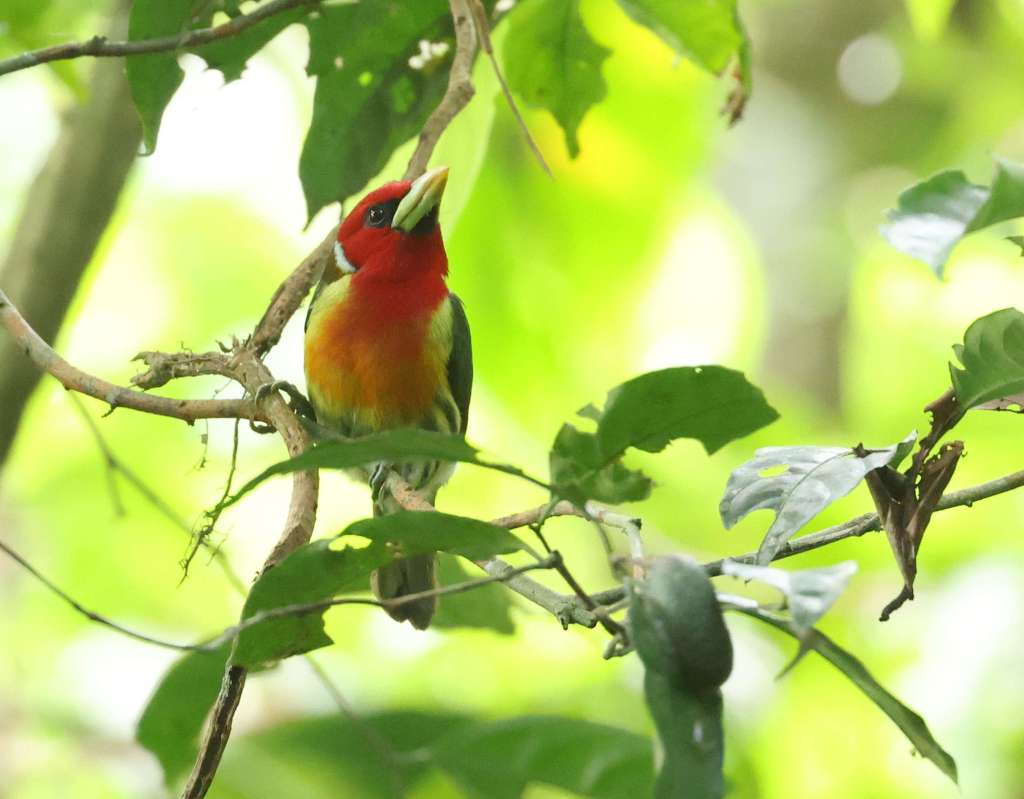
Well, that all changed with good looks at White-Crowned Manakin, White-Bearded Manakin, and Blue-Rumped Manakin across the six days on various jungle trails. And charming wee birds they are too, instant favourites as new species often become… Red-Headed Barbet being another prime example of that phenomenon.
One of the longest trails (I forget the name of it) has a few spots where you can see out across the lower-lying countryside, and perhaps spy a raptor or two. We were even extra lucky to find a Double-Toothed Kite at rest not too distantly.
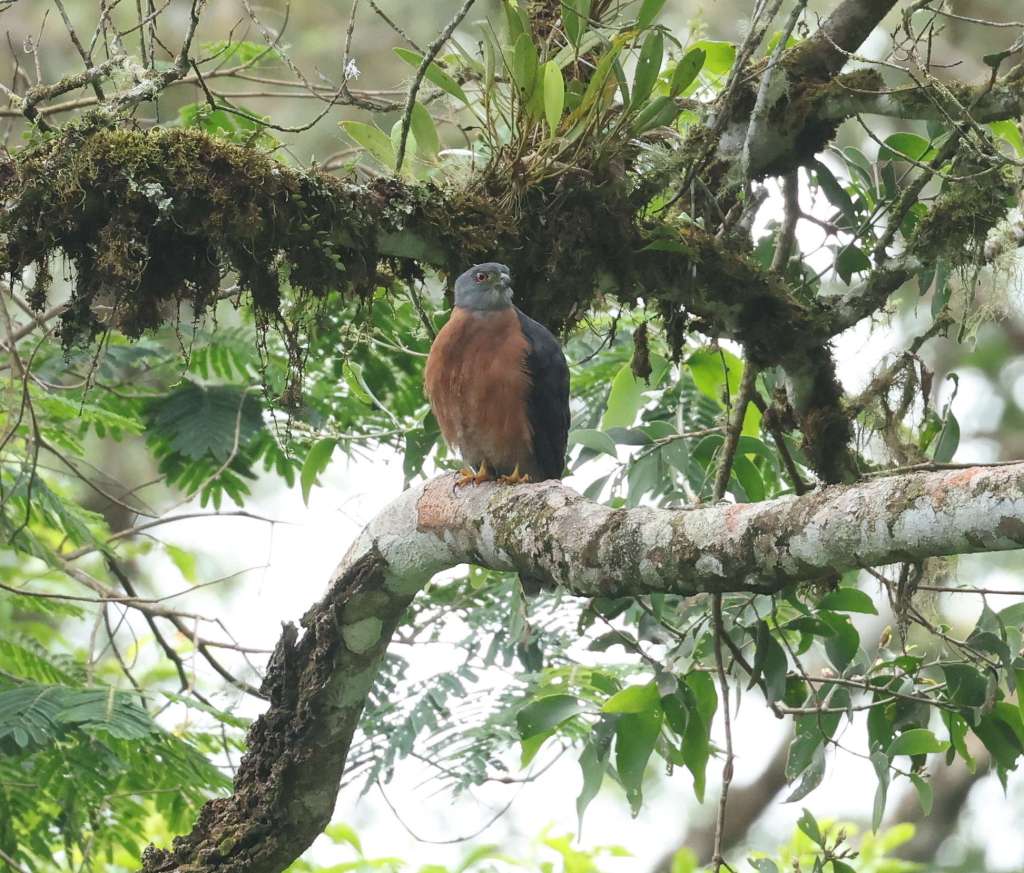
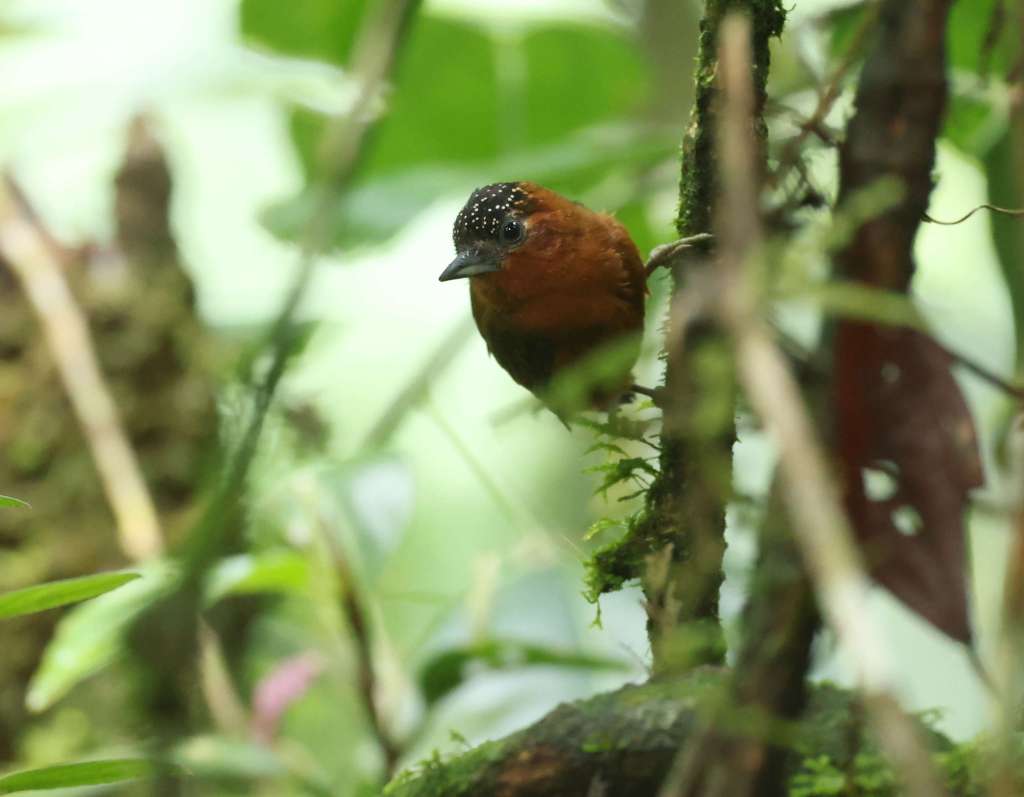
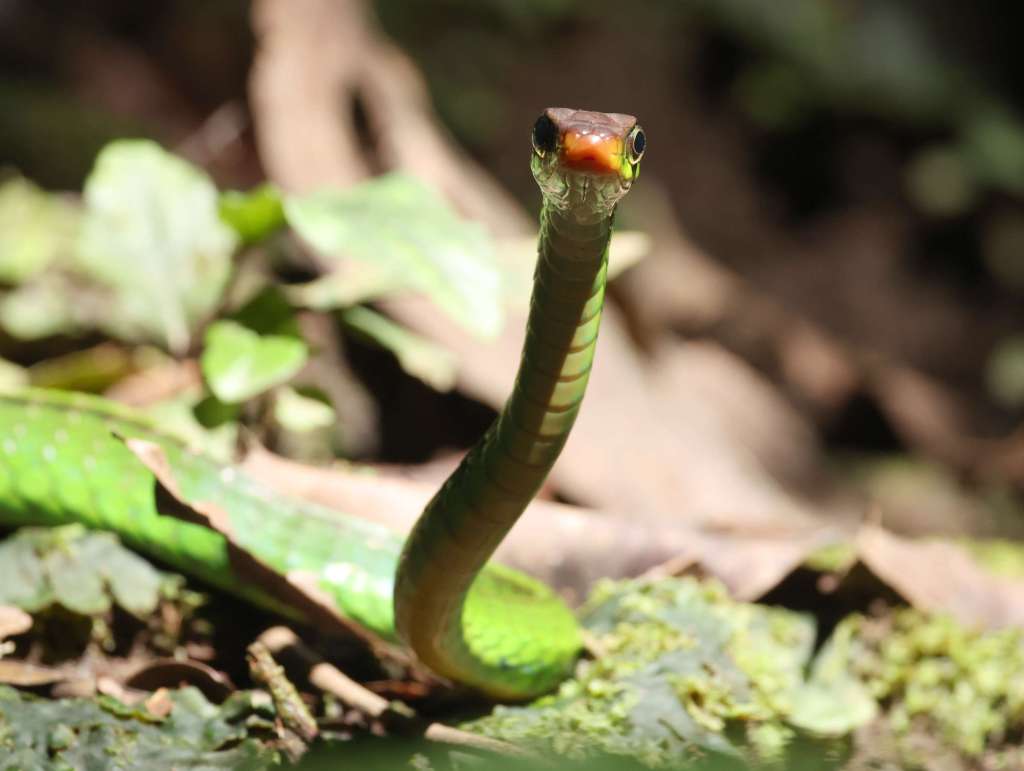
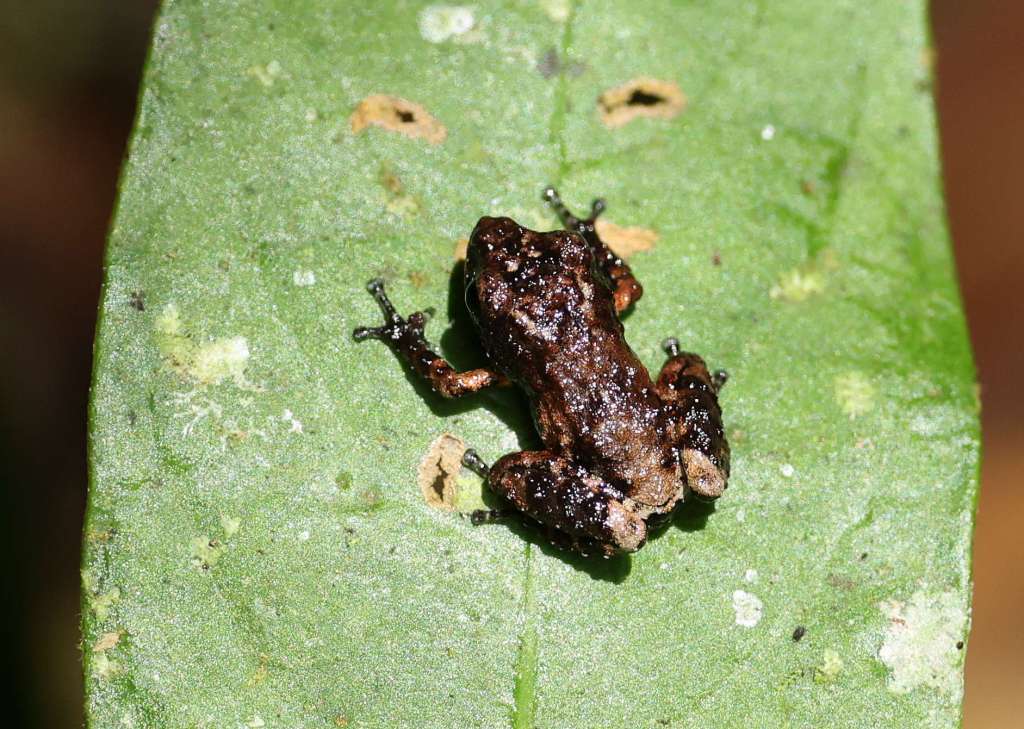
We saw Black-Mantled Tamarins again deep on the trail, as well as a few tiny rainforest frogs, and a green snake right on the path, which adamantly refused to budge. We eventually had to throw a stick at it to convince it to slither off so we could pass!
The Upper Roads
To the north of WildSumaco, the road continues a short distance to a small village and birding around here proved quite productive with some more open-country species to look for.
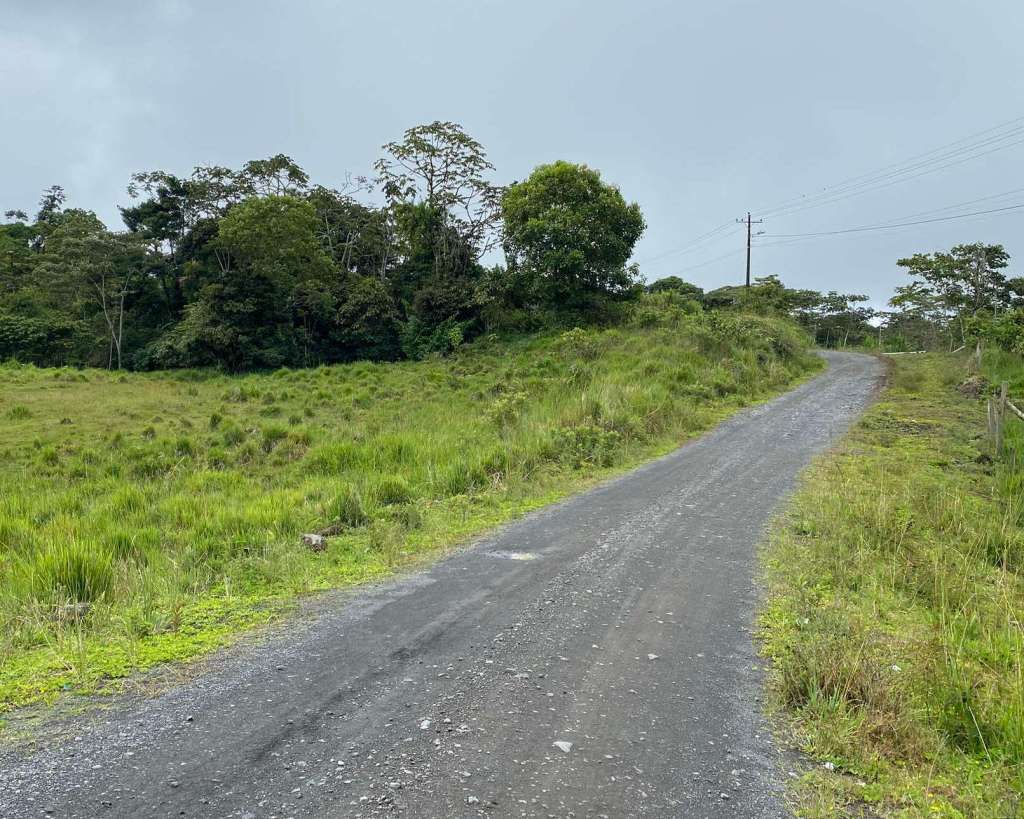
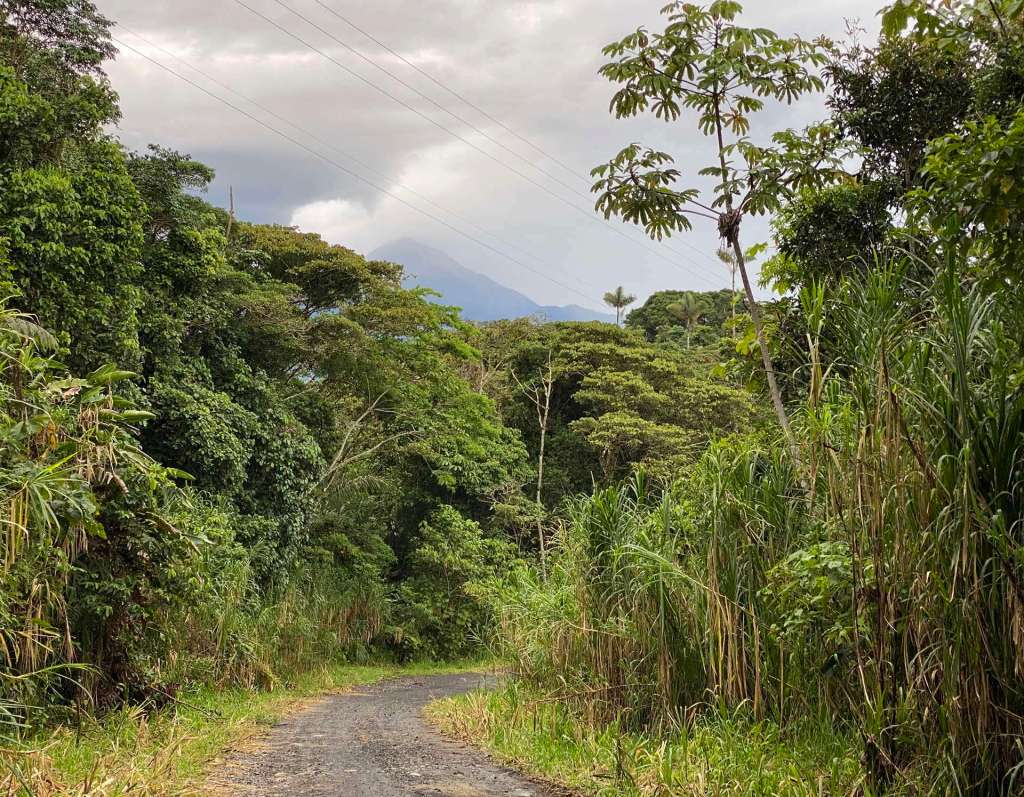
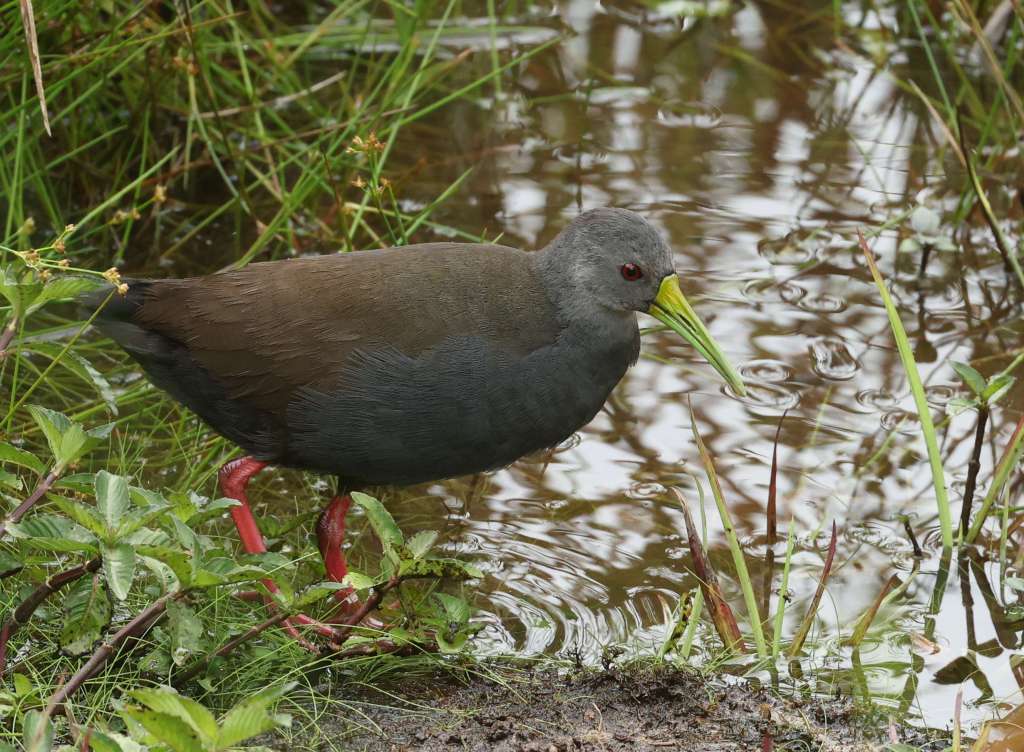
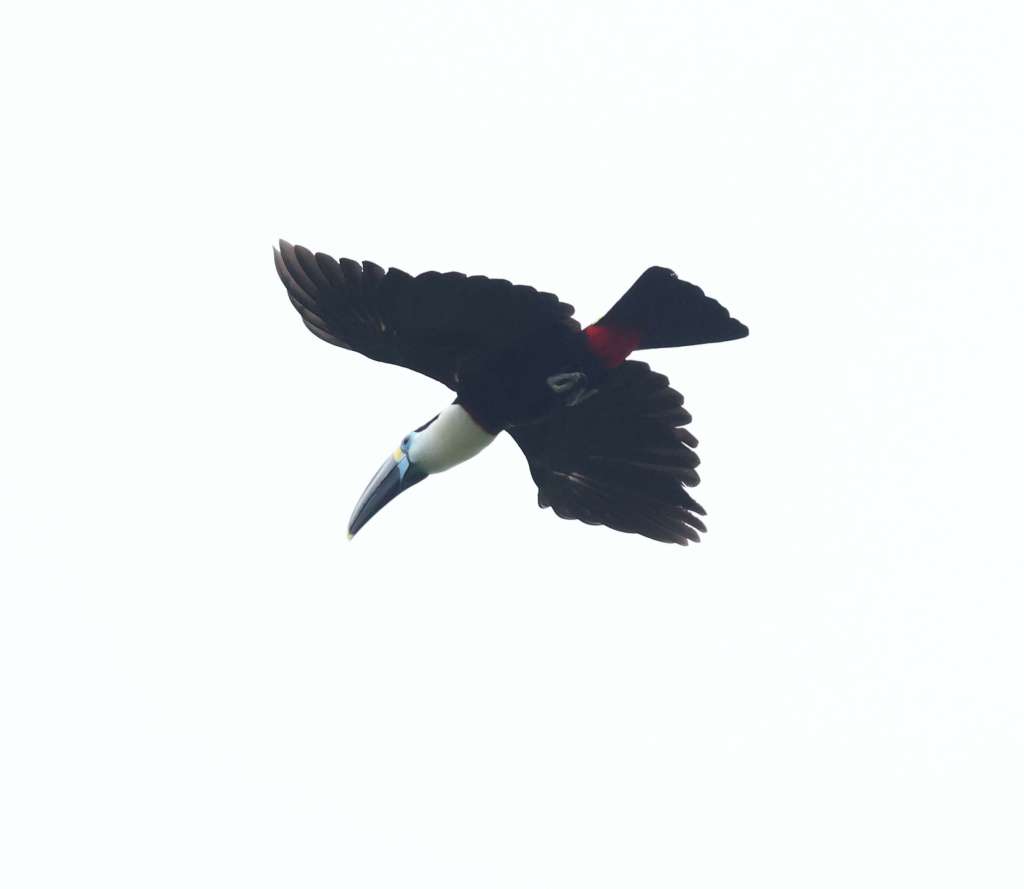
In one swampy side of the road we saw a Blackish Rail, reminding me of Plumbeous Rails I had seen in Peru, while within and on the fringes of the open fields there were several tanager species, like White-Lined Tanager, Paradise Tanager, Yellow-Bellied Tanager, and of course the ever-present Blue-Grey Tanager. Keeping a lookout for flyovers, we were rewarded with a once-only view of a Channel-Billed Toucan.
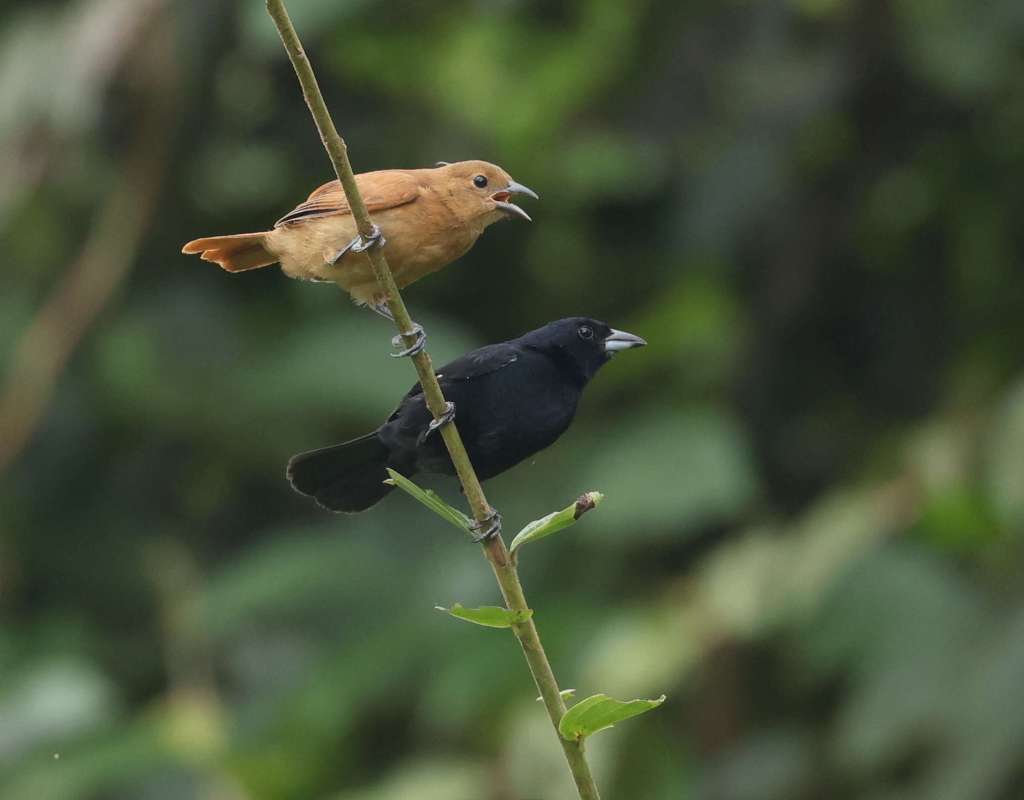
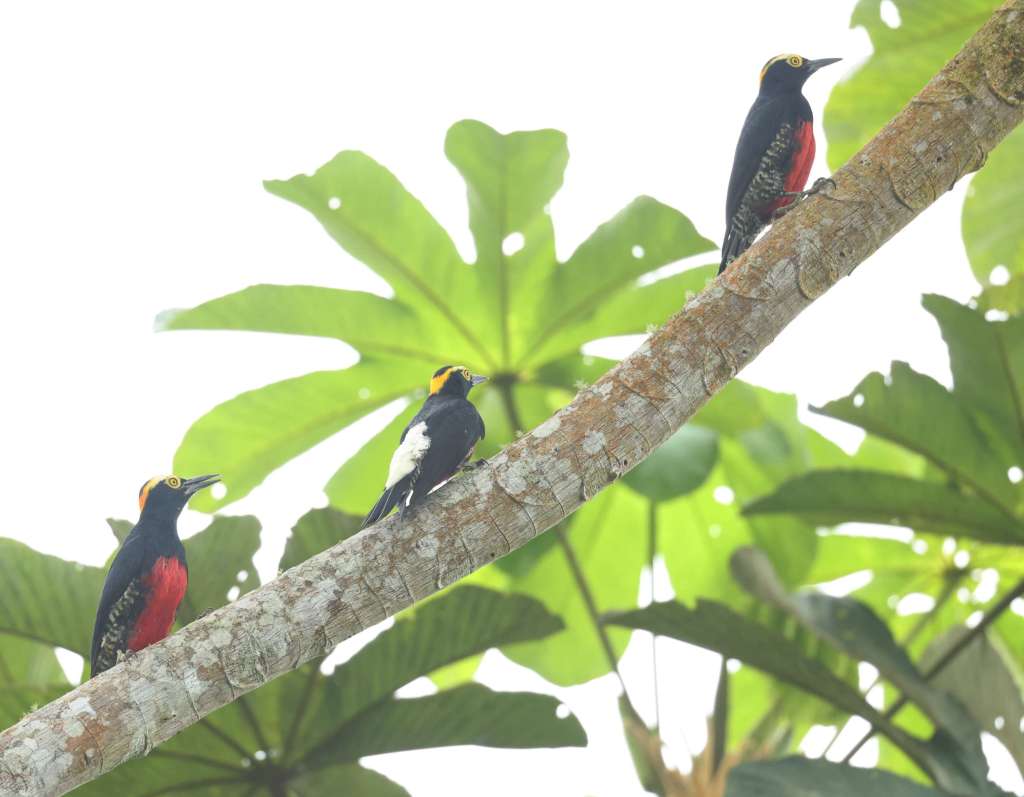
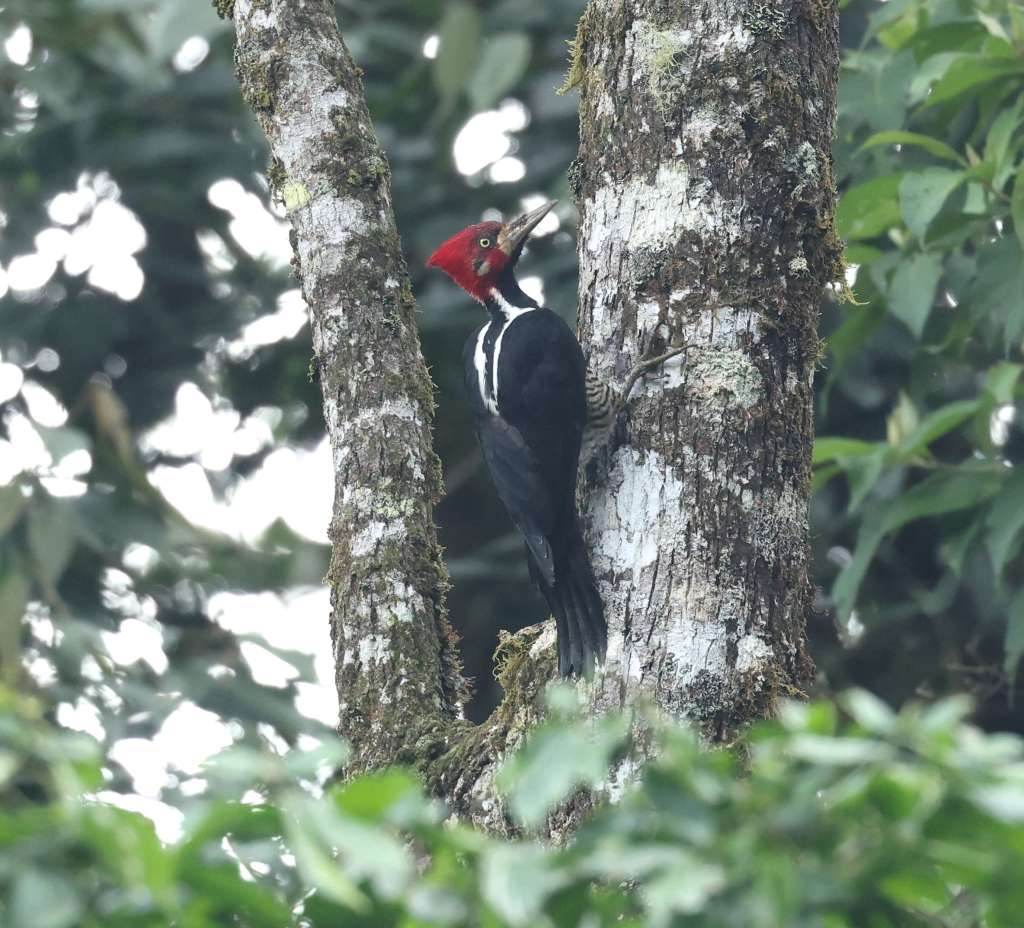
Let’s also not forget about woodpeckers: we saw several species of them mostly in the surrounding region rather than at the lodge grounds proper; my favourite were the Yellow-Tufted Woodpeckers, who seemed to relish chittering away sociably with their mates.
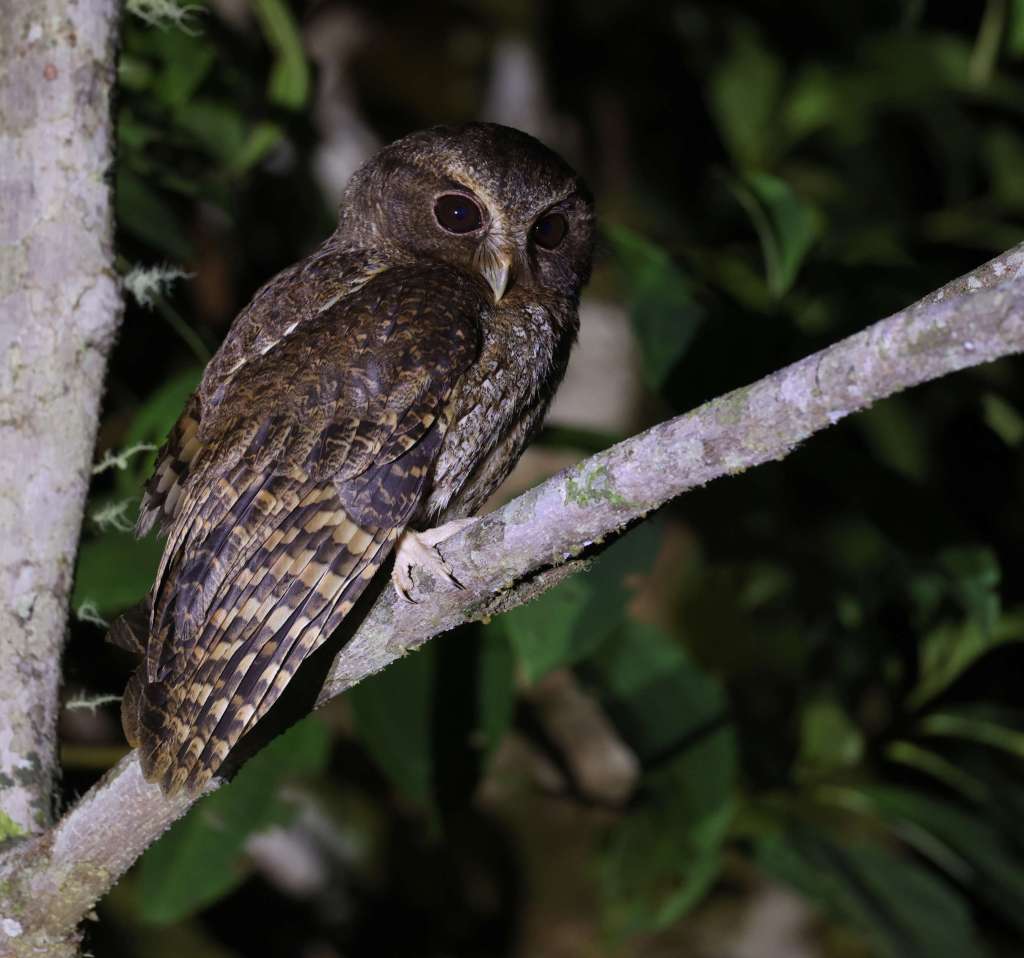
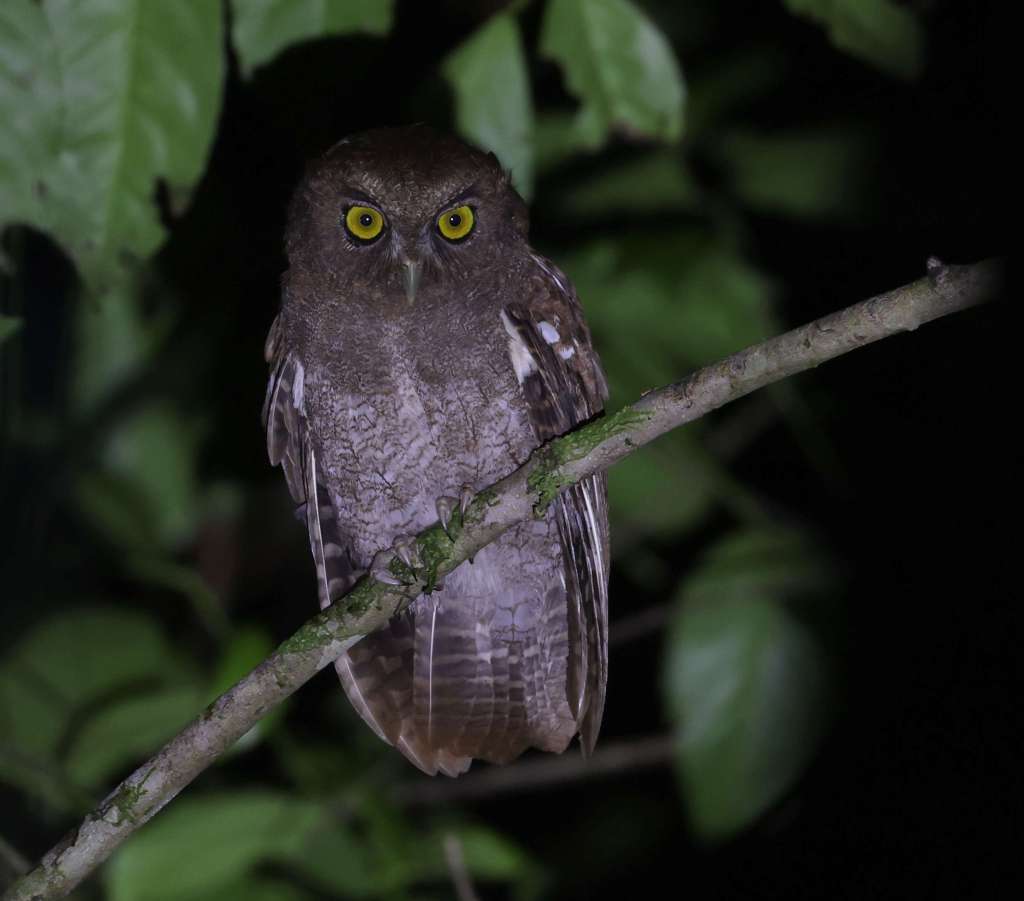
We searched for owls a couple of times around dusk especially on the roads near this upper village; our first outing was a bust and featured a local stray dog barking at us furiously for the crime of just standing on the side of the road. However, another try the next night produced two Screech-Owls in close succession: a Rufescent Screech Owl which flew silently and ominously straight above our heads to alight in a nearby tree; and a Foothill Screech-Owl whose call we had to follow in some dark trees not far off the road. It was my first time seeing any Screech-Owls, so to get two at once (the encounters were barely ten minutes apart) was like all your birding dreams coming true.
Lower Roads and Sumaco village area
The lower road – the one leading to WildSumaco Lodge from the main road – has its own eBird hotspot with an incredibly respectable 557 species. Roadside birding is very much the order of the day here (keeping a lookout in the skies for raptors and macaws, too, of course). The unsealed and kinda sketchy-at-times road is probably busier than I would have expected, with various trucks and motorbikes among the traffic.
Now, we all have our favourite birds that, for one reason or another, we feel a special affinity for. I have several… several dozen really… but near the top of my all-time favourites list is the Magpie Tanager. I don’t even know why I like it so much, maybe it’s something about the shape, the striking, simple colours and the intense, serious yellow eye.
So having seen this bird only distantly once or twice, it was with true joy that I came upon a much closer one on the WildSumaco entry road and was able to admire its characteristics at length.
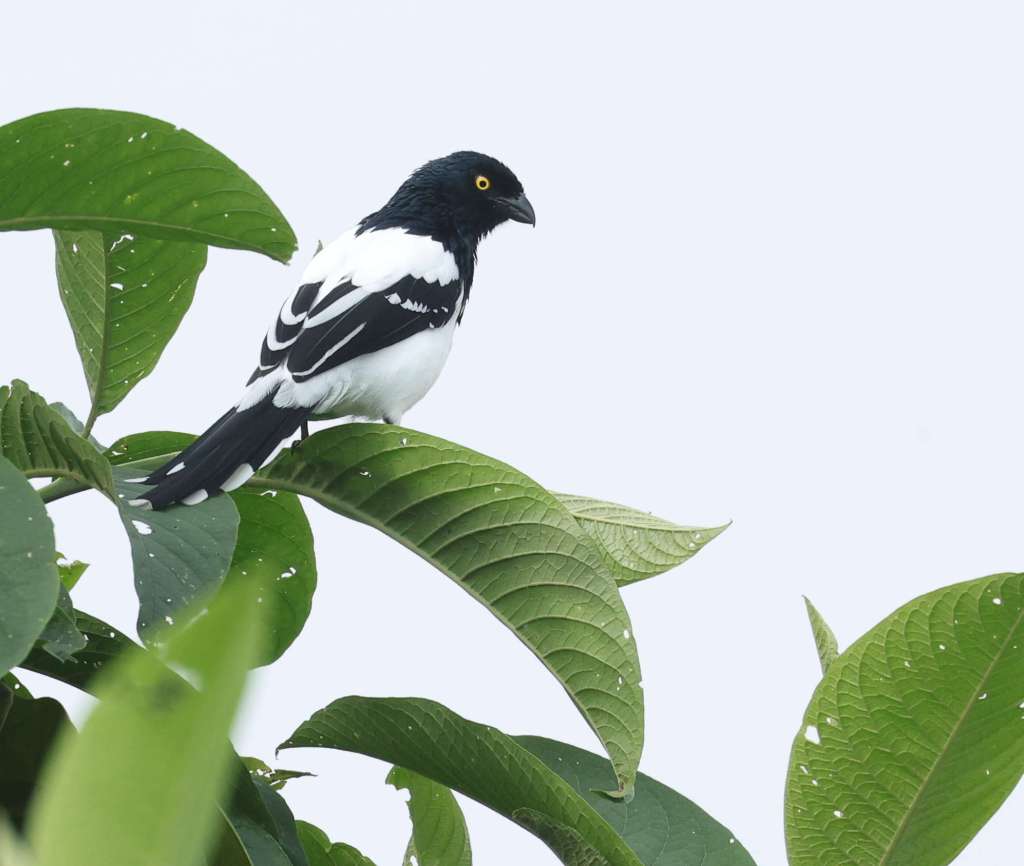
Ah Magpie Tanager, you are reason enough to visit Ecuador.
In the grasses and bushes along the road we found Chestnut-Bellied Seedeaters, Chestnut-Bellied Seed-Finch, and Black-and-White Seedeaters. Being a pretty big fan of finches, this was awesome. Blue-Black Grassquit and Bananaquit were two small birds that also regularly featured amongst the bounty of finches and finch-like birds.
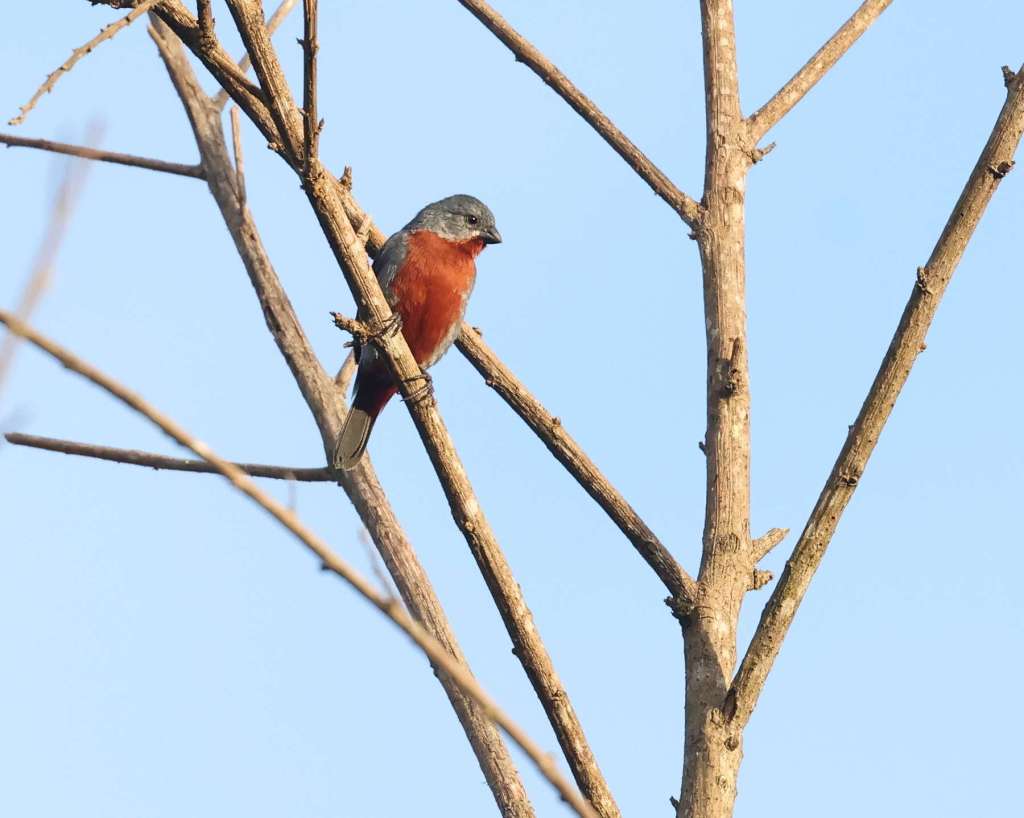
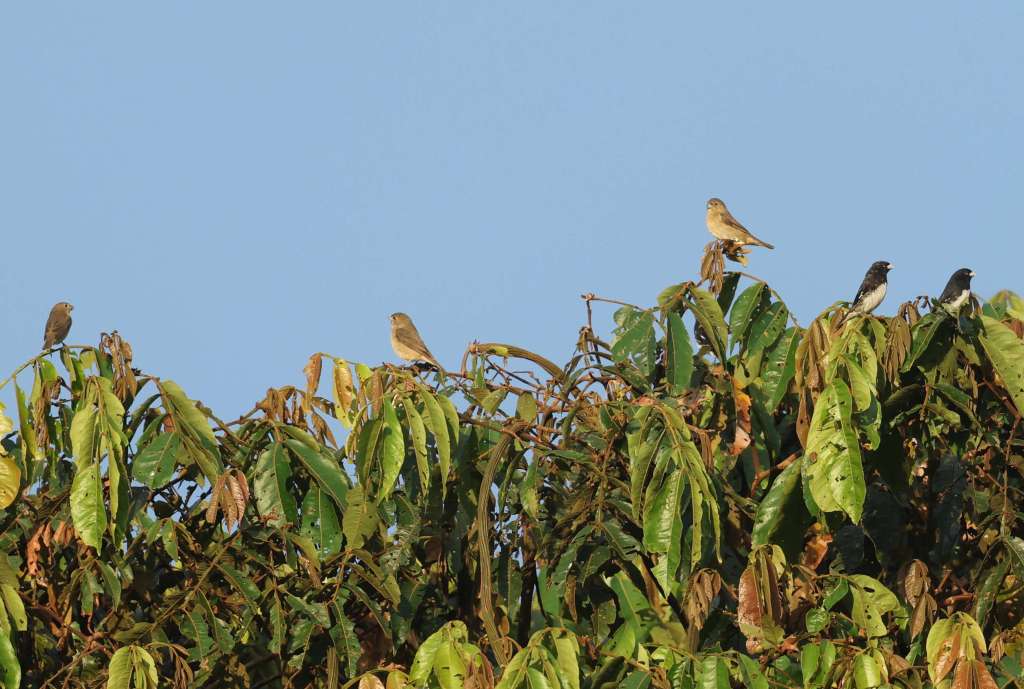
I was also happy to see a Lined Antshrike a lot better than I had previously, while another thrill was provided by at least half a dozen Swallow-Tailed Gulls spectacularly soaring over the countryside.
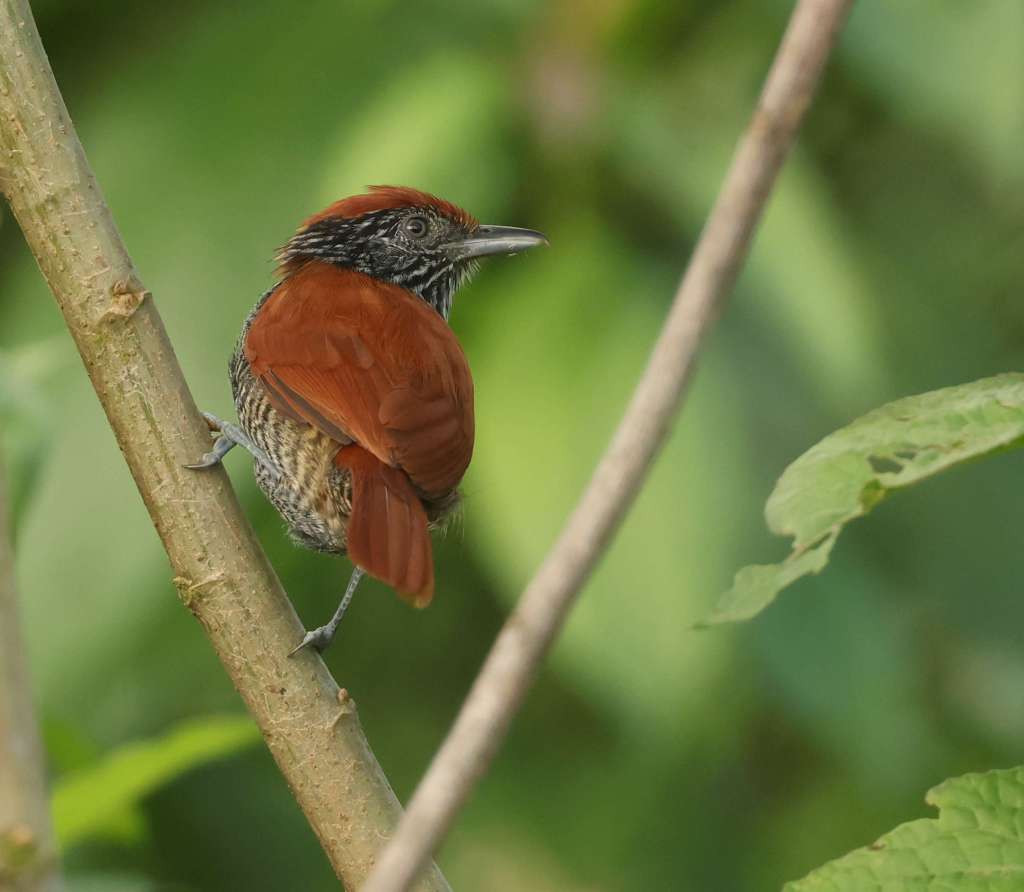
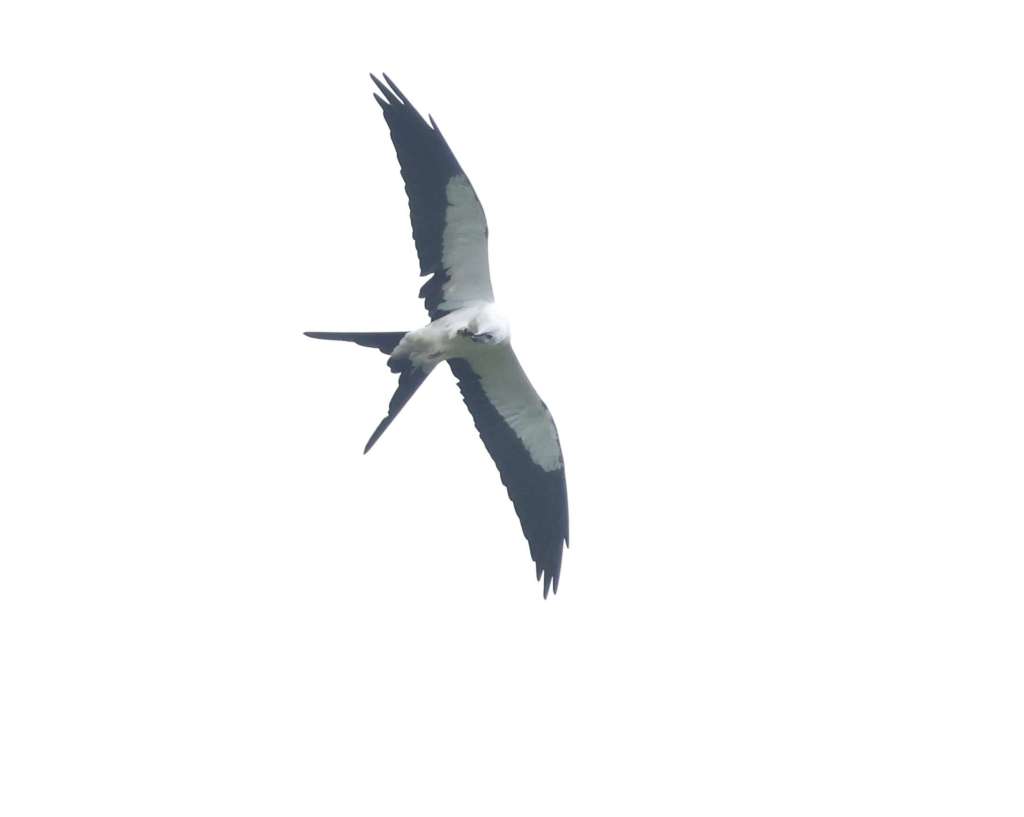
We even saw a Bat Falcon perched on a very exposed tree, however it was extremely far away and only just identifiable.
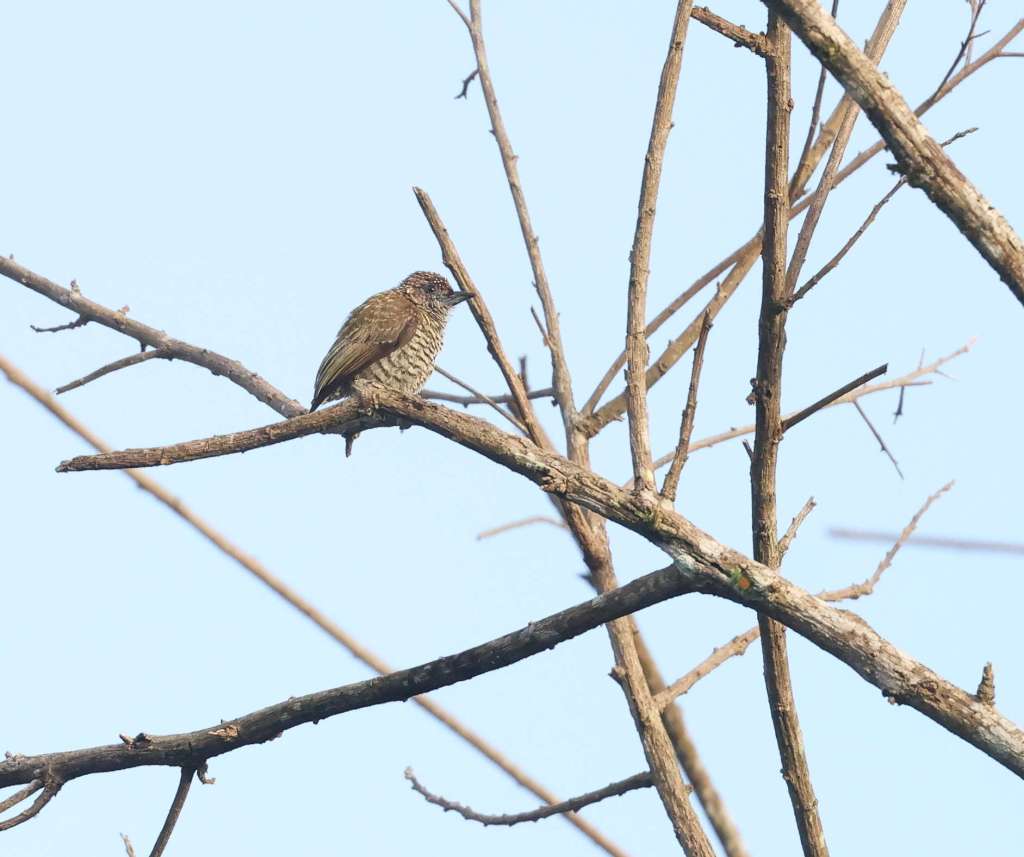
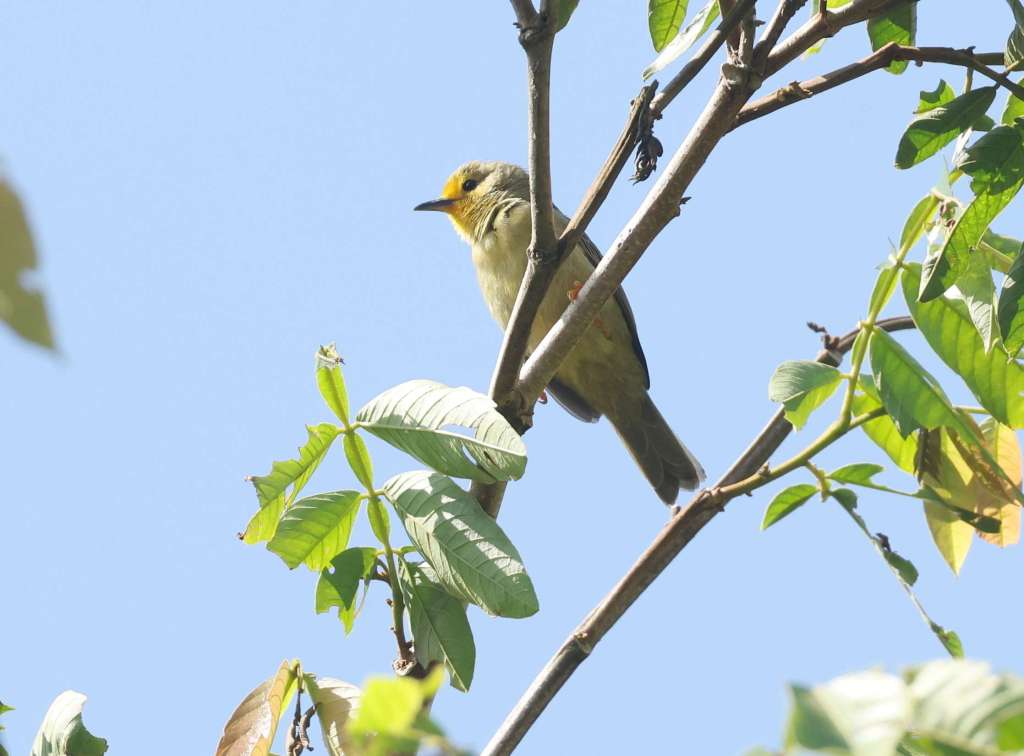
Although we birded on several of the roads around Sumaco village, unfortunately I did not seem to take any context photos there. It’s your mostly standard Ecuadorian rural area though, I suppose. And even though we weren’t birding that particular area in prime early morning birding hours, I still felt like we found many cool species. In fact it’s hard to summarise because one minute you’re looking at some weird new woodpecker you’ve never seen before, the next you’re spotting something called a Lafresnaye’s Piculet in a distant tree. I dislike blog posts that devolve into a long laundry-list of species, but gosh, look at this: Giant Cowbird, White-Thighed Swallow, Golden-Winged Tody-Flycatcher, Green-Backed Becard, Black Antbird, Ornate Stipplethroat, Masked Tityra, Orange-Fronted Plushcrown… my advice is, if you’re going to WildSumaco, be sure to have plenty of time to find birds in the surrounding region!
Amarun Pakcha
Barely less than a kilometre in from Sumaco village is another high-quality hotspot, formally called Amarun Pakcha Cultural Research and forest conservation on eBird. This location was especially dear to our local guide who has helped nurture it as a community initiative for many years, so we were able to get the inside scoop on how it was going and even to meet all the staff (who fed us delicious empanadas!) They have simple accommodation and activities involving the local Kichwa culture to experience.
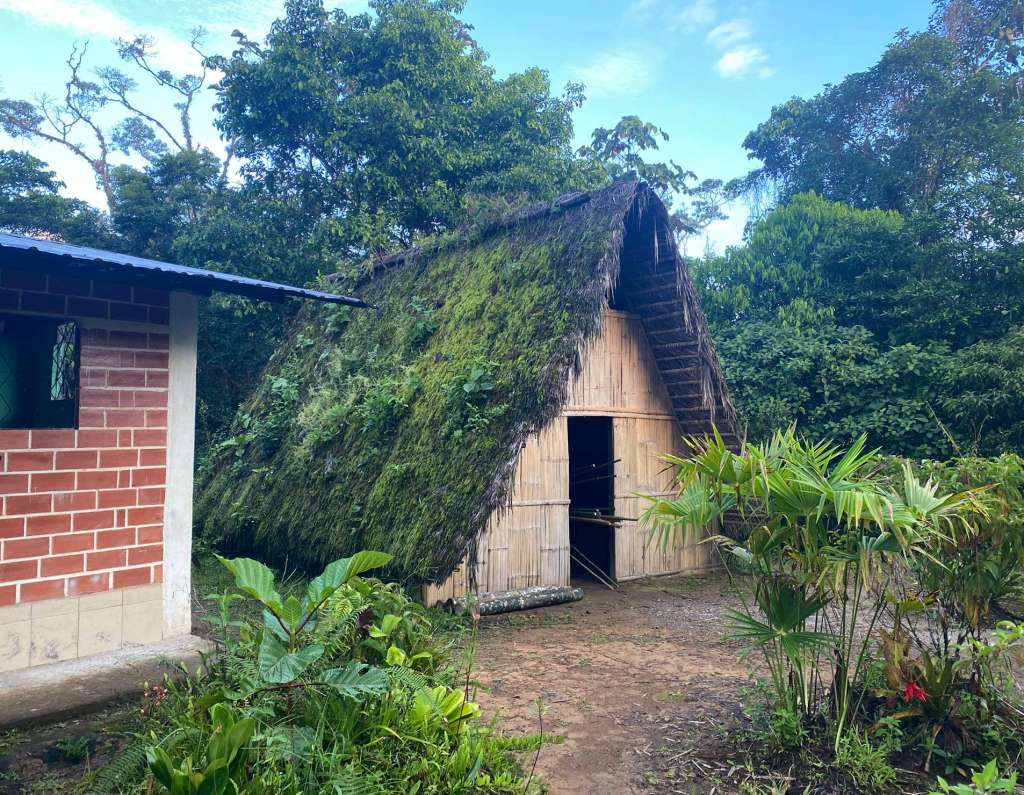
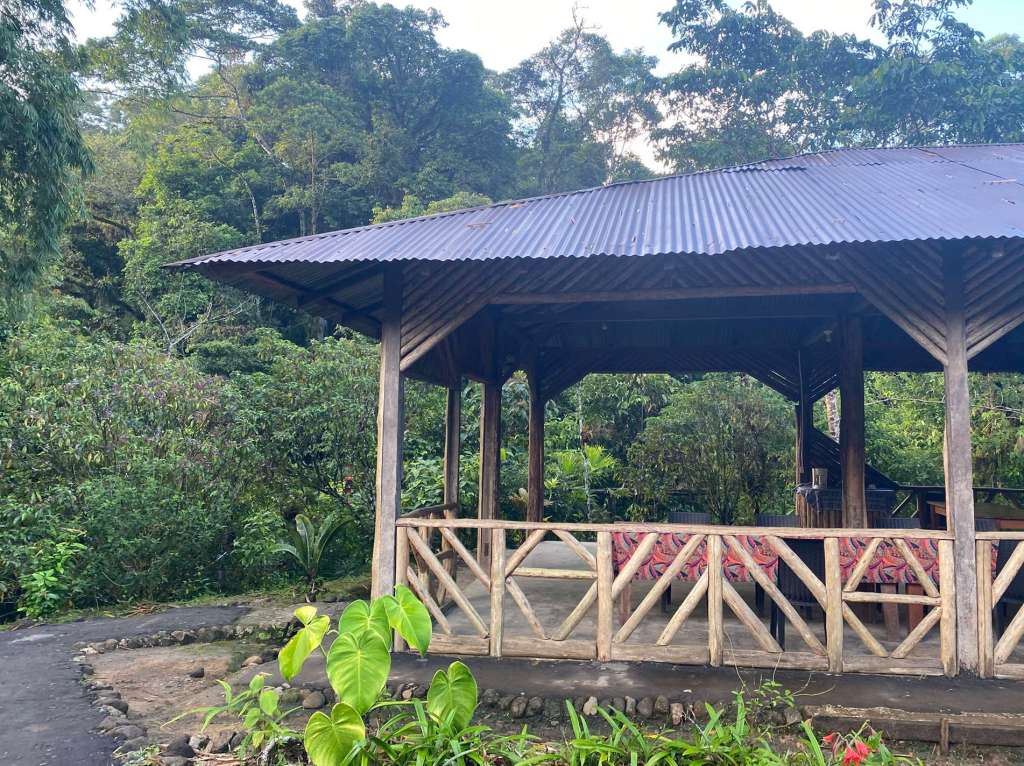
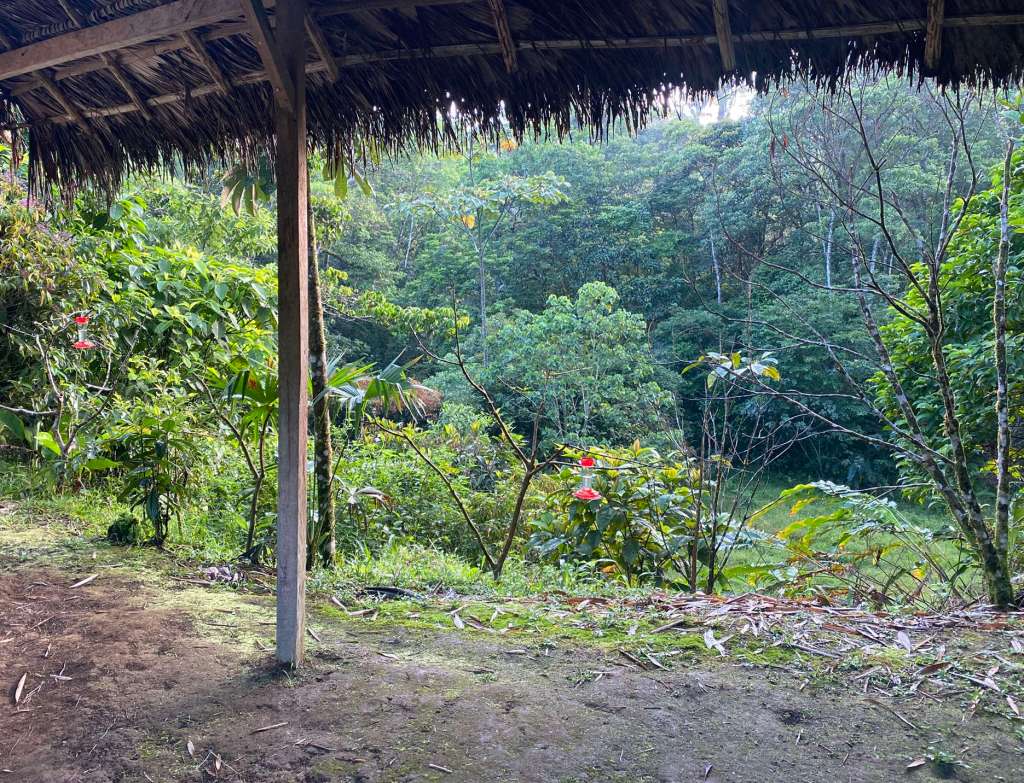
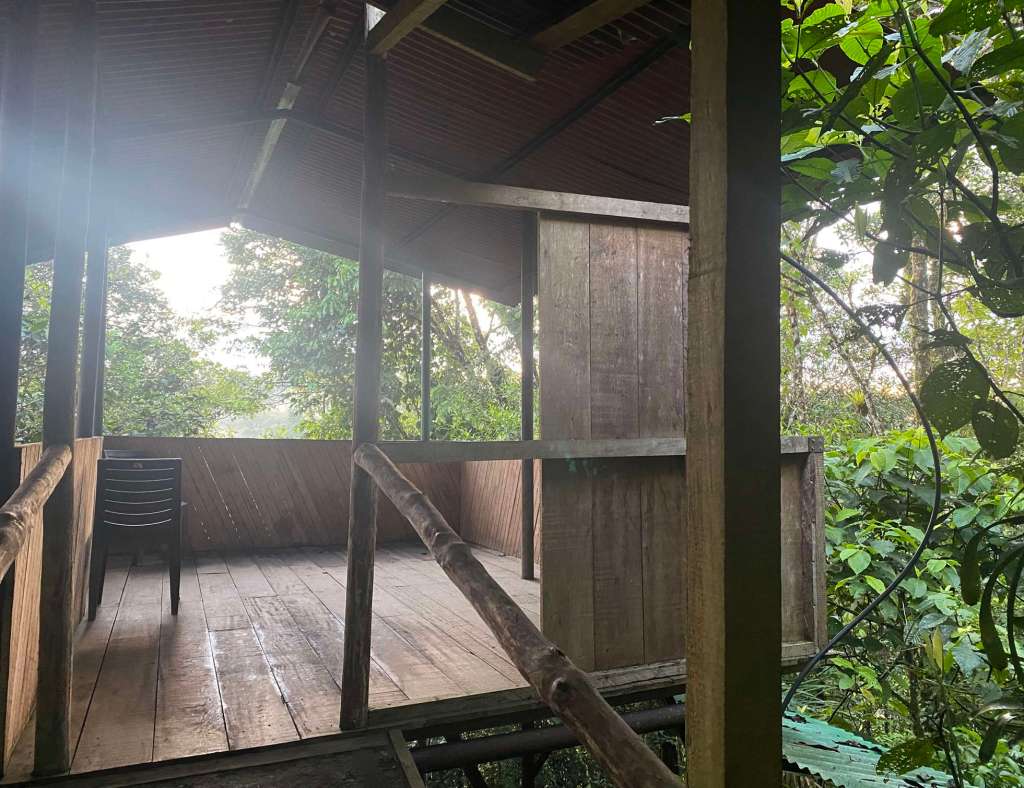
There is a Cock-of-the-Rock lek here with a dedicated bird hide which is almost elaborate enough to be a forest cabin. Sure enough, several of those birds turned up to perform their screechy and kinda weirdly compulsive lek display.
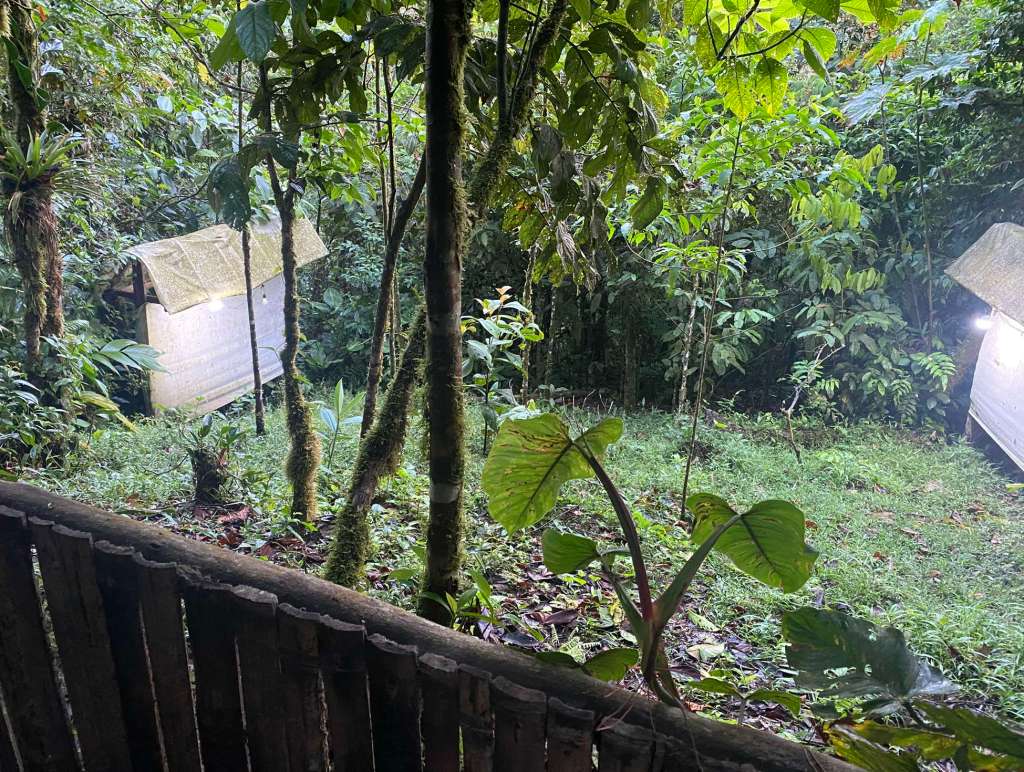
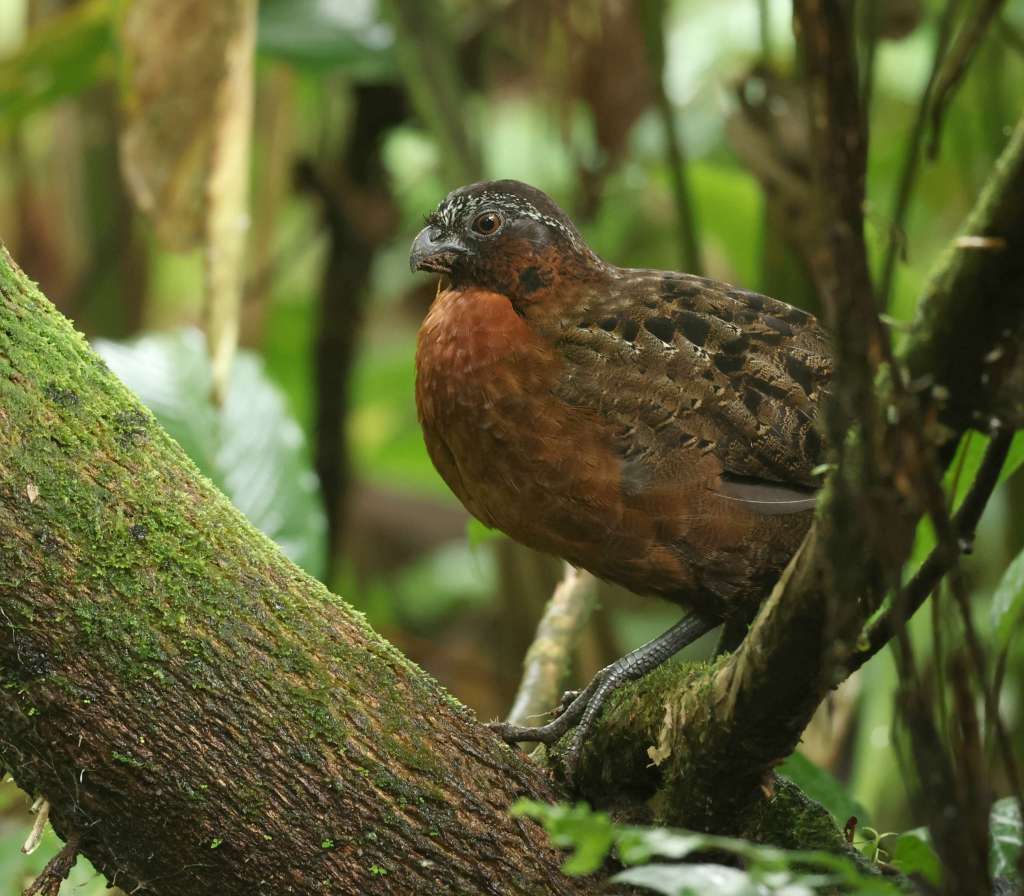
There is a moth light and a feeder, with the feeder being particularly productive when we were there, attracting a Grey-Fronted Dove, a rather timid Grey-Cowled Wood-Rail, and a bevy of five Rufous-Breasted Wood-Quails.
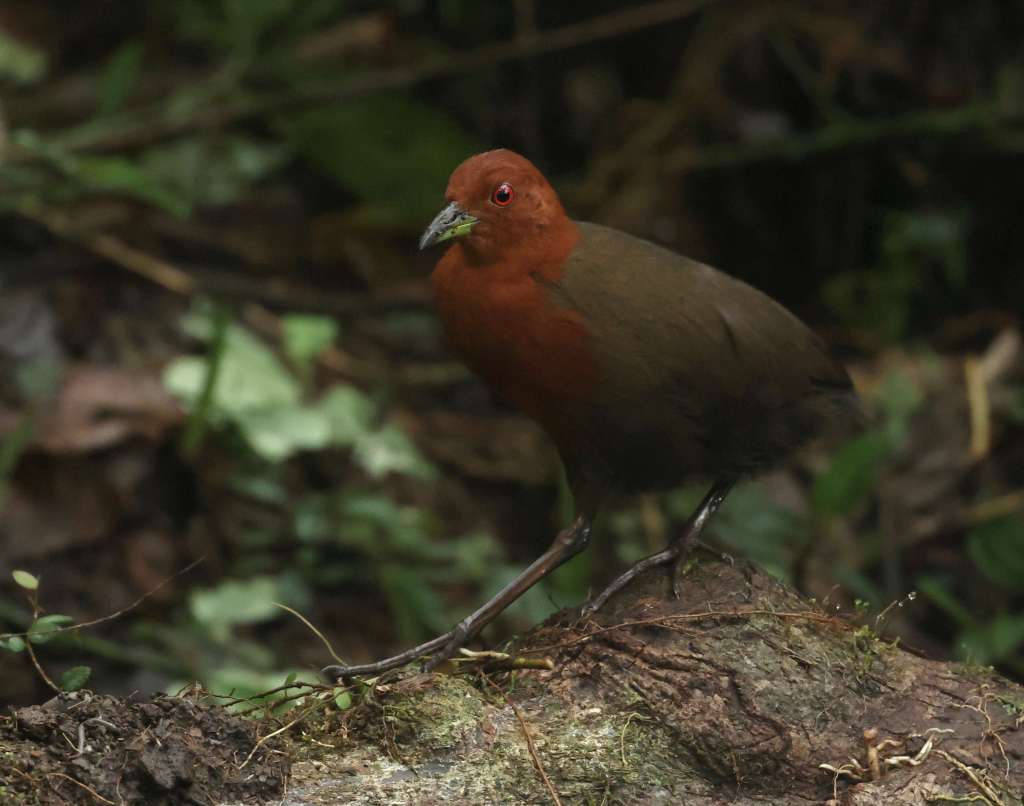
Possibly my favourite bird of that location though was the lovely Chestnut-Headed Crake, which they are trying to feed regularly. There are no guarantees with crakes though, being famously skittish and secretive; we were lucky to see it come out into the open briefly for the free food.
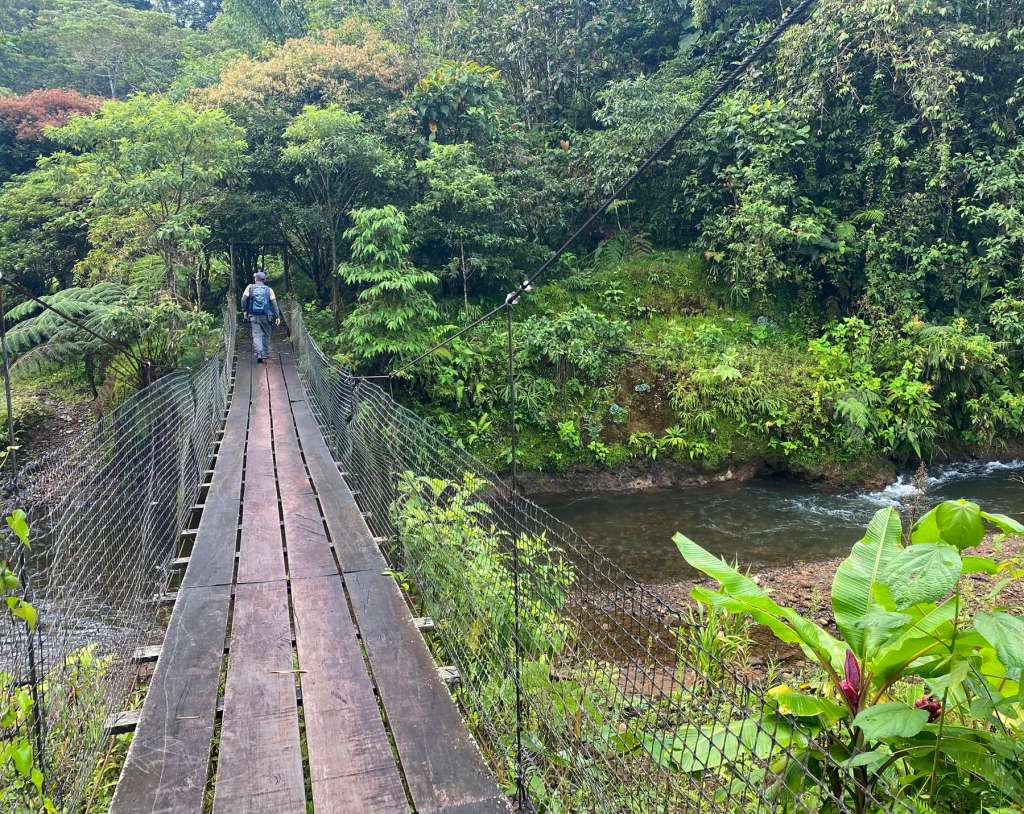
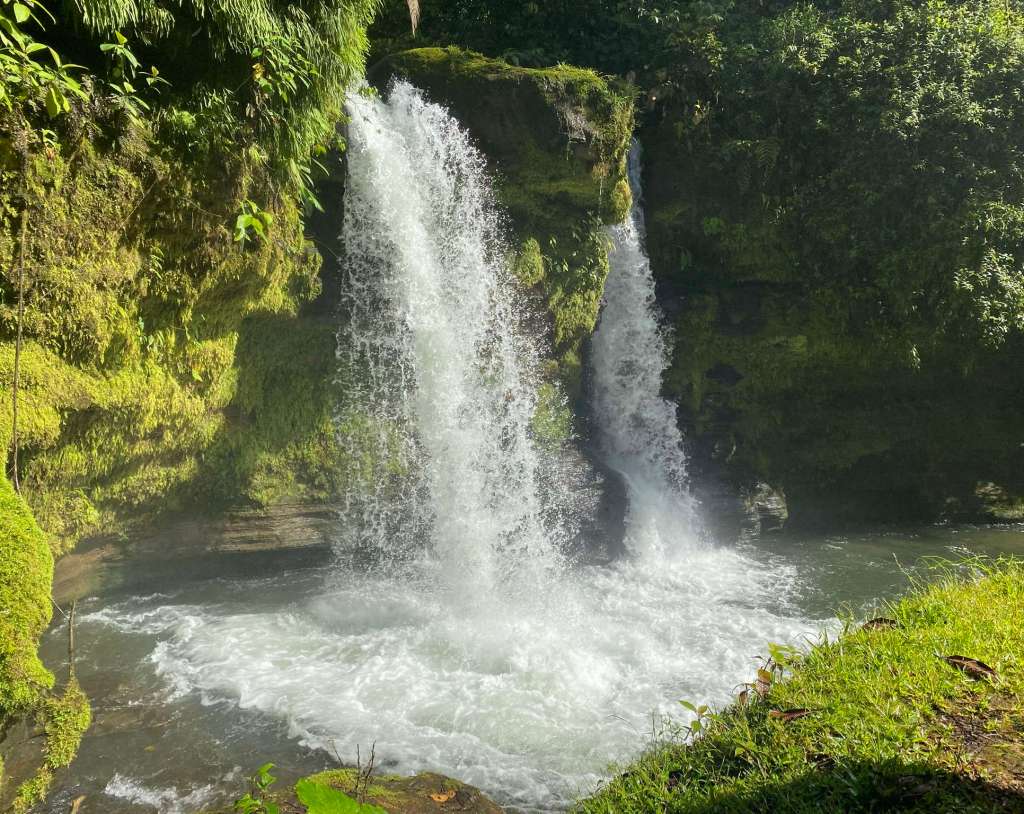
There are a few trails here including one that crosses a river, and one that leads to a gorgeous waterfall with some old mini-sized hydroelectric equipment nearby. We were enjoying the waterfall and glimpses of the resident White-Capped Dipper when we eventually realised there were four White-Collared Swifts hiding behind the cascade of water.
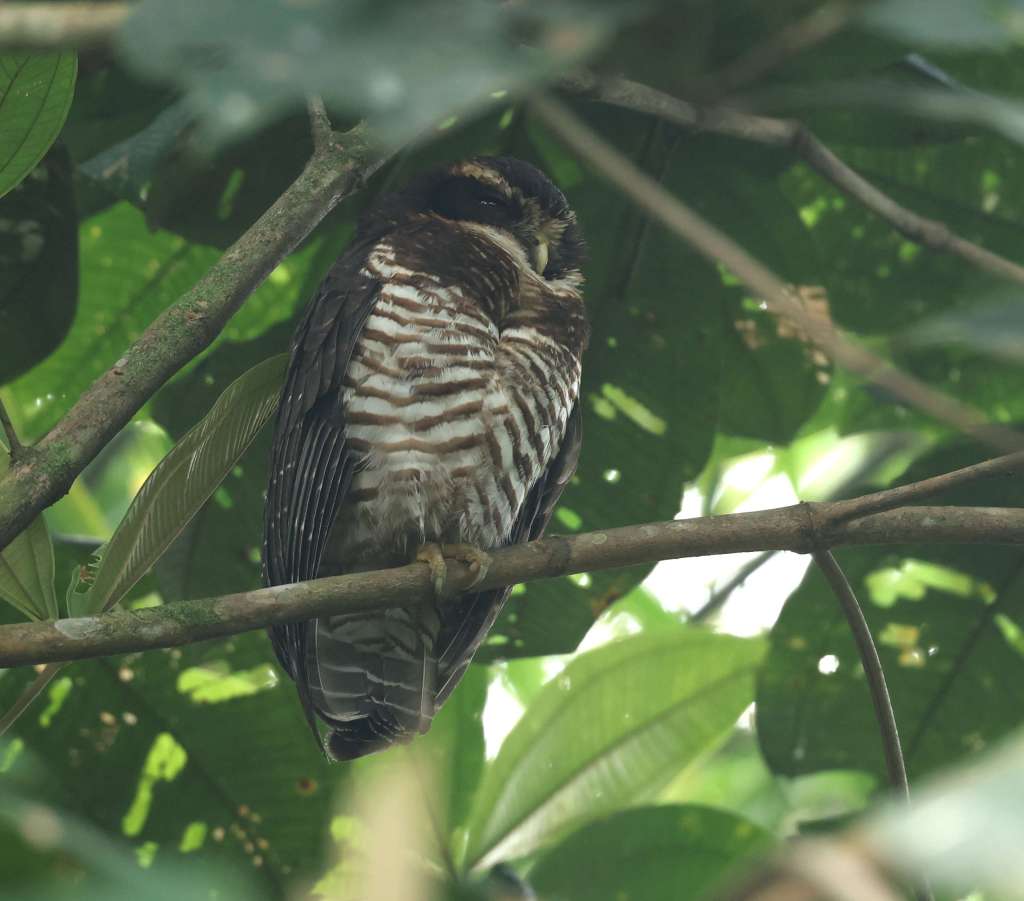
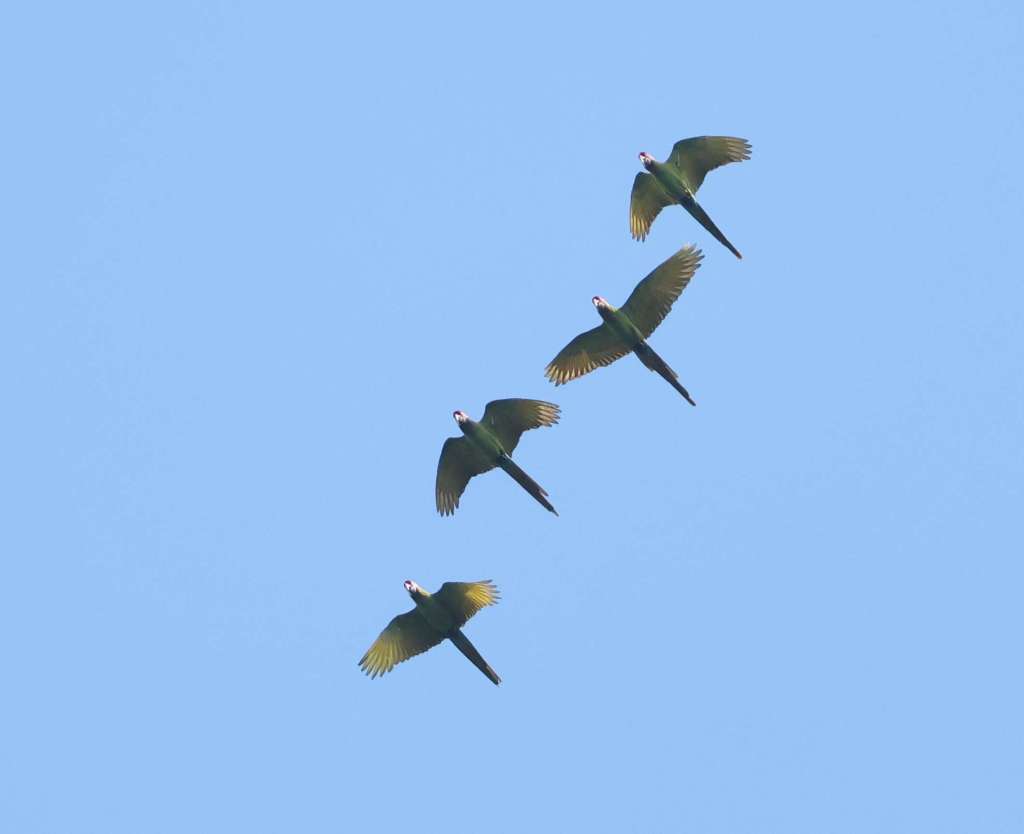
A couple of hummingbird feeders attract hummers, and I found a lifer Amethyst Woodstar there. Violaceous Jays and Military Macaws were amongst the nearly 40 species we found, as well as a Band-Bellied Owl which our guide somehow found resting high in dense foliage right near the car park.
Slightly Further Away
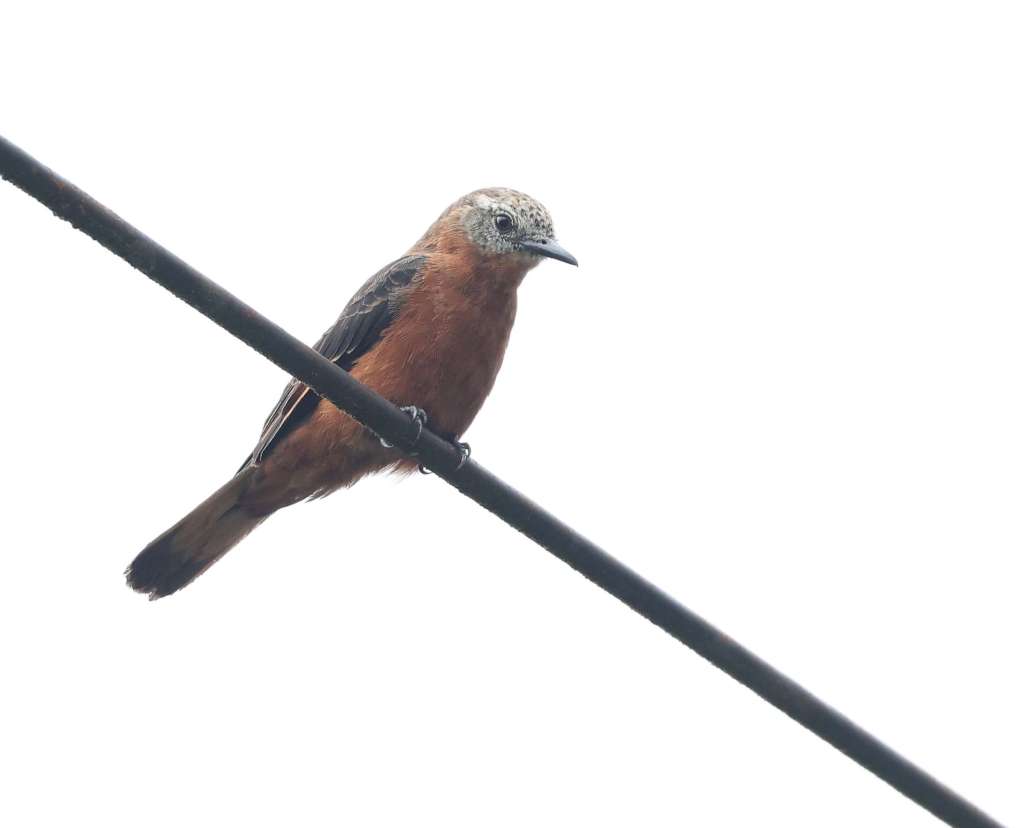
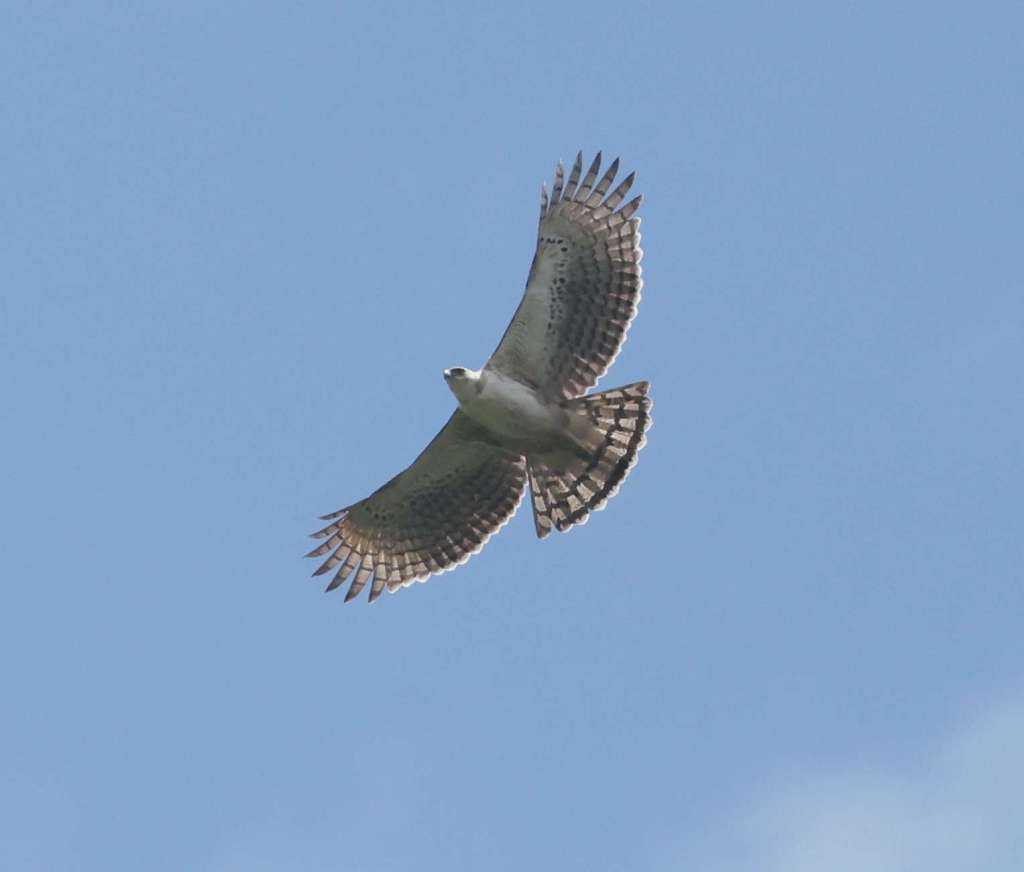
If you are travelling by car to WildSumaco and have the opportunity to do some birding along the way on the main road from Quito, be sure to check out the couple of places where steep cliffs border the road. Here you might well find an adorable Cliff Flycatcher or two, or several. And of course keep an eye on the skies; we found Broad-Winged Hawk and an immature Black-and-Chestnut Eagle amongst the more usual circling vultures.
Summary
I saw 161 species just in the lodge area in the 6 days I spent at WildSumaco Lodge, plus dozens more in the surrounding region. I am so glad that I set aside six nights to stay there, as every day brought new treasures and more wonderful birds to find. The lodging was comfortable without being particularly luxurious, and with being fed three square meals a day and having your room cleaned for you, you pretty much didn’t need to worry about too much. When we were there, the only obstacle was the rain, which sometimes positively lashed down. If the sun was out, the afternoons were quite warm, especially deep in the forest trails, so the rain was something of a relief then.
I have tried to be relatively restrained with how many photos and species I have included in this post in order not to make it overly long, but rest assured I kept many hundreds of keepers from my time at WildSumaco. I have elided over tons of bird sightings that were exciting or memorable at the time and have just cherry-picked some of the best ones here. As I hope you appreciate, the variety of birdlife there was truly, superlatively astounding.
AUTHOR: ANDY GEE
BIRDERS: ANDY GEE, K-A
 Bird Spots