The Mindo region of Ecuador! It’s world-renown for birds. We covered several hotspots in our previous post, so here’s some more. And another video, of course!
These locations are more “off the beaten track” than the ones from the last post, requiring longer driving to get to and/or stretches of unsealed roads to cover. They also span a wider variety of habitats and altitudes.
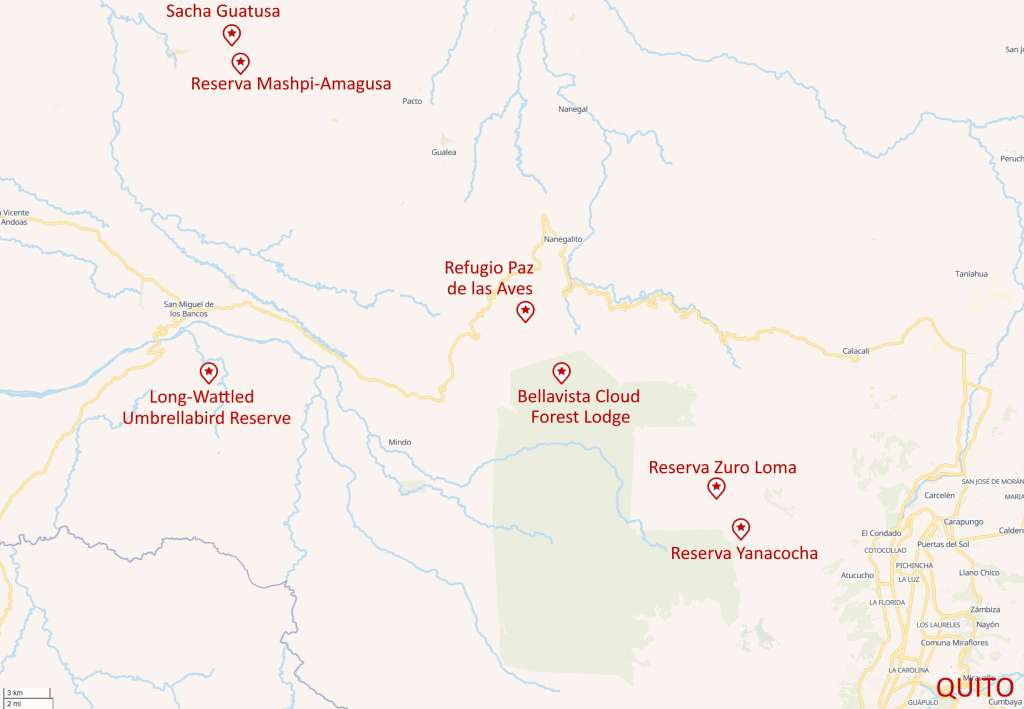
Refugio Paz de las Aves
This family-owned and operated refugio sitting at around 1900m altitude is well-known to many in the birding community, as it pioneered the practice of attracting Antpittas through regular feeding. In 2023 they also ran a successful crowd-funding venture to purchase additional adjacent land for conservation (which members of the Bird-Spots team contributed to).
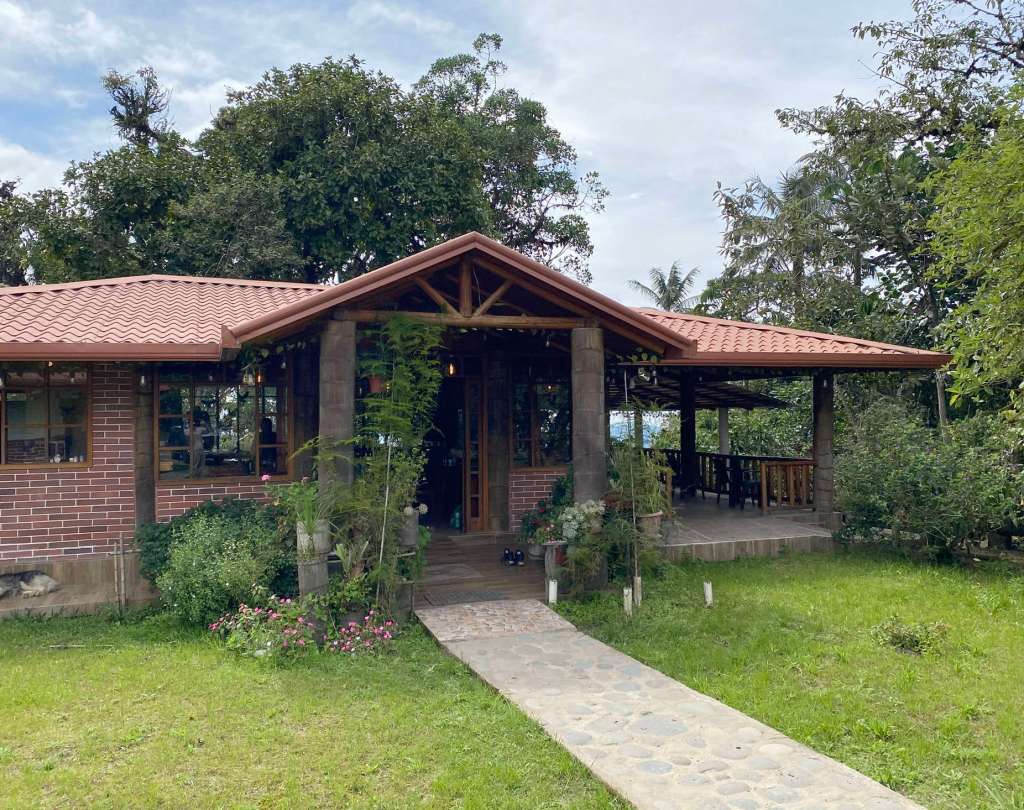
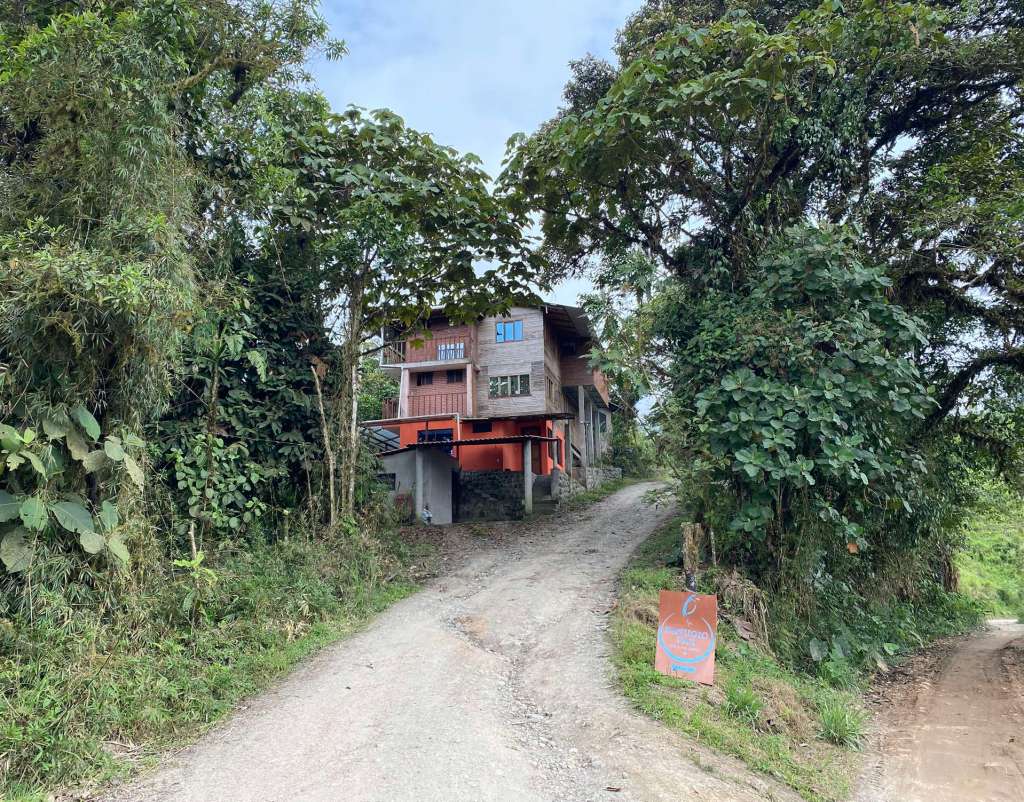
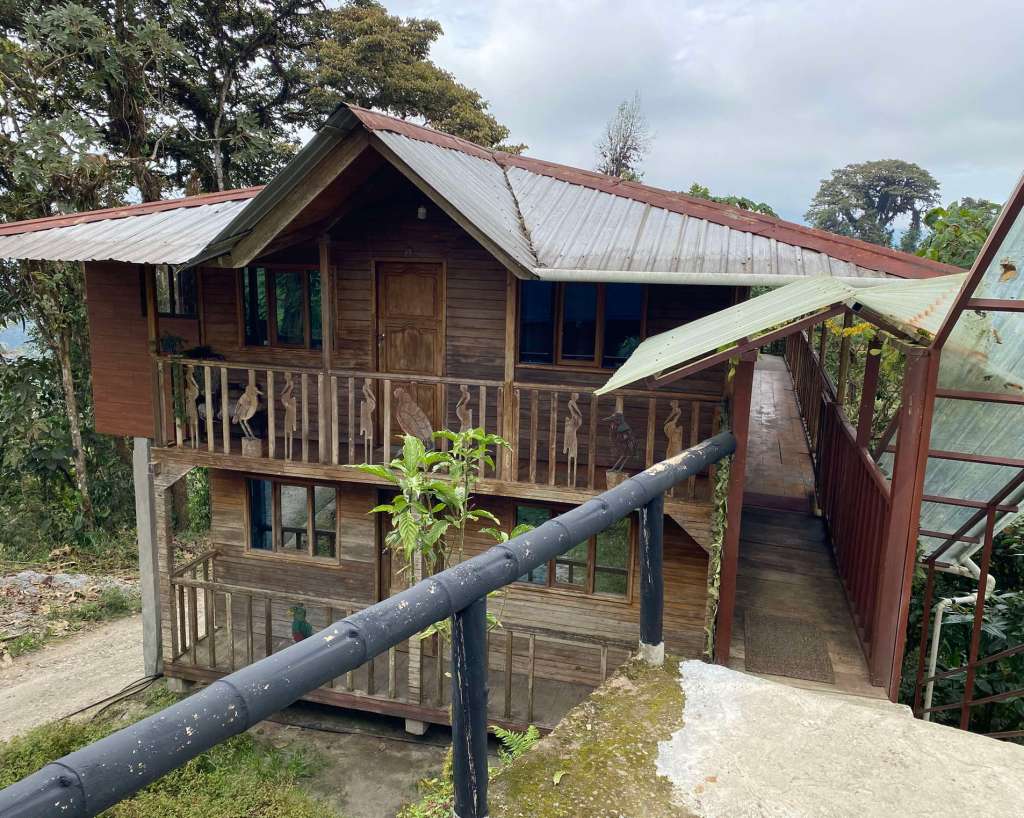
One aspect of this location that surprised me is how spread out it is: the restaurant building is several hundred metres down the road from the main accommodation block, and many of the trail heads require a drive (within or adjacent to the property). Note as well that this is one of the places where you can’t book individual nights to stay, you must contact by email and request/negotiate a 3-, 4- or 7-day tour to visit, though they do have half-day options as well. We selected the 7 day tour in order to get the fullest experience, which also included visits to several other sites far from the refugio (including Mashpi-Amagusa and some locations near Mindo township).
The accommodation is of the rather basic variety. In fact it was a bit of a shock after staying in some of the nicer lodges and hotels in the area. The rooms are very small with almost no storage for bags, optical gear etc, and the walls between cabins are paper-thin – you can literally hear word-for-word conversations in the next room. That said, the beds are comfortable enough and the meals in the restaurant were pretty good.
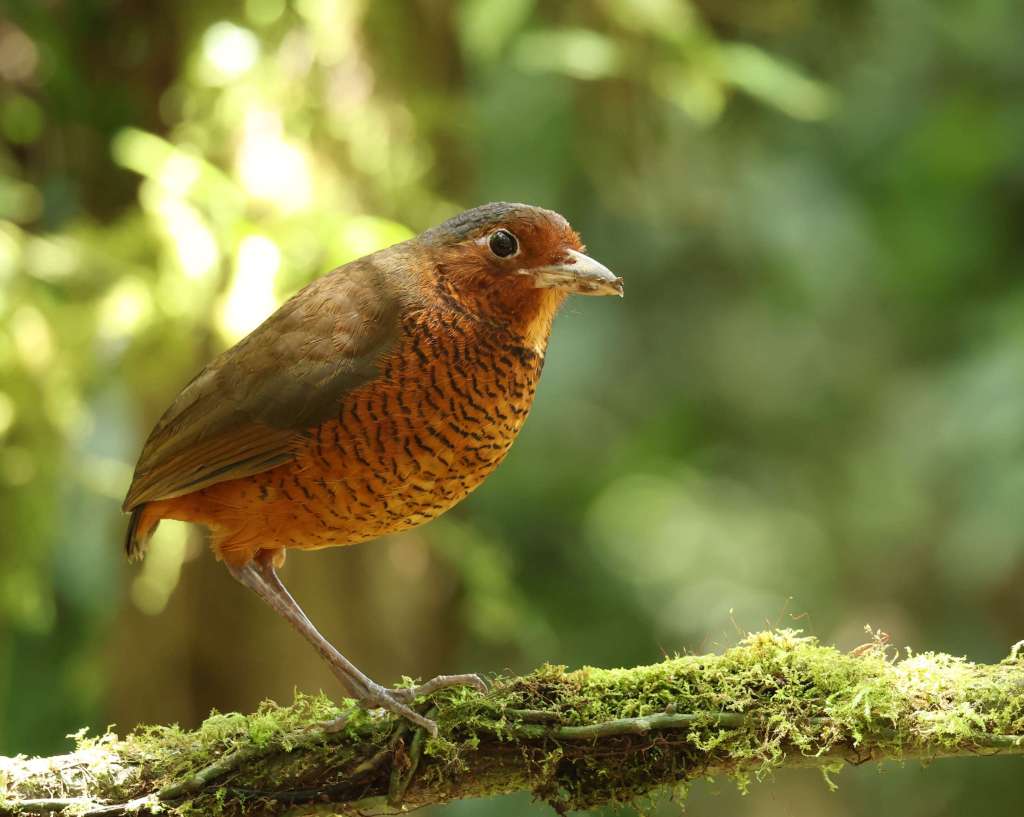
Right, onto the birds. There are a bunch of Antpittas here, which are the star attractions. The Giant Antpitta is quite a big chunky bird and watching Angel Paz coax this super-shy individual “Maria” (actually a few generations descended from the original Maria that was fed) was actually really sweet and kind of an emotional experience, once you factor in the tremendous history behind this difficult task that now looks, to the naive eye, somewhat easy!
Other antpittas on the “morning schedule” of feeding included Moustached Antpitta, Yellow-Breasted Antpitta, and the Ochre-Breasted Antpitta, which for a change included two birds instead of the usual solitary one.
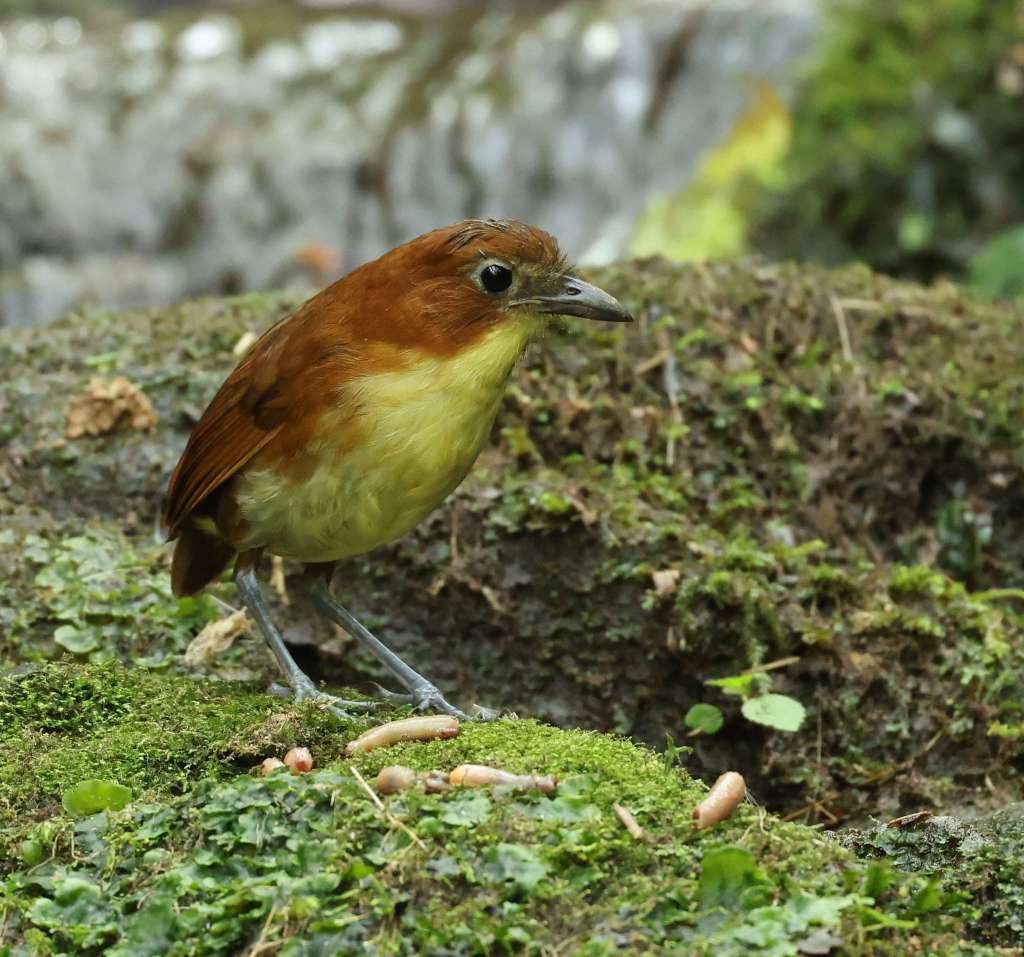
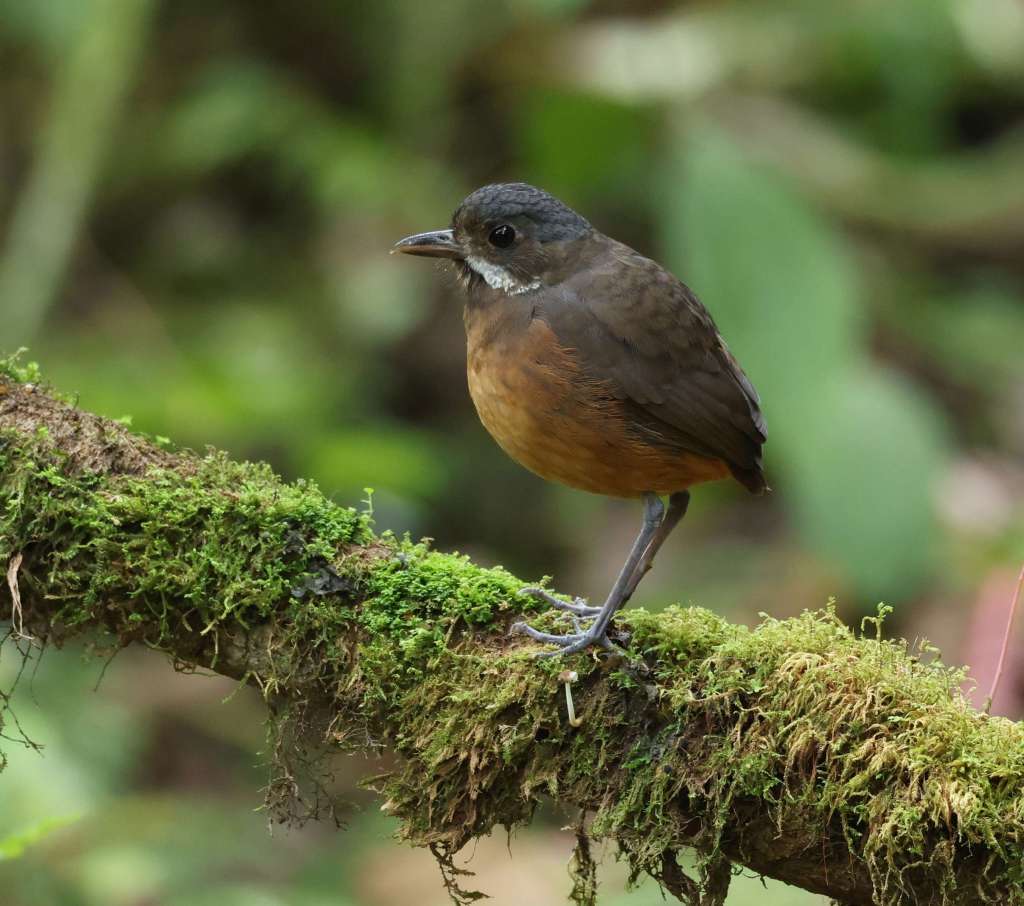
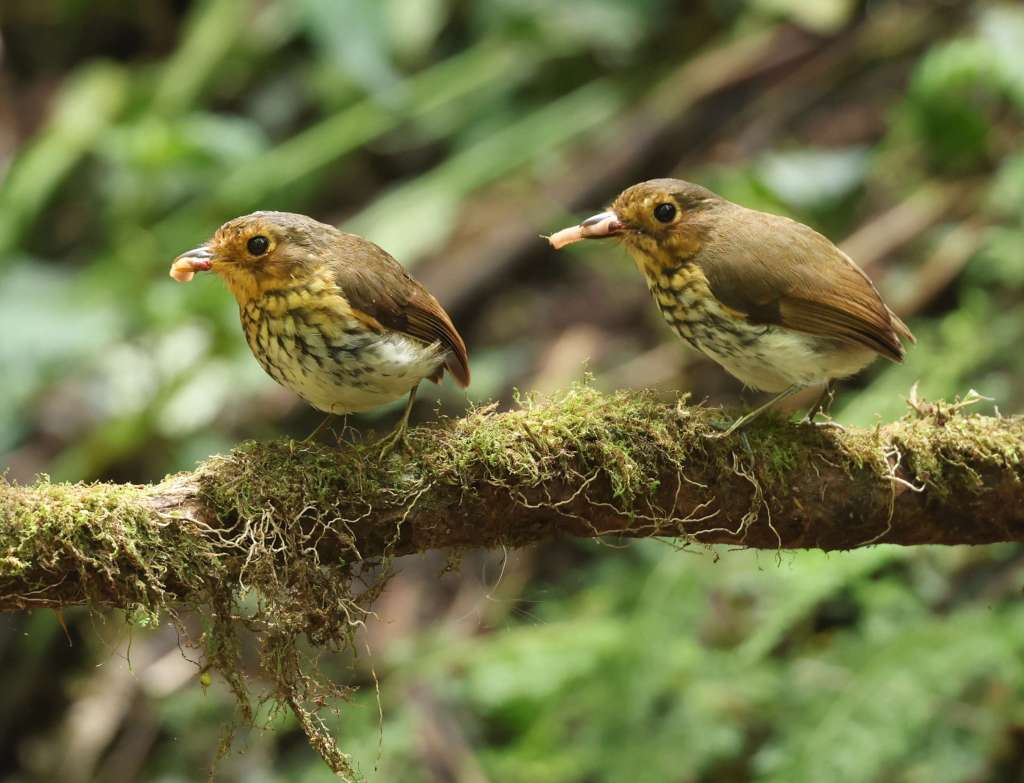
At this point – now at my 13th Antpitta species! – I had to remind myself not to take it for granted, that these birds are usually virtually impossible to see in the depths of the rainforest without some sort of feeding mechanism.
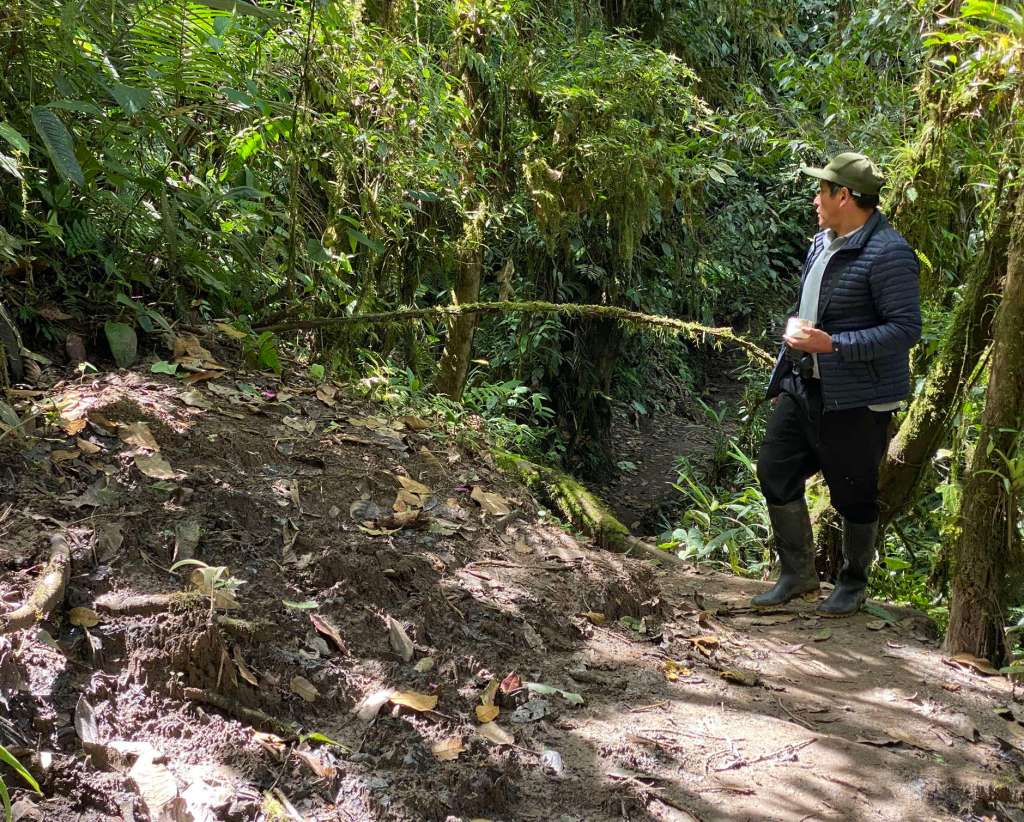
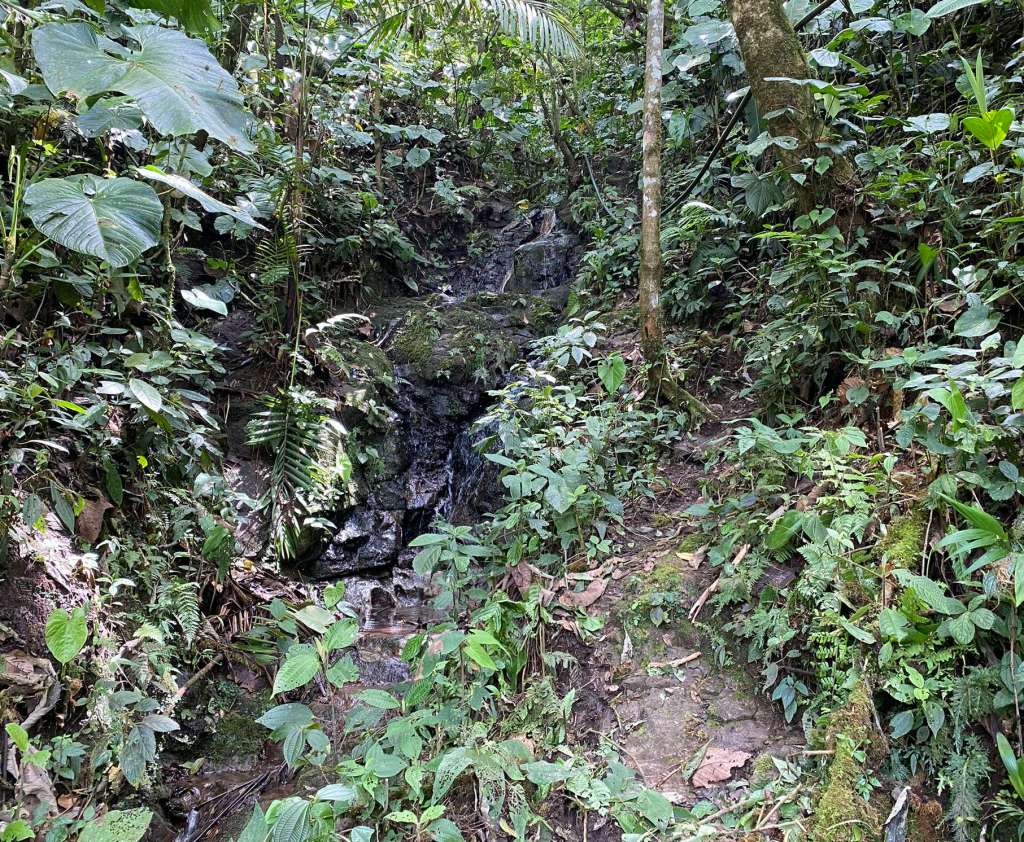
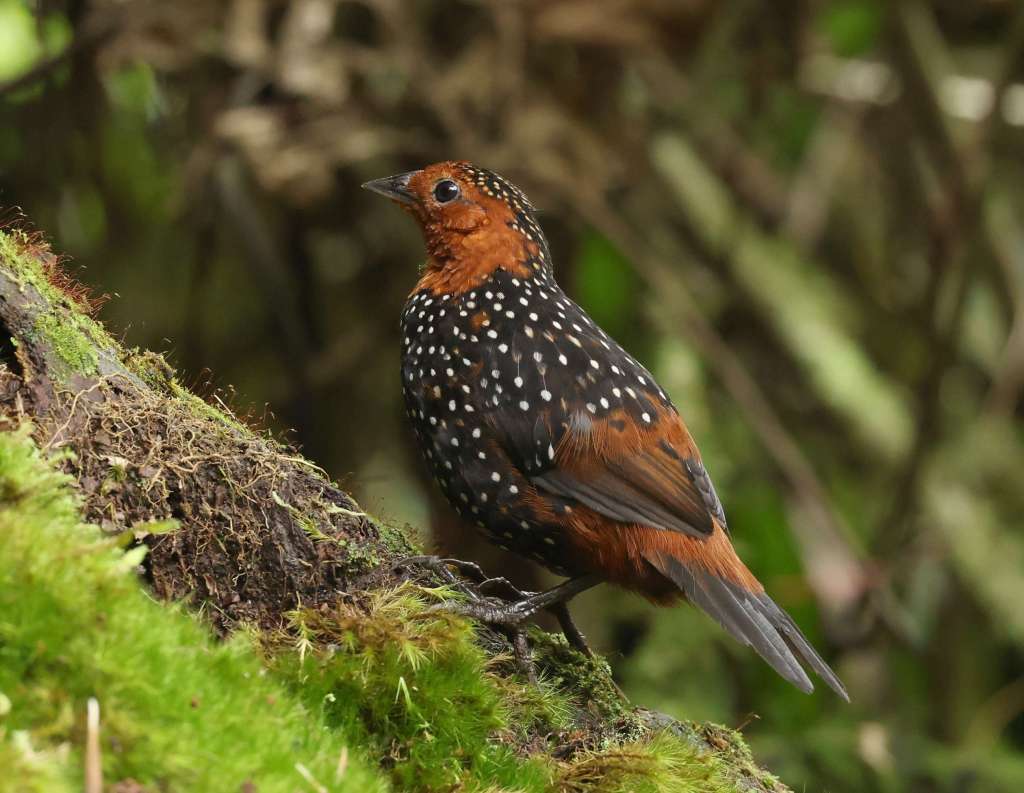
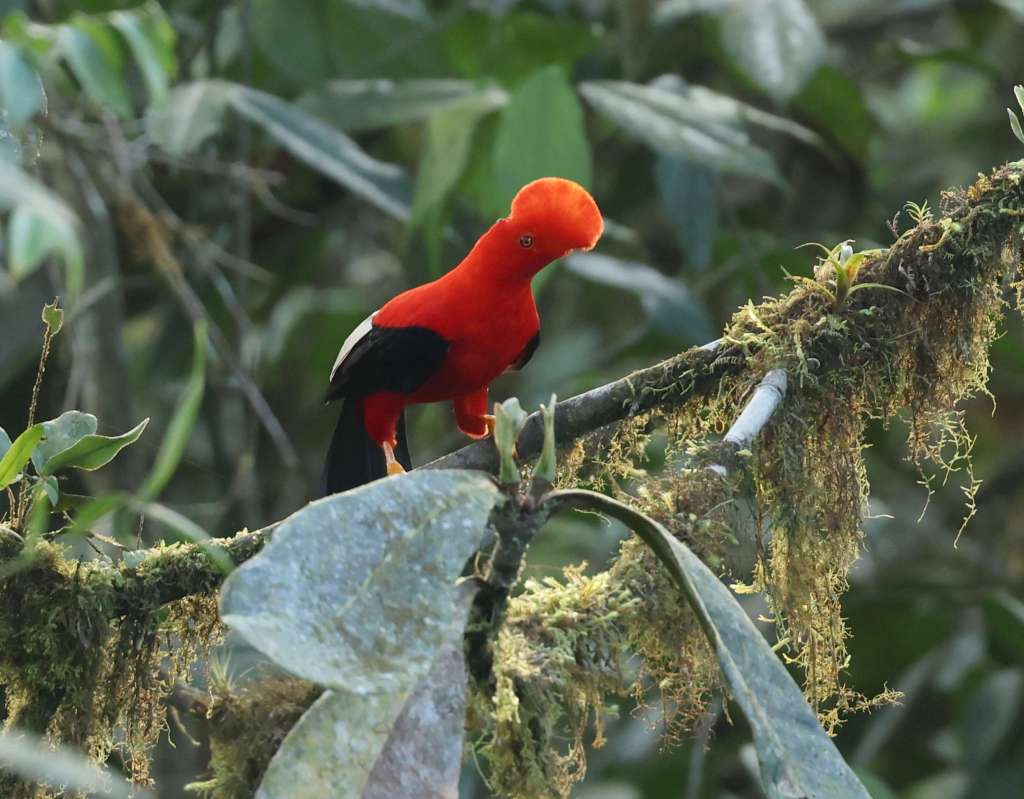
The remarkable Ocellated Tapaculo has also been “feeding trained” and it was a thrill to see this bird with its chestnut patches and big white dots. It was quite shy and took some cajoling to come out and grab some worms. Elsewhere at the refugio’s Cock-of-the-Rock viewpoint it was fun to point out the Andean Cock-of-the-Rock males as their deep orange colours stood out starkly against the green of the forest.
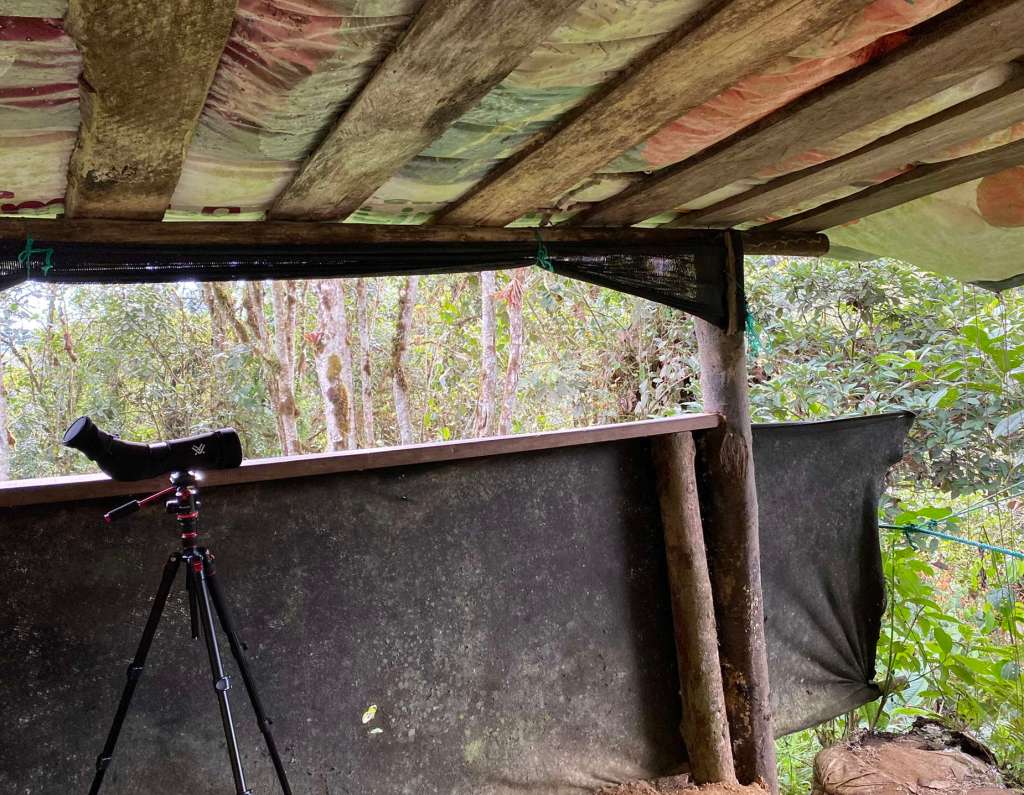
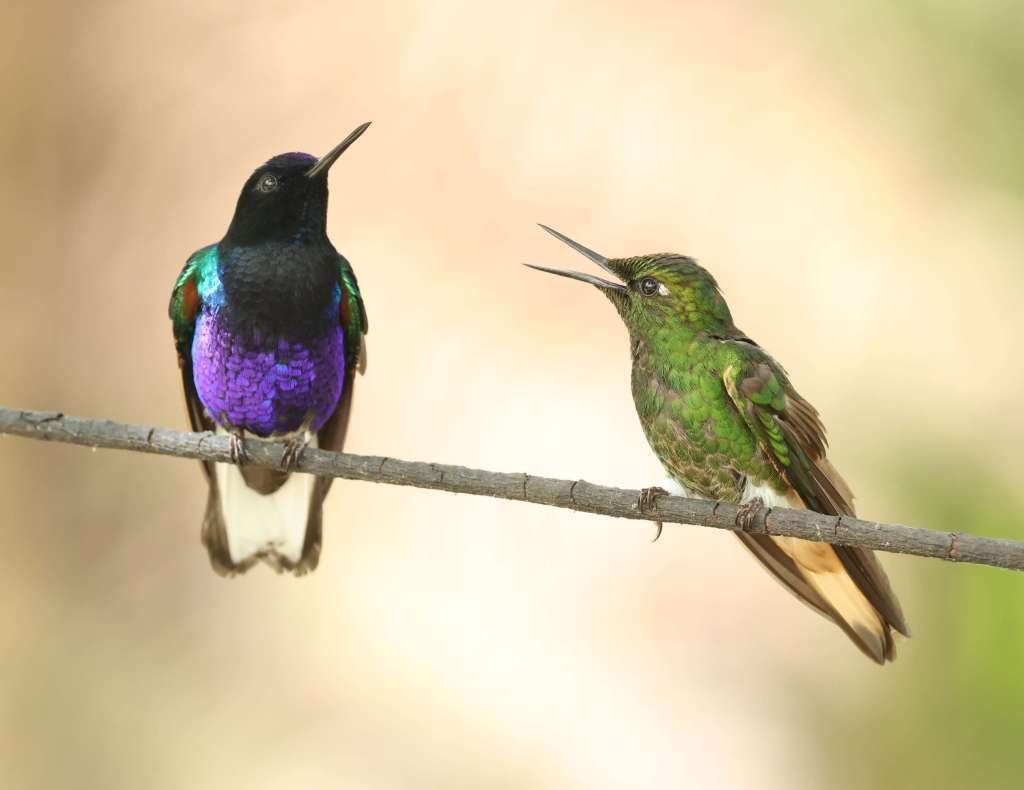
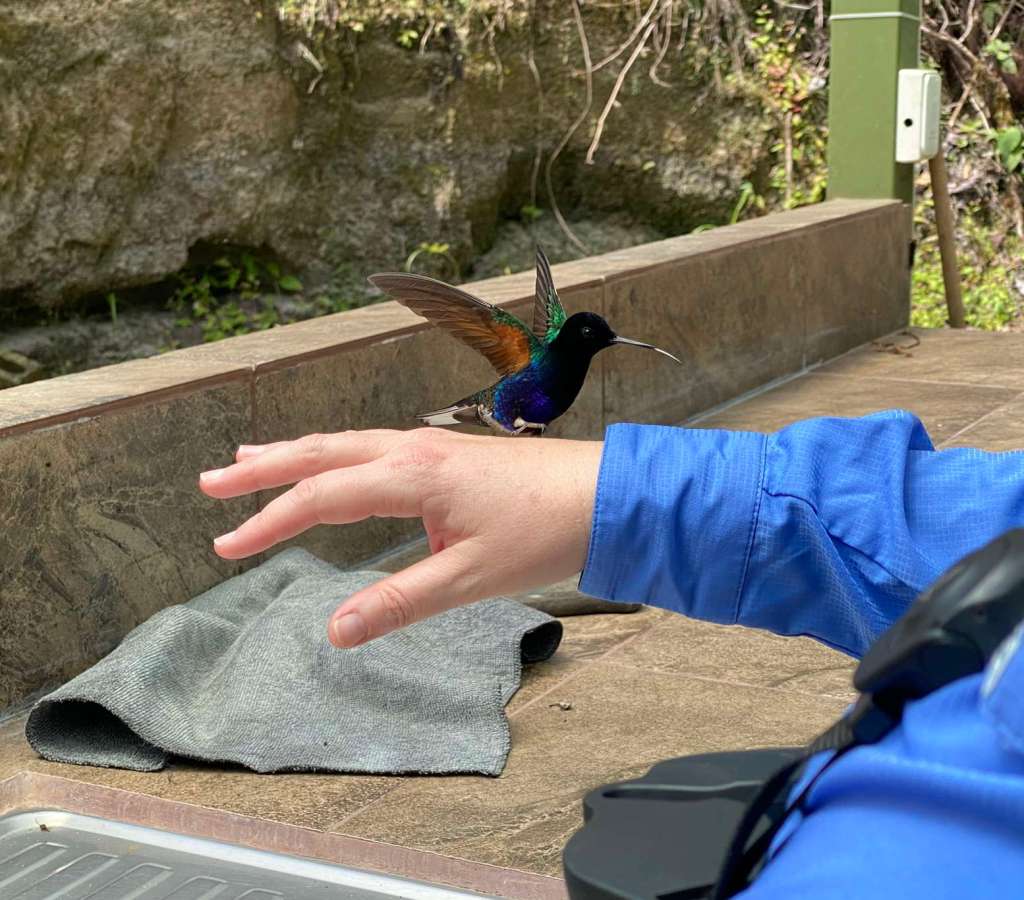
There are three other areas for feeding on the property, a hummingbird feeder or two by the restaurant, a tanager feeder by a breezy deck right near the cabins, and a hummingbird/tanager combination area under a shade within short walking distance of the cabins. Hummers at the latter included the Velvet-Purple Coronet, which sometimes landed on our hands without any prompting (perhaps expecting some free bottle caps of sugar water), Buff-Tailed Coronet, Brown Inca and quite a few more. We didn’t actually spend much time in this shaded feeding area, which was OK after visiting many other hummingbird gardens previously and seeing many of the same species. Yep, it took quite some time but we did get a little “hummingbird fatigue” eventually.
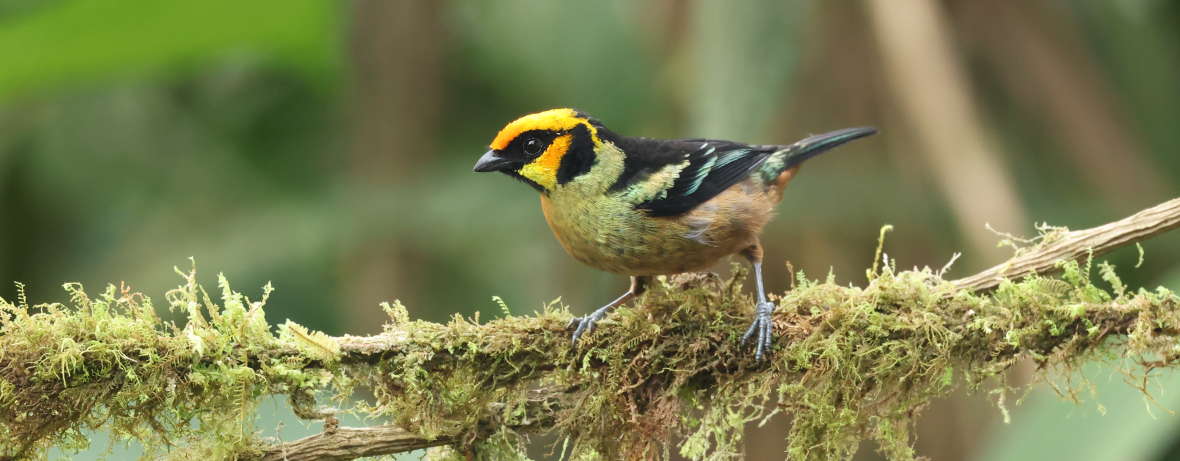
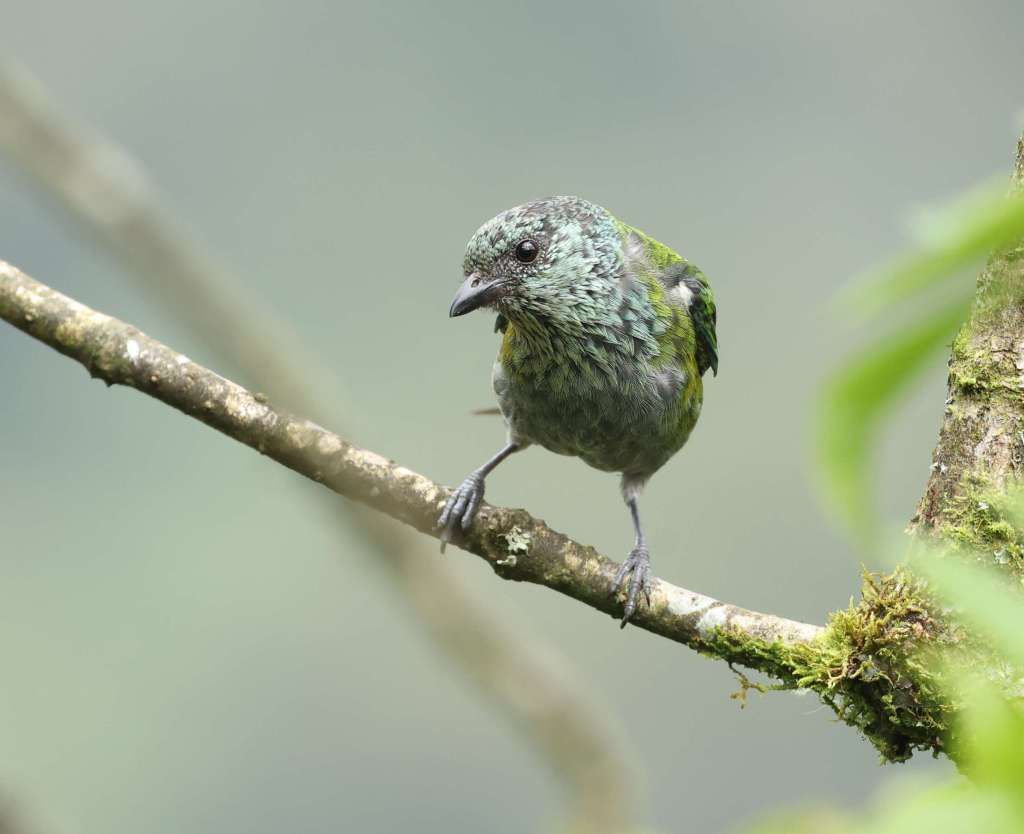
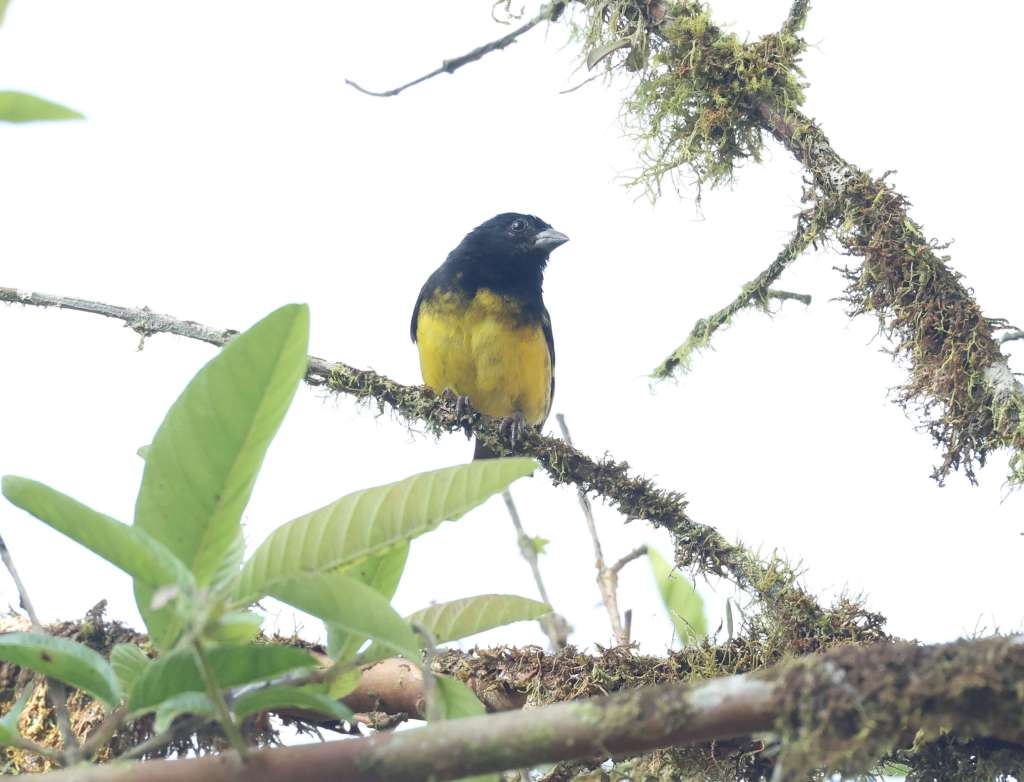
One can never get enough tanagers, of course, as they are often unpredictable and apart from the ever-present Blue-Grey Tanagers, you can only guess which one will turn up next. It took me a while to properly ID the female Black-Capped Tanagers (I may have said “oooh what’s that” a few too many times…), and Golden and Flame-Faced Tanagers dazzled with their vivid colours.
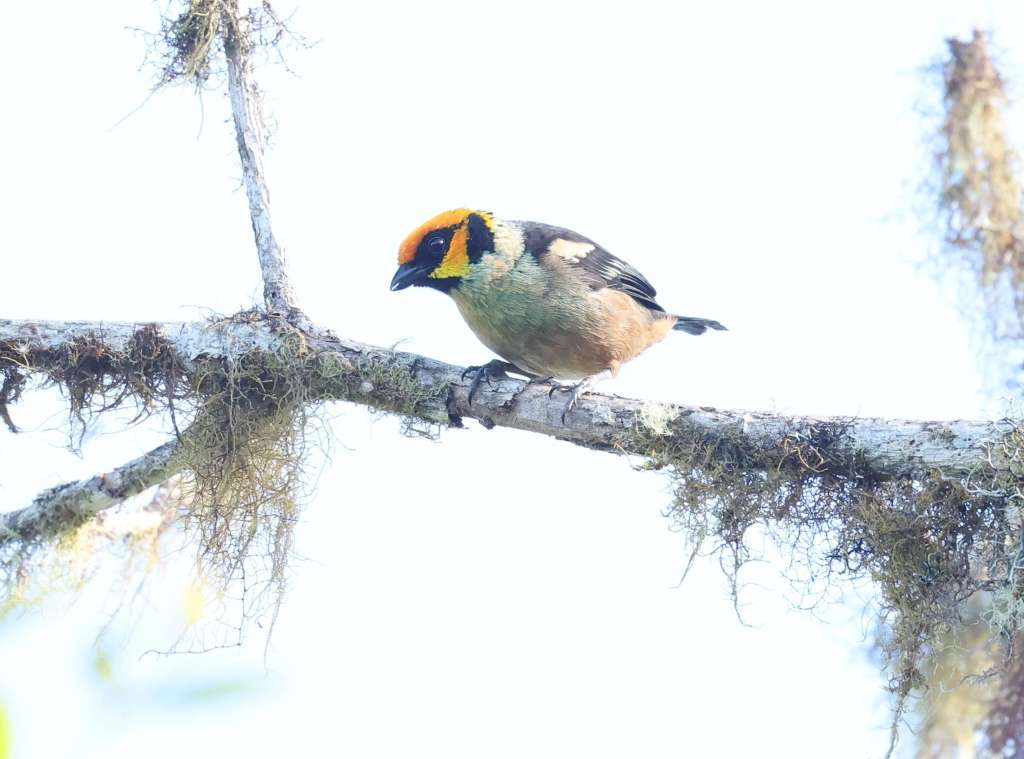
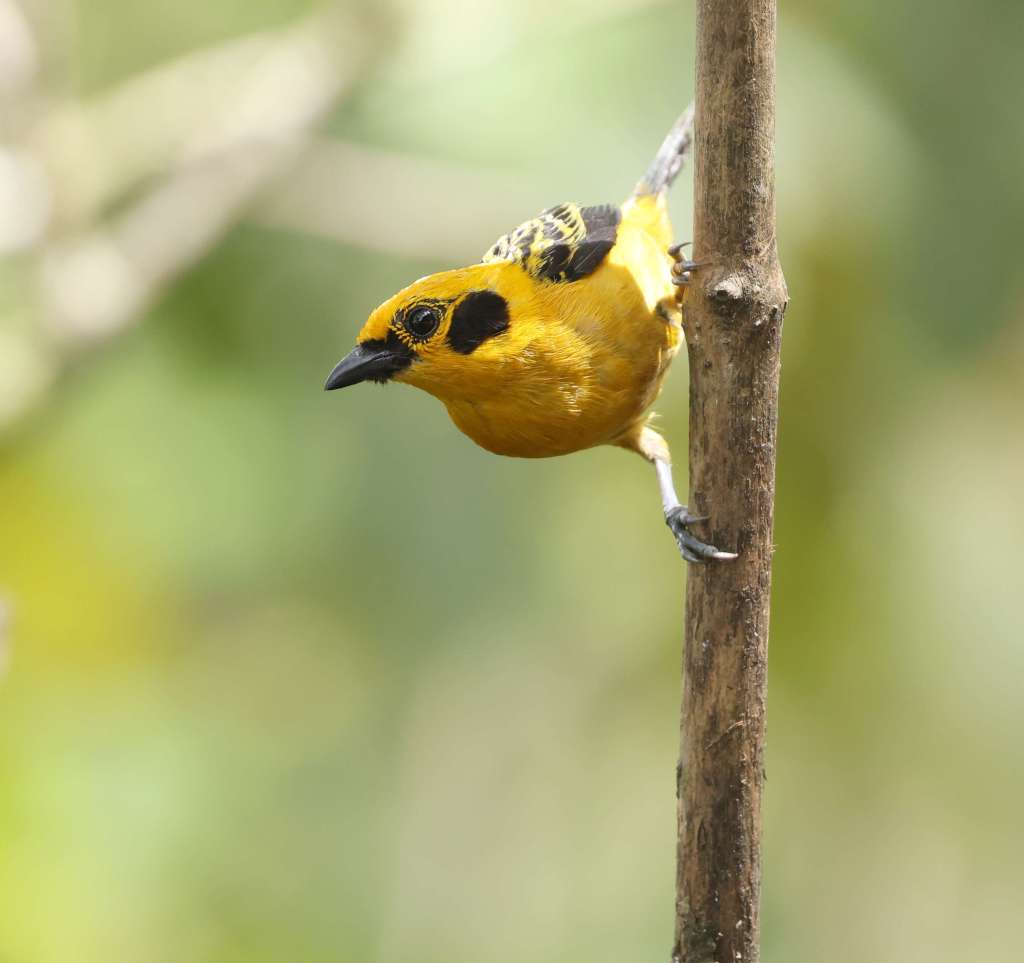
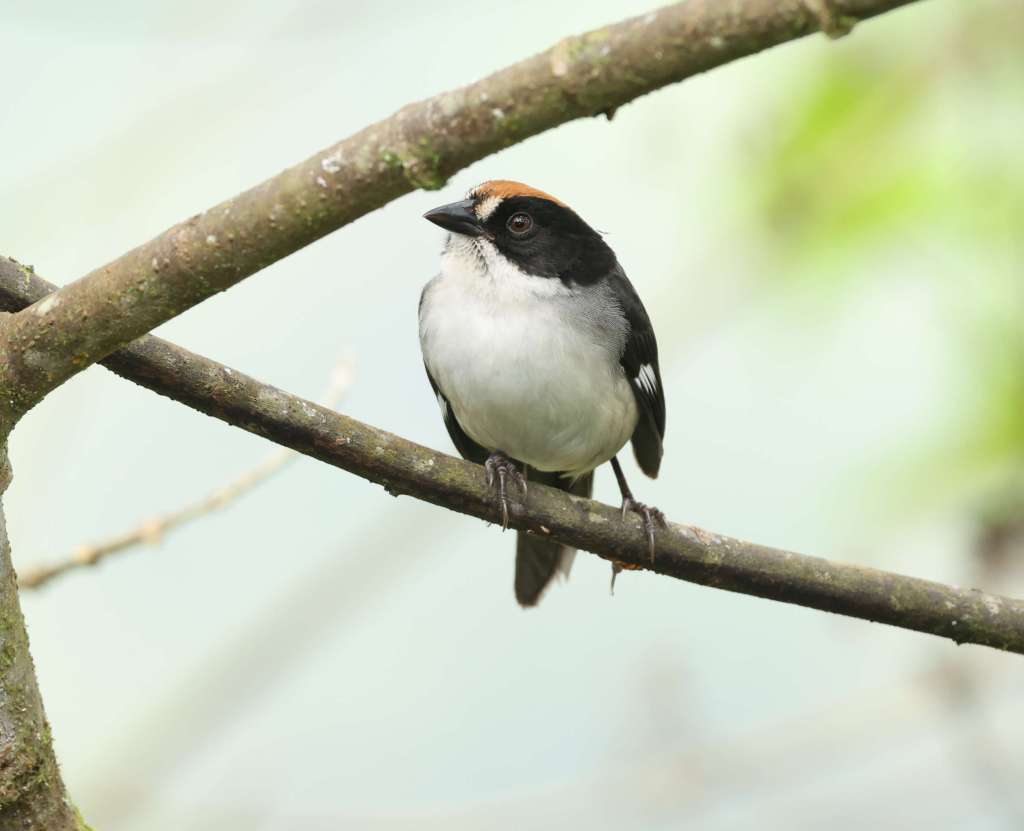
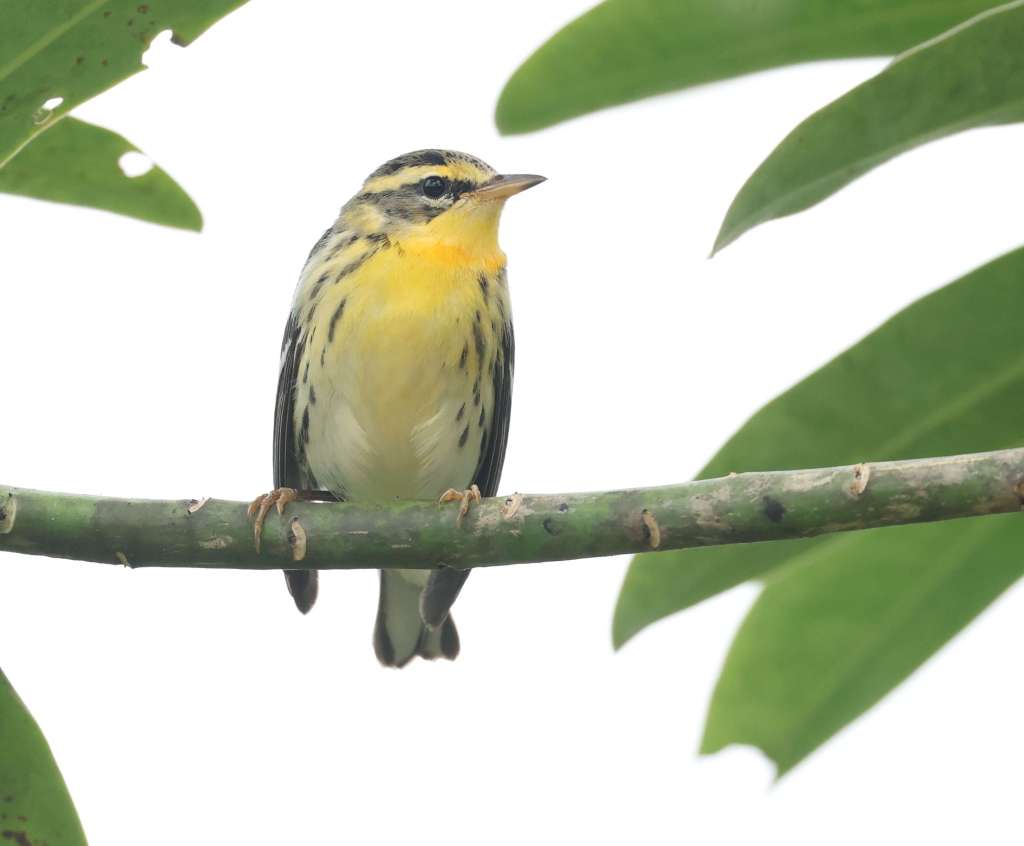
White-Winged Brushfinch were pretty easy to see near the feeder areas, while Blackburnian Warblers were more standoffish, and being migratory are only viewable Oct/Nov to March/Apr.
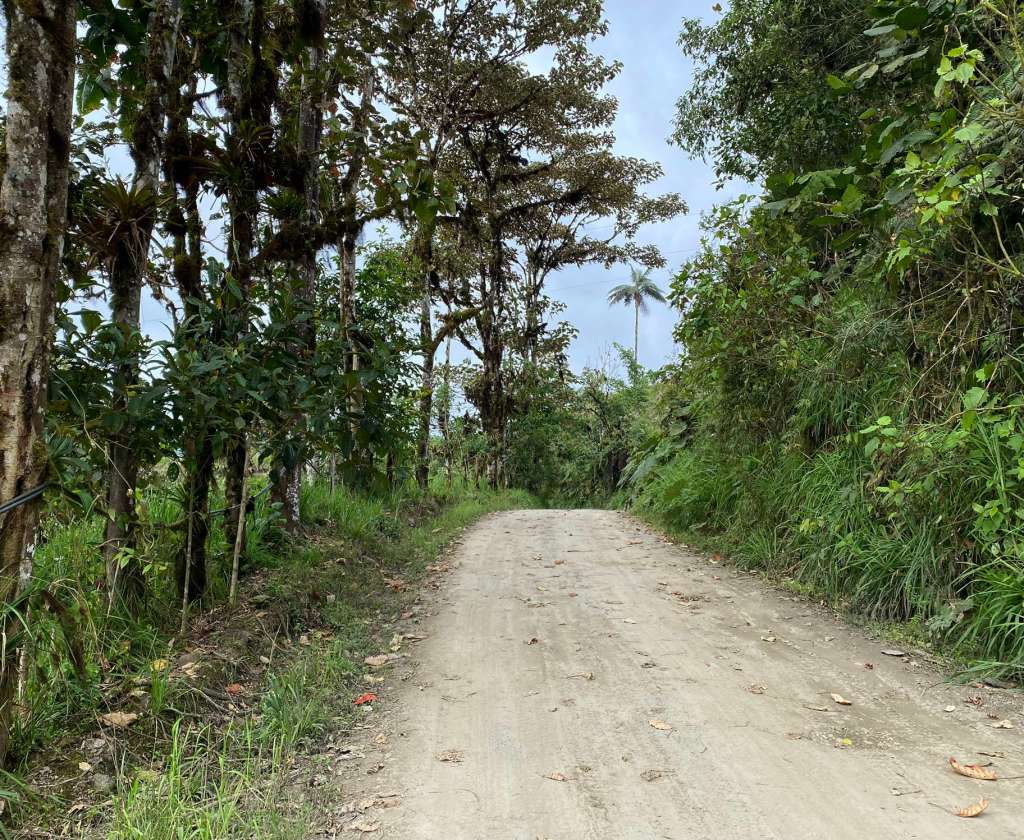
The roads through the property are all unsealed and it should be noted that there is around 20 minutes of driving required to actually reach the restaurant/lodge area from the main road. It goes without saying – given that this is Ecuador! – that roadside birding is going to be productive. Look for Yellow-Bellied Siskin, Variable and Yellow-Bellied Seedeaters among the grassier sections, while who-knows-what-you-might-find within the forest canopy (gosh, we found Golden-Winged Manakins one morning…)
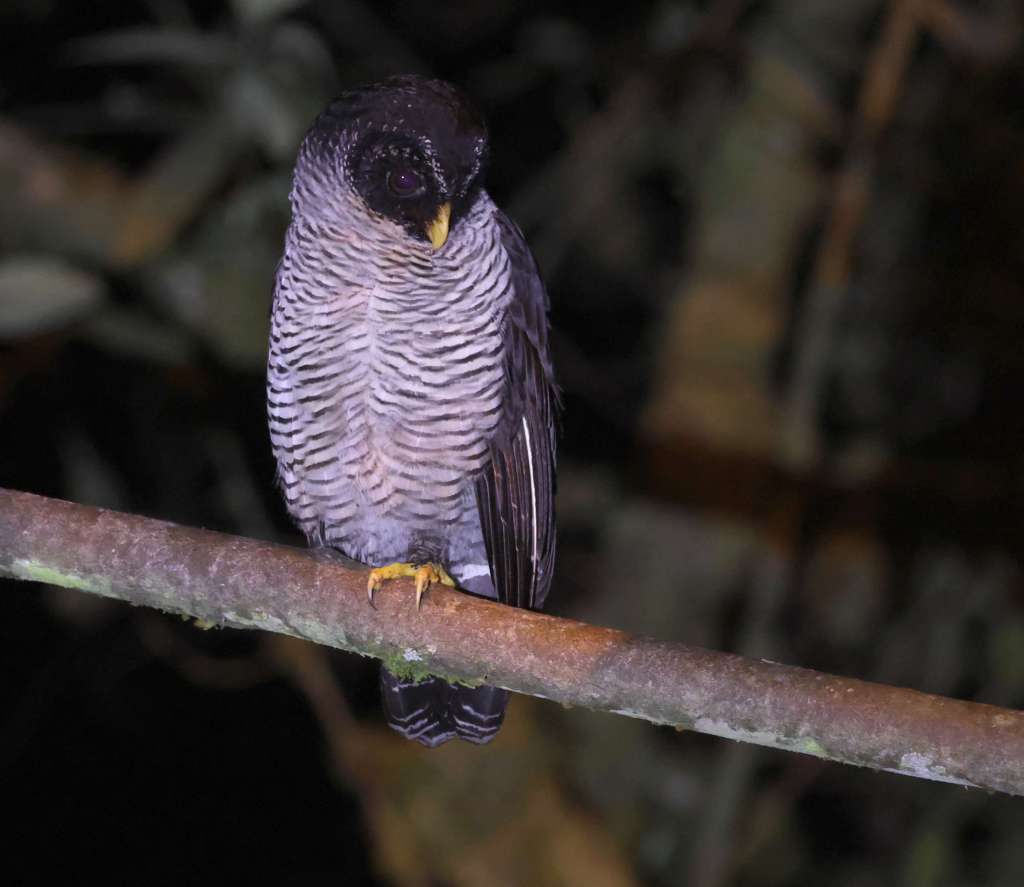
A Black-and-White Owl was a regular at night near the cabins, attracted to the insects swarming around the streetlight. It became our friendly nocturnal neighbour and we could hear at least one calling during the night.
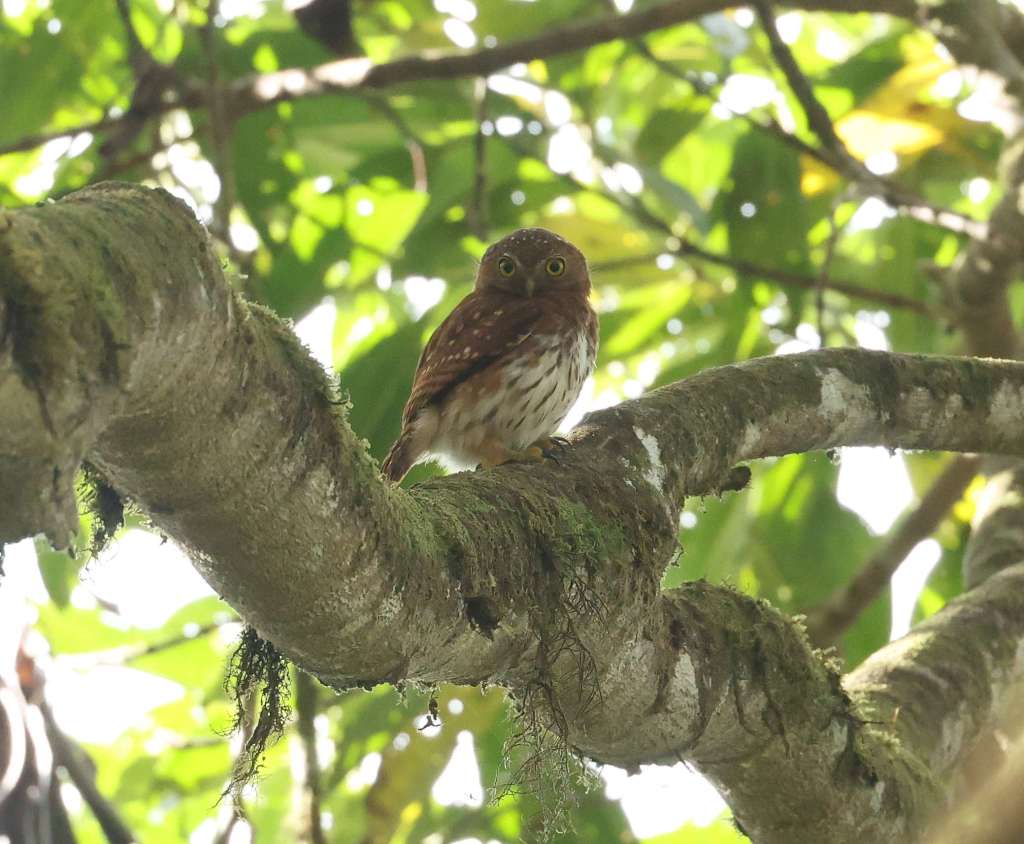
The use of walkie-talkies between the Paz family members and guides working for the refugio roaming across the property meant that if a “hot” bird was sighted, the birding groups scattered around could converge quickly. This was the case when a Cloud-Forest Pygmy-Owl was reported, and a dozen or so keen birders converged to try and see it. Being a very small bird, and having a habit of intermittently relocating itself to different trees, it wasn’t easy to get onto, but having that many eyes looking meant all and sundry did ultimately get a look.
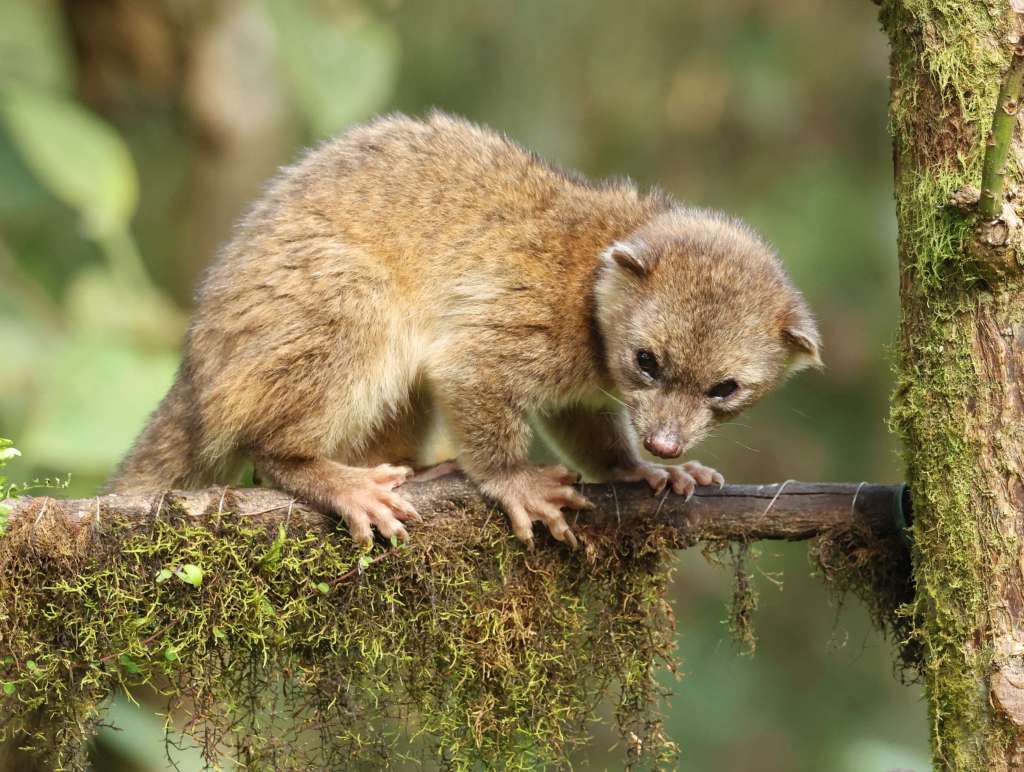
The time we had at Refugio Paz de las Aves was amid a run of sunny days, with very few clouds. It made walking the trails warm though pleasant, with sun streaming down through the trees. A friendly young Olinguito was a mammal highlight on one of the trails, a raccoon-like creature who, as of 2014, has the distinction of being the first new carnivoran mammal described in the Western Hemisphere in 35 years (they were known, of course, but not recognised as a separate species).
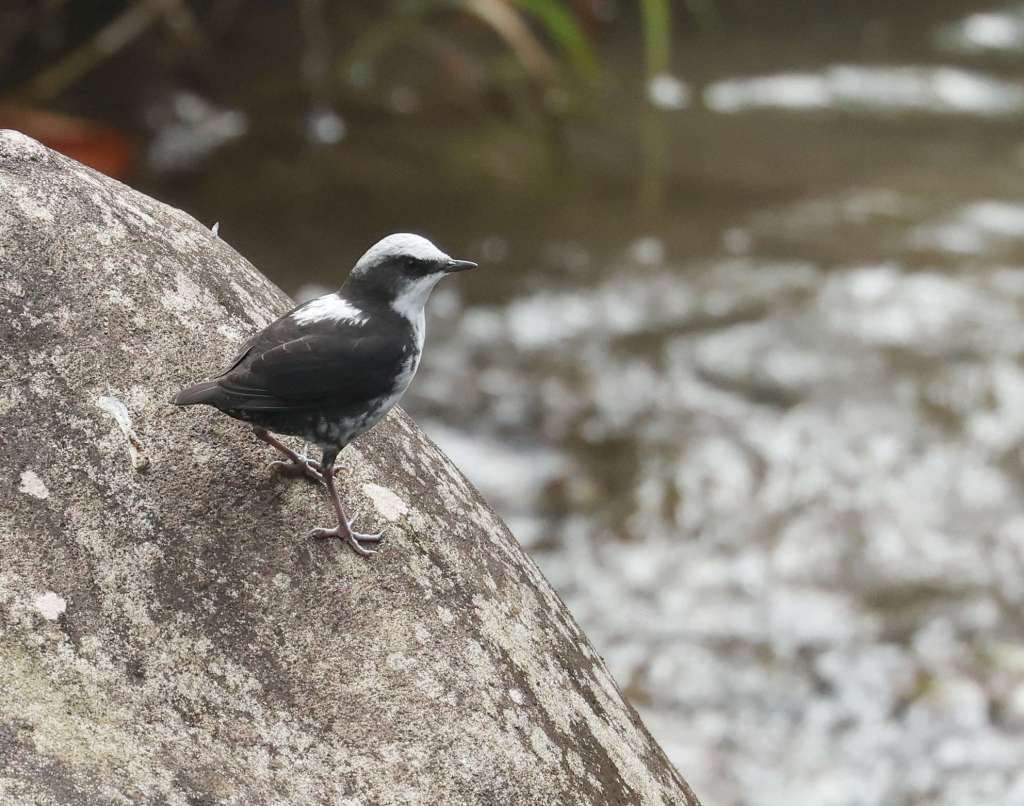
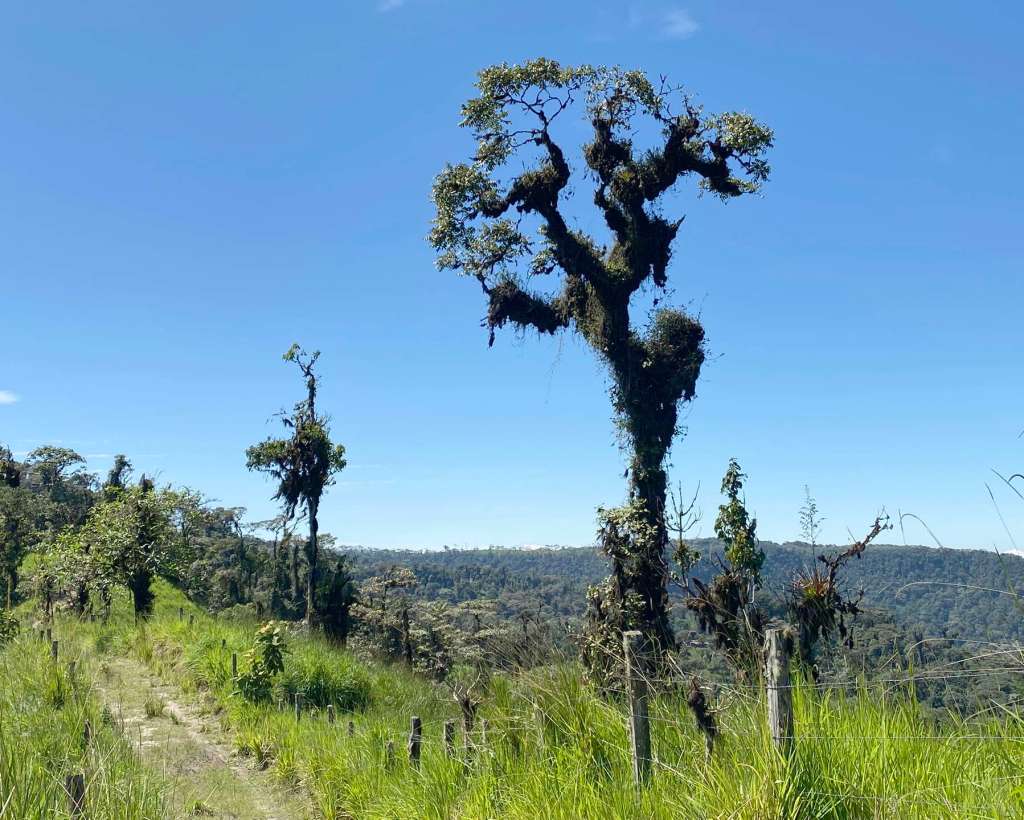
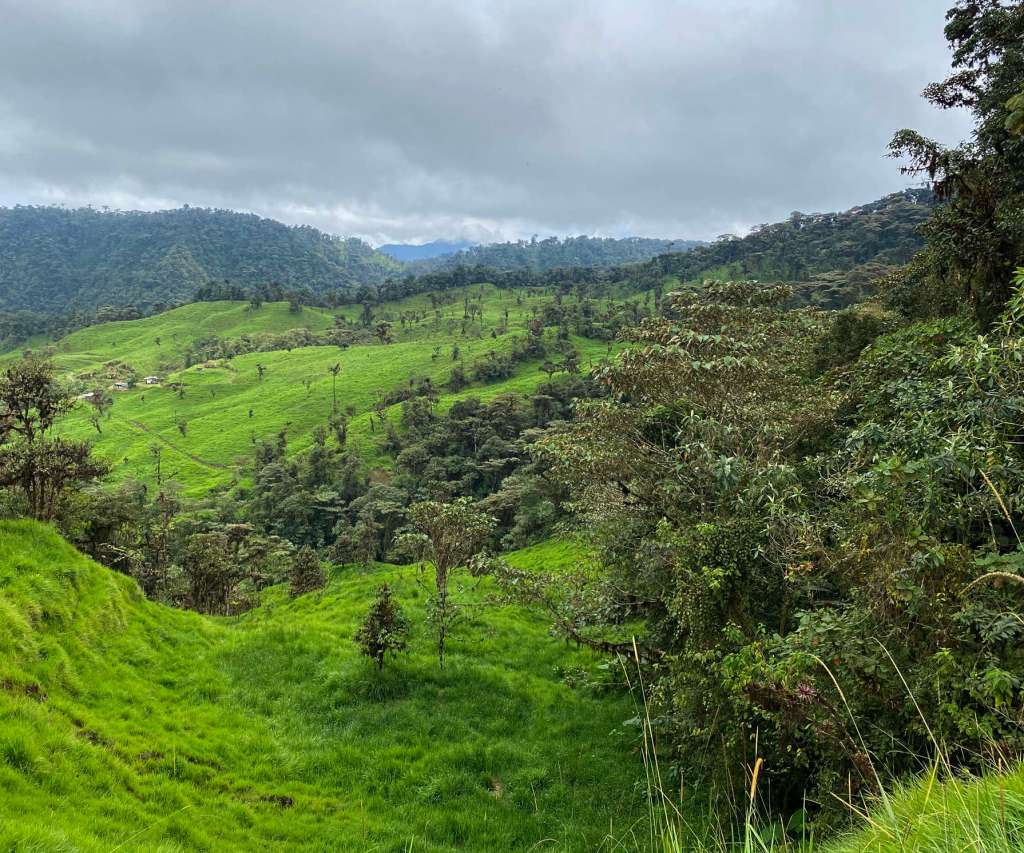
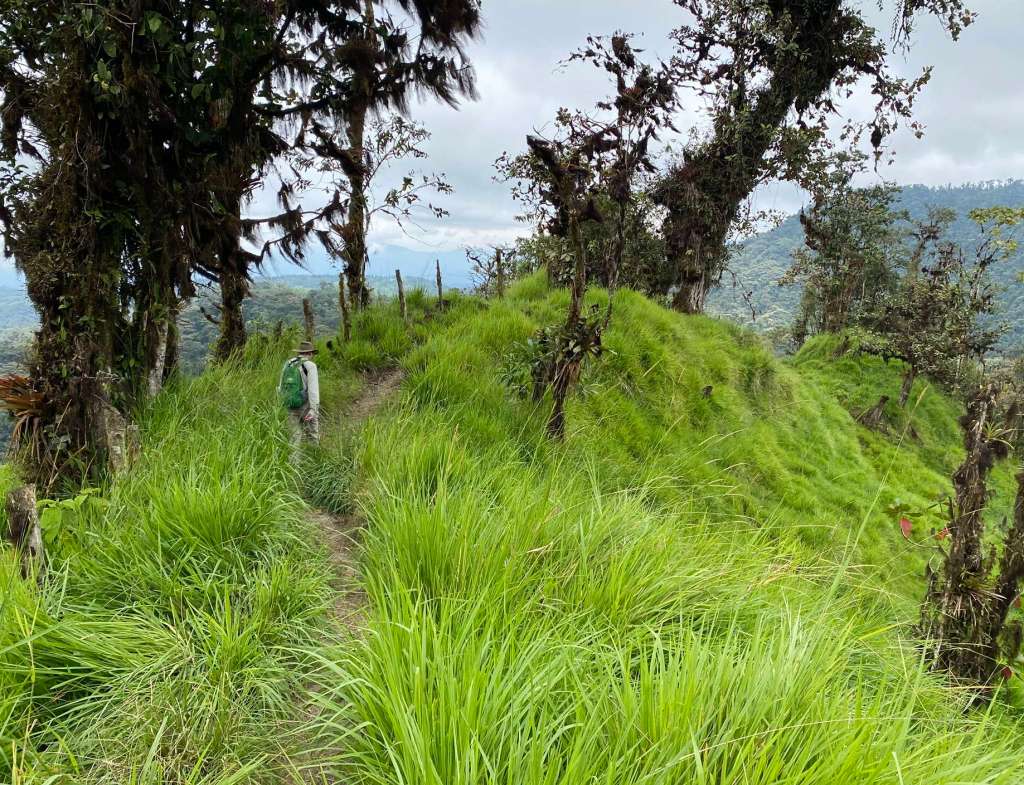
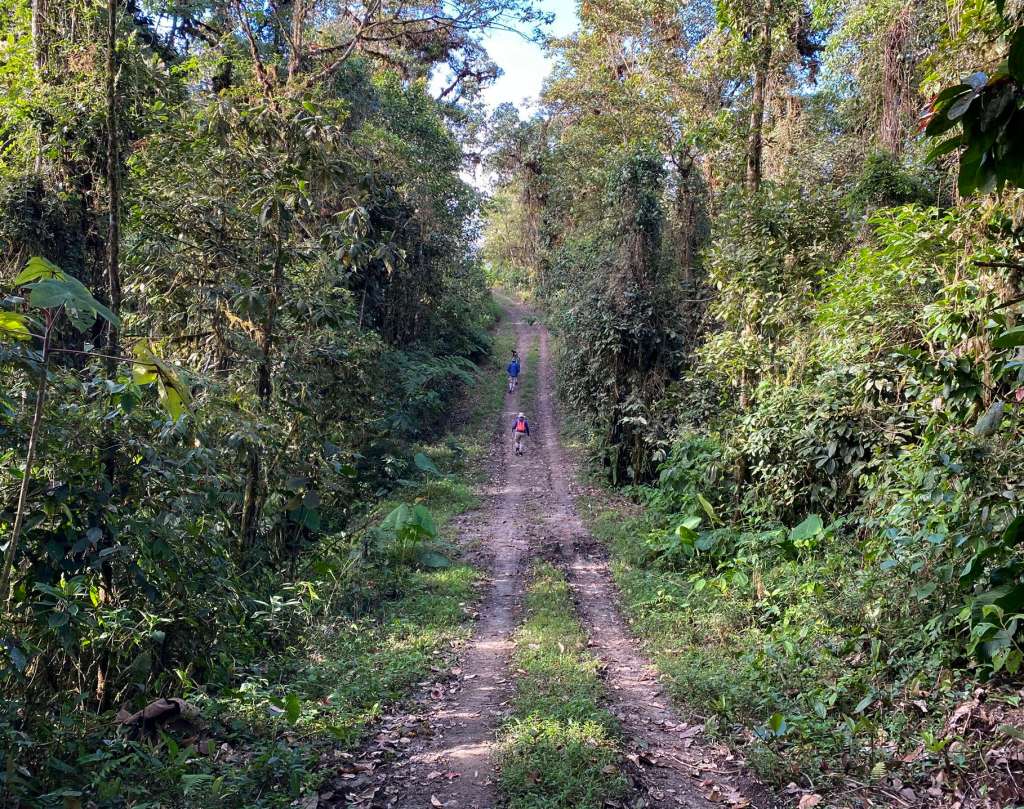
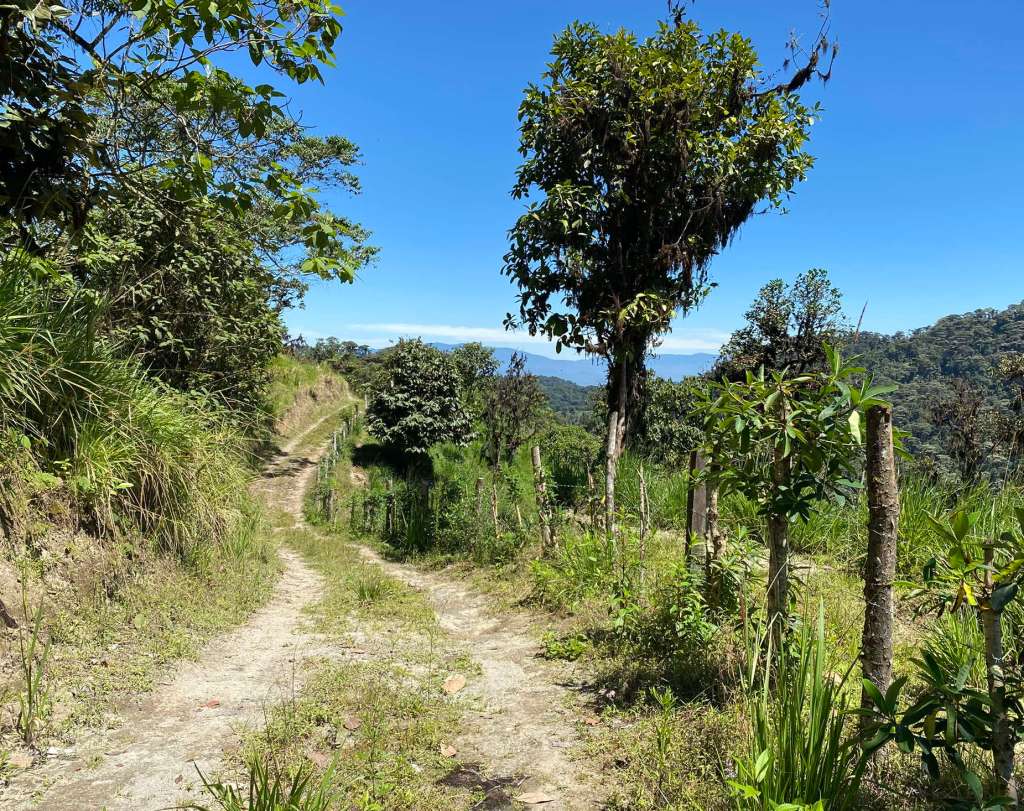
There is quite a mixture of trails, from muddy rainforest creeks to sun-dappled Antpitta trails to grassy ridges with stunning scenery on either side. The river that courses through the property is also quite lovely too, and we were lucky enough to see a White-Capped Dipper there. Overall, there is plenty of variety at this site and you won’t easily get bored.
Bellavista Cloud Forest Lodge
At 2200m altitude and sitting out on a large exposed ridge line, Bellavista Cloud Forest Lodge is an intriguing location. You can book here on a night-by-night basis (we stayed two nights), but also you need to be aware that access to the property is down very long unsealed, pothole-riddled roads. It’s definitely a place that feels a bit out of the way… in a good way.
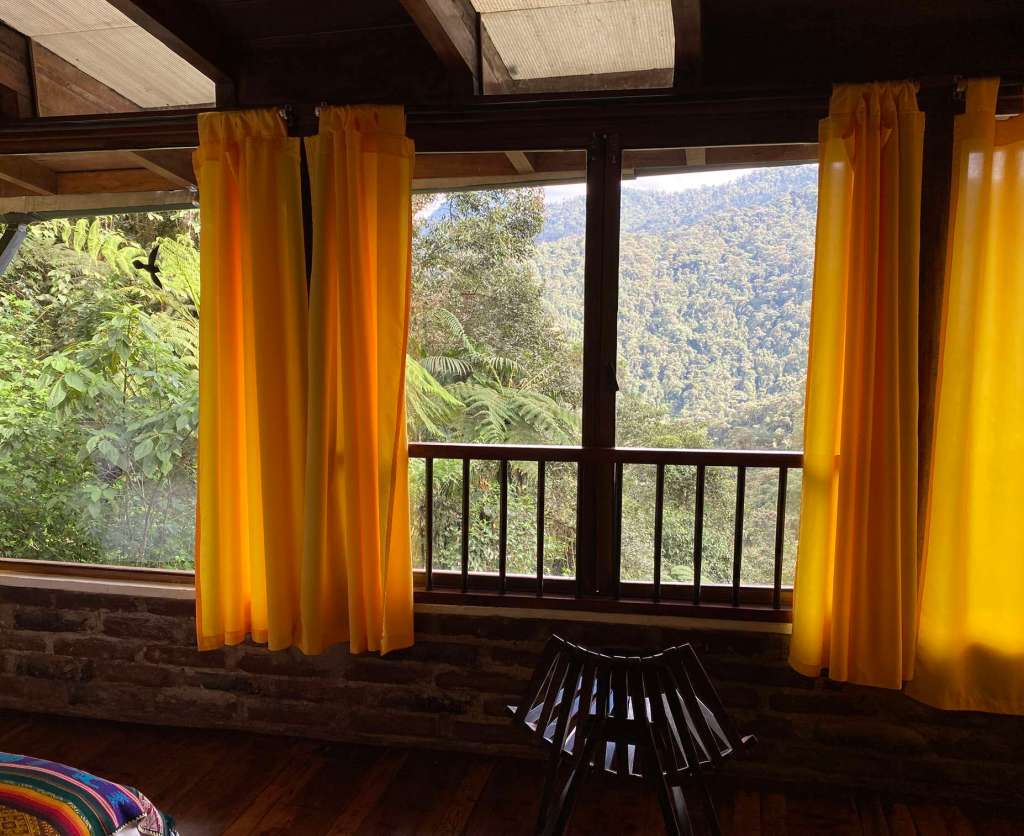
The lodge has an on-site nature guide who runs a morning and afternoon walk for a small fee, and while we were there he even spotlit a few animals high up in the trees at night. The lodge accommodation is very comfortable, with the whole lodge/admin area/restaurant hodge-podge of structures set in the trees having a distinctly cozy “Ewok village” feel.
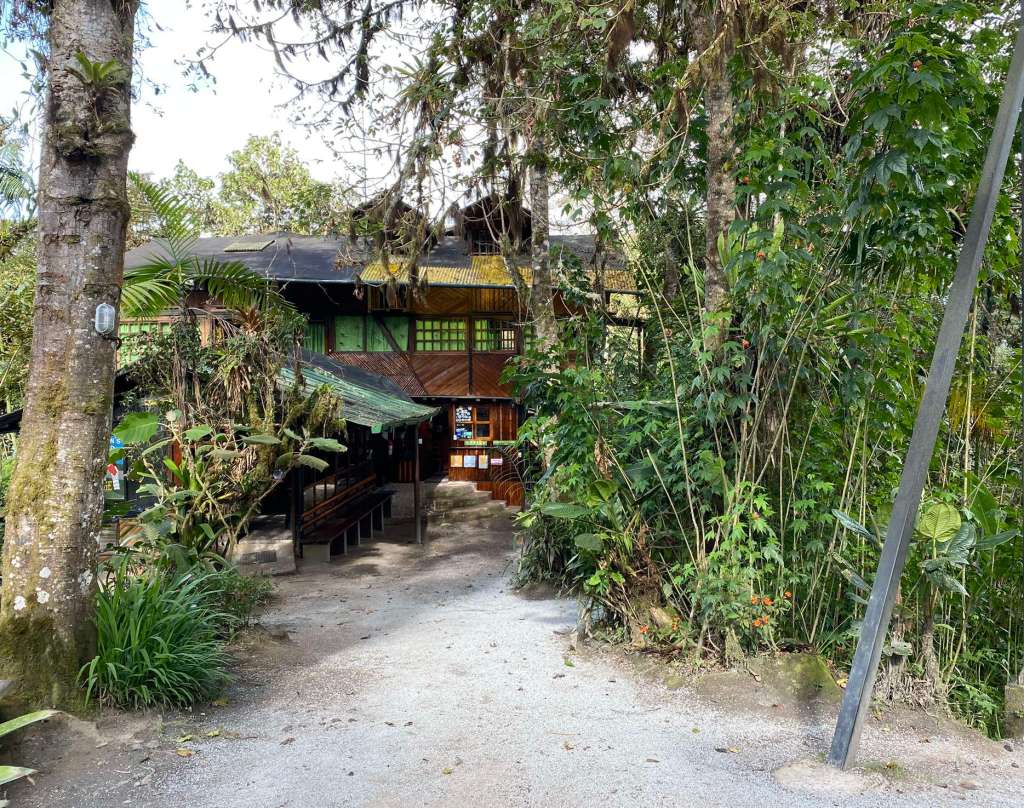
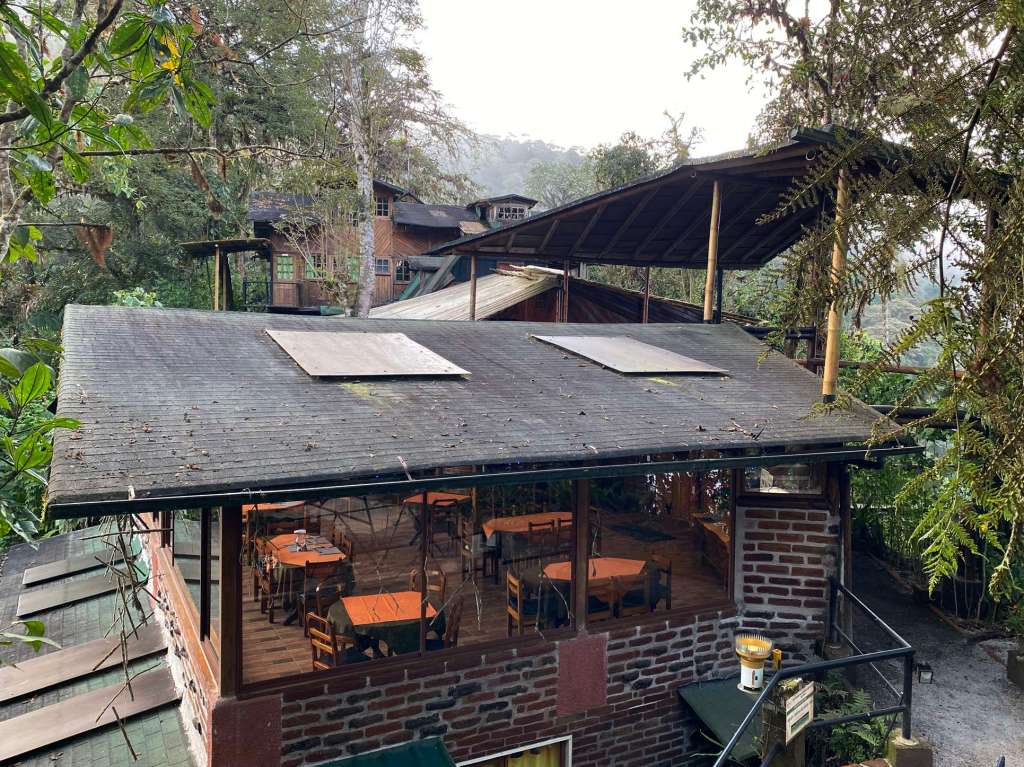
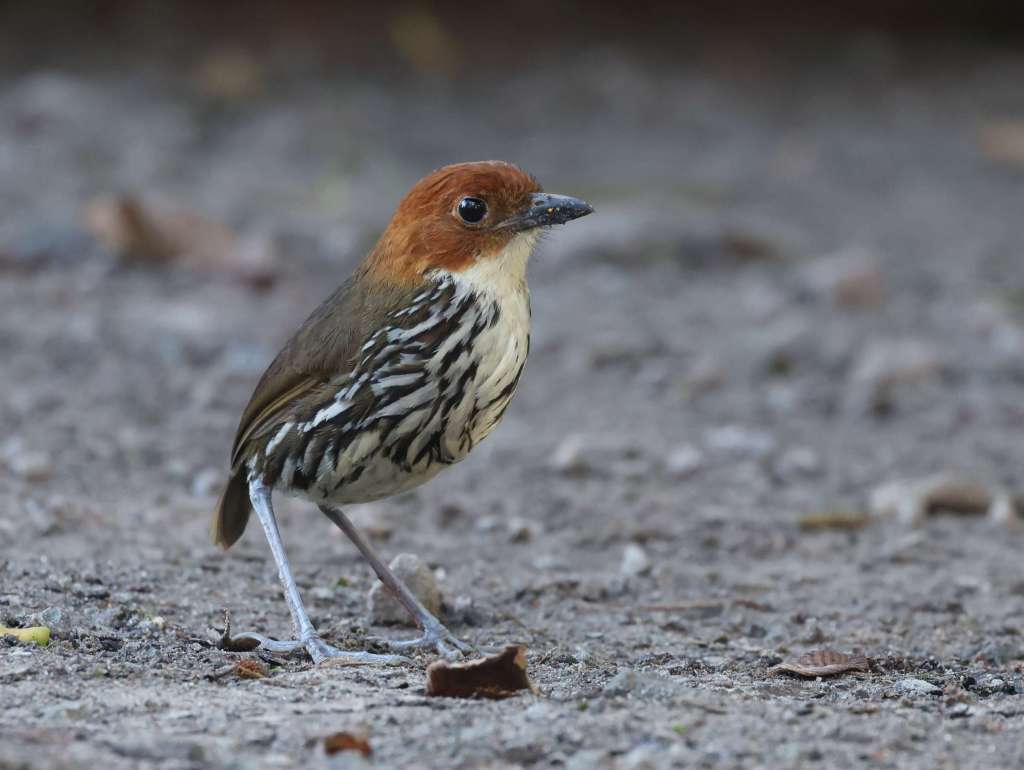
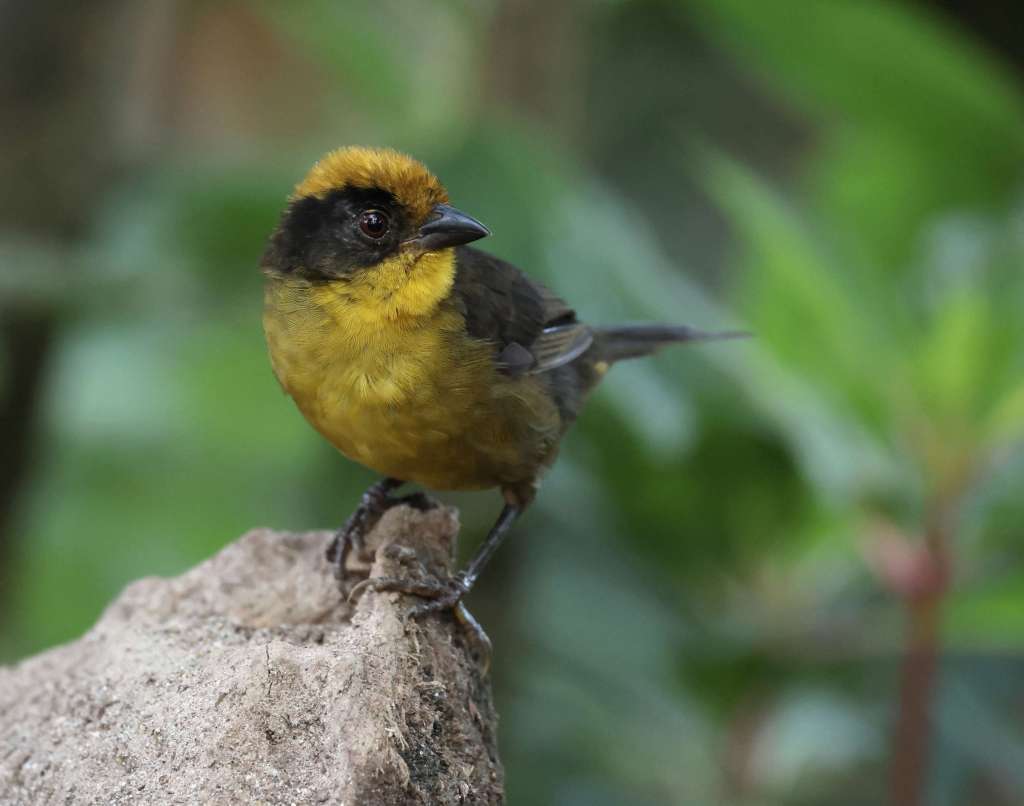
Now, as every seasoned birder knows, many great birds can be found simply by hanging out at the car park, and nowhere is that more true than at Bellavista Cloud Forest Lodge, where the car park doubles as the lodge’s entrance area. The wonderful Chestnut-Crowned Antpitta, sporting the classic “ball on sticks” shape of most antpittas, came right out in the open car park early one morning to forage for bugs on the gravel surface. It even poked its head under a car. No feeding required. Crazy stuff! The yellow and black Choco Brushfinch also came out into the open a couple of times too.
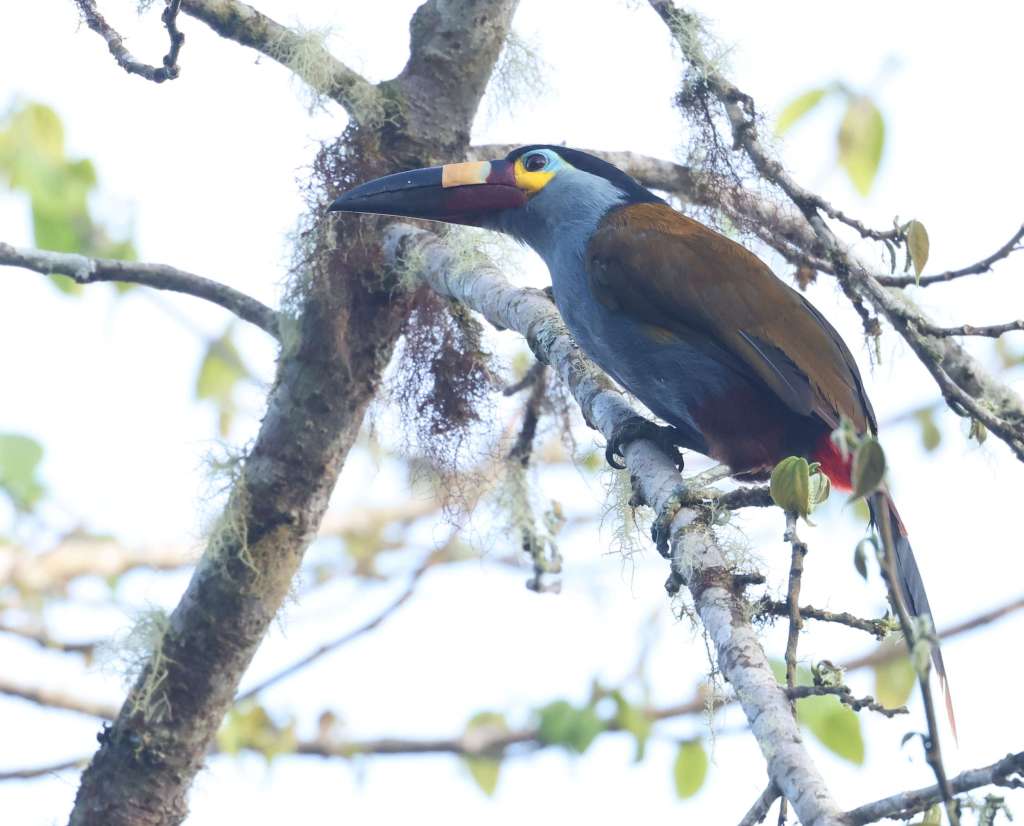
Although only a few hundred metres different in elevation from other well-known sites in the region, that is enough to dramatically change the mix of bird species and their relative frequencies at Bellavista. It also makes the site noticeably cooler in temperature too. The higher altitude species include the much sought-after Plate-Billed Mountain Toucan, which – yes – we did see in trees above the car park area. And a big, colourful toucan it is!
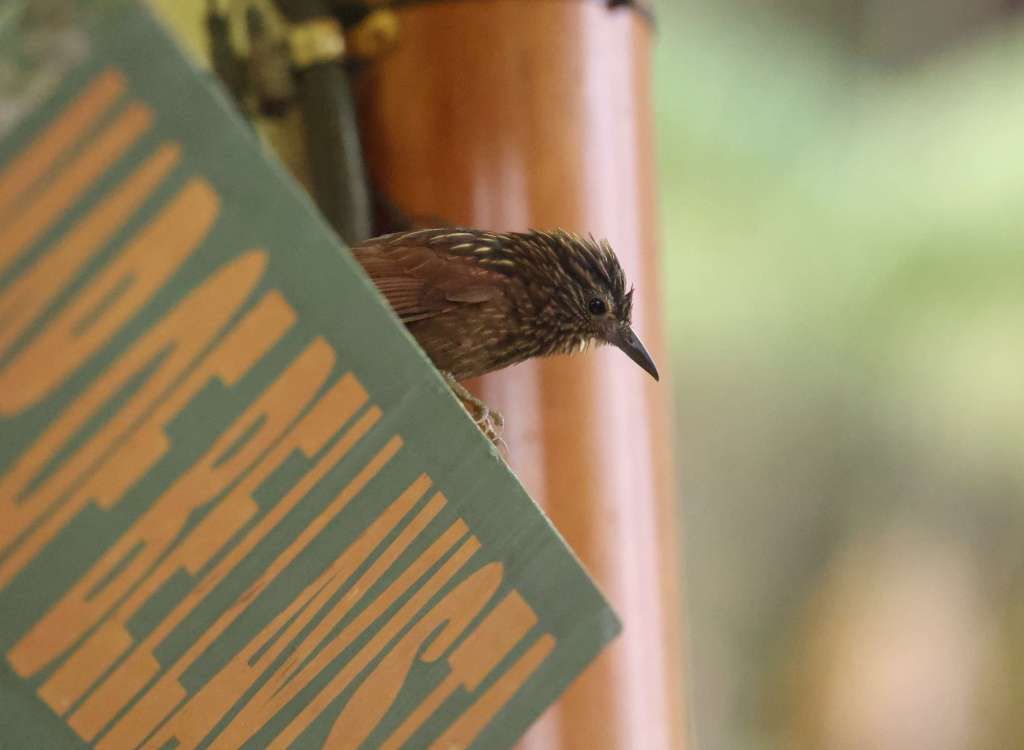
Striped Treehunter is listed as the site’s most Iconic Bird, according to the new eBird feature which dropped in early 2026. We saw one very early one morning, hunting on the edge of the car park. And my personal favourite of these creeper birds, the Strong-Billed Woodcreeper, was also well in attendance.
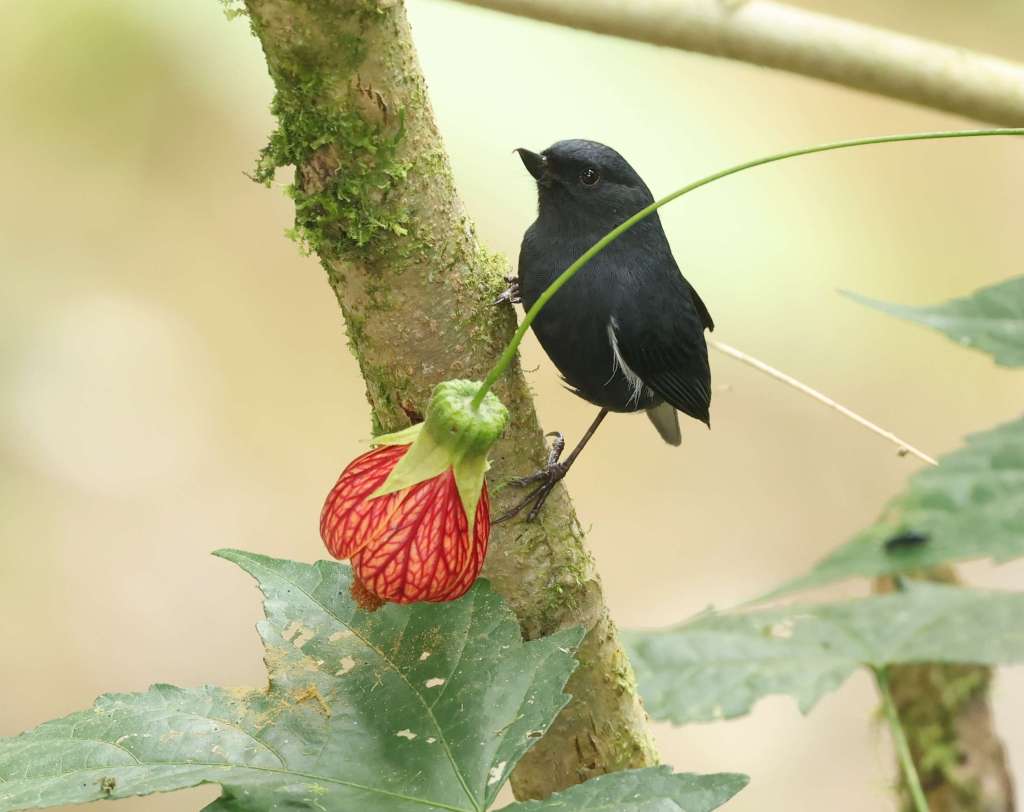
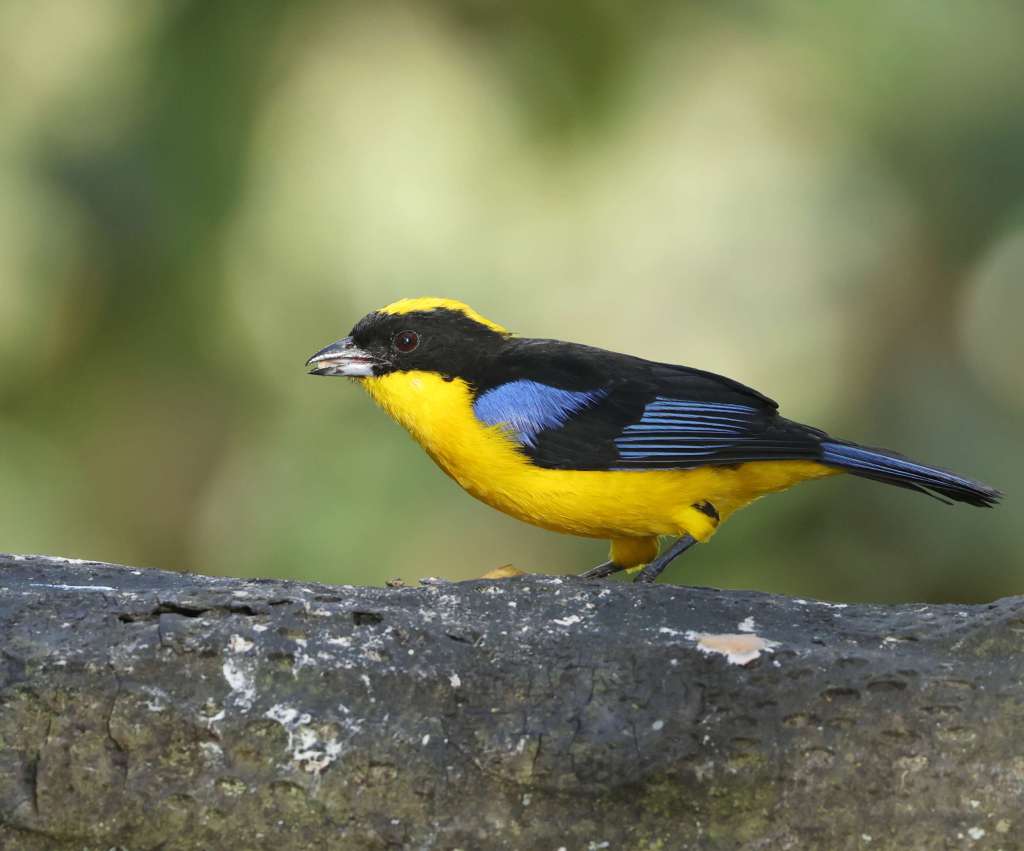
I got my best look at Black Flowerpiercers here, though they are seen readily at quite a few other places including in Quito. A modest tanager feed station (stocked with the usual bananas) attracted some super-cute Blue-Winged Mountain Tanagers. Grass-Green Tanagers are supposed to be pretty common here too according to eBird, but sadly I did not see any, relegating that bird to the “seen once and never again” category (I had seen it previously on the Andes East Slope).
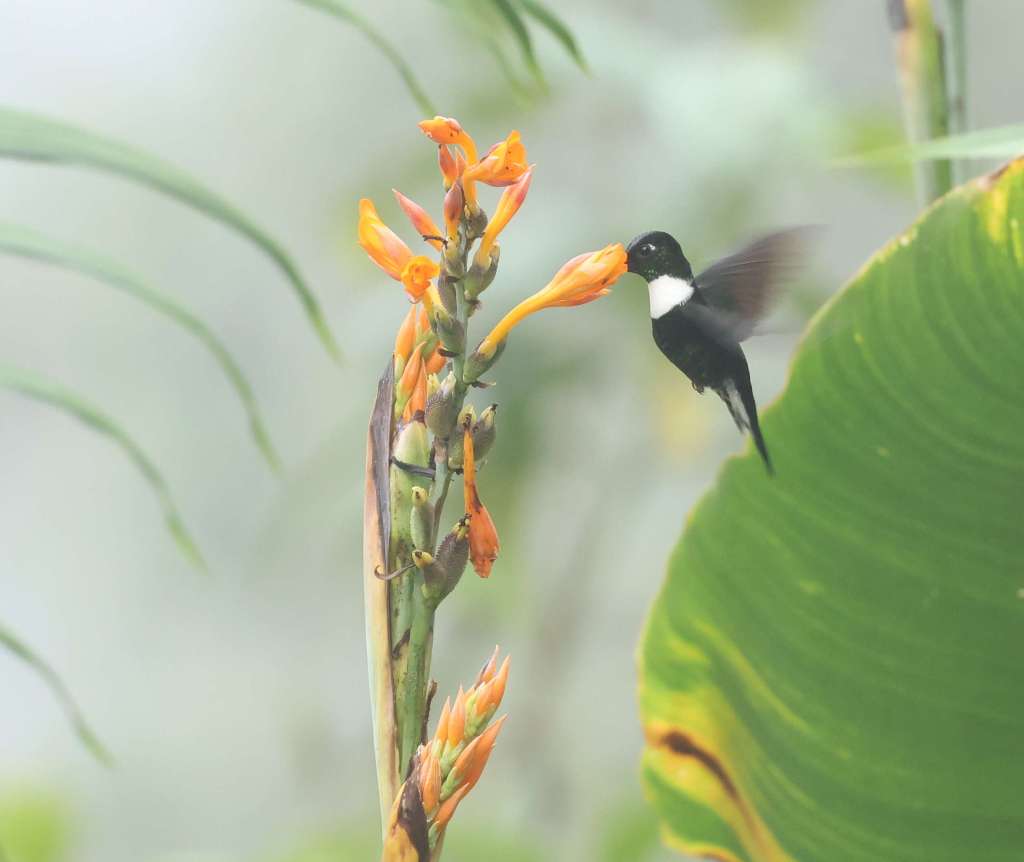
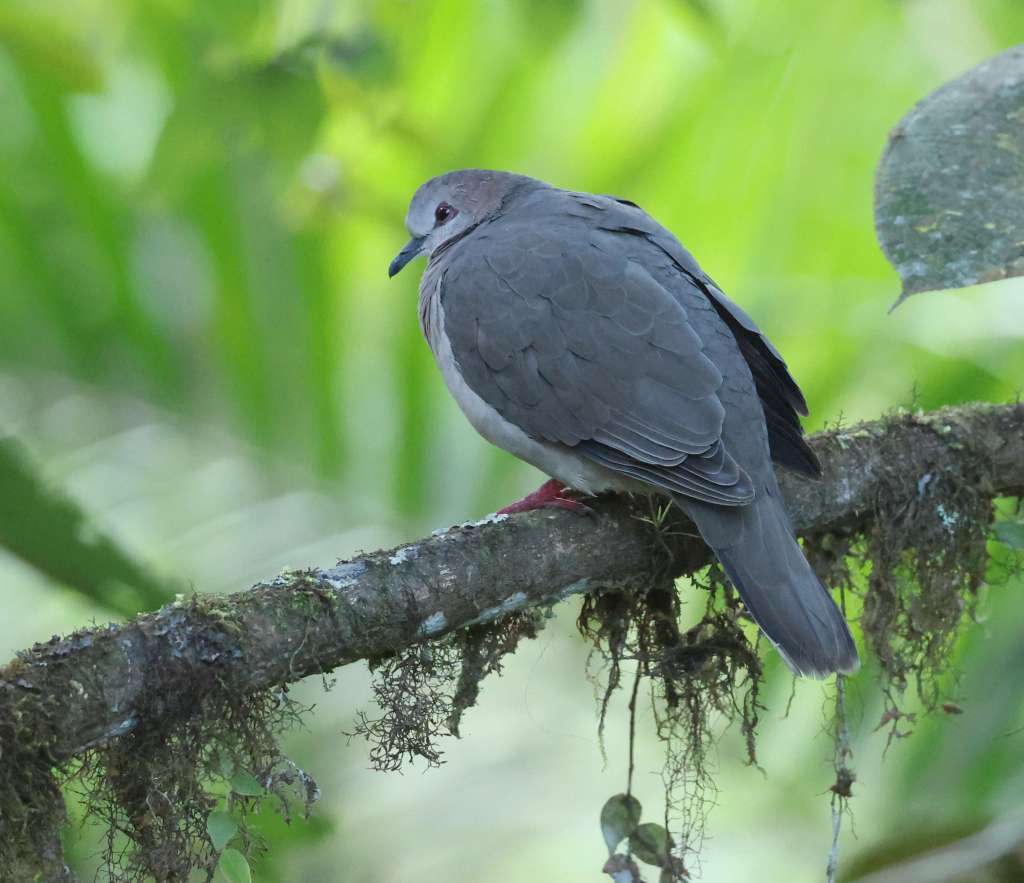
There are a couple of hummingbird feeders at the lodge, and when the local Buff-Tailed Coronets aren’t zealously guarding their favourite feeder and bullying off other hummers, you can see a few different species. Speckled Hummingbird is one of these, while Gorgeted Sunangel is also super reliable. Collared Incas were around too.
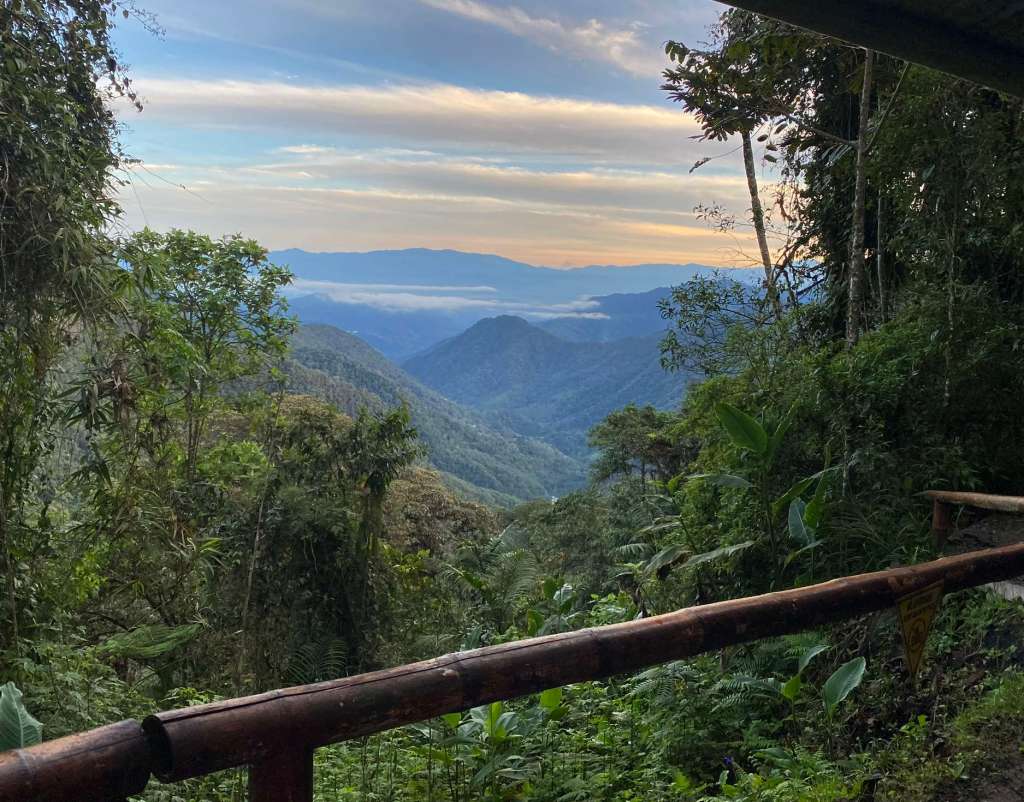
There is a decent trail network at this site with each trail handily designated with a letter of the alphabet and a difficulty level – some are quite steep and a little muddy (I imagine a lot muddier when it rains more than it did when we were there). Some sections of trail (and a few spots at the lodge) afford spectacular views out across the Tandayapa Valley, where Barred Parakeets would sometimes raucously fly by; we saw a flock of 70 at one point.
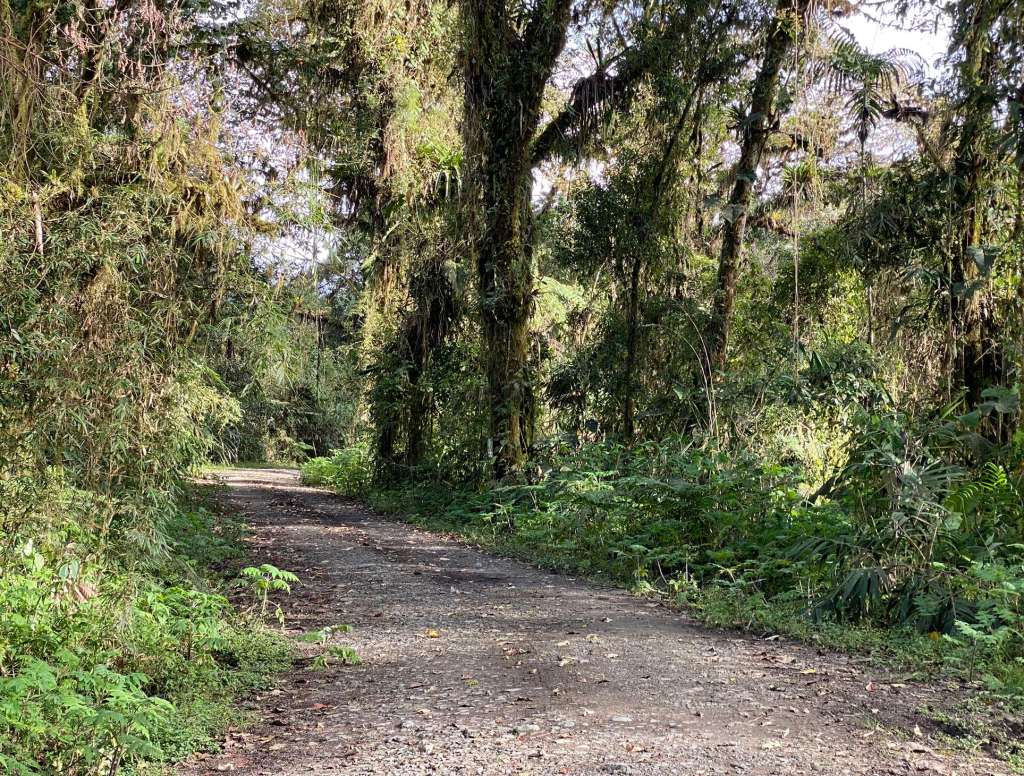
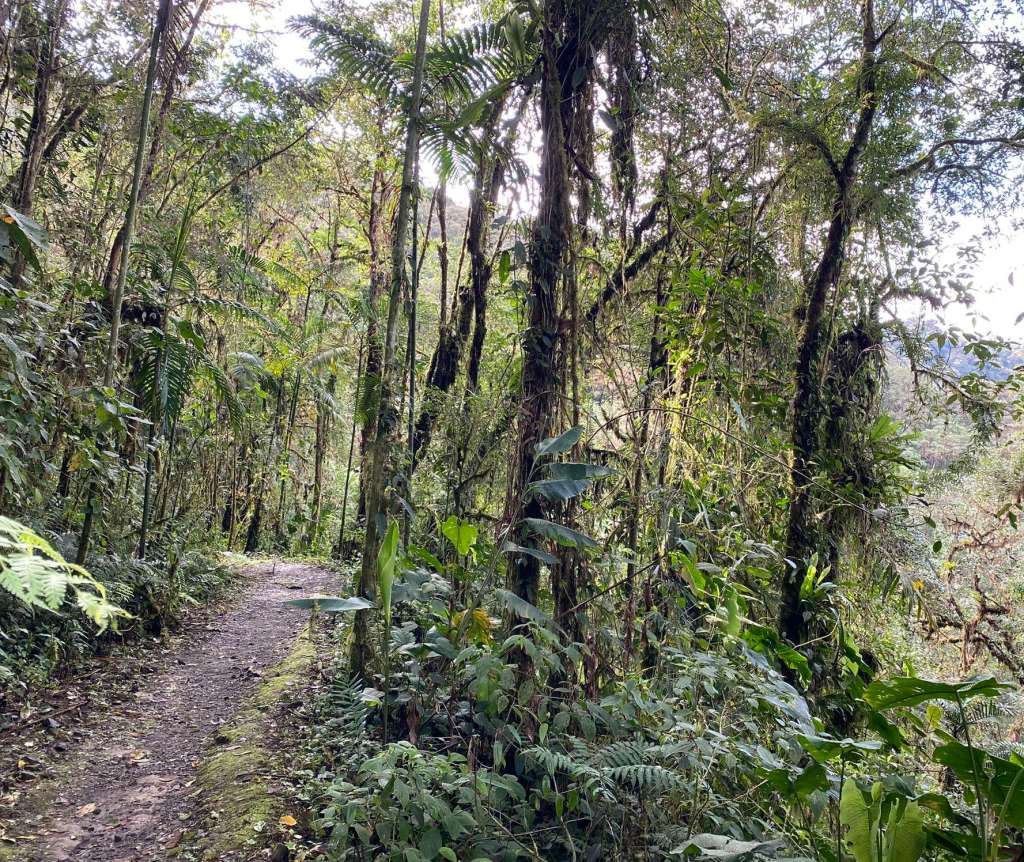
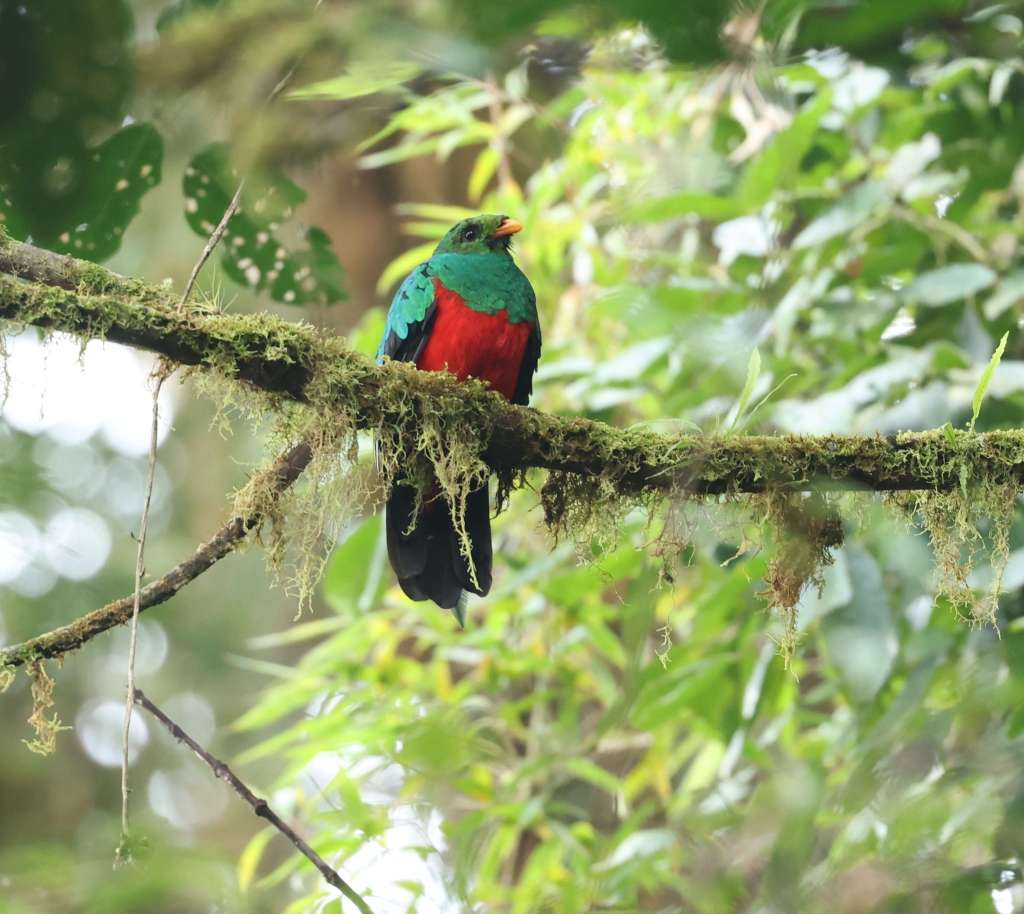
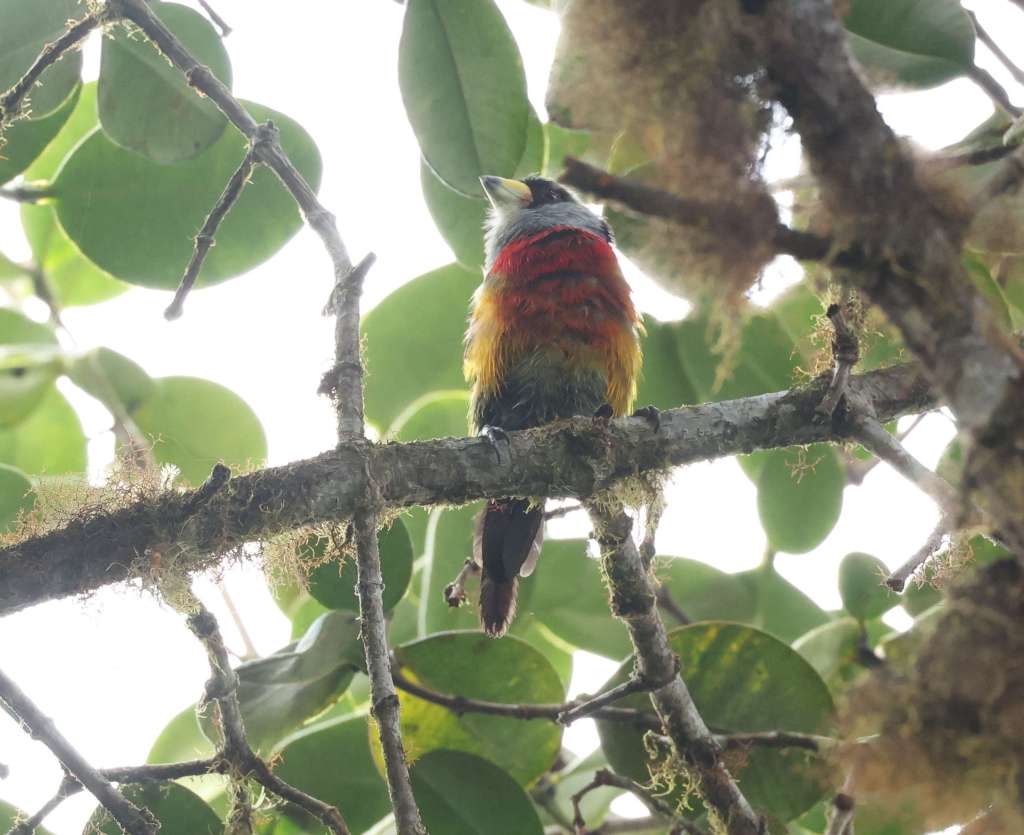
There weren’t many people around while we were there, so the trails were pretty unpopulated. We did – very luckily – come across a Crested Quetzal, and also high up in the canopy, a Toucan Barbet, both very desirable species to find.
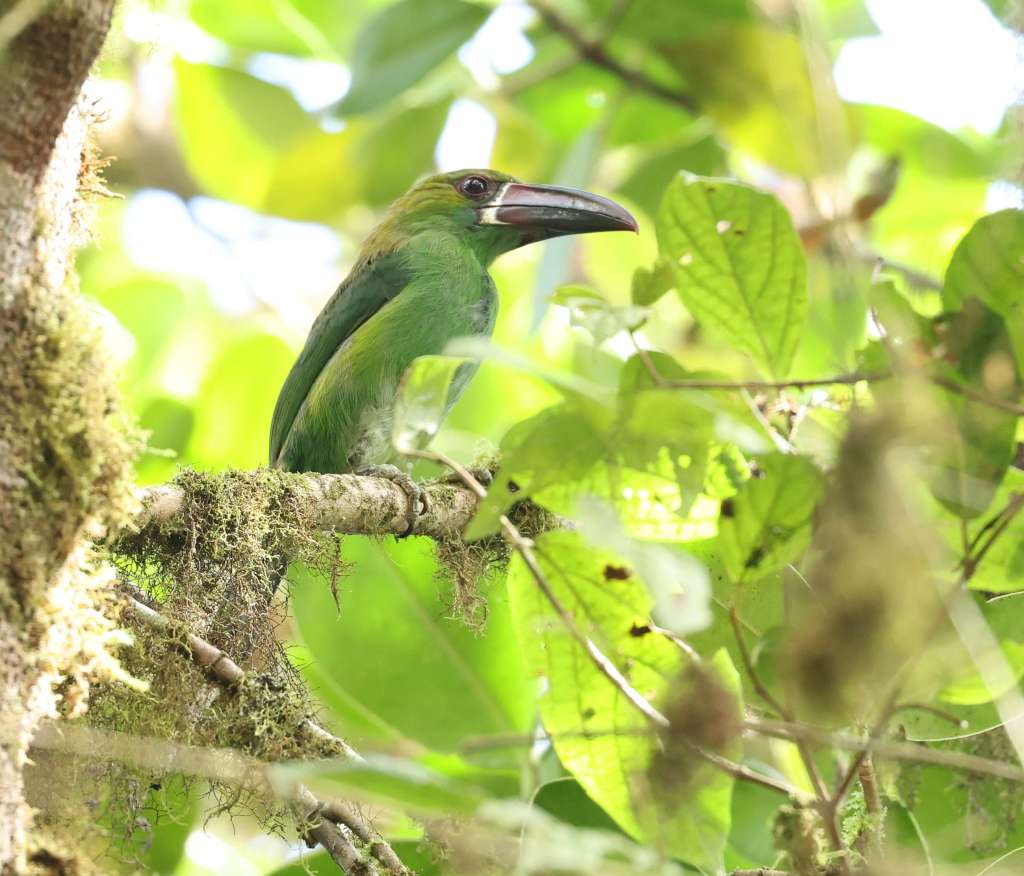
Some of the trails ascend and intersect with the nearby road, which runs along a ridge and, being a bit wider than your bog-standard rainforest track, is good for spotting birds. Here we saw Crimson-Rumped Toucan, which was super cool.
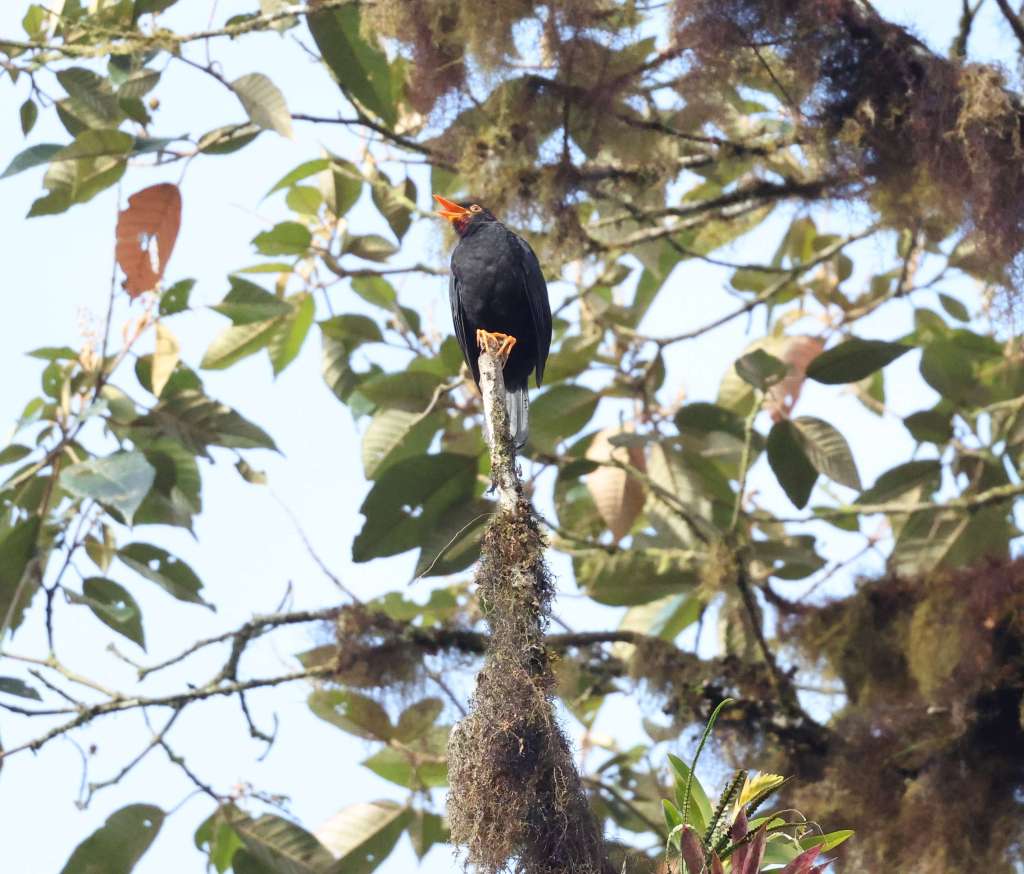
Glossy-Black Thrushes are usually only found in cloud forests and eBird points out that they “tend to stay hidden, but males sometimes perch up to sing at dawn and dusk”, and oh boy that was our experience. We heard one high up late one afternoon and we diligently searched for it, constantly climbing higher up the trail with our necks craned upwards, thinking it must be “just around here somewhere”, finally locating it after maybe 15 minutes of puzzled scanning – and it was still much higher up than the trail’s ground level, with its call echoing all around from its proud perch. Sometimes you really have to work for a bird!
I liked the general vibe of Bellavista and the array of birds and animals we saw, and 48 hours there didn’t feel like long enough. We certainly missed the majority of its 460 recorded species (ha ha) including the some listed by eBird as “iconic”, like Plushcap and White-Faced Nunbird.
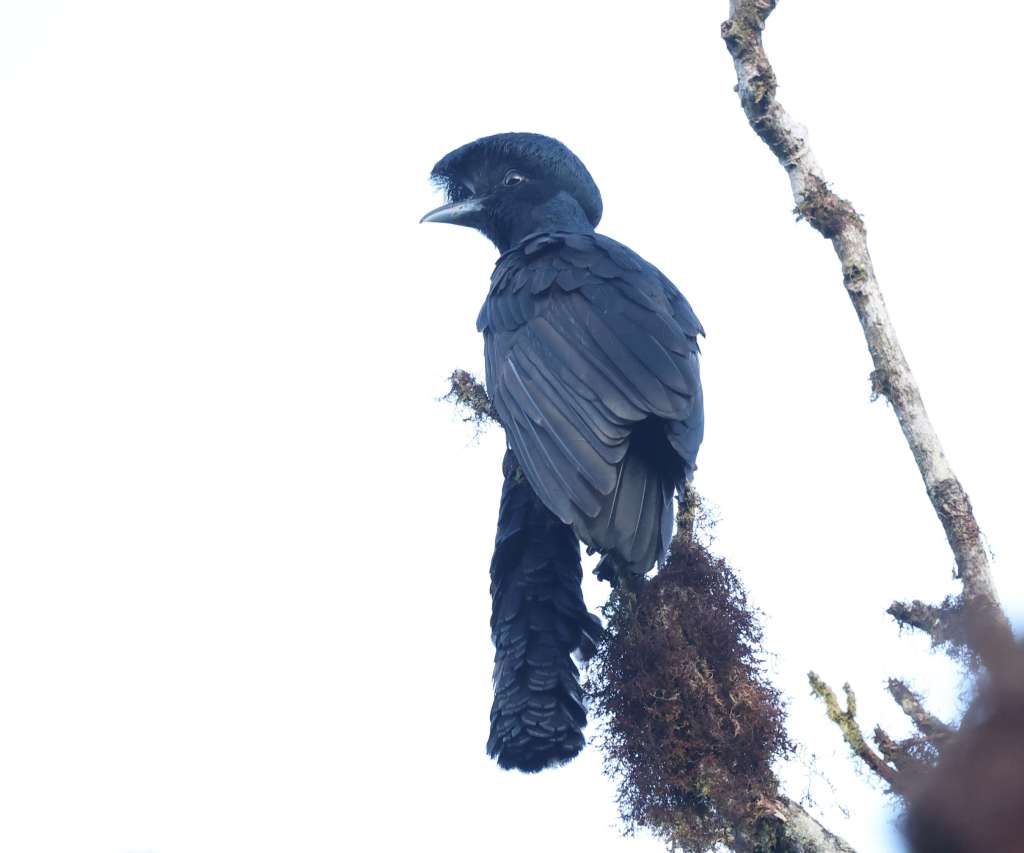
Long-Wattled Umbrellabird Reserve
In the community of Recinto 23 de Junio, south of Los Bancos and west of Mindo town, is an intriguing mixture of farmers and conservationists, whose claim to fame from a birding point of view is custodianship of a stable population of the rare and extraordinary Long-Wattled Umbrellabird. We spent a couple of hours there early one morning. Before the sun was even up, we had spotted a Golden-Headed Quetzal, though it was fiendishly obscured by foliage and heavily silhouetted.
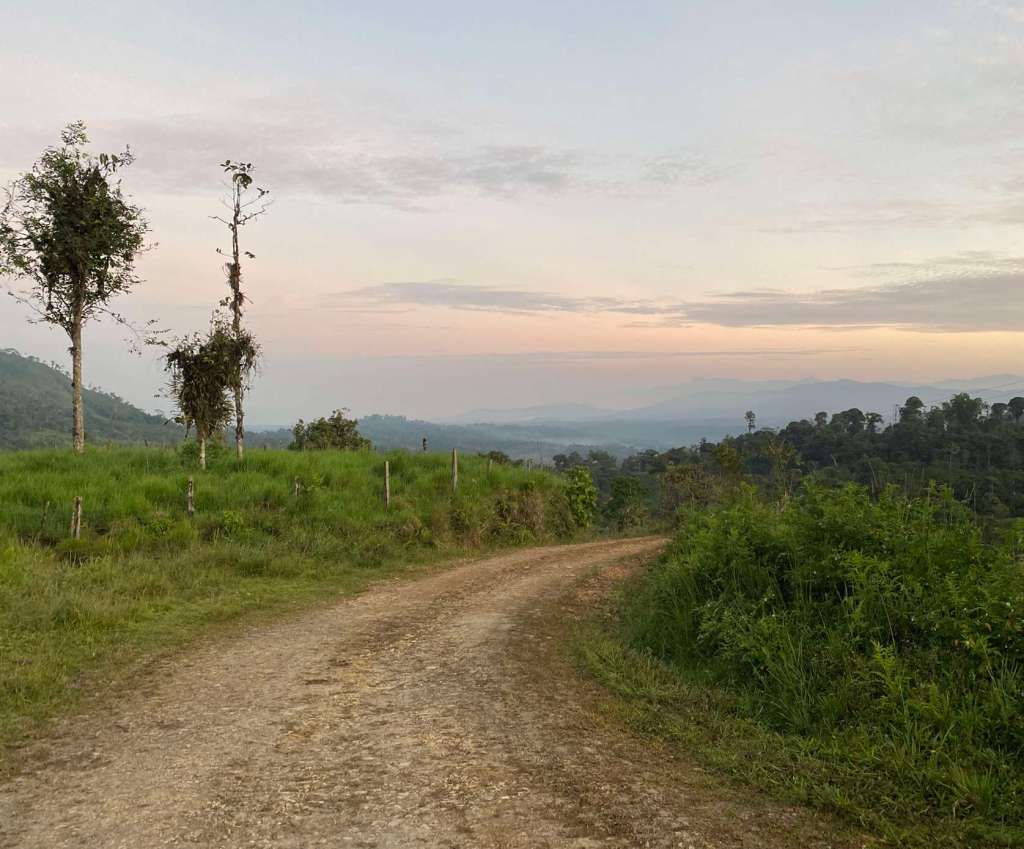
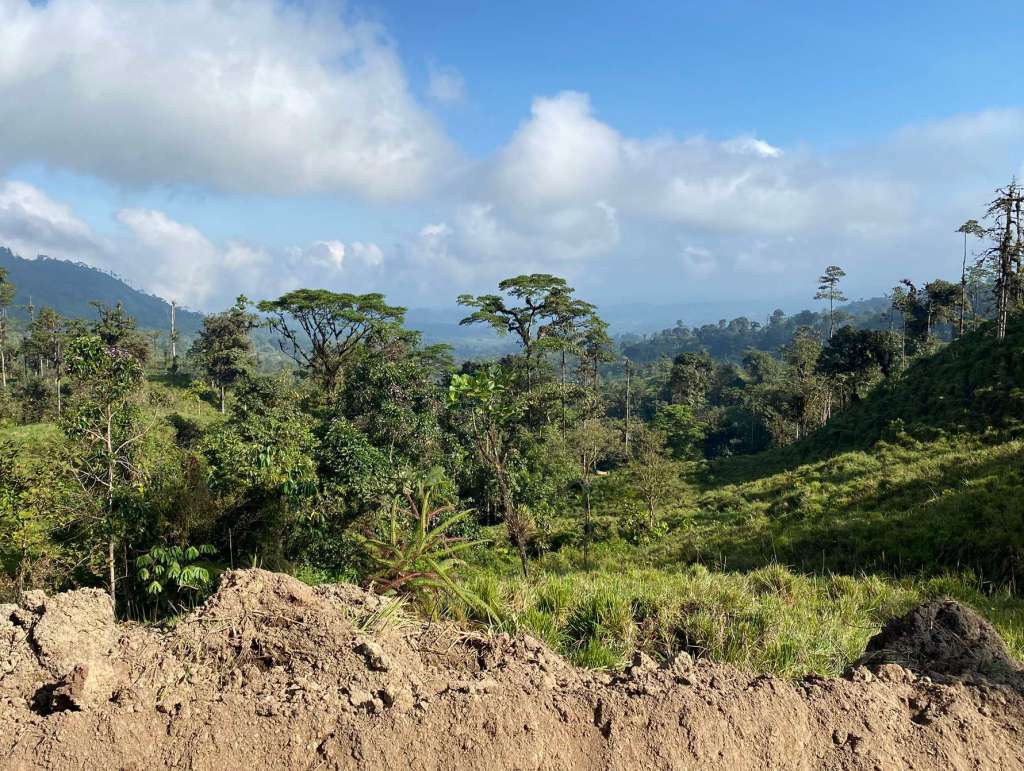
The reserve lies at around 1200m altitude, and we had to walk what looked like old farm tracks and cross a creek in order to arrive near the Umbrellabird’s lek. A lek is a spot where male birds congregate for display, to try and impress a (usually solitary) female.
Sure enough, several males flew in right on schedule, and we were afforded a good look at a couple of the males. The length of the male’s hanging wattle (used to amplify their loud, booming mating calls, and I suppose, just for sheer showing off too) can be controlled through muscular contraction and inflation; it can be retracted in flight. Truly a weird bird feature!
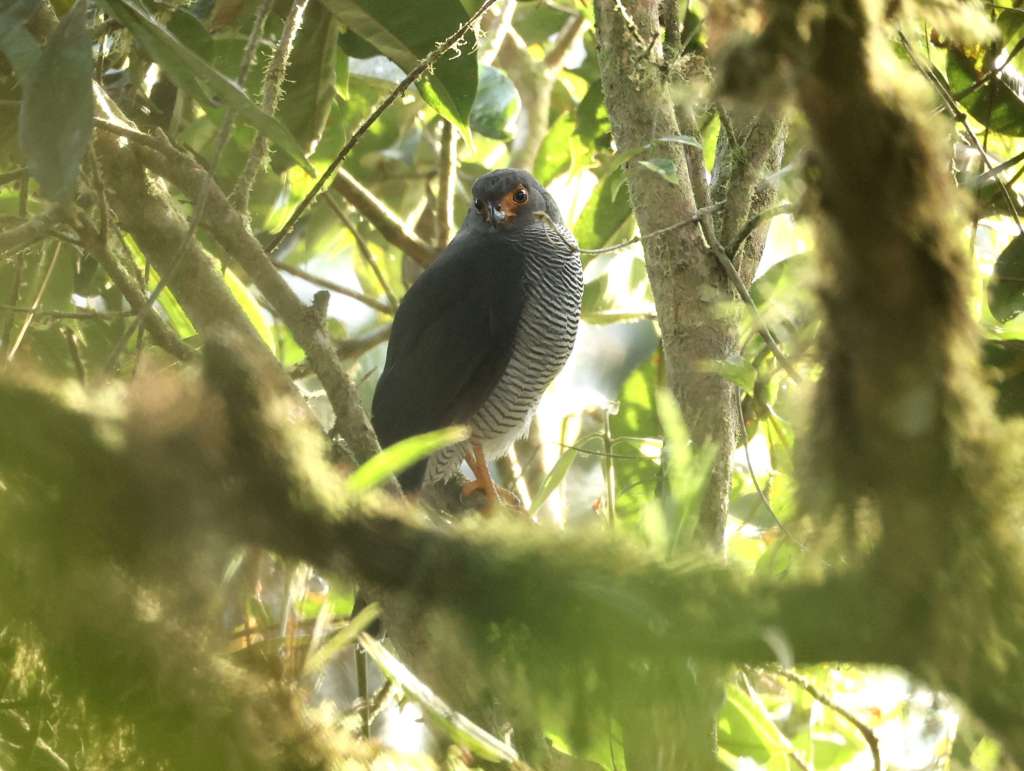
The other really notable bird (and another lifer!) here was a Barred Forest-Falcon. I had heard various Forest-Falcons in the depths of Costa Rica and Ecuador before, but had never laid eyes on one, and this one gave our little birding group a merry chase before giving us a distant-but-mostly-unobscured view.
There is a tasty selection of hummingbirds here, attracted by the feeders which are set in a natural clearing lined by trees. Violet-Tailed Sylphs are always welcome in my book (those electric blue tails!), as are White-Booted Racket-Tails (those fluffy white “booties”!), and we also saw Tawny-Bellied Hermit, and Brown Inca, with its trademark white spot on the shoulder.
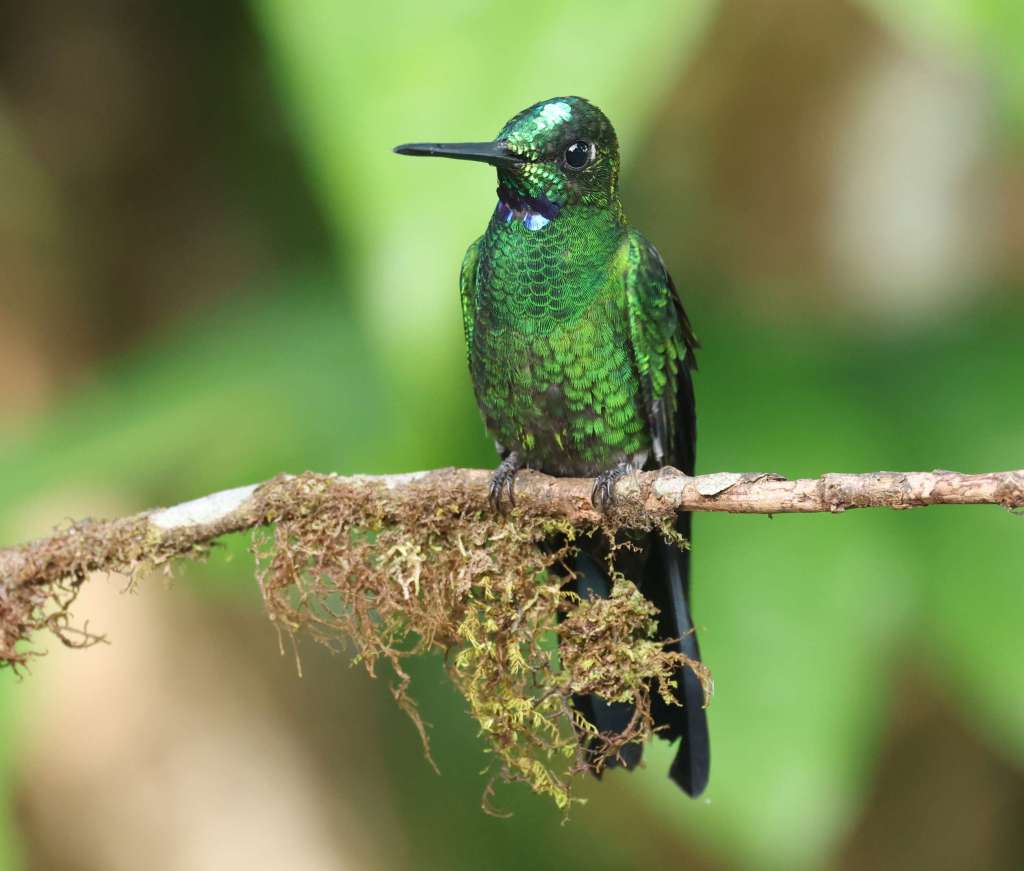
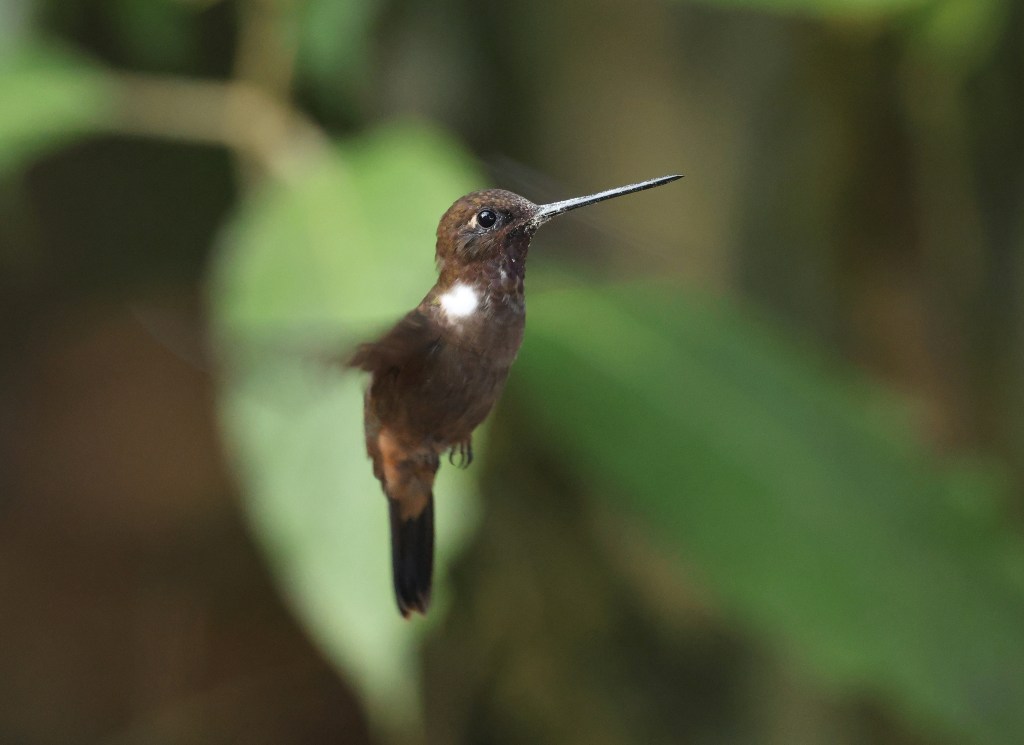
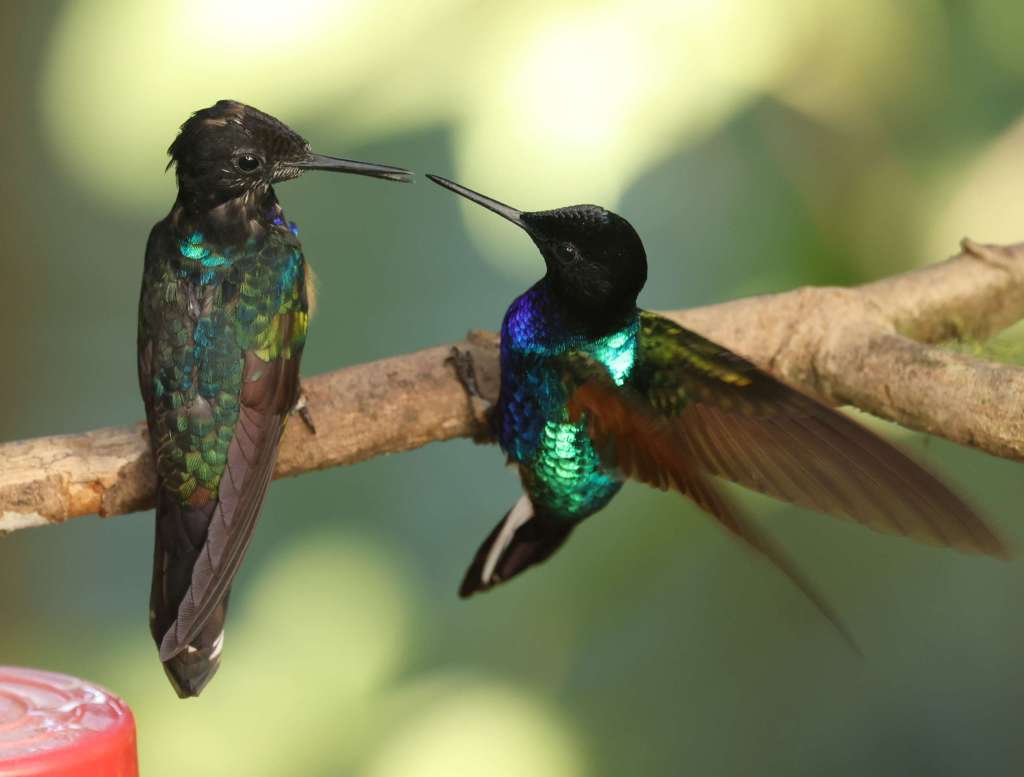
A few Velvet-Purple Coronets were getting a bit jousty, while we got a very good look at the stupendous Empress Brilliant.
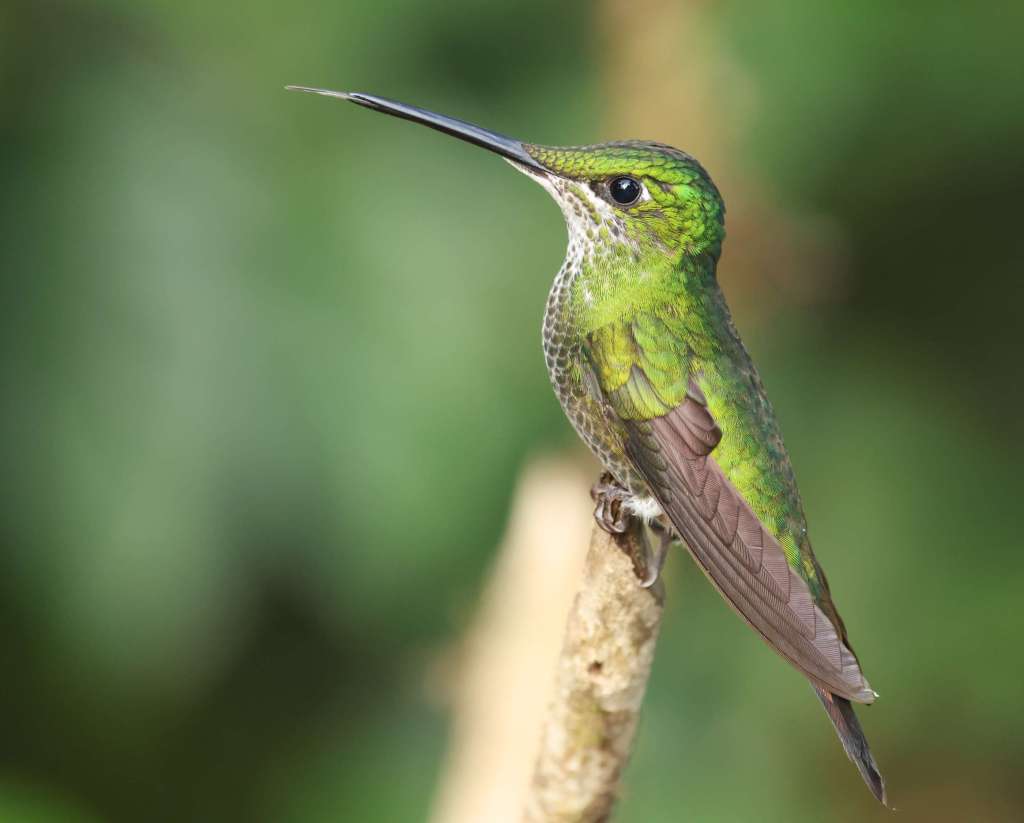
Purple-Bibbed Whitetip is another nice hummer species which we saw here too.
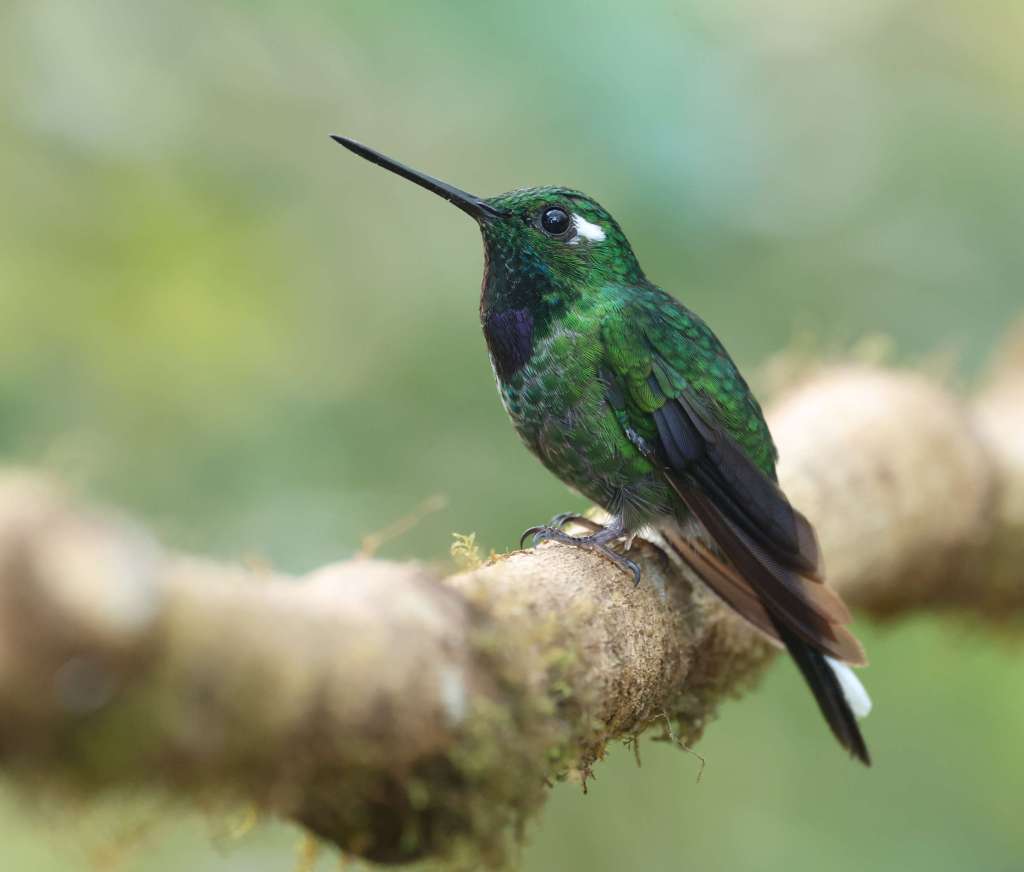
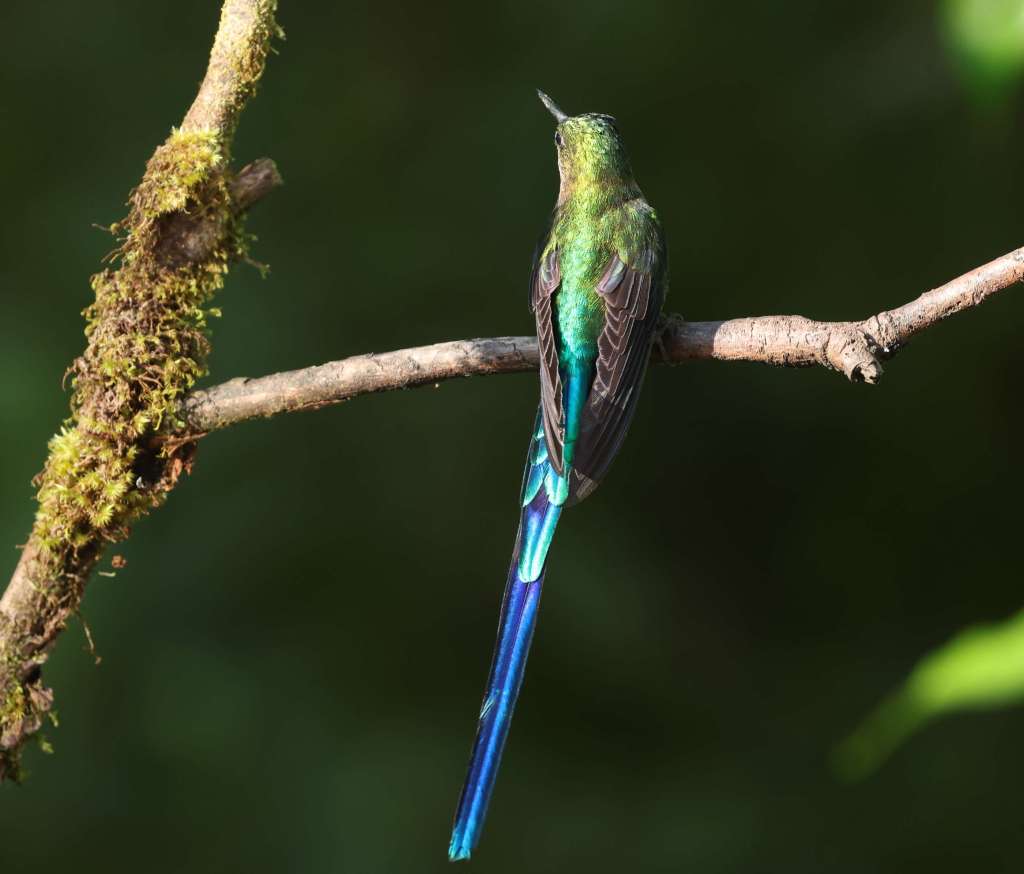
Hmmm, I seem to have hijacked the section on the Umbrellabird Reserve with a bunch of hummingbird photos. Funny how that happens!
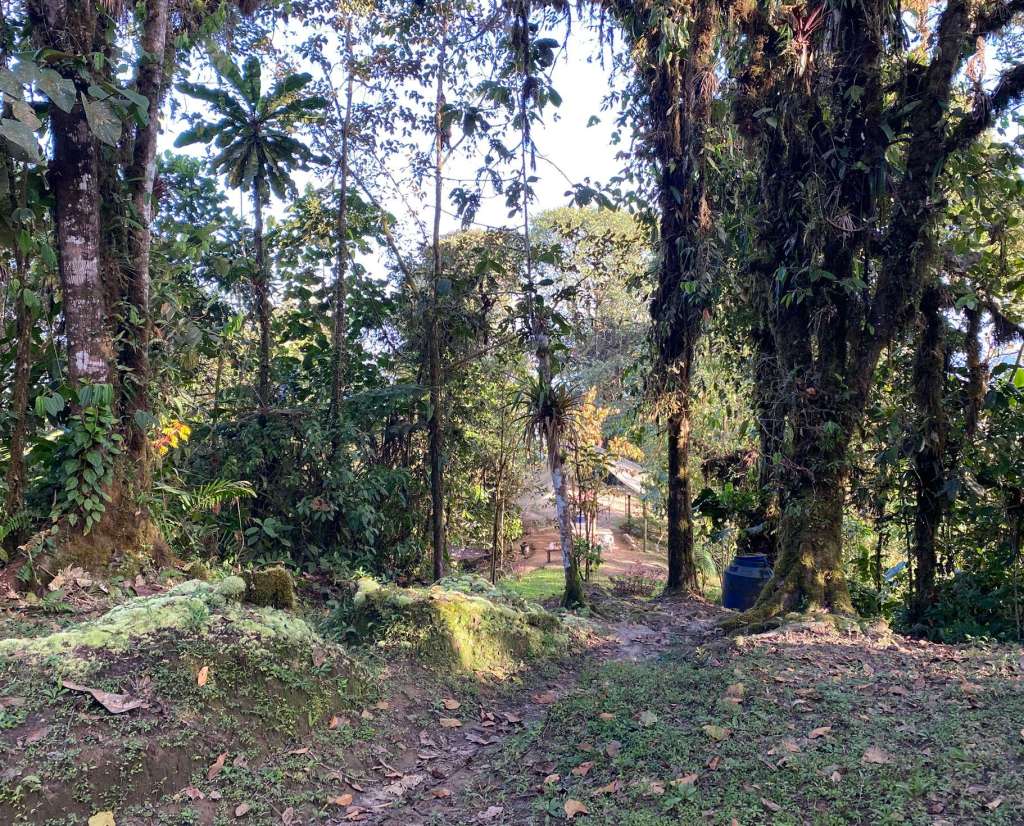
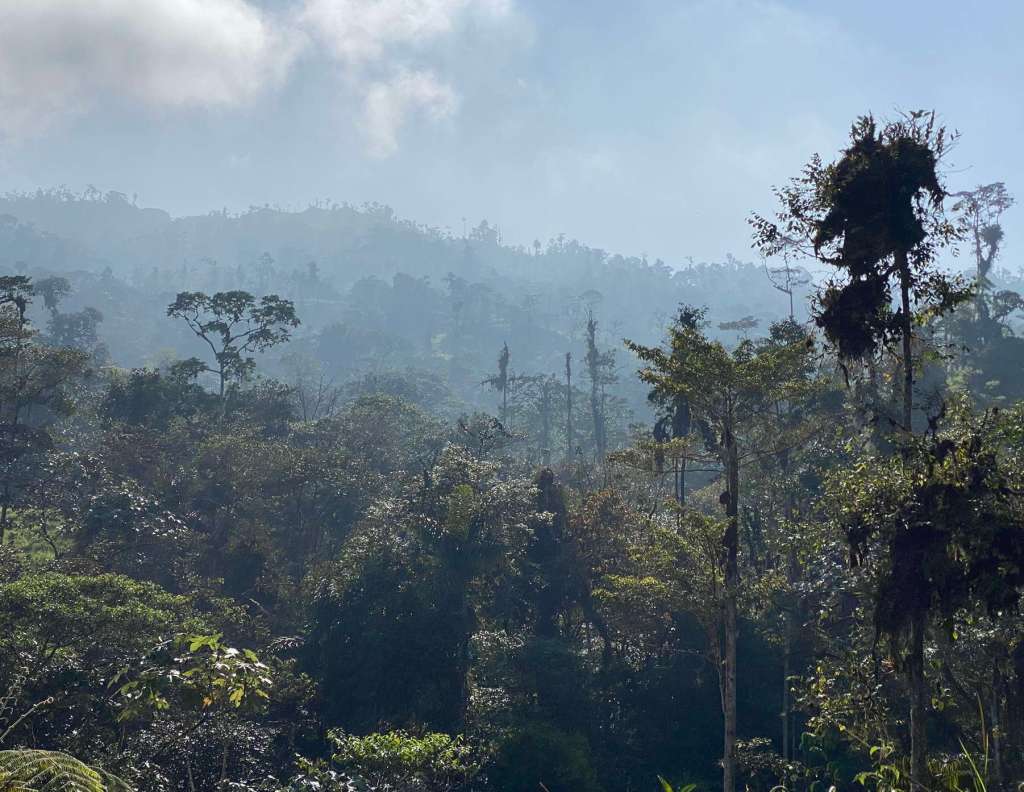
A few other birds we saw included a far off Pale-Mandibled Aracari, a flock of a dozen Bronze-Winged Parrots, and various assortments of Tanagers, Seedeaters and Yellow-Bellied Sikin, while a mammal highlight was a very distant group of monkeys (I think Howler Monkeys, unsure).
Reserva Mashpi-Amagusa
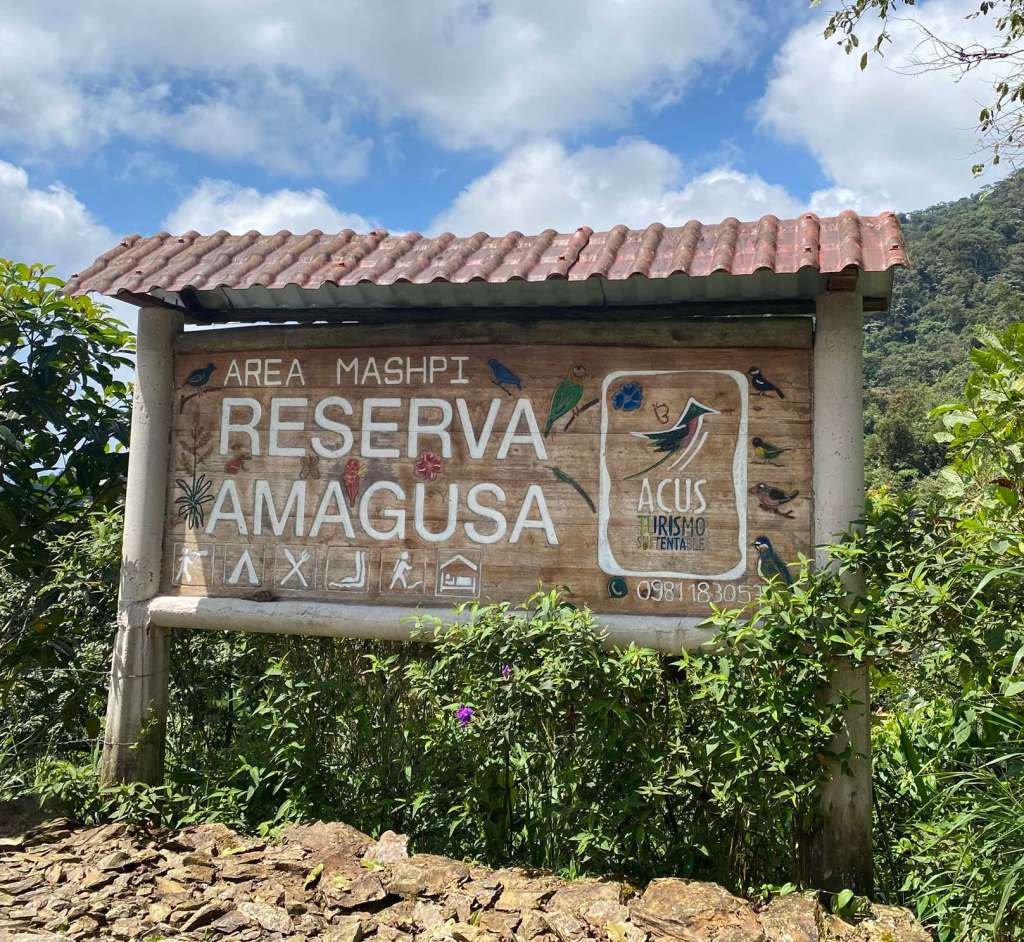
Reserva Mashpi-Amagusa was one of those magical places that I’ll remember for a long time. This reserve, sporting an impressive 468 species, is in the Chocó biosphere which stretches up through western Ecuador and Colombia. There is accommodation here, and around the corner as well at the super-luxurious Mashpi Lodge.
We visited on a day trip from Refugio Paz de las Aves, about 90 minutes drive away, arriving at 8am to a lot of bird activity.
Actually I was pretty excited knowing that we were coming here, as I had been checking out the common tanagers of the region on eBird. Who doesn’t love making new acquaintances, when those acquaintances are lovely tanagers?
The weird thing was, I was most looking forward to seeing Glistening-Green Tanagers and the earthy-looking Moss-Backed Tanagers, and they were indeed pretty great, but somehow the bird that stole my heart was the Rufous-Throated Tanager. Some combination of pale green colours and intricate patterning, I suppose.
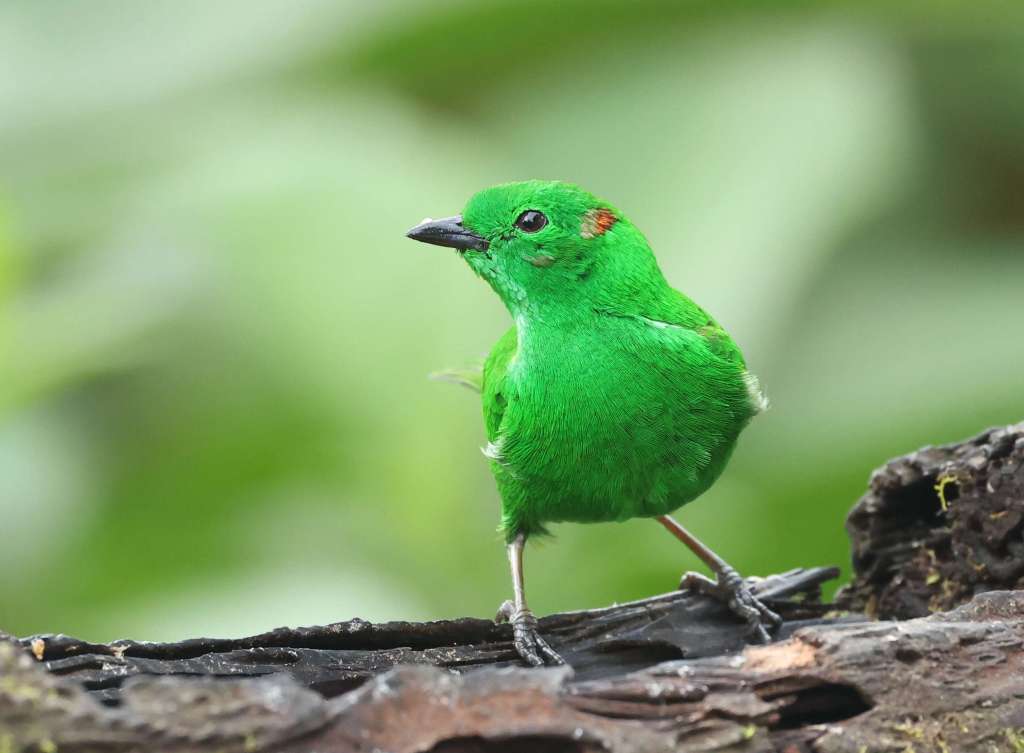
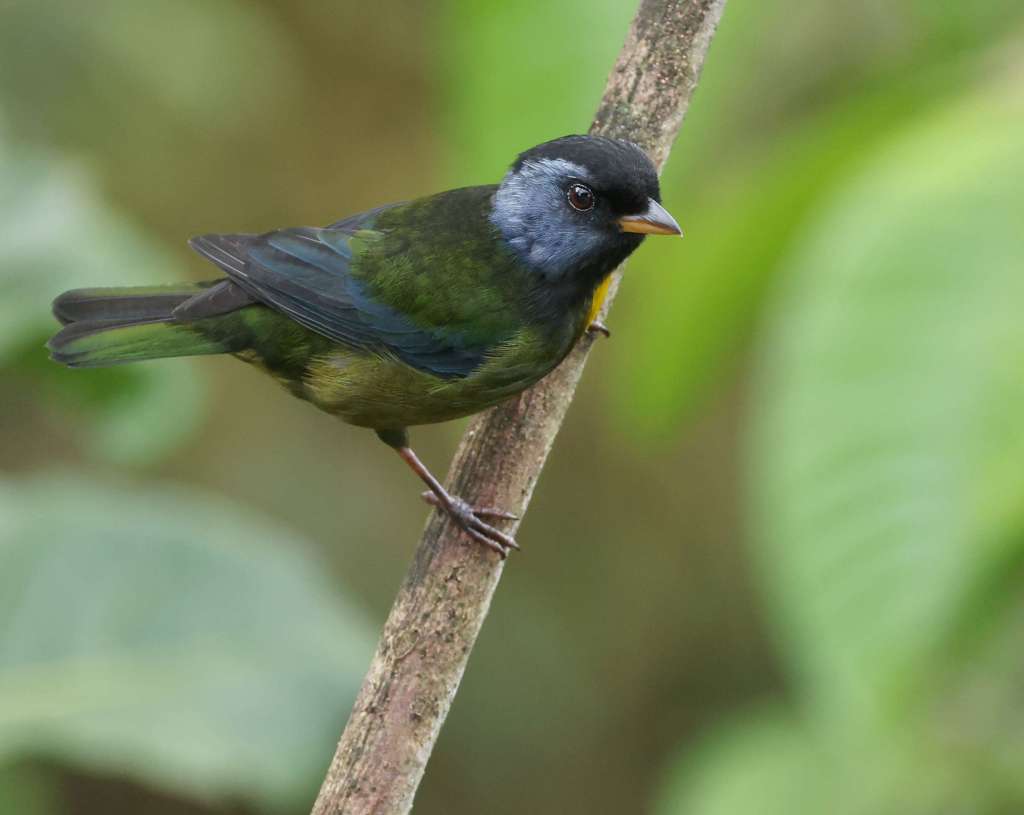
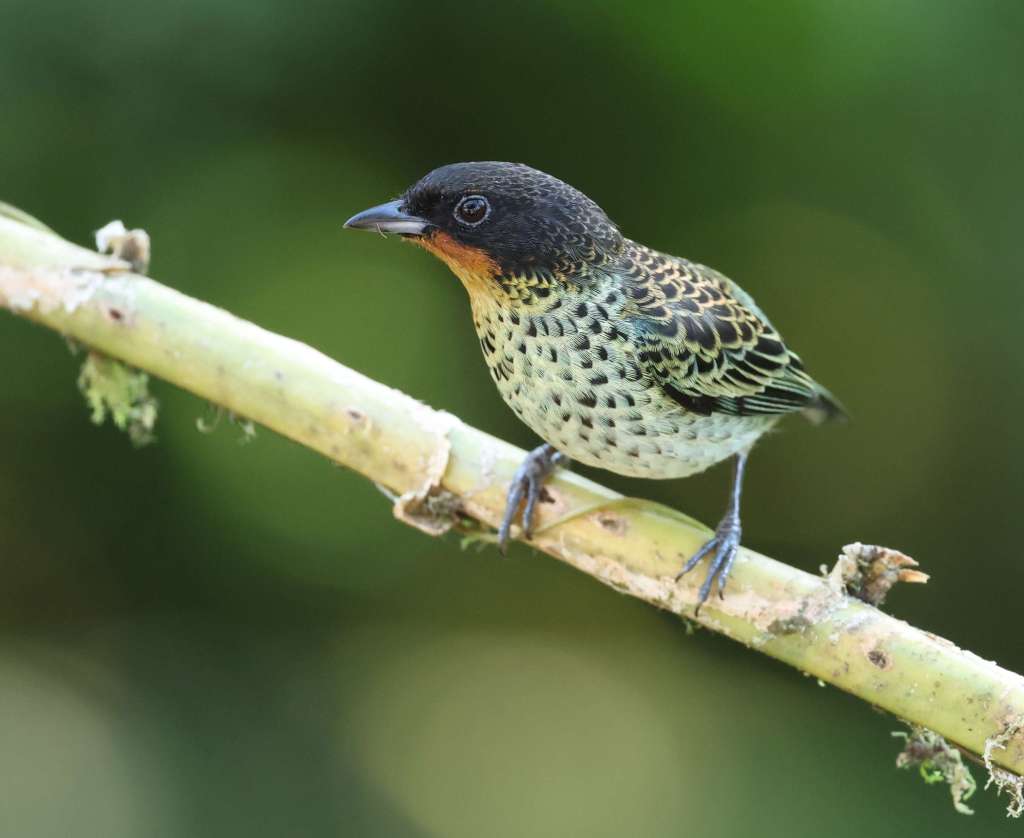
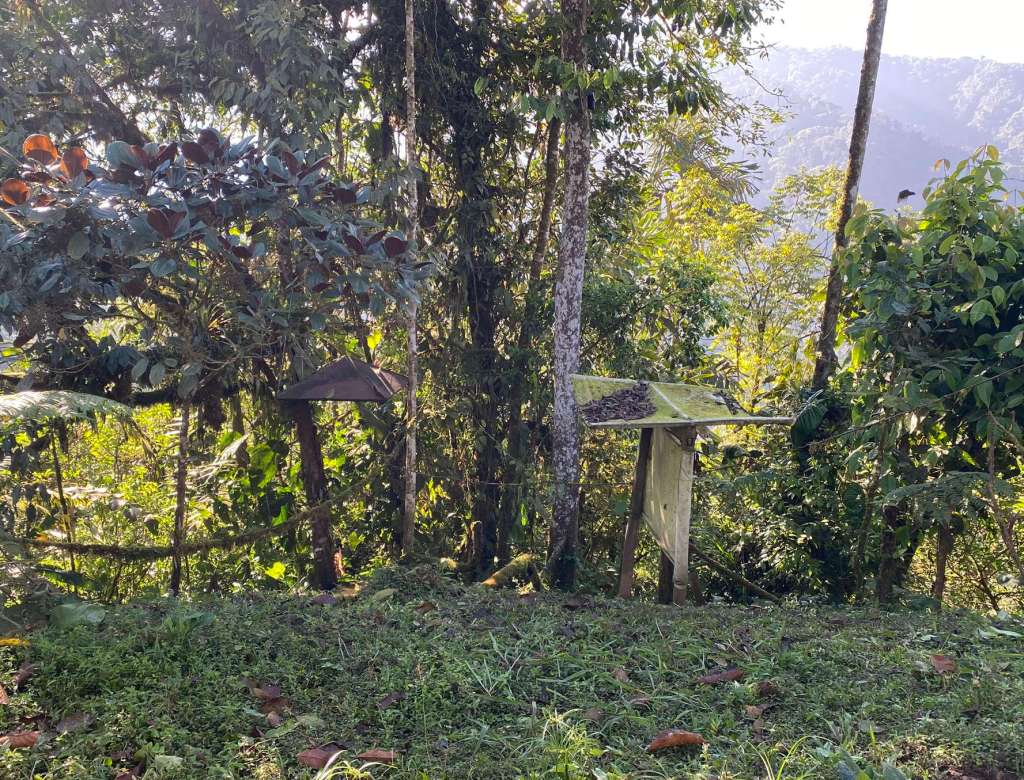
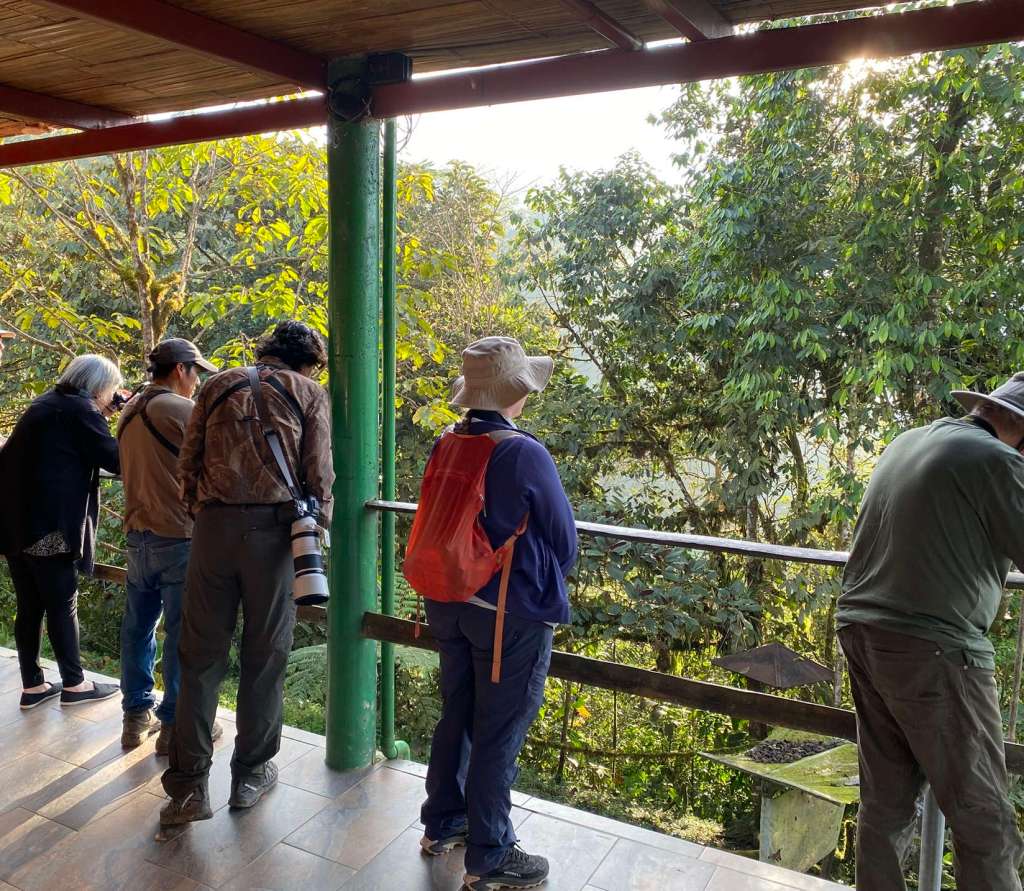
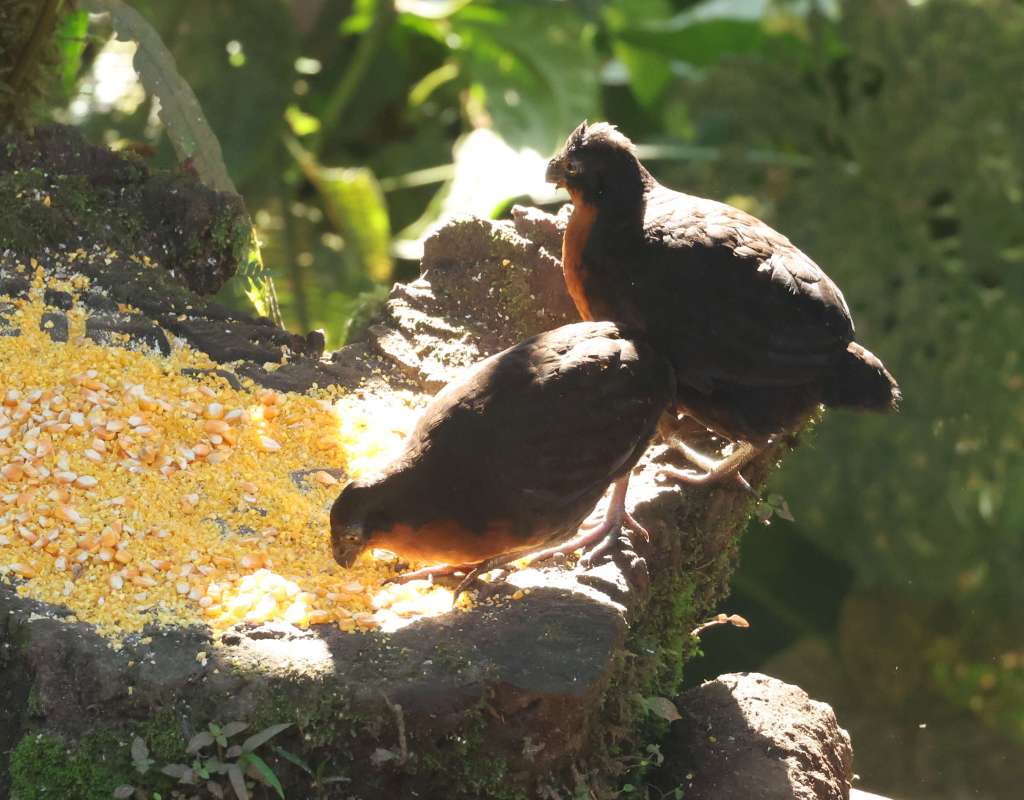
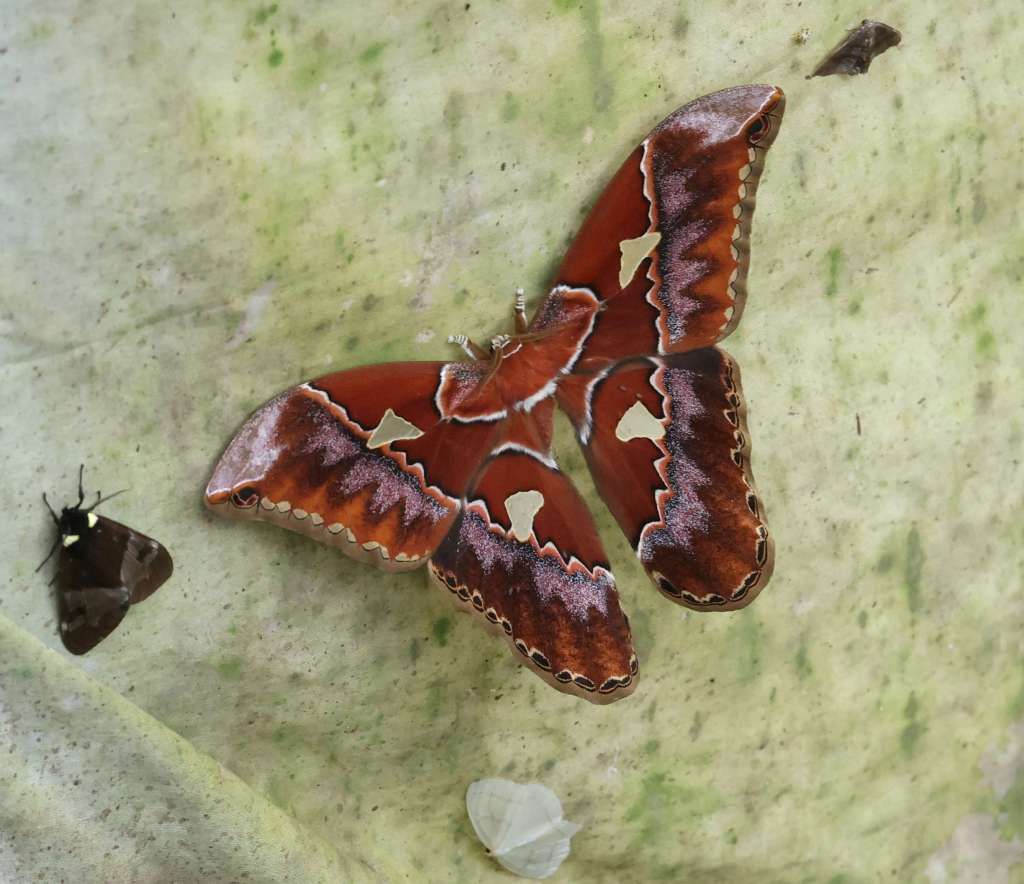
Photography opportunities are excellent here, from the main building’s back balcony on the first floor, or at ground level. The “back yard” area features banana bunches attached to trees to attract parrots, a few tanager feeders, a grain feeder for quails (in our case, we found Dark-Backed Wood-Quail), a moth light (we spotted a huge Atlas Moth on it), and some nearby hummingbird feeders, all ringed by pristine native rainforest. It can be a bit dark early there, but the activity was pretty crazy.
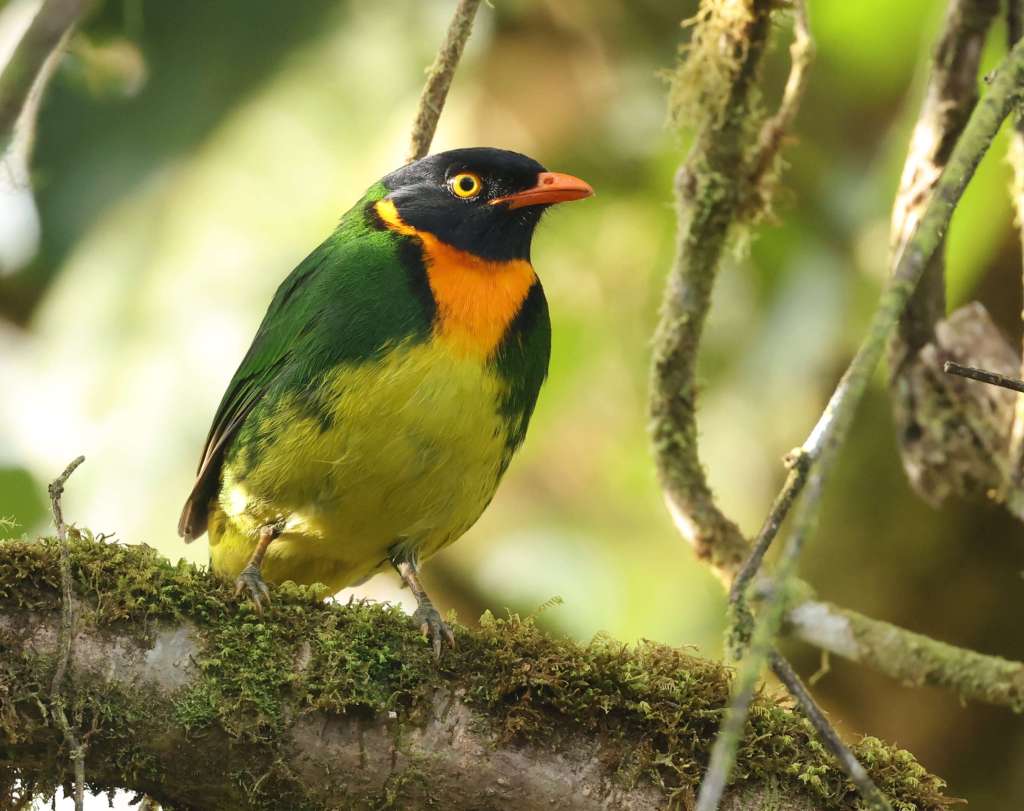
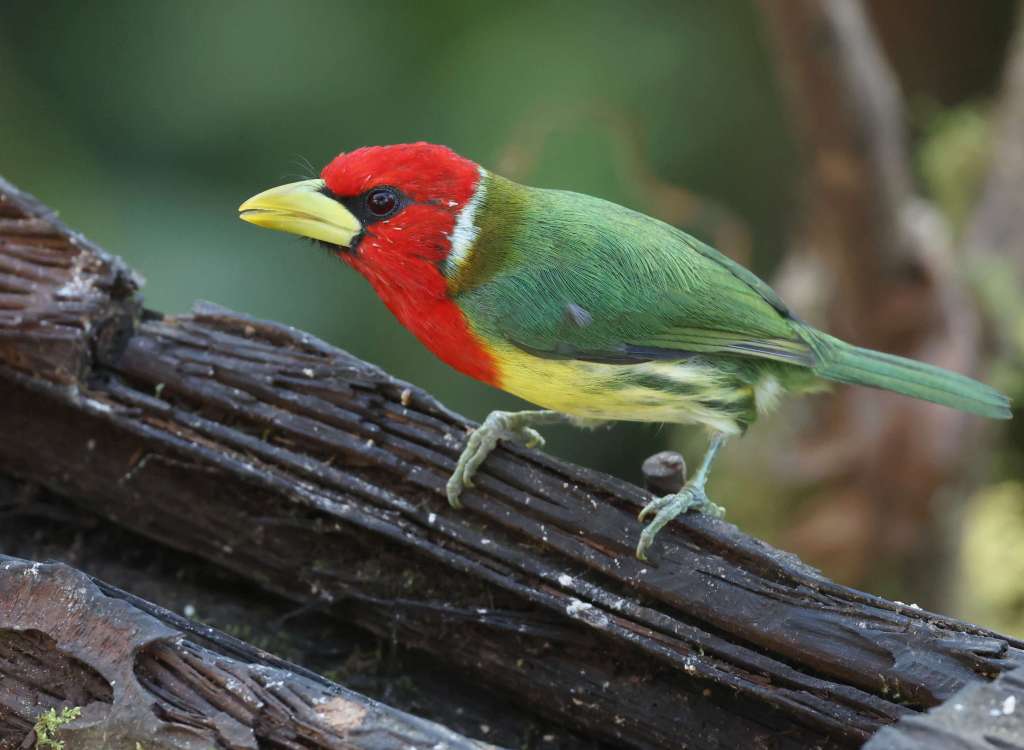
There really are some very cool birds here. Red-Headed Barbets are always welcome in my book, whether I have seen them previously at other sites or not (I had, just sayin’). My personal choice for the bird of the day was probably the super-vivid Orange-Breasted Fruiteater. I have become enamoured with every species of fruiteater I’ve seen in Ecuador and Peru (short though that list may be), and this was the first one I’ve seen quite close – like, taking-up-most-of-my-viewfinder close. Amazing!
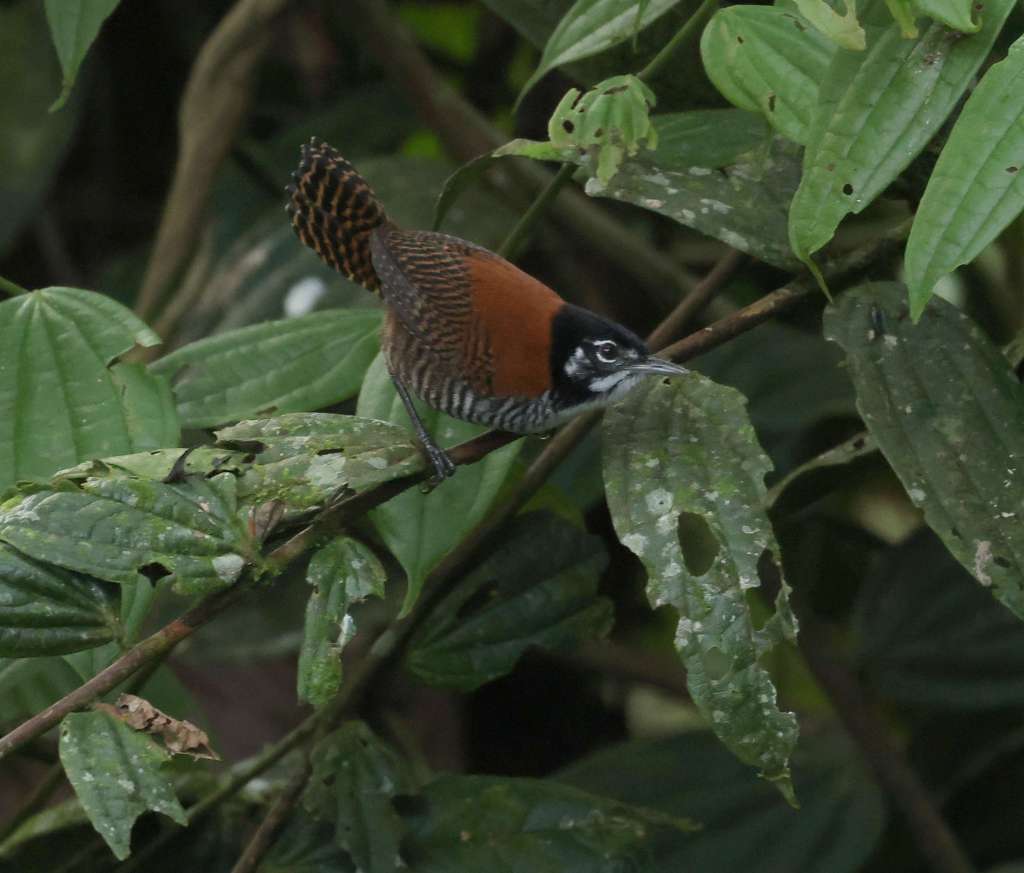
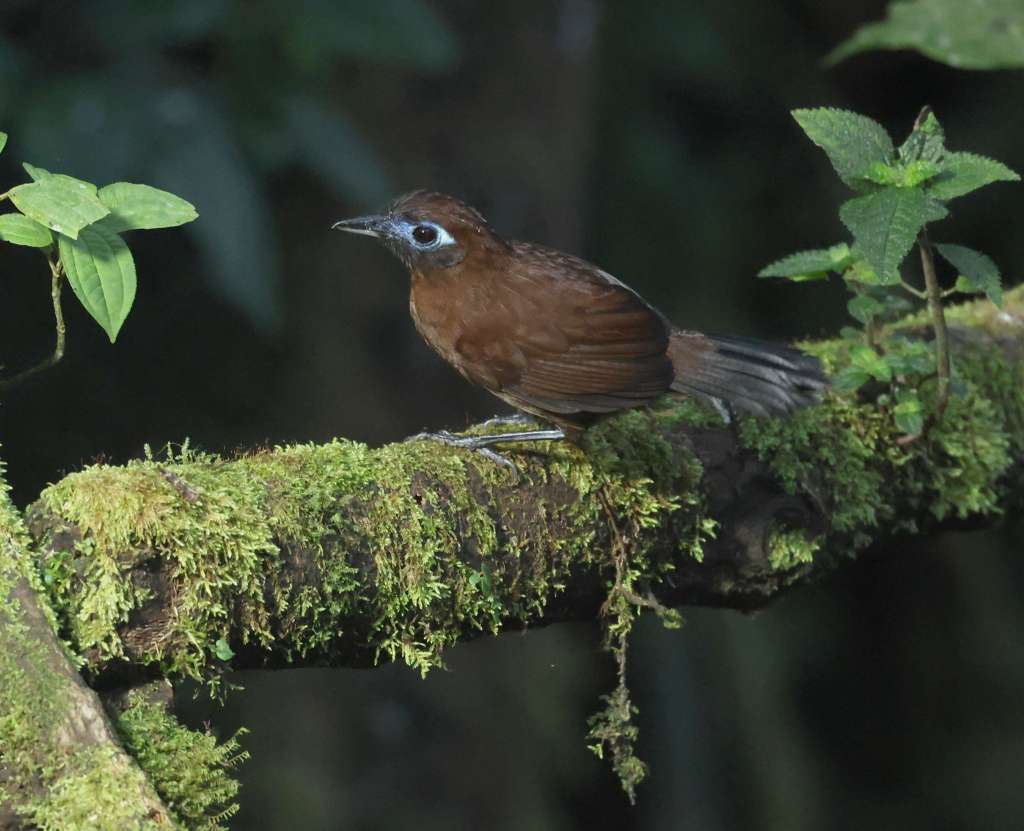
Normally skulking birds seemed to want to come out today, including Uniform Antshrike, Bay Wren, Pacific Tuftedcheek and Zeledon’s Antbird, not to mention various species of Foliage-Gleaner and Woodcreeper, and three becard species (Barred, Cinnamon, and One-Coloured)!
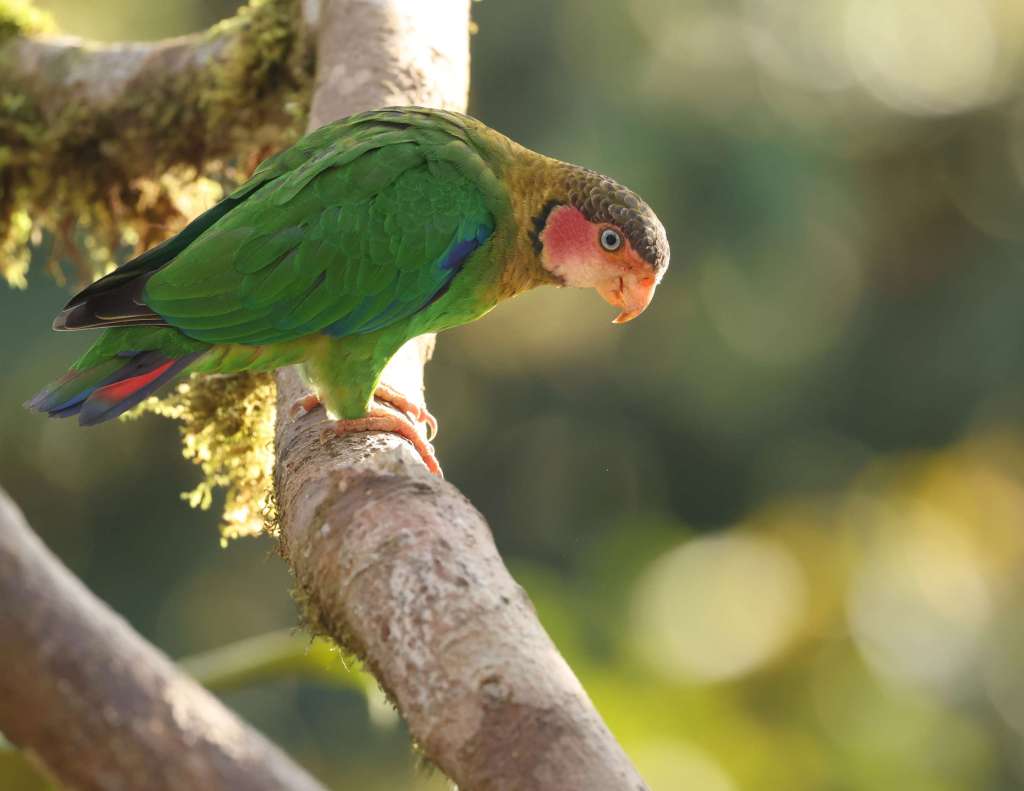
The prize for the day’s “raucous kindof over-the-top” bird definitely went to the delightful Rose-Faced Parrot, a group of two dozen of which kept the birders and photographers company as they fed on the big banana bunches (the parrots, that is, not the photographers…).
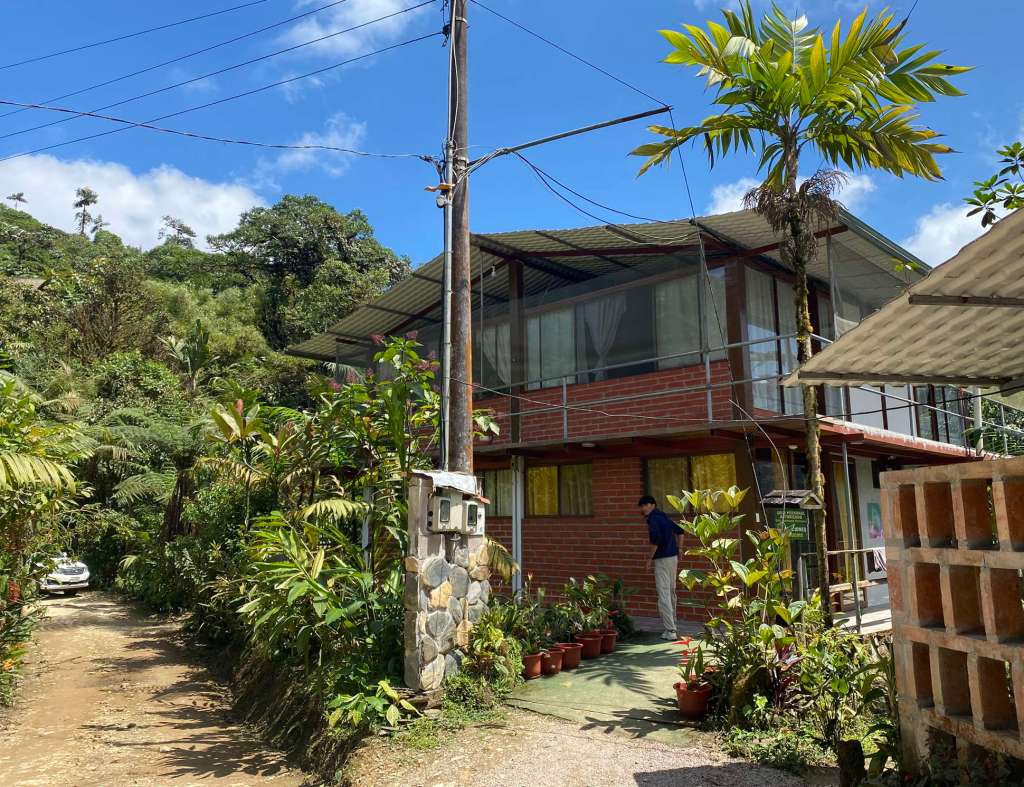
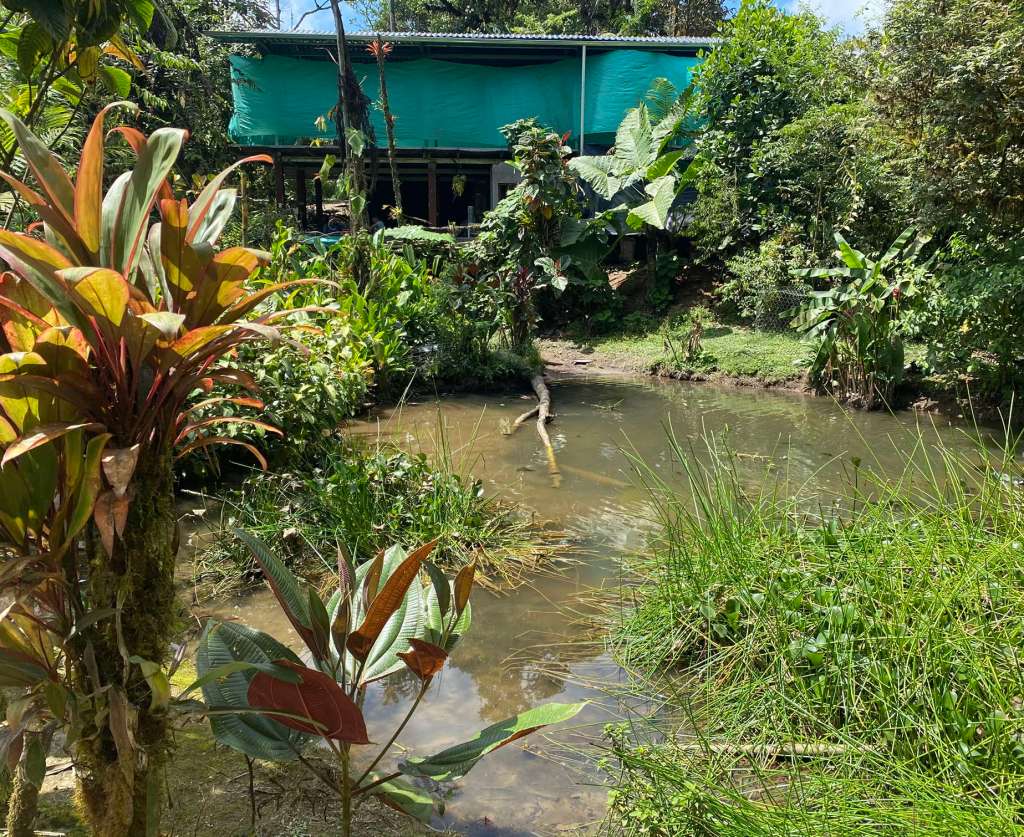
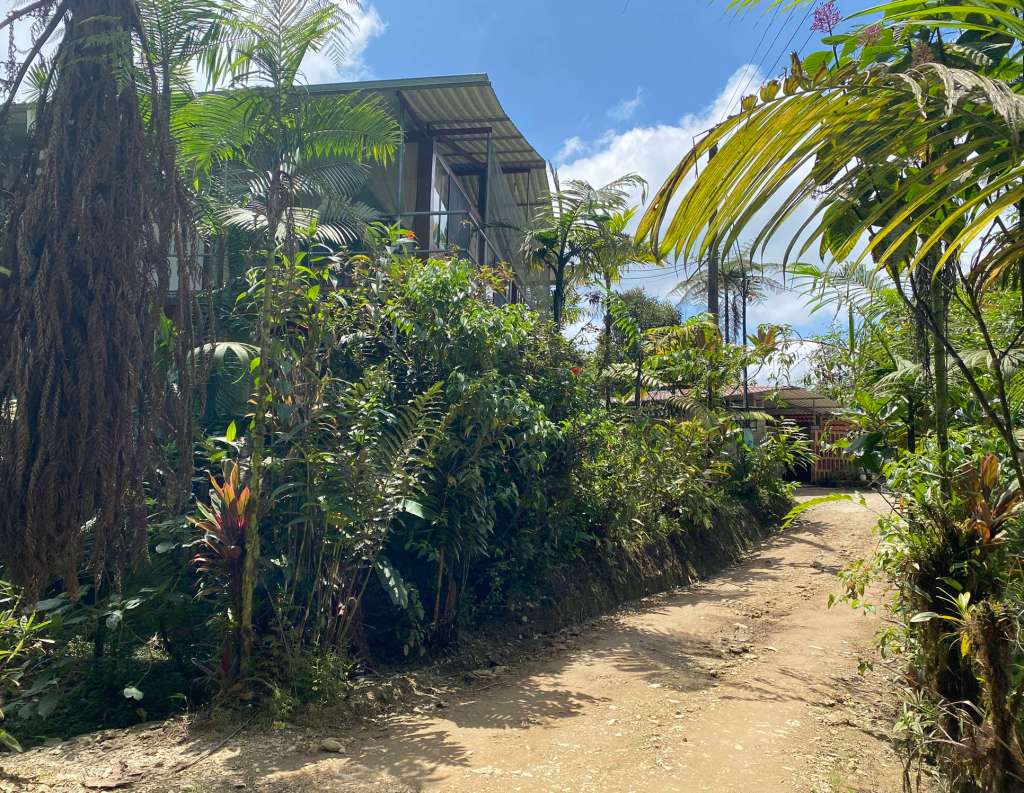
All around the main lodge are superb gardens though as we had trails waiting to be explored, I wasn’t able to investigate the birdlife in the gardens as much as I would have liked.
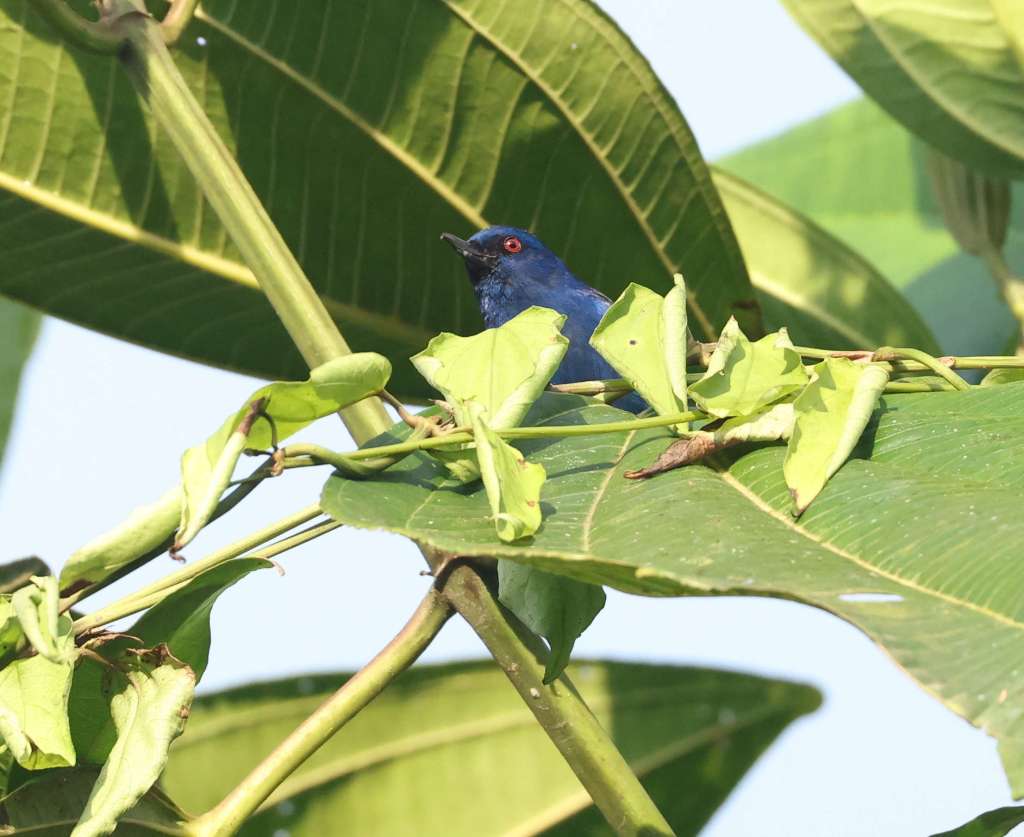
Indigo Flowerpiercer was the main hot target for me in the gardens (it’s one of the site’s most “iconic” bird according to eBird) and I wasn’t alone in wanting to find one. The indigo really pops when you see the bird well in the camera’s viewfinder or with bins, that’s for sure.
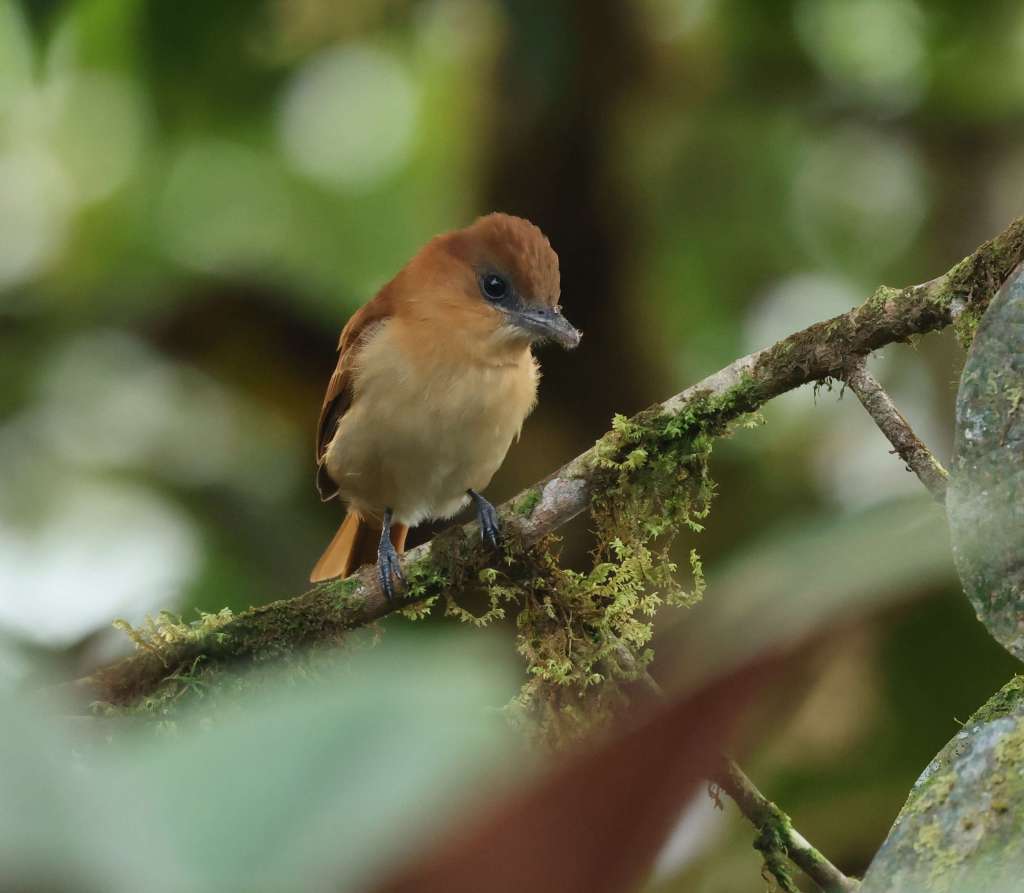
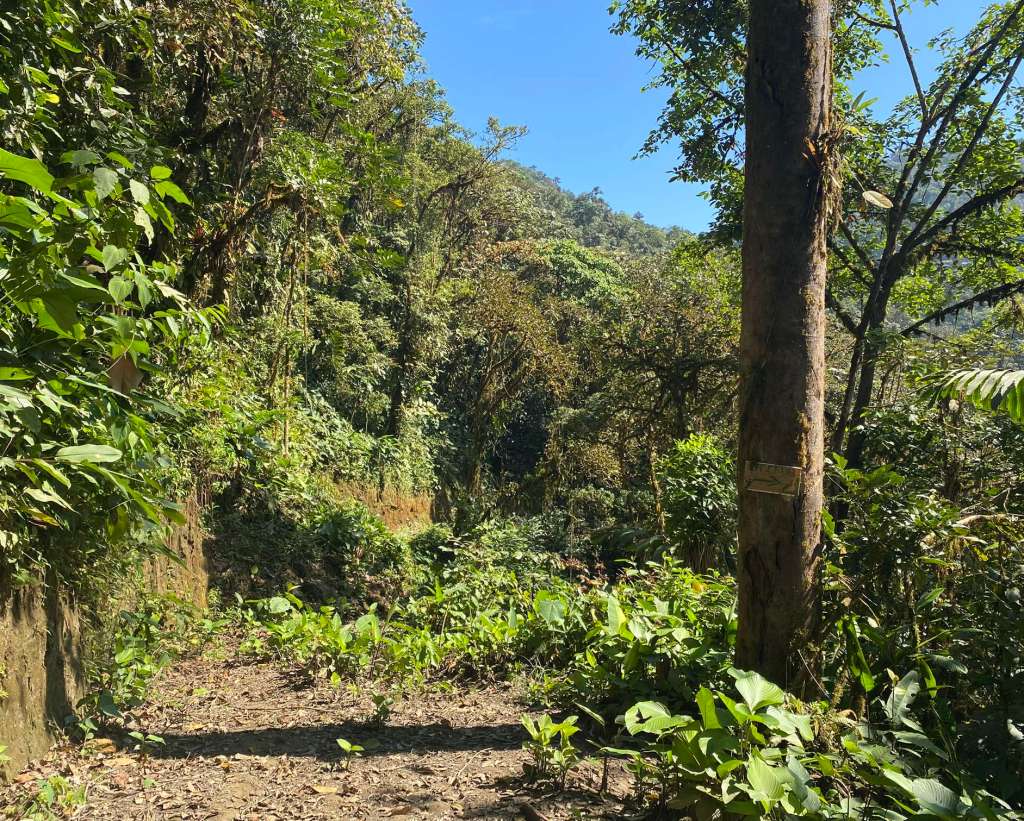
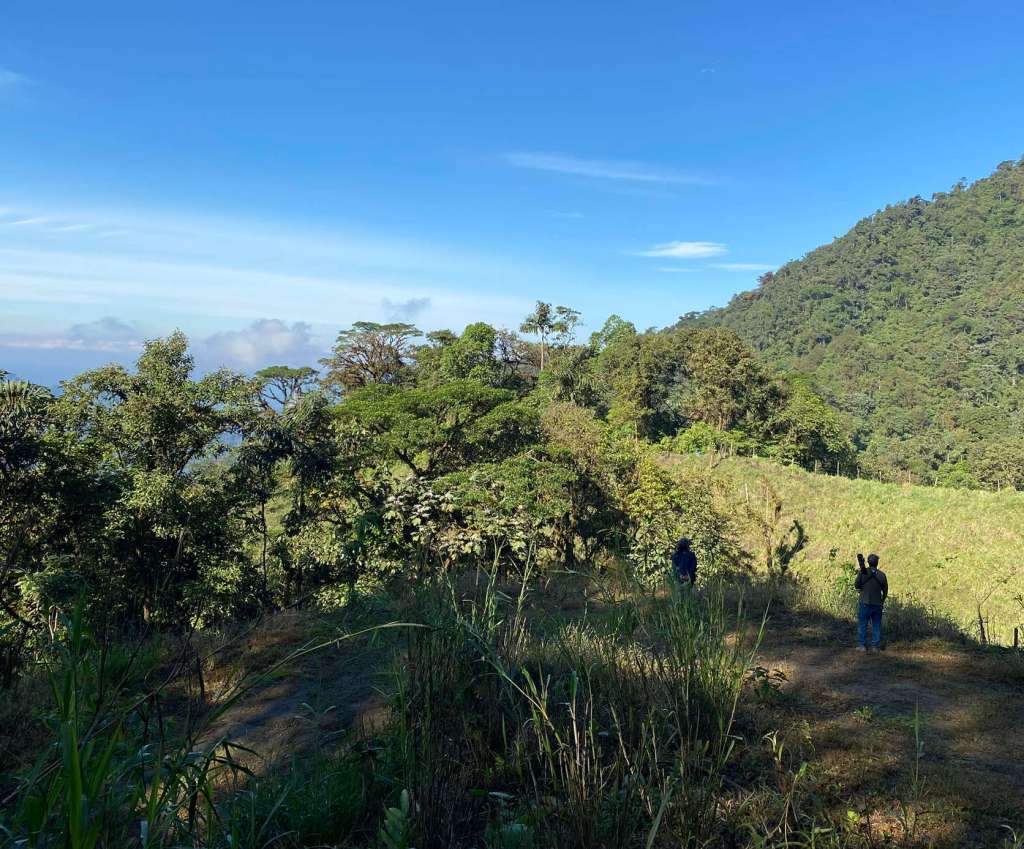
The main trail we followed for a few hours is an old road that leads downwards from the main lodge and entrance area, and with the sun streaming down and temperatures pleasantly warm, it made for some very nice walking, not to mention very nice birding.
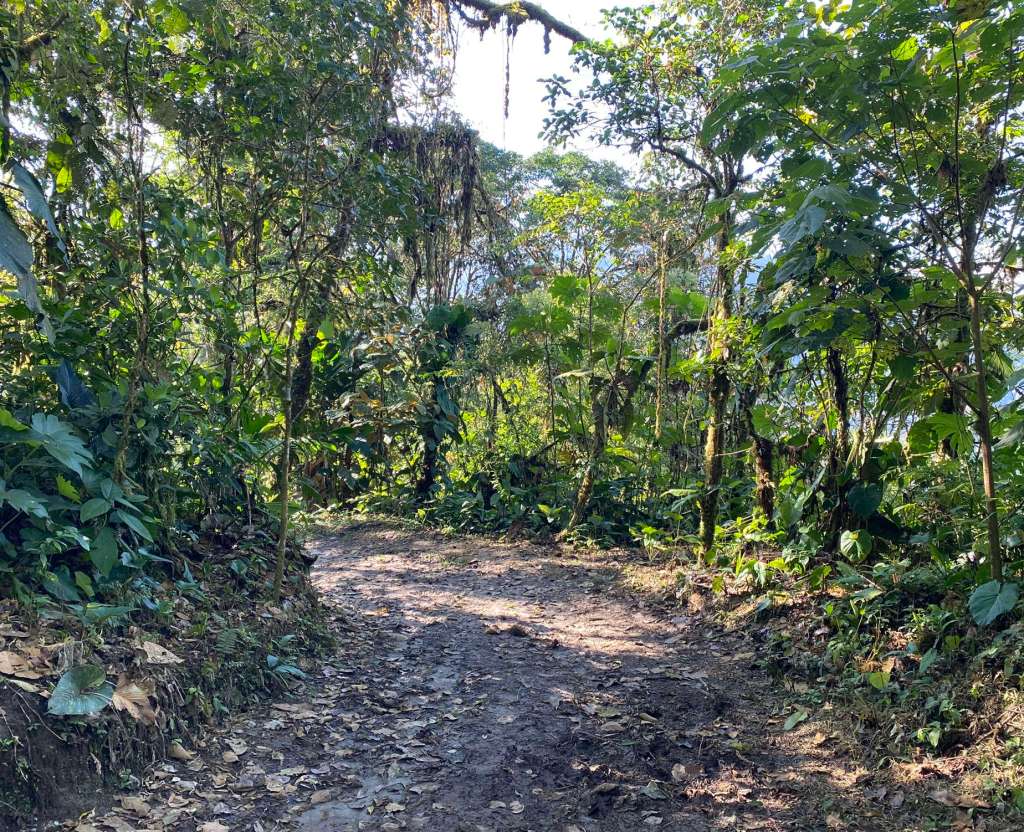
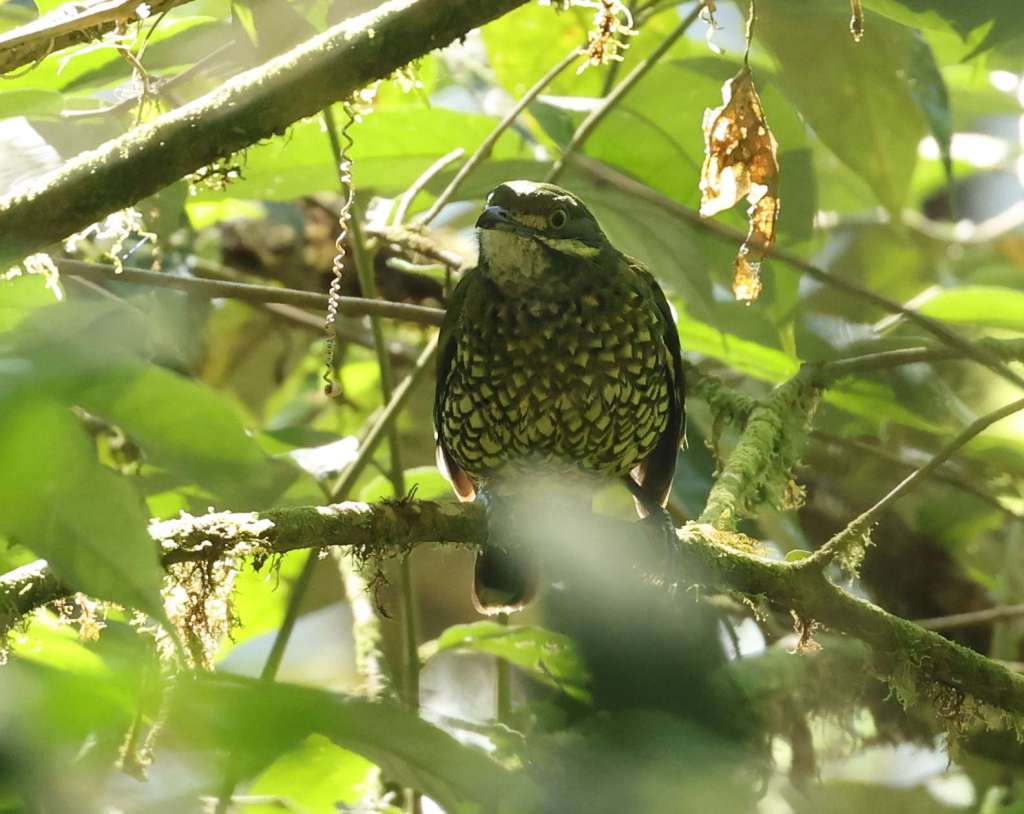
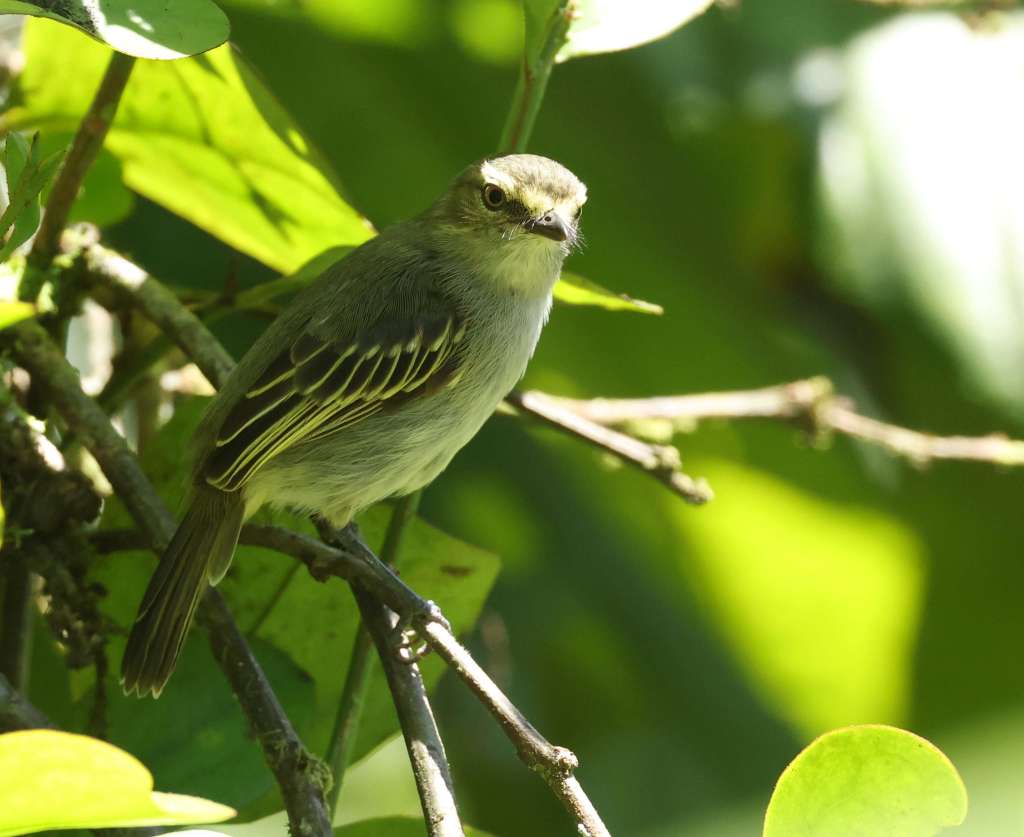
Birds we saw on the trail included a trio of Smoky-brown Woodpeckers, Rufous-rumped Antwren, Rufous-Brown Solitaire, Scaled Fruiteater, and region specialties Choco Tyrannulet, Choco Brushfinch and Choco Warbler. And Scaled Fruiteater – yes, another fruiteater! We counted 40 bird species actually, so the above list is just a sample.
Some way down the trail there is an enormous steel tower that you can climb, with a platform at the top which gives widescreen views across the lushly-forested countryside. We saw a few Barred Hawks circling from the top.
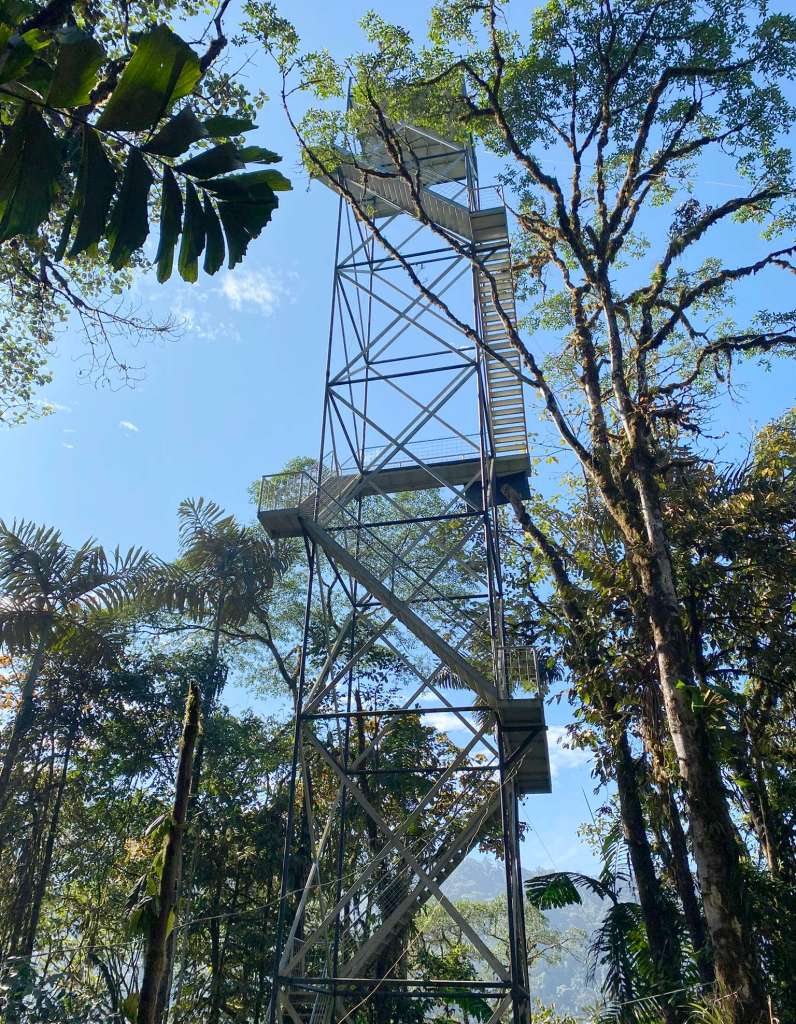
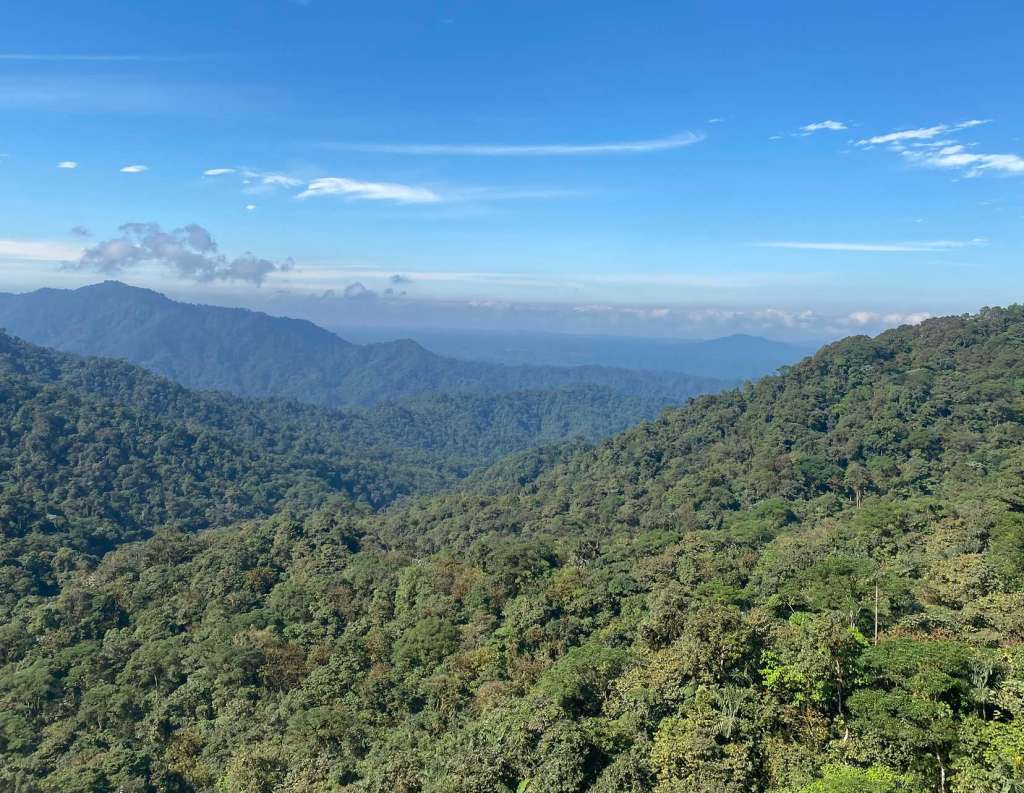
One of our guide’s top targets (as in, she really wanted us to find one) was Esmeraldas Antbird, which we heard but could not see on the forest trail. It seems that is just one of many, many incredible birds that we missed that can be found here, like Club-Winged and Golden-Winged Manakin, Black Solitaire, White-Winged Sicklebill, the erratic but oh-so-amazing Yellow-Collared Chlorophonia… the list goes on… (note to self: I need to go back to Ecuador, and specifically, Mashpi-Amagusa).
Sacha Guatusa
A mere 15 minute drive from Mashpi-Amagusa, but at a lower altitude of around 950m, is Sacha Guatusa, a small private reserve which has a delightful bird garden and happens to also serve delicious pizza. Good combo!
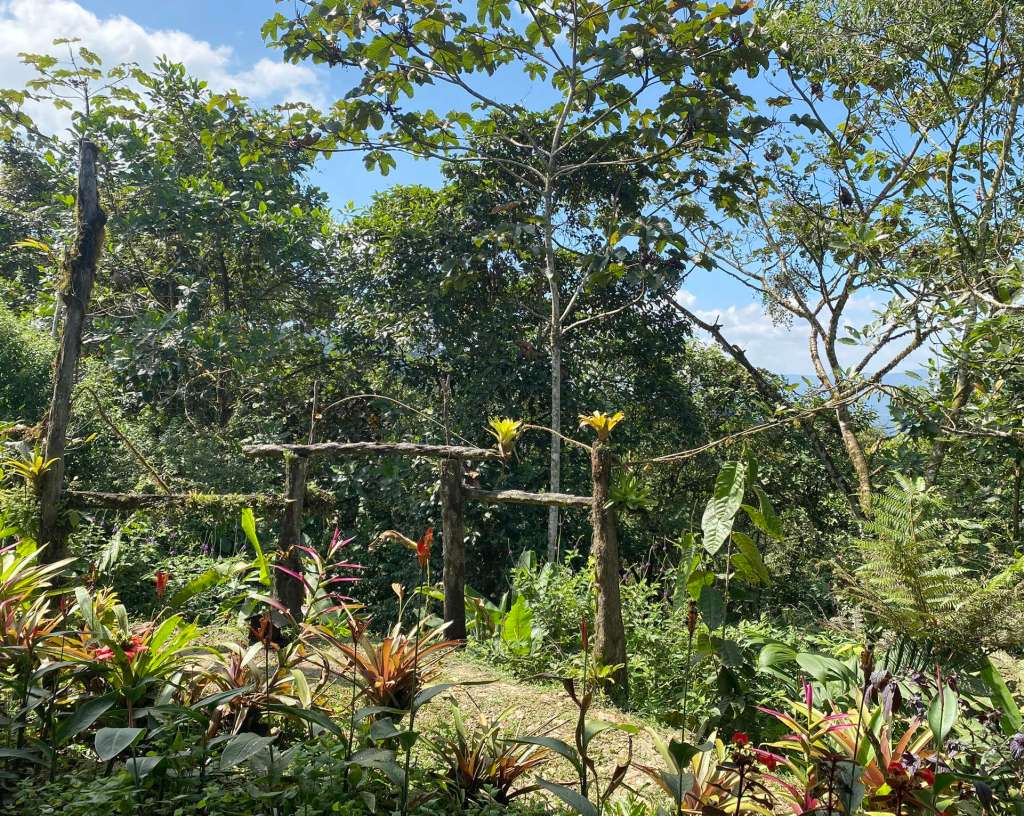
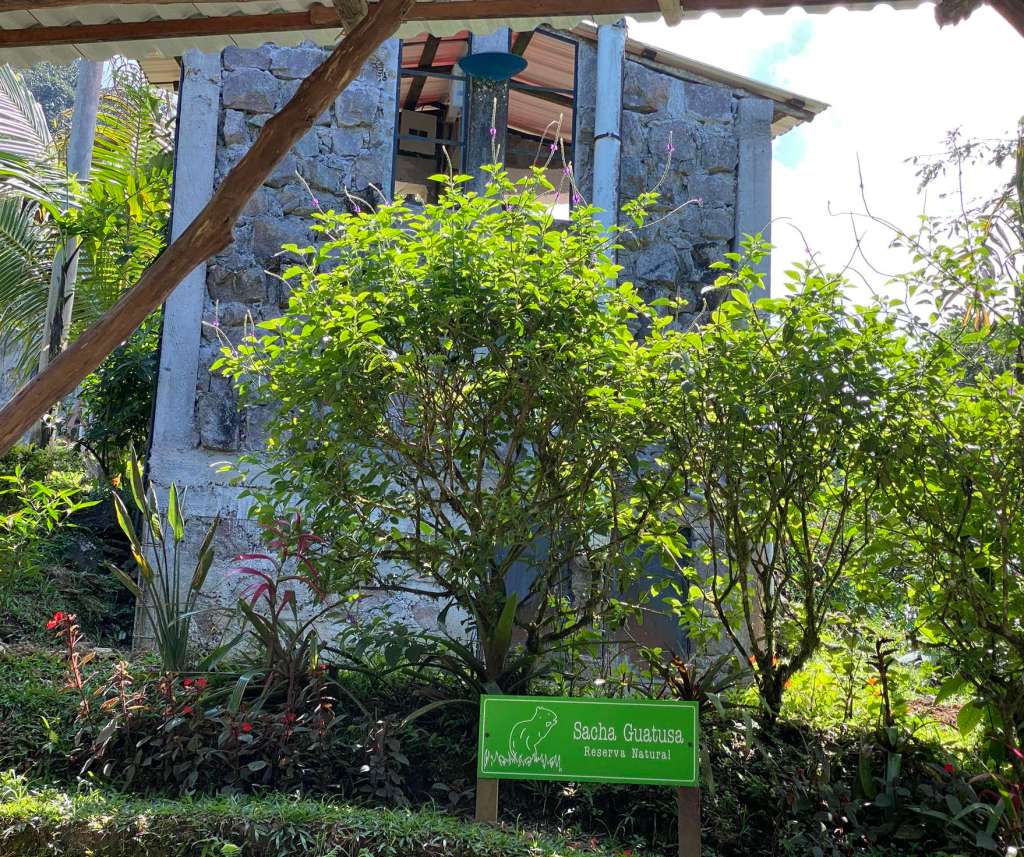
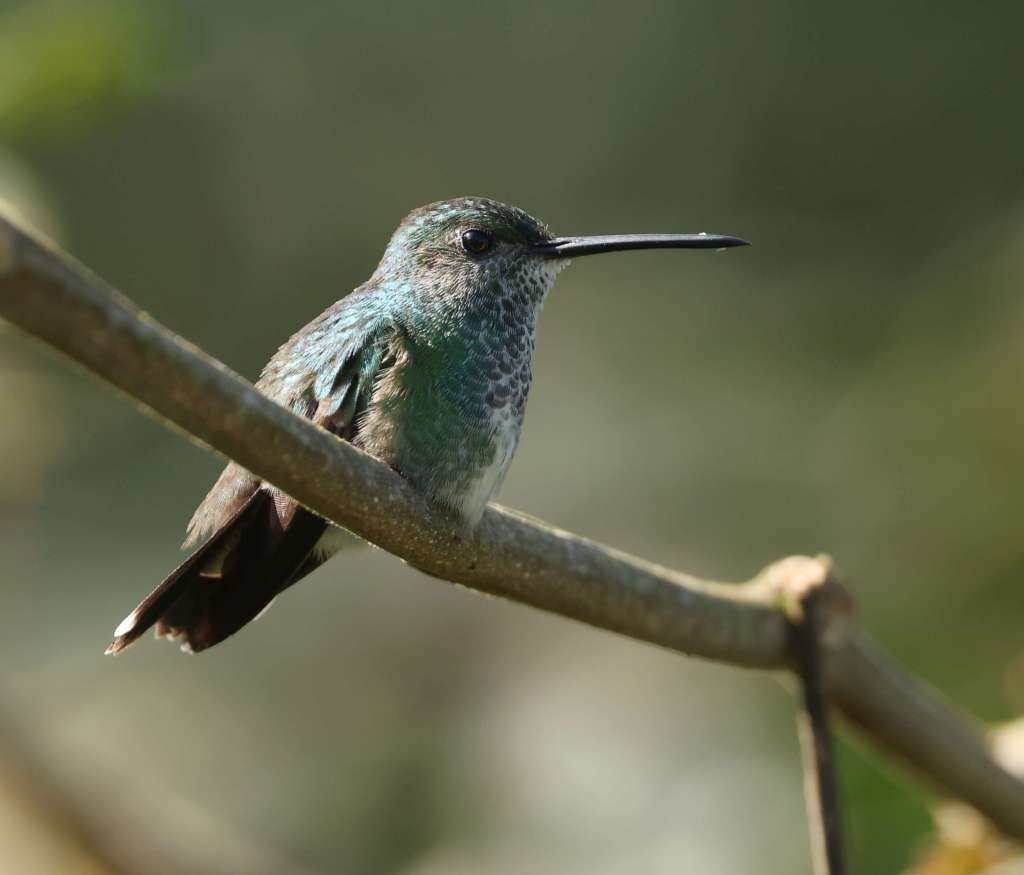
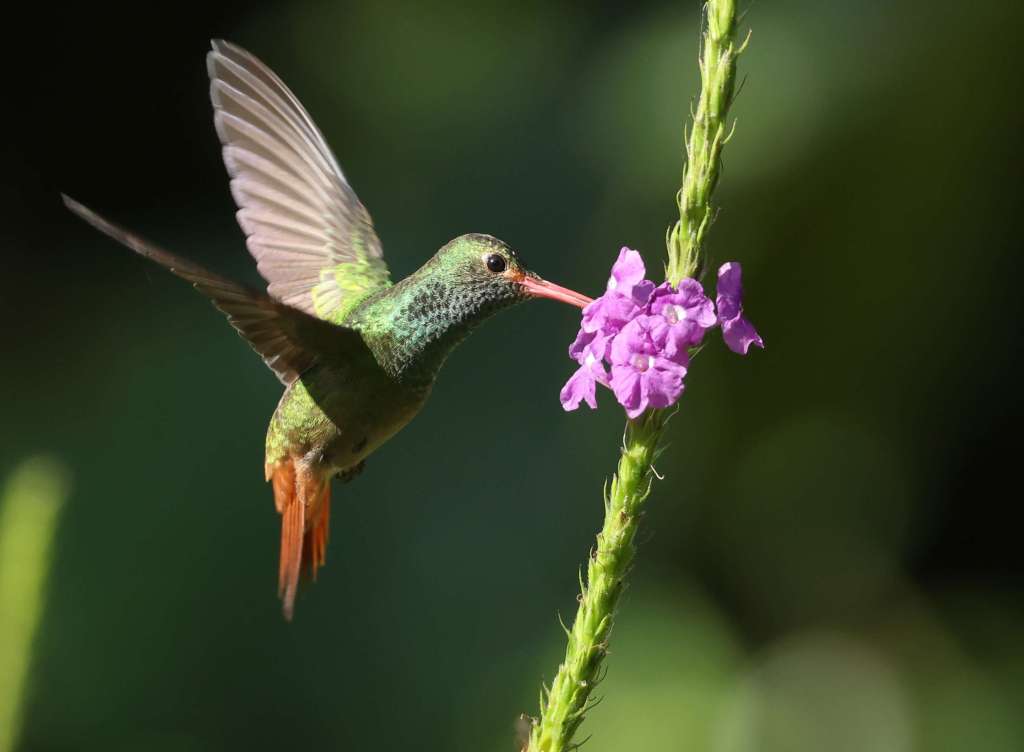
Purple-Chested Hummingbird is particularly reliable here, though my best sighting of that bird involved it sitting placidly turned away from the sunlight, rendering the purple chest iridescence hard to discern. Apart from the Purple-Chested, there are mostly only sporadic visits by hummingbirds here actually, with Rufous-Tailed being the other regular. I managed an extremely happy-making in-flight shot of one of these where the light and the bird’s pose really came together in a satisfying way.
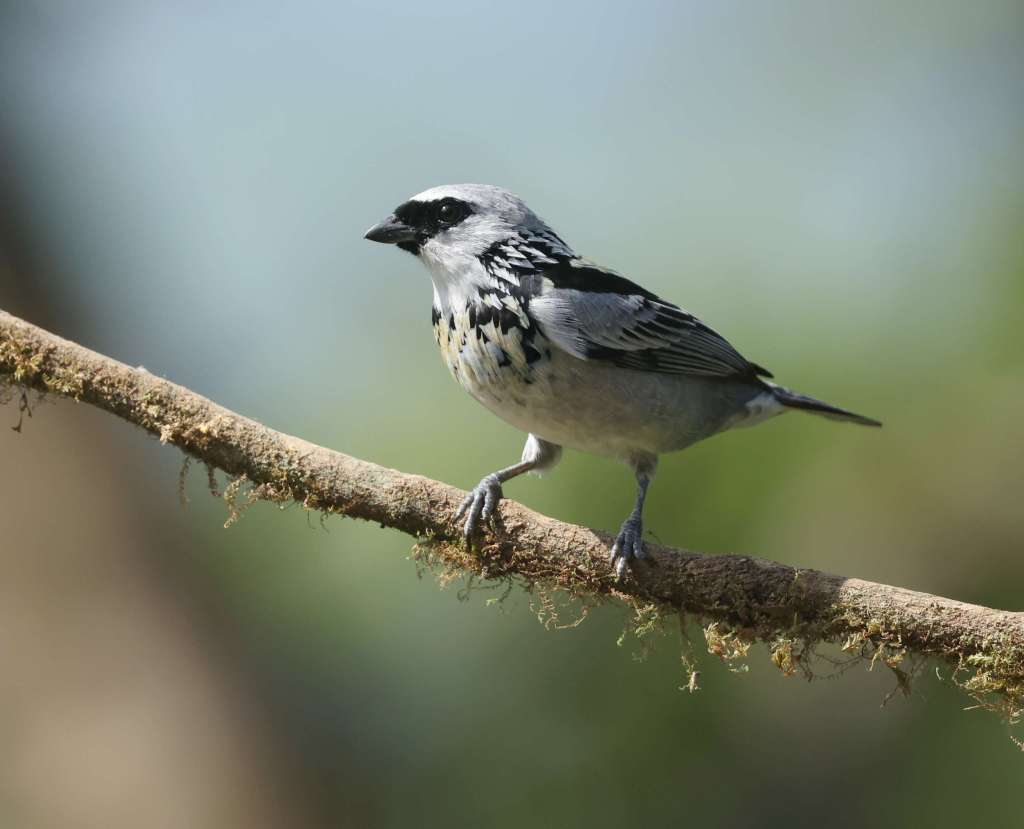
A selection of tanagers is available here that aren’t easily found at Mashpi-Amagusa, most prominently, the Emerald Tanager and Grey-and-Gold Tanager. The gold on the latter is somewhat subtle, but it is nevertheless a striking bird.
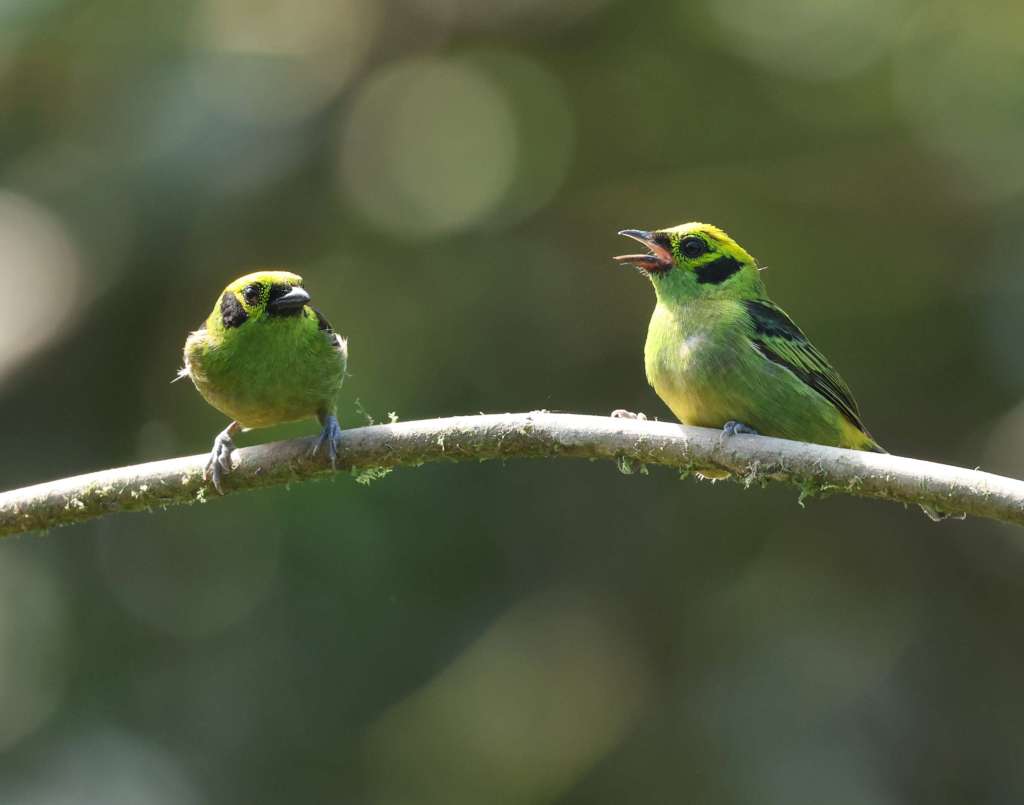
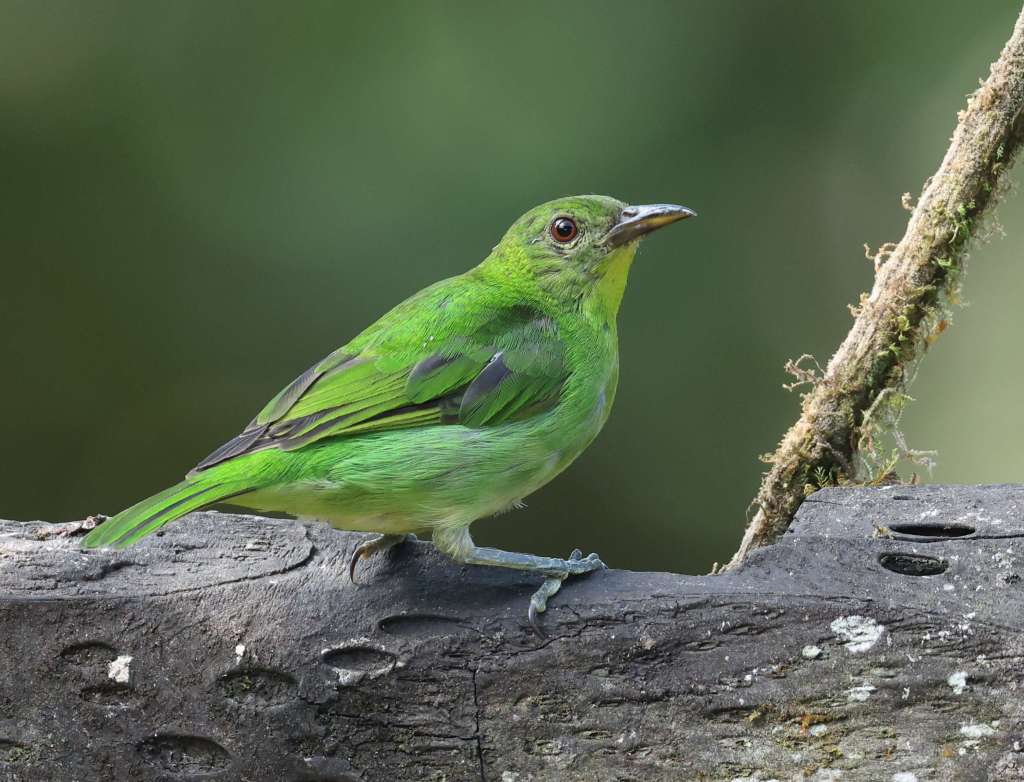
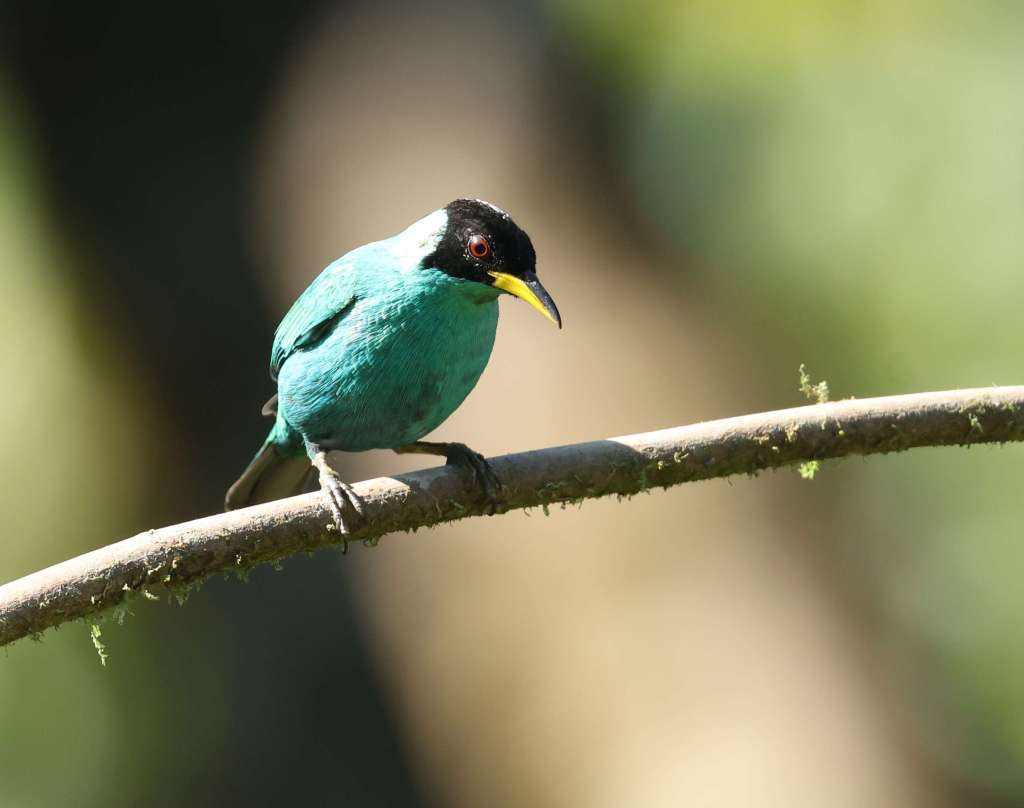
We also saw the rather widespread Green Honeycreeper, a bird I have enjoyed at several “tanager feeding” sites in Ecuador; this time I saw both the male and female.
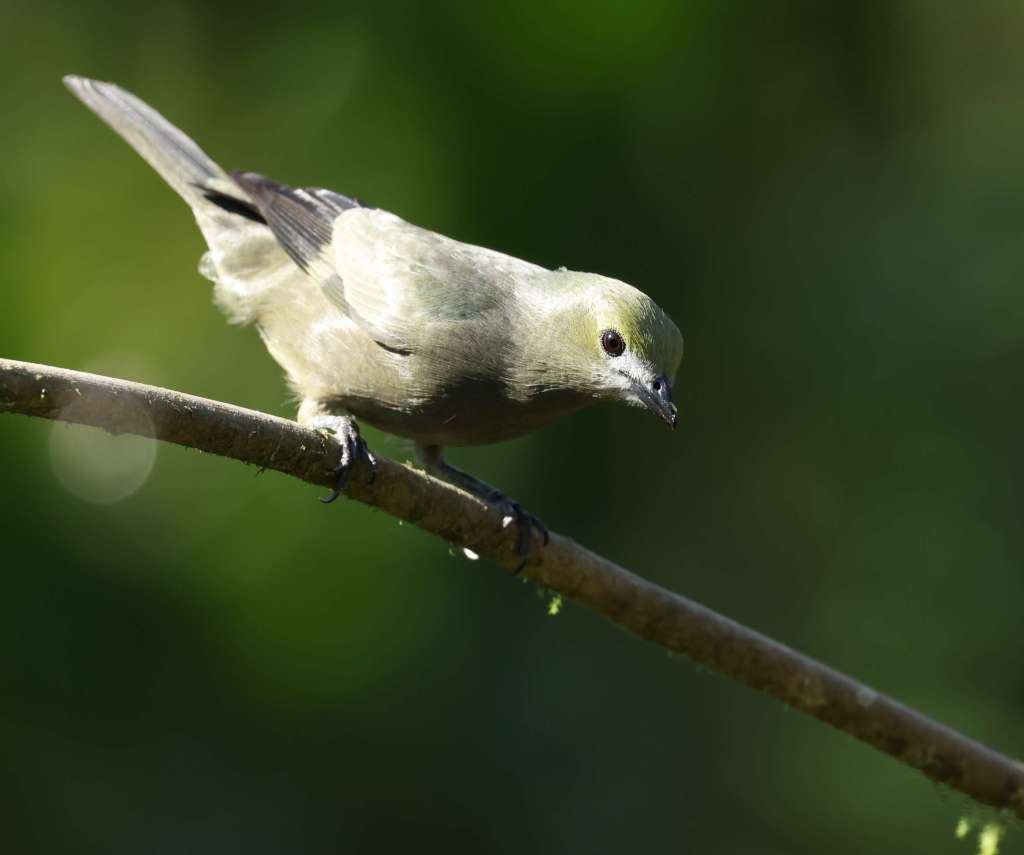
We also spotted a few of the more “usual” tanagers here, too: Golden Tanager, Rufous-Throated, Flame-Faced, Flame-Rumped, Blue-Grey and Palm. These were often observed as part of a classic mixed tanager flock; time would pass by with not too much happening, then BAM! your tanager flock would roar in and you’d better have your camera or bins ready.
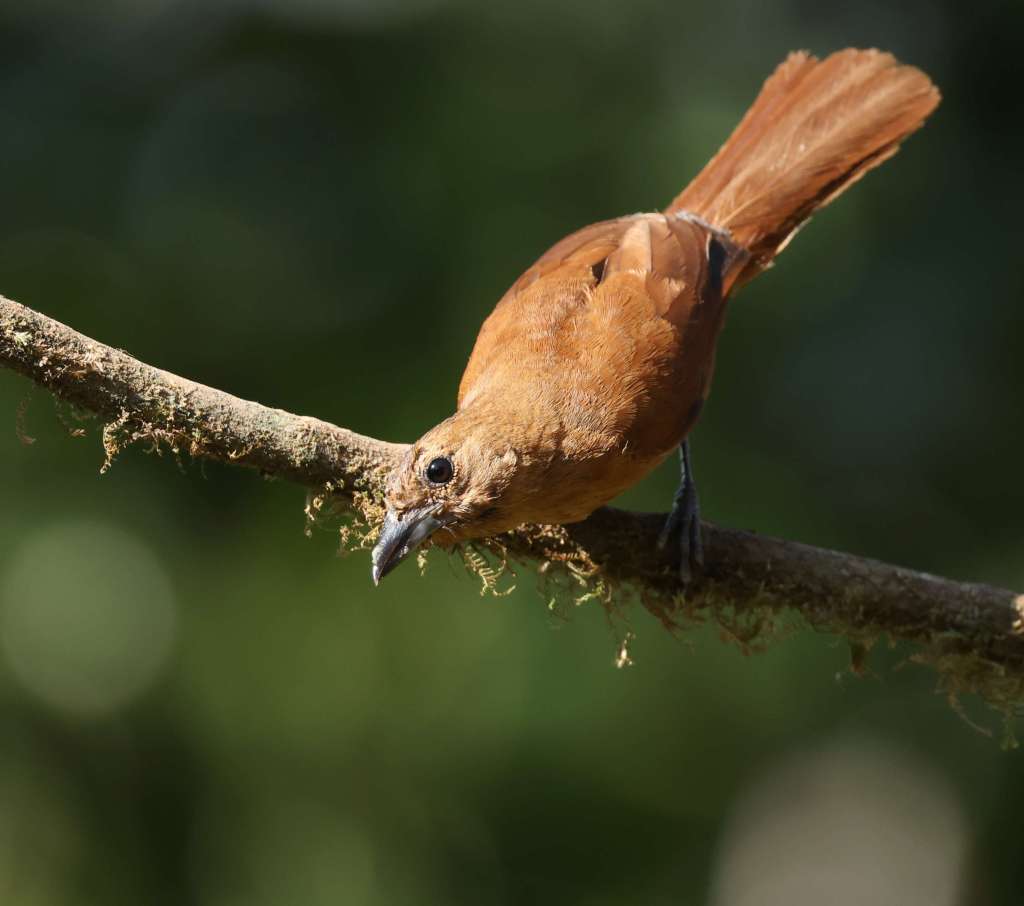
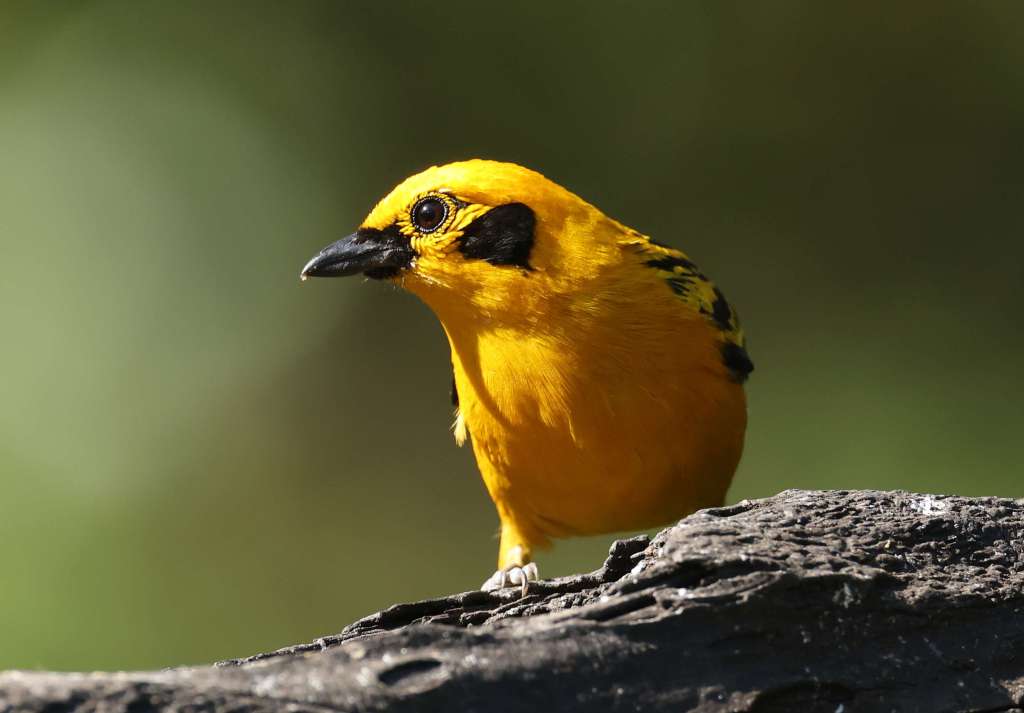
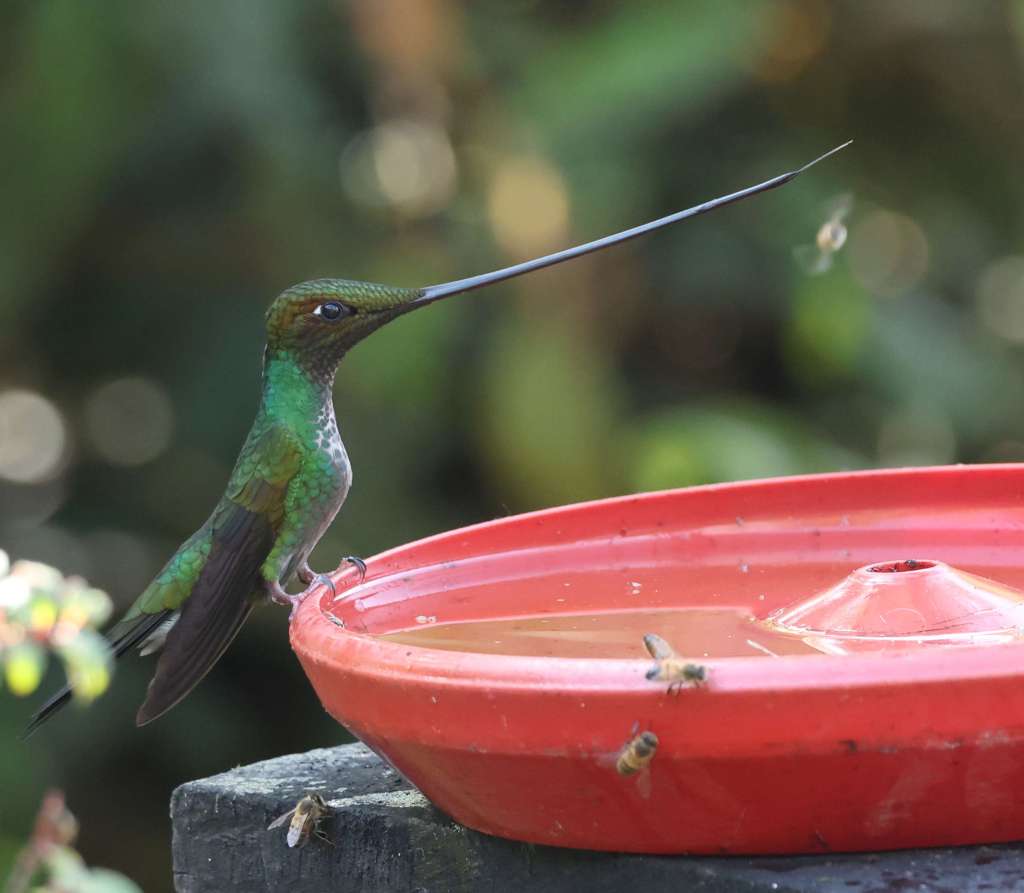
The photos above don’t show it (though, see some snippets of the YouTube video), but the feeder areas were also overrun with bees and other insects… perhaps because it was early afternoon or maybe there were just a lot of bugs around. It was a little annoying for the birds, I think, and pretty irritating when trying to grab clean photos. I suppose some birds enjoyed the bug feast, like a Piratic Flycatcher, a bird I had only seen once a couple of months earlier at Manu Biolodge in Peru. It’s named for its behaviour of stealing already-built nests of oropendolas and becards; not something you’d think an ordinary flycatcher would be wont to do.
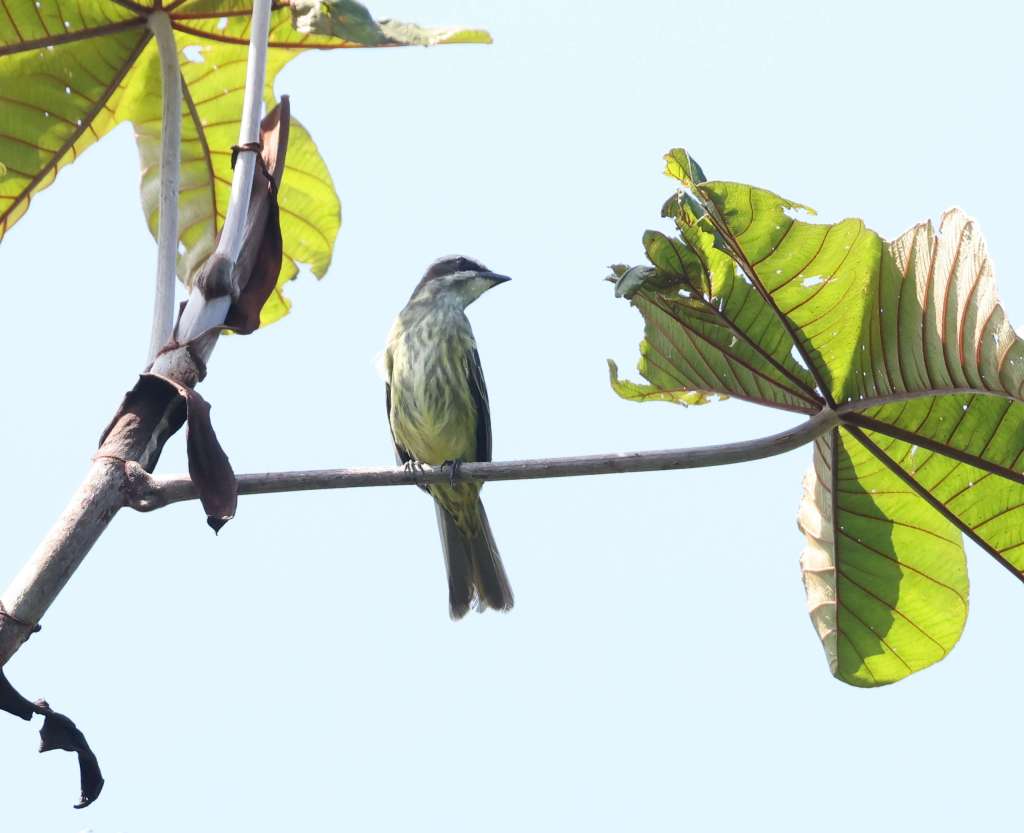
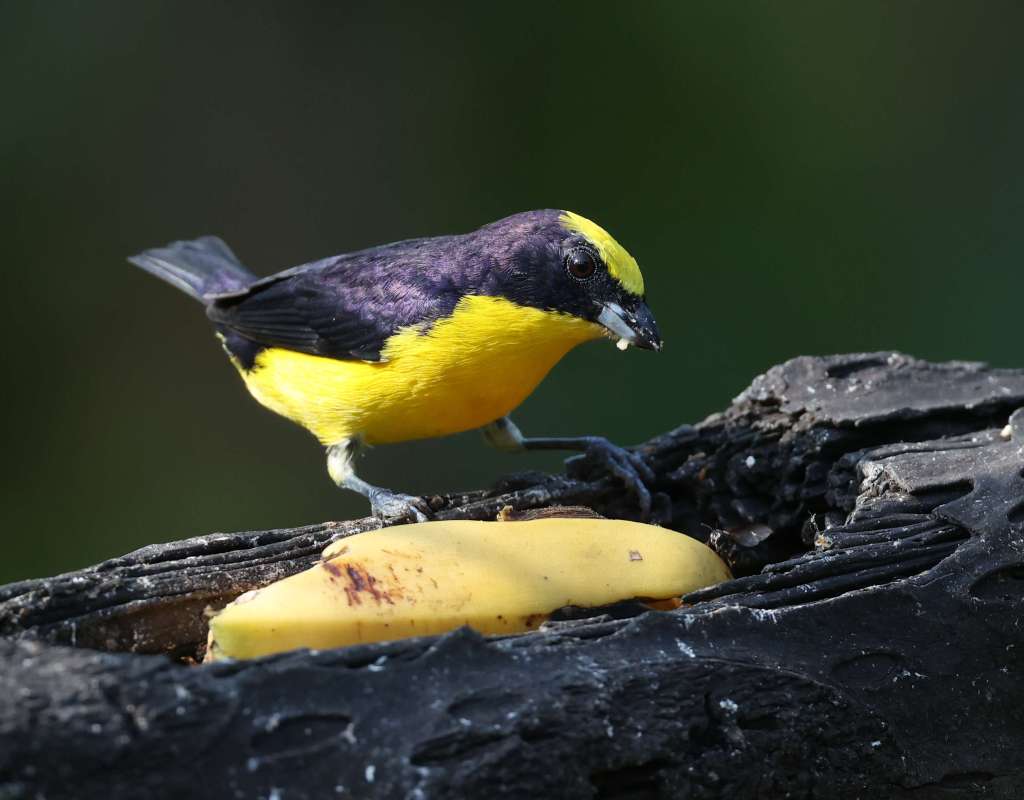
As the afternoon wore on we then birded the roadsides to the west of Sacha Guatusa, and found a stock of new birds and old favourites. We stopped for a long time by a grassy hillside listening to calls of a White-Throated Crake, but try as we might that bird did not show itself.
More obliging were a pair of Barred Puffbirds, which almost reminded me of Blue-Winged Kookaburras from back home (Australia), while a Slate-Coloured Grosbeak added another species to my grosbeak bird family list. Also, is there a difference between “Slaty” and “Slate-Coloured”? Asking the hard questions…
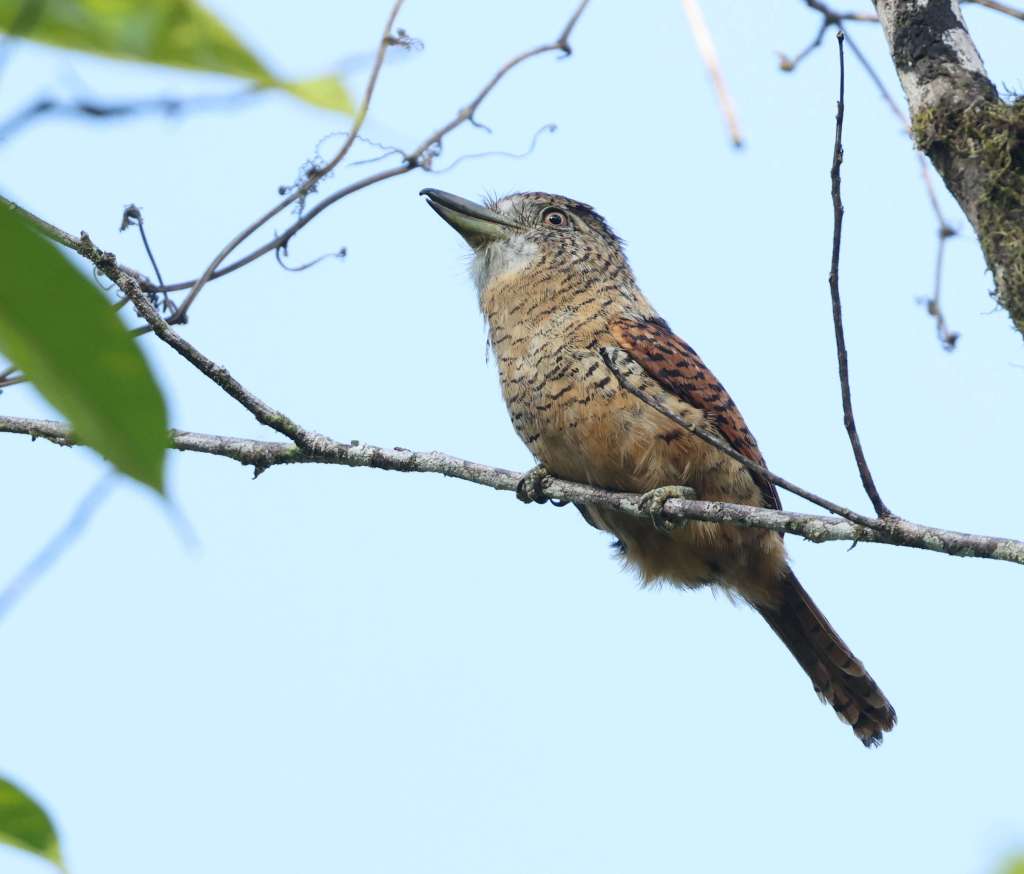
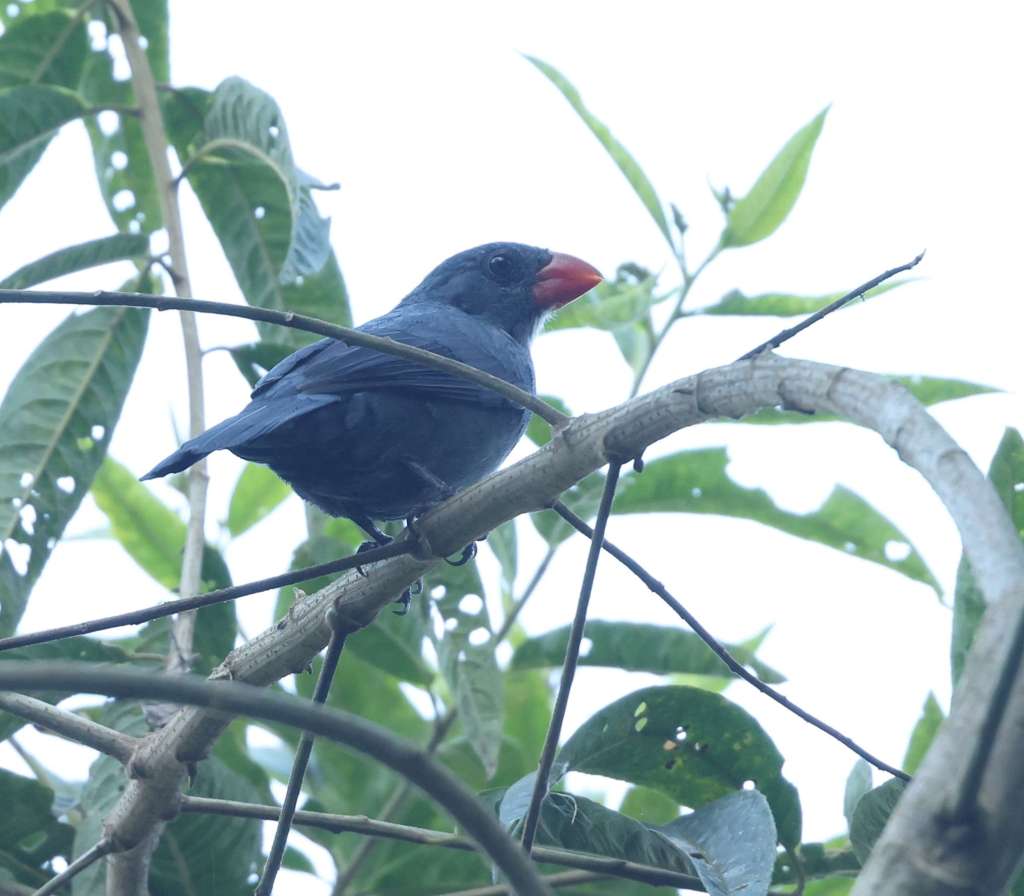
There were a few becards, flycatchers and yet more tanagers around, while a sedate Collared Trogon was happy for its picture to be taken. Finally, seeing Choco Toucans on a dead tree calling and bobbing their heads in a group display as the sun started to set was a magical way to end a long but incredibly productive and enjoyable day of birding in this part of Ecuador.
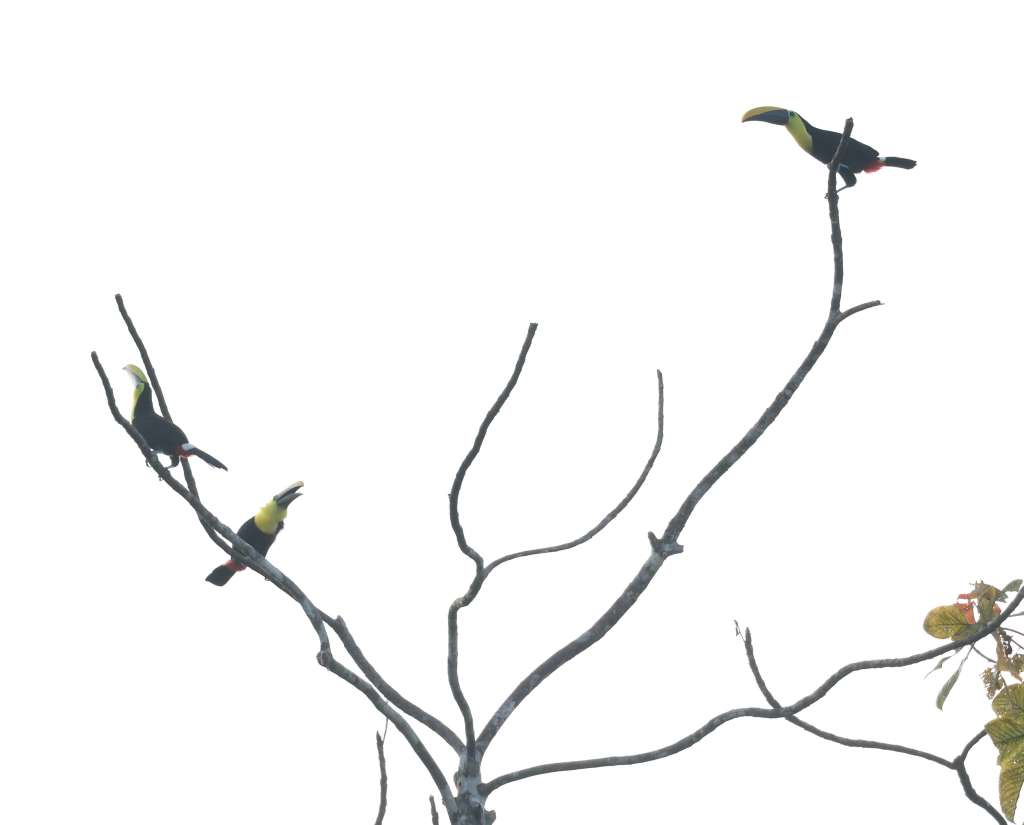
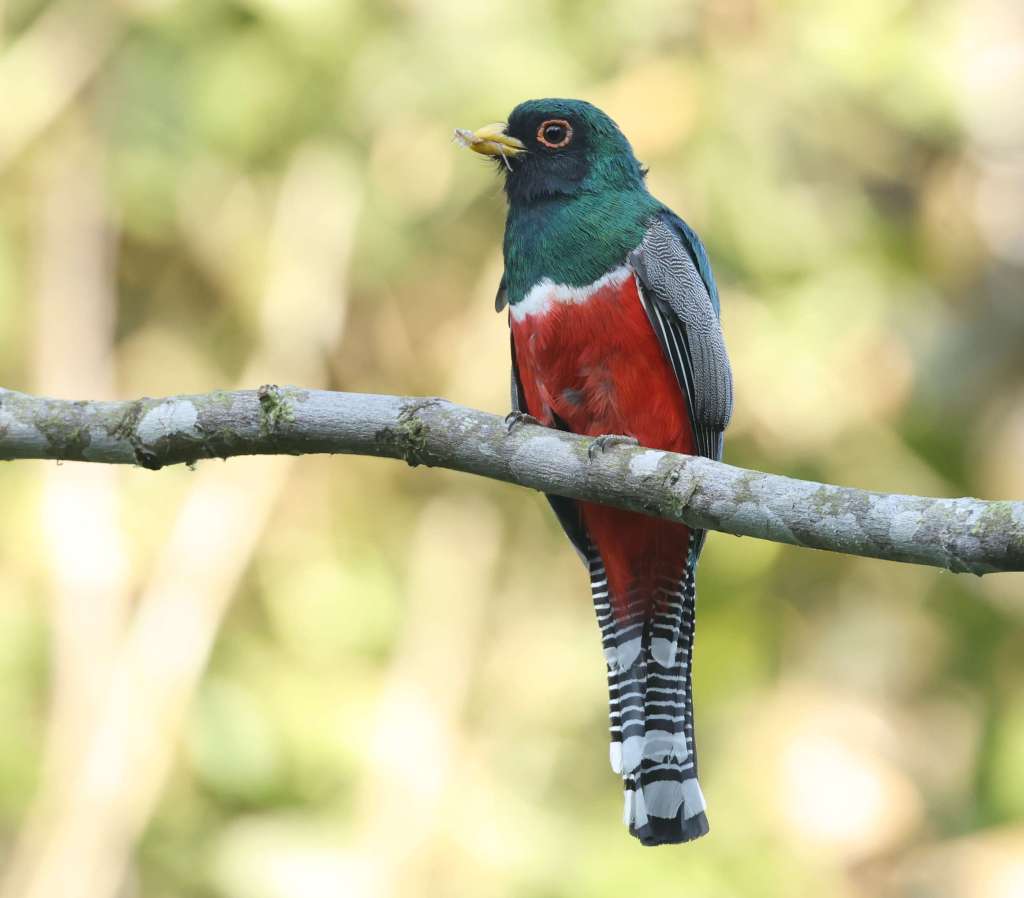
Reserva Zuro Loma
In steeply mountainous terrain at about 3100m, just an hour west of Quito, is Reserva Zuro Loma. We visited on a spectacularly sunny day which afforded terrific views of the surrounding peaks.
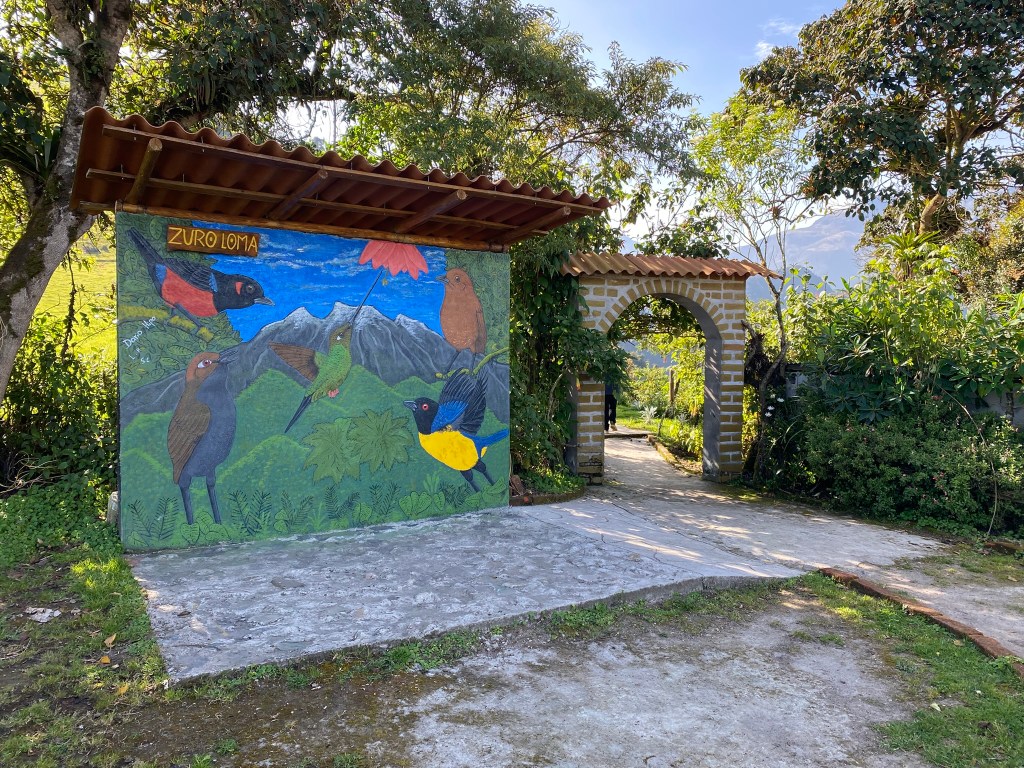
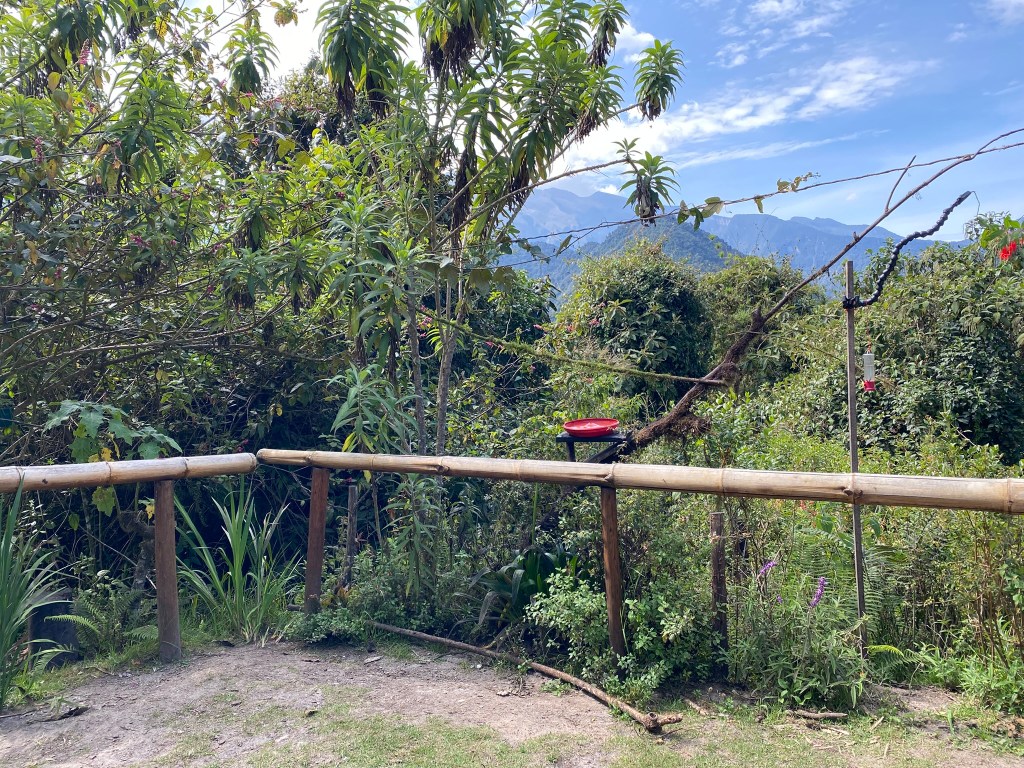
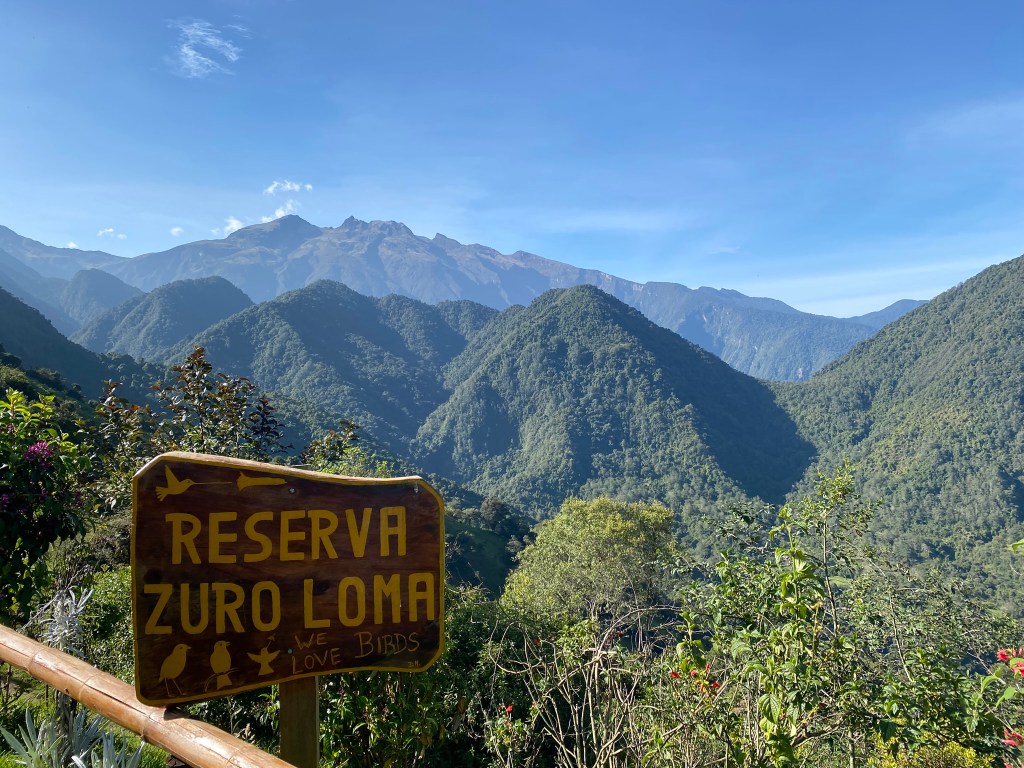
We arrived at about 8:30am, just in time to see two antpittas come in for food: the Equatorial Antpitta and Chestnut-Naped Antpitta. A huge group (maybe 30 strong) of birders, photographers and general nature lovers had gathered to see them, most of them seemingly part of a guided bus tour. As long as you could get a decent look amid the throng, you wouldn’t be disappointed.
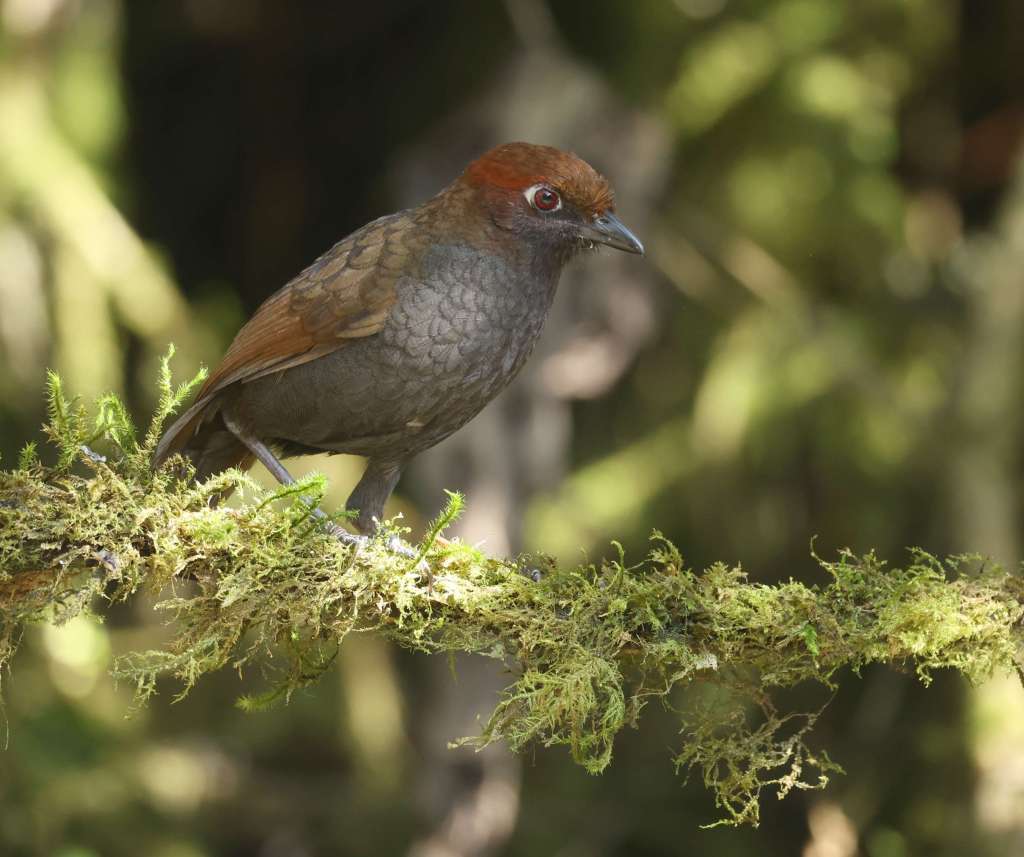
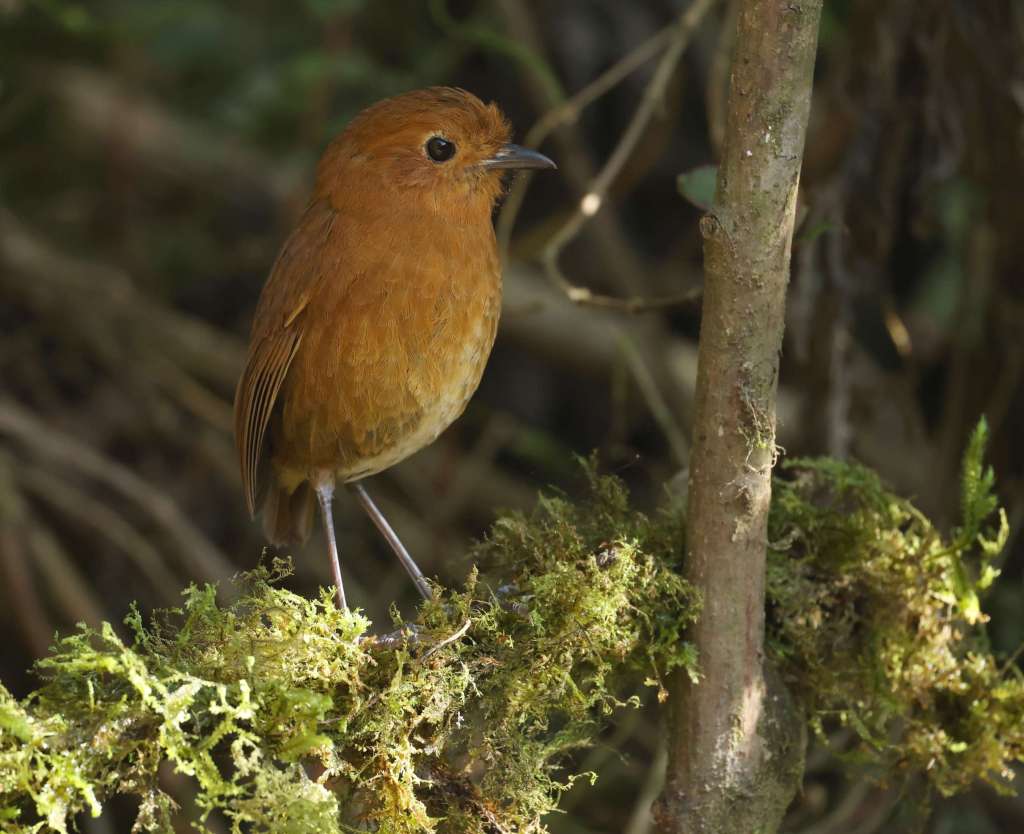
Yep, the antpittas were cool, as they usually are, and somehow my total antpitta species count was now at 15. Not bad.
There are some pretty active hummingbird feeders here, attracting Tyrian Metaltail, trainbearers, Buff-winged Starfrontlet, Collared Inca, Sapphire Puffleg and, to much appreciative noises from the gathered crowd, everyone’s favourite, the almighty Sword-Billed Hummingbird.
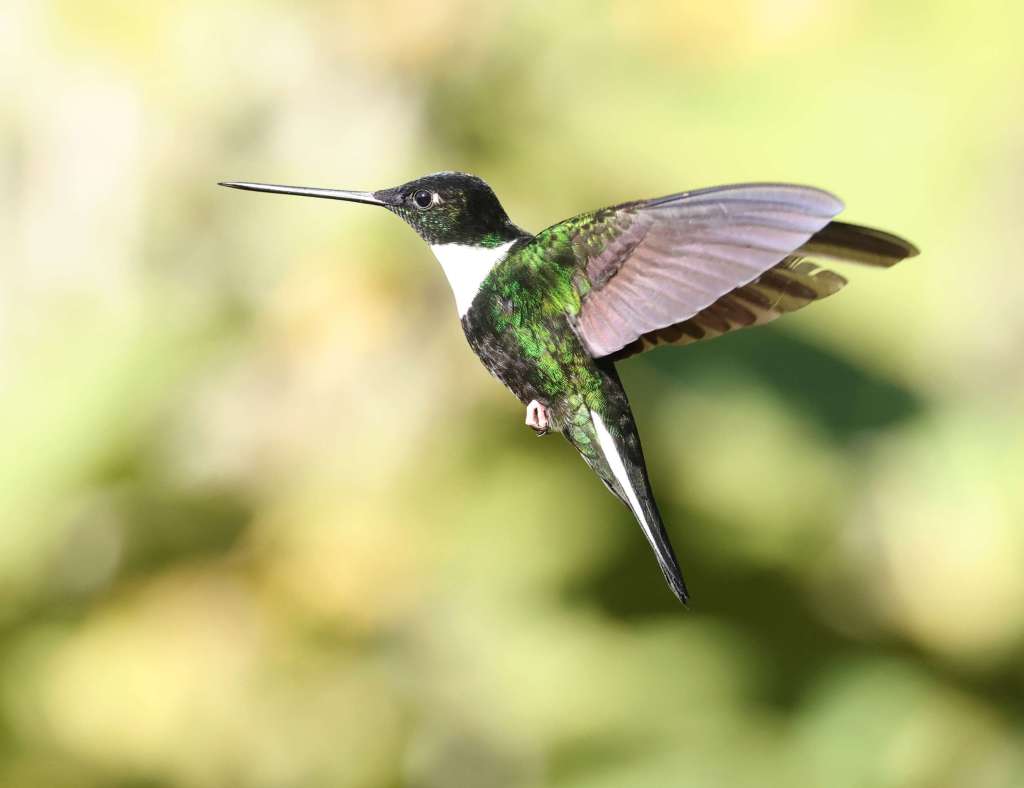
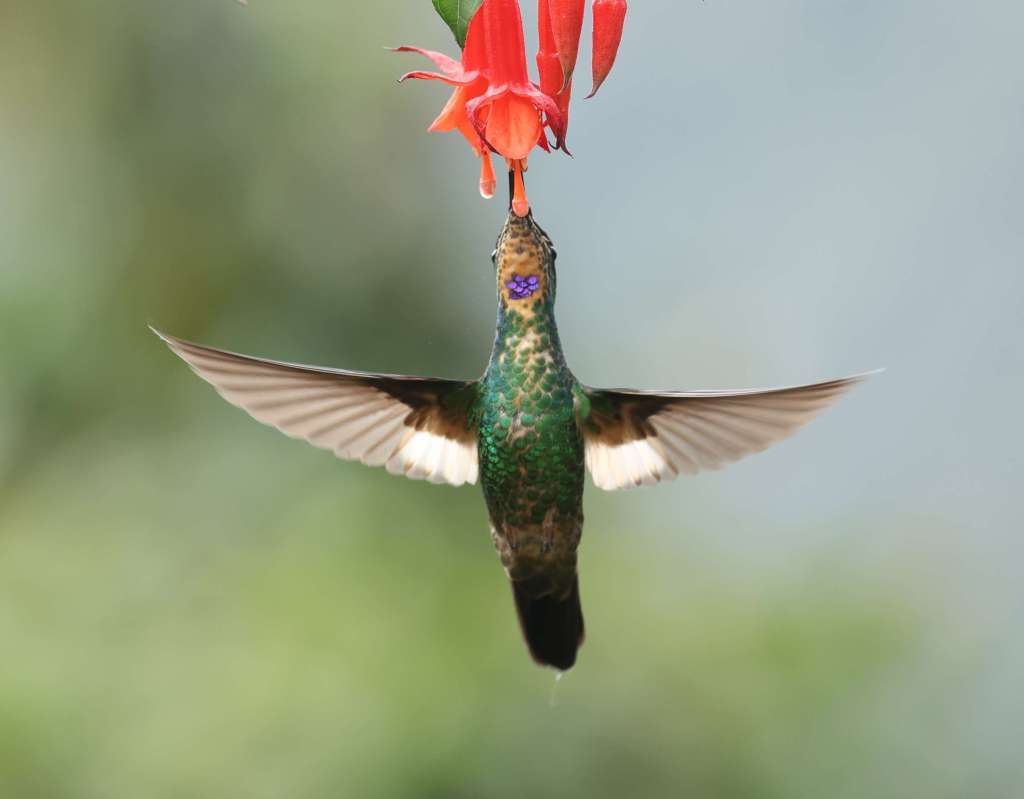
Now, there’s feeding to attract birds, and then there’s… really ethically questionable practices to maximise photography. I don’t know if it was the owner/manager of the property, or one of the bird guides, but one thing this person did was use a syringe to inject sugar water into some of the hanging flowers. I have never seen this done before, and it made me feel a bit, well, icky. Yes, I got some cool photos, but I can get reasonably good photos of hummers without these kinds of over-the-top shenanigans.
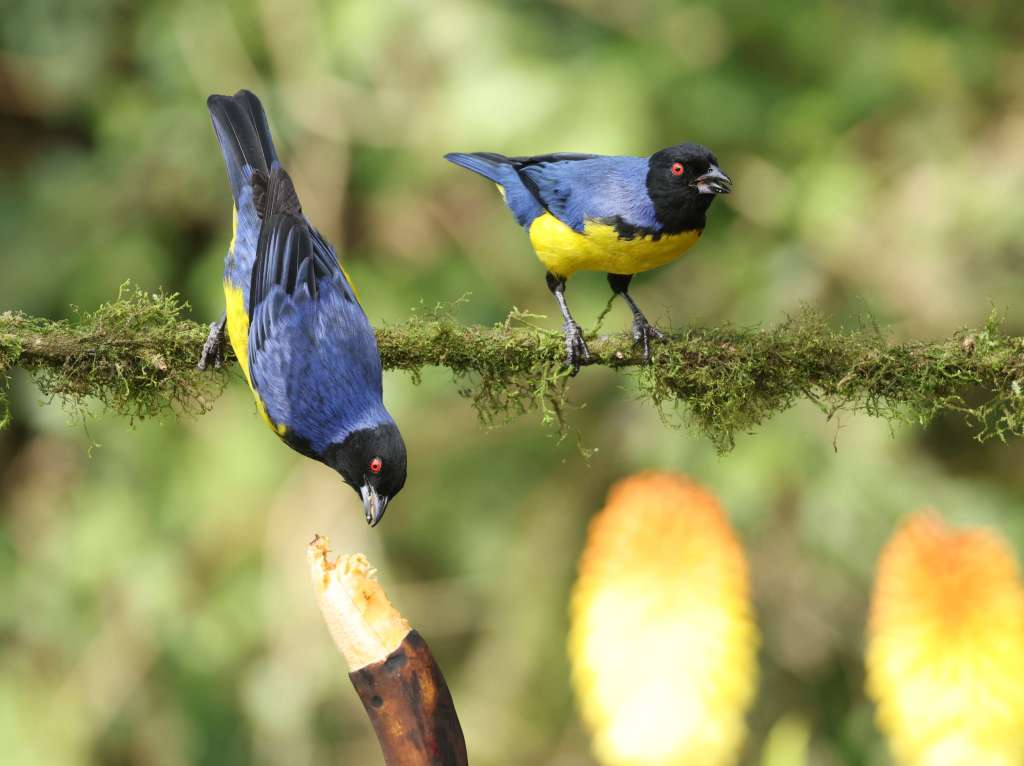
The tanager feeder, consisting as per usual of a photogenic moss-covered horizontal branch, was even worse. There was a subtle pulley system where someone a few metres away was able to tug on a string to pull a banana down from the branch once the bird had landed, thus moving it out of camera shot.
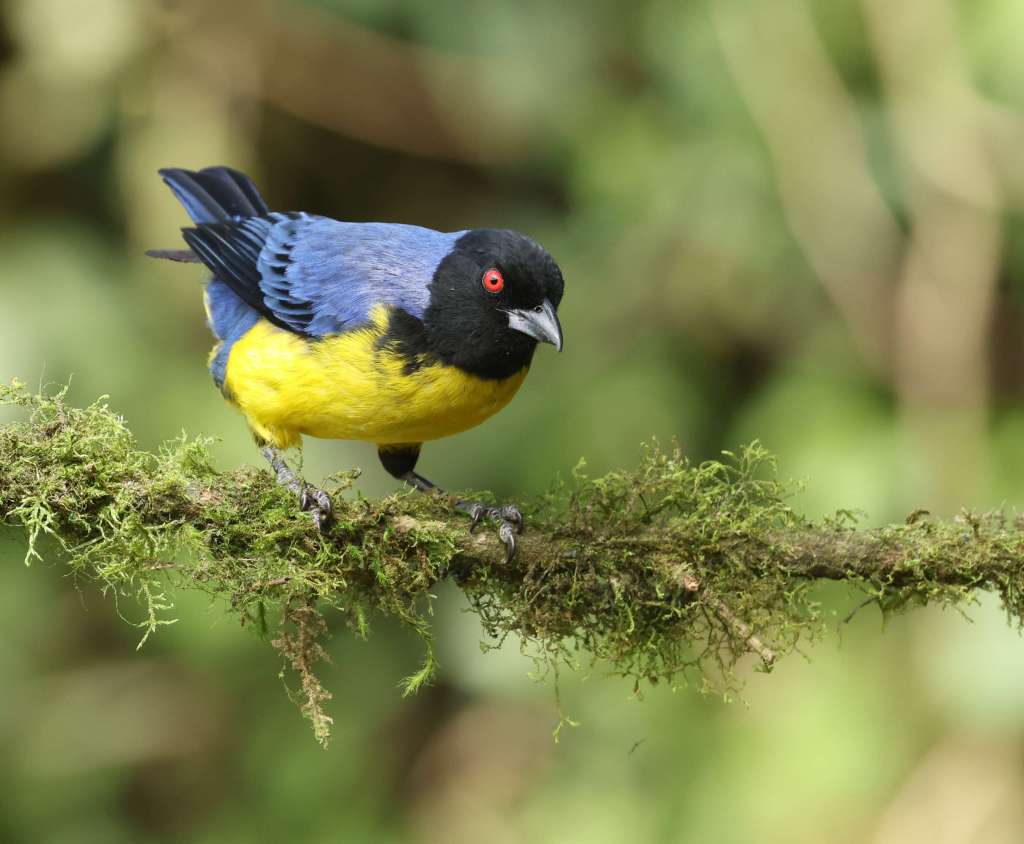
Sure, I prefer to obtain clean photos of birds without food etc in the shot, but jeez, come on! This just seems mean.
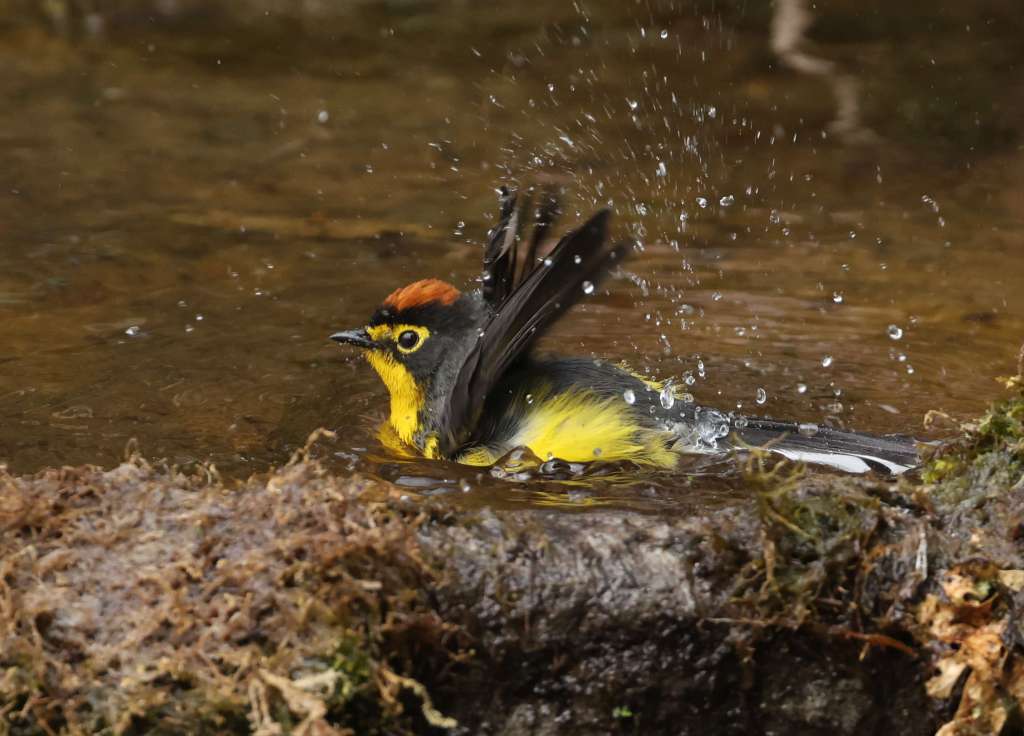
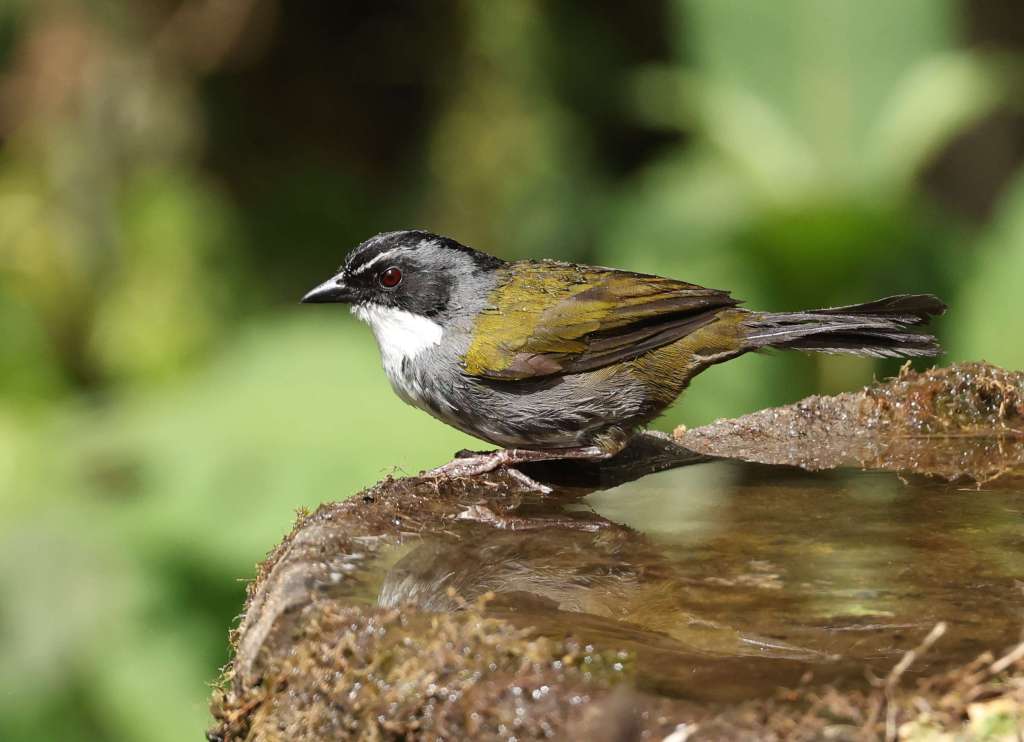
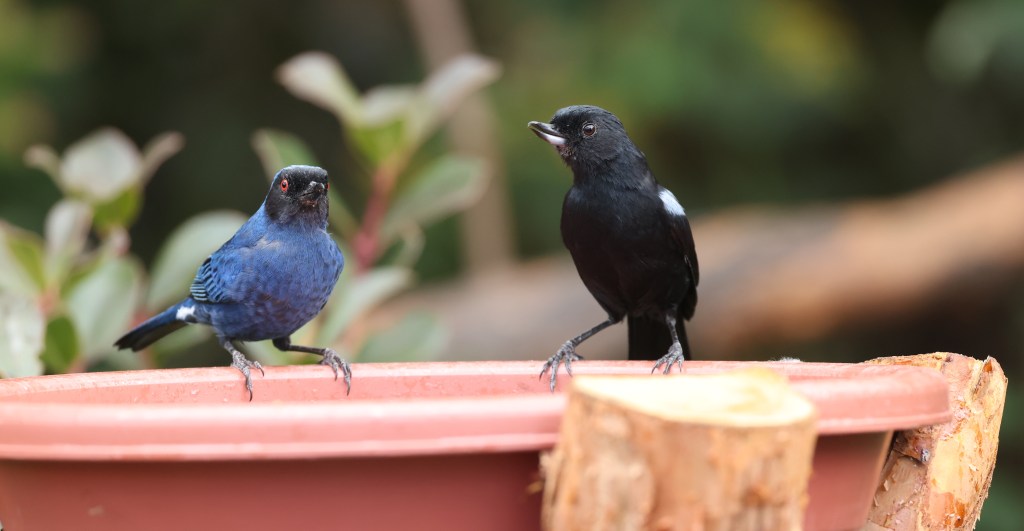
Cinereous Conebill, Spectacled Redstart and Grey-Browed Brushfinch all came to the water bowl for a bath and/or a drink.
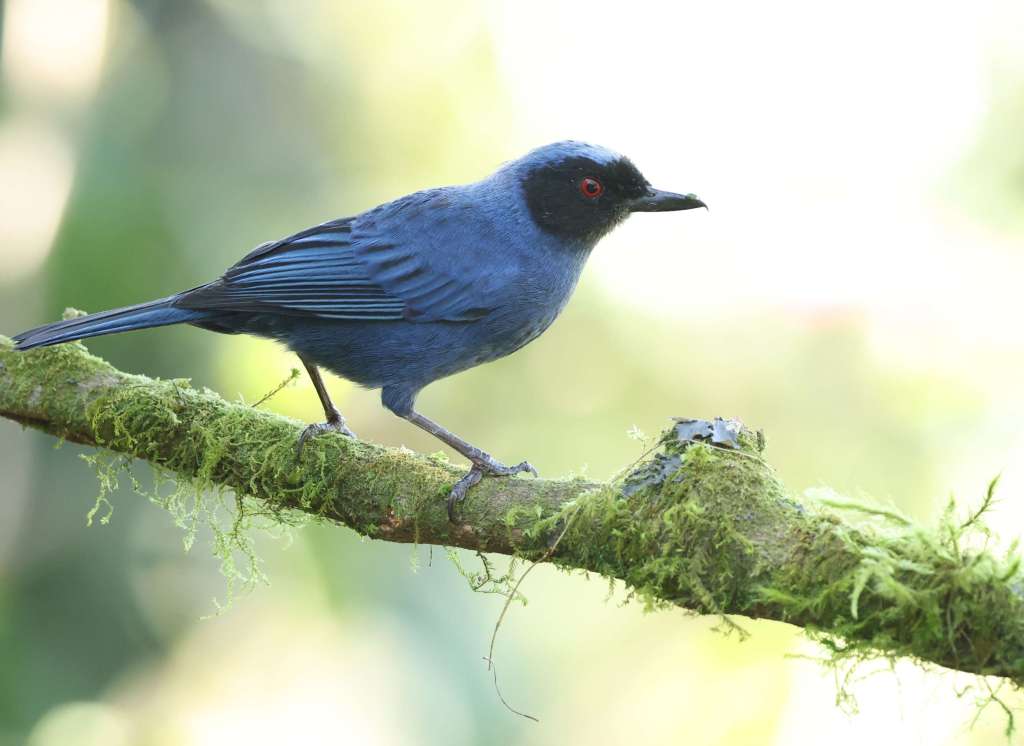
The gardens around these feeders also attract three types of flowerpiercers: most commonly Masked Flowerpiercer, but also White-Sided Flowerpiercer, and Glossy Flowerpiercer.
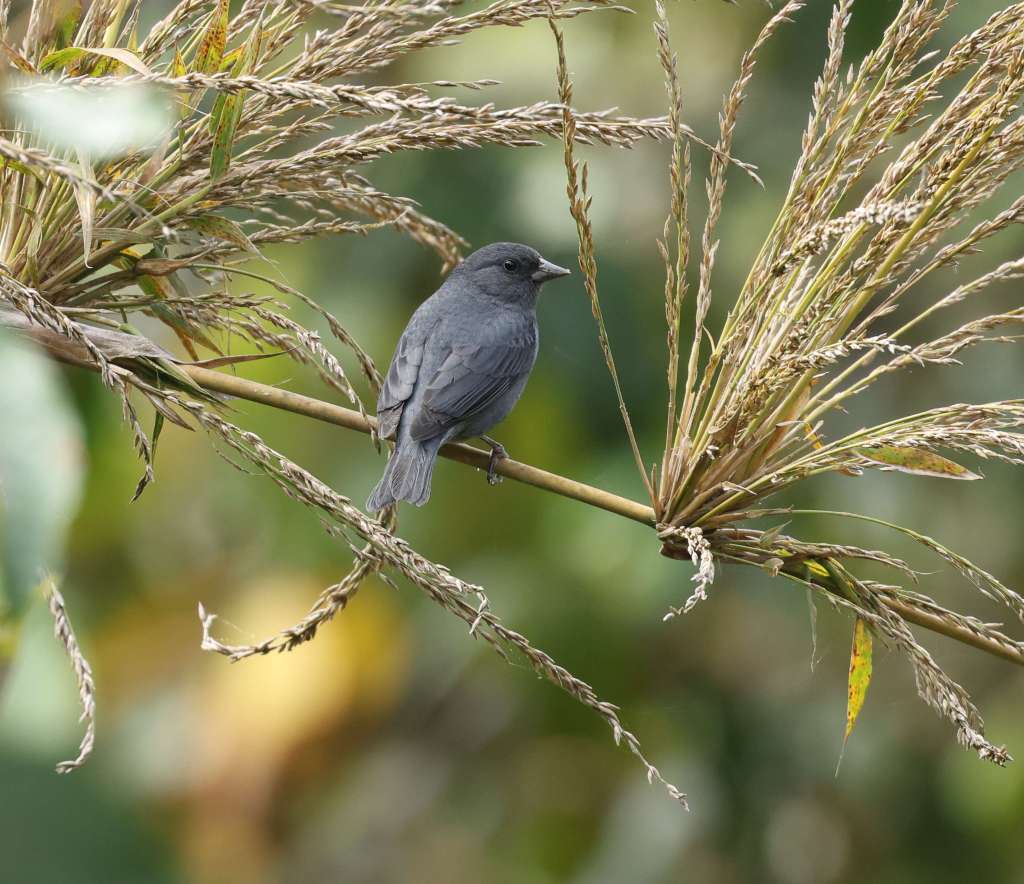
At the bottom of the garden a Slaty Finch popped in. We had seen one poorly at Bellavista Cloud Forest Lodge several days earlier, so it was very cool to see again “properly”. Maybe you need a keen eye for shades of grey to distinguish “slaty” from “cinereous”, “ashy” or “smoke-coloured”, all of which are in use as bird names too. The finch was certainly grey, LOL.
Along a nearby trail in the reserve there are a few other hummingbird feeders, less frequented by birds as far as I could tell. The main highlight here was a pair of Gorgeted Sunangels. I’m not sure what these birds were actually doing; it seemed like some kind of mock-fighting, and it was really interesting to watch. I took a ton of photos of them, though I will only include two here so as not to test your patience…
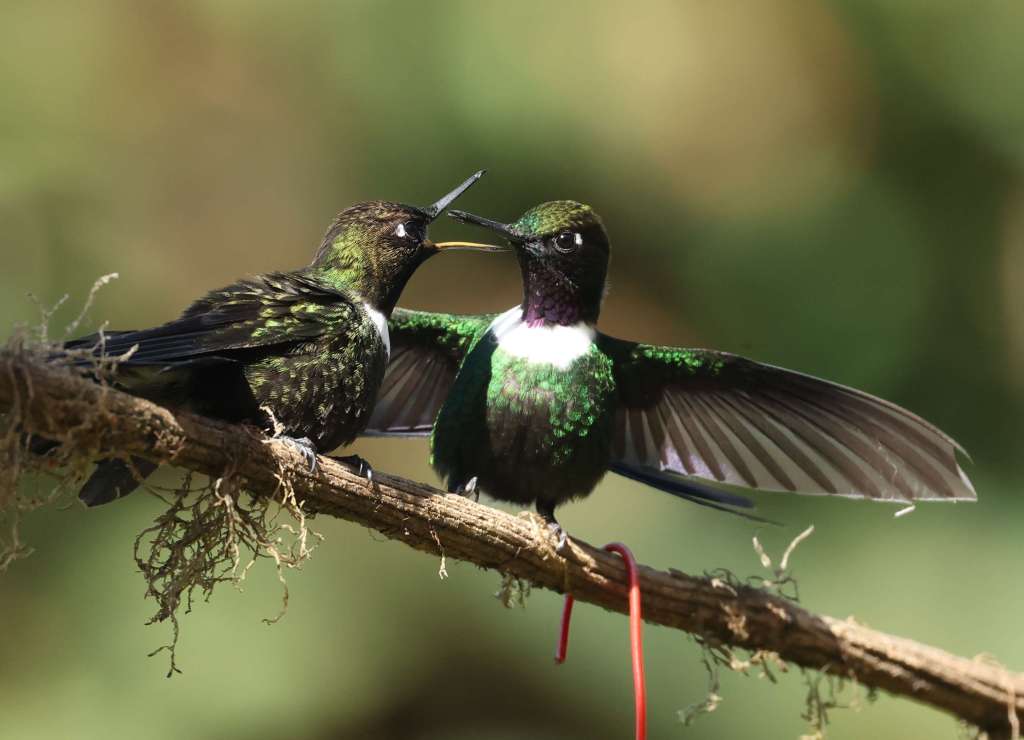
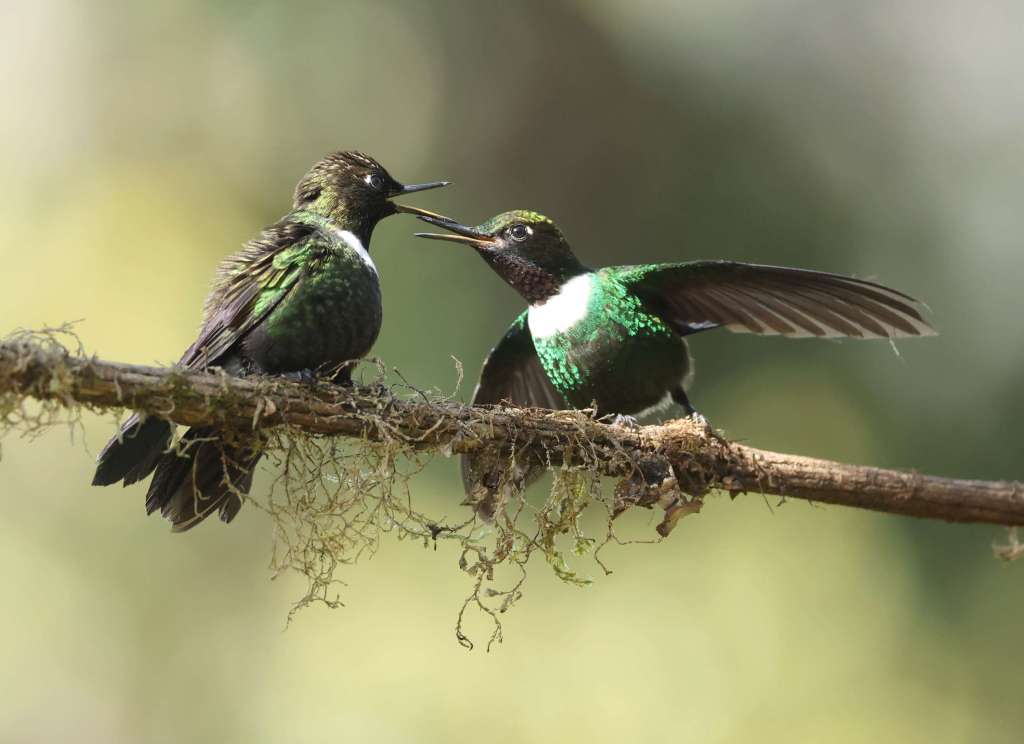
Because I spent a while watching the Gorgeted Sunangels and the other hummers, I did not explore the trail network much at Zuro Loma, in fact I don’t really know what trails they actually have. I did really enjoy my time there, but it was tempered by the huge crowd (I politely tried to not block anyone’s photo access whilst trying to nab a few shots of my own), and the feeding/attracting practices employed there (weird/questionable/icky).
Reserva Yanacocha
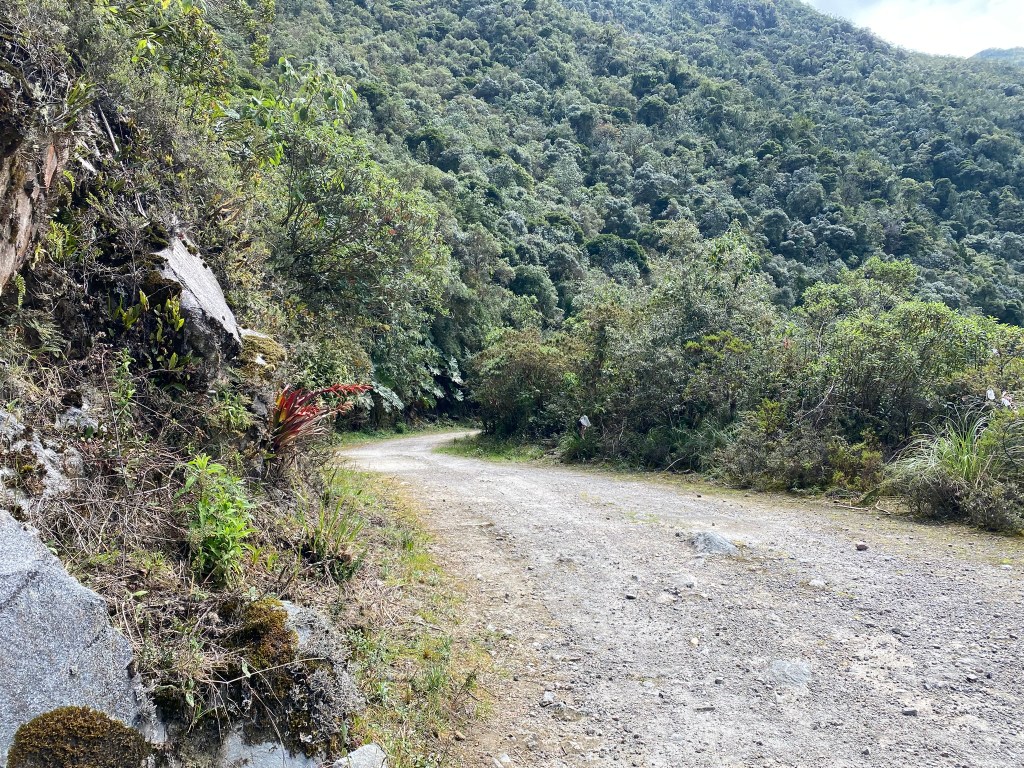
Excitement built as our little birding group ascended higher and higher from Zuro Loma, following the road’s twists and turns (the last 8km is unsealed) and watching the iPhone’s Compass app showing the altitude creeping up until finally hitting 3500m. (Yes, that was cheap entertainment!)
Eventually (actually only about 15 minutes drive) we arrived at the end of the road: Reserva Yanacocha, on the western slope of Volcano Pichincha. This site, along with Zuro Loma, is crucially important to protect the critically endangered Black-Breasted Puffleg. The puffleg is apparently very hard to see there and we certainly didn’t find it.
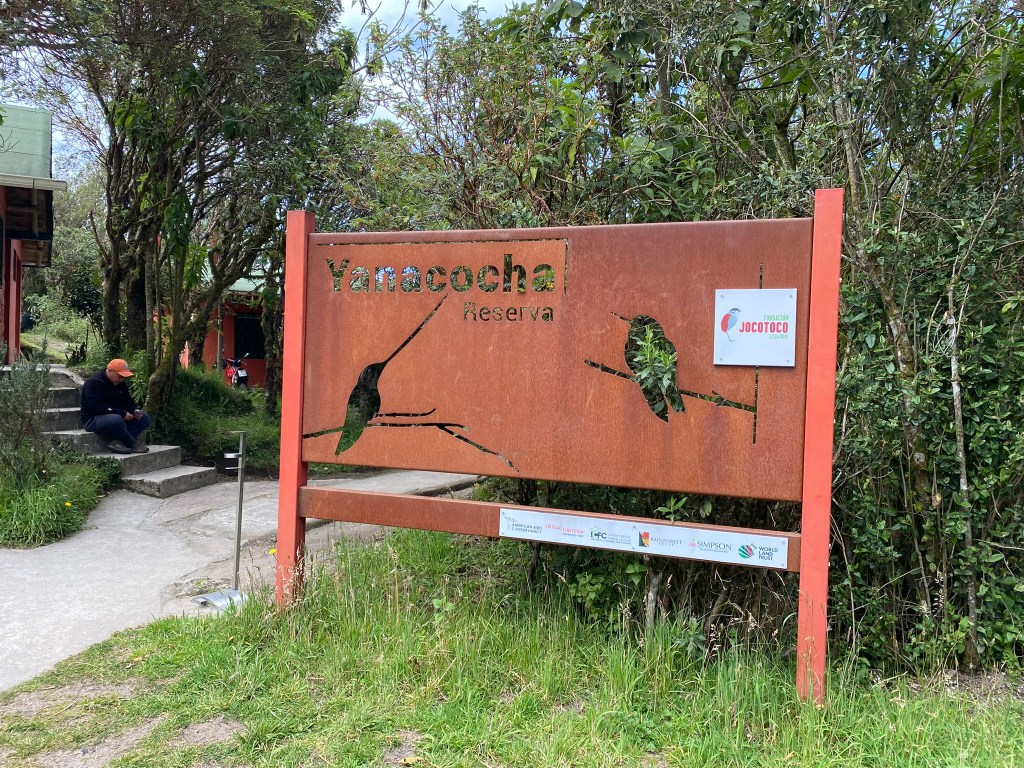
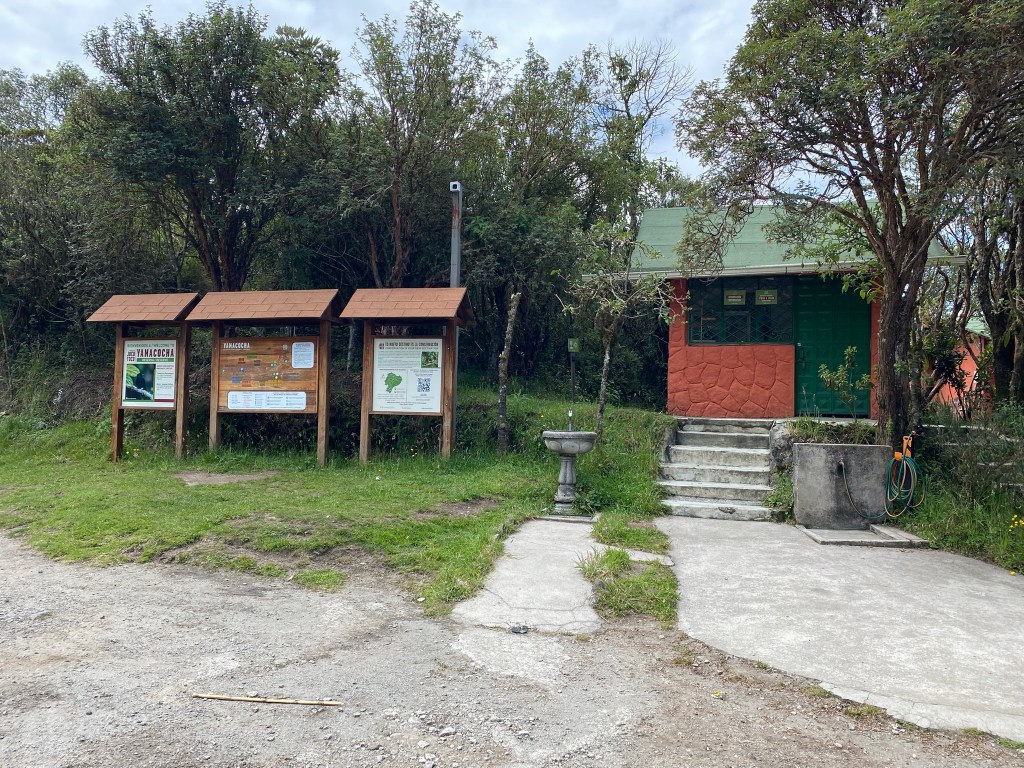
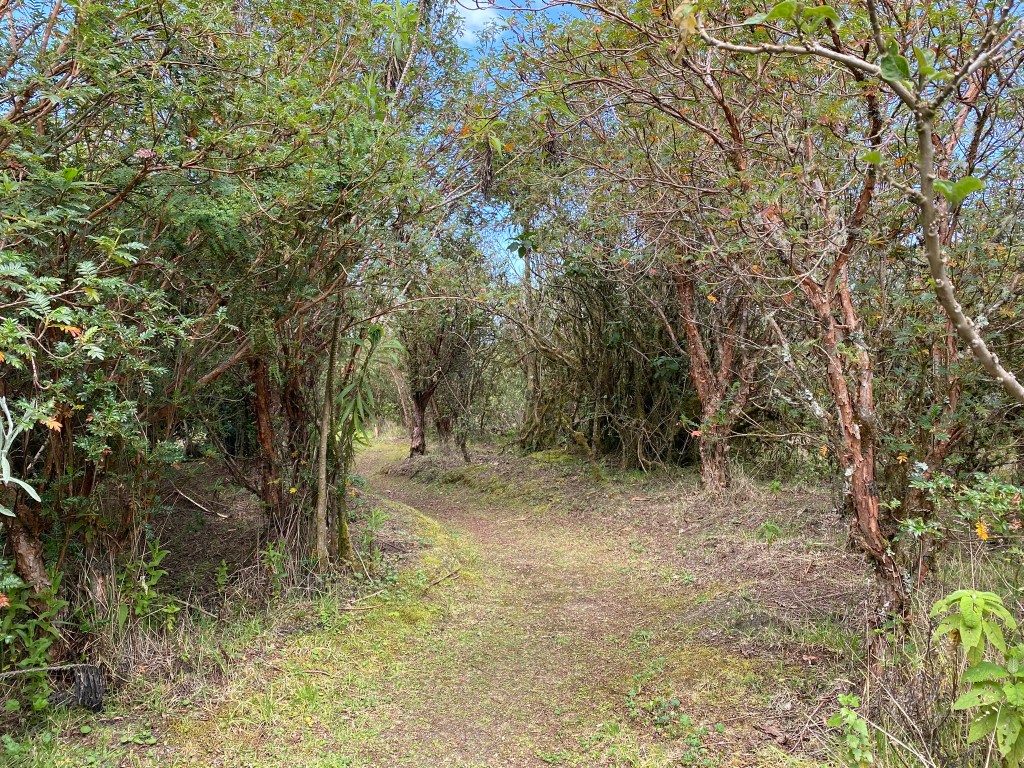
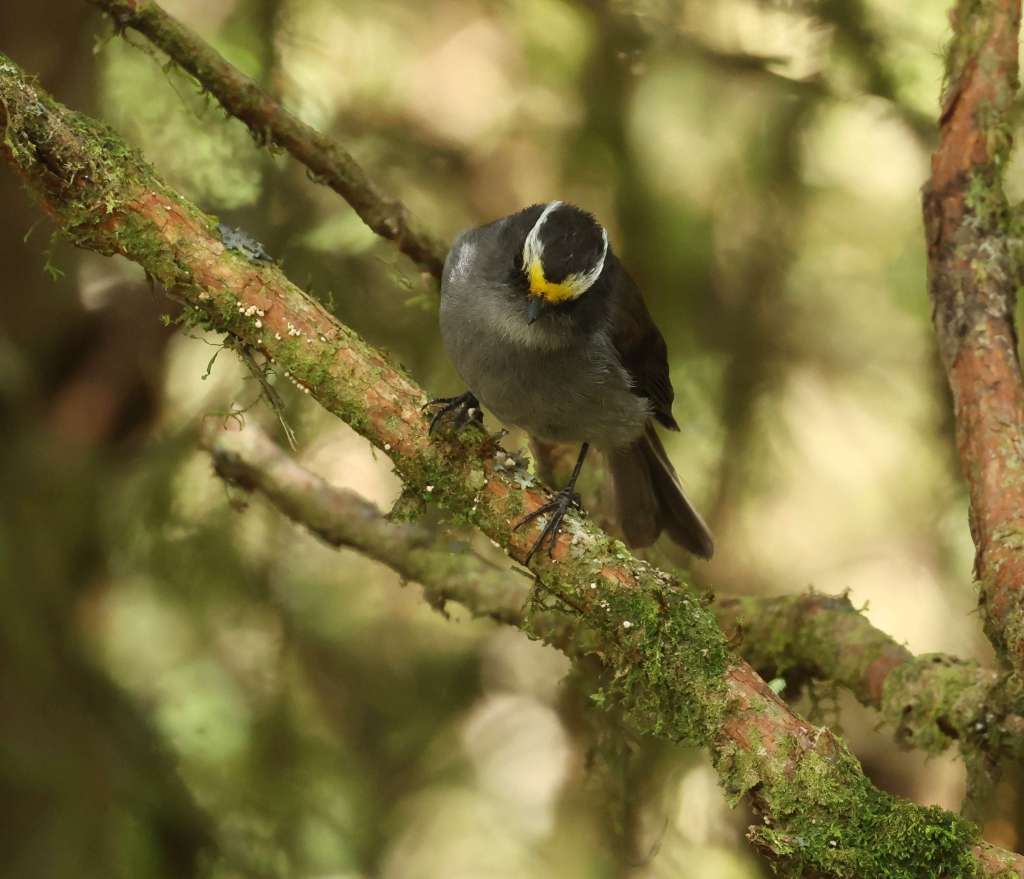
There is a pathway through polylepis trees to the main area, where we saw two Crowned Chat-Tyrants, the white-gold crown on their heads readily evident.
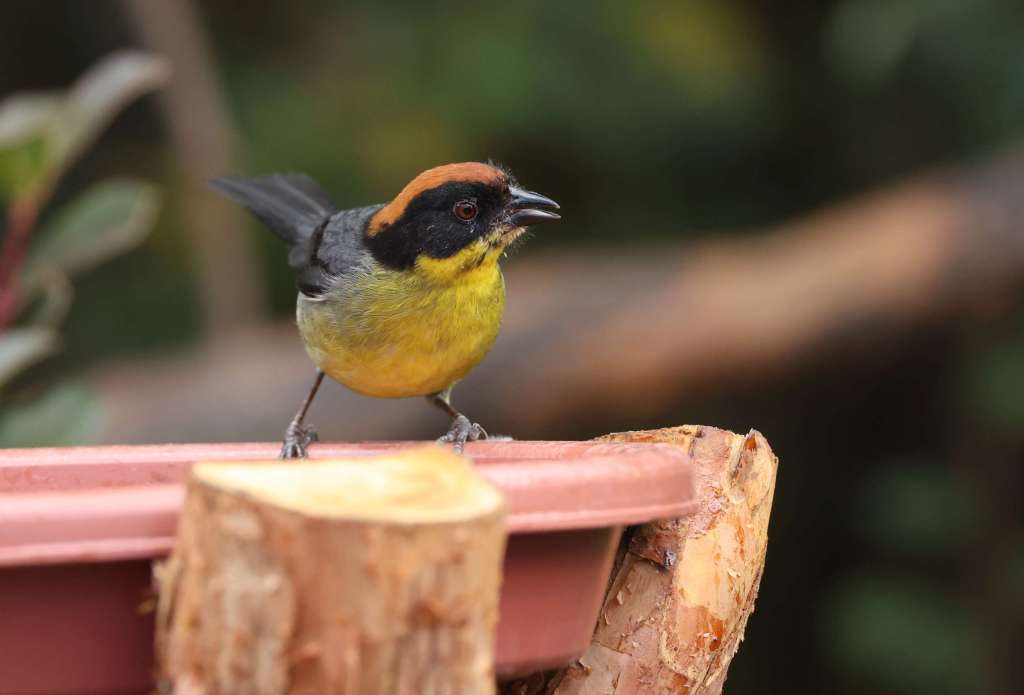
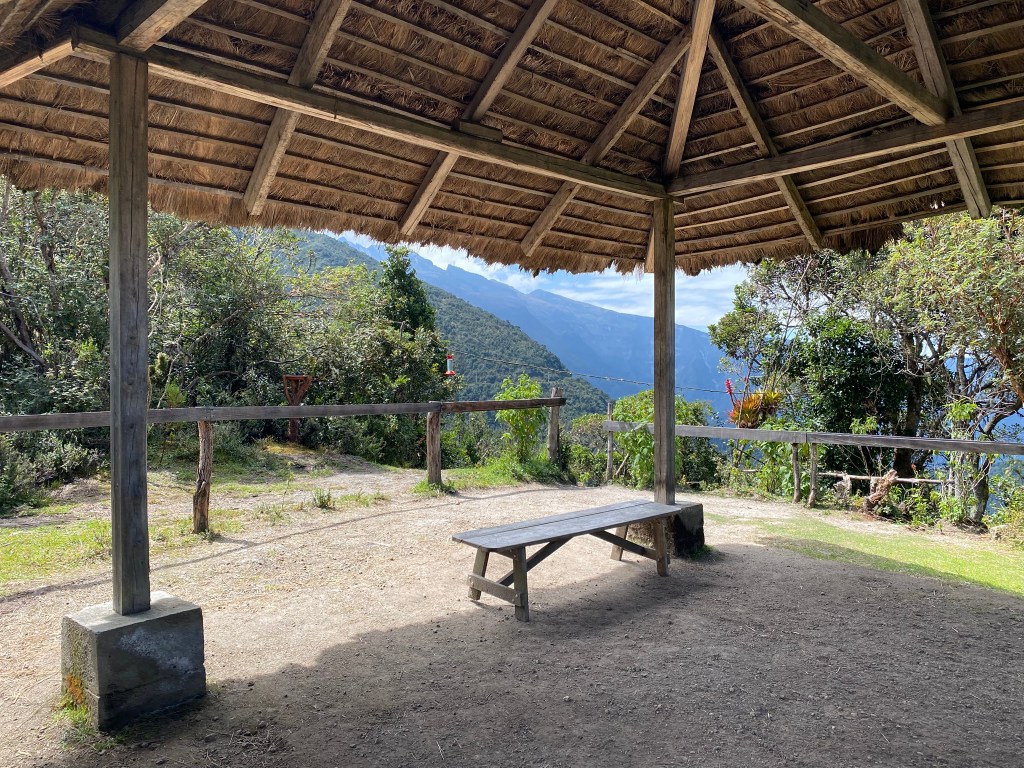
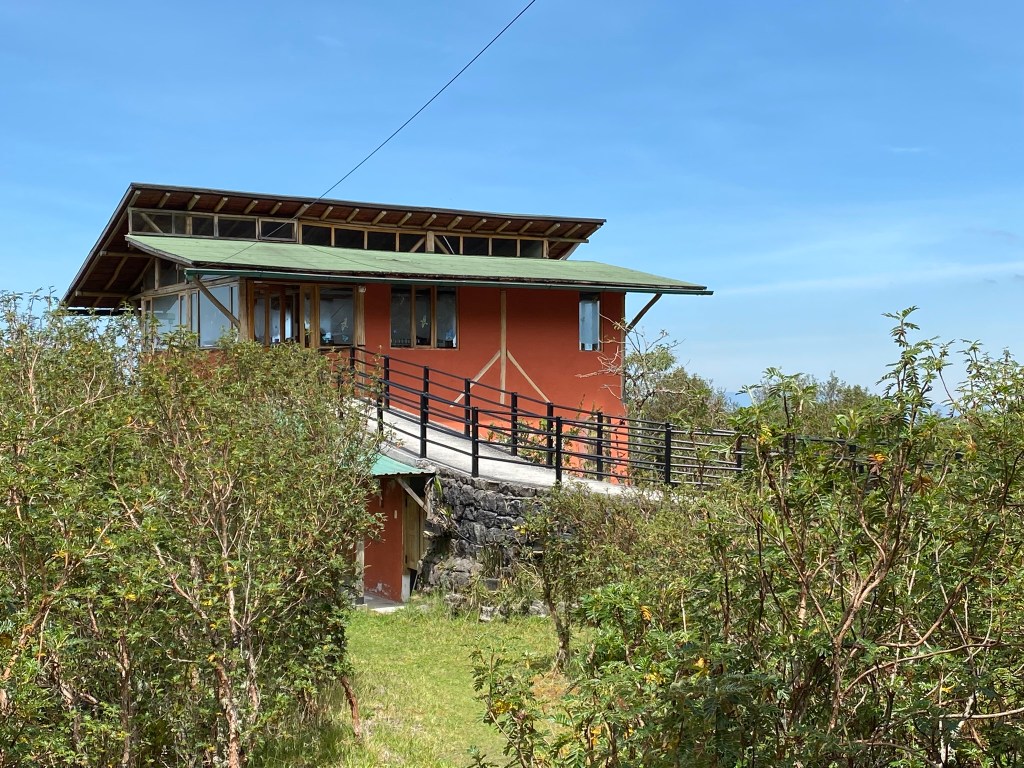
Of course there are some feeders here, attracting hummers and tanagers. This feeder area is nice and breezy with a shade structure and scenic views.
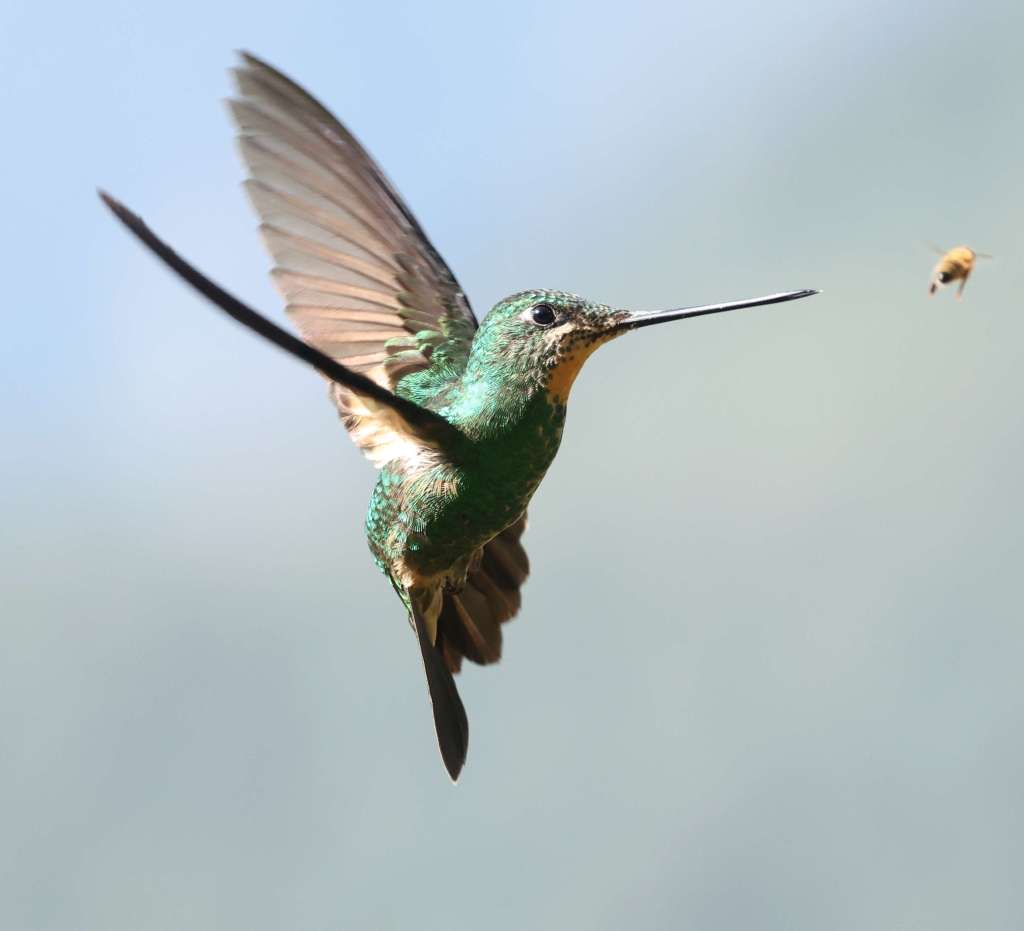
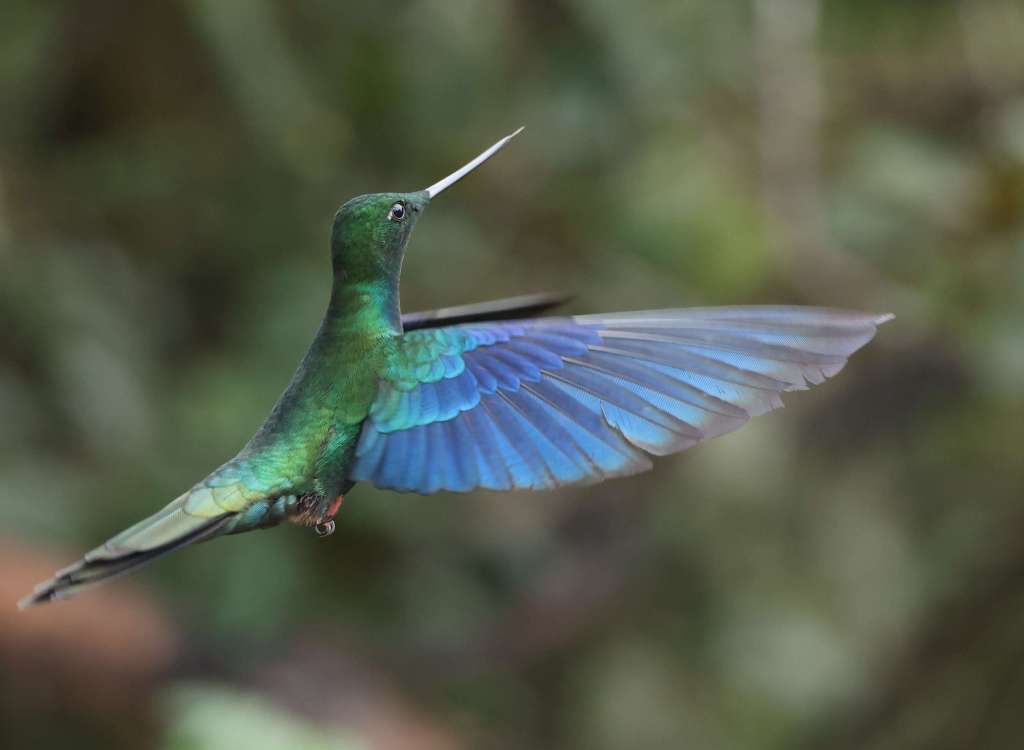
One of the key hummingbirds here is the large Great Sapphirewing, and I was dead keen to get some flight shots of the bird showing off its big blue wings. A bit of patience was rewarded with some nice photos.
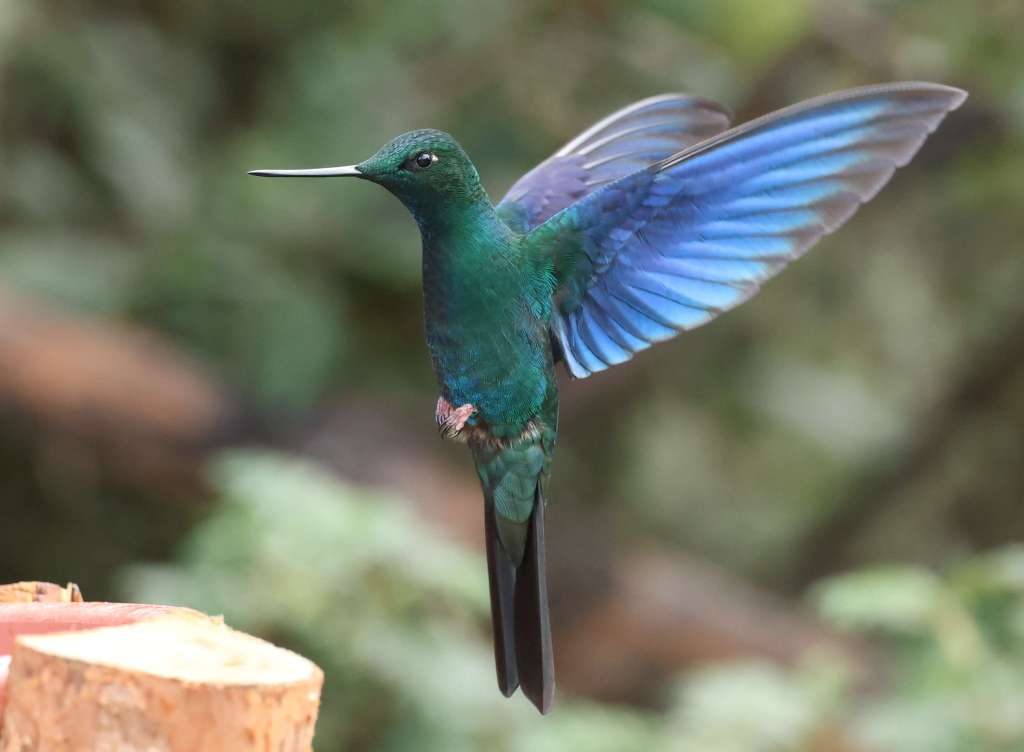
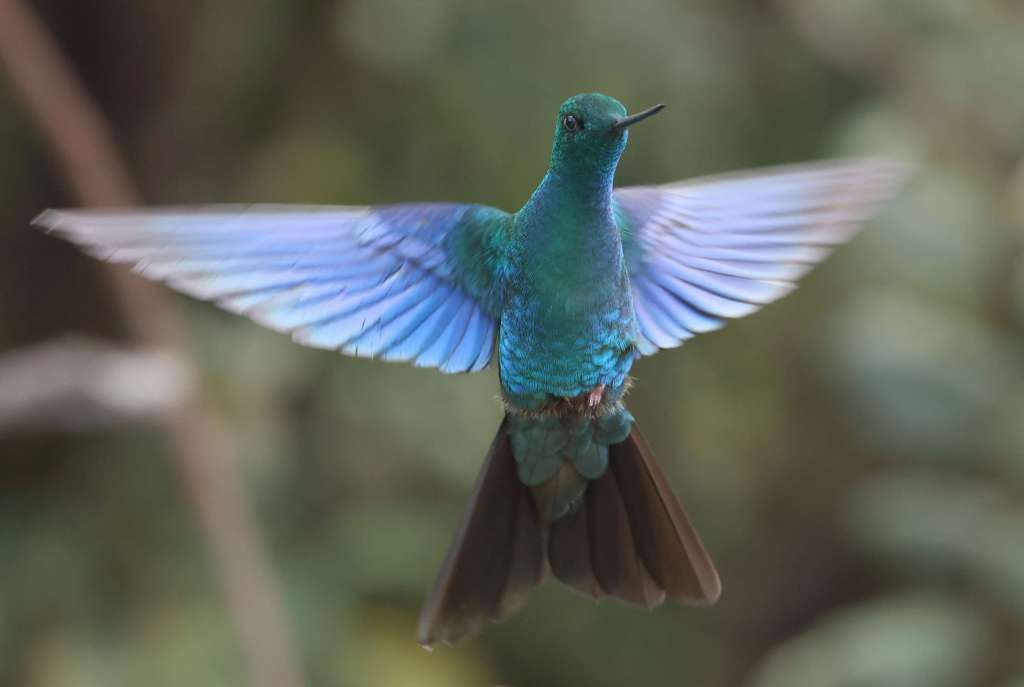
Truly a great subject for keen photographers!
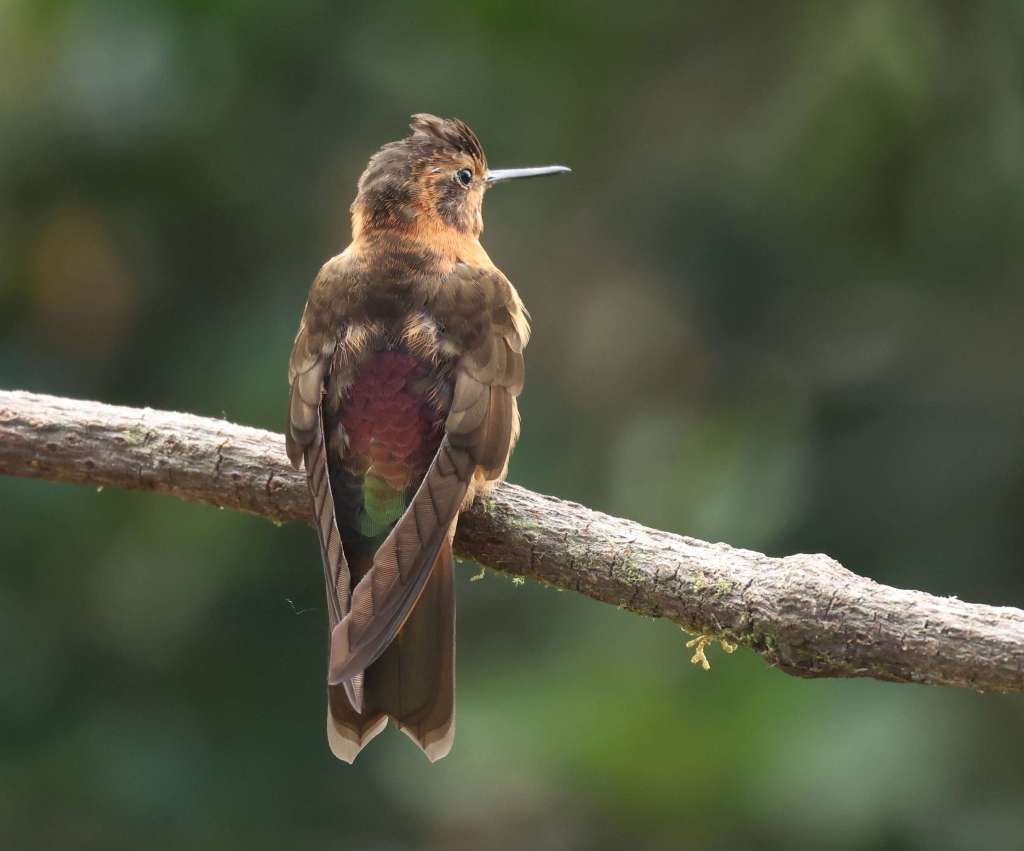
Though the Shining Sunbeam isn’t bad either; I was particularly amused to see another bird guide pointing out the sunbeam and exhorting it to turn around and show off its rainbow back feathers so his couple of clients could see them… which happened maybe, once, briefly.
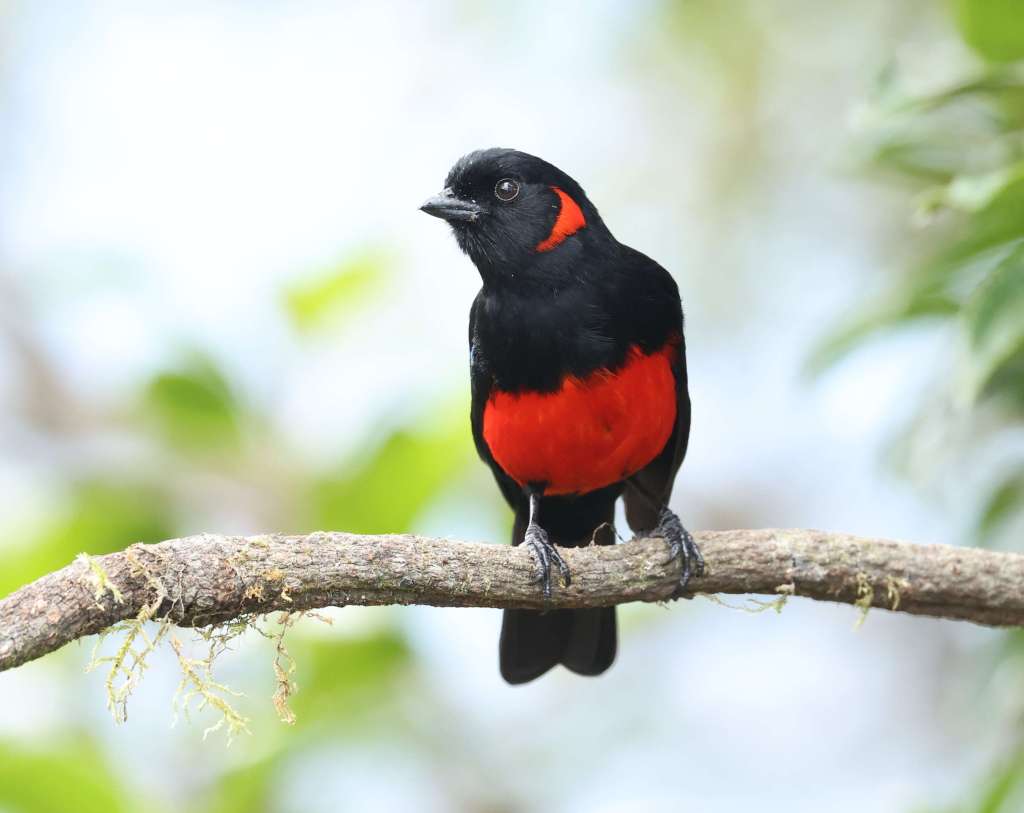
The super vivid Scarlet-Breasted Mountain Tanager approached the feeders once or twice, but the feeders and water bowls were mostly overrun by flowerpiercers – at least 7 or 8 Masked Flowerpiercers, and a Glossy Flowerpiercer too.
We walked about a kilometre of the road trail that curves along the mountainside here (one of a few trails I believe), and the birding was predictably much harder than at the feeders. We did see a pair of Bar-bellied Woodpeckers, plus Andean Guan, White-Throated Tyrannulet, Aplomado Falcon and even a Rufous Wren; by this stage of my Ecuadorian adventure, none of these birds were lifers, and I didn’t keep any photos from this part (heck, some of the pictures barely had identifiable birds in them!)
A lunch at the modestly-appointed-but-with-amazing-views restaurant featured popcorn-in-soup as a starter (getting used to that now…). Reserva Yanacocha was a good place for high altitude species, though I suspect some serious luck is required to find the most desirable targets there.
Summary
It has taken two long blog posts to cover a dozen high-quality birding locations in the Mindo region, and we’ve barely scratched the surface. Just looking at the number of deep red hotspots (as in, highly biodiverse) on the eBird map of the region is enough to make your head spin! As we mentioned last post, if you have time available, you should absolutely aim to visit a variety of locations in the Mindo area; you’ll only get a narrow slice of what’s here at any one site. Each place has its own unique characteristics: some have very specific and special birds like the Long-Wattled Umbrellabird at the Umbrellabird Reserve, or the antpittas at Refugio Paz de las Aves, while others sport a few iconic species that can be more easily seen there than elsewhere (Plate-Billed Mountain Toucan at Bellavista Cloud Forest Lodge, or the tanagers at Mashpi-Amagusa come to mind). The convenience of these sites to Quito and the ubiquity of accommodation and guiding options makes it relatively easy to go there and discover for yourself the incredible birds of Ecuador.
AUTHOR: ANDY GEE
BIRDERS: ANDY GEE, K-A
 Bird Spots