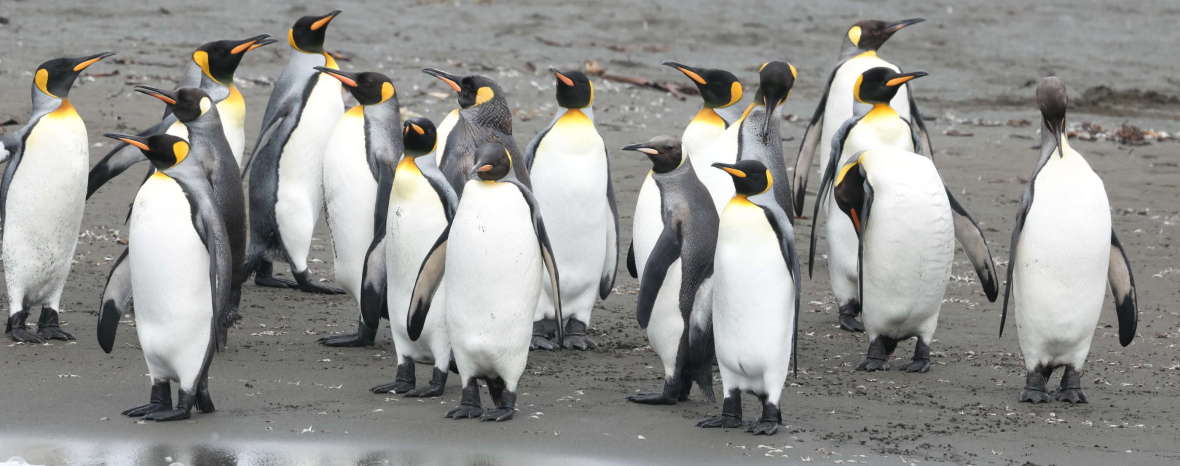
Huge colonies of penguins. Gigantic icebergs. Dueling Elephant Seals. It’s all part and parcel of the experience of South Georgia Island and the Antarctic Peninsula.
I journeyed to South Georgia and Antarctica (sailing out of Punta Arenas, via the Falkland Islands, as noted in the last post) with the HX company on vessel MS Fram, from the end of December 2025 to mid-January 2026. Although quite a long trip, I would highly recommend this cruise. As an “expedition” ship, it conducts actual science (such as penguin colony drone surveys), and the smaller ship size (compared to the huge cruise ships) mean that it is feasible to do shore landings via zodiacs.
Note that I’m lumping in South Georgia with Antarctica here as they both lie south of the Antarctic Convergence, a globe-spanning ocean line that divides sea temperatures from a balmy 8°C to a chilly 2°C. Biologically, this is one big zone of cold!
South Georgia
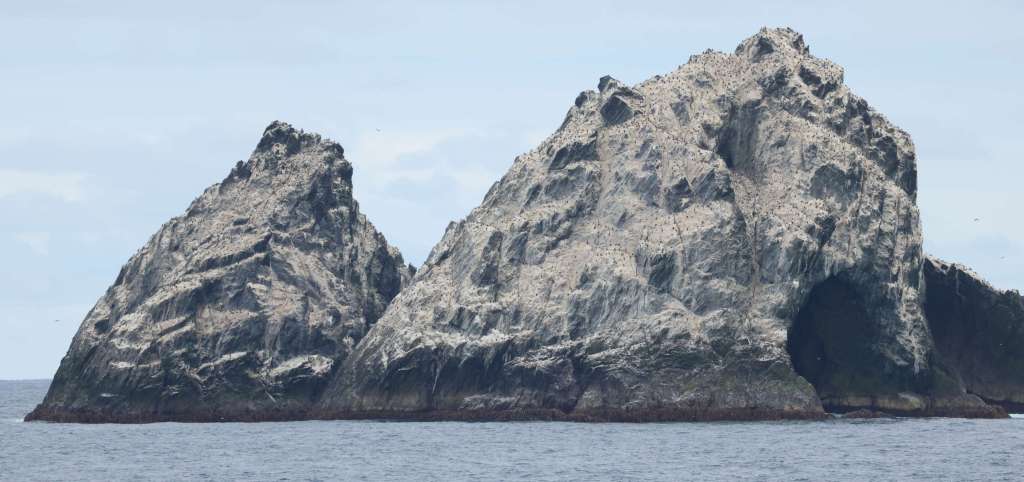
The first hint that you’re going to see huge numbers of birds comes when Shag Rocks slides into view, a few hundred kilometres west of South Georgia. Each dark dot in the photo below is an Imperial Cormorant. We reckoned 810, which is probably a wild under-estimate: in October 2025 someone in an eBird checklist counted 11,000. It’s a lot of birds, on a modest set of pointy rocks.
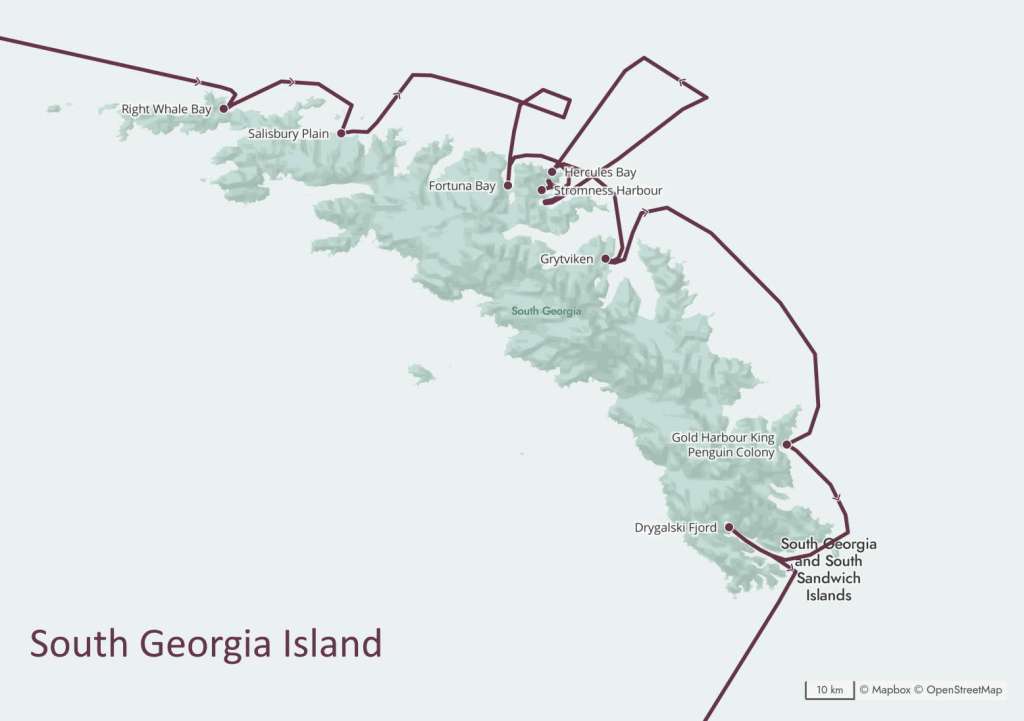
The vast majority of stops on South Georgia Island are made to the various bays and inlets on the west and north-west side of the island.
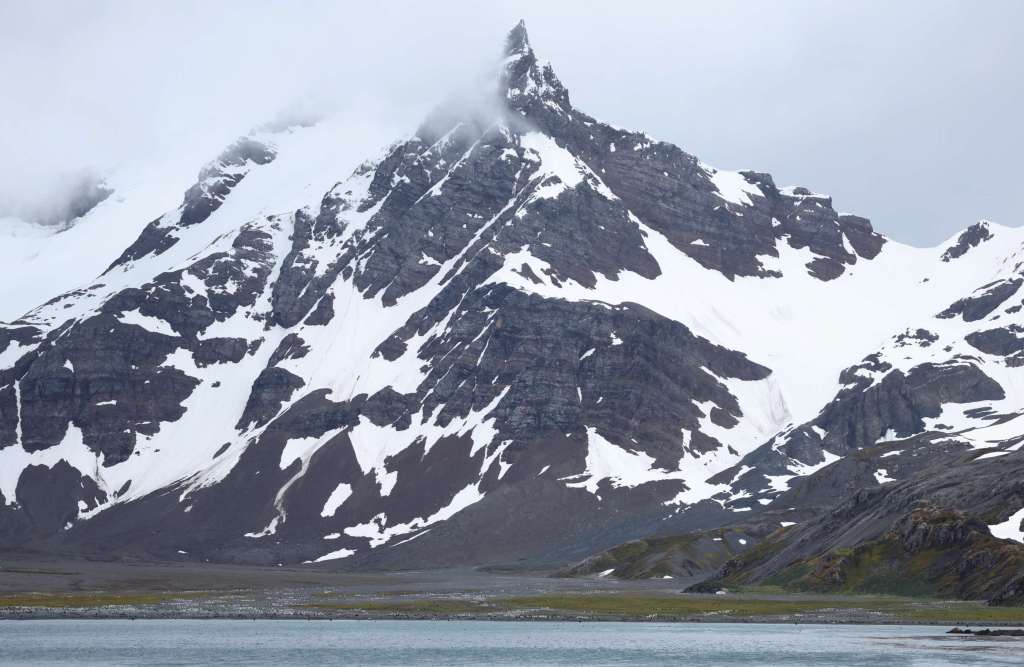
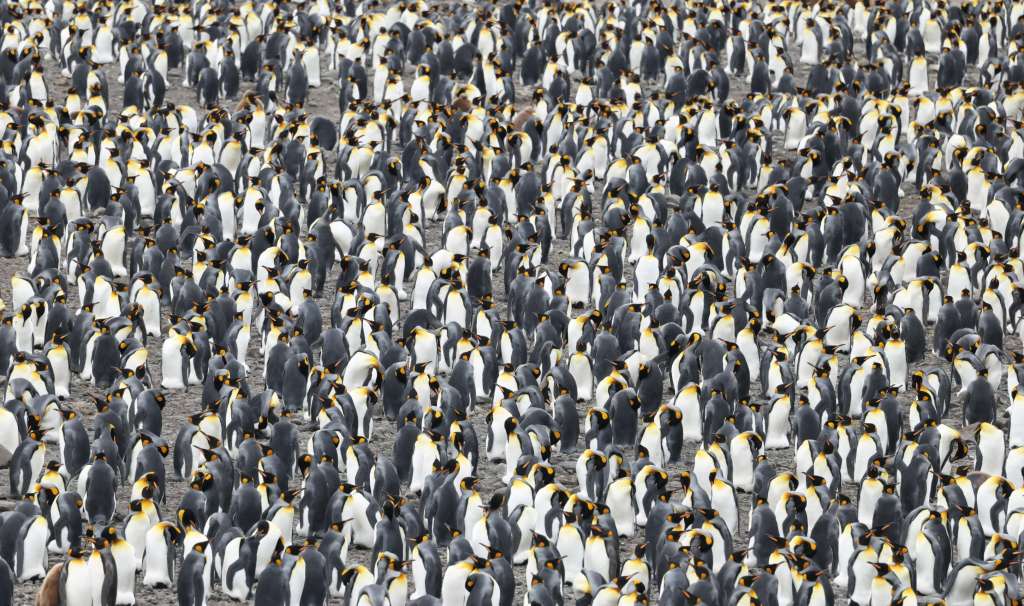
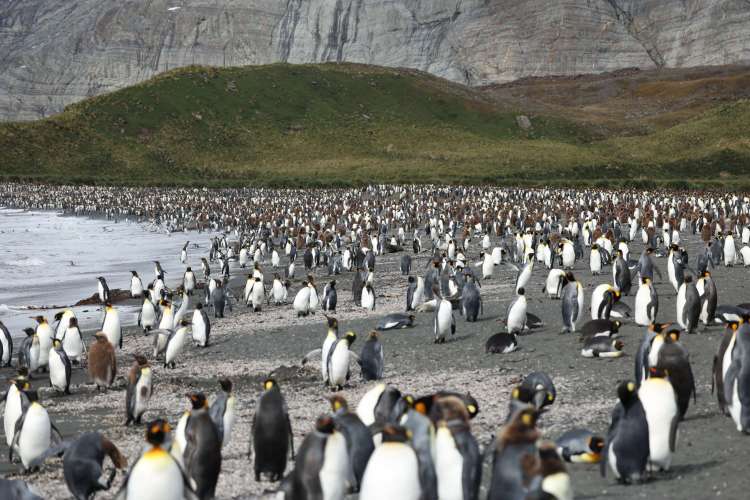
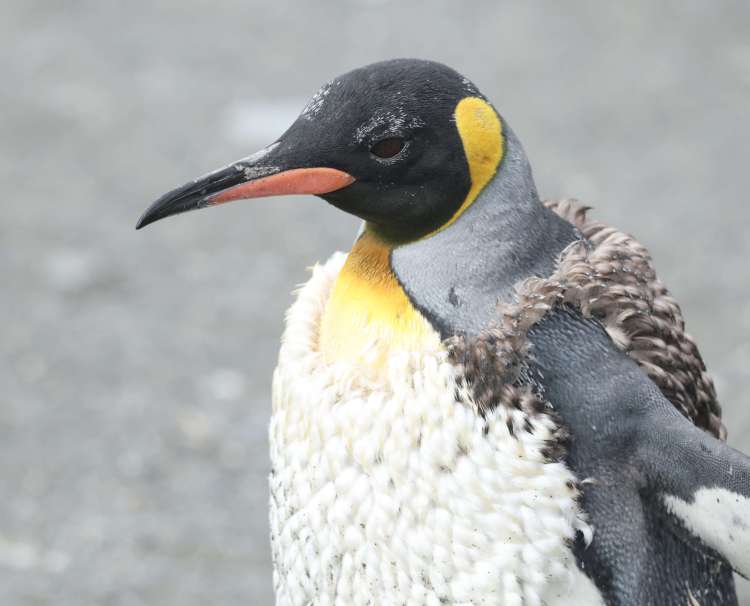
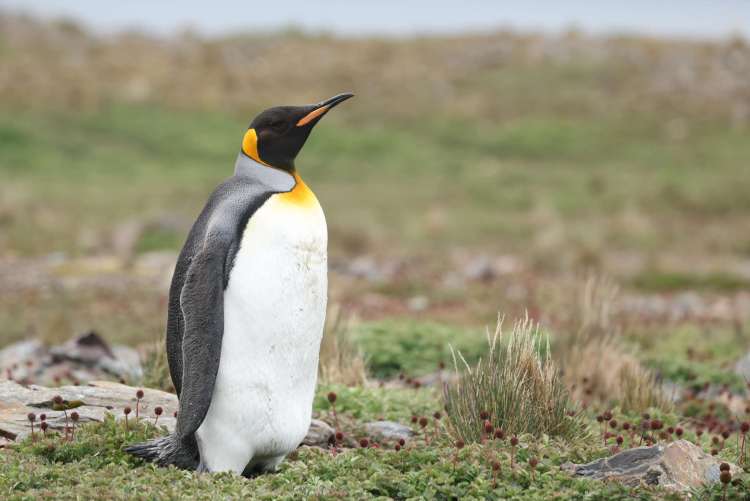
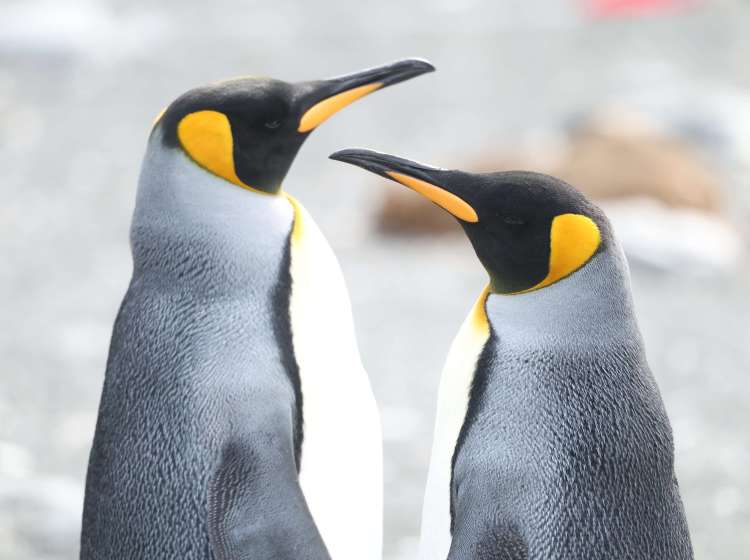
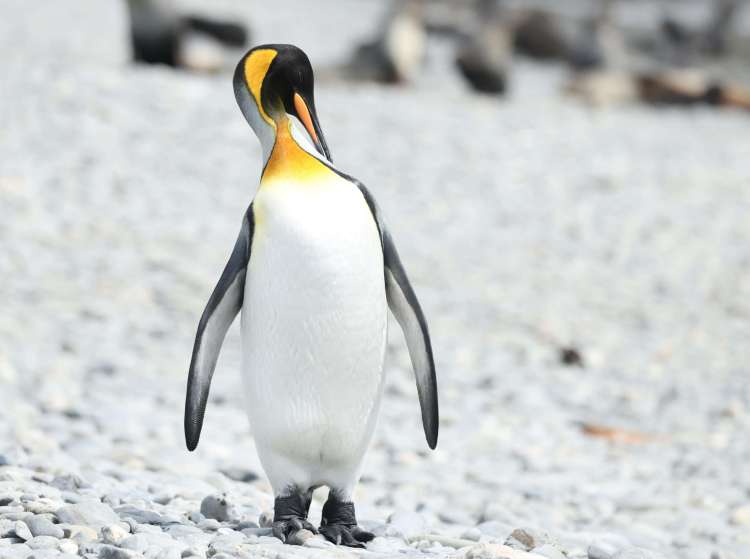
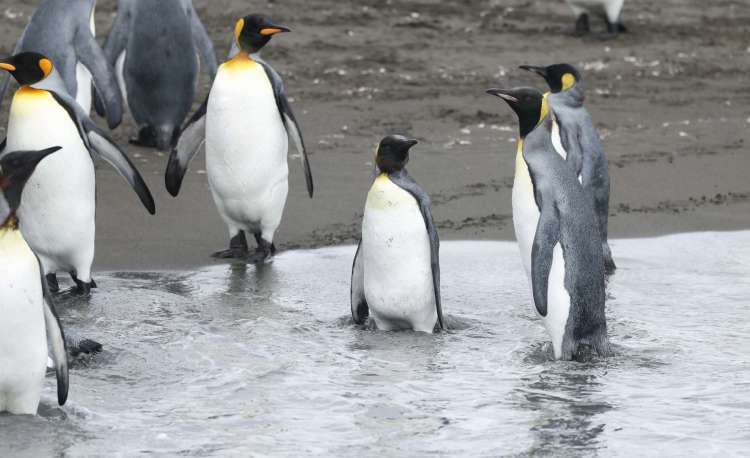
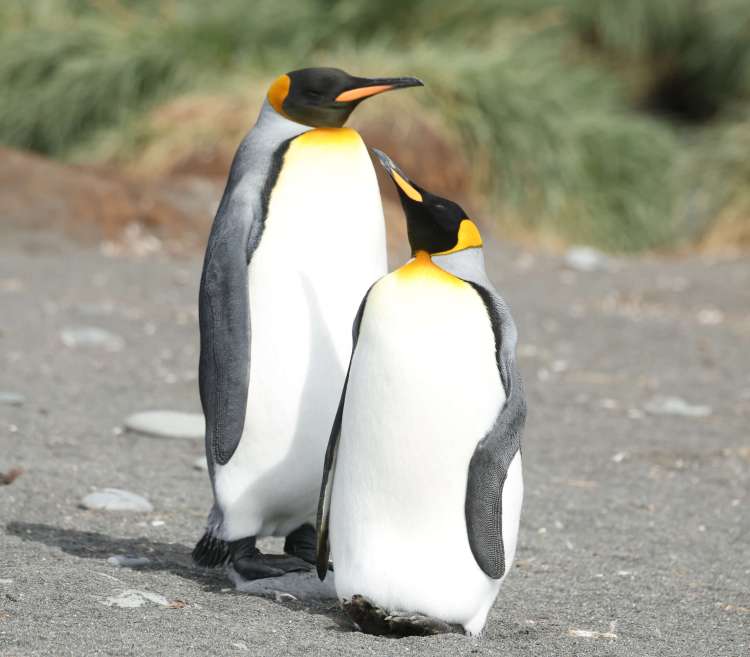
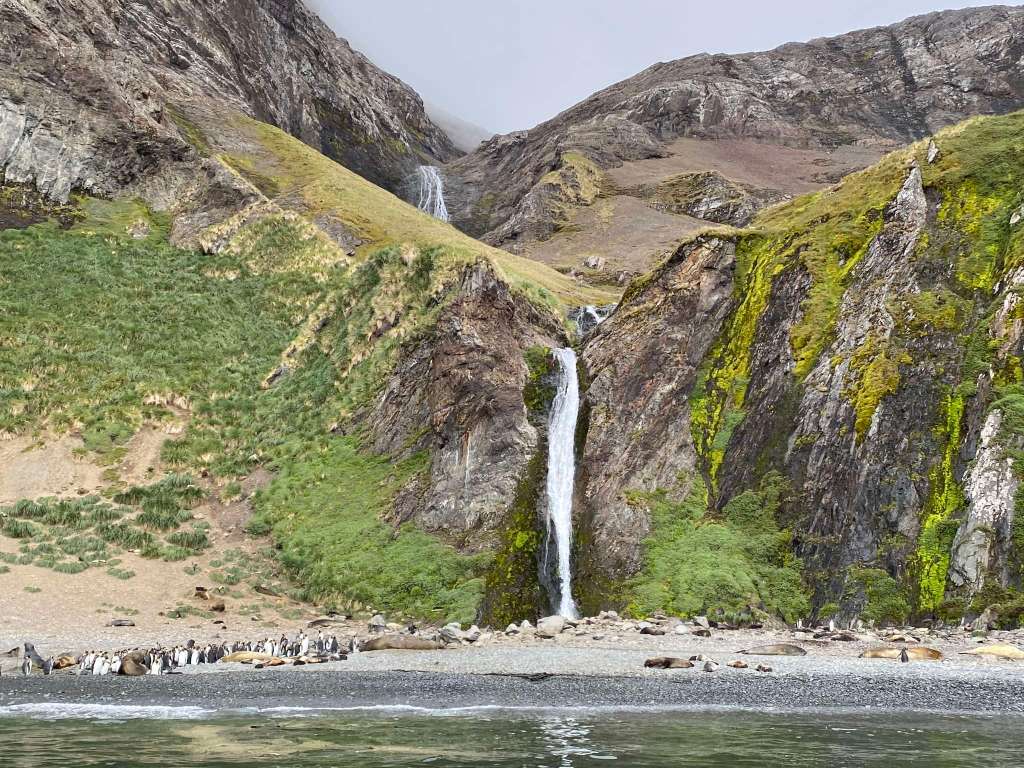
Here was our first taste of gigantic King Penguin colonies: at Right Whale Bay (no landing possible due to evidence of Avian Flu), Salisbury Plain (our first landing) and Fortuna Bay (our second). Salisbury Plain hosts the second-largest King Penguin colony in South Georgia with approximately 250,000 birds, with 60,000 being breeding pairs and their chicks. It’s quite a sight.
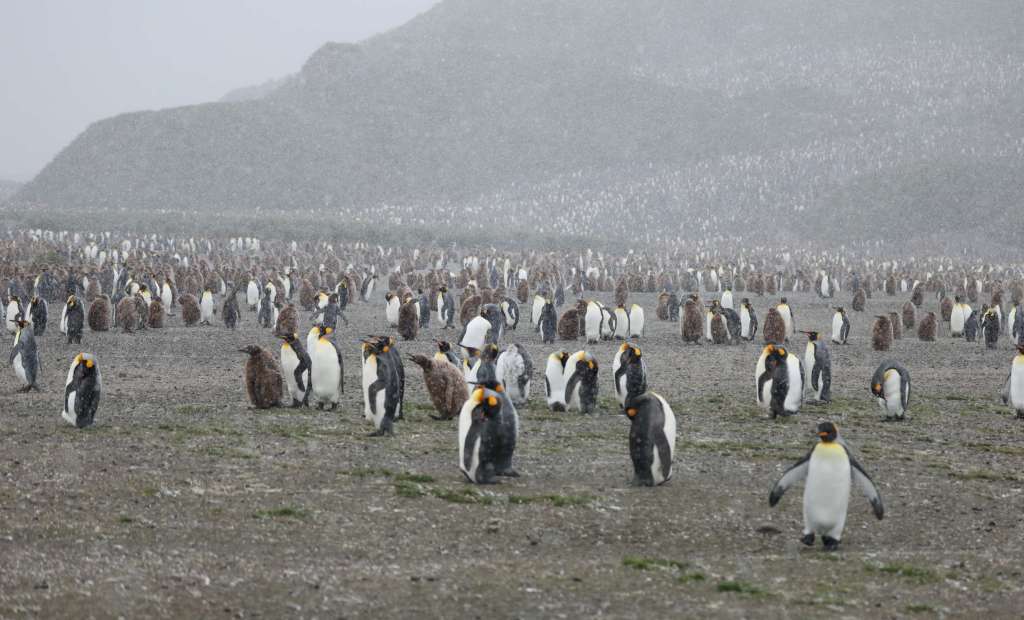
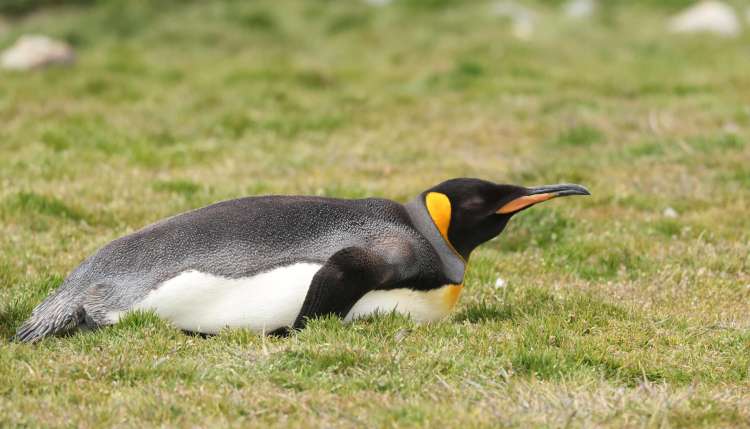
The (many) rules around the Avian Flu risk meant that we were not allowed to crouch or sit (ie. avoid the ground), which made low-level photos of the penguins an impossibility, much as I would have liked to get some shots like that.
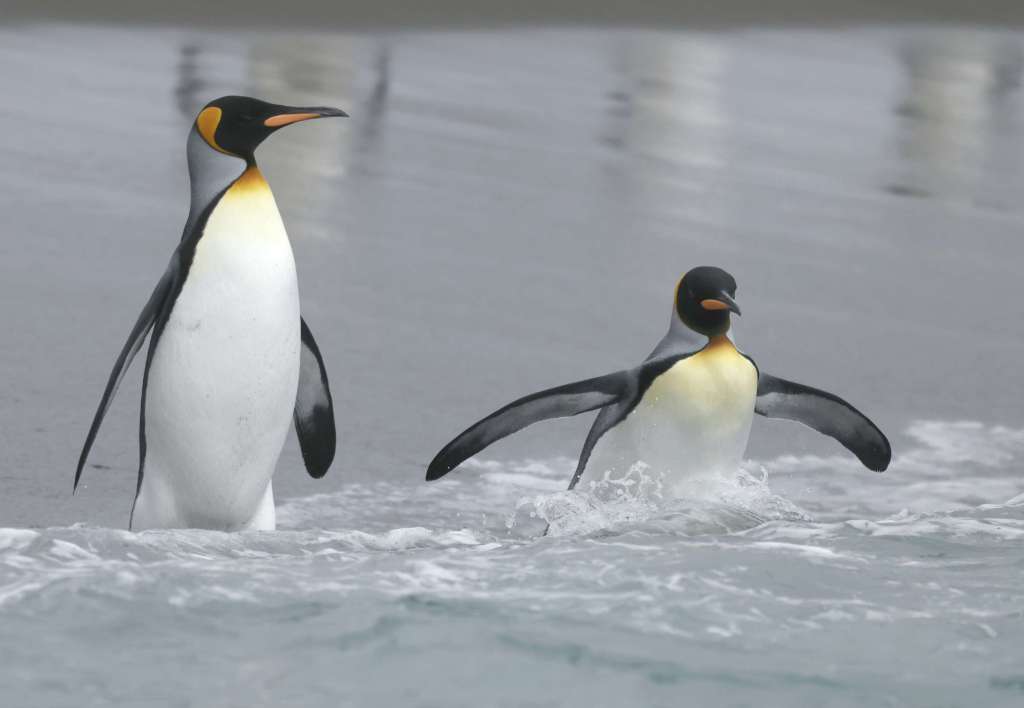
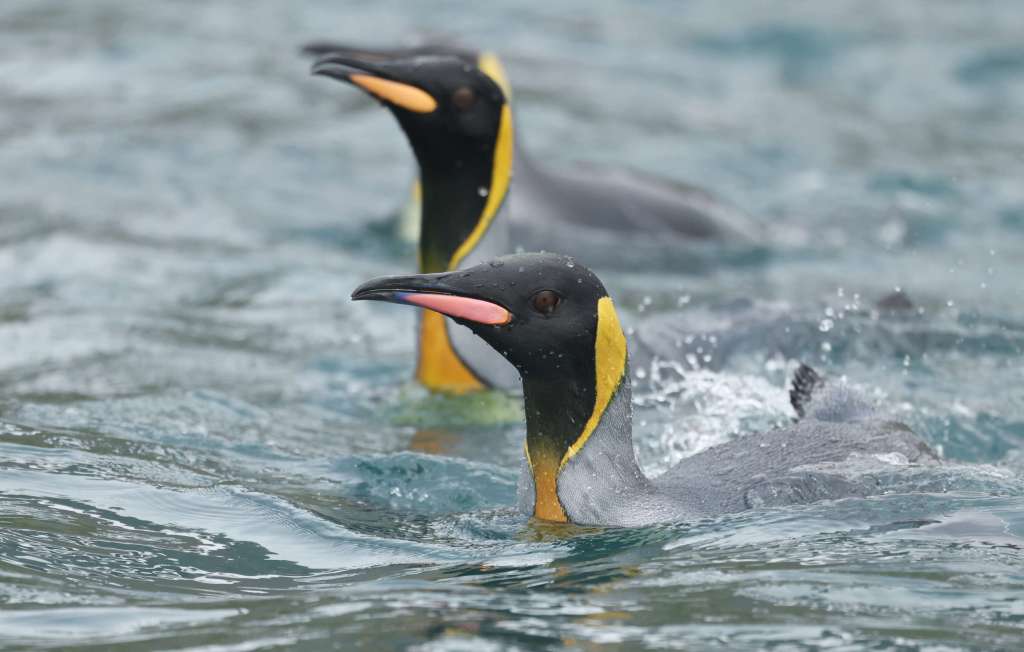
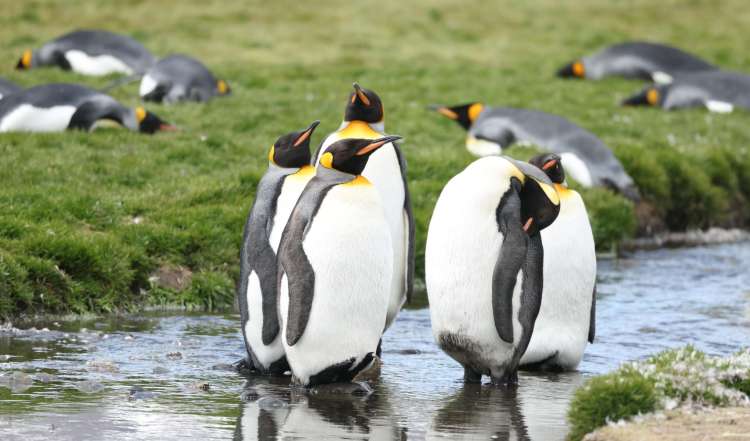
Penguins really are a wonder of nature’s design: amphibiously able to wander onto land, and to zip about in the water with impressive ease.
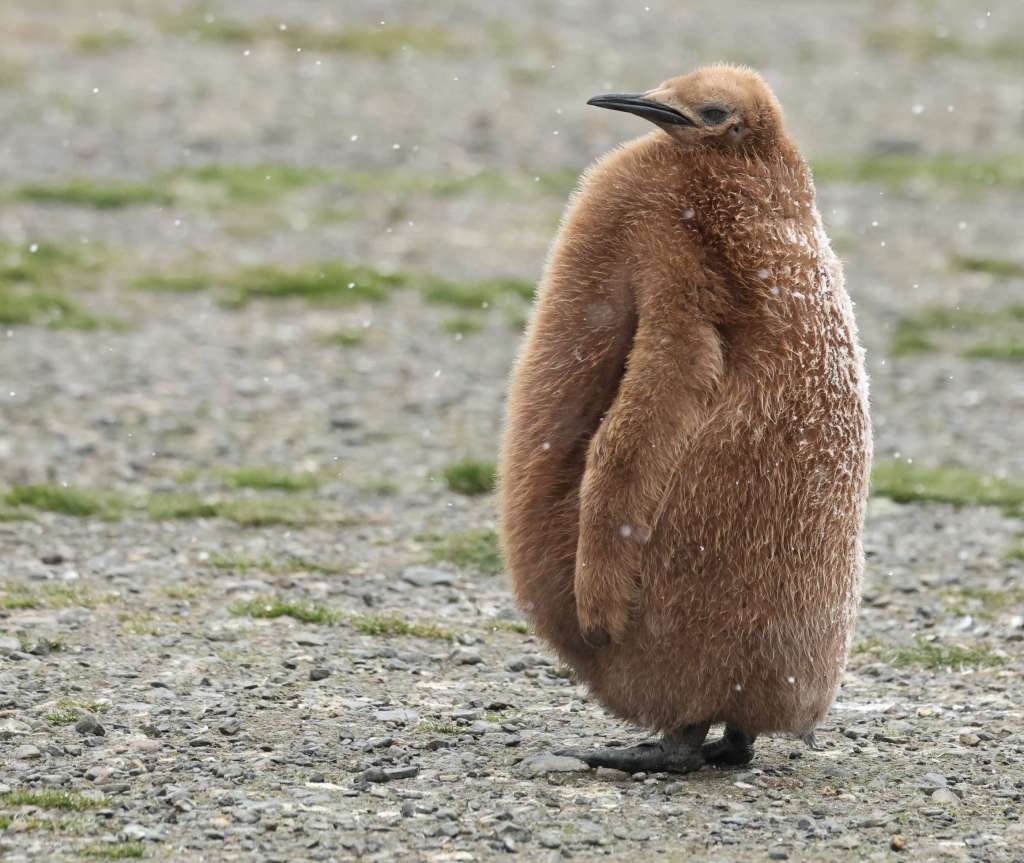
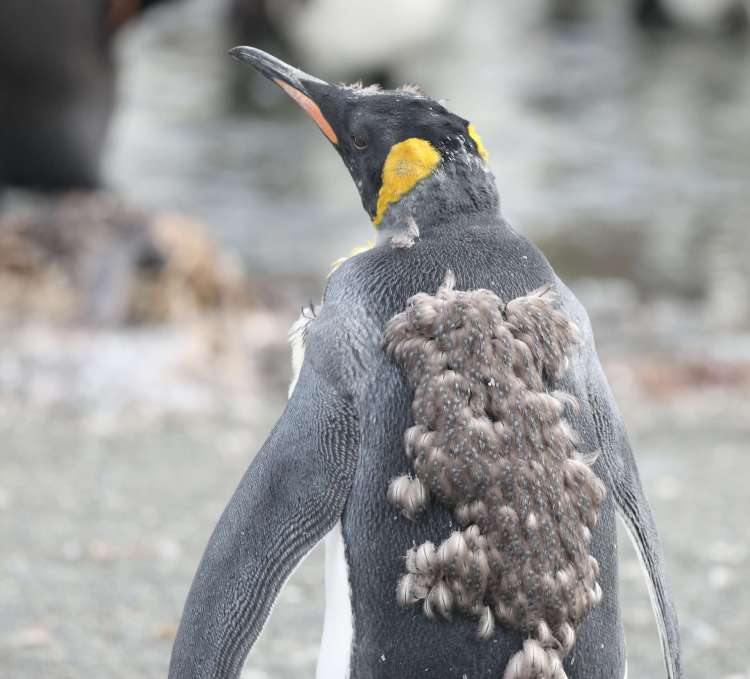
The King Penguin chicks have a thick coating of brown fur to keep them warm. (I was wearing six layers at the time…)
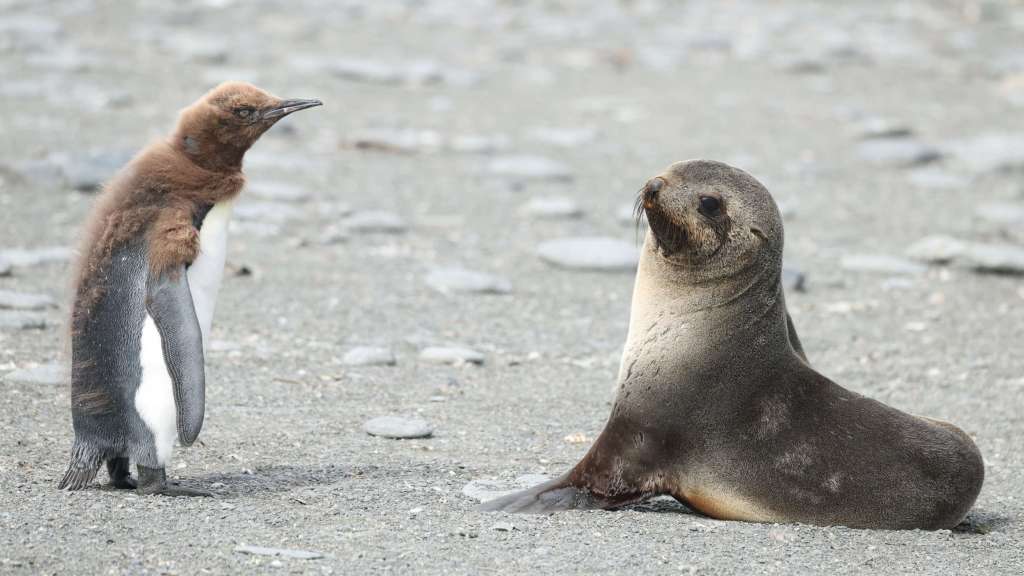
With the abundance of penguins and plenty of time on shore, it actually becomes a challenge to take a photograph that is in some way interesting, and isn’t just a bunch of ’em standing around. To that end, I tried to capture some entertaining interactions where I could.
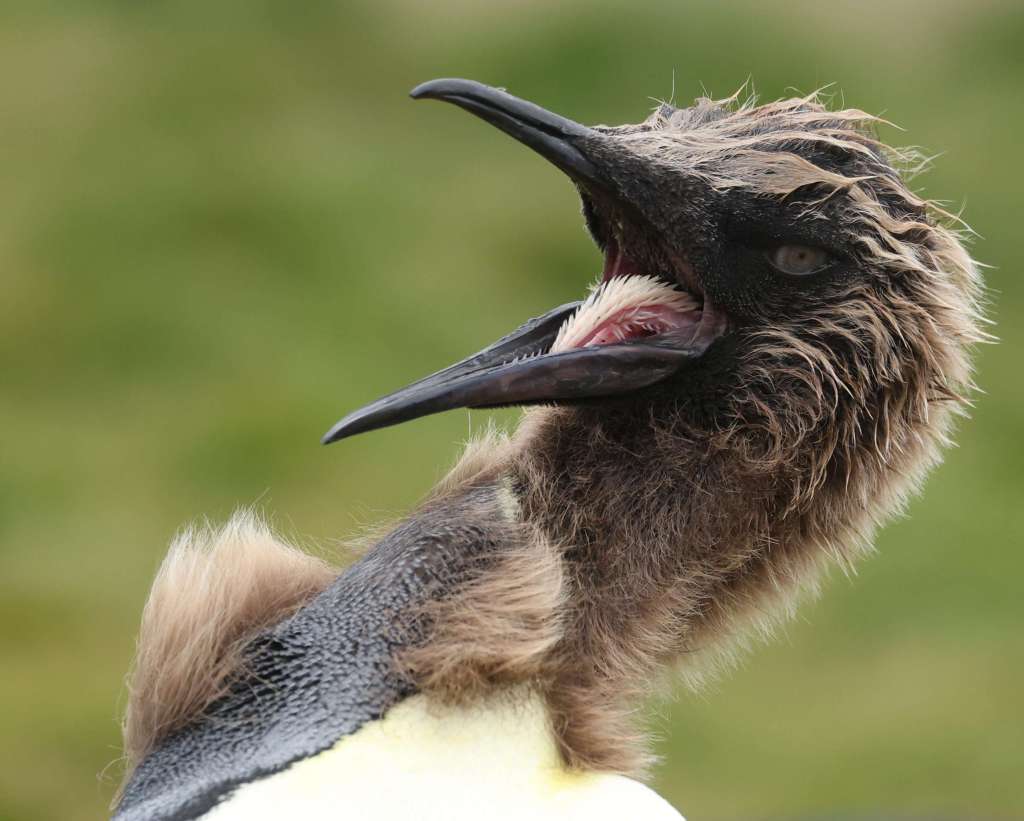
And in case you wanted to know what the inside of a penguin mouth looks like… well, perhaps you really didn’t. Their tongues contain keratinized spines called papillae: spiky, tooth-like structures designed to grip and swallow slippery prey such as fish and squid.
For those who really can’t get enough of penguins (and I get that, really), I put together this slideshow. Woo hoo!
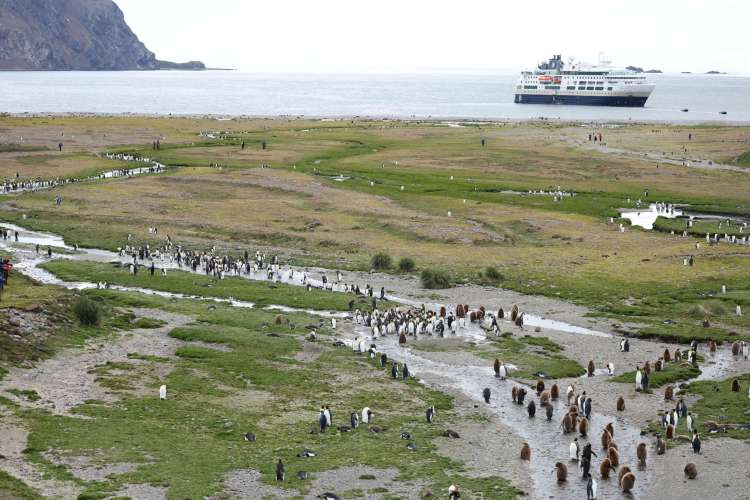
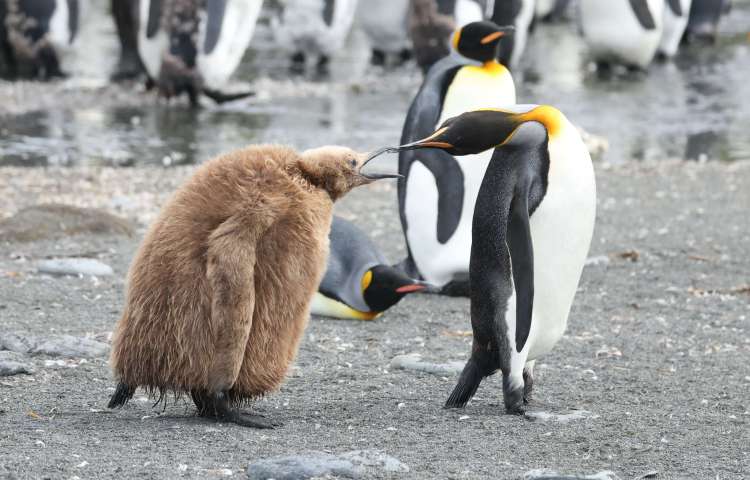
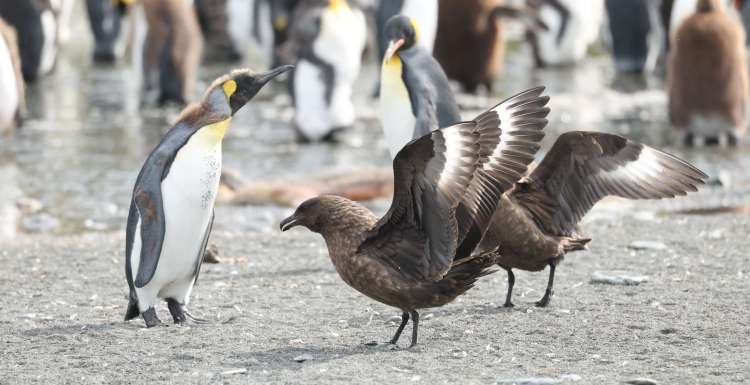
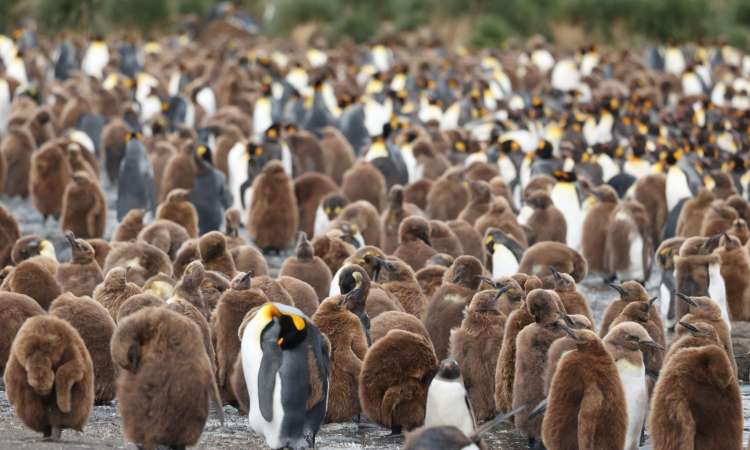
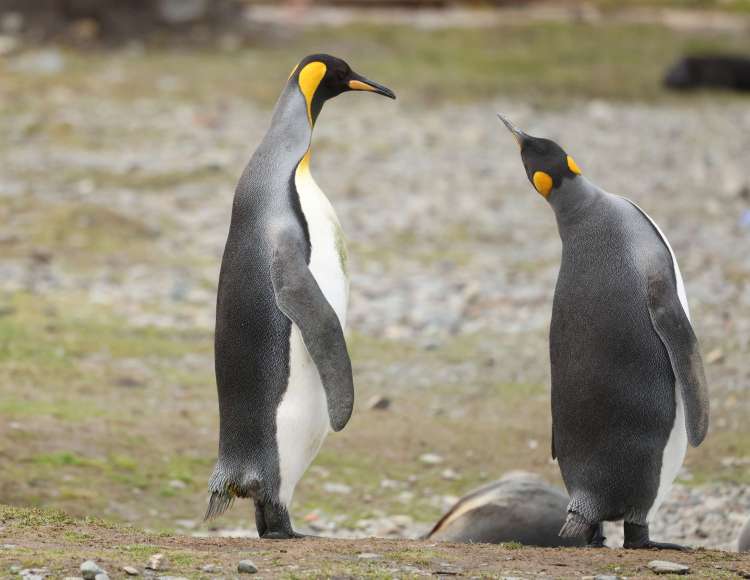
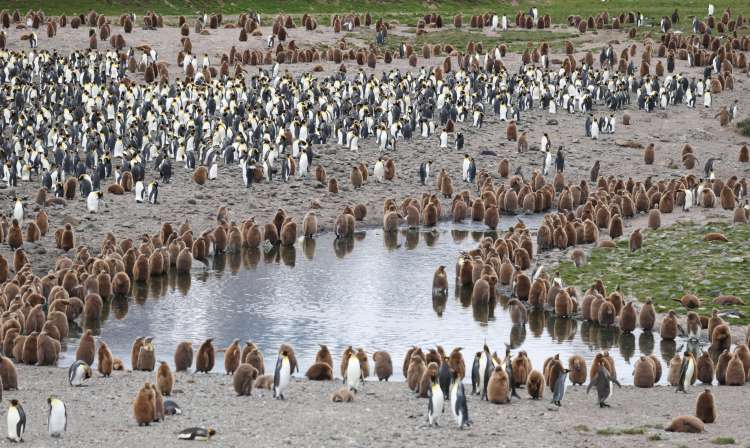
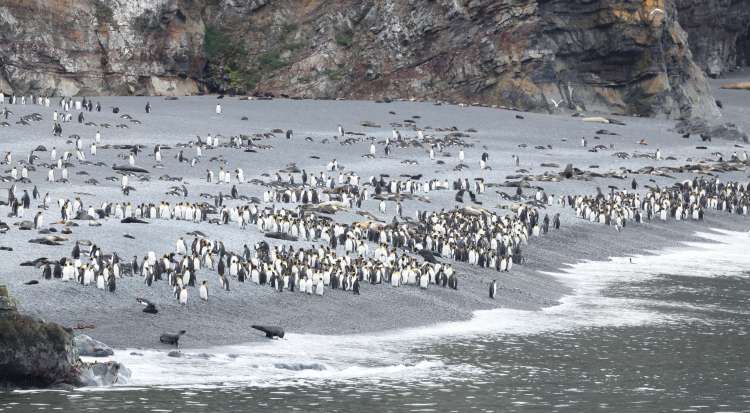
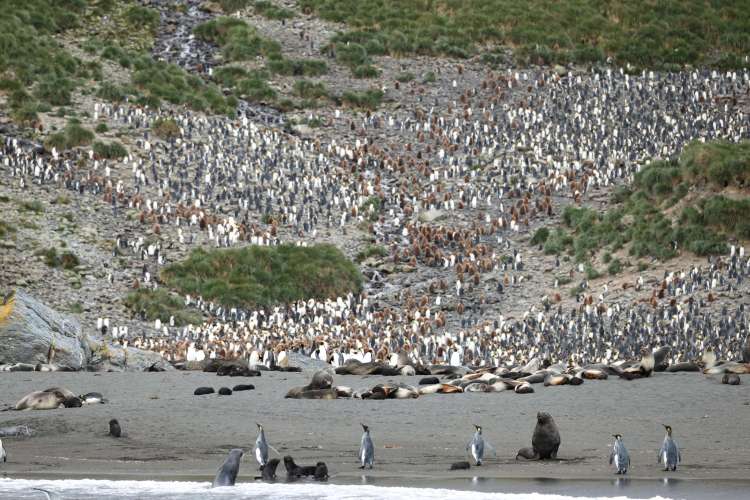
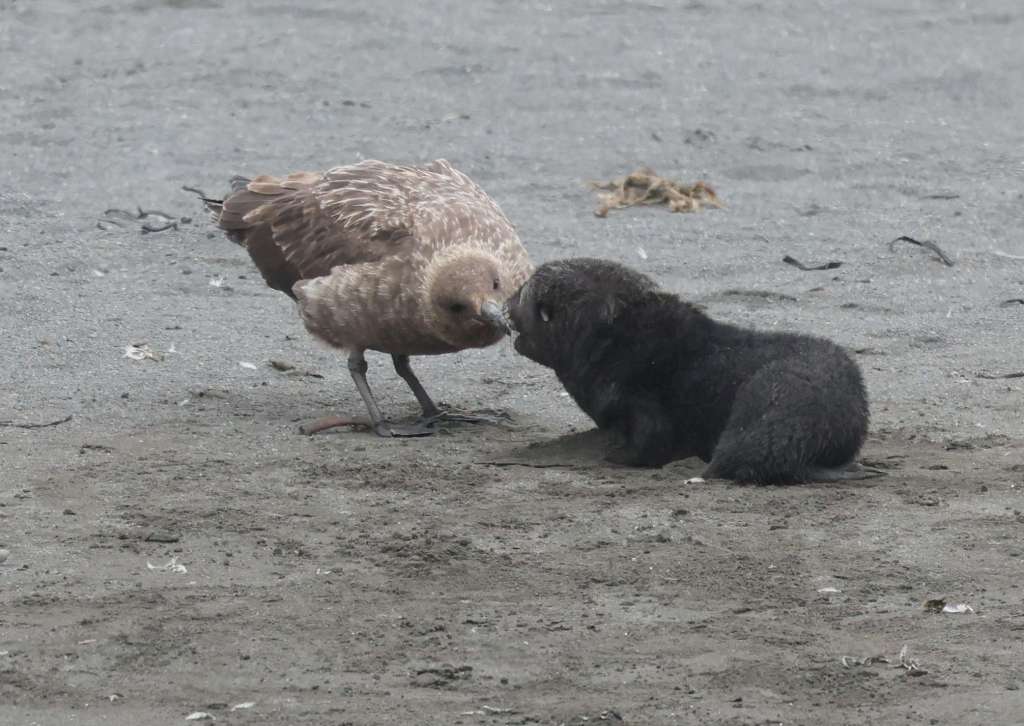
Brown Skuas, Southern Giant-Petrels and Kelp Gulls were regulars at the penguin colonies.
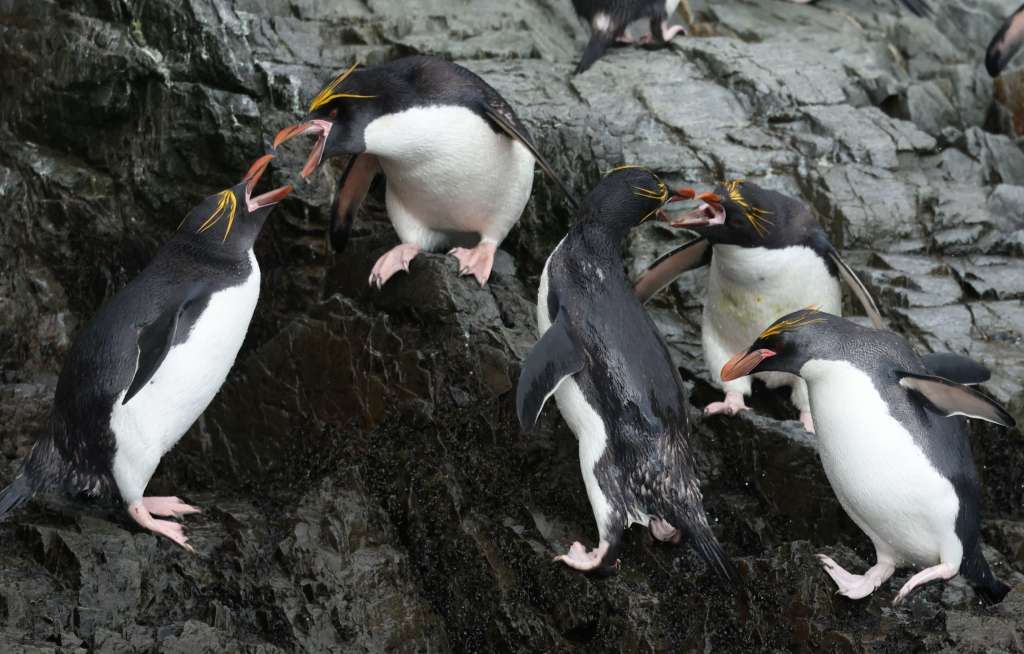
Hurrah! We observed a new type of penguin at Hercules Bay. Not that I don’t love the King Penguins, but they’re almost too much of a good thing. Our newcomers, Macaroni Penguins, are named after the outrageous headgear of 18th century wealthy British “dandies”, though you could make a case that the colour of pasta should be the inspiration.
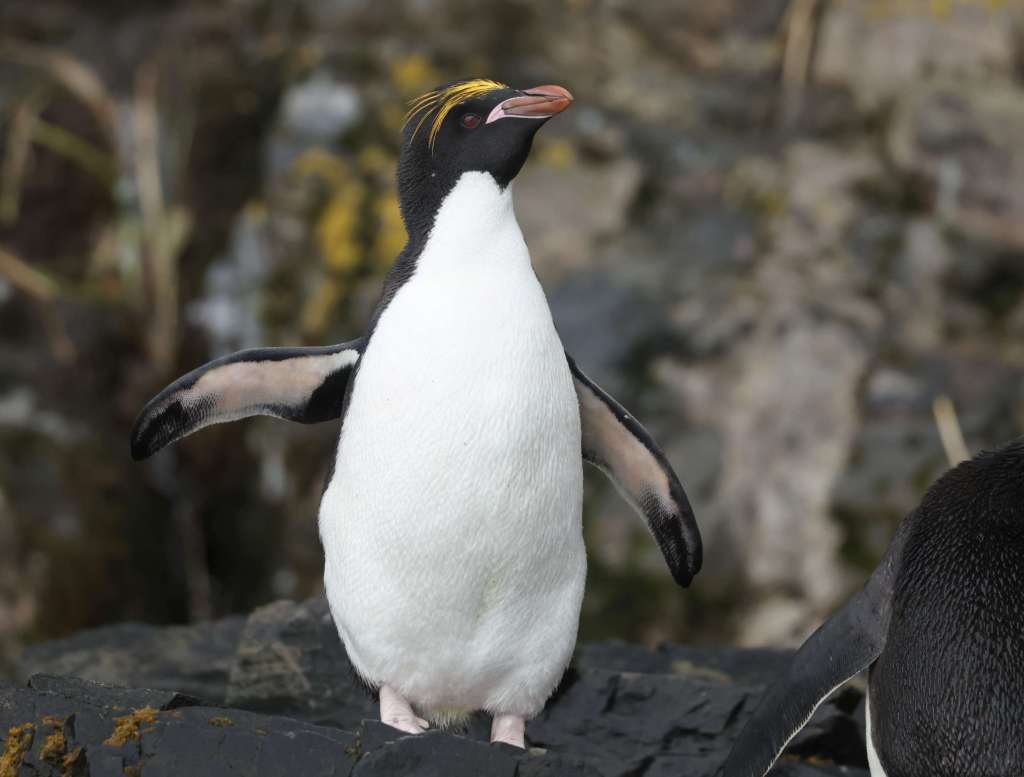
The Macaroni Penguins favour rocky slopes for their nests and, it appears, just for hanging out on. We reckoned about 315 of these penguins in total at our stop in Hercules Bay, a small number given that they are apparently the most numerous penguin species with an estimated 18 million birds worldwide.
It isn’t all penguins at South Georgia: the island even has its own fully-fledged endemic bird species, the South Georgia Pipit, the only songbird in the greater Antarctic region. We did manage to see a pair, flushed out of the thick grass very briefly (no photo!) It is actually one of the island’s conservation success stories, bouncing back after egg-predating rats were eradicated in the 2010’s.
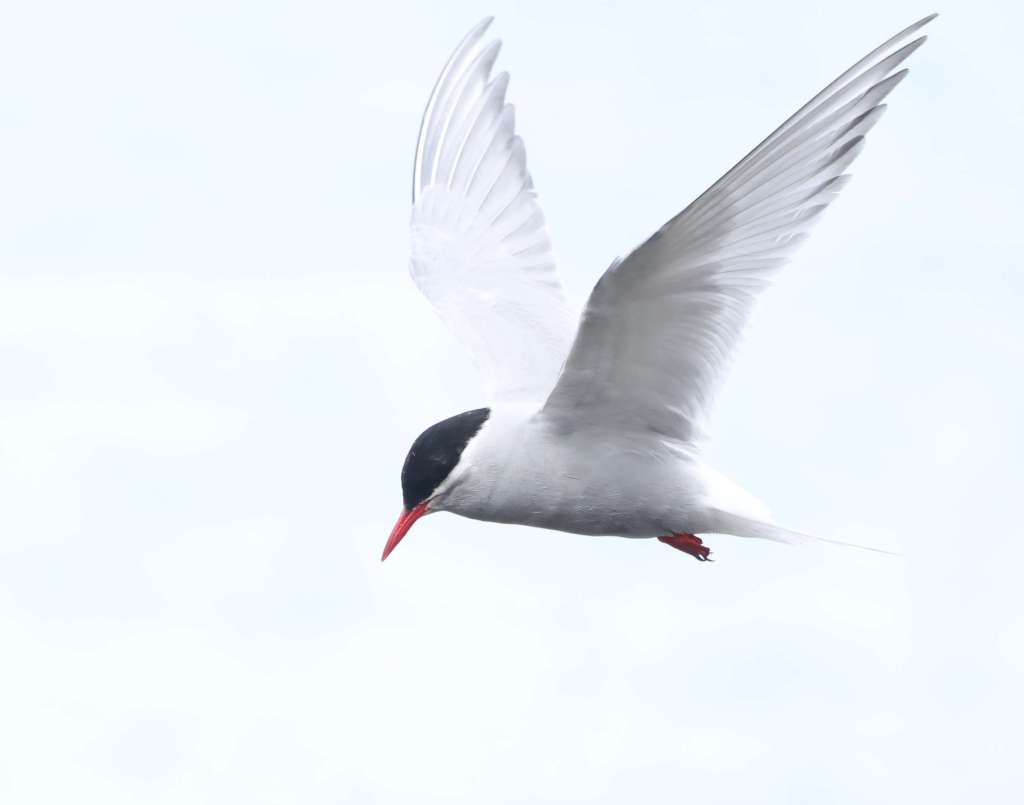
Antarctic Tern is the main tern this far south, very similar in looks to the South American Tern. The only other tern possible here, hilariously, is the Arctic Tern, one of the world’s longest-ranging birds.
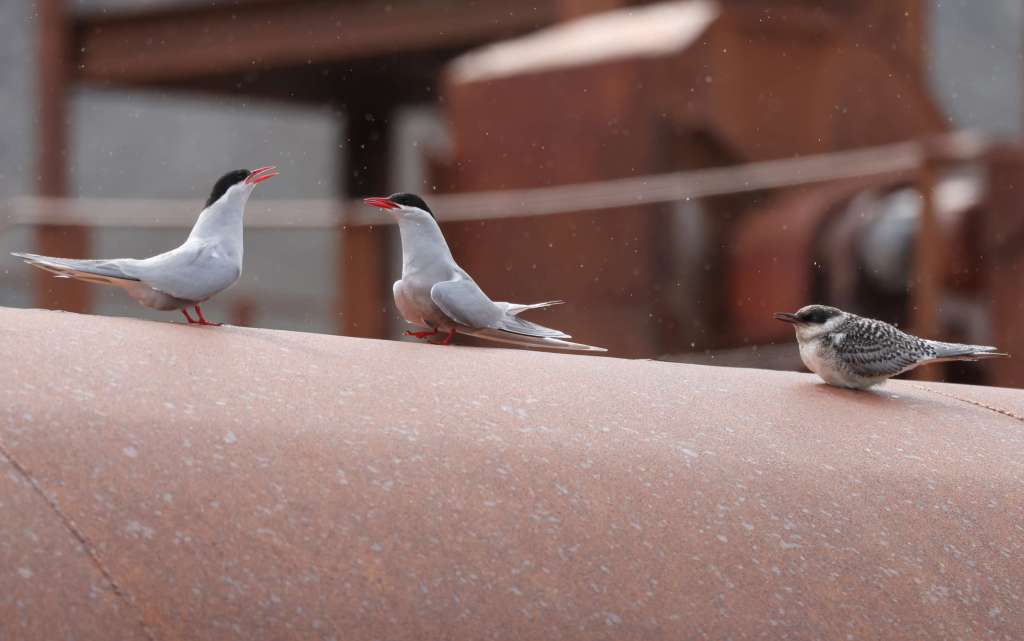
At Grytviken, a former whaling station and the largest settlement on South Georgia (population: up to 30 people in summer!), we found a family of Antarctic Terns hanging out on the rusting old equipment.
Seals especially were interspersed all amongst the old whaling equipment, making it their home, and you had to be really careful where you walked, as sometimes they could suddenly turn aggressive and come at you. It was a little nerve-wracking, actually.
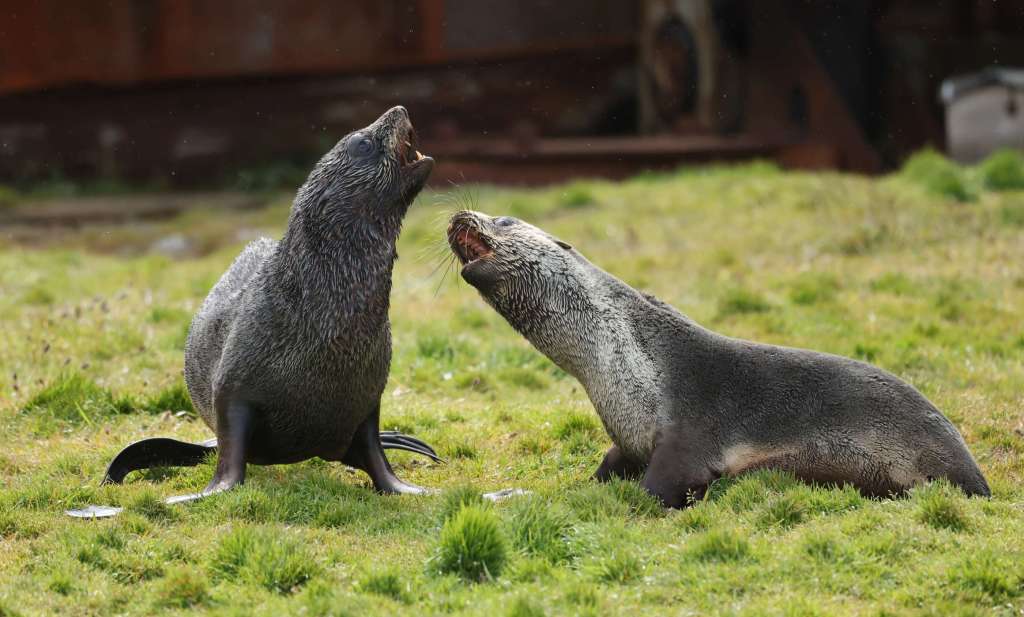
Sometimes the posturing turned into outright fighting – check out the scars on these seals’ throats.
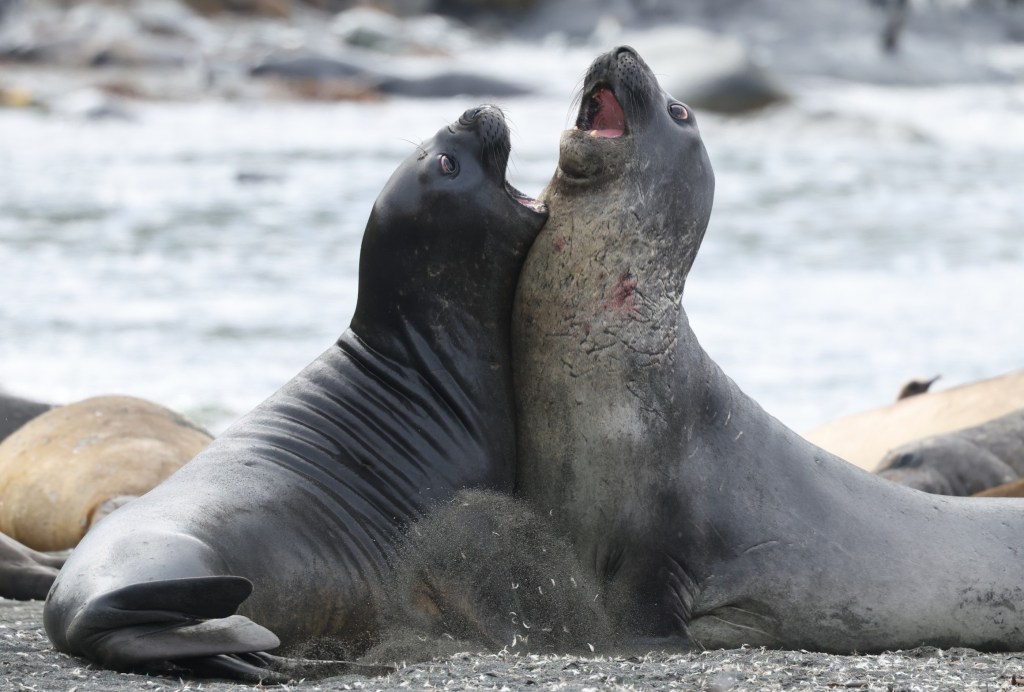
Even goofier/weirder is seeing the gigantic male Elephant Seals going at each other.
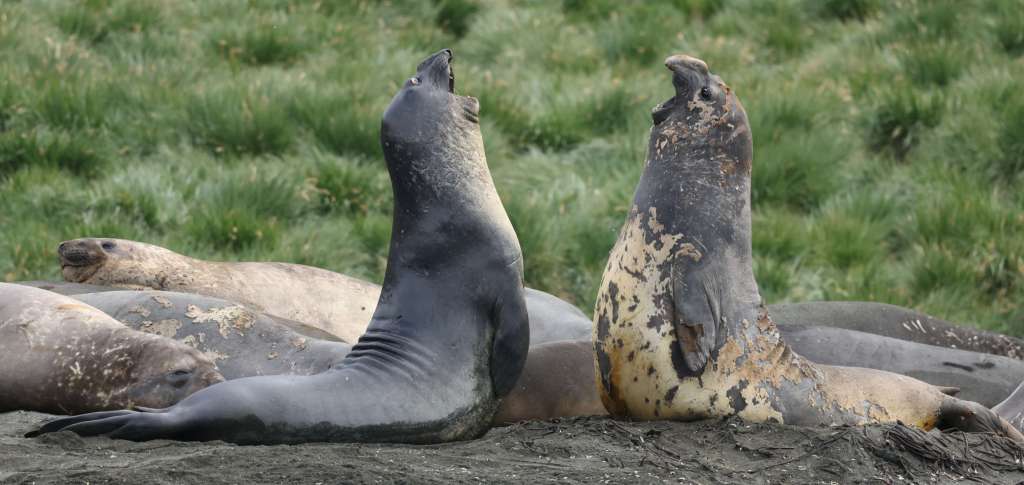
Anyway, back to the birds…
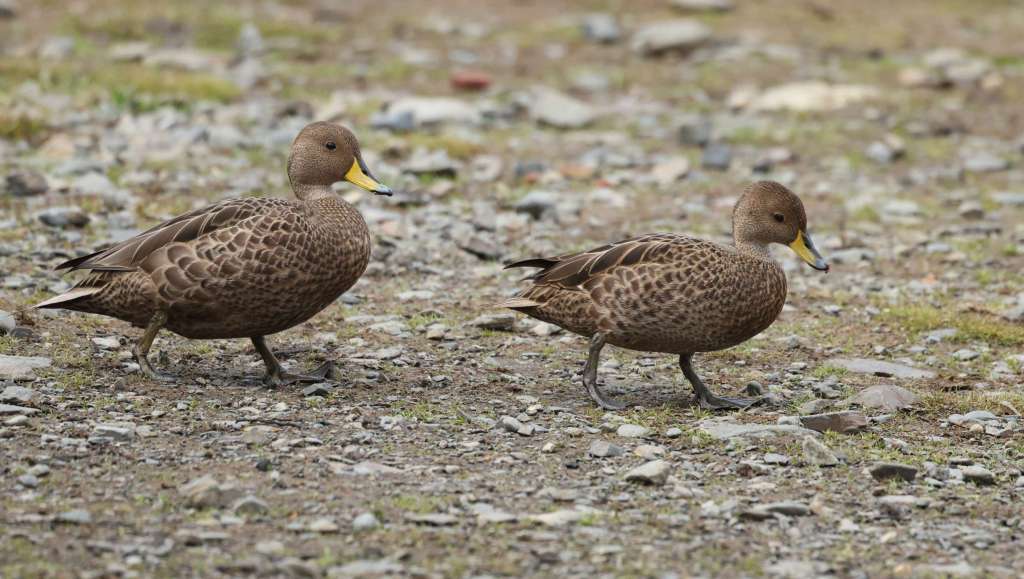
The Yellow-Billed Pintail has a South Georgia subspecies, which eats a large variety of foods including algae, shrimp, clams, snails, and are even sometimes seen with their heads gobbling inside seal carcasses with the giant-petrels. In this climate, I guess you can’t be too fussy.
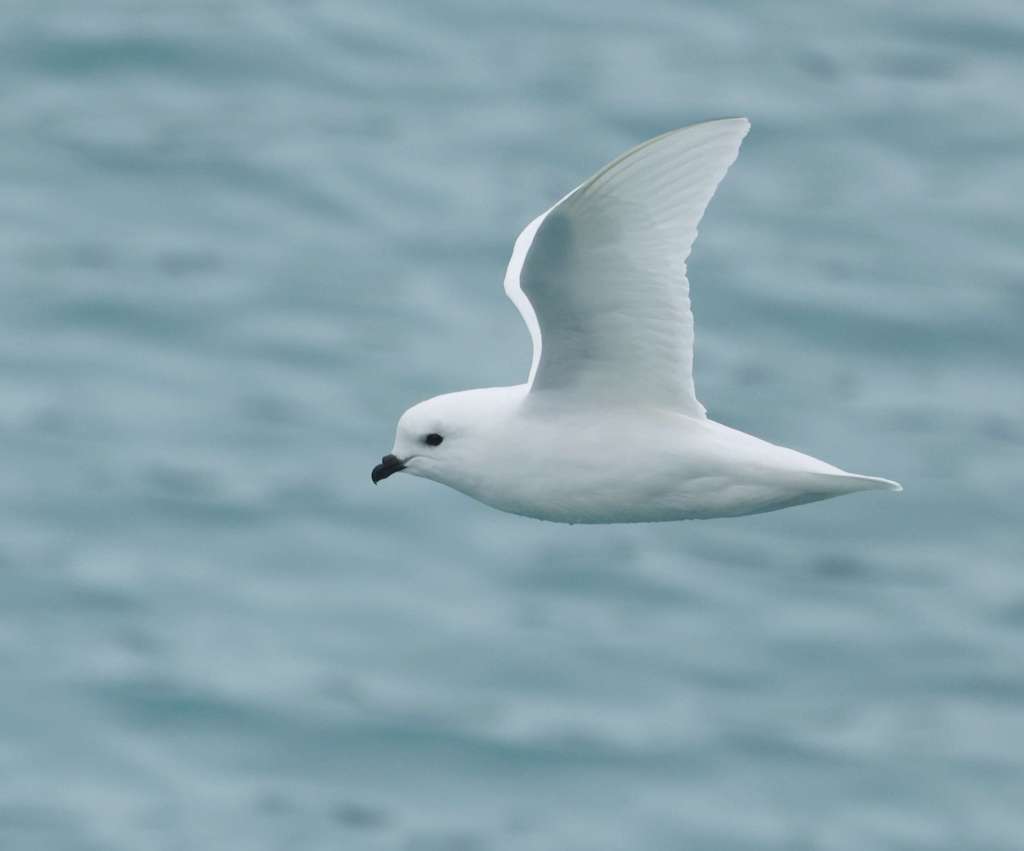
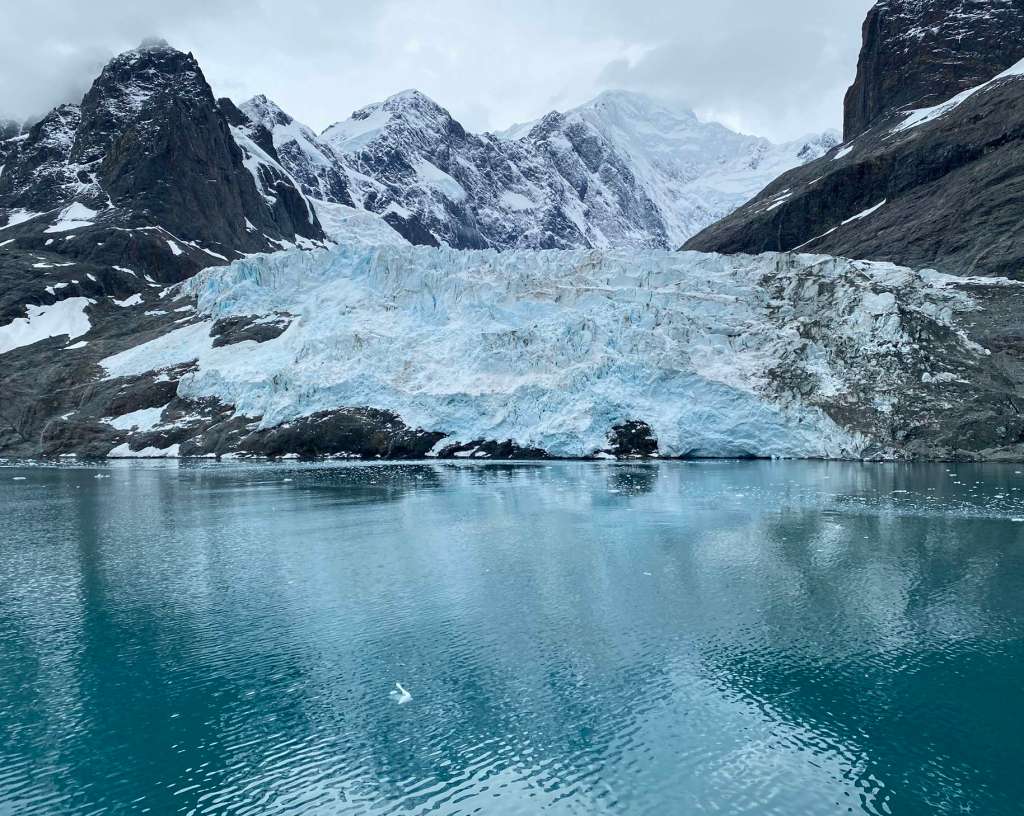
We came across our first Snow Petrel, a lovely ethereal bird, at the deep and dramatic Drygalski Fjord in the island’s south. It is one only three birds that have been seen at the Geographic South Pole (the others being Antarctic petrel and South Polar Skua).
Birds At Sea
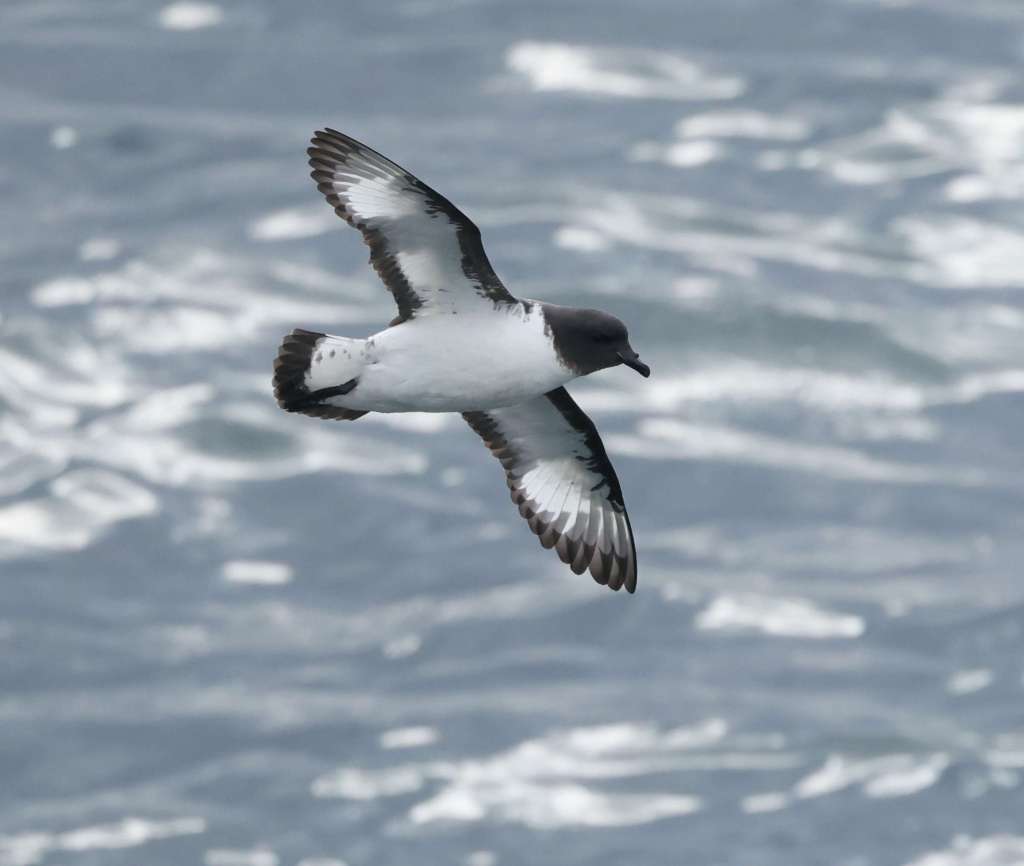
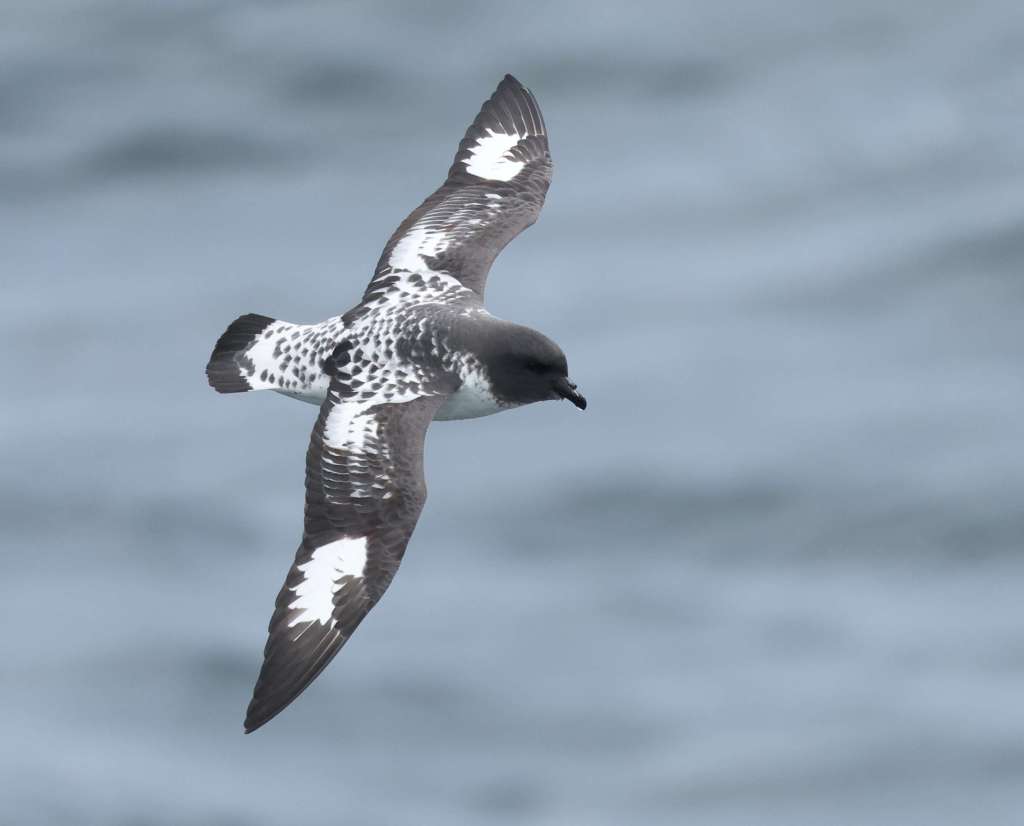
Time spent on the deck was often rewarded with seabird sightings when the ship was plowing across the open ocean. There were various fly-bys, and often a few birds trailing the boat, probably enticed by what might be stirred up in the wake (or hoping for some waste to be thrown over). Cape Petrel, also called Pintado Petrel (“painted petrel” in Spanish), were regulars, sometimes numbering in the dozens, and easily identified with their amazing patterned upper parts.
White-Chinned Petrel seemed to be the default mid-sized petrel, and sometimes was seen in groups of 20 or more.
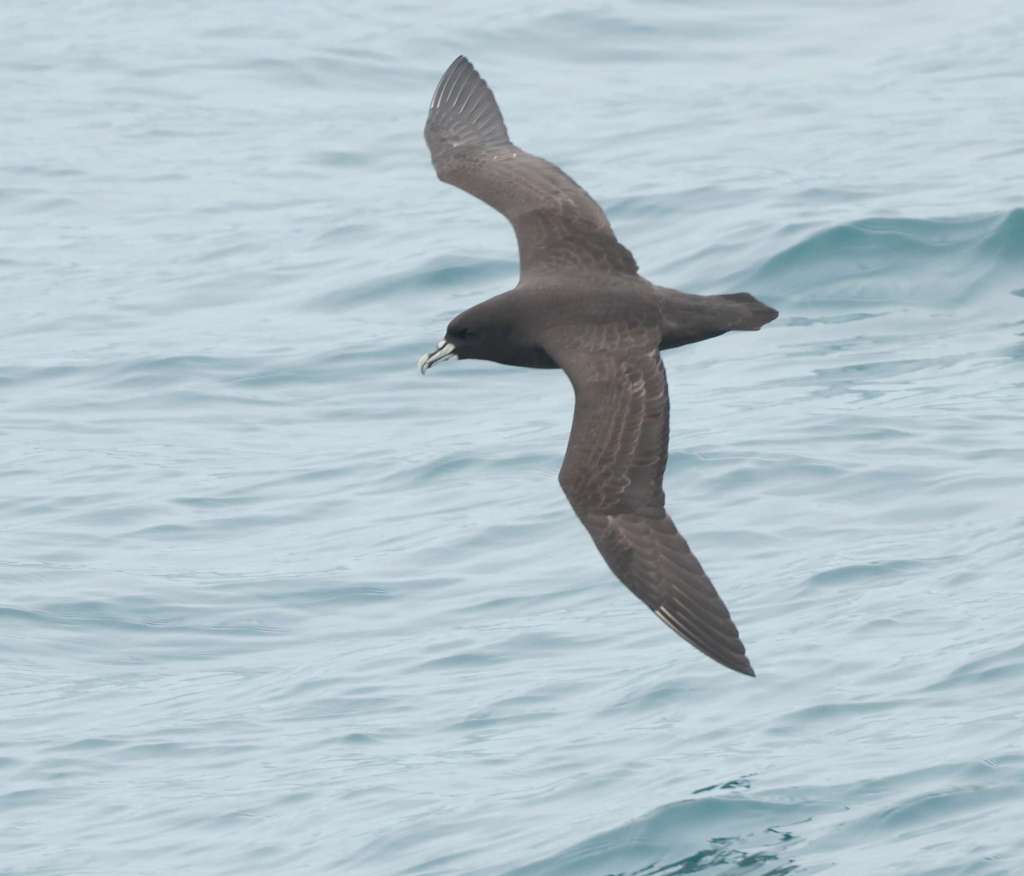
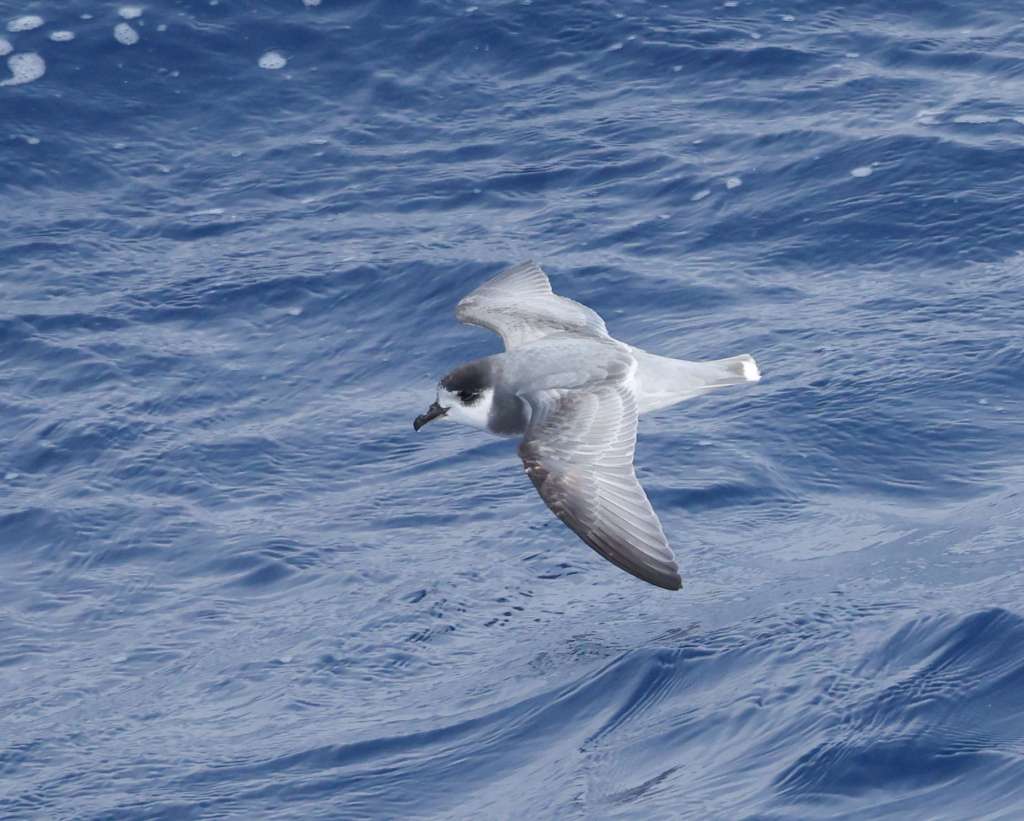
We also kept a look out for Soft-Plumaged Petrel and Blue Petrel, and managed to see them a few times. The enigmatic Antarctic Petrel, supposedly a tricky bird to see, was nowhere to be found. (And don’t even get me started on the South Georgia Diving-Petrel, that was a no-show as well).
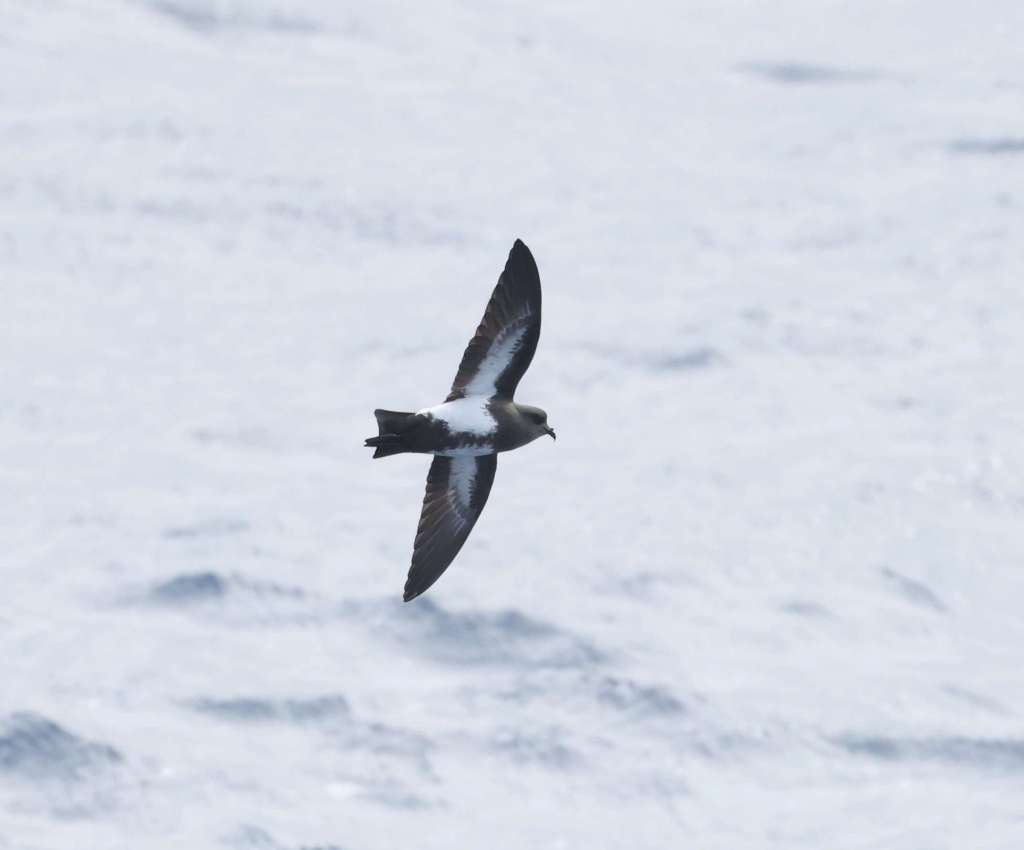
One of the harder challenges in seabird spotting was to get onto the tiny Black-Bellied Storm-Petrel; these are very similar to the super-common Wilson’s Storm-Petrel, except they have light underparts (the “black belly” refers to the smudgy stripe down the middle). These birds are small, fast, and you really do need to see them well from underneath to get a positive ID.
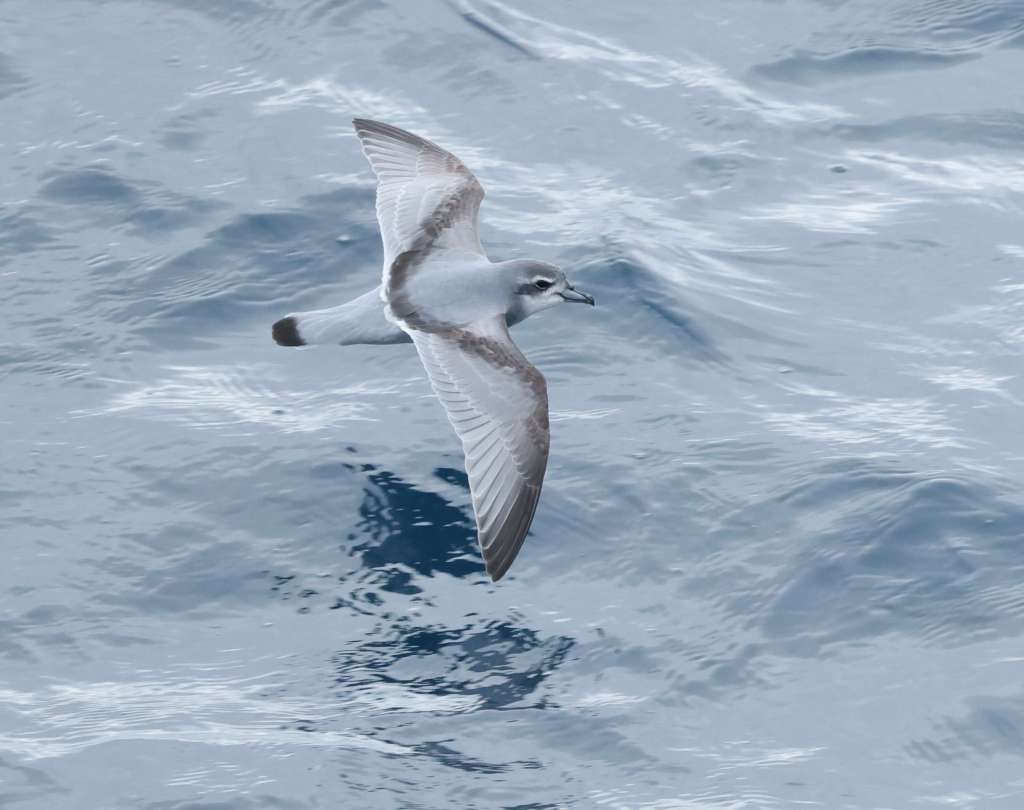
The most common prion was Antarctic Prion, sporting the classic prion “M” shape on its upper parts. Fairy Prion and Slender-Billed Prion are the other two main prions possible in these seas, but we did not see any (when I say “we”, in this context, I mean the group of maybe a dozen keen birders who were the “deck mainstays”, along with the ship’s on-board ornithologist).
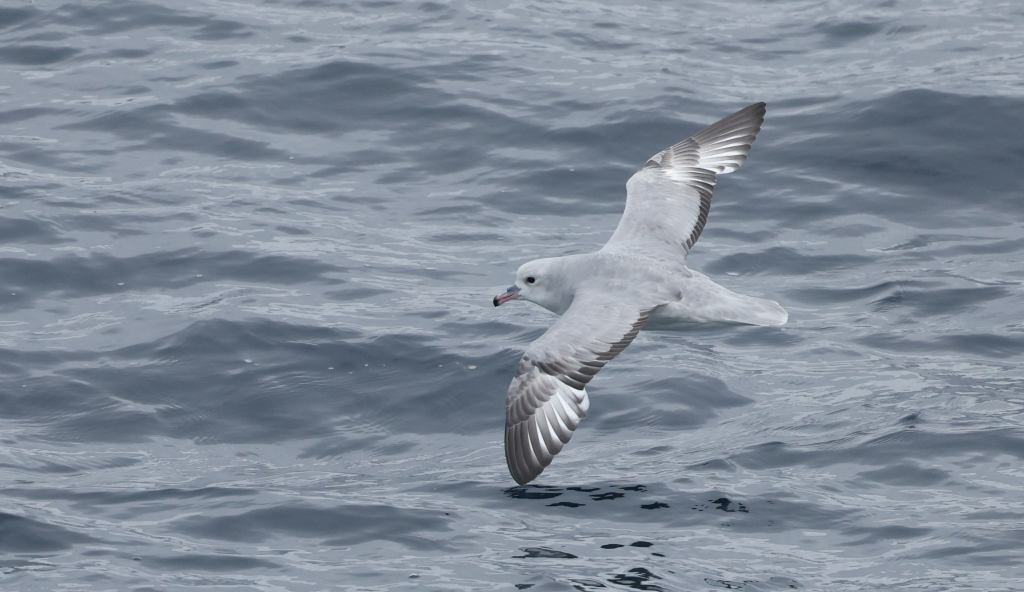
Southern Fulmar became one of my favourite seabirds, with its flashes of white in the wings and unpredictable nature (like, you never quite knew when one would turn up).
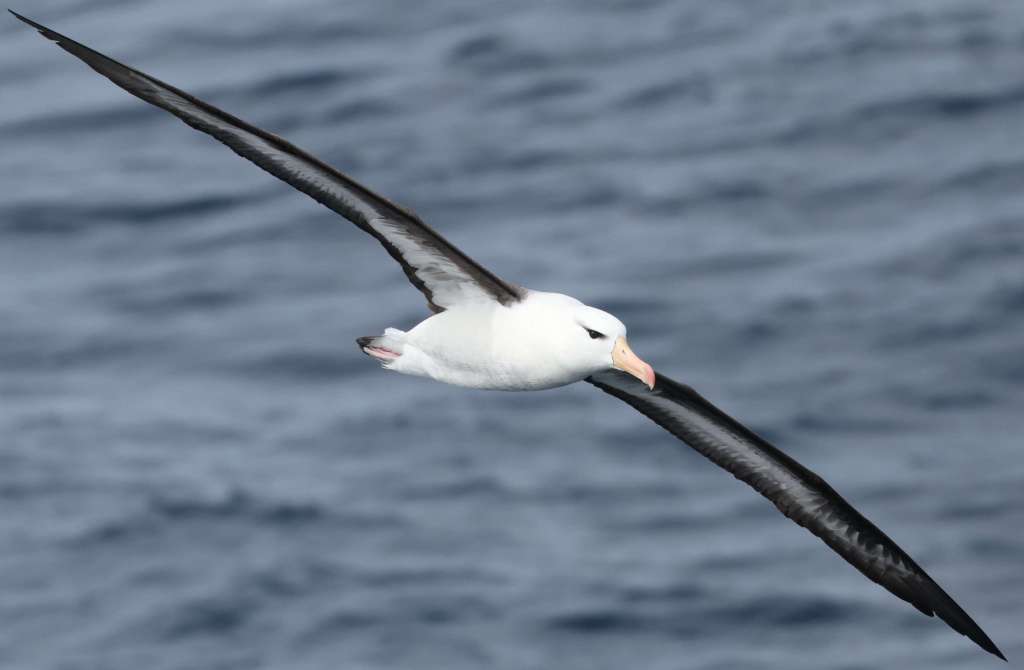
Black-Browed Albatross, one of the “mollymawk” (medium-sized) albatross species, were the most common of the albatrosses. “Mollymawk” is derived from the Dutch mallemok, mal meaning foolish and mok meaning gull; I am not sure I would categorise these elegant soarers as foolish gulls.
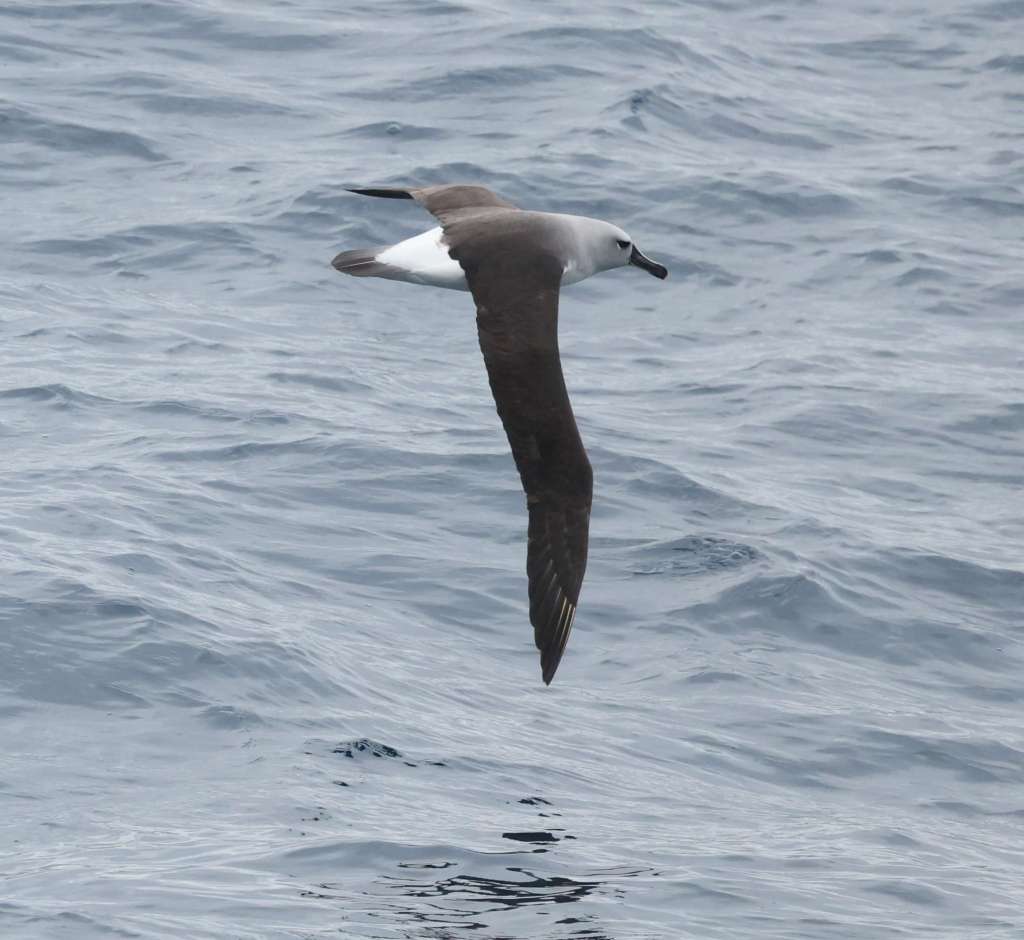
The endangered Grey-Headed Albatross was a rare sight, despite South Georgia holding half the world’s population. They range right around to the Indian Ocean for feeding and can become accidental fishing bycatch, particularly from longline fisheries. By some estimates, tens of thousands of albatrosses are killed annually by swallowing baited hooks or colliding with trawling gear, leading to drowning or severe injuries.
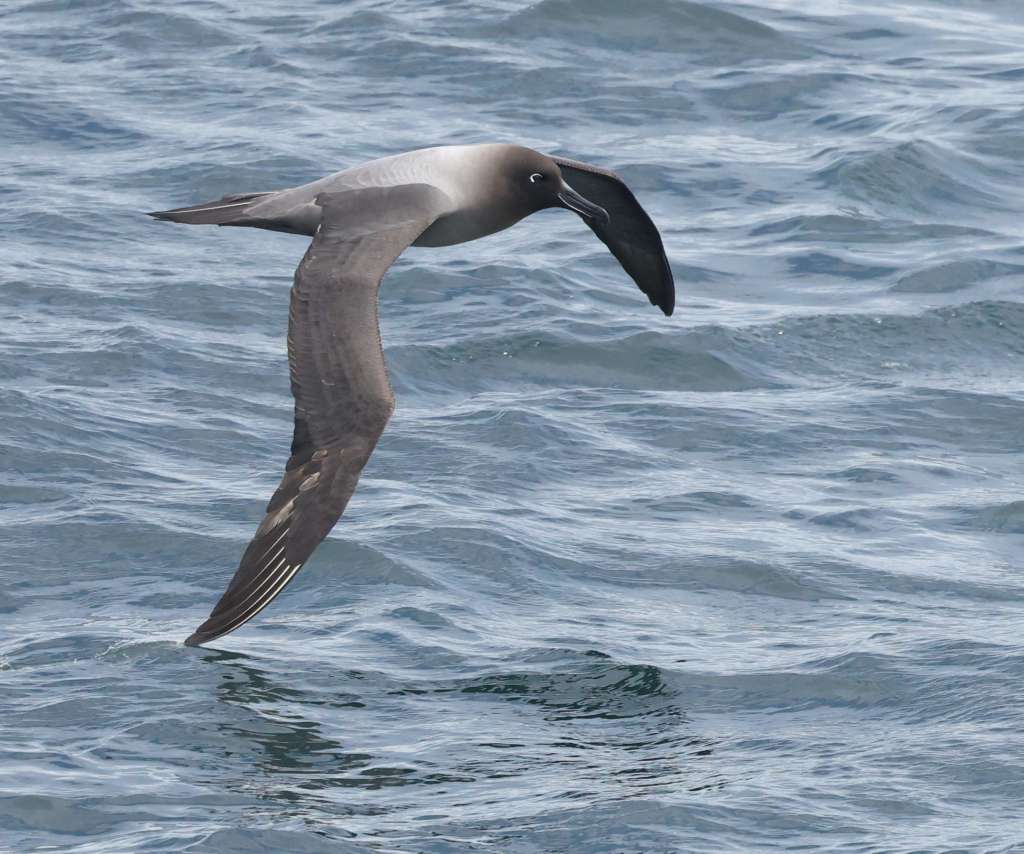
Light-Mantled Sooty Albatross was an absolute treat to behold, with a couple of close sightings. They are also vulnerable to longline fishery bycatch, as well as being adversely affected by marine plastic debris.
I had read about the strange Snowy Sheathbill beforehand and wondered if we would see any of these birds. Sure enough, their entrance was suitably weird: a group of them landed on the glass roof of the ship’s top deck, so I first saw them from underneath!
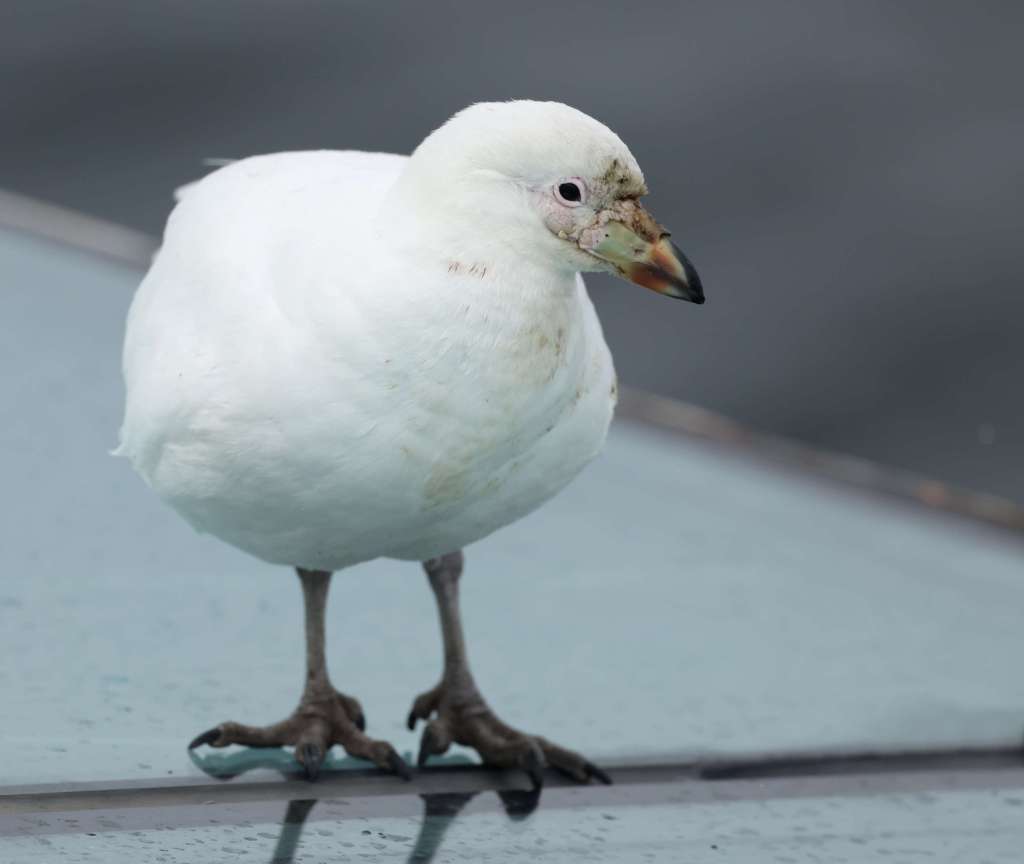
The Snowy Sheathbills are Antarctica’s only land bird and will eat basically anything, including feces and tapeworms from penguin intestines. Ewwwww!
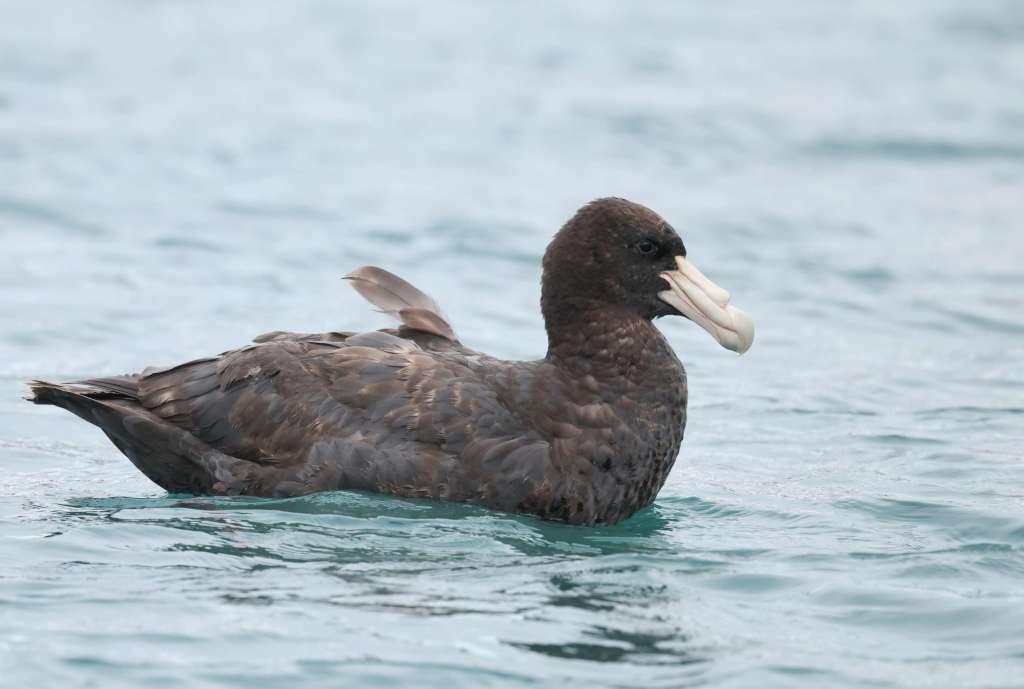
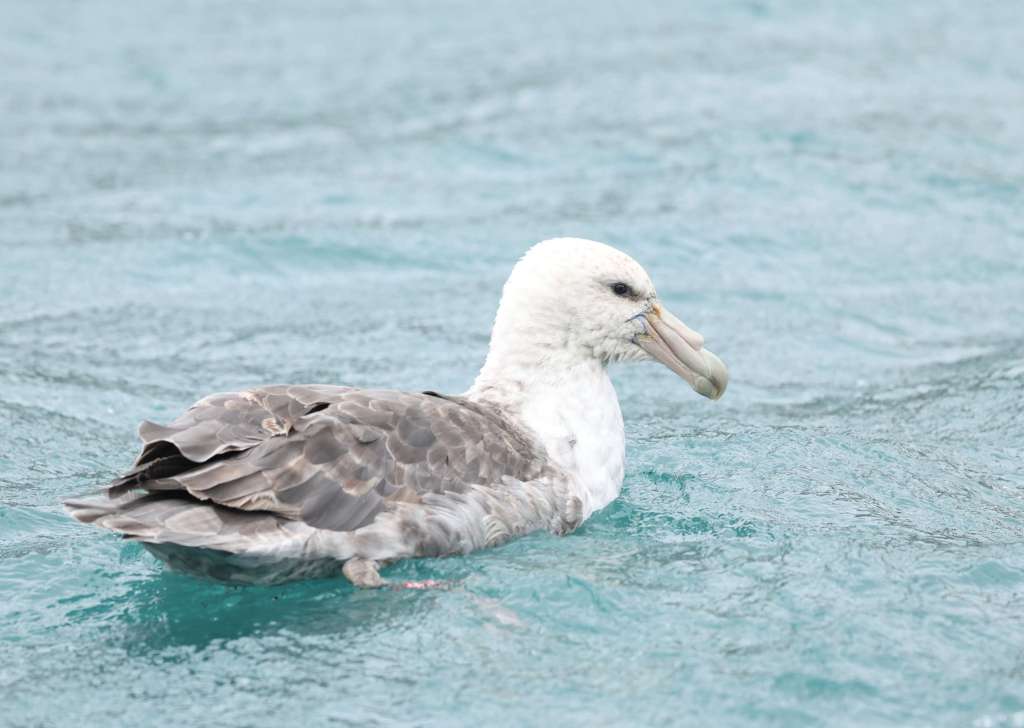
At nearly all times, whether out at sea or in a sheltered bay, you will find yourself accompanied by a Southern Giant-Petrel. We kept a look out for Northern Giant-Petrel which you can paradoxically also find here, and saw a couple of those (they have a more reddish bill-tip than the Southern Giant-Petrels, but are otherwise quite similar).
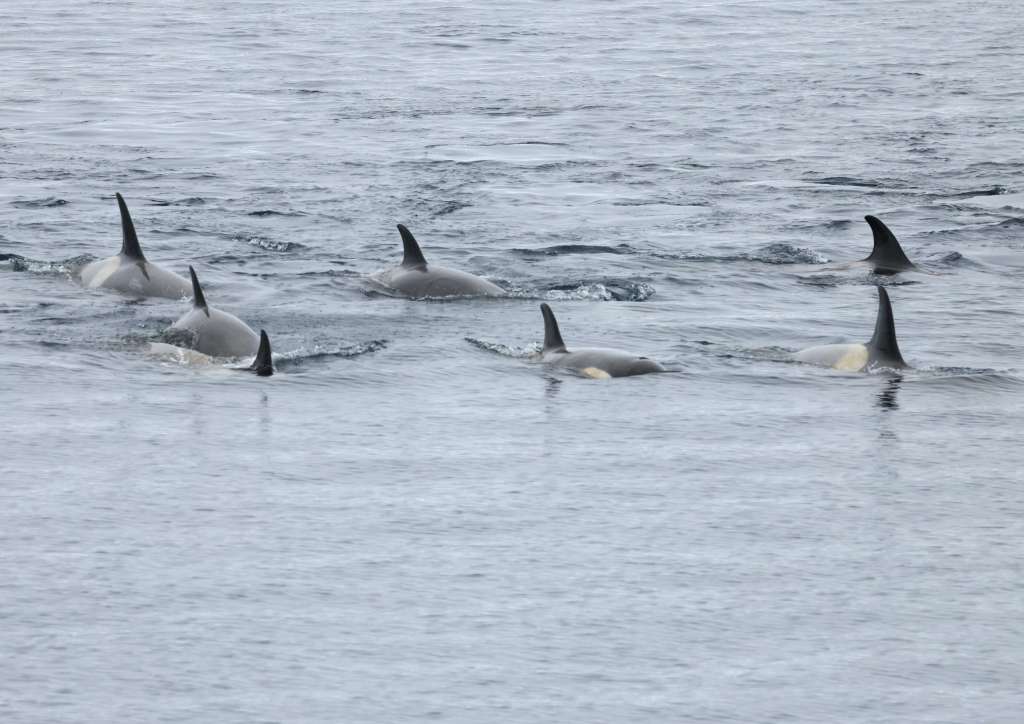
Apart from various whales (Humpback, Sei, Fin and even a Blue Whale), much excitement was caused any time an orca pack came into view. Enough that the captain would actually either stop the ship or even turn it around so everyone could get a good look.
Antarctica: Half Moon Island, Telefon Bay and Aitchoo Islands
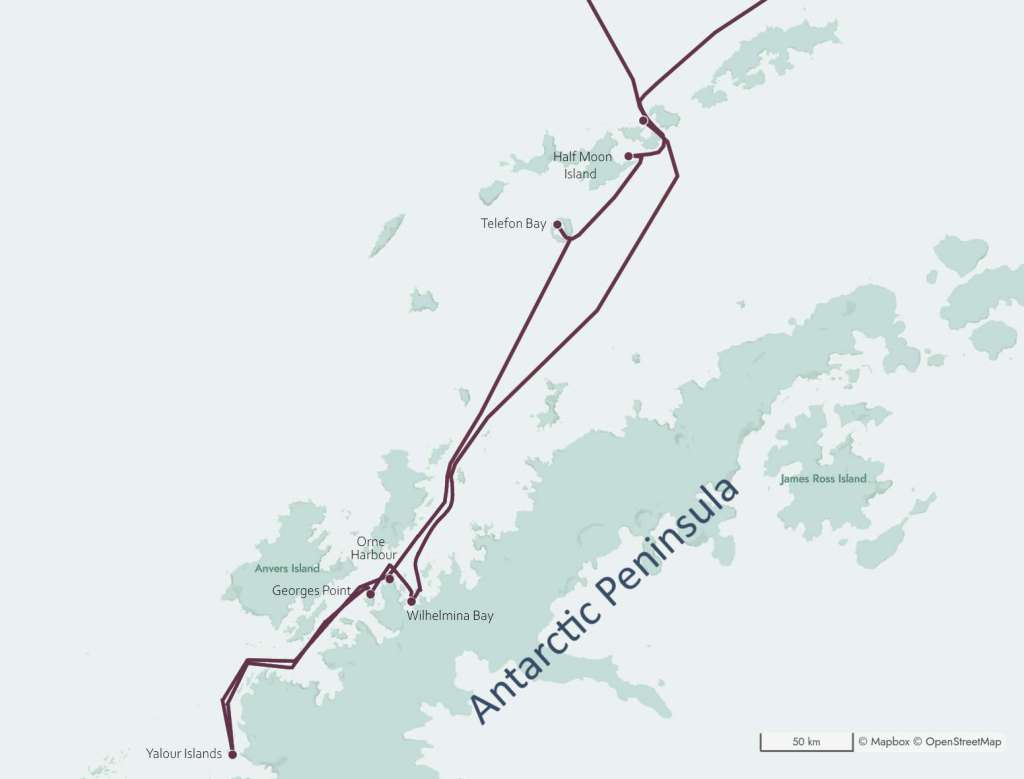
Our first taste of Antarctic landings were at Half Moon Island and Telefon Bay, very scenic and moody spots.
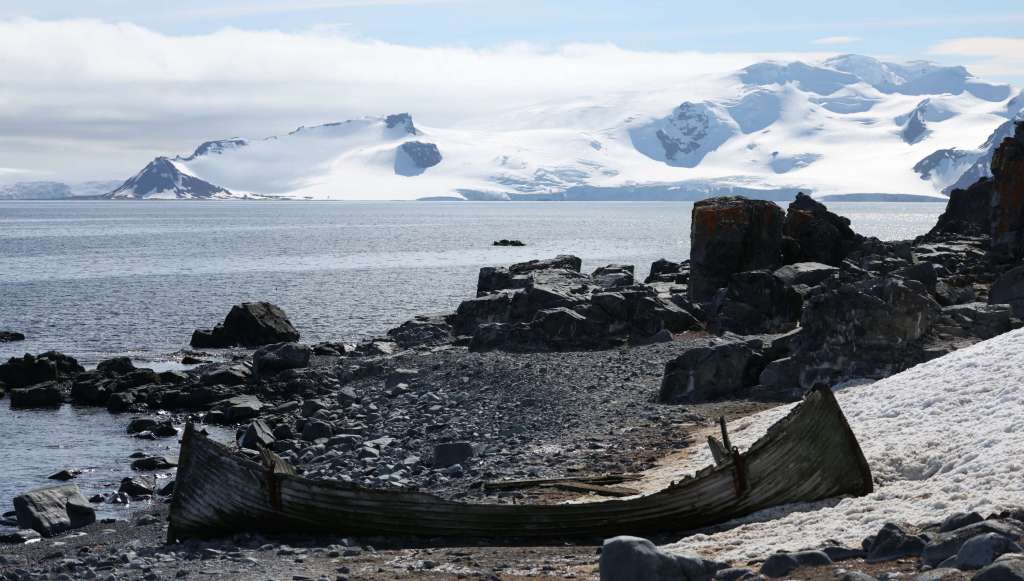
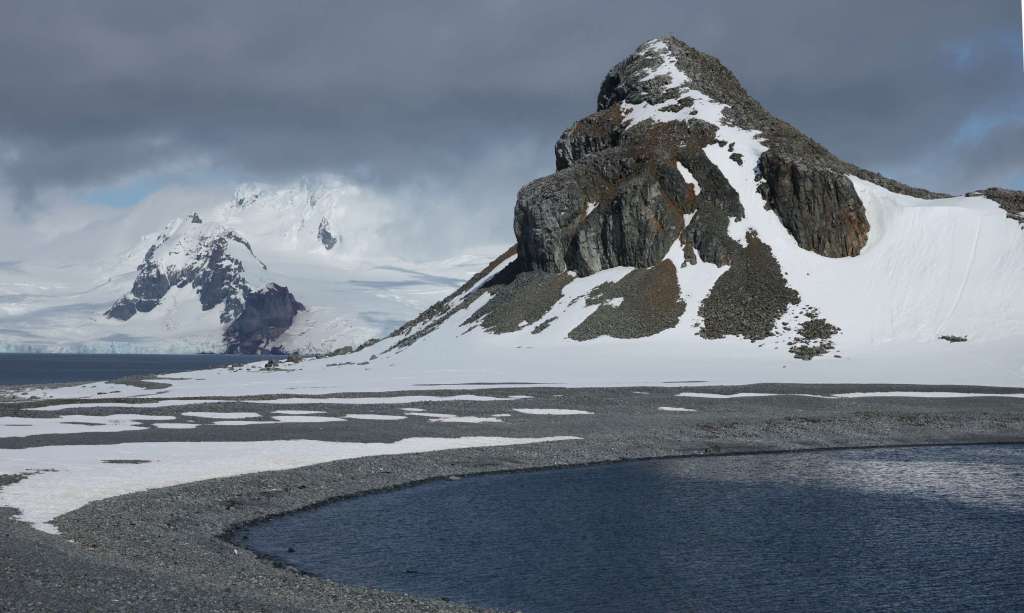
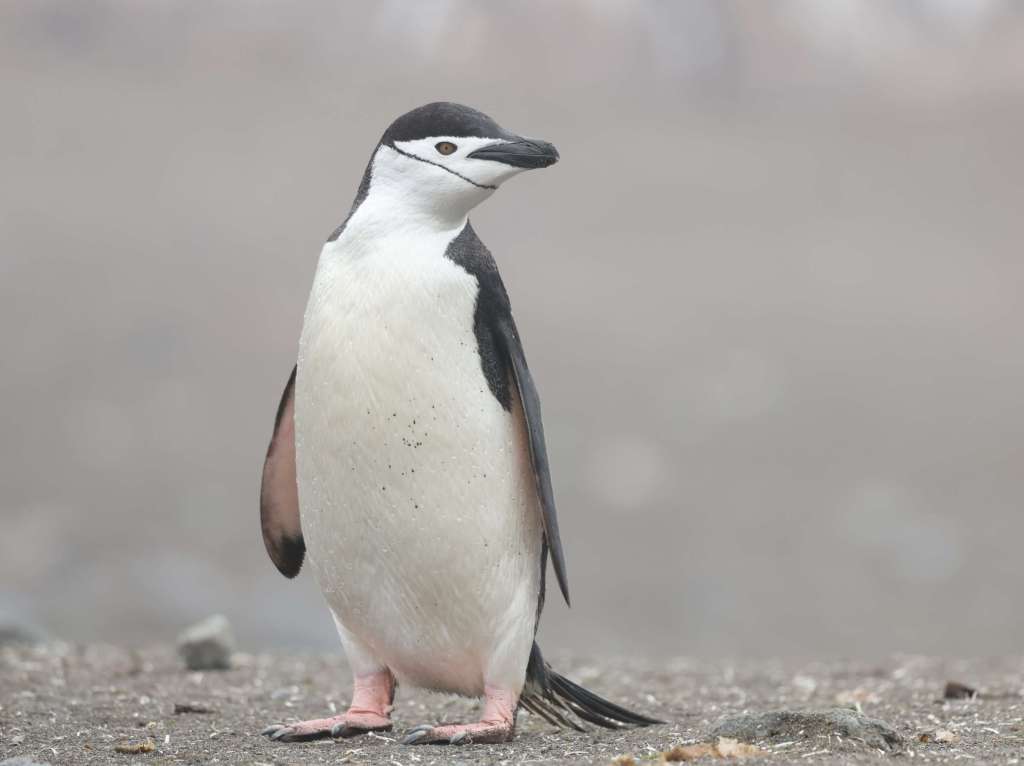
At Half Moon Island there was a colony of nearly 400 Chinstrap Penguins.
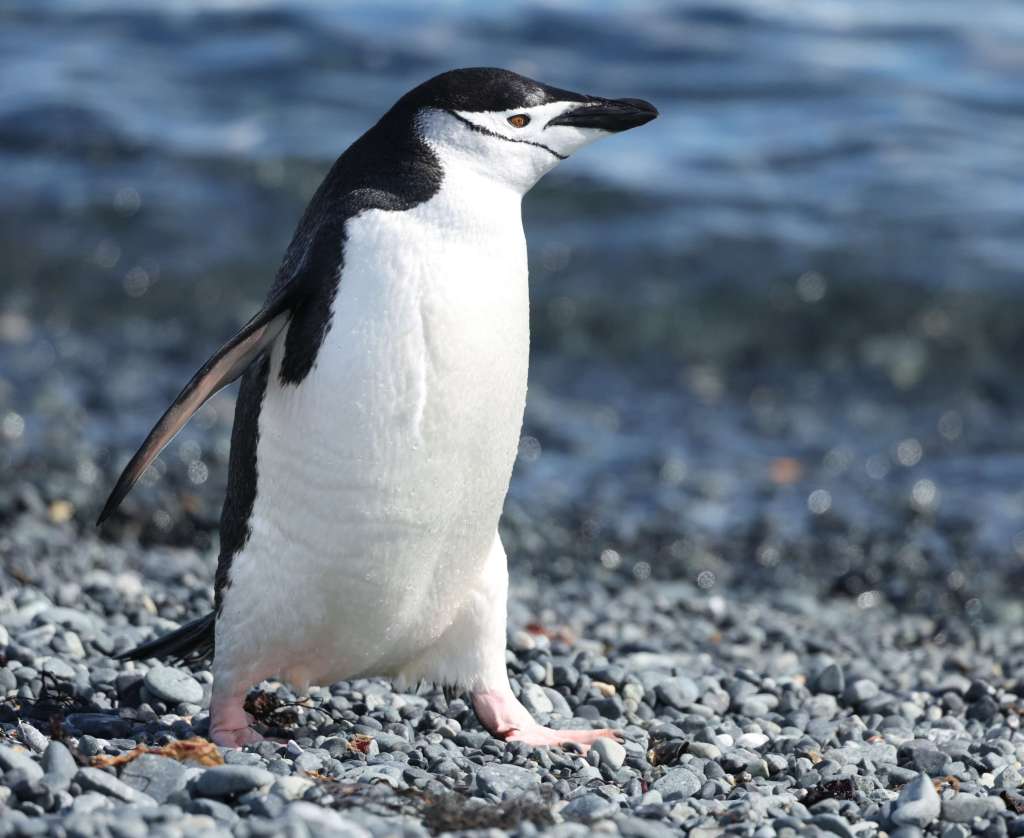
You have to feel for these little battlers, as they make their colonies high on rocky slopes and crests, thus giving themselves a tough challenge to climb up there from the water’s edge.
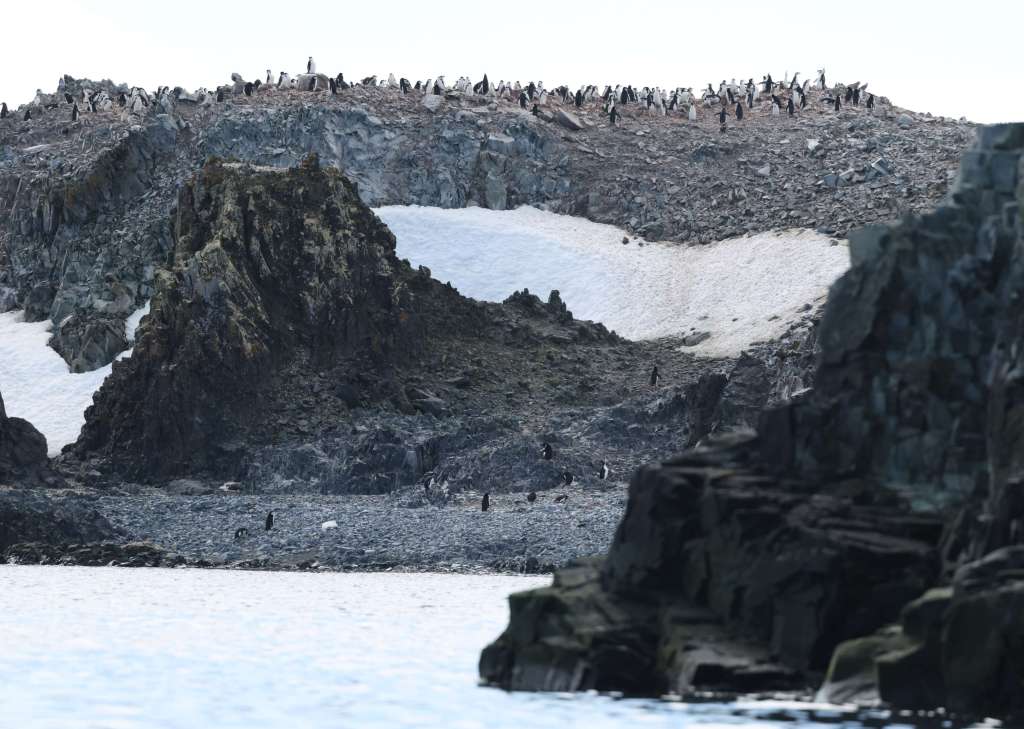
At Aitchoo Islands there was another colony of Chinstrap Penguins, with their adorable white and grey chicks being a bit more approachable.
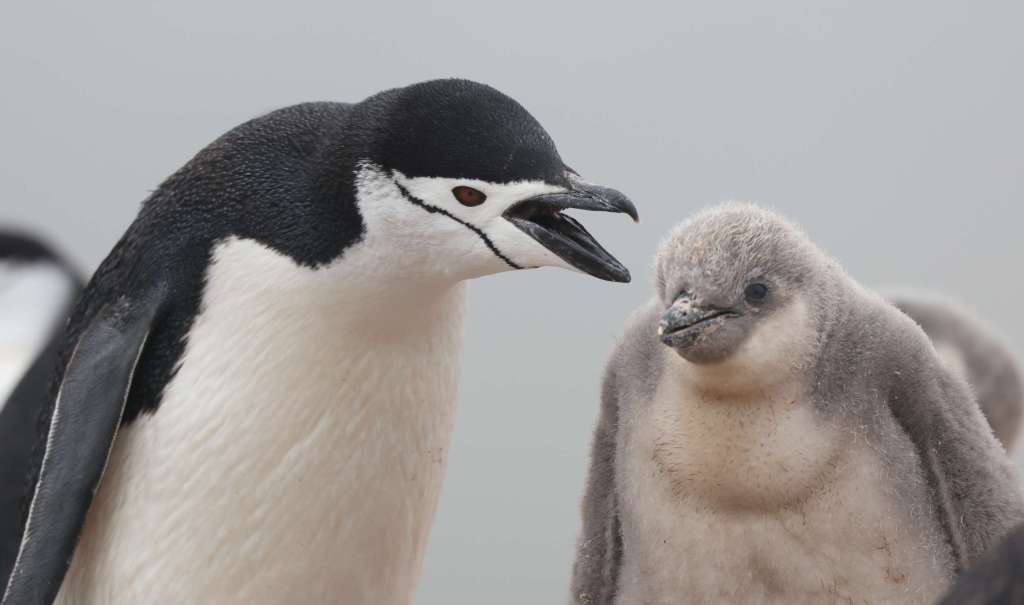
Here there was a ridge line which the Chinstrap Penguins were traversing at my eye level, so I could get a photo of one with a smooth background (remember, we weren’t allowed to crouch, lie or sit on the ground for those classy low-level photos).
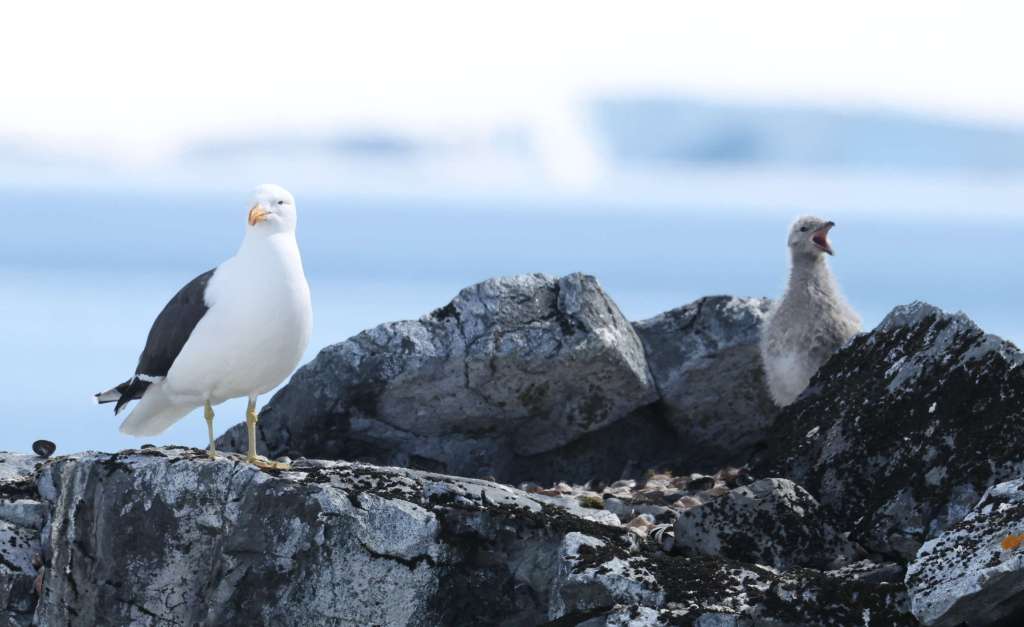
It’s just amazing how adaptable some animal species are, like Kelp Gulls, which we just kept seeing no matter how far south we went, or how cold it got. But then again, I suppose you could say that about all the birds that live down here on the White Continent.
The Antarctic Peninsula
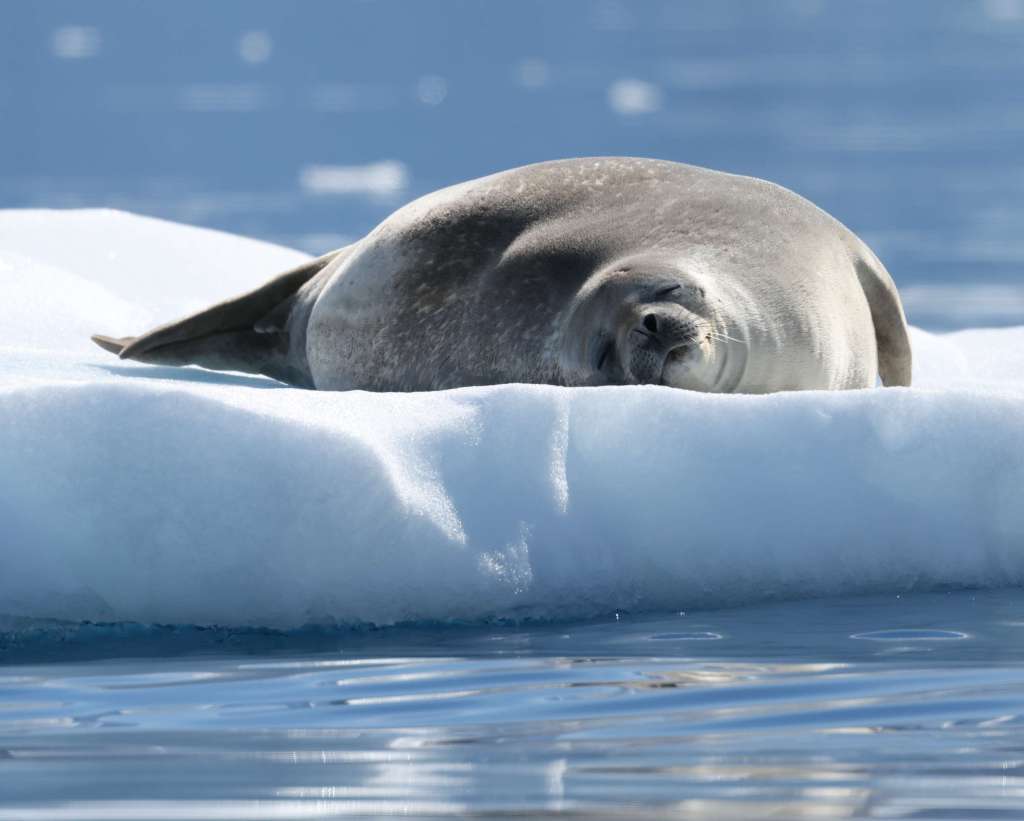
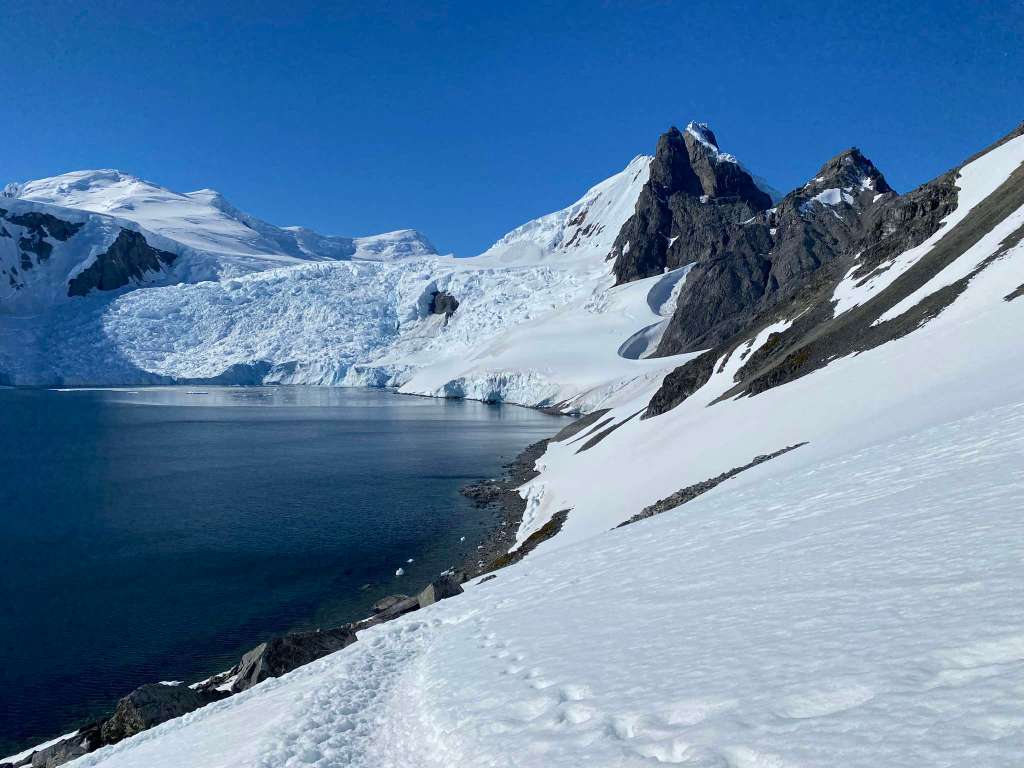
It’s really hard to convey the scope and grandeur of Antarctica through photographs. We were lucky enough to have some very fine, blue days where the oceans and glaciers all seemed serene and benign. Then we’d hit some wind and snow and you’d be soundly reminded of where you were. Either way was memorable, though I am glad the bad weather seemed to be at a minimum during my trip.
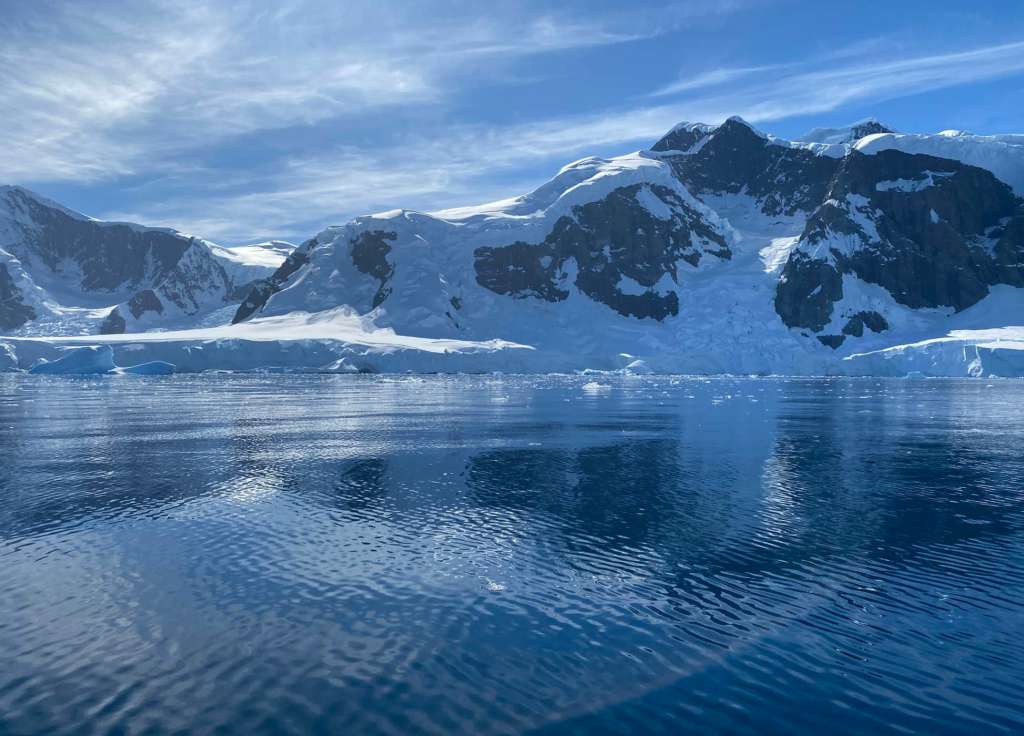
There isn’t a great biodiversity of mammals and birds on Antarctica, with the entire continent having only 38 birds ever recorded on eBird. Most of our checklists had 8 species or less. It’s definitely a case of quality over quantity, and appreciating every wildlife encounter.
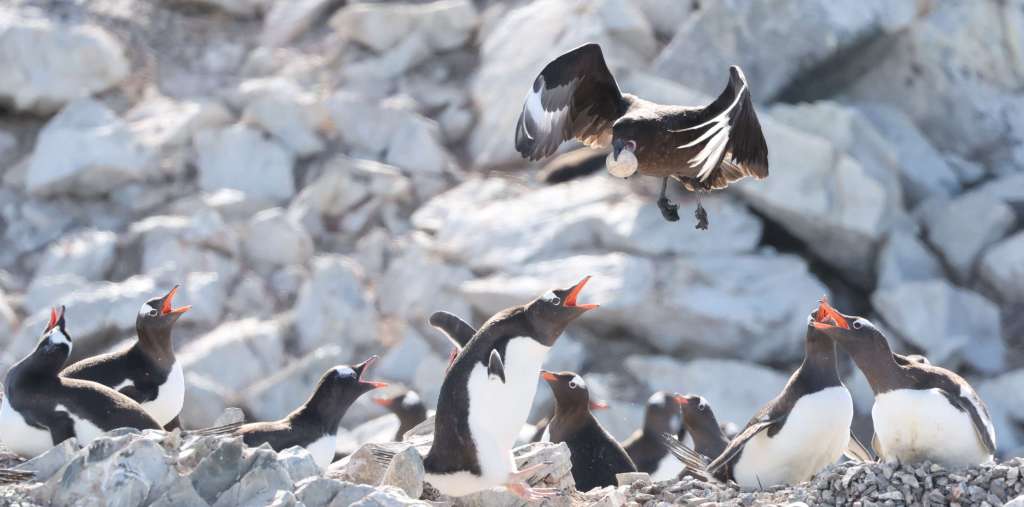
At Georges Point we saw the largest colony of Gentoo Penguins of the trip, with at least 1000 birds, and I was lucky enough to be at the right place at the right time to watch a Skua making off with a penguin egg. It may or may not have been a viable egg, but either way the penguins were understandably very unhappy.
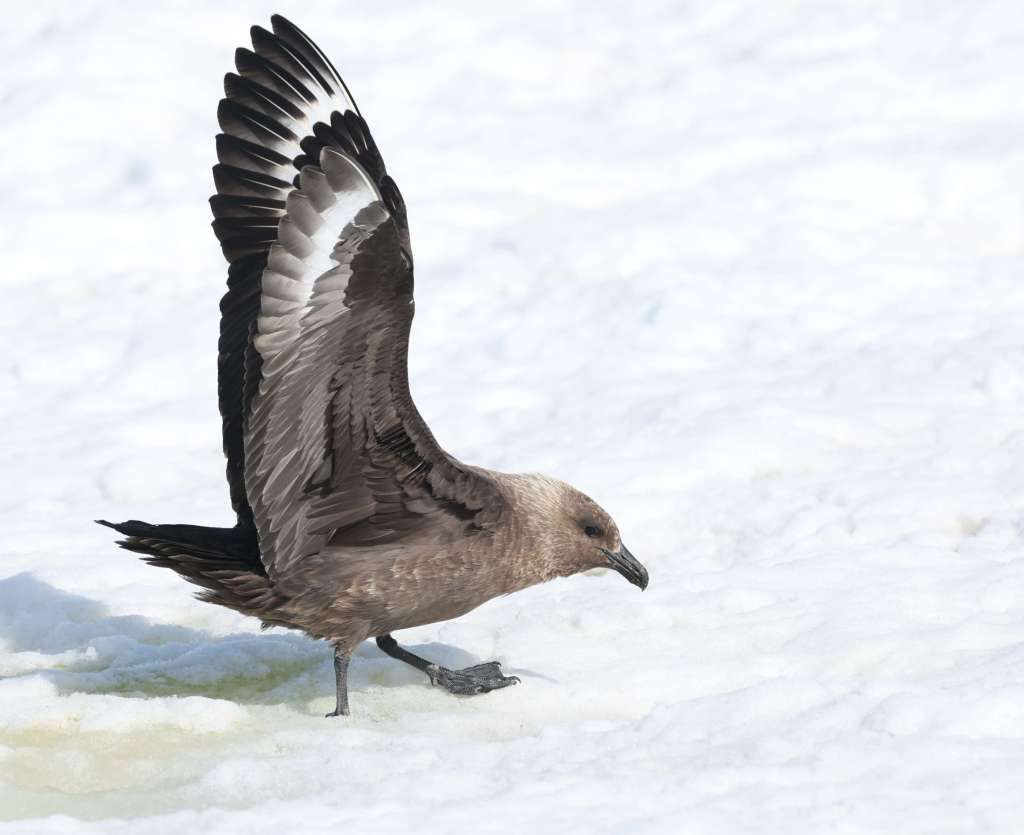
The South Polar Skua hybridises with Brown Skua here so care must be taken with identification.
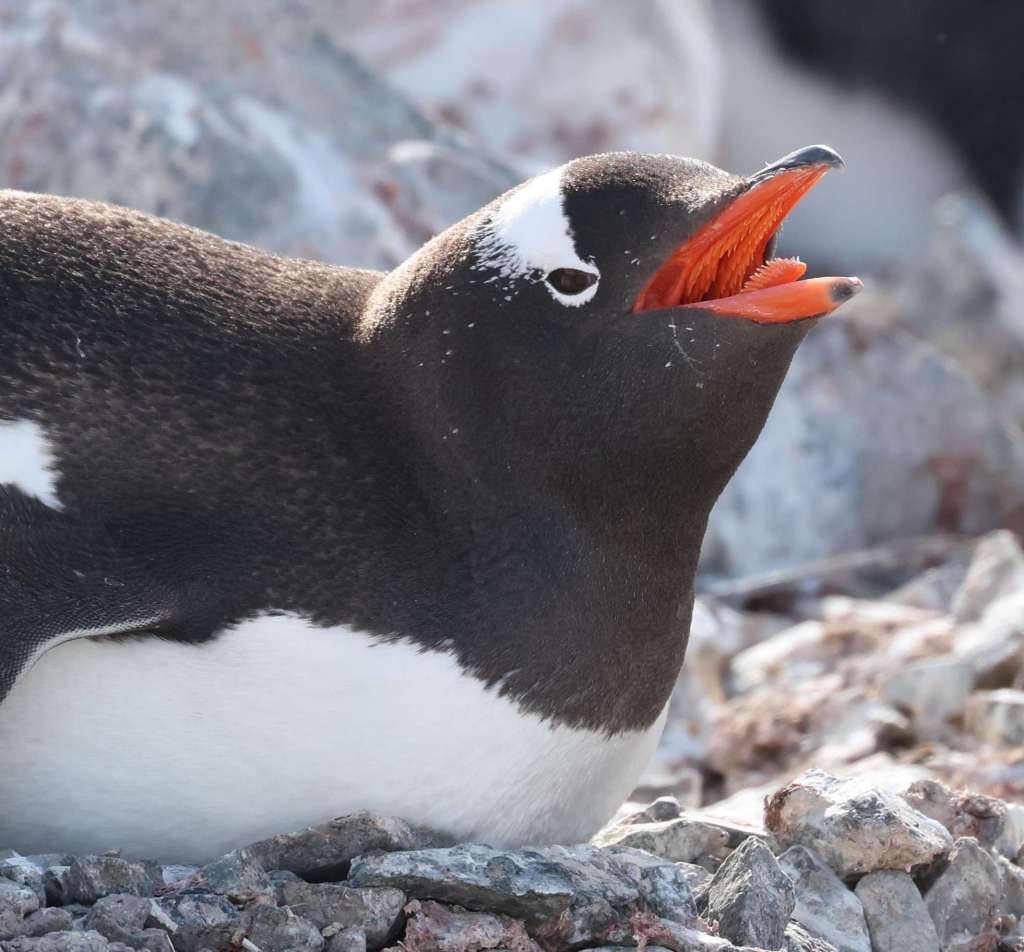
Ever since seeing the inside of a King Penguin’s mouth (see above), I have been weirdly compelled to get more photos of penguin tongues.
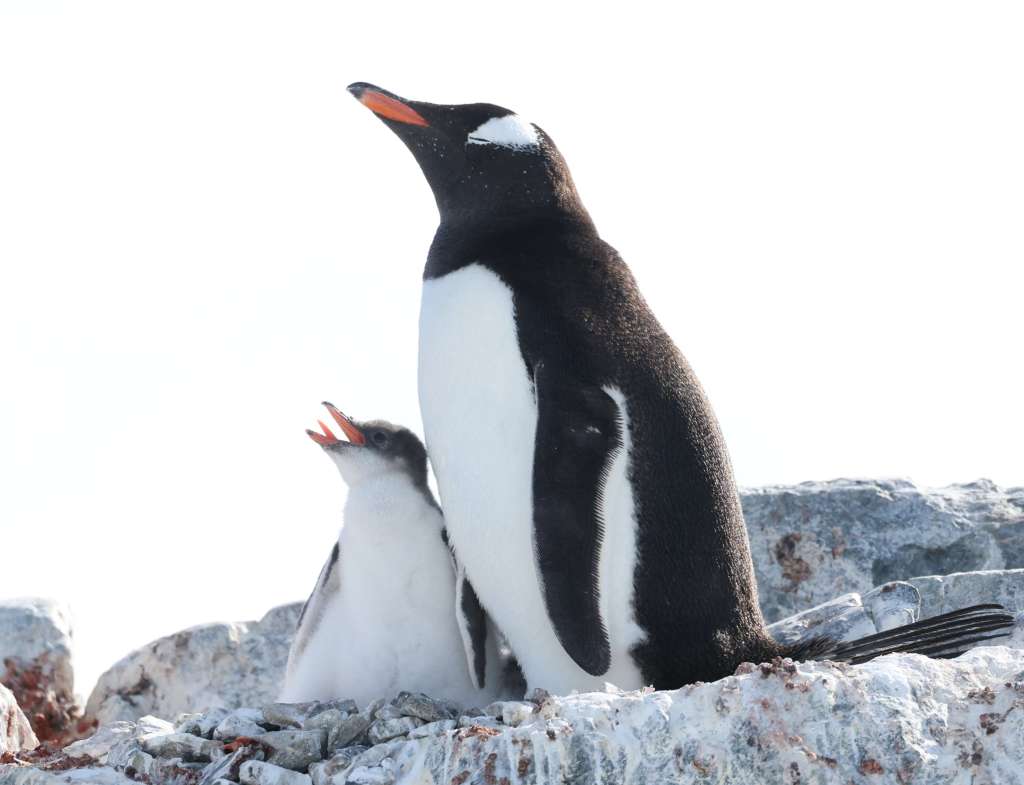
Seeing penguins with their chicks in Antarctica was not something to take for granted; it’s kind of a once-in-a-lifetime thing.
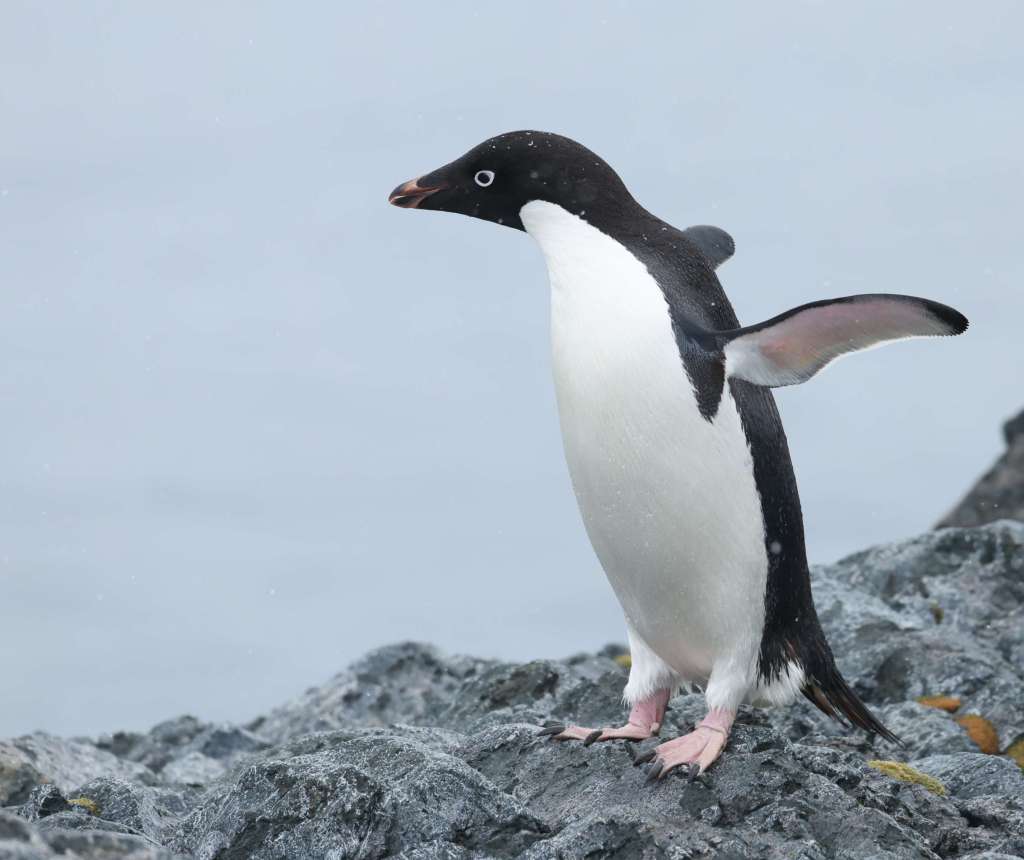
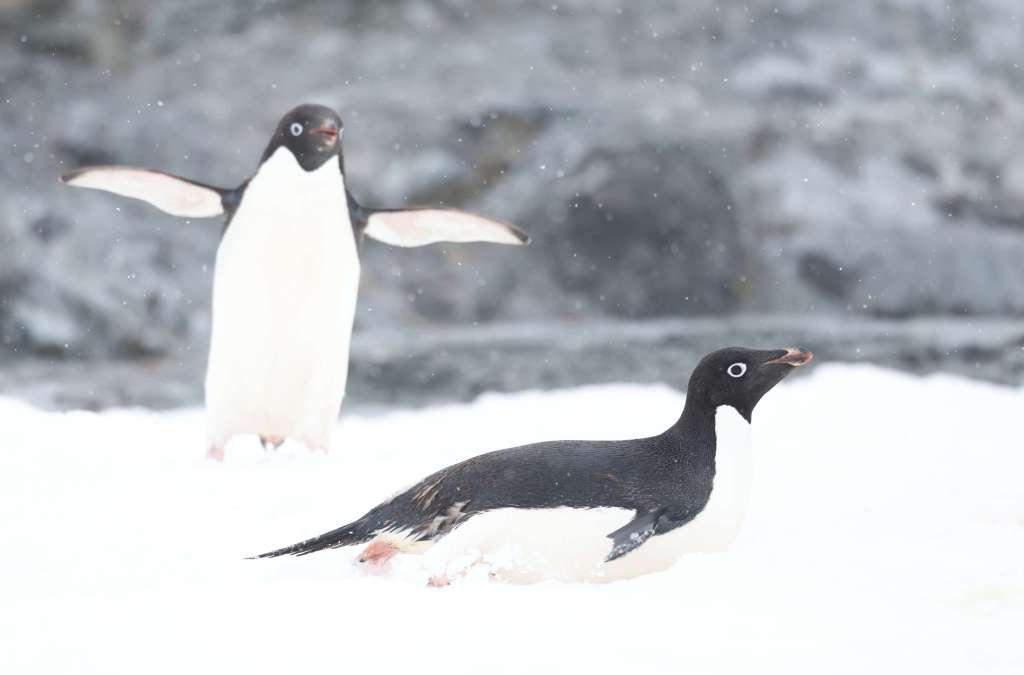
At the southernmost point of our journey, the Yalour Islands, one last penguin species awaited us – the Adelie Penguin, possibly the cutest of all 18 species of penguin globally. Although you can – with luck – catch a glimpse of one north of the Yalour Islands, you typically do need to travel quite far south along the Antarctic Peninsula to see them.
I wondered why the Adelie Penguins nested at the highest points of the terrain, given the physical struggle needed to climb up – it turns out that is where the snow melts first, so they can get to laying as soon as possible in the season. Various climate change data is showing that this time is creeping earlier and earlier each year.
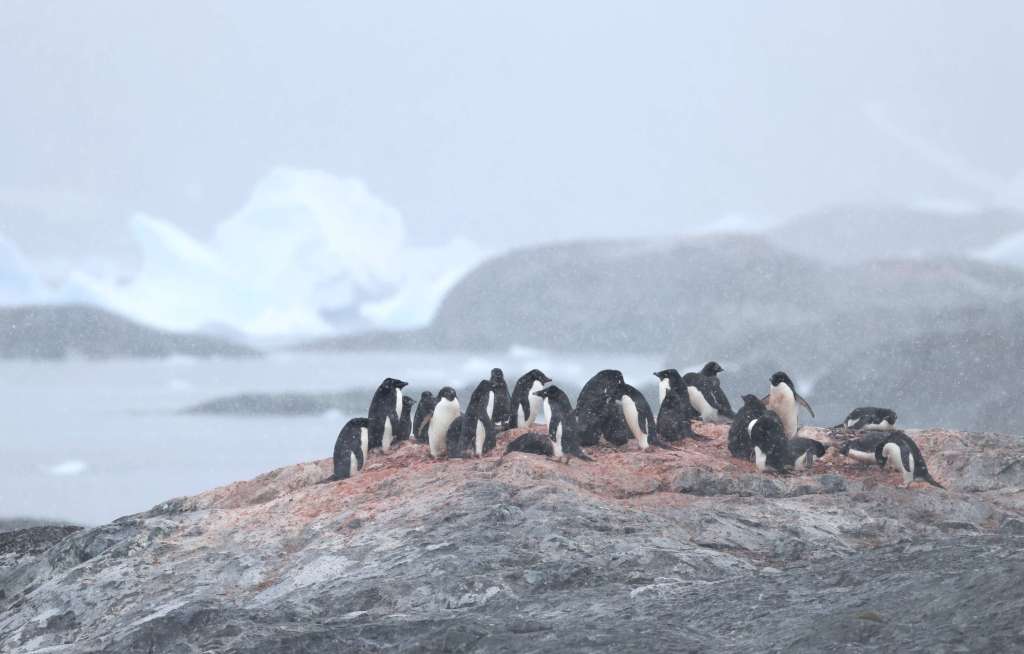
Like the Chinstrap Penguins, the Adelies would sometimes slide along the snow on their bellies instead of walking.
Note that the other penguin, the famous Emperor Penguin, isn’t usually seen where our ship cruised – a couple of their colonies are on the other side of the Antarctic Peninsula where there is lots of pack ice, and it’s much less accessible.
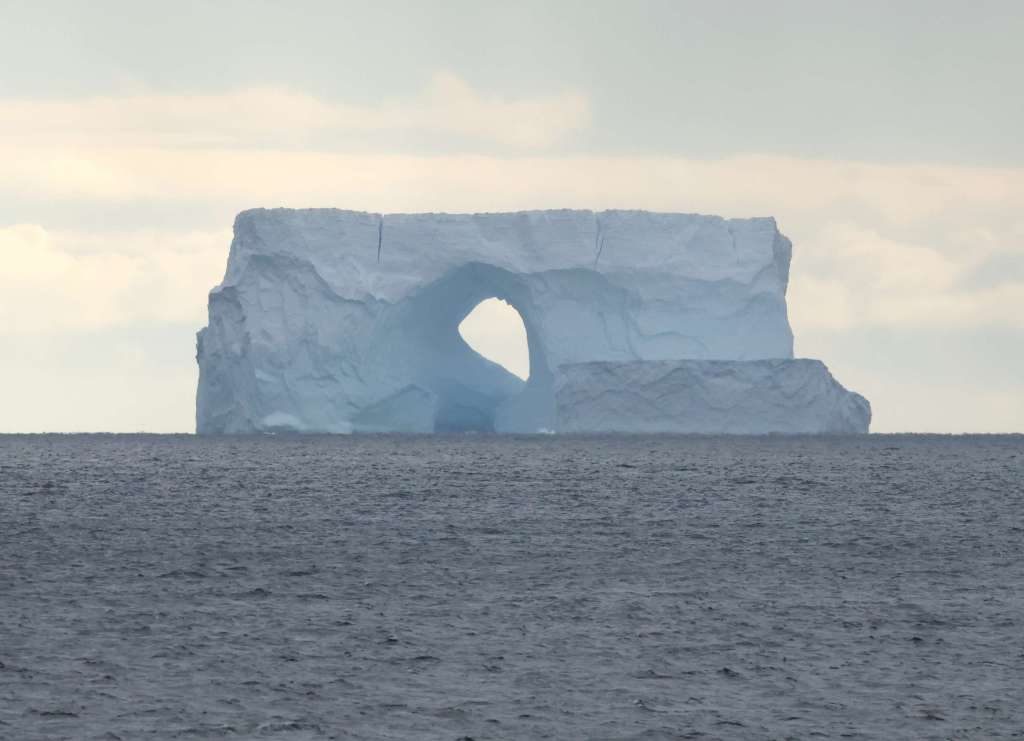
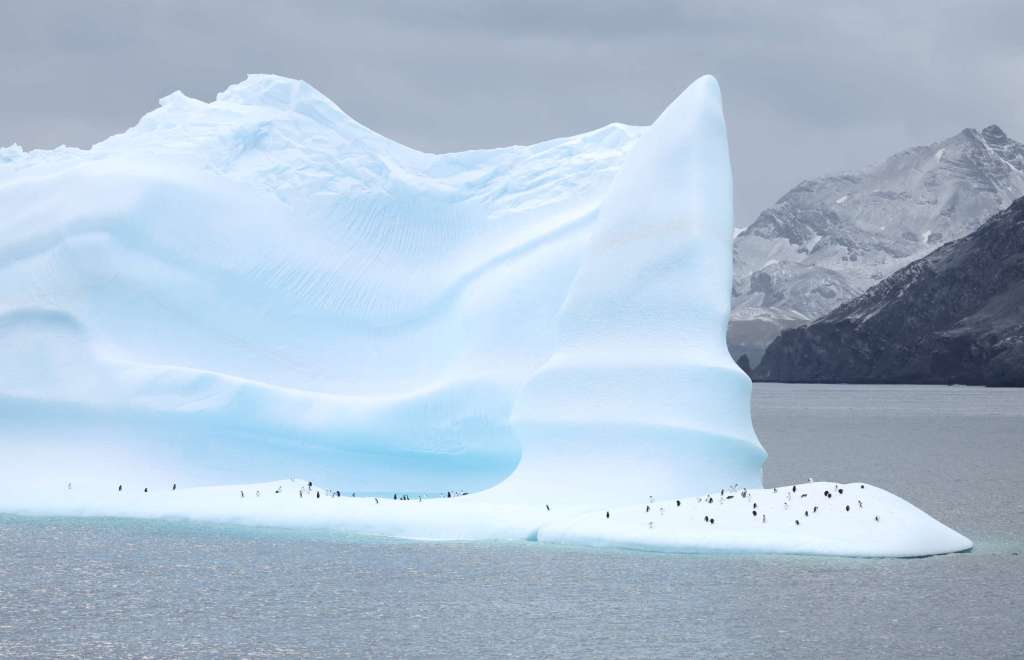
Finally… and also… icebergs! One of the pleasures of cruising through these waters is spotting icebergs of all sorts of shape and size. We even went to an unexpectedly fascinating on-board lecture about icebergs given by one of the science team.
I hadn’t realised how much I wanted to get an iconic shot of penguins on a huge iceberg until the opportunity presented itself!
Summary
Being able to see wildlife in person at Antarctica is truly special and it is kind of amazing that you can cruise there in relative comfort (the early Antarctic explorers would surely not believe it). Price is really the main barrier, as it is quite expensive for most of these cruises. Being able to travel via South Georgia with its huge penguin colonies and dramatic scenery was a big plus and in hindsight I was super-glad to have that experience (the penguin colonies we saw in Antarctica itself were much more modest in size).
Even on days where the weather doesn’t cooperate, you will still come away with some memories to treasure from this region – perhaps, for example, remembering an Adelie Penguin sliding on the snow, pushing itself along with its feet; or a Chinstrap Penguin doggedly waddling up a 100 metre high snowy slope to get to its rocky nest at the top. It genuinely is one of the world’s grand adventures.
AUTHOR: ANDY GEE
BIRDERS: ANDY GEE, K-A
 Bird Spots