
[A stop on the Litchfield + Katherine + Kununurra, Jul-Aug 2022 Trip]
Date of visit: Jul 30, 2022
Litchfield National Park is a scenic gem of the Top End in the Northern Territory. It is about 15000 square kilometers in size and is 90km south of Darwin. In this post we cover five of the spots within the park that we visited in the course of a long day of birding and hiking in July 2022.

Most people will enter the area from the Stuart Highway. Here you can follow the Litchfield Park Road west, passing through the gateway town of Batchelor, and stop at whichever sites you fancy; our plan was to hit up Wangi Falls and the Cascades in the far west of the park (30km west of Batchelor) then work our way slowly back east. We figured Wangi Falls, being arguably the most popular of the many attractions and the eBird hotspot with the highest bird count, would be best visited as early as possible given that many of these sites can get very crowded and that birding is best at the start of the day.
All of the places mentioned here are well-signposted and easy to find so I haven’t provided detailed navigation instructions apart from the map above. Note that non-NT residents will require a Parks Pass to enter Litchfield National Park.
Magnetic Termite Mounds
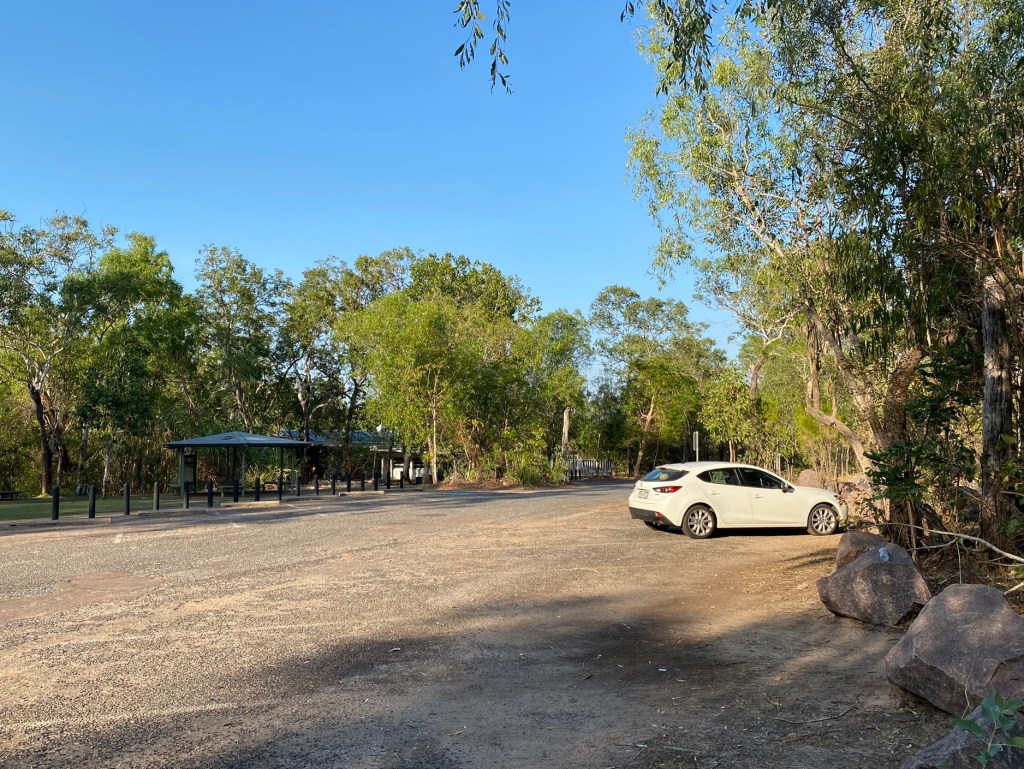
One of the first small stops you may be tempted by in Litchfield National Park are the intriguing-sounding Magnetic Termite Mounds. There is a well set-up car park with a viewing platform right off the main road.

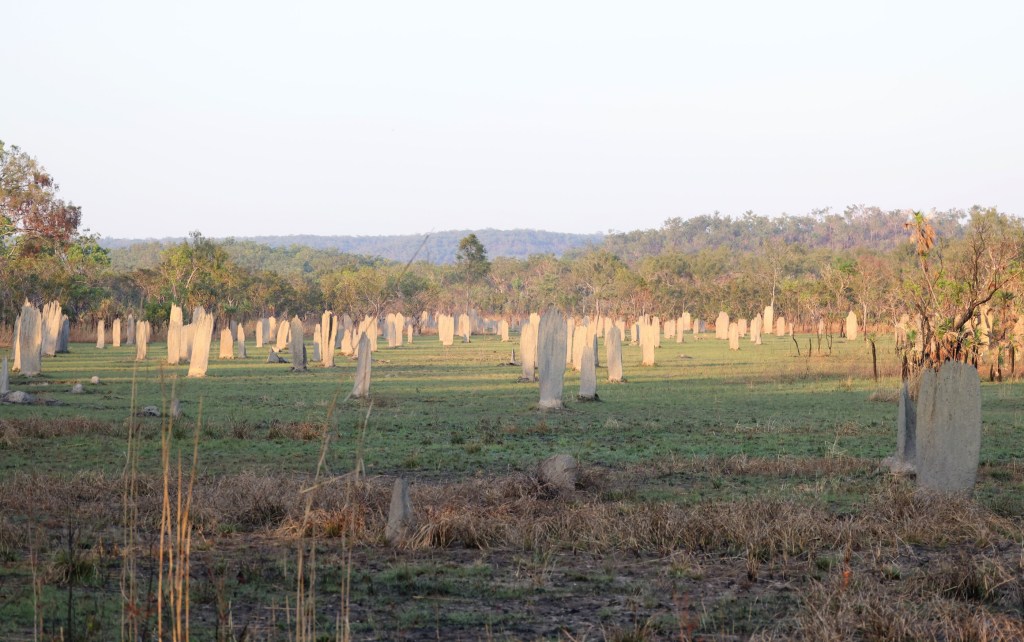
The thin edges of the mounds point north-south and the broad sides face east-west, which helps thermo-regulate the termites inside who prefer high humidity and stable temperatures. There are hundreds of these mounds and some are two metres tall. They are sort of fascinating once you read more about them via the information panels at the site.

Any birds you would see here are a bonus rather than the main event; we saw Brown Honeyeaters and a few Peaceful Doves, a couple of Silver-Backed Butcherbirds, and heard Blue-Winged Kookaburras calling (somewhere..!)


Wangi Falls
On our way to Wangi Falls (at about 2km south of the turn-off to the falls) we slowed to observe some random bird action, and ended up finding a Pallid Cuckoo in one of the trees. It was a lifer bird for all of us and one that we’d been looking out for a long time, as it can appear pretty much anywhere in Australia – one of those birds that is widespread but typically uncommon across its range. A great start to the morning!


The road into Wangi Falls is all sealed and there is a decent amount of car parking space, which is useful because this is a site within the National Park that can get very busy. There are toilets and a café here. Note that the pool can be closed for swimming depending on water levels, or when saltwater crocodiles move up flooded rivers in the wet season.
It is only about a hundred metres through the picnic area and to the falls themselves, already hosting keen swimmers at 8:30am.


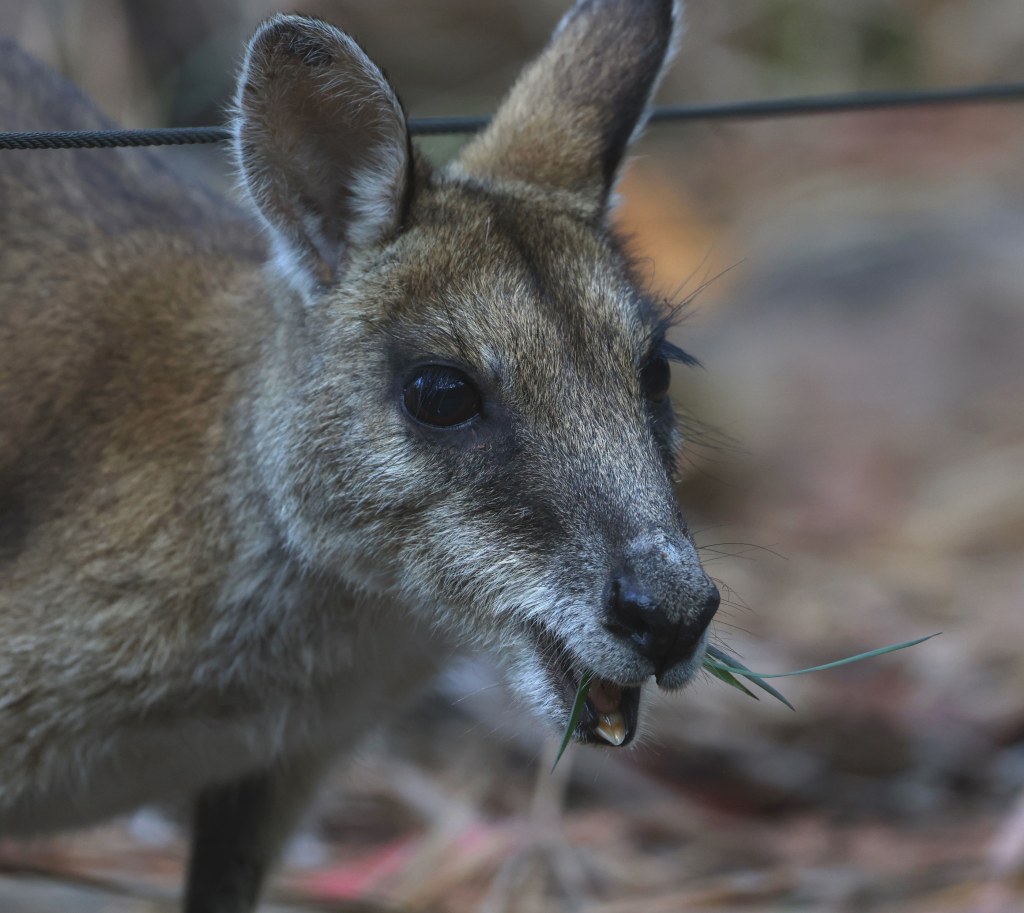
We started the 2.1km loop walk in an anti-clockwise direction, first observing some kangaroos before passing through a bat colony.


The screeching of bats was pretty loud and we didn’t linger there except to note how many bats there were and to speculate how they do things like give birth while hanging upside-down (to which we later found out that the mother bat catches the baby bat with her wings and clasps it to her body!)


We spotted a Varied Triller and a pair of Red-Winged Parrots, then in the denser bush a Shining Flycatcher and an Arafura Shrikethrush. All nice birds to see, for sure.
The trail climbs upwards to a set of Treetop Platforms which I suppose are intended to overlook the falls and the water at the base, but were surrounded with fairly thick vegetation.


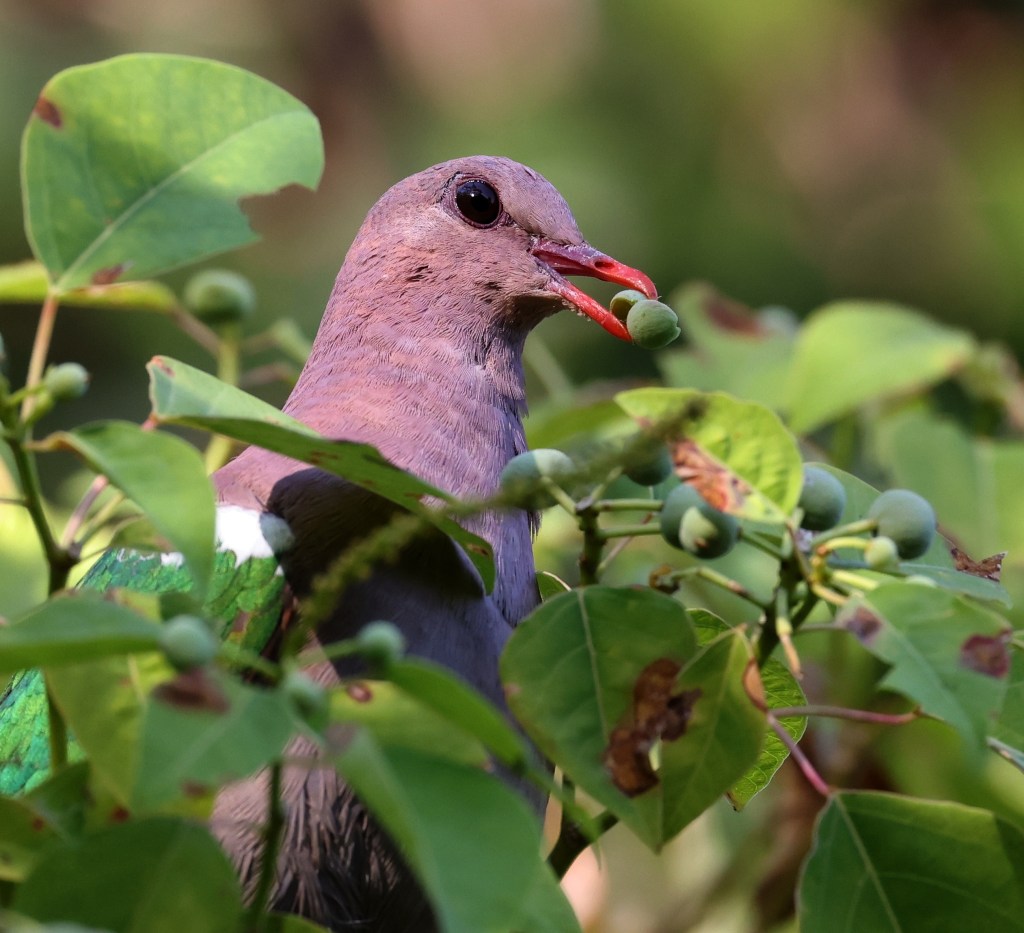
From the platform we did gain a great view of a Pacific Emerald Dove foraging, fairly unconcerned about hikers and families passing by. It was quite a photographic treat for us.

As the path climbed, the expansive views just kept getting better. The total ascent is around 100 metres and is fairly easy-going.
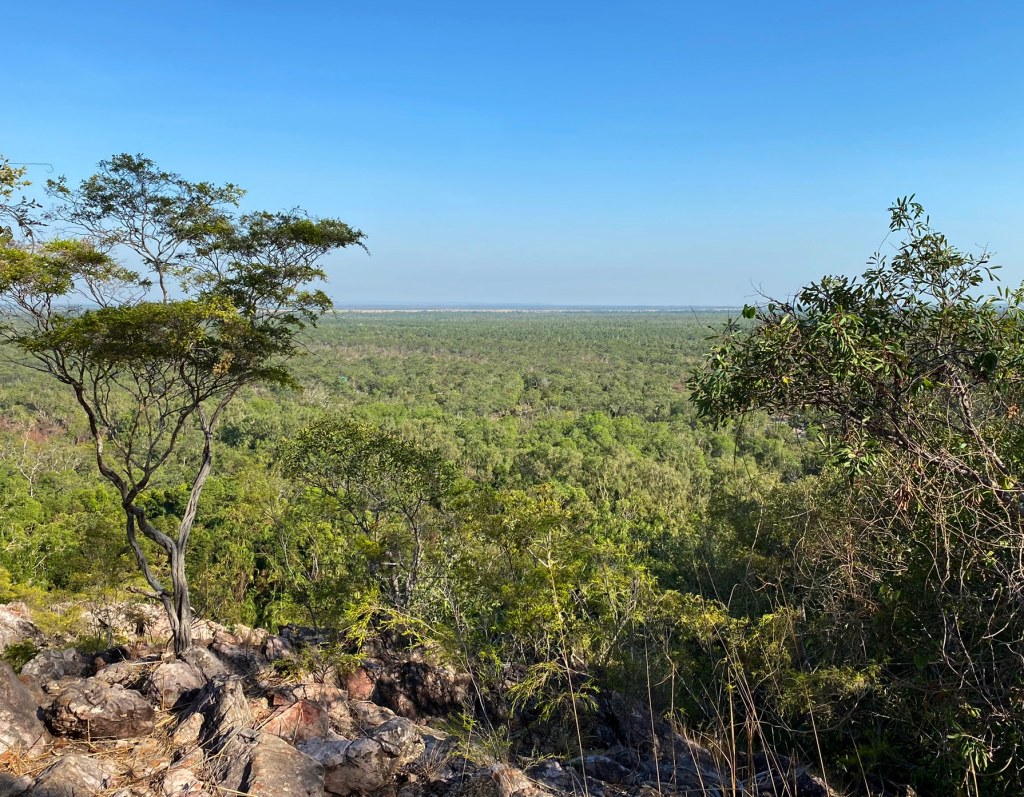
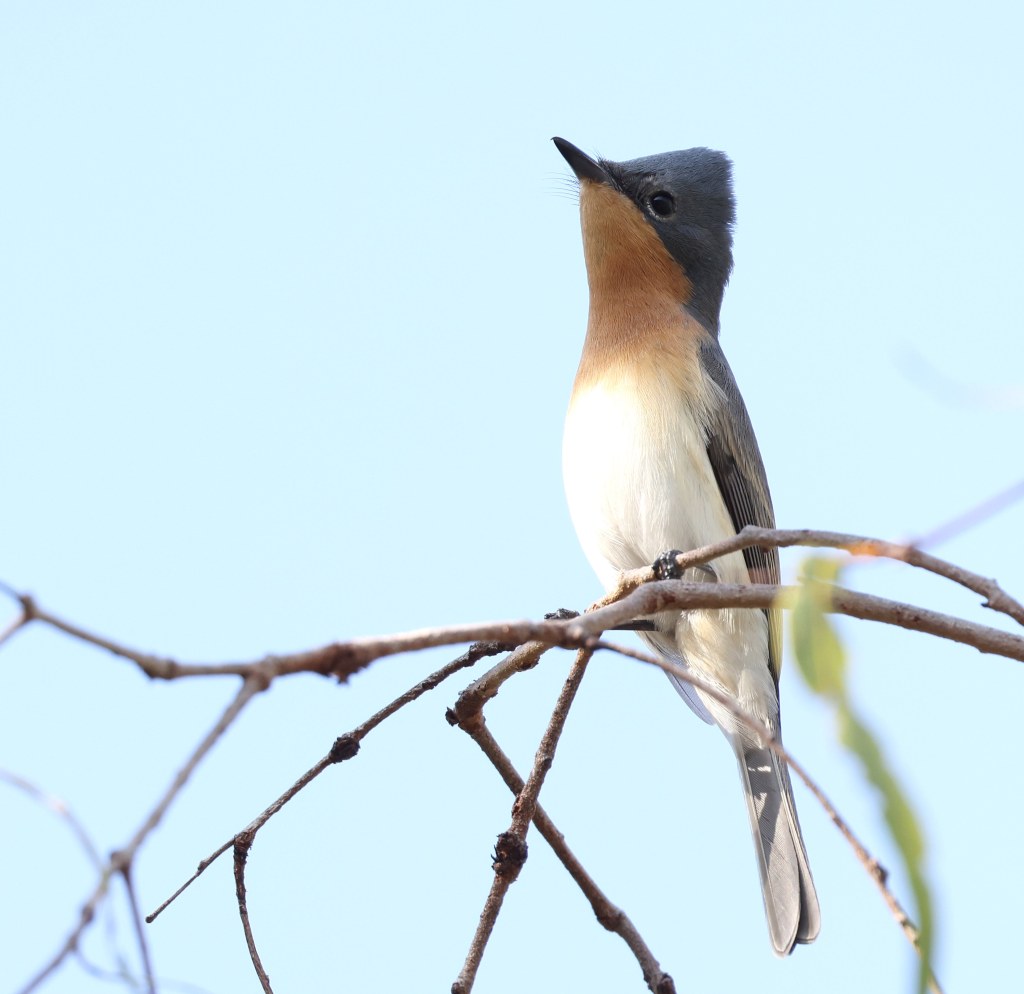
We happened upon a female Leaden Flycatcher up here and a male (presumably its mate) landed soon after on the exact same branch. So we ended up with matching pairs of photos…

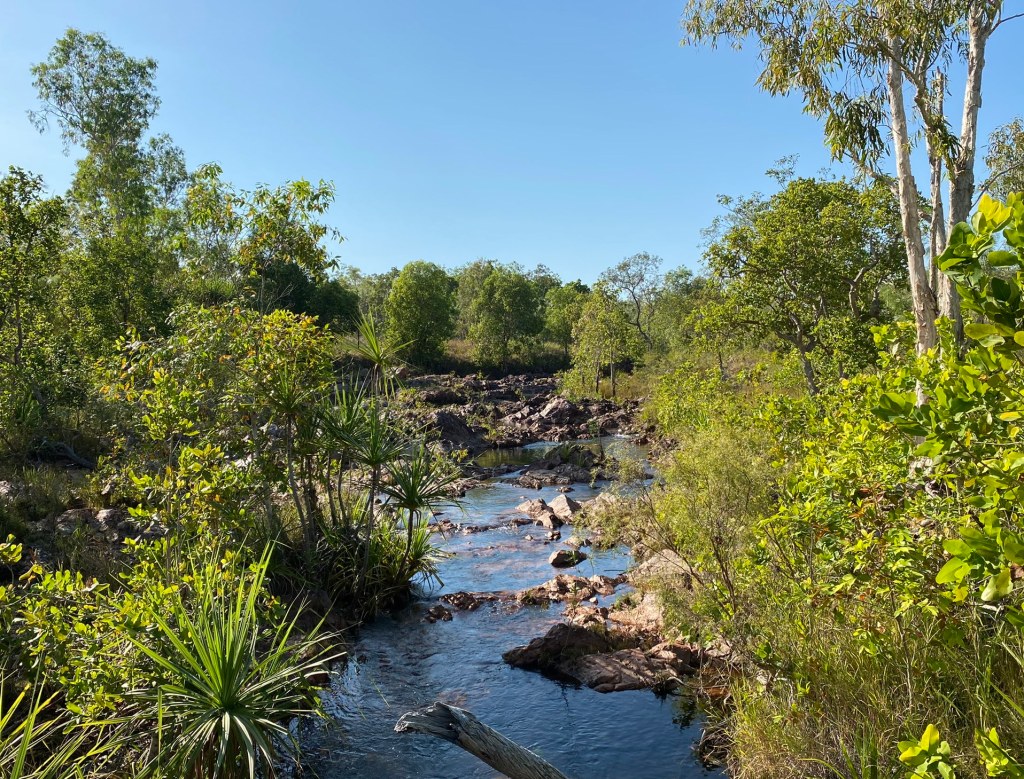
The loop walk passes (via a narrow bridge) across the top of the creek which feeds the waterfall below, and Sulphur-Crested Cockatoos and a Rufous Whistler were seen in this area.


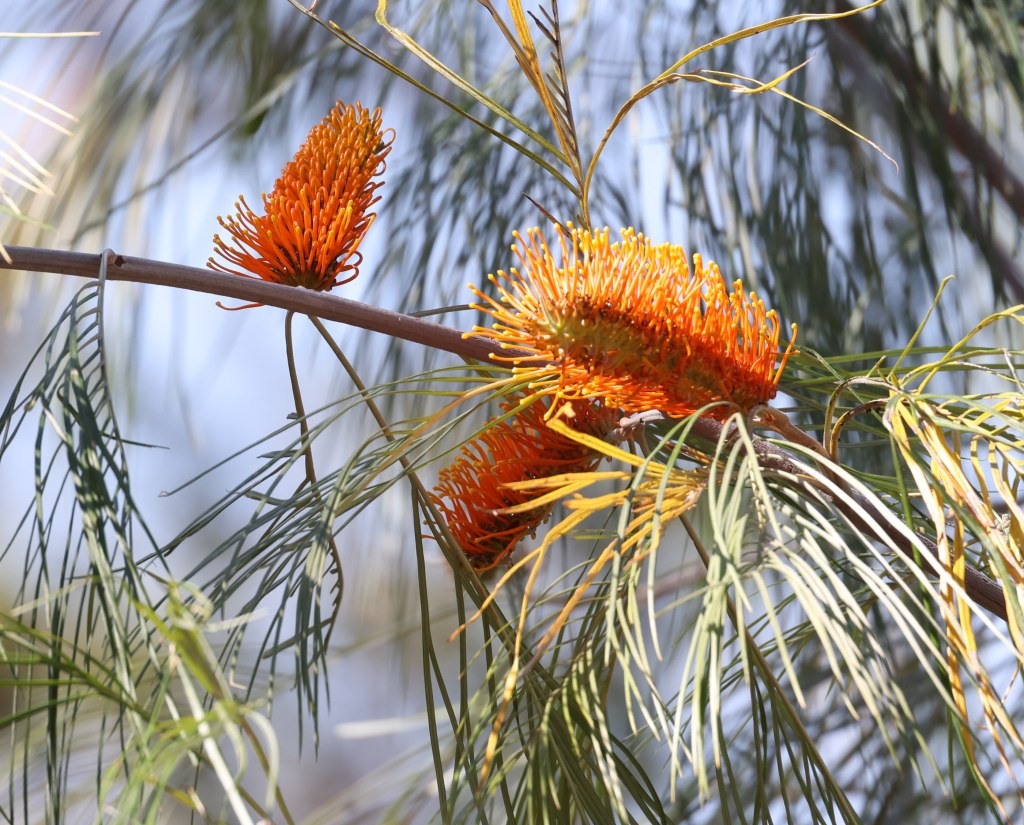
Special mention must be made of the Grevilleas that can be found in this part of the world – I believe the species is Golden Grevillea and the brilliant colours of the flowers stand out in the dry landscape.
We had picked up 23 species in 2 hours, including several Top End mainstays like Orange-Footed Scrubfowl, Varied Triller, Spangled Drongos, a few Orioles and Figbirds, with Black Kite and Whistling Kite being the only raptors.
Cascades
The Casacdes is yet another swimming hole within Litchfield National Park but is a little harder to get to, being accessed by a 2.6km return path. Some guides rate the walk itself as moderately difficult; this is due to a narrow path with some awkward rocks underfoot. It is mostly flat so if you take a little care you should be fine.
The car park is sealed and is lined with lovely Pandanus Palms.
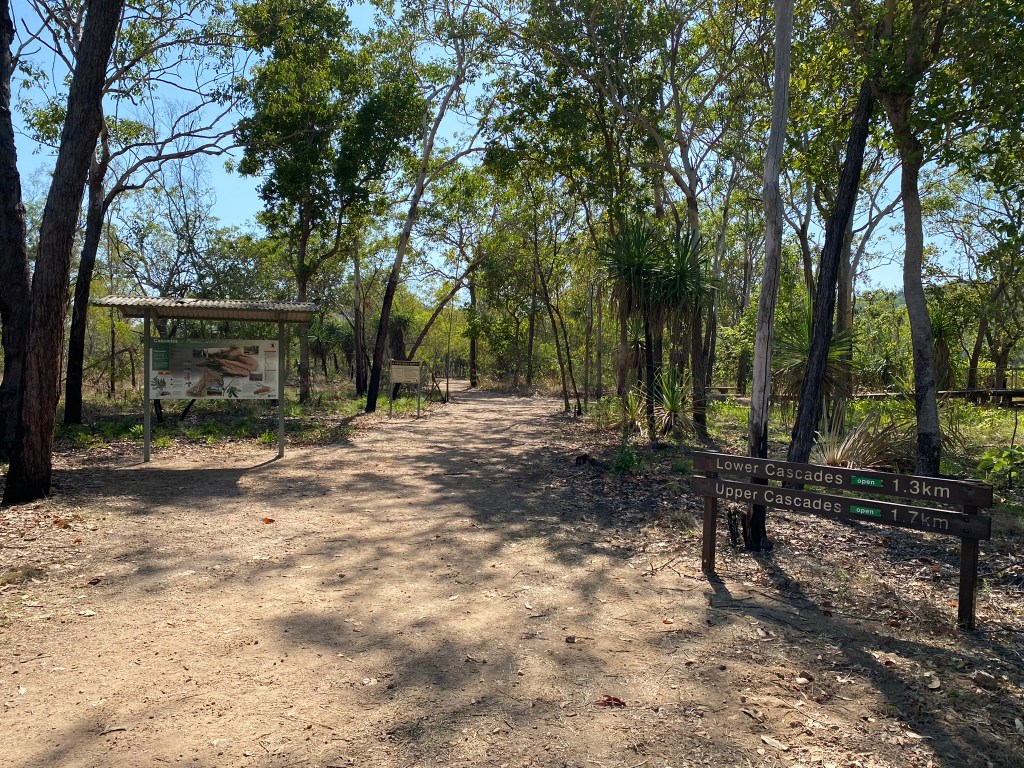
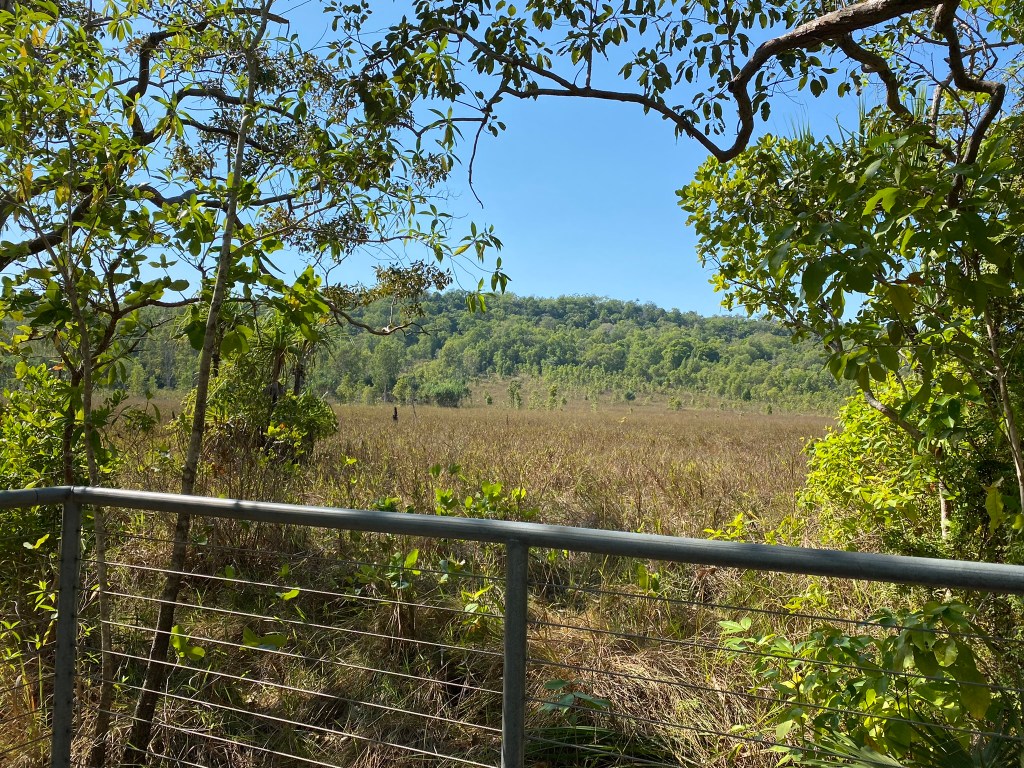
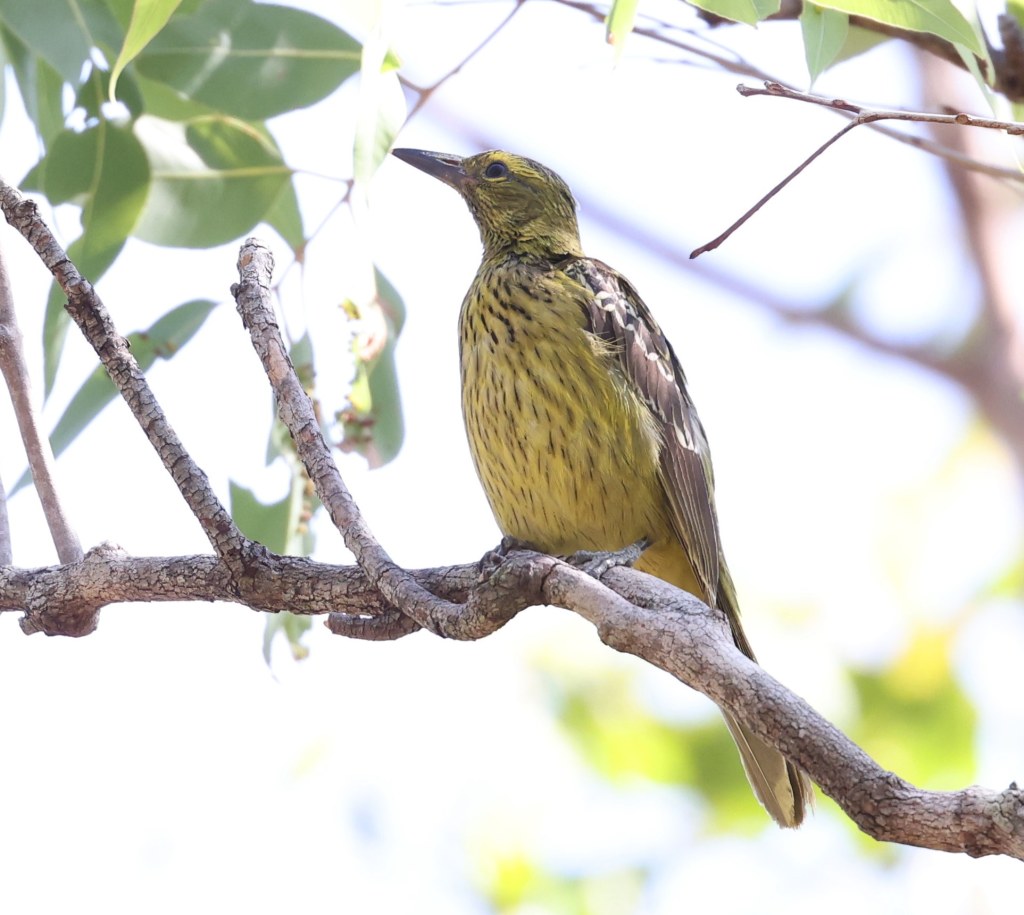
We found a pair of gorgeous Red-Winged Parrots feeding in the area when we arrived, which were miraculously still there when we returned some 1 hours and 40 minutes later. Cue more camera shutters and video-taking!

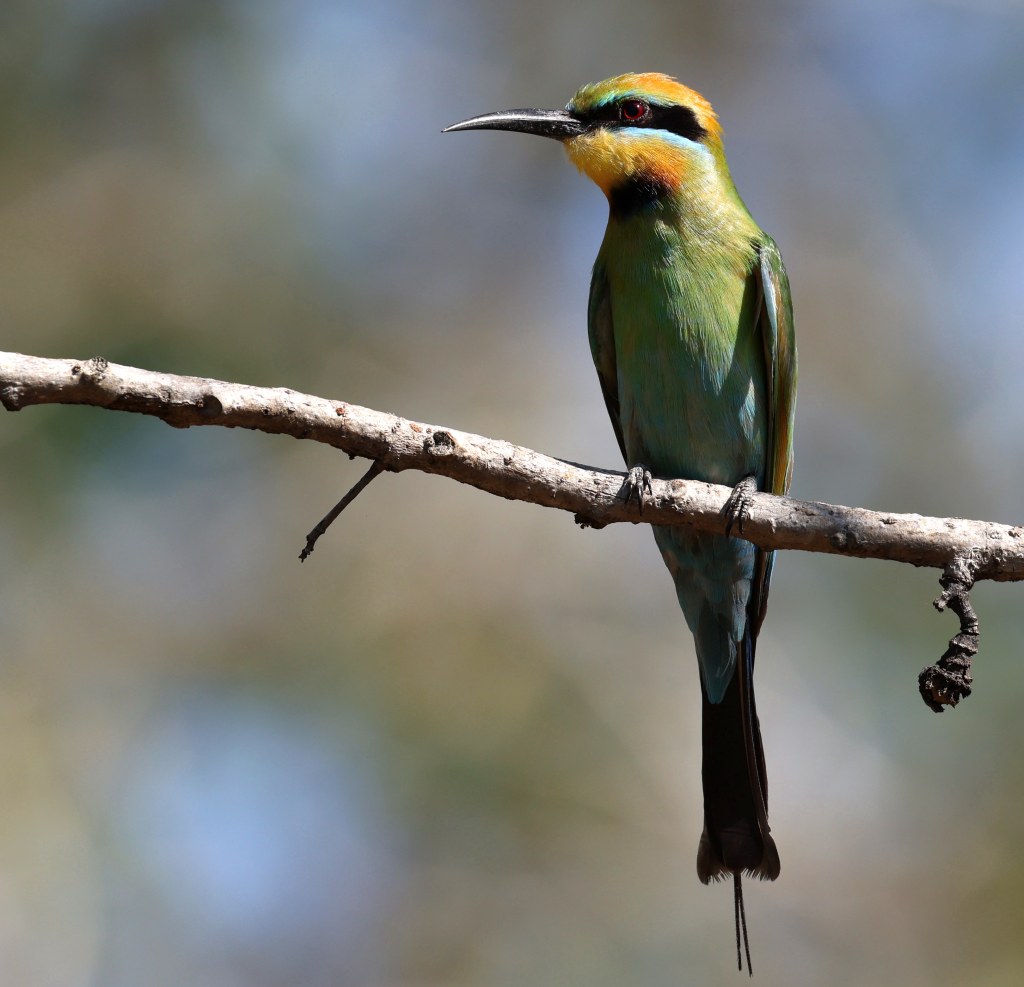
An Olive-Backed Oriole, Mistletoebird and a handful of Rainbow Bee-Eaters were also found not far from the car park.
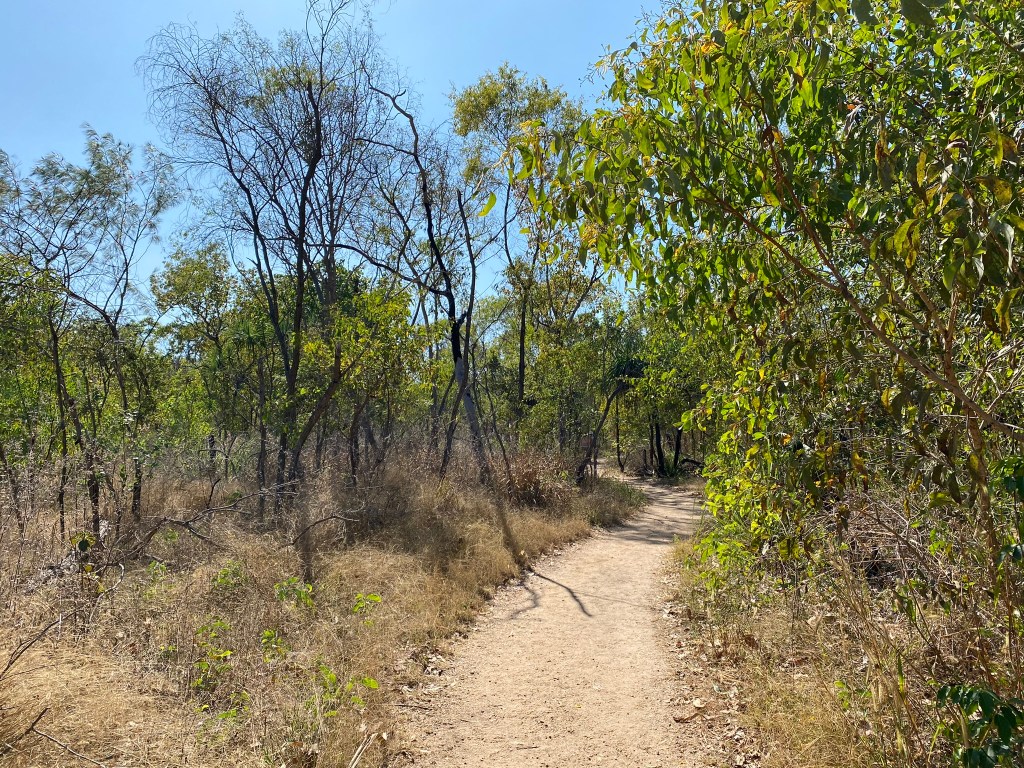
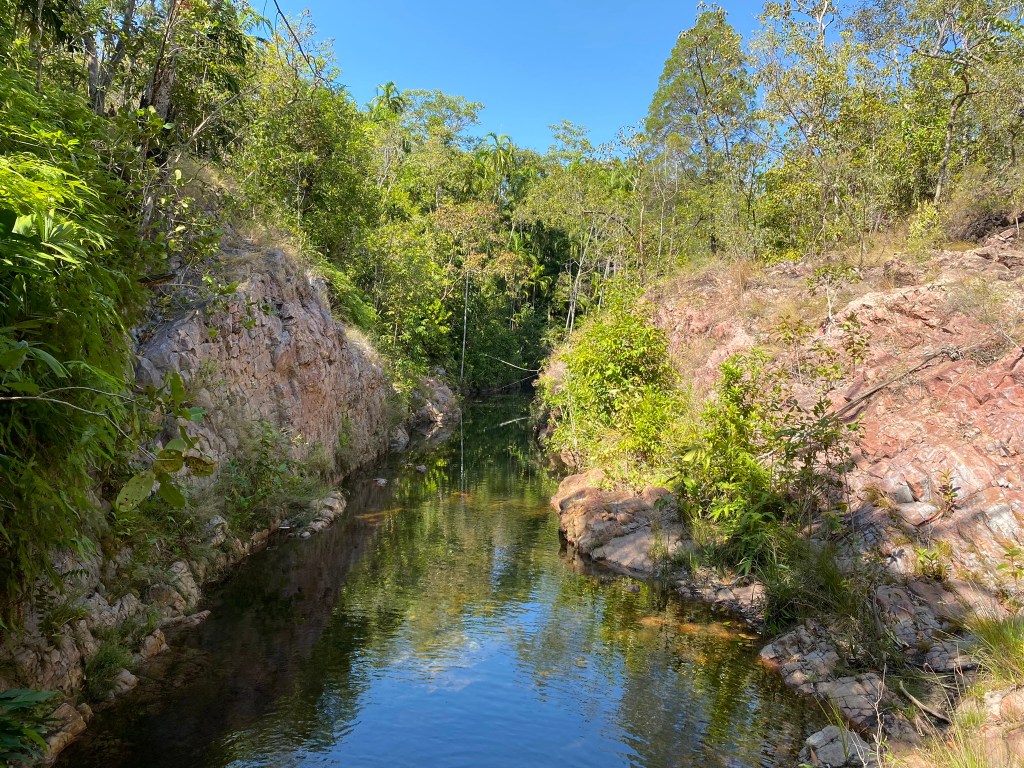
Once on the trail it became apparent that the path follows the creek line, with some beautiful lush vegetation. We could hear a few birds but it was fairly difficult to see any well. The general vibe was nevertheless very pleasant.


Near the end of the walk there is plenty of exposed rock to explore and a small but deep waterhole to cool off in, and you can venture further up the creek as well. The photos below don’t show the few dozen people that were also enjoying the area; you’re unlikely to have the place to yourself 🙂
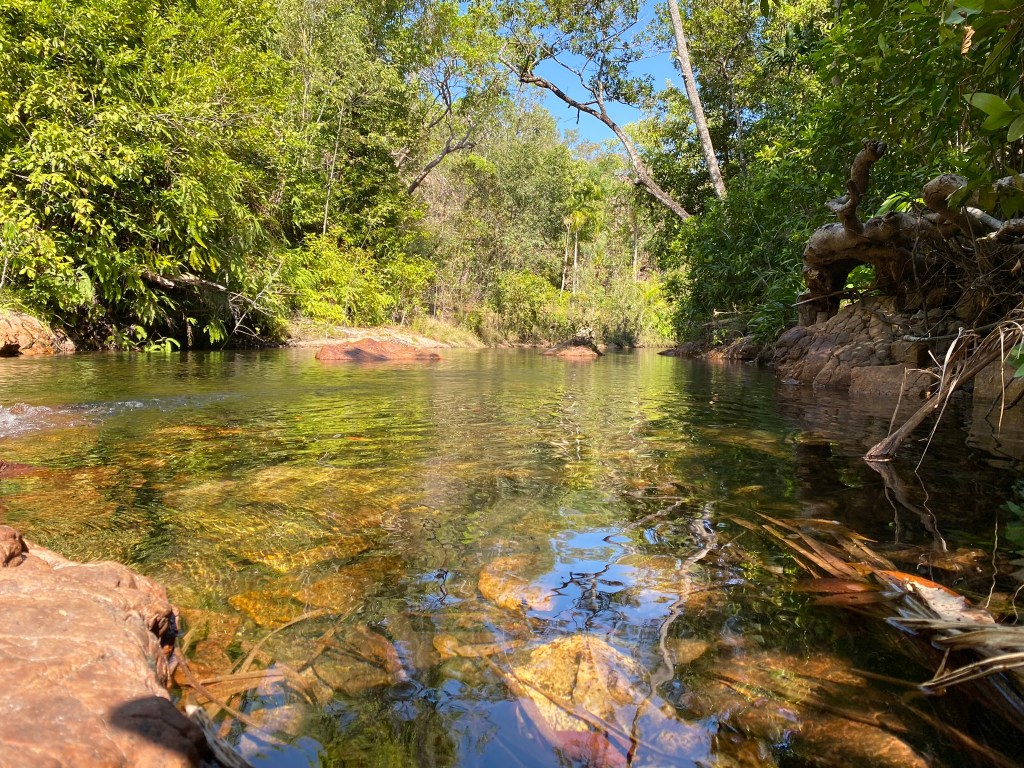
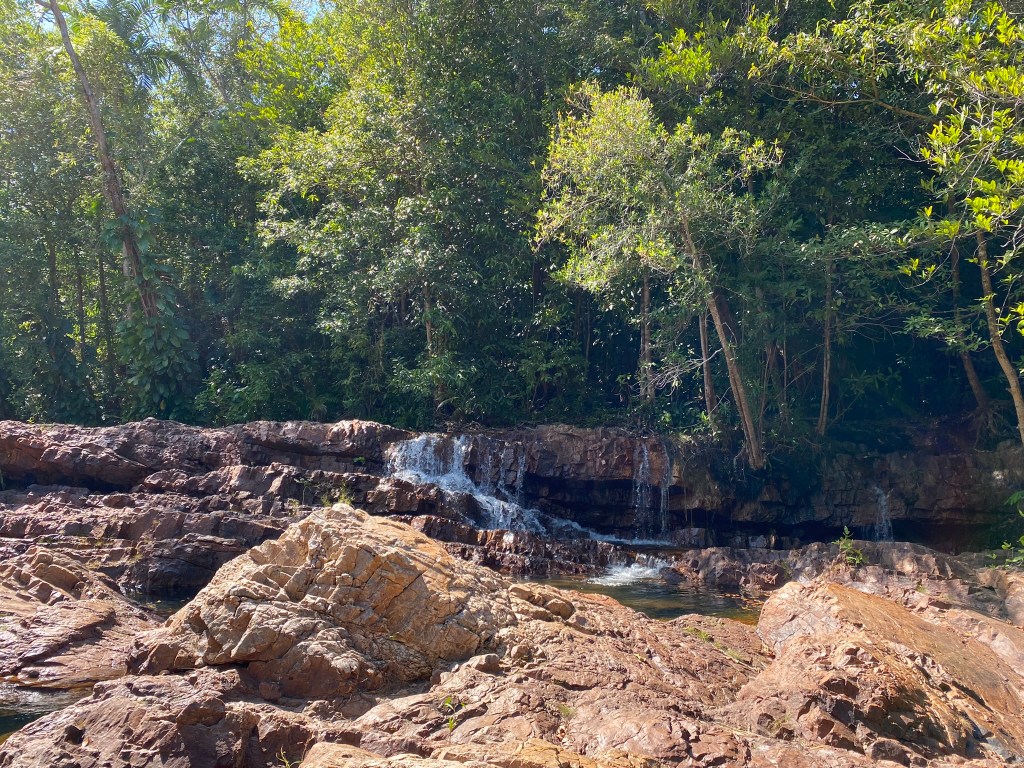
We counted a respectable 16 species but photographically only the Red-Winged Parrots and Bee-Eaters delivered the goods; as was starting to become clear, a lot of spots in Litchfield National Park were scenery-first, birds-second. Which is OK when the scenery is this charming!
Tolmer Falls
Tolmer Falls is an attractive waterfall of around 100m in height. There are two viewing platforms, one of which is just 400m from the car park that gives great views.


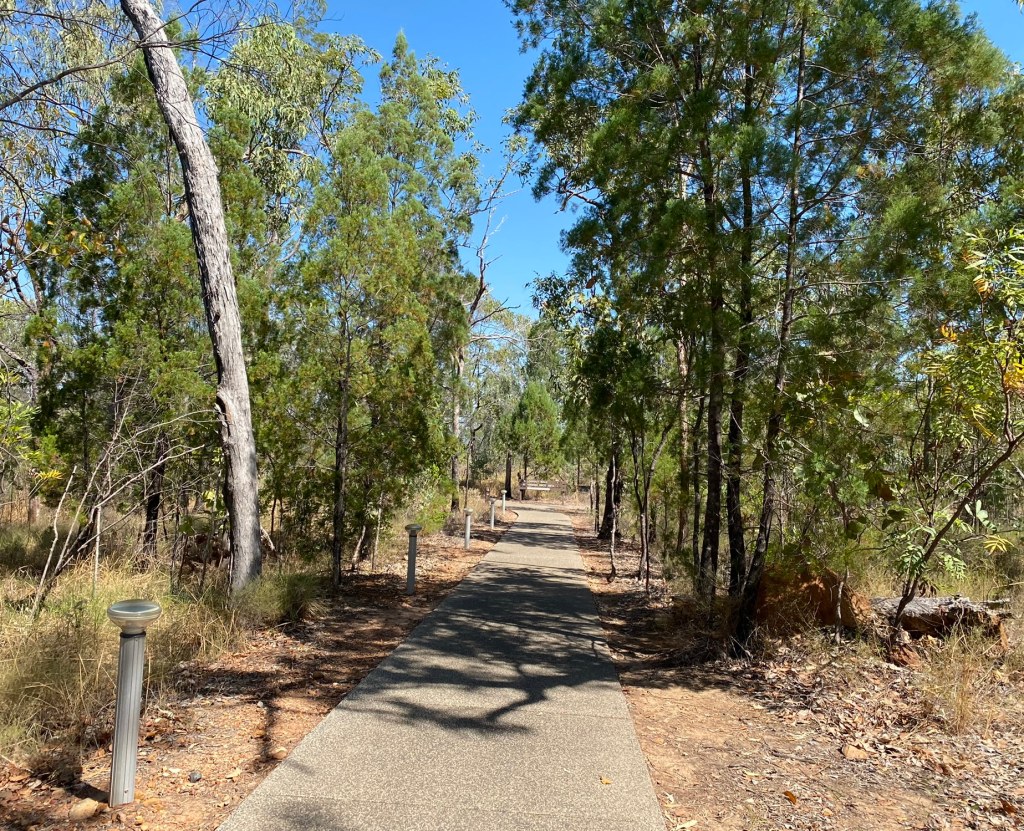
There are two notable rare species of bats which roost in the dark caves near the waterfall – orange horseshoe bats and ghost bats. The presence of these bats means that there is no access to the base of the falls or indeed anywhere too close to them.
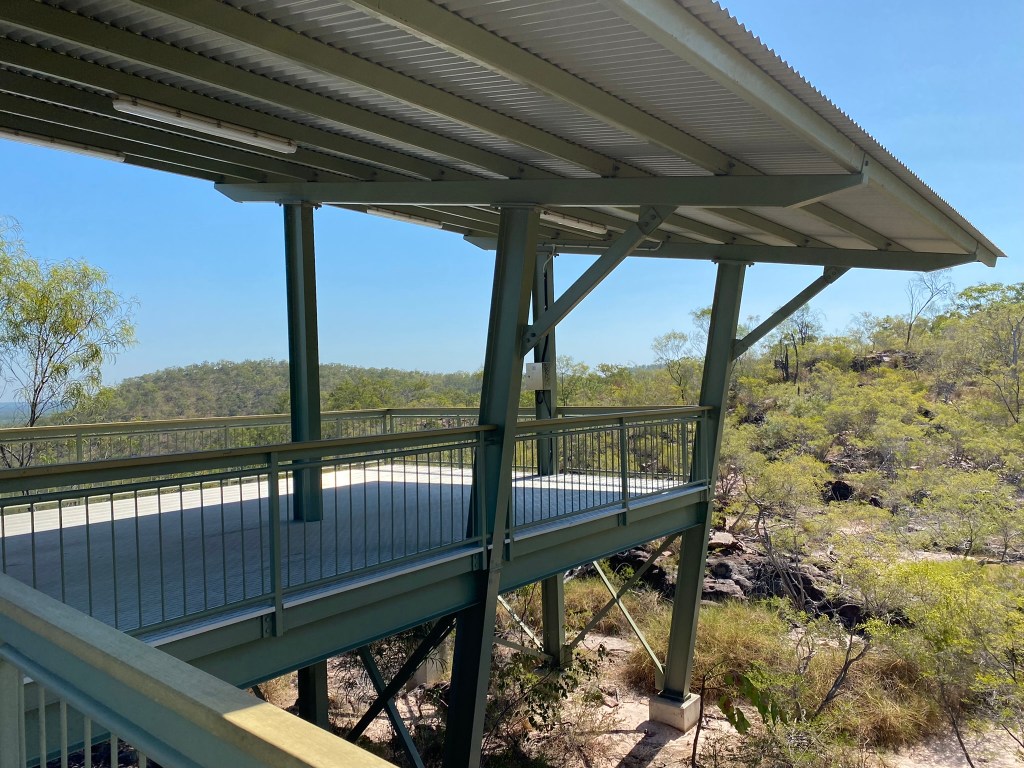


The Tolmer Falls site on eBird has only 20 checklists for 38 species in total, probably an indication that it is more of a tourist stop than a must-do birding location. However, it was very exciting for our birding group because we found a trio of Northern Rosellas quite near the track here, a species we had dipped out on our previous Top End Trip and thus far on this trip. Our second lifer bird of the day!
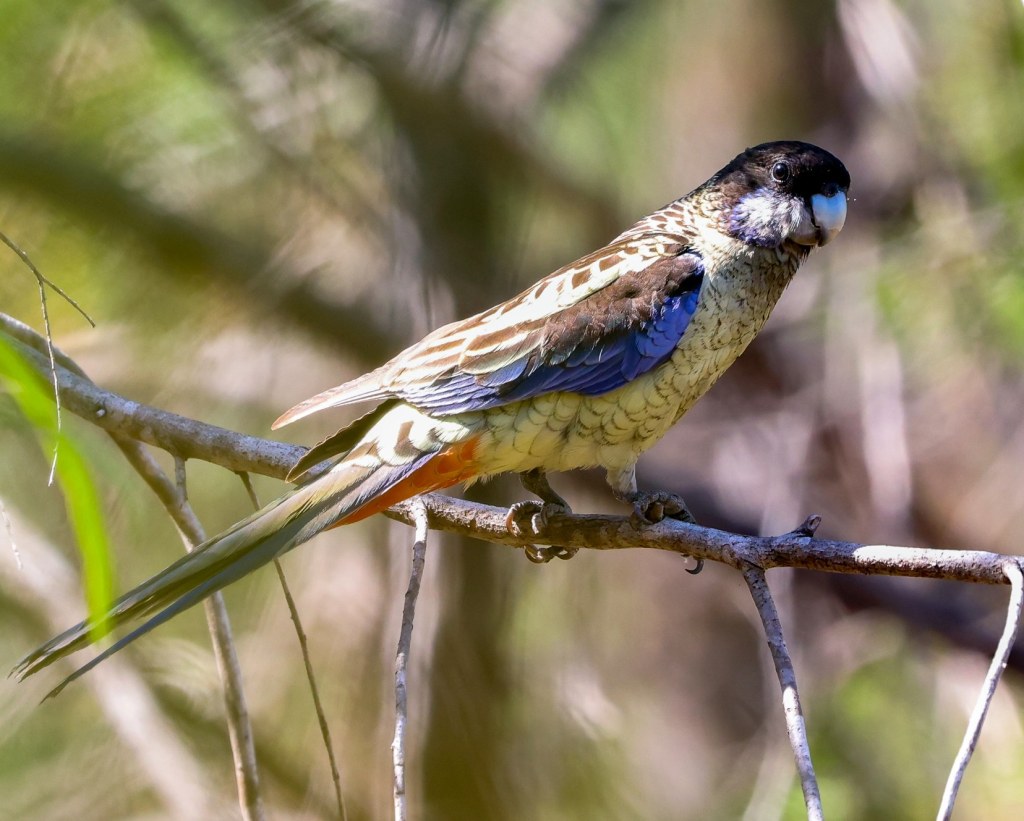
We had heard the distinctive tinkling rosella call before seeing the birds, and it was gratifying to get reasonable views through the foliage of these gentle-looking creatures. I am not used to rosellas being too difficult to find in the eastern or southern states, but I’ve still only seen this Northern species twice in total in two major Top End trips.
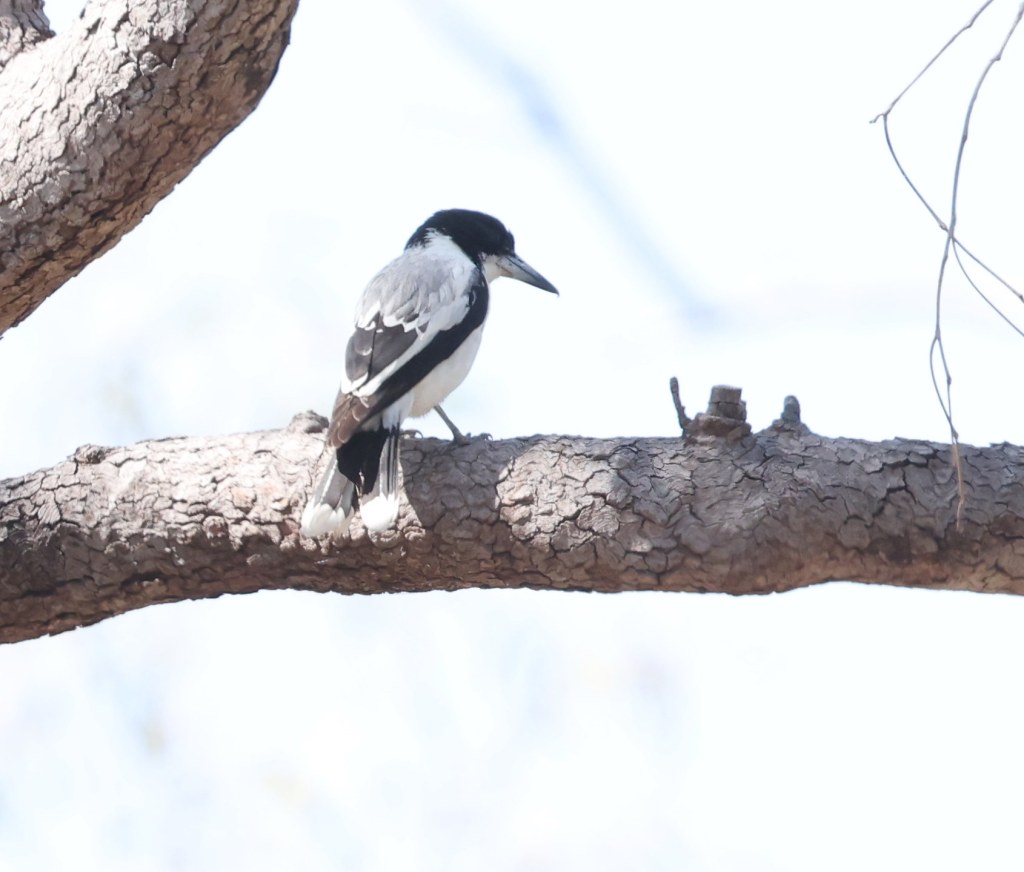
A Great Bowerbird, a couple of Rufous Whistlers and a Silver-Backed Butcherbird were among the 9 species seen in this short visit.
Florence Falls
Florence Falls is another variation on a familiar Litchfield Theme: a loop walk to a waterfall/waterhole. The shortest path to the water – which includes a viewing platform on the way – travels down 160 steps. The other part of the loop (if you don’t return via the same steps) is a 1km walk with some monsoon forest along an uneven cobble path.

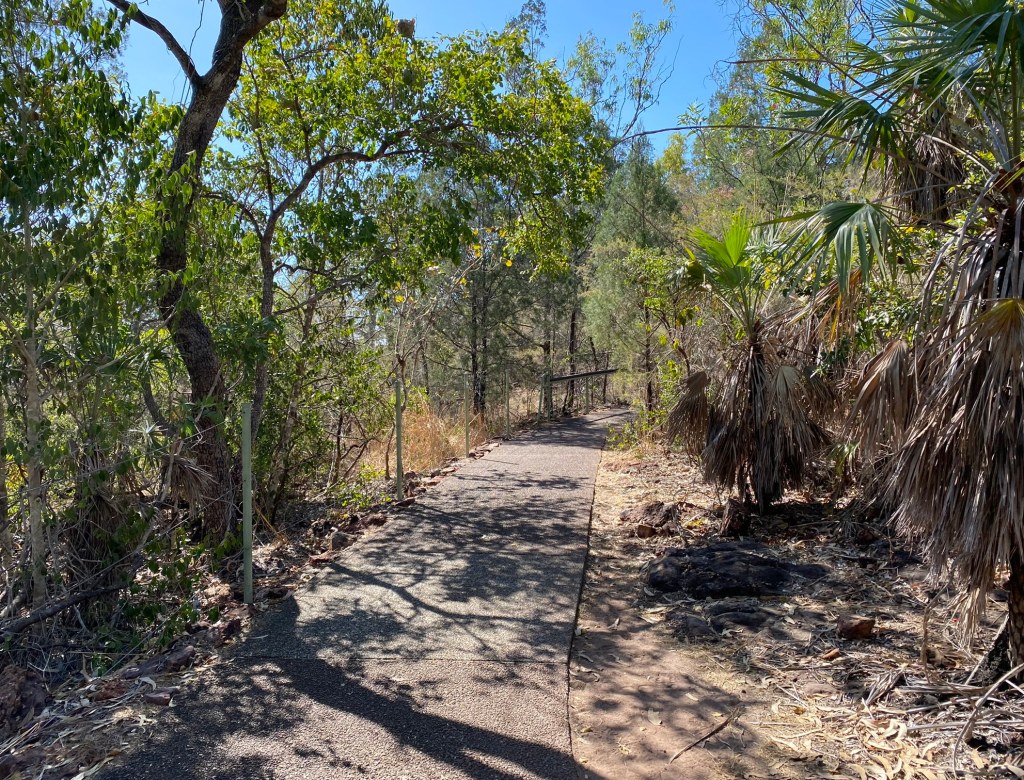
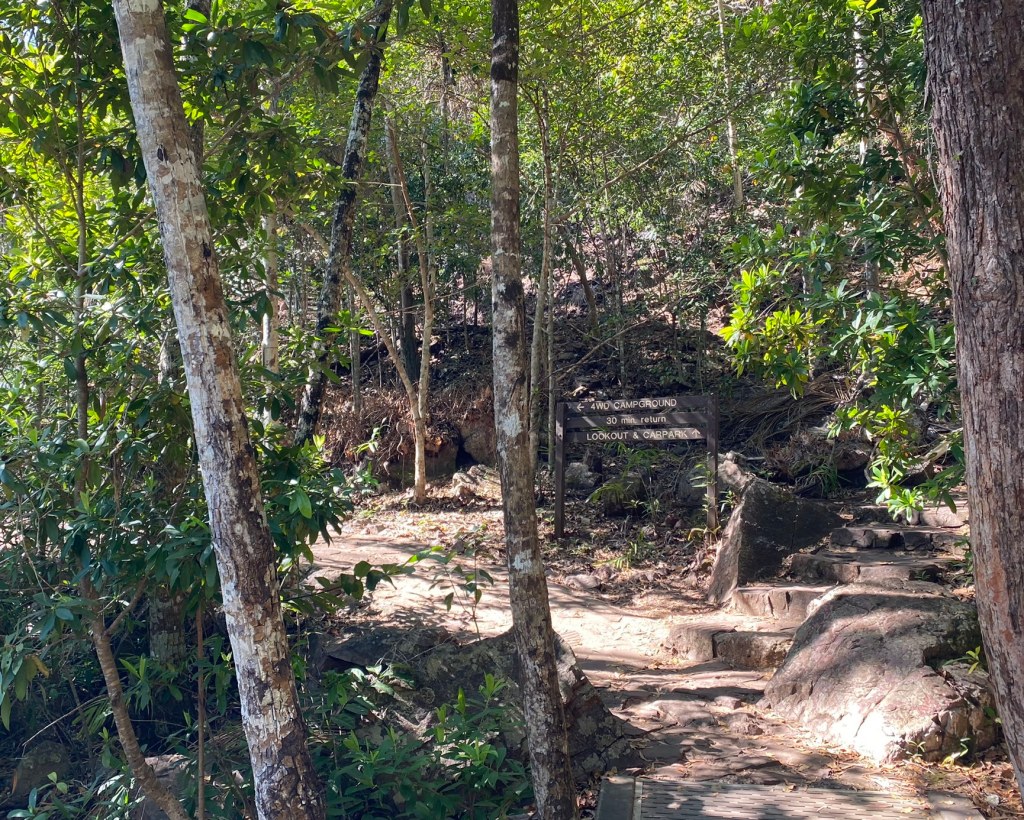
A pair of Great Bowerbirds were scavenging in the car park, while along the early part of the trail we spotted Varied Triller, Rufous Whistler, and yet another Mistletoebird.


It was 3pm by the time we had arrived here and the crowds were well and truly heaving. Plenty of people draped in towels were coming back up the path as we were going down, and the waterhole did look super-inviting as we approached.


You can access the water via a little steel platform and steps, and the waterhole is quite deep (and incredibly refreshing). You can also swim right up to the falls and let the water crash down on your head for as long as you can stand it (which won’t be very long!)

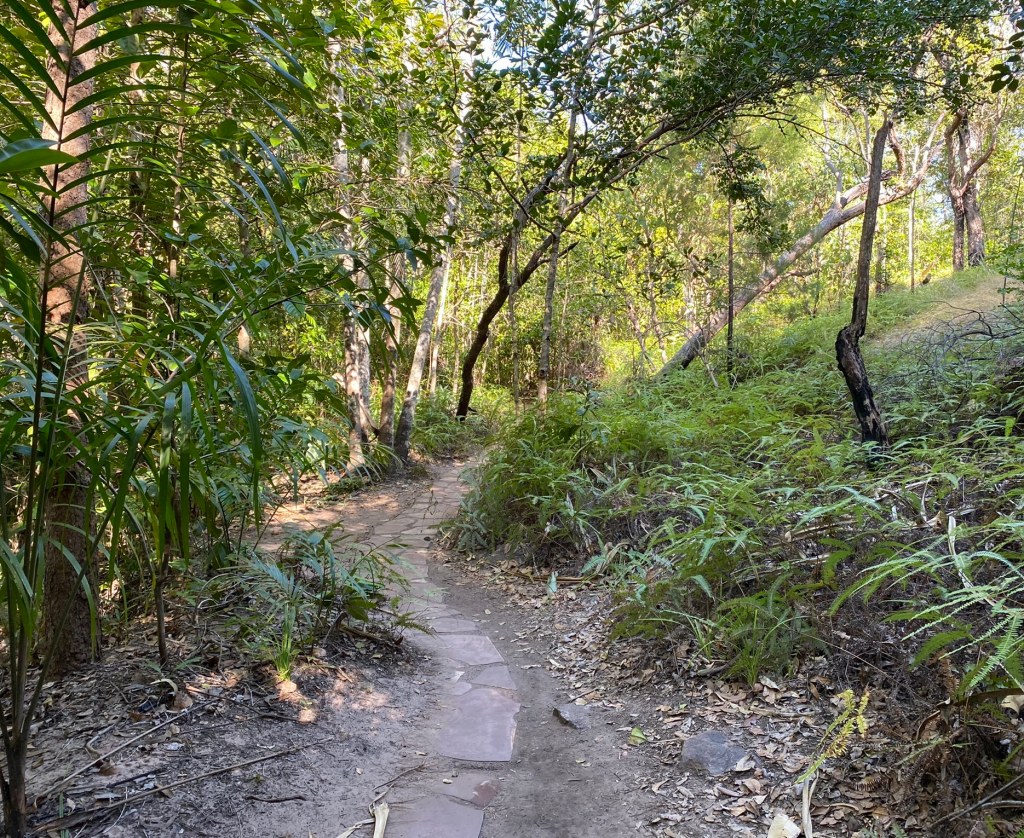
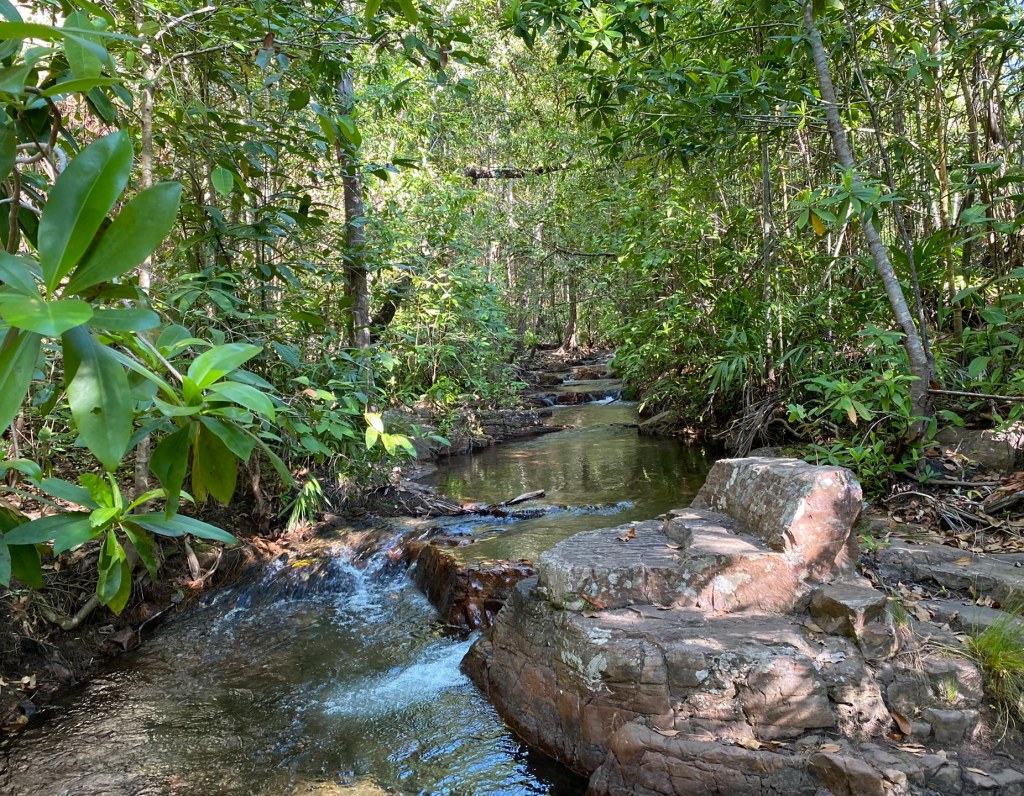
Needless to say the number of people and the activity and noise generated (including some splashy dive-bombing) kept birds well away from this area, so after our swim we walked the longer and less steep Shady Creek Walk on the way back to see whatwe could find.
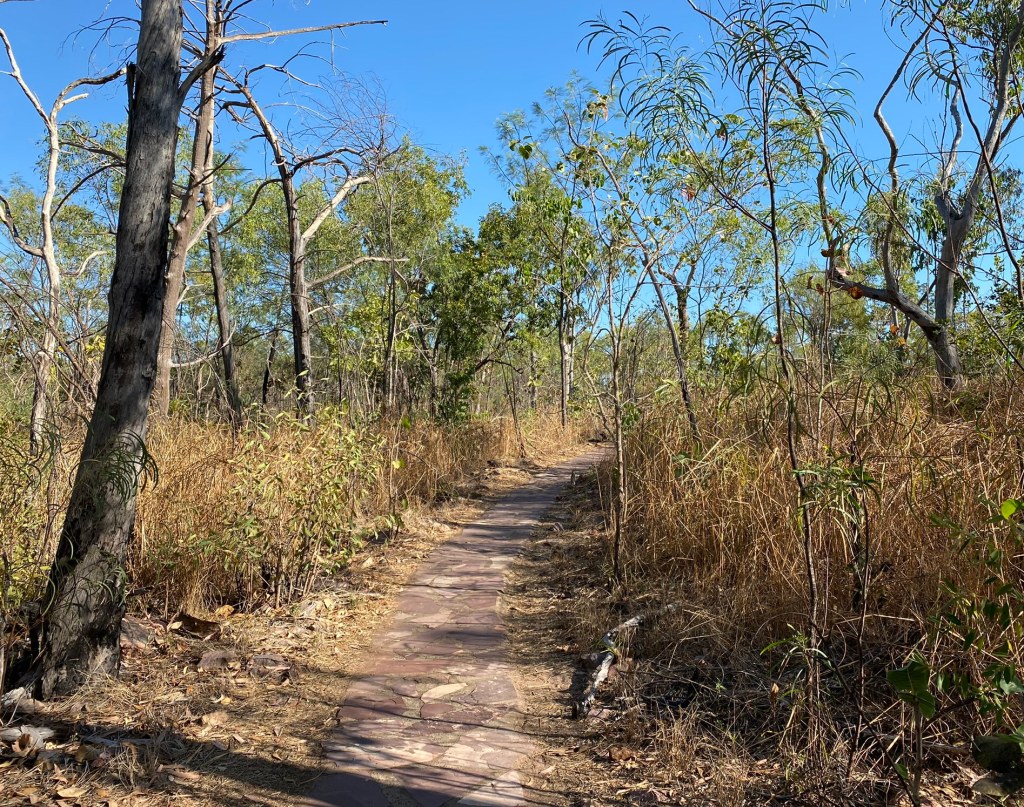
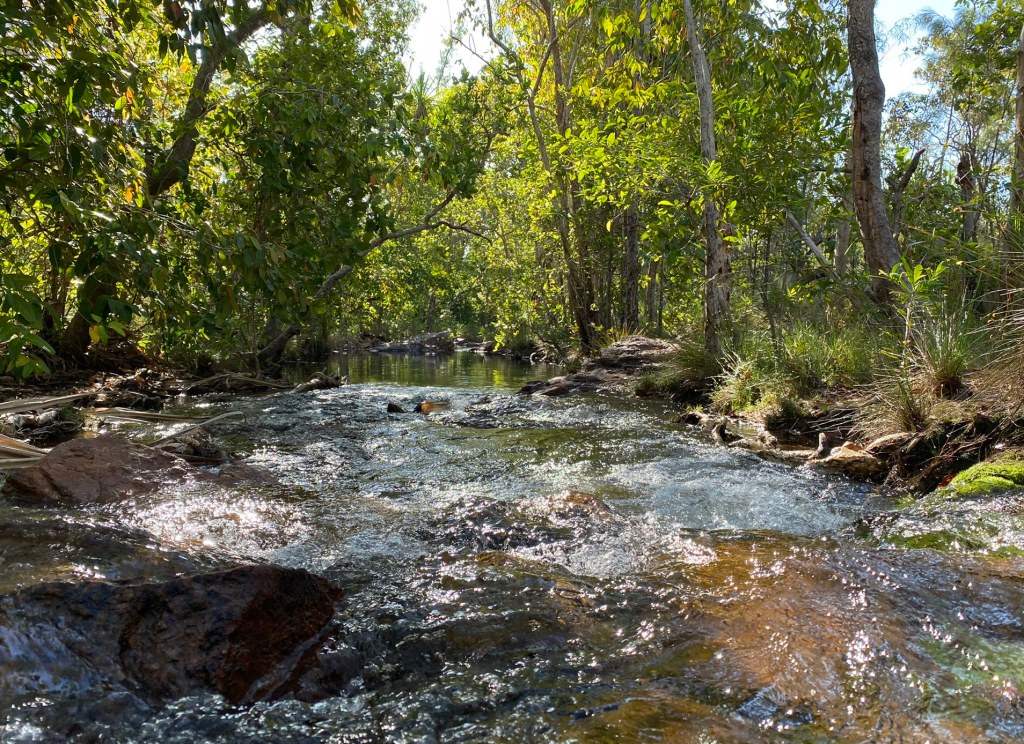
We saw a few Peaceful Doves, some honeyeaters, and a White-Bellied Cuckooshrike in the 13 species we checklisted in the 90 minutes we spent at Florence Falls.

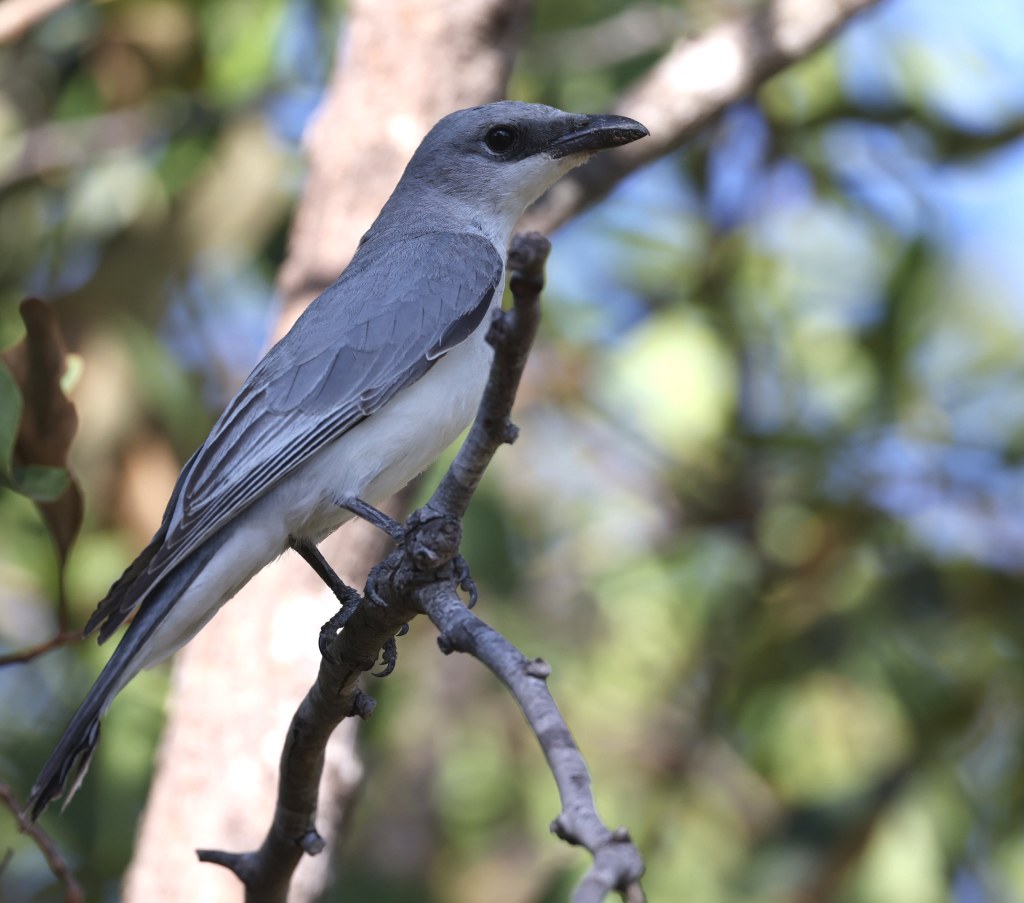
A special treat as we left Litchfield National Park after a long and satisfying day of scenic tourism, hiking and birding came when we happened upon a pair of Red-Tailed Black-Cockatoos by the side of the road. Tis always a pleasure to observe these big birds, whether they’re seen flying and squawking, or just chilling out peacefully in a tree.

Lake Bennett
I must make special mention here of our of accommodation at Lake Bennett, exotically named “De Lago Resort”. This resort is not far from Litchfield National Park (it’s about 20 minutes from Batchelor) so makes a good base if you’re not staying near Batchelor itself. De Lago provided excellent dinners and divine iced mojitos, very welcome at the end of those typically hot days in the Top End!
We rented a basic motel-style cabin (note there are also plenty of camping sites) and had the opportunity to do some birding around the resort and lake. We were quite impressed by the birdlife here, including witnessing (on both of the two nights we stayed there) a few dozen White-Breasted Woodswallows forming snuggle-lines in the high branches as they gathered together to roost for the evening.
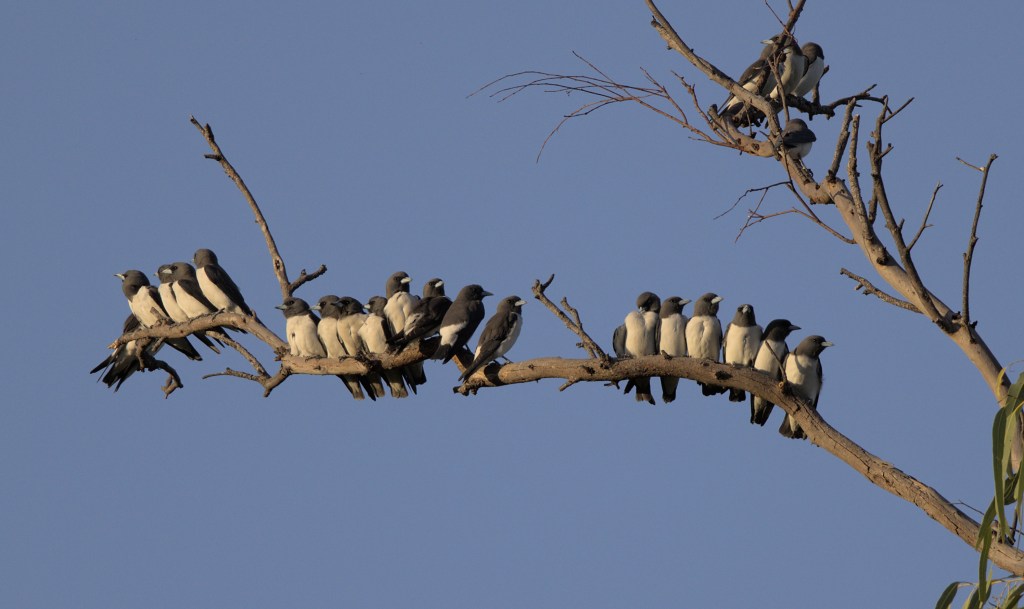
Rufous-Throated Honeyeater, Crimson Finch, Chestnut-Breasted Mannikin, Spangled Drongos, Golden-Headed Cisticolas, trillers and bowerbirds were all present as well as a few far-off water birds on the lake.
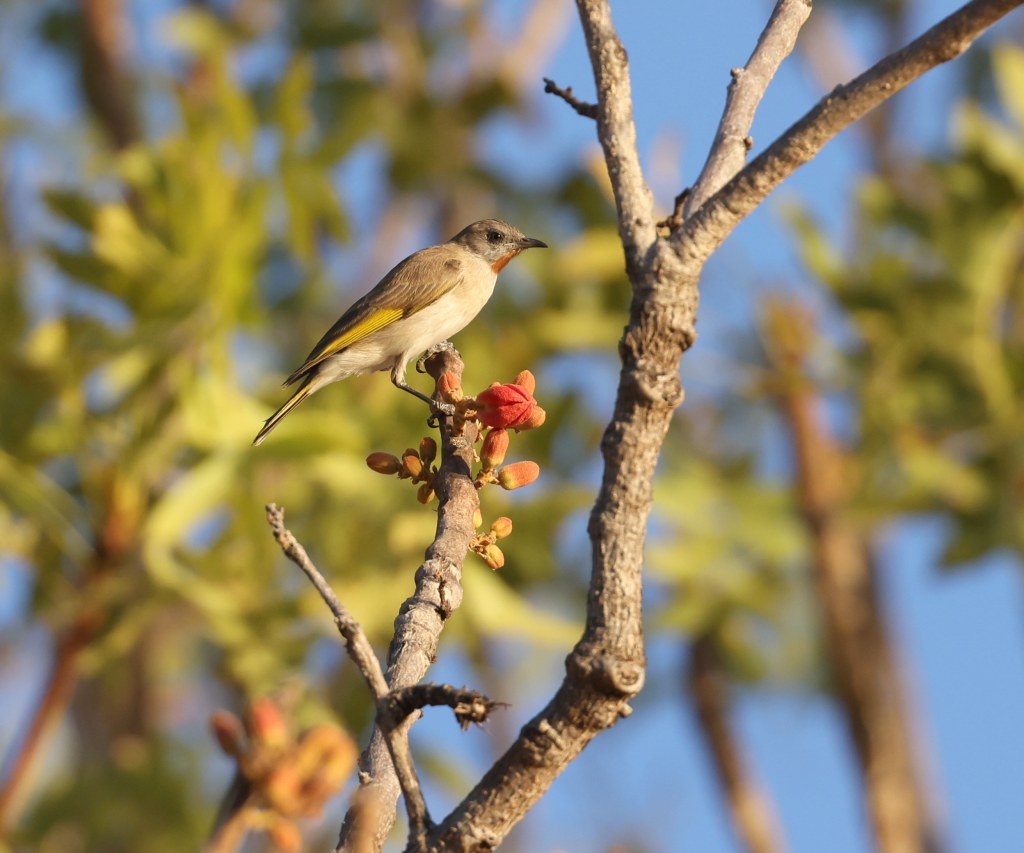
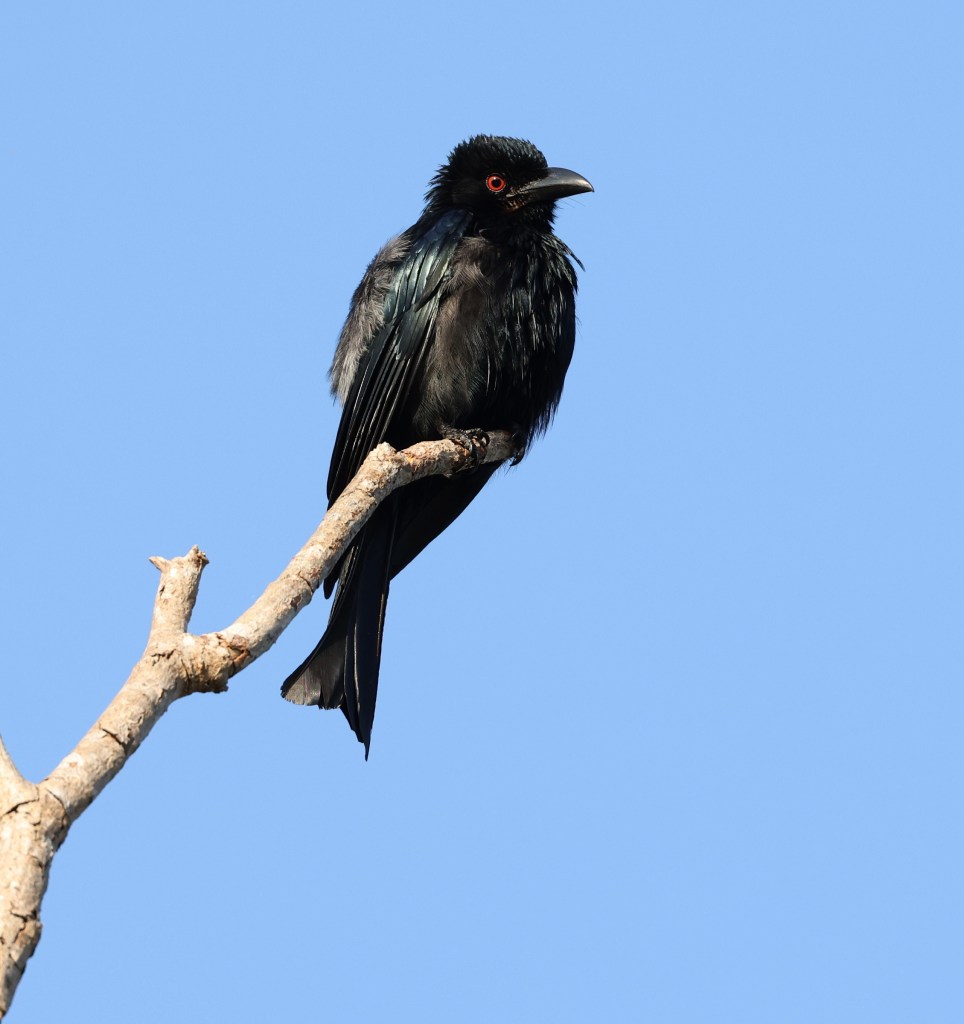
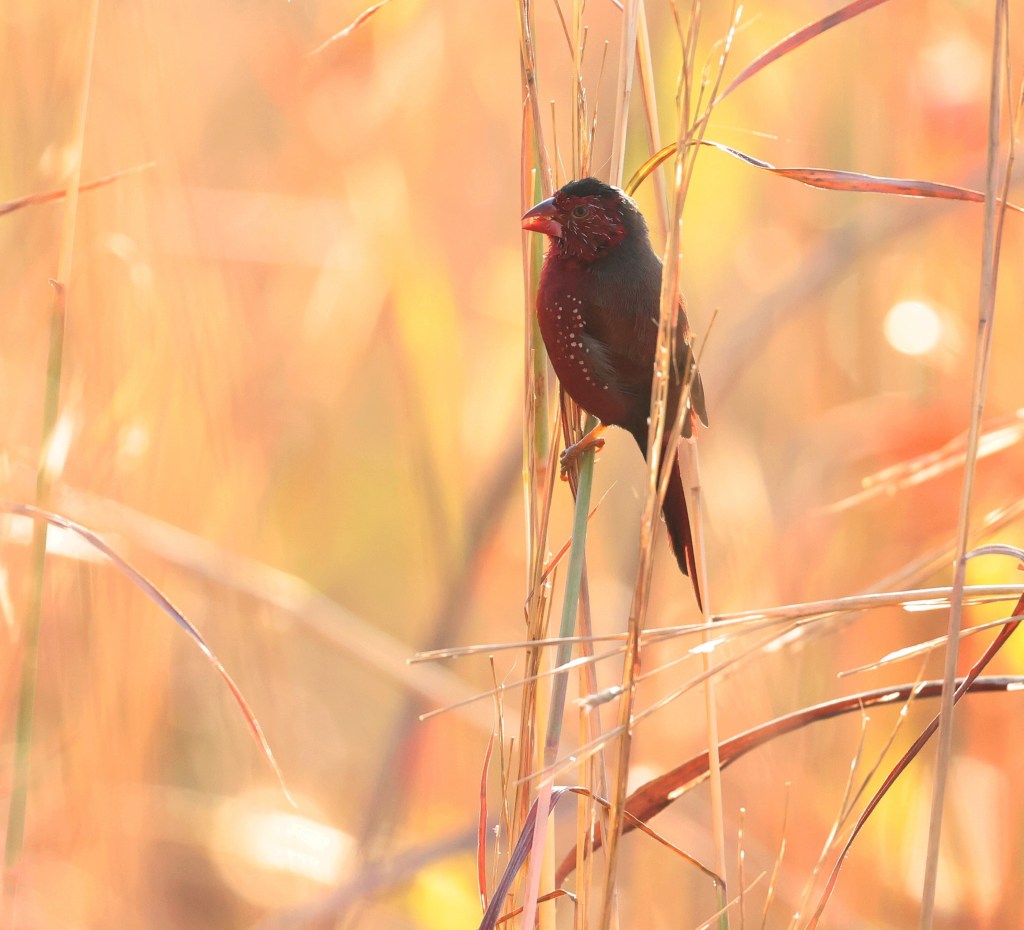
There is a very large tree close to the resort complex where a Mistletoebird kept us utterly entranced for several minutes as it hopped around the branches, sometimes very close, while a Whistling Kite pair had their nest in a tall lakeside tree close by as well. Maybe we just got lucky but we had almost as good a time birding here as we did in the National Park.


Summary
It is true that there are quite low checklist numbers for the Litchfield National Park sites on eBird, and there are no big-ticket wow-factor experiences here like there is in Yellow Water or Ubirr in neighbouring Kakadu National Park. That said, Litchfield National Park has its own charms: it’s compact and can be explored reasonably well in a day trip, and there are some decent birds to find and lovely short walks to enjoy. It can get quite crowded – people sure do love a refreshing dip at the Top End! – but that is testament to its scenic beauty and well-earned reputation as a top spot to enjoy nature.
eBird:
Hotspots: Wangi Falls (111 species), Florence Falls (105 species), Tolmer Falls Lookout (38 species), Cascades (72 species)
Checklists from this Jul 30 2022 visit: Wangi Falls (23 species), Cascades (16 species), Tolmer Falls Lookout (9 species), Florence Falls (13 species)
BirdSpots videos from this site: Red-Winged Parrot, Rainbow Bee-Eater
Pluses and minuses:
+ Combination of great scenery and some pretty good birding
+ Plenty of short hikes, waterholes and waterfalls
+ Compact – can be explored in a day
– Not huge numbers of birds
– Can get quite crowded especially at the more popular waterholes
– No big wow-factor compared to nearby Kakadu
AUTHOR: ANDY GEE
BIRDERS: ANDY GEE, LUKE S, K-A
 Bird Spots