
Summary: Super pleasant forest for walking with some good bush bird encounters possible
Dates of visits: Aug 23 2021, Nov 18 2022, Dec 27 2024
Long-time readers of this blog will know that we prioritise locations with satisfying bird encounters in beautiful natural settings. Sure, sites like Sandy Camp Rd Wetlands may yield upwards of an astonishing 60+ bird species in a morning, but it’s squeezed in between a noisy truck warehouse, a college and a trainline. It can sometimes be hard to lose yourself in nature there.
Enter Venman Bushland NP, a 415 hectare nature site in Mount Cotton, about 25km south-east of the Brisbane CBD. It’s part of the Koala Bushland Coordinated Conservation Area (KBCCA) which extends through to Daisy Hill and other adjoining conservation areas, a very large set of connected bushland indeed.
To get to this rather secluded patch of National Park, you’ll need to get to West Mount Cotton Road, approachable from the north via Mount Cotton Road, or from the south via the suburb of Cornubia. A short 250m unsealed access road then leads to the parking area, where there is a set of three or four parking bays each of which can hold half a dozen or so vehicles. Most times, I’d expect you’d find very few other vehicles here, because it’s not a very frequented place, at least early in the morning.
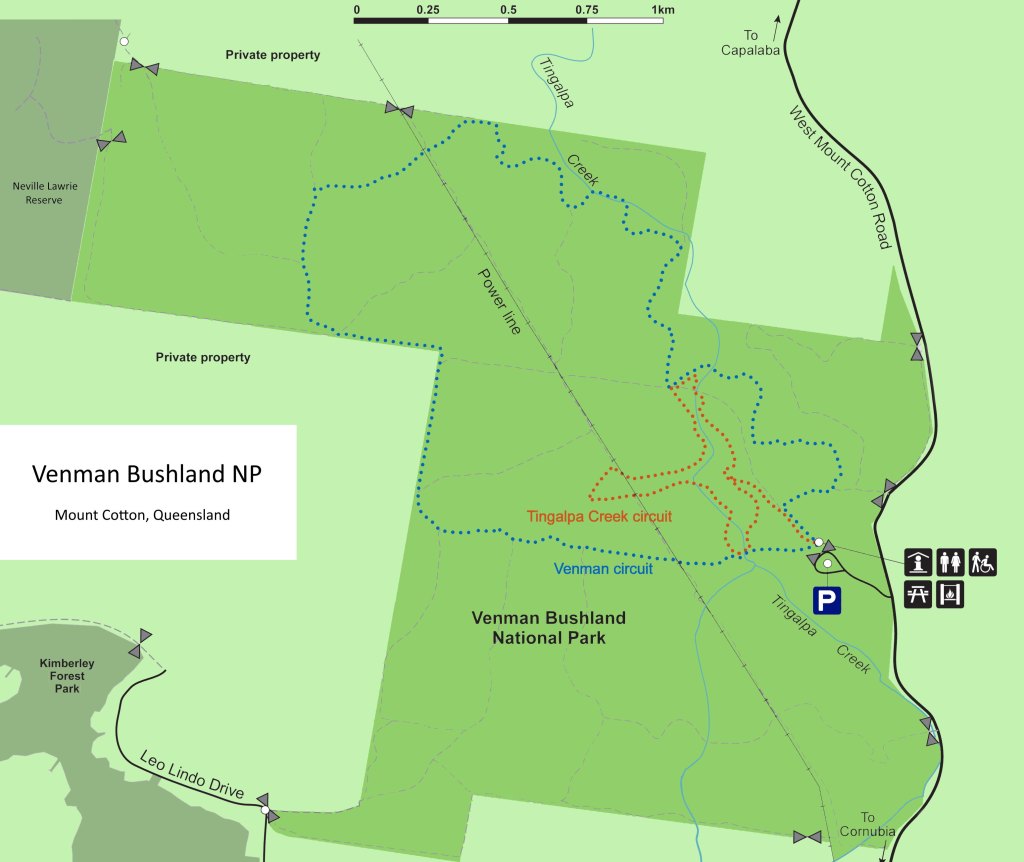
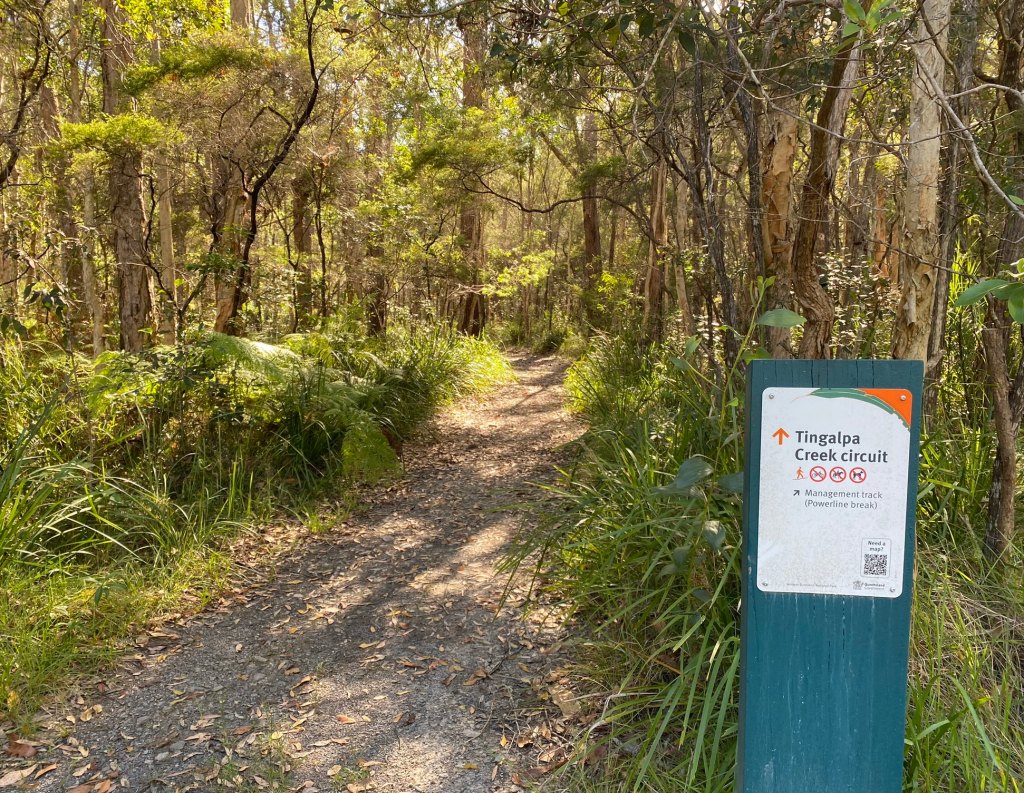
There are two main loop tracks within Venman Bushland NP itself: the 2.5km Tingalpa Creek Circuit, and the 6km Venman Circuit which encloses it. However, as you can see from the map, there are several more connecting trails as well. Most are fairly easy going wide trails with not much elevation change or trip hazards.
For this blog post, I’m going to recount the three visits I made over the course of the last few years, where I mainly stuck to the Tingalpa Creek Circuit. I found that the birding seemed to be better here near the creek line compared to the tracks further from it.
Aug 23 2021
The car park area is mostly ringed by dry eucalypt forest, and has some basic facilities: picnic tables, some barbeques, an information panel, a small grassed area, and a toilet tucked away a little down the track.


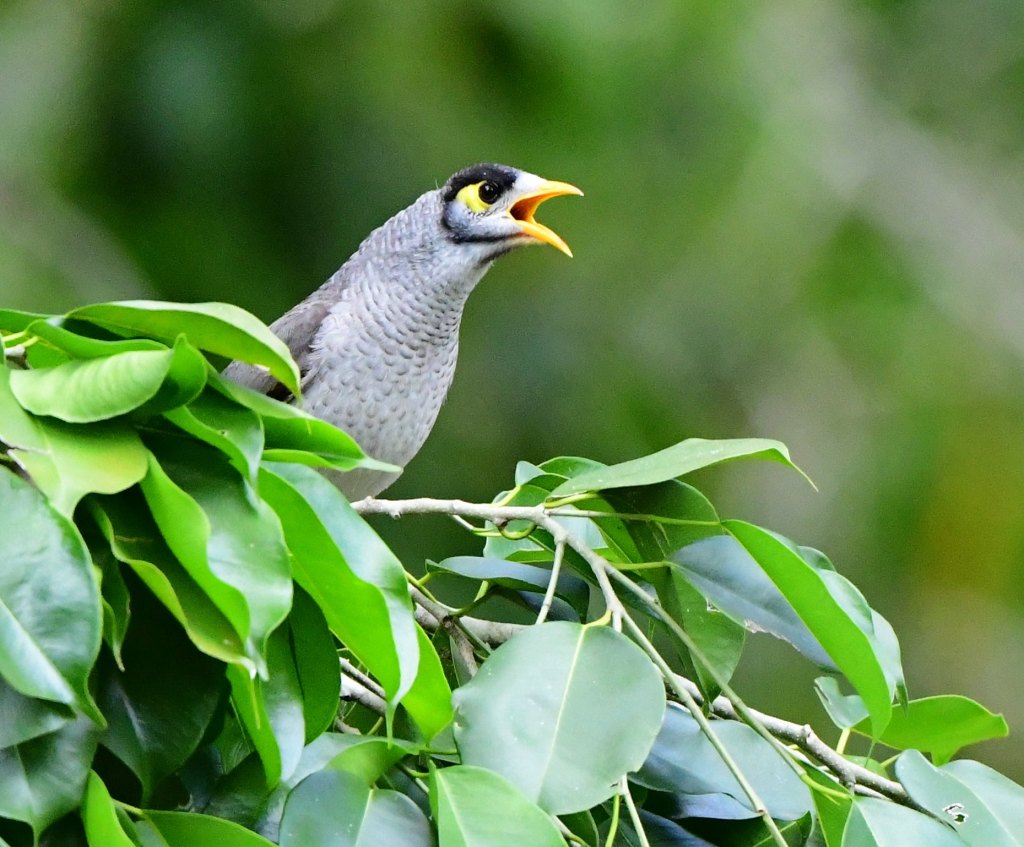
I found birds in this area were largely what I expected in this partially open, dry environment: Magpies and Noisy Miners, with the sounds of Kookaburras and Butcherbirds apparent too.

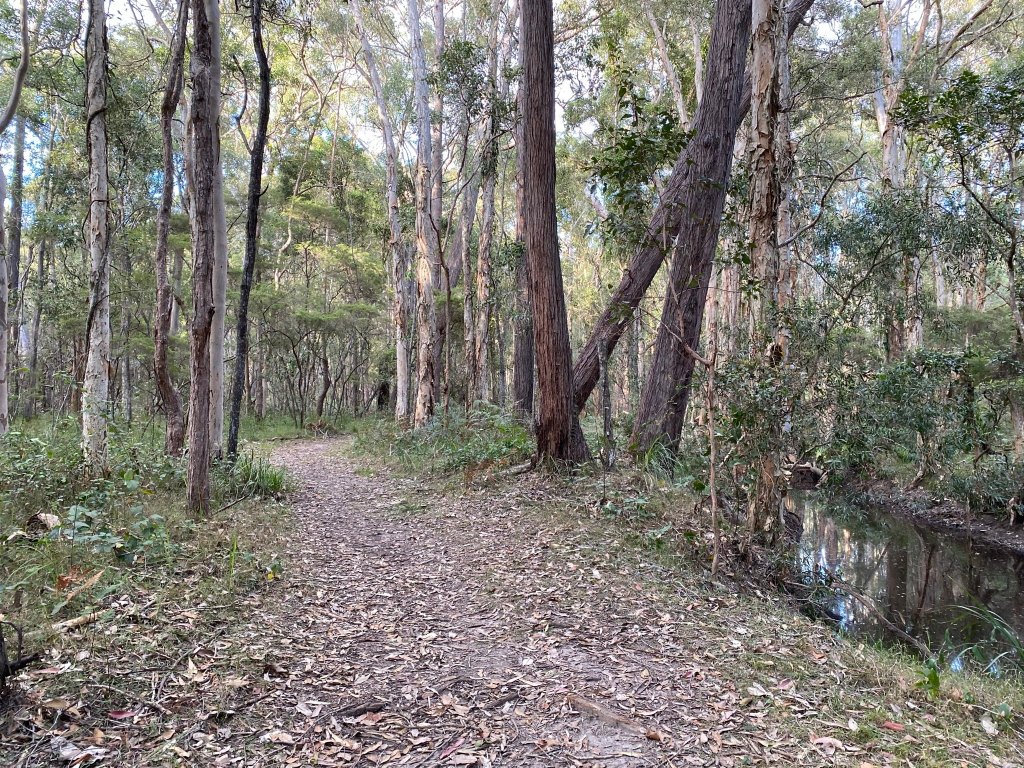
Keeping to the left as you leave the car park area takes you straight down to Tingalpa Creek, where the things are decidedly more damp: stringybarks and plenty of undergrowth signal that this is a denser bush habitat. The creek itself is not very wide (it eventually winds its way to the mighty Tingalpa Reservoir, some 9km to the north as the Torresian Crow flies).

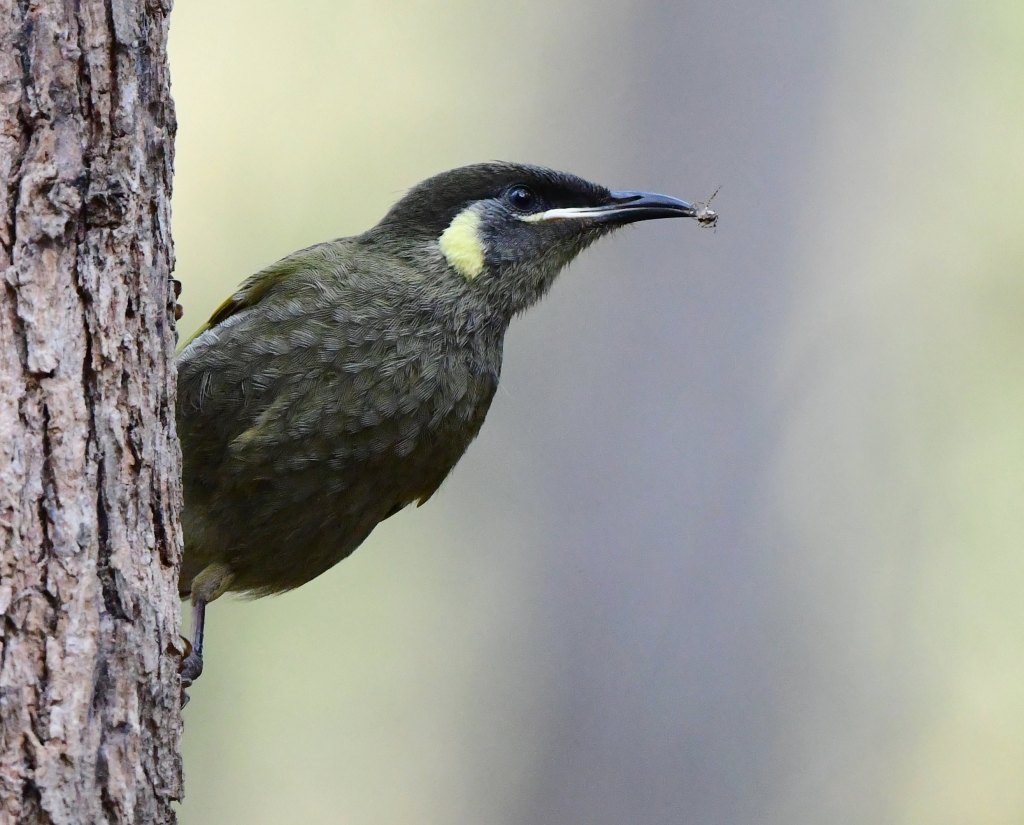
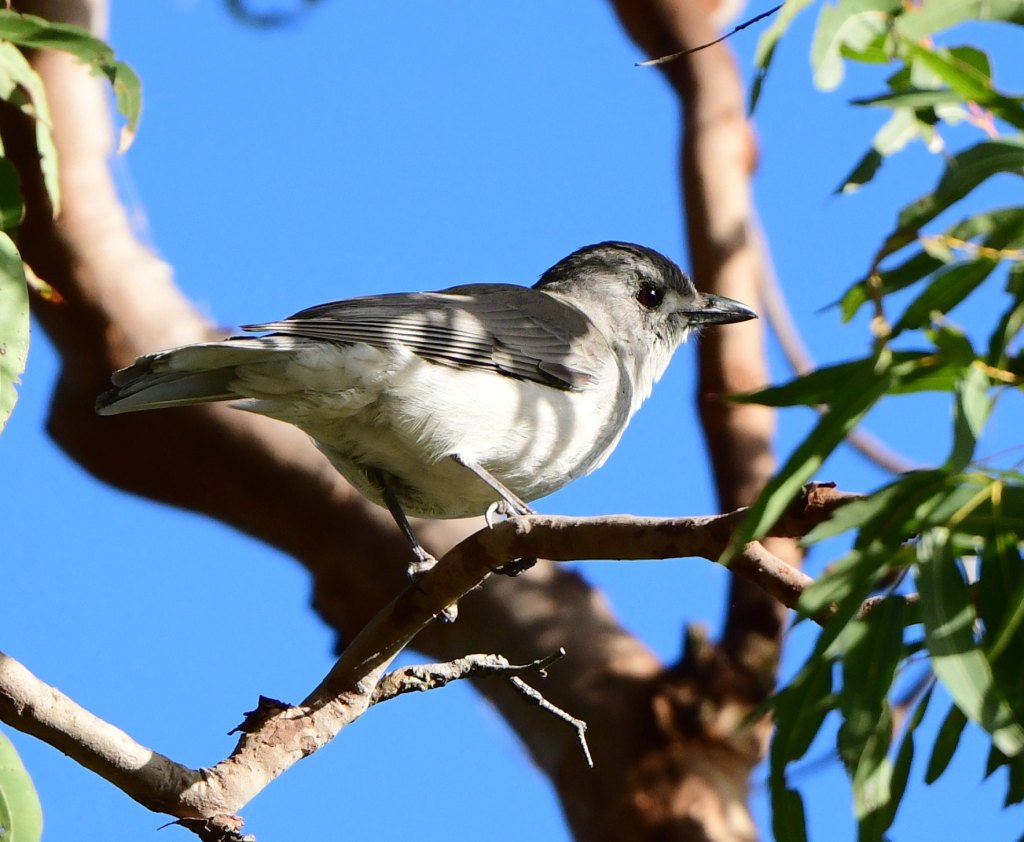
I heard the sounds of plenty of honeyeaters: White-Throated, Yellow-Faced, Scarlet and to a lesser extent, Lewin’s Honeyeaters. The upper canopy can get quite high here so if you expect to make an accurate count of all the birds (especially the honeyeaters and occasional lorikeets) you’d need to be looking up a lot, but I found enough birds lower down to keep me interested too, especially White-Throated Treecreepers and occasionally, Eastern Yellow Robins. Grey Shrikethrushes provided a lovely call but as is often the case, were hard to track down by eye.

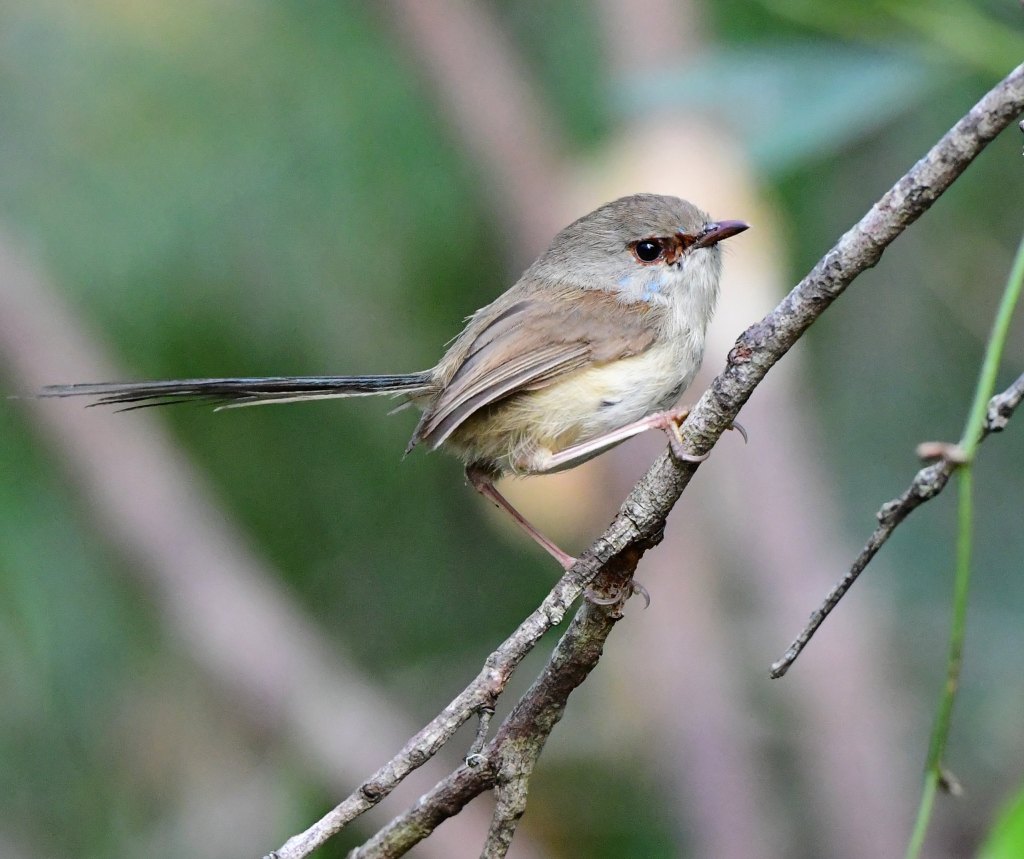
The most common fairywren species seen here is the Variegated Fairywren, and I was able to spot them on all three of my visits. Such little charmers they are, frolicking through the undergrowth with tails flicking rapidly.

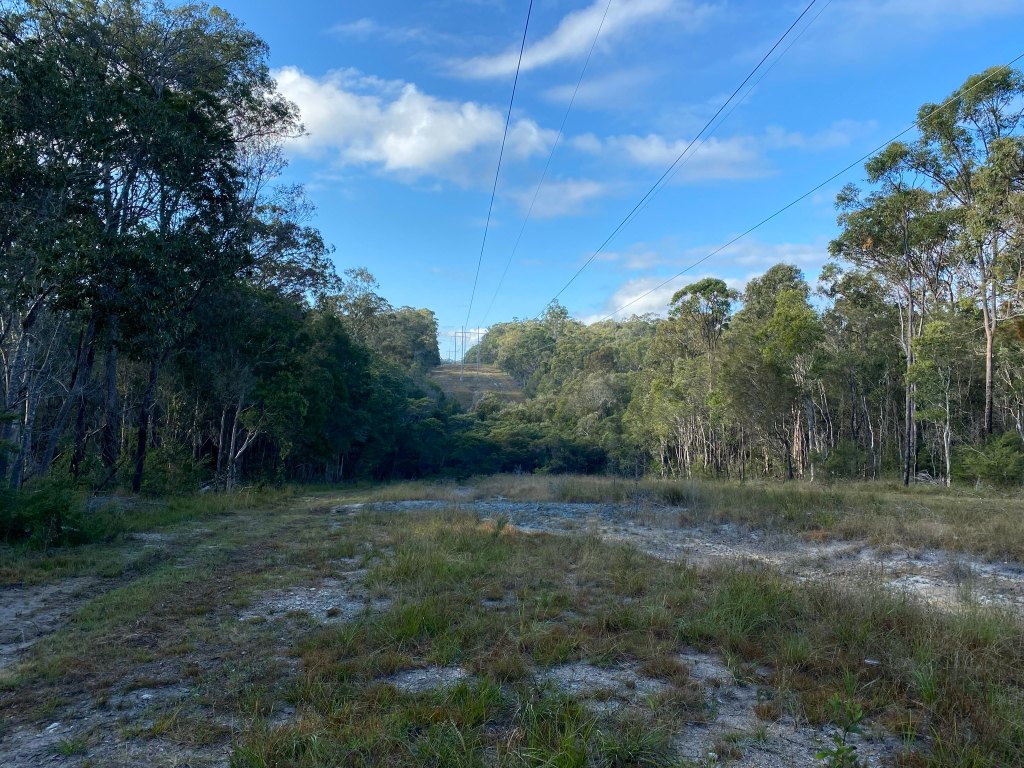
After crossing the creek – the path has stepping stones along it in case the water level is up, so unless it’s rained a lot recently, you’ll likely keep your feet dry – you can choose to follow the Tingalpa Creek Circuit to the right, or pursue the longer Venman Circuit. For the latter, the track heads upwards and soon you hit a cleared section of bush where a set of powerlines run through.


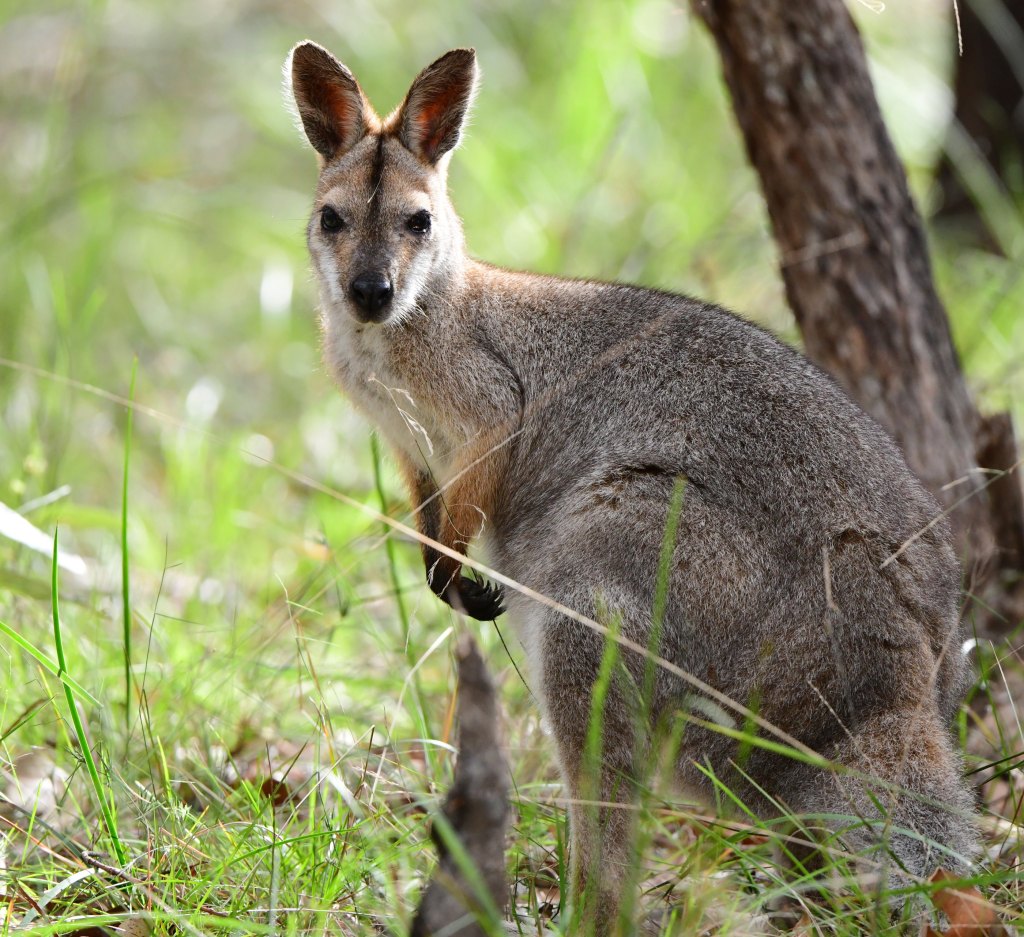
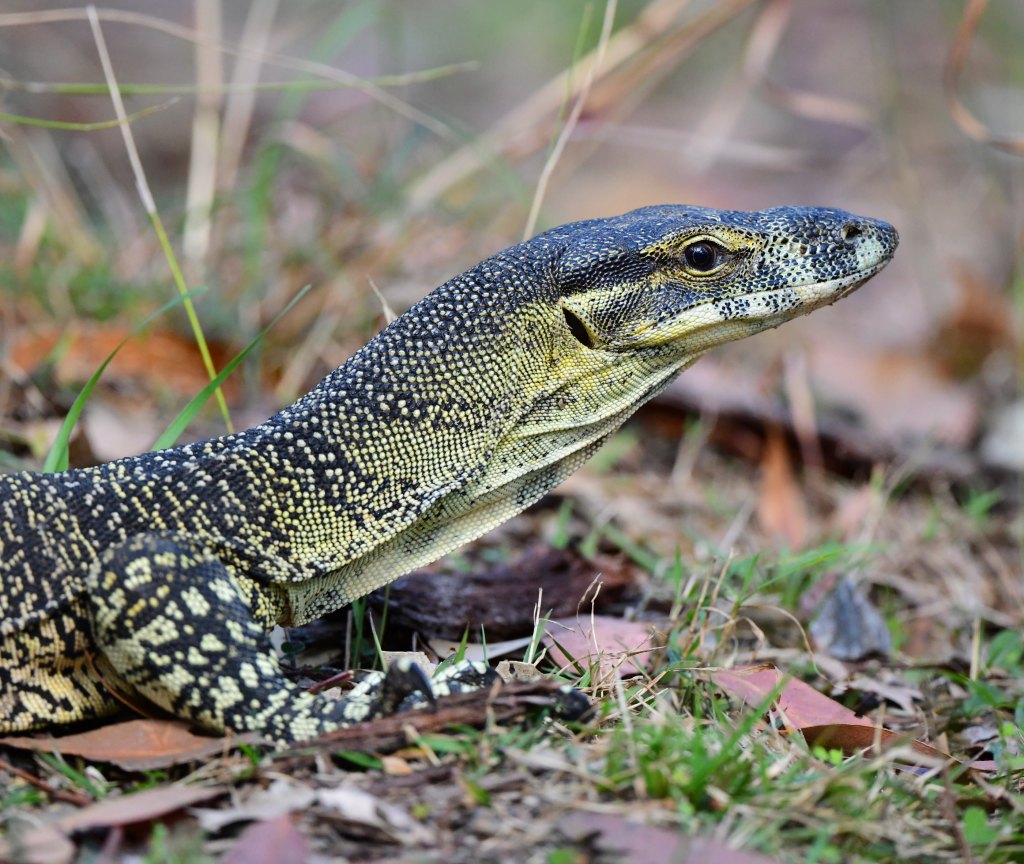
At various points you might find wallabies or monitors (what my family used to call goannas). Bar-Shouldered Doves are sometimes on the path before flushing up into the branches as you approach.
I had a strange encounter with a pair of male Leaden Flycatchers near the powerline section, where they seemed to be locked in a little aerial battle. It didn’t last long but was intriguing behaviour.
Being winter, there was a much better chance of seeing Spotted Pardalotes than in the summer, and I managed to see three in total on this visit. I also saw four Grey Fantails in all; according to eBird’s Illustrated Checklist for the site, they are very commonly seen here and are especially reliable in the winter months. (No surprise there, as Grey Fantails seem to be everywhere in the winter months in Brisbane).


I didn’t walk the full 6km Venman Circuit on this visit; the track looked kinda boring (predominantly dry eucalypt forest) so I eventually backtracked and finished the Tingalpa Creek Circuit, which also briefly crosses over the powerline section further along. As the name suggests, it generally sticks pretty close to the creek line, with its lush vegetation.
I had walked pretty slowly and counted 27 bird species over four hours: no raptors or water birds, which is to be expected in this largely bushland environment, but I’d had a pretty good time and appreciated the serentity and relative seclusion of this bushland.
Nov 18 2022
In late 2022 I returned to Venman Bushland NP, following largely the same route as my previous visit. No Spotted Pardalotes this time, but the species list I ended up with wasn’t markedly different to the first time. I had poor views of Striated Pardalotes and a female Rufous Whistler, but did get a better look at the nearby male Rufous Whistler, with its gorgeous rusty-coloured chest.


I saw a total of five Eastern Yellow Robins this time, including a juvenile. The most interesting encounter with them happened near the creek line, where I heard the trademark constant peeping of a robin in the trees somewhere above me being echoed by another robin nearby, and then a third joined in. Their calls increased in volume and there seemed to be some sort of aggression (territorial, possibly), though it all happened far away enough that I couldn’t get any decent images with my camera.

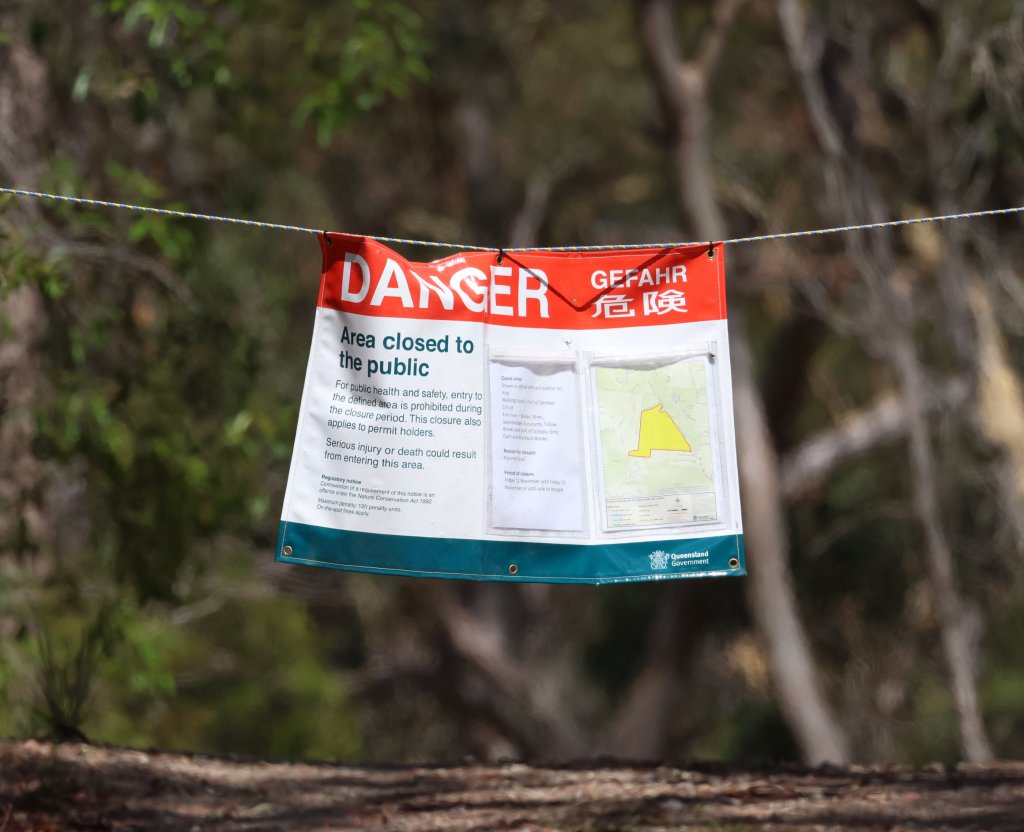
White-Throated Treecreepers were good value as before (no hiding in the upper canopy for them!), while the Venman Circuit was blocked off this time due to a planned burn, preventing a longer exploration there.
Dec 27 2024
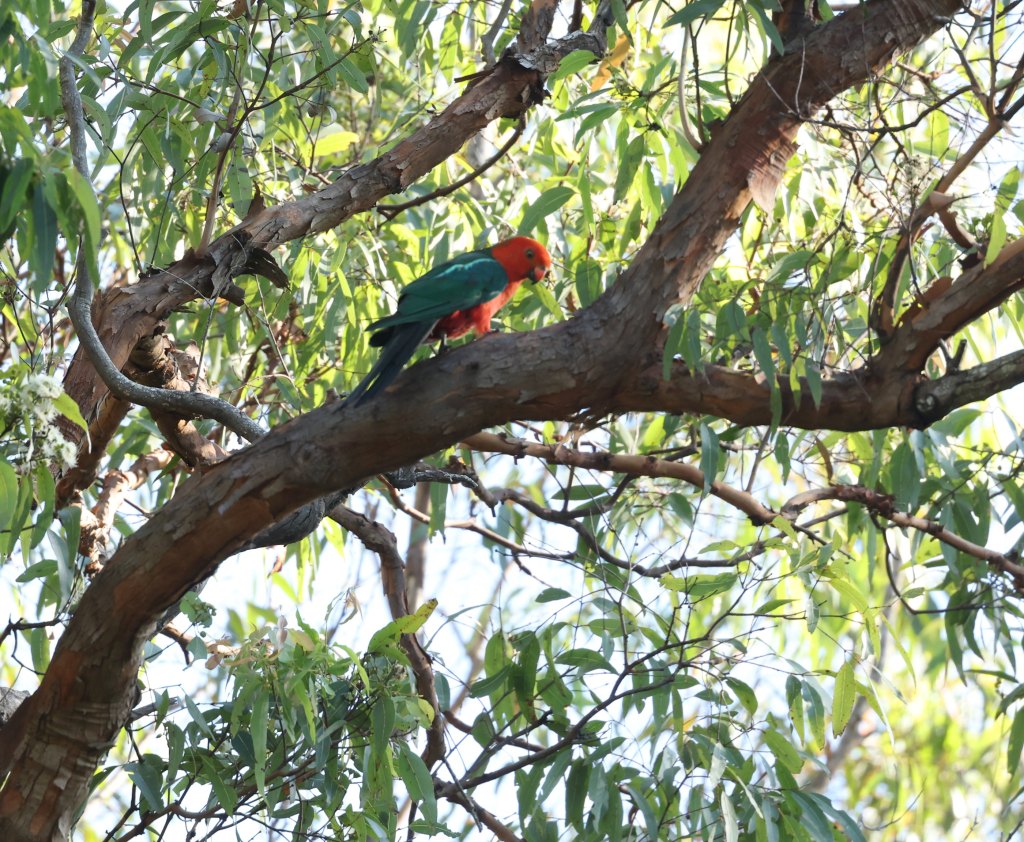
Two years later I returned, on a bright sunny day just after Christmas. I was immediately drawn to a raucous call in the eucalypts high above the car park which turned out to be a male King Parrot.
The water in the creek was higher this time, as there had been lots of rain on and off over the past few months, necessitating use of the aforementioned stepping stones that line the path as it crosses the water.
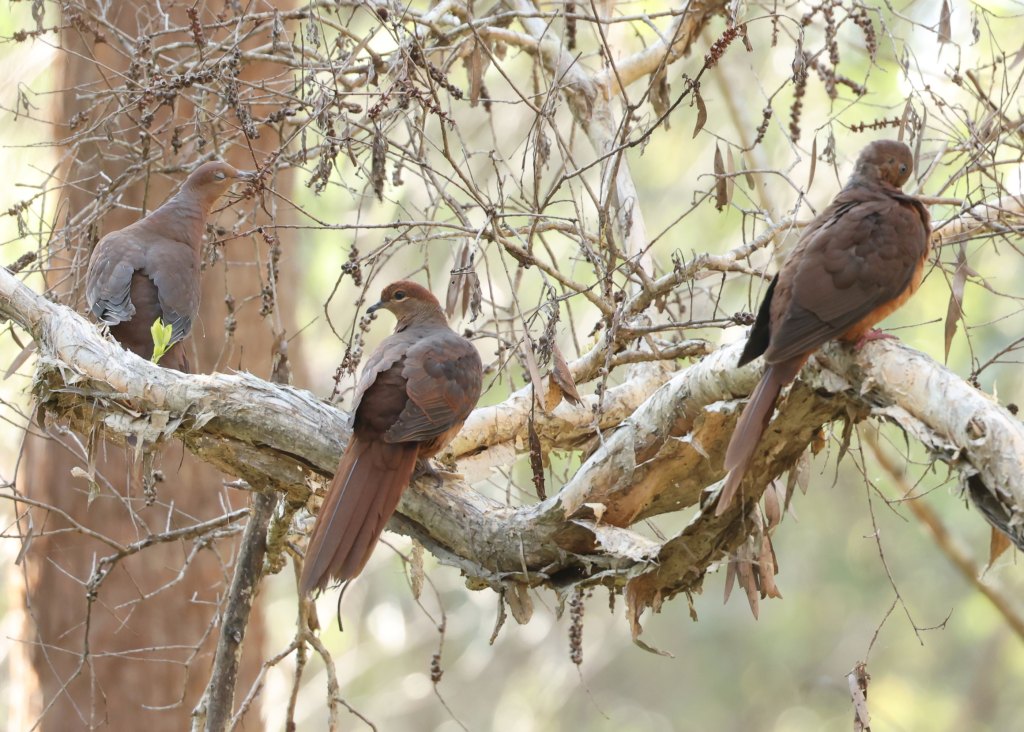
I had spotted a single Brown Cuckoo-Dove a few minutes earlier, quite far away, but soon after another two joined it on a closer perch and I was able to grab a photo of three of them together. They were quite active and the group turned out to be five strong; at one point while I watched quietly they descended onto the path, pecking around for a bit before nabbing a quick drink of the creek water. Great stuff!
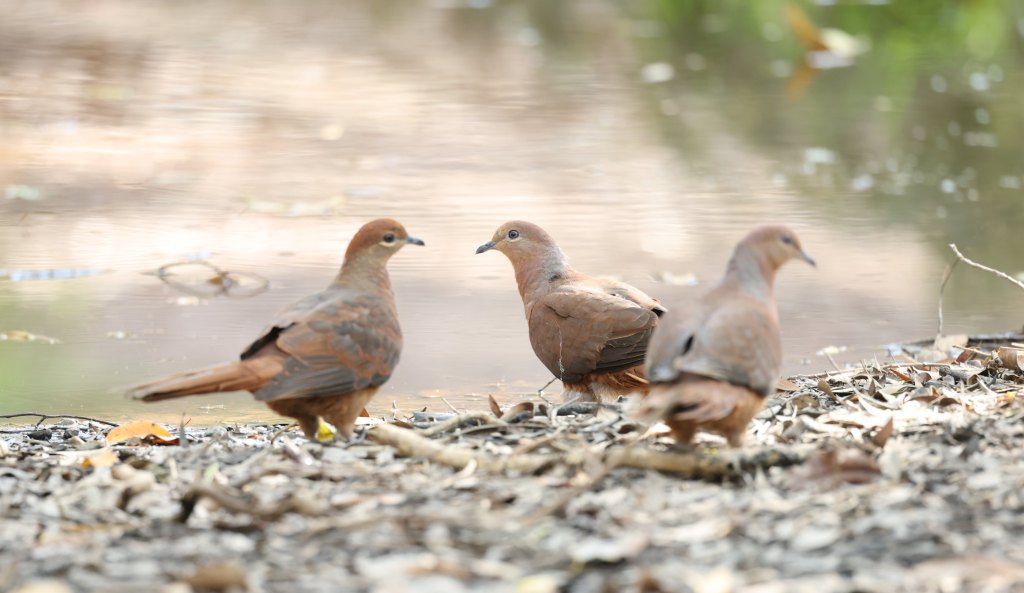
I knew it was worth lingering near the creek (and thankful that the trail network gives you such quick access to the creek area from the car park) and sure enough over the next ten minutes or so I saw Rufous Whistler, Grey Fantail, a couple of White-Throated Treecreepers (including a juvenile bird), an Eastern Yellow Robin, a Black-Faced Cuckooshrike and a Red-Browed Finch that was nest-collecting, all seen from my stationary position. I didn’t get many photos of all this activity, but it was fun to see what would turn up next, and was testament to the power of patience (even, perhaps, mindfulness), often good advice for birding!


With the summer sunshine dappling through the forest this third visit reminded me just how pleasant this bushland is. There’s barely any non-natural noise, just the occasional larger vehicle heard on the road in the distance, or an airplane somewhere far up. It makes for some pretty nice communing with nature. There were decent stretches of walking where it seemed there was far less bird action, but that’s the case just about anywhere.

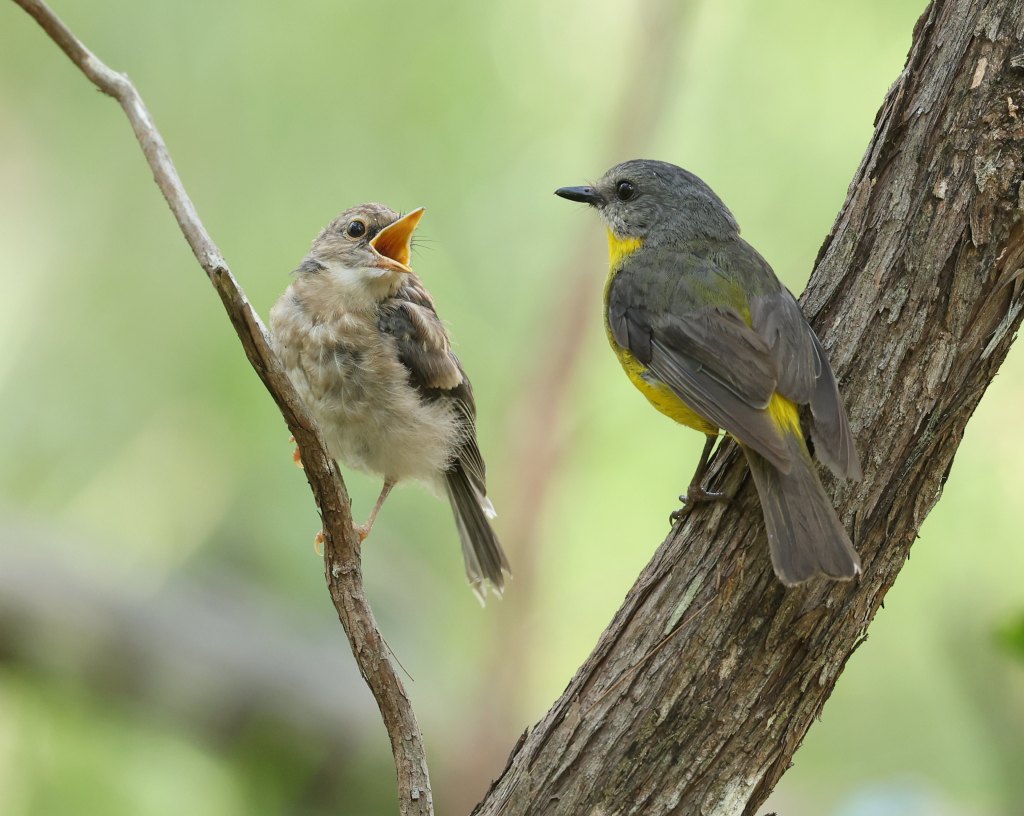
I had heard the almost constant call of a Shining Bronze-Cuckoo since arriving, but despite looking pretty hard and even hearing another answering call, I wasn’t able to get a look at that bird. However, I was not at all disappointed, for in chasing the cuckoo sounds along the path I found an Eastern Yellow Robin pair where the younger bird in juvenile plumage was still at the “following my parent around supposedly learning how to forage for myself but also begging for food” stage. I was lucky enough to grab a photo of that behaviour and it has become one of my favourite images of 2024.
I saw Bar-Shouldered Doves again, this time foraging on the track with a pair of Peaceful Doves, while there were a couple more Grey Fantails to be found as well. I had expected to see less of them given it was summer, and I also got eyes on a Rufous Fantail as well – sadly, without a decent photo to commemorate the encounter. Another puzzling small bird I didn’t get much of a photo of was hanging out near a group of five Variegated Fairywrens, which turned out to be a Brown Thornbill, a species I don’t see all that often at south-east Queensland birding sites.
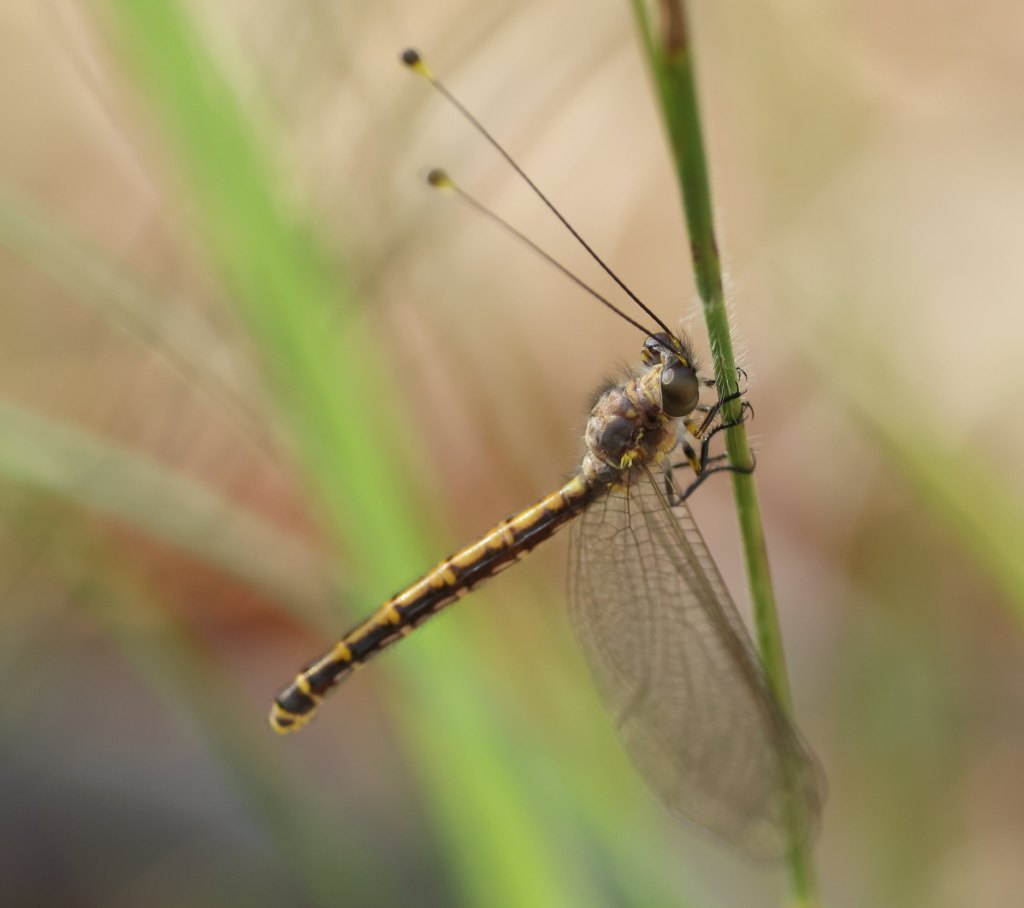
There were plenty of spiders and their webs on the trails this time, but I also took a little time to pay attention to other bugs and insects including a butterfly called a Brown Ringlet, and what looked like a dragonfly but on closer inspection I saw that it possessed long antennae. Later a Google reverse image search identified it as a Yellow Owlfly – they are different from dragonflies in the way they fold their wings over their body at rest, and by those heavy, clubbed antennae. Today I learned!

In just over two hours I had counted 26 bird species, this time including several I hadn’t seen on previous visits.
Summary
My third visit to Venman Bushland NP in particular underlined how pleasant this patch of nature is: there’s a creek line to attract plenty of interesting birds, lots of growth in the lower canopy including luscious ferns and grasses, and many different trees (stringybarks/paperbarks, ironbarks and other eucalypts, casuarina and scribbly gums and no doubt many many others). It’s a site that doesn’t get crowded with people, quite the opposite – I didn’t even see any other birders on all three visits and only sporadic groups of bushwalkers. If you prioritise slow nature-appreciating walks through charming bushland with enough birdlife to keep you interested, this site should be on your radar.
eBird:
Hotspot: Venman Bushland NP (112 species)
Checklists for these visits: Aug 23 2021 (27 species), Nov 18 2022 (22 species), Dec 27 2024 (26 species)
Pluses and minuses:
+ Very pleasant forest environment to stroll in
+ A nice mix of bush birds
+ Large trail network to explore for those who thirst for extra hiking
– Less interesting away from the creek line
– Only bush birds – low chance of raptors and no water birds
+/- Feels rather “away from it all”
AUTHOR: ANDY GEE
BIRDERS: ANDY GEE
 Bird Spots