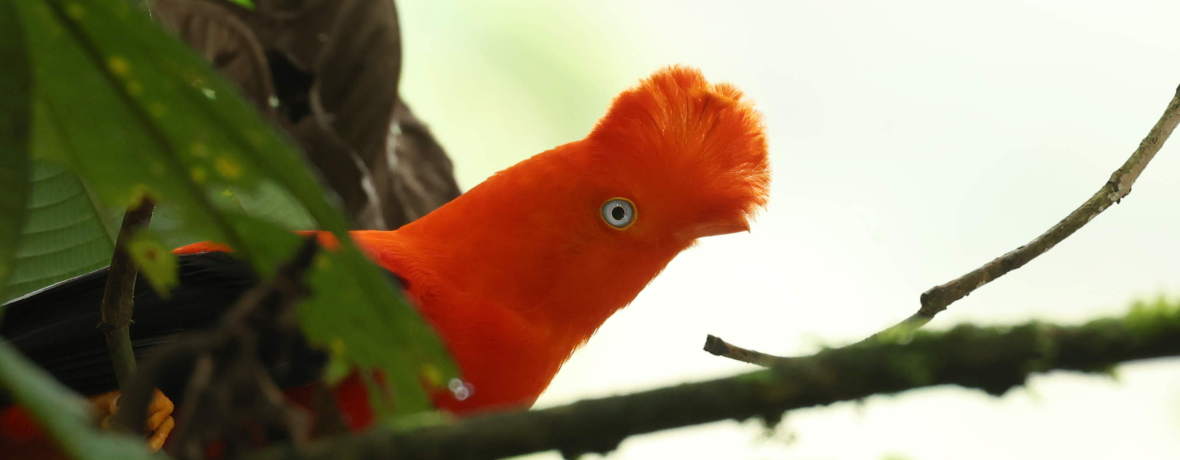
The Sacred Valley of the Incas is somewhere you might travel to because of that rather well-known historical site, Macchu Picchu. There are a bunch of other places worthy of your tourist attention in the valley too. But it also has some really, really good birding.
This post covers a few key sites in the Sacred Valley, spanning some good variety: the hummingbird garden at Ensifera Camp, high altitude birding at Abra Malaga, and the possibilities of tourist/birding combinations at Aguas Calientes near Macchu Pichu and more. Strap in, because there’s a lot to cover!

Ensifera Camp: A Hummingbird-Lover’s Paradise
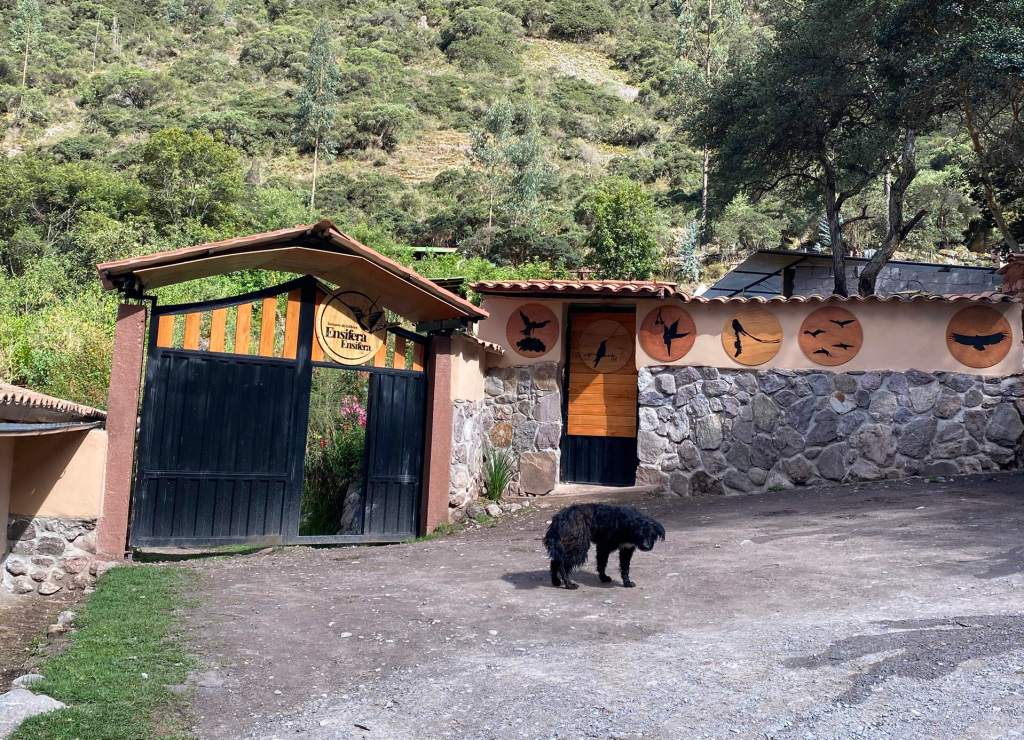
We covered the Sacred Garden, a pretty great bird garden (focused especially on hummingbirds) in our Pisac post. Like many such places it is a private location where you slip the owner a cool 20 Soles note or whatever, all very informal. Ensifera Camp just north of Urubamba is another such nature site which also offers a camping ground, and you can even organise a lunch spread ahead of time.
From the main road between Ollantaytambo and Urubamba you travel around 3km up an unsealed road. We actually stayed at the Inti Punku Valle Sagrado Hotel (more of a resort) which is half way up this access road, and were able to walk up to Ensifera Camp from there, spotting a couple of raptors (Black-Chested Buzzard Eagles) and other bits and pieces on the way. For just the two of us they didn’t seem to mind impromptu arrival, but for larger groups I believe it is more appropriate to contact them prior via WhatsApp.
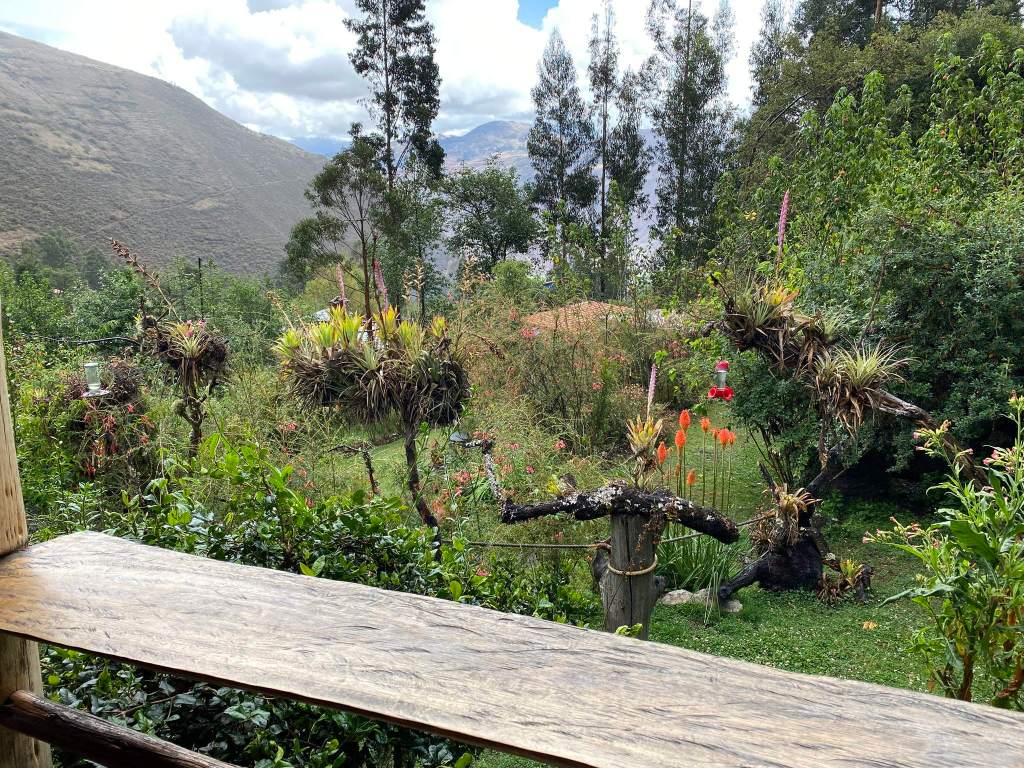
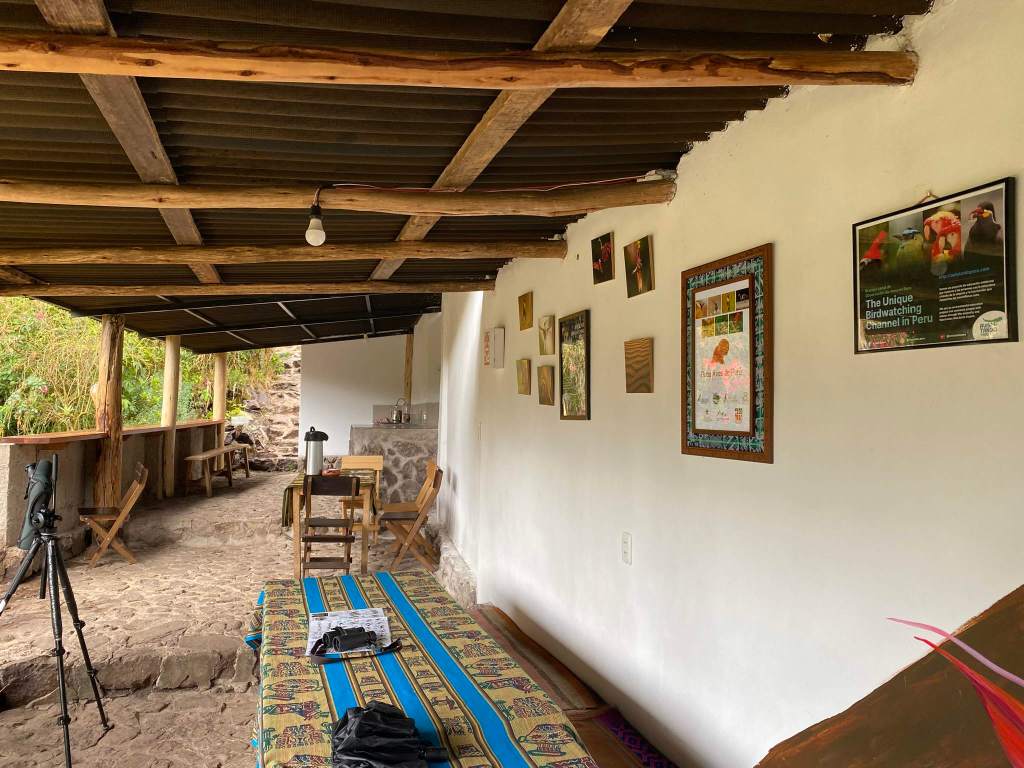
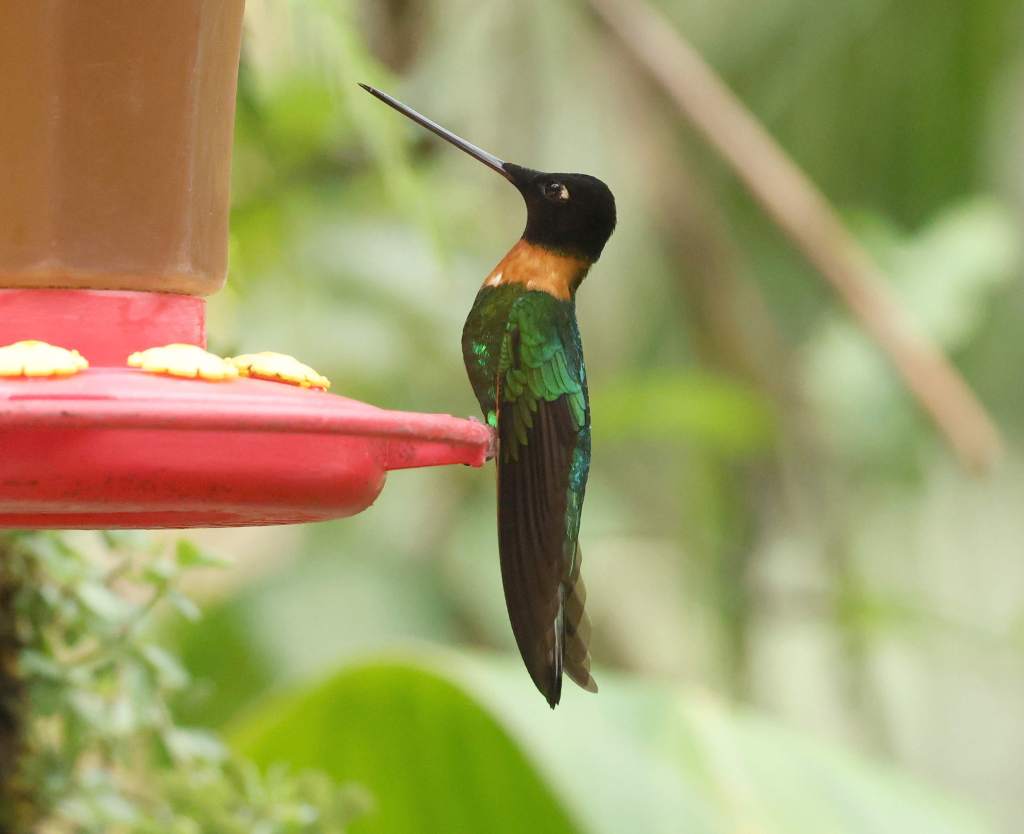
The gardens themselves are a generous riot of flowers and feeders and you’ll want to spend at least a couple of hours there. The hummingbirds will definitely gain your immediate attention, with the bronzy hues of the Shining Sunbeam a standout. It was a while before I noticed the rainbow feather pattern on the bird’s back (see photo), but once I did I was awestruck!


For sure the hummer that everyone wants to see – with good reason – is the incredible Sword-Billed Hummingbird. We saw it on our two visits, though it took a little while for it to turn up both times (like, a good 40 minutes, keeping a beady-eye lookout…) It is just as arresting and kindof unbelievable-looking in real life as photos make it seem, and we drank in good looks at the bird for the minute or so it stayed around the feeders.
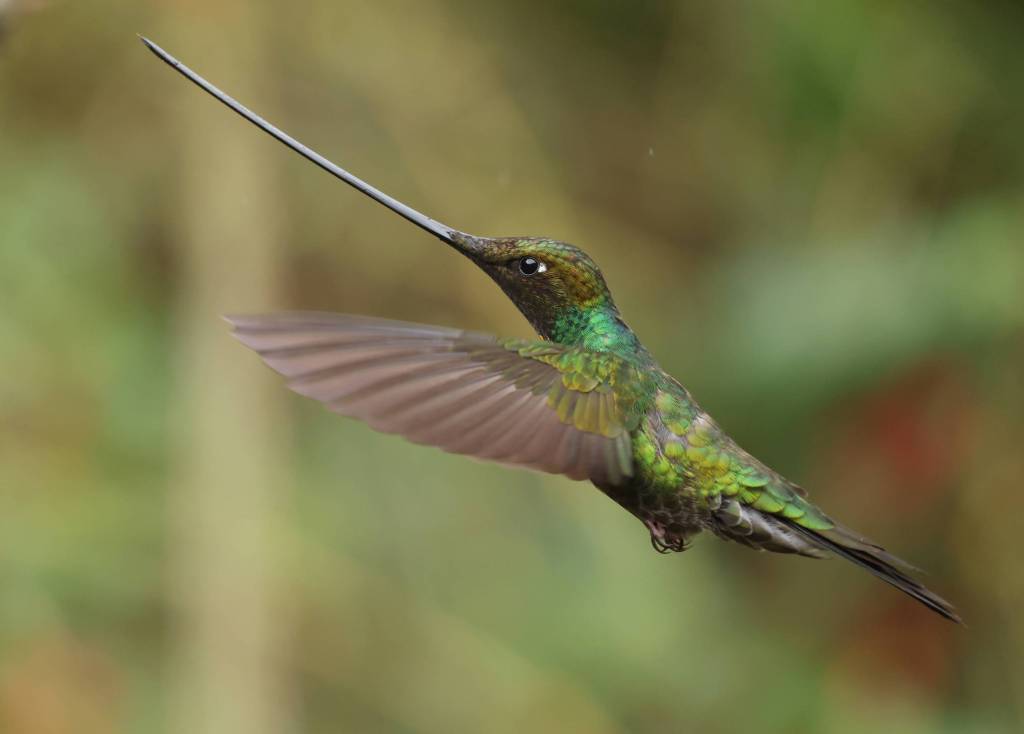
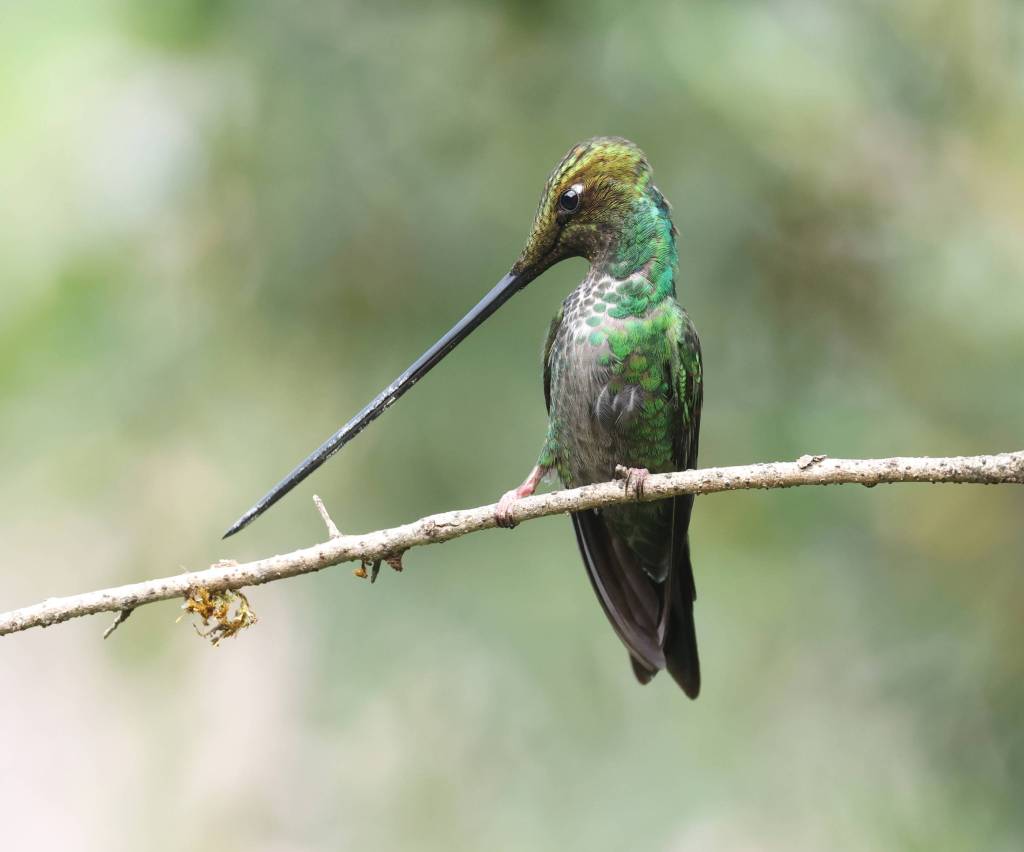
Black-Tailed Trainbearer, Tyrian Metaltail, Sparkling Violetear, White-bellied Hummingbird and Giant Hummingbird are regulars, and watch out for cameo appearances by Mountain Velvetbreast and many others.
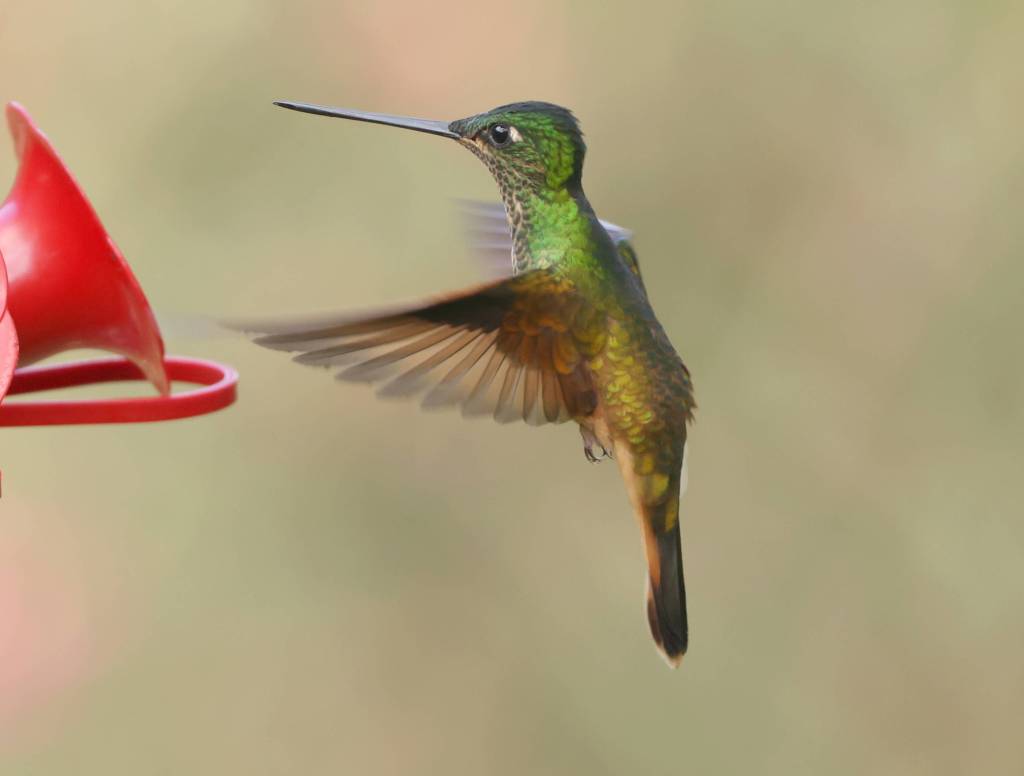
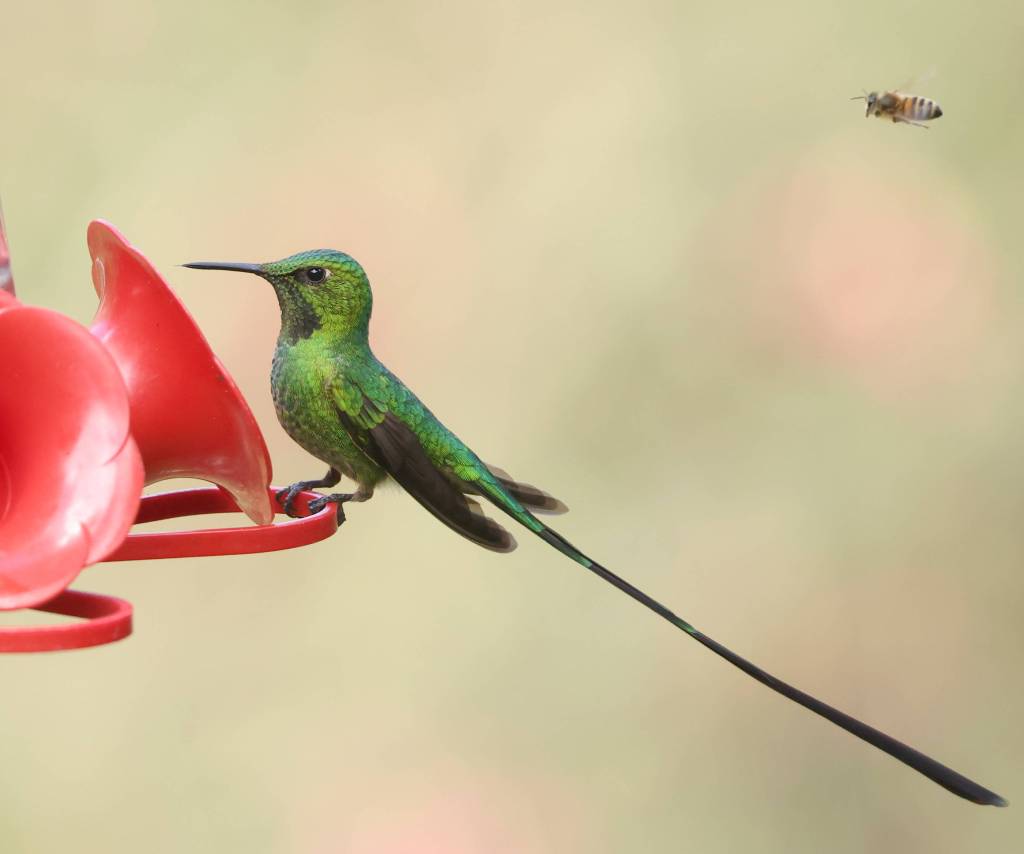
The gardens are especially well set up for photography with the feeders at just the right distance for a reasonable telephoto lens (I use the Canon 100-500mm); the light is probably best in the morning although perhaps not too early as the site is in a mountain valley and tends to be in shadow for a while after sunrise.
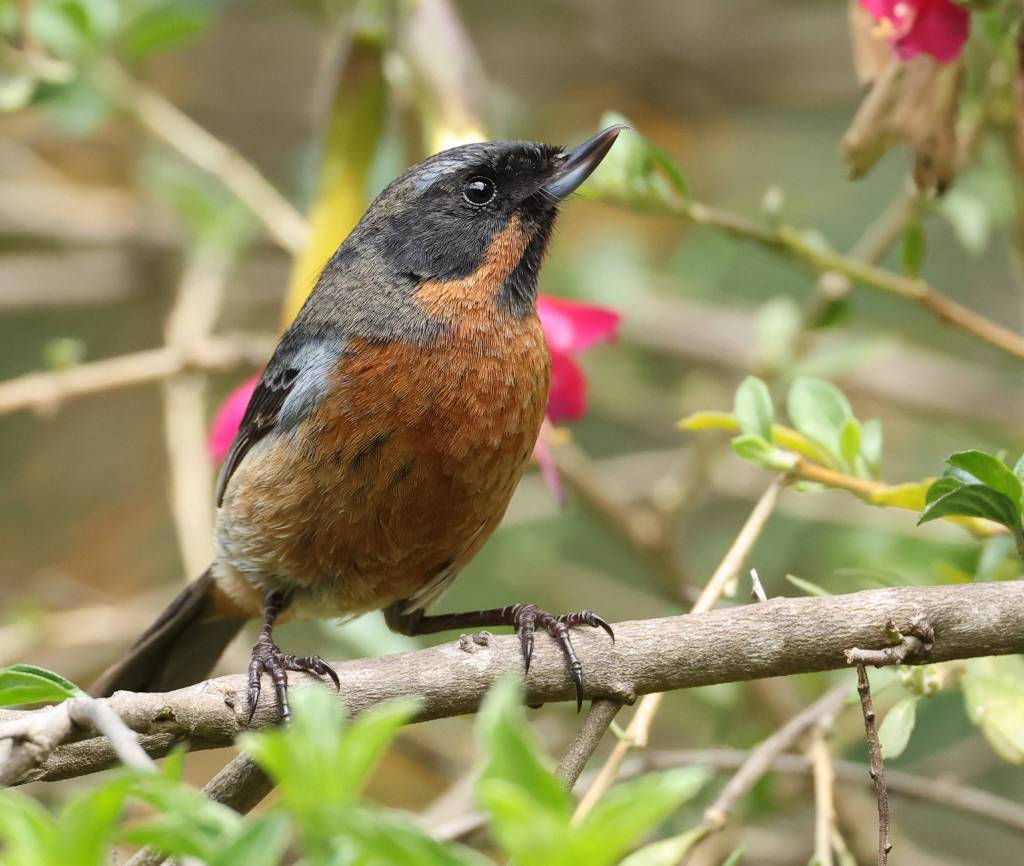
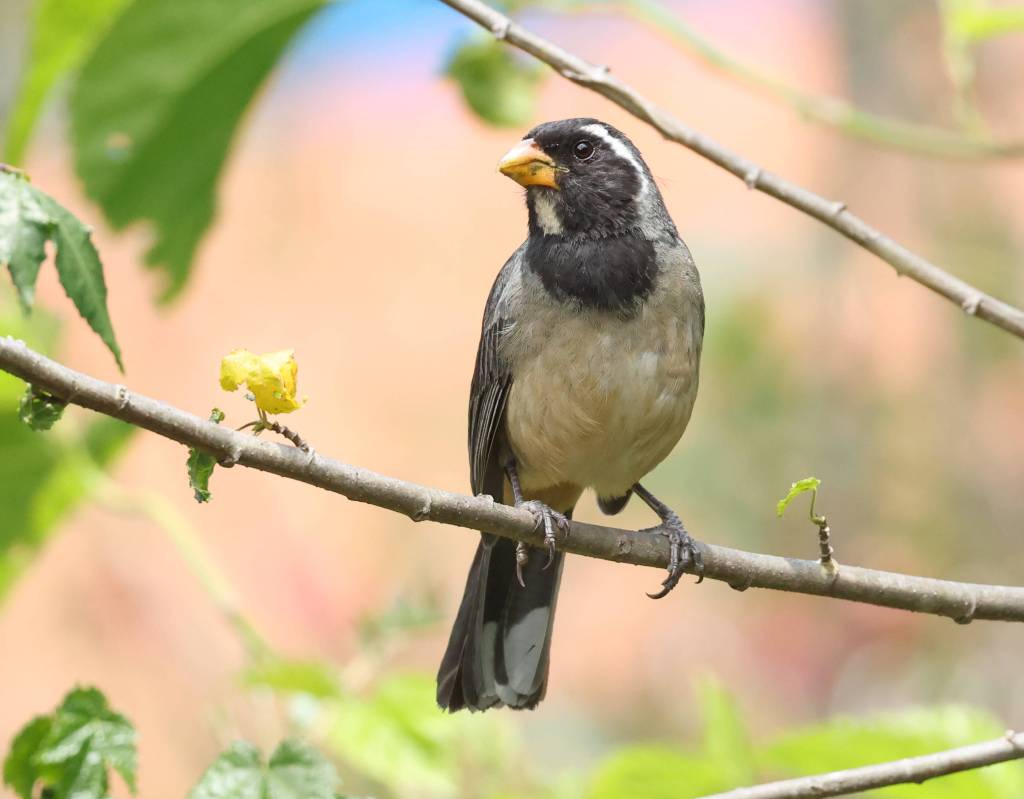
Other birds flitting about the gardens were Black-Throated Flowerpiercer, Golden-Billed Saltator, Great Thrush and various doves. I would say the hummingbirds are the main drawcard though I think there is now an Undulated Antpitta being fed which would be of interest to many birders.
Altitude With Attitude: Abra Malaga
To the west of the Sacred Valley is a long road which bends to the north and makes sweeping zigs and zags on its way to a mountain pass at a lung-busting, jumper-requiring elevation of 4330m. It’s the Abra Malaga, renowned as a diverse and rewarding birding location in Peru; there are even a number of birding day tour offerings to here operating all the way from Cusco (this requires an insanely early start). Our base was the much more practically-situated town of Ollantaytambo.
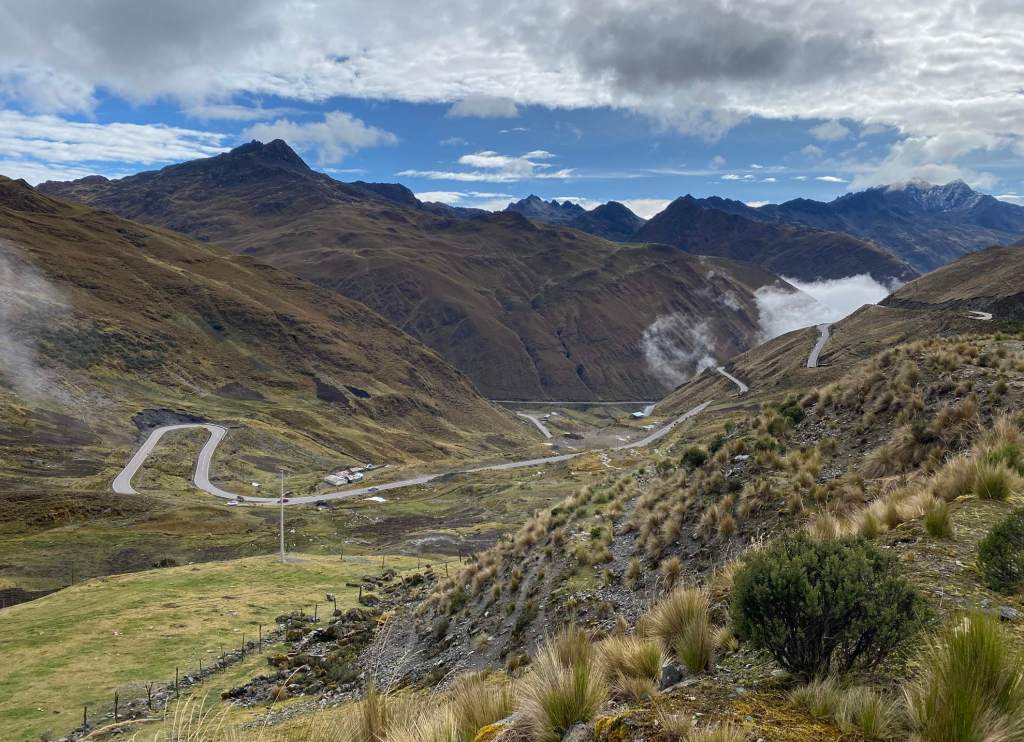

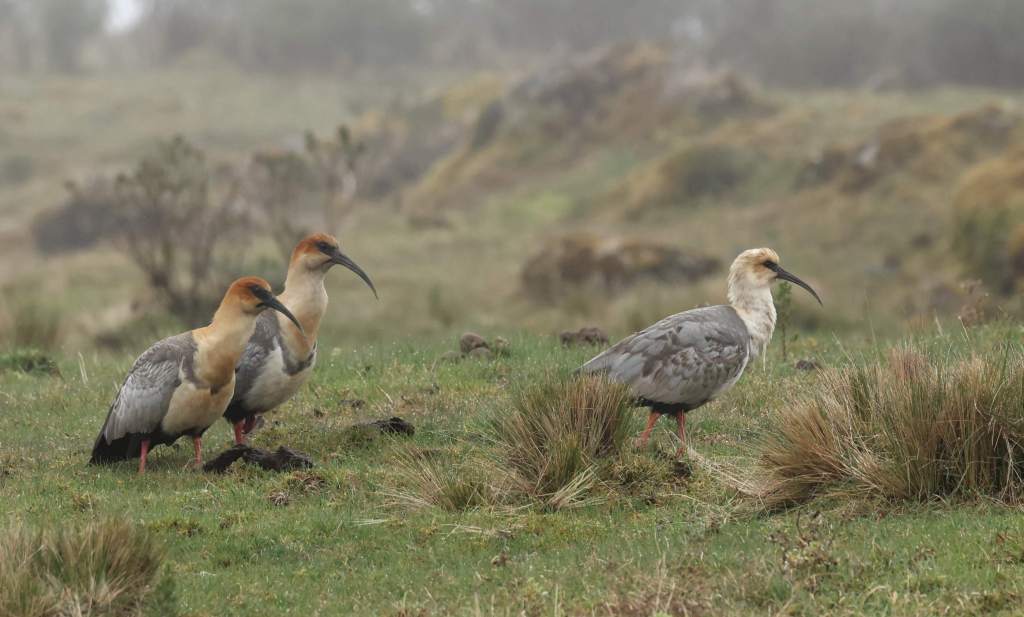
The south side of the pass features tussock and grasses and some stunning mountain views (if the clouds cooperate), while the northern side is dominated mainly by cloud forest. Apparently the weather is often that it will be relatively fine on one side and generally the opposite on the other. Across the pass itself there are plenty of boggy ponds where you can find Puna Ibis, Andean Ibis, Andean Lapwing, Andean Gull, Andean Goose and more (the high altitude means the “Andean” descriptor dominates…). Be prepared for cold and drizzle here!


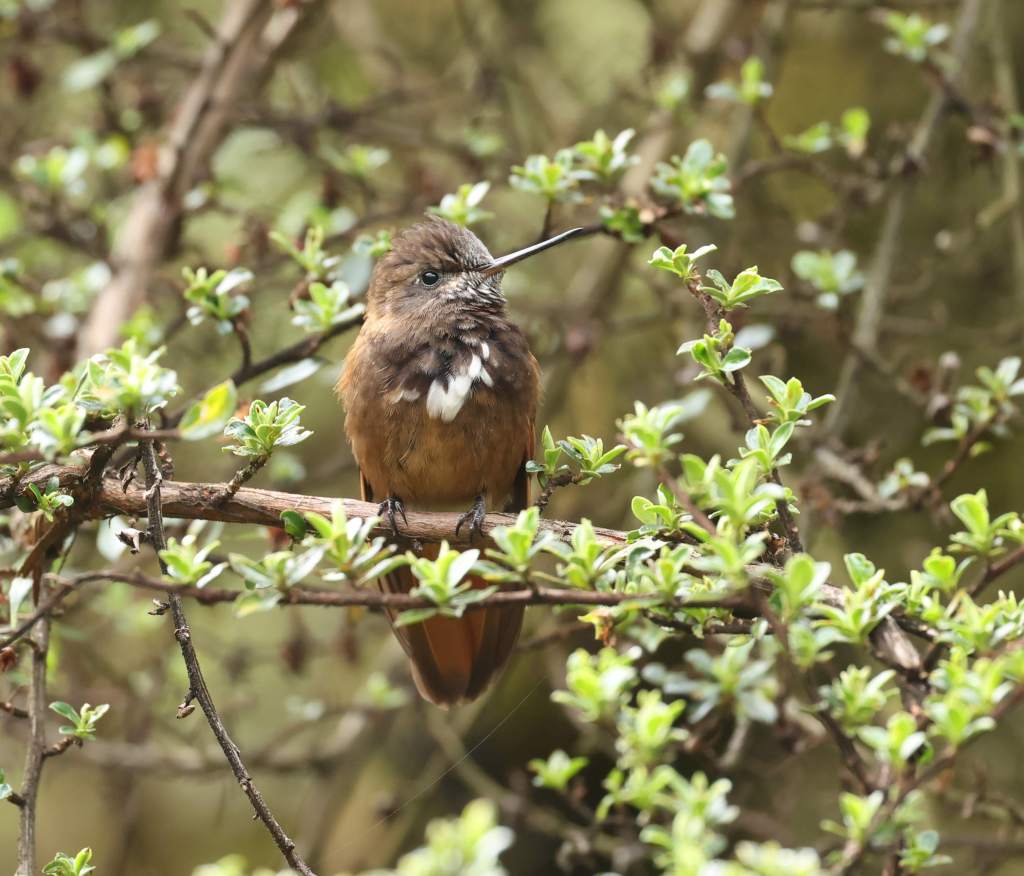
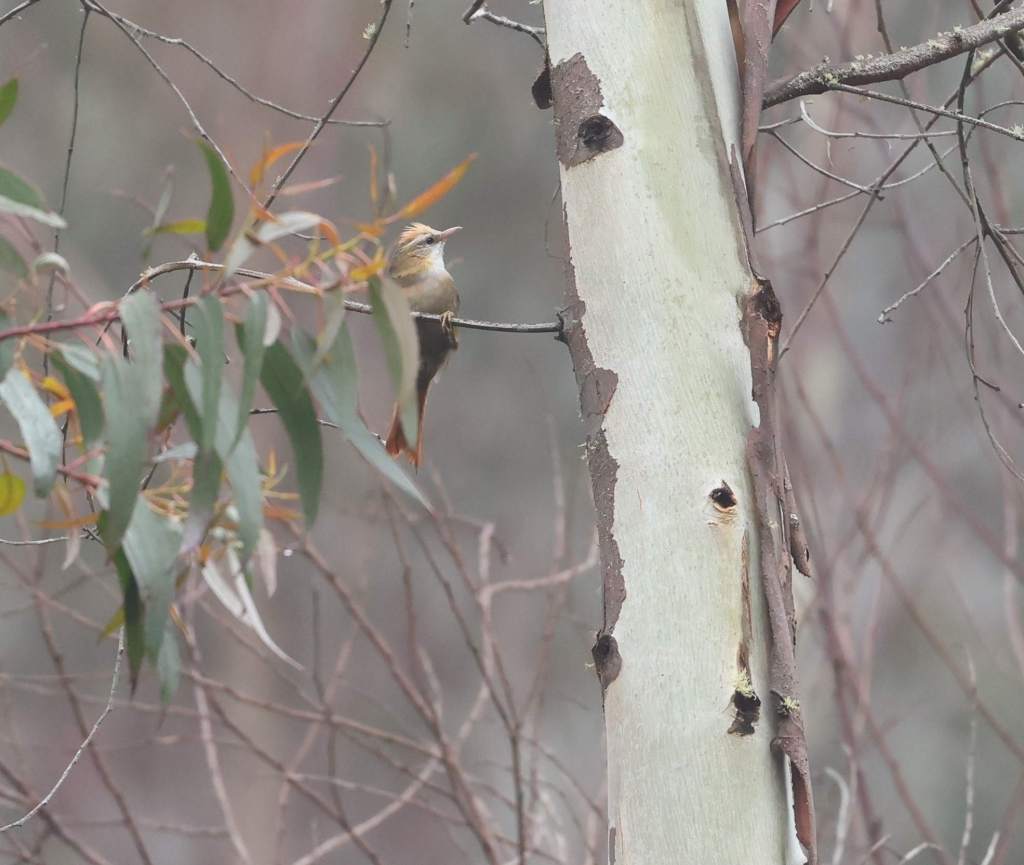
On the south side the birds you’ll find are determined partly by altitude. At slightly lower altitudes you can find the White-Tufted Sunbeam, for example, and we also found a lovely Creamy-Crested Spinetail hiding in a eucalypt. Birding here is mostly a stop-on-the-side-of-the-road-if-the-habitat-seems-interesting affair.
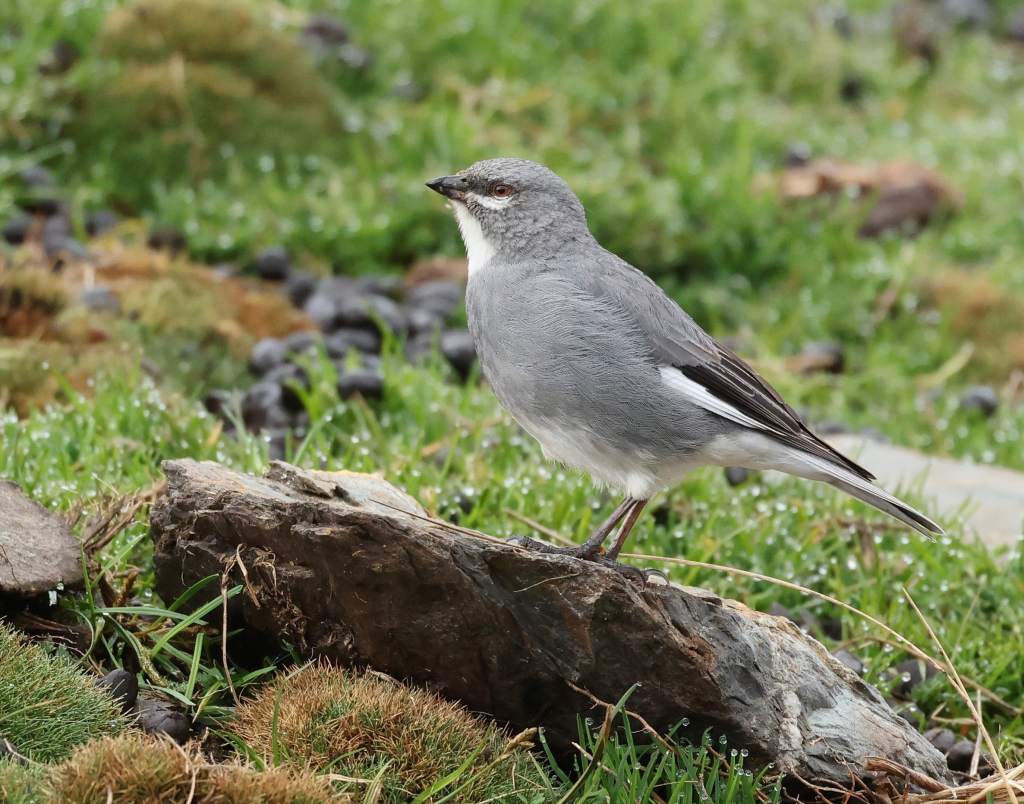
Up high, very near the pass, there are Glacier Finch happily foraging in the cold amongst the dewy grasses. These chunky, handsome grey birds became an instant favourite, especially when I learned that they got their name from their habit of building their nests on glacier ice… they are the only bird species known to do so.
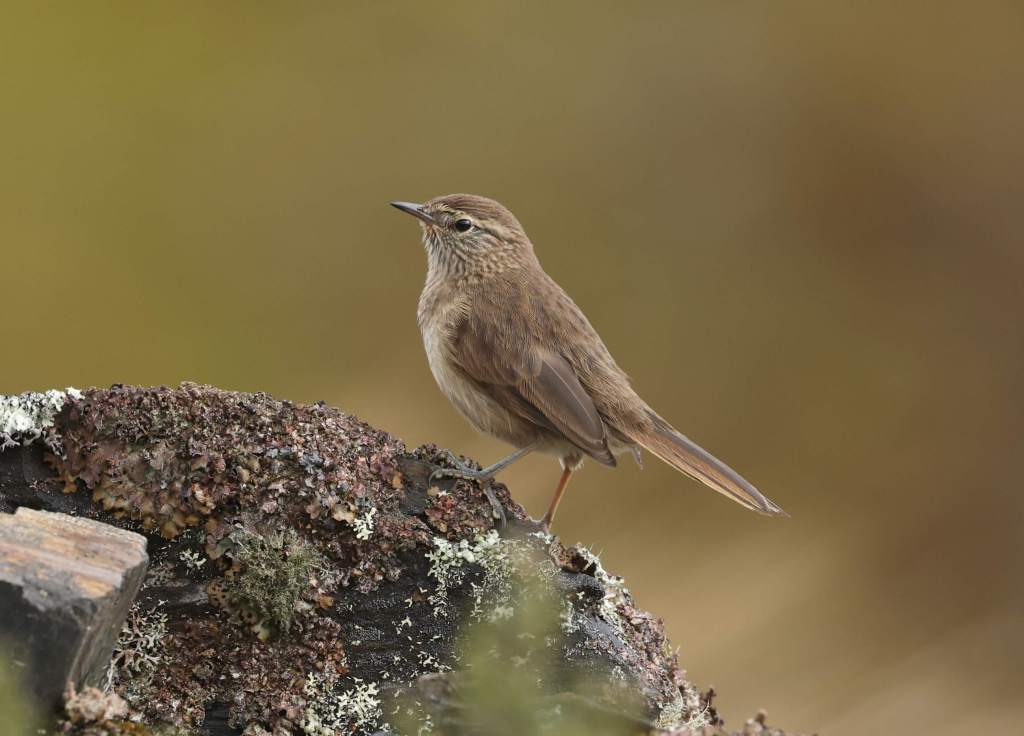
Streak-throated Canastero is another high altitude specialist and we saw three of these. Plumbeous Sierra Finches and Peruvian Sierra Finches seemed happy amongst the artificial structures, and we spotted both Cream-Winged and White-Winged Cinclodes… and, amazingly, Rufous-Collared Sparrows. The latter must be adaptable birds indeed.
On the northern side we did exclusively roadside birding, peering into dense mist-strewn cloud forest amid patches of rain.
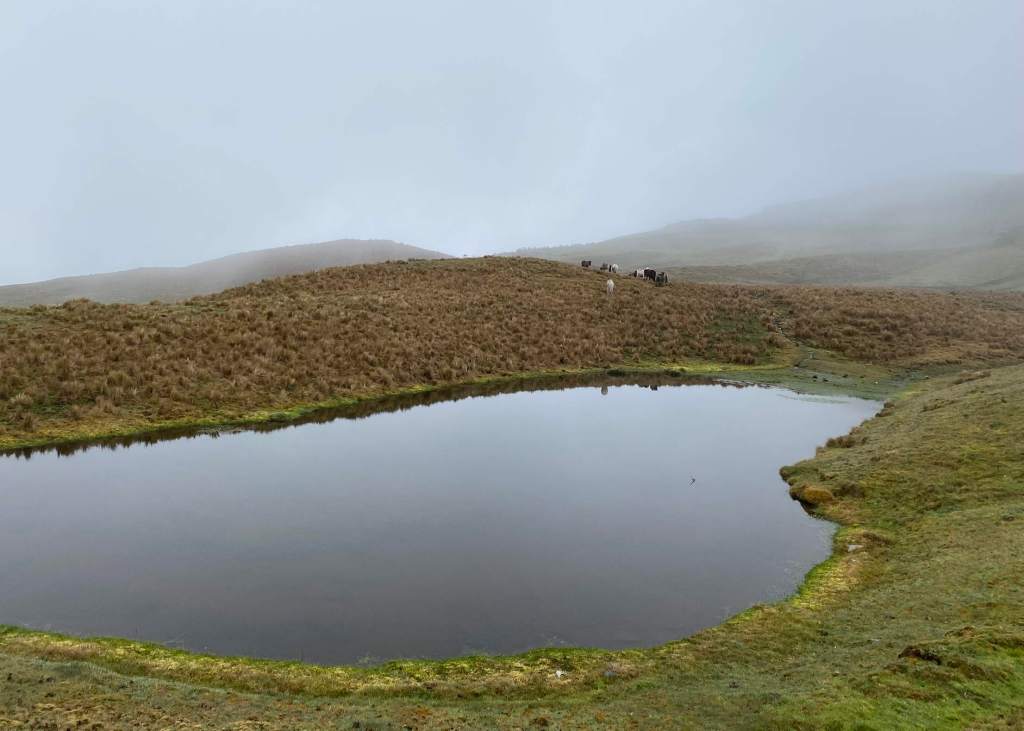

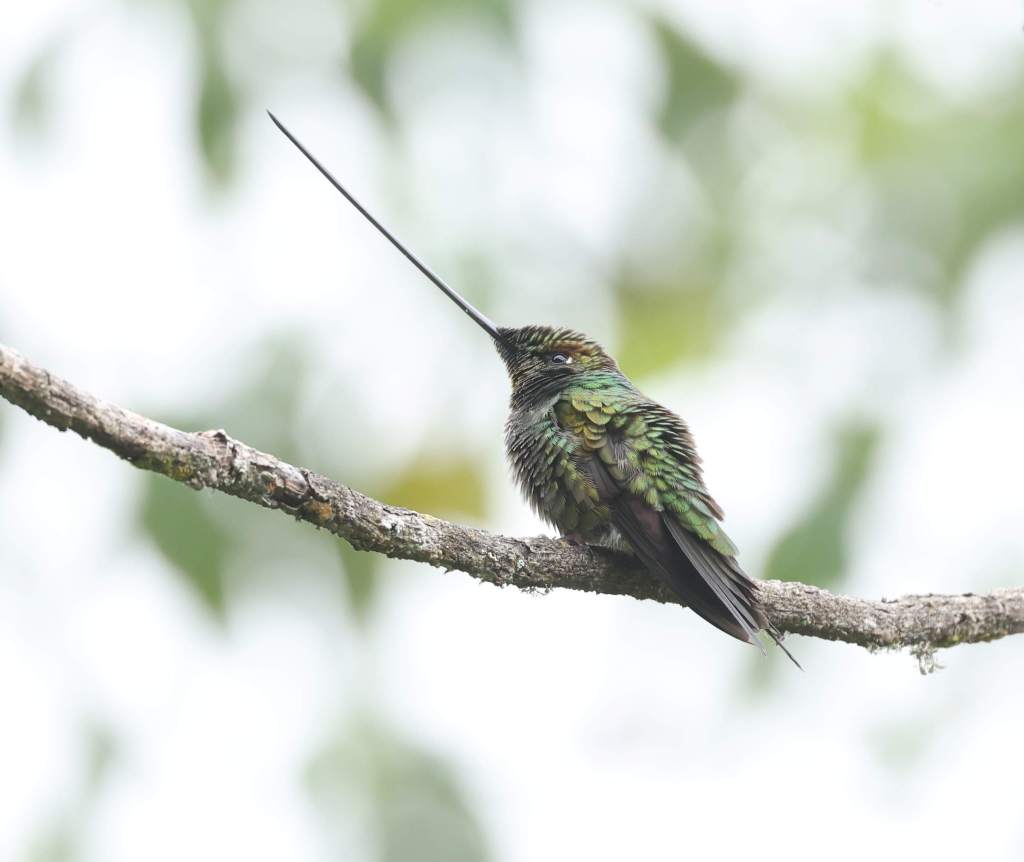
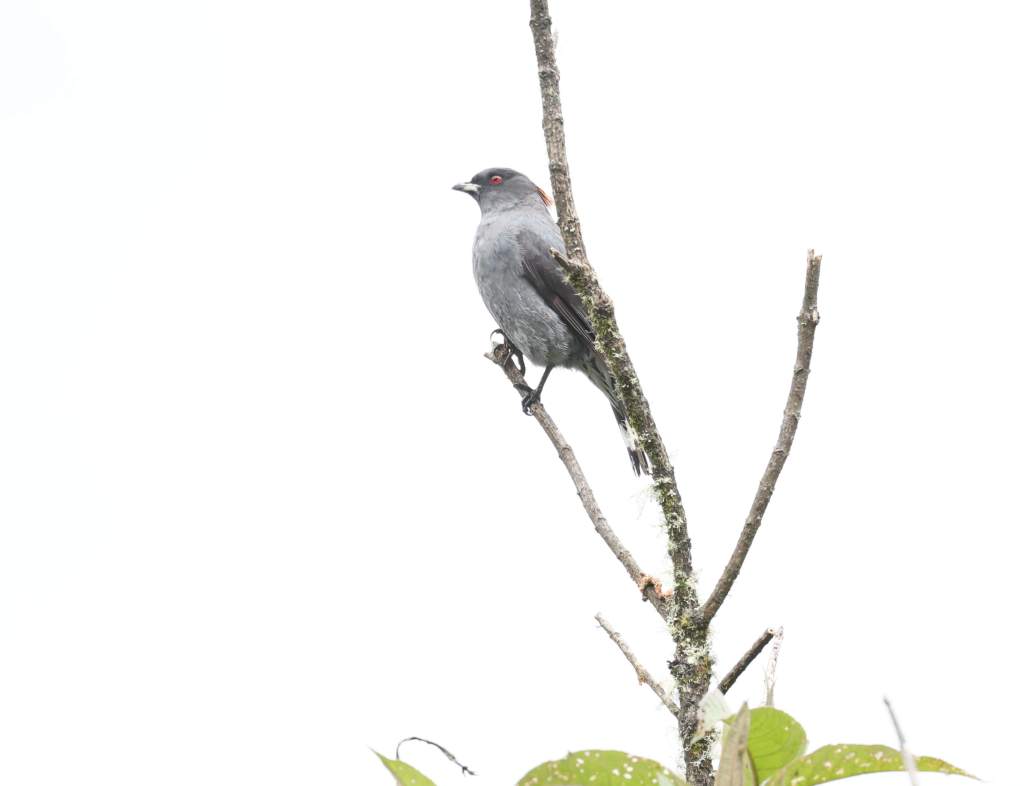
Due to the foggy conditions and occasional vehicle (including buses and trucks) roaring past, birding on this northern side was a little tricky and more suited to spotting birds further away than savouring close-up photographic encounters, though we did get lucky with a Sword-Billed Hummingbird lazily lounging out in the open, and a Sapphire-Vented Puffleg flitting from flower to flower. It was also on-brand for Red-Crested Cotinga to sit still near the top of an exposed tree branch (thanks, Cotinga!) rather than lurk warily in the foliage (like, ahem, Inca Wren and several others…)

On the south side of pass there is a huge network of hiking trails, the Abra Málaga Tastayoc / Royal Cinclodes Private Conservation Area. The eBird hotspot is a mouthful:
ACP Abra Málaga Thastayoc Royal Cinclodes, and sports a respectable 311 species. The area has an entry fee which appeared to be informally of the give-some-guy-some-money variety (I was with a guide who handled all that in quick-fire Spanish).
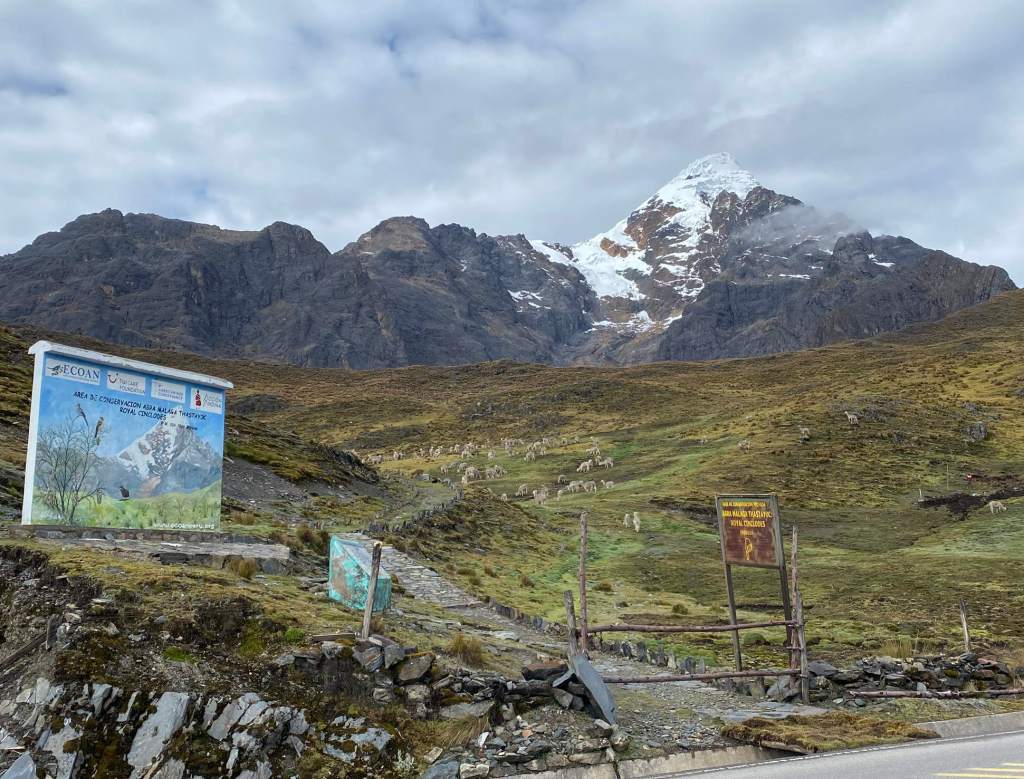

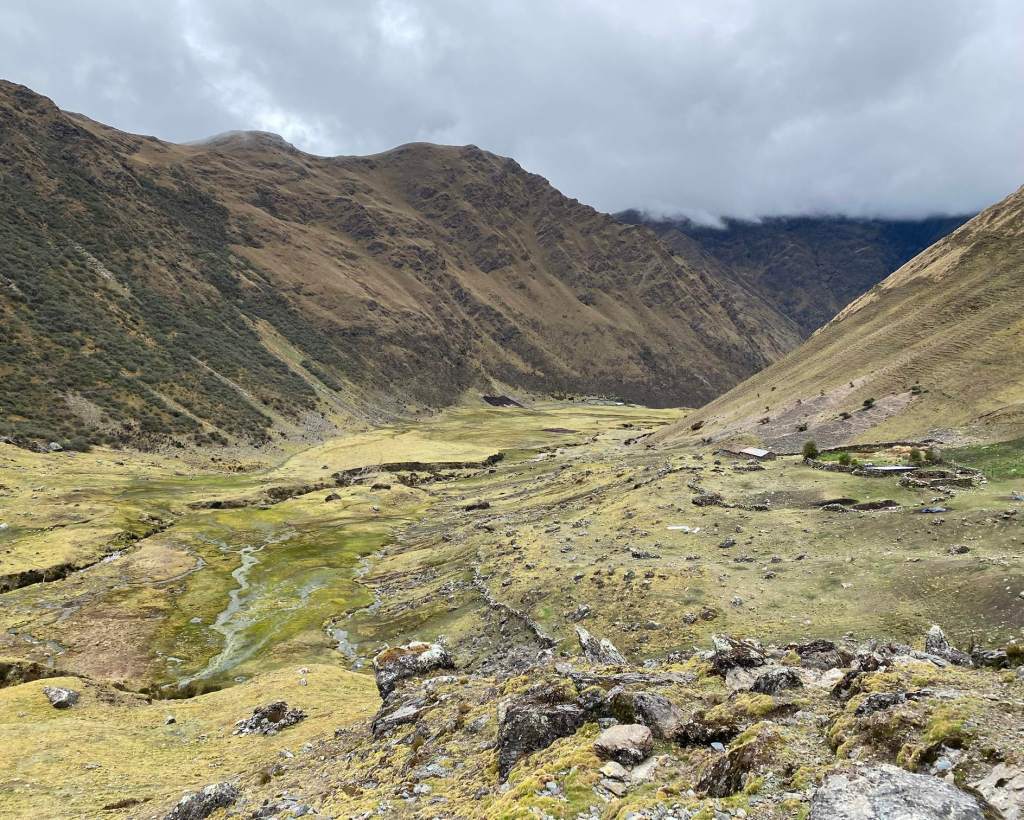
The birds took a back seat to the epic alpine scenery when our shortish (about 4 hours) hike got underway, with stunning views in every direction. The trail we followed then went over a ridge and into a valley strewn with swathes of polylepis, gnarled evergreen trees that are known as the world’s highest growing trees. The combination of open grasses and stands of polylepis should have enabled birds to be spotted pretty readily, but generally it was surprisingly difficult.
Olivaceous Thornbill, a high altitude hummingbird known for landing on the ground to feed on tiny flowers (unlike most hummingbirds which prefer to hover) was spotted in the open but only distantly, while a White-Browed Tit-Spinetail was a little more obliging.
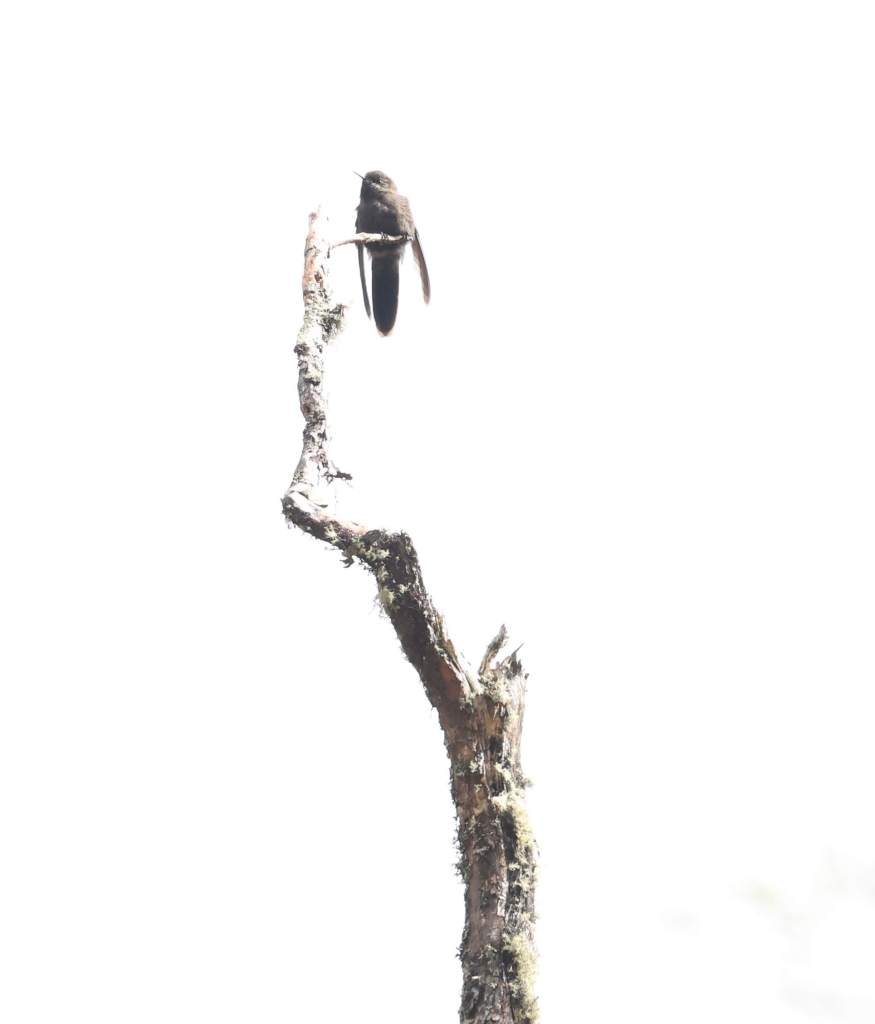
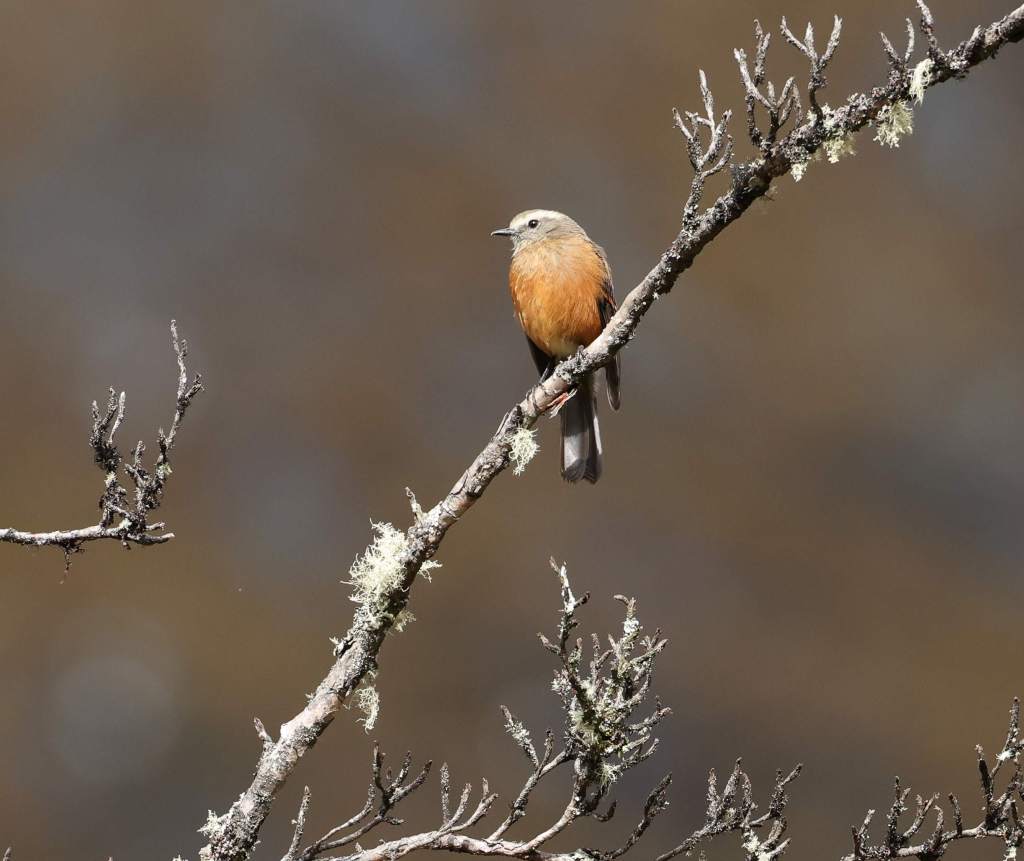
Our experience of the trail was heavily dominated by the “-Tyrant” birds: Brown-backed Chat-Tyrant, Taczanowski’s Ground-Tyrant, Ash-Breasted Tit-Tyrant, Rufous-Webbed Bush-Tyrant, Red-Rumped Bush-Tyrant… all of which seemed keen on hiding in the tangly branches of polylepis. Even when I tried to sneak around one of the trees to see a Ash-Breasted Tit-Tyrant a little better, it seemed to read my mind and hop opposite to wherever I happened to be. Such is life!
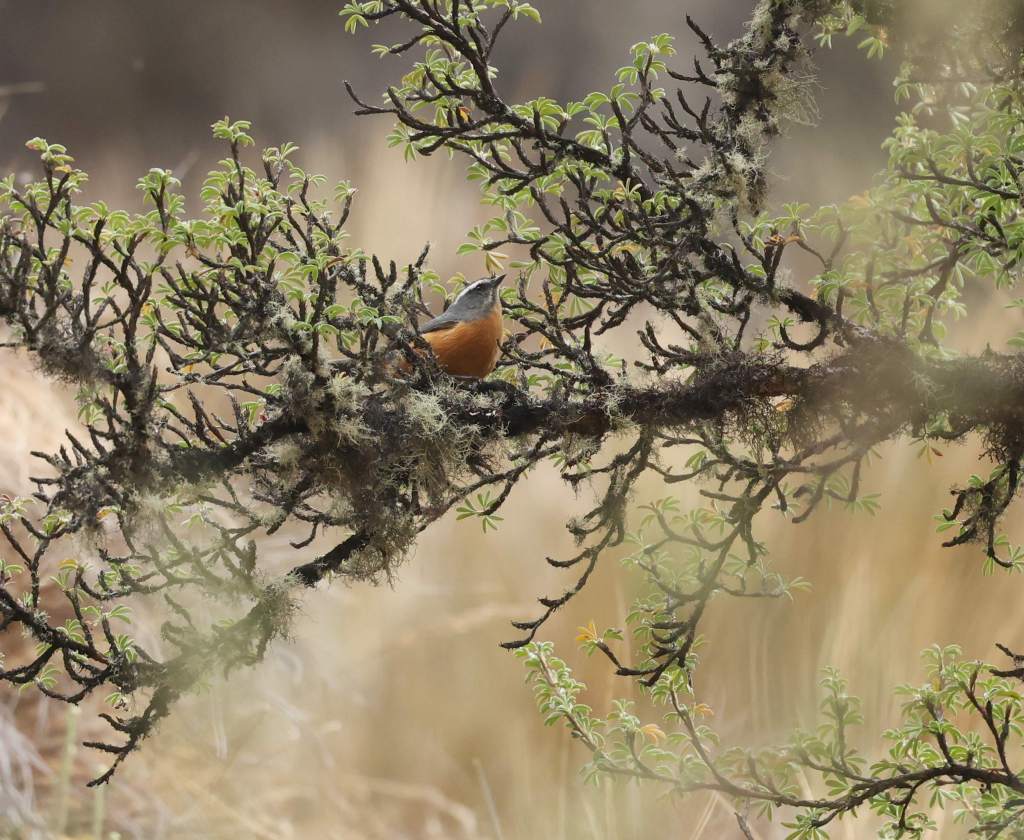
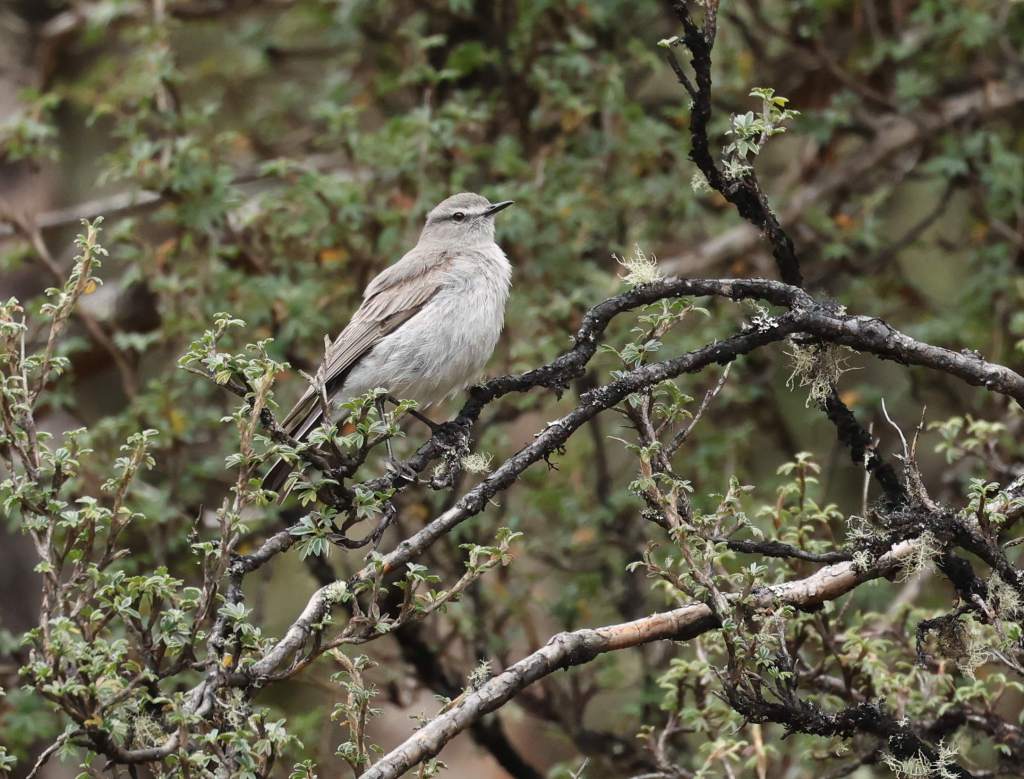
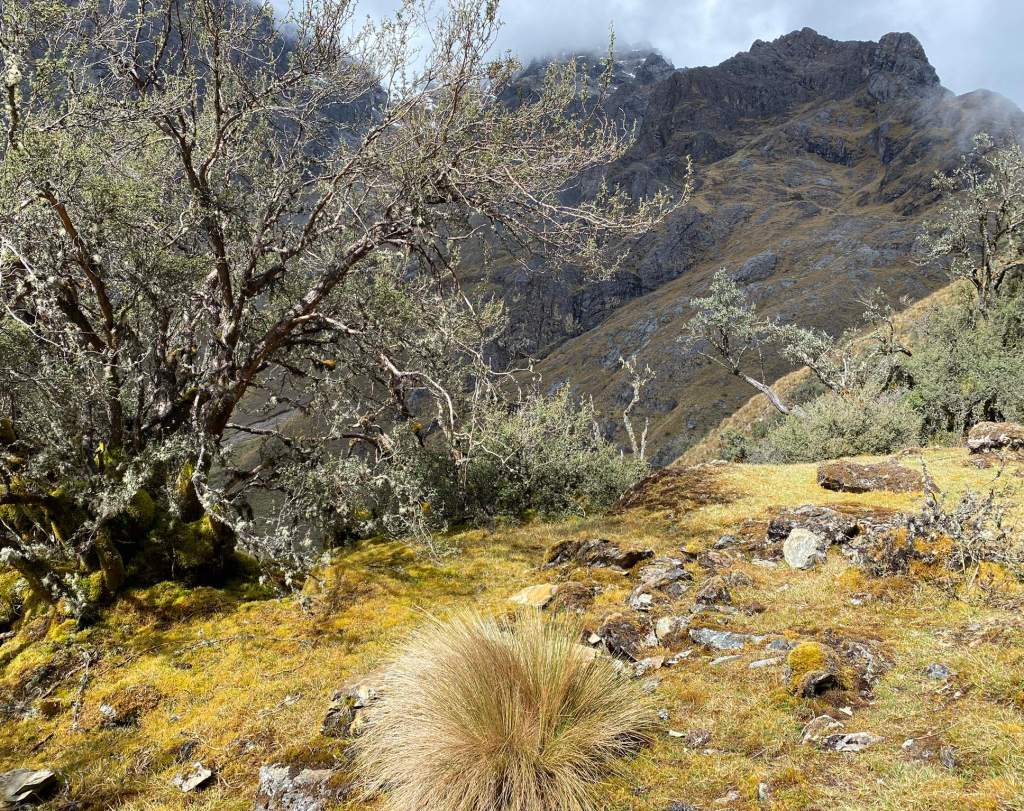
One of the stars of this trail and reason by itself to visit is to find the rare and endangered Royal Cinclodes, but that bird eluded our search. We also heard Stripe-headed Antpitta a few times but couldn’t manage a glimpse. Again, such is the birding life.
Some serious rain was forming by this point so we buttoned up the rain jackets and hurried down the trail. There is some pasturing of llamas here and serious amounts of their poop around the place which is almost impossible to avoid. Once the first bout of rain passed we came across some delightful Black Siskins, a lifer bird and though they are widespread and not particularly uncommon, I was totally entranced by their black and yellow good looks.
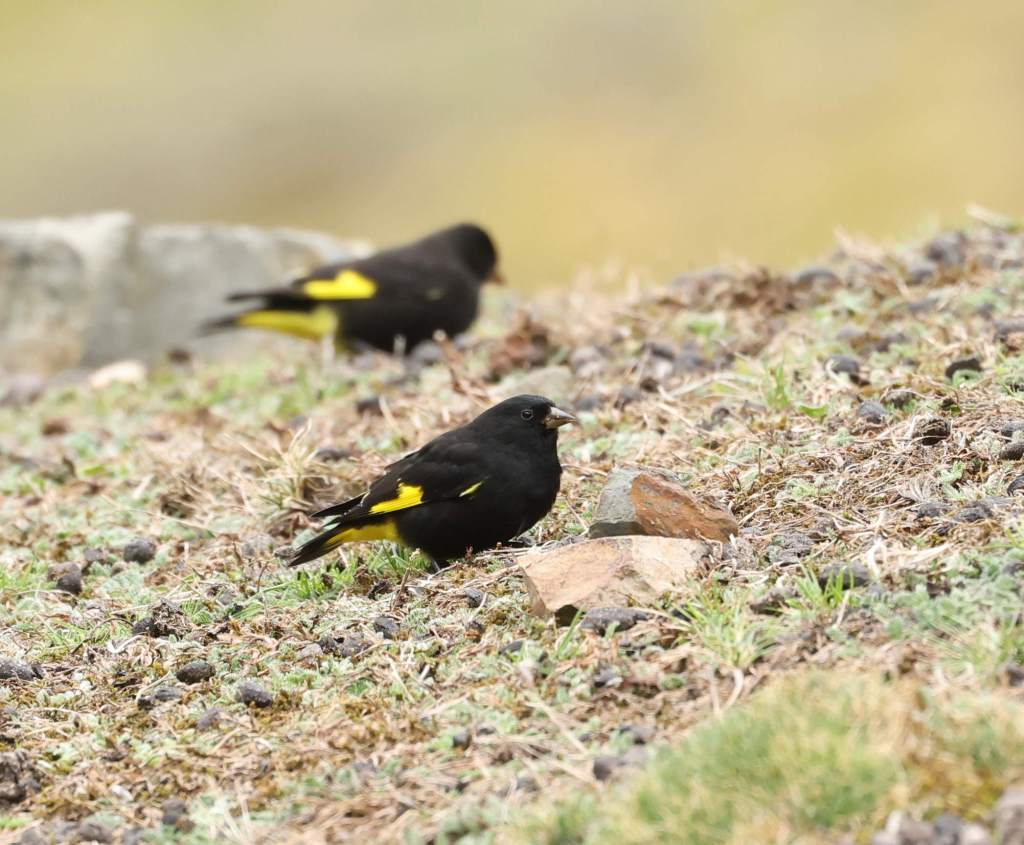
A couple of easy creek crossings and more descending led us eventually back to the zig-zag road with 25 species counted for the trail.
The Great And Birdy Riverside Town Of Aguas Calientes. Oh, And That Macchu Pichu Place.
On the way to or from Macchu Pichu, you will most likely visit the town of Aguas Calientes – also known as Machu Picchu Pueblo (because everything near Macchu Pichu has to bask in the glow of its fame). Yes, this town is quite touristy, but if there was one place in Peru I wish I could have stayed longer, it was here. The place is absolutely fascinating.
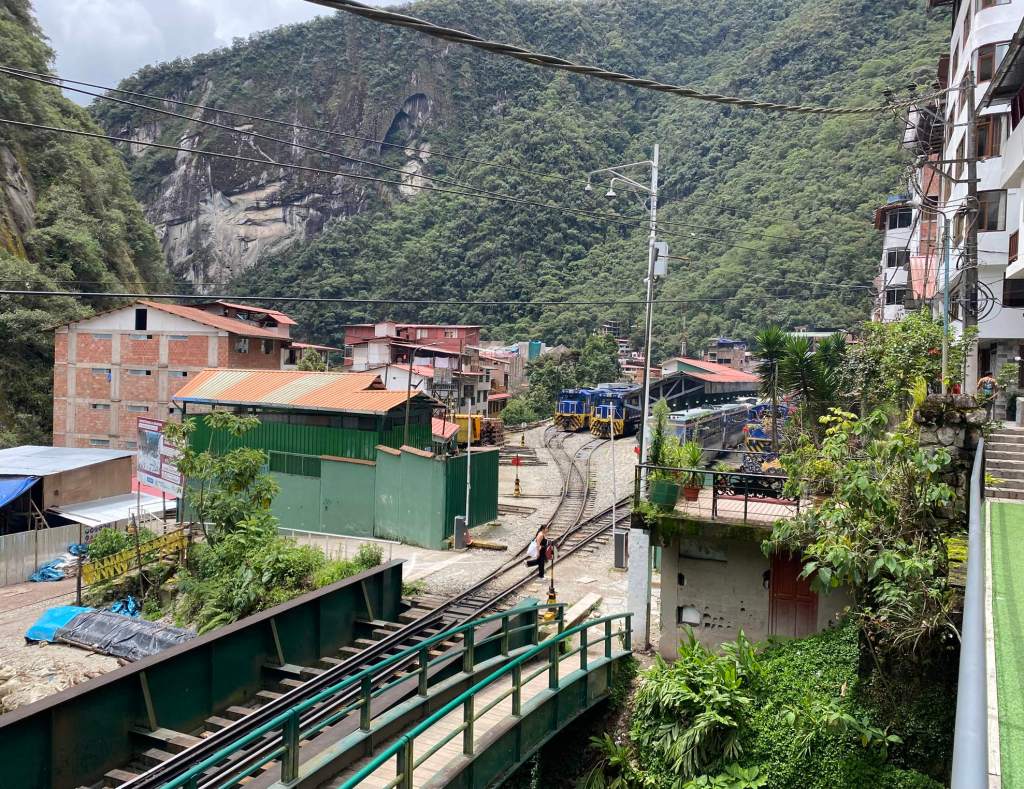
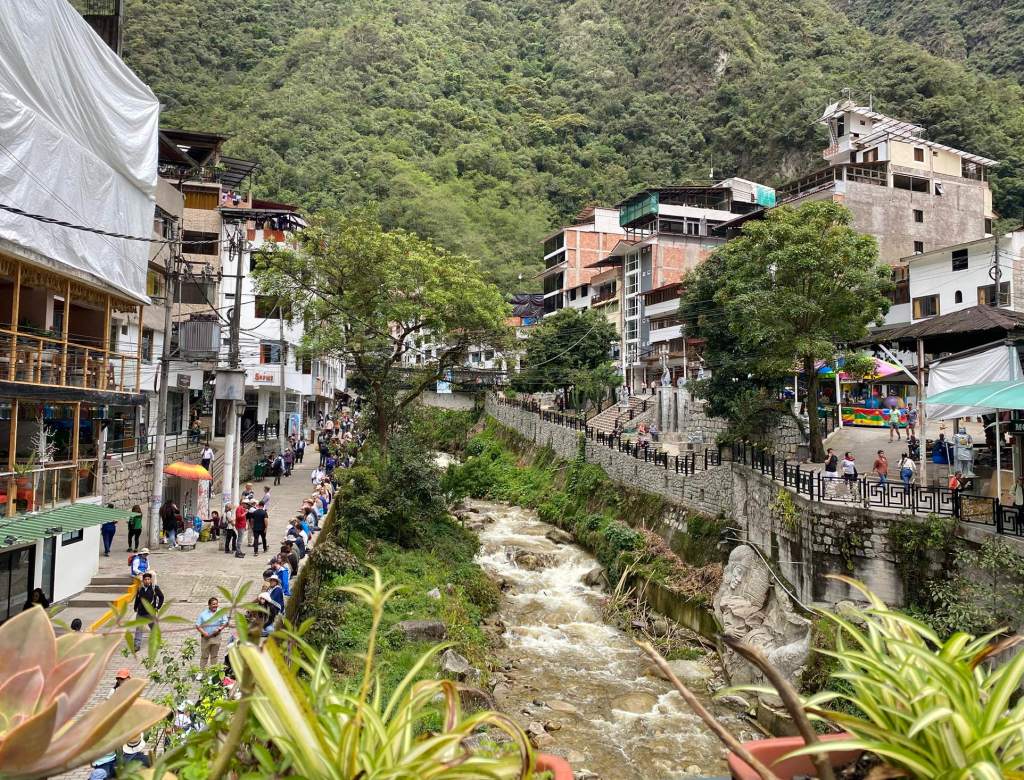

The town is set on the raging Urubamba River, with a fierce narrow rock-filled tributary cutting the town in half one way, and the PeruRail train line cutting through the other way. The buildings are intensely vertical, jammed full of tourist-oriented restaurants, bars, souvenir shops and more, and the whole place is just busy and full of life without being too annoying or tacky.
If your budget can swing it, a stay at the Inkaterra Machu Picchu Pueblo Hotel in Aguas Calientes is worthwhile. We only had an overnight here but observed that (a) the hotel is super luxurious; (b) it is set in a sprawling, lush rainforest garden; and hence (c) there is some good birding to be had.

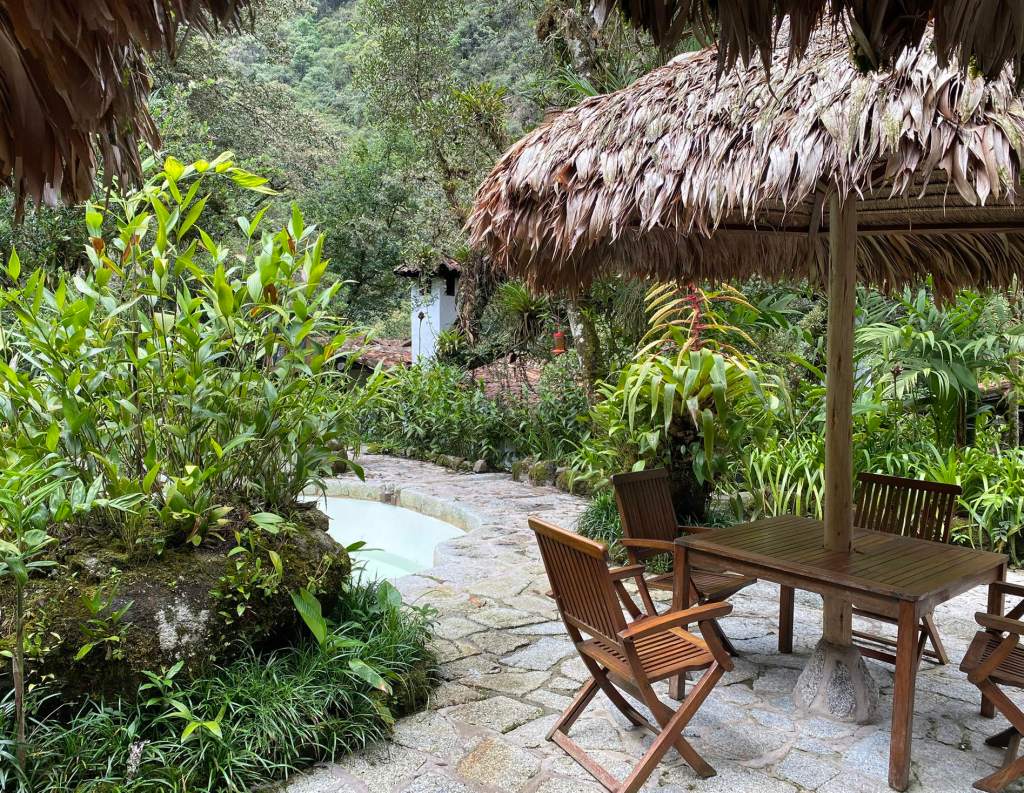
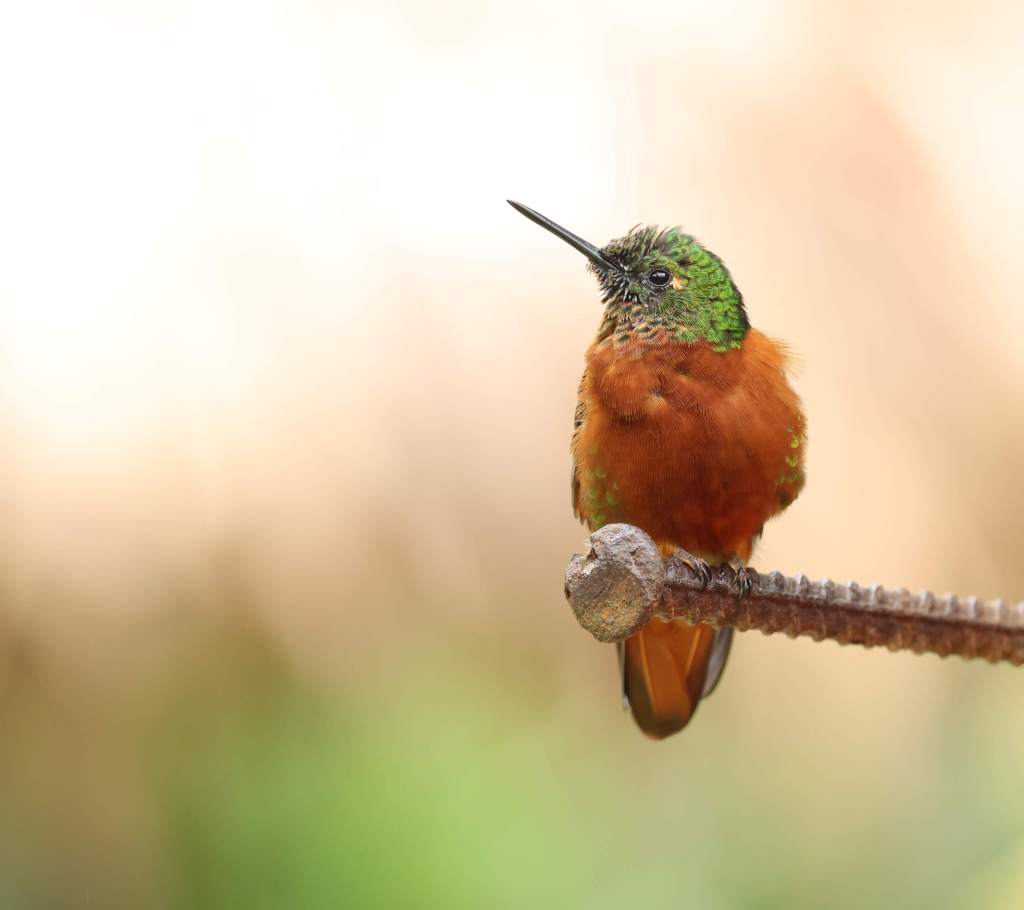
They have a few hummingbird feeders and fruit feeders. The dominant hummer was the plucky Chestnut-Breasted Coronet, which fiercely guarded their favourite feeders, while Gould’s Inca, Sparkling Violetear, Bronzy Inca and White-Bellied Hummingbird were also around – some of them hard to spot due to being very high up in the flowering canopies.
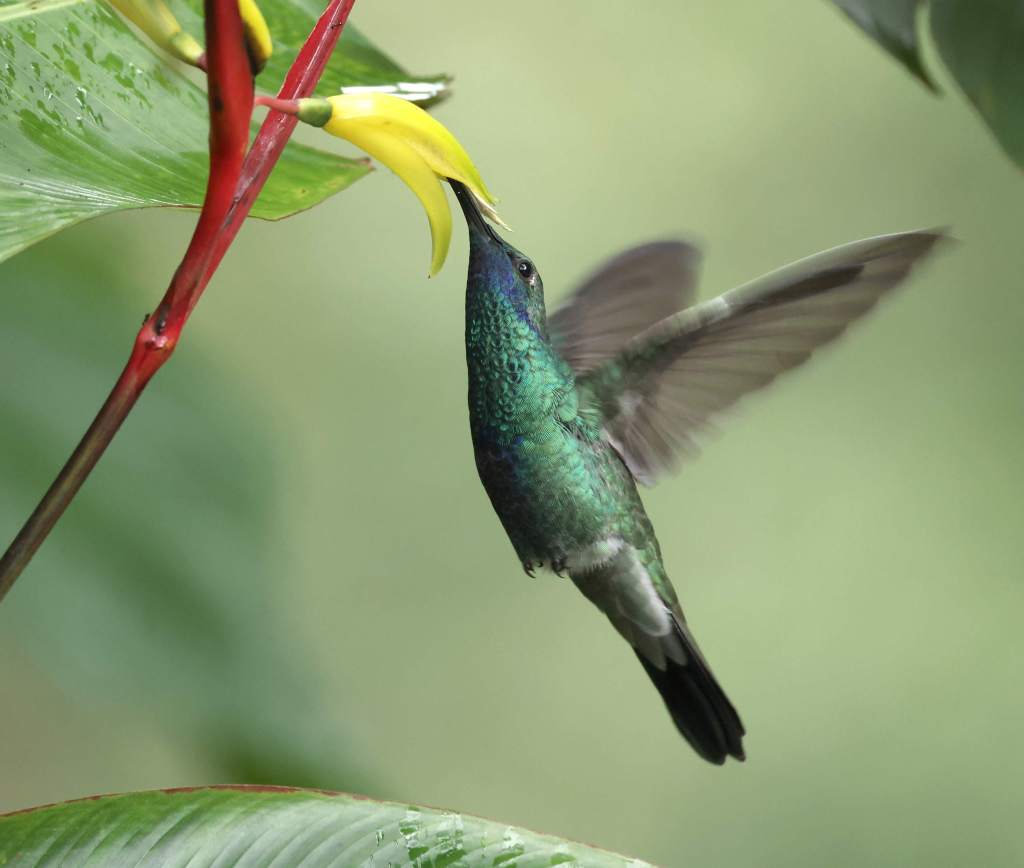
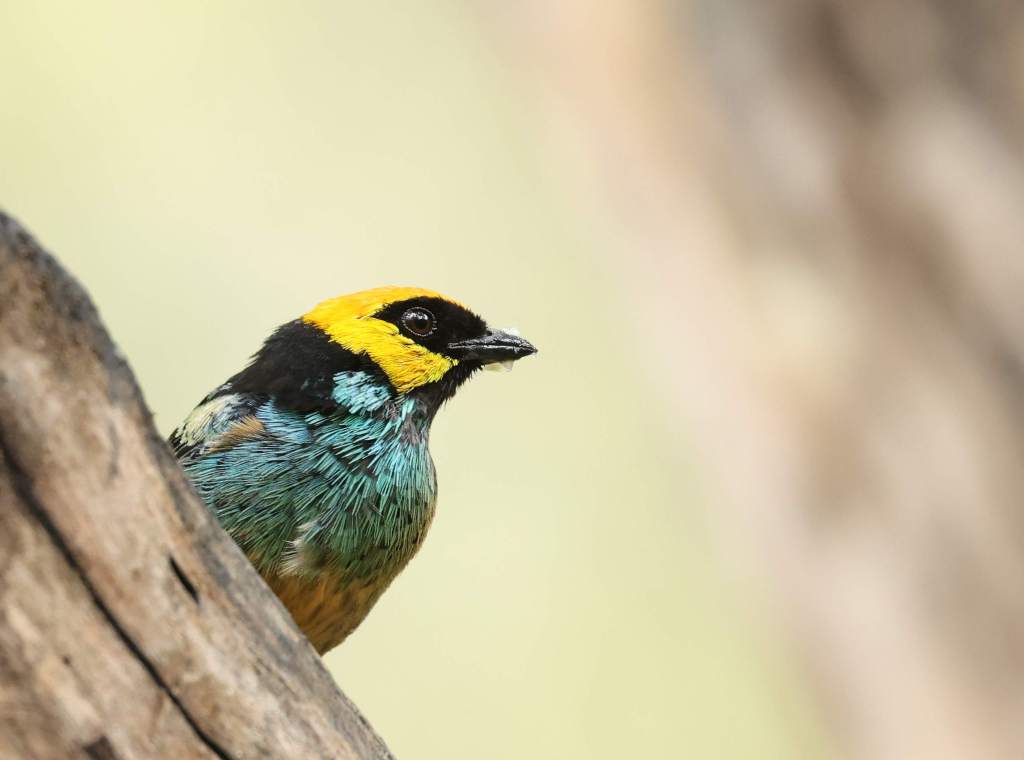
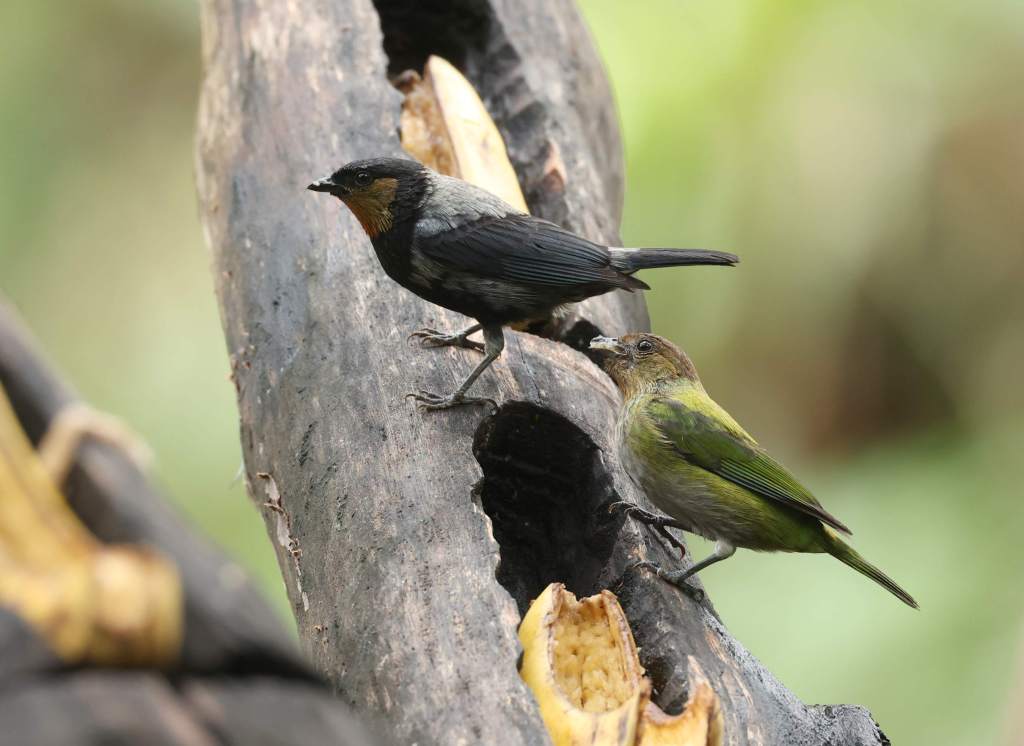
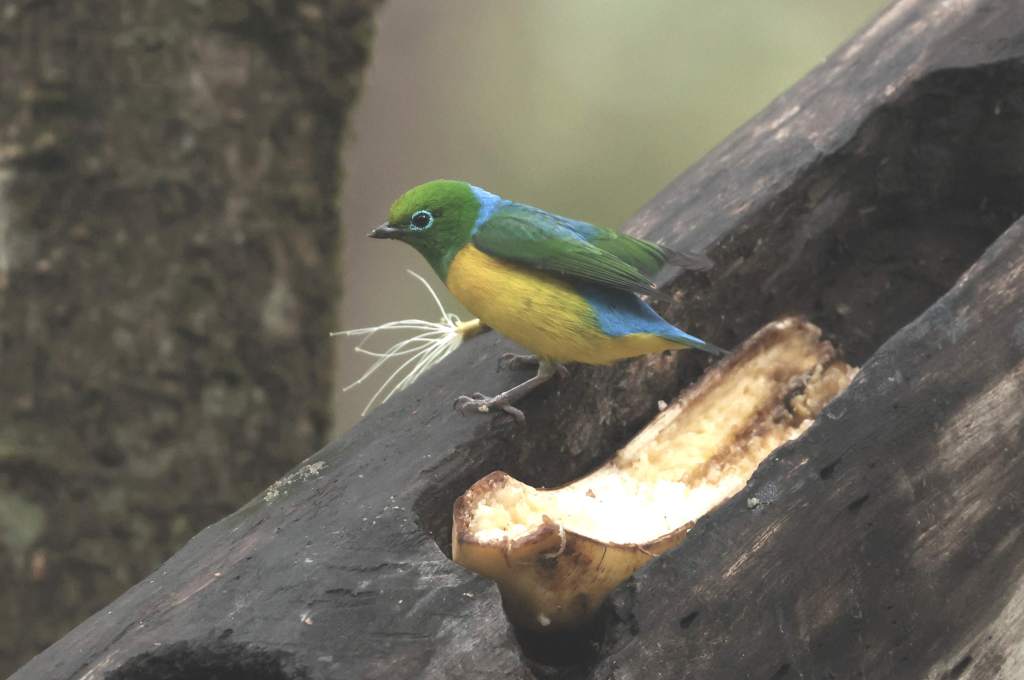
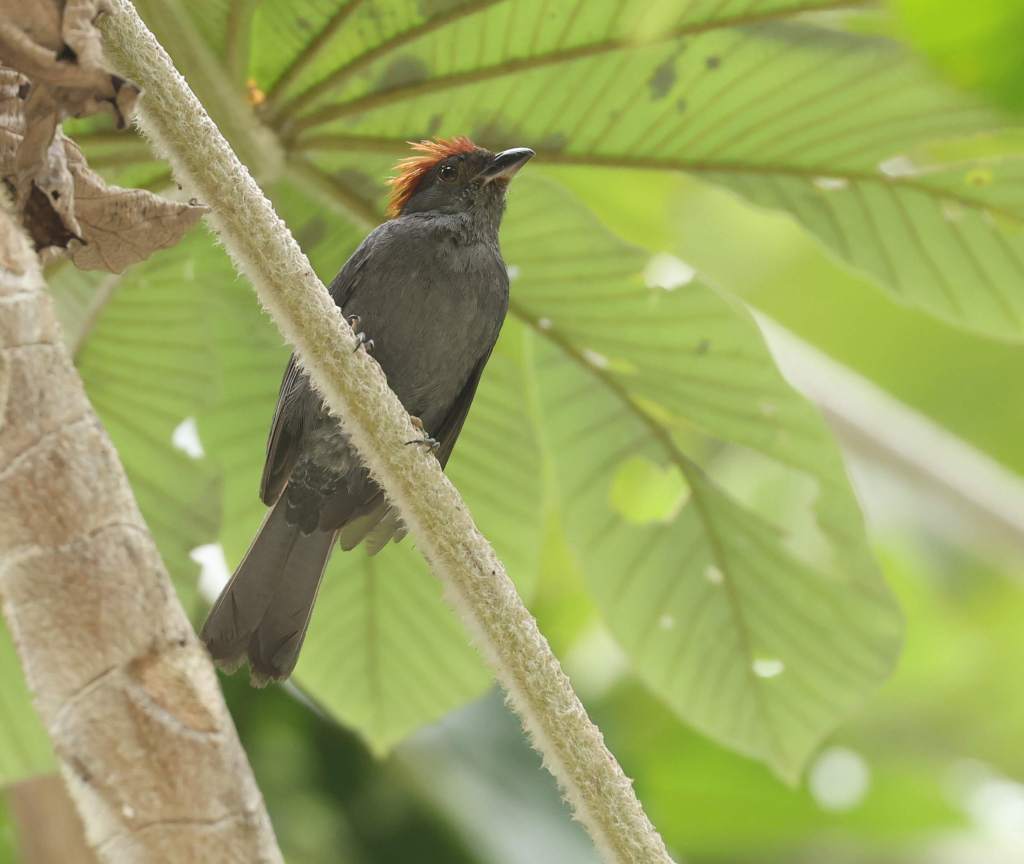
At the fruit feeders, Blue-Naped Chlorophonia instantly fell into the category of “bird I only ever saw once but would love to see again”, while Silvery Tanagers, Saffron-Crowned, Blue-Necked and of course Blue-Grey Tanagers all made an appearance.
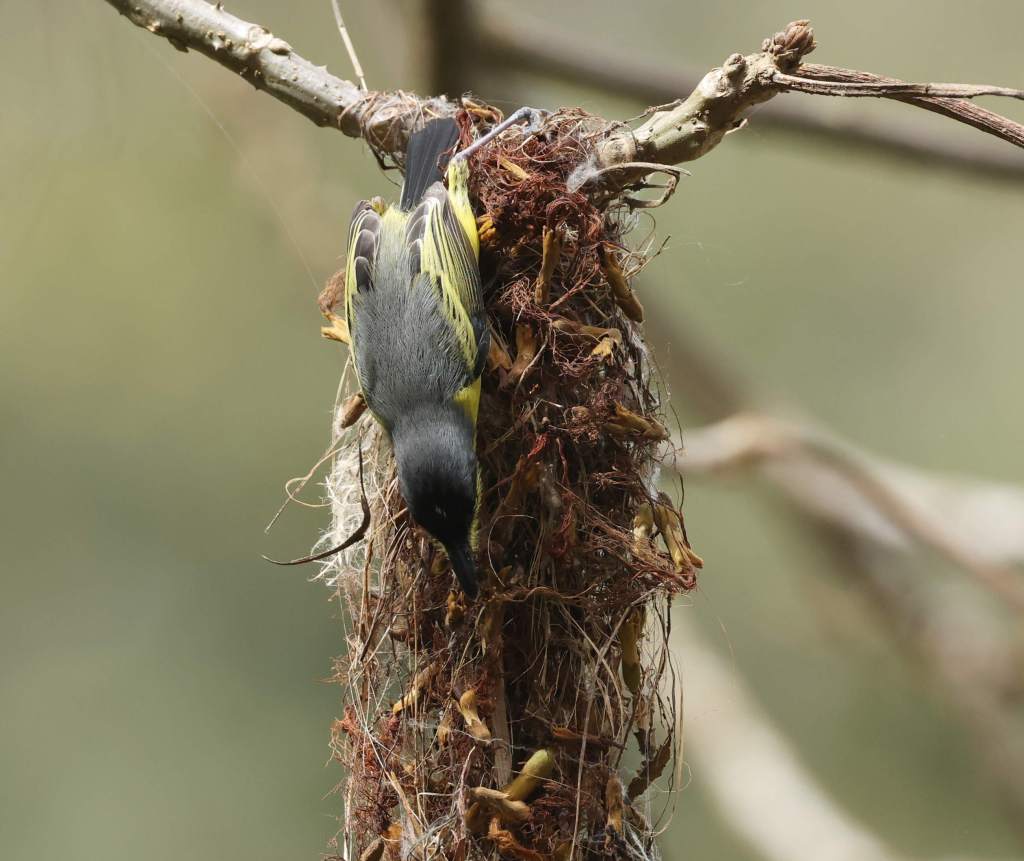
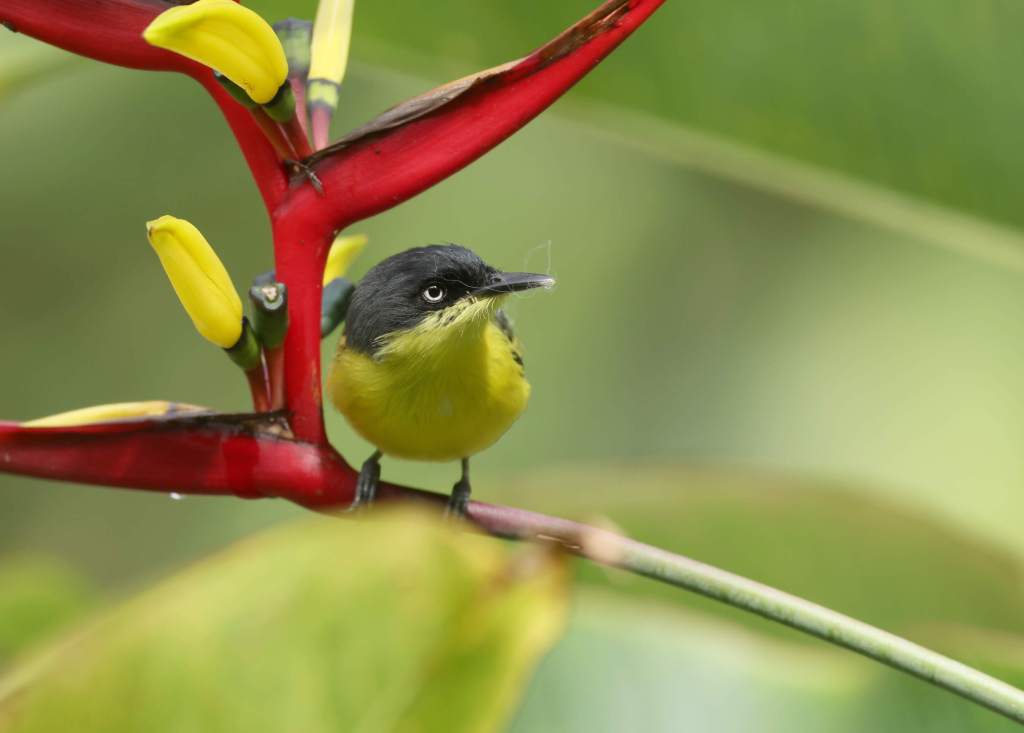
Special mention must be made of the pair of Common Tody-Flycatchers which were busy nest building just outside our door. Oh, and the Torrent Tyrannulet that happily roosted on the roof for a while. Deeper in the hotel grounds we also found Andean Cock-of-the-Rock, Andean Motmot, Golden-Olive Woodpecker, Roadside Hawk, Mottle-Cheeked Tyrannulet, Sclater’s Tyrannulet and a few types of Euphonia. Phew! The bird-spotting was partly helped by the complementary guided nature/bird tour the hotel provides which starts at 6:30am.
You can follow the road that winds alongside the Urubamba River to the west of Aguas Calientes for about 1.5km, all the way to the start of the zig-zag bus road that goes up to Macchu Picchu. (Actually you can even go further as there is a (very steep) path up that road too, though I didn’t go that far.) All along here the birding is rather fine, what with the roaring river and riverside trees on one side (including some berry-laden tanager-attractors) and dense rainforest on the other side of the road. The only downside is you really, really do have to watch out for traffic, especially the big buses shuttling back and forth to Macchu Pichu. Also, watch out for getting caught in the rain.


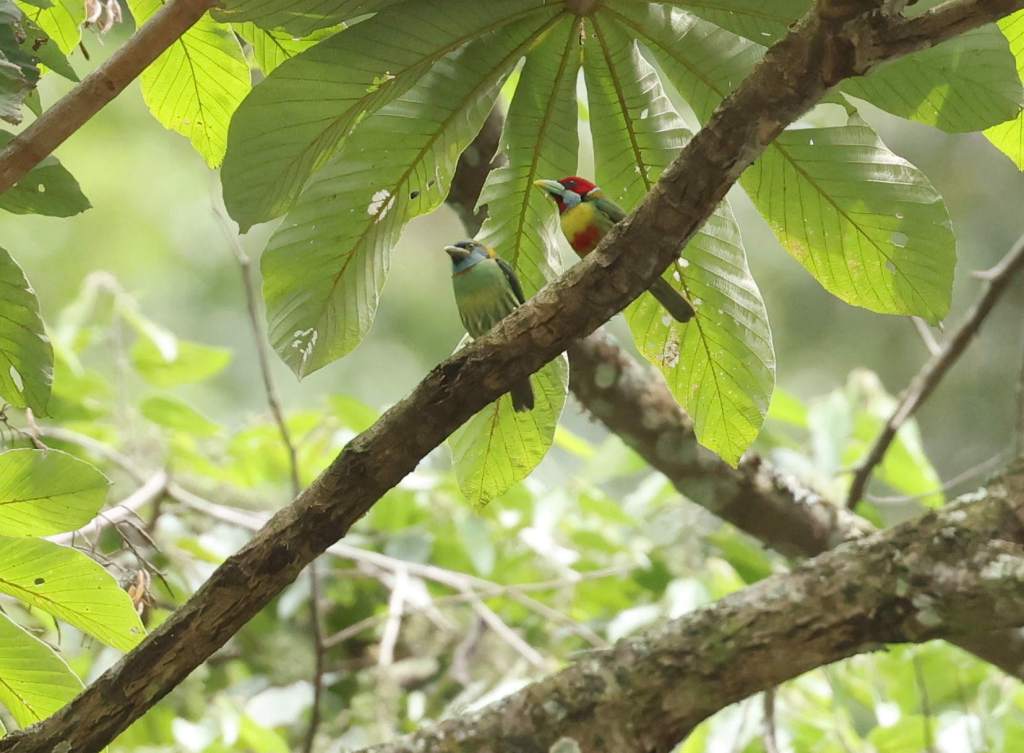
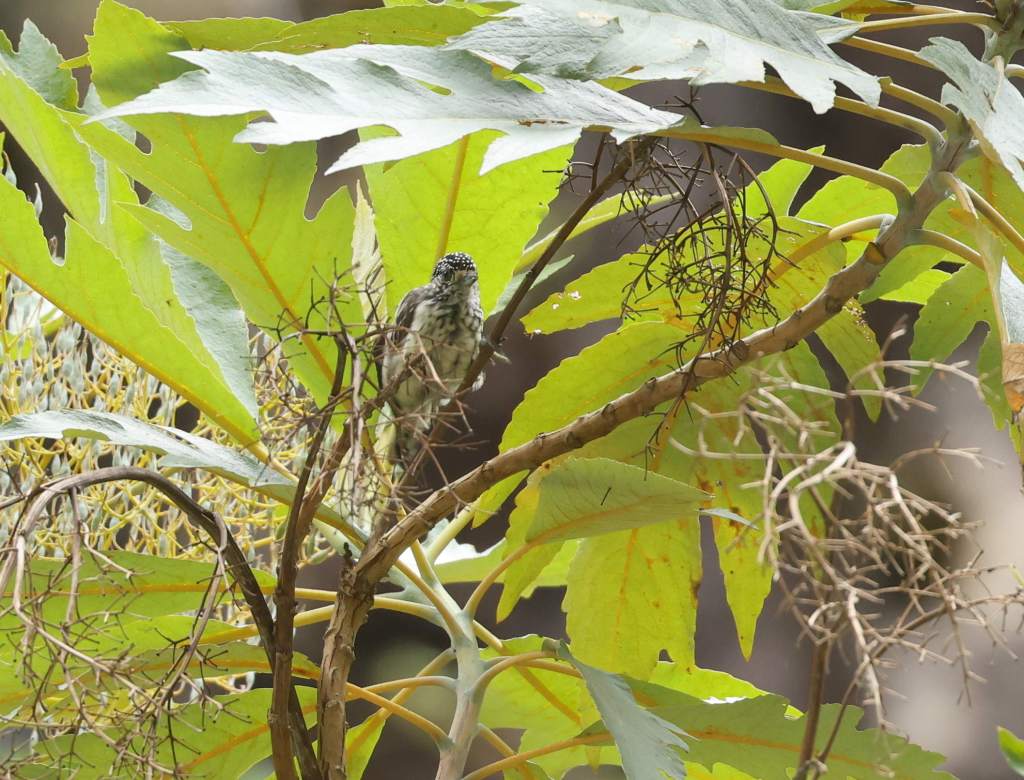
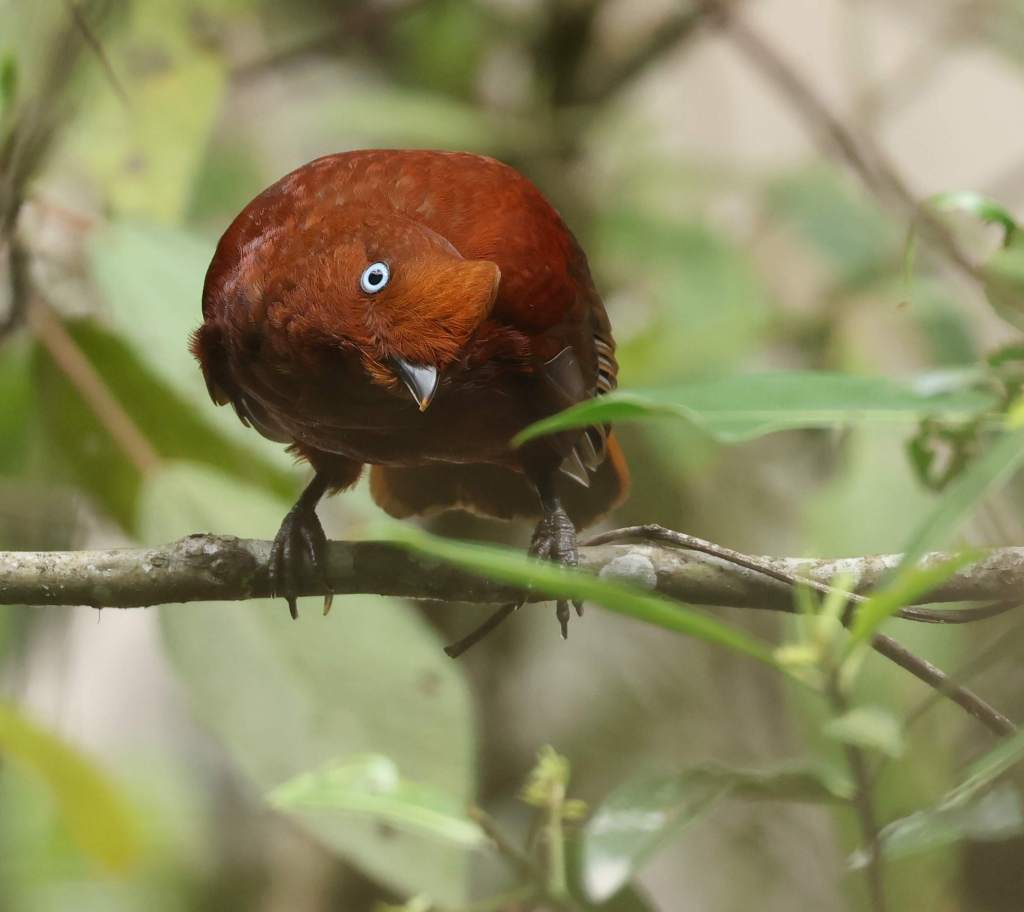
It really was a bit of a bird fest when mixed flocks passed through the rainforest, with a whole bunch of unpredictable appearances including Ocellated Piculet, Versicolored Barbet, Ashy-Headed Tyrannulet, Azara’s Spinetail, Blue Dacnis, Oleaginous Hemispingus and the incredibly punk-looking Slaty Tanager. Many of these weren’t really in good photographic proximity but even a short, distant glimpse was captivating. An icing on the cake was that around this time we also spotted a female Andean Cock-of-the-Rock close to the river; they are usually much less seen than the gaudy orange males.
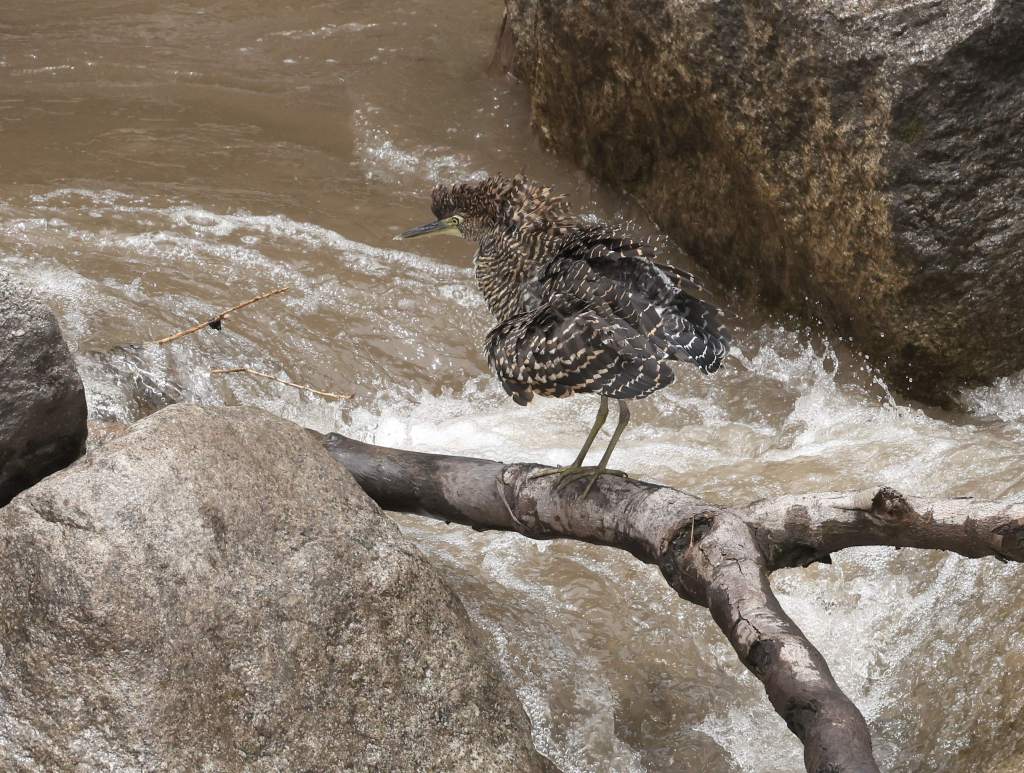
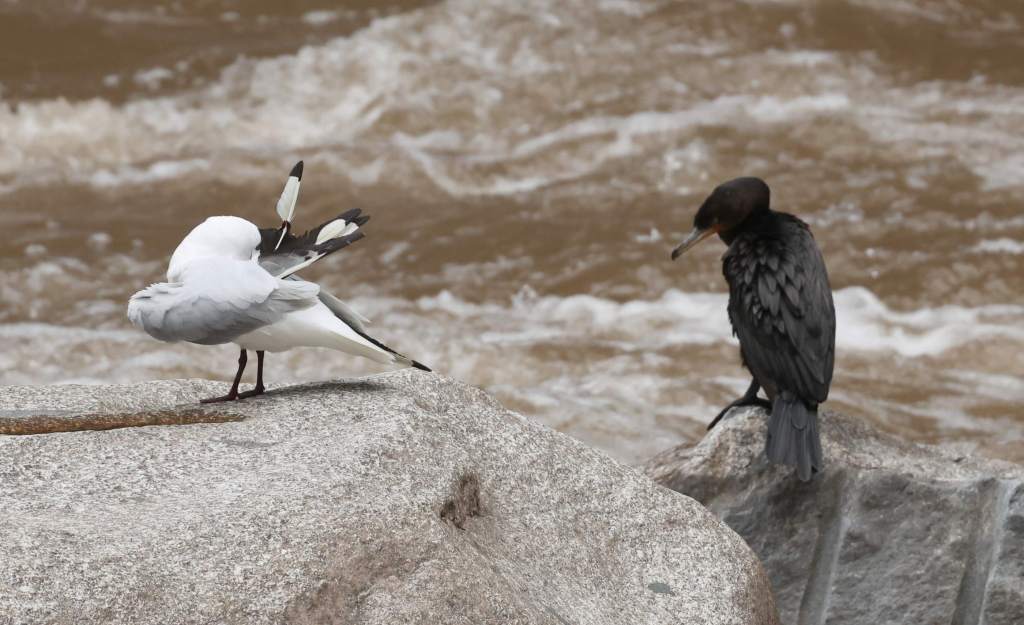
Birds on the river rocks included an immature Fasciated Tiger-Heron (we thought Rufescent Tiger-Heron at the time, easily confused by that intricate feather patterning I guess), the occasional Andean Gull and a few Neotropic Cormorants, and then…
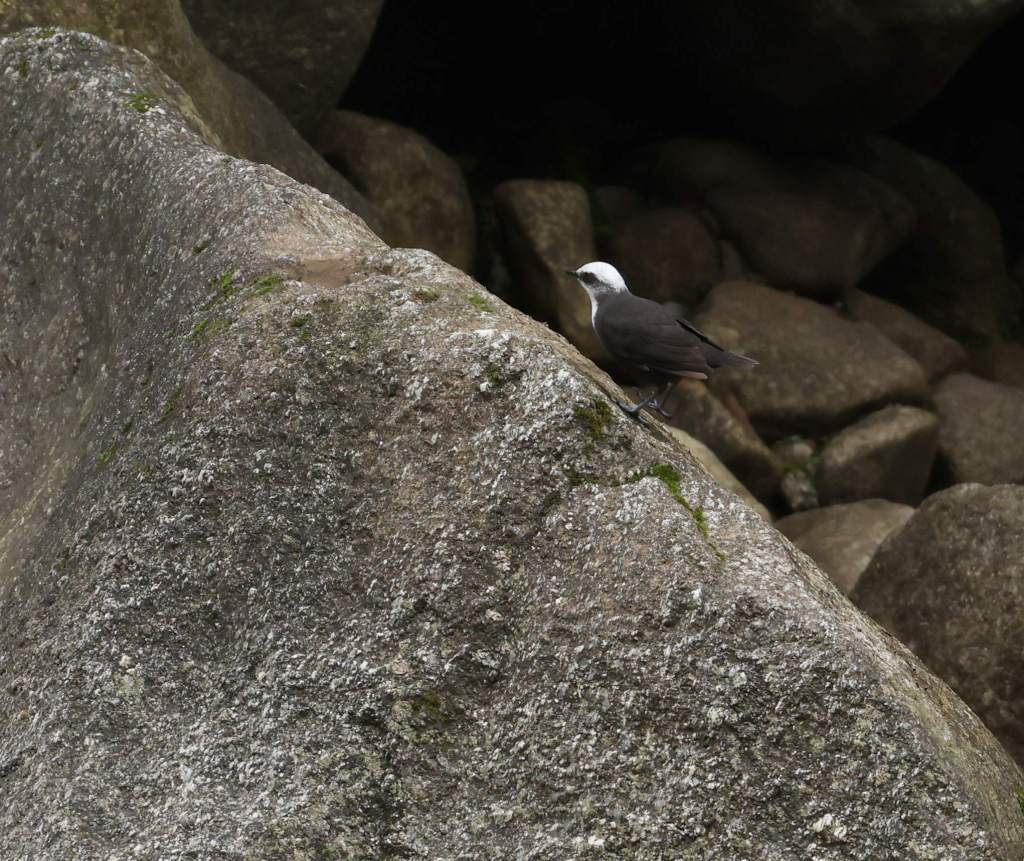
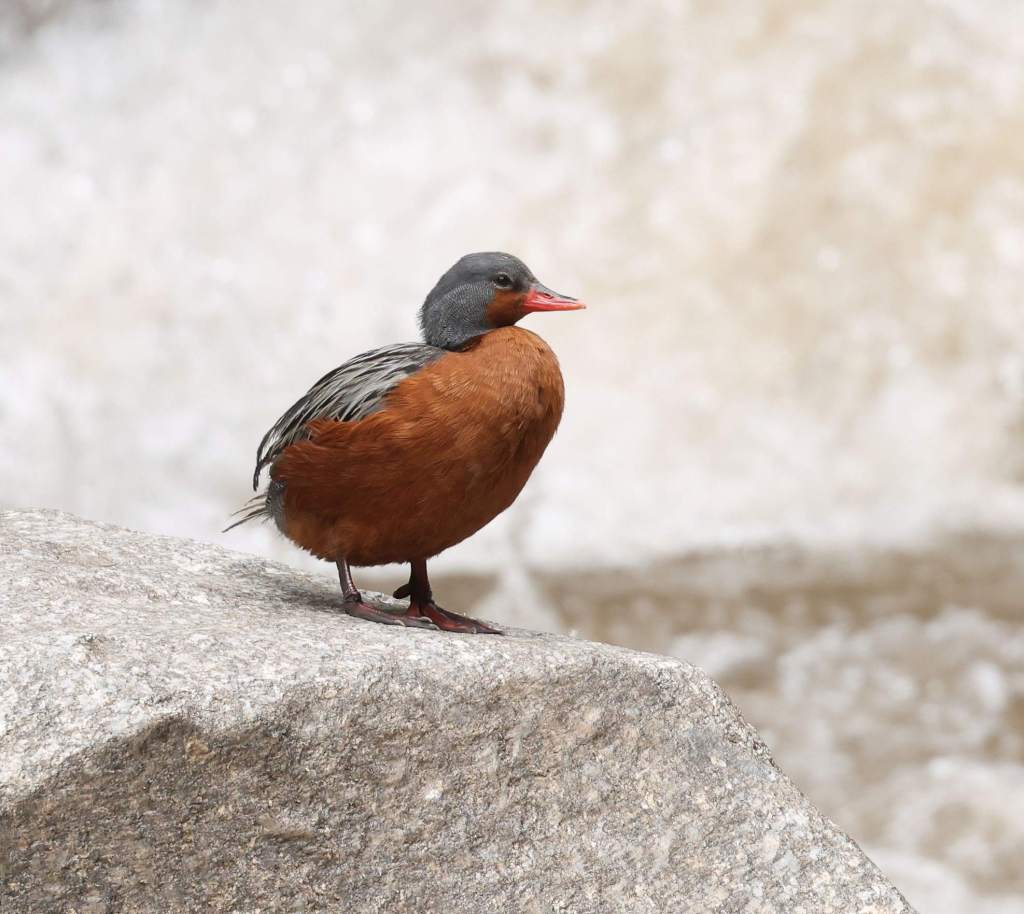
…just as we had spotted a pair of river otters on the other side of the rushing water, K-A spied a much smaller shape right by the otters – a White-Capped Dipper! We watched this tiny bird hop along the rocks for maybe a hundred metres all the way along the opposite riverside. Oh, and I should mention Torrent Ducks, too, because everyone seems to want to find them (and heck, I can understand that…): we saw at least 15 on the train ride from Ollantaytambo to Aguas Calientes, and then a single female placidly perched on a boulder in the river right near the town itself.
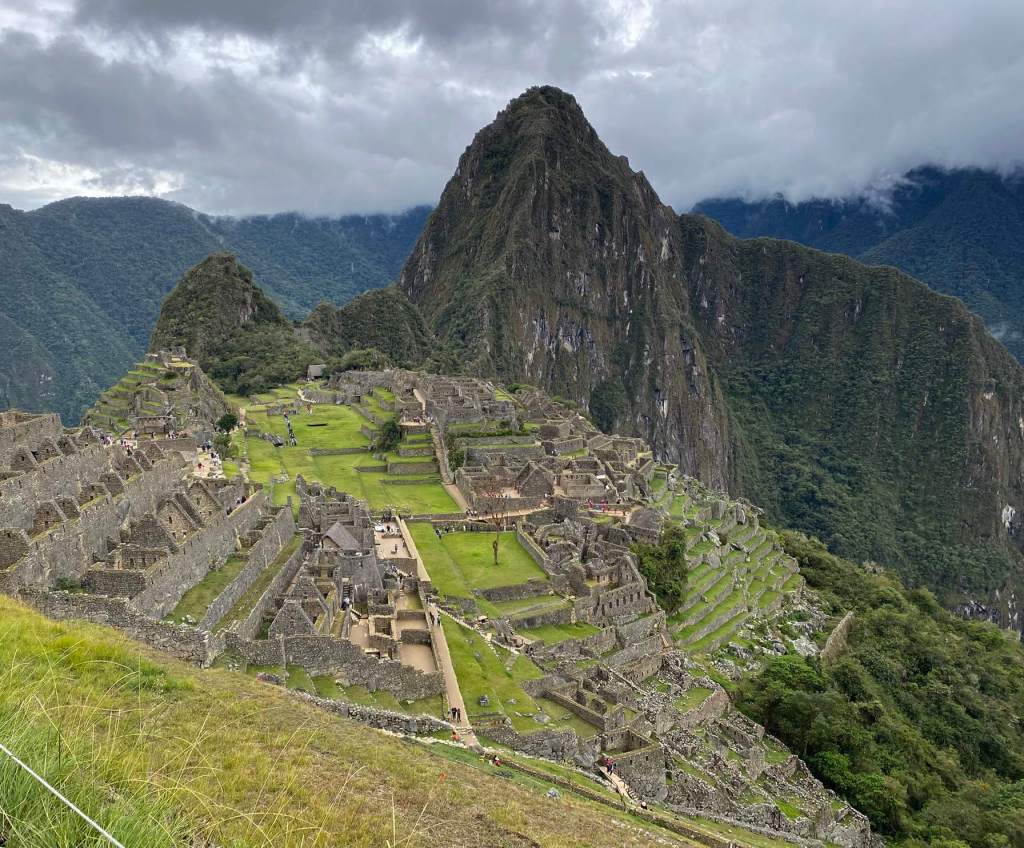
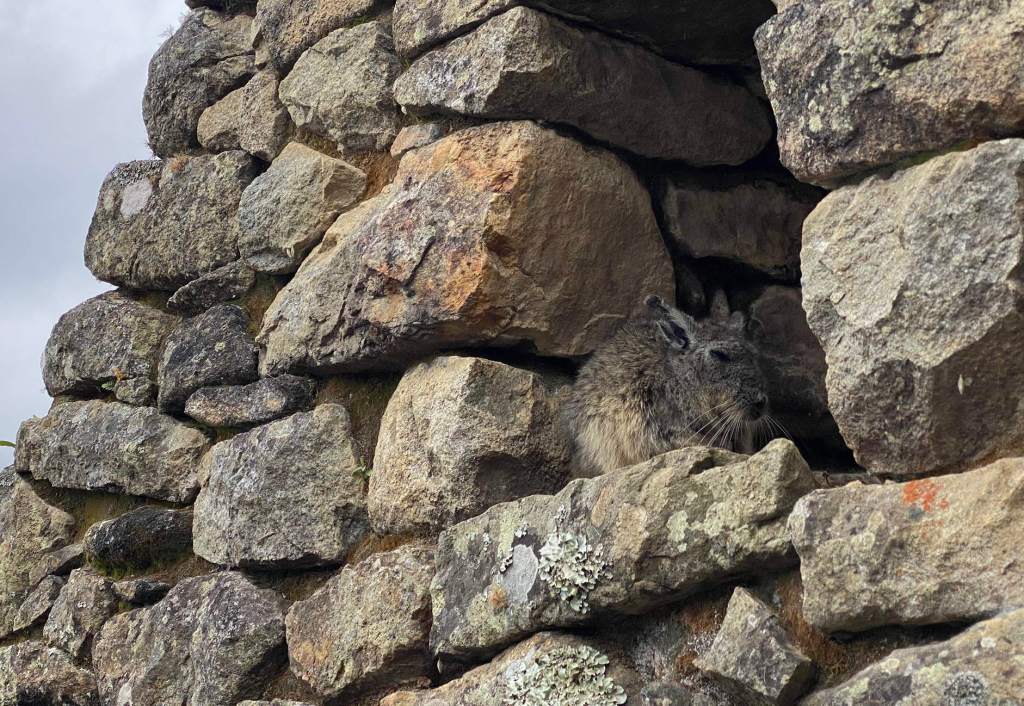
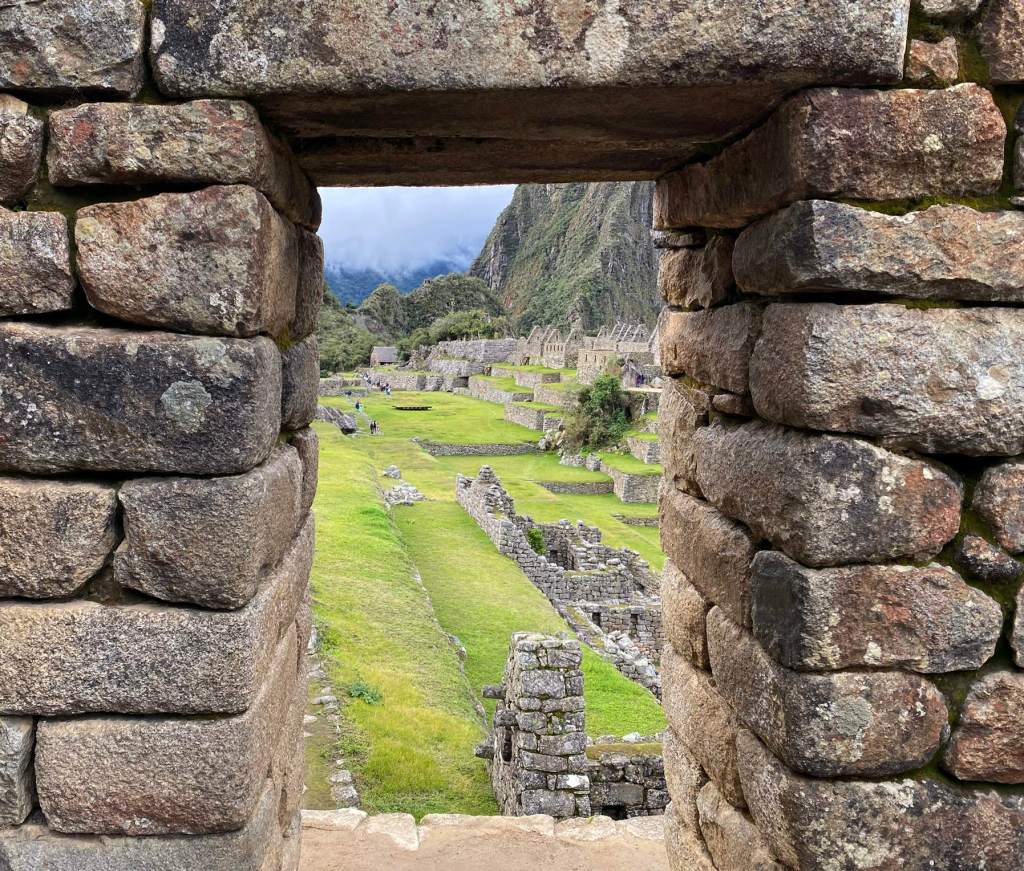
Oh, and as for that Macchu Pichu place… yes, it’s pretty fabulous. Partly what makes it so is the dramatic are the steep and often fog-laden mountains that surround it. The historic site itself is not particularly birdy – I only noticed a few swallows zipping around – though it does provide home for some adorable chinchillas, a furry rodent, so there is that.
On Being a Tourist: Cusco, Ollantaytambo and a Lagoon or Two
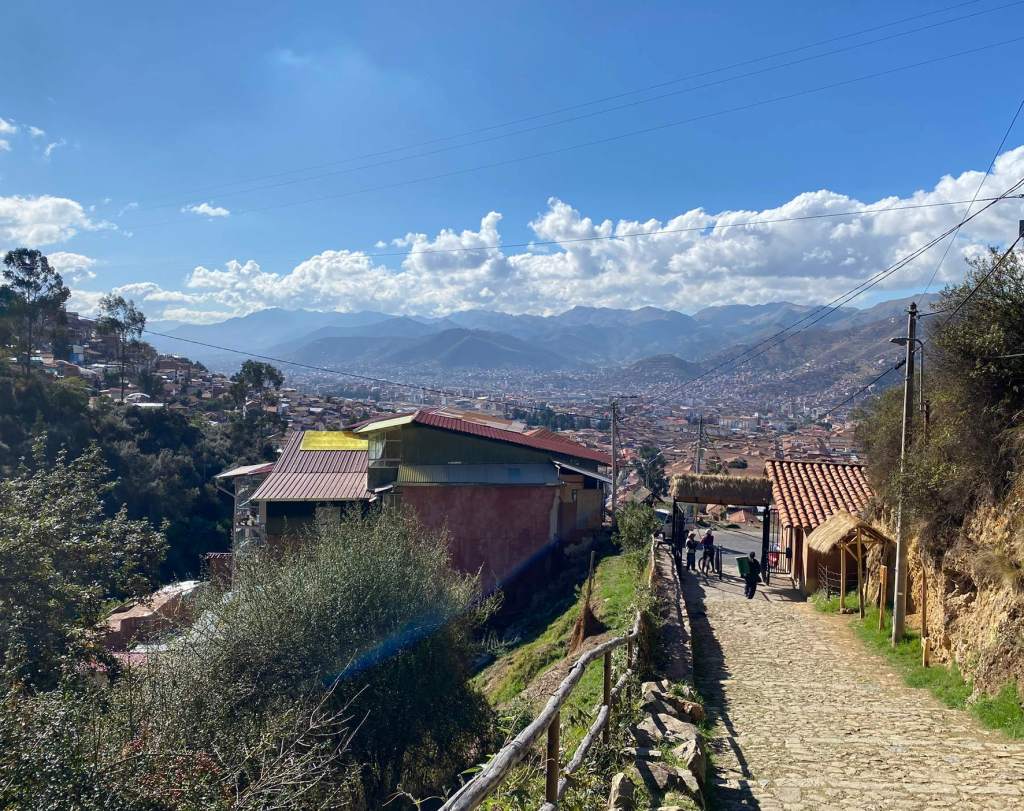
With flight connections to Lima and Santiago, you’re likely to be at least passing through the fast-growing city of Cusco. We spent a couple of nights here and enjoyed the restaurant scene and the “old town” section (San Blas). Above the town (walkable from San Blas) is the archaeological fortress site of Saqsaywaman, quite a pleasant place with excellent views to while away a few hours well above the hustle and bustle of the city.

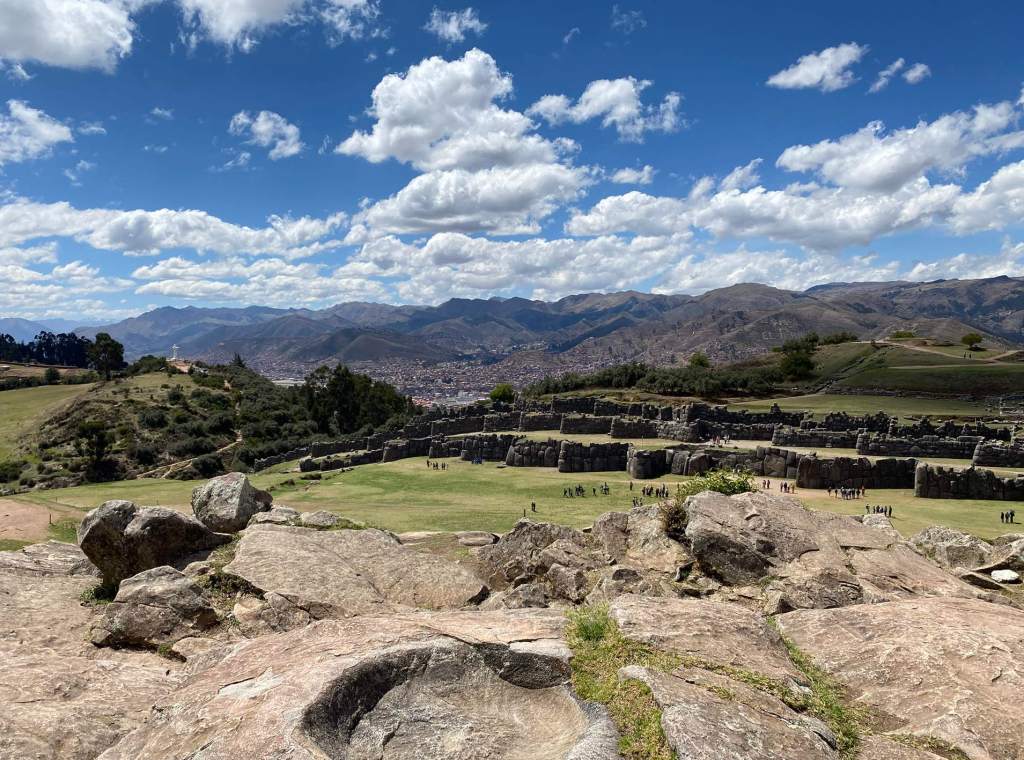
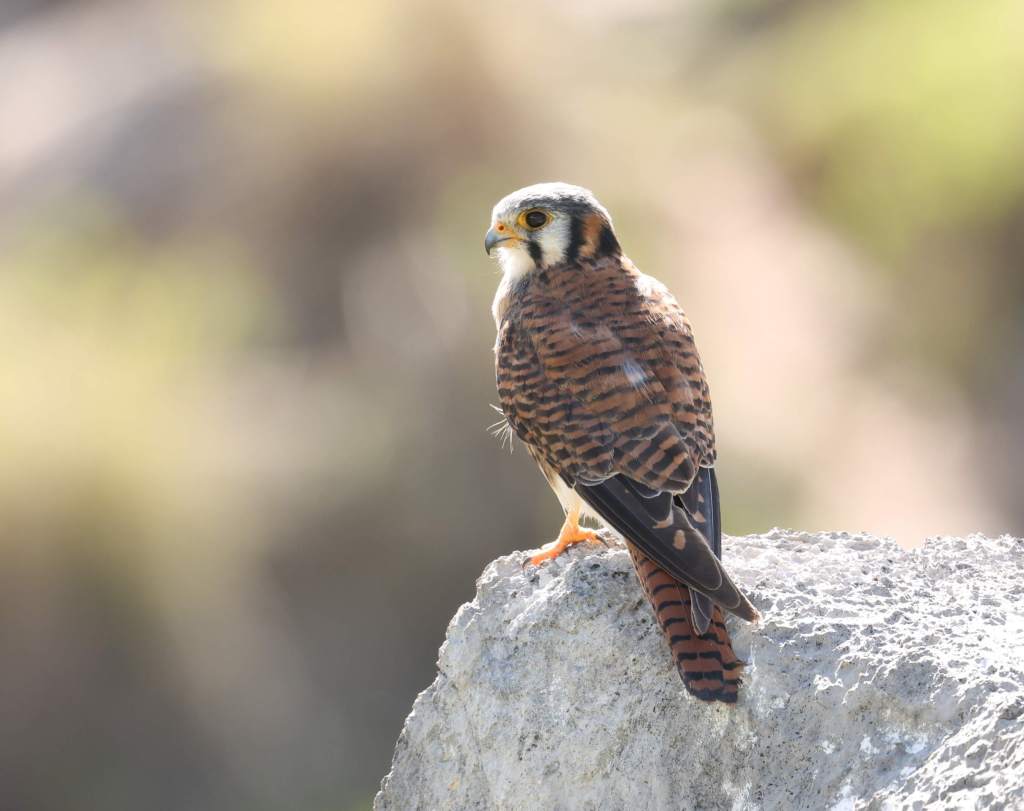
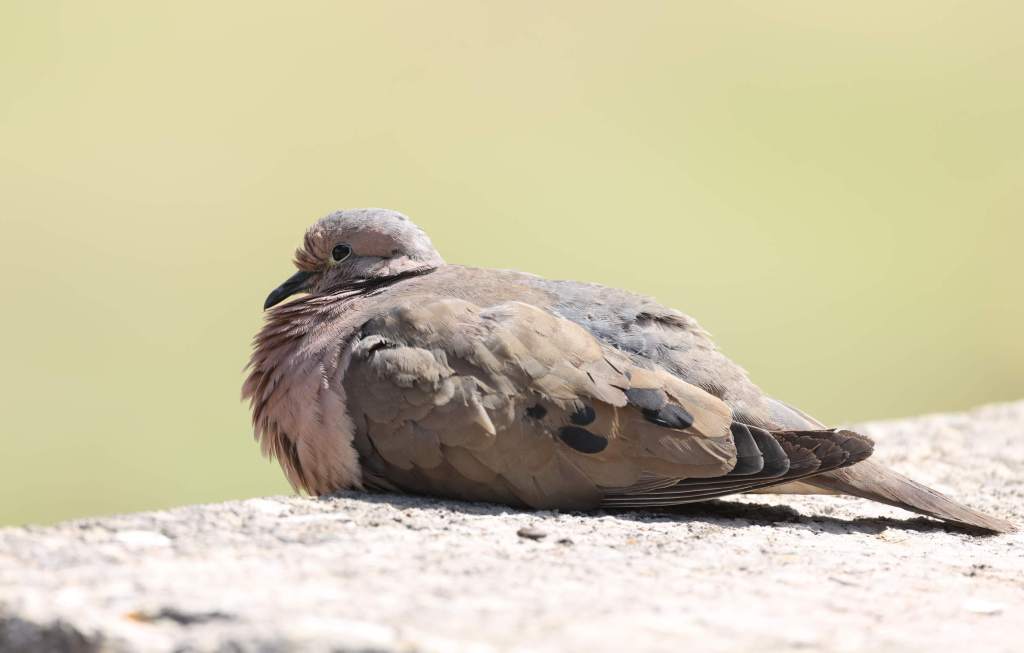
With 256 recorded species, eBird suggests Saqsaywaman is a fairly rewarding birding location, but despite covering most of the site at a very leisurely pace we found few of the target birds we’d hoped to come across. American Kestrel and a big group of Eared Doves (30 strong) were highlights, but we didn’t see any Spot-Winged or Bare-Faced Pigeons (for example). Oh well.
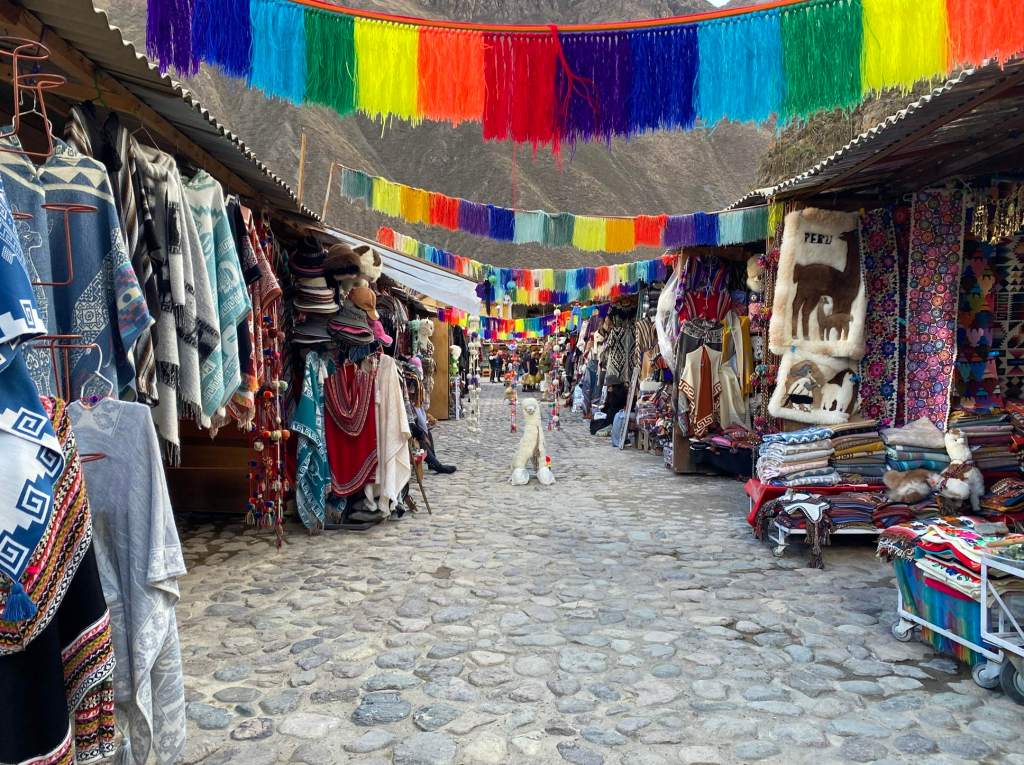
The town of Ollantaytambo makes a great base for many of the birding and cultural sites in the Sacred Valley, as well as having its own thriving town scene. It features a rushing river, a train station (it’s a 1.5 hours train ride to Aguas Calientes), and a very impressive (and steep!) set of ruins accessible right on one edge of the town. It’s not particularly “birdy”, but does alright with 240 species on eBird, and is generally a rather enjoyable place to be.

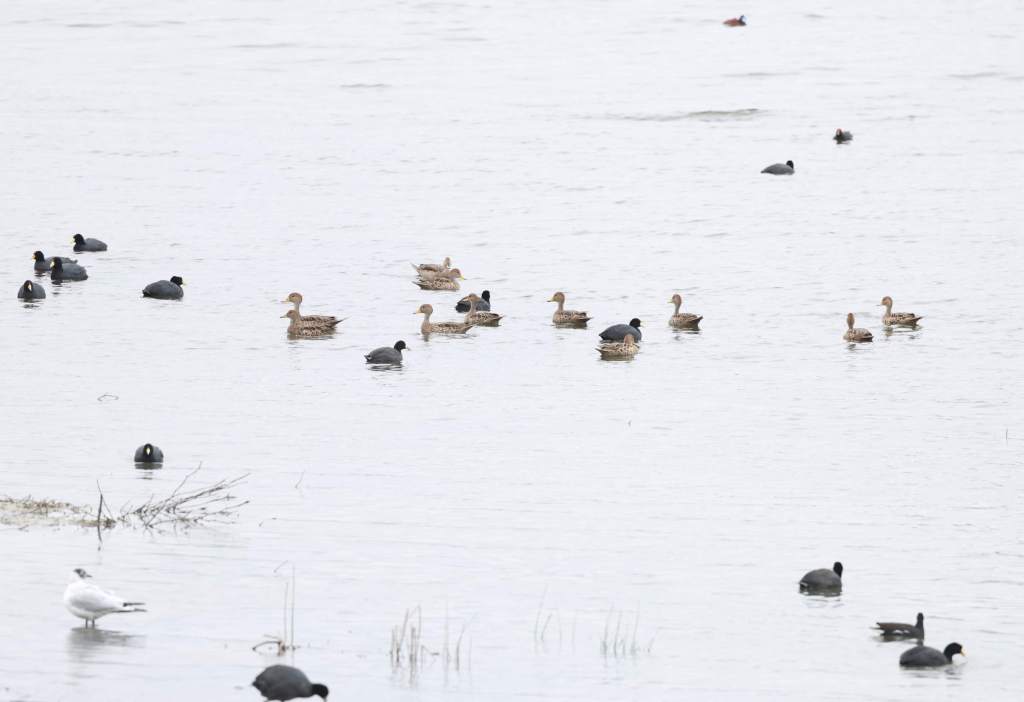
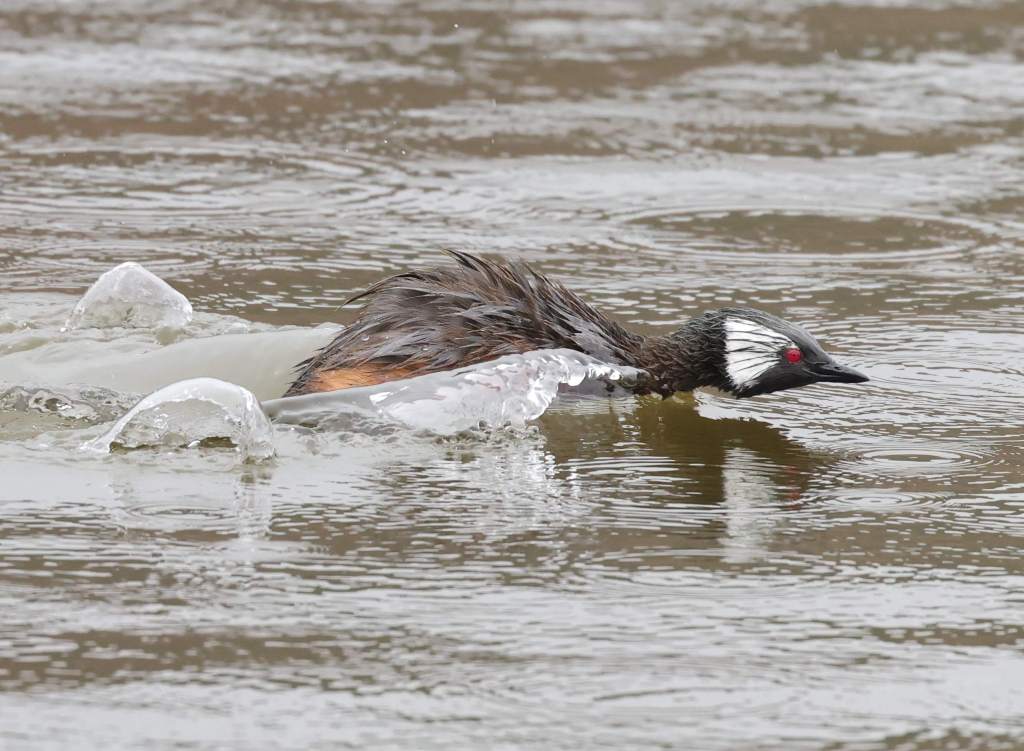
We also stopped at a pair of lagoons about 25km south of Urubamba – Laguna Ayacan and Laguna Huaypo. These are pretty good if you’re looking for some of the region’s water birds, and we got lucky with good looks at the superb Many-Coloured Rush Tyrant, spotting as well both Lesser and Greater Yellowlegs, White-Tufted and Silvery Grebe, Andean Duck, Plumbeous Rail, Yellow-Winged Blackbird, and liberal helpings of Slate-Coloured Coots. I must say I enjoyed the ambience of these two lagoons more so than Laguna de Huacarpay near Pisac.

Other places you might find yourself at in the Sacred Valley include the agricultural archaeological site of Moray, and the still-operating Maras salt mines. Both sites are fascinating, full of tourists, incredibly muddy when it rains, and any birding you might do there will be largely incidental.


Summary
In our planning we aimed to combine birding with places of tourist/cultural/historical interest, and the Sacred Valley ticks those boxes about a million percent. While I knew Abra Malaga was likely to be a worthwhile site from previous research, and I’d also read good things about Ensifera Camp, I was very pleasantly surprised at the excellent birding at Aguas Calientes combined with an interesting town and the lure of the mighty Macchu Pichu site nearby.
AUTHOR: ANDY GEE
BIRDERS: ANDY GEE, K-A
 Bird Spots