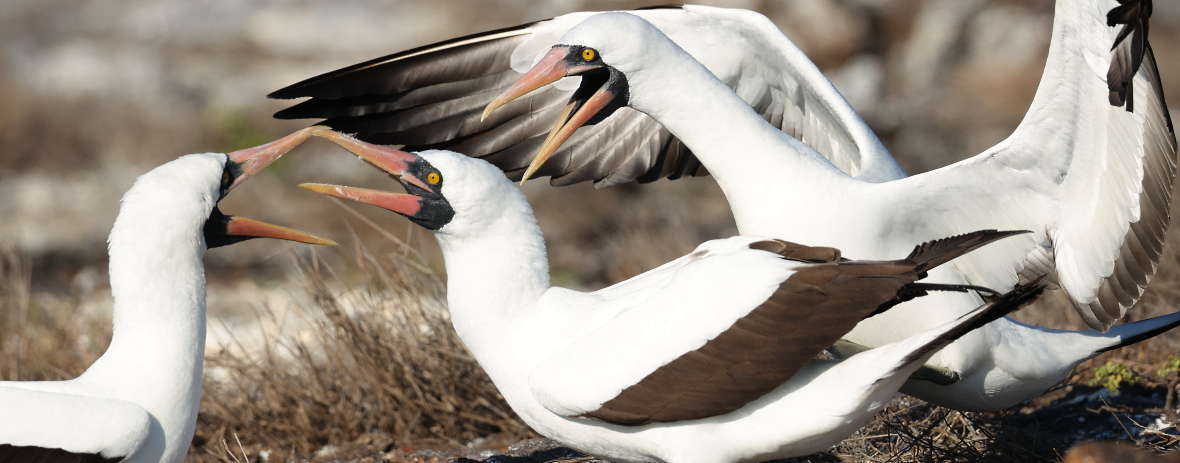
The Galapagos: the crucible for Darwin’s theory of evolution, isolated for millions of years and an equatorial home to a variety of birds and animals found nowhere else… it’s no wonder it’s on many people’s bucket lists of places to visit. We journeyed there in December 2025, taking an 8-day boat cruise on the eastern half of the archipelago with G Adventures.
Most of the cruises at the Galapagos Islands, whose routes and landings are strictly controlled and determined months in advance, cover either only the western side or the eastern side, so you might find yourself having to choose one or the other. We opted for the eastern side in order to be able to visit bird-rich Genovesa Island, knowing that we were thus going to be missing out on some species, like Flightless Cormorant which is mainly in the west.
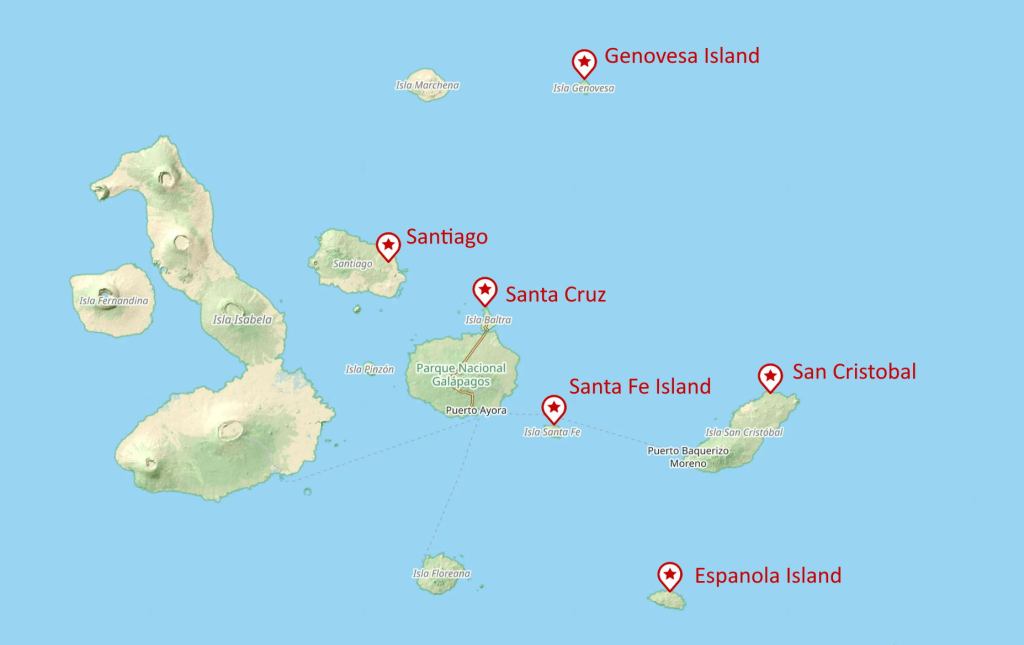
Tropical Paradise Starts Here: Baltra and Santa Cruz Islands
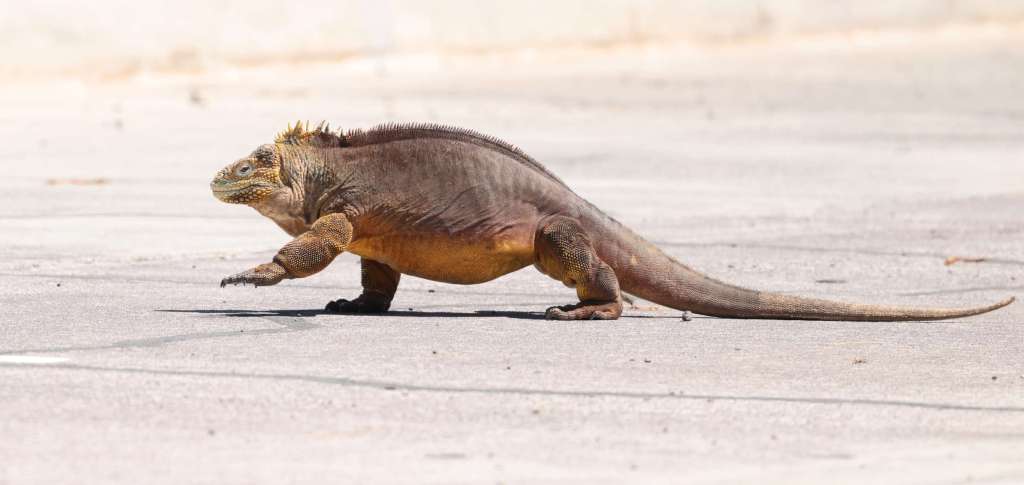
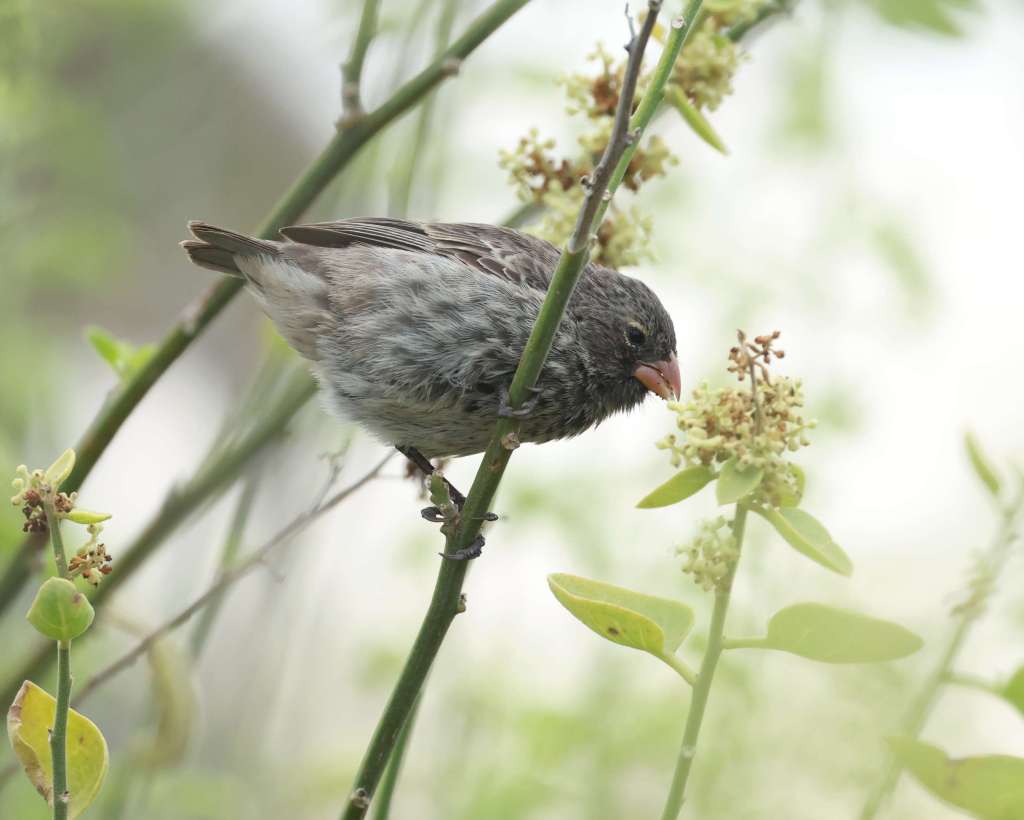
Birding started right at the airport terminal (in this case, at Baltra Airport, one of the two airports servicing the Galapagos Islands from the Ecuador mainland), with Small Ground Finches not only hopping around right outside, but sometimes even venturing inside the terminal building. According to eBird there are chances of several endemic Galapagos land birds here, not only finches but Galapagos Dove and more. The other notable animal I saw at the terminal was a Land Iguana, lazily crossing the road.
Yep, it’s that kind of place.
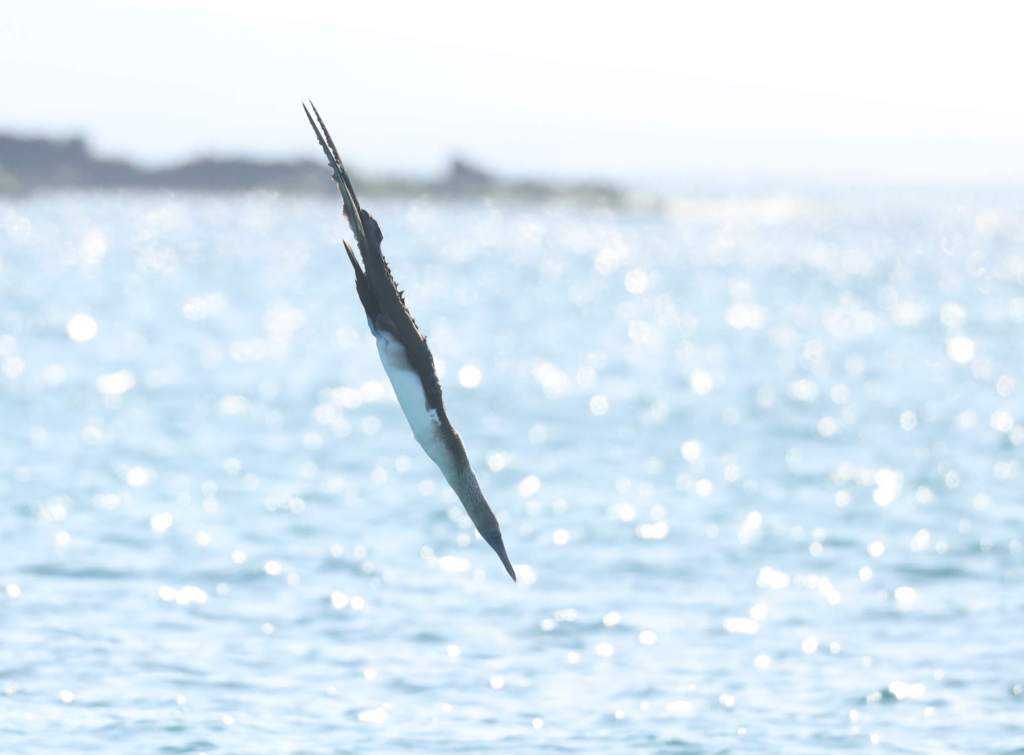
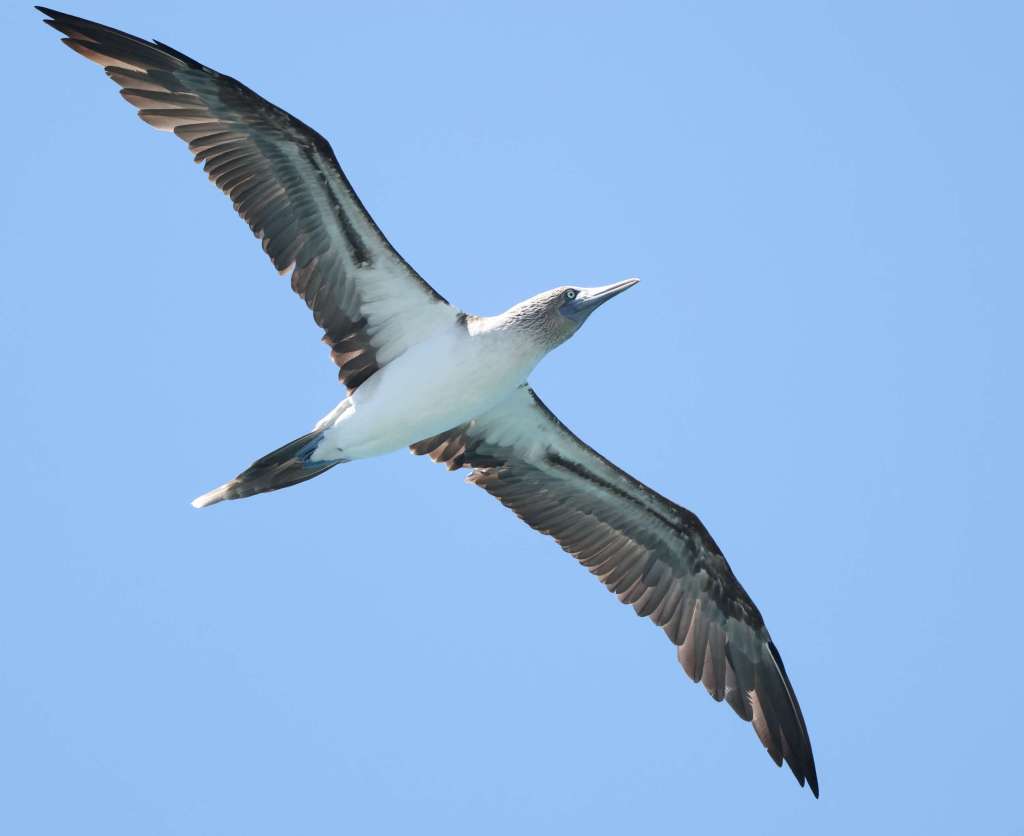
The airport is located on Baltra Island, which although only a hundred metres or so from Santa Cruz island, isn’t connected to it, so tourists have to take a short bus ride to a ferry terminal and are then shipped across the narrow strait, with suitcases and bags tossed haphazardly on top of the vessels. This is the first taste of super clear water, with what-you-will-soon-discover-to-be-ubiquitous frigatebirds soaring overhead. There are two species of frigatebird here: Magnificent and Great Frigatebirds, and unfortunately they can be tough to tell apart. Blue-Footed Boobies (an iconic Galapagos bird), Brown Pelican, and Common Noddies are also common here.

Santa Cruz island is one of the four islands with towns, and it also possesses what passes for “highlands” here: elevation up to 600m or so, with markedly more green vegetation. Galapagos Giant Tortoiseses roam the fields, mixing in with cows and cattle egrets, while finches seem to be everywhere too. Introduced Smooth-Billed Anis can be seen and here and there a Yellow Warbler. I was amused to take a photo of a Yellow Warbler alighting on a tortoise’s back at El Chato Ranch, while a finch (Small Ground or Medium Ground) appeared to fulfill the ecological role of scavenger bird, brazenly hopping right onto our group’s lunch table and snacking on some leftover dessert cake!
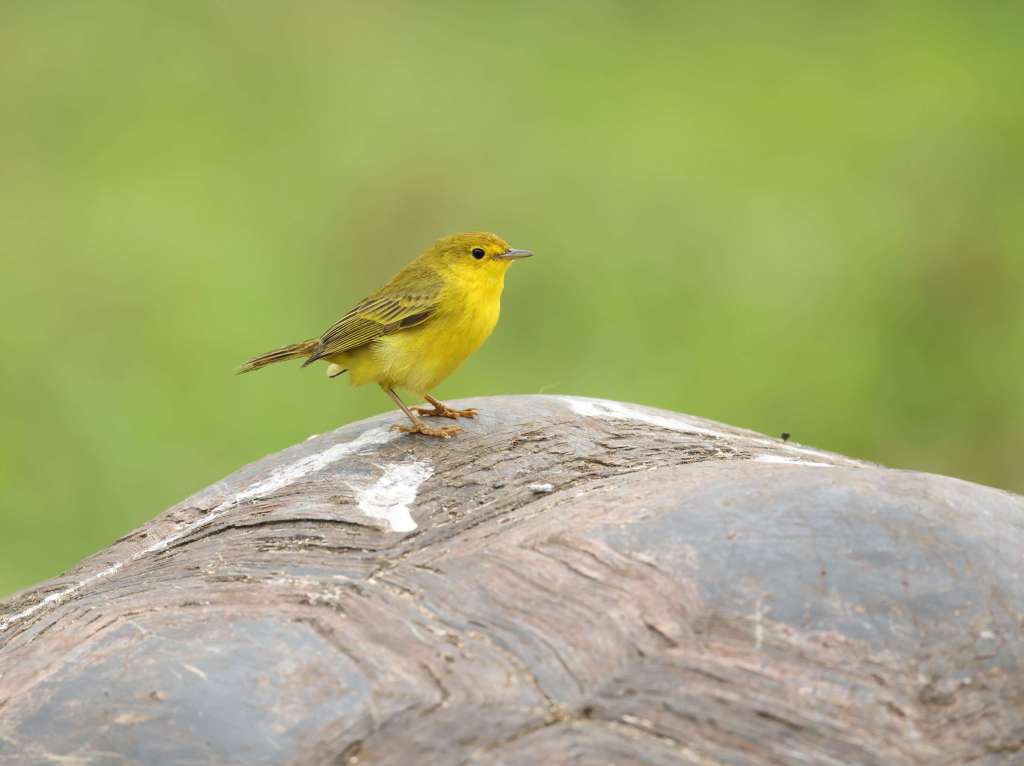
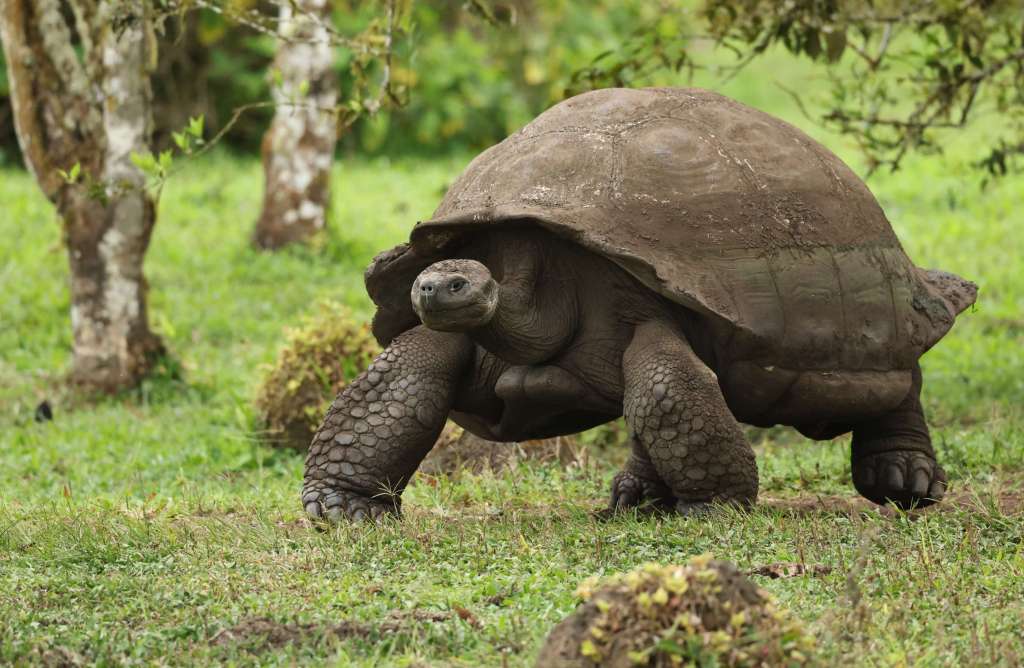
As we were to discover, animals not caring about human presence is definitely a phenomenon throughout the Galapagos, moreso perhaps than anywhere else in the world.
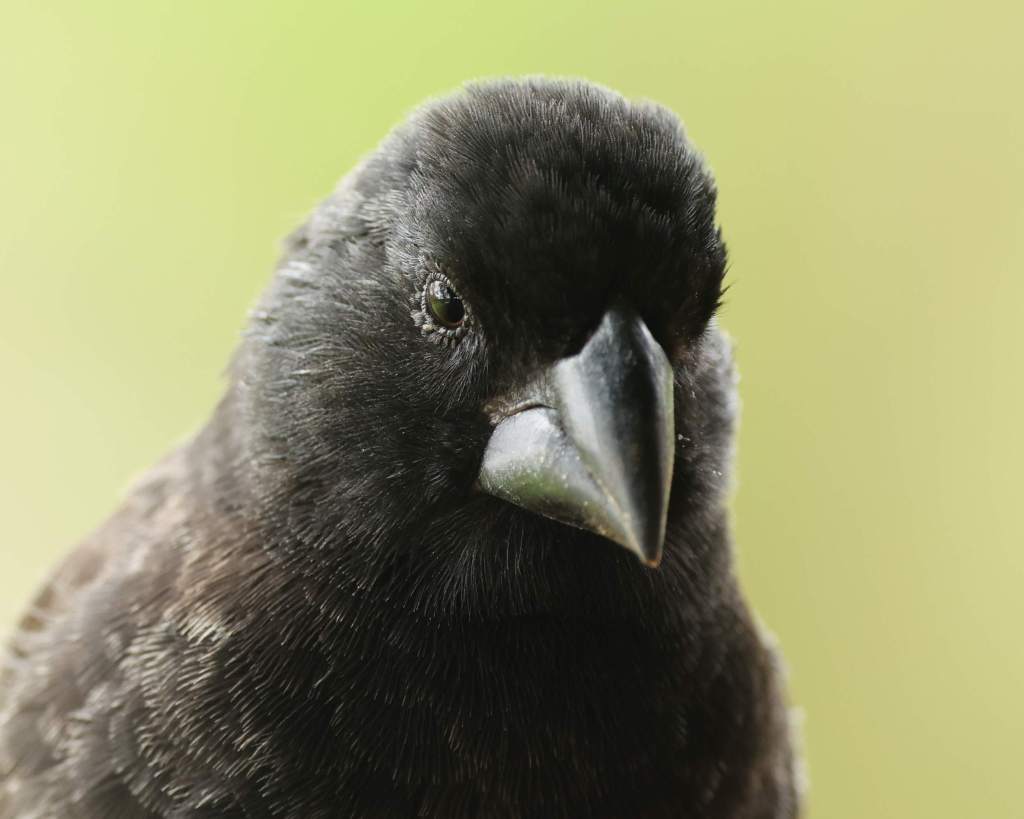
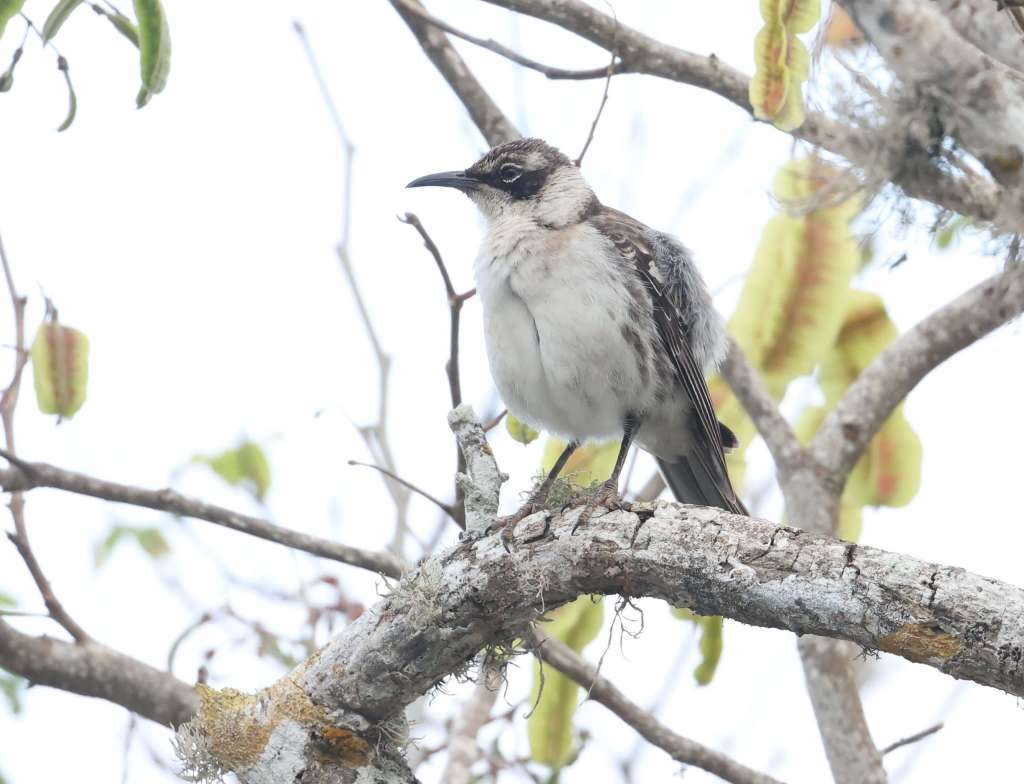
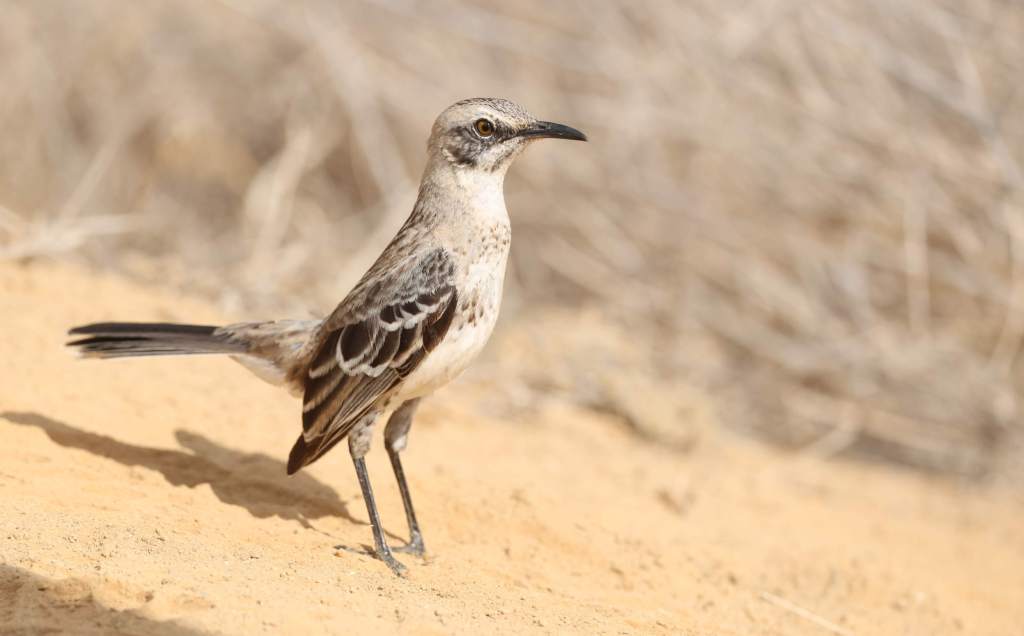
At the Charles Darwin Research Station at the south of Santa Cruz, a 600m walk from Port Ayora, you can find out more about their important conservation work and see tortoises of various ages up close. When tearing ourselves away from the tortoises and ubiquitous finches, we also found our first Galapagos Mockingbird and Galapagos Flycatcher. It seems there is a “Galapagos” version of many bird types!
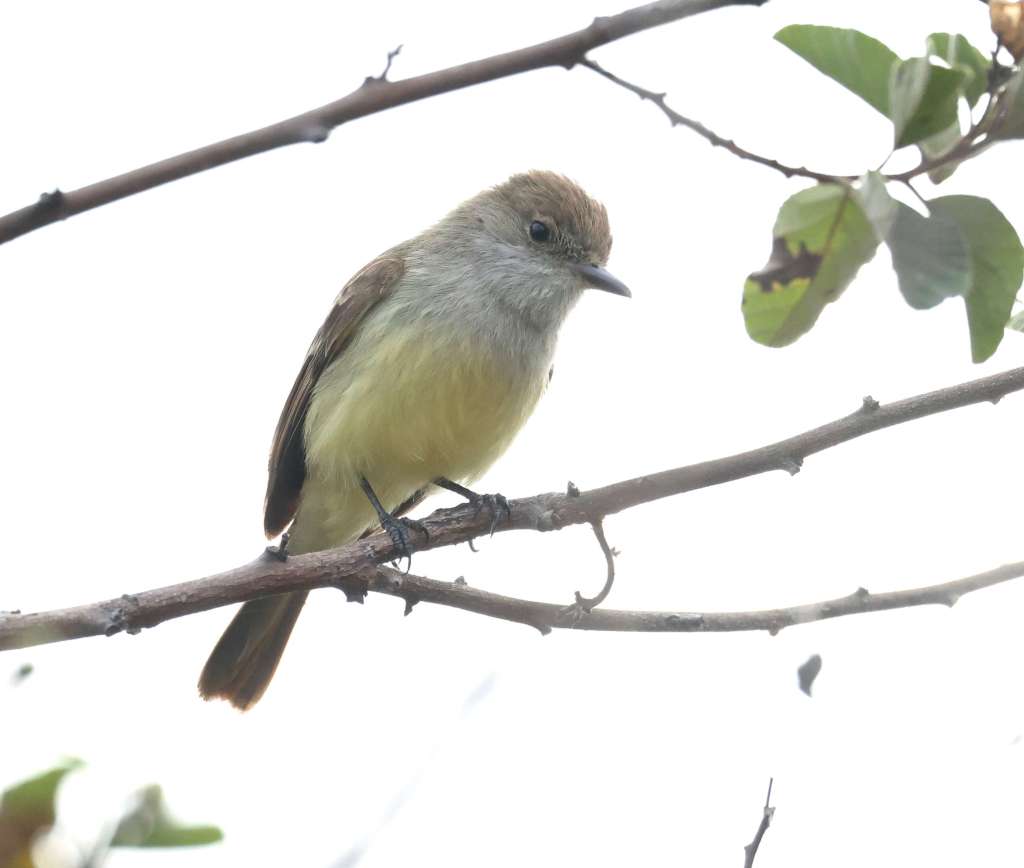
There are three mockingbird species in the Galapagos: the Galapagos Mockingbird and two island-specific ones: San Cristobal Mockingbird and Espanola Mockingbird. Their influence on Darwin’s theory of natural selection is just as important as the finches, perhaps even more so, though their role is much more unsung.
Unfortunately our tour didn’t take in the humid highlands (found on some of the bigger islands) where some more specialised birds can be found, like Sharp-Beaked Finch and Green Warbler Finch.
Life on the Water
Whether you are taking one of the many dedicated Galapagos cruises on offer (where you sleep on the boat, as we did) or island-hop using the local ferries, you are going to find seabirds. Oftentimes you won’t even need to leave port – we saw Elliot’s Storm-Petrel (also known as White-Vented Storm-Petrel) in the Port Ayora harbour… normally (at least in Australia), you’d have to take a pelagic boat trip many miles offshore to spot these small birds (just 24g in weight!) that flutter and dance with adorable dangling legs across the surface of the sea.

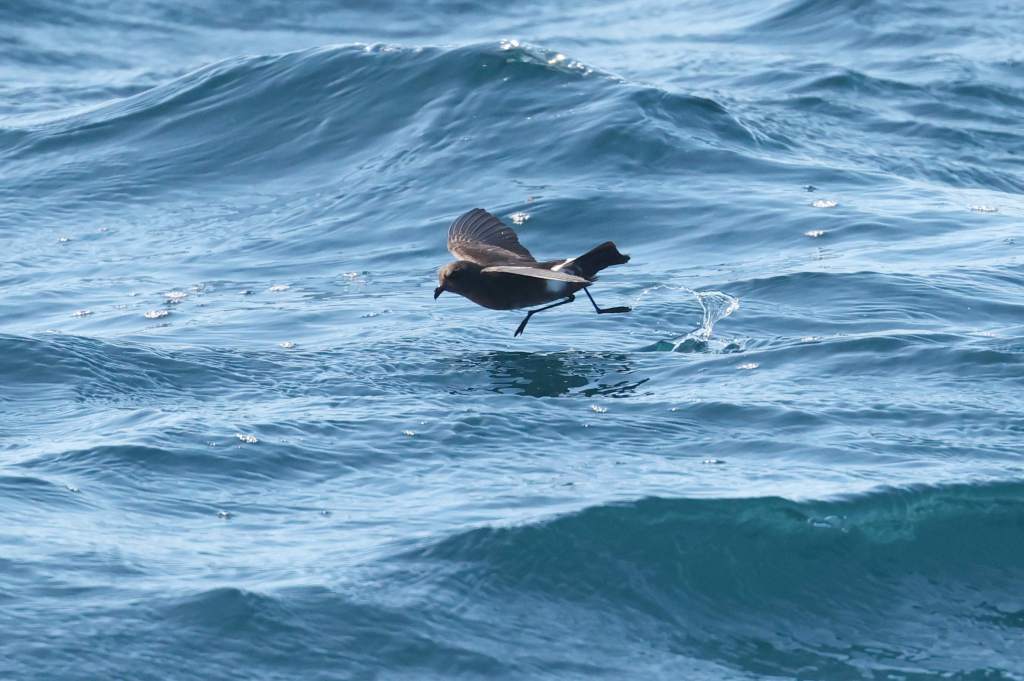
There are three Storm-Petrels to be found, the other two being Wedge-Rumped (larger triangular white rump patch) and Banded (narrower band-like rump patch); in these species the legs do not trail behind the tail as they do for Elliot’s.
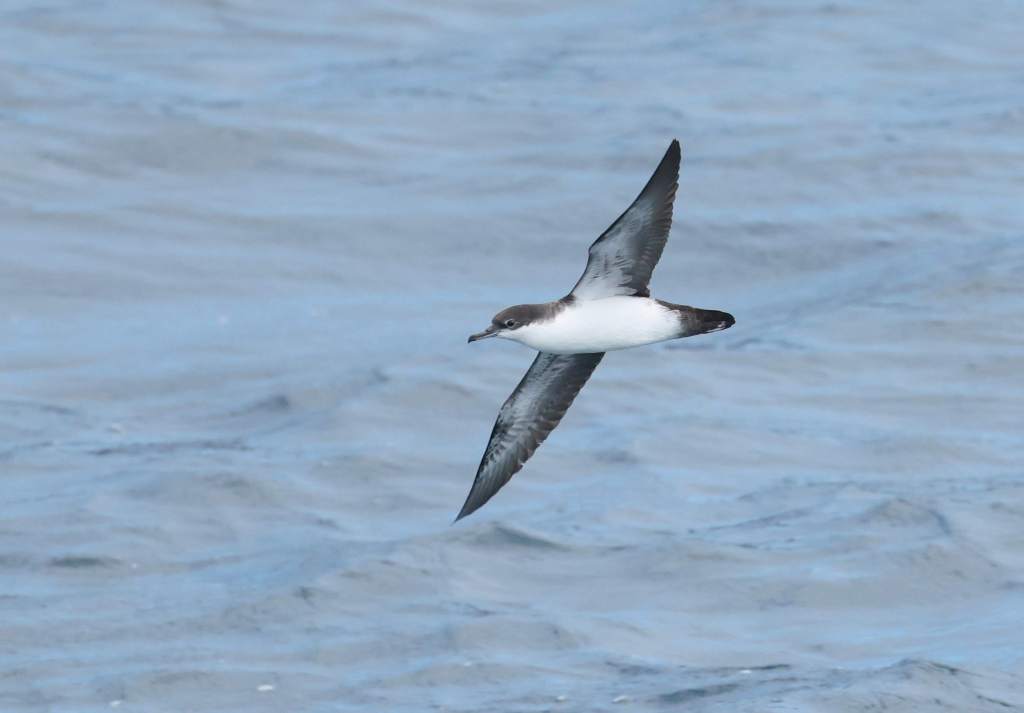
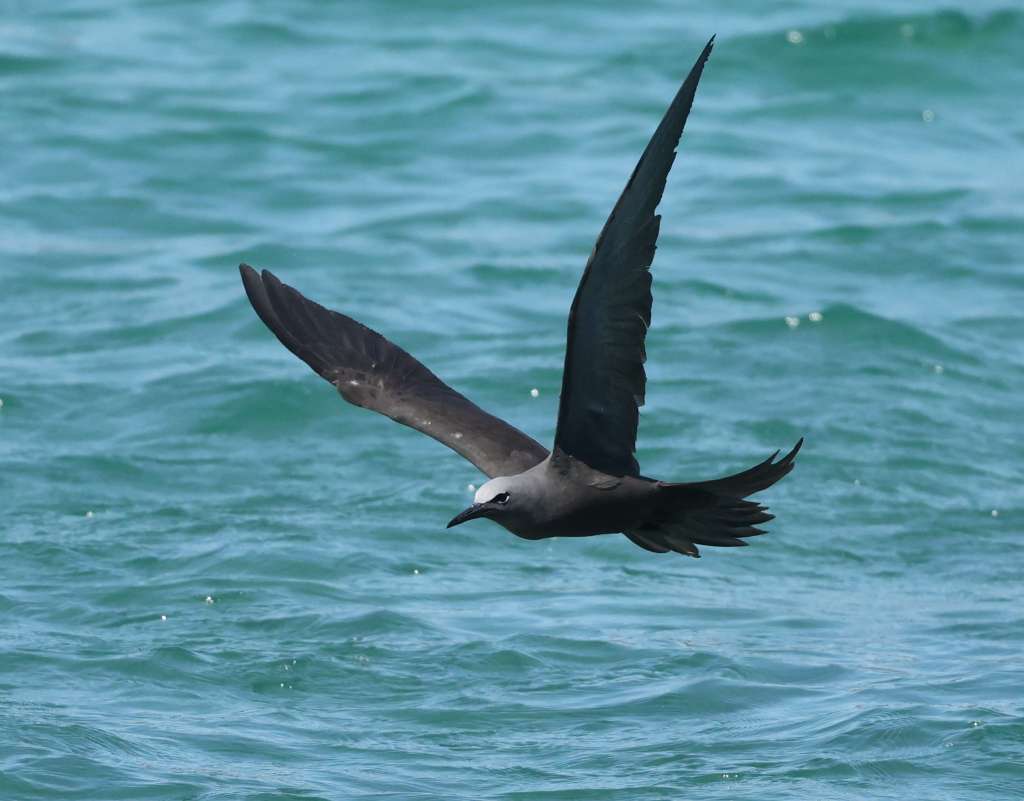
Galapagos Shearwaters seemed to be everywhere too, including close to shore (and in some cases, “shearing” across cliff tops as well as waves). The similar species to watch out for here is the Galapagos Petrel, which has white above the nose. We saw plenty of shearwaters everywhere we went, but no petrels.
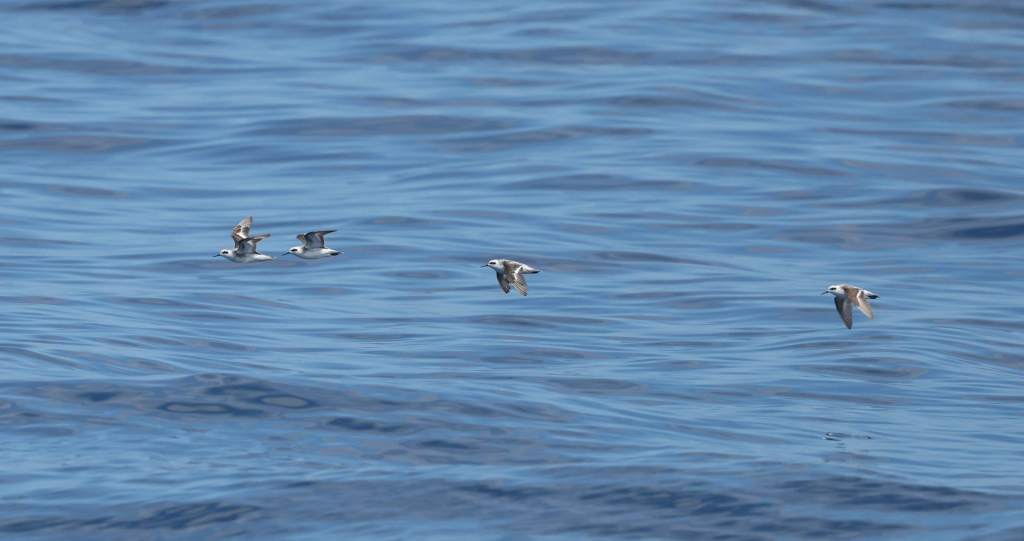
On the open ocean while traveling between islands we were often accompanied by frigatebirds, and at one point a Lava Gull landed on the boat. We also spied a group of over twenty white birds which turned out to be Red-Necked Phalaropes, which were flying over the water and sometimes floating on it too. Now and again we got close to a feeding workup where hundreds of seabirds congregated near schooling fish close to the surface.
Espanola Island
Our first small island stop was one of the southernmost – Espanola Island. Here our cruise boat anchored and two zodiacs ferried our group of ten to the beach for our first landing, on the way watching a Red-Billed Tropicbird stream past with its long fine white tail (it’s one of three tropicbird species in the world), as well as seeing a Blue-Footed Booby and a Brown Pelican on the rocks near the sand.

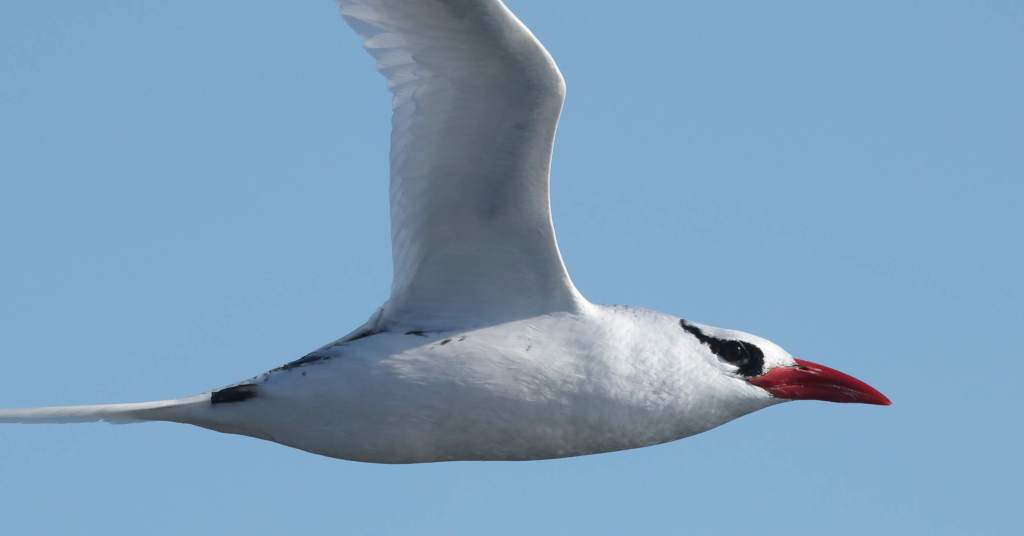
Once landed, an American Oystercatcher completely ignored us while foraging in the waves, an Espanola Mockingbird called from the nearby branches, and several sea lions lolled on the sand.

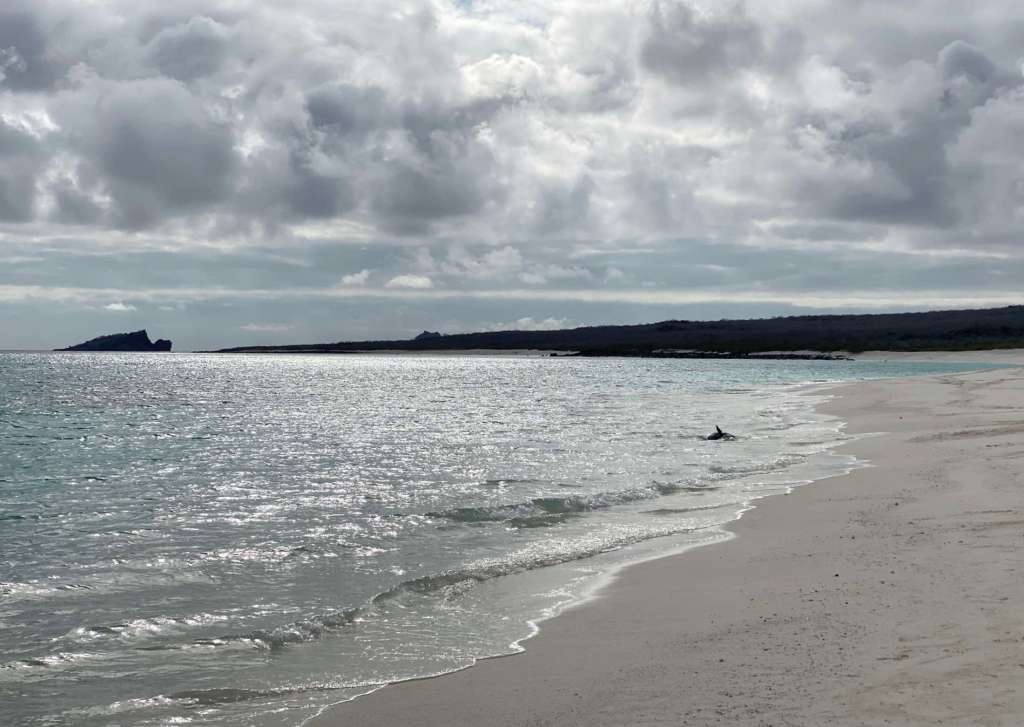
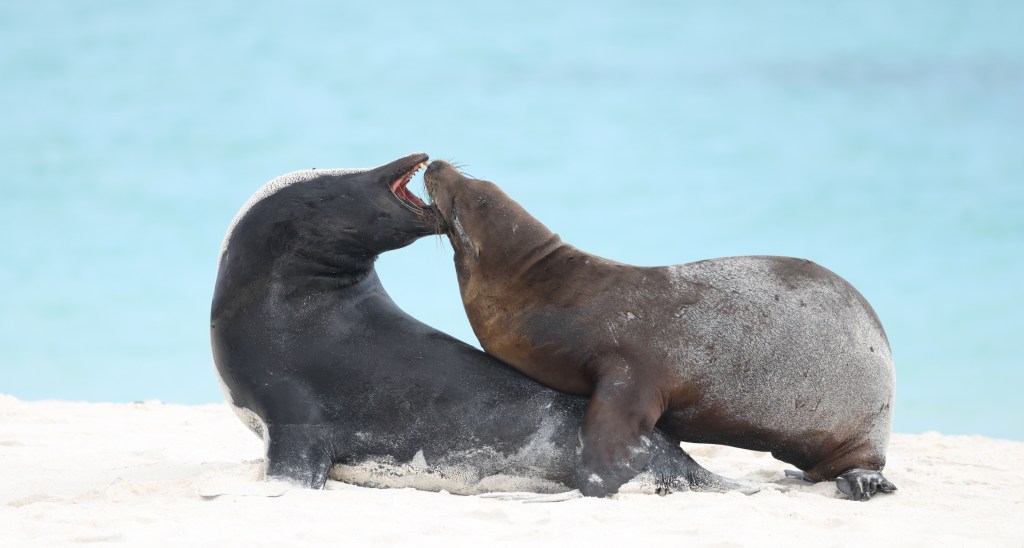
You have to be a little careful around the sea lions, as they can sometimes get aggressive, but they’re easily deterred if they get too close. It’s fun to watch them, in any case, occasionally tousling with each other, or keeping an eye on their playful young pups.

After getting oriented on the beach at Espanola Island, in an incredible “Welcome to the Galapagos” moment, a juvenile Galapagos Hawk flew right over us at thrillingly close range, then dived down into the scrub at top of the beach. Our excited guide decided to see what it was hunting and after scratching out heads (“I’m sure it landed around here!”), it turned out we were standing right next to it! It strolled out of the light undergrowth, stared at us imperiously for a few moments, then took off.

I thought, if the whole trip is like this then I might explode with birding-related joy bubbles.
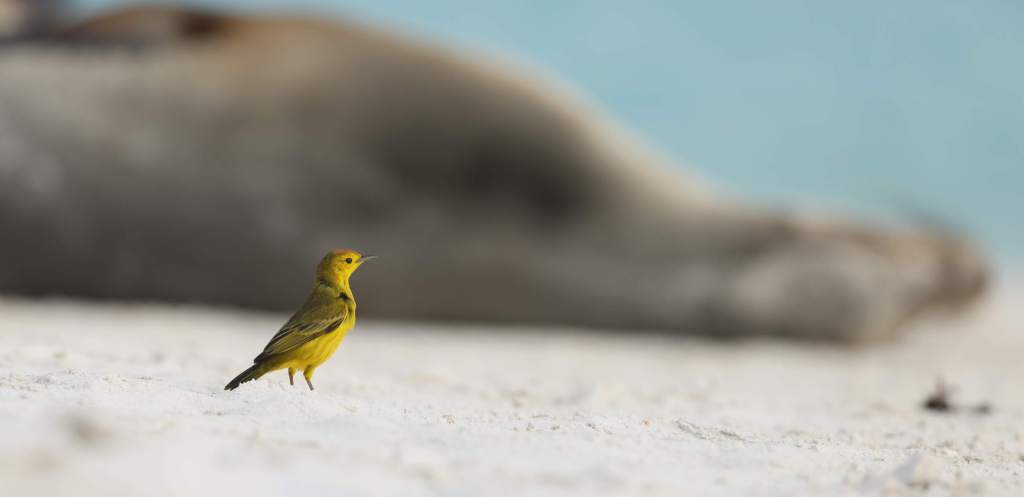
It became apparent on this first island exploration that most of the land birds not only ignore people completely, but will forage indiscriminately in the bush, on the sand, and in and around coastline rocks. Yellow Warblers seem to like hanging around sea lions (who attract flies and perhaps stir up sand-loving insects), finches hop happily across the sand and rocks, and mockingbirds can be found in all these terrains.
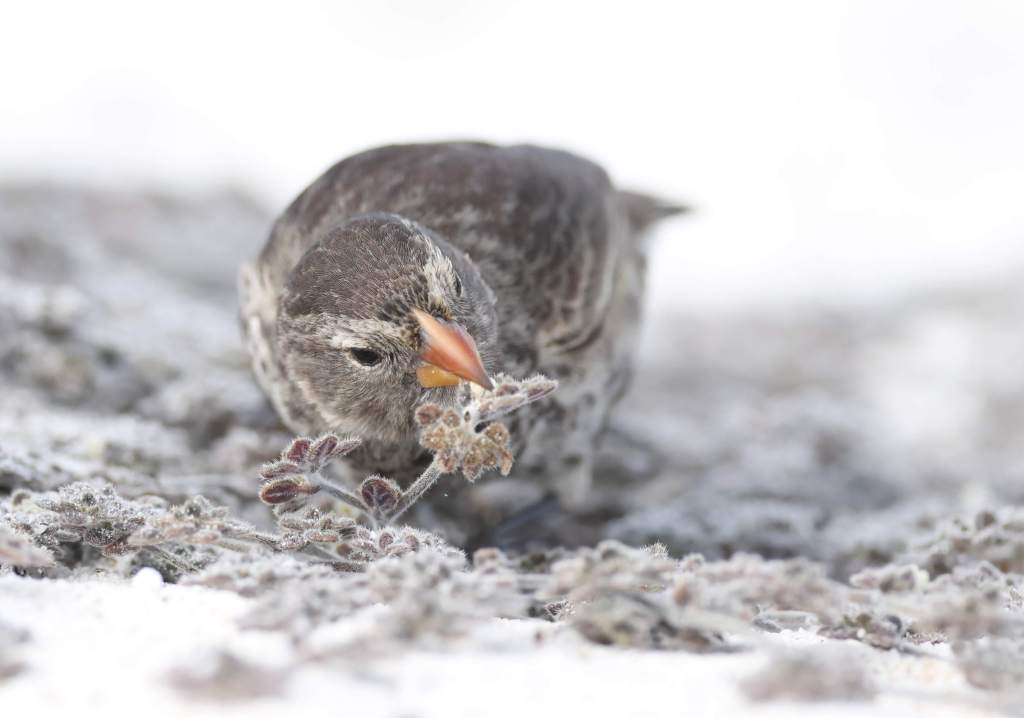
Oh Those Finnicky Finches
You’ll want some sort of guidebook to the famous Darwin’s finches, of which there are 17 species across the Galapagos – eBird and the Merlin app won’t cut it (the photo ID feature of latter might, for example, suggest your bird is the island-specific Genovesa Ground Finch, when the bird was found on another island completely). The differences lie almost solely in the bird’s bill: you need to ignore colour and (mostly) even the bird’s size. On top of that, some finches can be found only on some islands (in some cases, only on a single island!) whilst others can be seen across the entire archipelago.


The differences between finch bills is much more subtle in the field than I anticipated, and I found myself perplexed by choosing between two or three very similar species. These small differences are an example of Adaptive Radiation where the finches have spread to the different islands and over time have adapted to the slightly different food sources on offer (seeds of various hardnesses, cactus flowers, etc). There are two justly celebrated and rather extreme examples that come to mind: the Vampire Finch, which supplements its diet by pecking to draw blood from other animals (found only on Darwin and Wolf Islands in the extreme north, which are generally not on the tourist boat itineraries) and Woodpecker Finch, which uses cactus spines to probe crevices and cracks for bugs, in one of the very few documented uses of birds using tools.

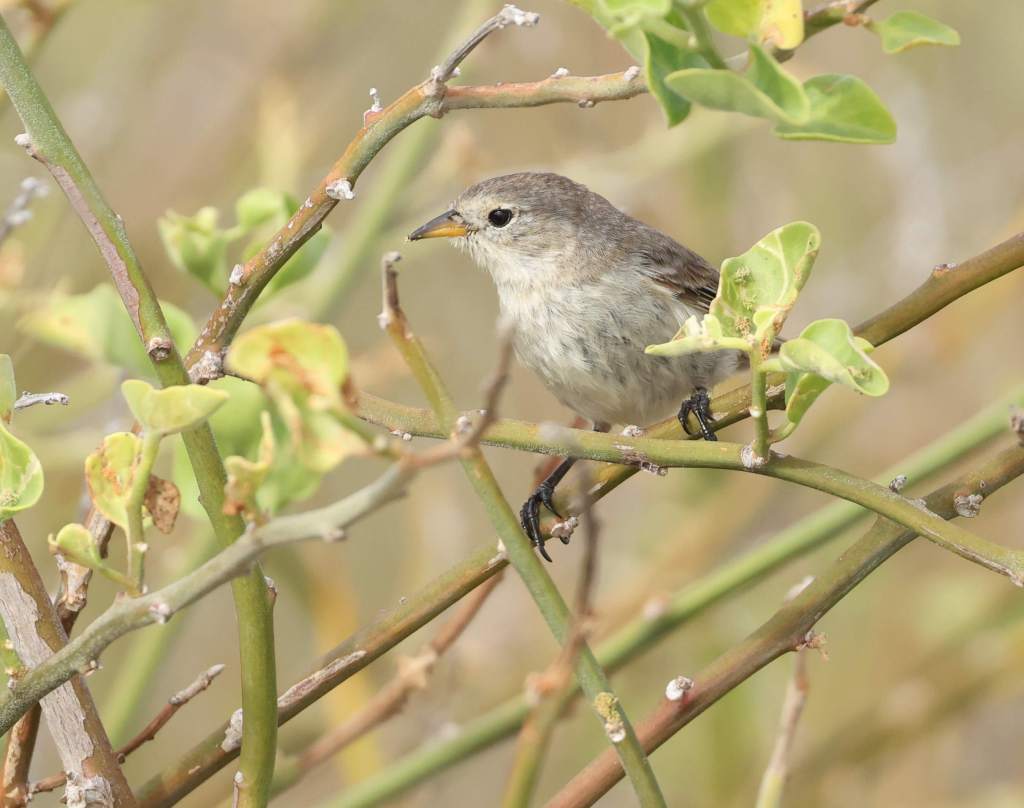
Apart from the ground finches, cactus finches, etc, there are also a couple of “warbler finches”, of which the Grey Warbler Finch was an endearing example that we saw several times.
Let’s Talk Lizards
That’s right, folks: we’re not just going to talk birds here, because the Galapagos Islands teem with all sorts of other exotic animals not found anywhere else on Earth (like the charismatic Land Tortoises!), and I’m sure even the keenest birder will be drawn to them.
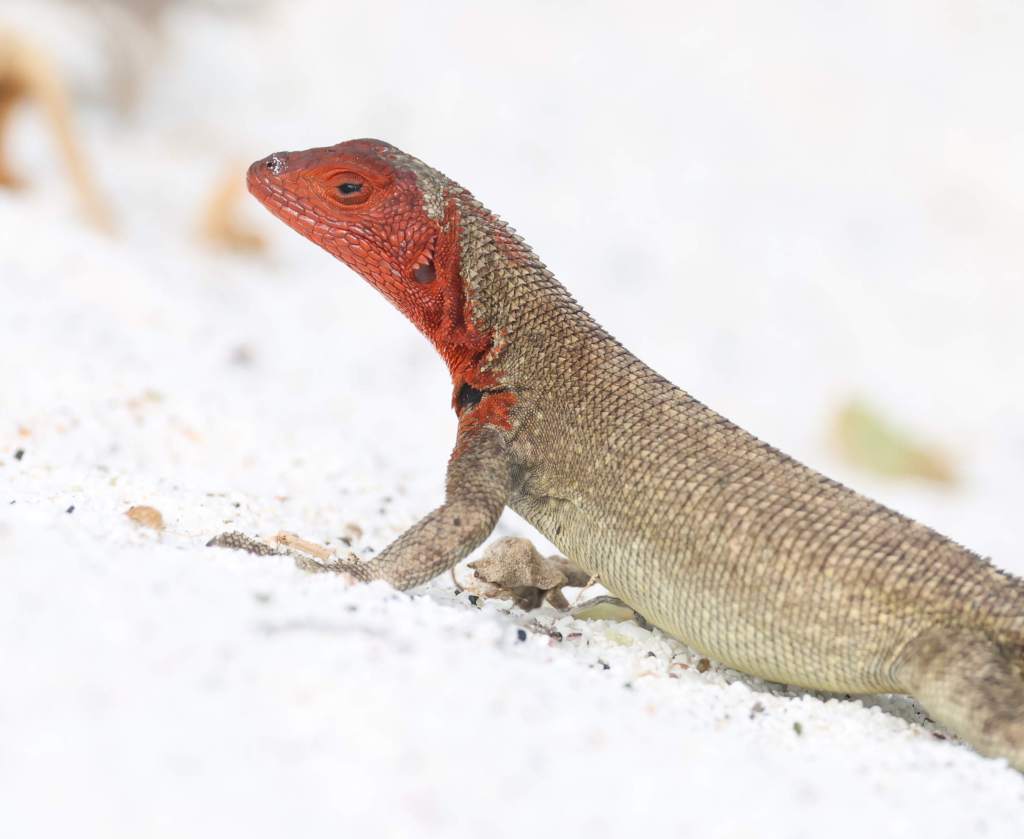
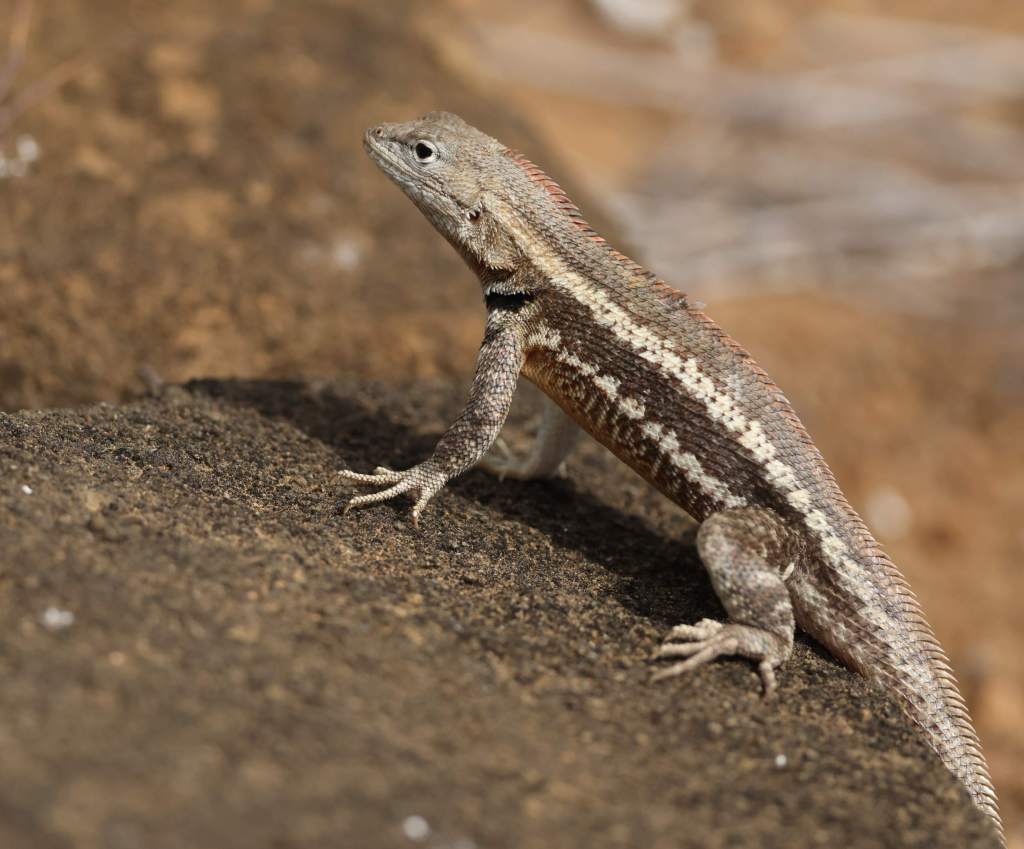
Lava Lizards are small and quite common and look different on the various islands. Our first such lizard on Espanola Island had a bright red upper body, while they were more muted in colour on the other islands.

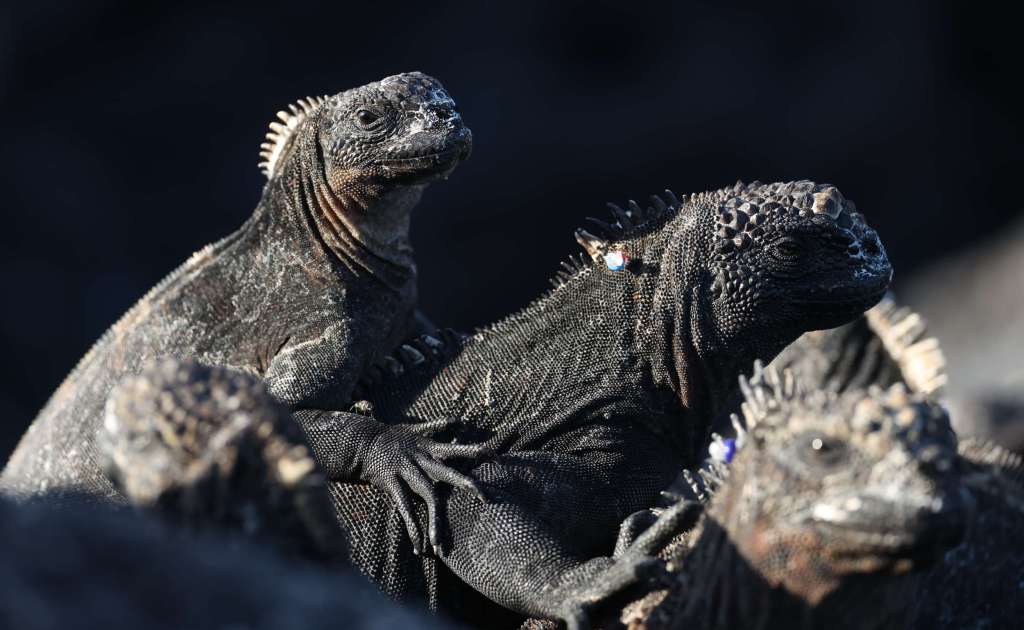
Marine Iguanas are an iconic Galapagos animal and Espanola Island offered a great look at these mini-Godzillas. They are the only marine lizard in the world, adapted for diving for algae (then, waddling ashore and soaking up the sun on a warm rock).

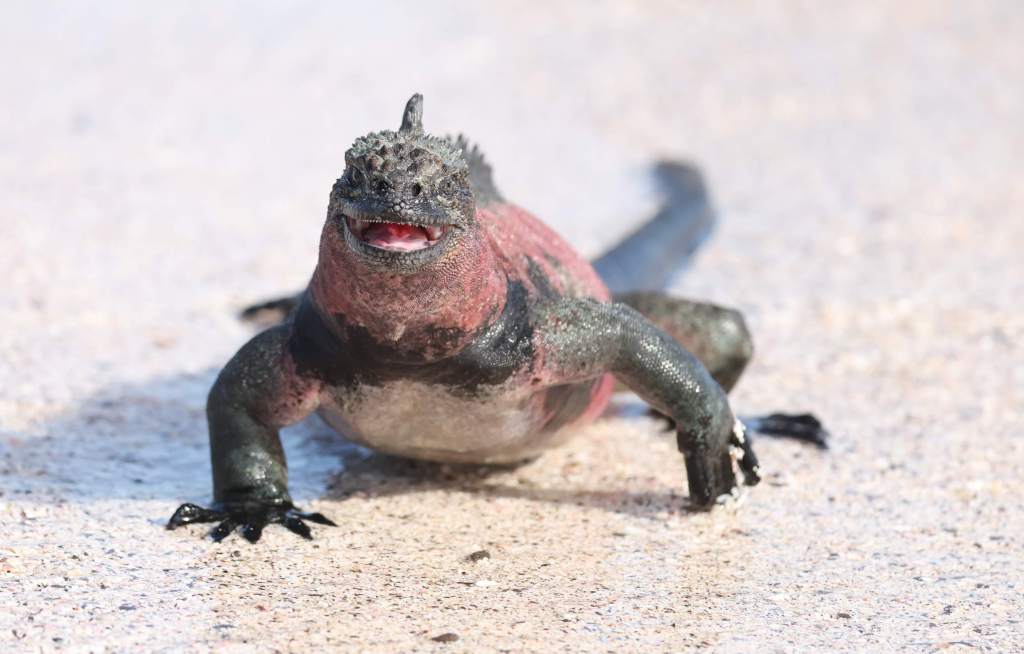
The cactus-loving Land Iguanas are typically larger and more solid-looking and the island of Santa Fe also features its own species, the Santa Fe Iguana, which is more yellow. We were lucky to find several of these, and watching them chew on a “cactus wafer” was more fun that it had any right to be.
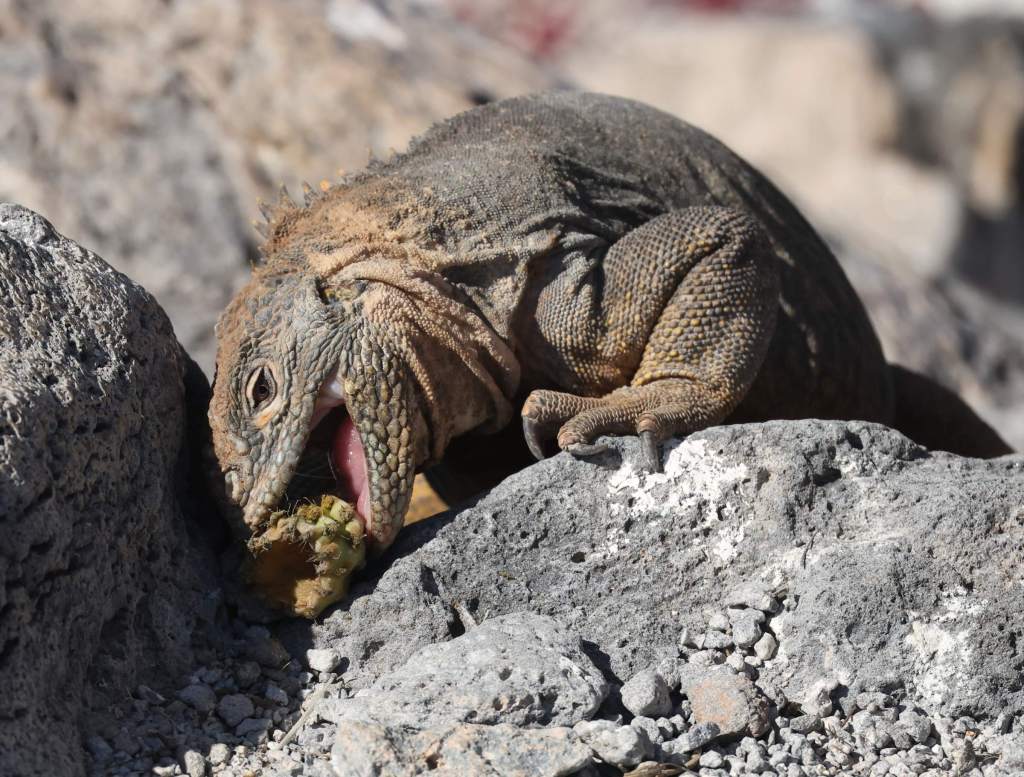
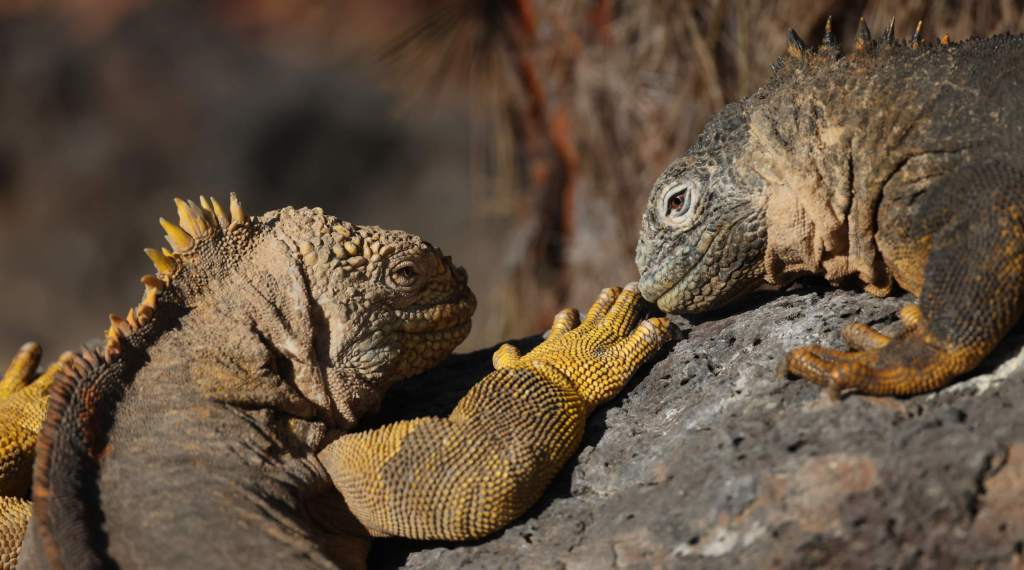
That’s right folks: you may take away from Galapagos a strange liking for lizards, especially really big ones.
Nests… So, so many nests
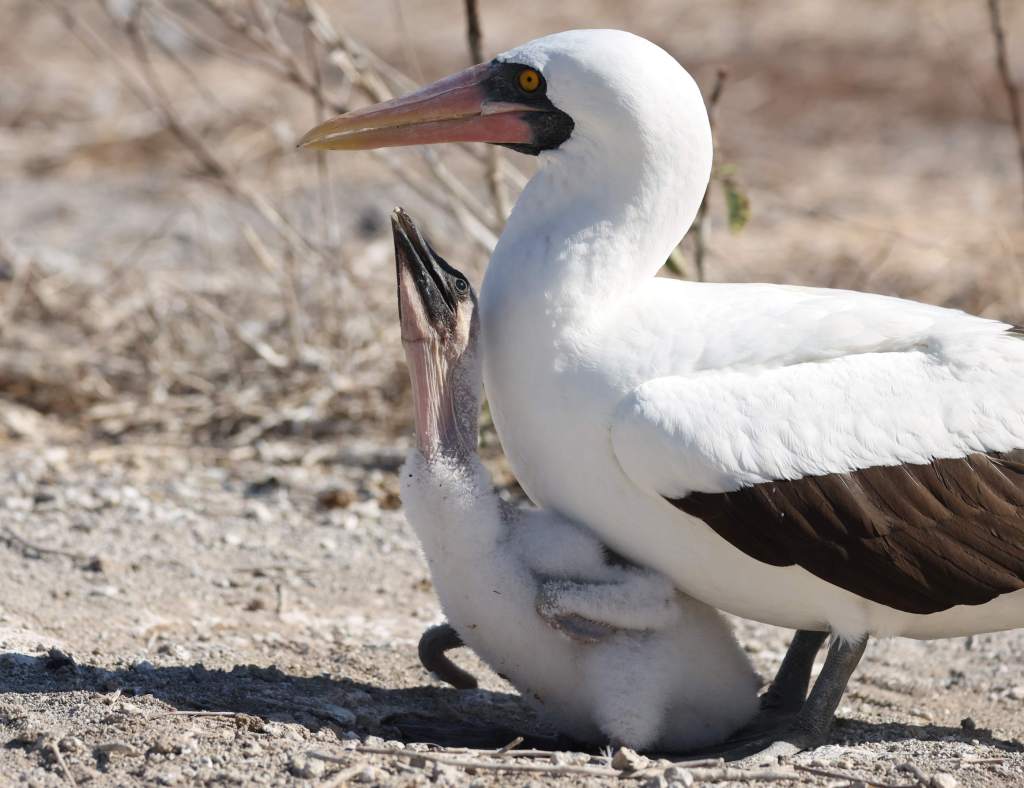
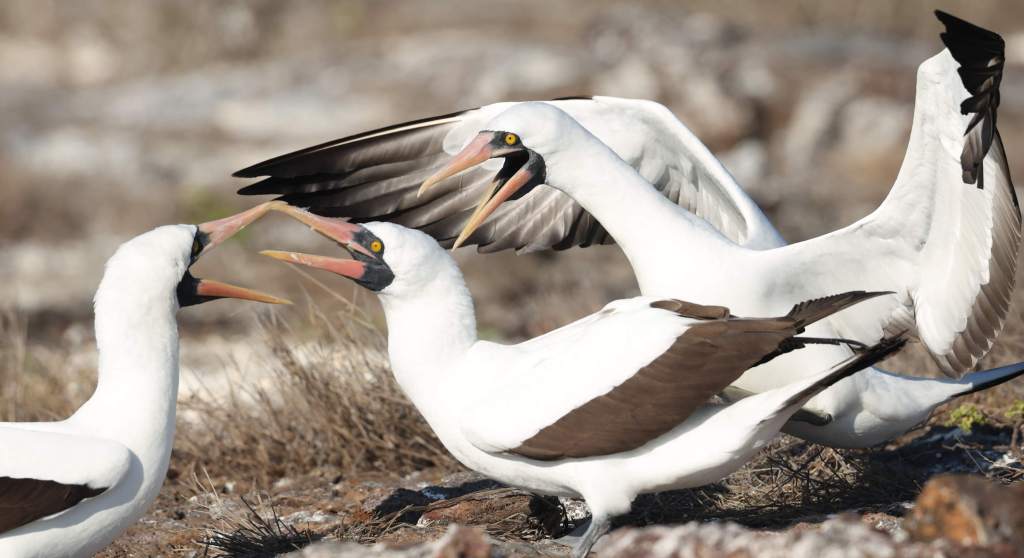
Espanola Island offered our first taste of seeing some of the Galapagos seabirds up close… up very, very close. The trail we followed literally passed through a nesting colony of Nazca Boobies and Waved Albatrosses, at least one of which had laid its egg and sat on it quietly contemplating the world right in the middle of the path. We were at the end of the nesting season for these birds so we saw more young and juvenile birds than eggs. If you ever wanted to get a close-up portrait of one of these birds, you’re in heaven, and can take your pick: the almost featherless and rather helpless-looking newborns, a white down-covered fluffball, or a slightly older bird just starting to come into its adult colours. It should also be mentioned that these boobies practice “obligate siblicide” where two eggs are laid and one chick (typically the first-born) will peck the other to death. We saw the start of this at one point and it is quite a confronting sight.
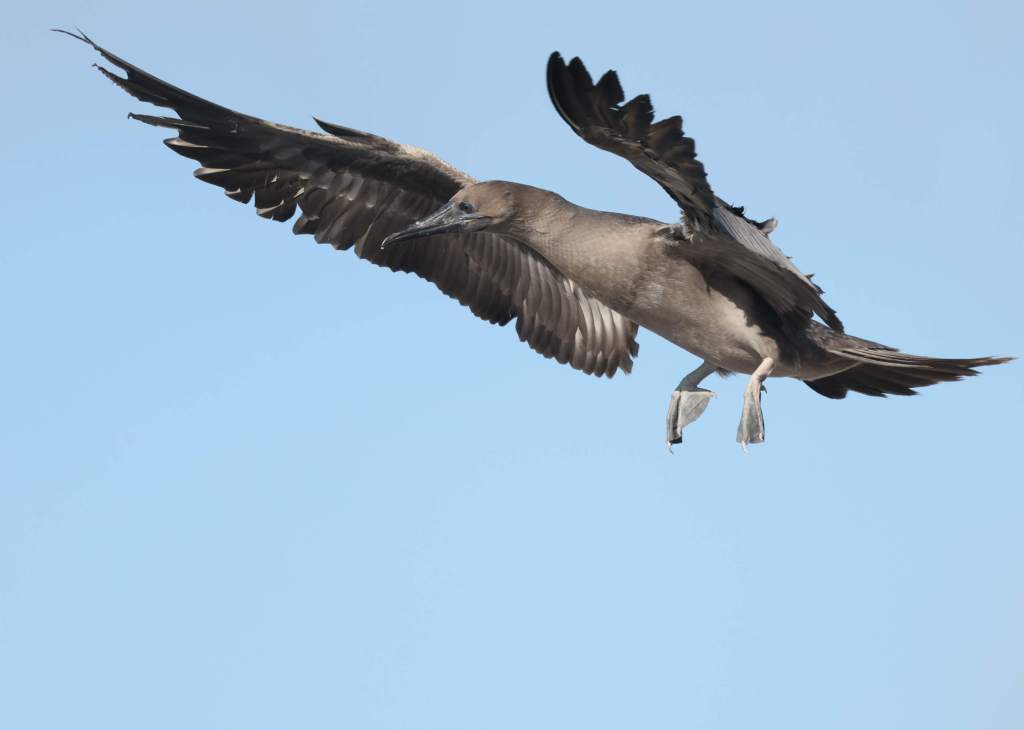
We had hoped to see at least one Waved Albatross (named for their wavy feather patterns) even though it was right at the end of the season for them, and we were in luck: we even got to see some birds fledging, uncertainly taking their first flight off the seaside cliffs and into the ocean air.

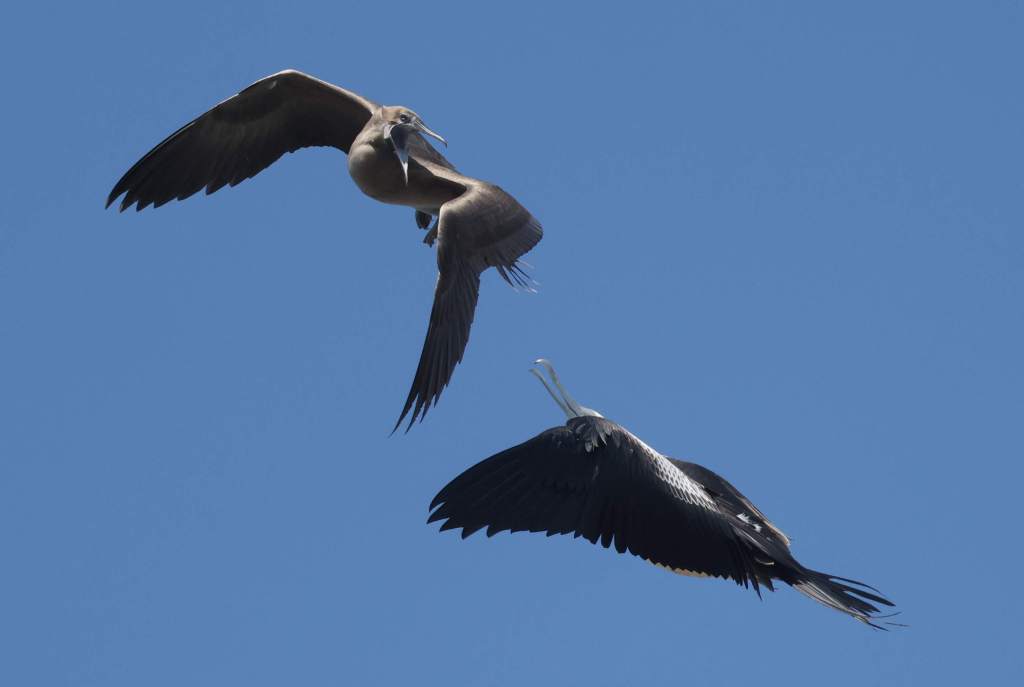
More nesting was to come at our short hike at Punta Pitt on San Cristobal Island, with mostly Blue-Footed and Red-Footed Boobies nesting. The former just lay their eggs at a suitable spot on the ground, while the latter build a stick nest in the trees. The Red-Footeds also come in two flavours: a brown morph (about 95% of birds) and a white morph. Intriguingly, a few frigatebirds – which will become the booby’s enemies once grown up – also nest intermixed in the same area.
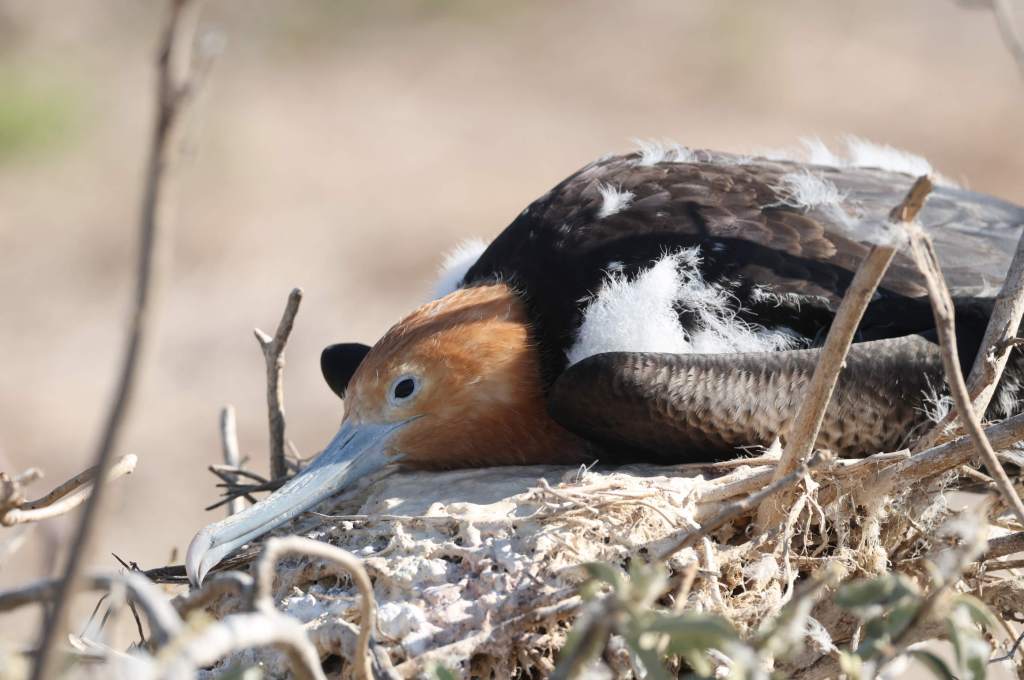
As cool and intriguing as it is to walk along trails with nesting seabirds on either side, it’s small potatoes compared to the wonder that is…
Genovesa Island: More Birds Than You Can Shake A Stick At
Genovesa Island lies to the north of the archipelago, and most boats that visit here will anchor in Darwin’s Bay, a huge round sea-filled volcanic crater (“caldera” in the formal parlance).
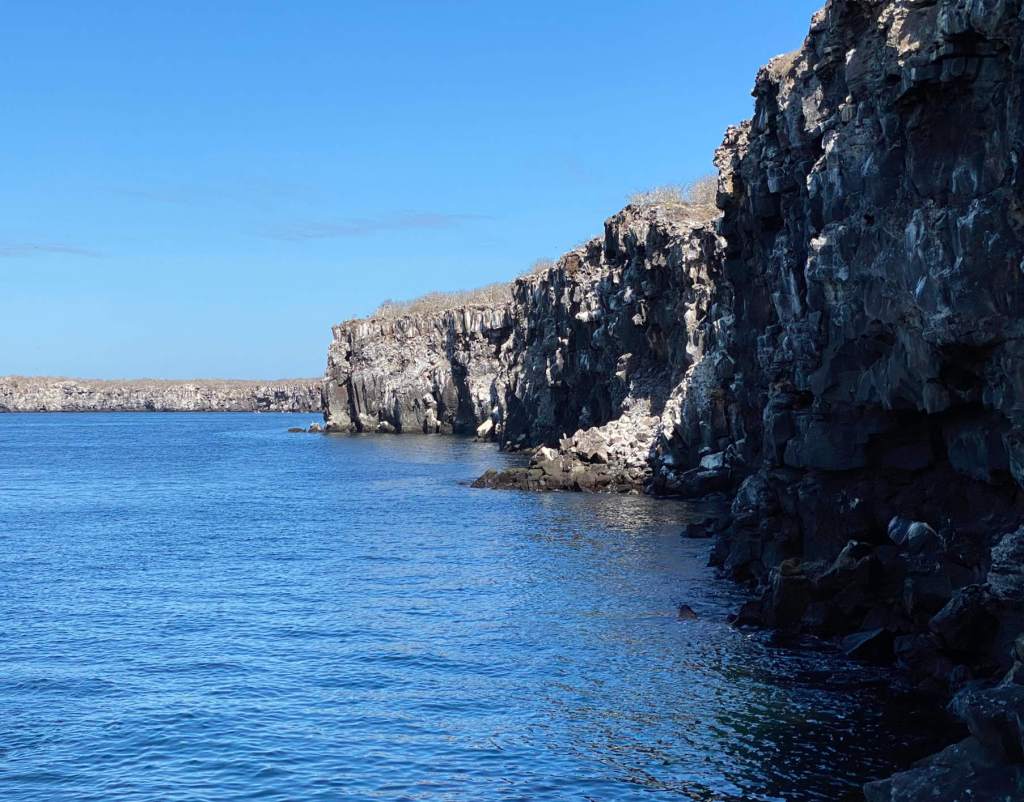

As soon as you get here you’re hit with the sight of birds: hundreds of frigatebirds can be seen, not only circling across the sky, but also all along the tree-lined cliff tops that form the edges of the bay. These cliffs also harbour an almost uncountable number of Swallow-Tailed Gulls, and on the island there are nests of these gulls along with many many Red-Footed and Nazca Boobies interspersed with dozens of frigatebird nests. As I discovered from the shore excursions, Frigatebirds are pretty cool – like giant bats – in the air, but they’re also really, really cool up close.


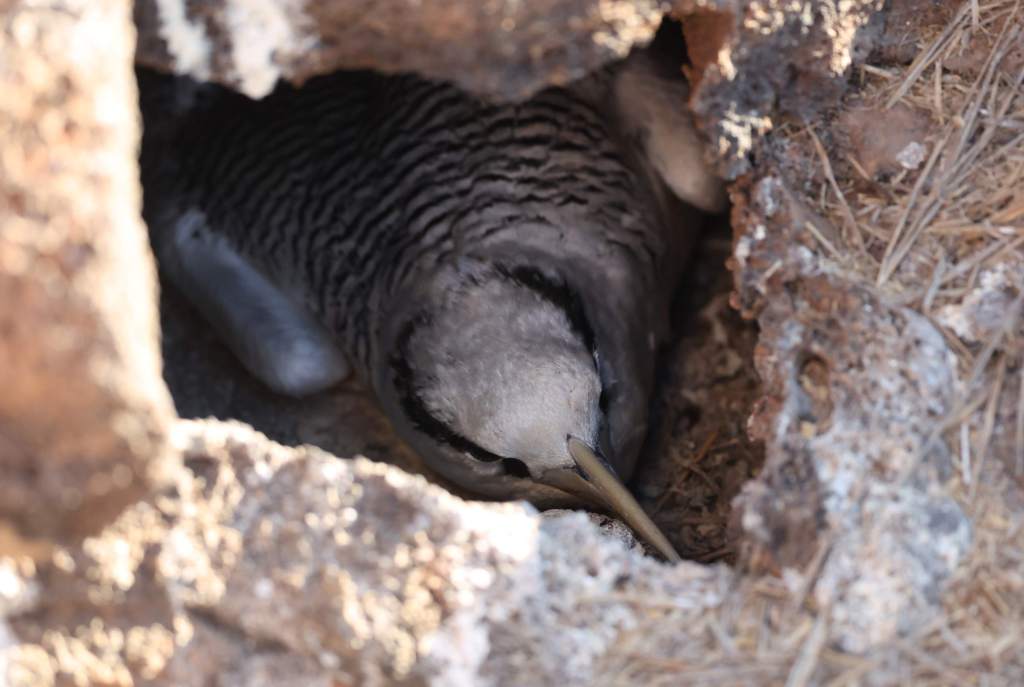
Genovesa Island is also home to an apex predator which, unlike on most of the other islands, isn’t a Galapagos Hawk. In the lava rock crevices in the island’s south-east lurks the Short-Eared Owl, which purportedly feast on storm petrels in the early mornings. Spotting one became our group’s mission and we were successful in finding three, and we passed on the sighting to the next guided group coming through (that’s Owl Karma at work, baby). The trail to this area passes through yet another Red-Footed/Nazca Booby and frigatebird nesting colony, with the occasional Red-Billed Tropicbird “nest” (a sneaky mini-cave in the lava rocks) there too.

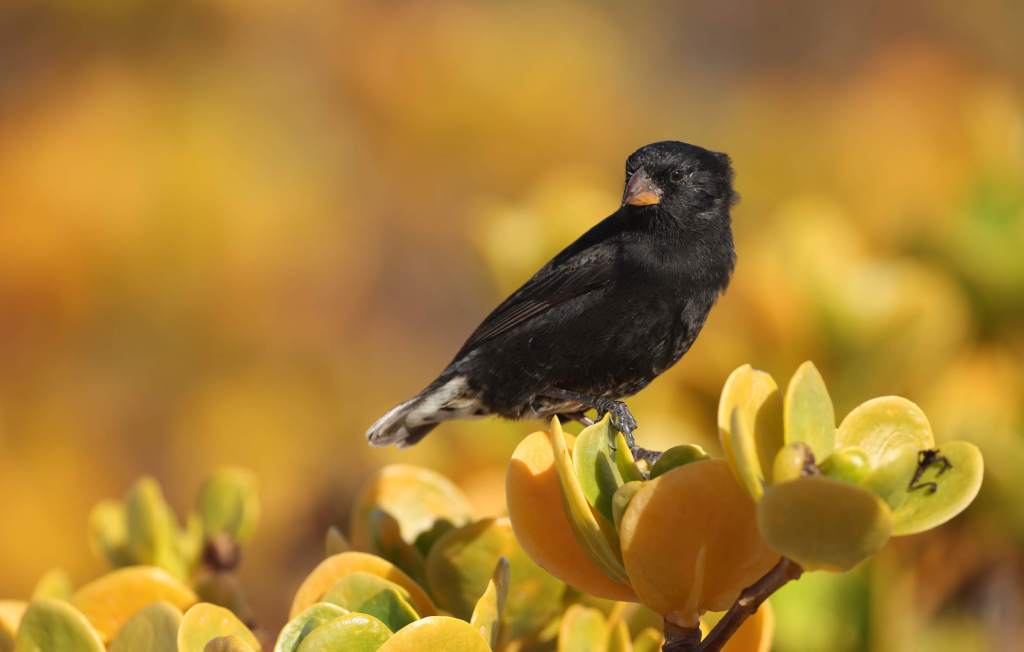
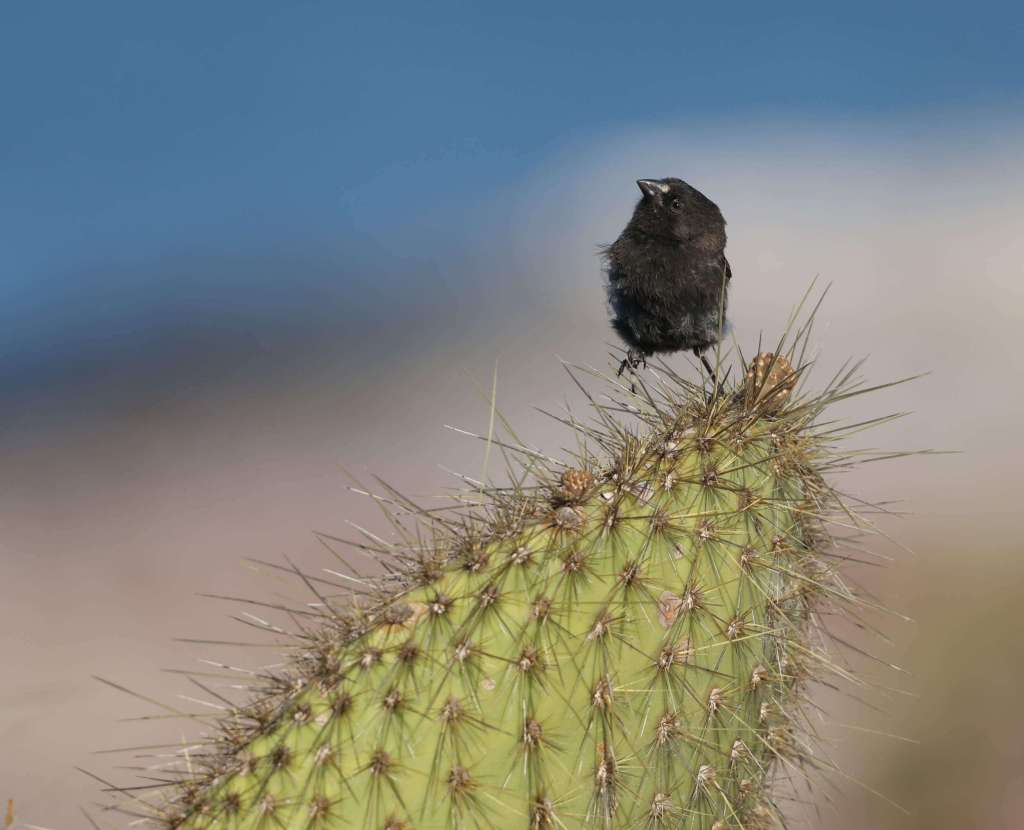
Finch-spotting on Genovesa Island is a little easier than most other islands, with its relative isolation meaning there are usually only three species: Large Ground Finch (huge, crushing beak), Genovesa Cactus Finch (longer beak, nearly always found on or near cactus) and Genovesa Ground Finch (equivalent to the Small Ground Finch on other islands). Any trepidation on whether we would spot all three of these birds on our limited shore excursions (total of about 3 hours on one day) was quelled as we spotted them quite easily, with two species right on the beach.
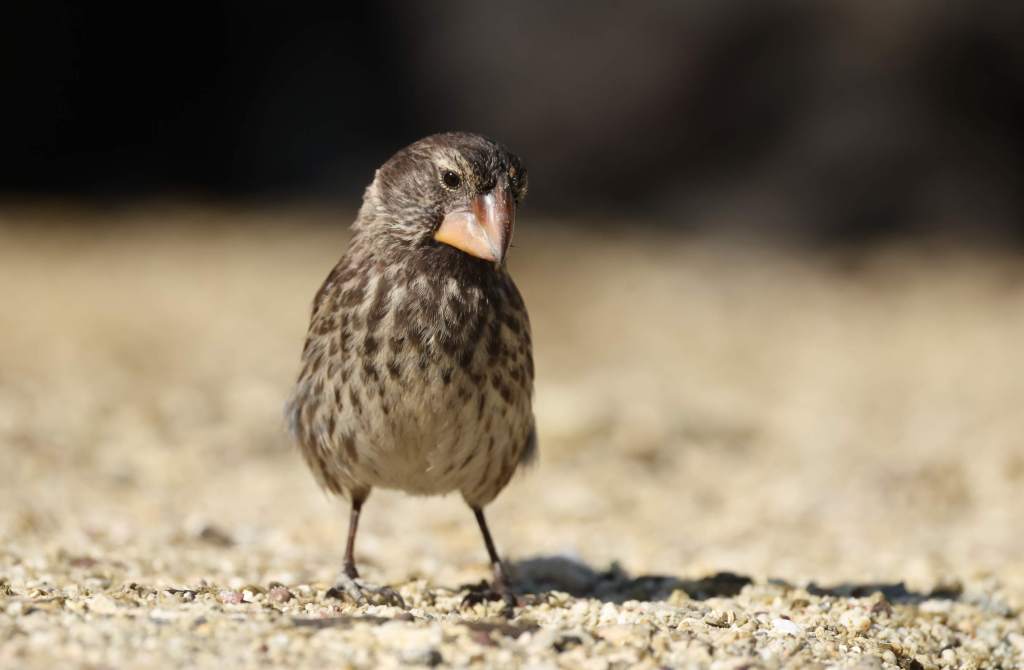
Regardless of the identification issues, you’re going to have a super time photographing finches and there’s plenty of them in every land habitat.
Penguins Livin’ Life On The Equator
Yes, there is a penguin species that lives here, the small Galapagos Penguin, about 2000 of which make the archipelago their home. After our Peru and Ecuador rainforest adventures I had amassed some 1850 global bird species, but this was the first time I’d spotted a new bird (“lifer” in birding parlance) under water! Our group had gone for a snorkel and we saw a single penguin zip by – even though I knew it was a small bird, it still surprised me how tiny it looked in the water.

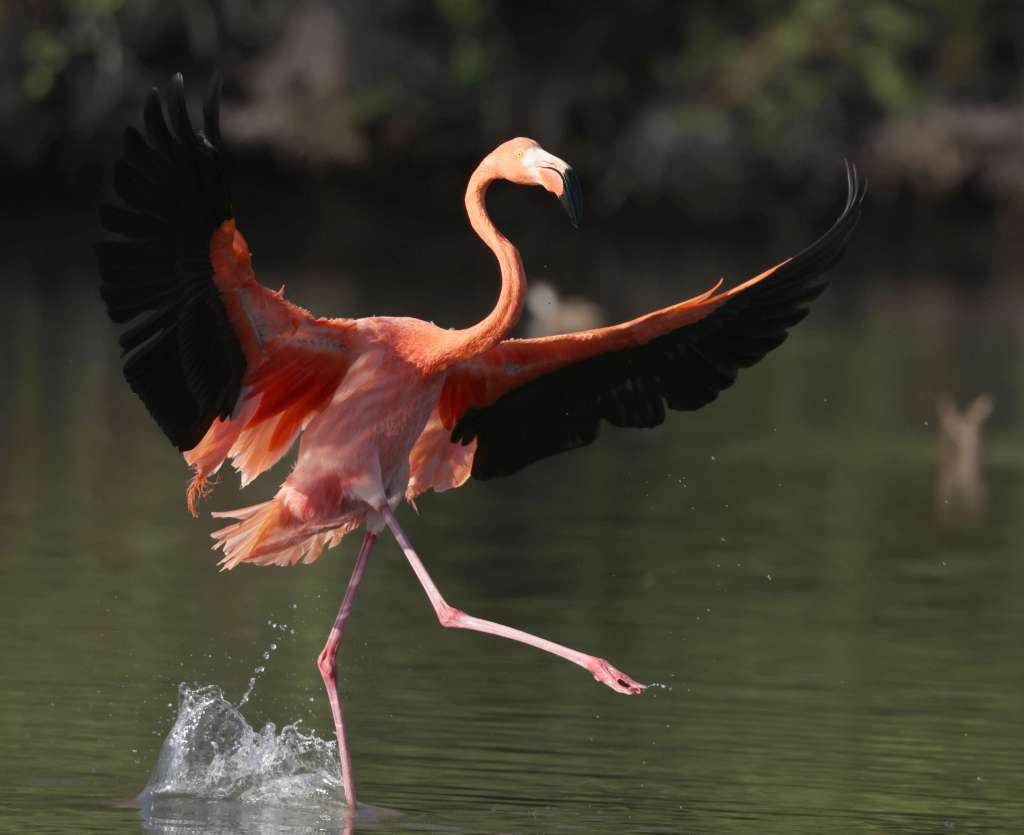
Luckily we also saw a few perching on rocks at the end of the day too, at Bartolme Island and Rabida Island. Our zodiac pushed right up to the edge of these rocks so even people with iPhones could get their requisite photos of these wonderful little birds. Speaking of Rabida Island… and, ahem, birds that look nothing like penguins… on this island we found a group of 25 American Flamingoes (with two Chilean Flamingoes mixed in). The Galapagos population is the only instance of this species found in the Pacific, and they are quite brightly coloured (and photogenic as all heck). We even saw one on the opposite edge of the lagoon with an egg.
All This And Shorebirds Too. Oh, And Scenery
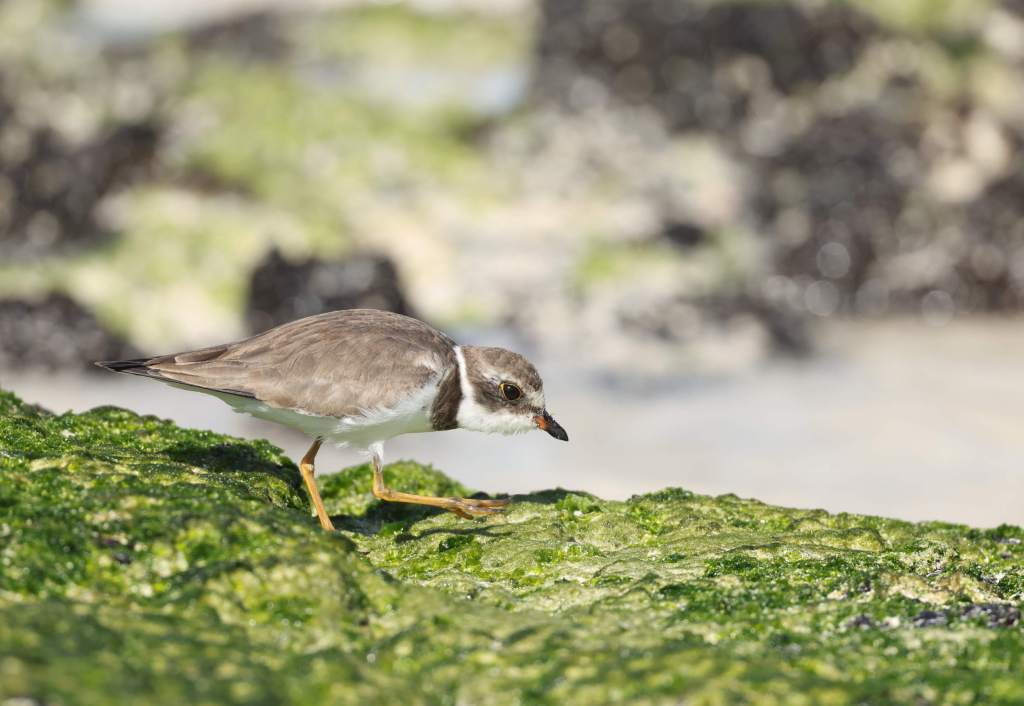
In various shore habitats in the Galapagos, both rocky and sandy, you’ll find a few shorebirds. We found Least Sandpiper and Semi-Palmated Plover at Cerro Brujo on San Cristobal Island, Wandering Tattlers at various places, a few American Oystercatchers, some Ruddy Turnstones, and a couple of Hudsonian Whimbrels.

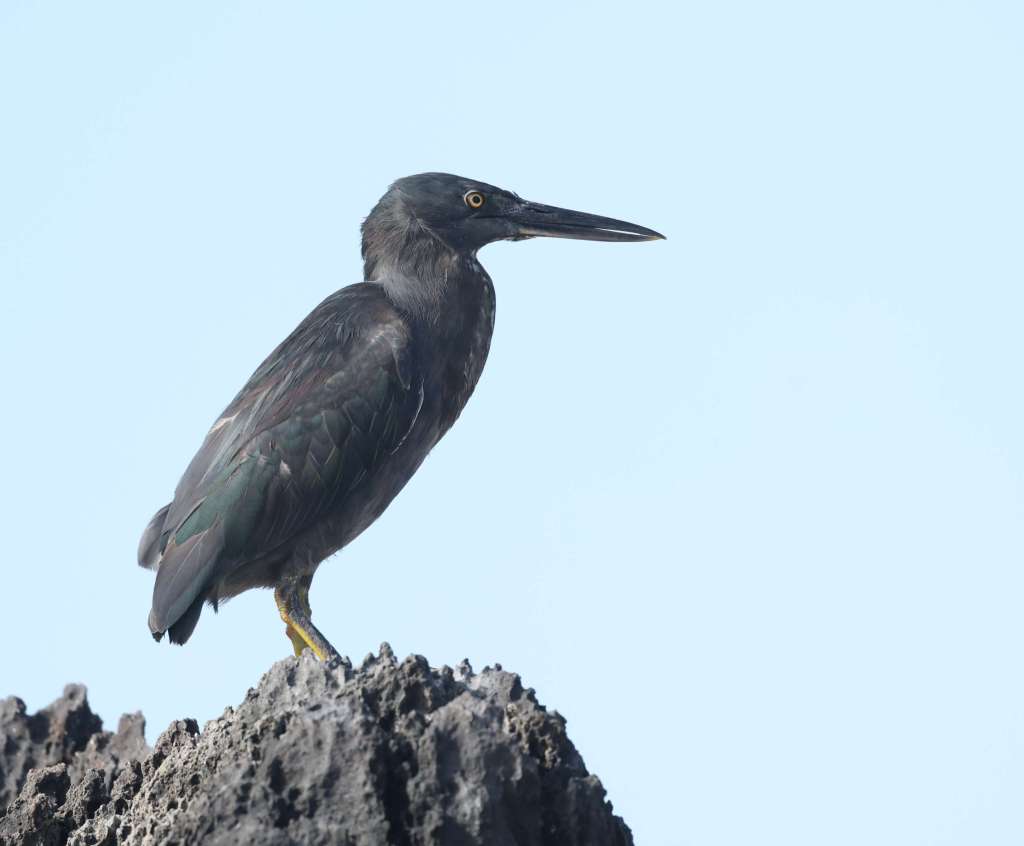
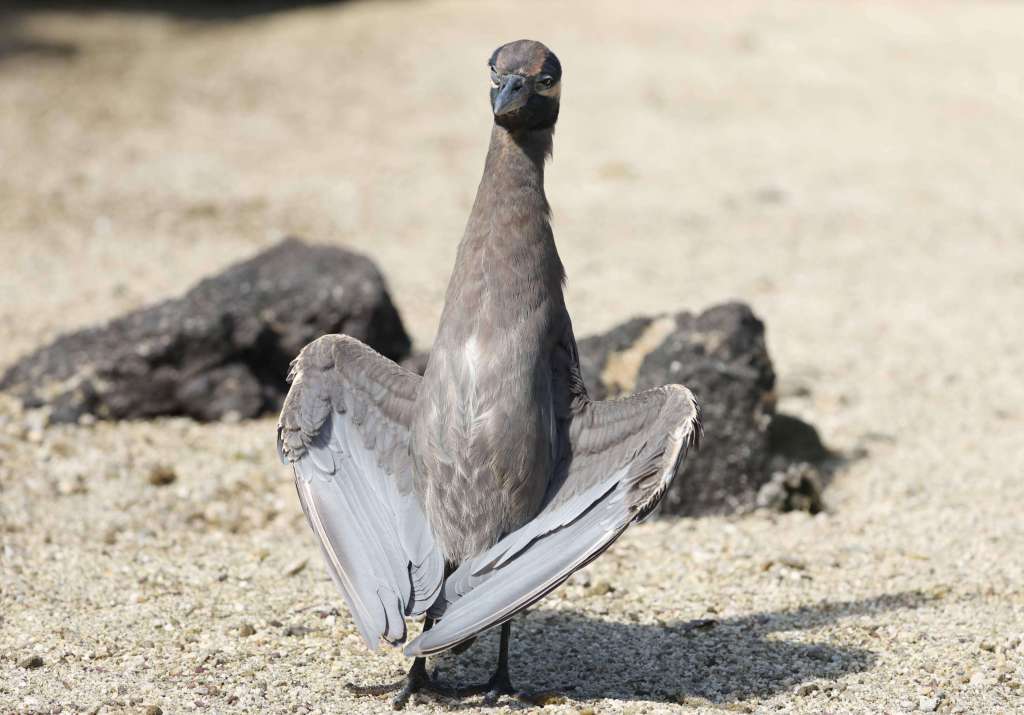
We also saw Lava Heron, an ashy-grey heron which also comes in a more striped plumage like its close relative Striated Heron (which is in some taxonomies actually considered the same bird), and near a lovely tidal pool on Genovesa Island, a Yellow-crowned Night Heron displaying its wings (possible “sunning” behaviour).
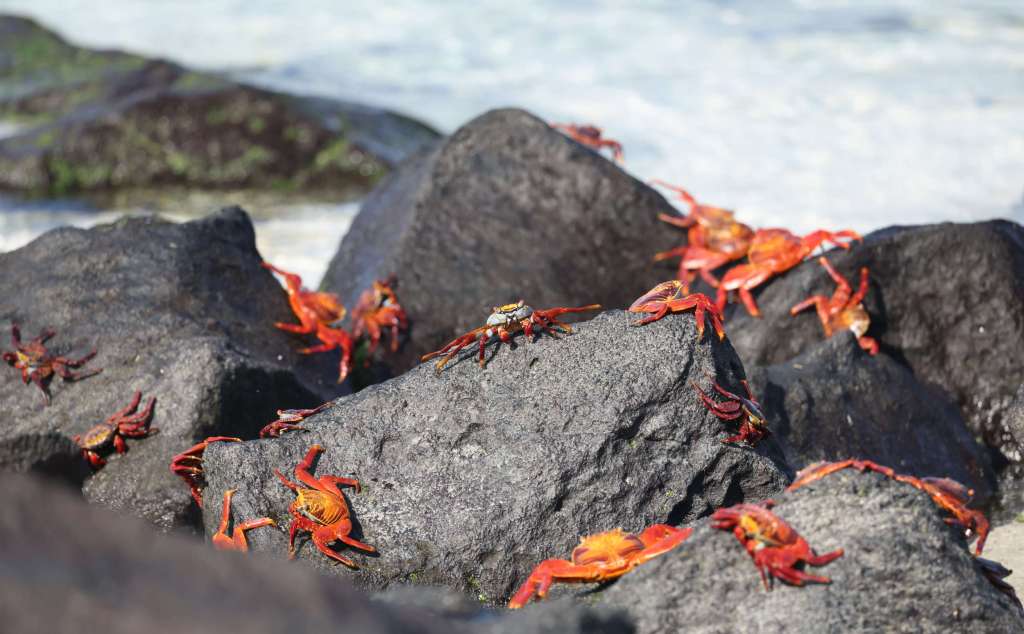
A couple of the places we went were relatively bare of wildlife. Sullivan Bay on Santiago Island is dominated by a massive and fascinating newly-minted lava field, housing only lava lizards, snakes, locusts, and crabs near the water’s edge. Nearby Bartolme Island is covered in volcanic cinder cones and its main attraction is scenery, with a 365-step boardwalk to the top where you can take your classic Galapagos scenic photo while being buffeted by the wind.

It should be noted that for a lot of the year, most of the Galapagos Islands are a dry landscape; you have to imagine it bursting into full green when the rains come between January to May.
Summary
There are a couple of dedicated birding expeditions you can take in the Galapagos but the majority of people will be taking a more general nature cruise visiting several of the islands. The birding experience can differ at each spot, with iguanas and sea lions taking your attention, but because birds are charismatic drawcards for most folks, you’re going to get plenty of chances to do some incredible birding. One gets quite used to casually watching seabirds skim the ocean around the boat or follow the vessel for hours (hello, frigatebirds!), as well as being surrounded by fearless birds carrying on their lives on the shore excursions.
We found there weren’t many downsides to birding (or holidaying in general) in this part of the world. It can get quite hot at times when out of the wind (this is at the equator, after all). There were insects (flies) at a couple of locations (I feel for the basking sea lions who were constantly batting flies away), and apparently mosquitoes and horseflies can cause annoyance in the short wet season. The benefits of experiencing this amazing natural wonderland more than obliterate these tiny issues. The Galapagos typically won’t come cheap, but it is absolutely 100% worth doing if you can.
BIRDERS: ANDY GEE, K-A
AUTHOR: ANDY GEE
 Bird Spots