After the heady delights of our Andes East Slope tour (chronicled in part 1 and part 2), it was time to head west of Quito. About an hour and a half’s drive lies the biodiverse Mindo region, renowned as an amazing place to see and photograph many glorious neotropical bird species.
And it’s a region that really delivers on that promise.
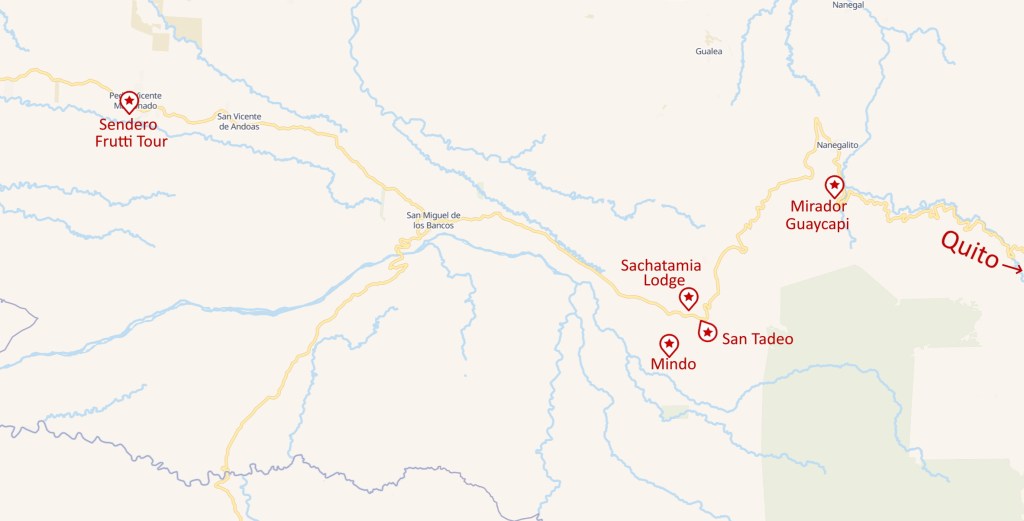
This post covers several sites as shown in the map. The next post will cover a bunch more!
Guaycapi Cafe
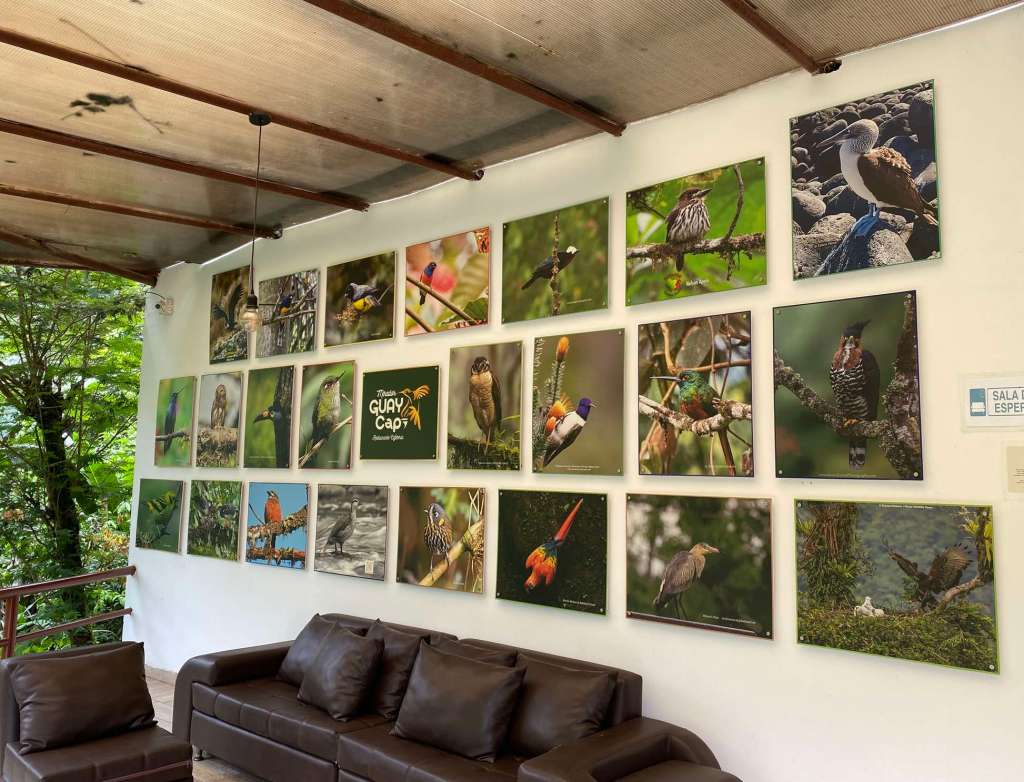
You could do much worse than stopping for a bite at Restaurante Mirador Guaycapi, located right on the main road (the E28) from Quito. It is at 1500m in altitude. The cafe has a steep overlook to the surrounding forest with a few feeders set up so you can take photos of various birds right from your lunch table.
Note this place is not the same as Guaycapi Lodge, which lies around a kilometre to the west but over 8km by road.
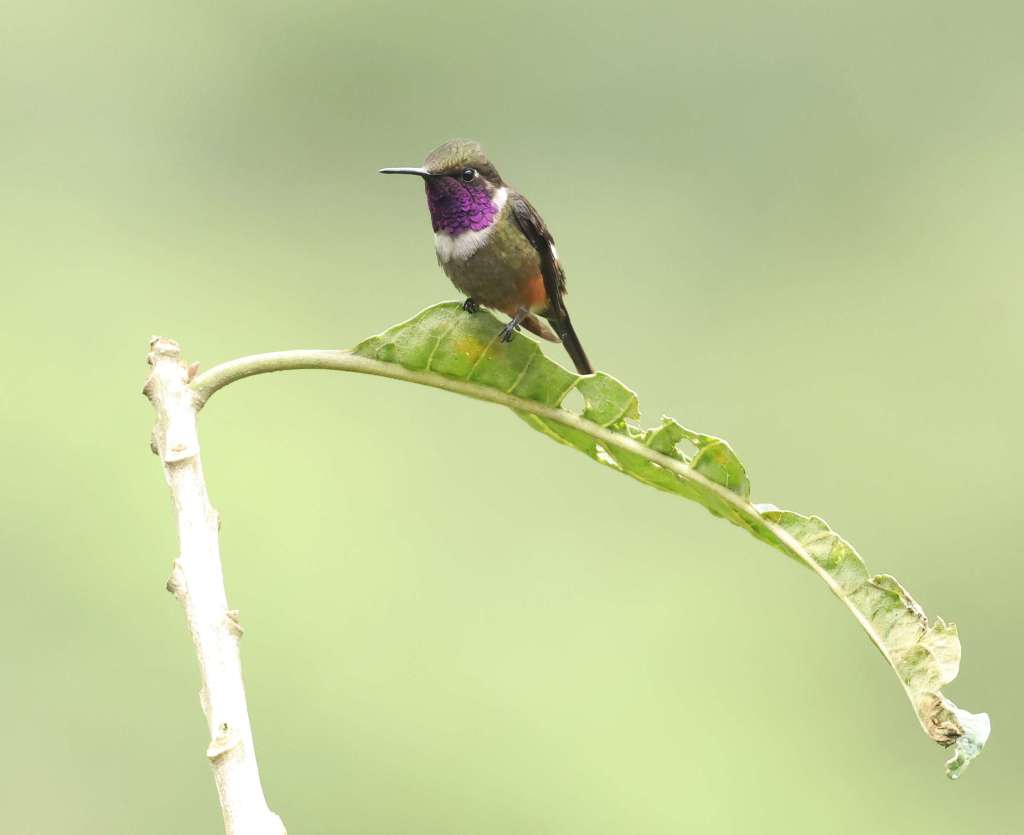
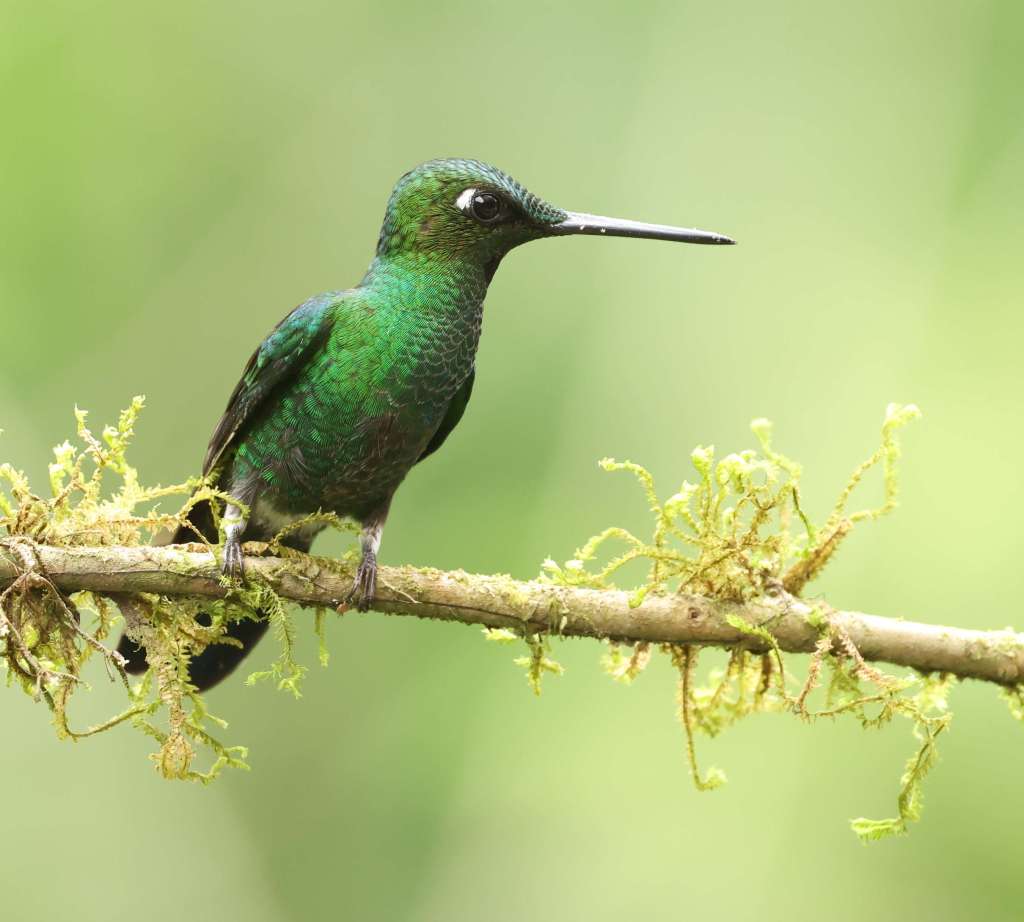
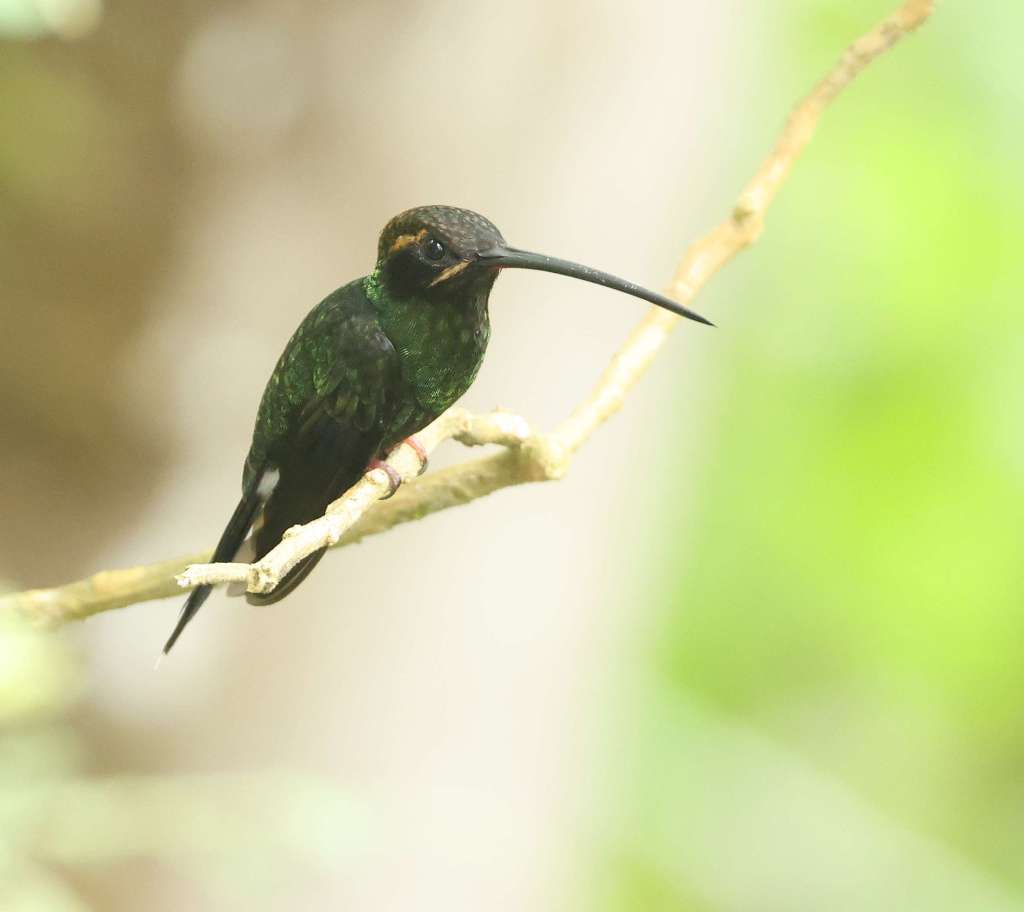
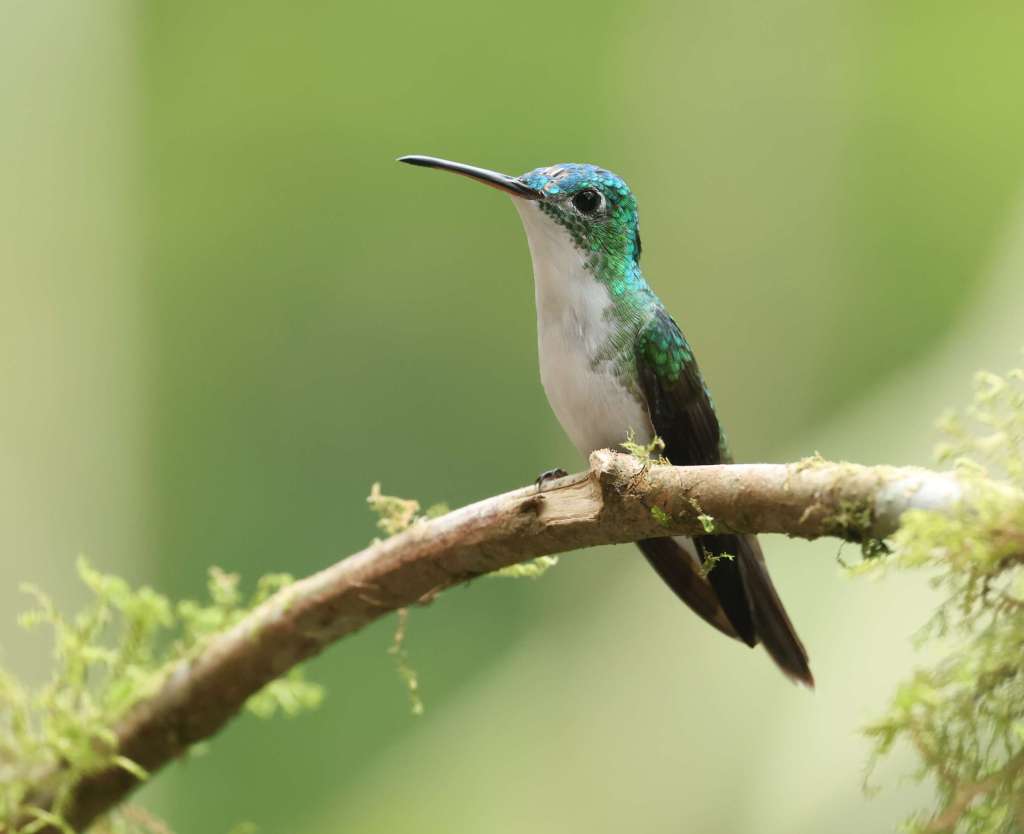
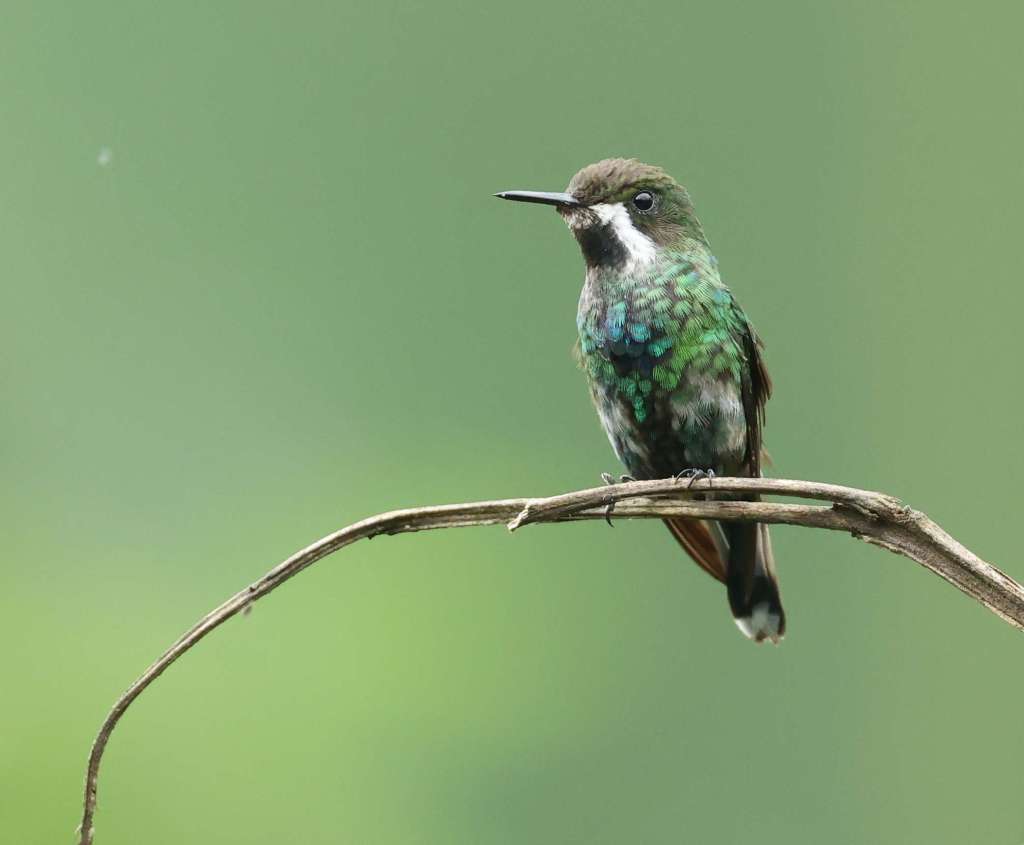
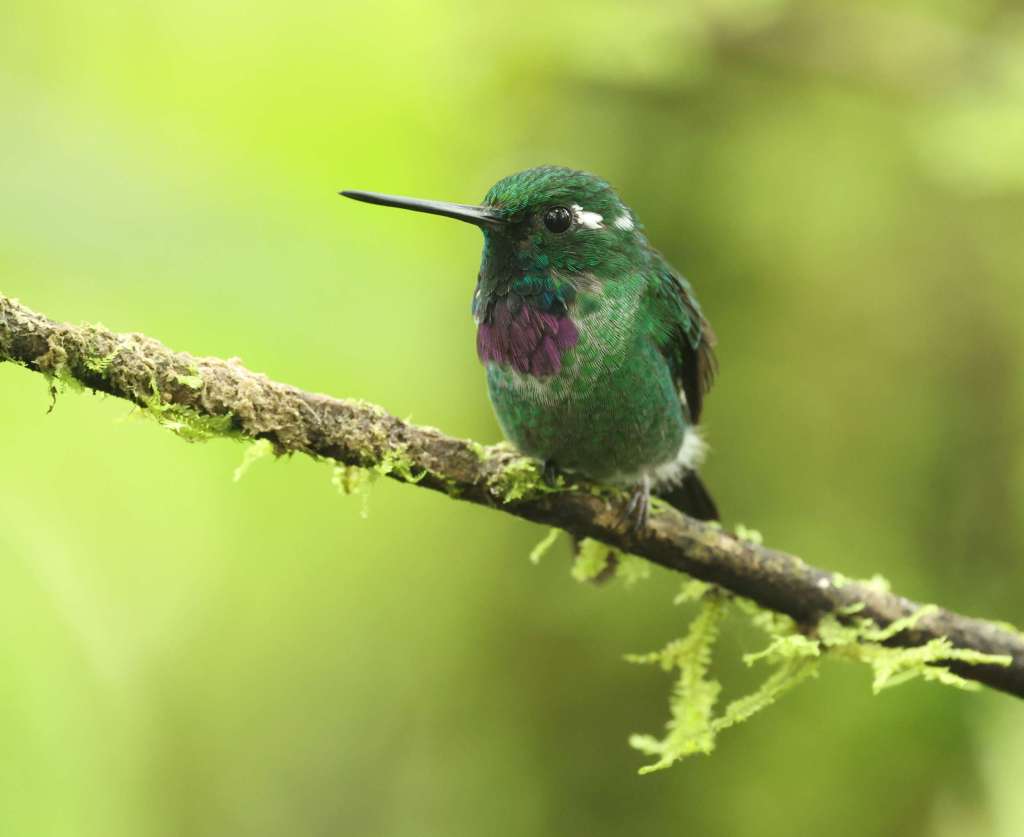
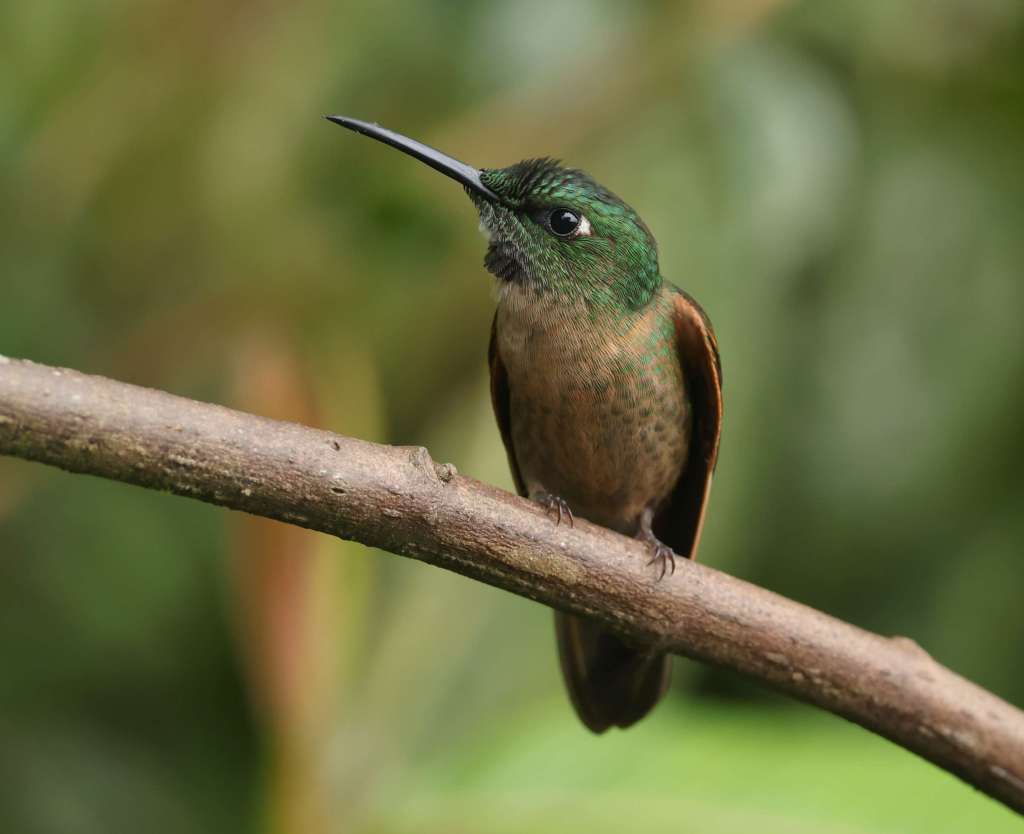
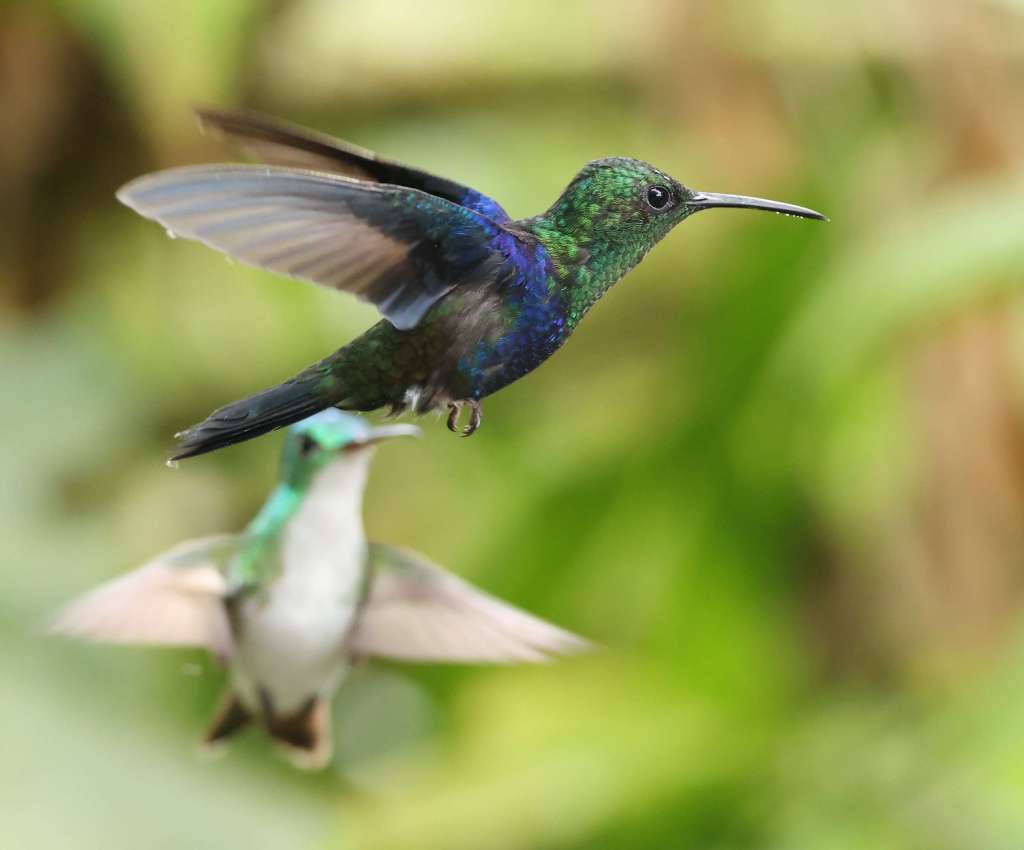
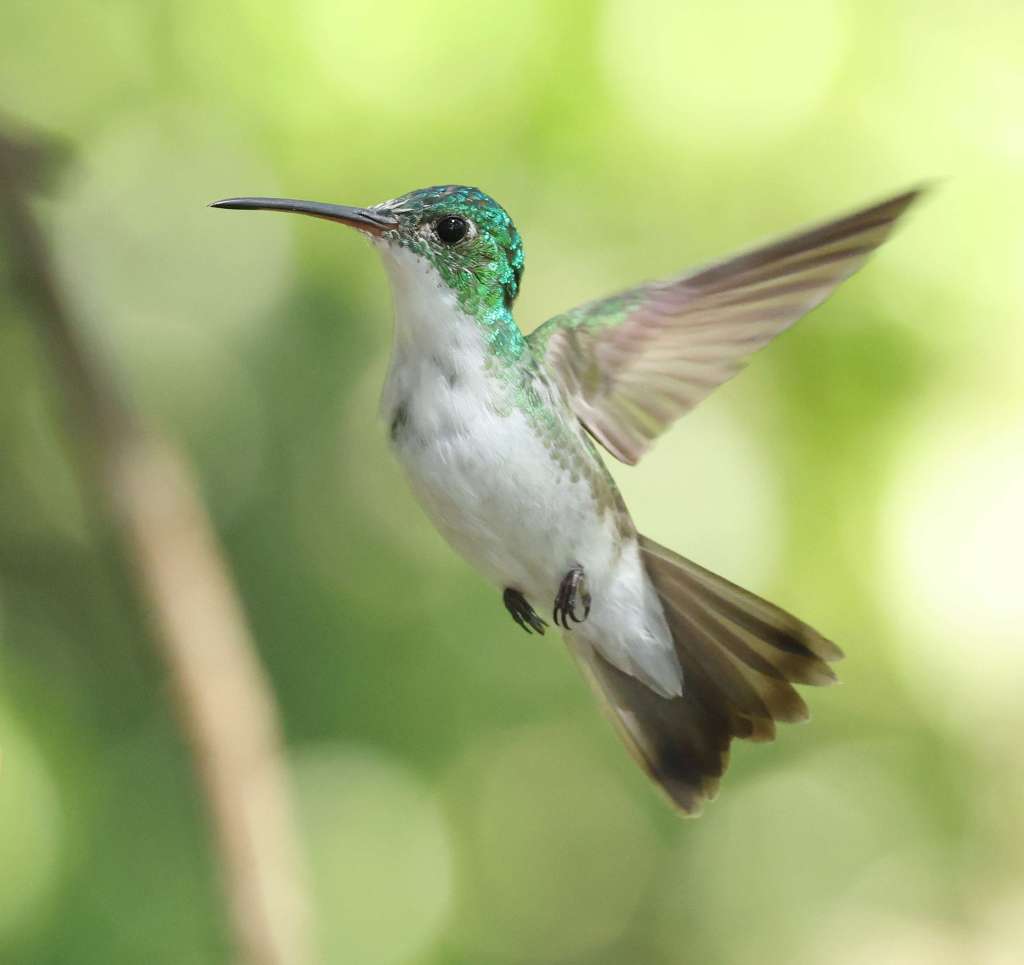
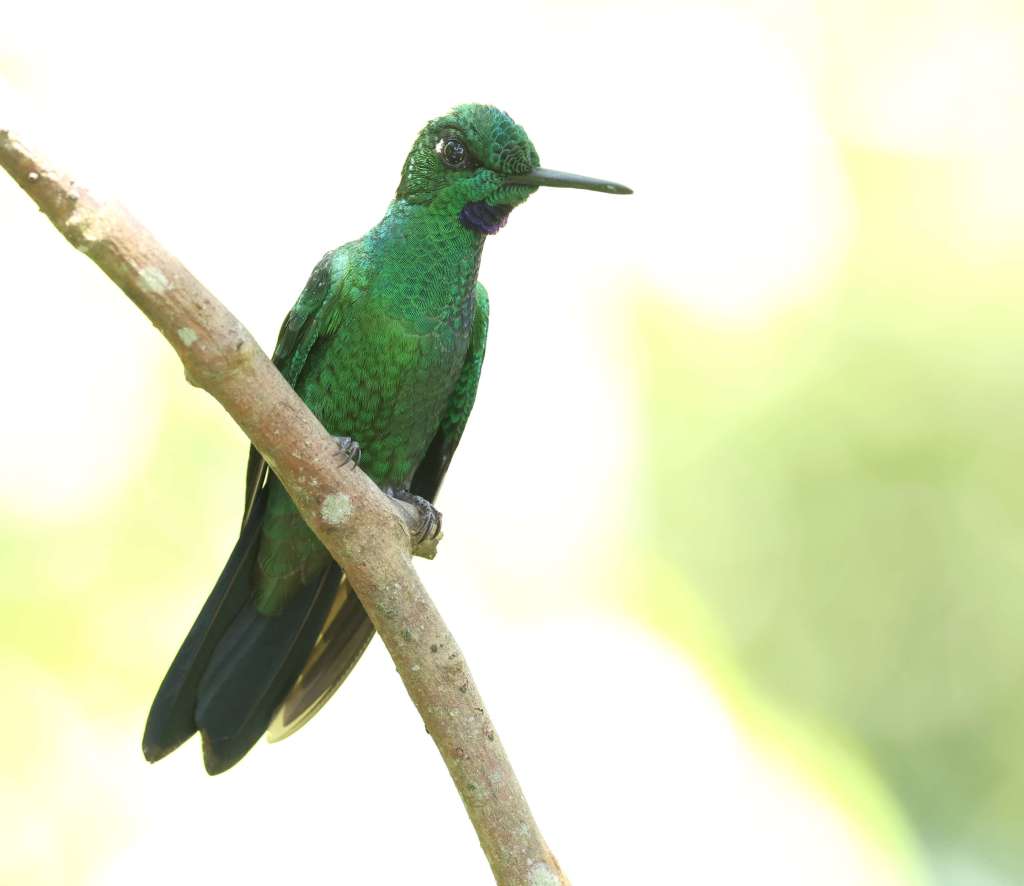
Hummingbirds are the first order of the day with White-Booted Racket-Tail, White-Whiskered Hermit, Green-Crowned Brilliant, Crowned Woodnymph and Purple-Throated Woodstars being especially reliable. We also saw Andean Emerald there too, a new one for us, with its lovely teal-green back feathers and clean white front plumage. There is a lot of space behind the the feeders and surrounding perches due to the steep slope, so you are almost guaranteed to get a nice smooth background for photos of these gems.
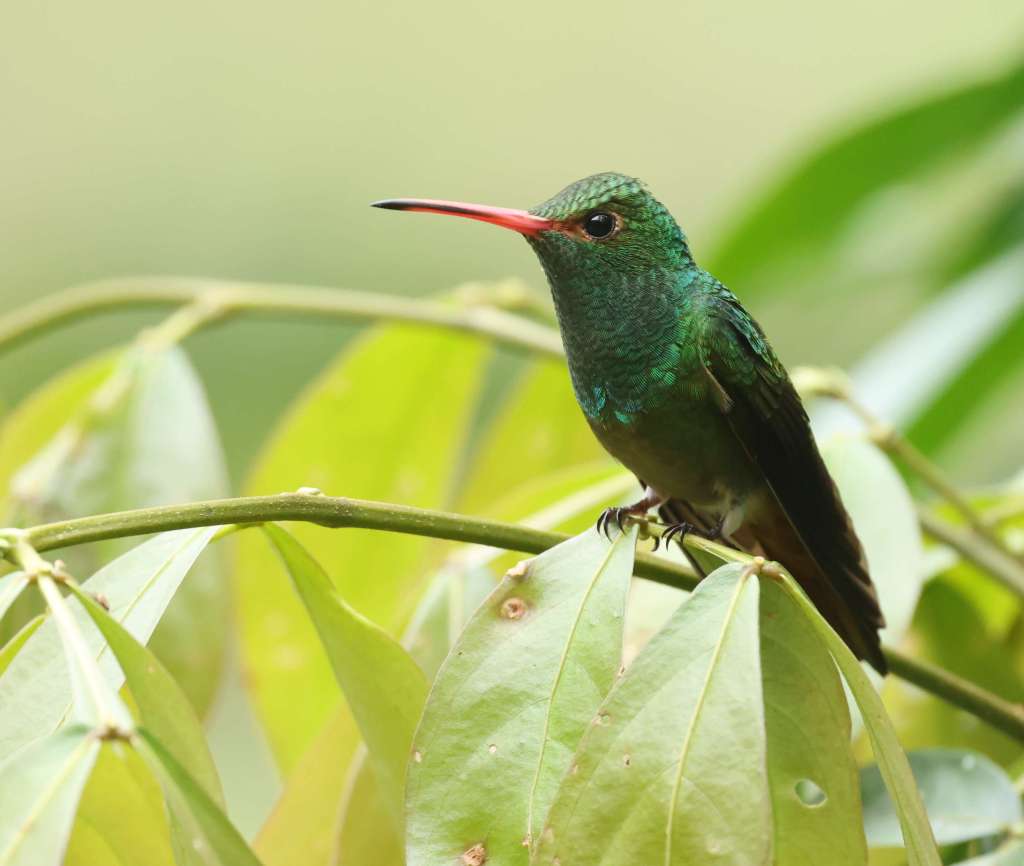
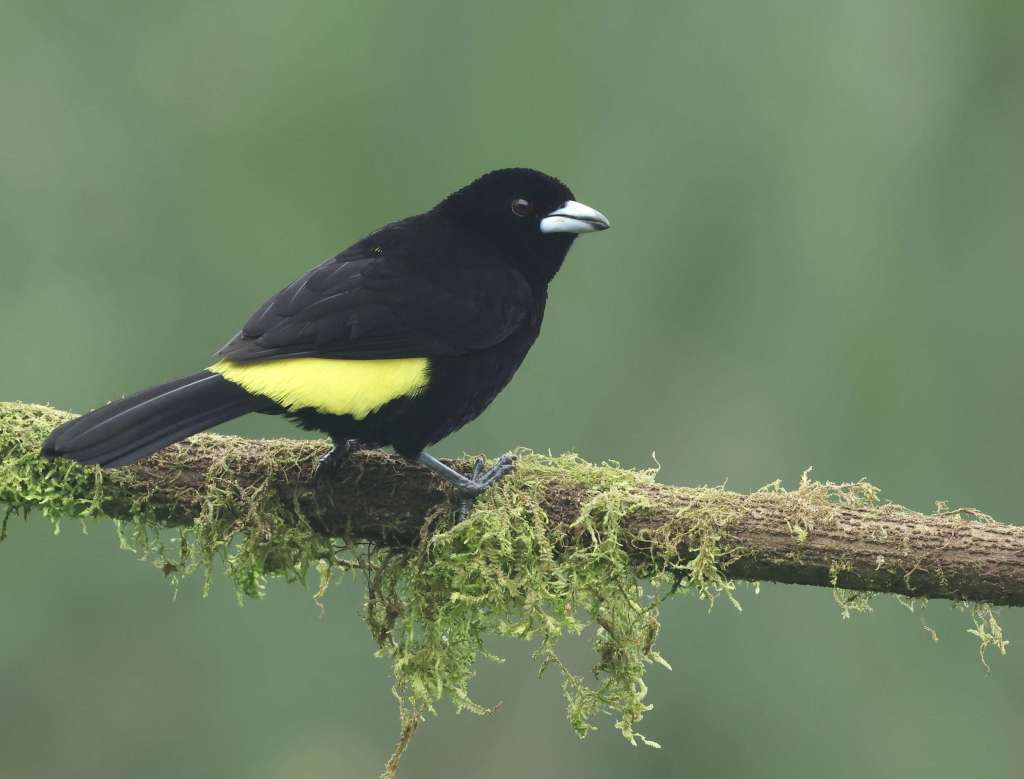
There are also a couple of “trough”-style tanager feeders, which attract Flame-Rumped, Black-Capped, Golden-Naped, Blue-Necked, Golden, Silver-Throated and Bay-Headed Tanagers with regularity, as well as a host of other tanagers less frequently, for a total of 26 all-time tanager species according to eBird for the site. The colours on the Bay-Headed Tanager in particular are just gorgeous.
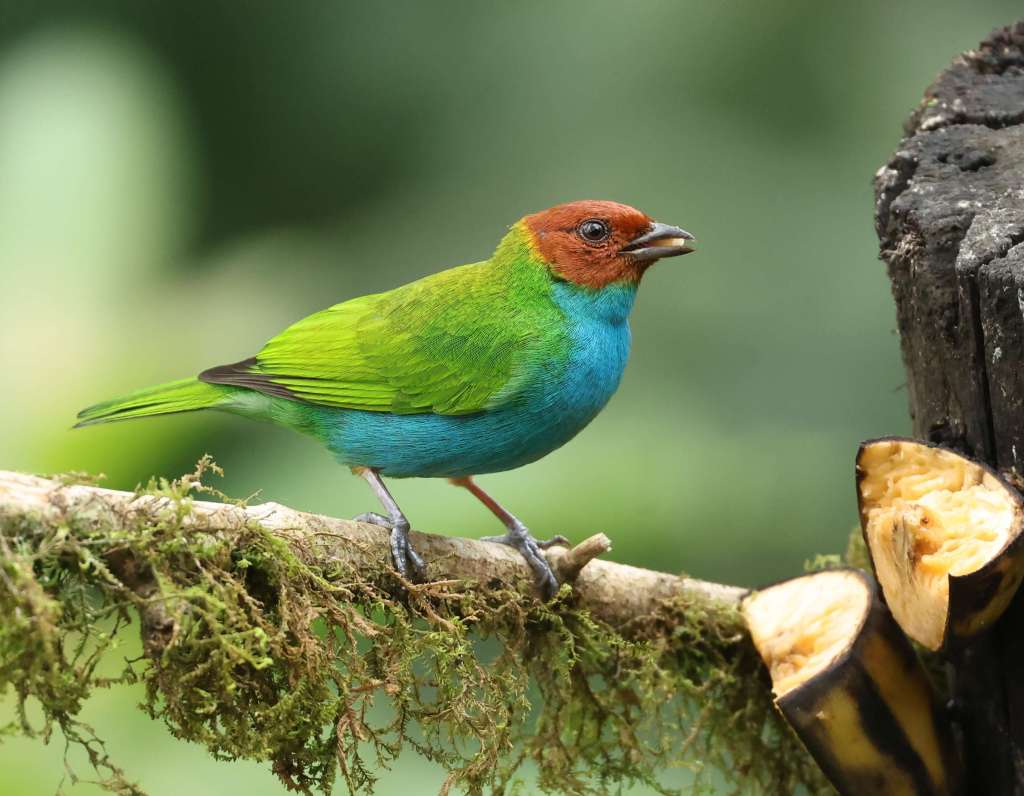
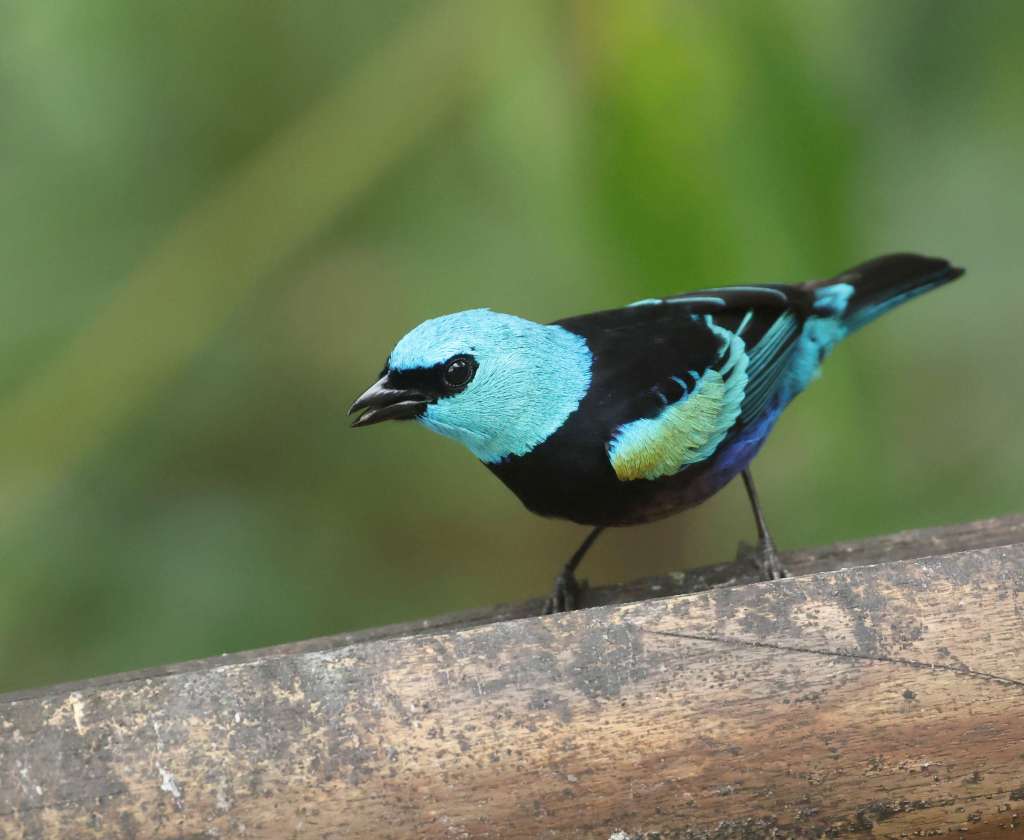
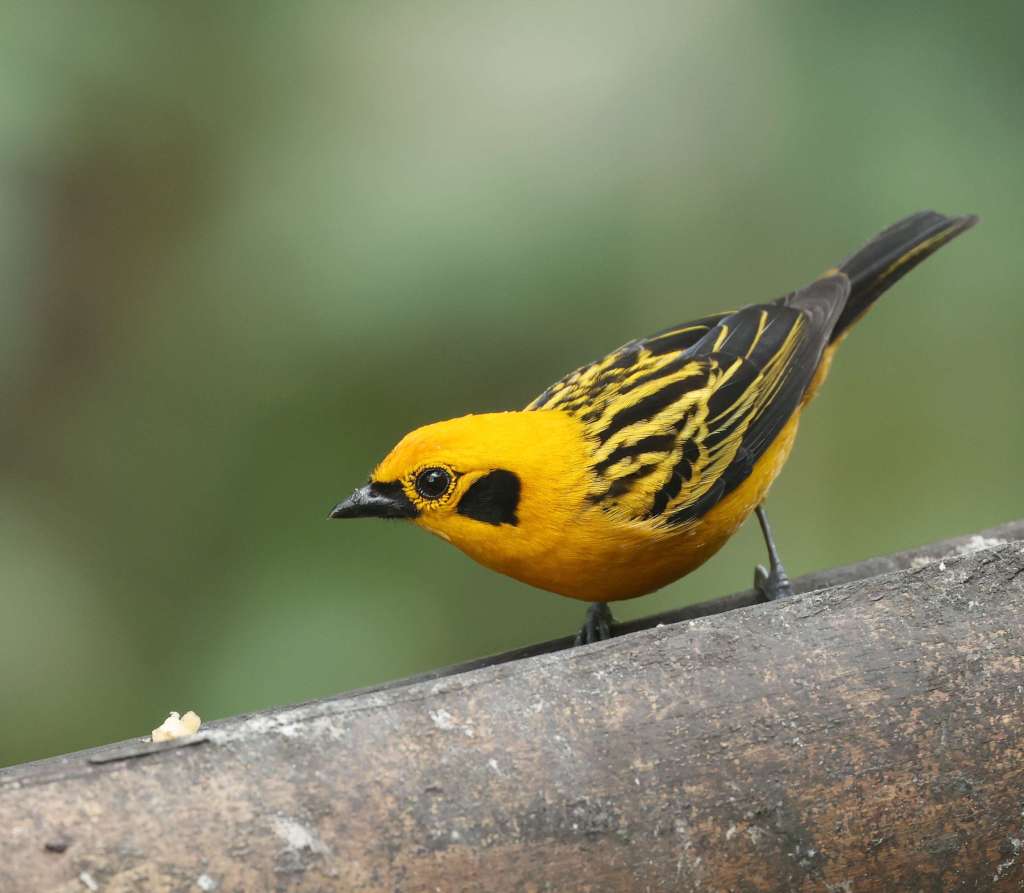
I am not aware of any trails or grounds you can explore here, but the close viewing of such a good variety of hummingbirds and tanagers in a super-accessible site is more than enough enticement for a visit to this location.
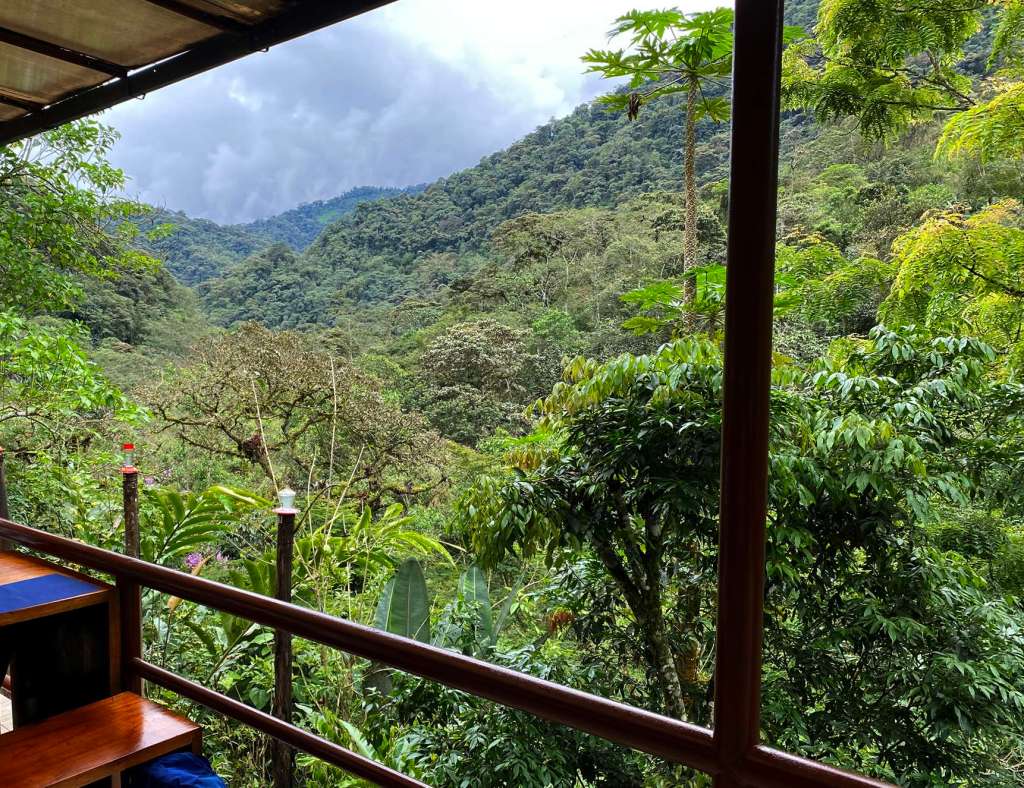
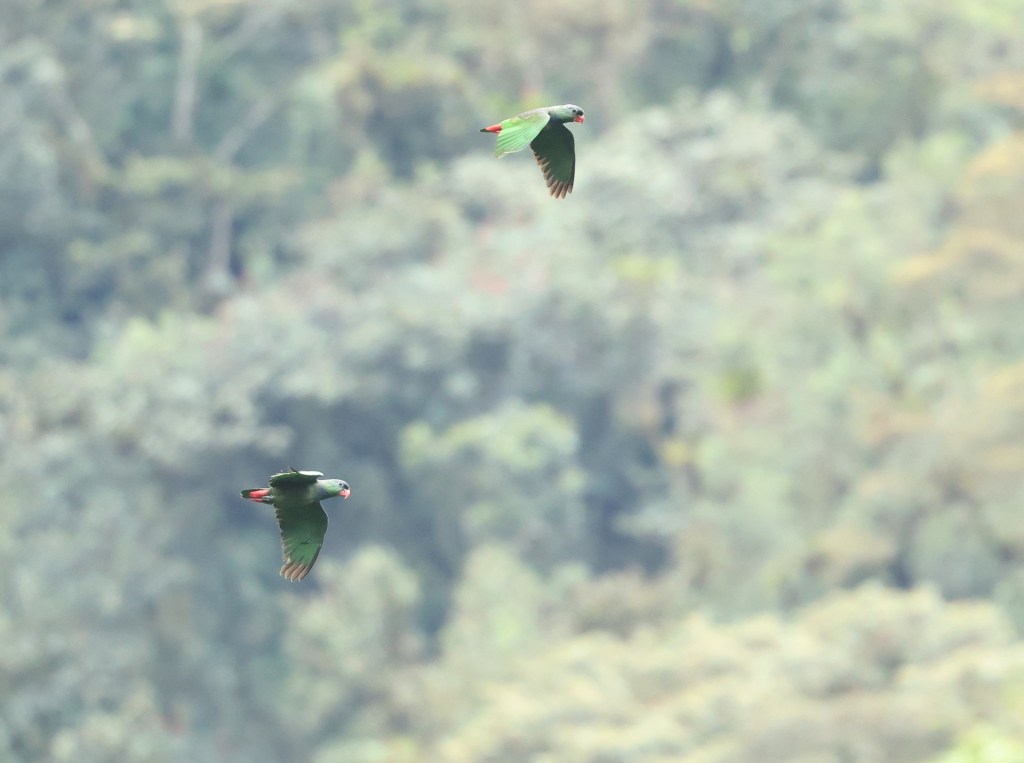
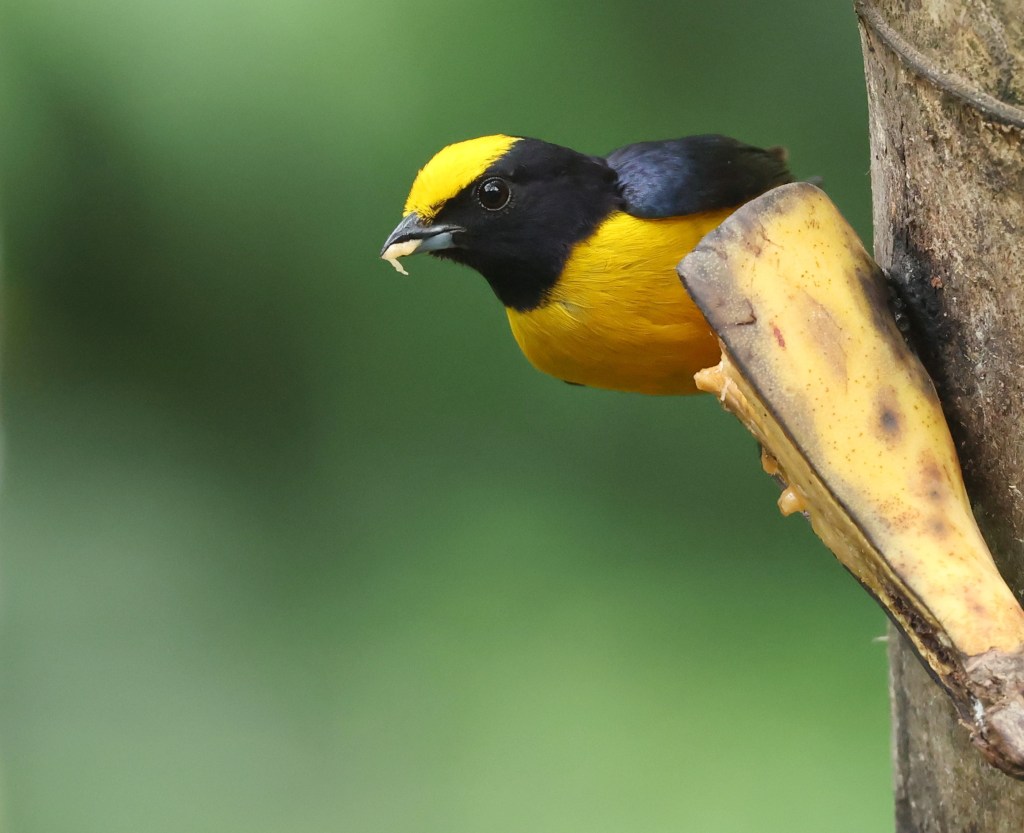
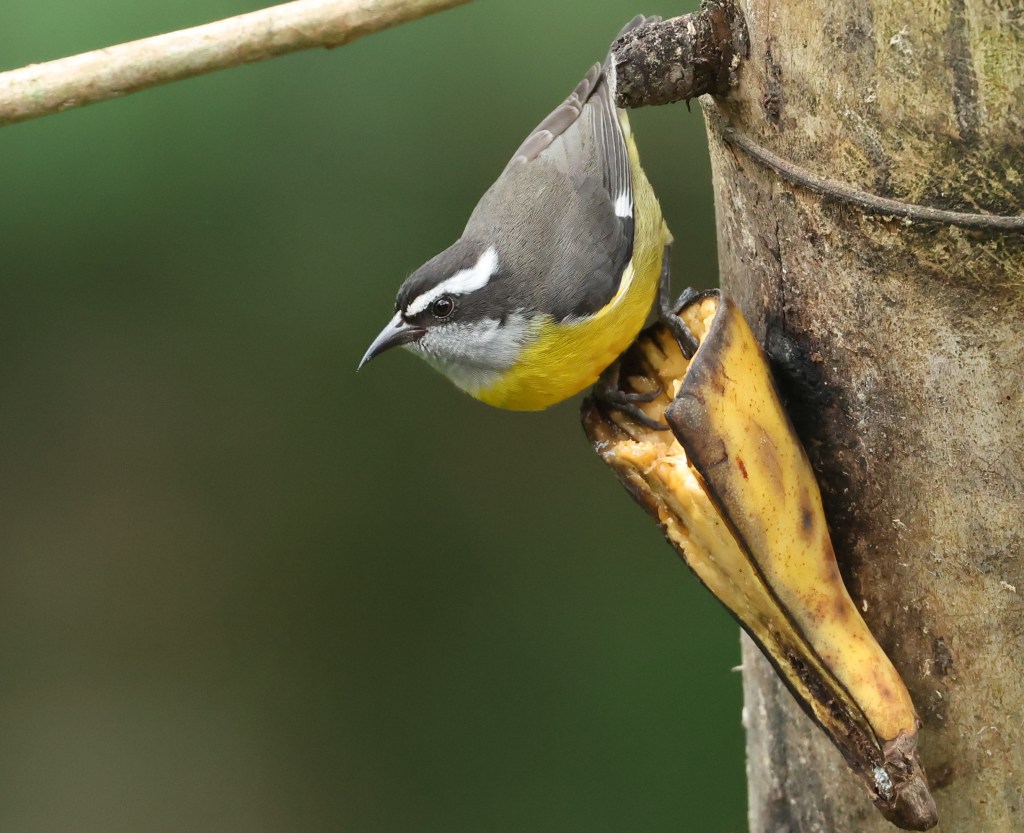
I took very few photos of other birds here – Red-Billed Parrots and a Turkey Vulture; Orange-Bellied Euphonia, and amusingly, a Bananaquit on a banana.
San Tadeo
At a slightly higher elevation of 1700m, on the main road near the turn-off to Mindo town and just a few hundred metres from Sachatamia Lodge (see later), is an intriguing spot called San Tadeo Birding. It’s basically someone’s backyard, extremely elaborately set up with feeders to attract tanagers and hummingbirds especially, though it is also a place where you might possibly see a Crimson-Rumped Toucanet and a few other specialties of this part of Ecuador.
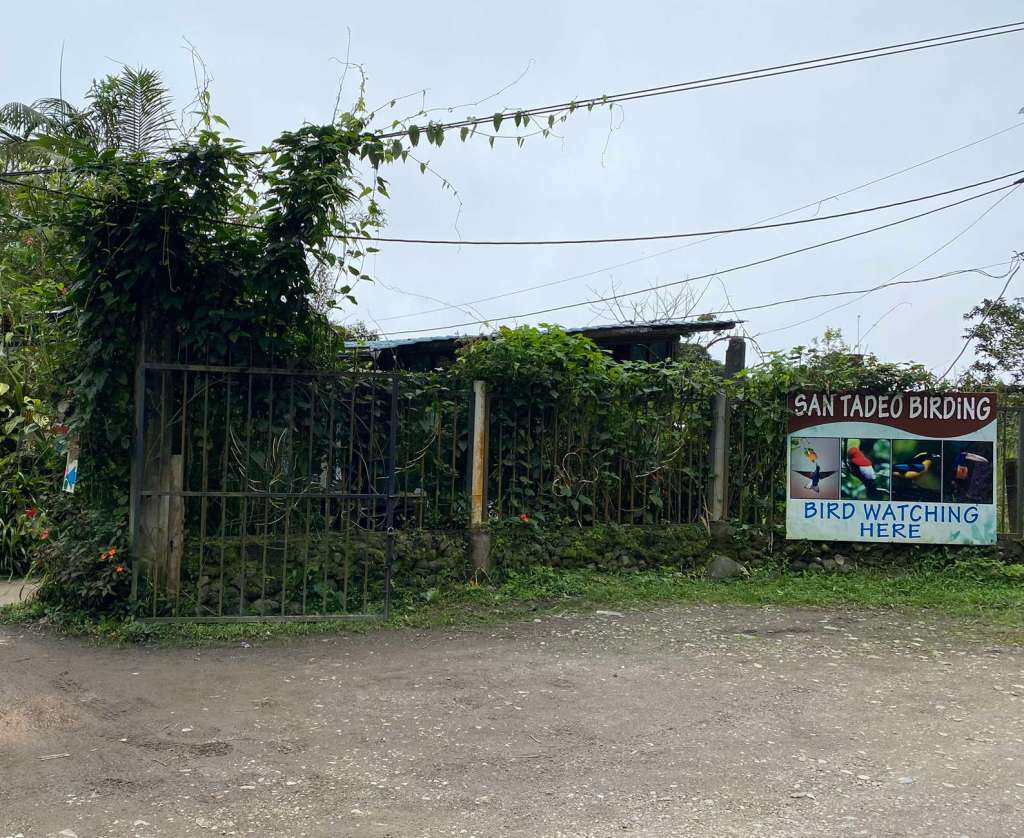
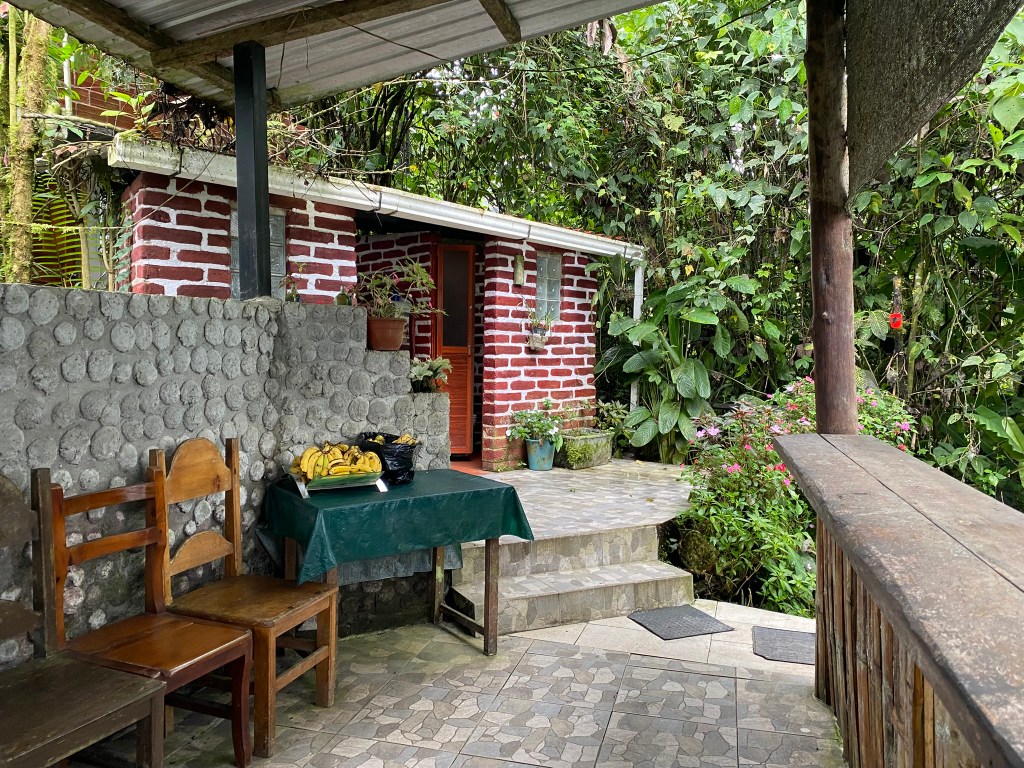
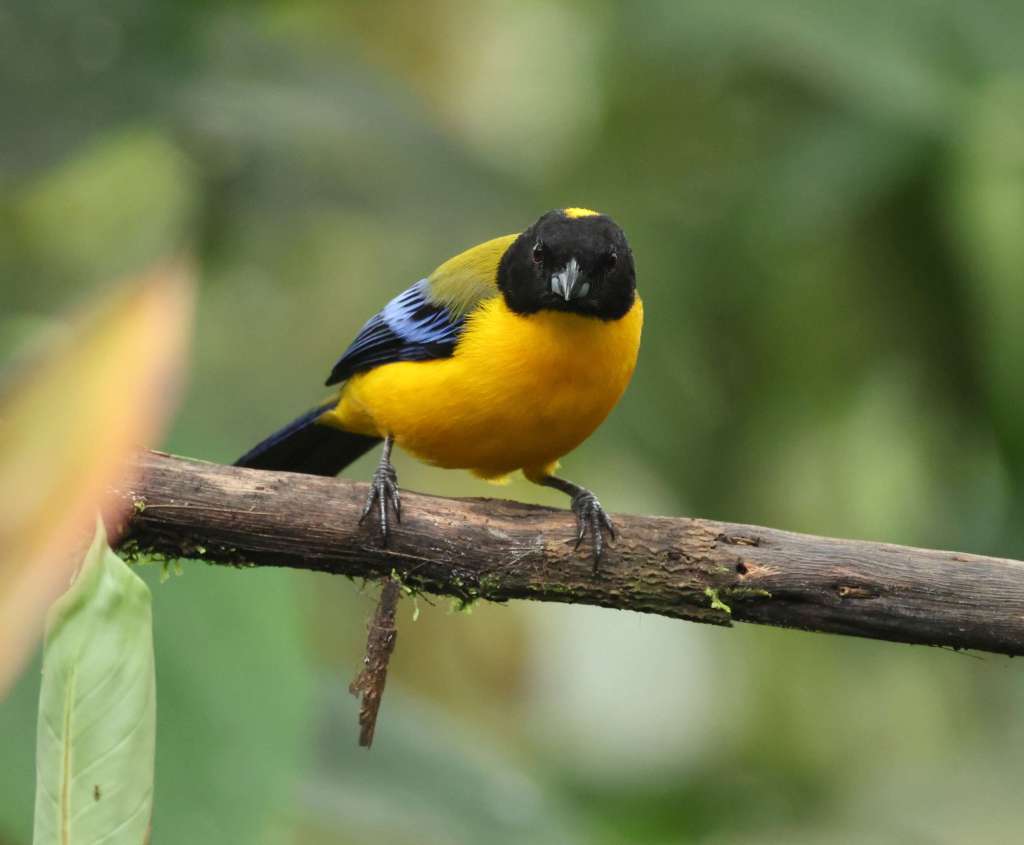
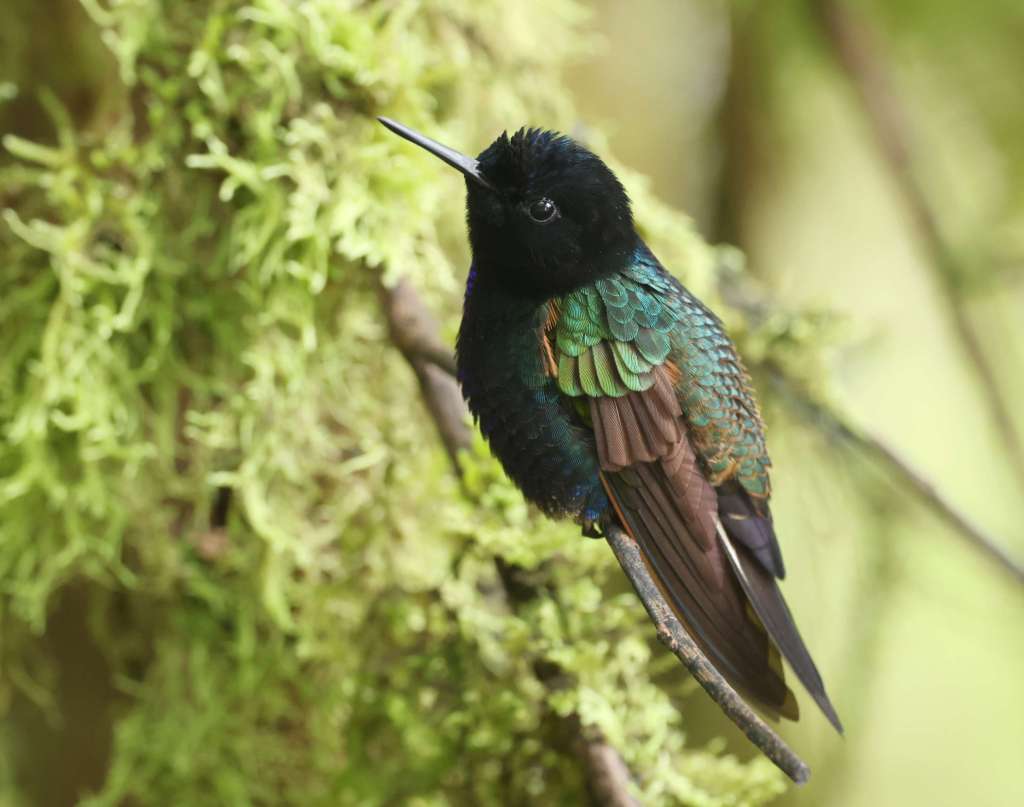
From the road there isn’t much to signify a birding hotspot here, just a single sign. Pay a small amount of money, and the owners will take you around the back, offer you a coffee, and you can see a modest and fairly overgrown birding garden. Velvet-Purple Coronets joust with other hummingbirds to the left, while the tanager action is mainly straight ahead with offerings of banana. We saw beautiful Black-Chinned Mountain Tanagers here which was awesome, and we were careful to distinguish them from the similar Blue-Winged Mountain-Tanager which has a blacker back and more blue in the wings. Flame-Rumped Tanagers, super common to the region, were also here.
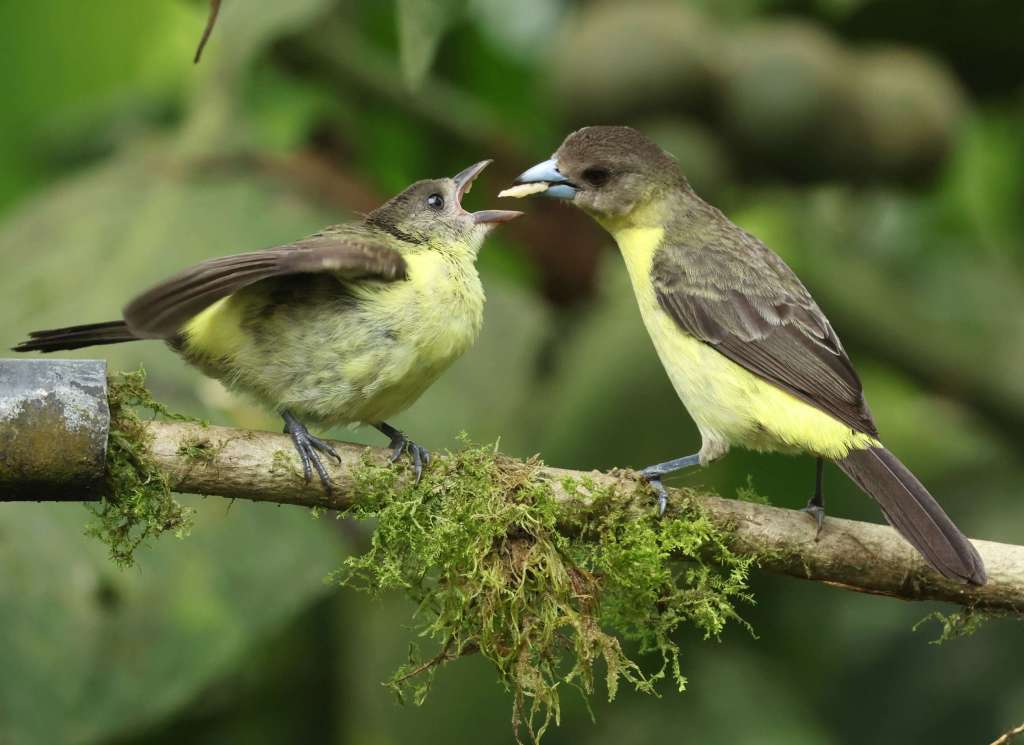
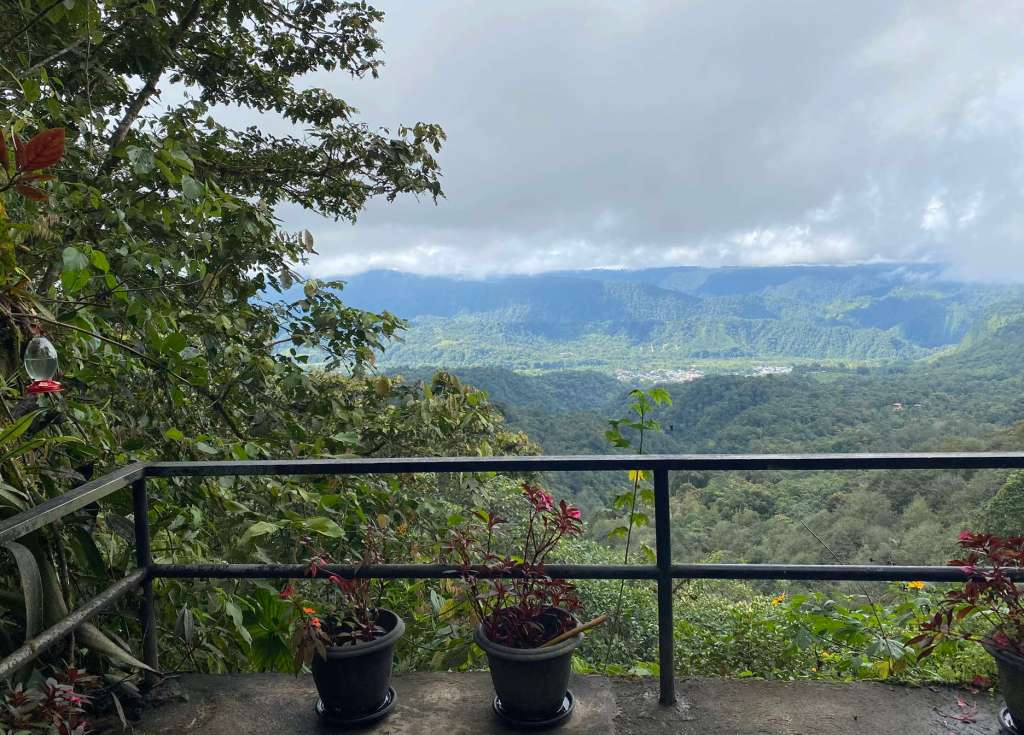
However, this modest little garden is only part of the story. Down a further path there is a broad concrete apron surrounded by bushes and lined with hummingbird feeders, and this area is positively teeming with hummingbirds. It also has a great view out across the countryside (when the clouds cooperate, that is).
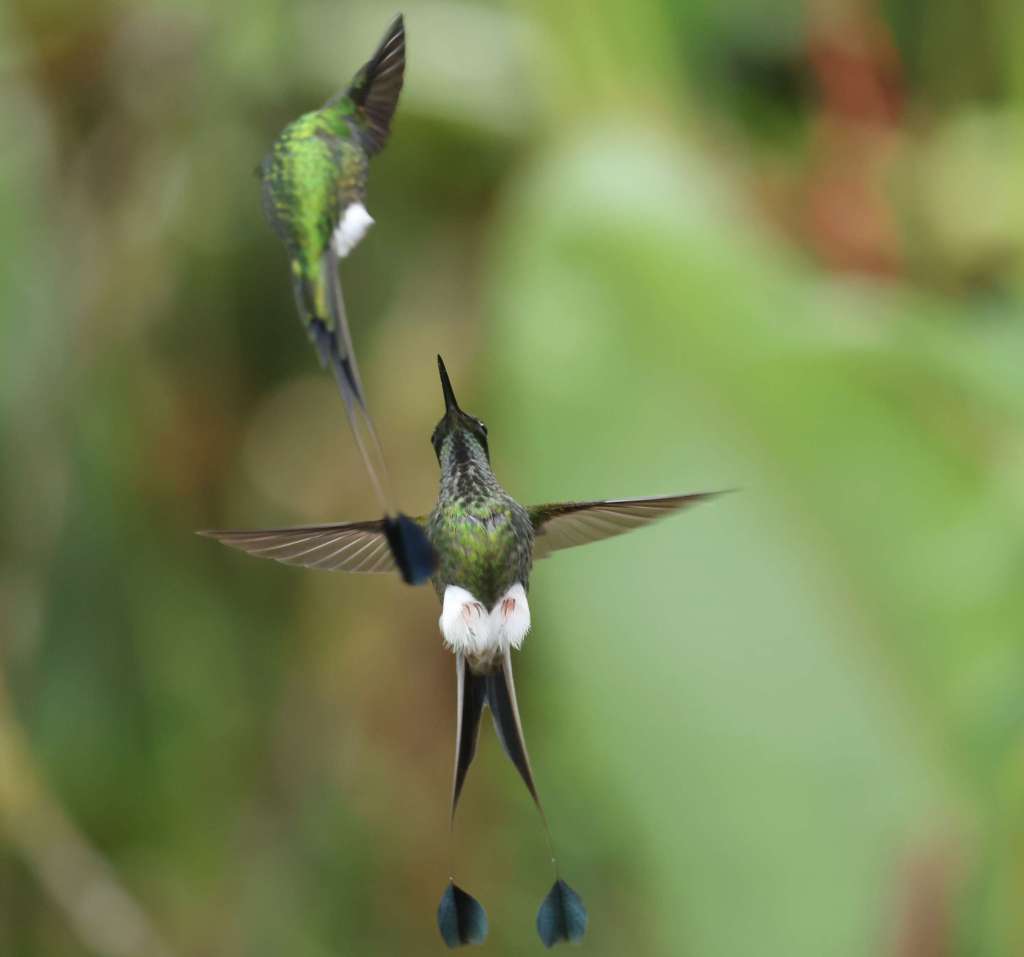
White-Booted Racket-Tails are some of the stars of the show and these tiny hummers are just as territorial and aggressive as some of the bigger birds. Watch them long enough and you’ll likely see a couple in full attack mode, where they spread the two prongs of their tails wide in what I’m sure passes for a very intimidating posture in the hummingbird world, but just looks adorable to us humans.
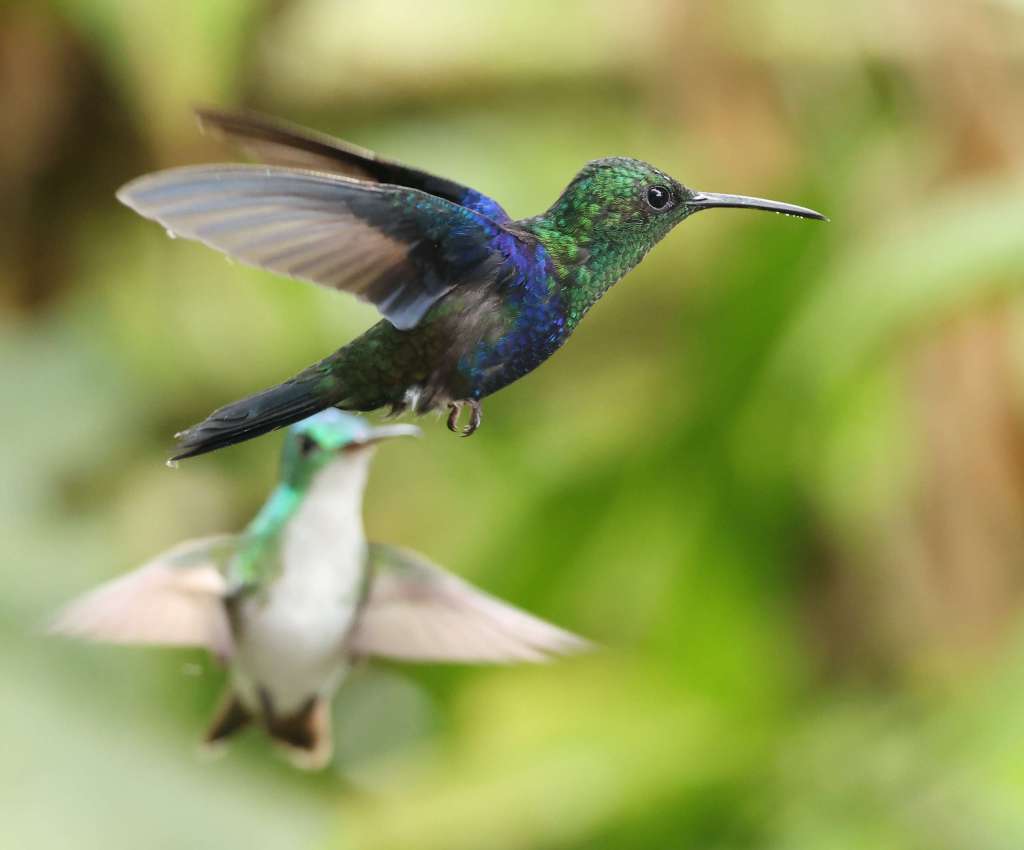
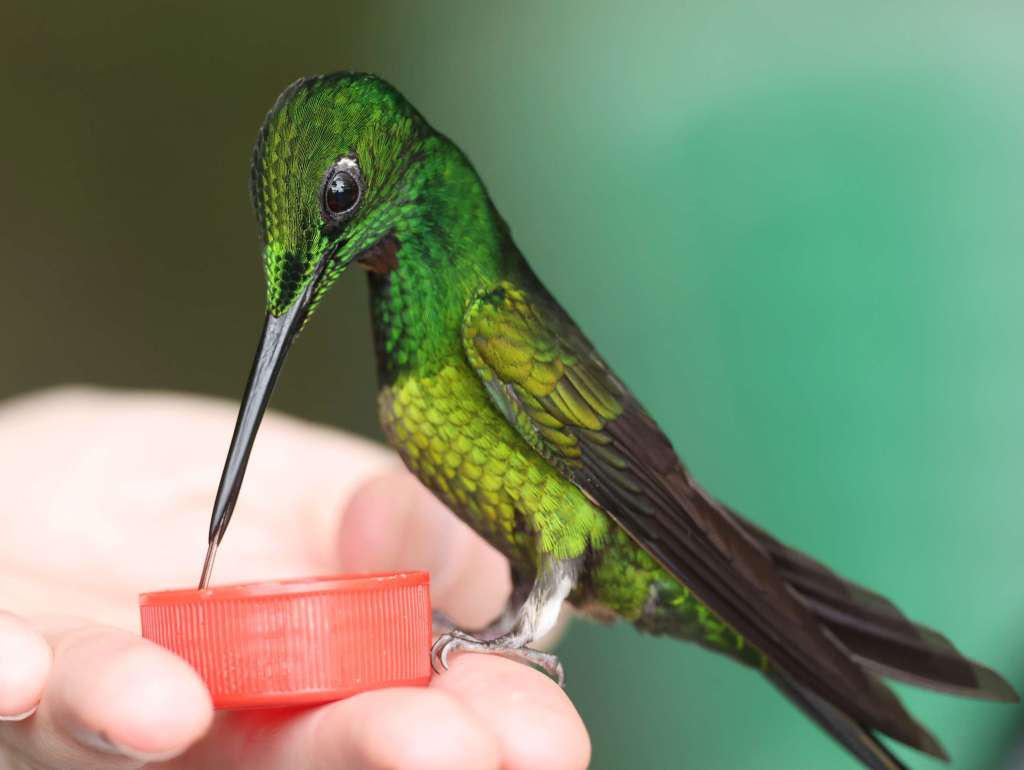
There is a good variety of hummingbirds here and somehow San Tadeo has an appeal far beyond hardcore birders, with many general members of the public visiting (as the gushing reviews on Google for this location attest). Everyone’s delighted to have hummingbirds landing on their hands and feeding from red capfuls of sugar water, and you may be a bit snooty about doing this as a birder, but I can tell you from experience it was awesome.
Why? Well, for one thing, you’ve never been this close to wild birds before. Beholding the shimmering iridescence of an Empress Brilliance right in front of your face in full sunlight is almost life-changing. Second, you really get a tactile appreciation of just how small and delicate they are: you can barely feel their little claws on your skin, they are so light. And third, the way they sip at the sugar water is just so cute. Their insatiable thirst keeps their ultra-fast metabolism going!
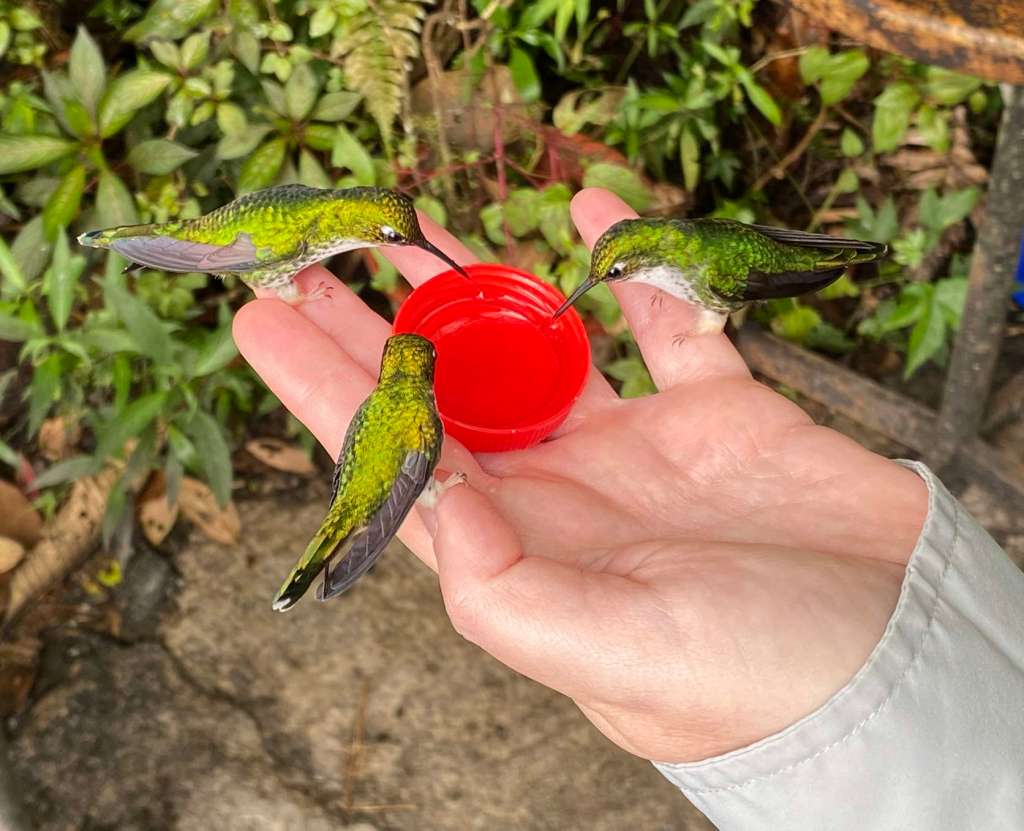
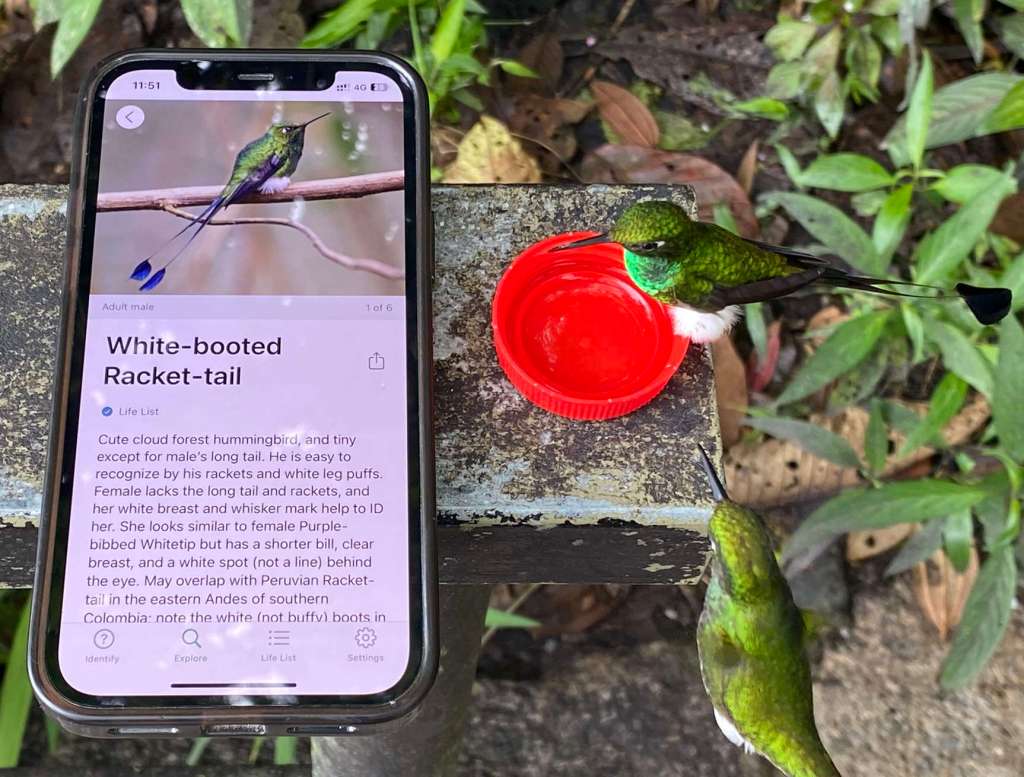
This is definitely not a “purely wild” situation, with these birds basically trained and mostly unafraid of us, but I’m not sure that giving people a genuine sense of delight in these tiny jewels of nature in this way is such a bad thing. Not everyone has binoculars and time and patience to enjoy them the way more “serious” birders do.
Sachatamia Lodge
Also located at 1700m altitude is Sachatamia Lodge, a private reserve offering accommodation, a restaurant, pool and games room all set in 120 hectares of stunning, genuine cloud forest. It makes an excellent option for staying in the region both in its own right and as a strategically located base for further exploration. The latter is because it is fairly centrally positioned in the region and is right on the main road, unlike many of the other lodges and reserves which are often accessed only by long, bumpy unsealed roads.
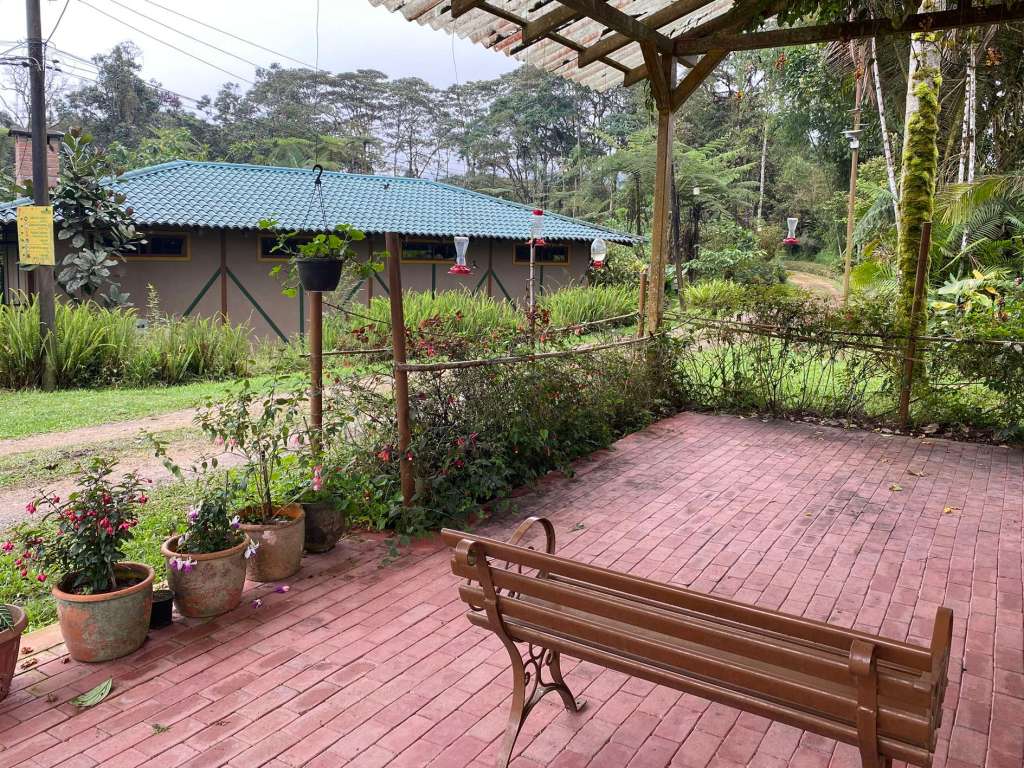
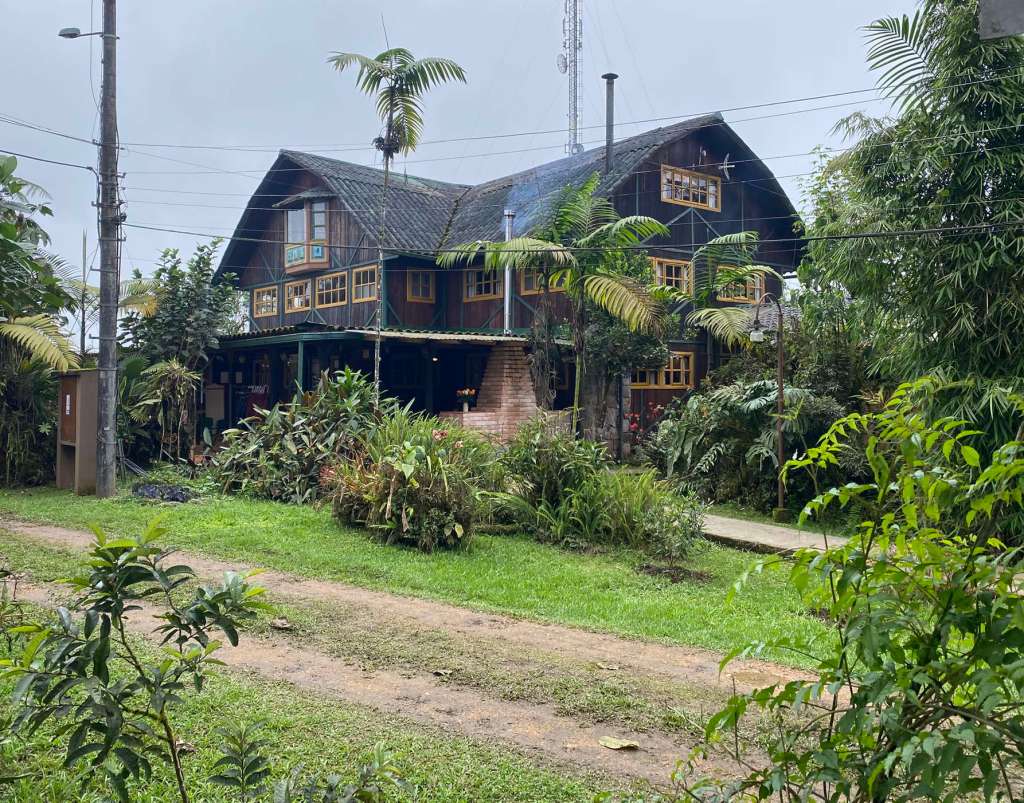
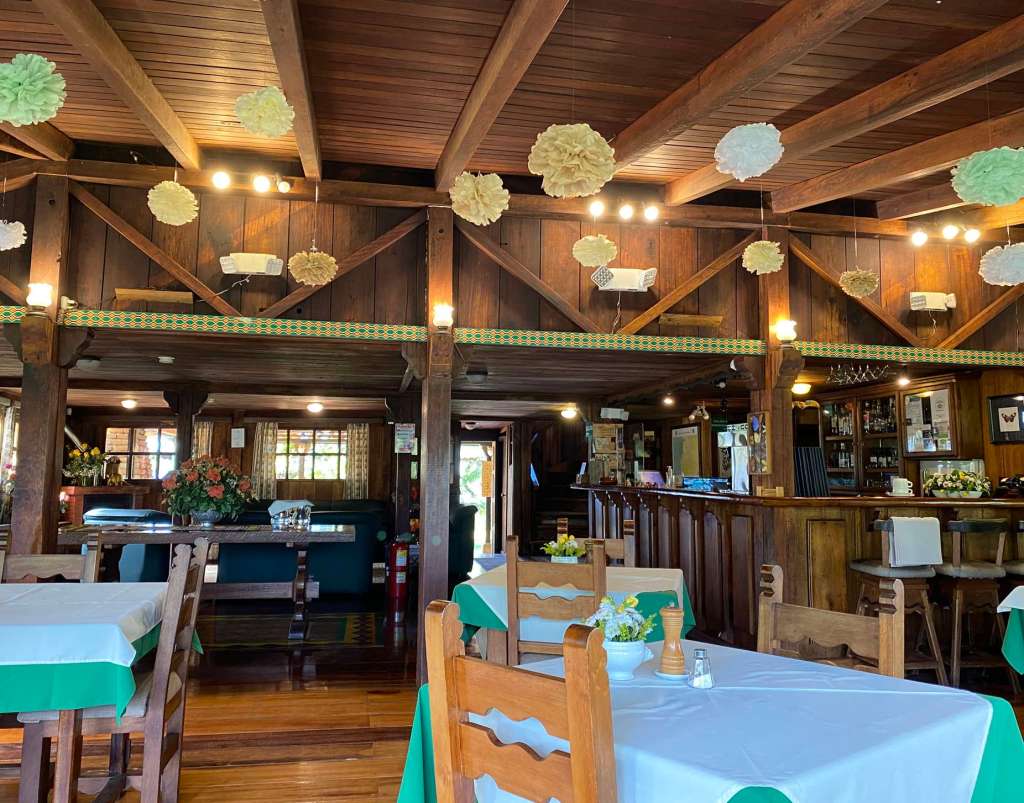
We stayed three nights in one of the forest cabins, and thus had the opportunity to extensively investigate the grounds. While we were there, the “cloud forest” lived up to its name with sometimes very thick fog completely enveloping the lodge, along with some bouts of rain.
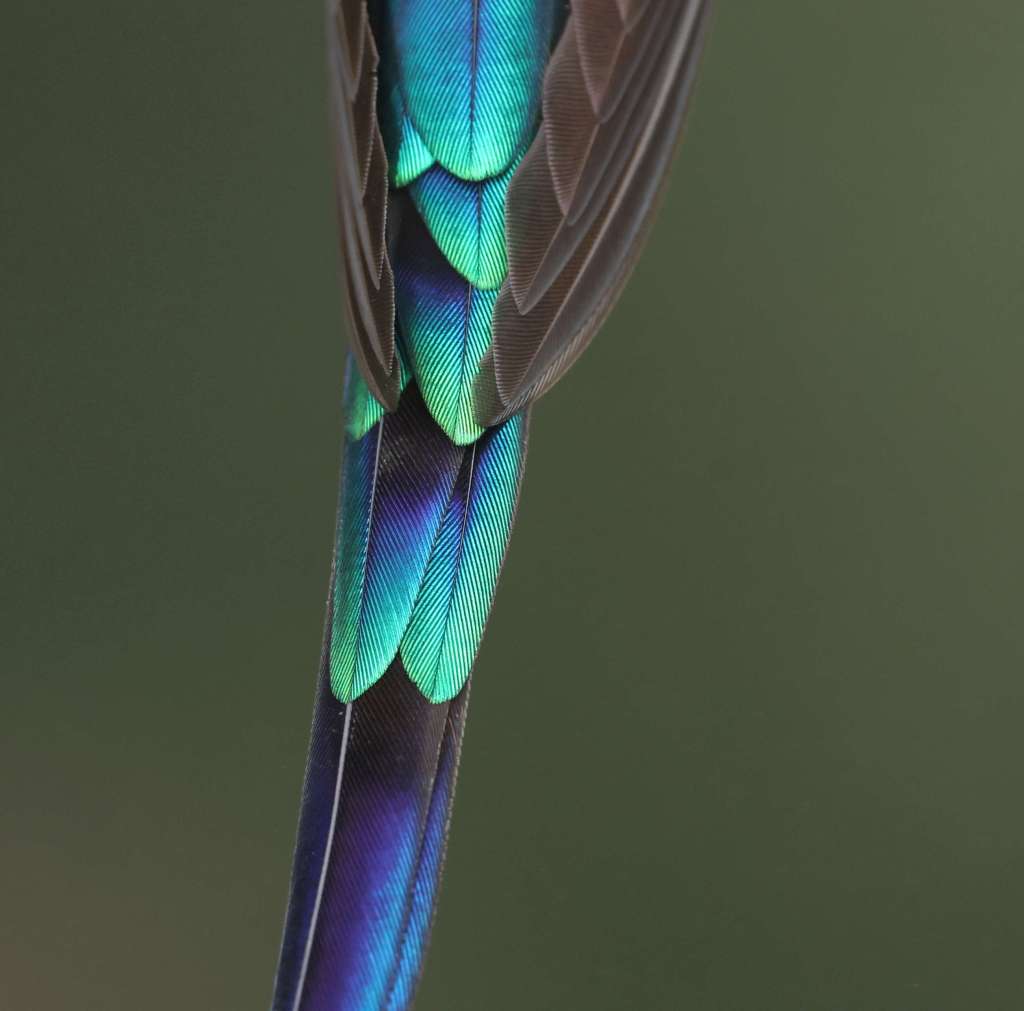
Like almost every site in the Mindo region, Sachatamia Lodge has some hummingbird feeders. These are all placed under a shelter – sort of an open-walled room – which was great for keeping out of the rain, but meant that most photography of hummers had to be in the shade. Violet-Tailed Sylph was one of the more spectacular hummingbirds that was a regular. Even in shade conditions its electric blue tail is astonishing to see up close.
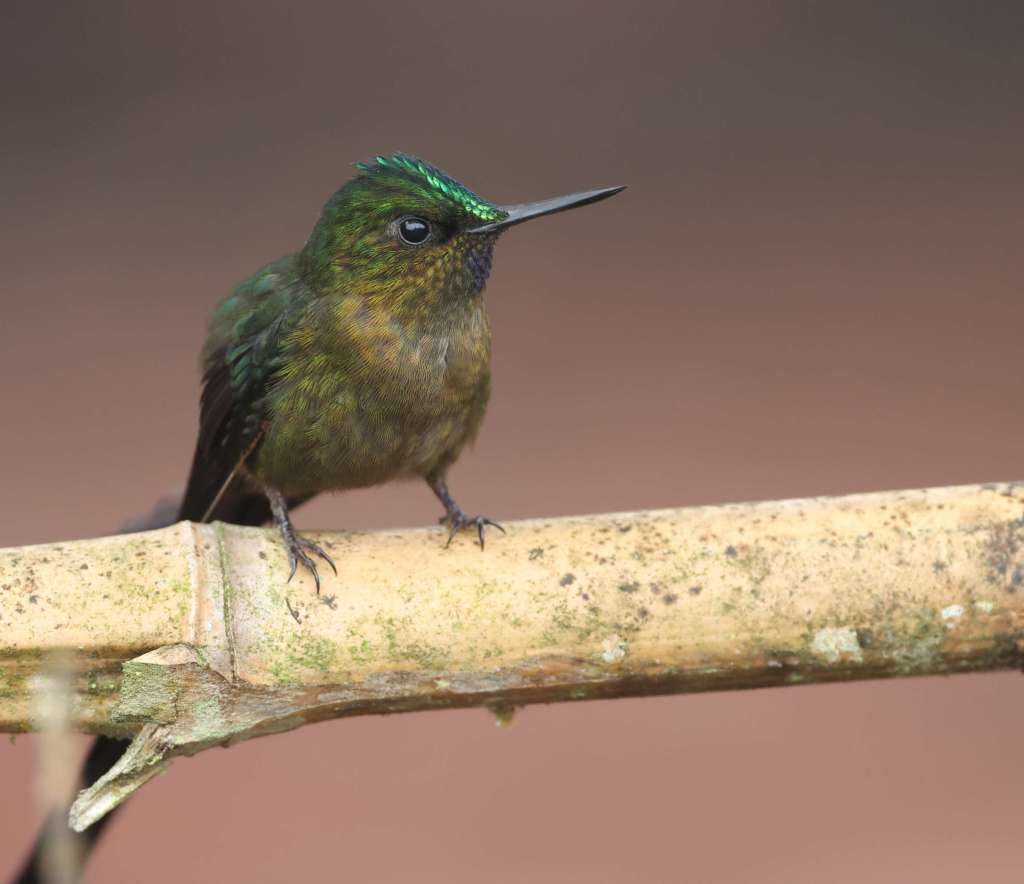
Velvet-Purple Coronets were fairly dominant and loved to perch up in the dim eaves of the shelter, while White-Booted Racket-Tails, Fawn-Breasted Brilliants and Crowned Woodnymphs – amongst many other species – constantly flitted into and out of the feeders. The small number of feeders and the shaded structure makes this perhaps less enticing for photography than other hummingbird gardens in the region (see above!), but it’s still decent enough to get your hummer fix, e.g. as a break from tougher birding on the rest of the property.
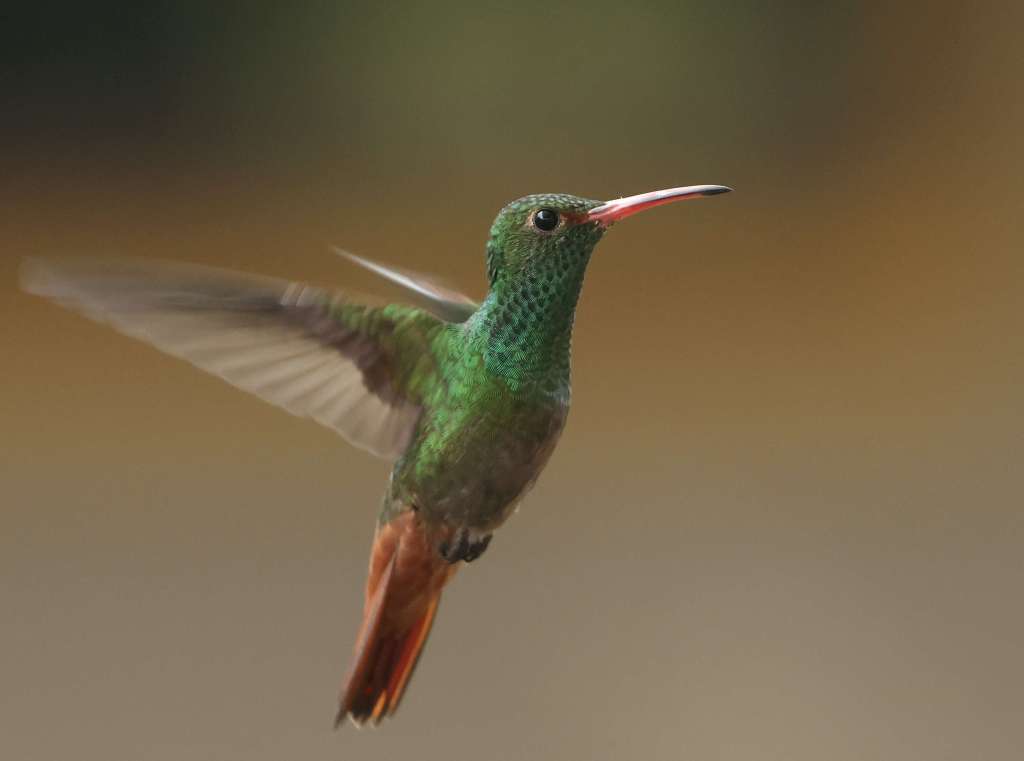
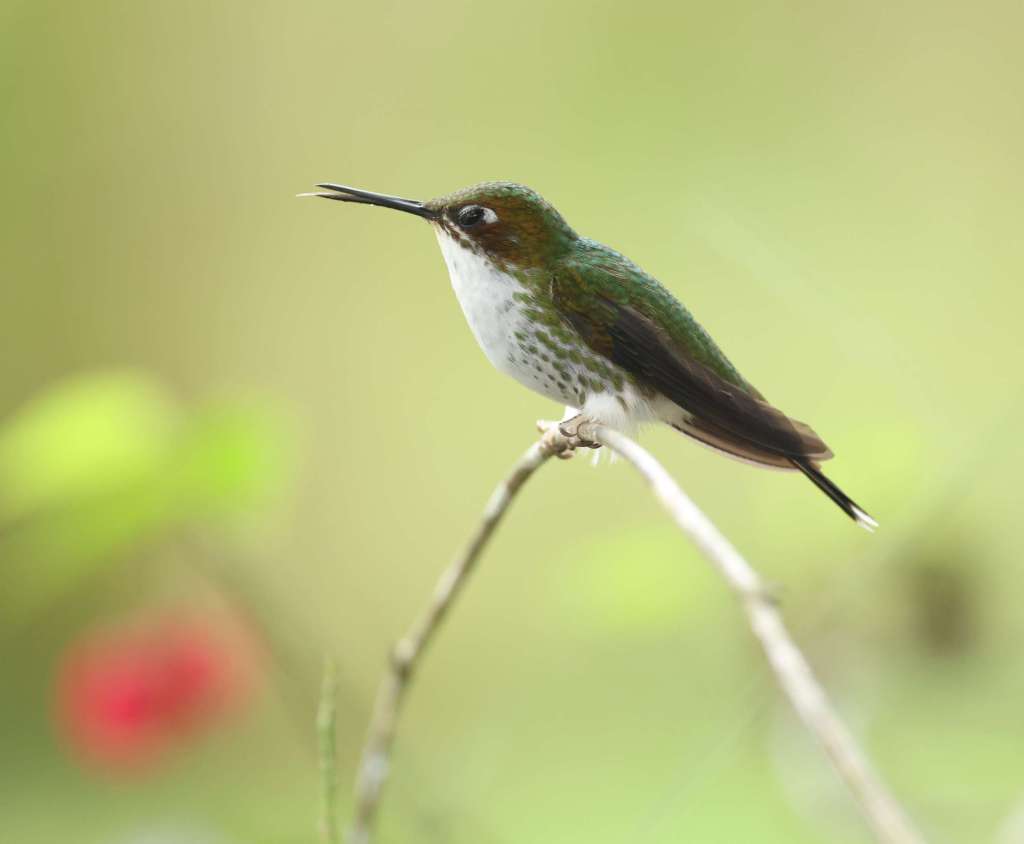
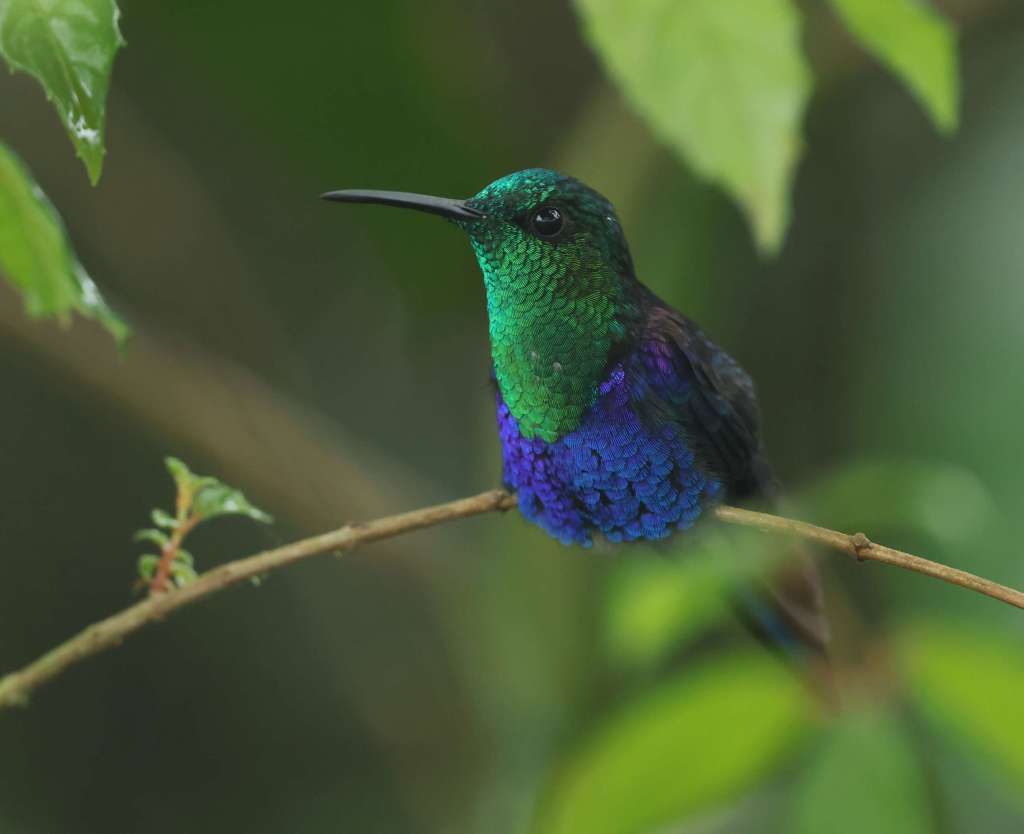
They do have a tanager feeder station too but there was not too much happening there when I checked (Orange-Bellied Euphonia and Flame-Rumped Tanagers were regular, at least); the feeder is quite exposed with little safe foliage protection close around it, which might have inhibited some birds from approaching. I did also note a Common Squirrel-Cuckoo hanging around a few trees right by the main lodge building while we were there, which was nice to see.
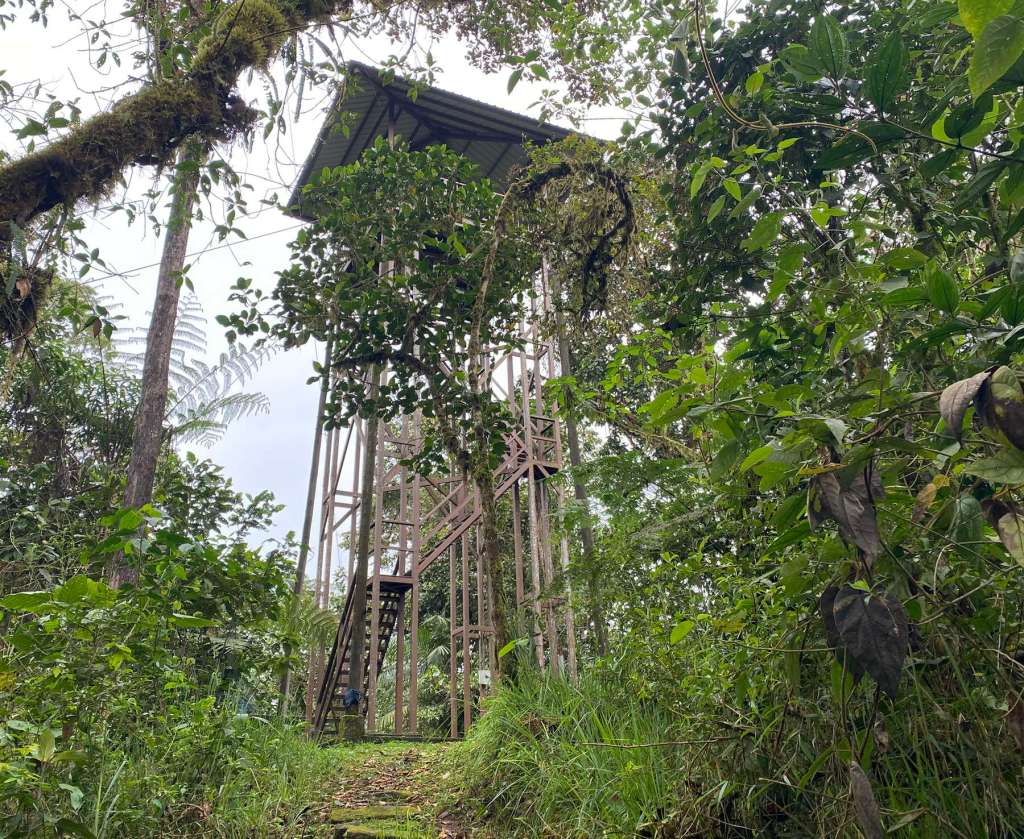
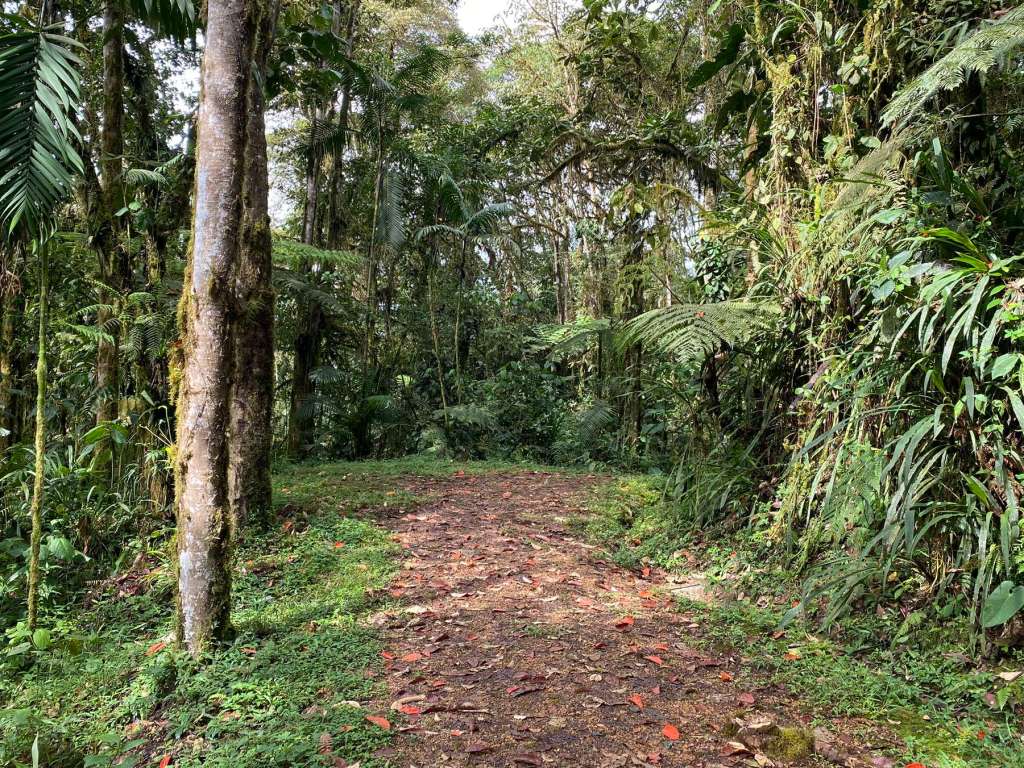
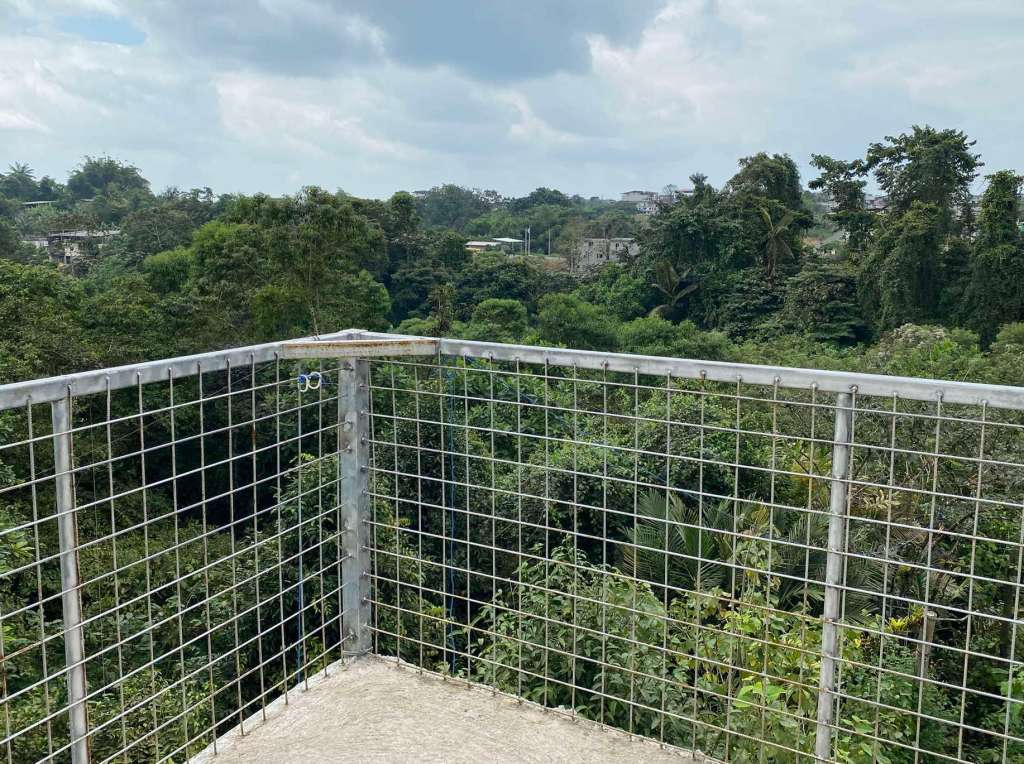
The trail network is quite good, with a tall and breezy observation tower at the end of one of the trails, and two moth traps “A” and “B” at the respective ends of two other trails.
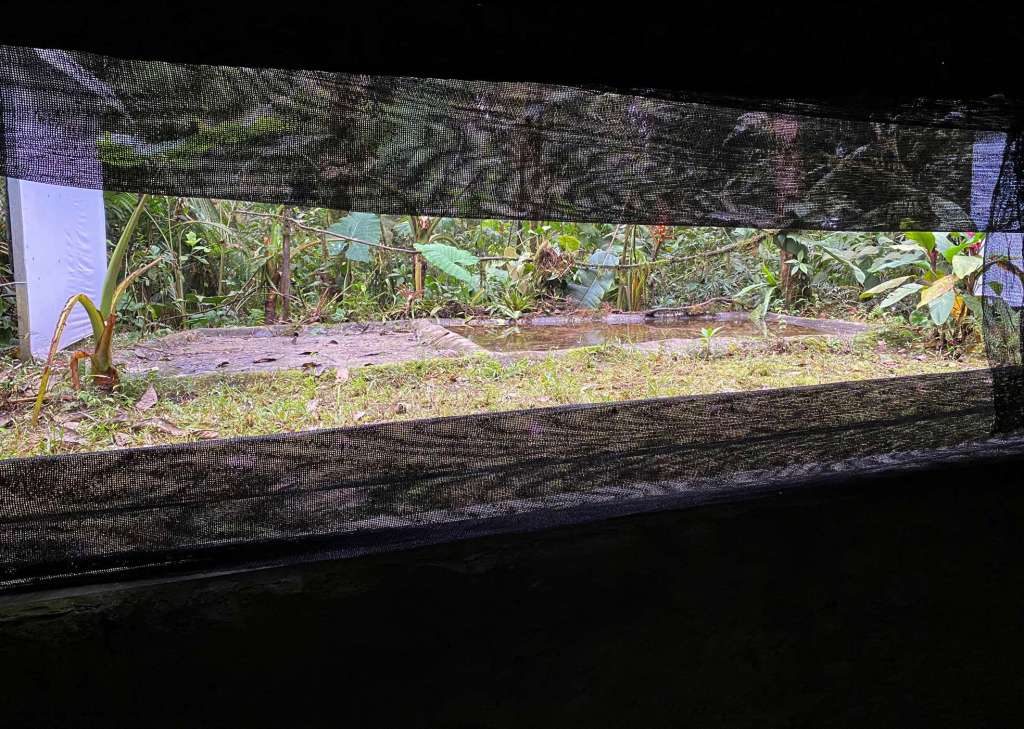
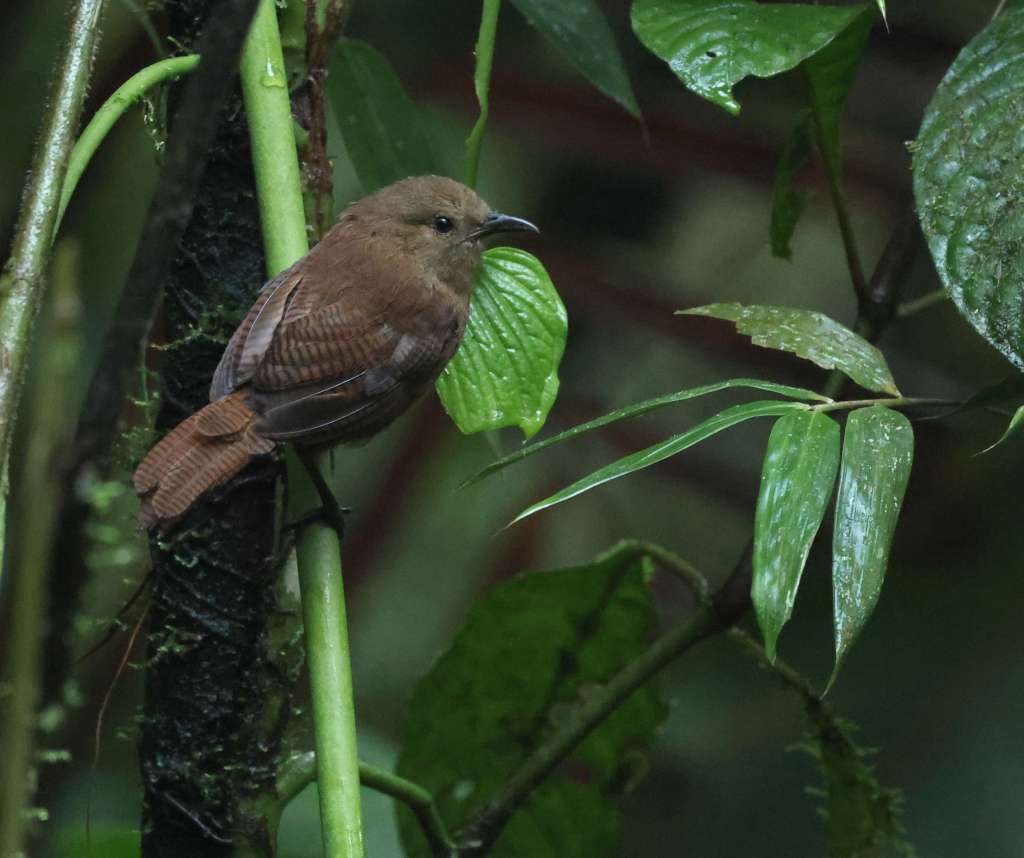
Being isolated and quite deep in the rainforest, both moth traps were quite productive, with some startling sightings in the early mornings, such as the secretive Sharpe’s Wren.
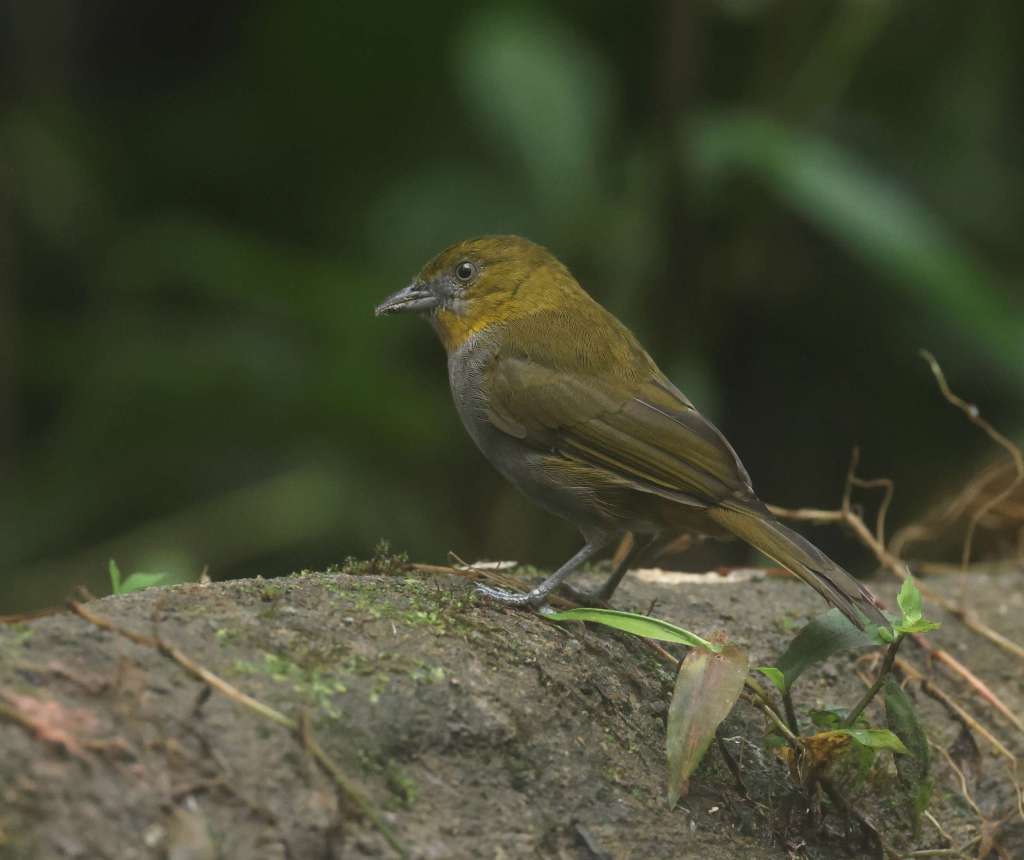
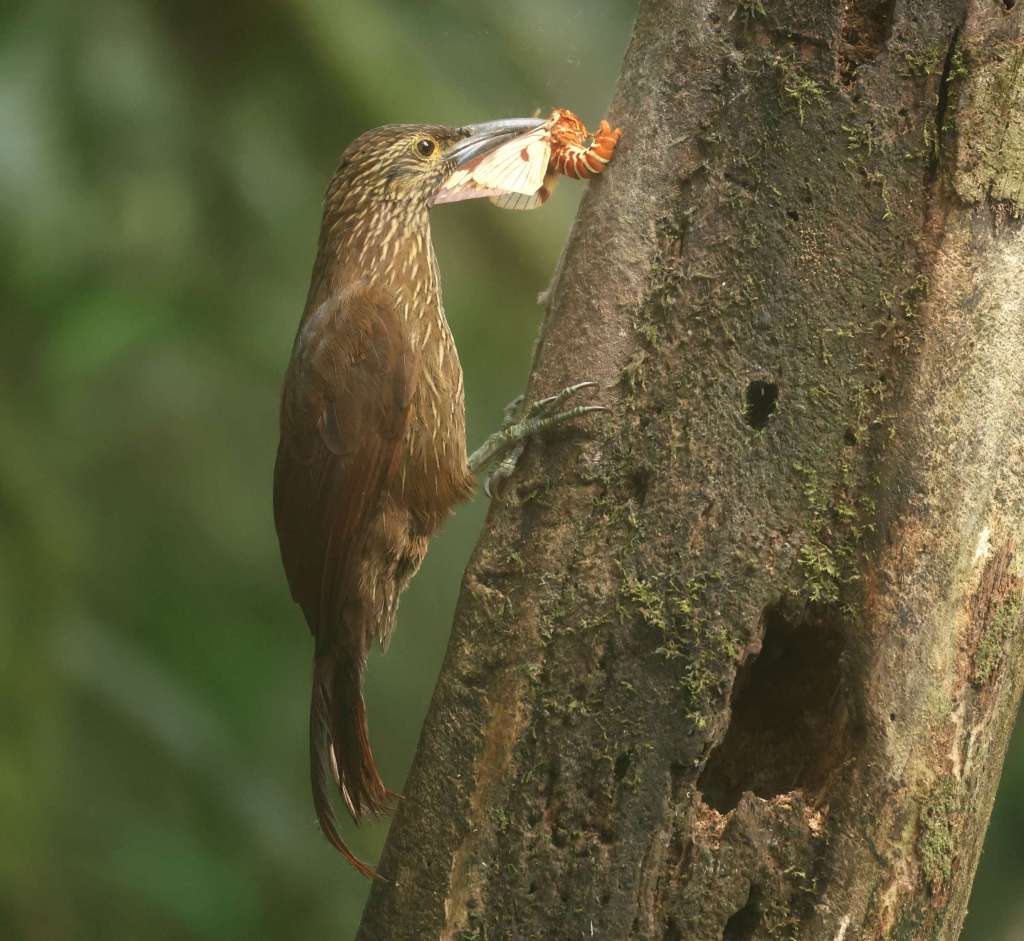
At one of the moth traps we saw four woodcreeper species – Strong-Billed, Plain-Brown, Spotted and Montane and two Foliage-Gleaners – Scaly-Throated and Lineated. Not a bad haul!
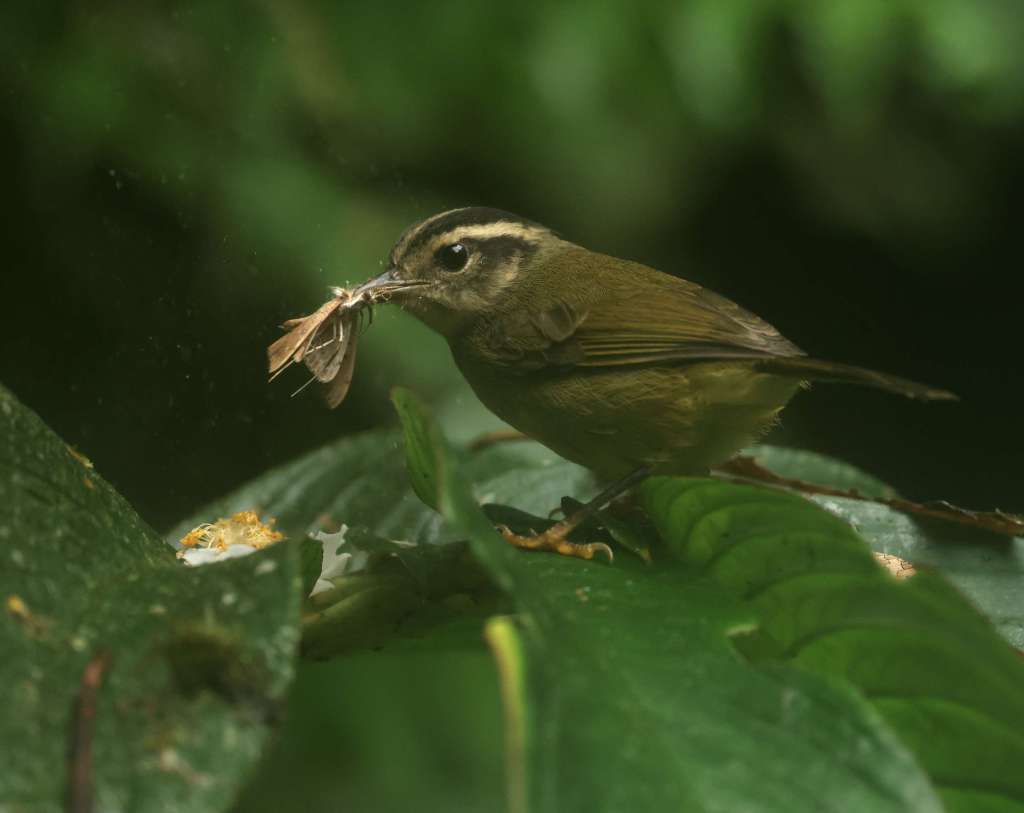
Three-Striped Warblers were pretty regular at the moth traps too. Like many of the other small birds, they would quickly dart out into the open, keeping to cover as much as possible, grab a bug then hurriedly fly back to safety.
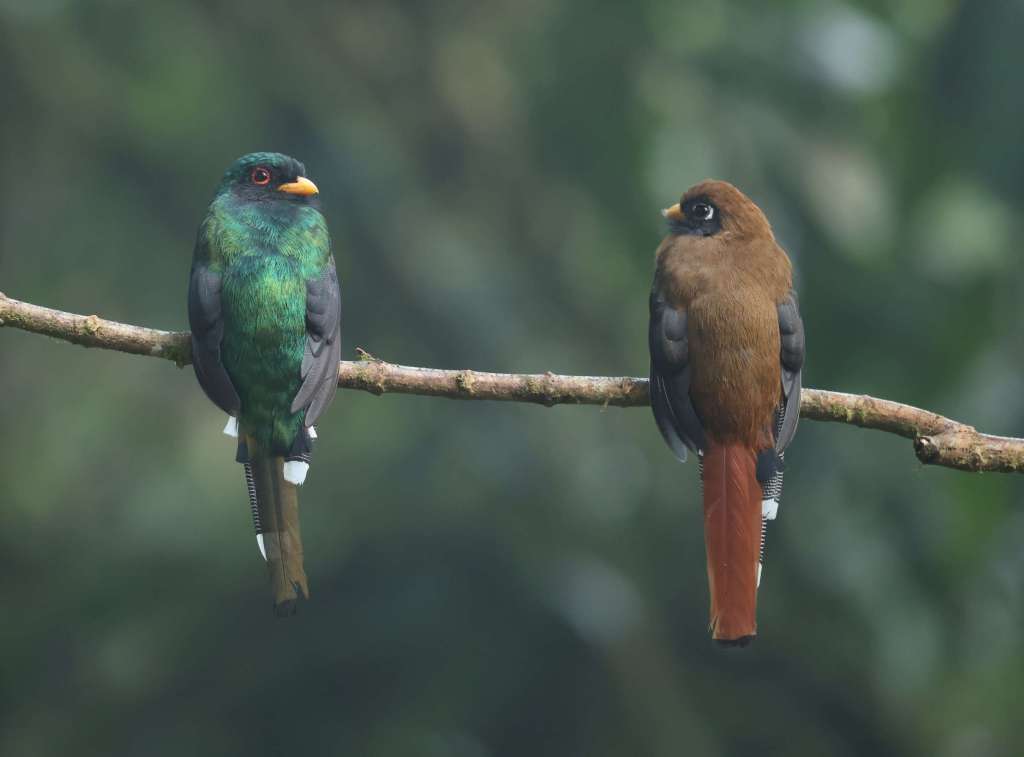
No so the Masked Trogon. Here’s a bird that just sits there as if there’s no such thing as predators. They’re so sedate that they’re actually kinda boring!
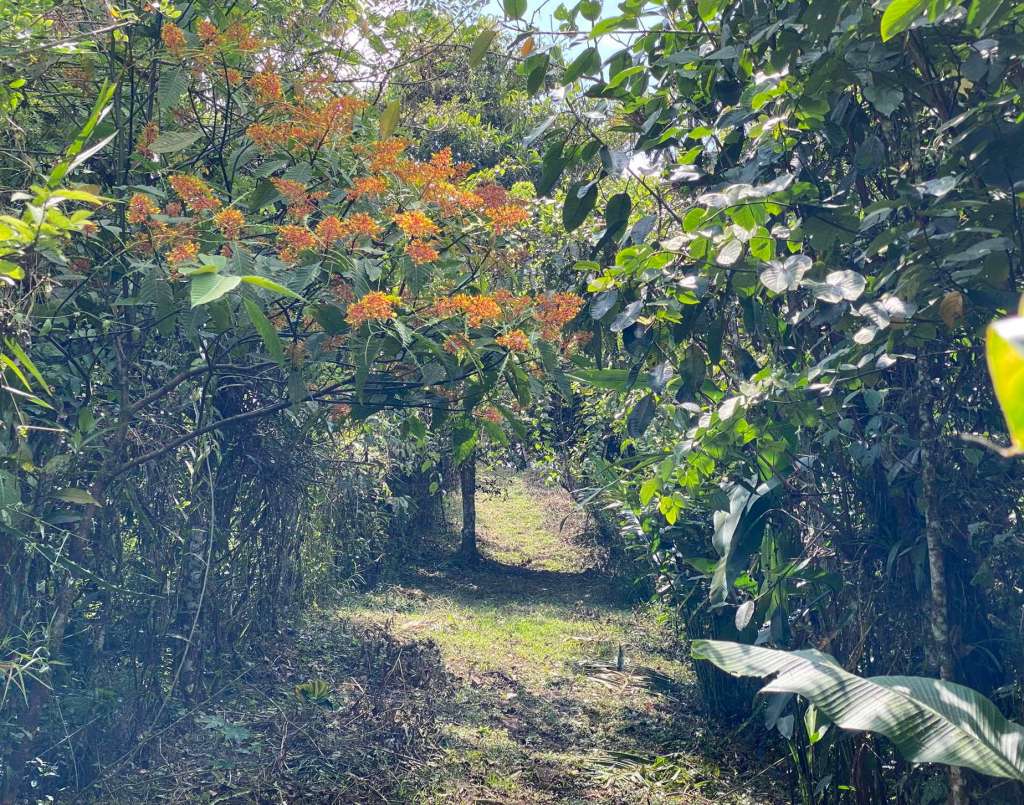
On the trails we sometimes came across epic mixed flocks. These were particularly prevalent on the wide trail that leads eventually to the observation tower. It is a really nice trail and even though the canopy goes up pretty high (lots of neck-wrecking squinting), there were also good birds at the mid-level.
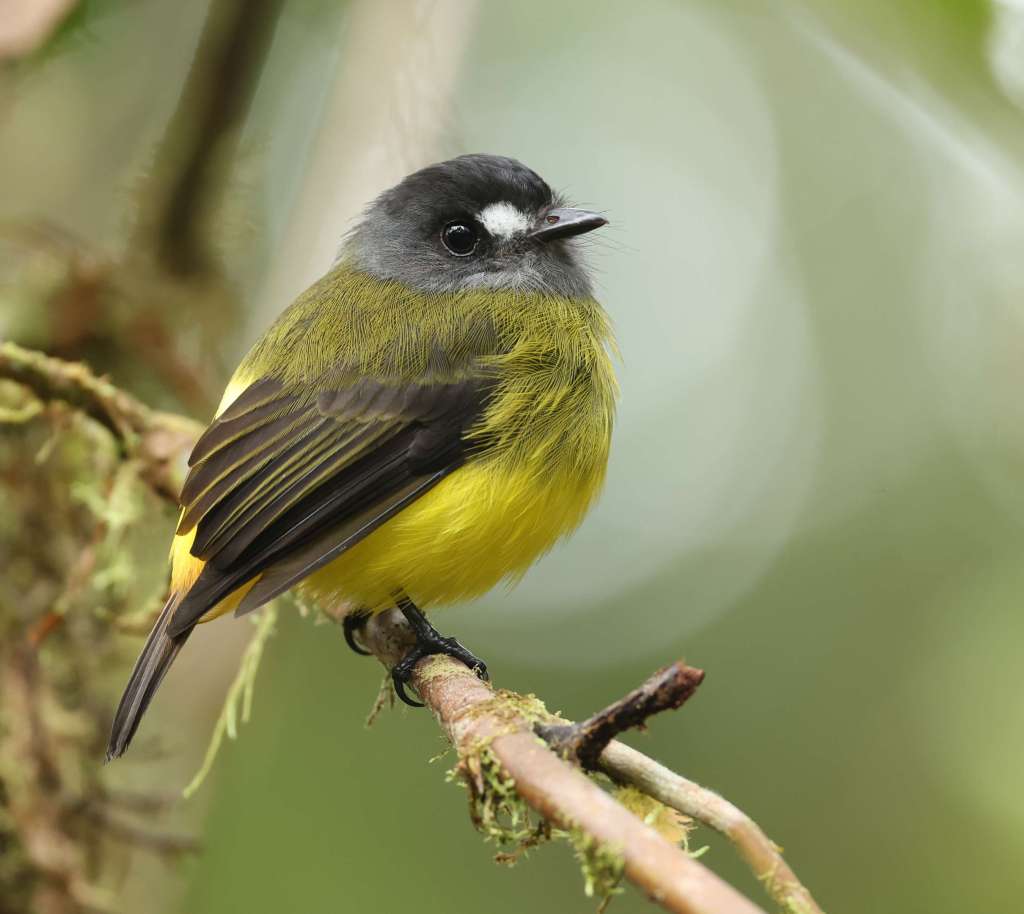
One very obedient and confiding bird comes to mind from those trails, and that is the wonderful Ornate Flycatcher. We saw several of these lovely yellow cuties, and they were usually unafraid to sit out in the open, so they were hard to miss. At one point we saw one perched on its favourite branch just above eye level, and it didn’t flinch no matter how close I got. When does that ever happen?!? The photo of it below is barely cropped.
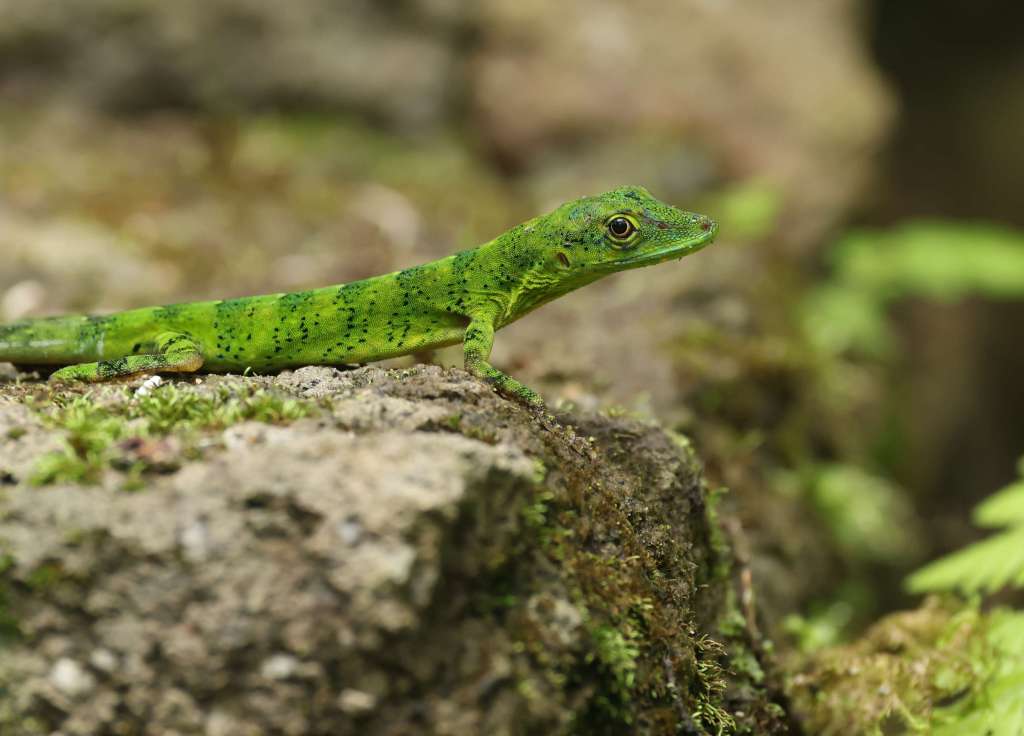
There was also a nice reptile sighting just outside our cabin too – actually on its concrete steps – of a super-vivid green lizard which I think is some form of “anole”.
If you do make it to Sachatamia Lodge, be sure to also keep a lookout for the Metallic-Green Tanager too. This can be a tricky one as it can be hard to separate from Golden-Naped Tanager and Beryl-Spangled Tanagers when seen distantly or obscured. Even though I eventually did see one, I would not say I really appreciated the “unique seafoam green color” that eBird describes it as possessing, perhaps because the green of the forest can distort colour sometimes.
Sendero Frutti Tours
The intriguingly-named Sendero Frutti Tour location, on the edge of the town Pedro Vicente Maldonaldo, has an orchard or something… with some exotic fruits… or something. I did not quite get to any of that, because I spent nearly my whole time there on the back deck of their main building. It was birding heaven! Just when you think you’ve seen the best birding gardens in South America, along comes another one to up the ante.
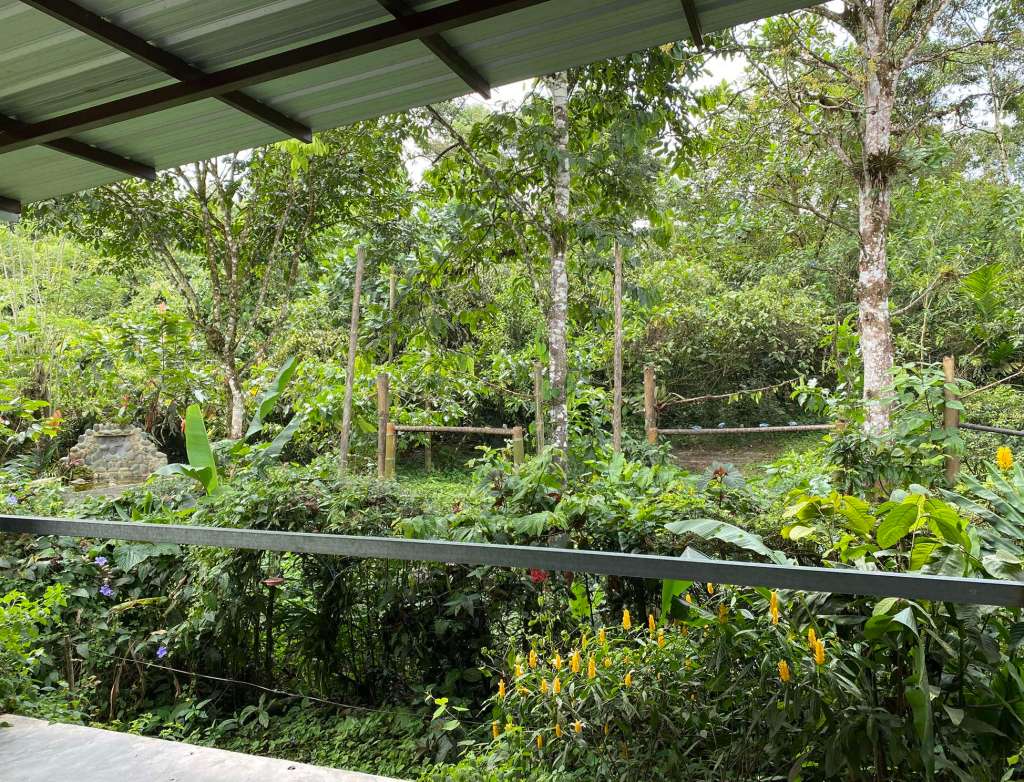
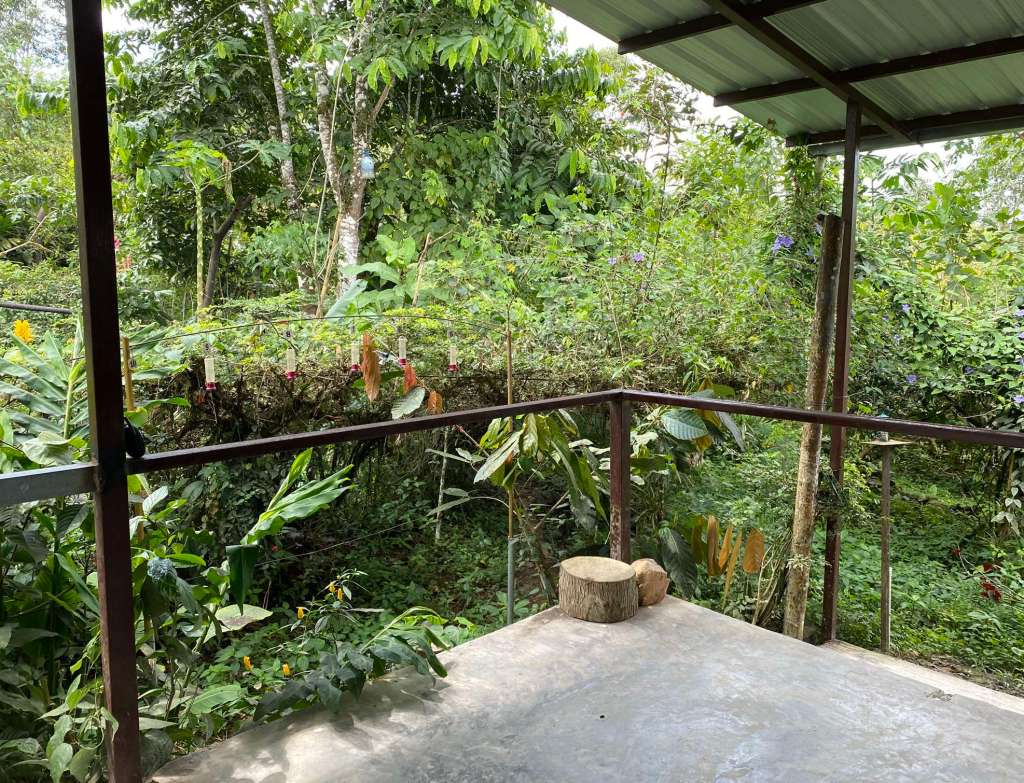
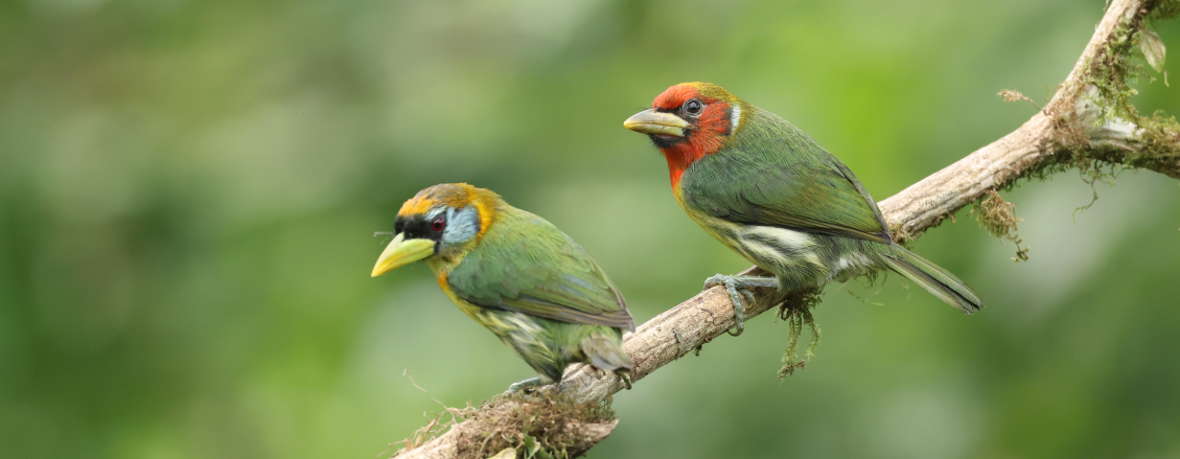
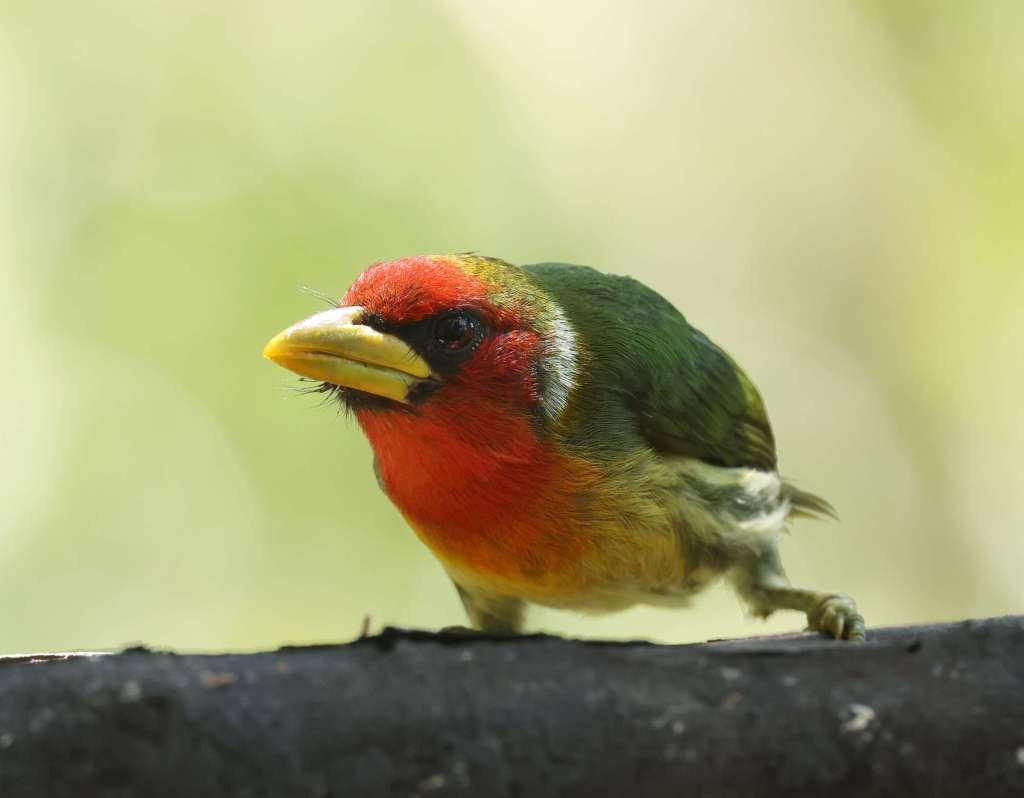
It was interesting partly because of the variety: your attention would be grabbed by hummingbirds at one moment, then some tanagers hassling each other, an exotic woodpecker or Red-Headed Barbet pair feeding each other… you just never knew what was going to happen next.
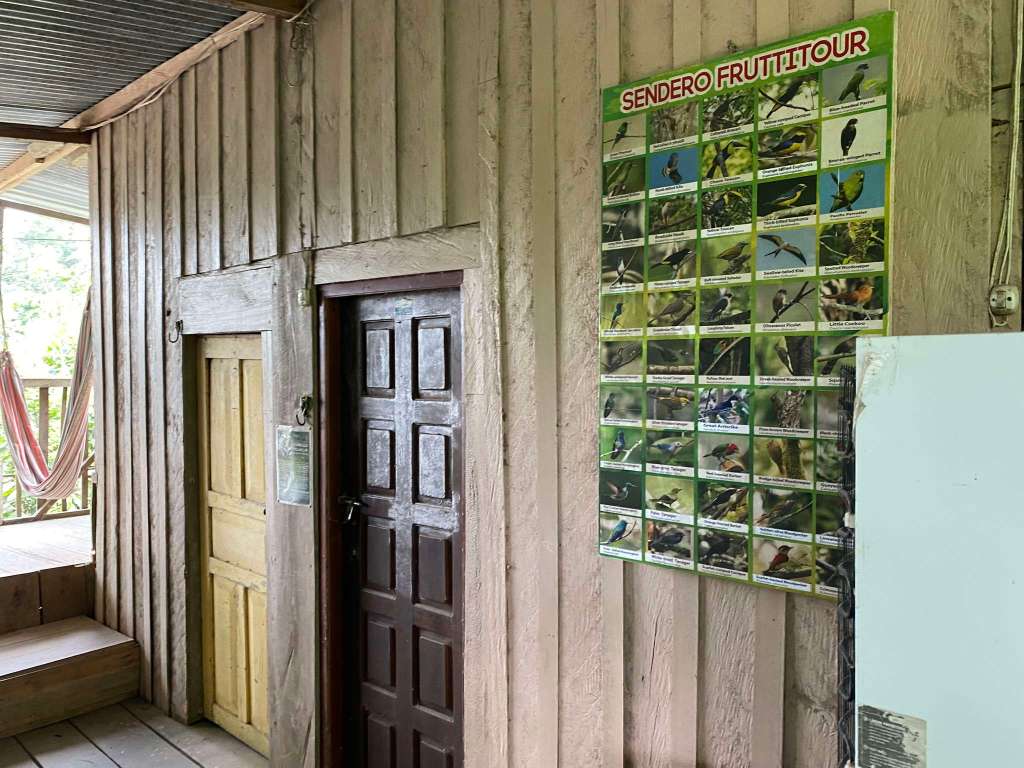
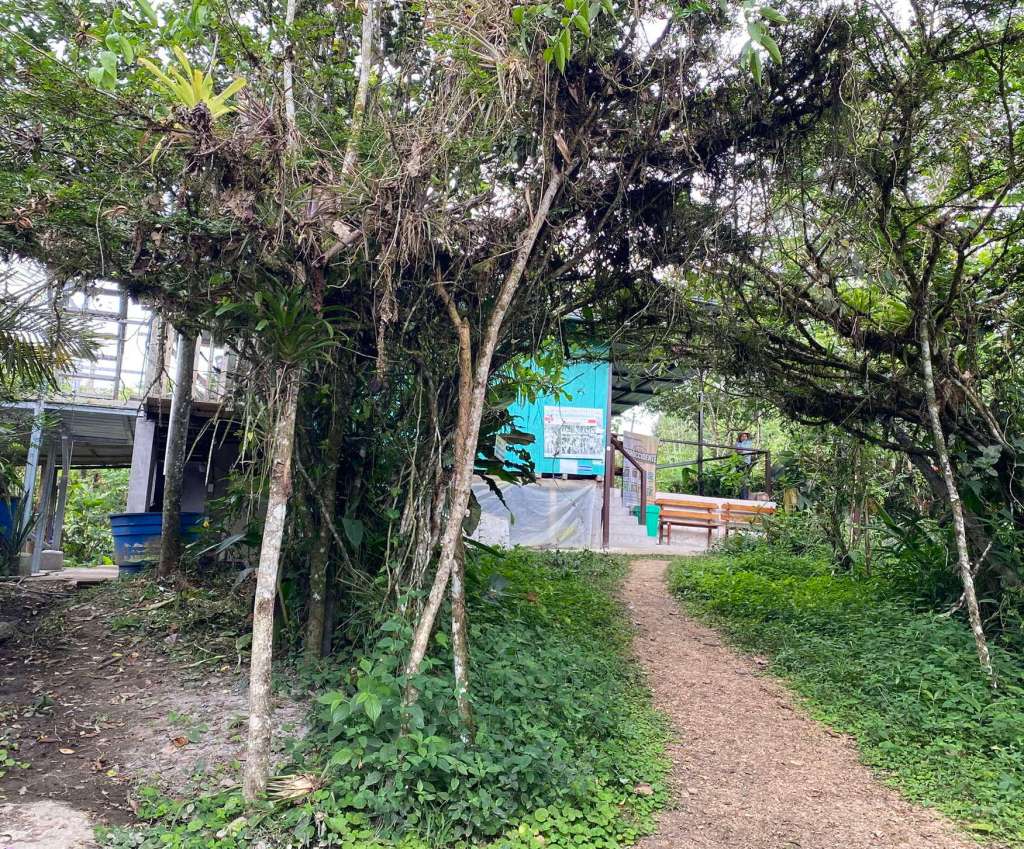
It was so good we forewent leaving for lunch and instead got lunch delivered to us from the nearby town and ate right on the back deck, with one eye on the unfolding bird activity all around.
Here’s my favourite “weird photo” from my time there – this is not Photoshopped! The lower hummingbird is clinging on for dear life as a White-Necked Jacobin comes roaring into the feeder.
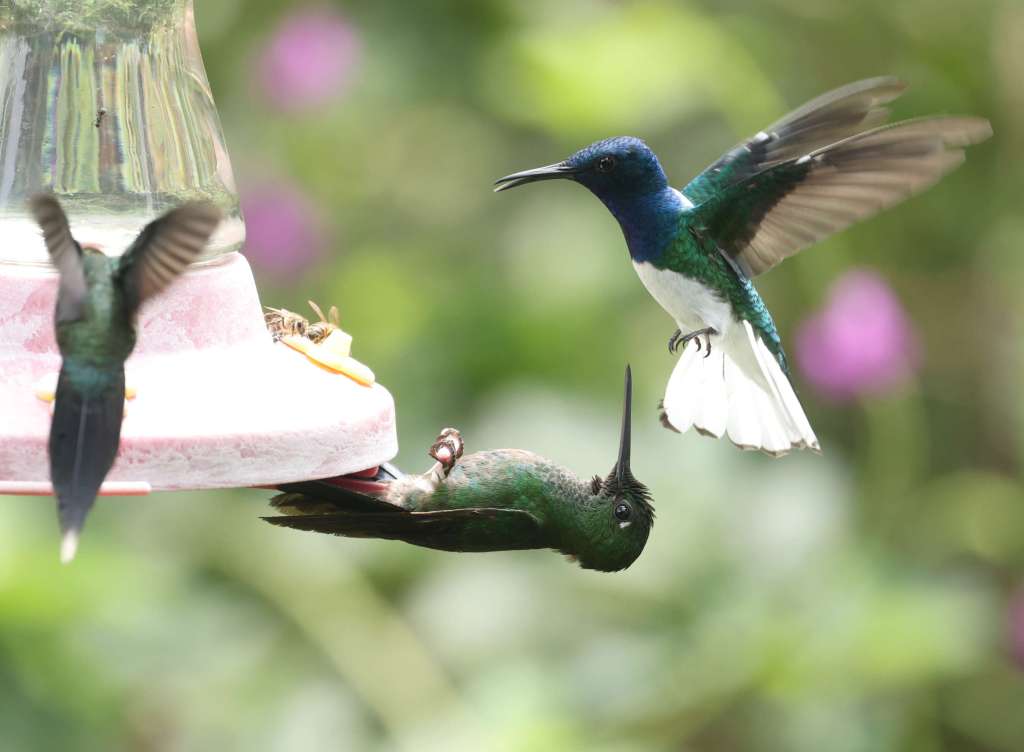
This location is super-reliable for Violet-Bellied Hummingbird, which indeed showed up for us (lifer alert!). With typical greeny-blue colours and so many similar hummers around, you do need to be careful with your ID’s here.
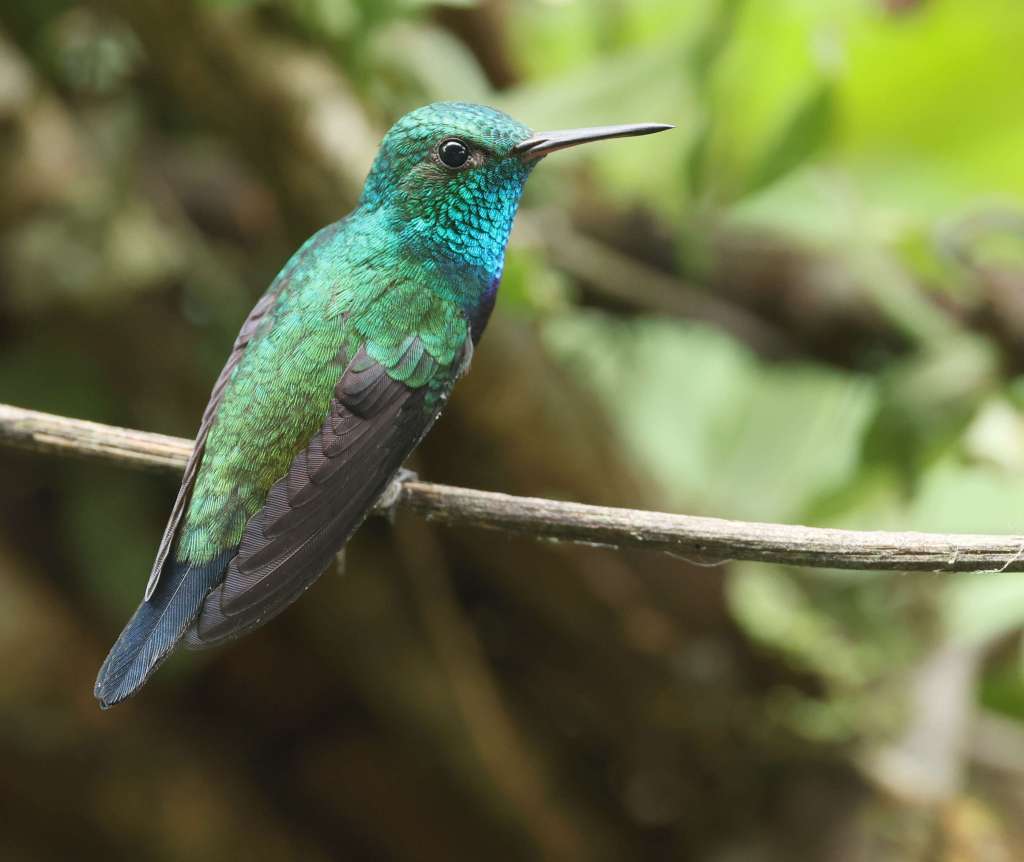
It was my first time seeing one of the “fairy” species of hummingbirds, and I was utterly entranced by how the gorgeous Purple-Crowned Fairy fluttered around. The way it flew was hard to describe but you could tell it was different to the other hummers.
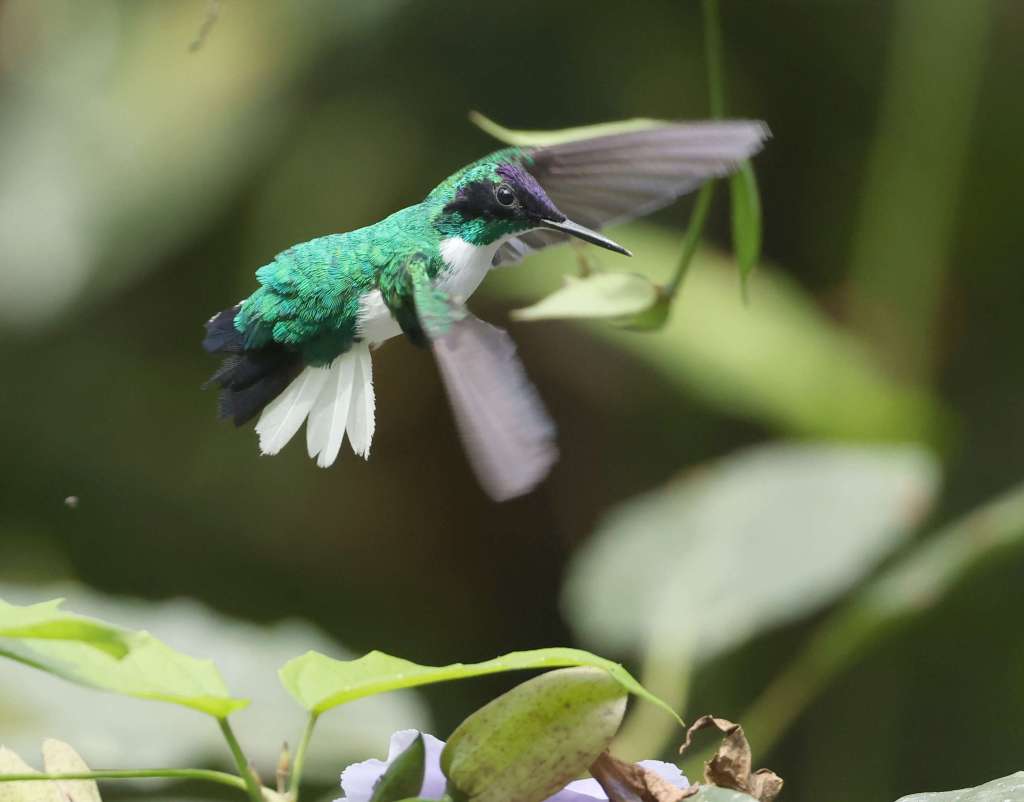
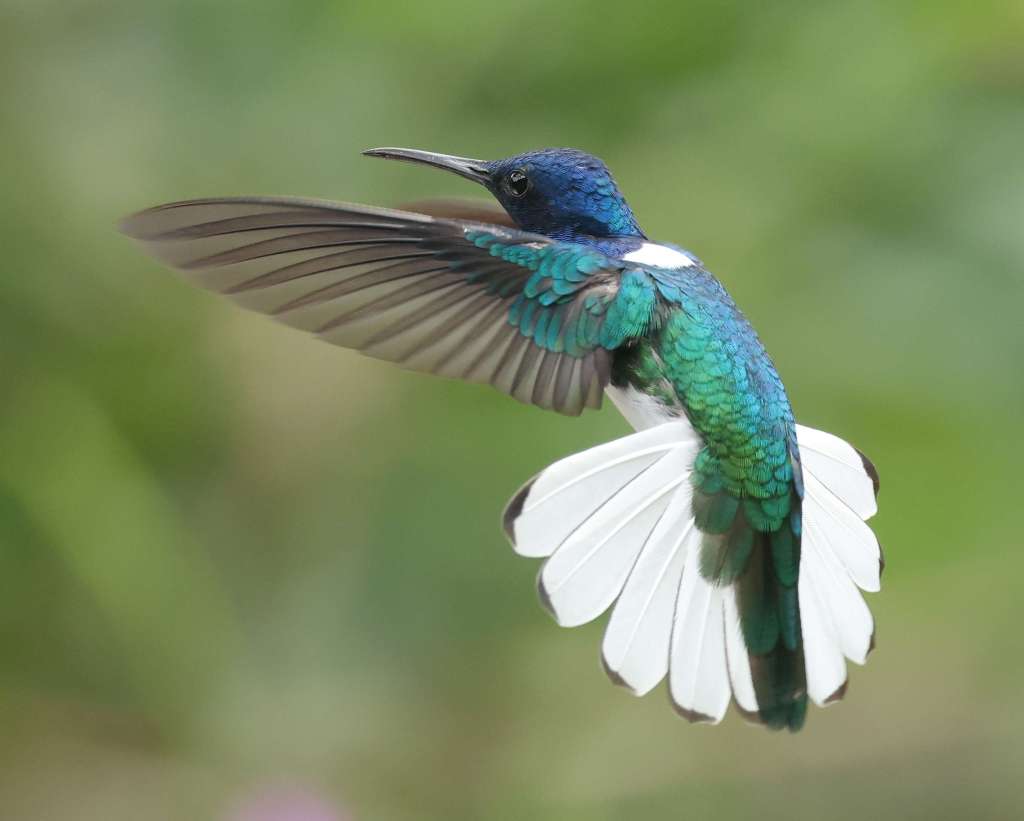
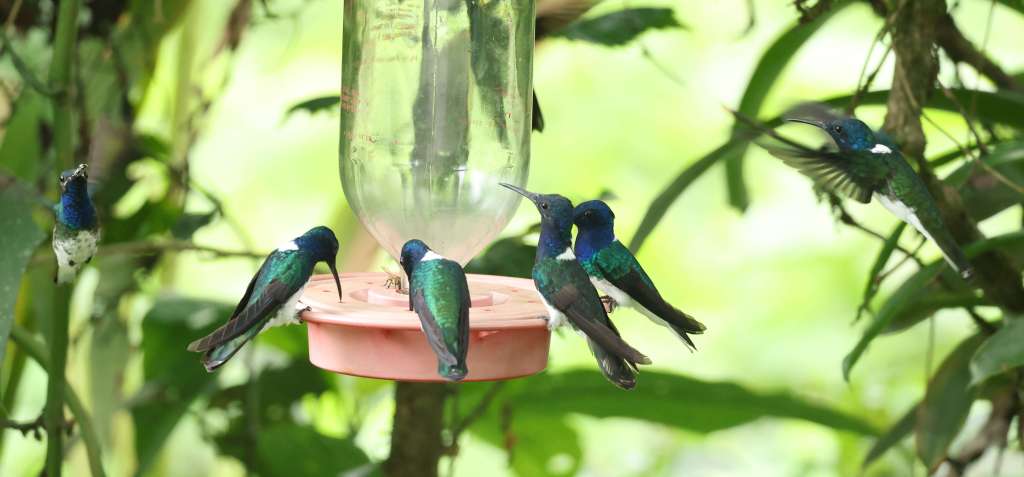
Just to give you an idea of how congested the feeders could get, here’s a photo of six White-Necked Jacobins:
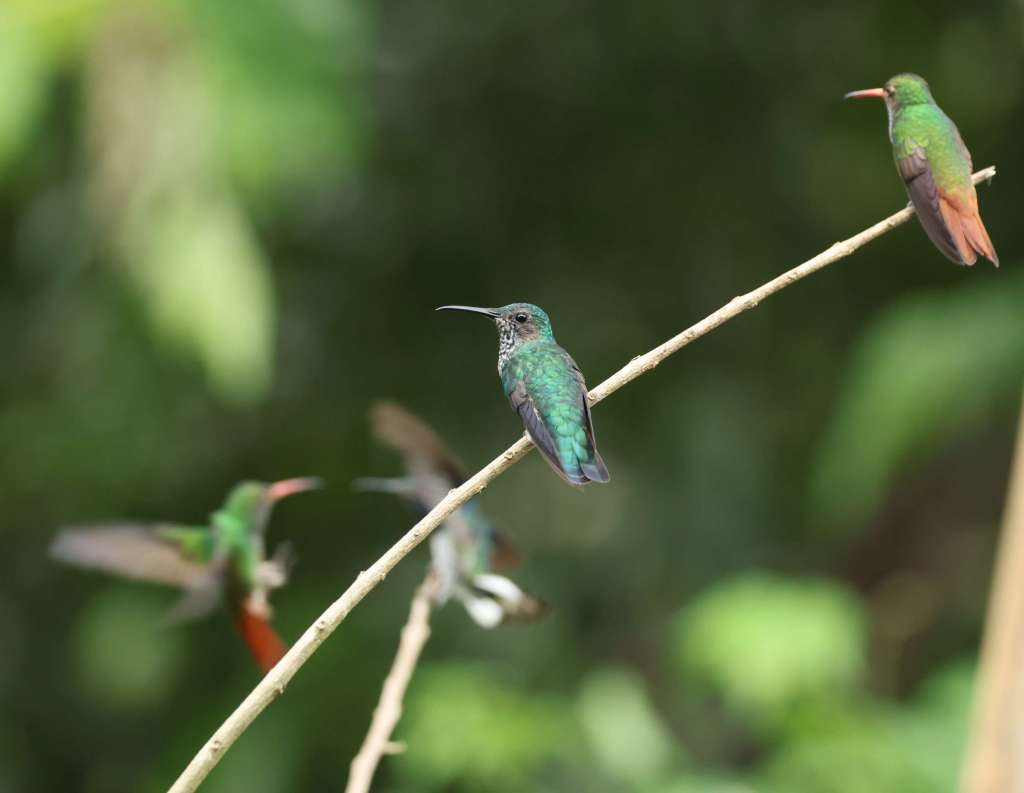
…while this amusing photo shows a couple of hummers chilling out while two others start World War 3 in the background:
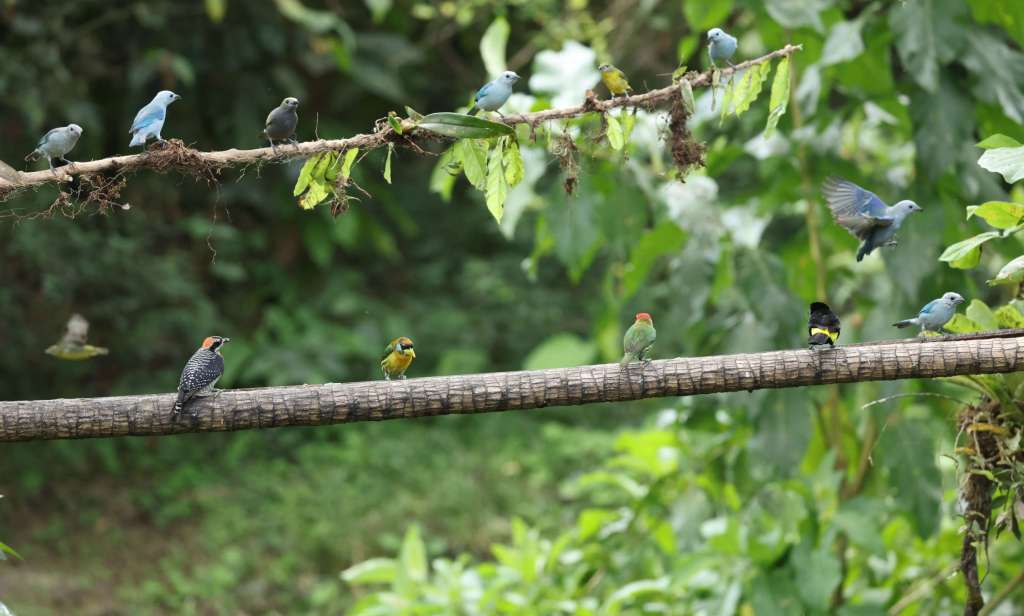
I have never seen tanagers in such numbers and in such squabbly moods quite like I saw here.
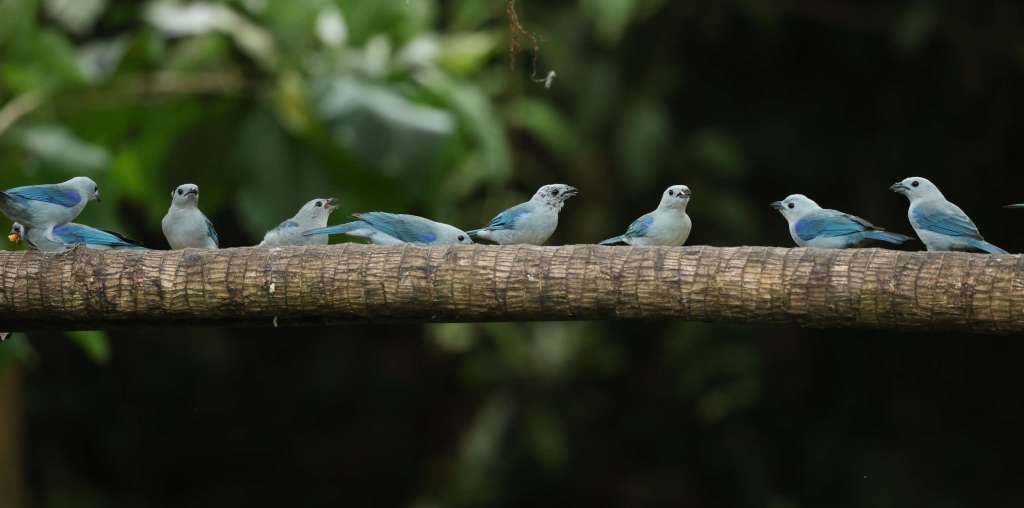
It’s not like there wasn’t plenty of food to go around… it was just that there were a lot of birds competing for it, so things got rather heated. Blue-Grey, Flame-Rumped and Palm Tanagers all got in on the action, posturing and mock-attacking like there was no tomorrow.
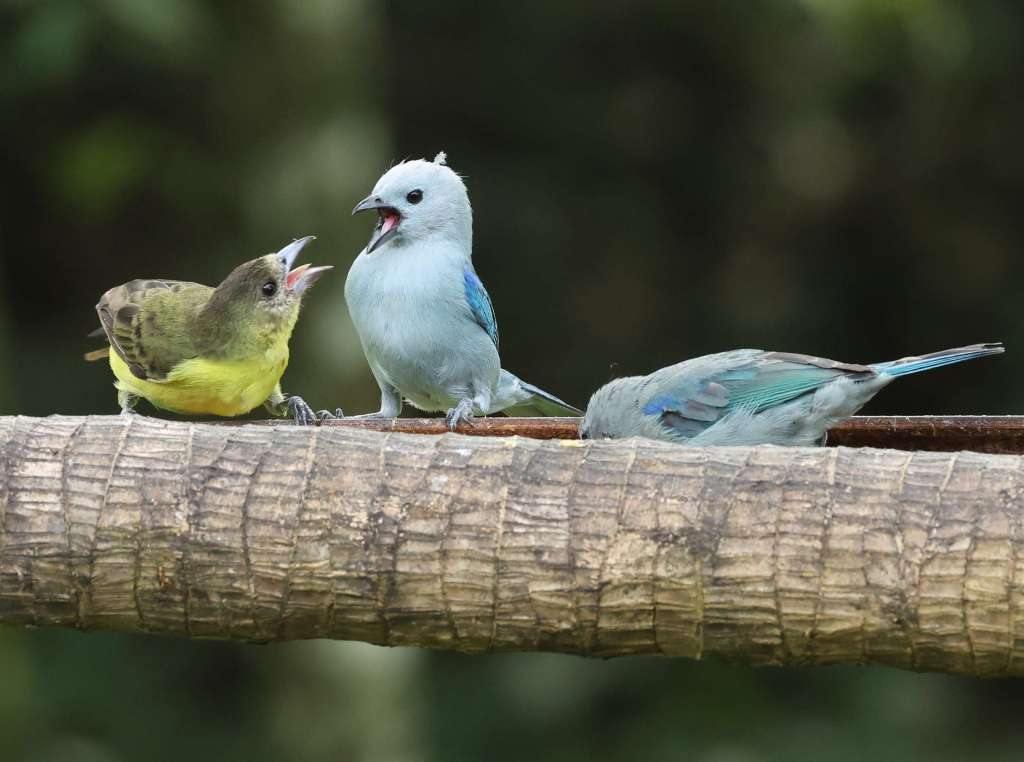
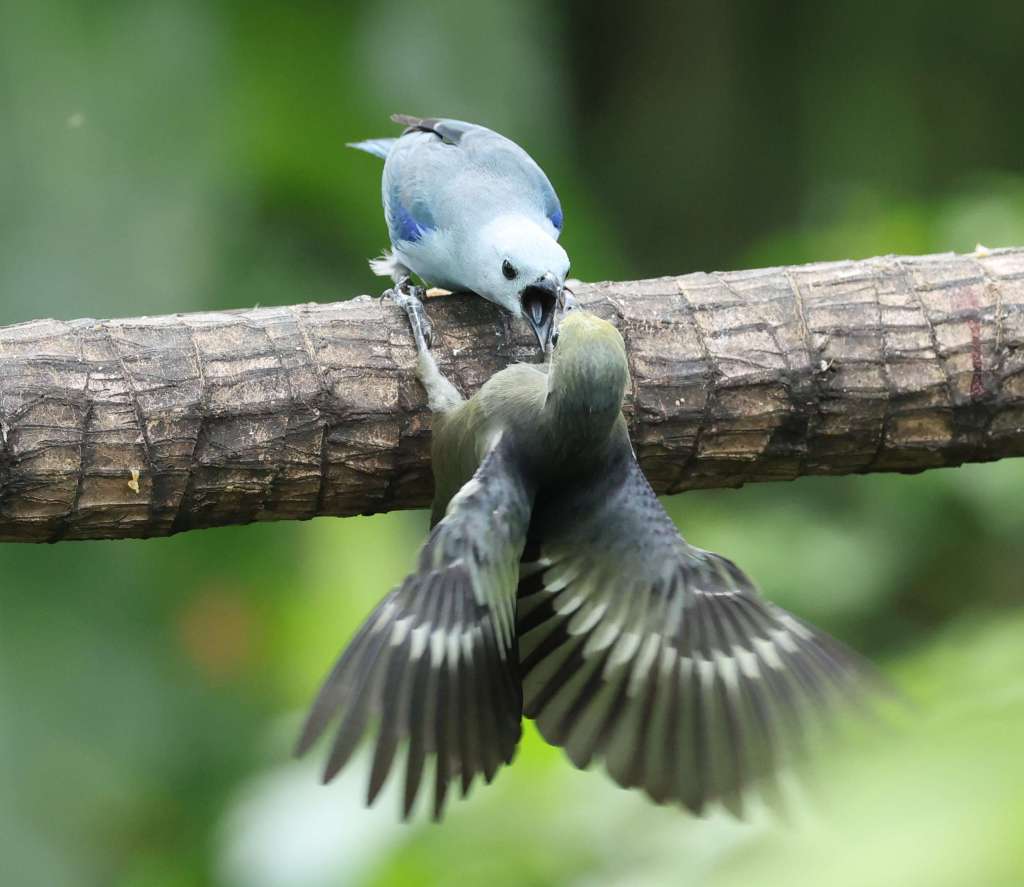
Of course there were long stretches of time where things were relatively peaceful, but I made sure my camera was at the ready when interactions became hostile.
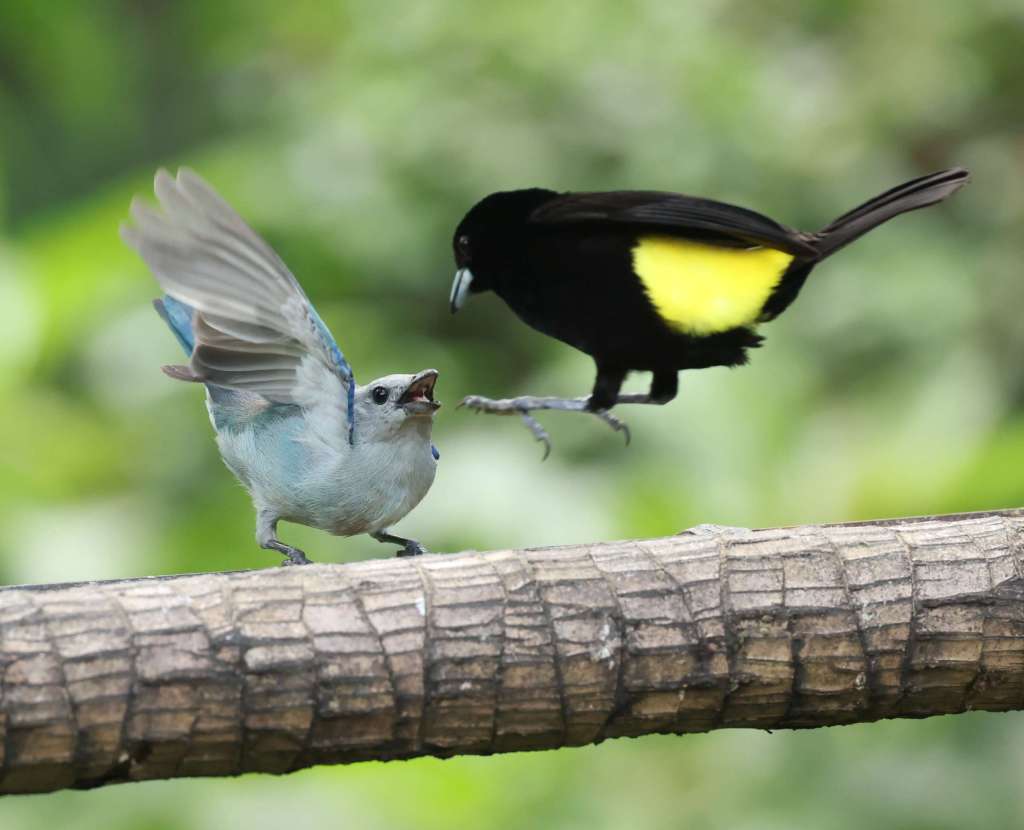
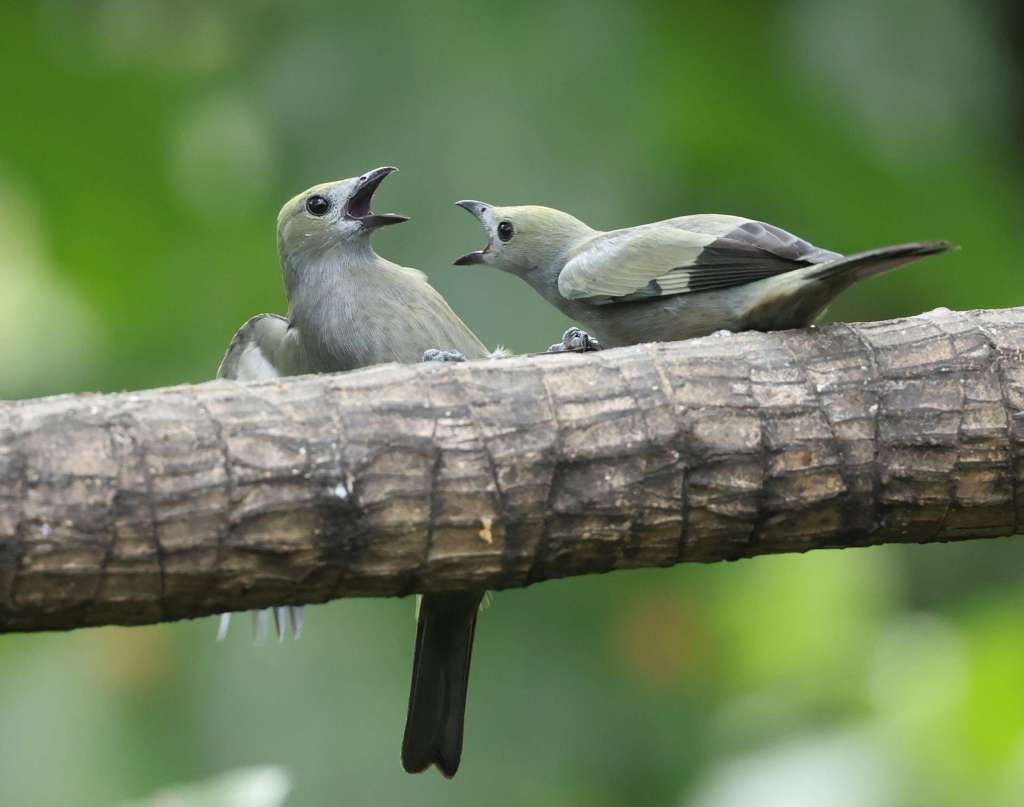
Even Ecuadorian Thrushes were getting uppity at each other.
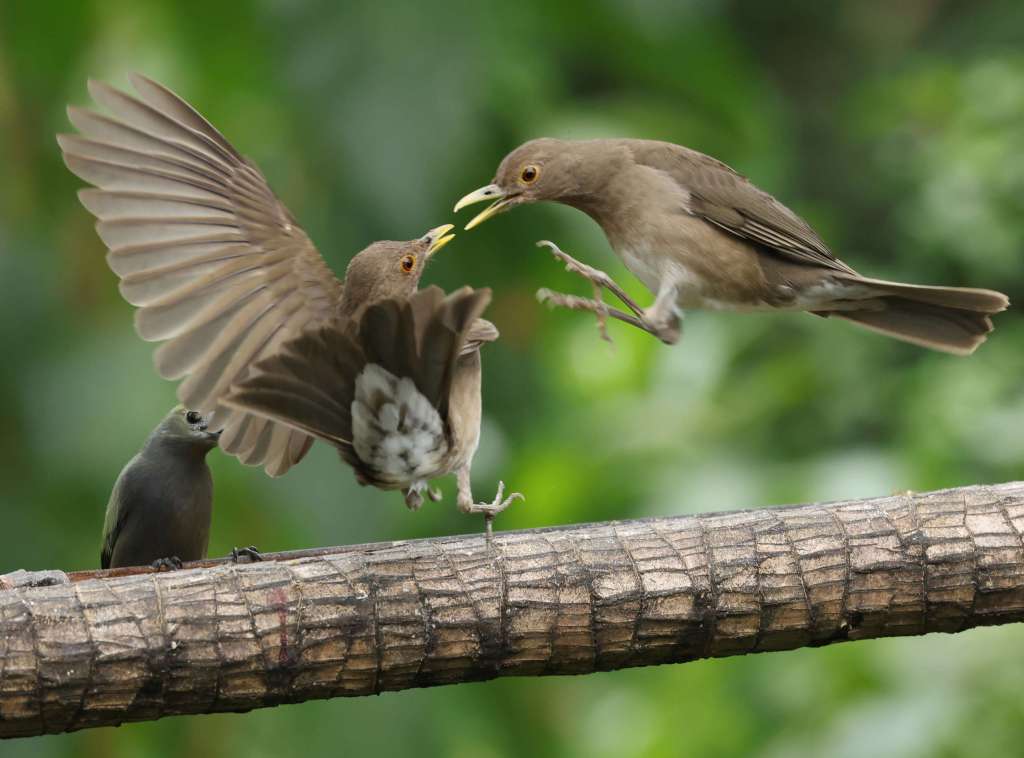
I had “burst shooting” going at one point, where you hold down the camera’s shutter button and it automatically takes photos at a rate of 10 per second. In this way I obtained a picture of an Ecuadorian Thrush actually biting the wing of a Blue-Grey Tanager, something that happened so quickly that it would have been pure luck to capture otherwise; I barely even registered that something so antagonistic had actually happened at the time. Burst shooting does tend to fill up your memory card quickly, but when you can pull out a shot like this from the sequence, it is 100% worth it.
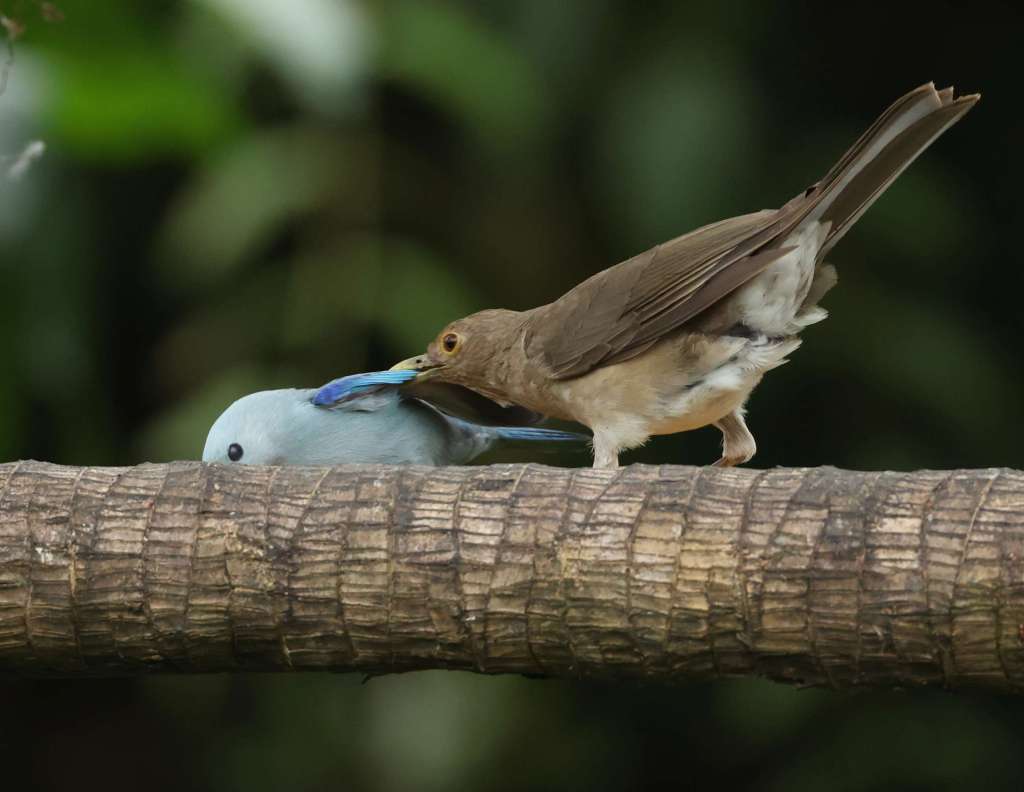
Abundant food sources like those provided here attract and concentrate birds and this encourages aggressive, exaggerated behaviours. Bird feeding is very widespread all over Central and South America from what I’ve seen and read about, and I reckon it reaches its pinnacle at a hotspot like this.
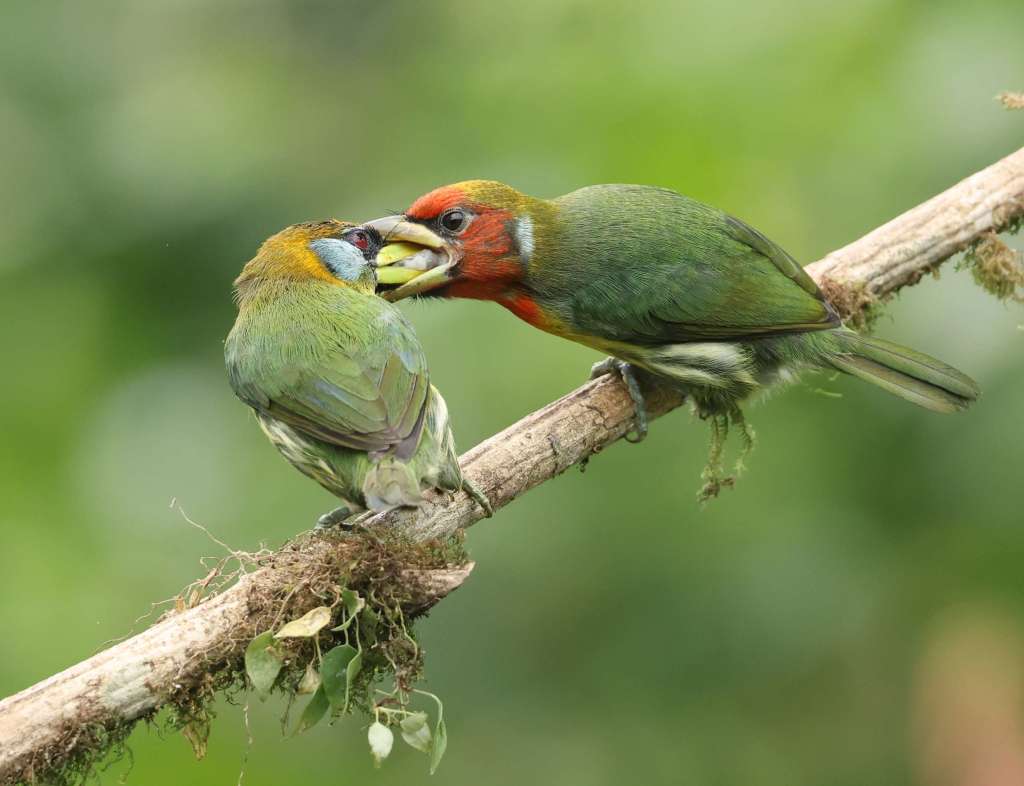
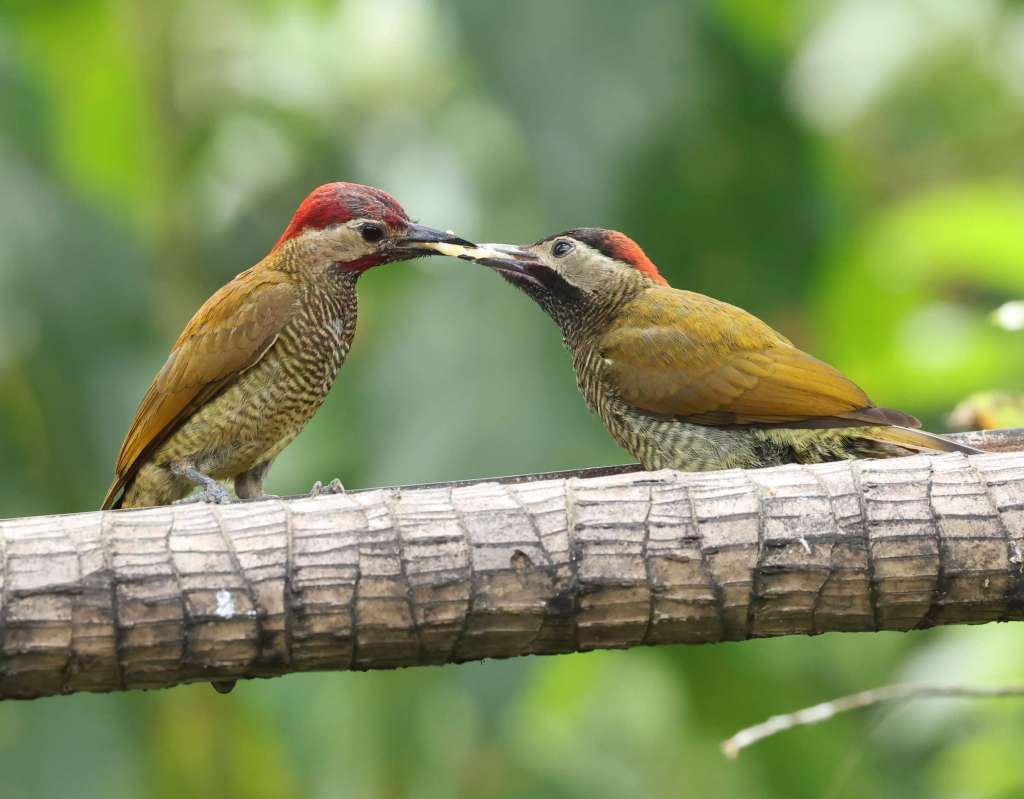
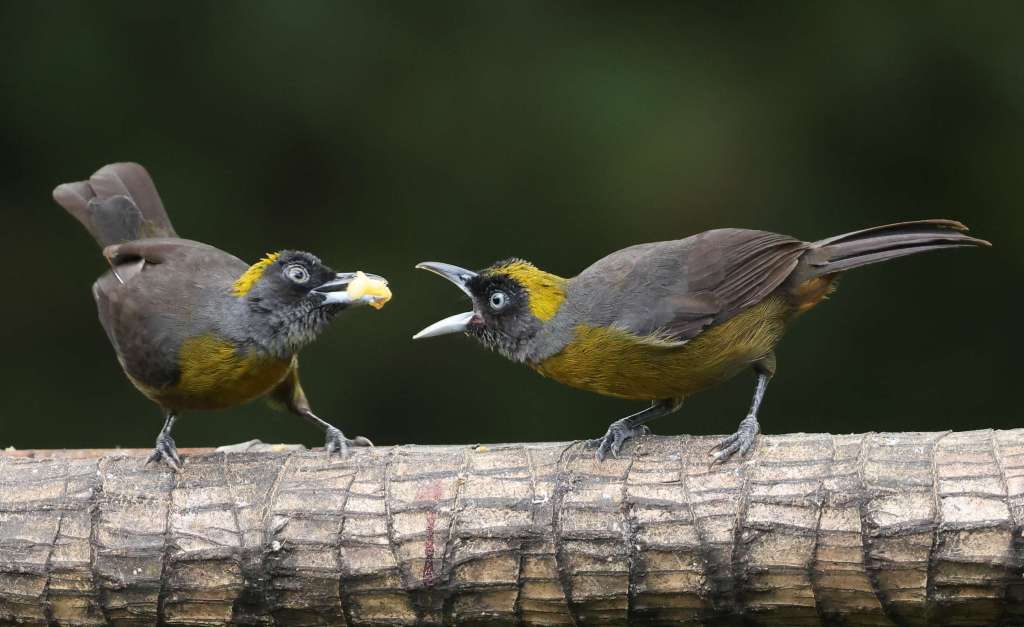
With all the food on offer and birds around, it was no wonder there was a spot of bird-to-bird feeding going on too, presumably between parents and juveniles and perhaps between male/female pairs, with Red-Headed Barbets and Golden-Olive Woodpeckers liberally shoving gobs of banana into each others’ beaks.
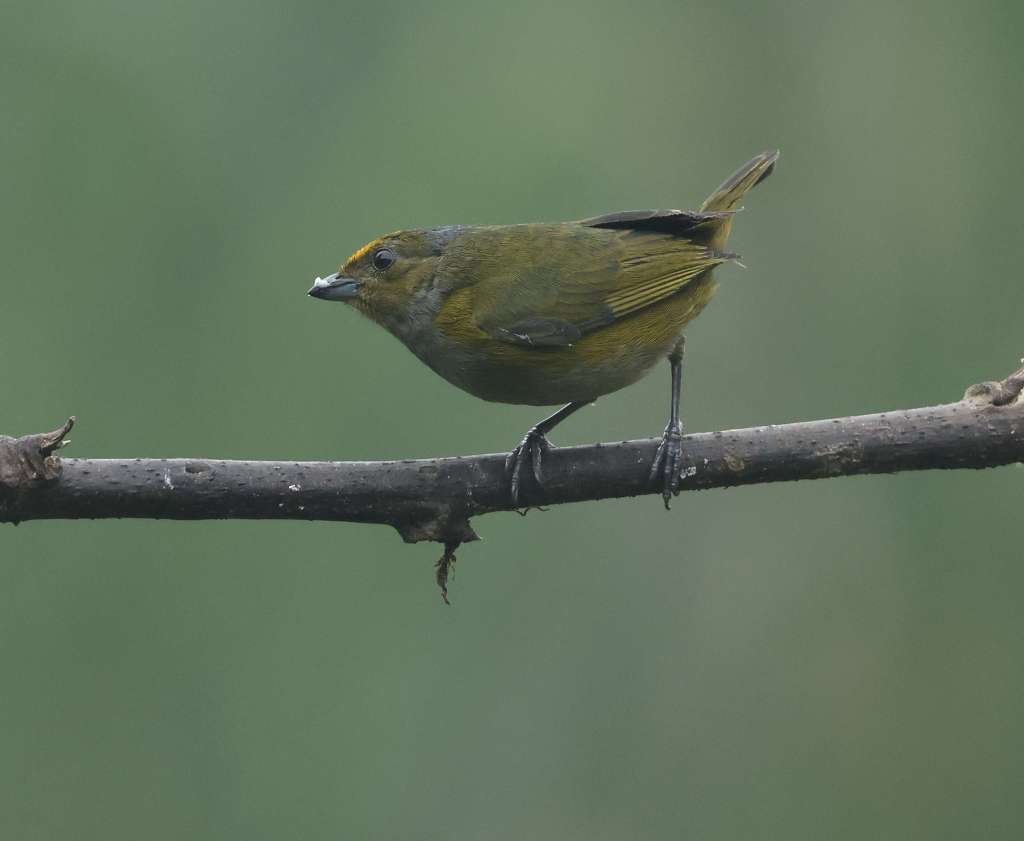
At one point a trio of Dusky-Faced Tanagers roared in like little rock stars, fed on some bananas and flew out again – it was a tanager I hadn’t ever seen before and another reminder that tanagers really do come in all colours and patterns.
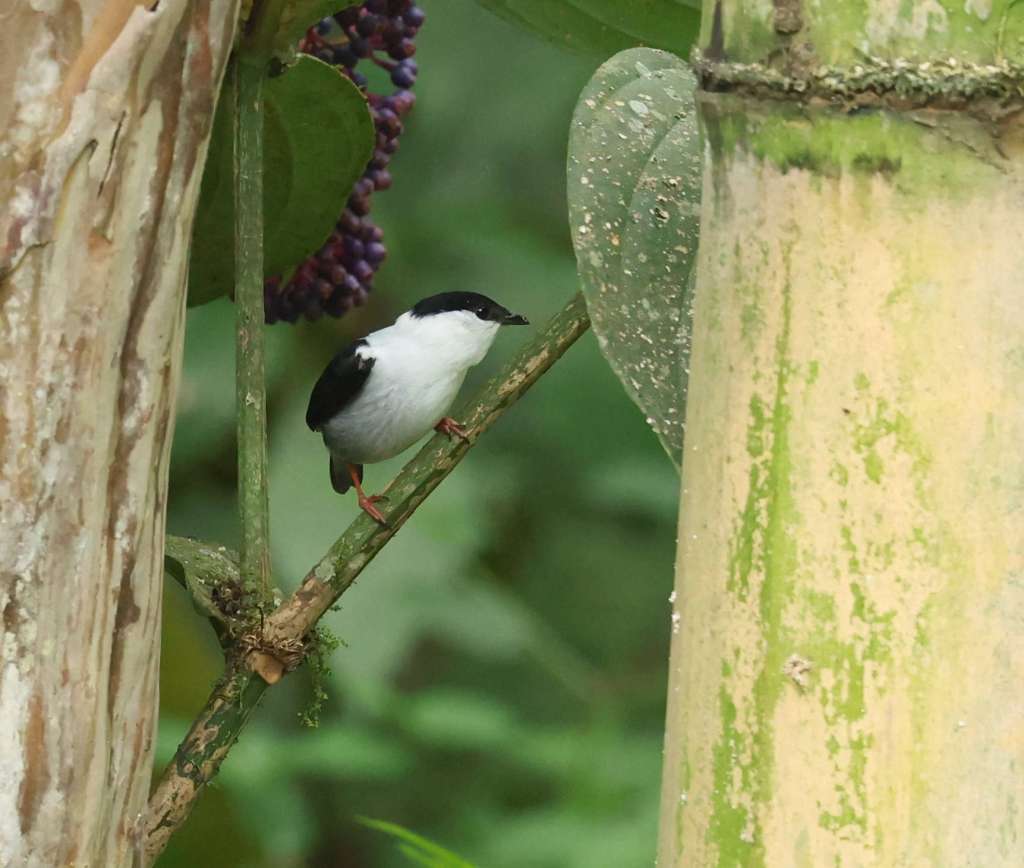
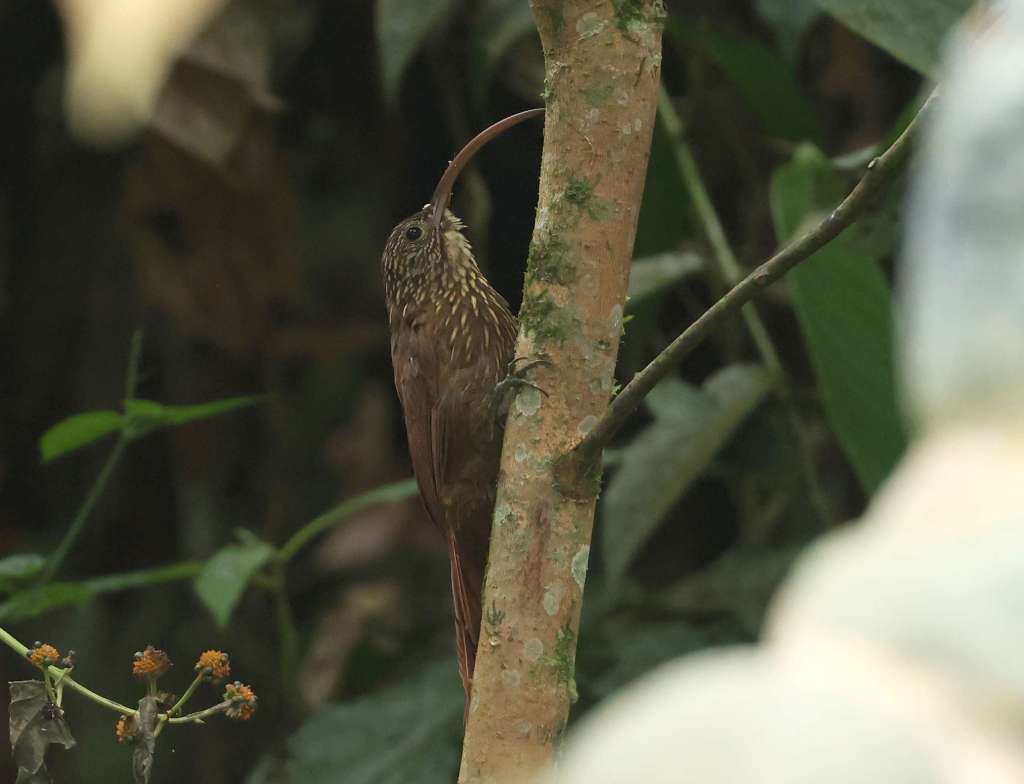
From the satellite images of the area around Sendero Frutti Tour, it looks like the surrounding land is a mixture of bush and agriculture – hardly a proper forest reserve or National Park. And the eBird all-time species count is 295, many dozen less than other hotspots around. So it’s almost puzzling just how many and varied were the birds we saw here (maybe it was just a very lucky day…?) We saw 50 species in 4 hours, most of them really good sightings. Heck, even a White-Bearded Manakin popped into the garden to say hello (and grab some ripe berries from a low bush). As more birders and photographers trickled onto the back deck in the afternoon to appreciate the action, a Red-Billed Scythebill in the back bushes caused one of the biggest stirs. Everyone wants to see this bird!
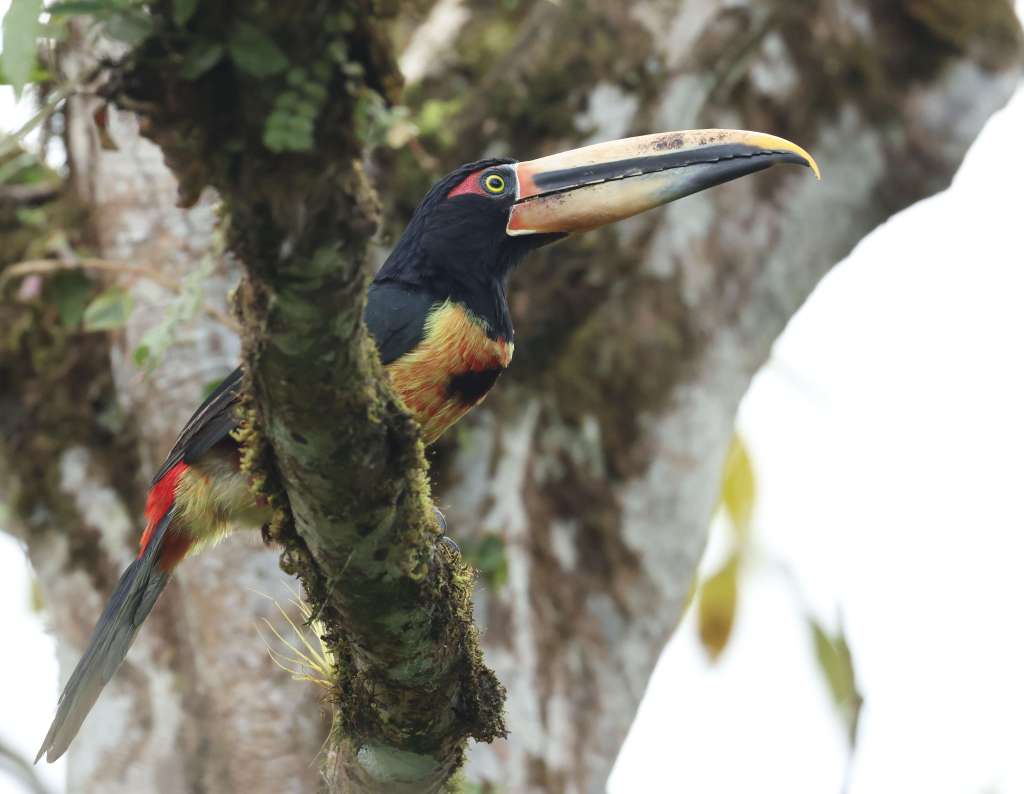
And the hits just kept on coming… though we had seen a lot of these birds before, it was still cool to see them so well: Pale-Mandibled Aracari, Black-Winged Saltator, Maroon-Tailed Parakeet, Pacific Parrotlet, Pallid Dove (actually that one was a lifer).
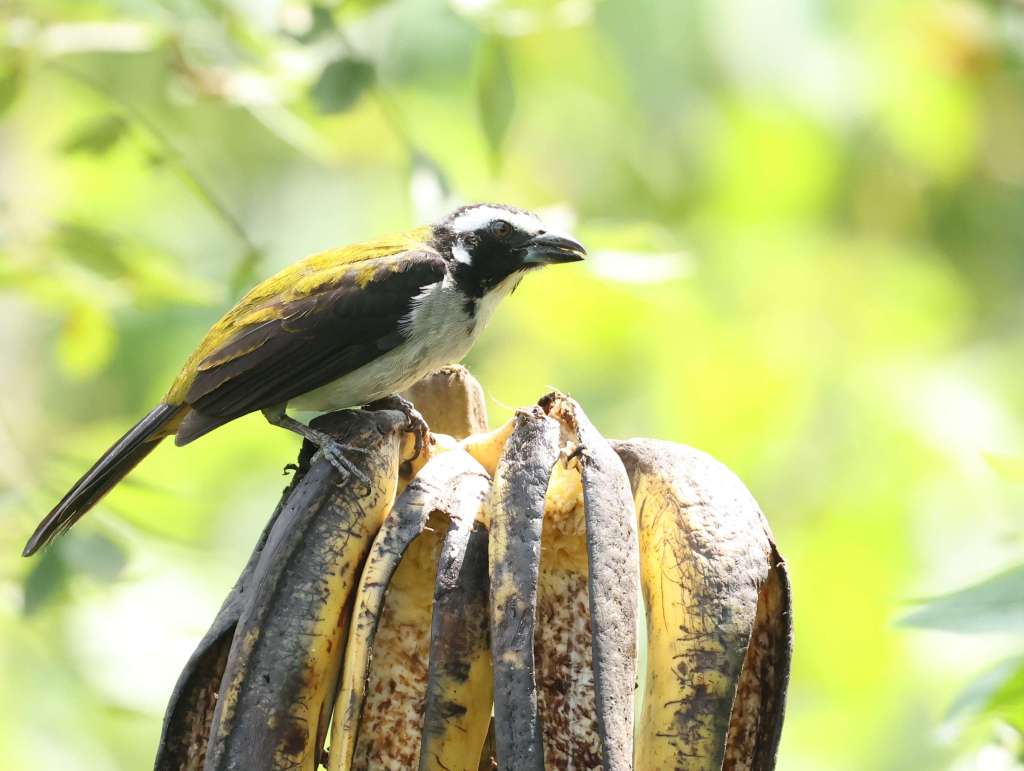
Of all the amazing times I have had birding in Ecuador, Sendero Frutti Tours was #1. It had everything: many interacting birds, awesome variety, incredible photo opps, and a few lifers even after already birding for several weeks in the Mindo region and Andes East Slope.
Mindo Town
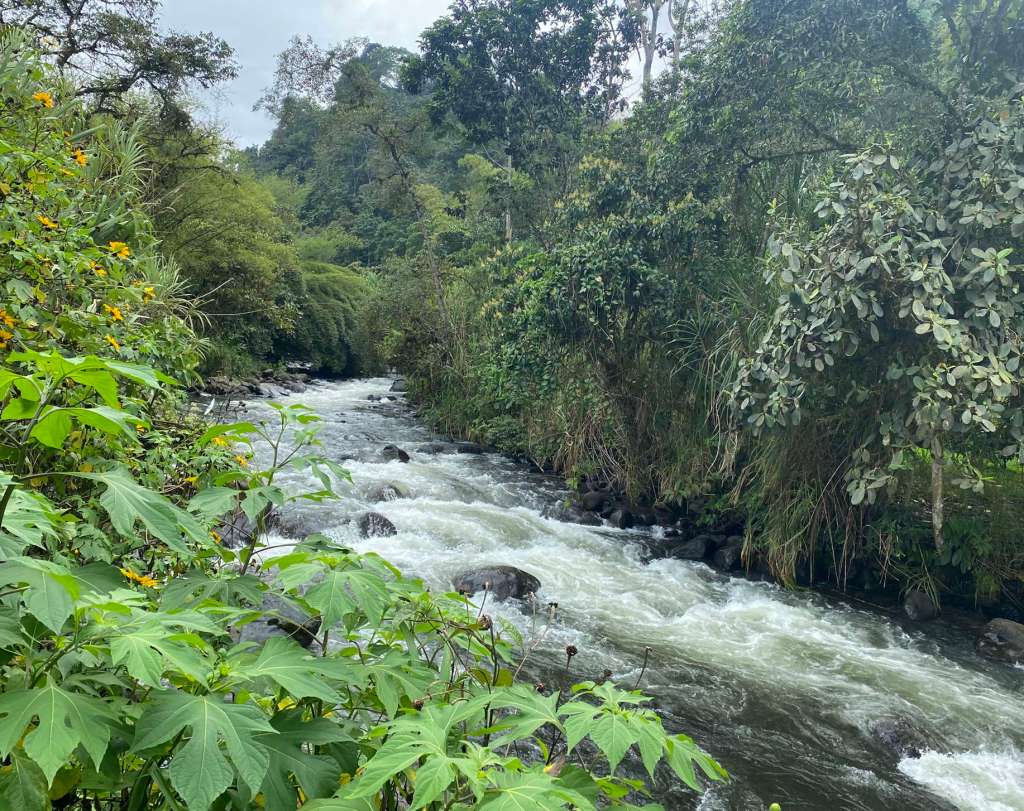
I became relatively familiar with the town of Mindo from staying within walking distance at the mini-resort hotel of Las Terrazas de Dana. The town itself is not overly touristy: it has a few chocolate shops (I did one of the chocolate tours and totally enjoyed it), and local tourist activities seem to revolve around river rafting and visiting the local waterfalls and birding spots.
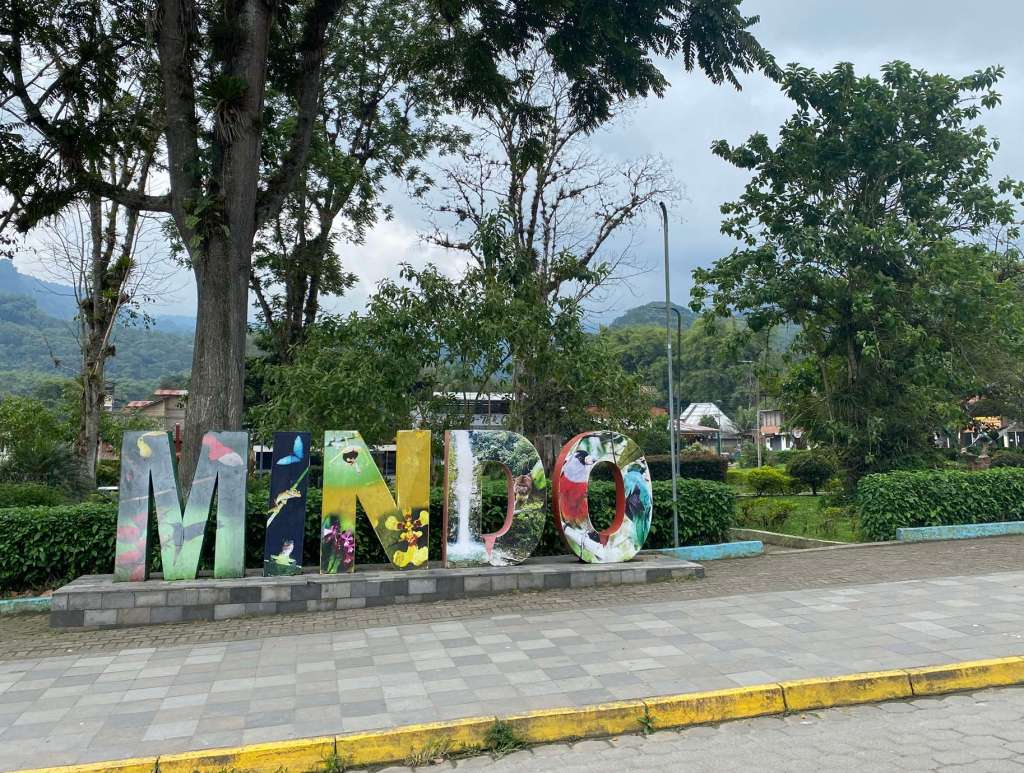
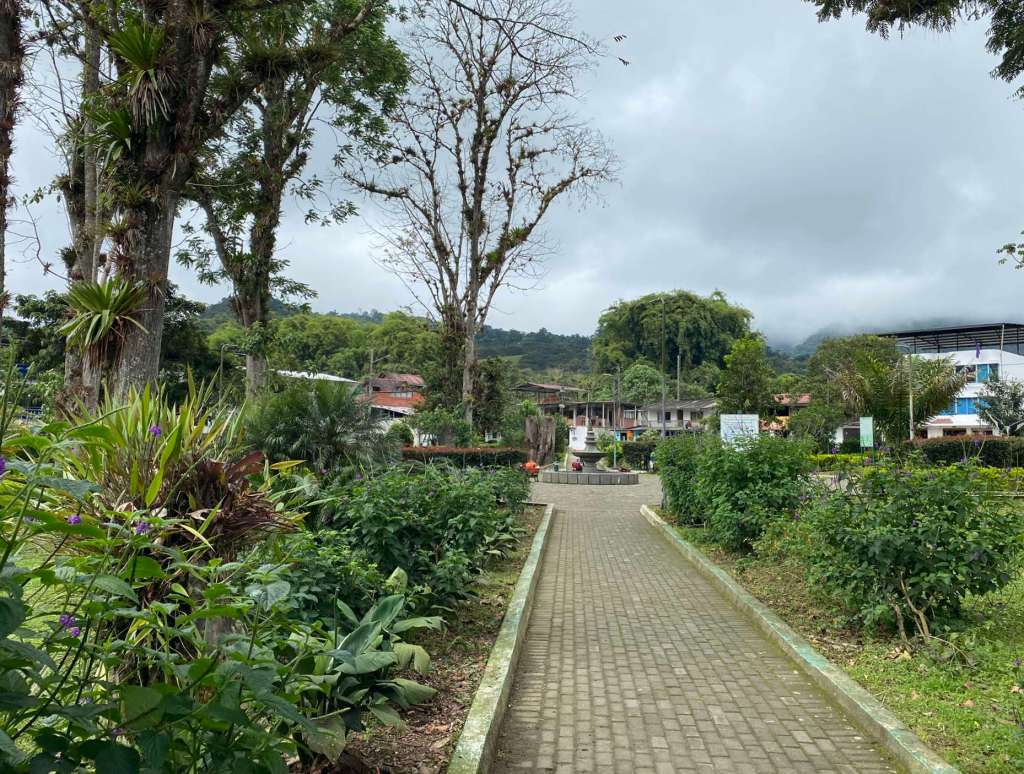
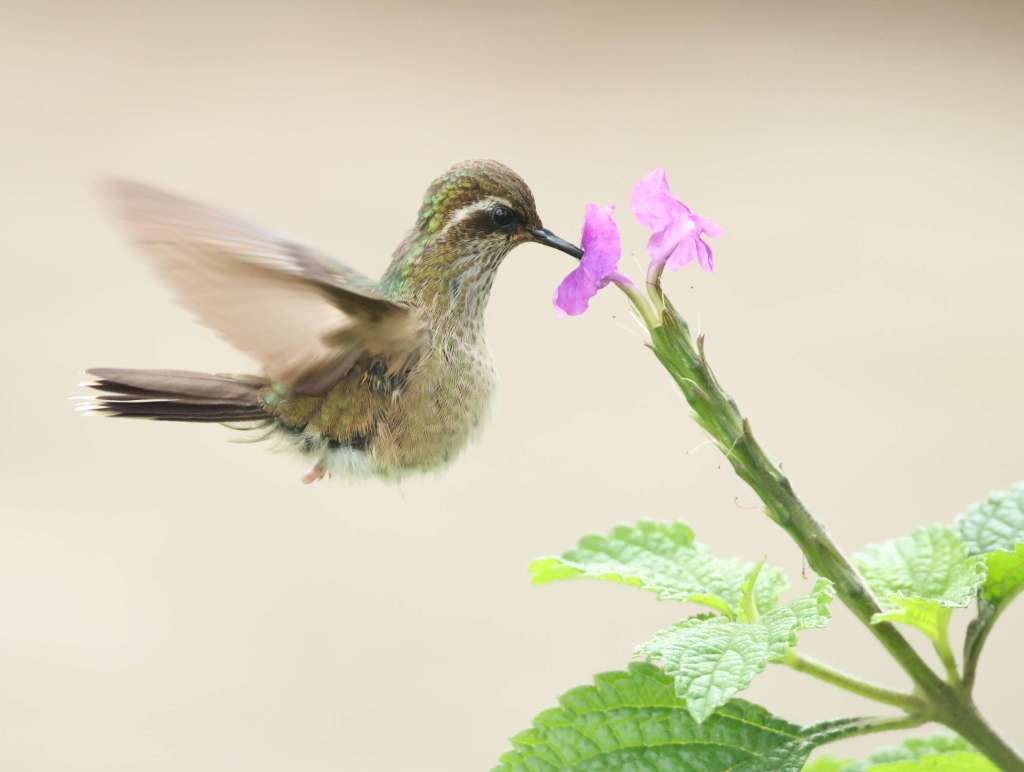
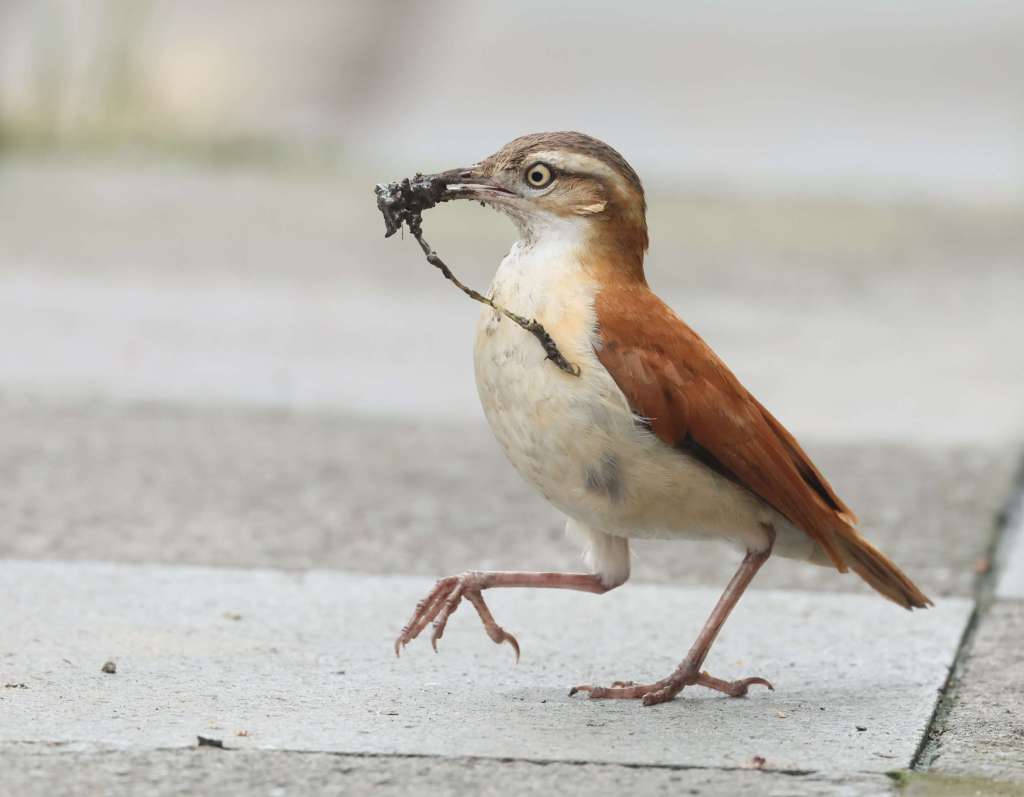
The town has a green central square which is a decent hotspot and we had a surprisingly good time spotting birds here. Lifer bird Pacific Hornero was a treat, and we watched it fly down to the road gutters to fetch muddy nesting material, expertly dodging parked motorcycles, cars and pedestrians. In the trees in the square were Blue-Grey, Flame-Rumped and Blue-Necked Tanagers, while in the flowering bushes were a couple of hummingbird species, including a Speckled Hummingbird with what seemed to be a very large belly… was the bird about to hatch an egg?! Questions abound.
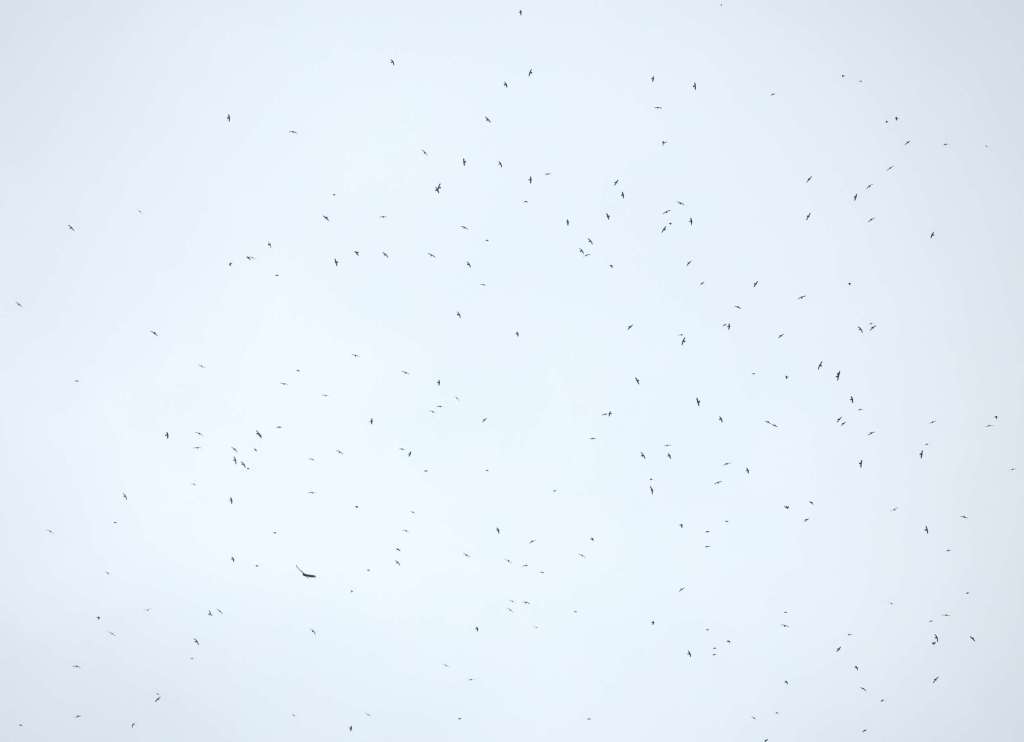
Apart from the ever-present vultures, in the sky one afternoon we saw hundreds of White-Collared Swifts – at least 250. Epic stuff.
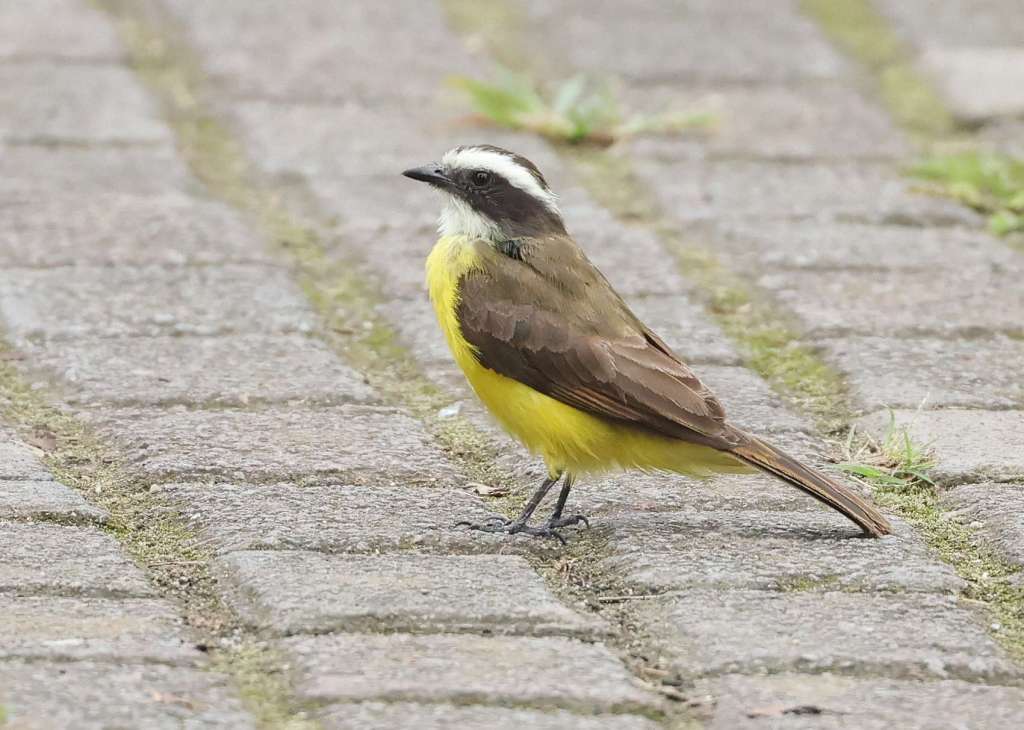
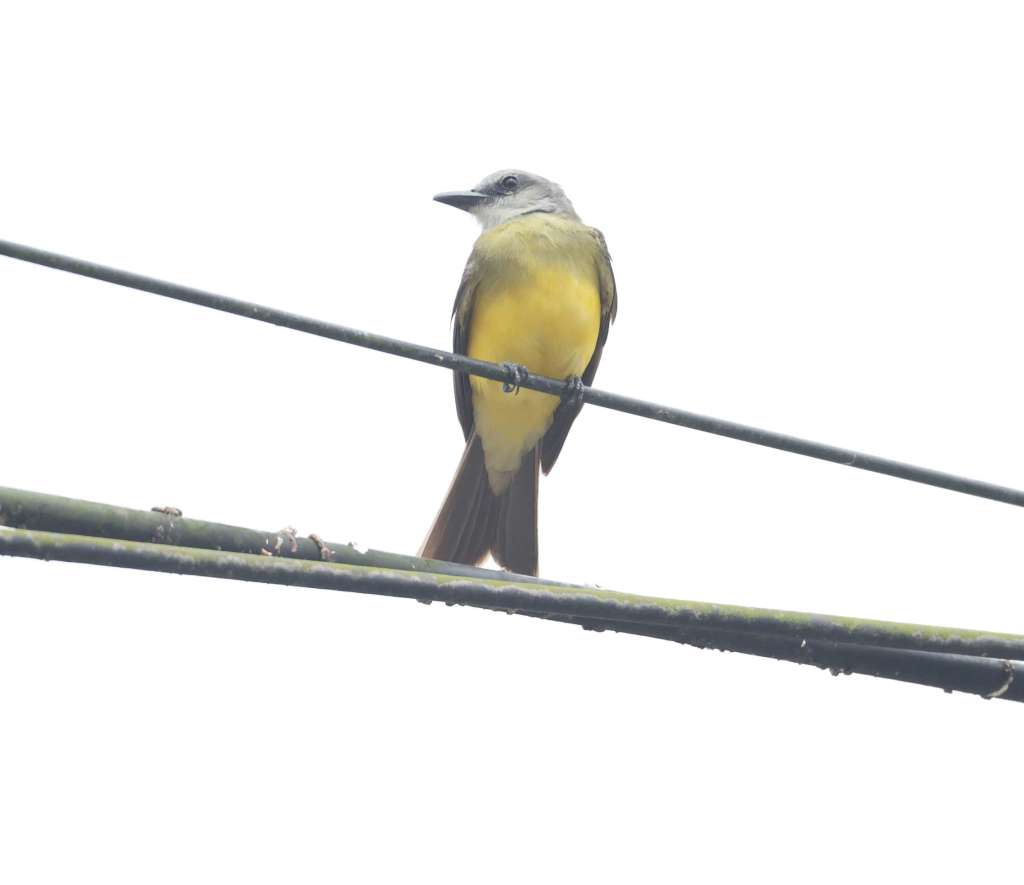
One of the trickier species identifications in this area are the Rusty-Margined Flycatchers, which bear some similarity to Great Kiskadee and Social Flycatchers, as well as a superficial (size and shape and partly colour) resemblance to the very commonly seen Tropical Kingbird (we had to resort to the phrase “TK” when sighting these, as they were so ubiquitous).
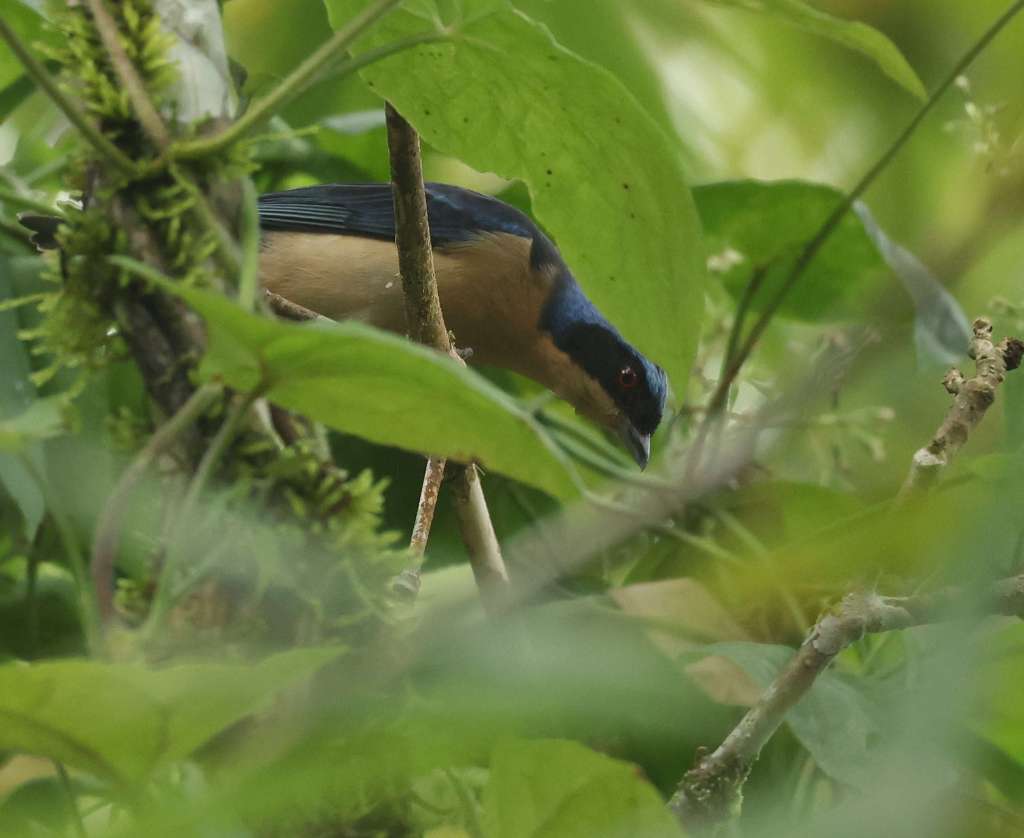
On the roads around town we saw tanagers too, and apart from the very common Flame-Rumped Tanagers, we saw the Fawn-Breasted Tanager, which gave only an obscured half-look but that didn’t matter because the bird is so cool, a Silver-Throated Tanager and a few White-Lined Tanagers.
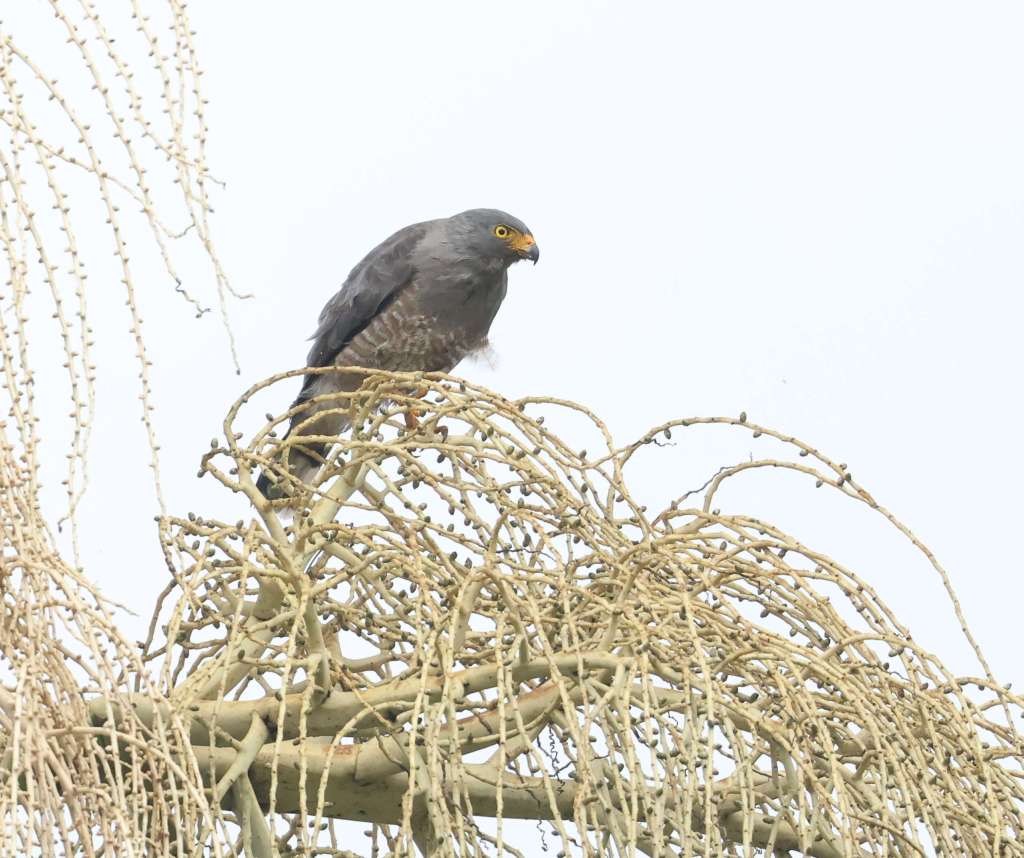
One morning, on the way to a butterfly house called Mariposas de Mindo, a kilometre or two outside of the township and well worth visiting, the sun was out in force and perhaps for that reason so were the raptors. We saw Hook-Billed Kite, Roadside Hawk, Broad-Winged Hawk, and Short-Tailed Hawk in quick succession (in amongst the vultures, of course), and it made me wonder where they had all been hiding until that point.
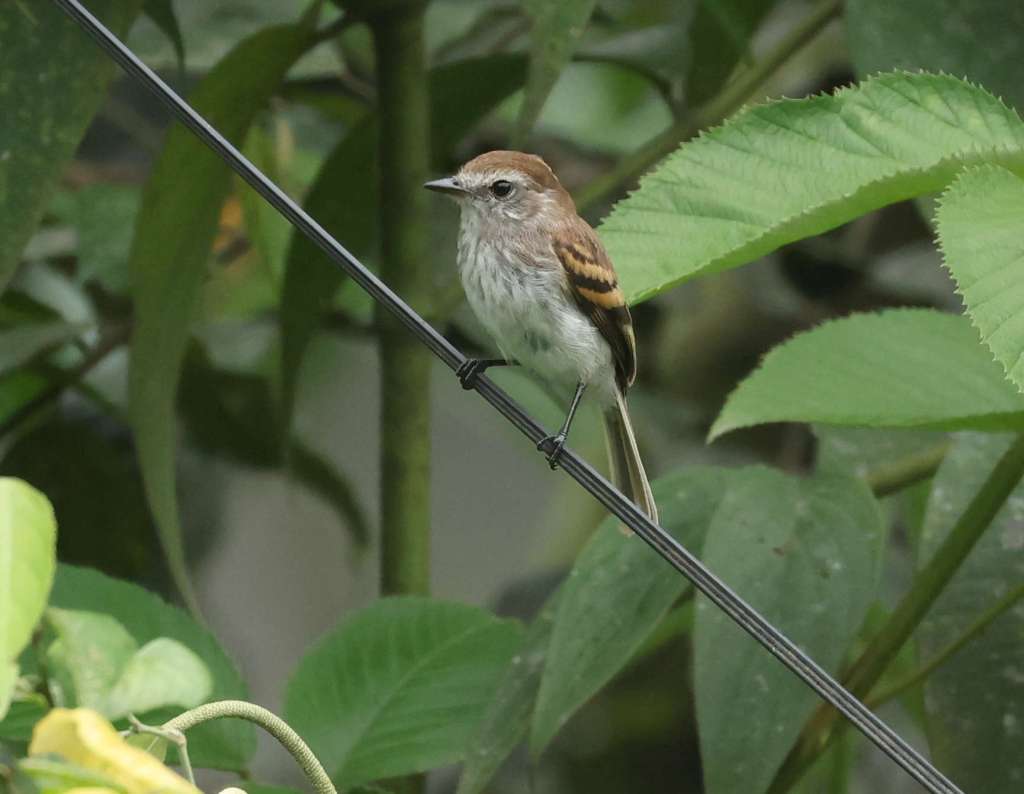
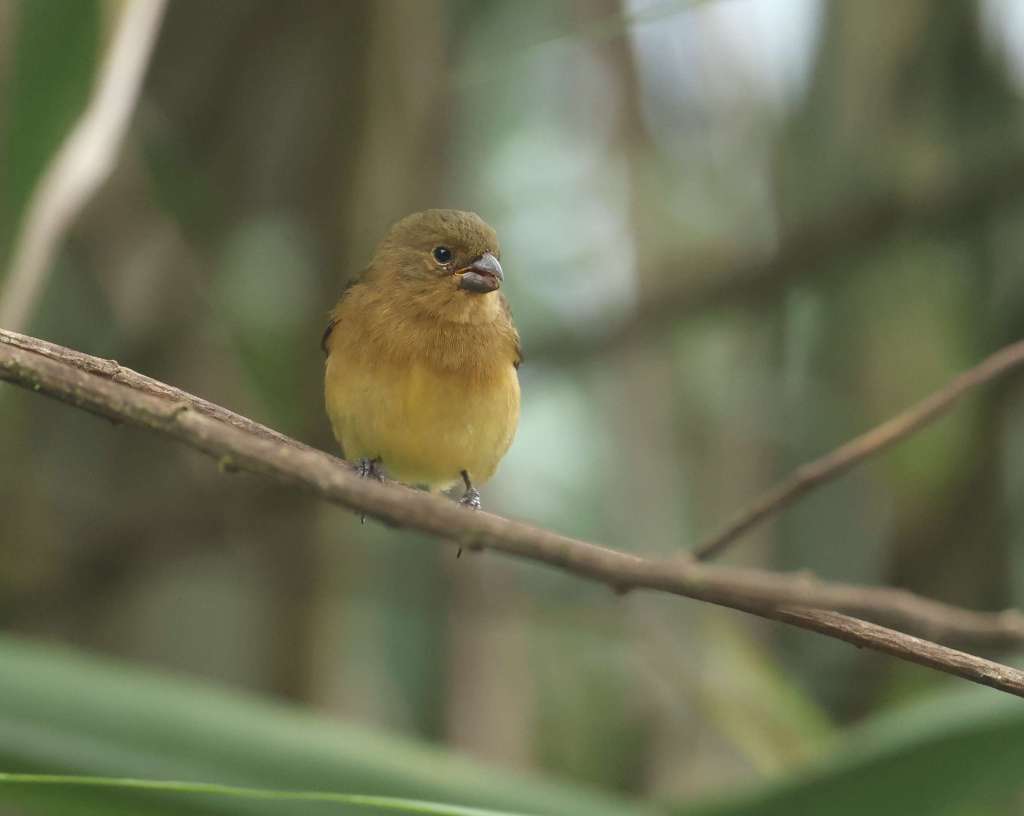
Various grasses and bushes along the roadside also yielded a one-off sighting of a winsome Mouse-Grey Flycatcher, as well as Yellow-Bellied Siskin, and several Yellow-Bellied Seedeaters, a bird easy to love with their endearing stubby bills.
Mindo Hermit Trails
About a kilometre or so north-west of Mindo township is a little bird sanctuary called Mindo Hermit Trails. As far as I could tell there are two aspects to this site: a bird feeder/viewing area, and a forest trail.
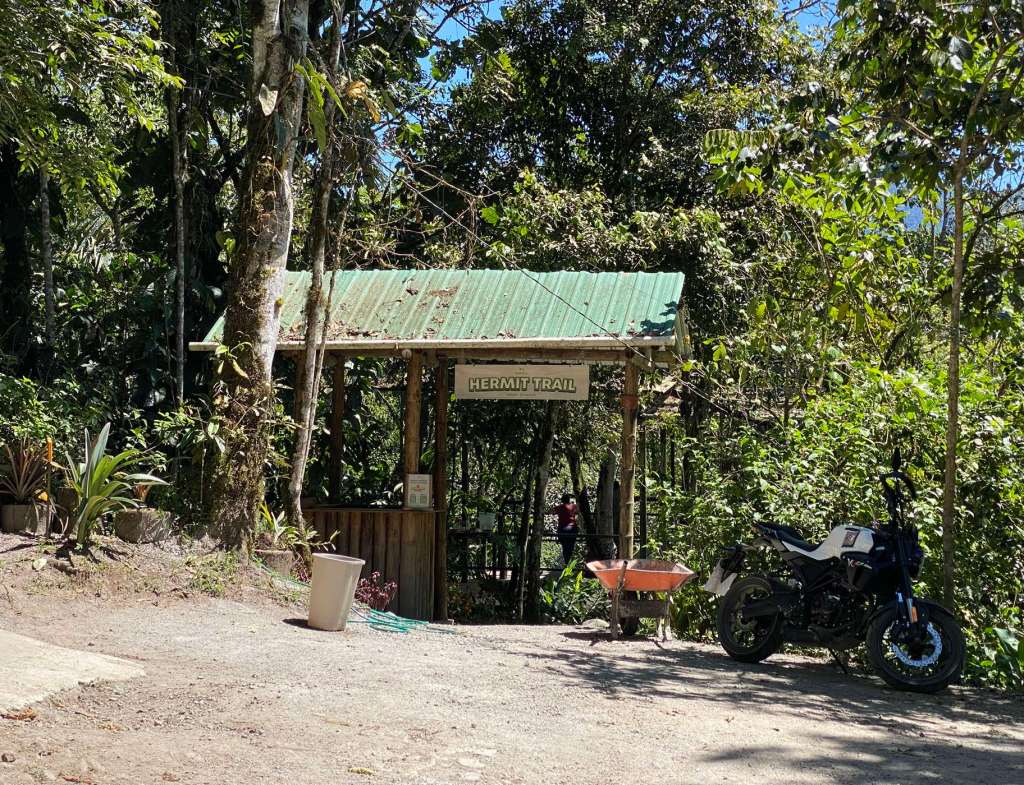
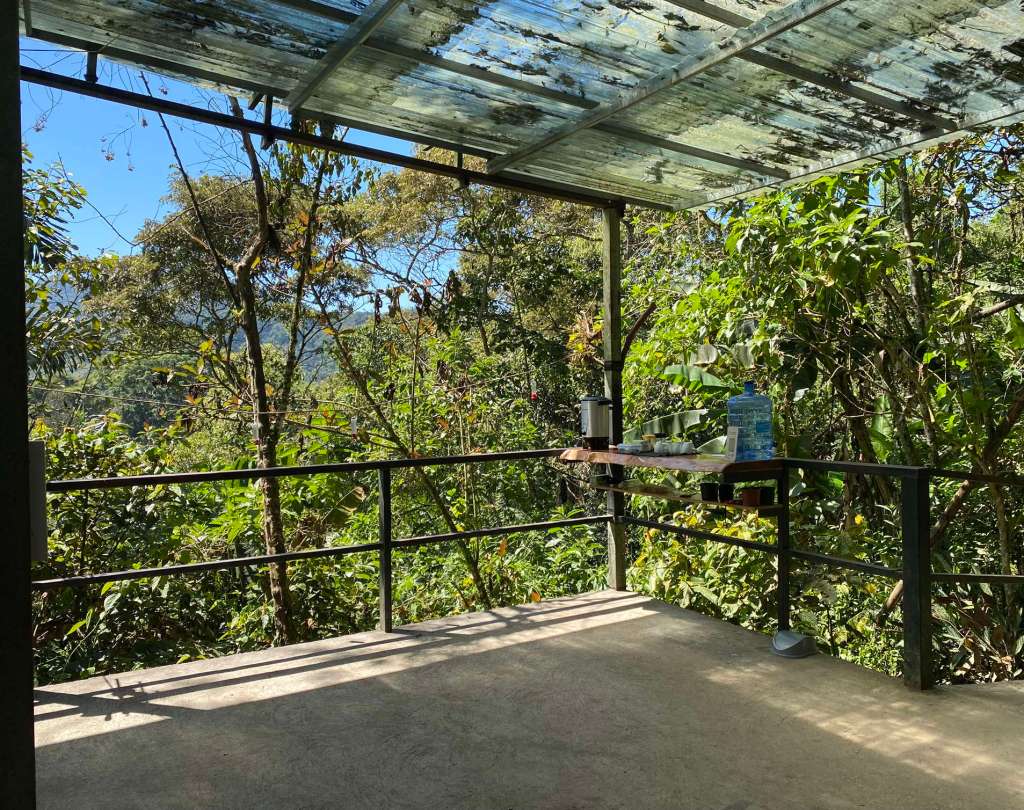
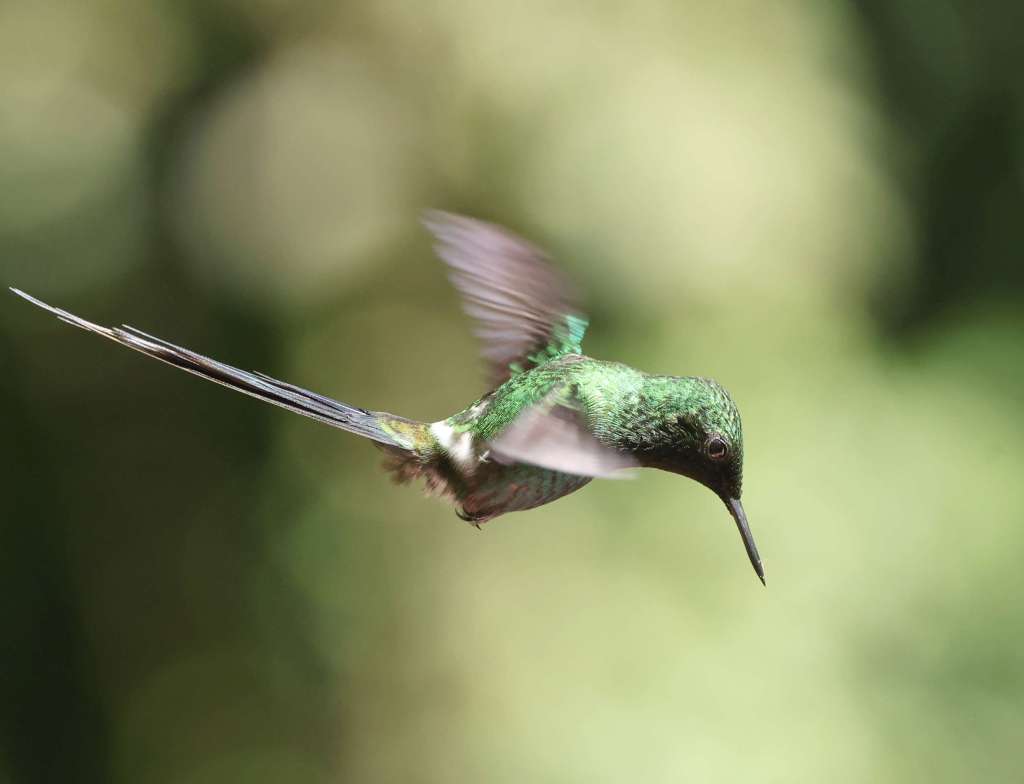
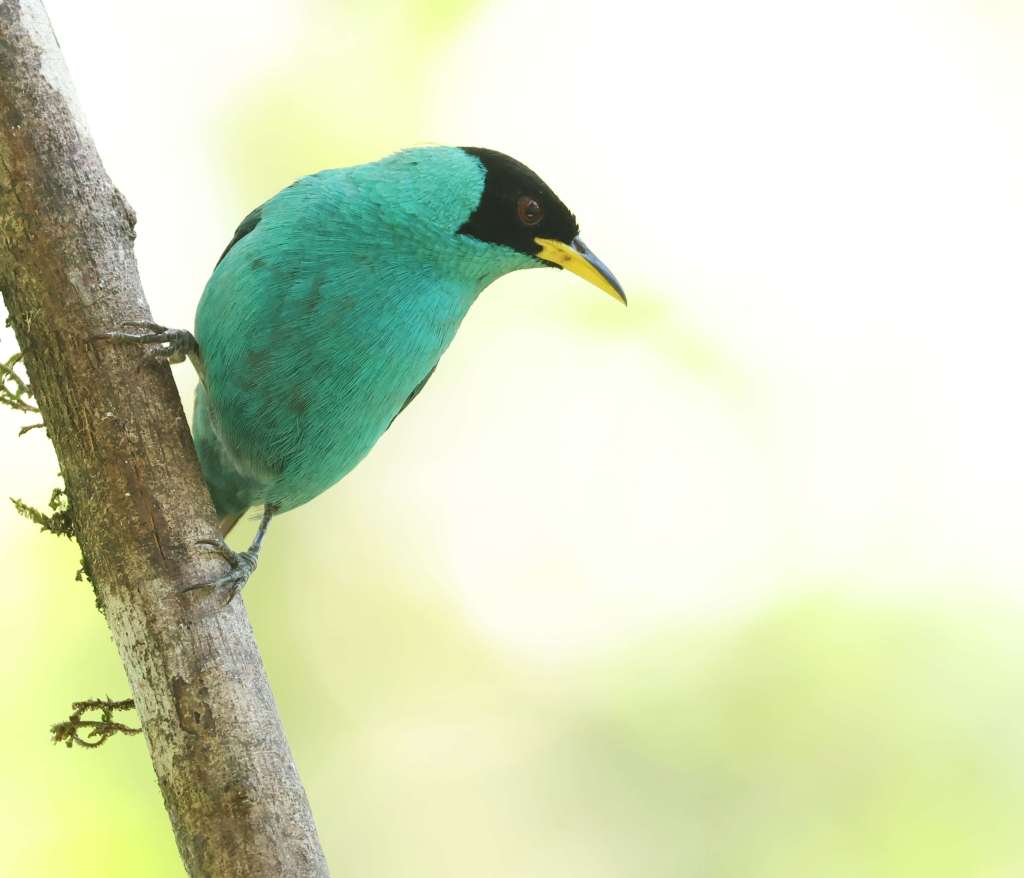
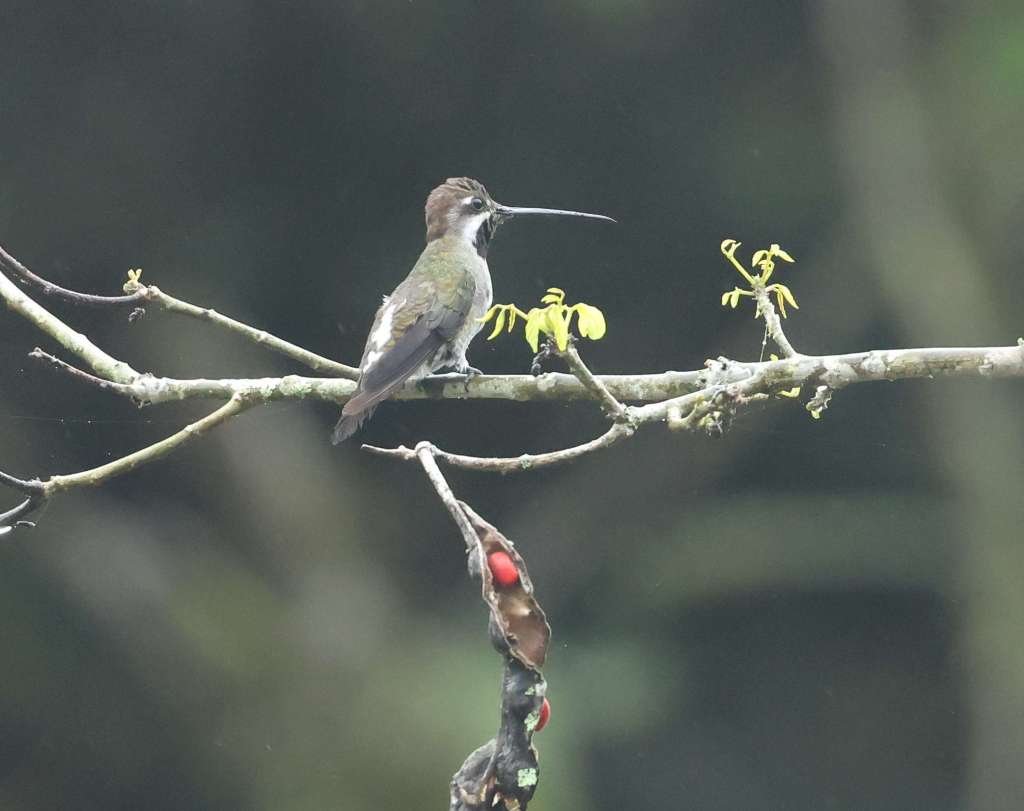
We arrived at 10:30am, and it was fairly warm and the sunlight was quite harsh. Despite that there was some pretty good bird action, with hummingbirds as always the most prominent species. Green Thorntails and Andean Emeralds seemed to be among the most common. With the strong light I relished getting some in-flight shots of these beauties, though some of the photos tended to have high contrast due to direct sun. There’s definitely such a thing as too much light showing up those luminescent feathers.
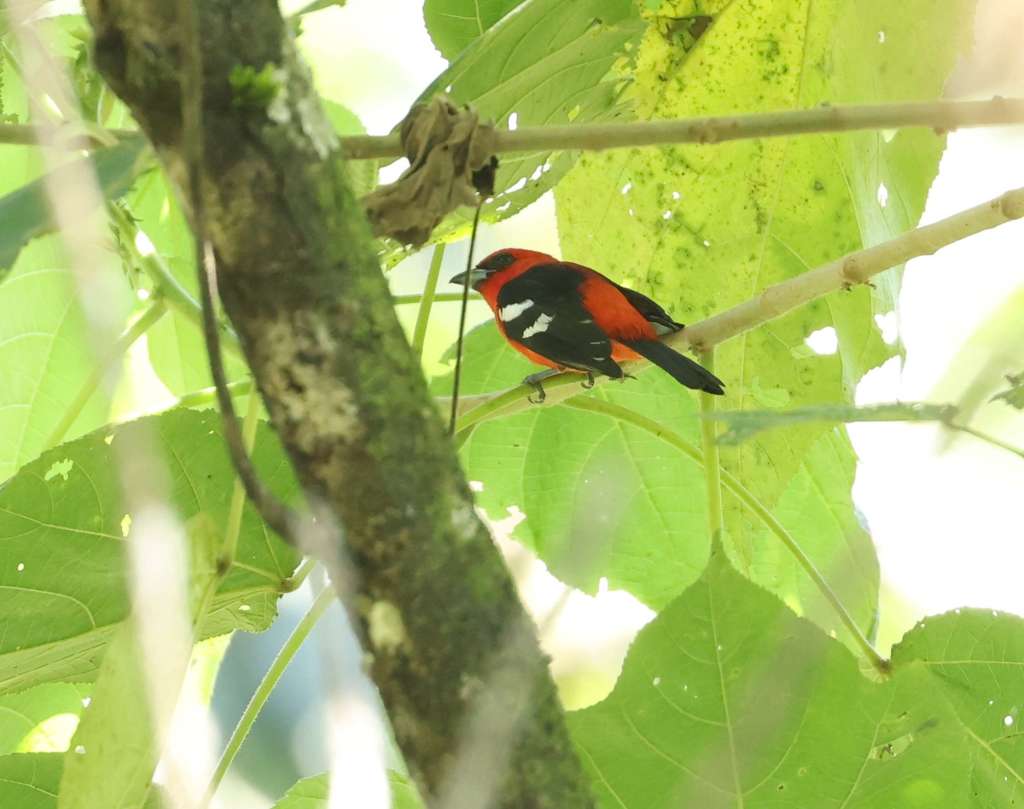
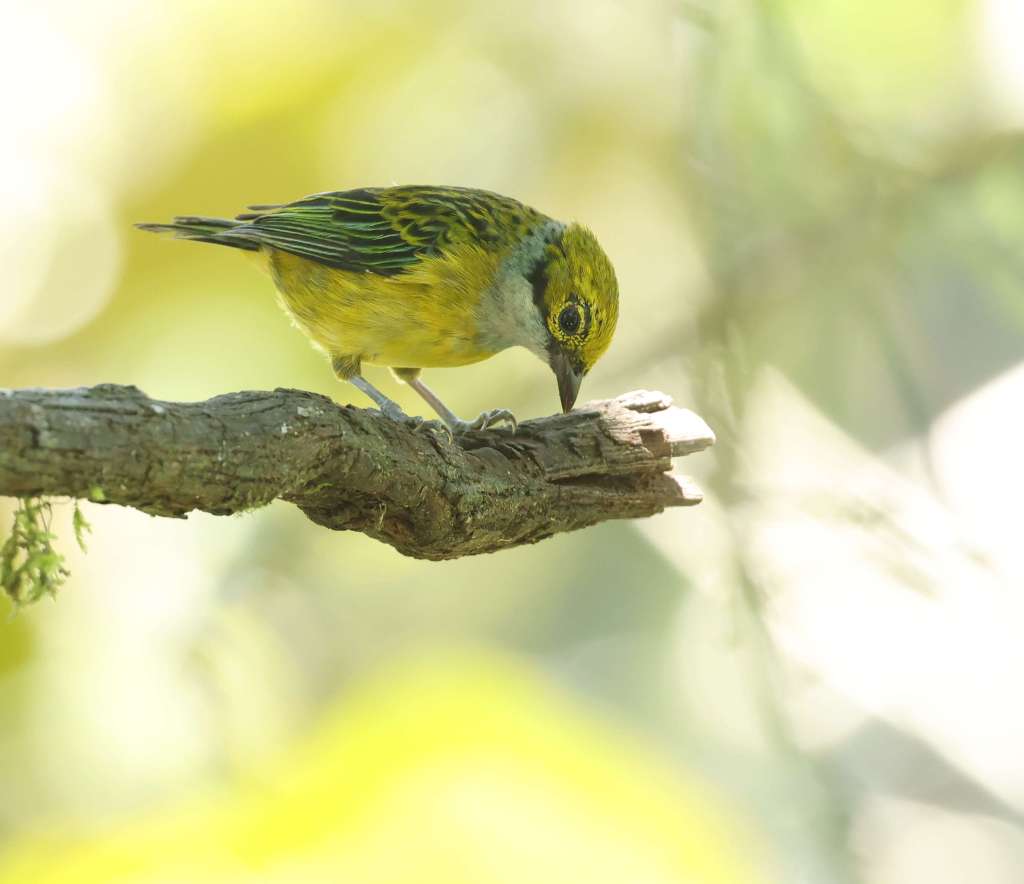
We finally got a really good look at a couple of Silver-Throated Tanagers, and just as that happened, a White-Winged Tanager made a cameo appearance. Now, White-Winged Tanager happens to be in my “Top 5 Tanagers of All Time” list, despite that I’ve seen it only twice and both times not very closely, which tells you how much I like that bird. (The list is of course headed by all-time #1 tanager, the awesome Magpie Tanager – see my gushings about it here).
There was also a Guira Tanager, a startlingly beautiful bird, the male of which is reminiscent of a Golden Tanager, however we only saw one female which was less vividly coloured. A Rufous-winged Tyrannulet also made for another lifer here too, my photo of it filed into the “kinda blurry with the bird looking away but definitely identifiable” category. Red-Headed Barbets came right onto the feeding troughs too, while I finally got a half-decent look at half a dozen Maroon-Tailed Parakeets a little ways off.
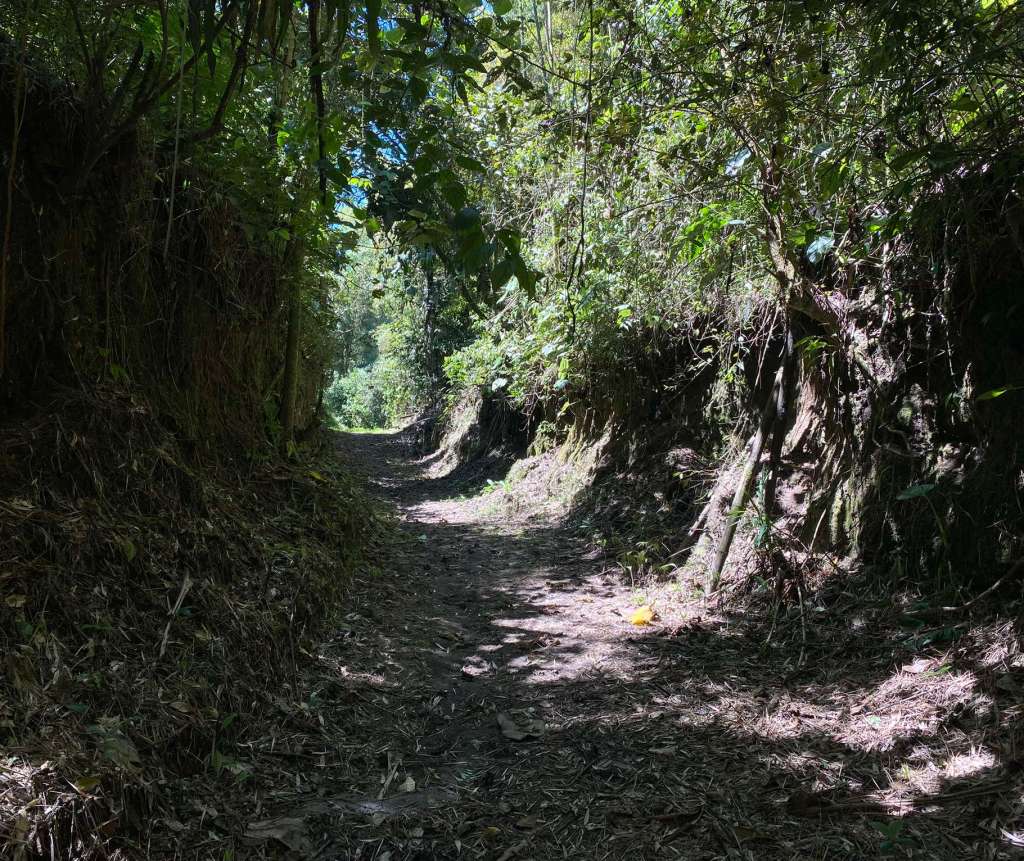
The trail to the waterfall from here is a little off the beaten track and I think is maybe better known to locals than tourists. (I am not sure if it is actually on private land, so you may want to check if wanting to access). It is 40 minutes to an hour to walk, depending on how many bird calls you want to stop for and how gingerly you traverse some of the mildly rocky/muddy sections. The main bird we followed in the undergrowth – a lifer – was Chestnut-Backed Antbird, and for once I used the camera to just watch the bird and note/admire its field marks, rather than desperately trying for an open shot. It was the kind of birding that folks with binoculars are more used to, the kind of “being in the moment” experience that doesn’t carry any pressure with it.
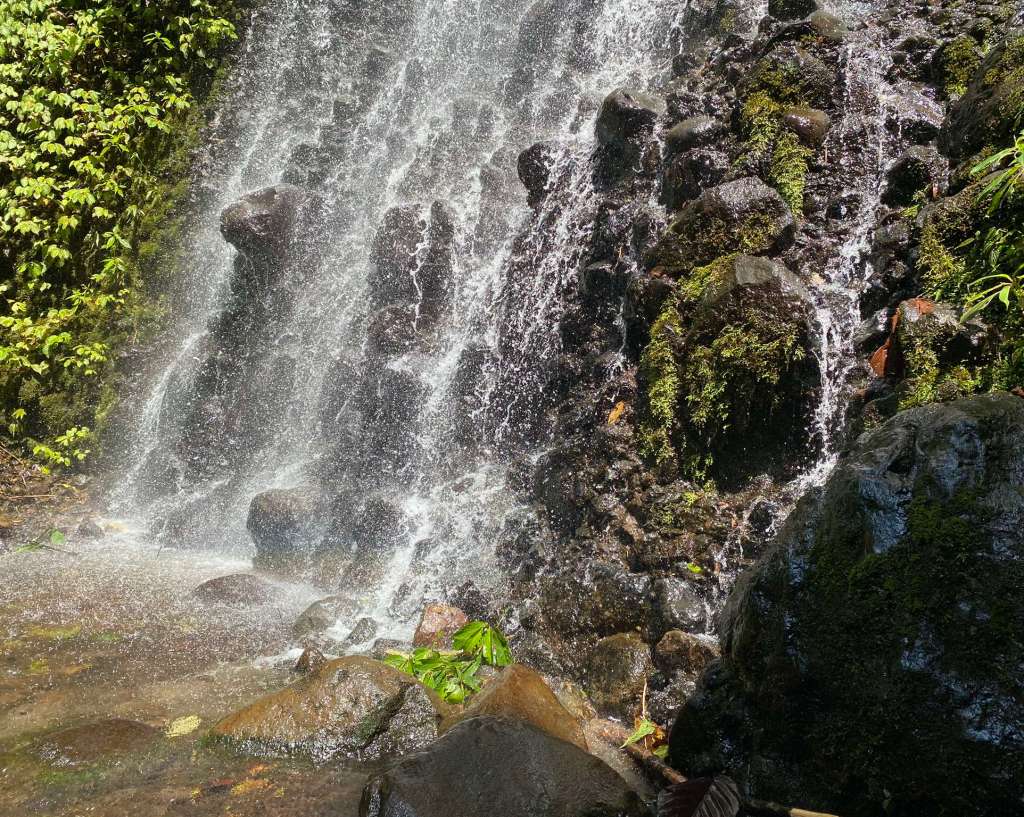
The waterfall proved to be quite high and was very refreshing, with a couple of members of our party having a quick soak while others cooled off their feet. I suspect the trail would have been more rewarding for birds in prime morning birding hours rather than the middle of the day, so it was nice to have a waterfall as a reward for the hike.
Las Terrazas de Dana
We chose Las Terrazas de Dana as our main accommodation in the area based on great Tripadvisor reviews (it is the #1 by that measure, not an easy feat with so many places to stay in the region), and it indeed delivered on its promise, with great rooms, a pretty good on-site restaurant and modest, very nicely kept grounds. While not being as “birdy” as, say, an eco-lodge, it still held its own pretty well in that regard too.
Heck, anywhere that can boast Sunbittern sightings is fine by me (yes, really…)
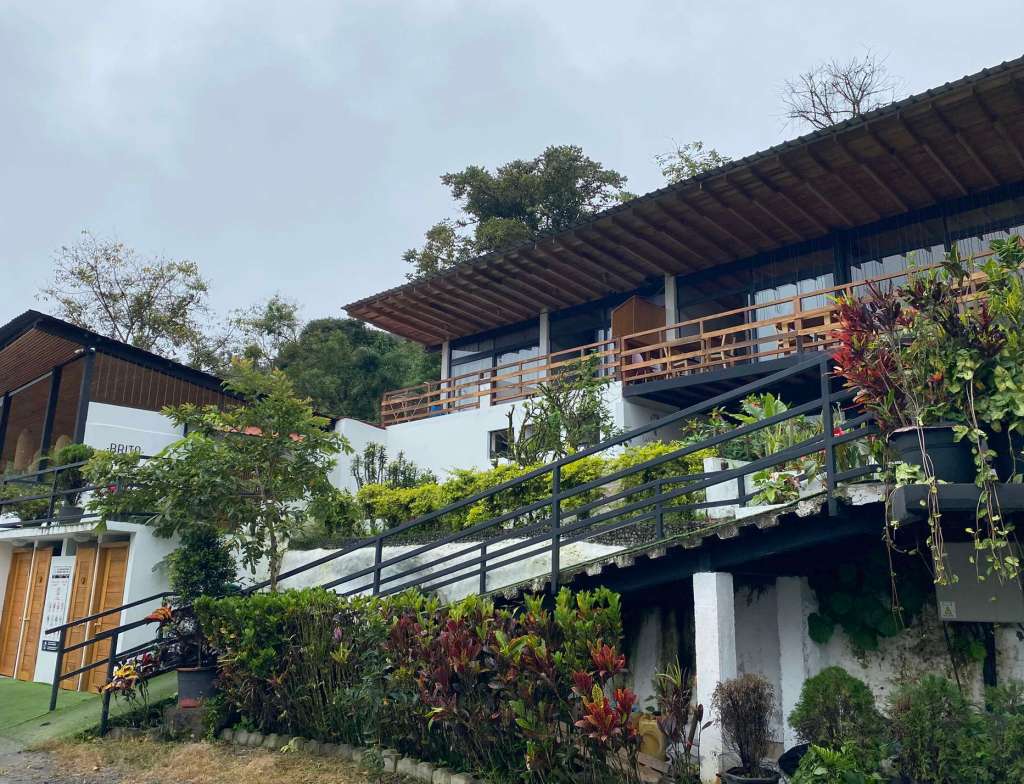
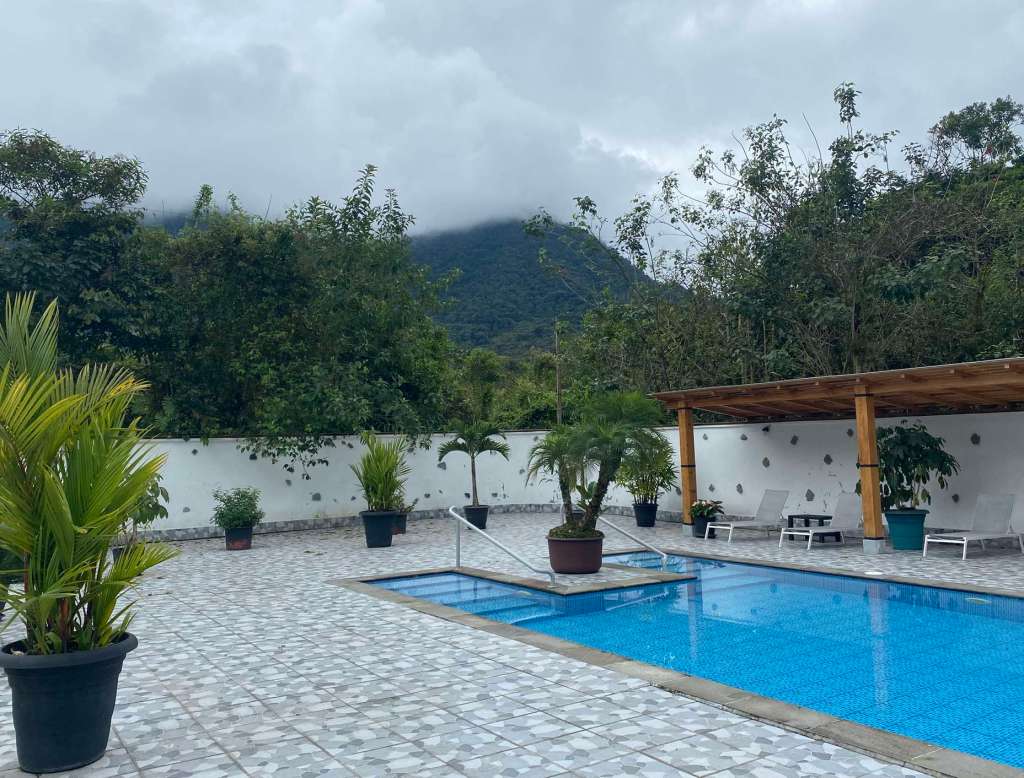
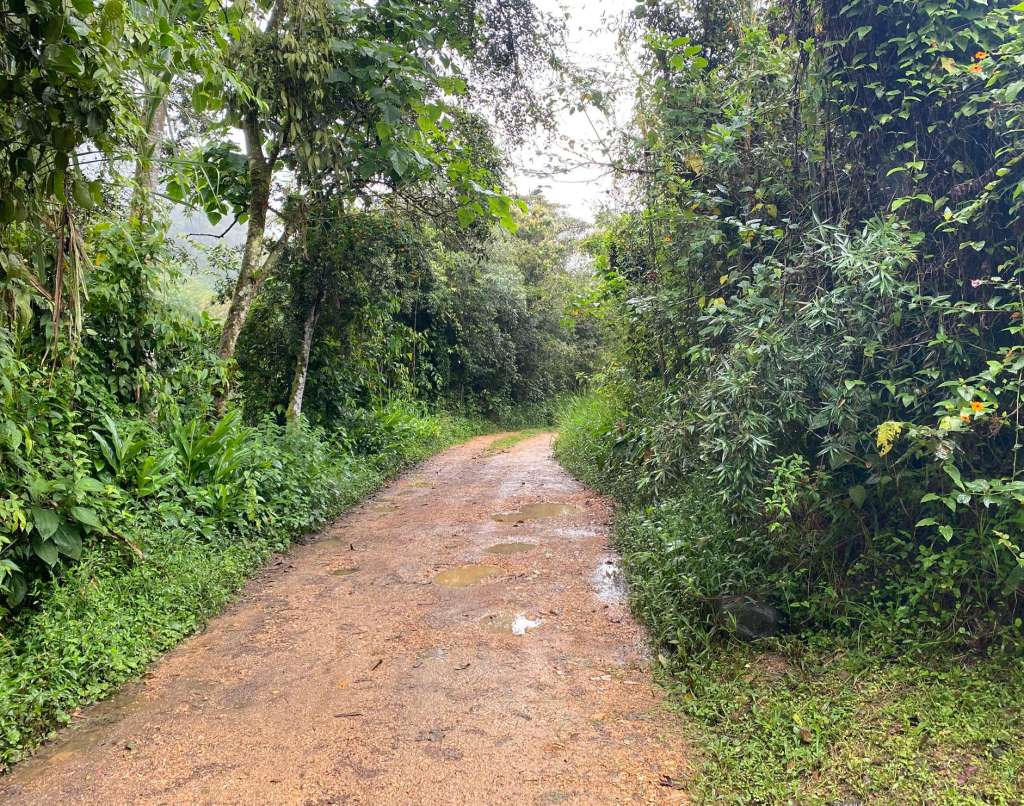
Bronze-Winged Parrots were a common sight flying over, and we sometimes found them in tree canopies too. Scrub Blackbirds, with their electrical call we became so familiar with in Lima, were here, so too were Ruddy Pigeons and Bananaquits. Right out our back door we found delightful White-Booted Racket-Tails, while near the pool area was a very unfamiliar bird we eventually identified as a Masked Water-Tyrant – an unusually white forest bird.
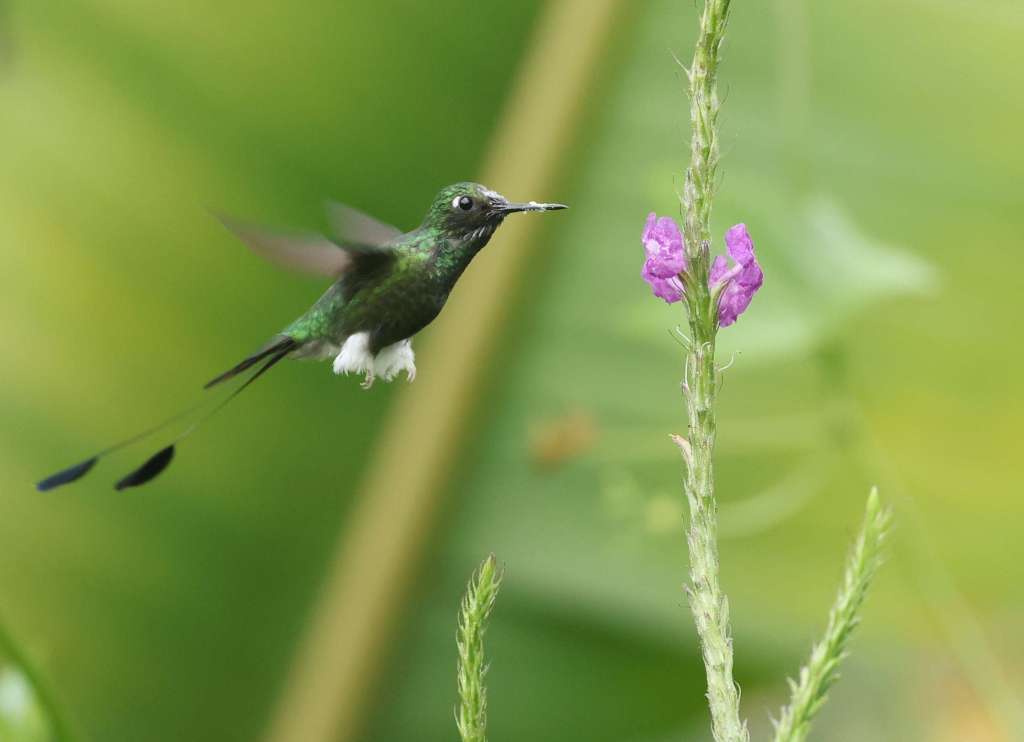
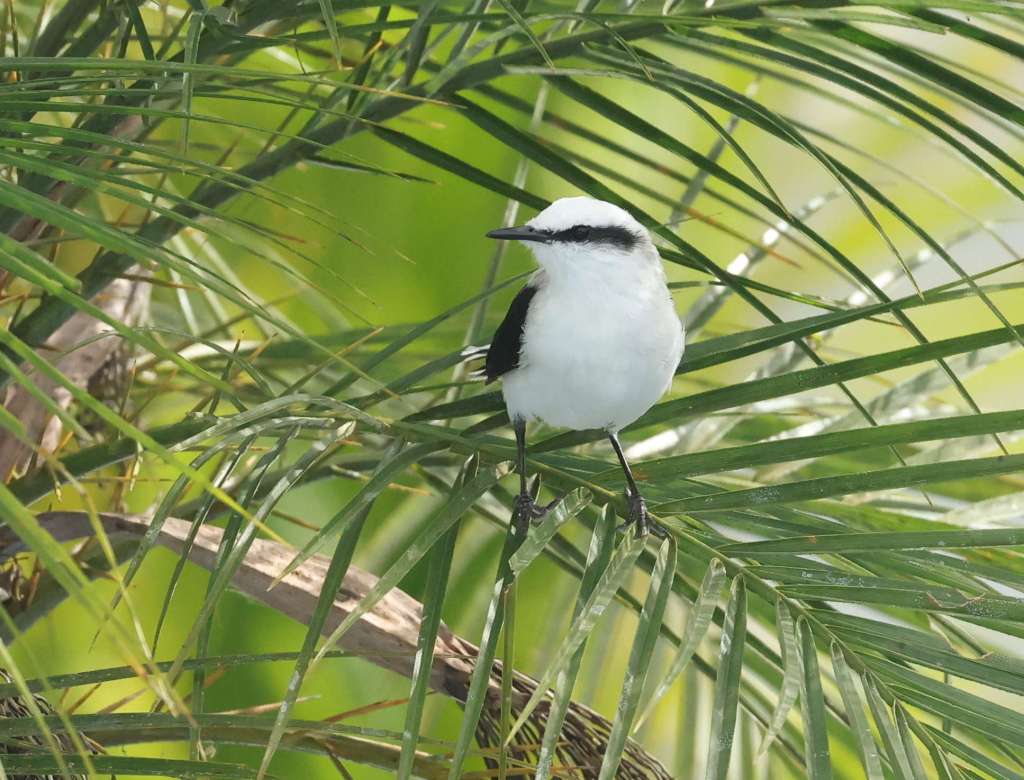
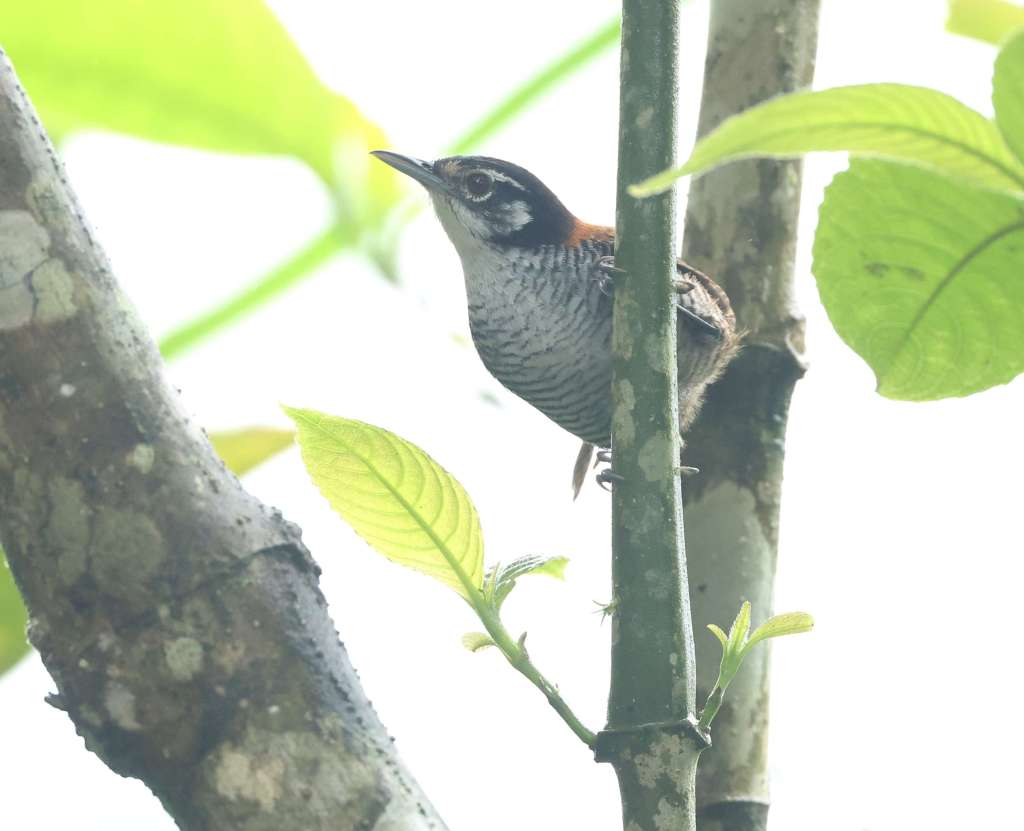
Red-faced Spinetail were fairly common and easy to see, much more so than Slaty Spinetail which we heard a few times but only got an extremely obscured look at once (I could include the photo here, but suffice to say you would not be very impressed!) Another skulker was Bay Wren, quite a striking bird, and one that popped out into the open very briefly.
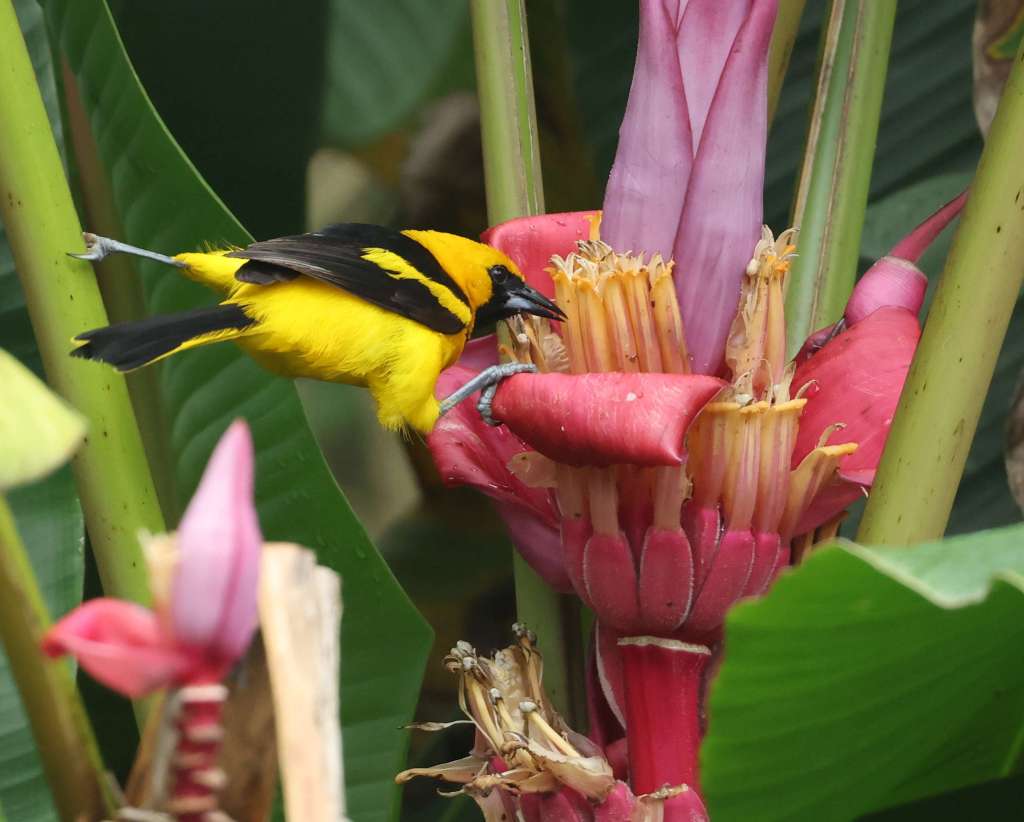
We had been on the lookout for Yellow-Tailed Oriole since we arrived, as eBird implied it was a frequent sighting at the hotel, and we eventually found one a few days into our four day stay. Staying a few days let us pick up new birds every day, like Lesser Swallow-Tailed Swift, Long-Billed Starthroat, and Scarlet-Backed Woodpecker.
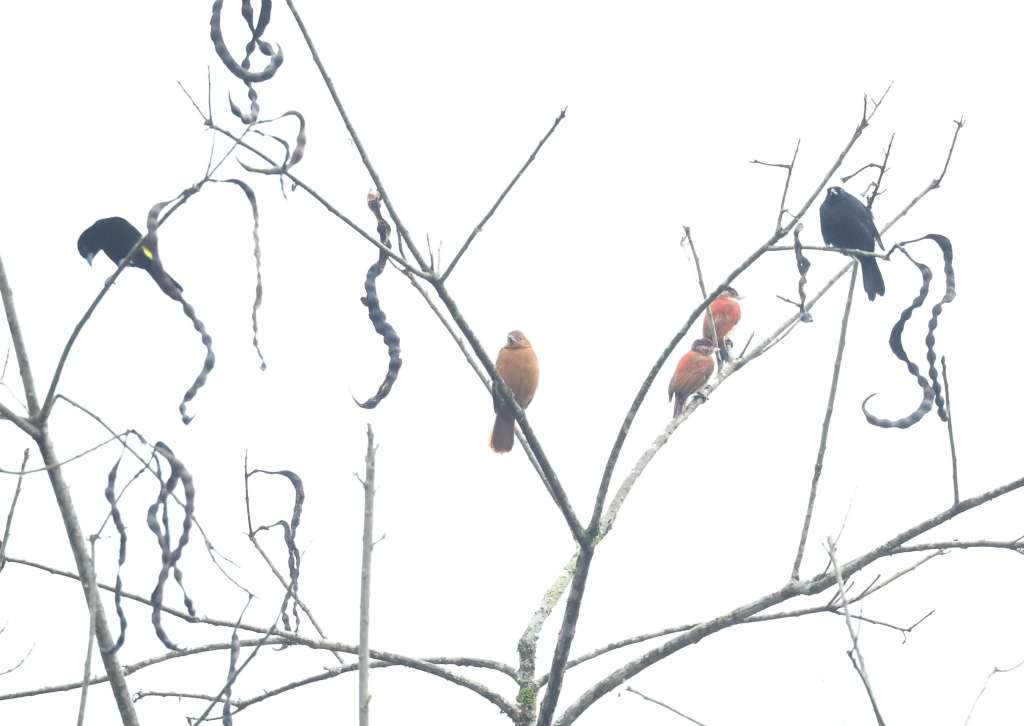
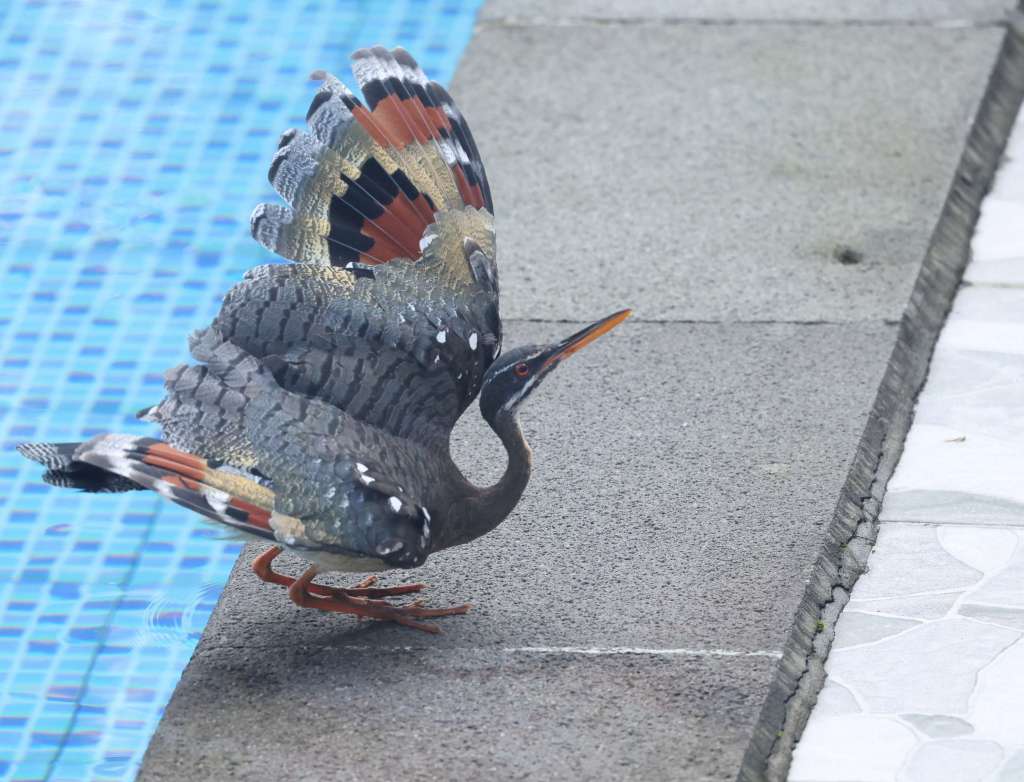
Then there is the Sunbittern.
I almost hesitate to reveal that we even saw a Sunbittern here. Such is the mystique of this species that – as I understand it – many birders spend hours or even days enduring muddy creeks and humid swamps to find it… so I feel almost guilty that we saw one simply fly into the hotel’s pool area one morning at about 8:30 while we were having breakfast. Apparently this isn’t even a particularly rare occurrence there either. I’ll take it, anyway – especially as it gave us a brief but memorable look at the arresting wing pattern that makes this bird famous.
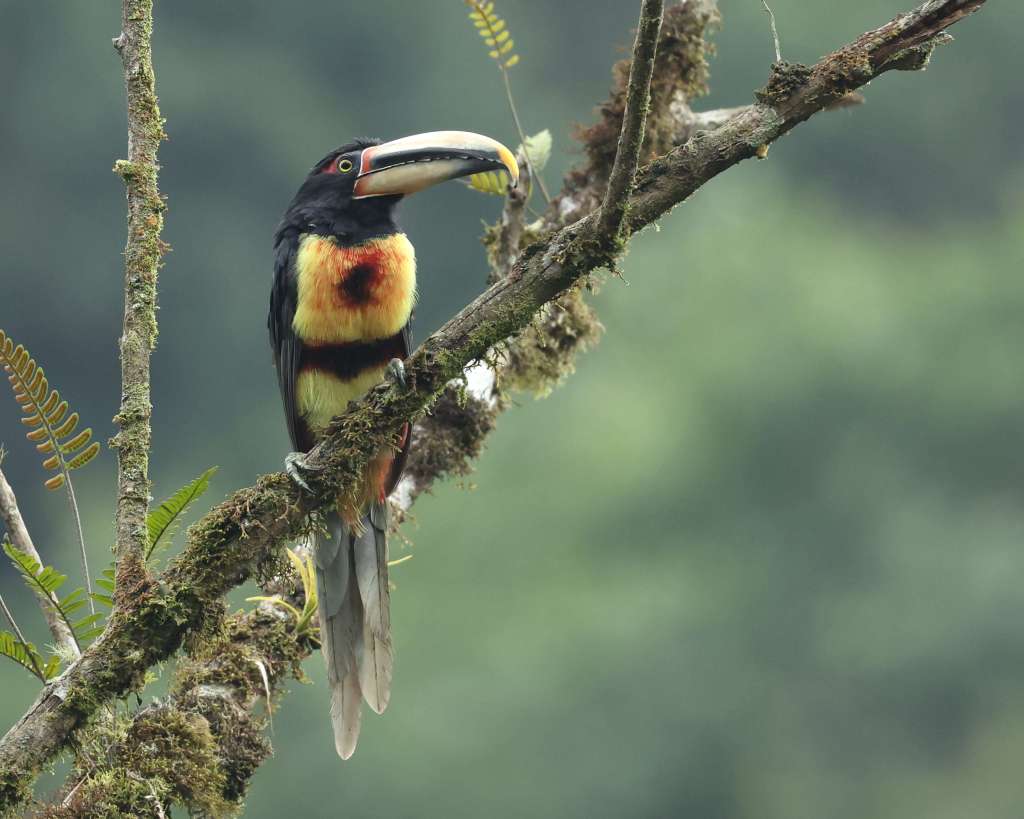
Another highlight quite near the hotel was Pale-Mandibled Aracari, an impressive toucan that was split from Collared Aracari only in 2025. We picked up over twenty lifers fairly easily just at the accommodation and walking the surrounding roads.
Summary
There are a tremendous number of lodges and reserves and just general hotspots in the Mindo region – it’s an absolute smorgasbord of birding options. Having visited well over a dozen quality locations (including those that will be covered in the next post), I can say that each place has its own unique qualities – there is no “one best place to find birds” as altitude, habitat and local conditions vary from one spot to another. If you have time and transport, it is very rewarding to visit a variety of locations in Mindo. As I hope you’ve grokked from my write-up, none of the locations above are duds and all proved to be high-quality options for those wanting to revel in the wealth of Ecuadorian birds.
AUTHOR: ANDY GEE
BIRDERS: ANDY GEE, K-A
 Bird Spots
Beautiful
LikeLike
I understand English-speakers not being able to spell everything right in foreign countries, but there’s something especially irksome about “maldonado” being spelled “macdonaldo” …as if foreign words are corruptions of familiar English-language last names or fast food joints. It’s just self-referential. Please help us keep up our flagging reputation for cultural awareness abroad!
LikeLike
Apologies, did not mean to irk! I have corrected the spelling.
LikeLike