You might find yourself in New Zealand’s largest city, Auckland, as part of an international flight extended stopover, or for a bunch of other reasons. If you’re curious what birds you might find in the region, and where to go, this blog post is for you.
Long story short, there are some high-quality hotspots for birding in the area, with the locations shown below covered here. All are free to enter (though Tiritiri Matangi Island requires a paid ferry ride). Several are managed by New Zealand’s Department of Conservation which does a fantastic job with facilities, signage, and general administration of the sites. If only someone would do a fantastic job on managing Auckland’s traffic… it can get pretty bad even on the big highways. You might want to give yourself a little more time than you think you’ll need when driving.
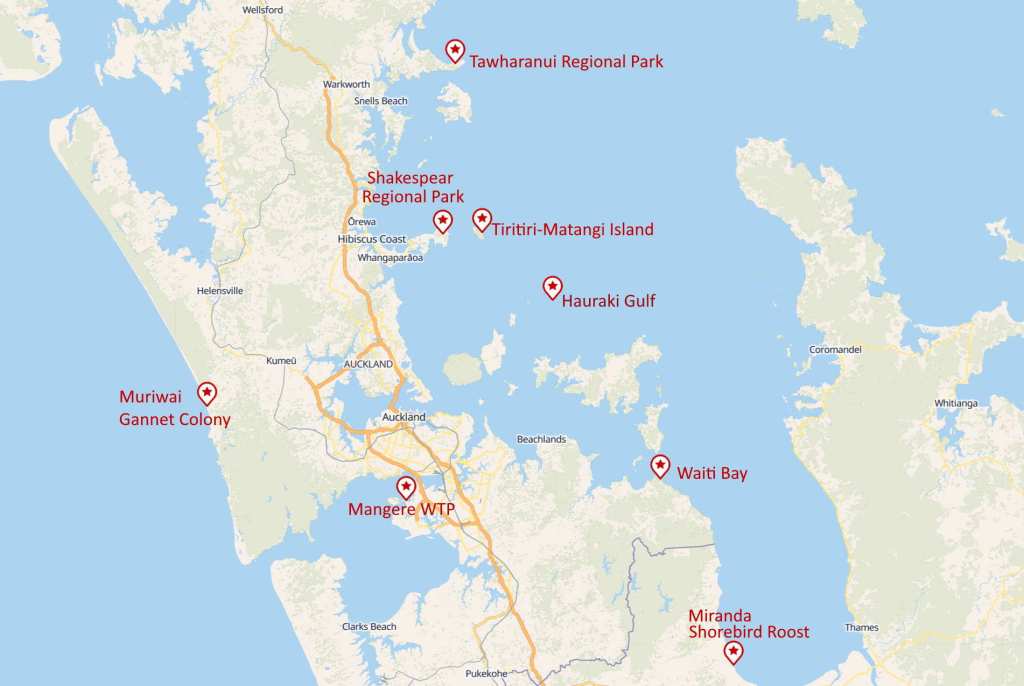
Note on bird names: in this post the eBird bird names are being used, but there are Māori names as well which are often used by New Zealanders when talking about birds.
Tawharanui Regional Park
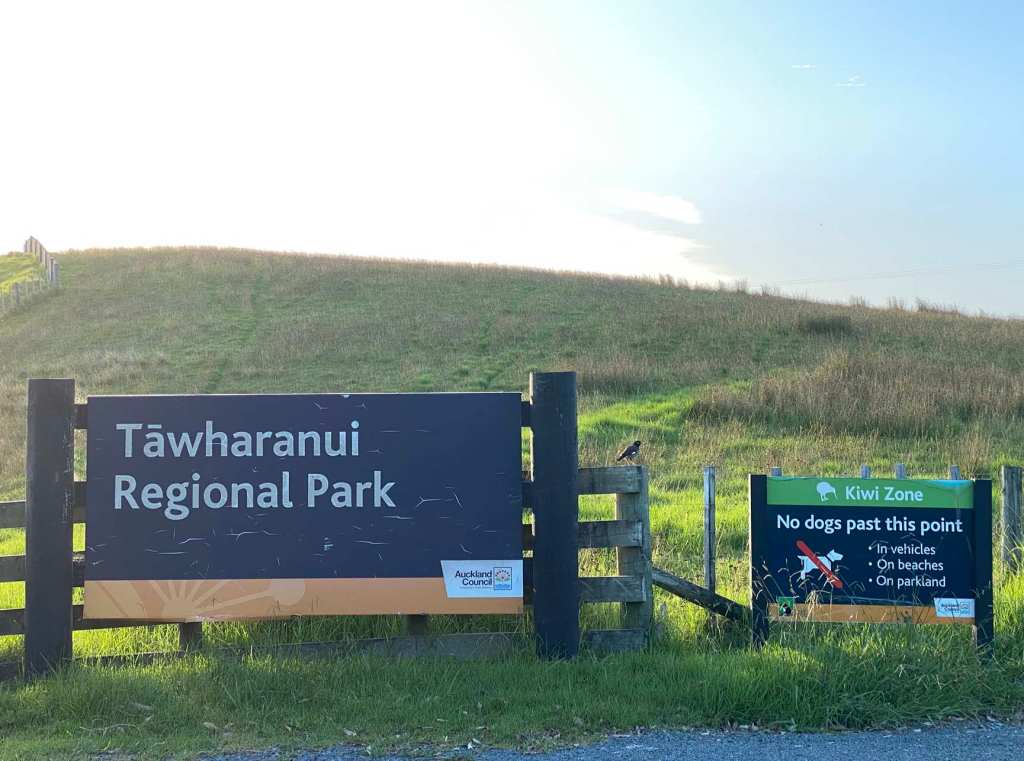
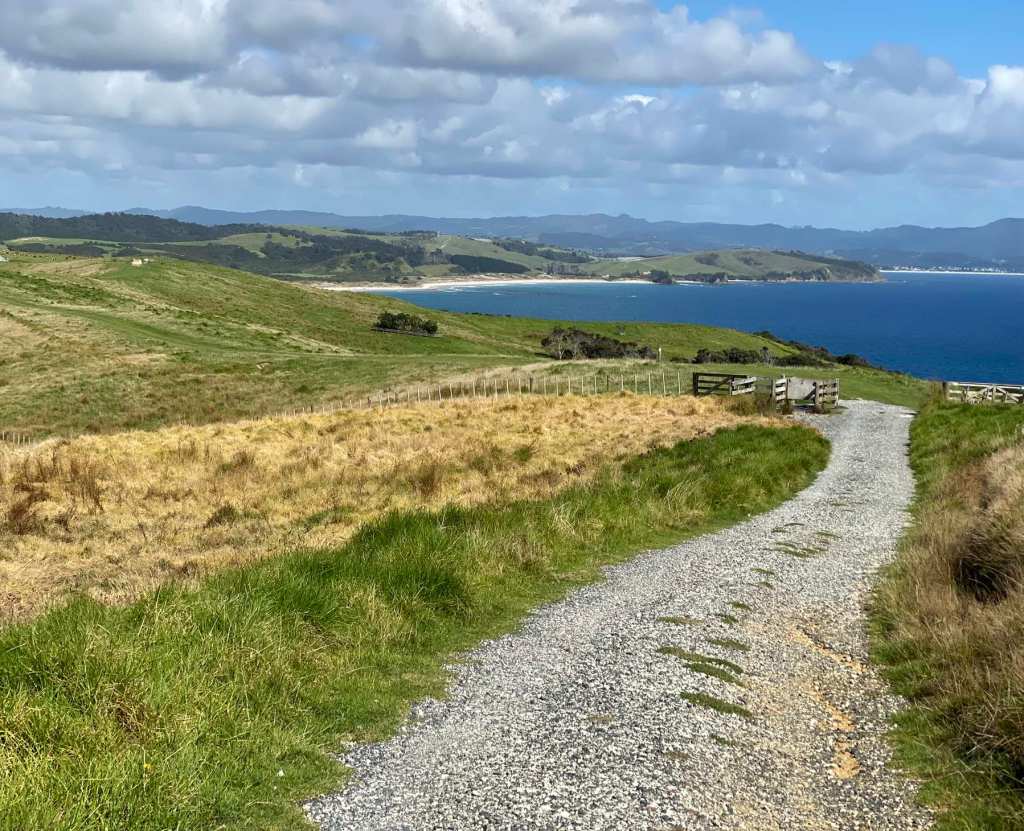
Tawharanui Regional Park is a 588 hectare reserve about an hour’s drive north of Auckland. It’s at the end of a peninsula protected by a predator-proof fence. It contains a wealth of birdlife including North Island Brown Kiwi, and a range of habitats like sandy beaches, shingle bays, open pastures and native coastal forest.
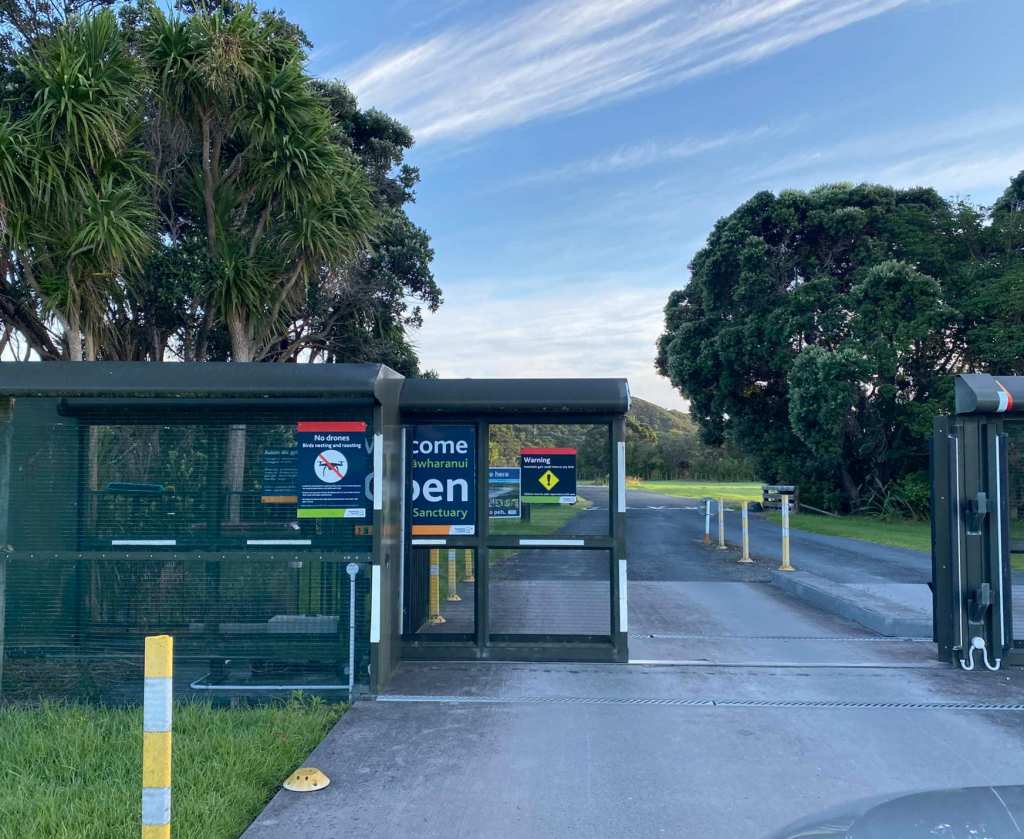
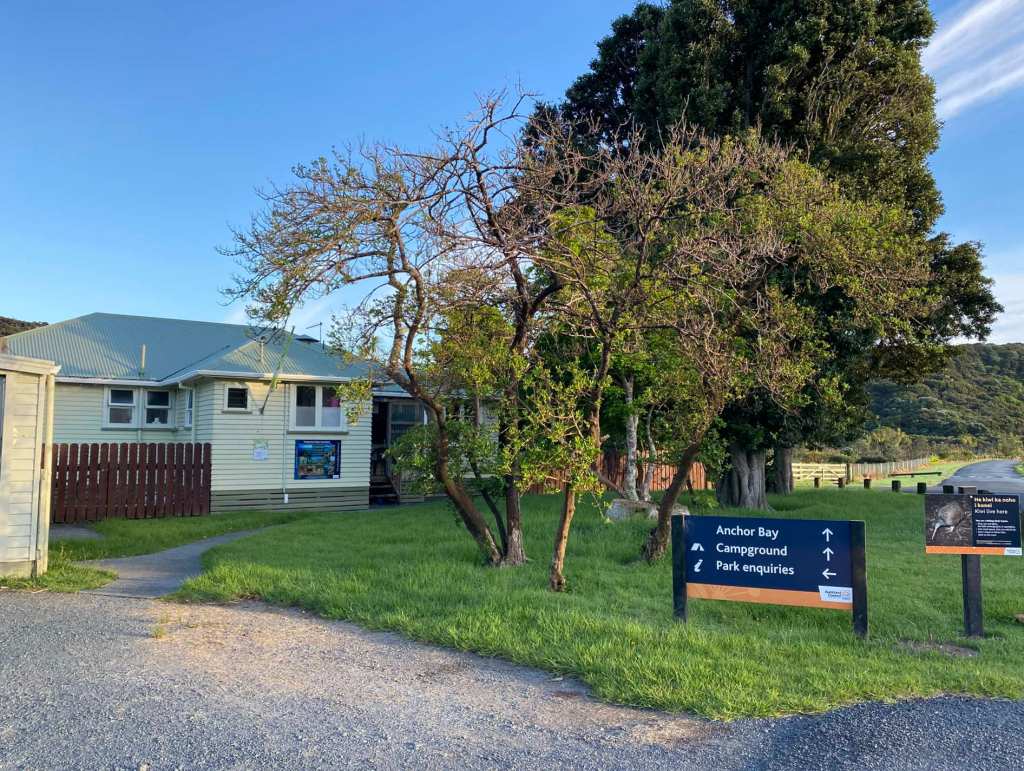
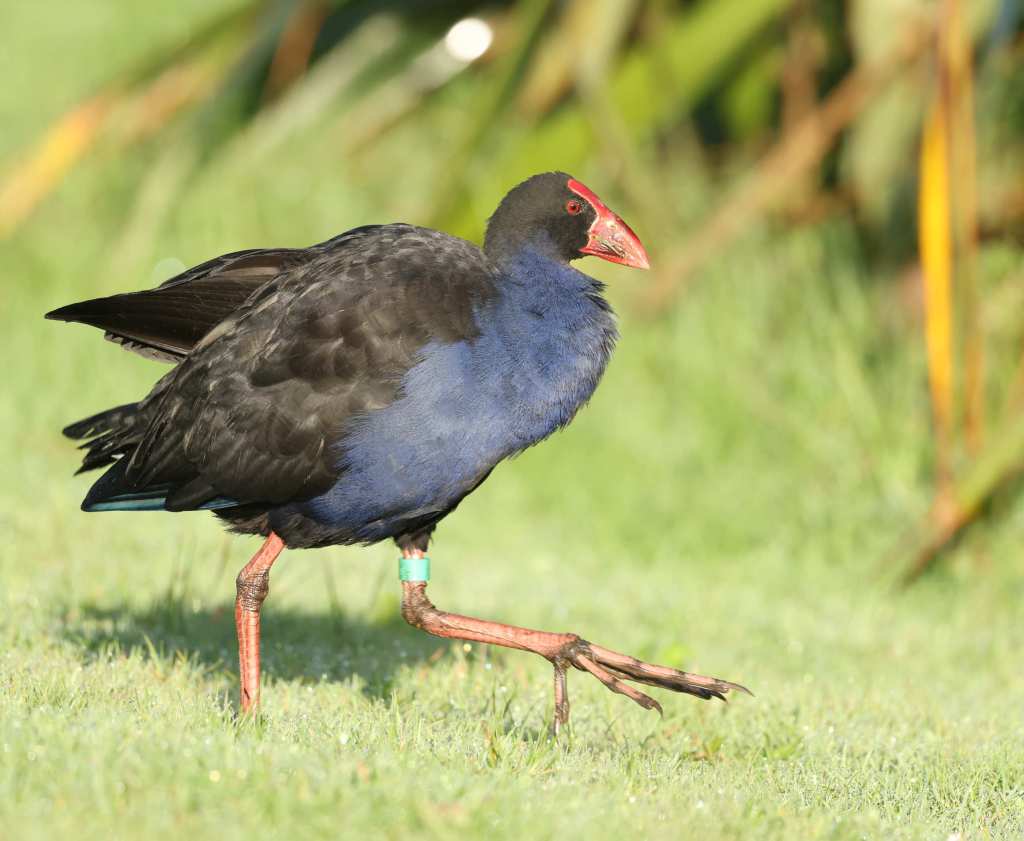
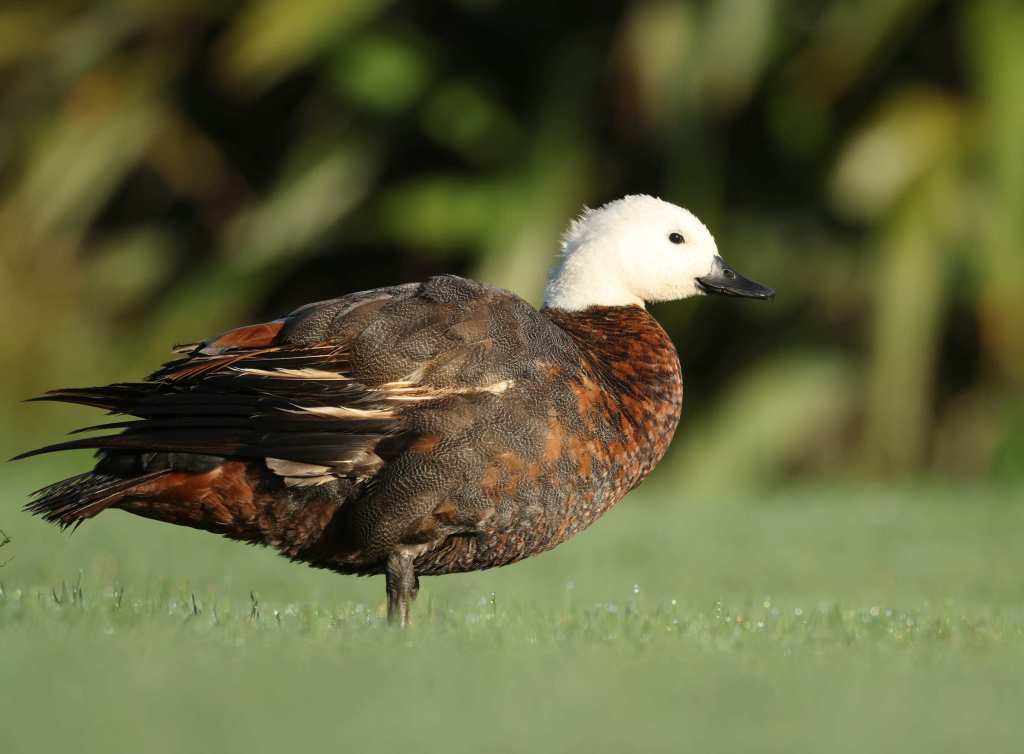
After the long and sometimes quite winding road from the town of Warkworth, the entry gate to the park opens automatically and one finds a lagoon on the right, followed by fields on either side. These fields are actually occasionally good for South Island Takahe, a bird once thought extinct and sensationally rediscovered in 1948 (and subsequently reintroduced to various locations around New Zealand). We didn’t see any there, but we did see several Australasian Swamphen (we actually over 40 for the session) and some Paradise Shelducks enjoying the beautiful morning sun.
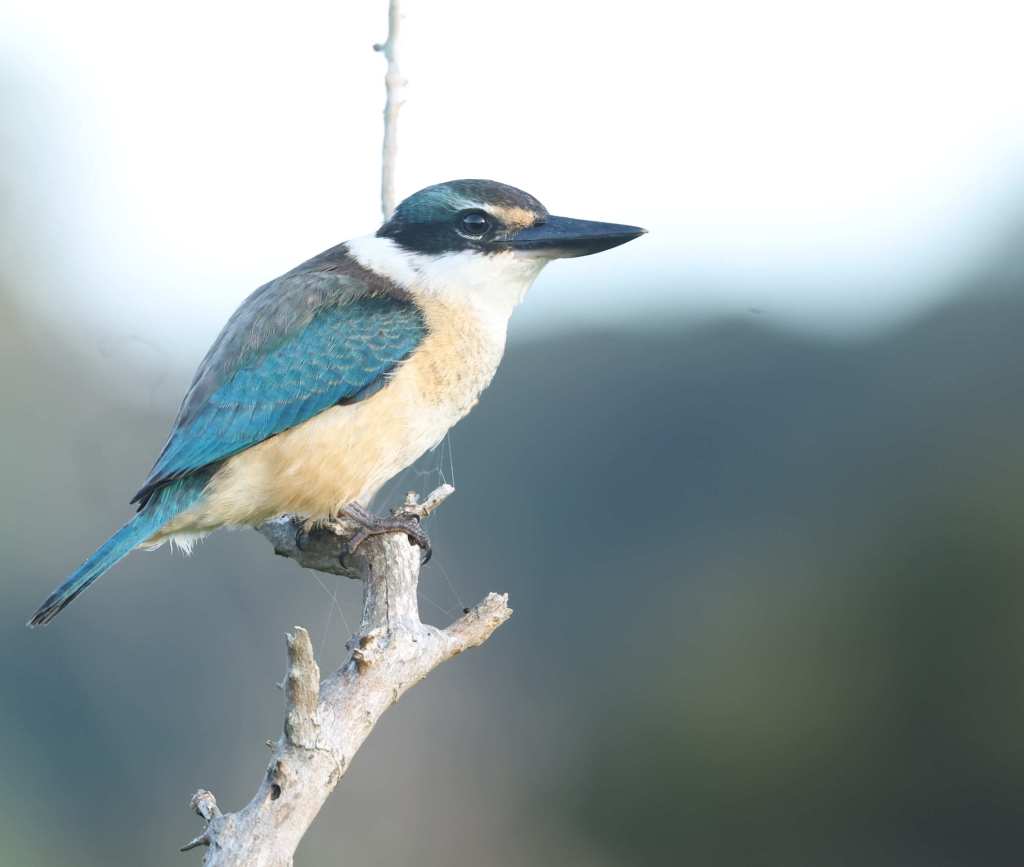
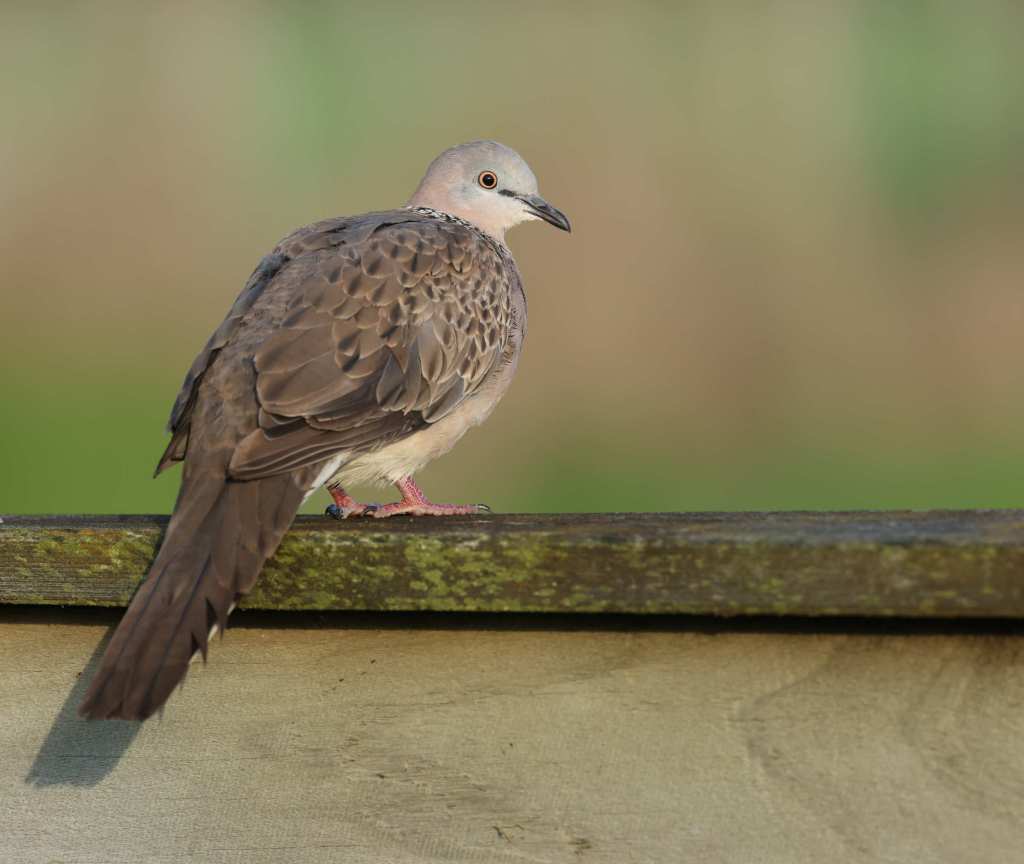
Likewise Sacred Kingfisher and Spotted Dove were both active and photogenically posing before we had even reached the main car park. Here it was profitable to use the car as a “mobile bird blind” – drive along slowly with the window down and the camera lens out until you sidle alongside your subject. You can sometimes get great shots like this (as long as you have an accommodating driver…)
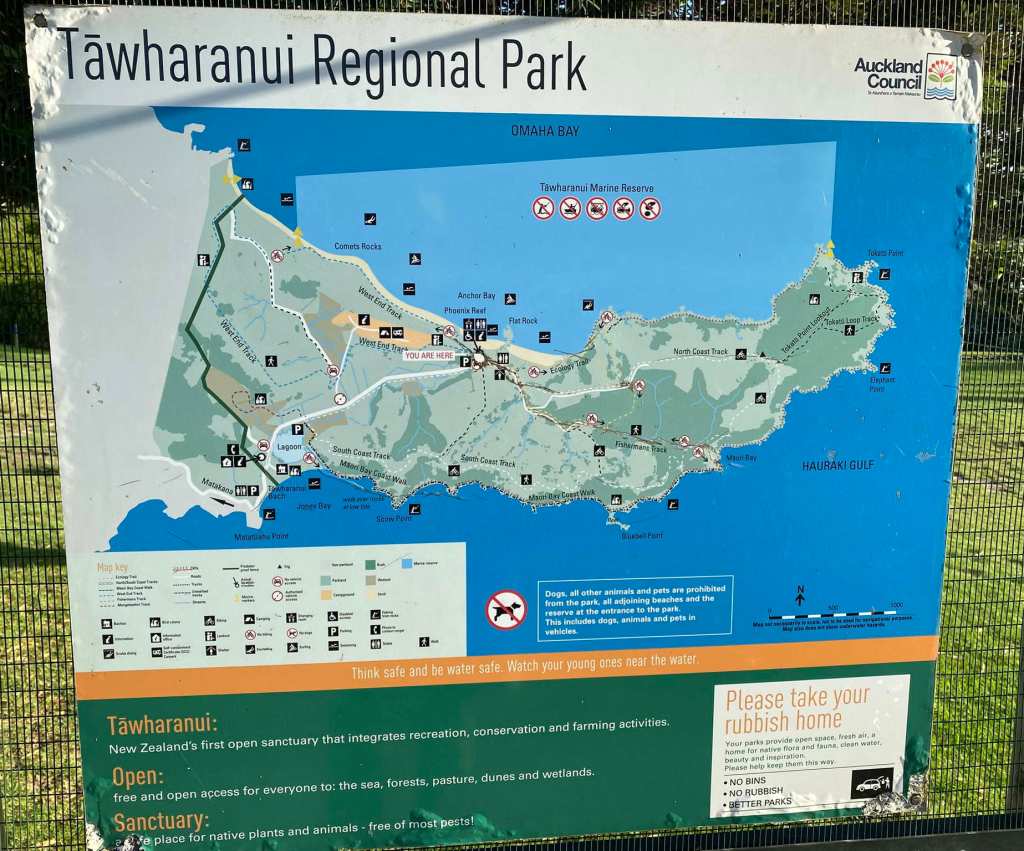
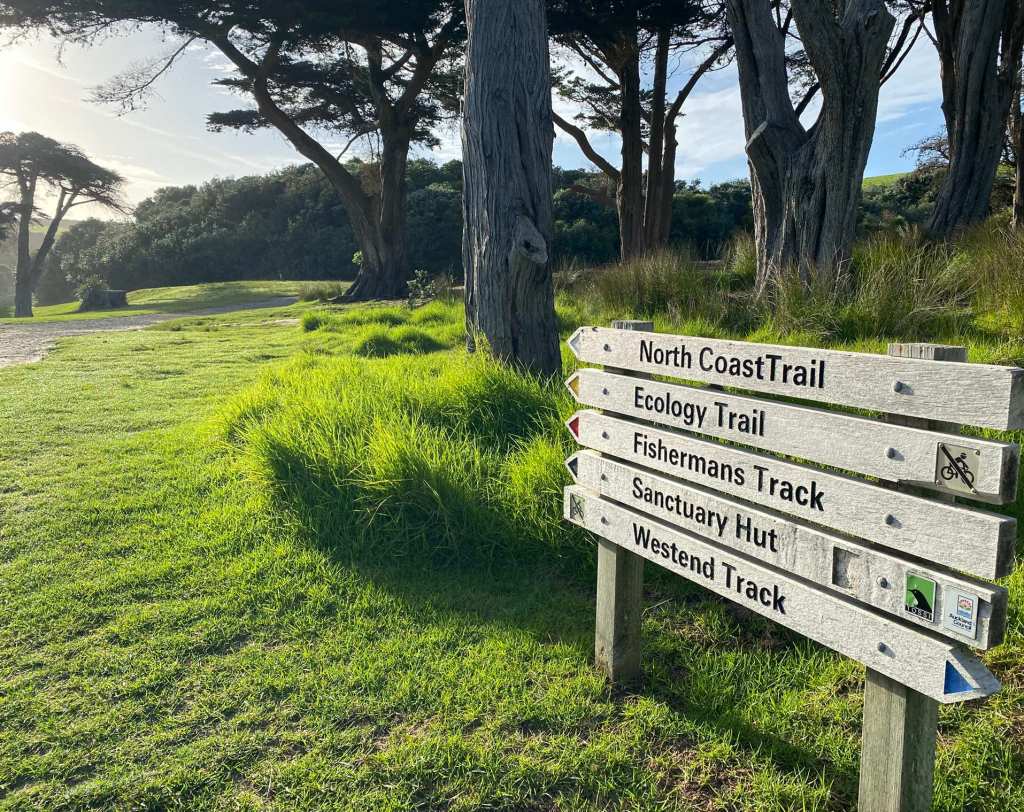
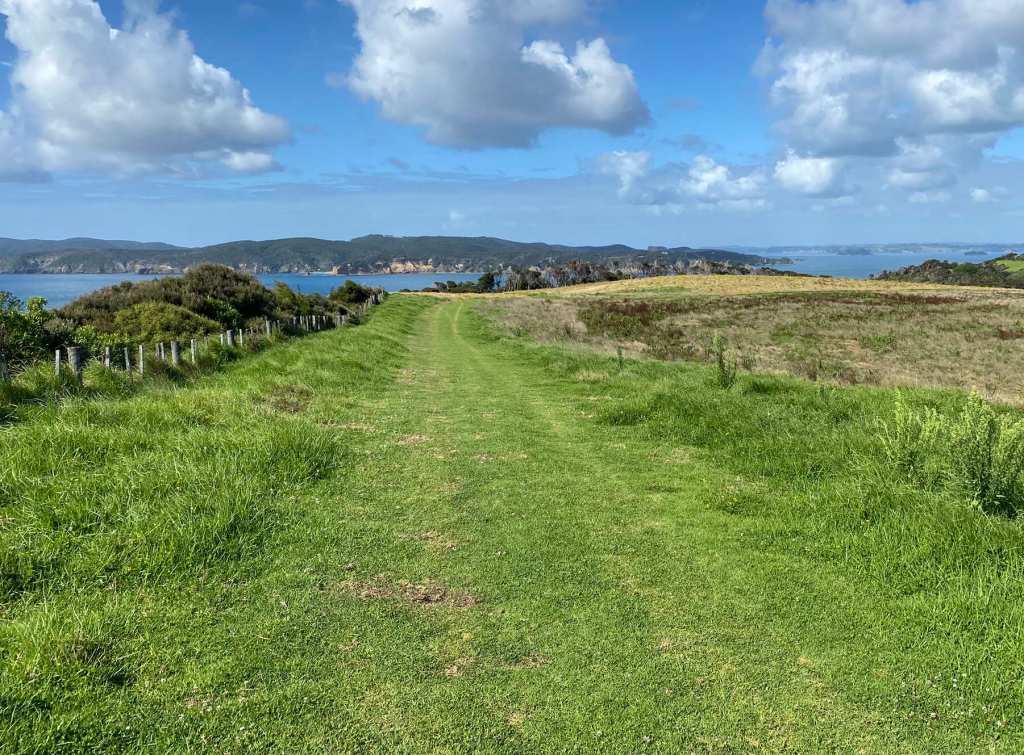
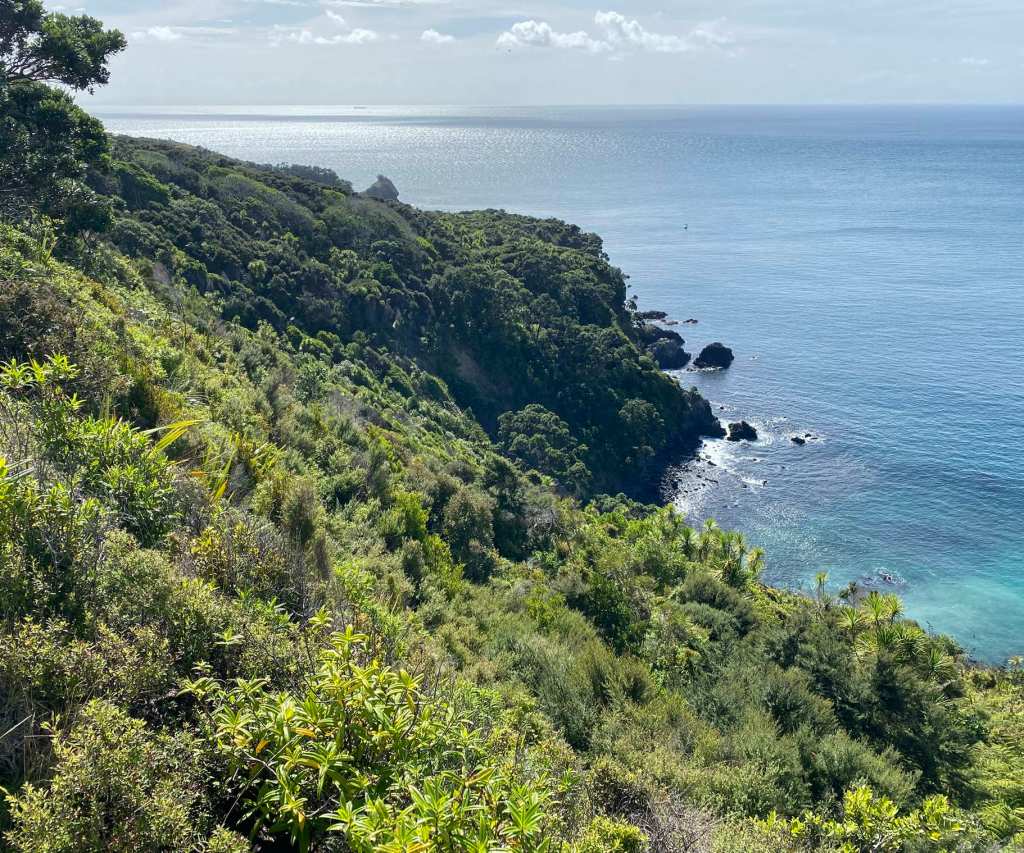
Tracks provide access to most of the reserve. The South Coast Track lets you explore the south part, while the Ecology Trail loop cuts into the biggest cluster of forest and also allows for a longer circuit by following Fisherman’s Track leading into the North Coast Track (the latter is what we did).
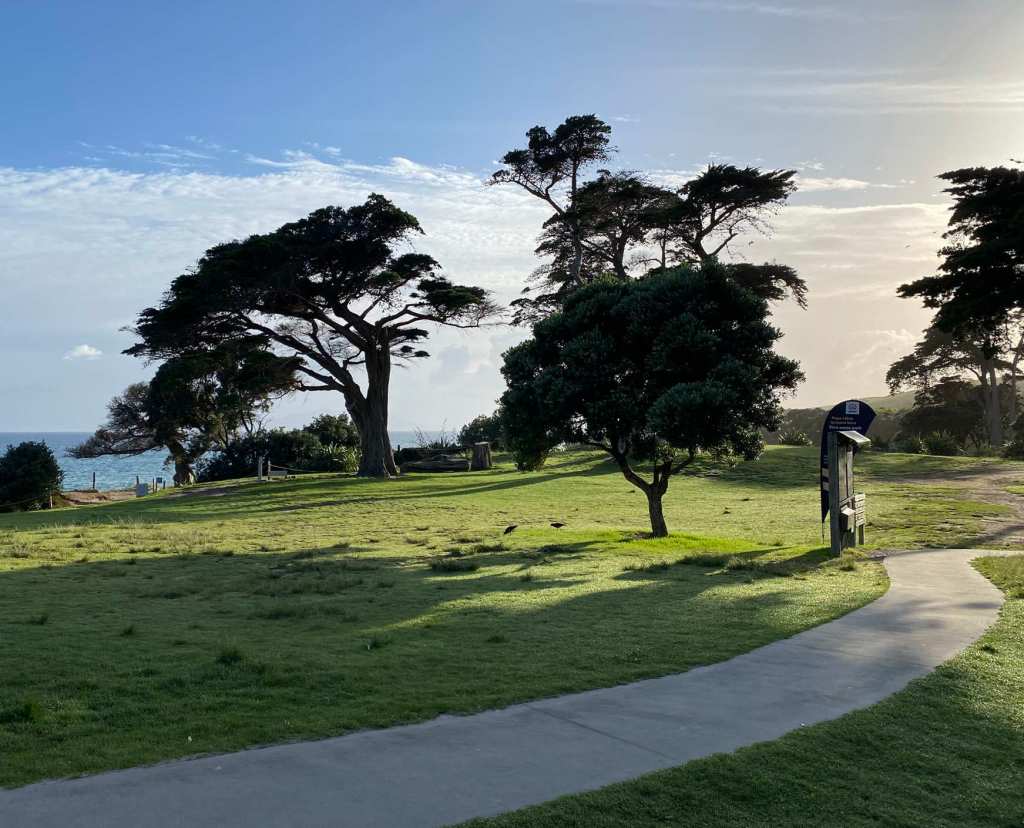
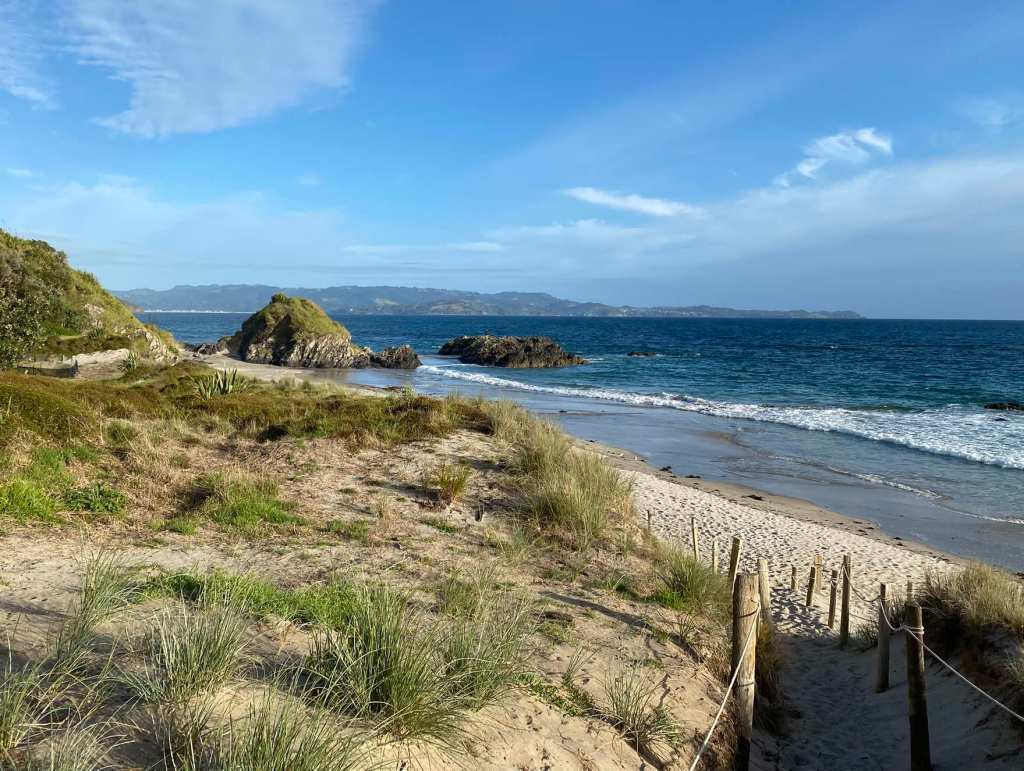
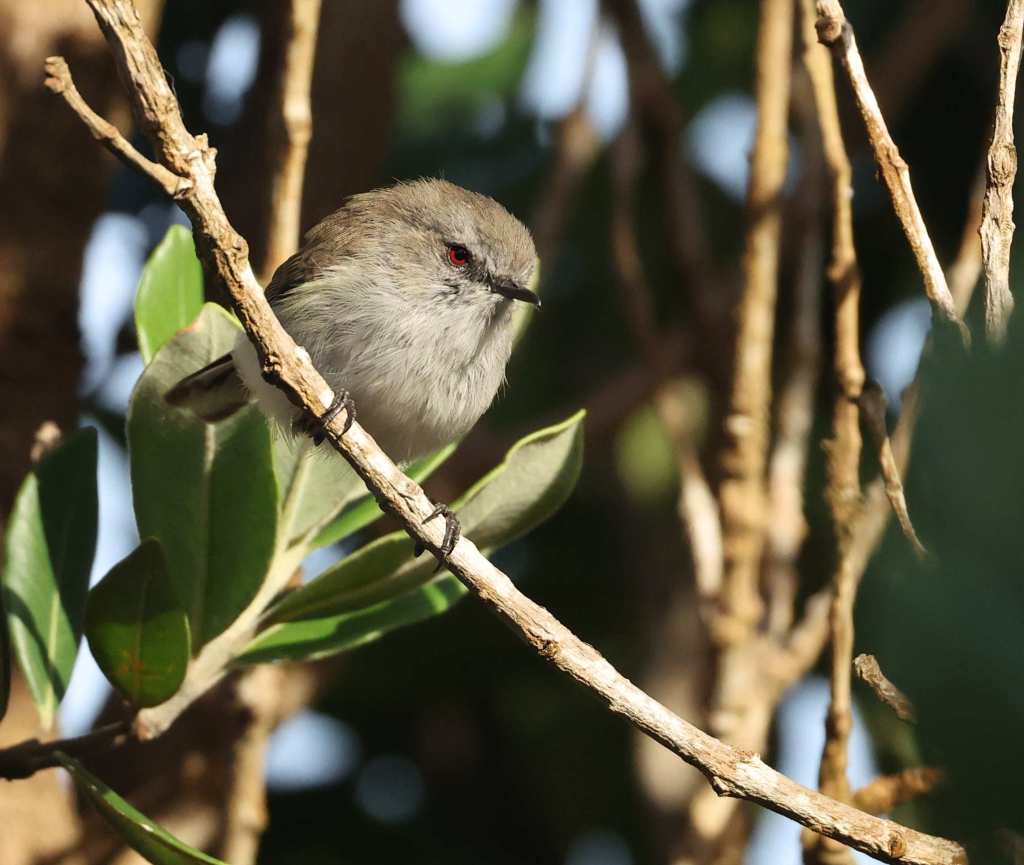
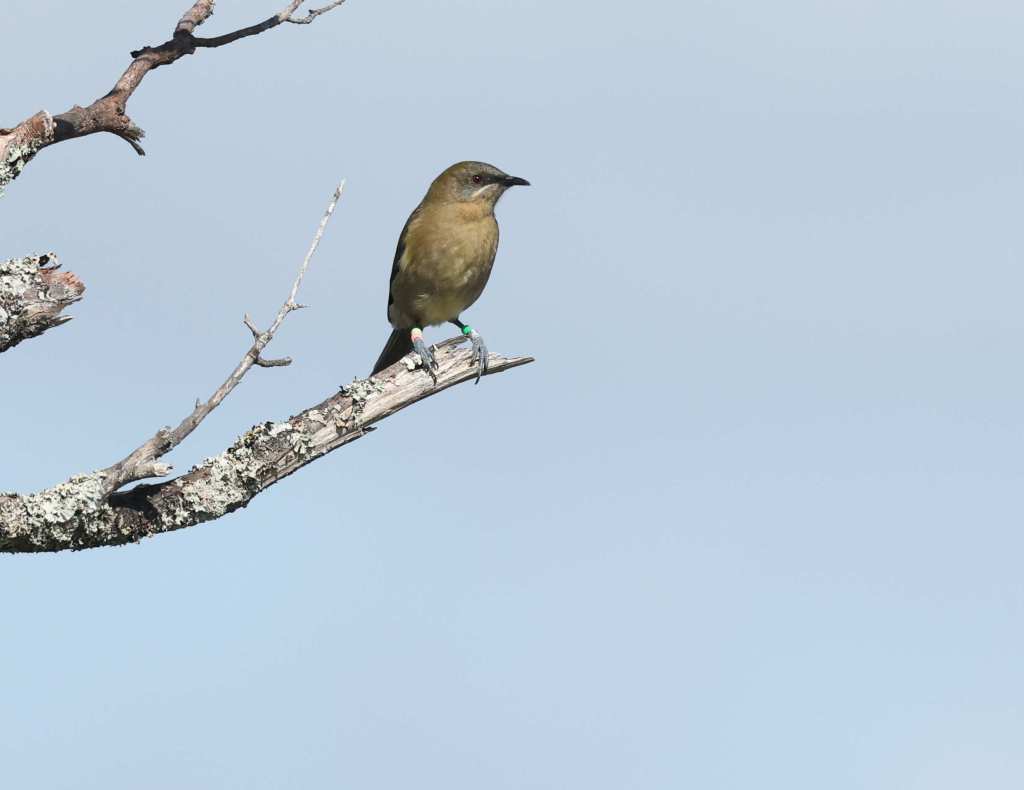
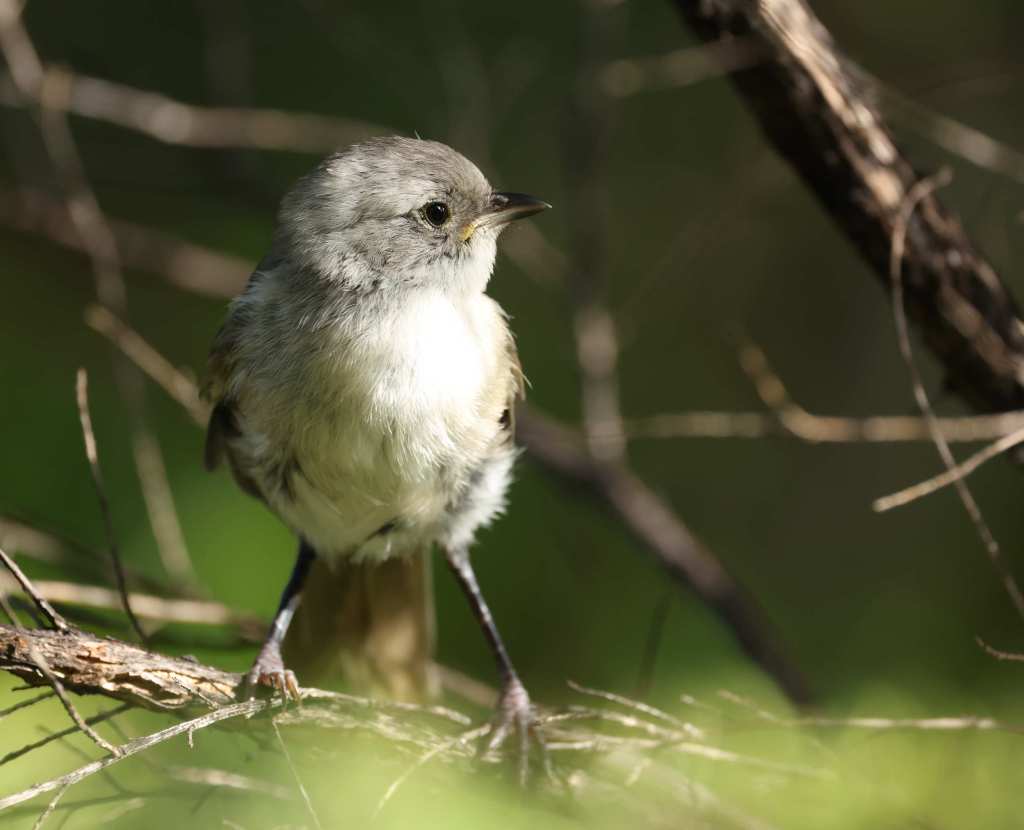
At the start of these tracks there is some beach access and a few rows of trees; in here we found a lovely little Grey Gerygone, also known as Grey Warbler. A New Zealand Bellbird was the first of many that would be seen (around 20, in fact).
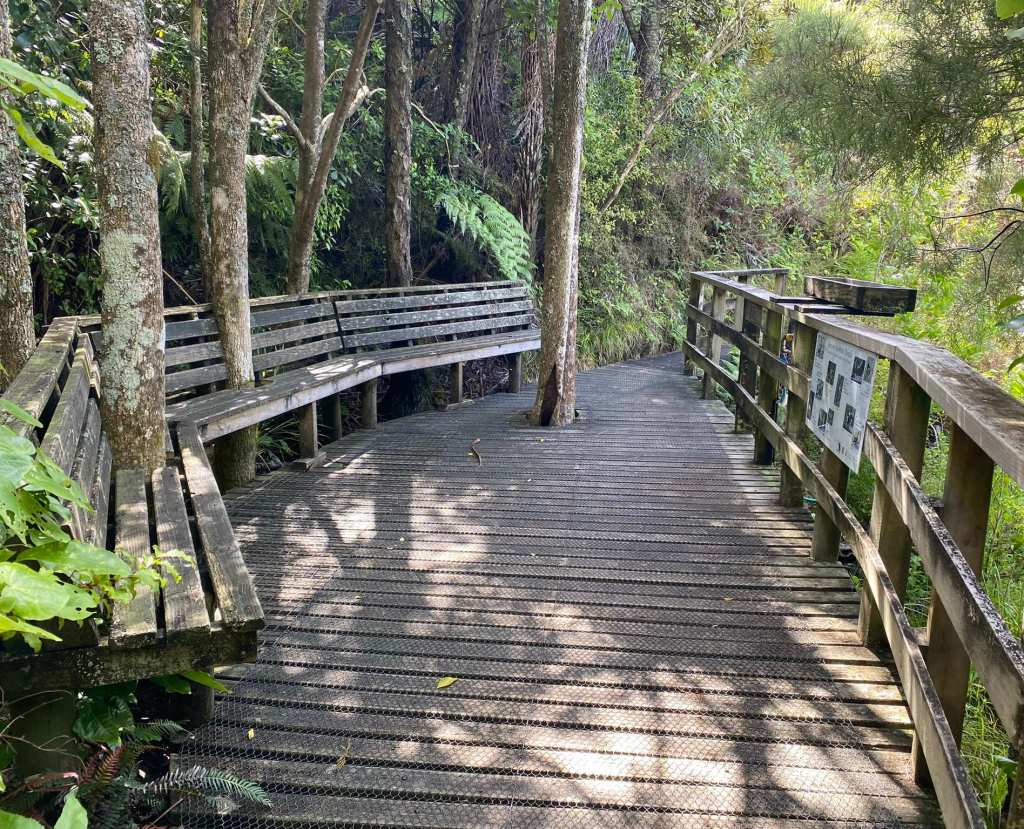
Signs are provided so it’s unlikely you’ll lose your way.
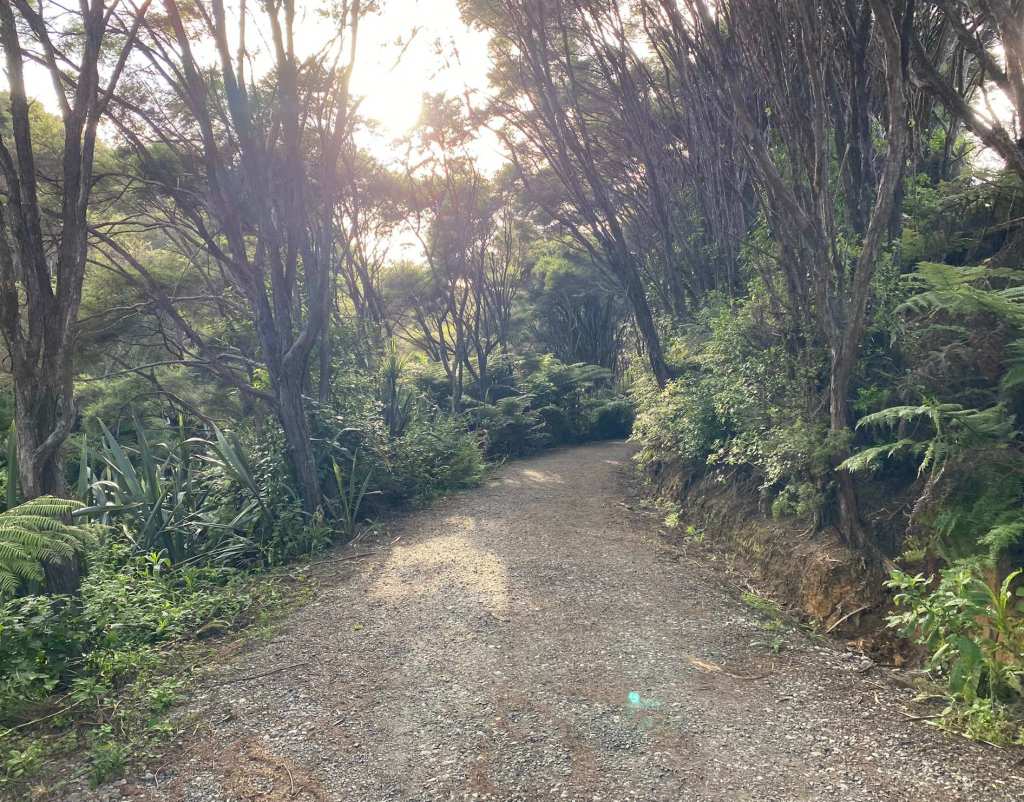
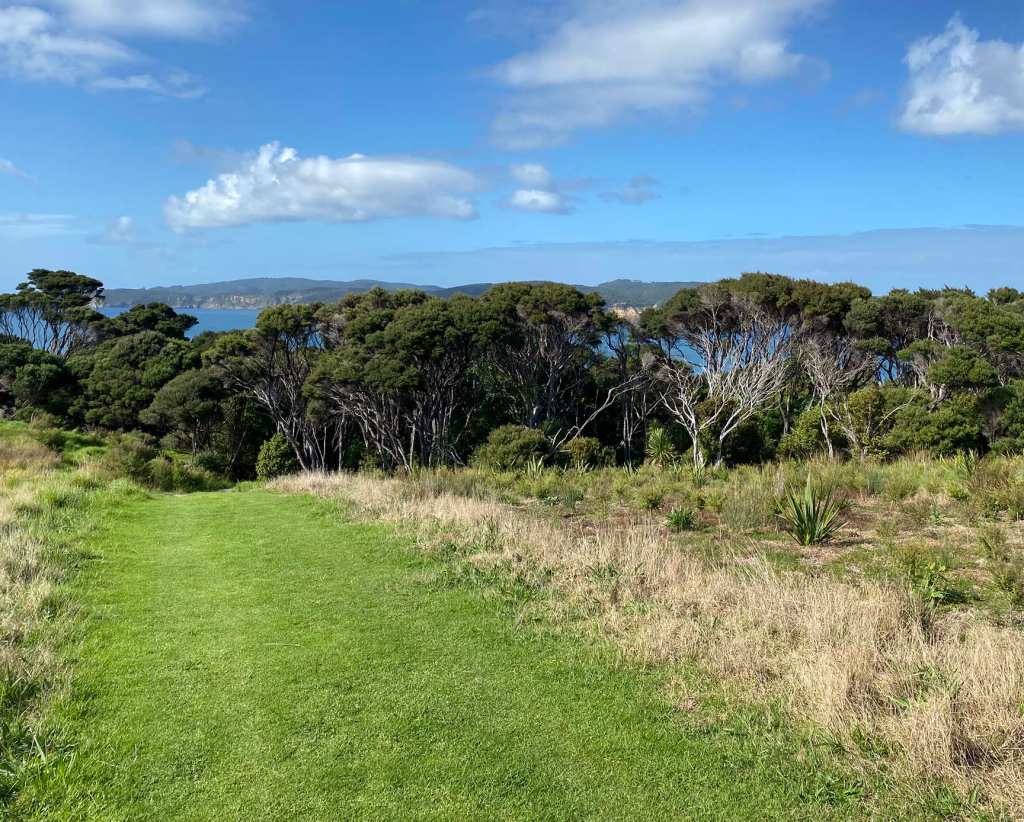
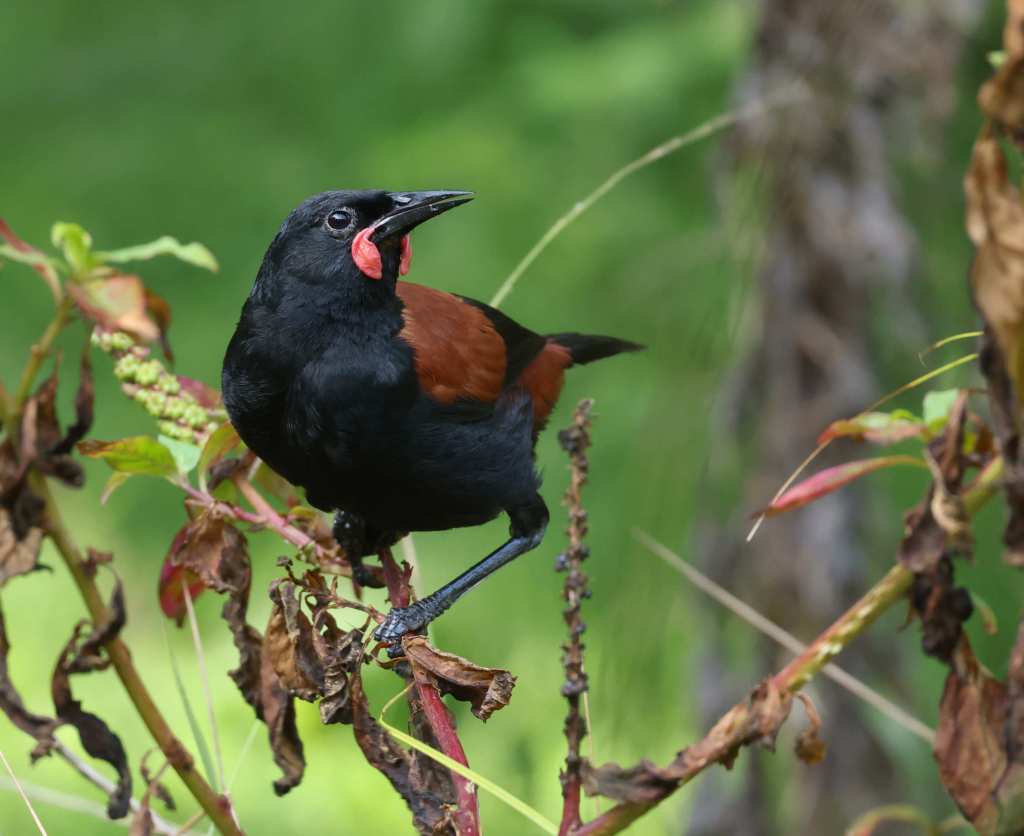
Deep into the Ecology Trail, birding can be challenging due to the low light. However, there are many good birds to be found, like Tui, New Zealand Bellbird, and the North Island Saddleback, with its little red wattles and penchant for sometimes foraging on or near the ground; these Saddlebacks are mostly only found in these sanctuaries and on offshore islands.
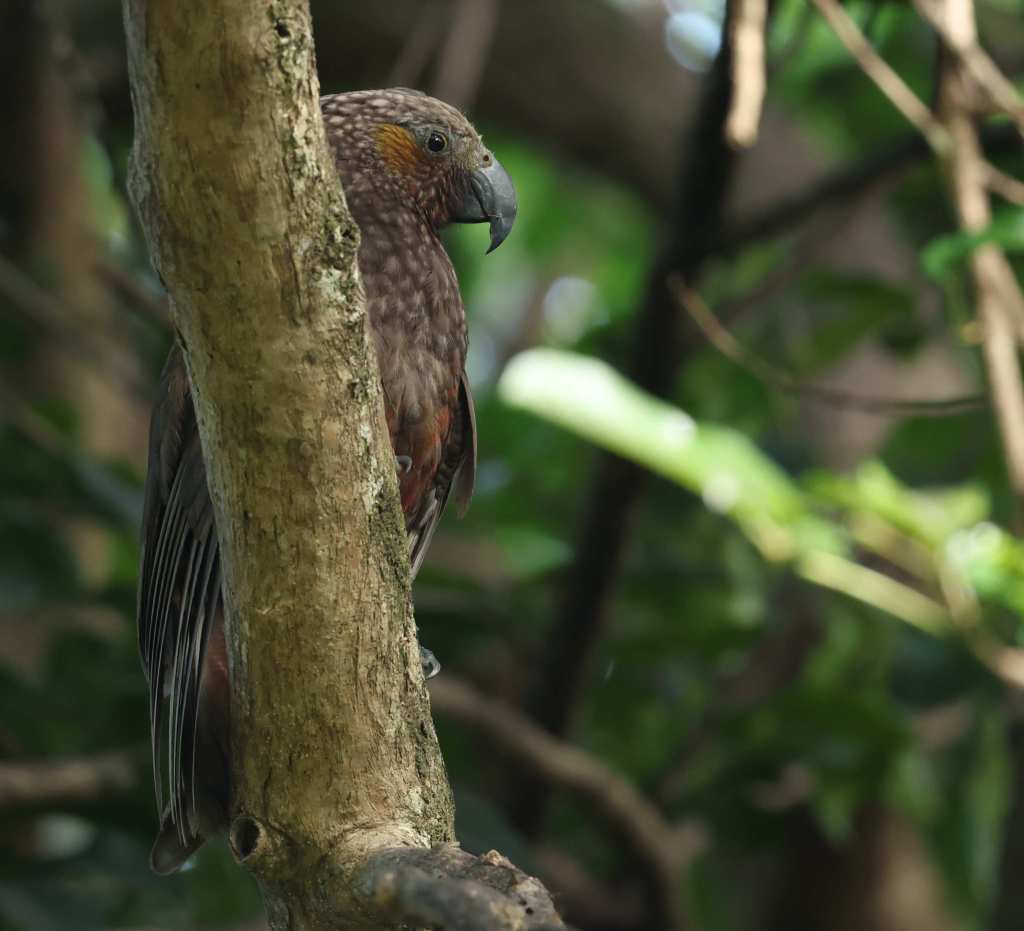
The impressive parrot Kaka was a very lucky find for us, staying perched pretty high up and not doing much, eventually deciding to fly off to who knows where. It was the only Kaka sighting we would have in our nine days in the Auckland region.
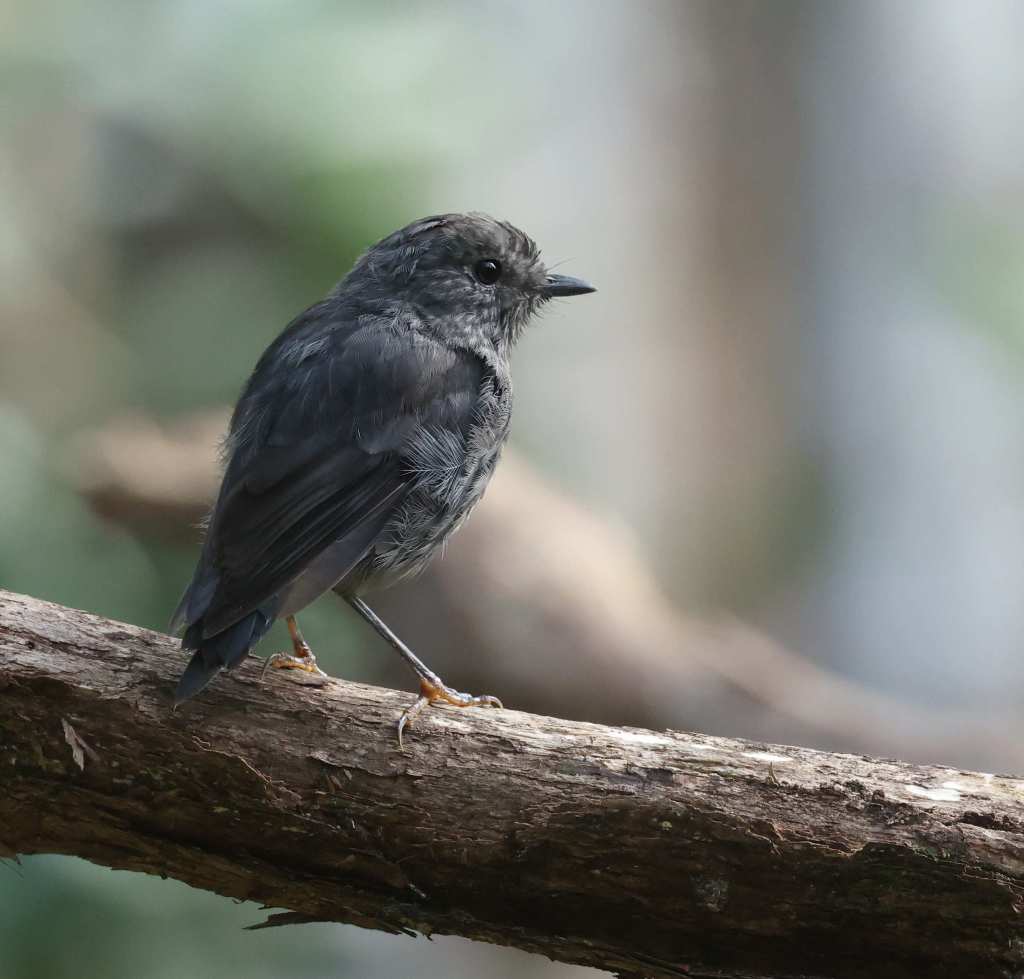
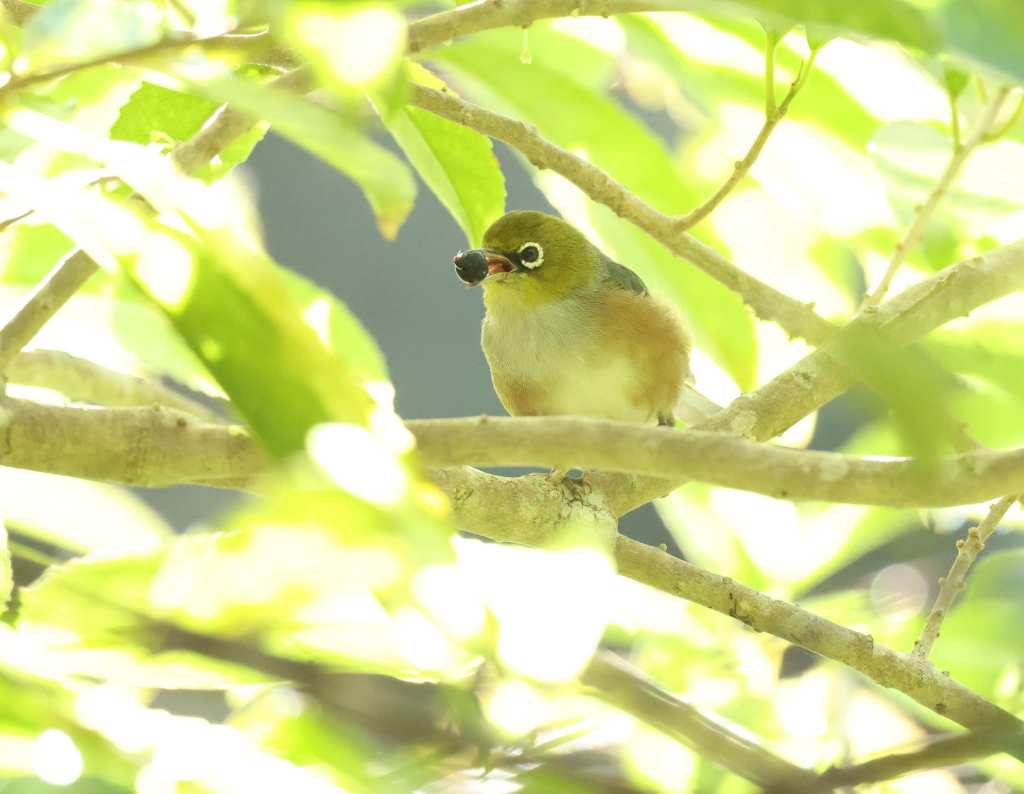
North Island Robins acted similarly to the robins of Australia: perching quietly in the lower canopy then dropping quickly down to nab a grub. Silvereyes, on the other hand, mostly stayed up high and seemed to be feeding on berries.
Little groups of Whiteheads foraged socially too, and we were lucky enough to see a juvenile bird very close-up, doing the “flick-the-wings-rapidly” thing when its parent approached with food for it.
Out of the forest, there were Swamp Harriers cruising about overhead, with European Skylark and European Goldfinches making an appearance. These two are some of New Zealand’s many introduced/non-native birds.
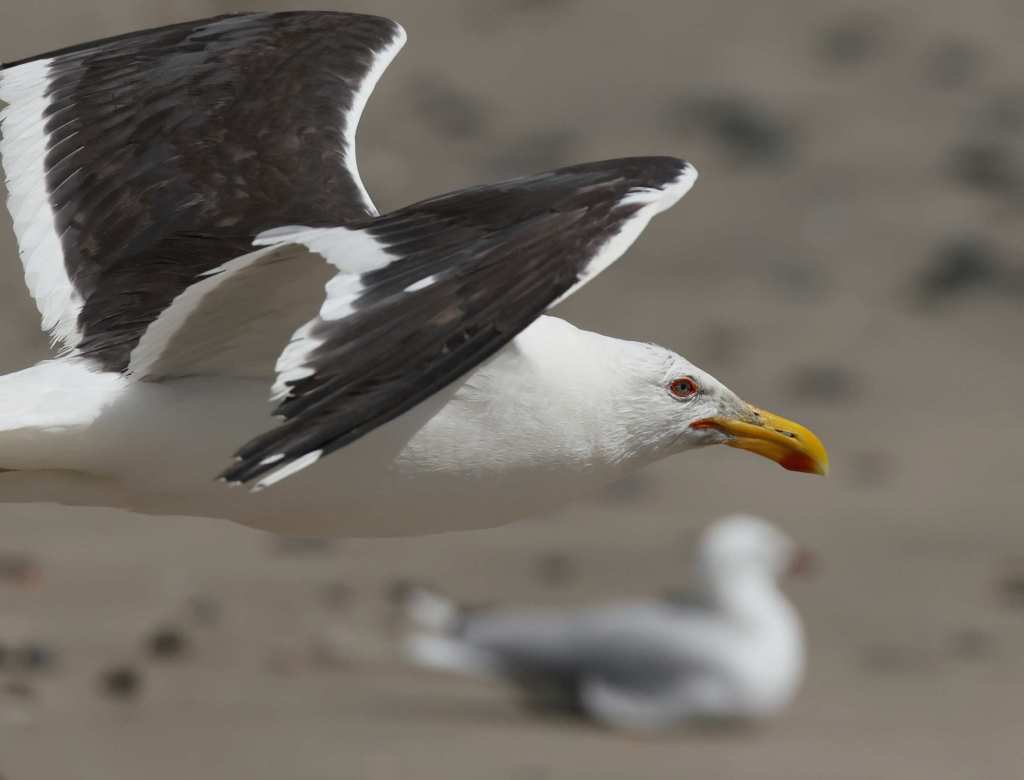
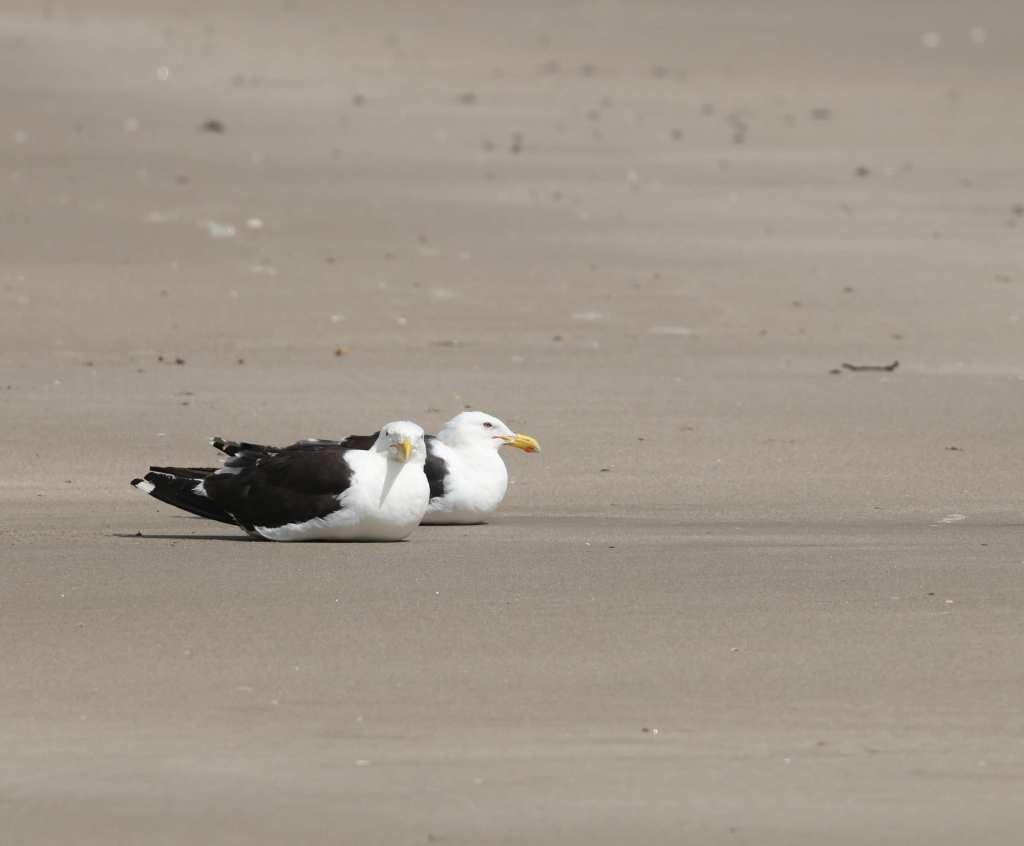
After finally coming back around to the beach area again, there were a few Kelp Gulls, and nearly 90 Silver Gulls.
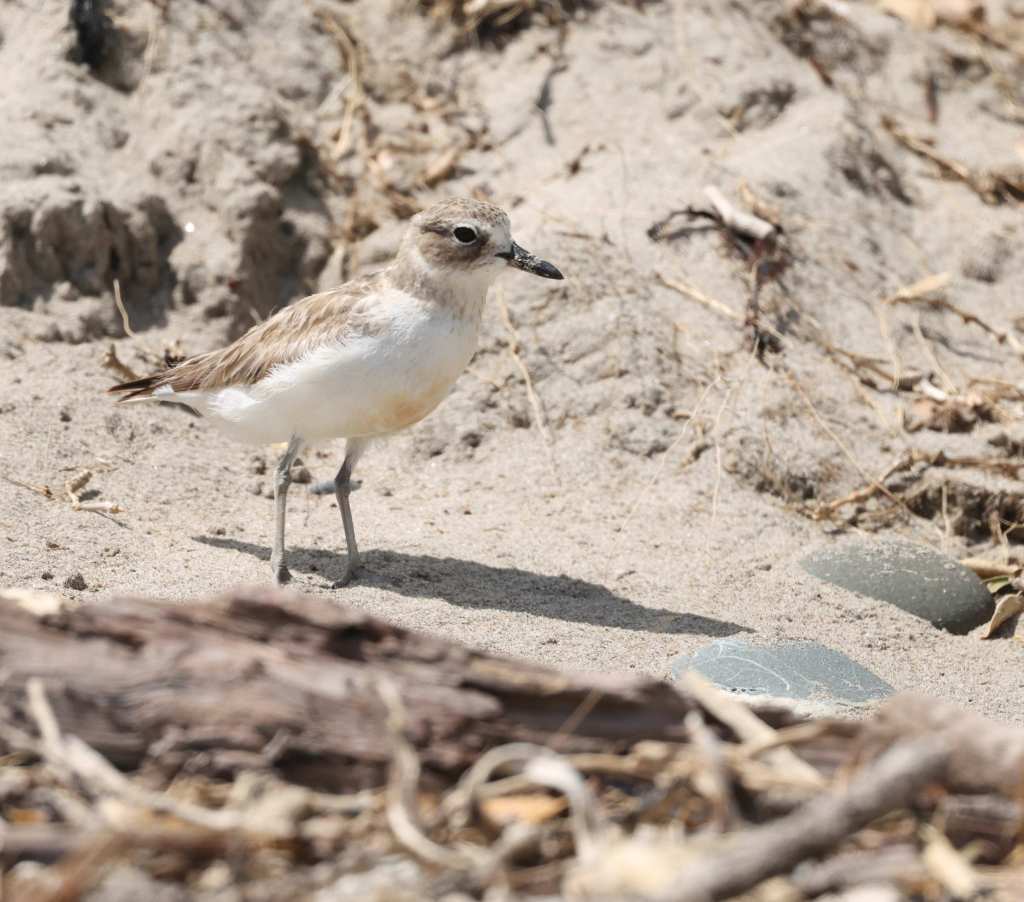
Red-Breasted Dotterel is a New Zealand endemic, with their population split between the North Island (a few thousand birds), while the southern subspecies (which mainly breed on Stewart Island) numbers only a few hundred birds.
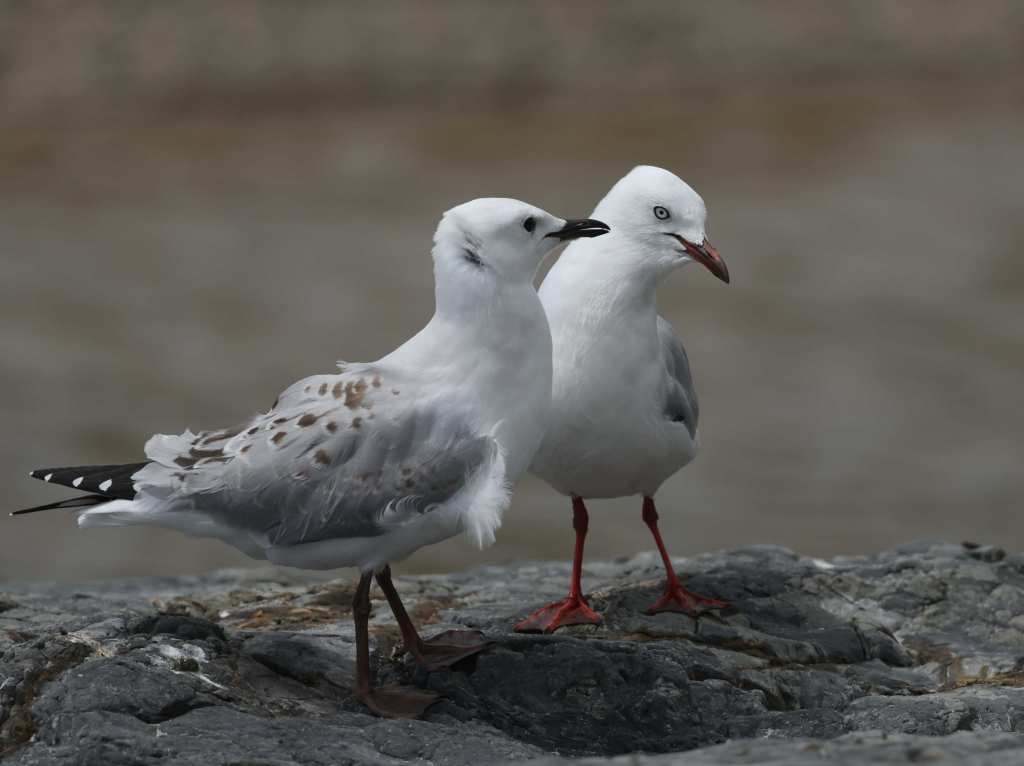
We checklisted 37 species for the four hours we were at Tawharanui Regional Park, with some noteworthy sightings and some very enjoyable walking.
Shakespear Regional Park
We were staying on the Whangaparāoa peninsula, so Shakespear Regional Park was our “local patch”. Like Tawharanui Regional Park, most of it is bordered by predator-proof fencing, creating an open sanctuary. Entry is straightforward with three main car parking areas; the parking near the gate is probably best for the thicker forest entry while the other two are better for the beaches to the south and the “Okoromai Bay Salt Marsh” section (see later).
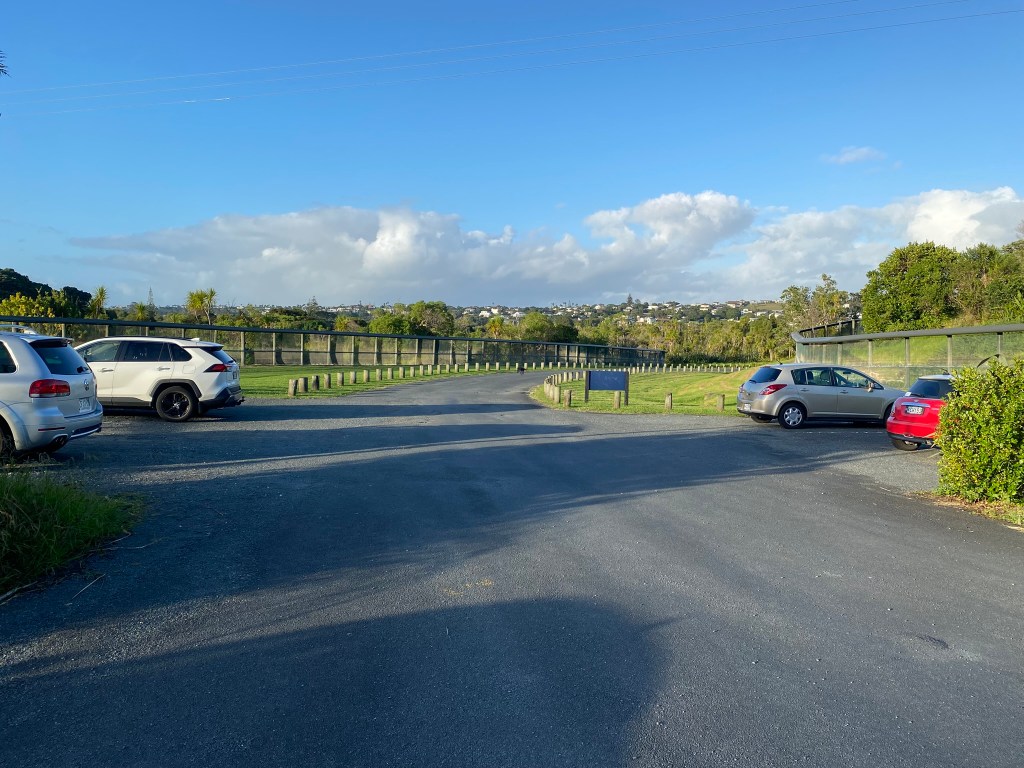
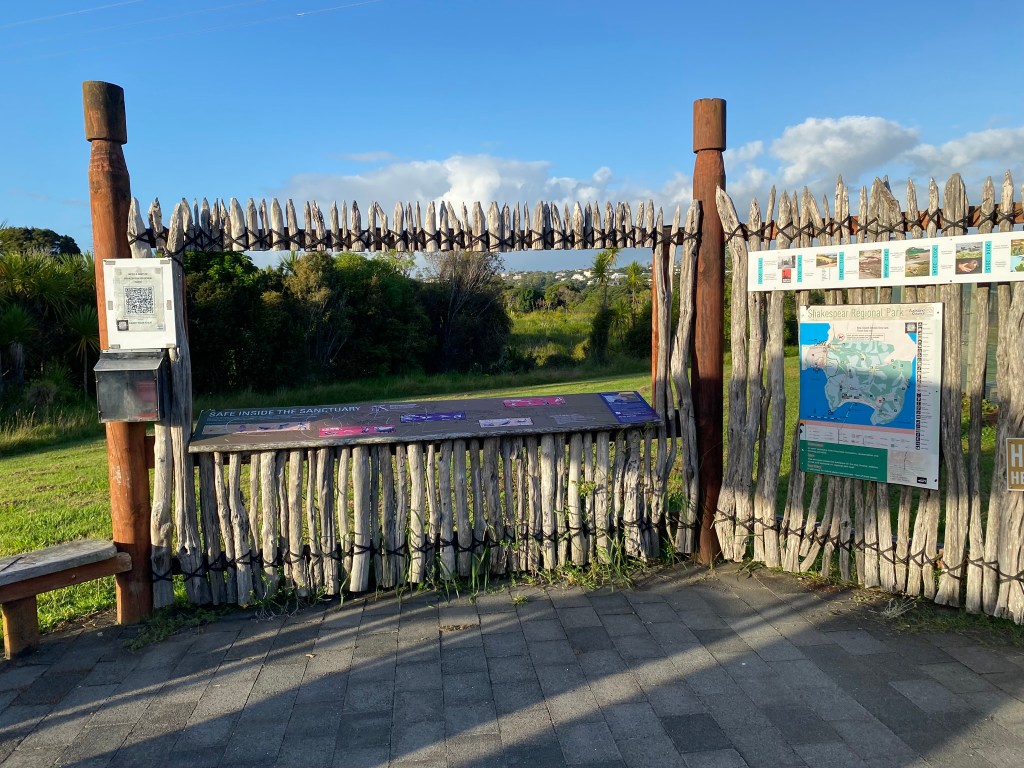
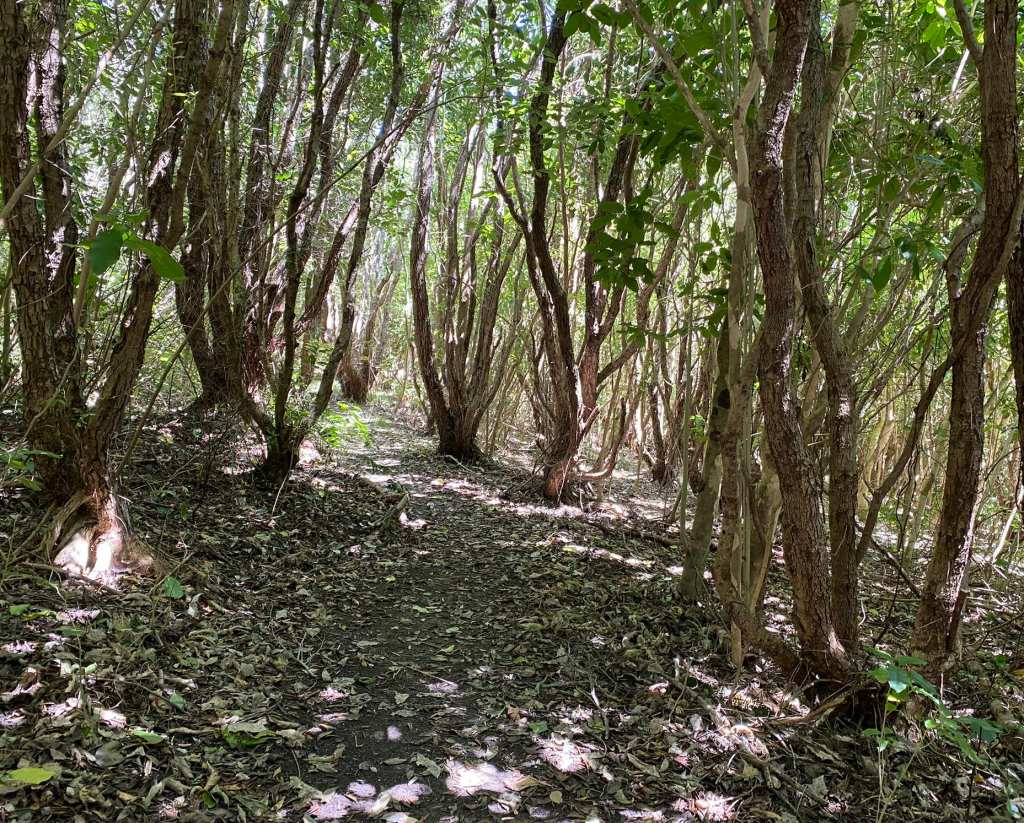
The tracks accessible from here include the Heritage Trail and its connecting path the Kanuka Track, which can get pretty tangly and dense (in a picturesque way) and provide opportunity for some interesting birding.
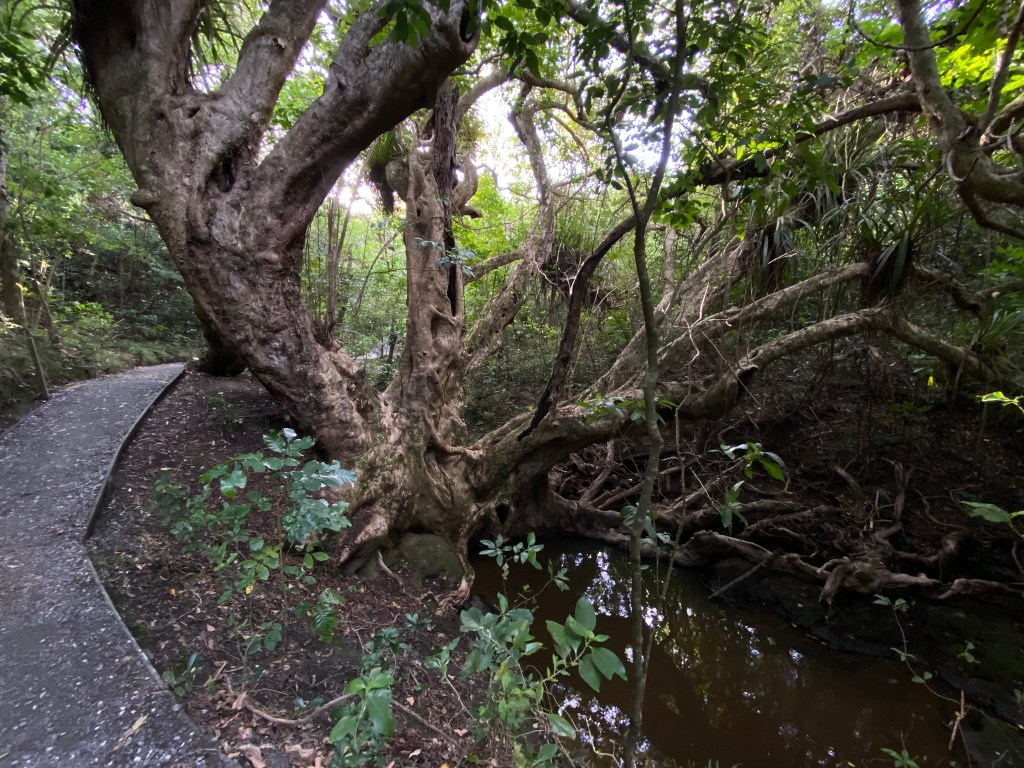
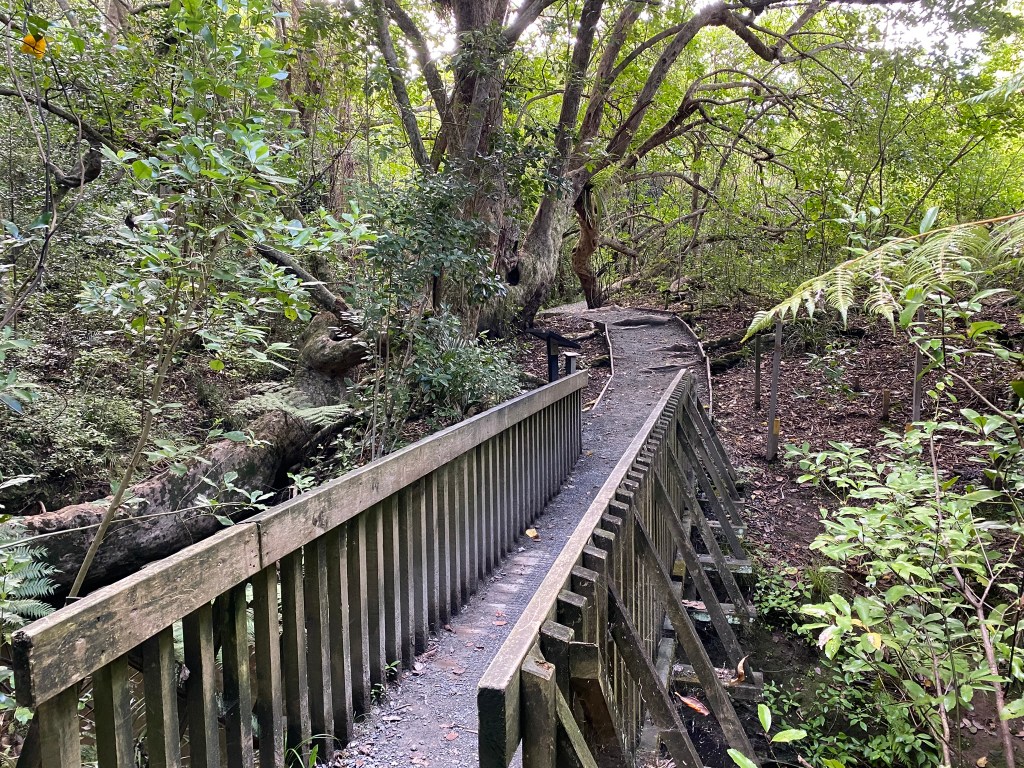
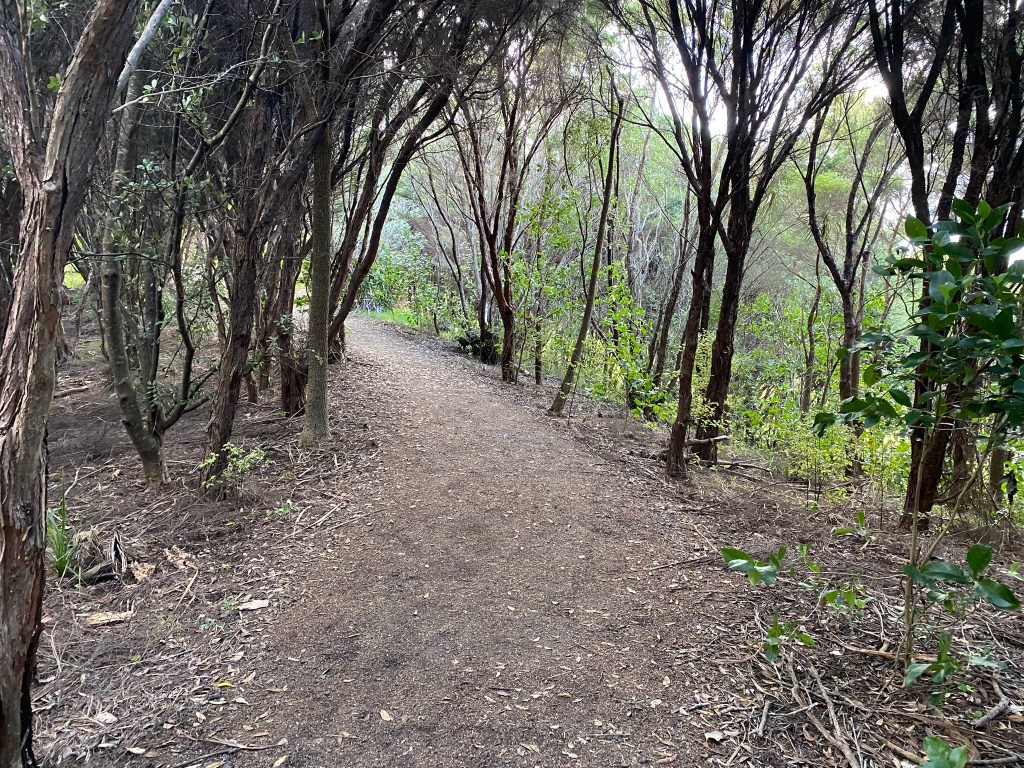
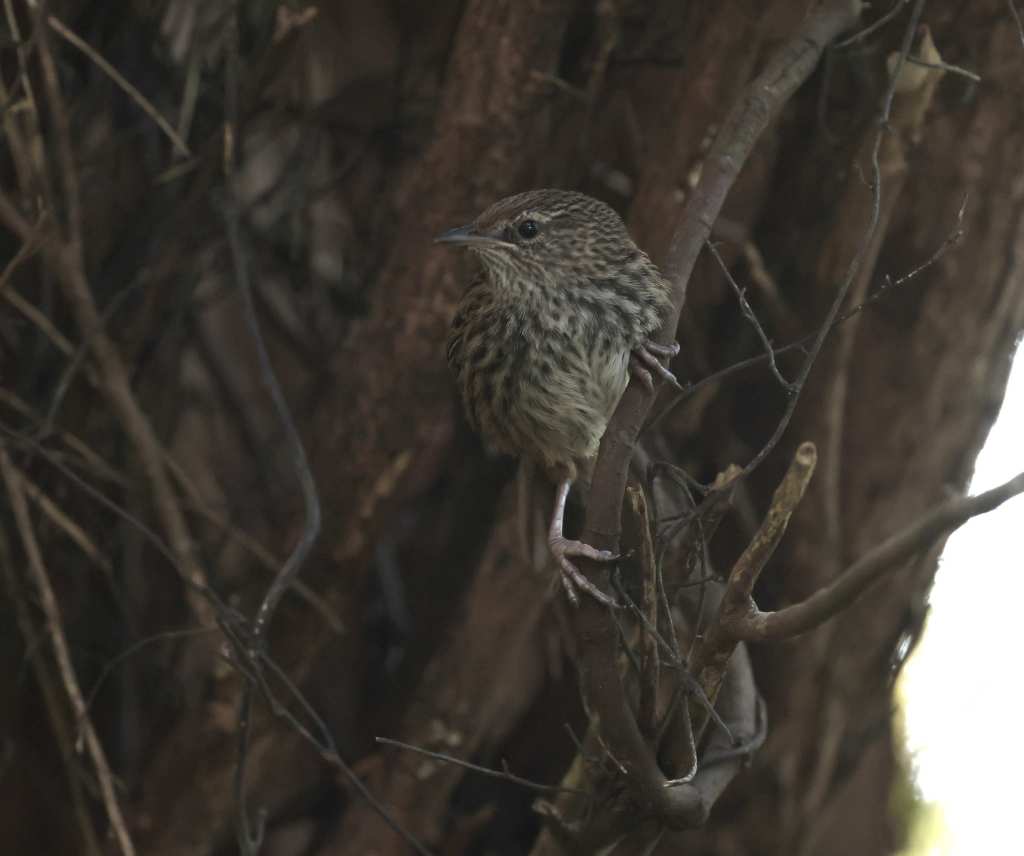
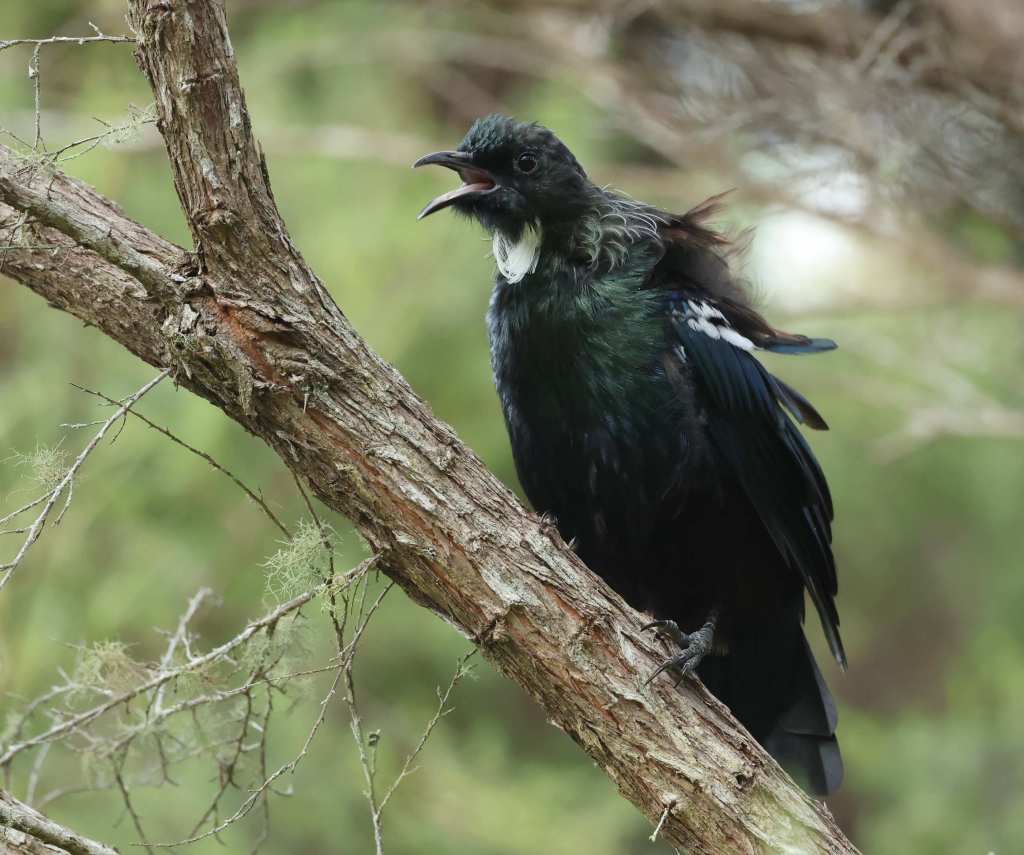
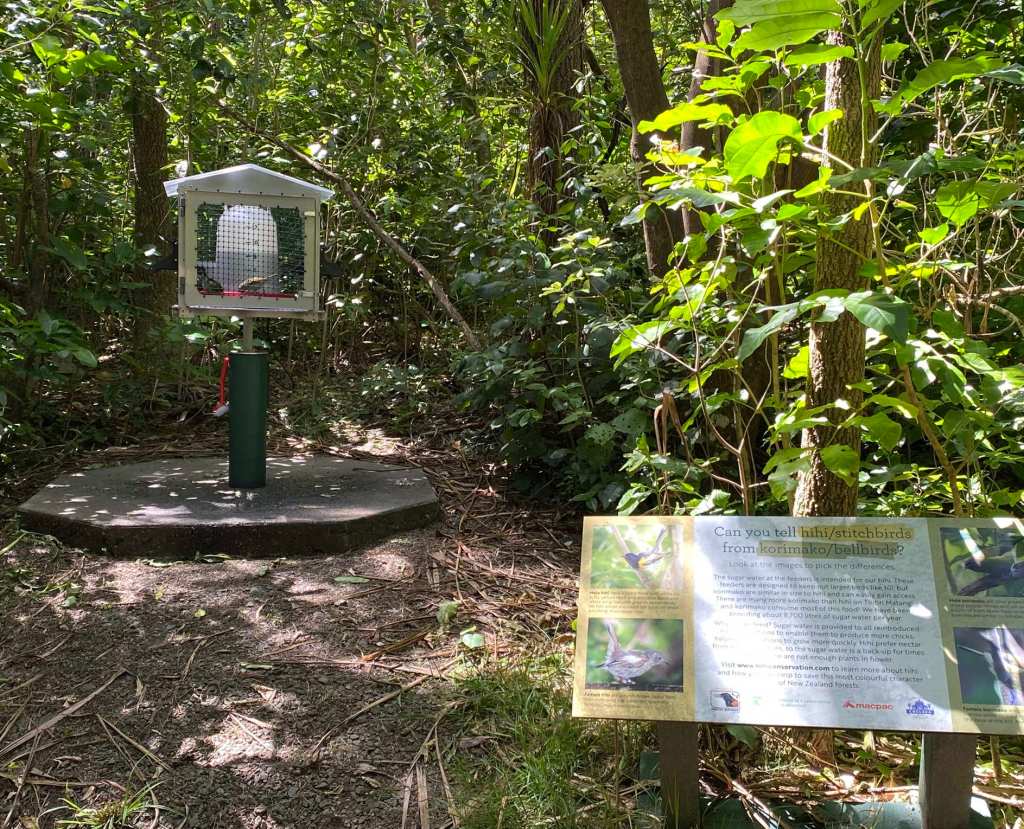
Here there were quite a few Tuis, and the occasional Bellbird, competing for the title of “most vocal songbird”. There are some feeder stations deep in the forest for Stitchbirds, which have been introduced to try to establish a breeding population. North Island Robins are here and not too hard to find as they like foraging near the paths. In the thickest brush we (eventually) saw a Fernbird, after being alerted by its call. This was our only sighting of that bird and I feel we were lucky to see this skulker at all.
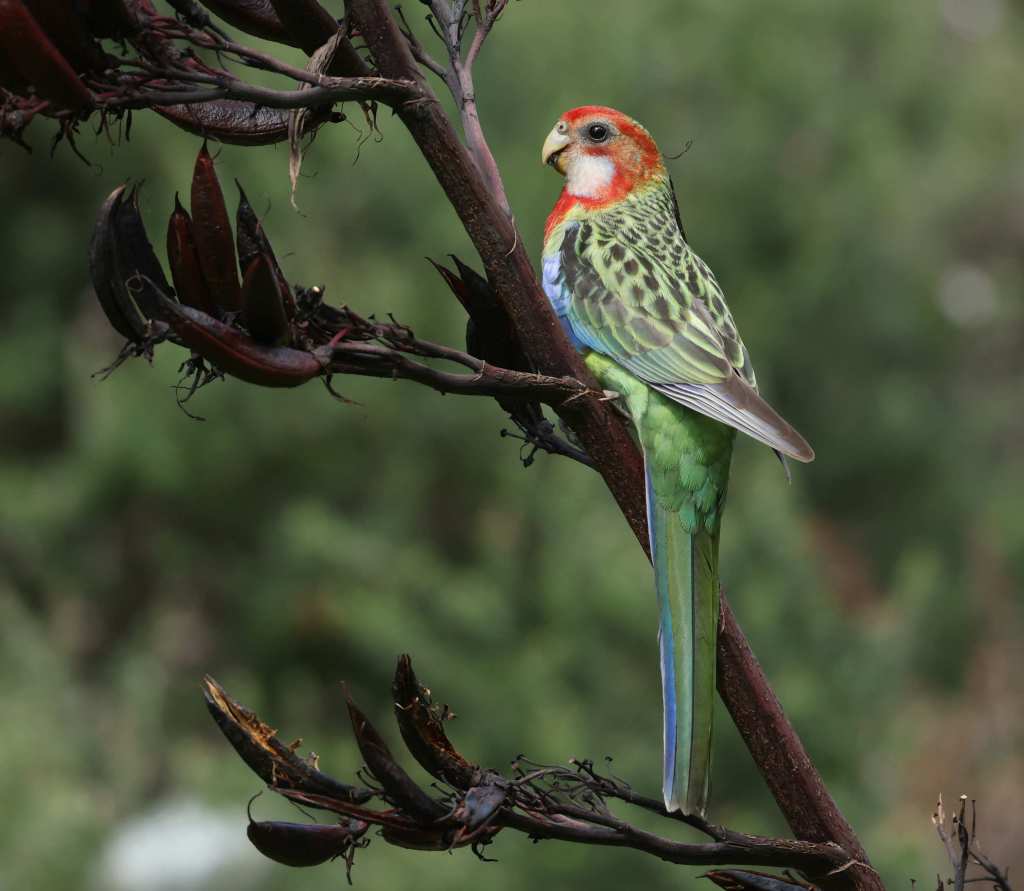
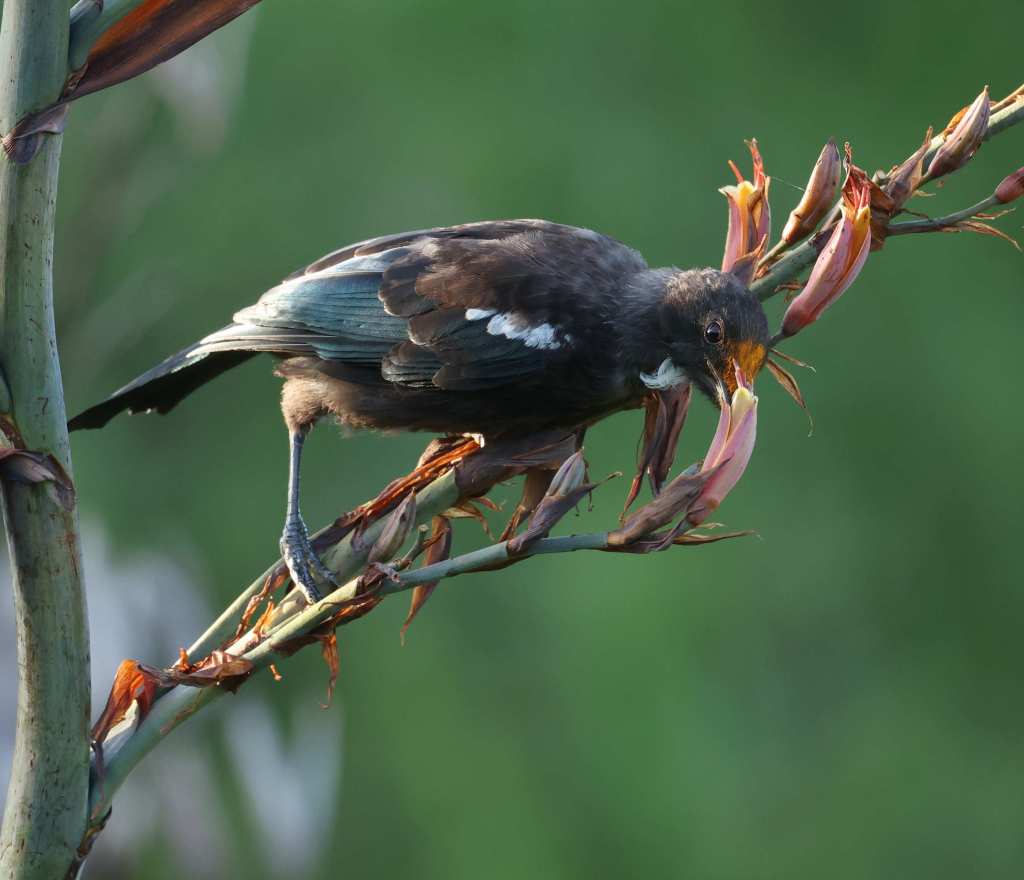
In the “semi-open” areas, especially where there is New Zealand flax plants, look for Eastern Rosella (and Tuis too).
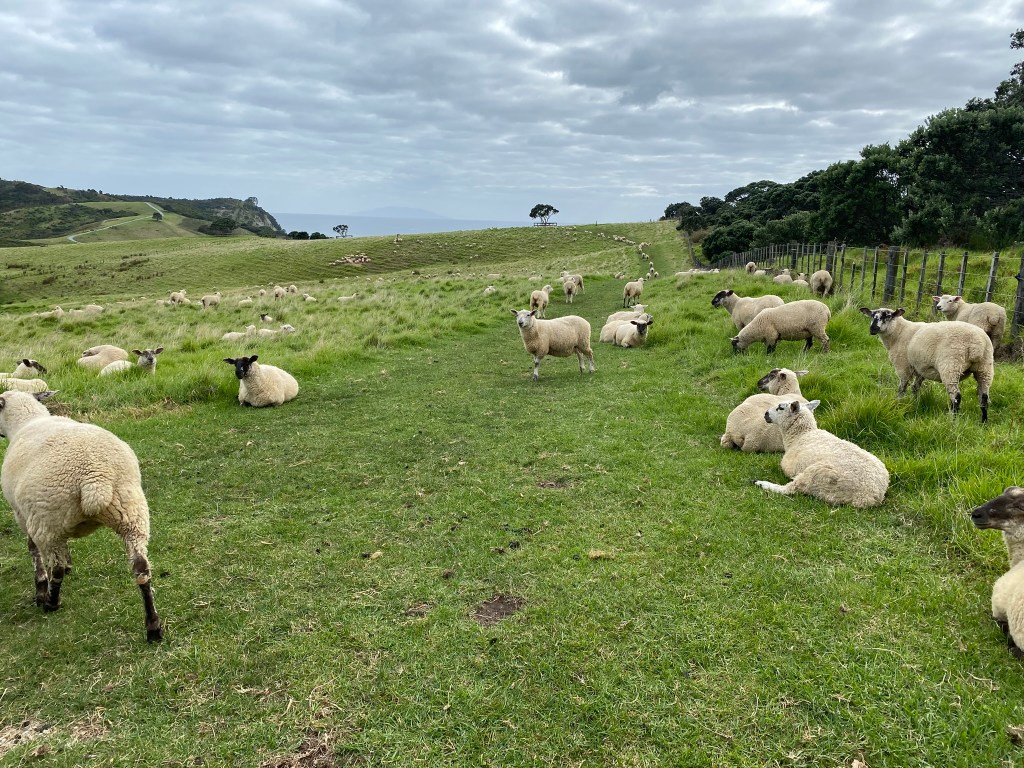
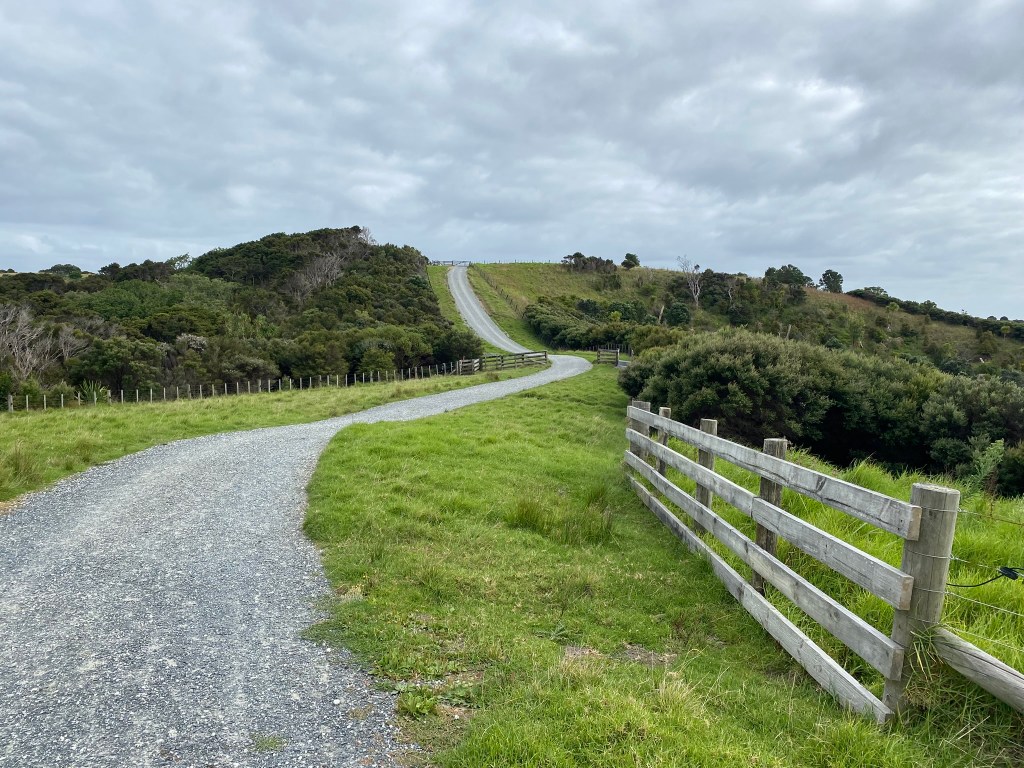
There are lots of wide-open tracks which had us dodging sheep poo left, right and centre, but which did offer some lovely coastal scenery.
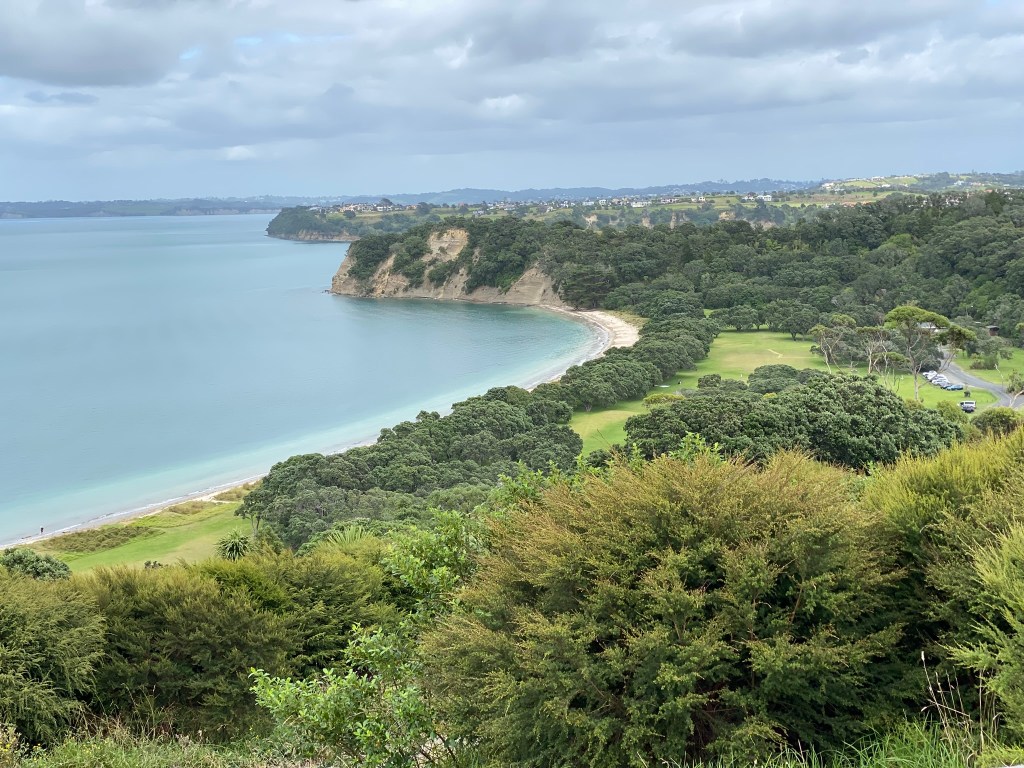
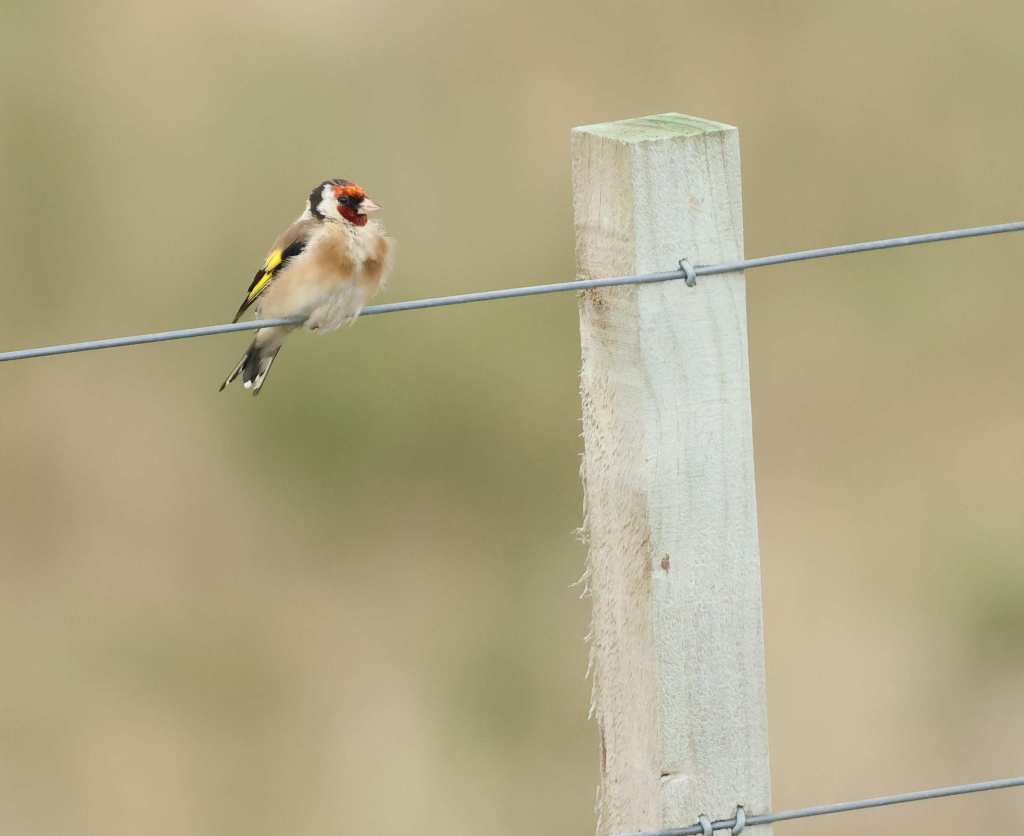
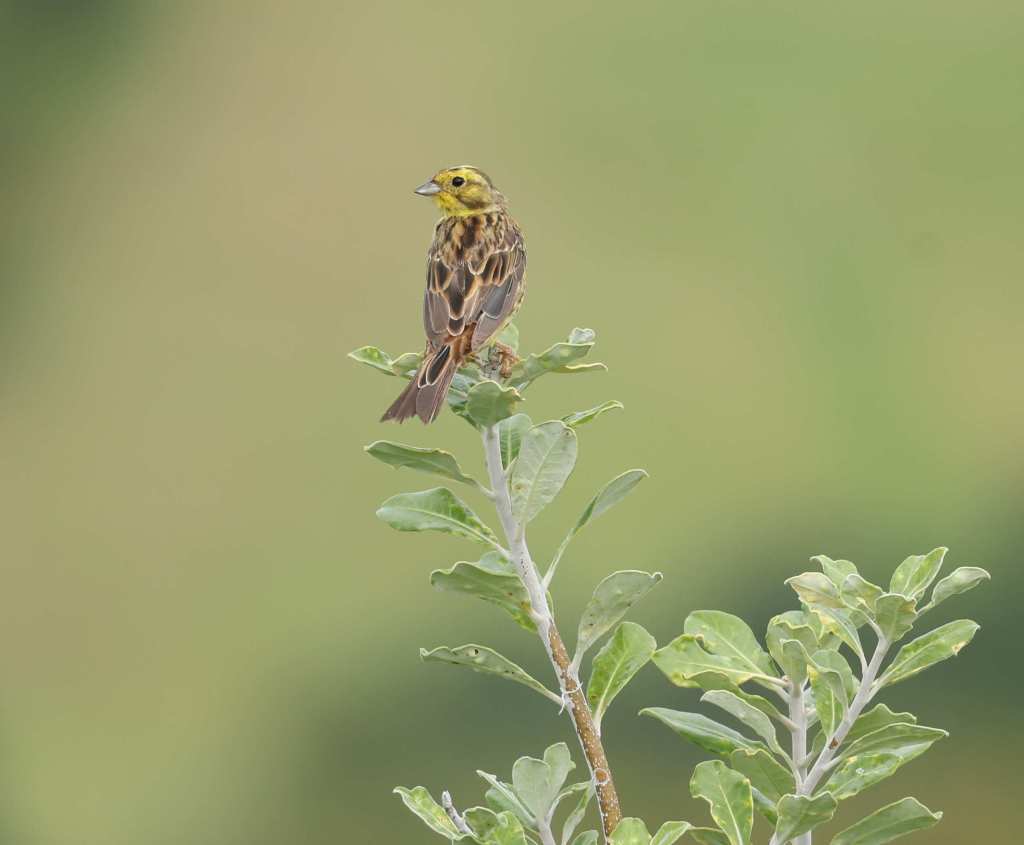
Here there was an abundance of Swamphens, but also smatterings of other birds: Masked Lapwings, Welcome Swallows, and non-natives California Quail, Common Starling, Common Chaffinch, European Goldfinch and Yellowhammer.
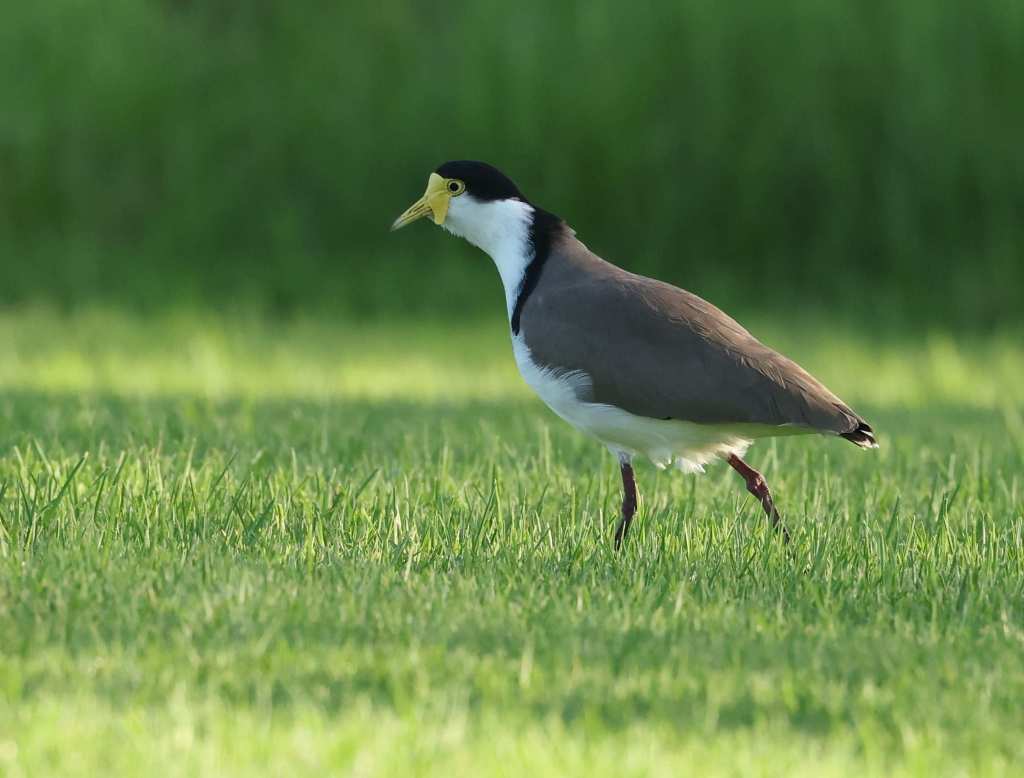
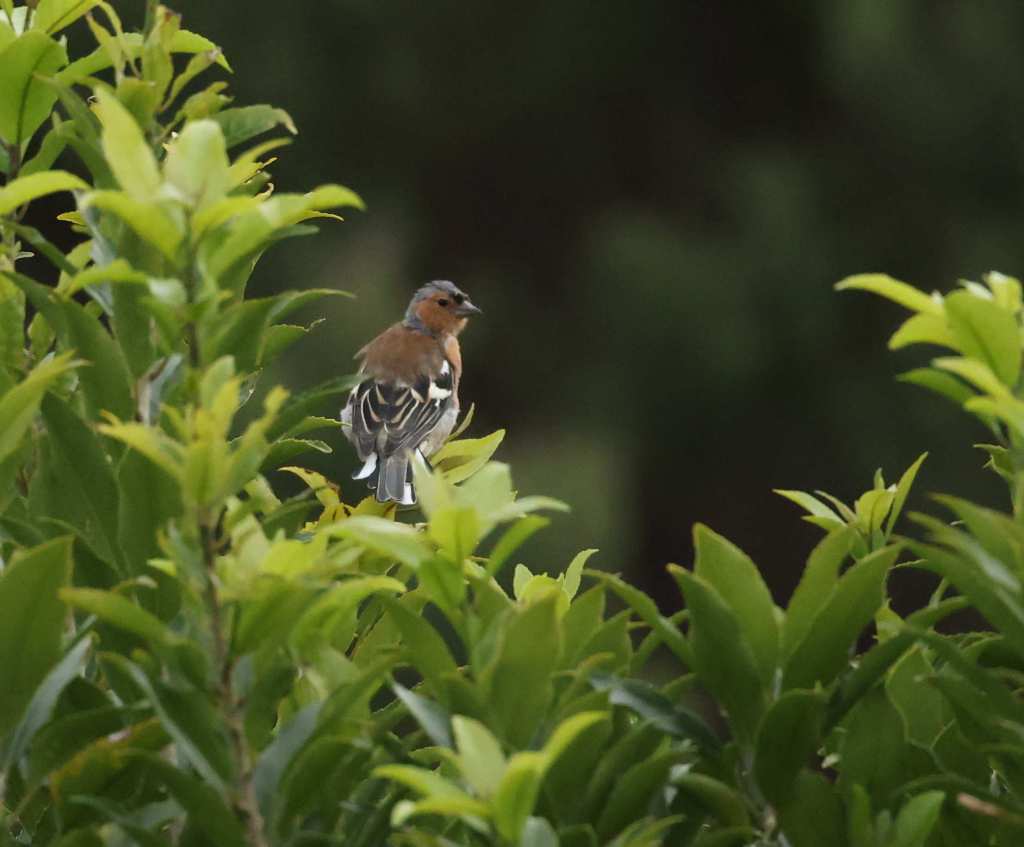
In fact, there are lots of introduced birds here, as there are across New Zealand: for example, in one of our checklists that had 21 species, 10 of them were classed as non-native in eBird.
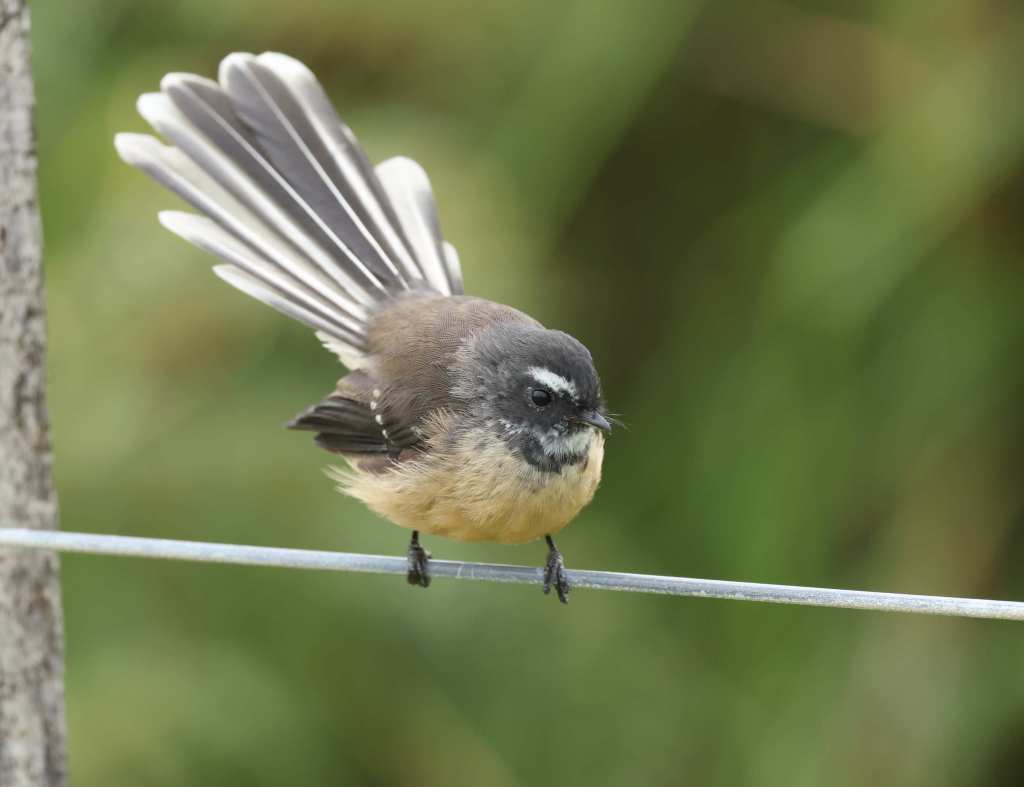
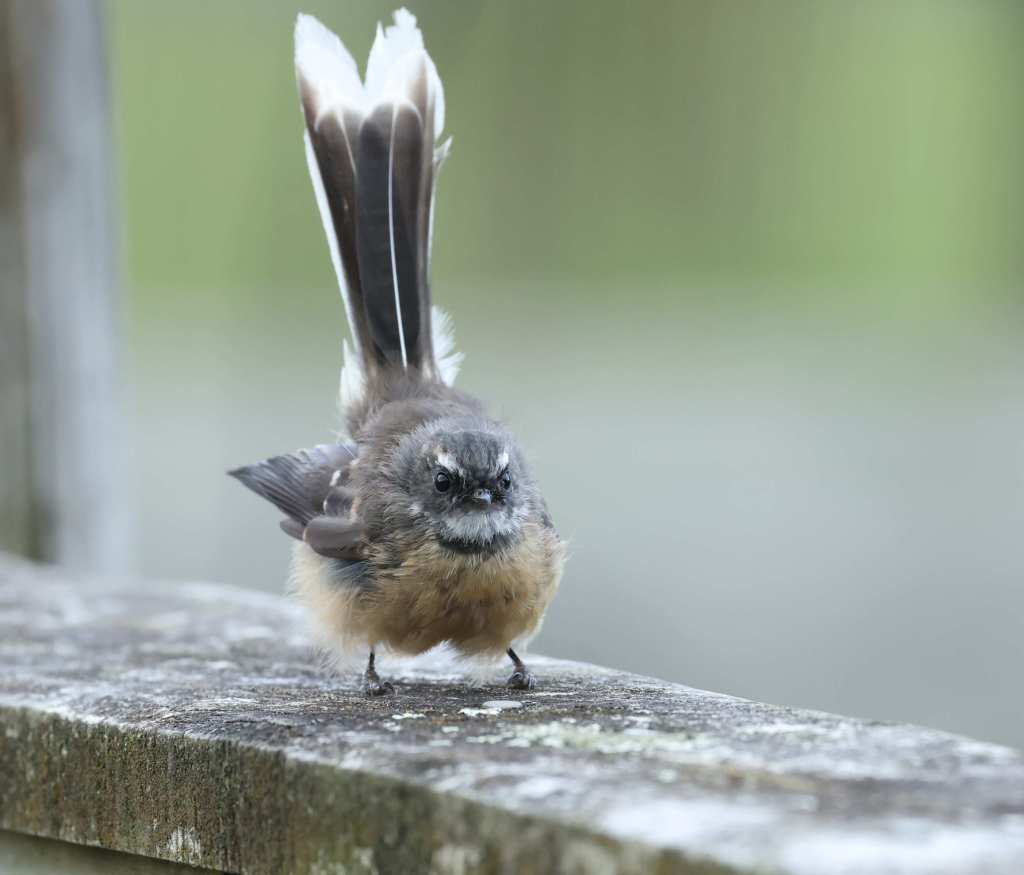
Both inside the forested areas and outside (particularly on fences and gates), is the endearing and confiding New Zealand Fantail.
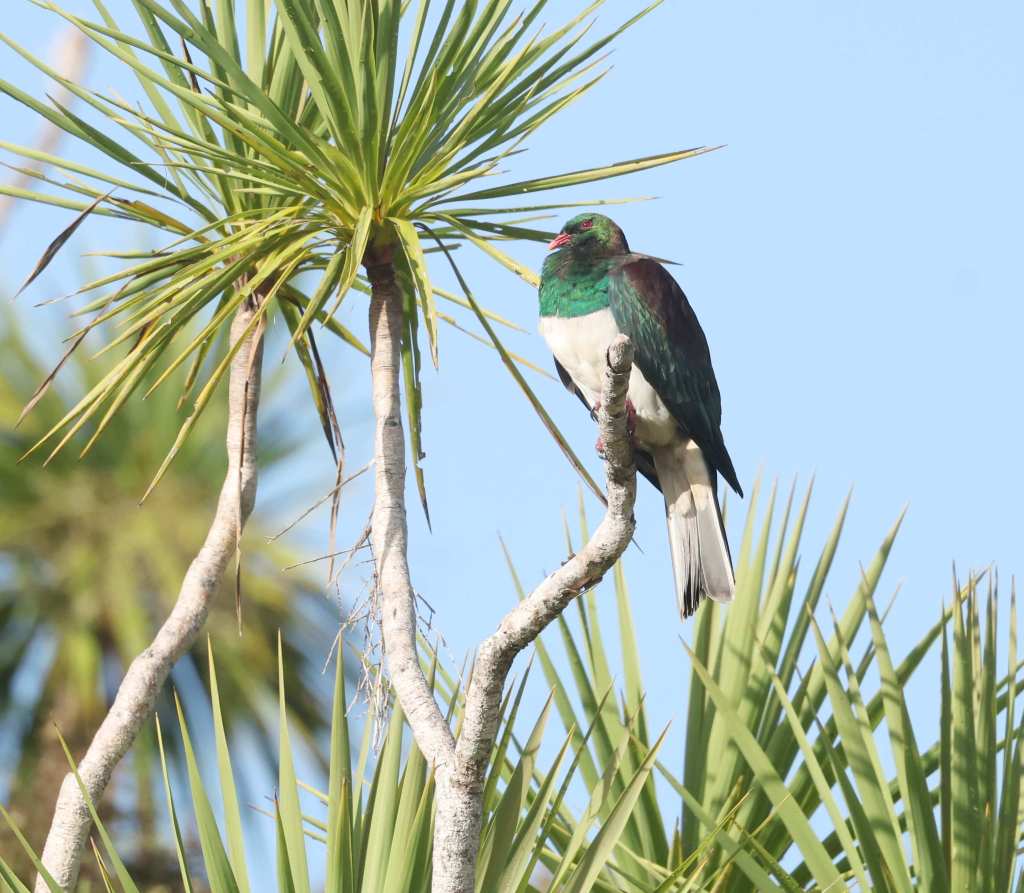
The glorious New Zealand Pigeon (Kererū) is fortunately not too hard to find in various places around Auckland and Shakespear Regional Park provided some of our best views of this iridescent plump beauty.
Not far from the park entrance is the Okoromai Bay Salt Marsh (look for its location on eBird), which despite being outside the predator-proof fencing attracts a wealth of marsh- and wetland-loving birdlife.
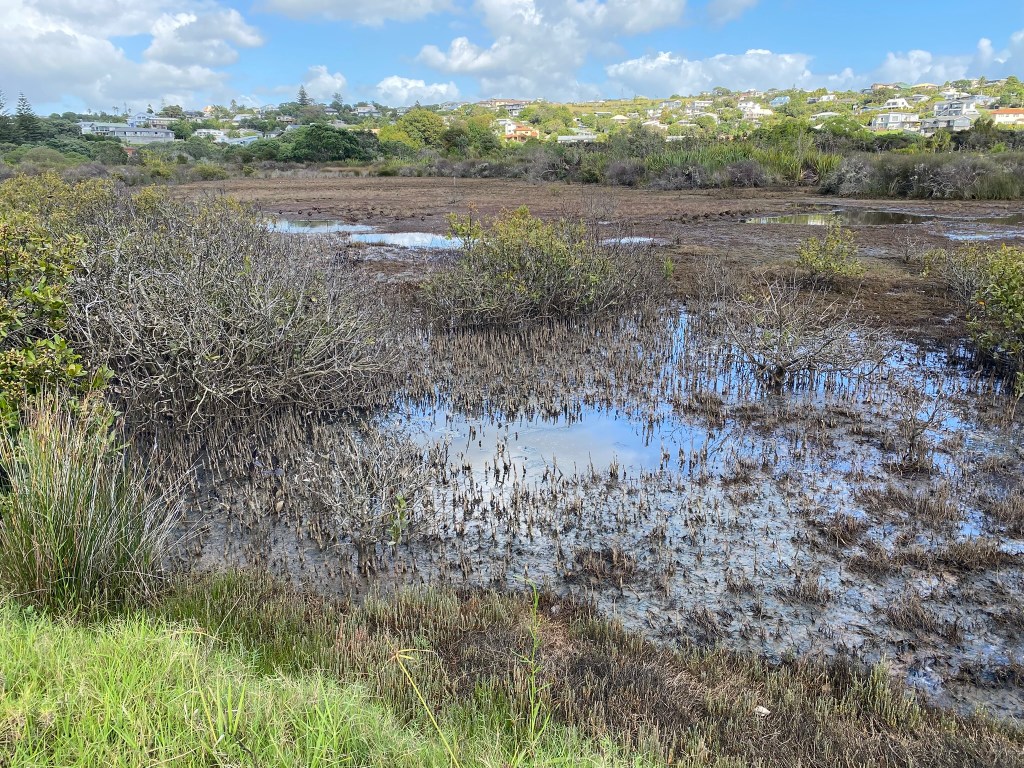
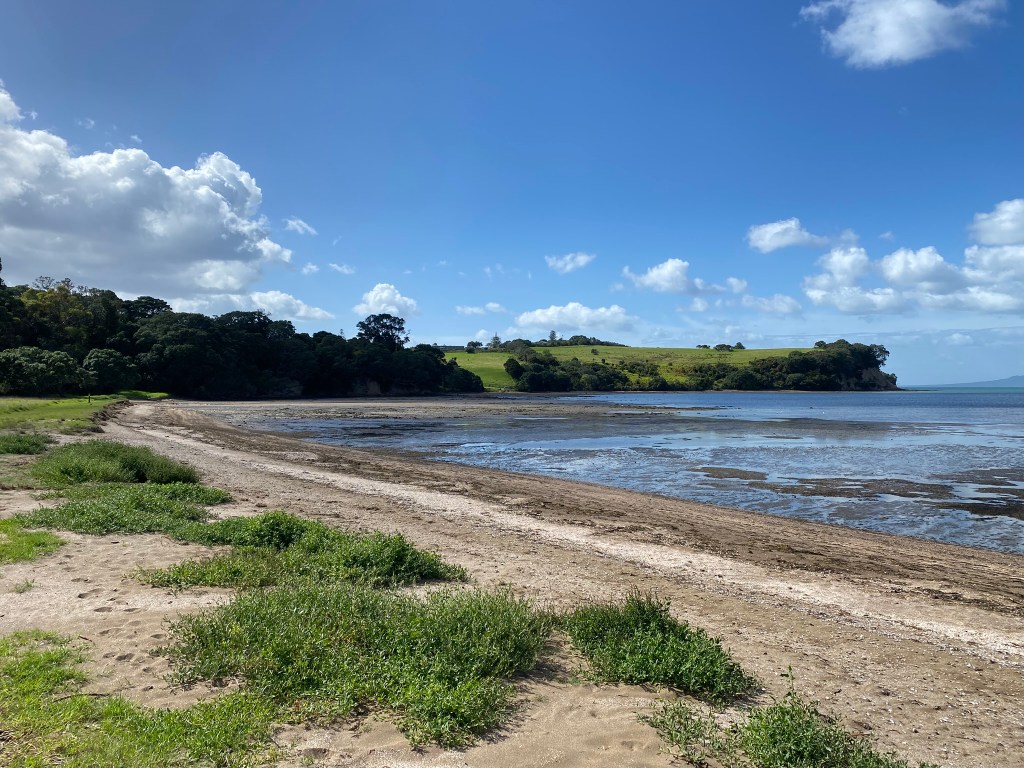
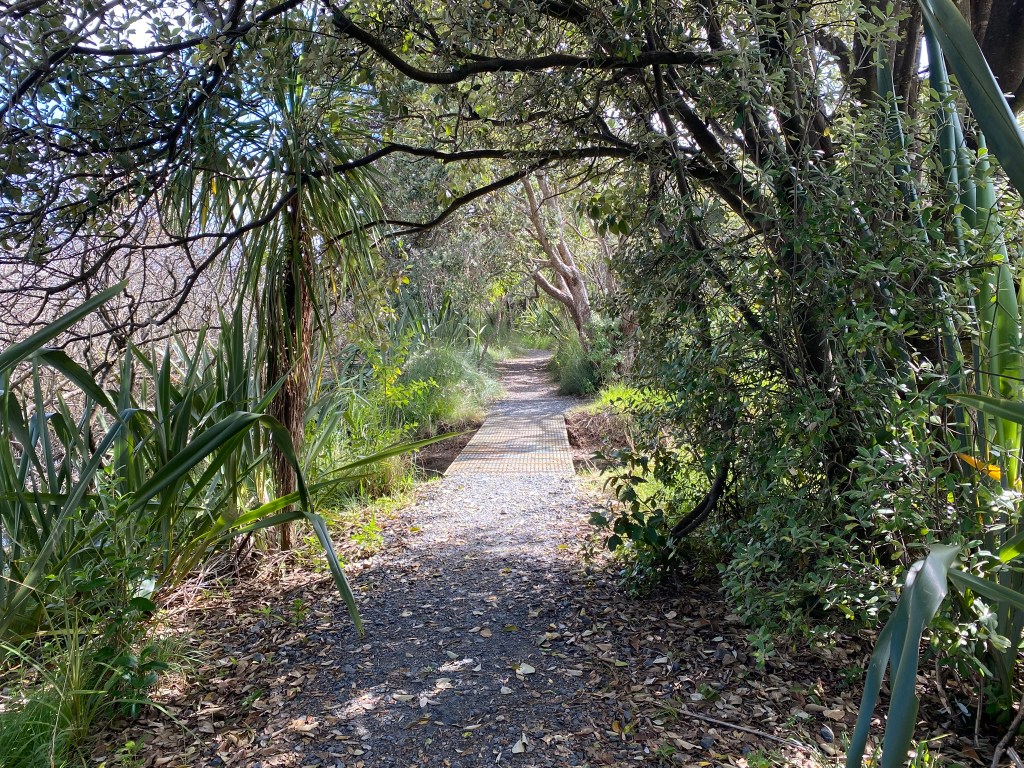
The marsh is easily scanned from the road, and there are a couple of trails around it too. It’s good for birds like Buff-Banded Rail, Pied Stilt, Spotless Crake, and Brown Teal (a New Zealand endemic). We counted 38 of the latter when we were there.
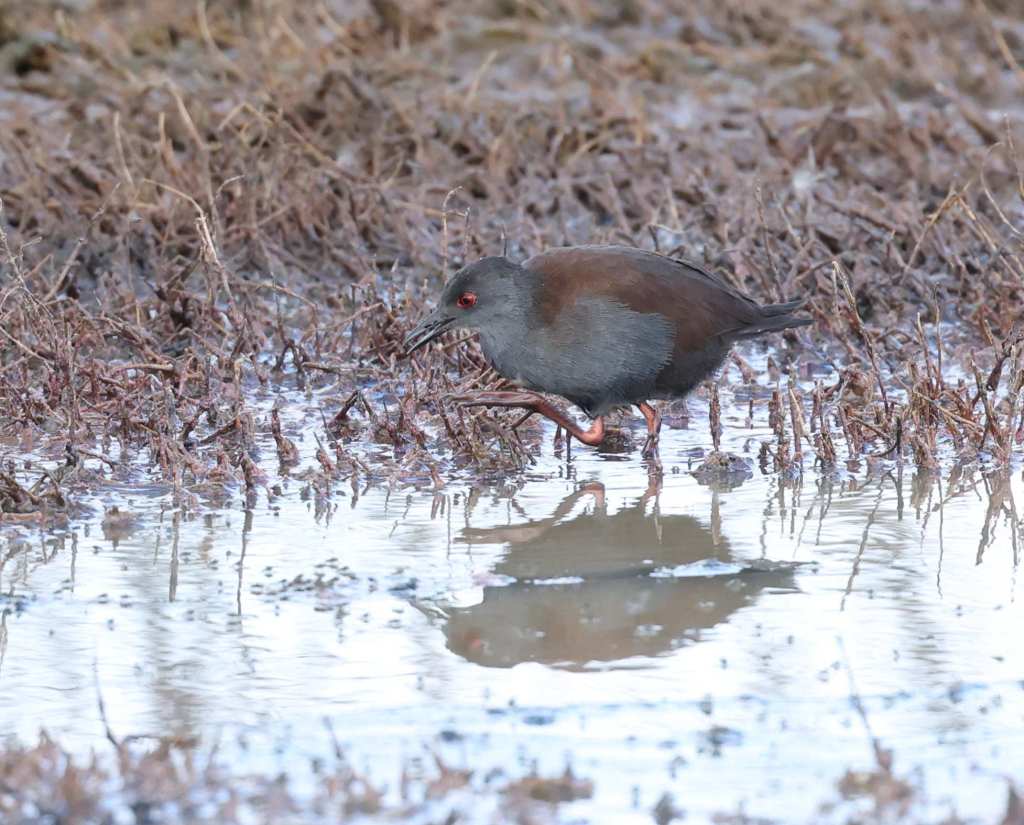
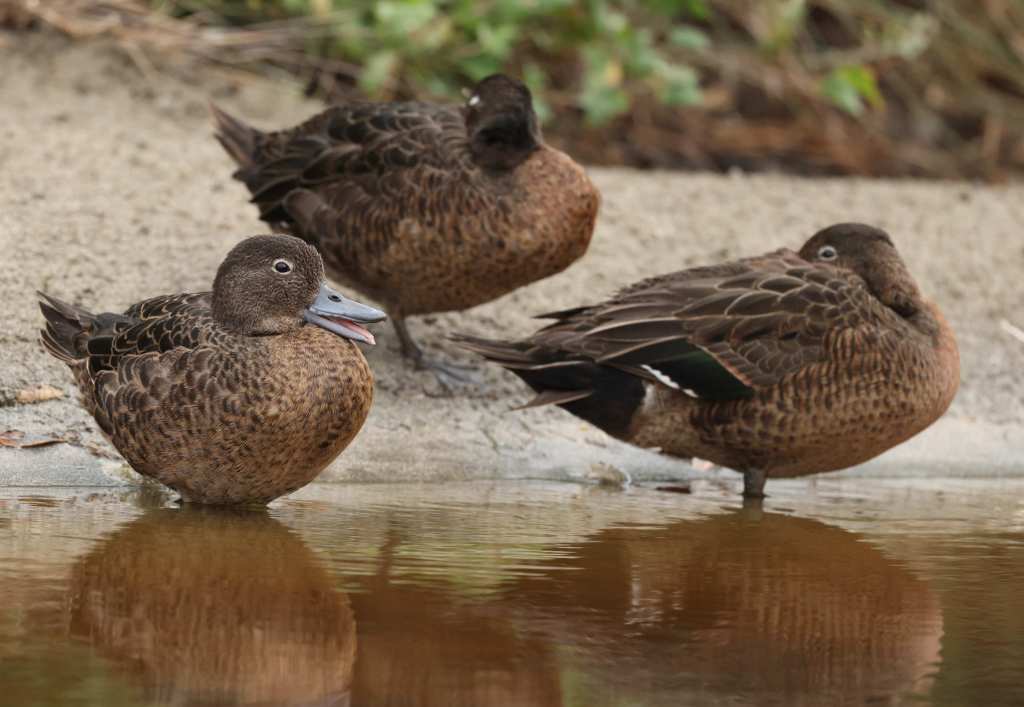
Shakespear Regional Park offered an enjoyable nature experience, especially good for birds due to its sanctuary status, though it no doubt competes with nearby sanctuary Tiritiri Matangi Island for “best hotspot in the north Auckland region”.
Hauraki Gulf
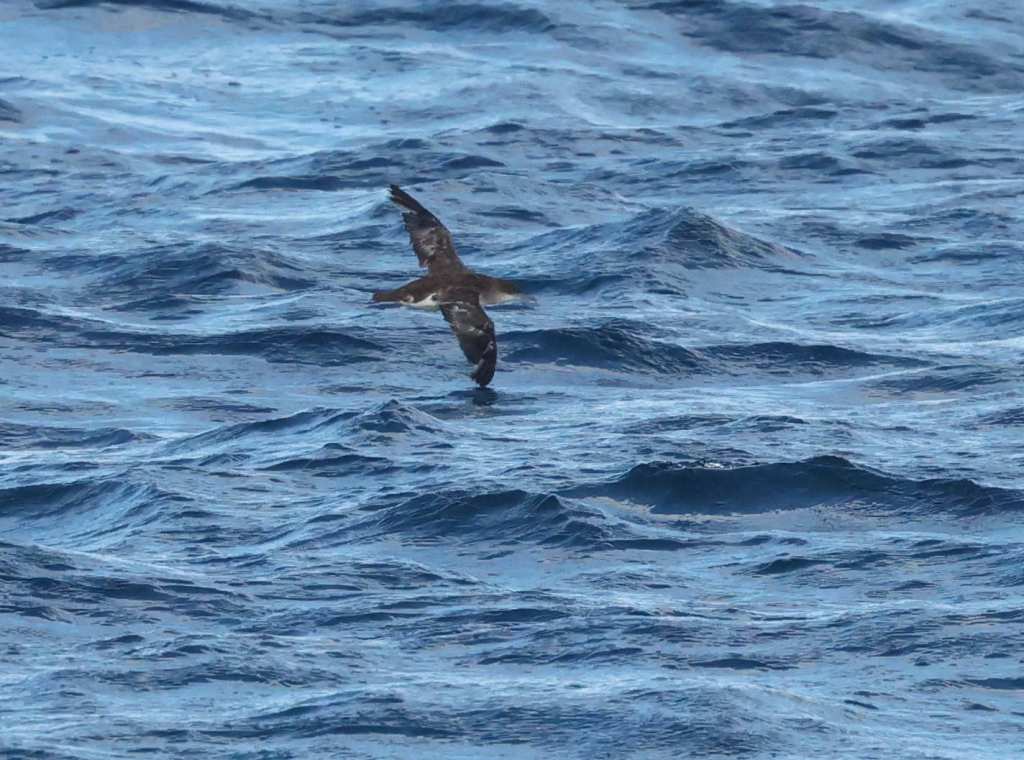
If you are taking a ferry to Tiritiri Matangi Island, or somewhere in the harbour, you may be tempted to do some seabird spotting. Possibilities include Fluttering Shearwaters all year round, as well as Buller’s and Flesh-Footed Shearwaters more during the summer months. The summer can be good for Arctic Jaeger here, too.
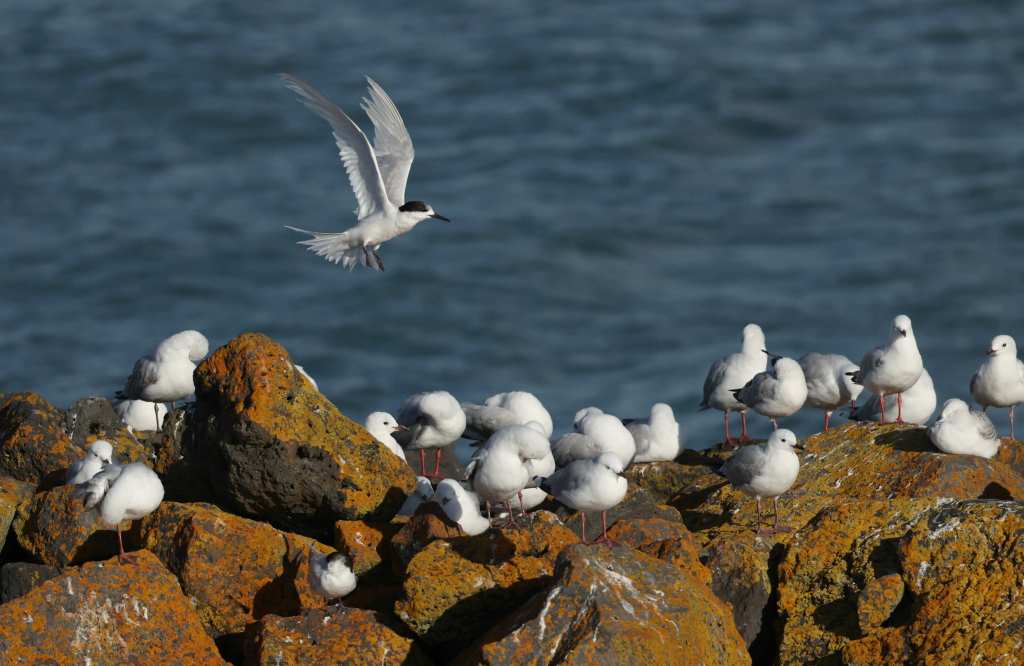
White-Fronted Terns are the main terns here and are sometimes found in very large numbers on the open water.
Other common harbour birds include Australasian Gannet and Little Penguin. Not bad for a city harbour!
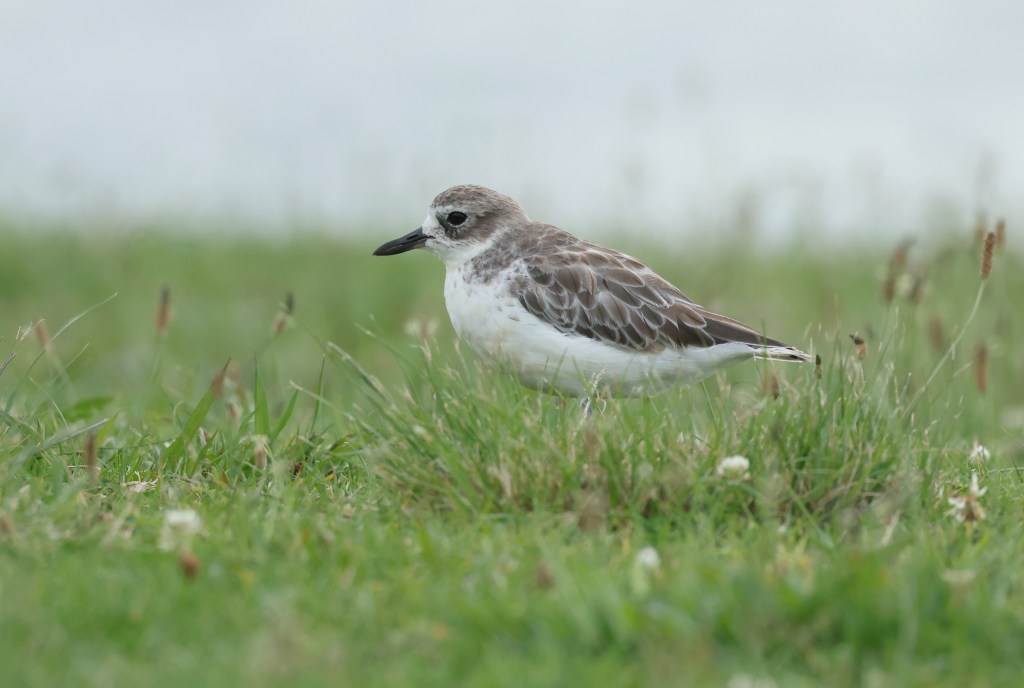
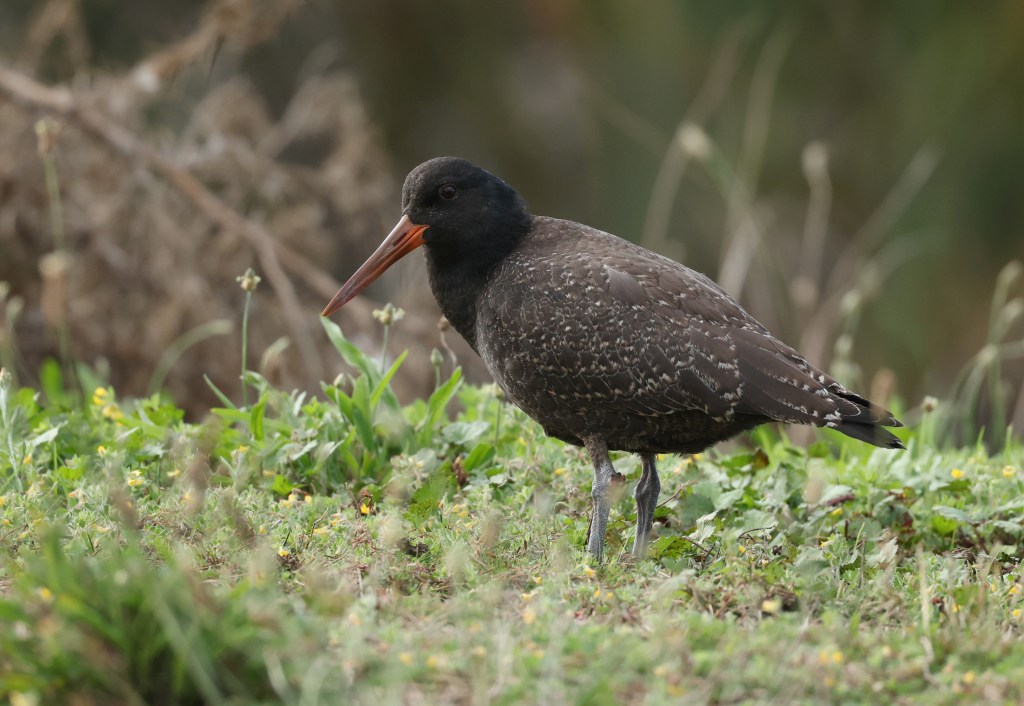
Along Auckland’s extensive coastline you’re sure to come across Red-Breasted Dotterels and both Variable and South Island Pied Oystercatchers. And of course many, many Silver Gulls.
Tiritiri Matangi Island
Tiritiri Matangi Island is one of the jewels in the crown when it comes to birding in this region. It is a 22-hectare pest-free sanctuary boasting a number of successful conservation initiatives and just the sound of birdsong on the island makes you realise how special the place is.
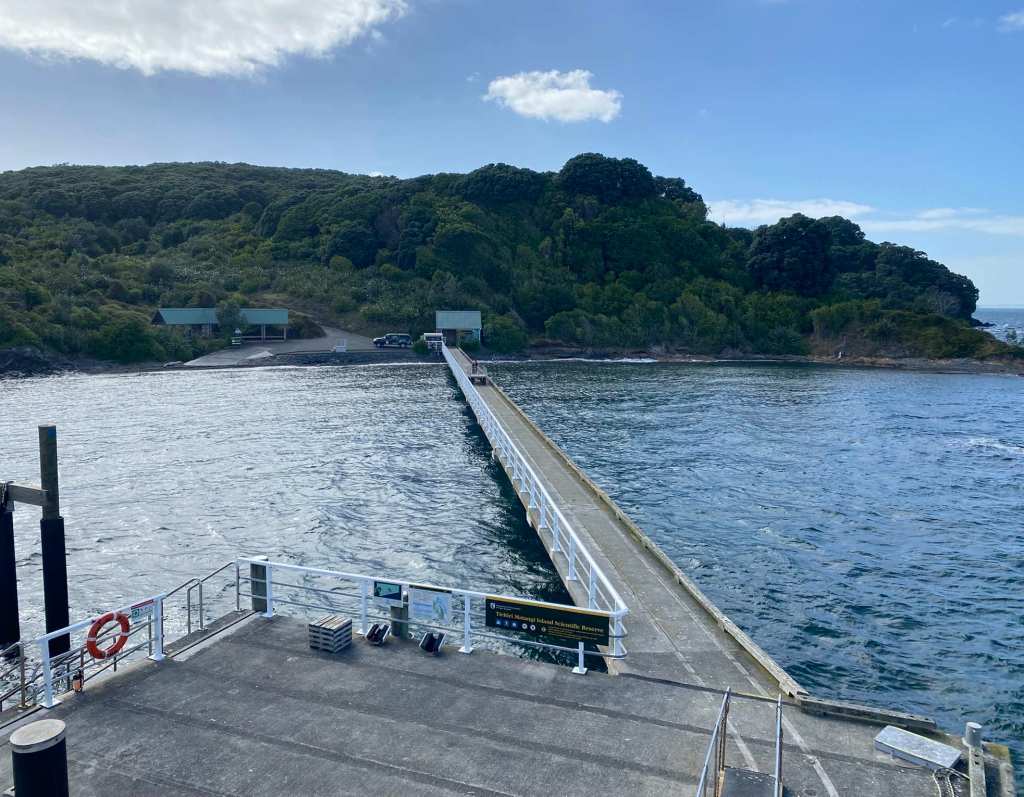
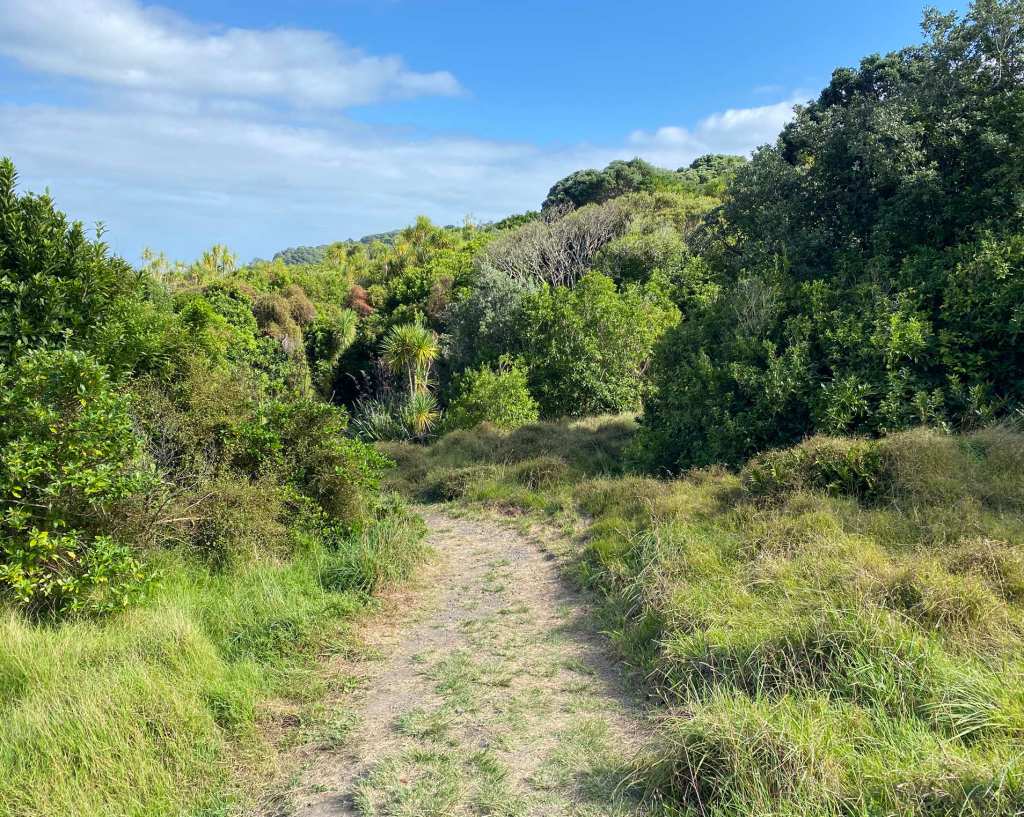
You can take the ferry across to Tiritiri Matangi Island from Auckland city or – much shorter – from Gulf Harbour on the Whangaparāoa Peninsula. The boat has an open top so you can spot seabirds from there on the way (and fail to see a Little Penguin, like me, haha). After the ferry ride a ranger provides a short intro then you’re free to roam. Most tracks are good for birding though we found the west side of the island more productive.
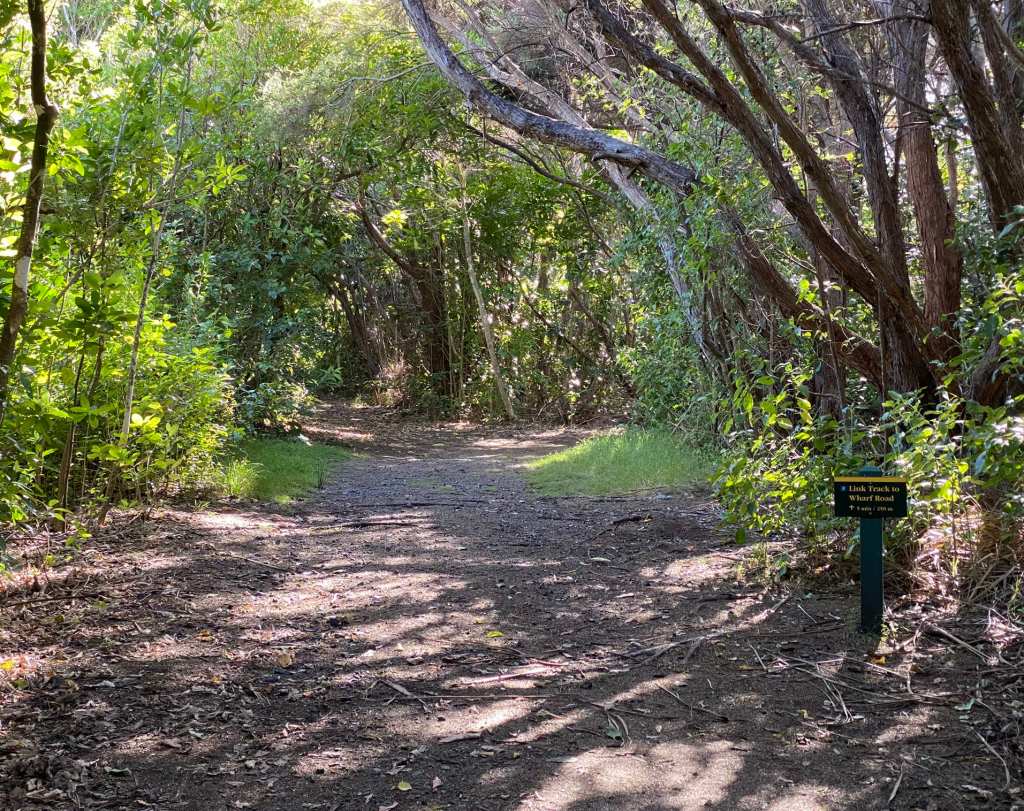
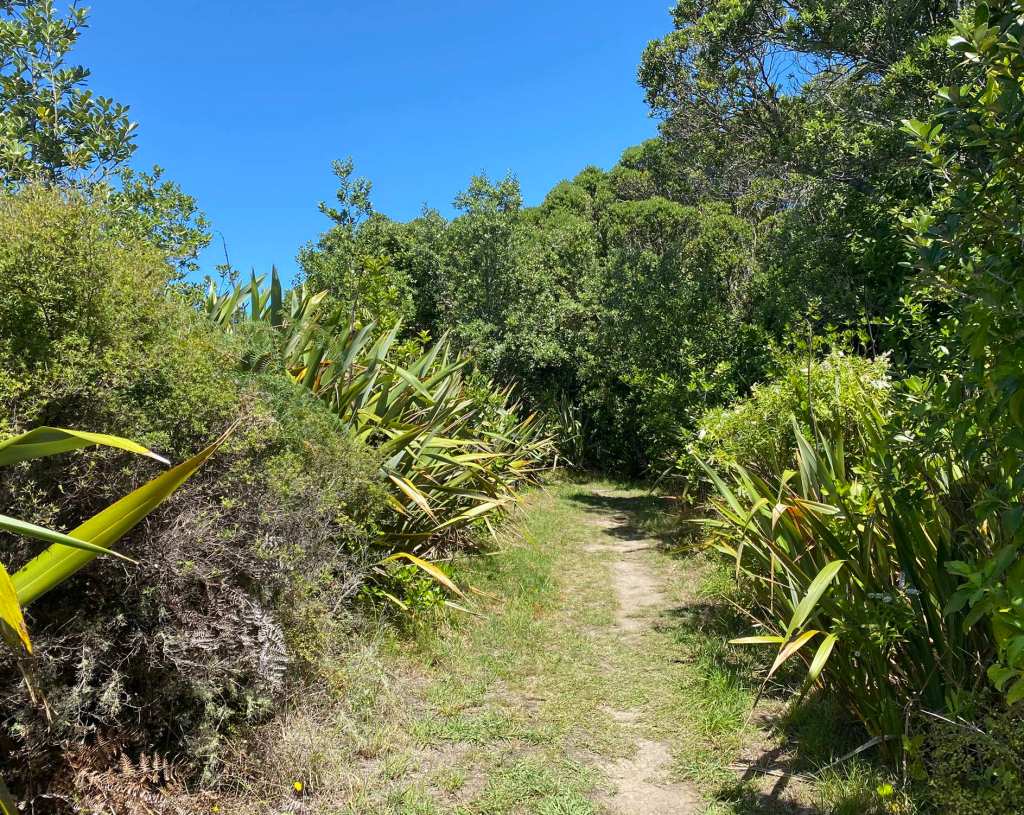
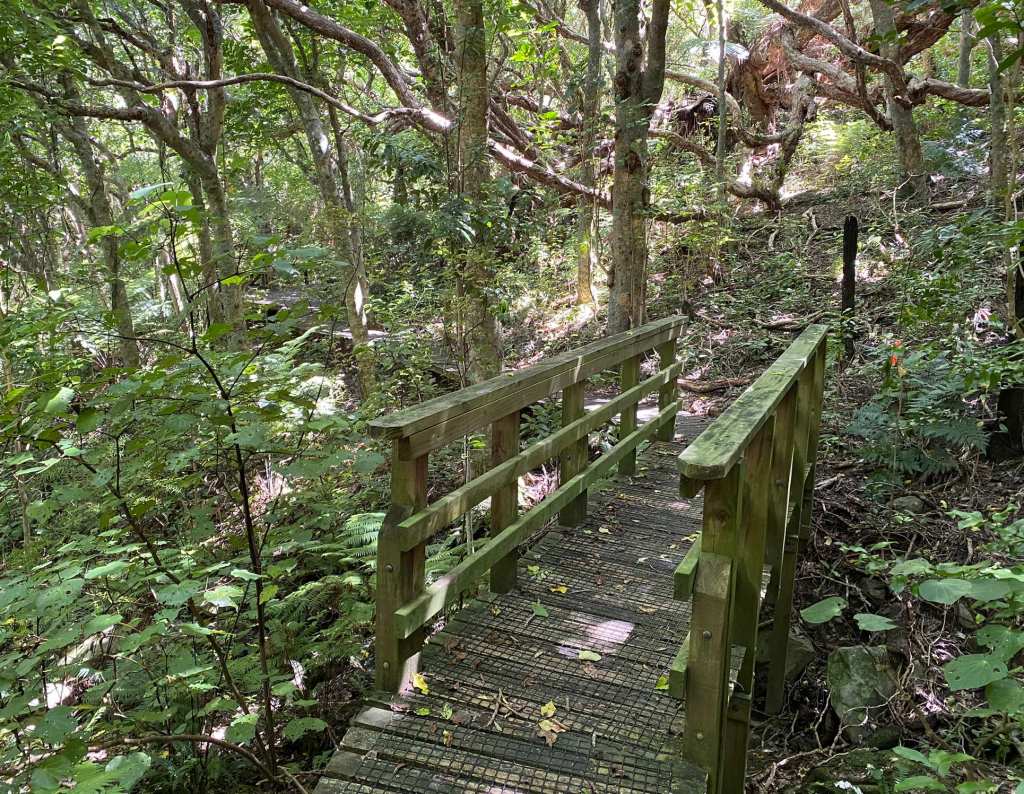
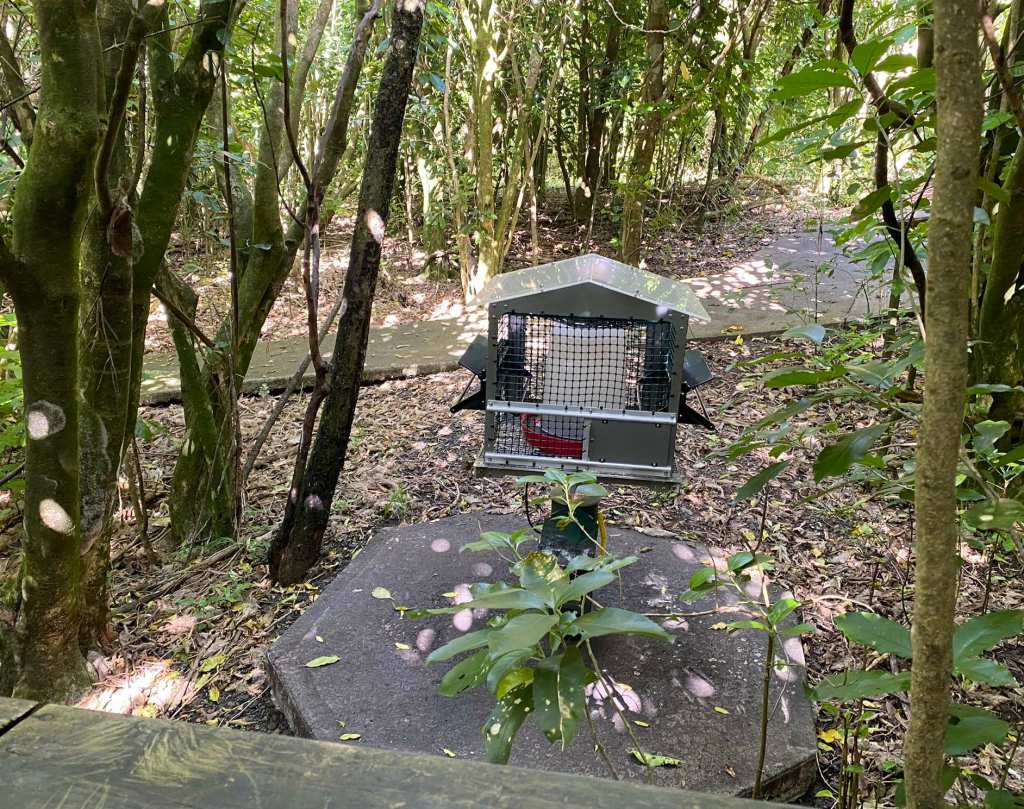
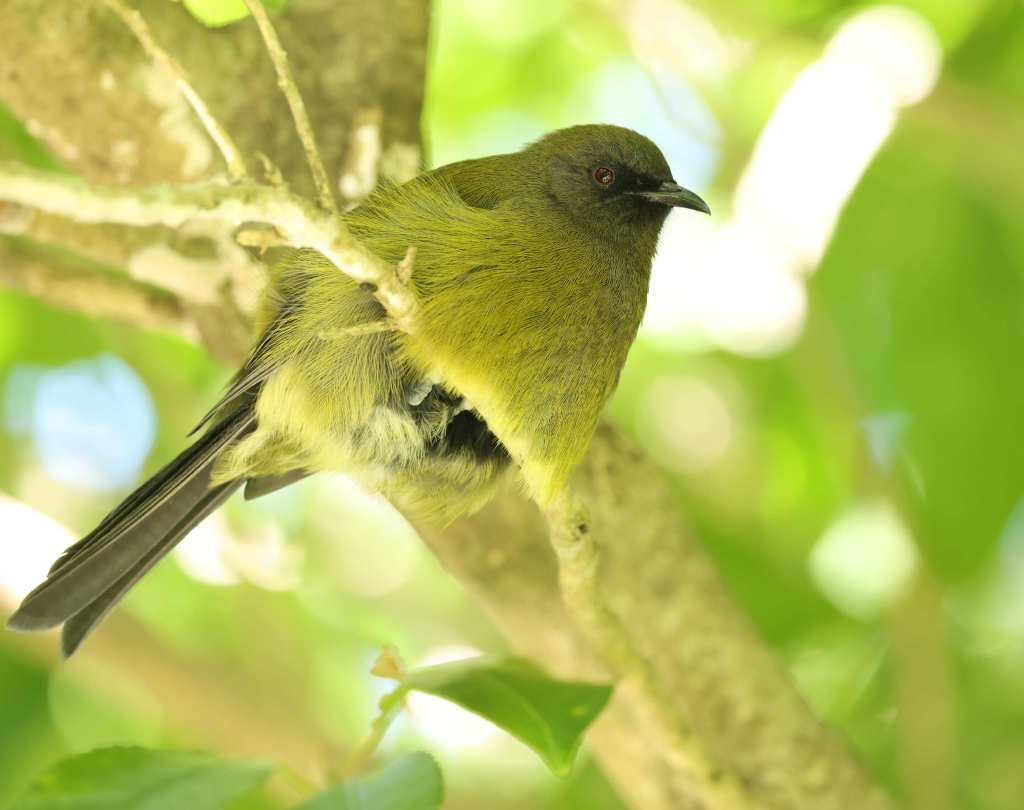
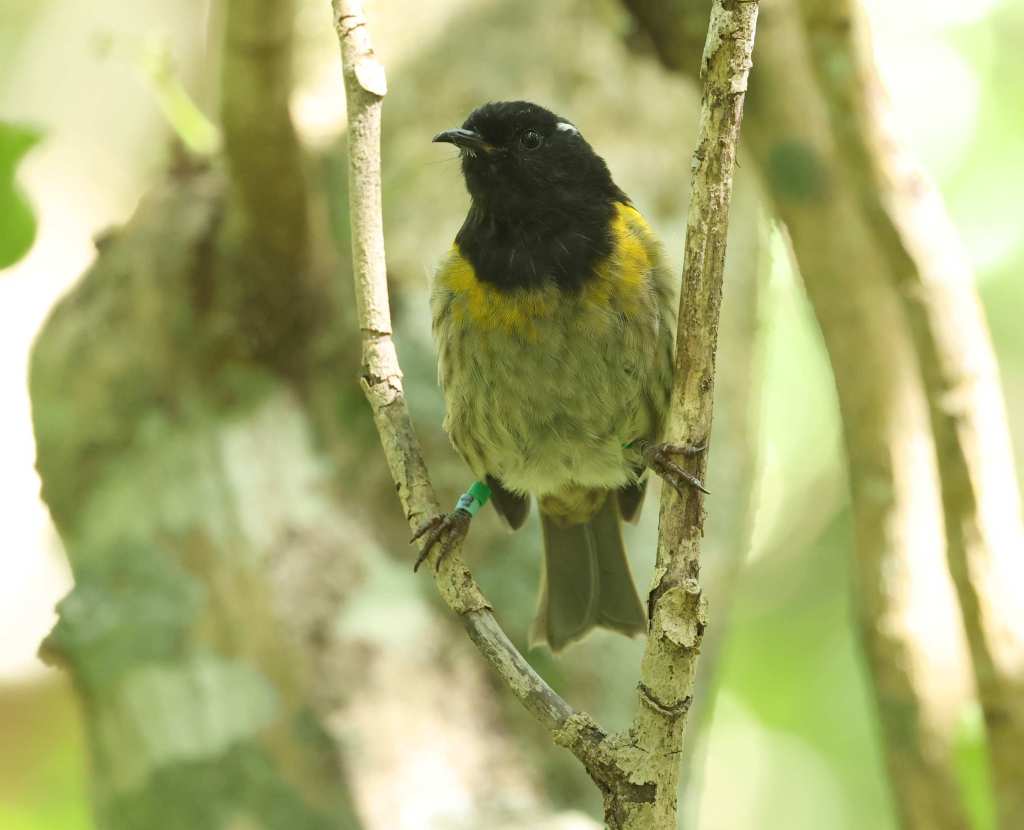
Oh boy were there plenty of vocal Bellbirds here! You just about had to tune them out to try and hear other calls. Like Shakespear Regional Park, there are feeders here and the Bellbirds frequent them, as do the Stitchbirds.
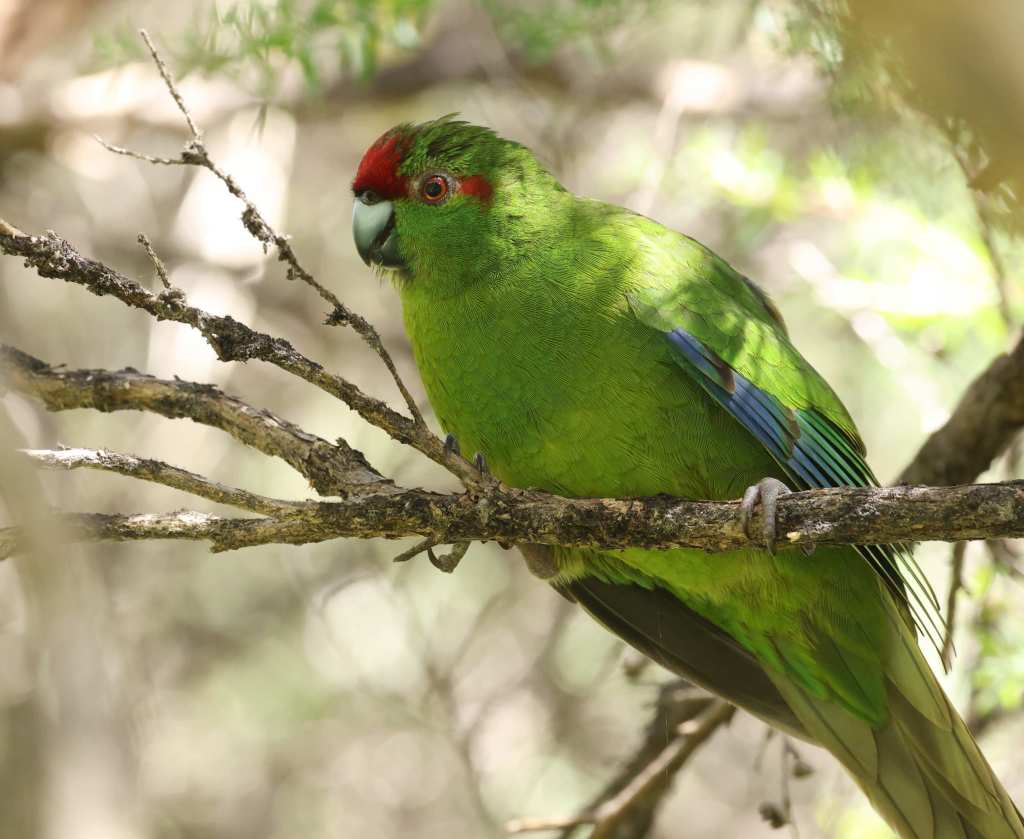
The “bird of the day” (a hotly contested title, I can tell you) belonged to a Red-Crowned Parakeet, the only time we saw one in Auckland (they are on the mainland, too, but I couldn’t tell you where…). This adorable parakeet became an instant favourite with colours reminding me of some Australian parrot species (hmm, Musk Lorikeets, perhaps).
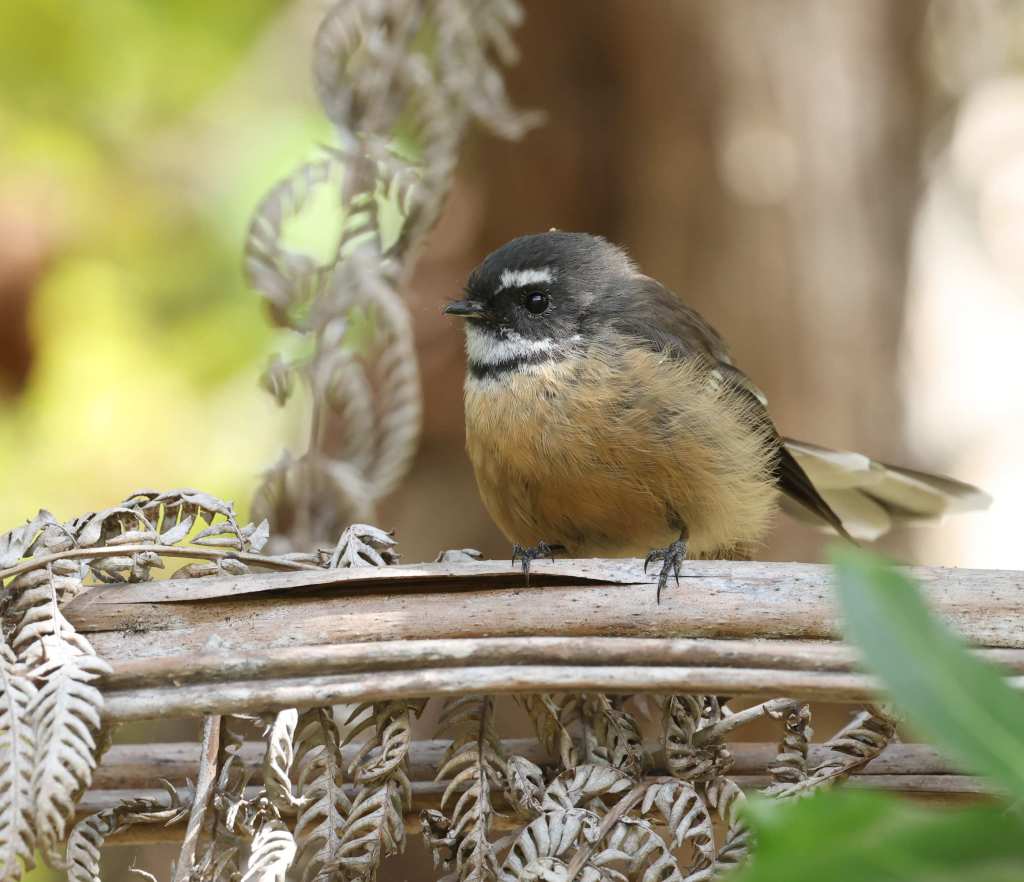
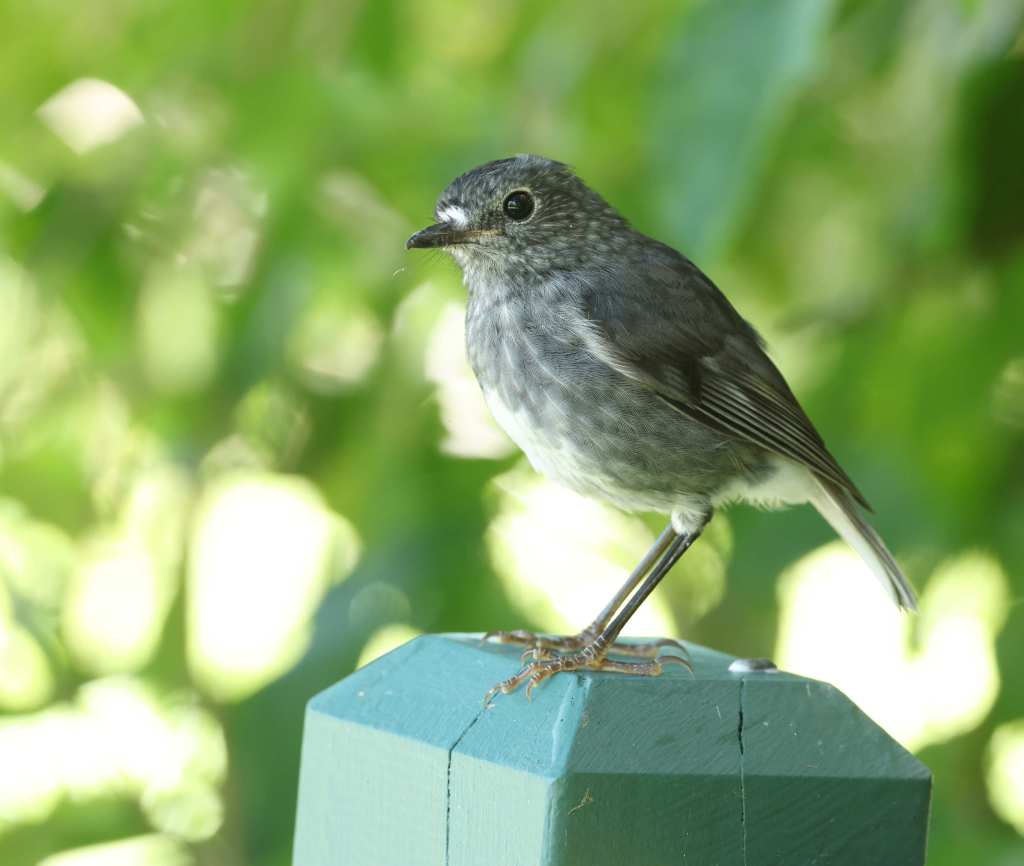
Within the forest of the Wattle Track are many of the “usuals” – New Zealand Fantails, North Island Robins, Whiteheads and North Island Saddlebacks.
Half a kilometre or so from the ferry wharf is the island’s excellent visitor centre and impressive lighthouse.
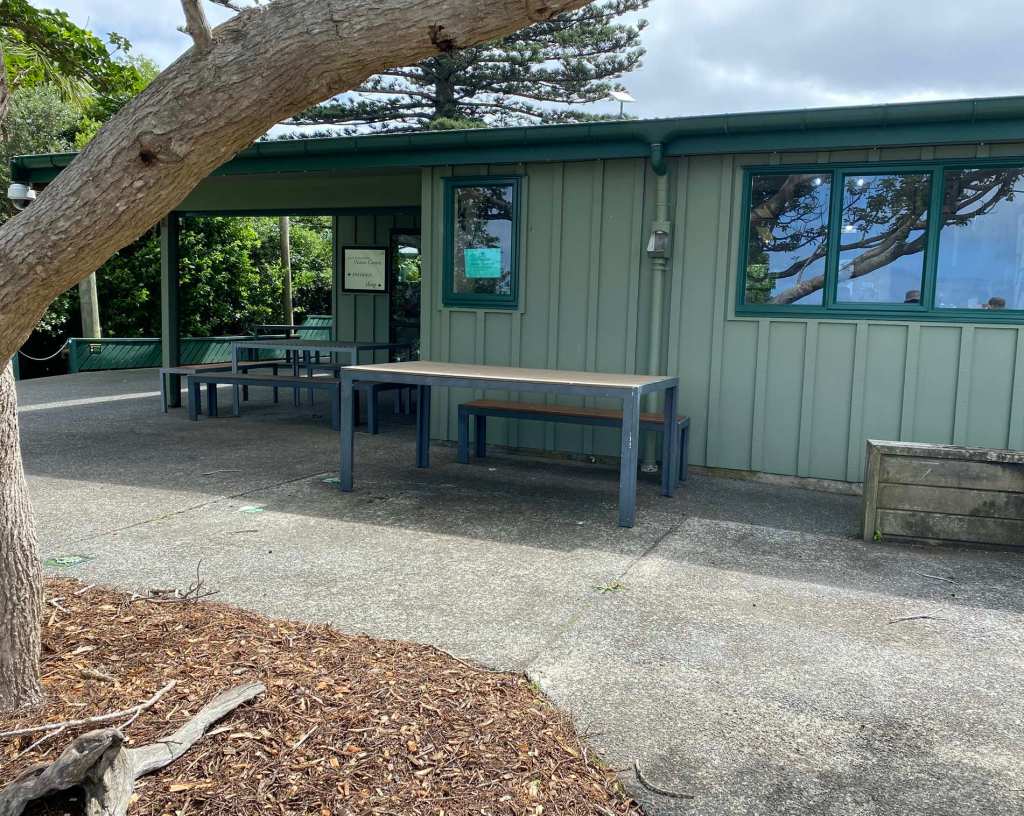
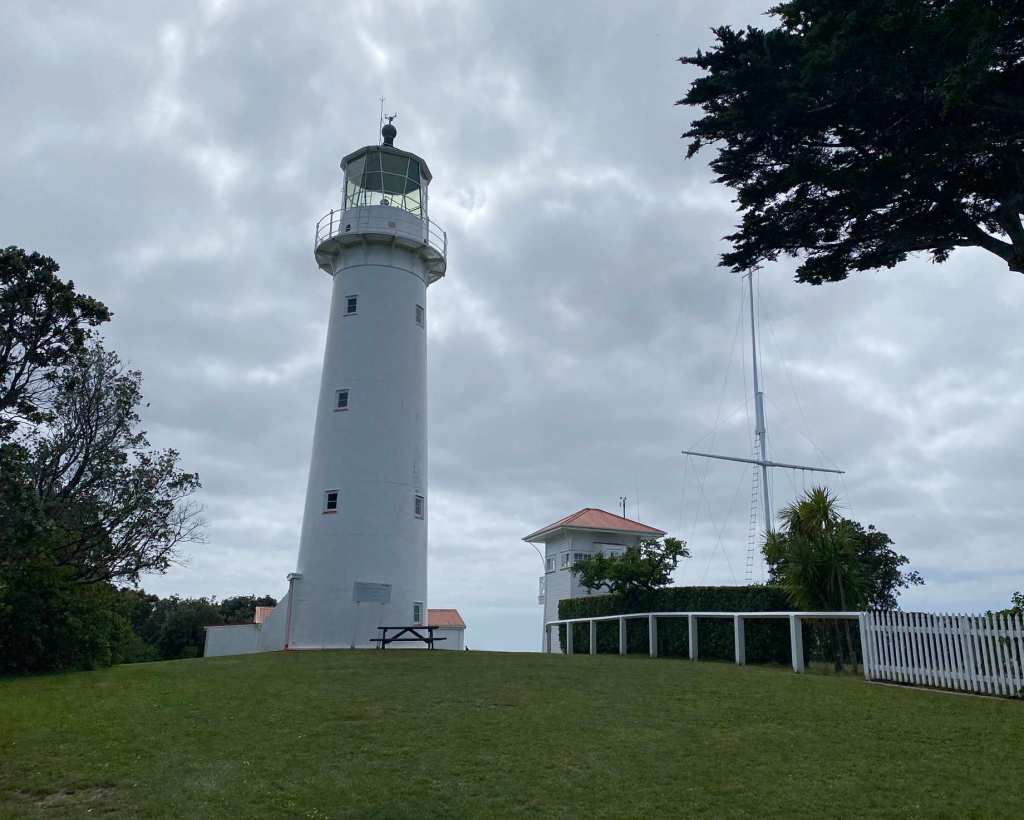
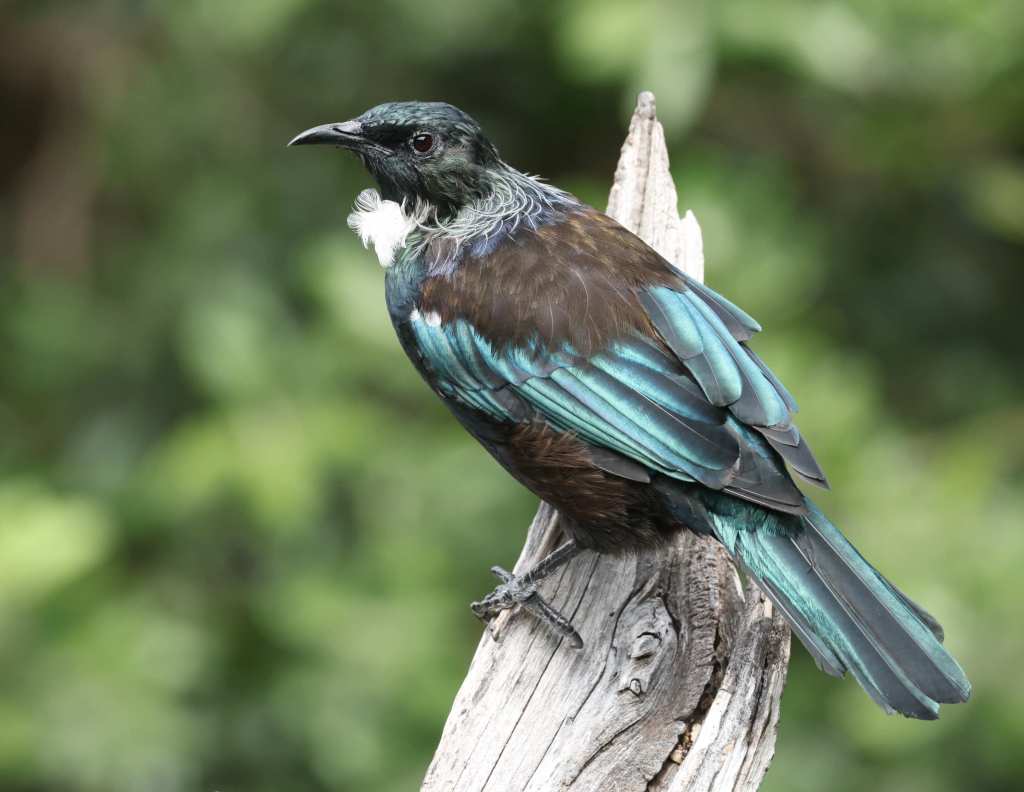
I was surprised to discover the visitor centre had a bird feeding area close by. This was mainly attracting Tuis and Bellbirds; there were enough Tuis that there was a bit of aggressive competition.
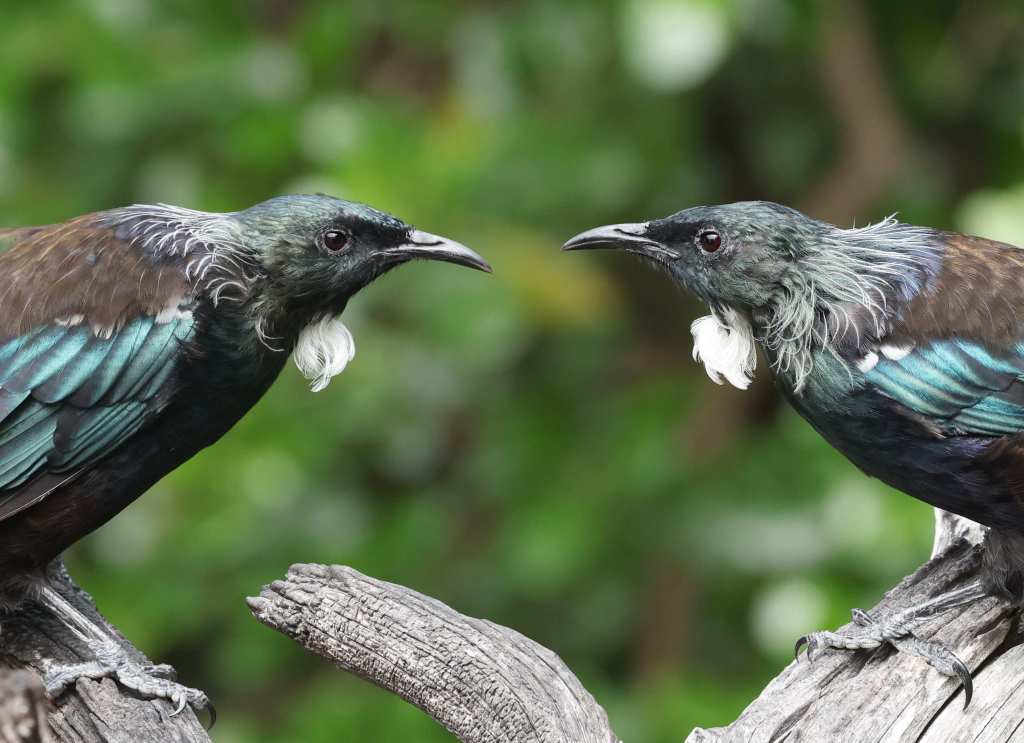
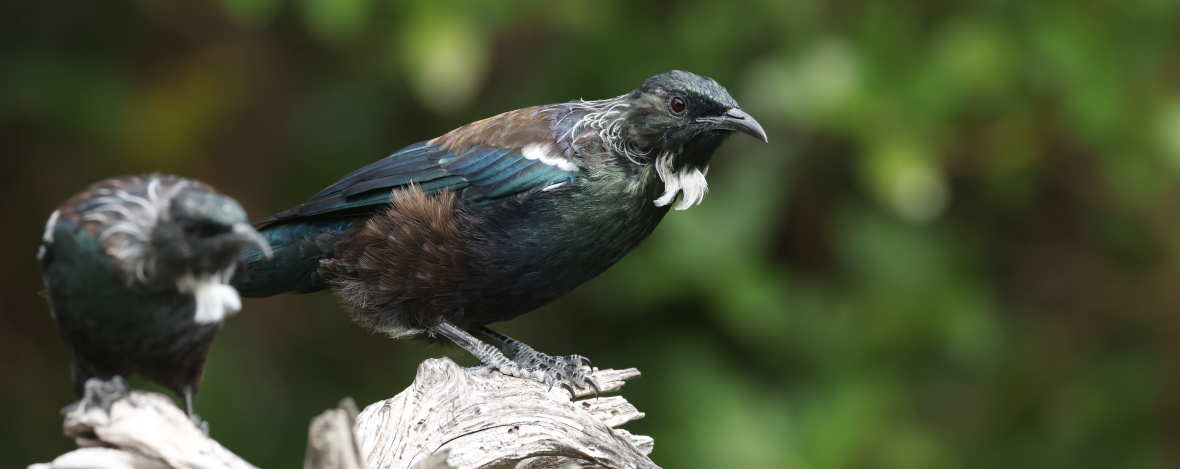
This spot was Photography Central, and I could have lingered for hours trying to get images of birds with the light and poses “just so”. Though also, it was a chance to really scrutinise the Tuis, who are an iconic New Zealand bird (there is even a Tui beer). They are quite bulky, often fairly scruffy-looking, and their iridescent bluish-green wing feathers are stunning in the sunlight.
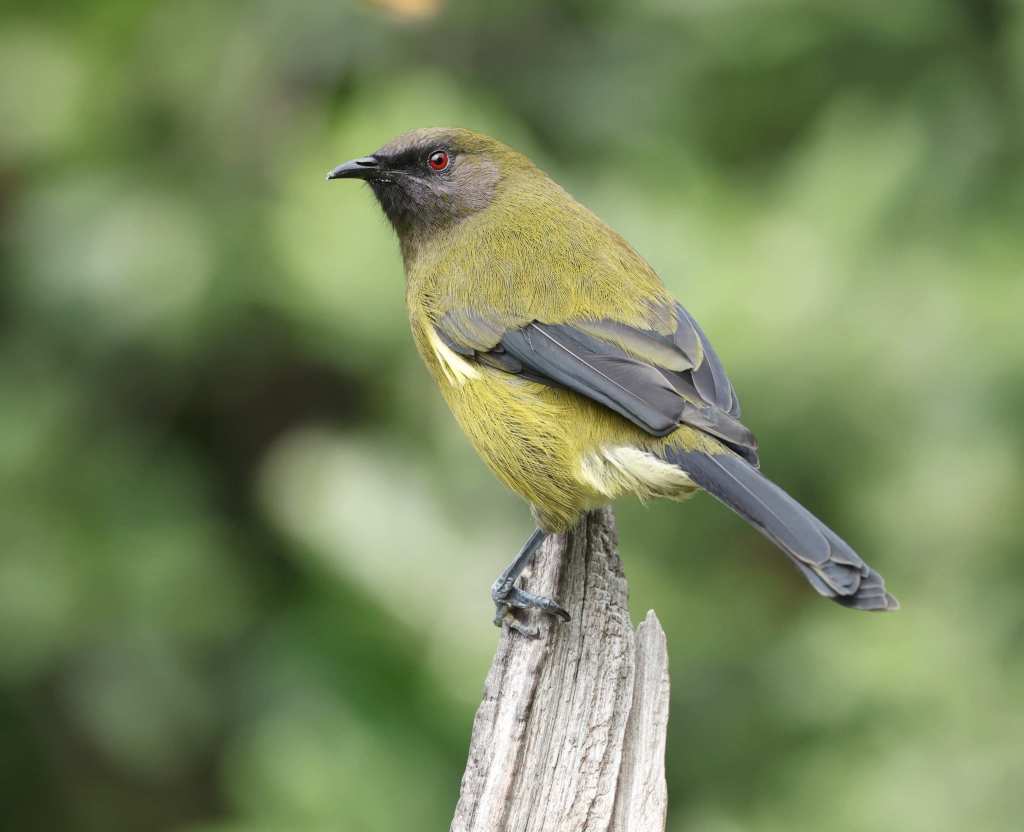
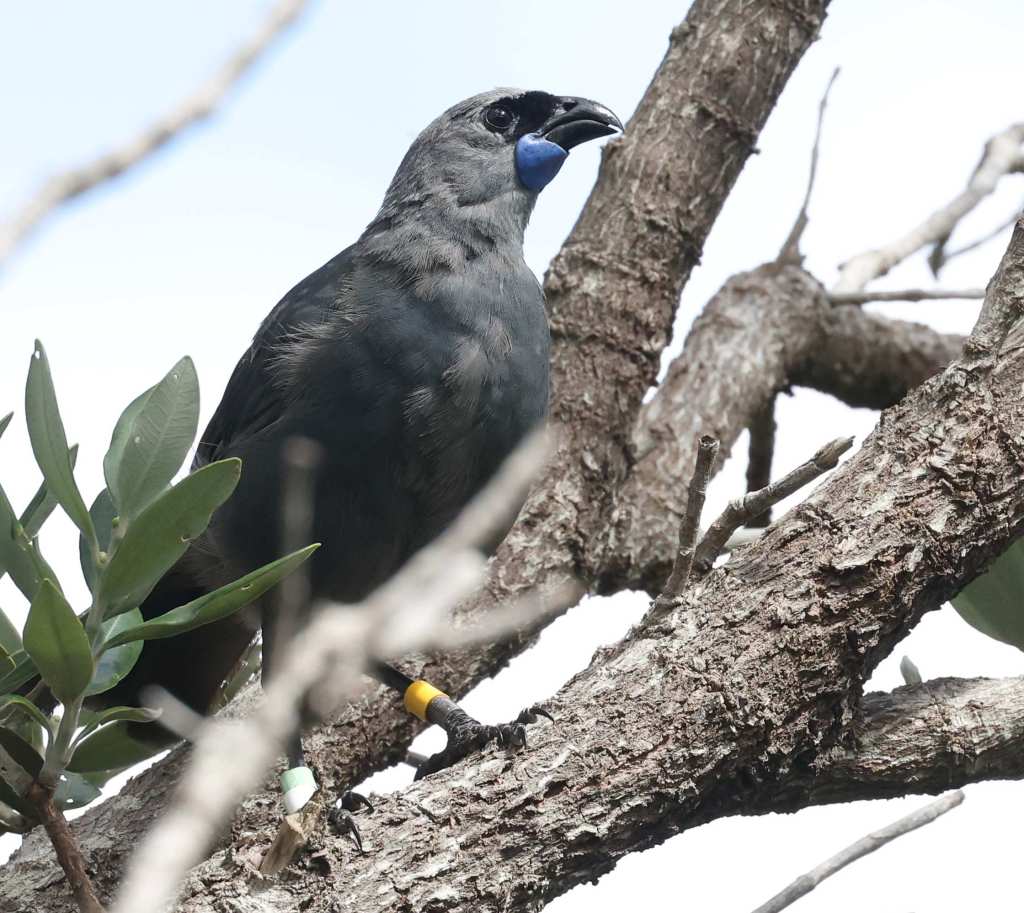
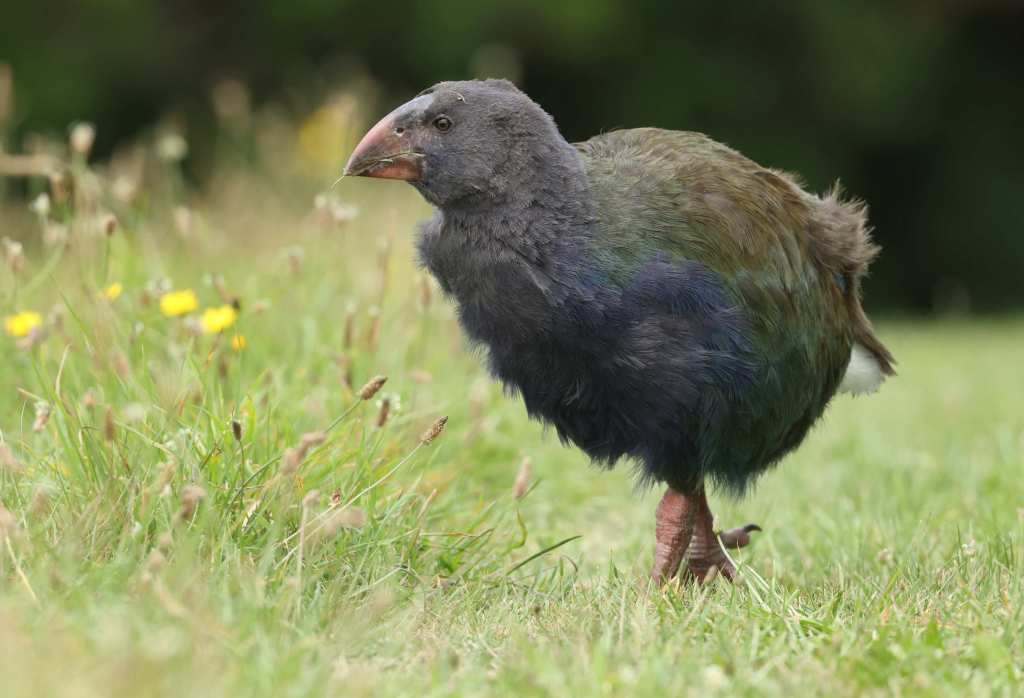
Near the visitor centre we found another two New Zealand-endemic birds that we would see only once in our Auckland sojourn – the North Island Kokako with its eerie, plaintive call, and the South Island Takahe. The Kokako is also called the Blue-Wattled Crow, though it is not strictly speaking a corvid; it is present in low numbers in some mainland forests but relies on these island sanctuaries to flourish. The Takahe – the world’s largest rail (it really is a chunky customer) – has a similar status.
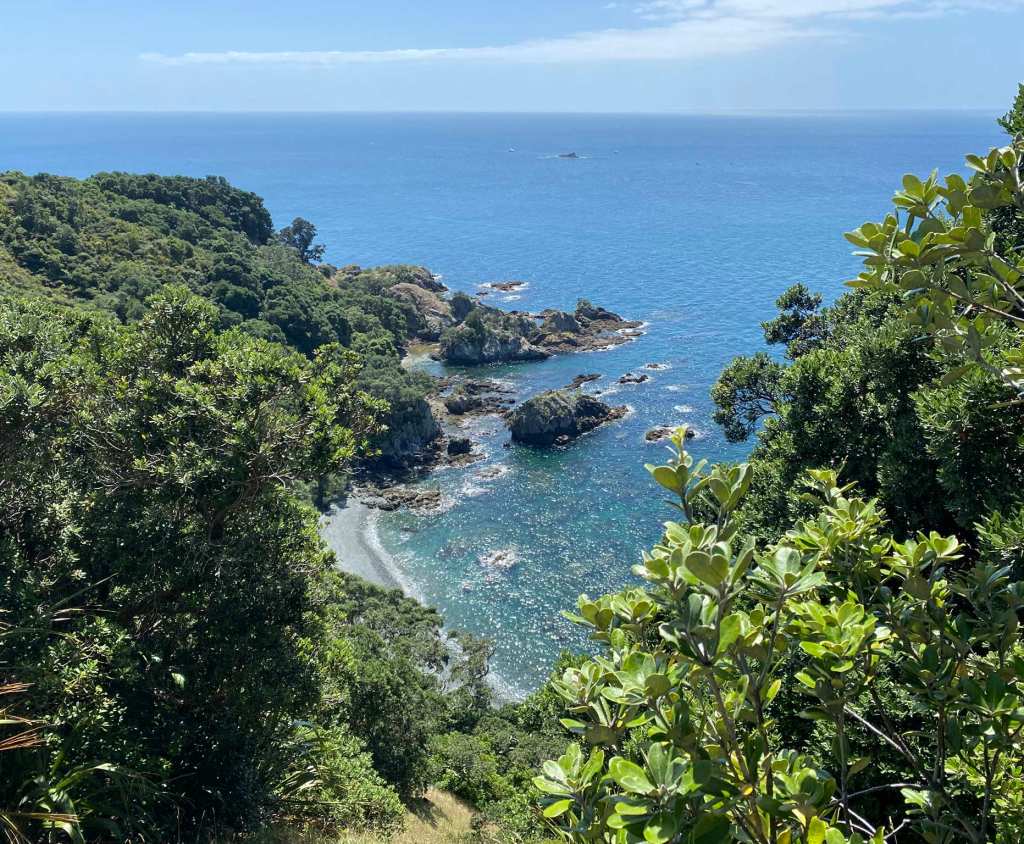
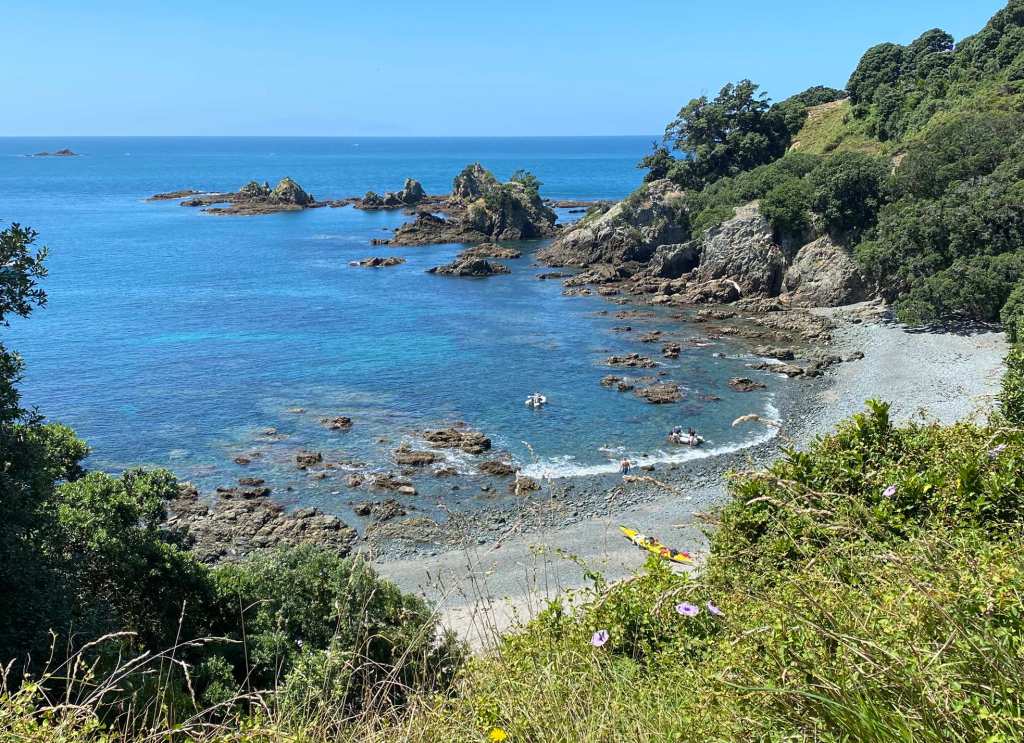
As mentioned, we found the east side of the island slightly less birdy that day, but the gorgeous coastal views more than made up for it.
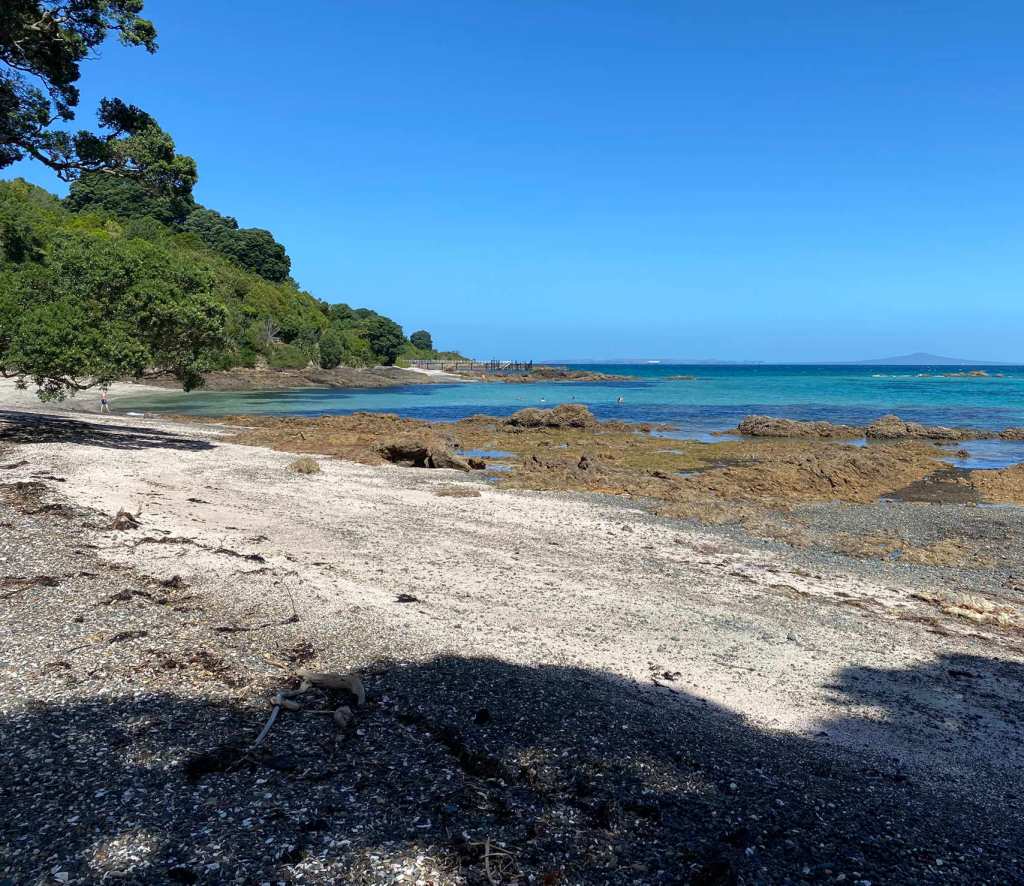
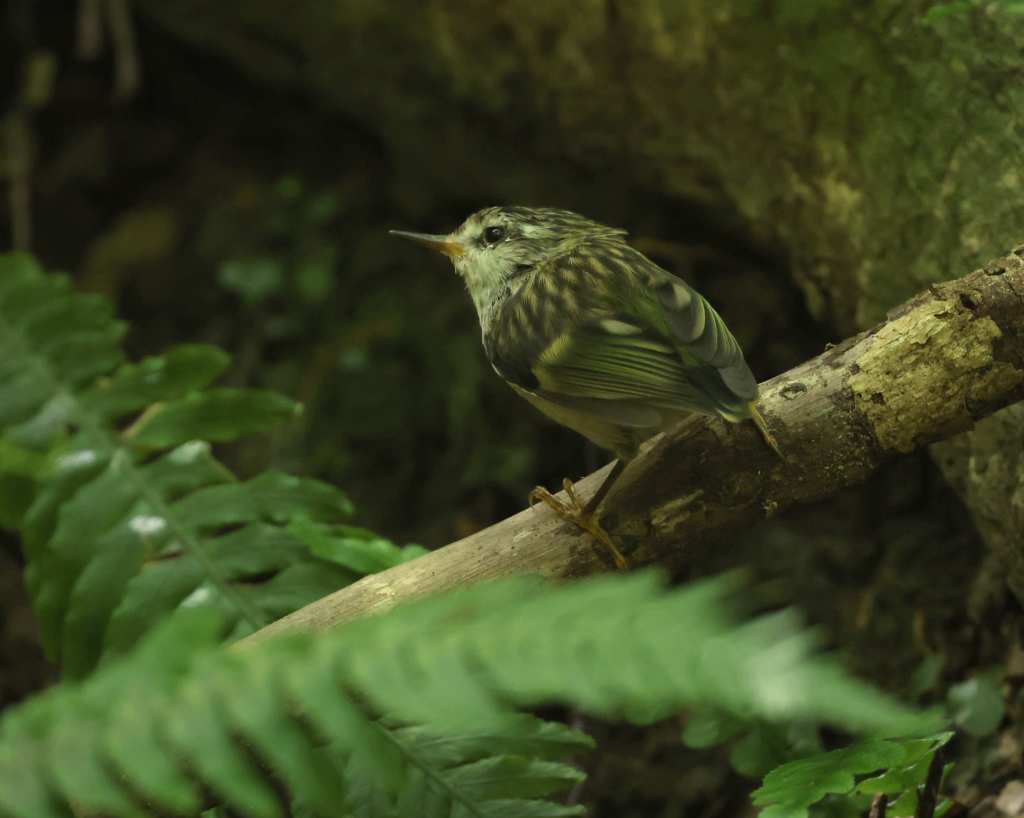
I had thought the birding would drop off around lunchtime and after, as birds generally tend to be more active in the first several hours after sunrise. However, I was pleasantly surprised to have excellent encounters with Stitchbirds and the teensy-weensy, mouse-like Rifleman deep in the very scenic thick forest of the Kawerau Track.
Even if you have limited time in the region, I would advise including a day out to Tiritiri Matangi Island – you won’t regret it! And if you happen to stay overnight or get very, very lucky, you may also find a Kiwi or Morepork there.
Muriwai Gannet Colony
This colony of Australasian Gannets lies on the west coast, about 45 minutes west of the Auckland CBD. Even if you’ve seen gannets before, this place is really worth a look, for being able to get close to many endearing gannets, and for the amazing rocky formations along the shoreline.
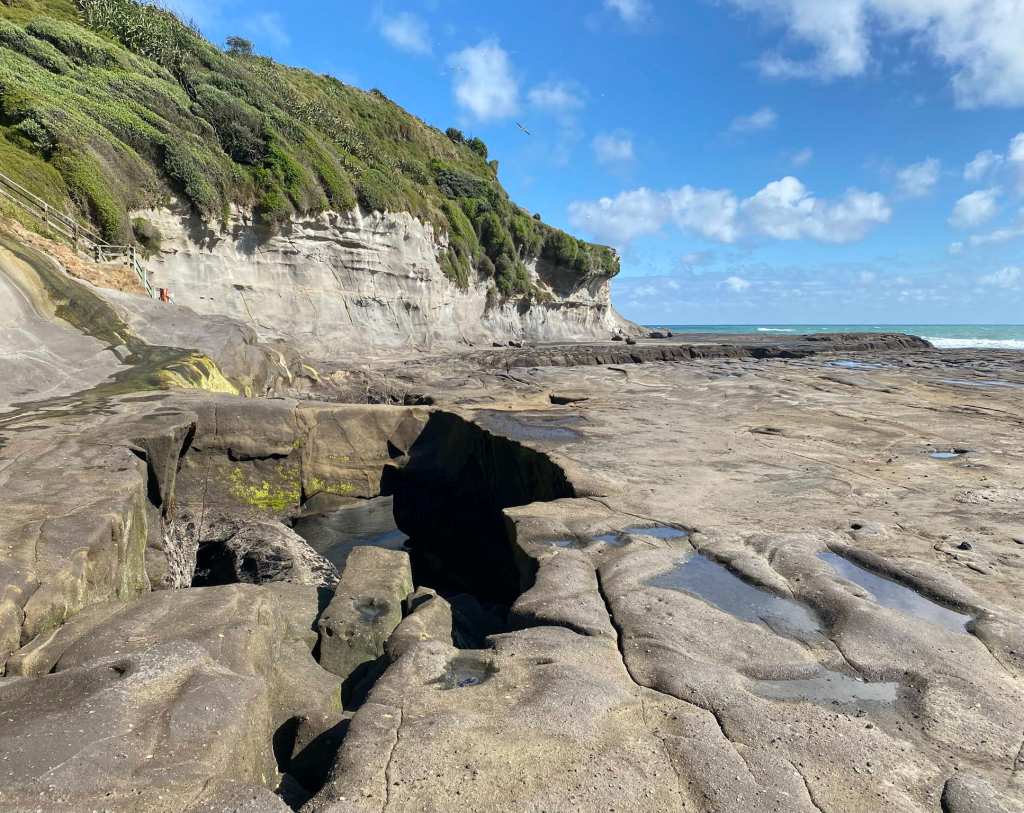
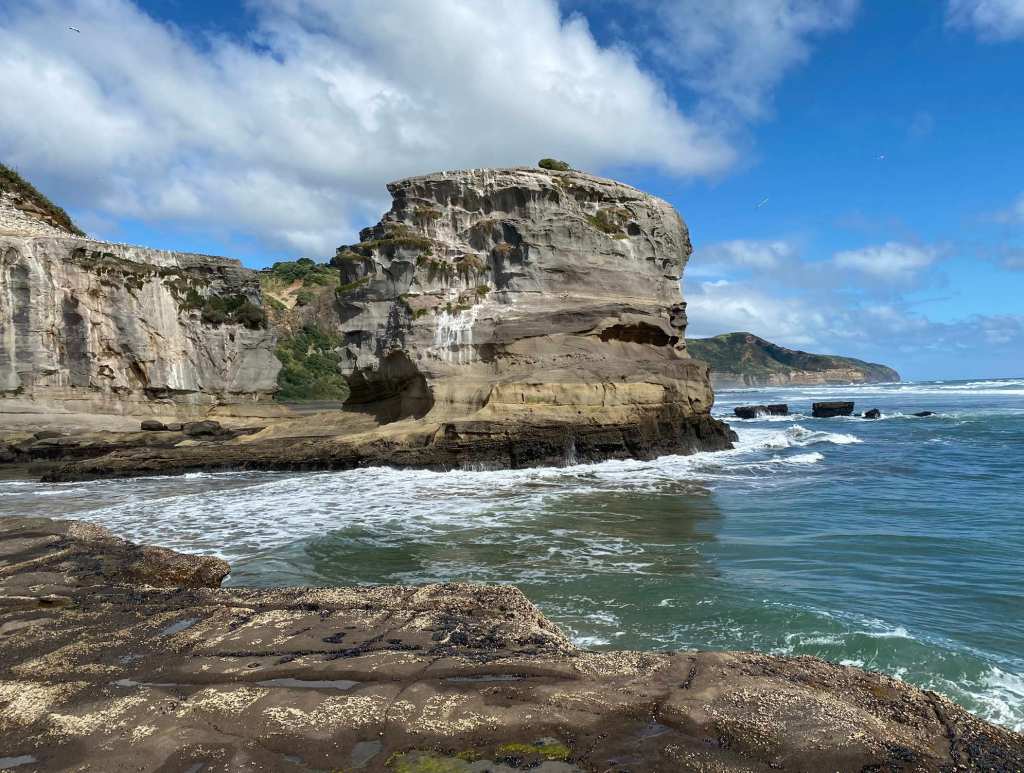
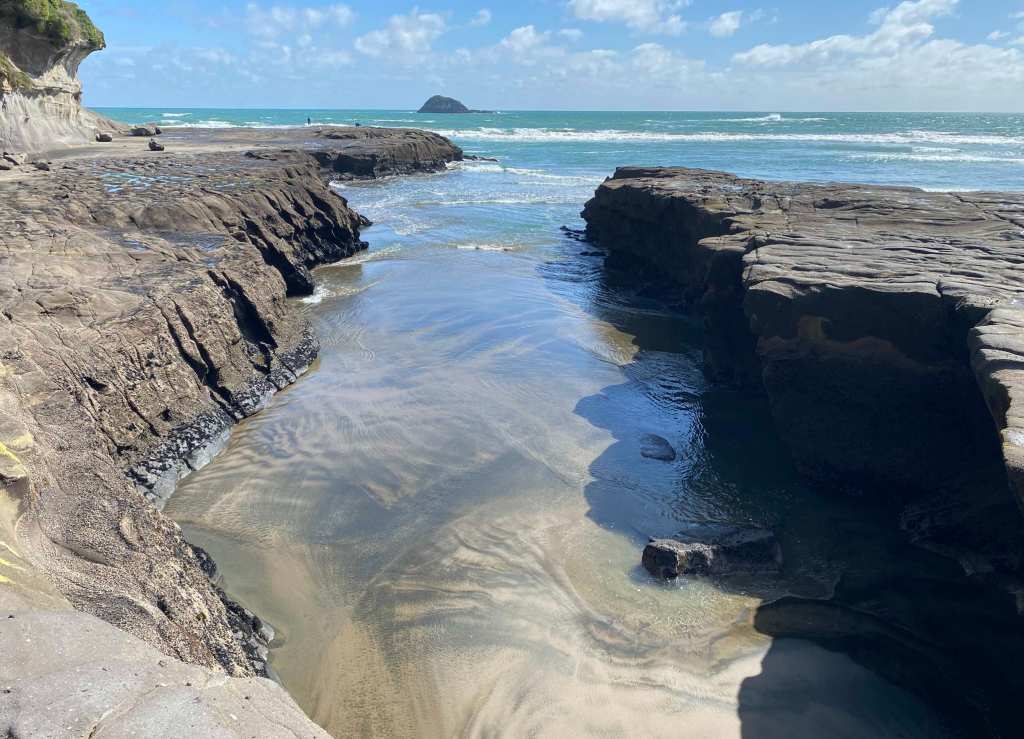
From sea level, as well as seeing the rocks and maybe exploring a few rockpools, you can also see the gannets flying into and out of their colony overhead. To see the colony, there is a path higher up, which splits into two main lookouts.
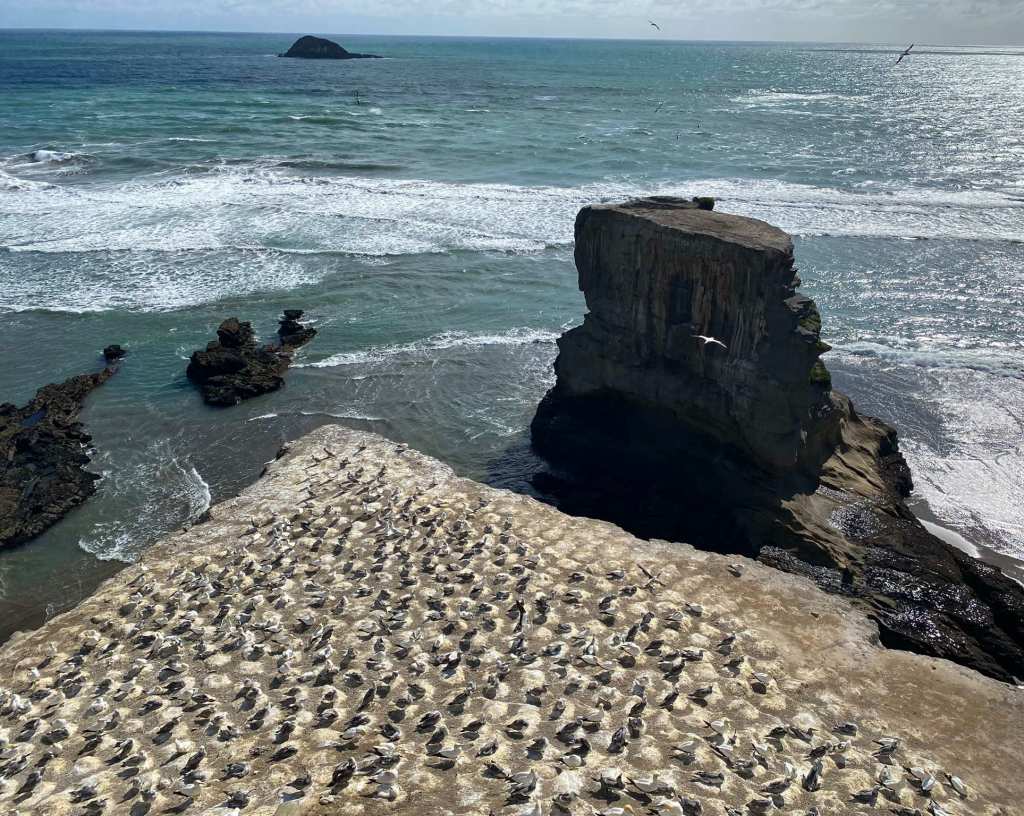
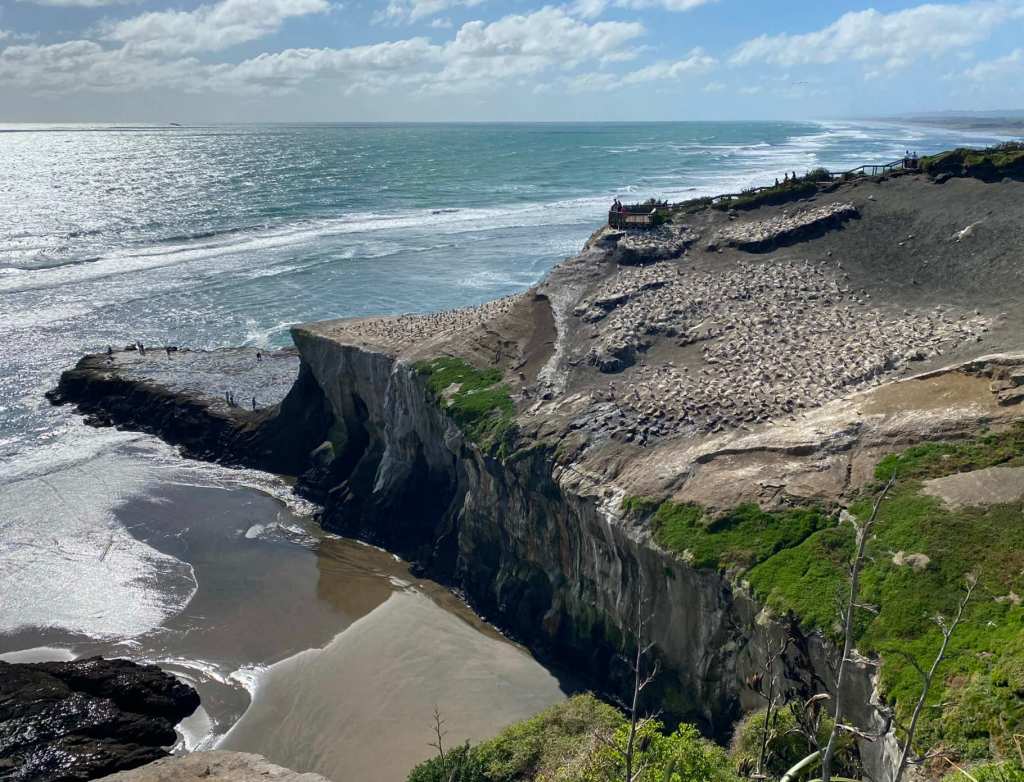
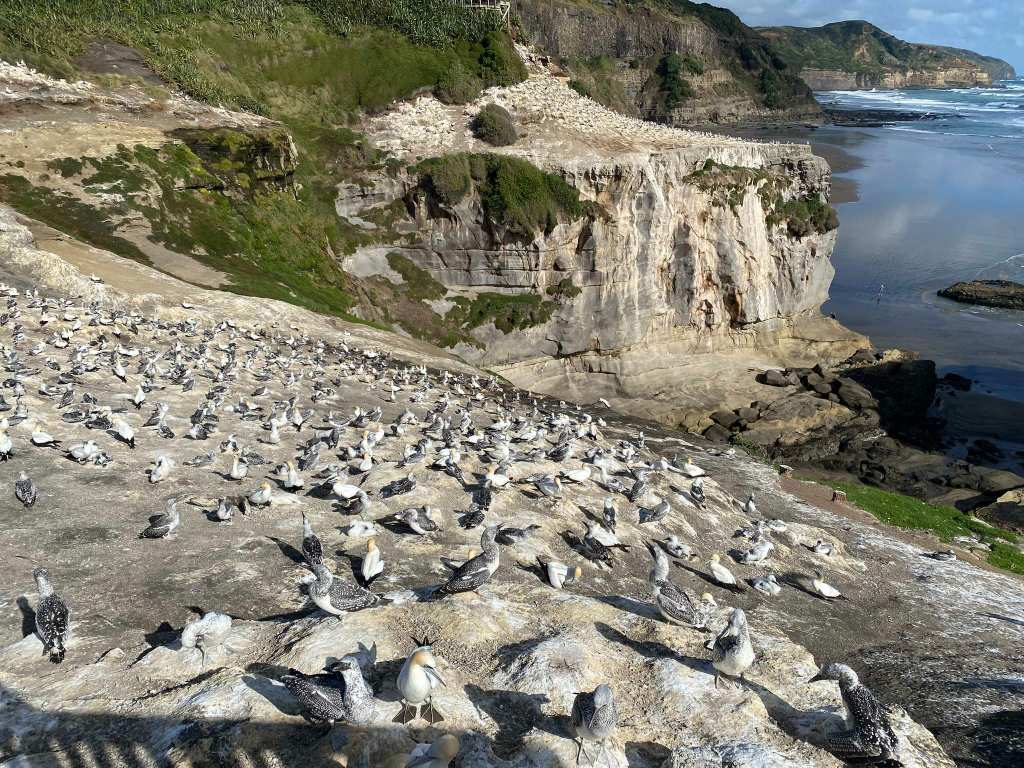
The eBird High Count of gannets here is 5000, but any time of year it seems you’re going to see a lot of them.
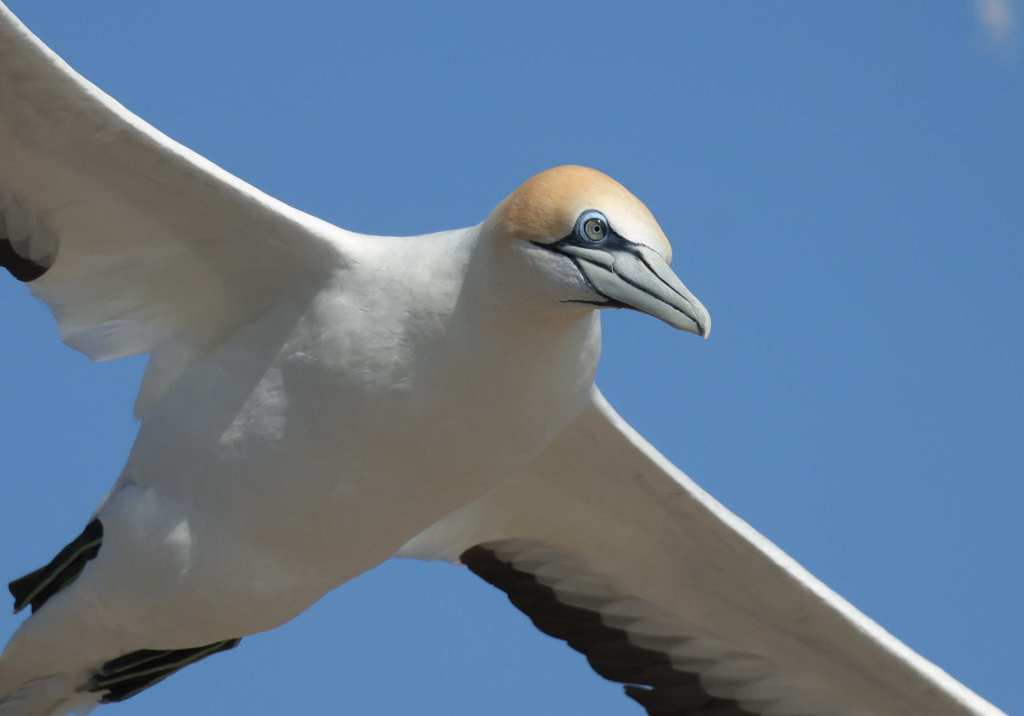
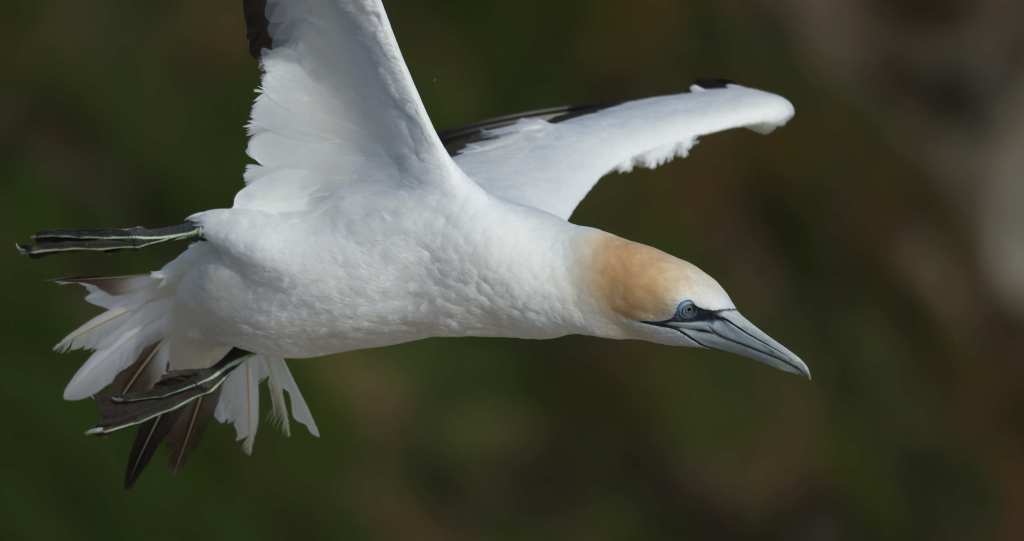
For photographers there’s plenty to get stuck into here, with birds in flight, as well as various behaviours of mated pairs and chicks. The mated pairs do a sort of “brief courtship renewal” ritual when one flies back to the nest, lightly tapping beaks and doing a bit of preening (they get so caught up in it that they sometimes forget their youngster!)
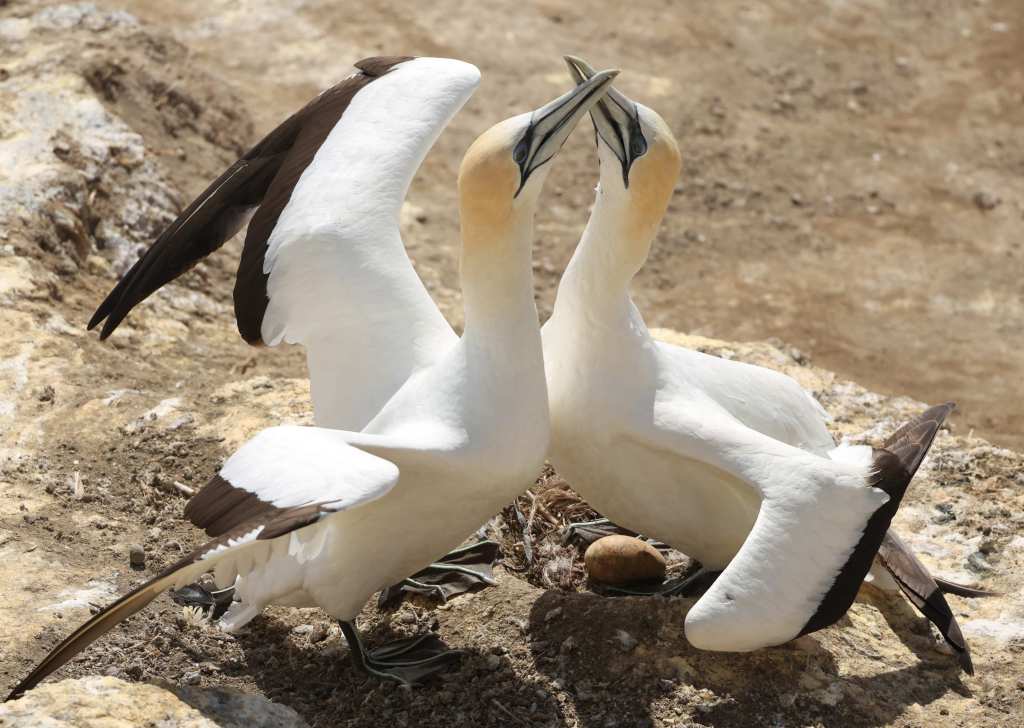
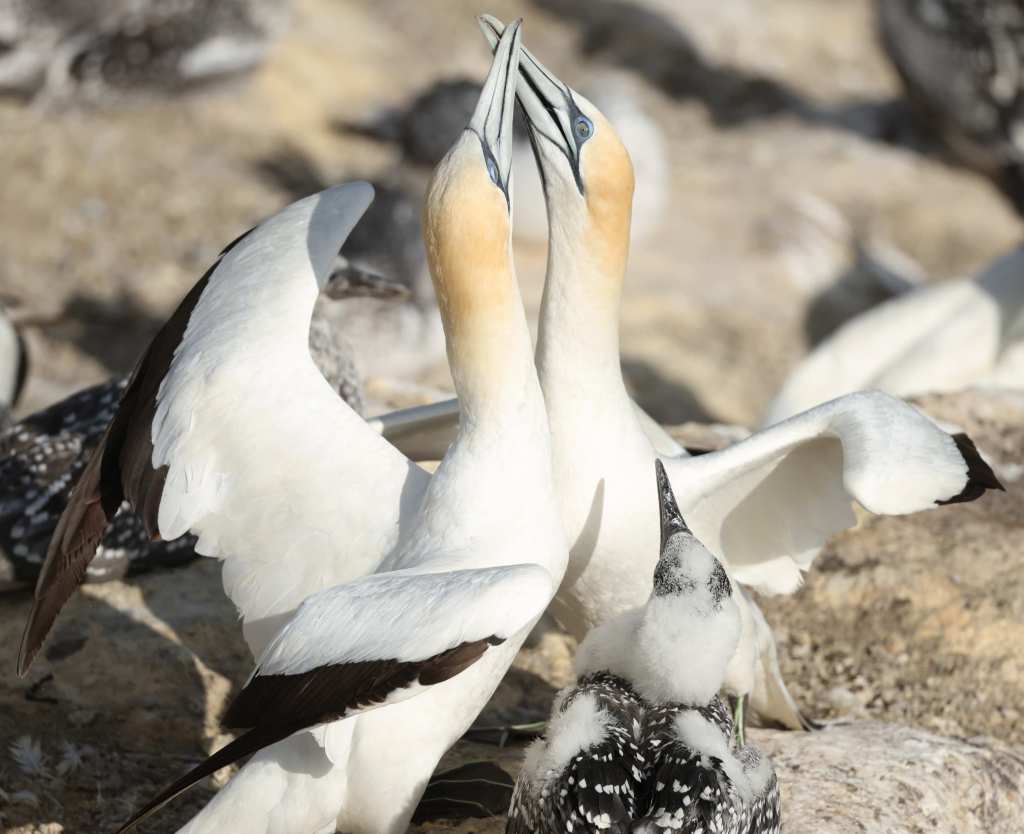
Juvenile birds with their dark-and-spotted plumage can get a bit uppity at each other, with these young birds snapping at their neighbours in between giving their wings a good long practice flap. Meanwhile the fluffy down-covered youngsters watch on.
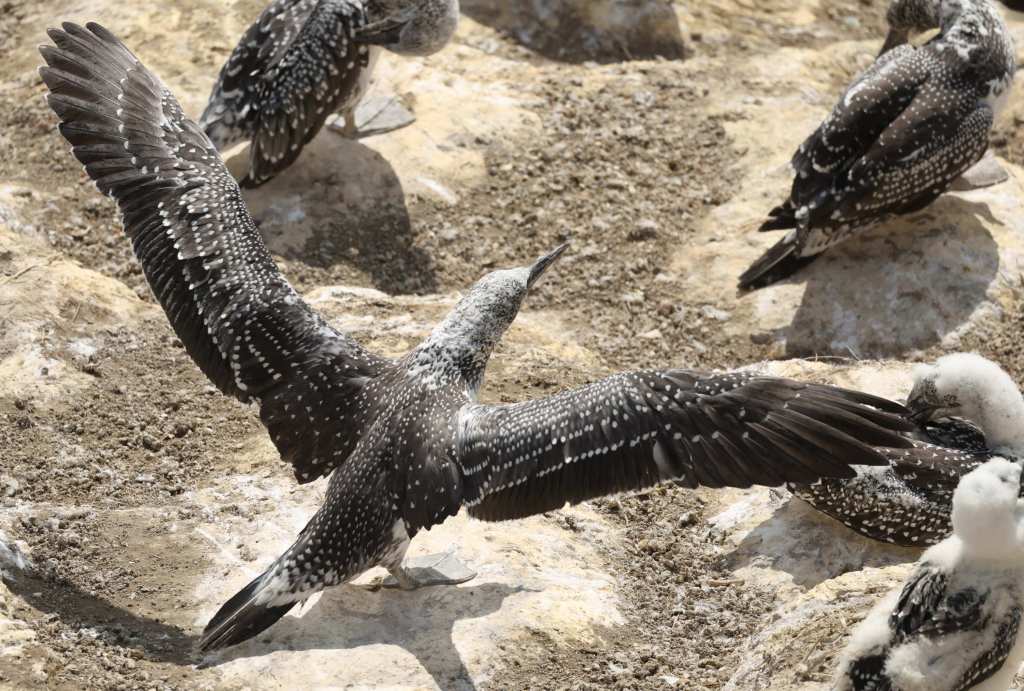
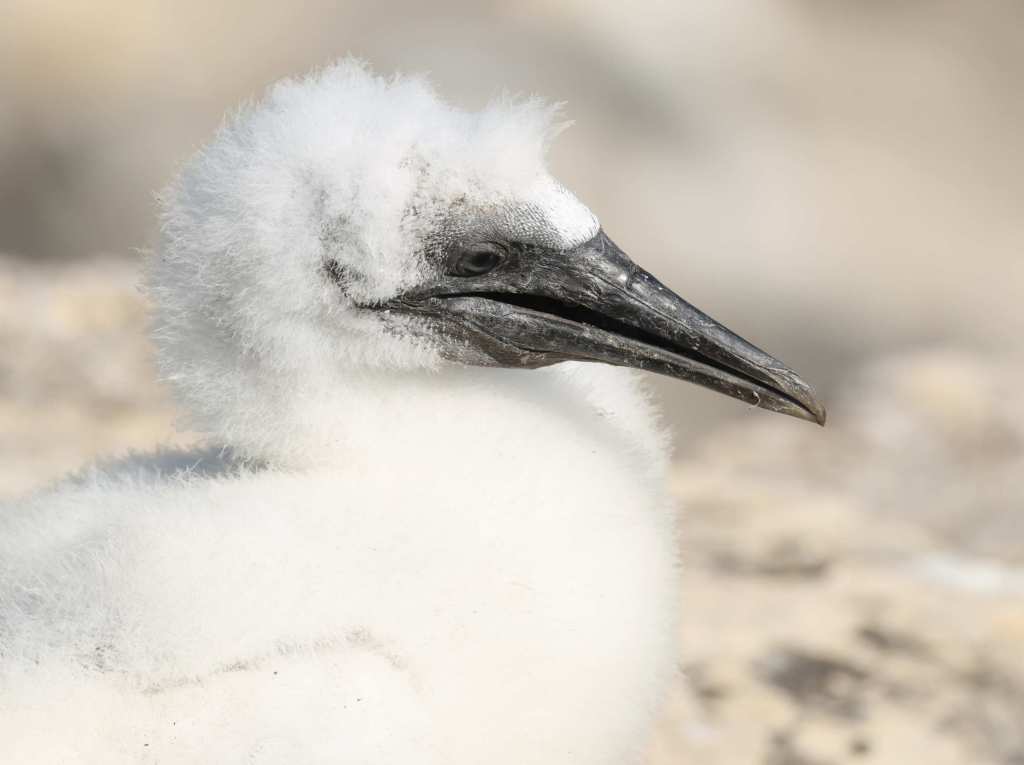
On the north-westernmost of the lookouts, the birds are literally nesting right next to the wooden walkway. You can’t get closer than that!
A challenge I set for myself here (the afternoon light was good for this) was to try and photograph gannets coming in to land; they adopt various interesting poses as they approach, with the last half a metre or so basically just a very ungraceful crash-landing.
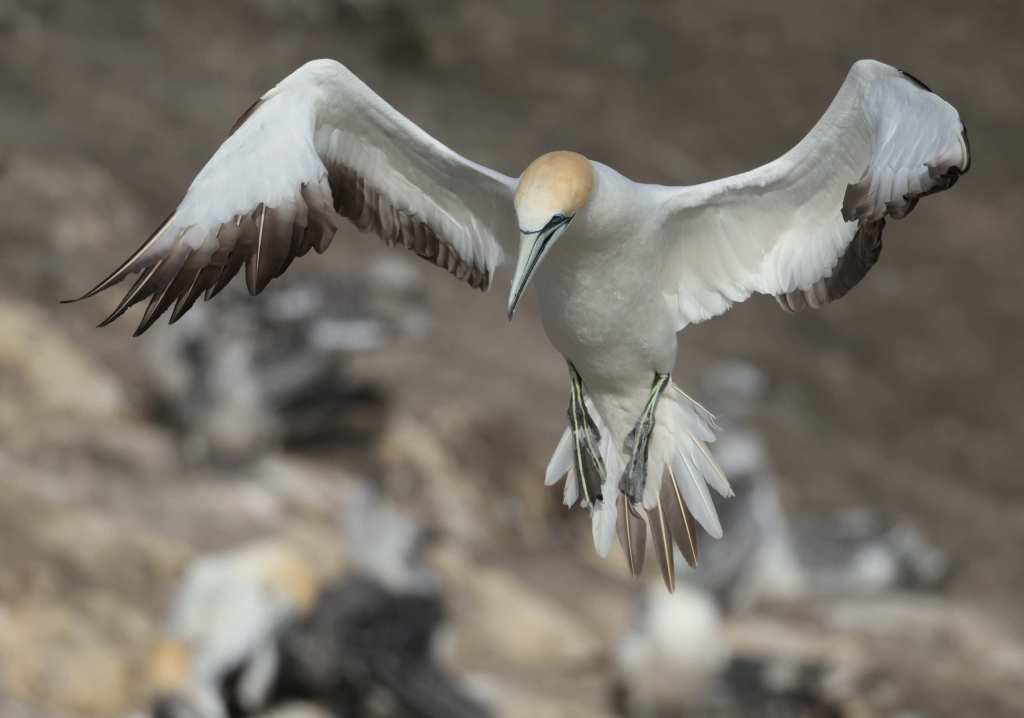
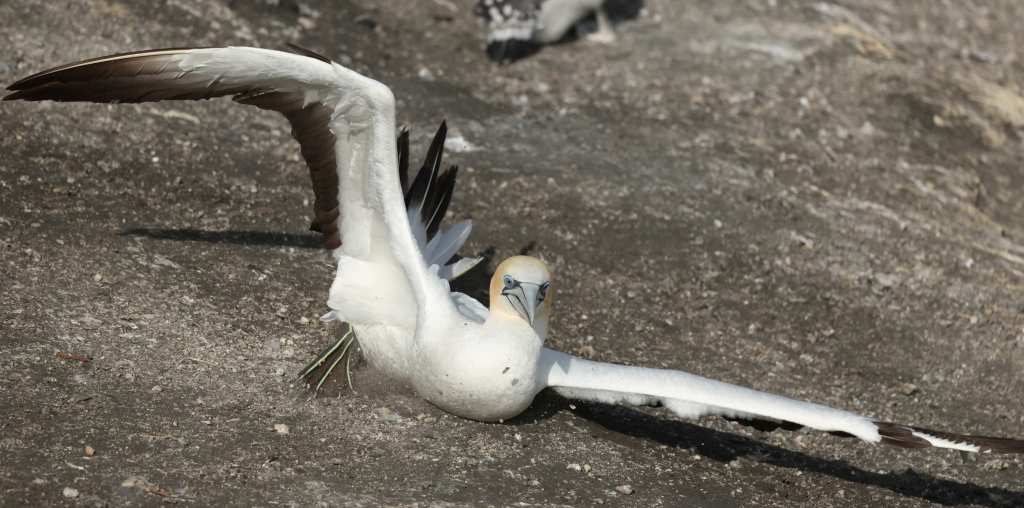
This site seems to be a bit of a seabird-watching spot too, with Brown Booby sometimes seen, along with sporadic/one-off sightings of various exotic seabirds like Shearwaters, Petrels, Albatrosses and Fulmars.
Miranda Shorebird Roost and Coastline
Miranda is New Zealand’s #1 eBird hotspot by all-time species count (141 species). So you might find something interesting here, and in any case, you are likely to see a very large number of birds.
The site is about an hour’s drive south-east of the Auckland CBD. The main shorebird action happens at Robert Findlay Wildlife Reserve. You should target high tide when the shorebirds are roosting in the shallow/dry lagoon areas.
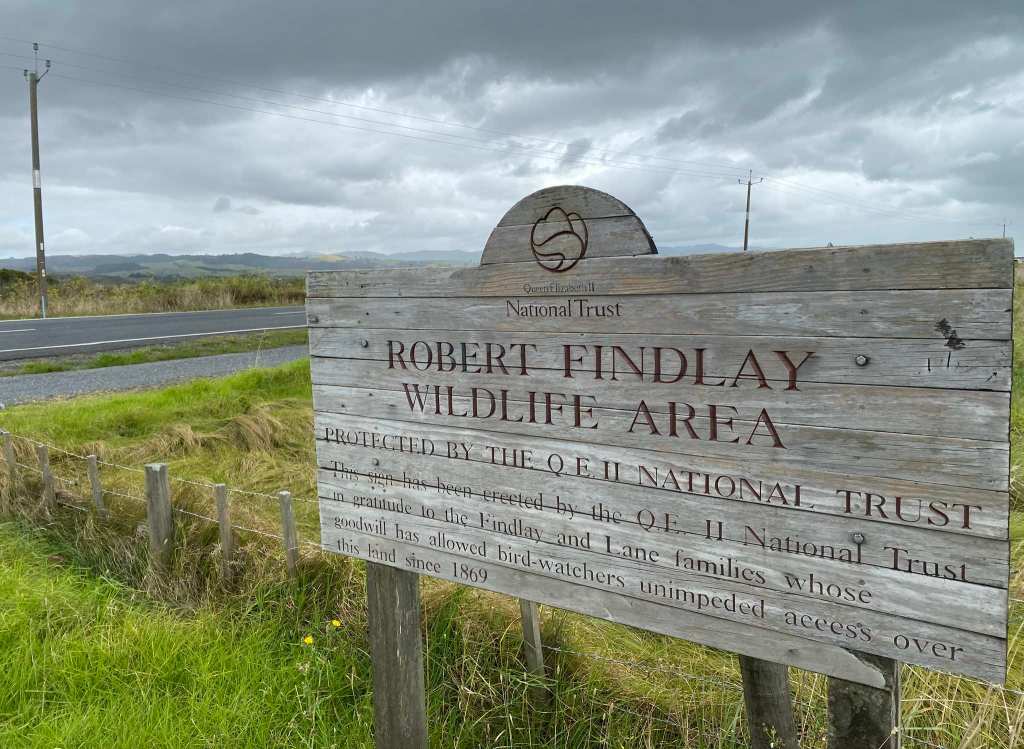
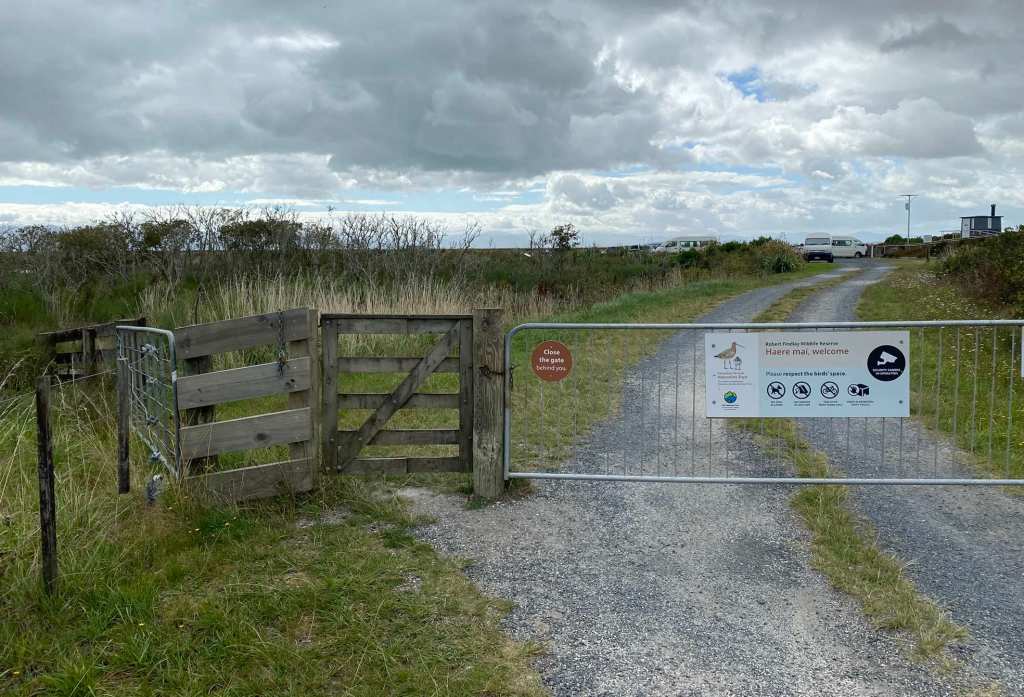
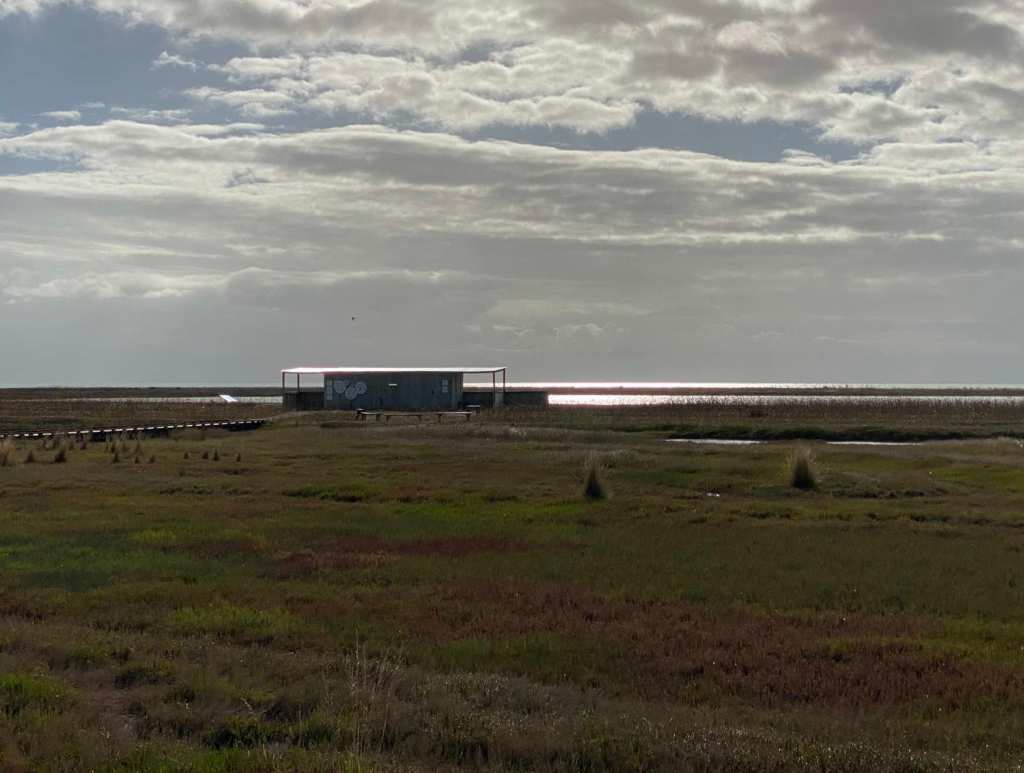
There are a couple of bird hides here, one of which looks out across the main roosting area.
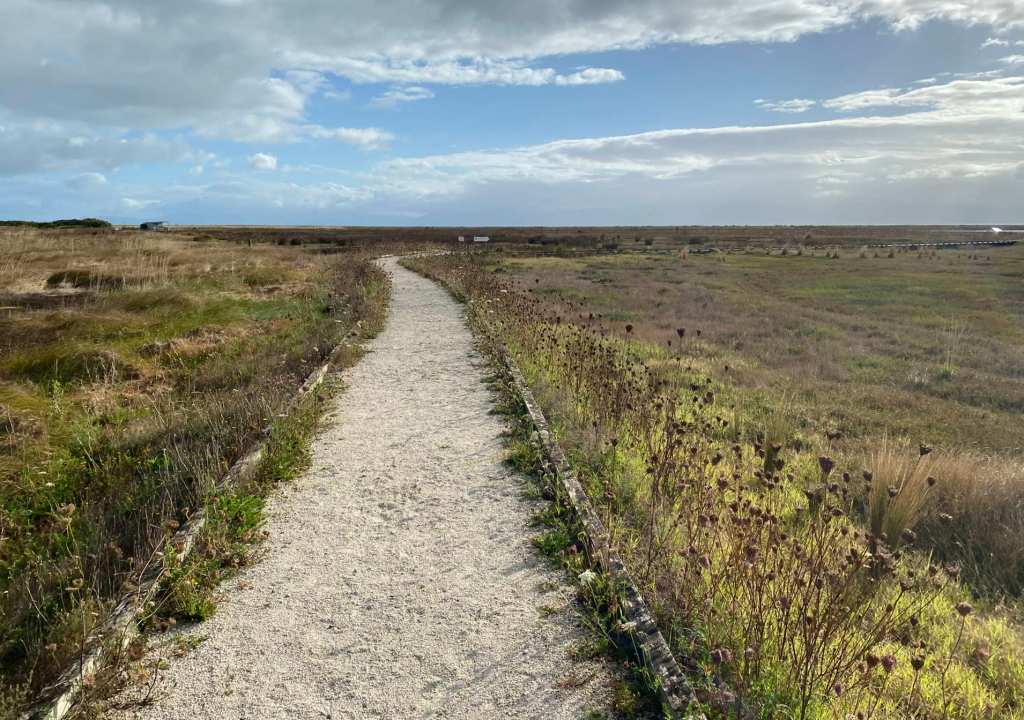
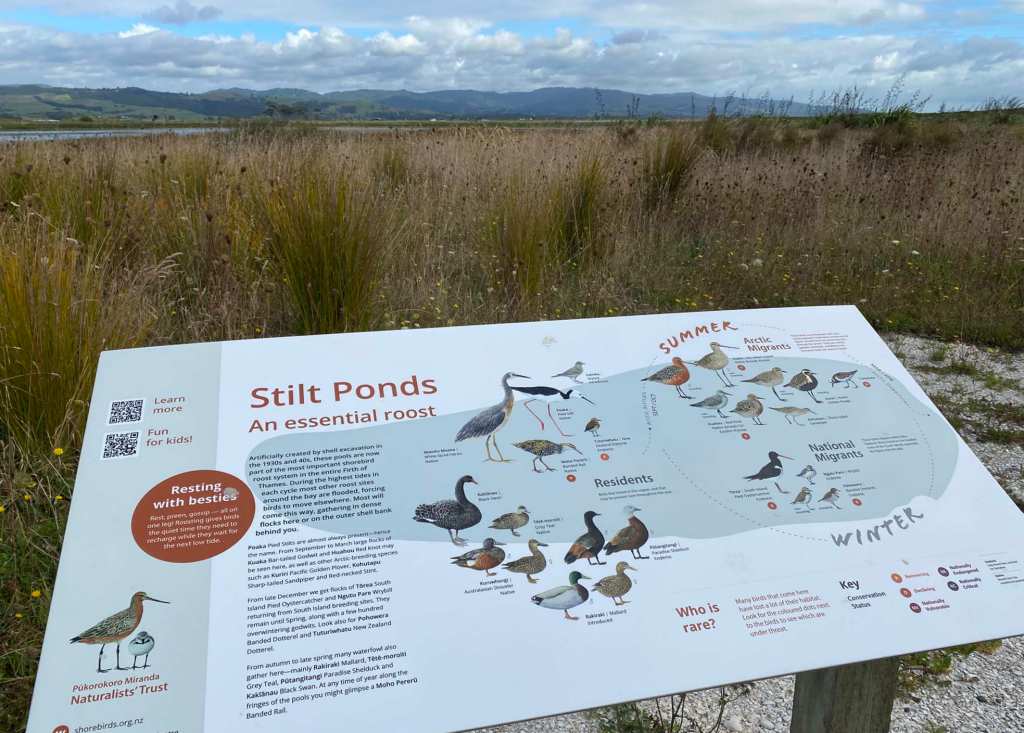
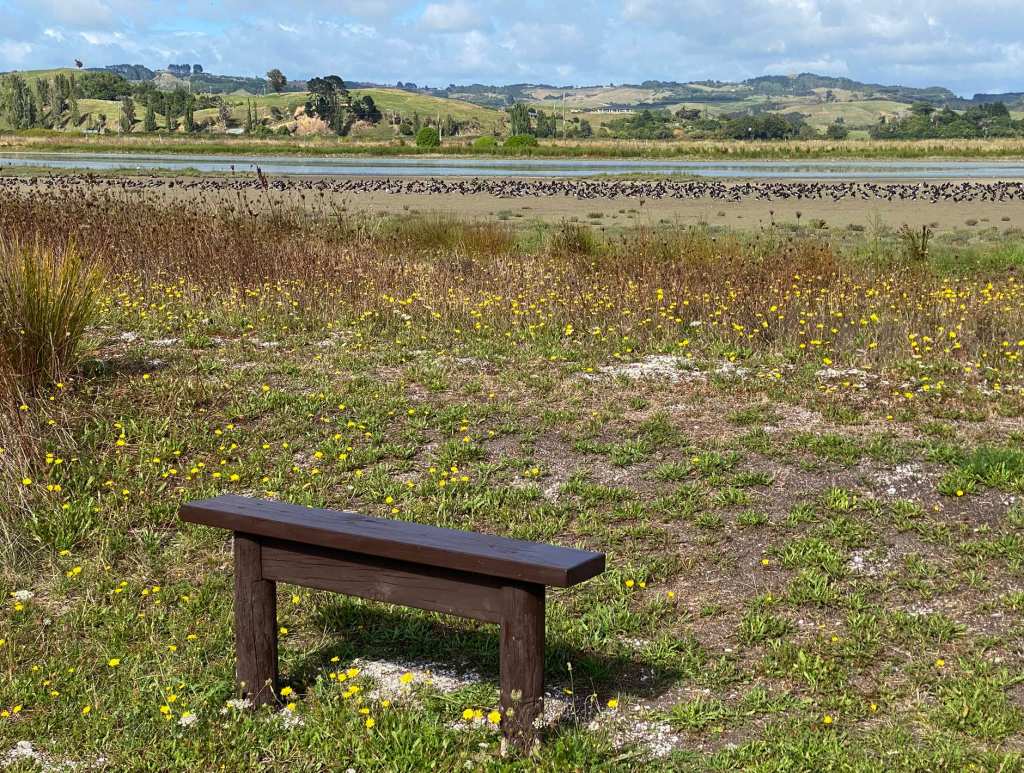
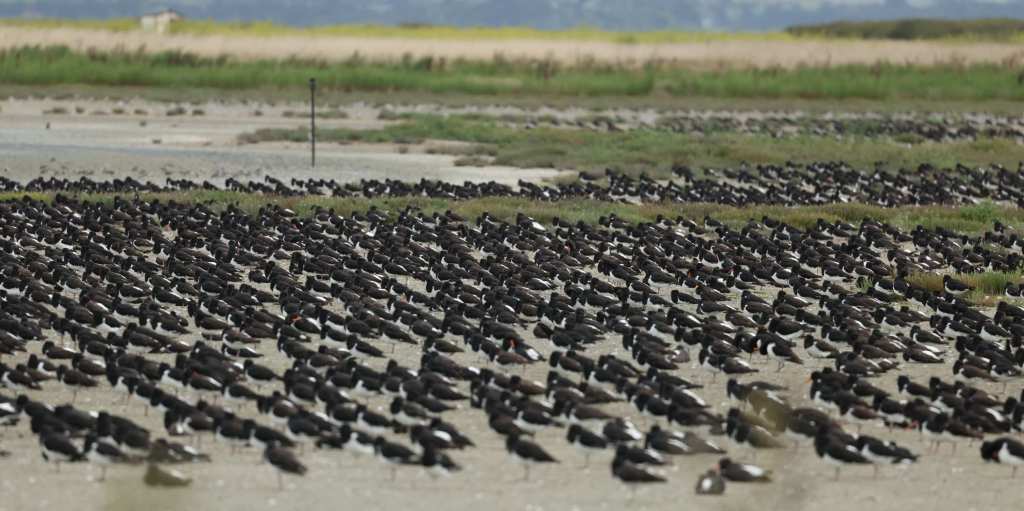
South Island Pied Oystercatcher is one of the most numerous species; on our visit (Feb 2026) we counted over 2650 (counting fairly roughly in blocks of 100!) If you need to see a Variable Oystercatcher (typically all-black), you’ll need to scan pretty thoroughly to find one in the sea of South Island Pieds.
Another species often in big numbers is the Wrybill, a New Zealand endemic. It’s a really interesting bird as it is the only one with a sideways-bent bill – this is an adaptation for prying underneath rocks in the pebble-strewn braided rivers that it forages in in the South Island.
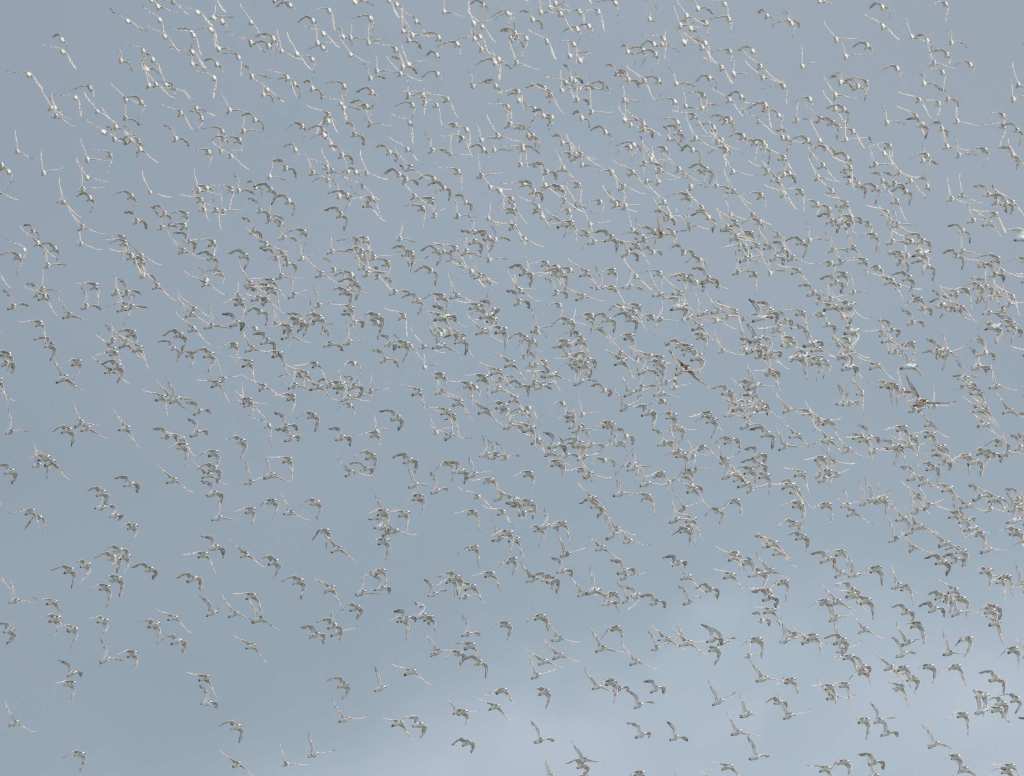
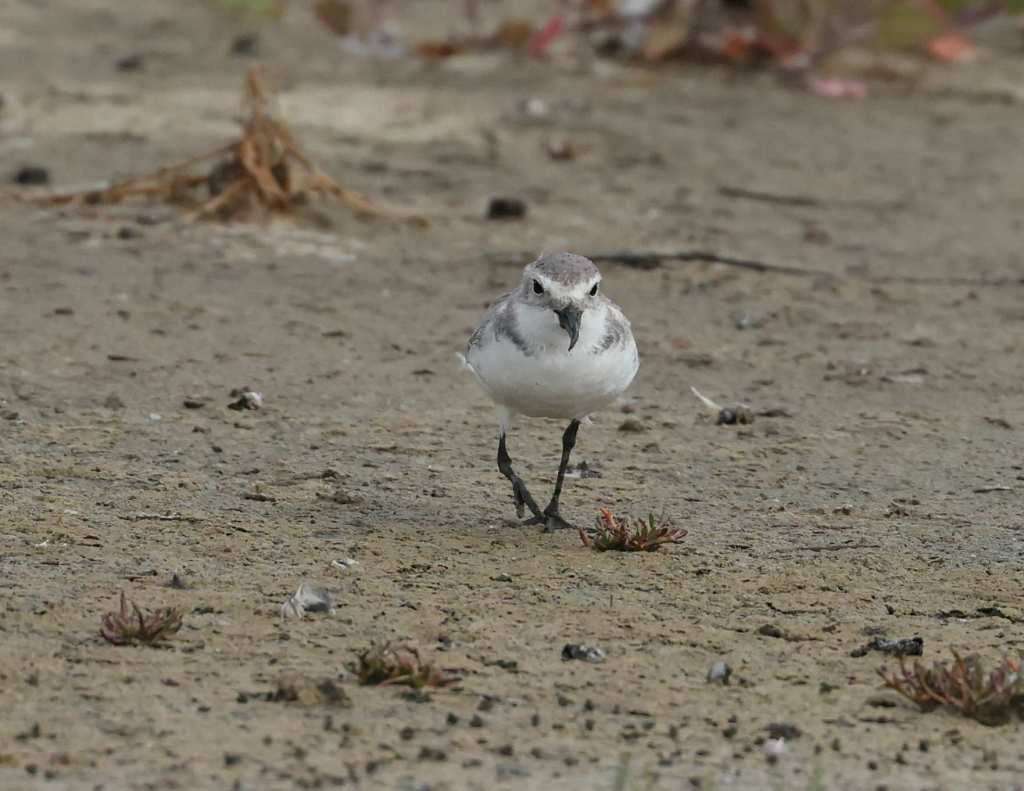
We counted over 1150 Wrybills on our visit, though they were often not close enough for quality photos, except for one or two birds that gamely pottered closer to the trail.
Bar-Tailed Godwits, Red Knots and Pied Stilts, all well-known to Australian birders, are also common here (we counted a staggering 3600 godwits!) It was also a treat to see over 800 Red Knots here, a species I’ve only seen in small numbers in Australia.
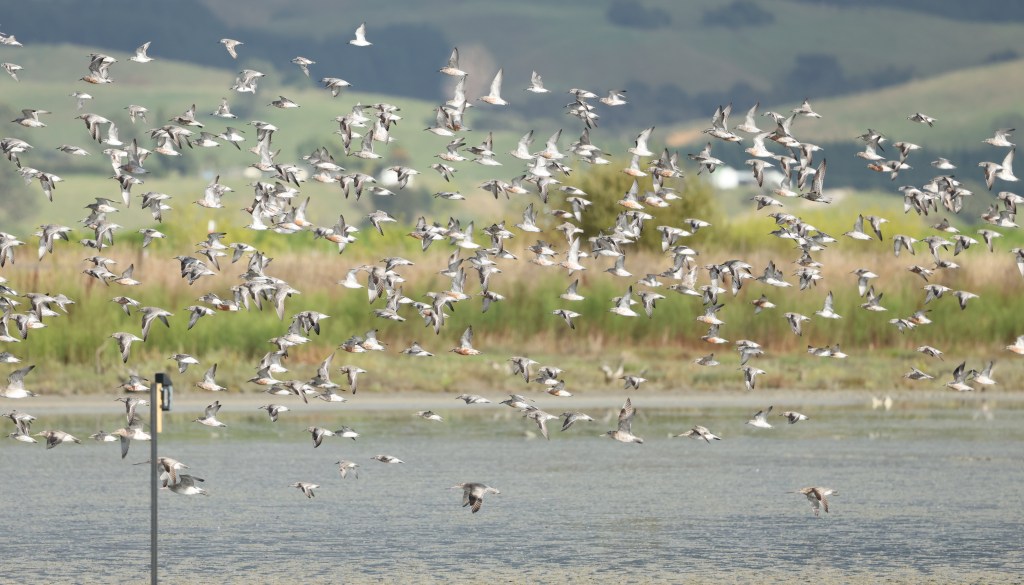
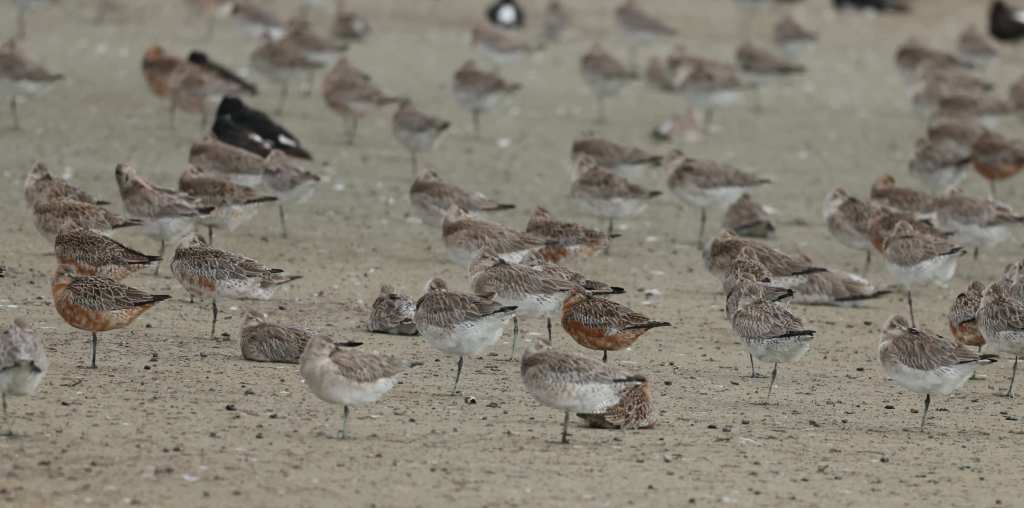
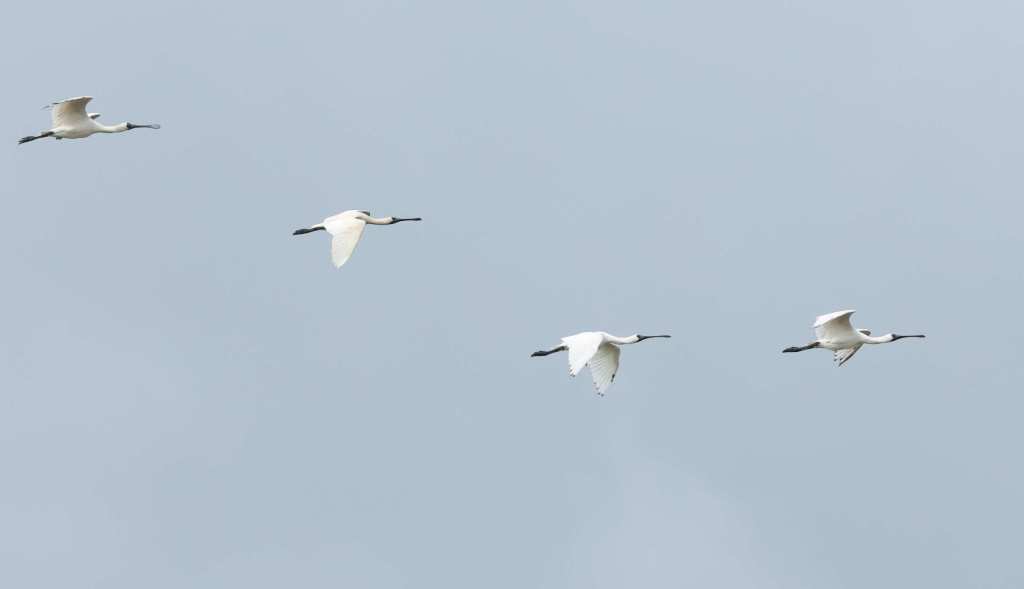
Double-Banded Plover, Pacific Golden Plover and the New Zealand endemic Red-Breasted Dotterel are other small shorebirds are regular here, while the bigger Royal Spoonbill can also be found – we saw a few flying over, then noticed with astonishment several roosting at the tops of a tree line near the road.
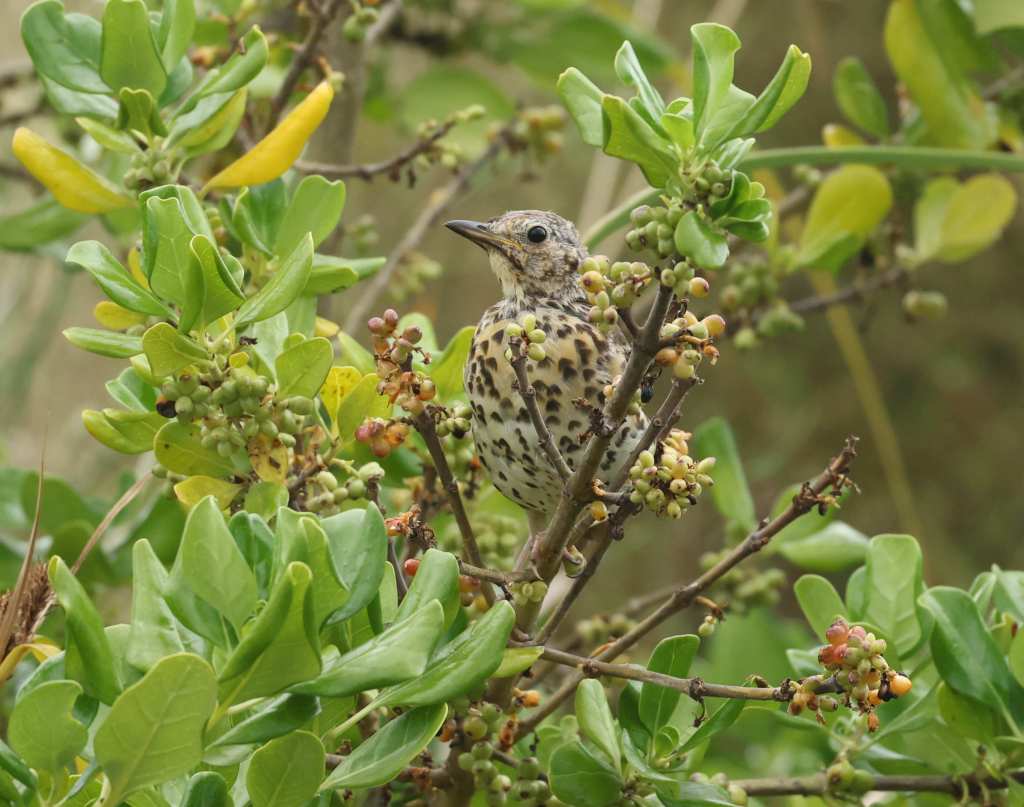
In the grassy areas, eBird suggests Eurasian Skylark and New Zealand Pipit as common, though we didn’t see either. We did see a lovely Song Thrush…
Rarities and uncommon sightings include Australasian Bittern, Shore Plover (very rare NZ endemic), Semipalmated Plover, Hudsonian Godwit and many more. It’s definitely a place to look for shorebird rarities if that’s your thing.
The Shorebird Centre is a couple of kilometres north of reserve and is well equipped with information, souvenirs, and a great range of books about birds and wildlife.
East Coast Road
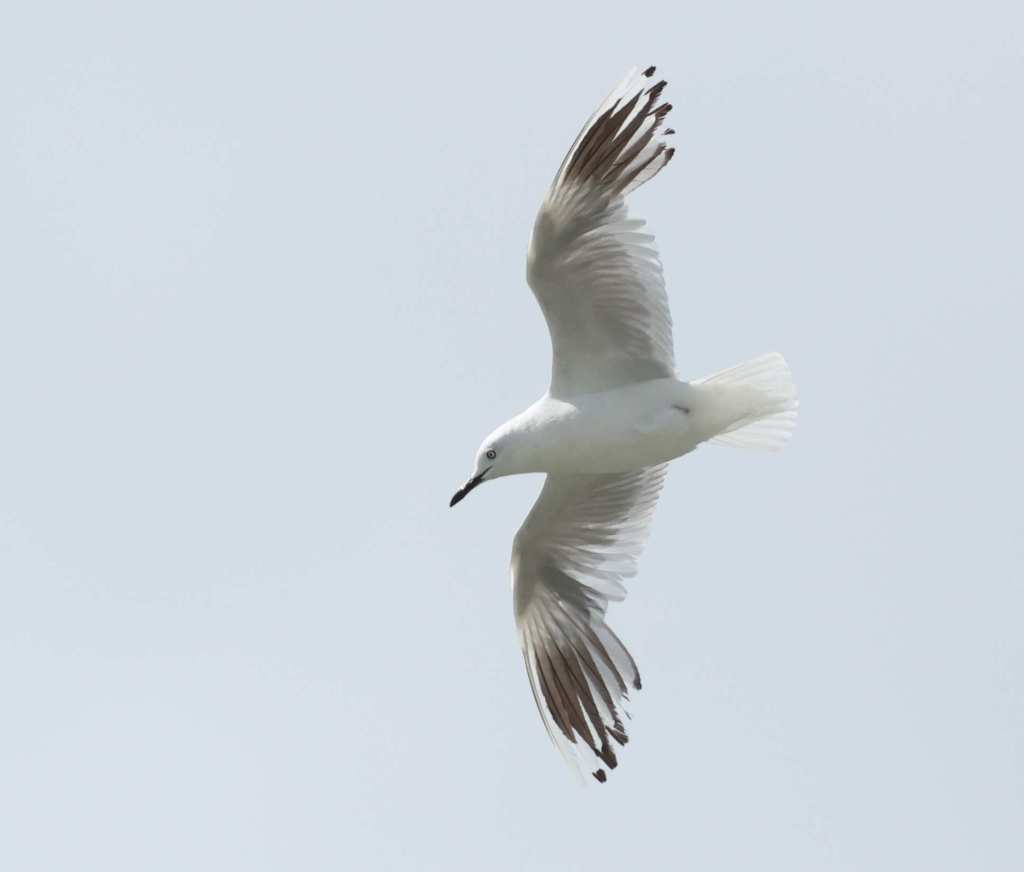
The East Coast Road follows the Bay of Thames for around 20km and is a further chance to find some birds of interest. In our case we were still looking for Black-Billed Gulls, which are very similar to the super-common Silver Gull but with a thinner, blacker bill. After fruitlessly scrutinising many, many gulls around the Auckland harbour and city area, we finally found a definite Black-Billed Gull on this coast line.
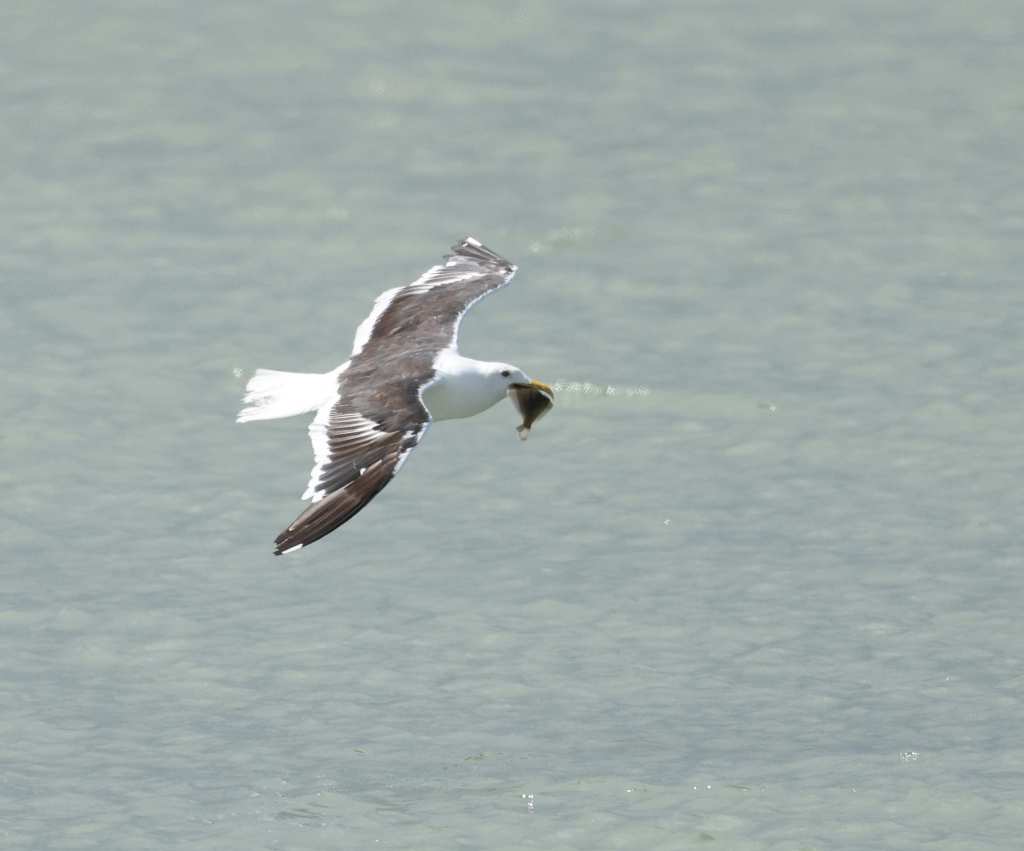
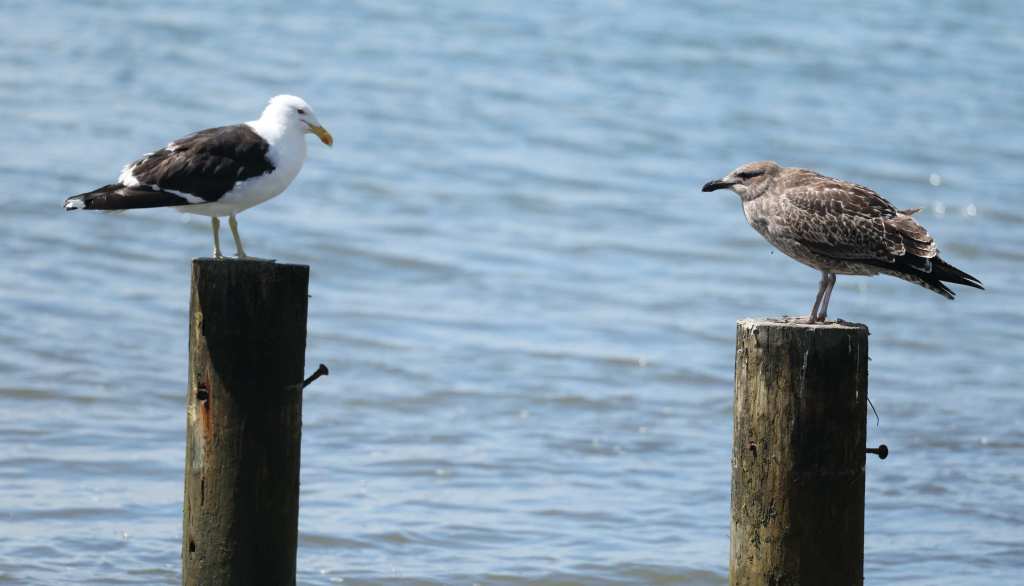
Caspian Terns, Kelp Gulls, Pied and Little Pied Cormorants all frequent the shores here.
White-Faced Herons are another common-in-Australia bird it was nice to see again too.
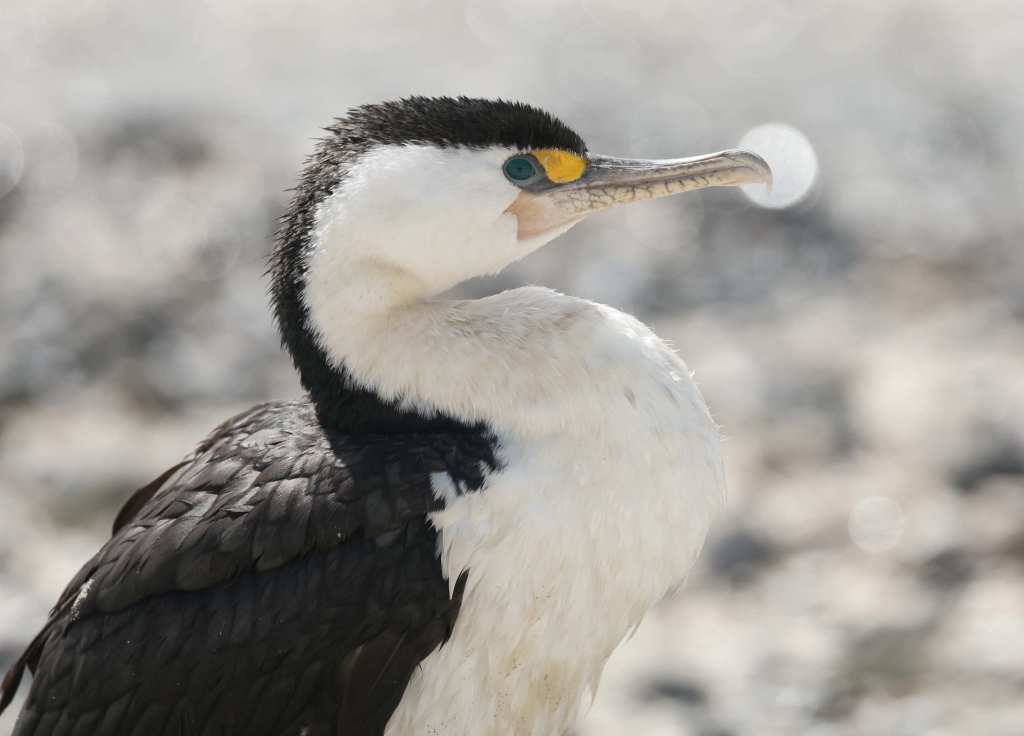
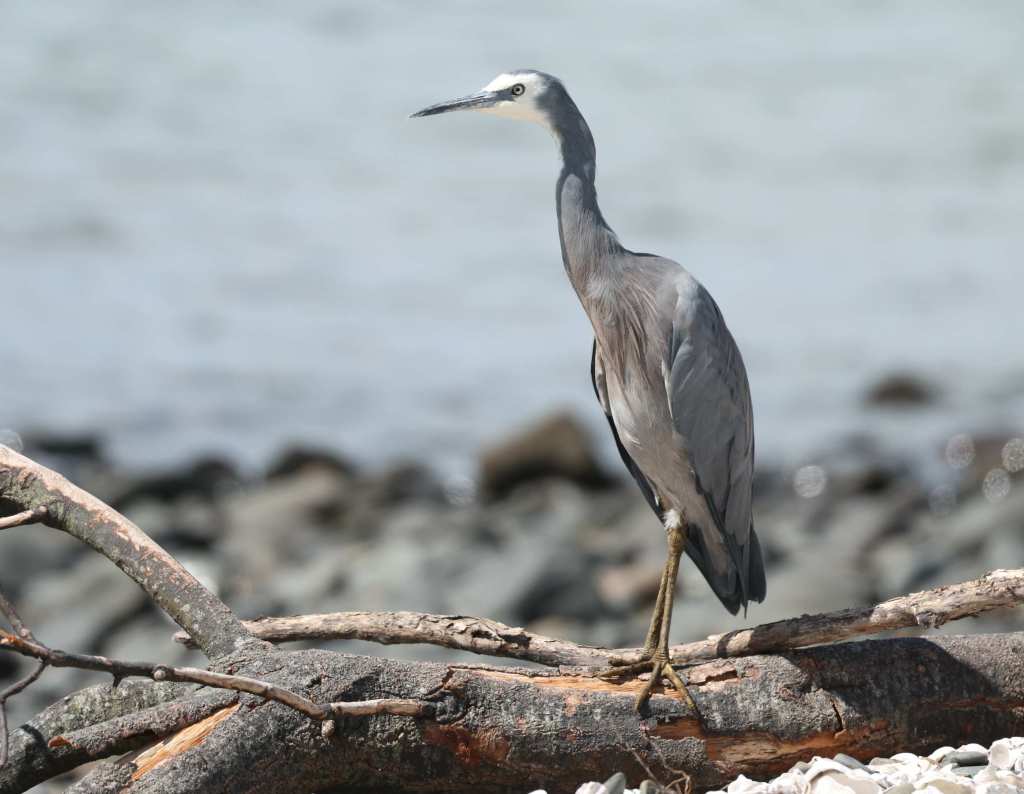
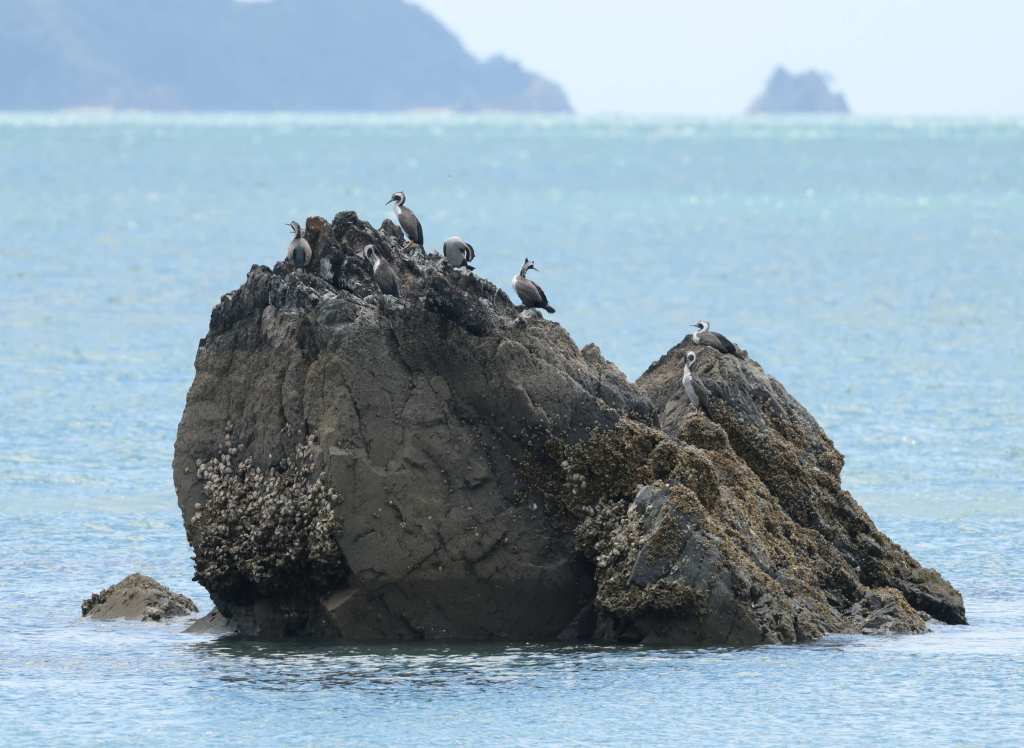
Following the road further north around to Kawakawa Bay and finally to where the road ends at the small but lovely cove of Waiti Bay, we looked for the New Zealand endemic Spotted Shag, knowing (from eBird records) that these rocky coast lines were a decent location to find them. We eventually saw seven of them on a small rock a few metres off the headland – mostly inaccessible for closer photos, but enough to admire the interesting plumage of this bird.
Mangere WTP
This is a cluster of eBird hotspots associated with the Mangere Waste Treatment Plant, just a couple of kilometres north of the airport. But don’t worry! It doesn’t smell. It’s a good option for some birds that might be harder to find elsewhere – for me, it was the only location I found New Zealand Scaup and New Zealand Grebe in the time I was in Auckland.
The main canal you turn into is Puketutu Canal, with Island Road running alongside it.
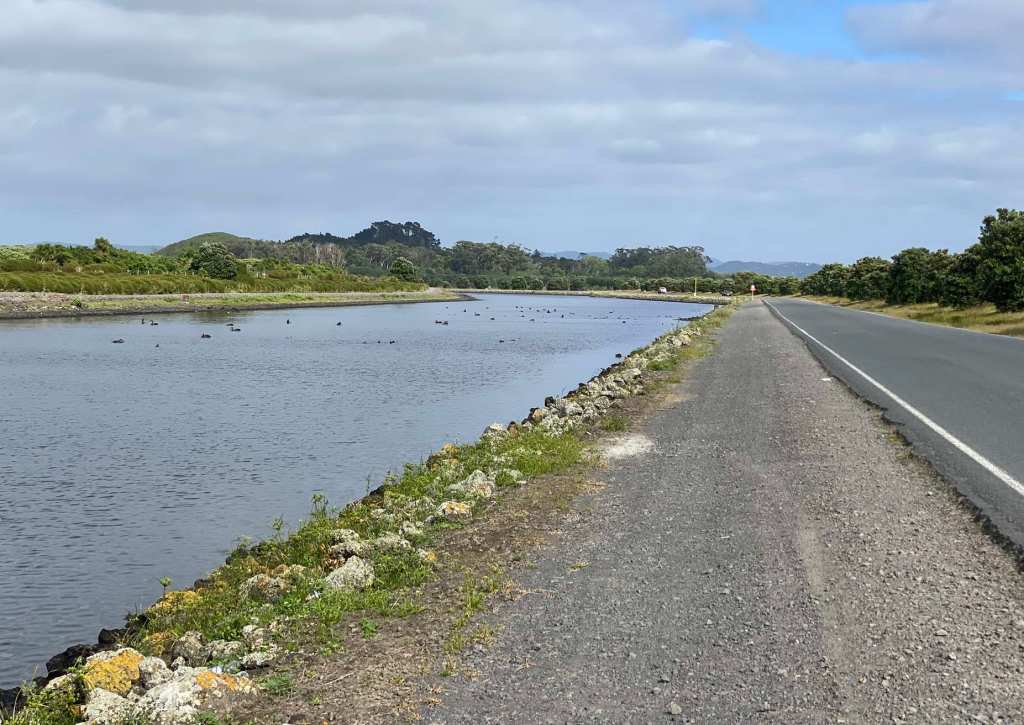
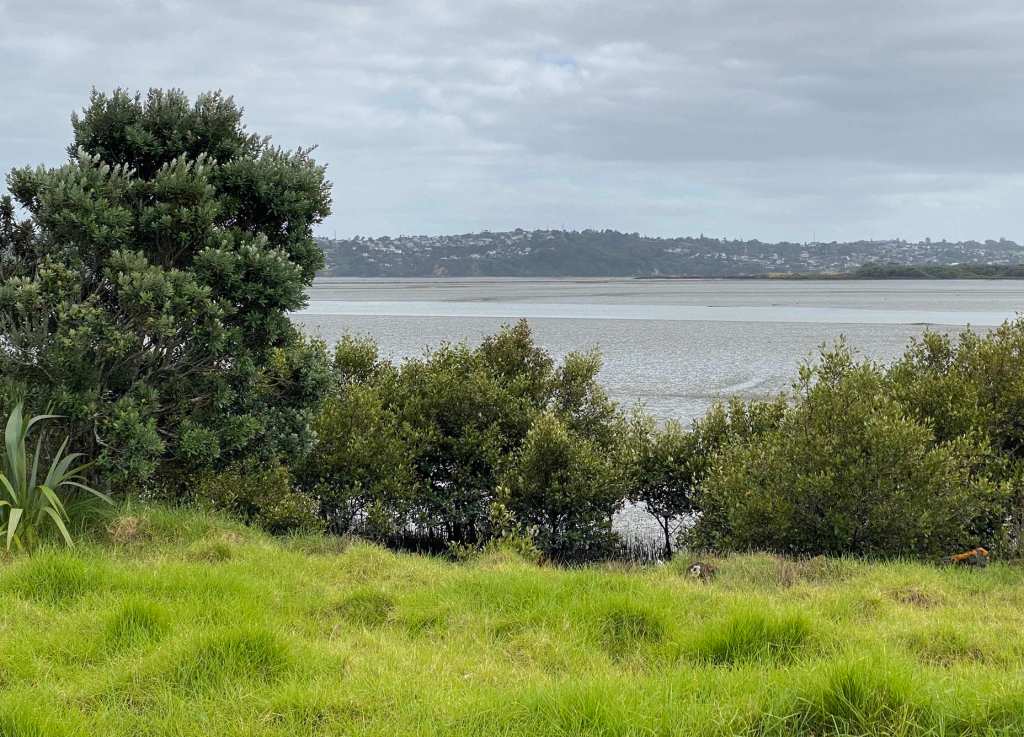
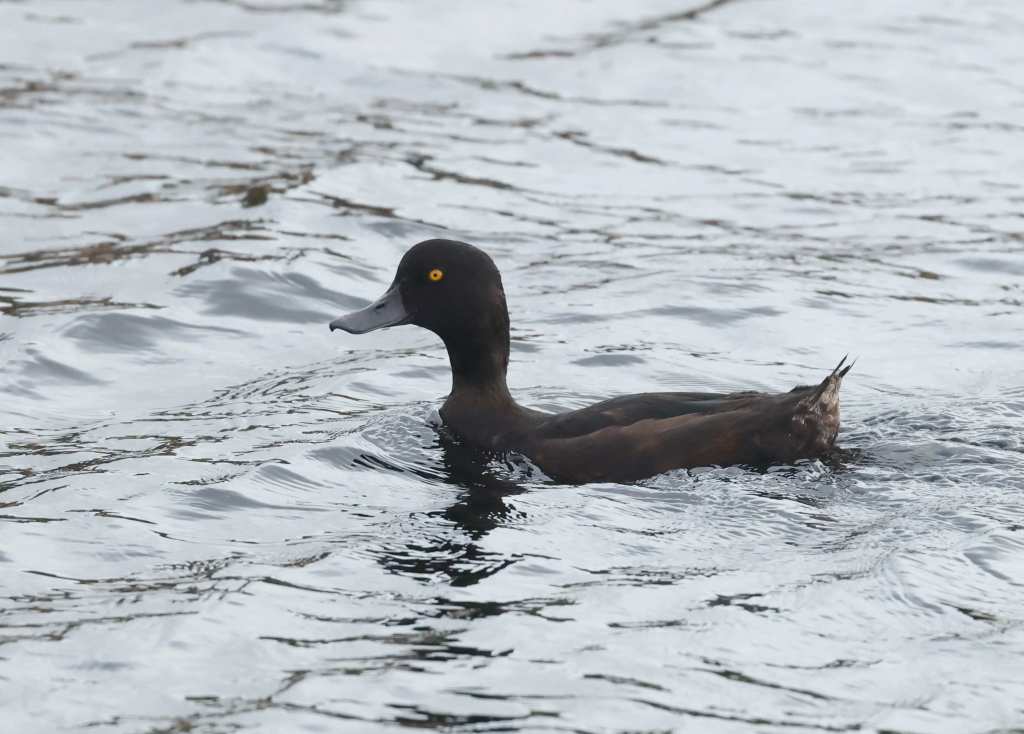
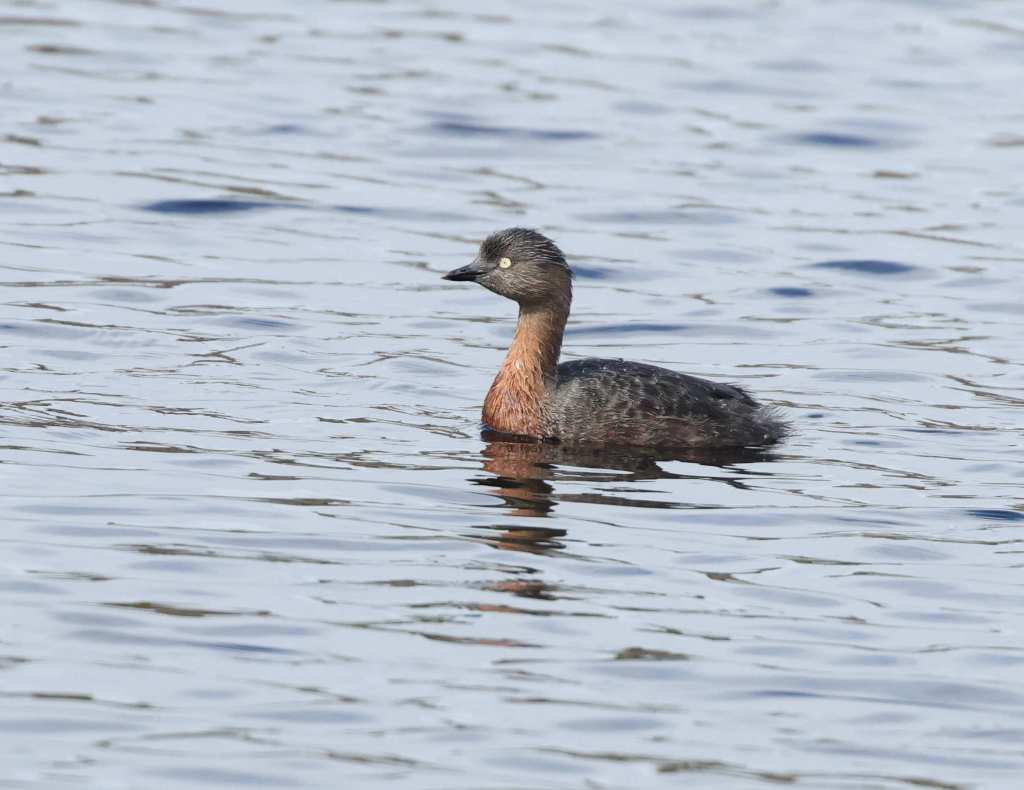
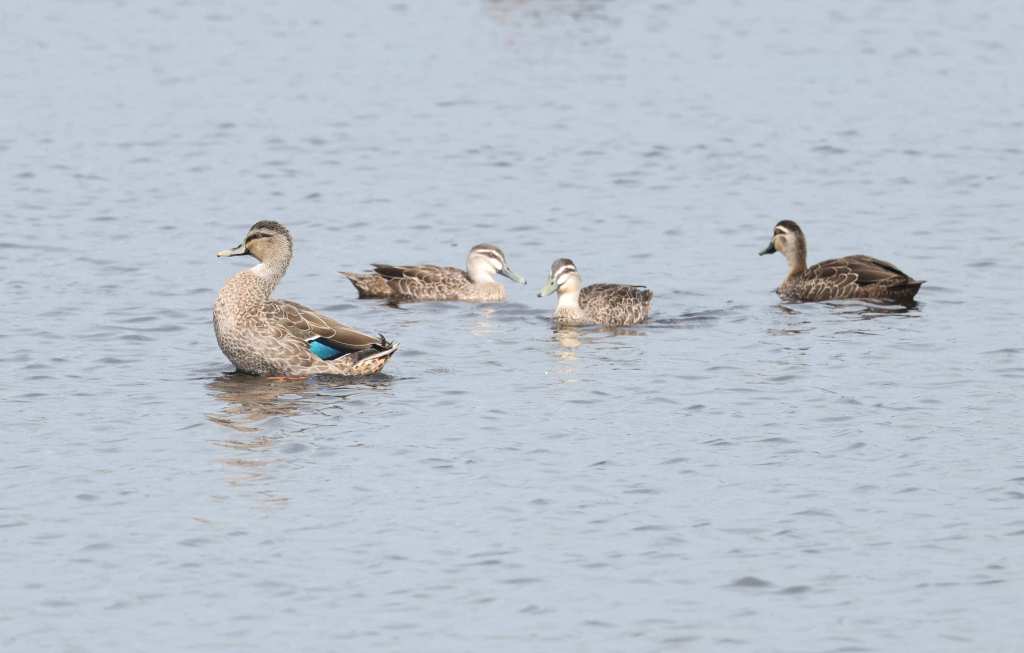
I saw a lone New Zealand Scaup straight away when I arrived, and quite a handsome duck it is too. New Zealand Grebe to my mind is indistinguishable from Australasian Grebe, but hey, if it’s supposed to be a separate species, then… OK. The ducks here look like Pacific Black Ducks, but I believe most of them are hybridised with Mallards (the heads are lighter-coloured, for example); if you checklist an actual Pacific Black Duck, it might well come up as an eBird “Rare Bird Alert”!
There are views across to the very extensive mudflats – “Traffic Lights Bay” in eBird – which reveal Pied Stilts, many Silver Gulls, and – really only identifiable if you have a good spotting scope – shorebirds such as Bar-Tailed Godwits, with a dose of Wrybills, Red-Breasted Dotterels, and also Double-Banded Plover at certain times of year.
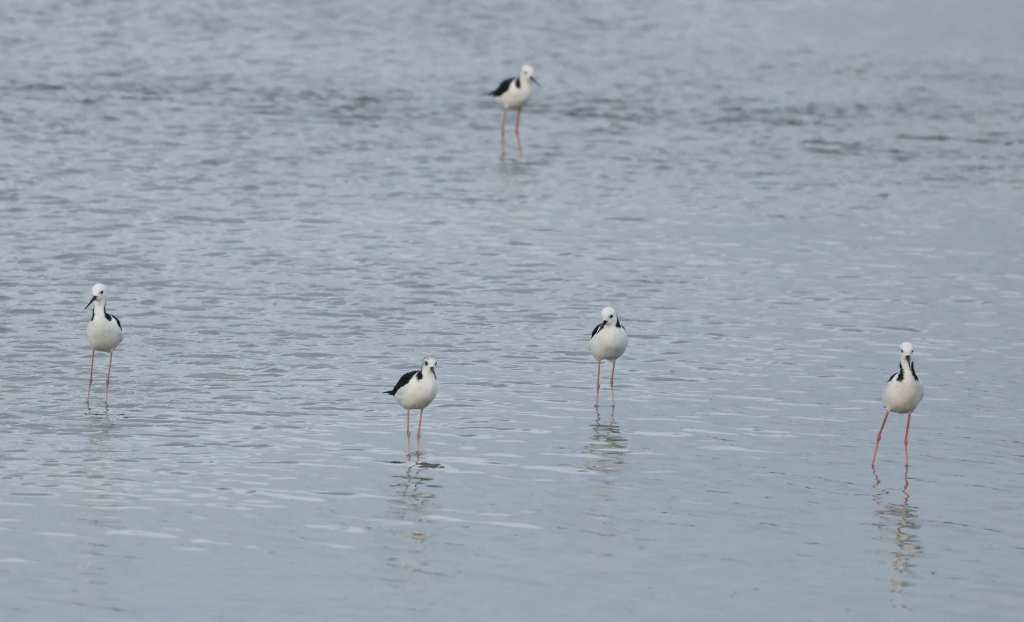
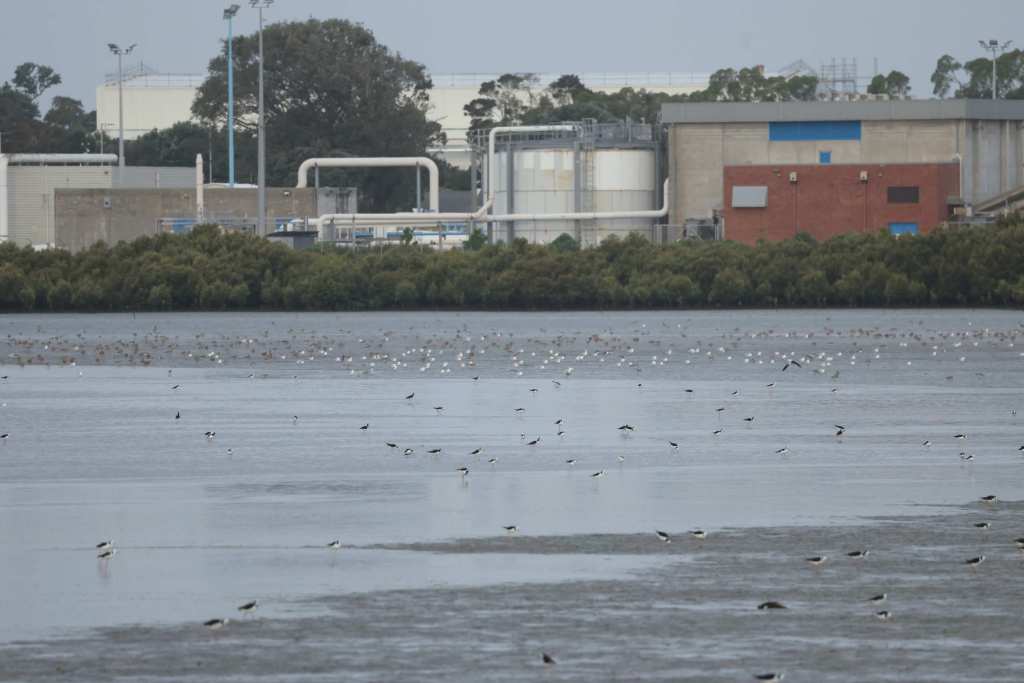
Further down Island Street you’ll get to a small car park, which gives access to the “main holding pond”.
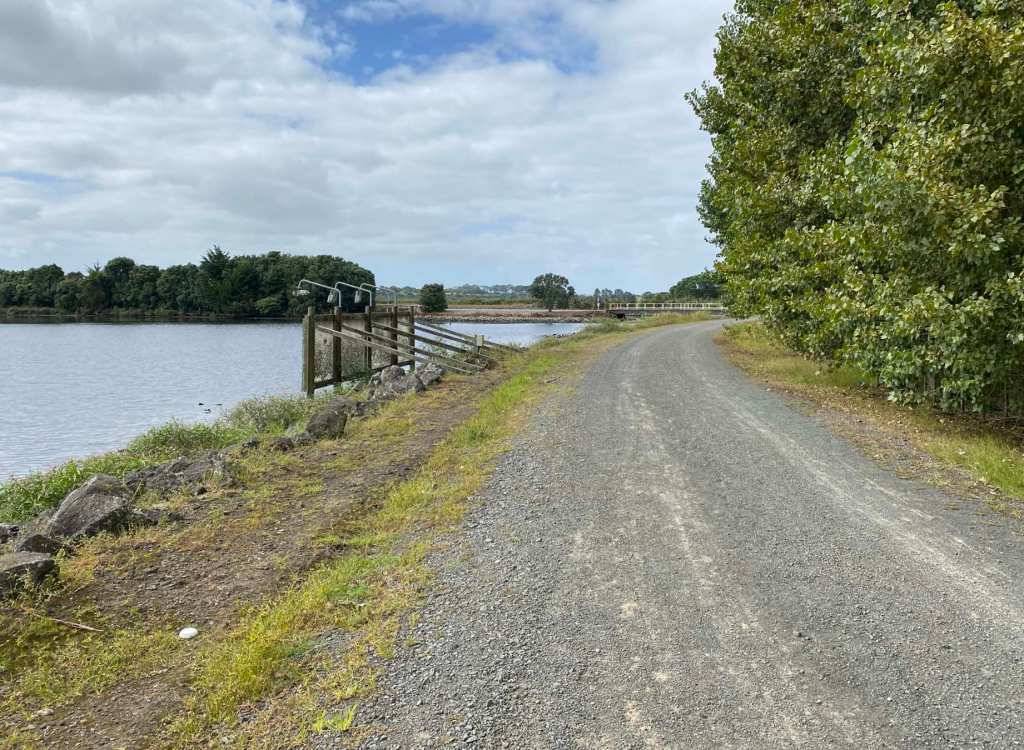
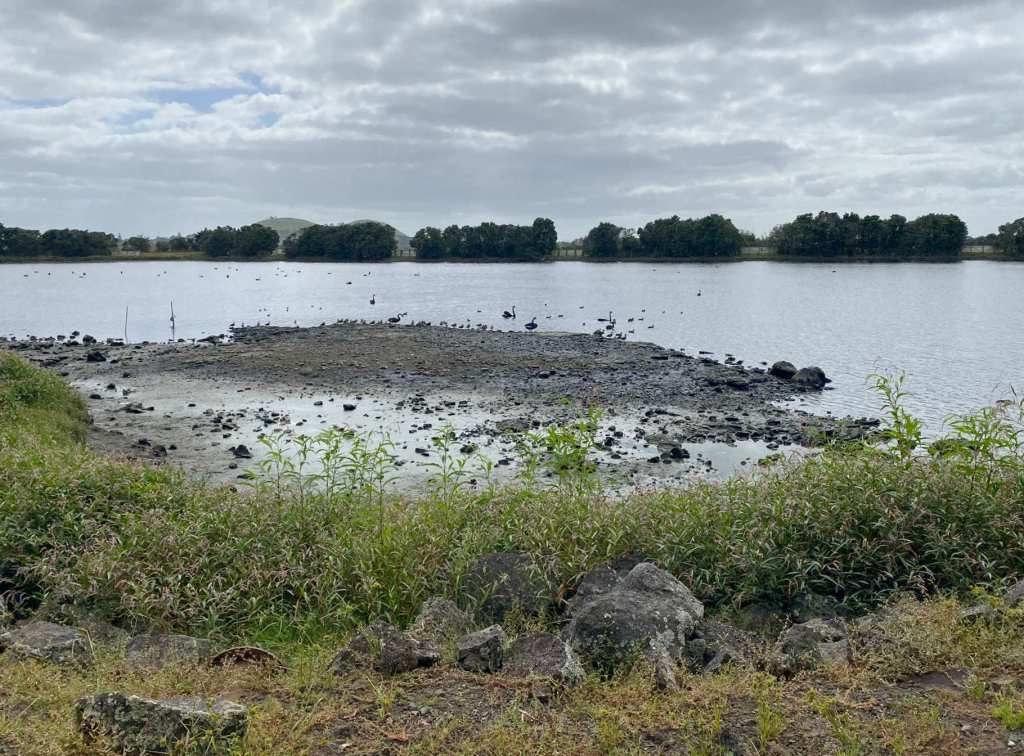
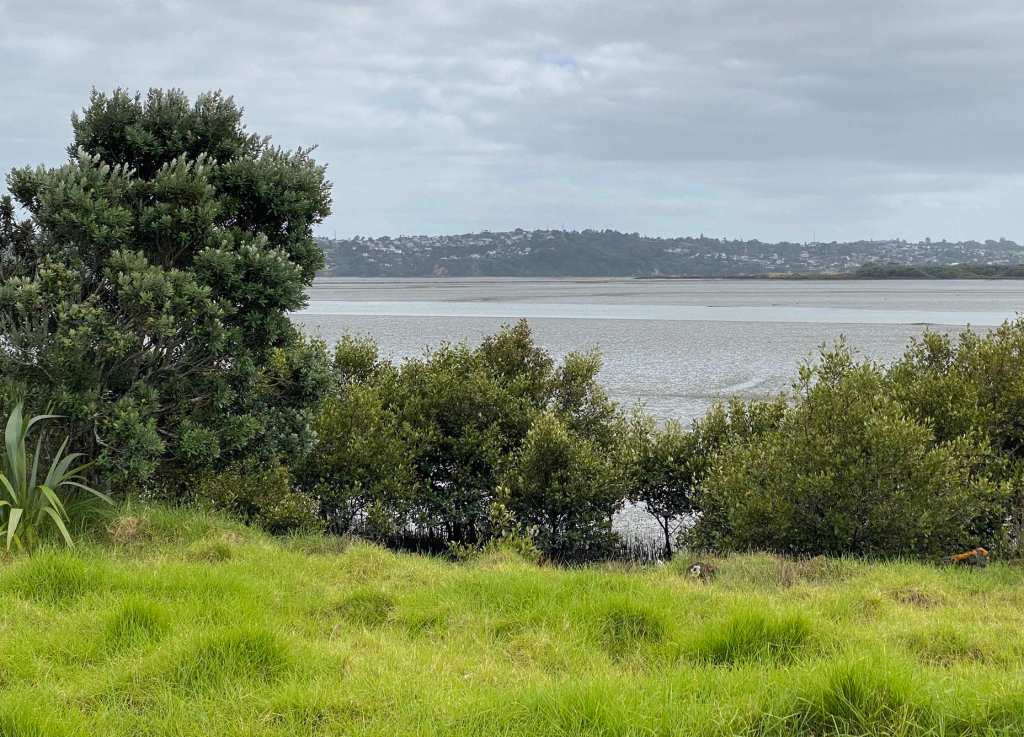
Here I found a smattering of birds – more duck hybrids, but also an Australasian Shoveler, and more of the Black Swans that hang around this area. There were also some Royal Spoonbills.
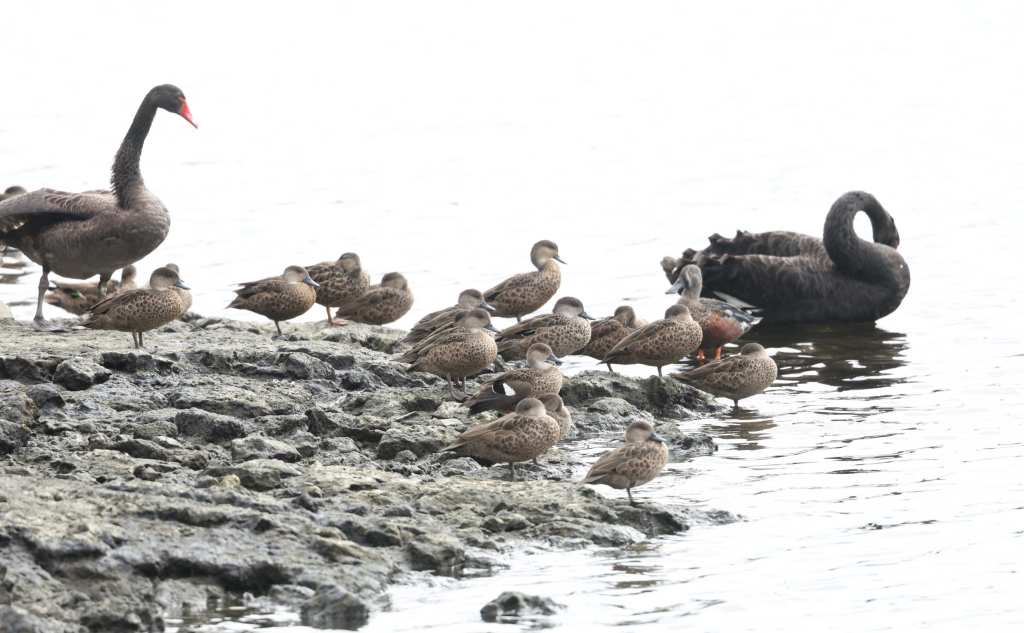
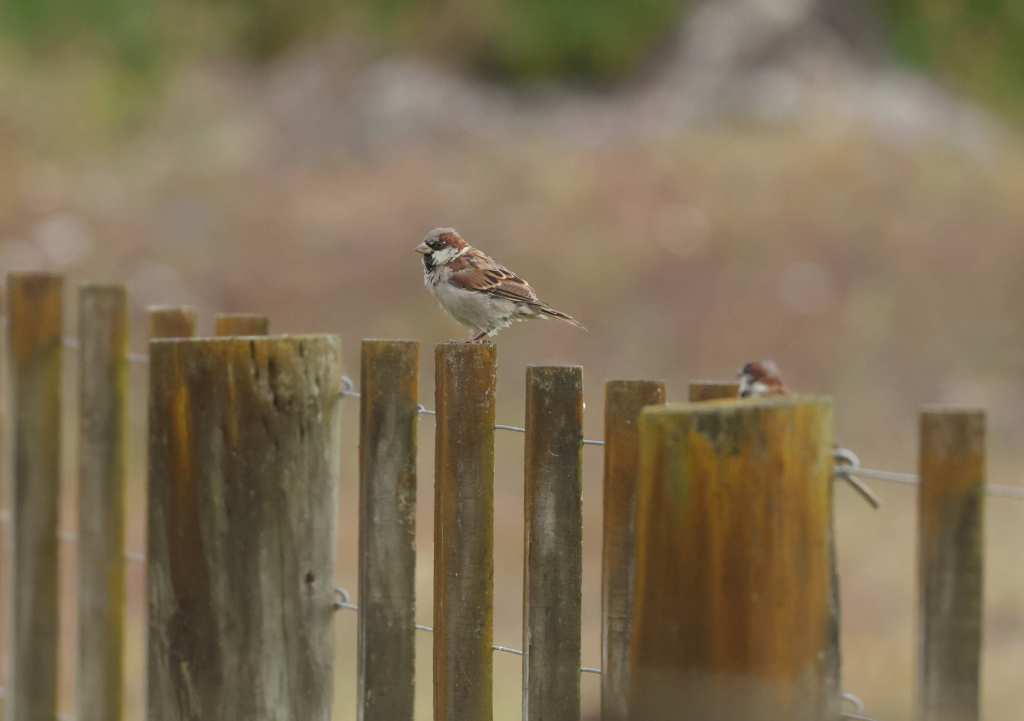
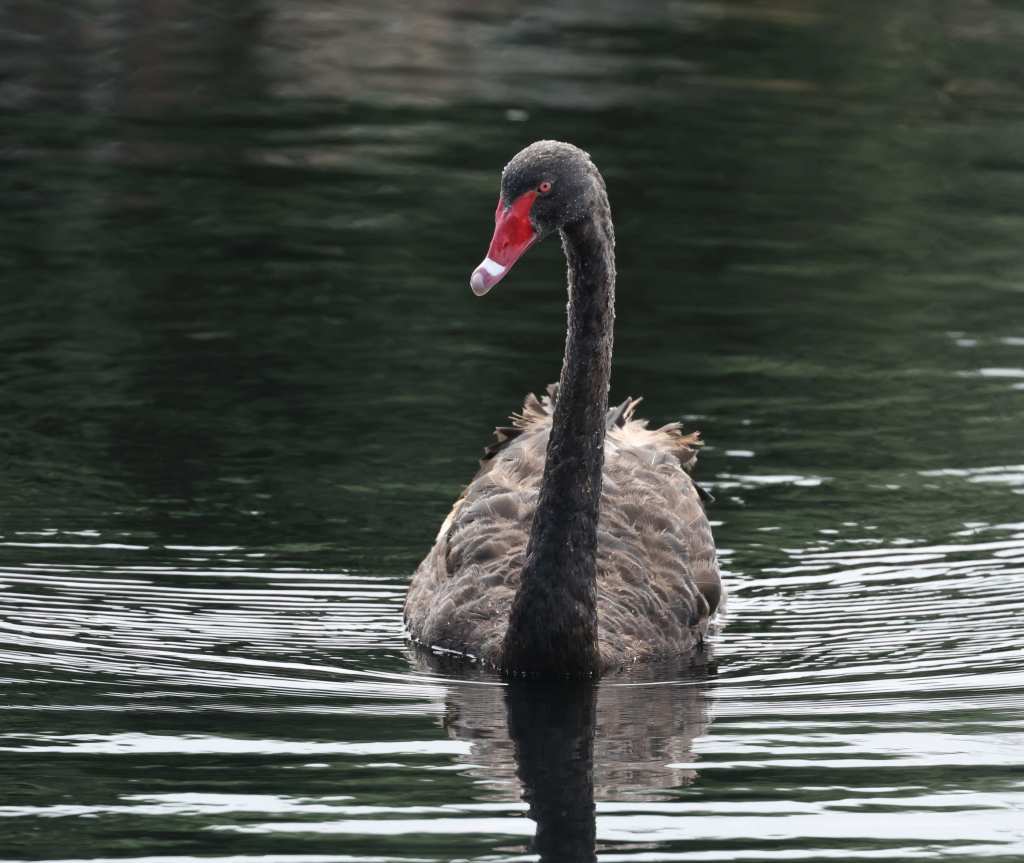
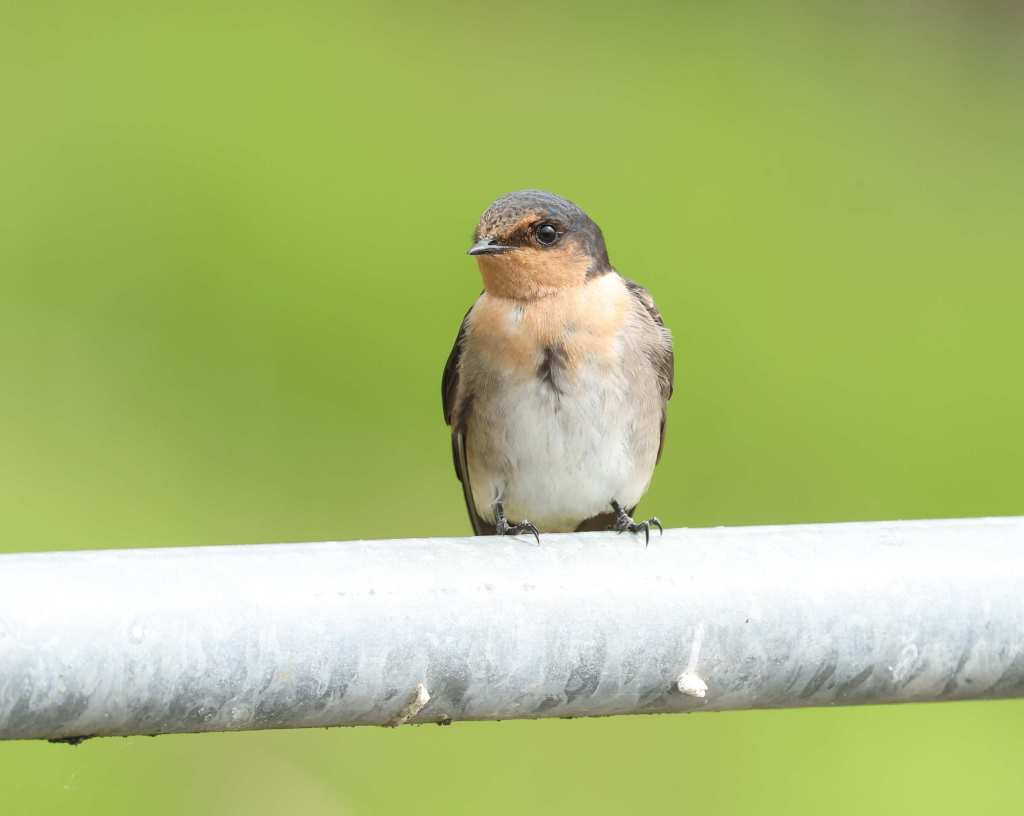
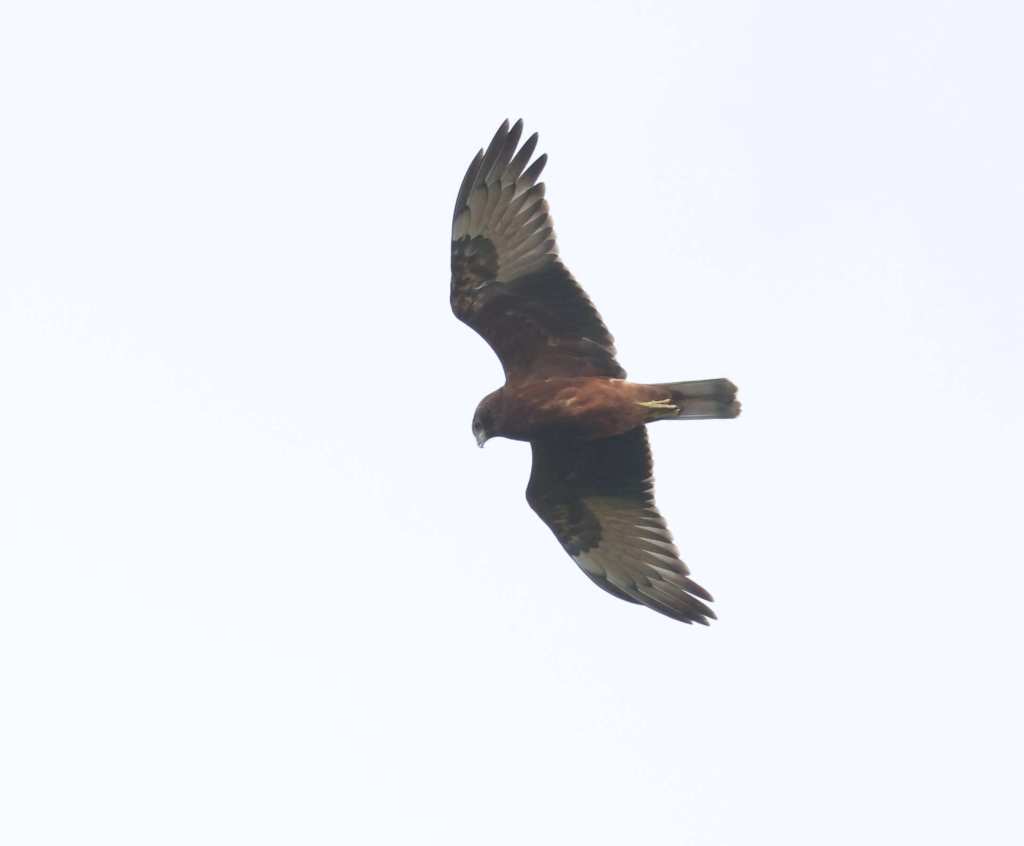
It’s kind of a weird spot, this one, you can wander a bit and may find something interesting (more interesting than House Sparrows, at least). It’s not somewhere you might want to have a picnic, I guess. In my case the sighting of the day was a Swamp Harrier circling fairly low above the trees, while a couple of Welcome Swallows let me get close enough for some camera-viewfinder-filling photos.
Summary
We had a great time birding in Auckland. The reserves are mostly straight-forward to access, are superbly managed and organised, and with time and effort it is possible to see a decent number of the endemic birds of New Zealand in this region. While each location covered above has a lot to offer, the sanctuary of Tiritiri Matangi Island definitely stands out.
AUTHOR: ANDY GEE
BIRDERS: ANDY GEE, K-A

