
Summary: Unique and interesting birding site providing a few different habitats in close proximity
Dates of visits: Eight or more visits between 2021 and 2024.
You’d have to think a nature site that encompasses grassland, bushland, tidal wetland, a bird hide and Brisbane’s best mangrove boardwalk would be pretty good, right? This is such a place, on the shores of Moreton Bay just south of the sprawling Port of Brisbane area.
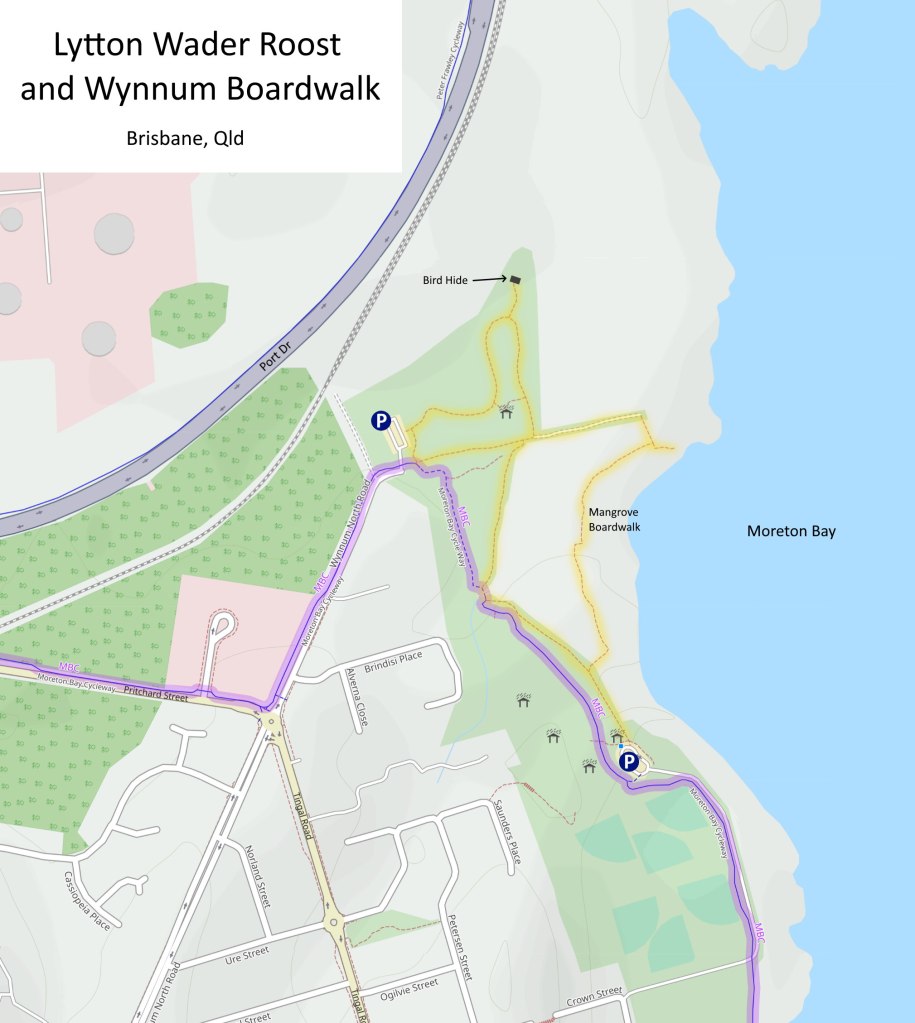
First, some notes on terminology. The “Lytton Wader Roost” sometimes refers (e.g. on eBird) to the bird hide area shown on the map above, although the Lytton claypan area, where shorebirds roost in large numbers, is actually to the north well off the top of the map (e.g. the “Lytton Roost” as defined by the Queensland Wader Study Group). Furthermore, the bird hide is called the “Wynnum Wetlands Birdhide” in Google Maps. (I would really rather name this location “Wynnum Birdhide” or something, but am reluctantly continuing to use the eBird hotspot name to be consistent with other locations I’ve posted about.)
Confused? The main point to note is that there aren’t shorebirds roosting here, at least, I haven’t seen any in the last three years. They are mostly all in the claypan nearly 2km to the north. Perhaps when the bird hide was built, shorebirds roosted all around it. That doesn’t seem to be the case any more.
Anyway, there’s still plenty of good birding to be had here, shorebirds or not. The two main entry points are the northern car park at the end of Wynnum North Rd, and the car park at the southern end of the mangrove boardwalk (accessed via Crown St). The Moreton Bay Cycleway passes by this hotspot too, in case you can get there by bike. In this post we will start from the bird hide in the north and work our way down to the boardwalk.
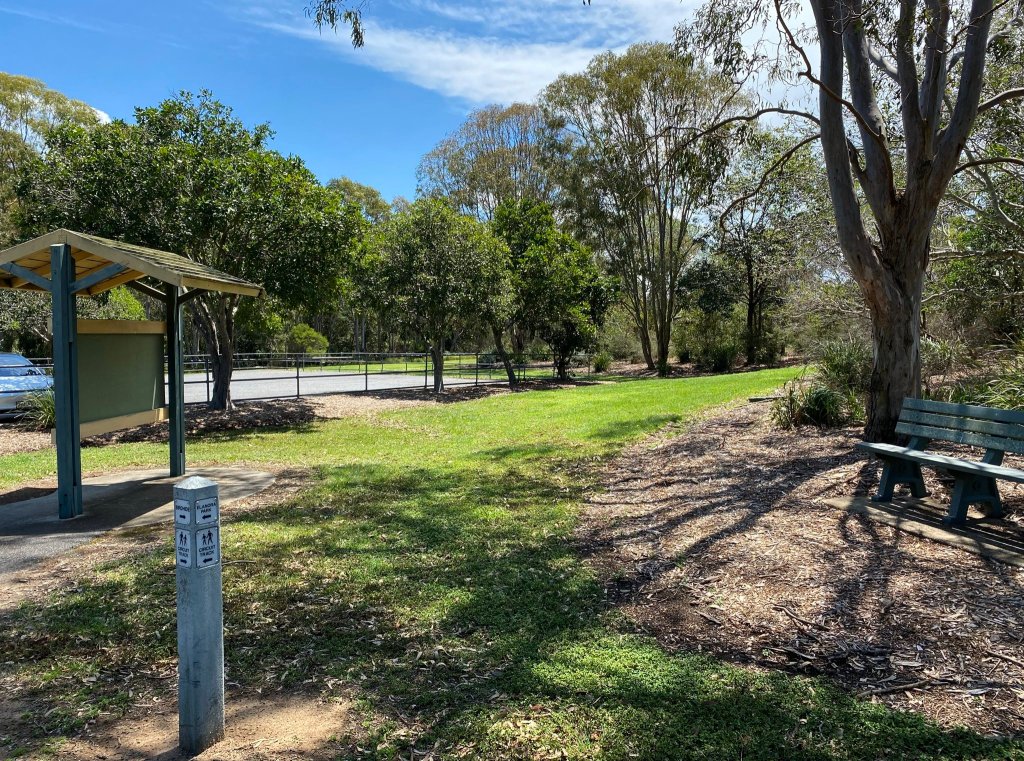
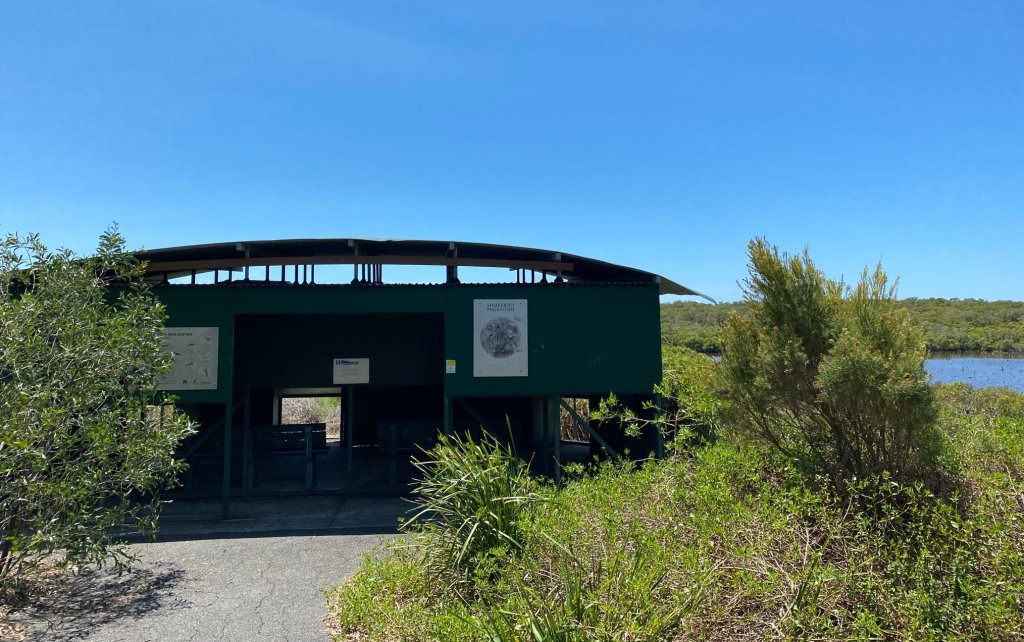
The paths all around the bird hide area are very civilised indeed: they are paved and wide, with bench seats available and a little picnic shelter to boot.


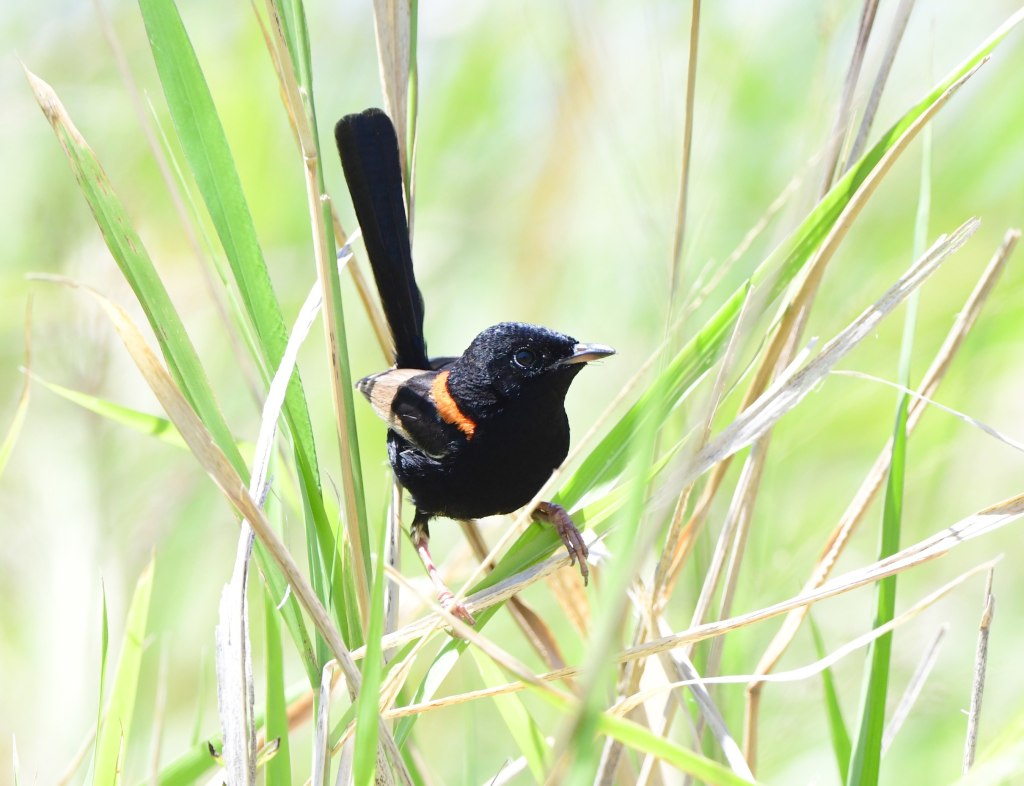
I have seen Red-Backed Fairywrens here several times, as there seems to be a deliberate effort to leave plenty of the grasses unmowed (presumably for wildlife, but who knows!)
Superb Fairywrens are almost as common, and on Feb 4 2024 I was able to get a shot of the female and then the male a few seconds later on the very same branch.


I have sometimes seen Brown Quail scurrying around on the edge of the longer grasses too, so look out for those! Tawny Grassbird, Golden-Headed Cisticola and Chestnut-Breasted Mannikin are sometimes seen as well. Of course, Magpies, Butcherbirds and Crows and the occasional Noisy Miner are also a given here, as they are at most birding sites in south-east Queensland.

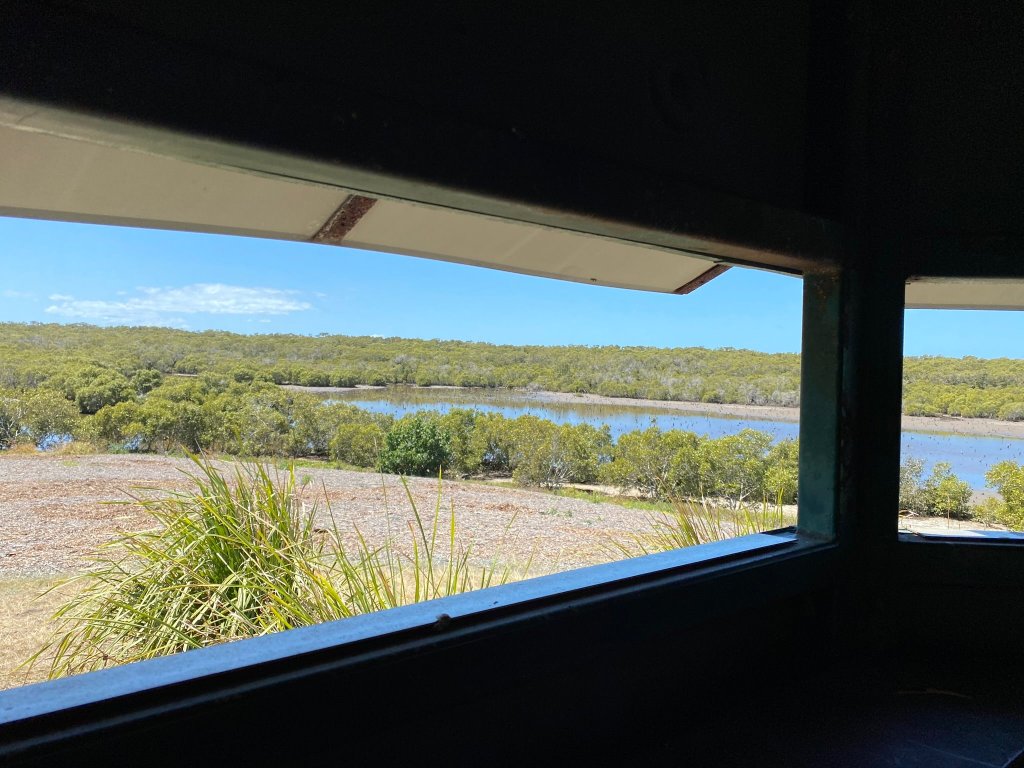
The wetland lagoon is worth checking out and you certainly don’t need to be hunkered down in the bird hide to spot birds in or near the water. Plumed Egret (formerly named Intermediate Egret) is a common visitor, and I’ve seen Chestnut Teals here more often than at Brisbane’s many other wetland sites. Other Egrets, Silver Gulls, Pied Stilts and scavenging White Ibis and Masked Lapwings are also common here.

The water in the lagoon is generally pretty brackish and has lots of dead tree stumps protruding, which makes for tricky spotting if you’re keen on comprehensively seeing every species that might be hiding out here (e.g. you’re doing a one-day Twitchathon…!)


The bird hide is quite spacious and apparently much of it is made from recycled materials. Maybe the water level used to be higher and there was less fringing vegetation and more shorebirds back in the day, but these days it doesn’t seem to me particularly well-located except as a shady refuge to set up a spotting scope.
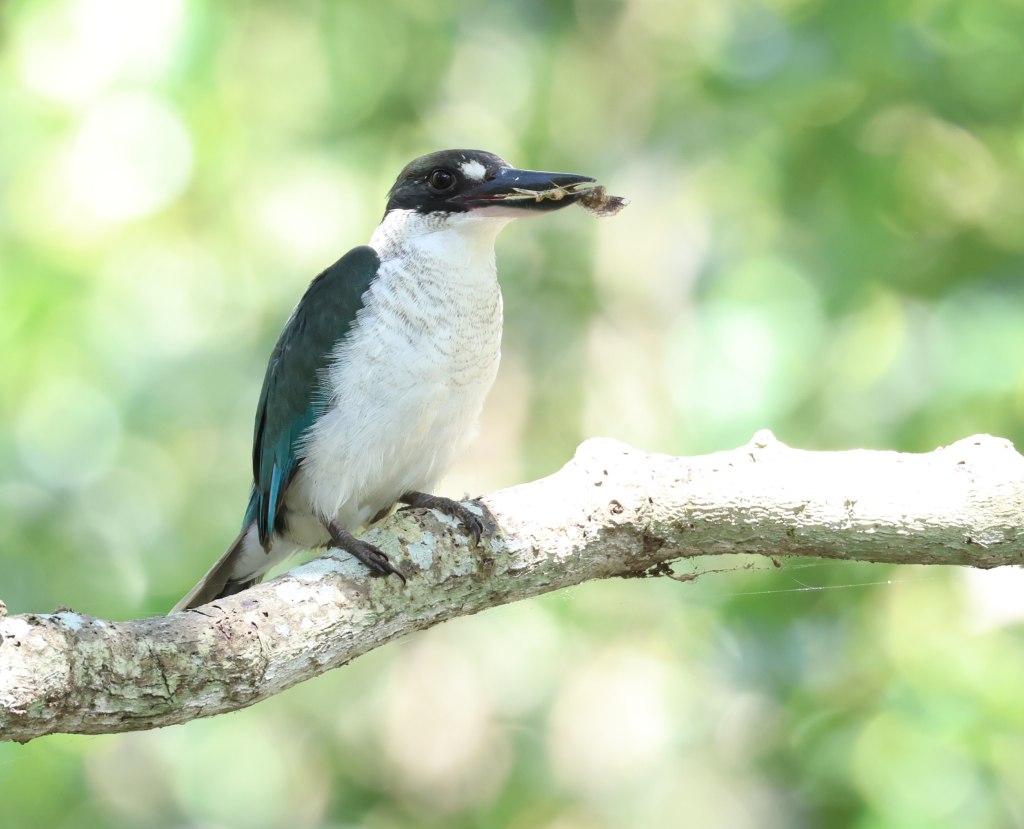
On the eastern edge of the paths the sealed walkway gives way to a dirt path which leads directly towards the mangrove boardwalk. Look out for Mangrove Gerygone here, and Torresian Kingfishers too – you might get good photography opportunities of these lovely birds before heading deeper into the mangroves.


The boardwalk through the mangroves is excellent, is quite long at around 600 metres, and offers a different atmosphere at high and low tide. In fact, the highest tides can have water covering the trail where the boardwalk starts (at the northern end).
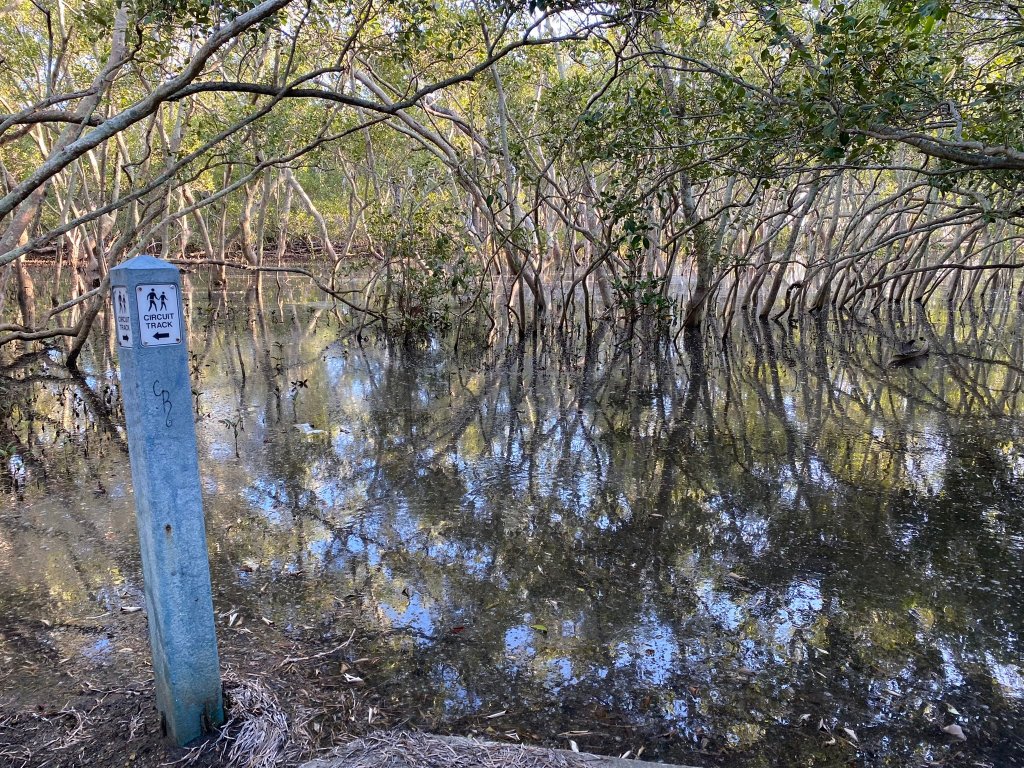

At the northern end a spur of the boardwalk juts out to the east and this is the only real spot where you can get a good look across the open water.


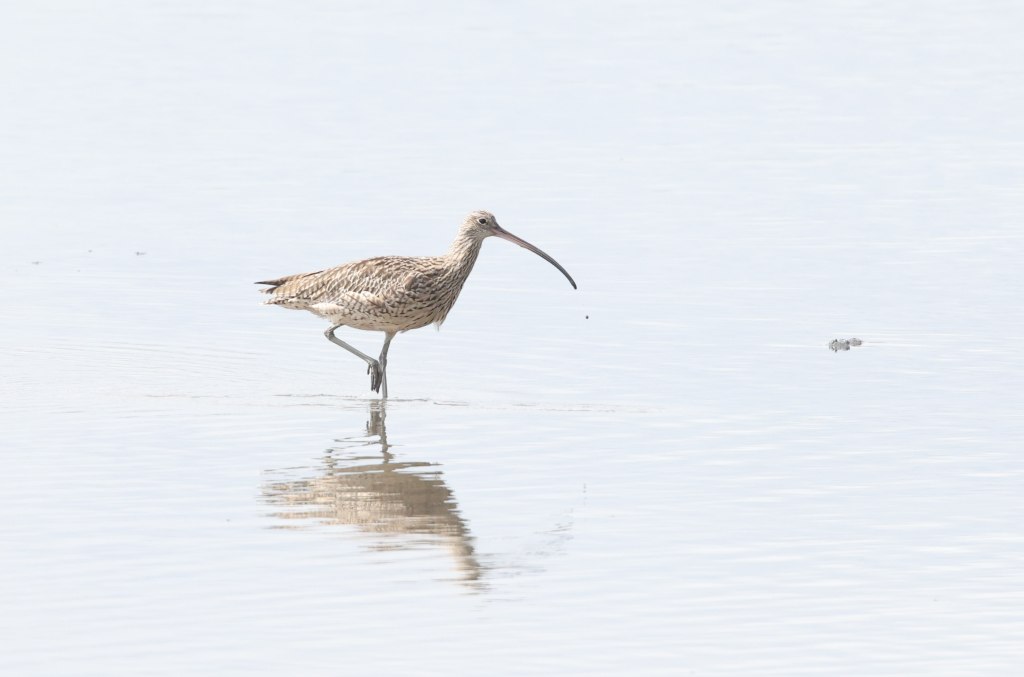
At lower tides there will be a chance to see wading birds like Eastern Curlew and Great Egret hunting in the shallow water.
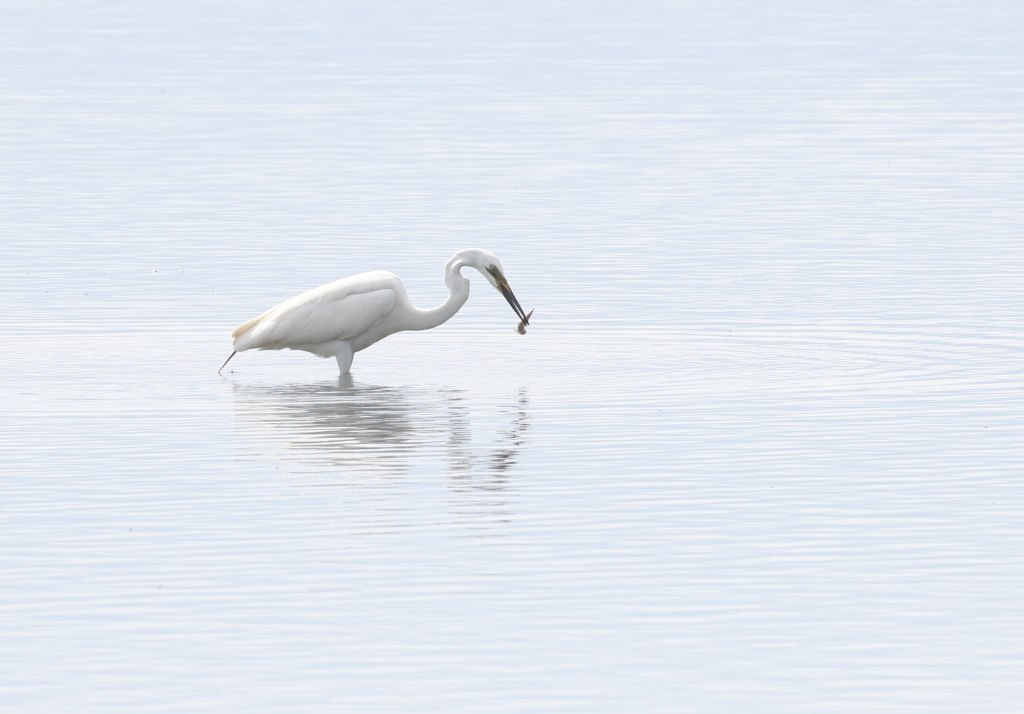
It can get hot and steamy in summer under the mangroves and insects might also cause a problem, but generally speaking wandering along the boardwalk is a fairly pleasant experience. There was an Owlet-Nightjar in a known trunk hollow along here that became something of a celebrity bird for several months at the start of 2023. The bird didn’t seem to mind people passing and often sat at its hole entrance soaking up the sun.

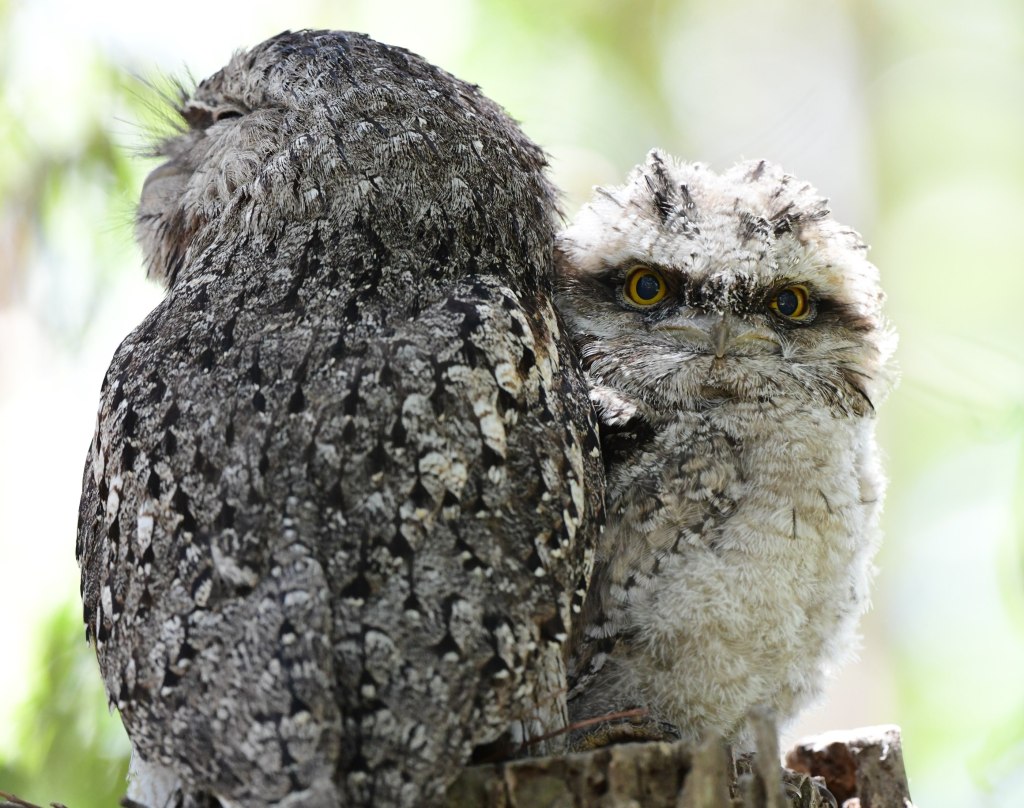
In October 2021 a family of Tawny Frogmouths had also established itself within just a few metres of the boardwalk (this was near the southern car park end).

The youngsters were quite active while I was watching, a big contrast from how you usually experience these frogmouths, i.e. almost completely still and very sleepy.

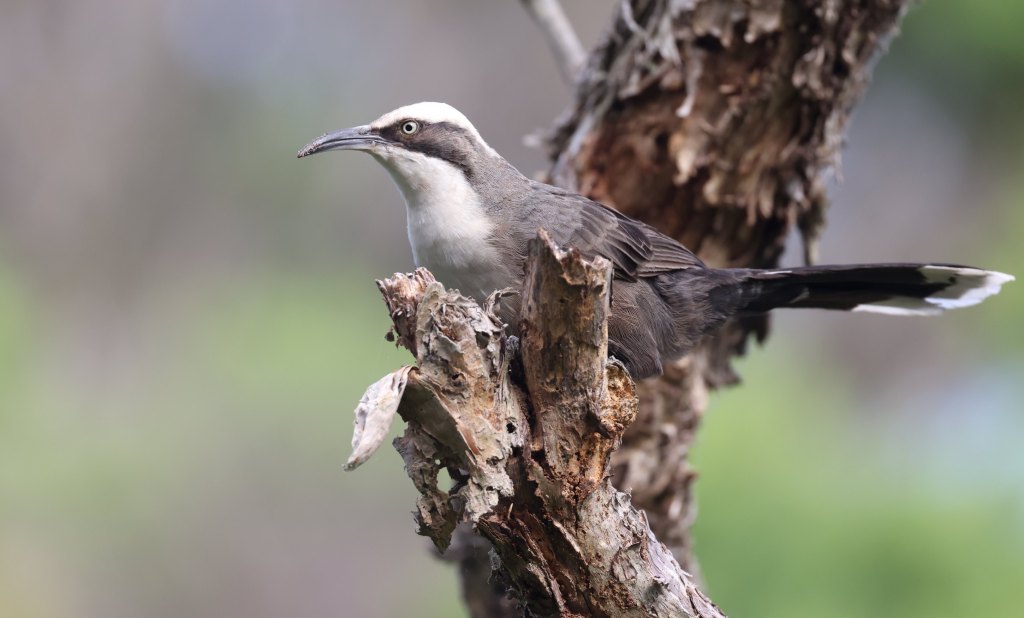
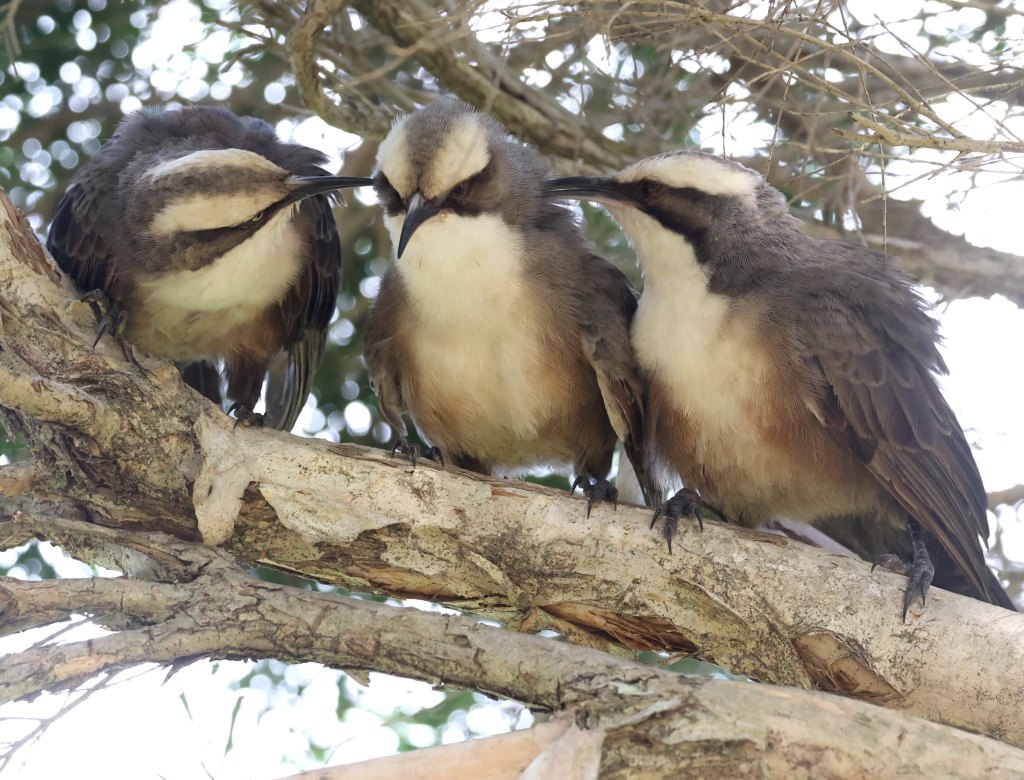
Another treat this general area holds is one of the few Grey-Crowned Babbler families in the Brisbane area. It was a few visits before I happened to come across them but I was instantly hooked on watching their foraging antics and sociable babbling. If you’re quiet and don’t make sudden movements the babblers will generally ignore you and go about their business, as they are fairly habituated to human presence.
A key species in mangrove habitat is the Torresian Kingfisher, and you’ll almost certainly hear the “yip yip yip” of these birds calling to each other. They are best distinguished from Sacred Kingfishers by the habitat (Torresian Kingfishers are exclusive to mangroves and nearby mudflats) and by the white forehead spot (in Torresian Kingfishers it looks as in the photo below, while in Sacreds it extends back across the eye).
One small issue with photography in this environment is that the glare from the direct sun can be very strong on the mangrove branches or on a light-coloured bird – such as in the photo below. The kingfisher happened to be in shade, but the branch to its right has some serious “highlight blowout” issues.
Mangrove Gerygone is a smaller bird that also specialises in this habitat, and has a sort-of-melodic tune that echoes throughout the mangroves. Being small and speedy they are often hard to photograph, but the boardwalk here is one of the best places in south-east Queensland to give it a shot!

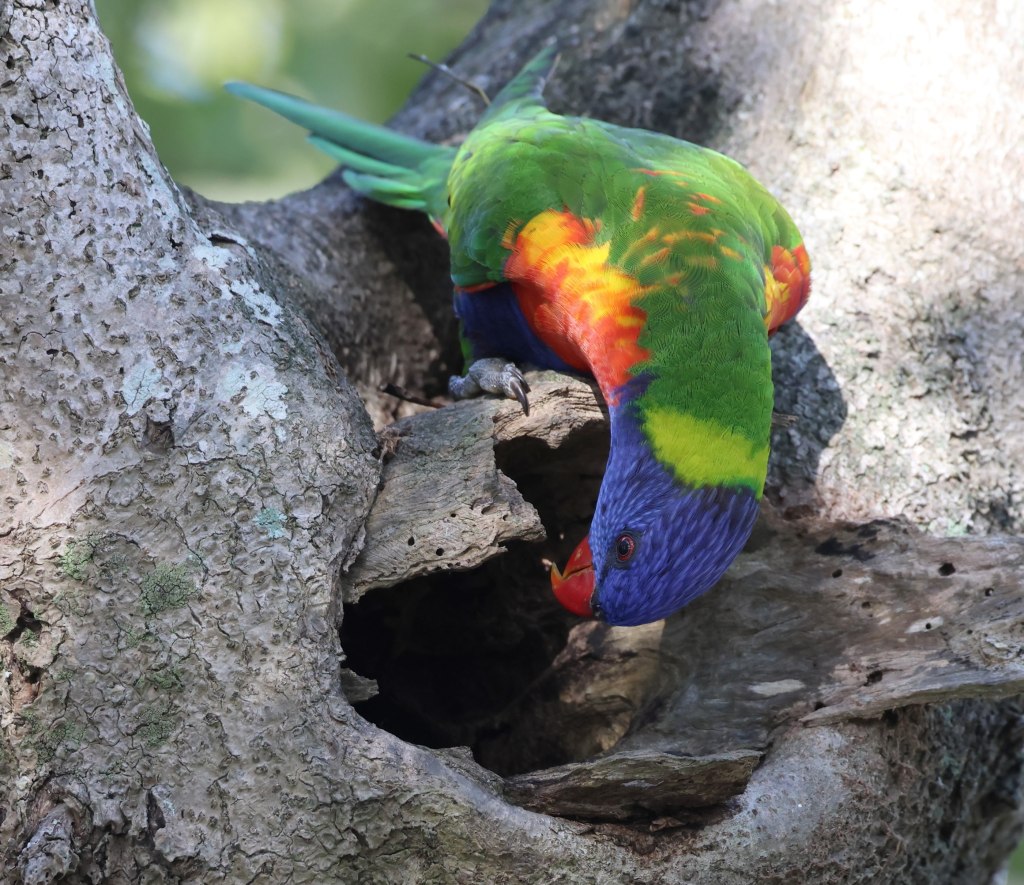
Perhaps surprisingly, the mangroves are quite good for parrot species like Pale-Headed Rosella and Rainbow Lorikeet. I’ve seen and heard them from the boardwalk lots of times, though the rosellas can be hard to get close to. Although the boardwalk gives great access to these otherwise inaccessible mangroves, you obviously can’t leave it to approach a bird more closely like you might on a forest path.

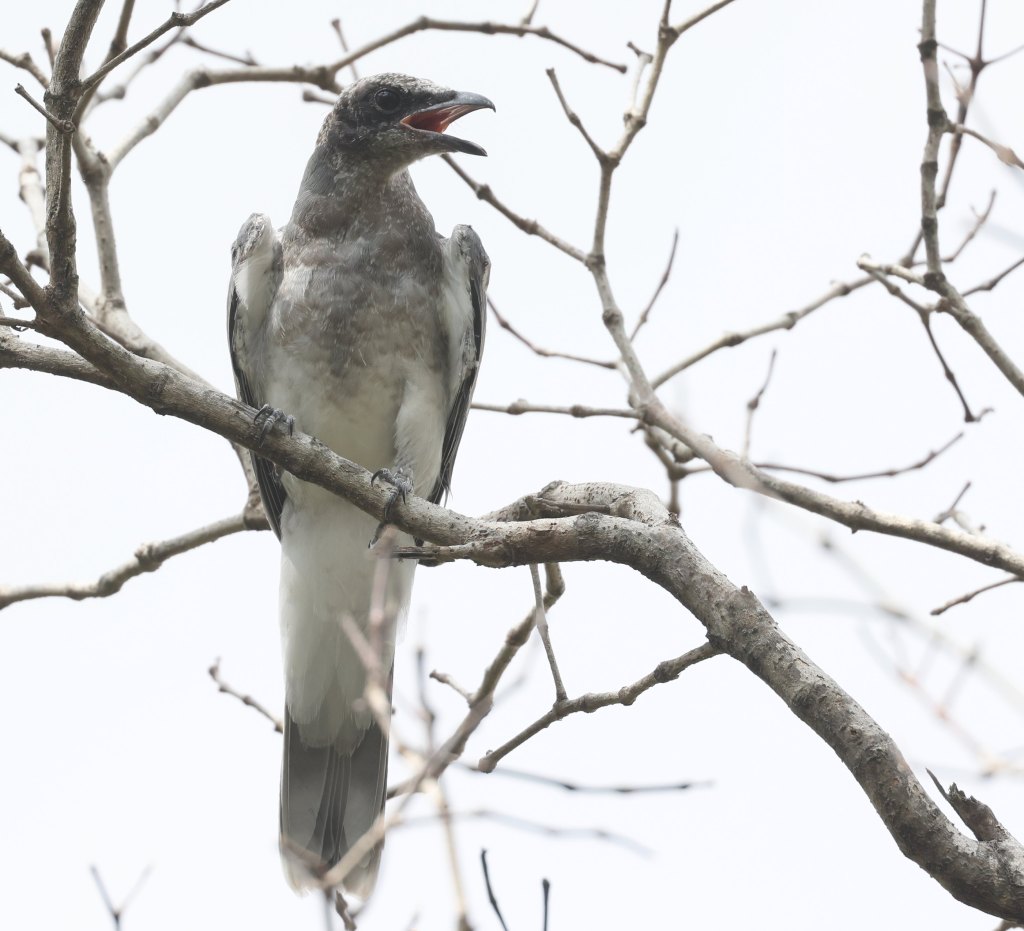
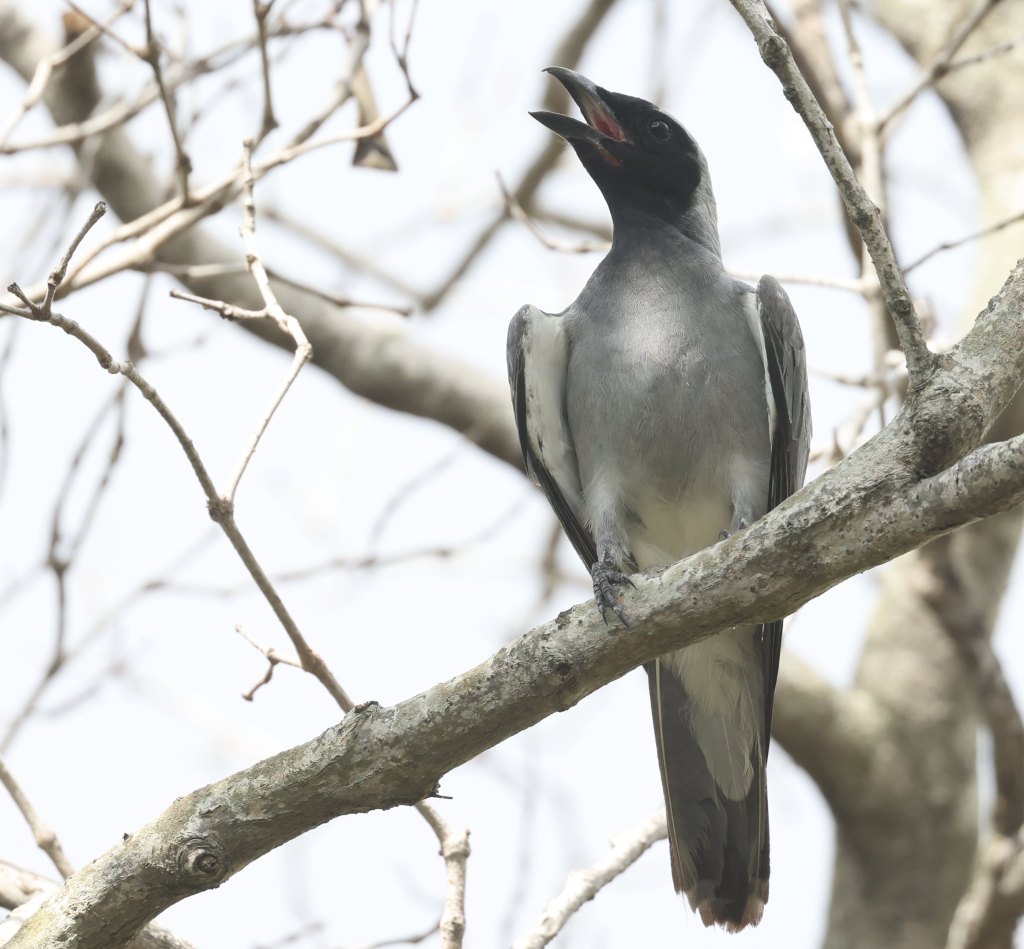
Black-Faced Cuckooshrikes are also seen here and I saw a pair panting in the heat in Feb 2024.
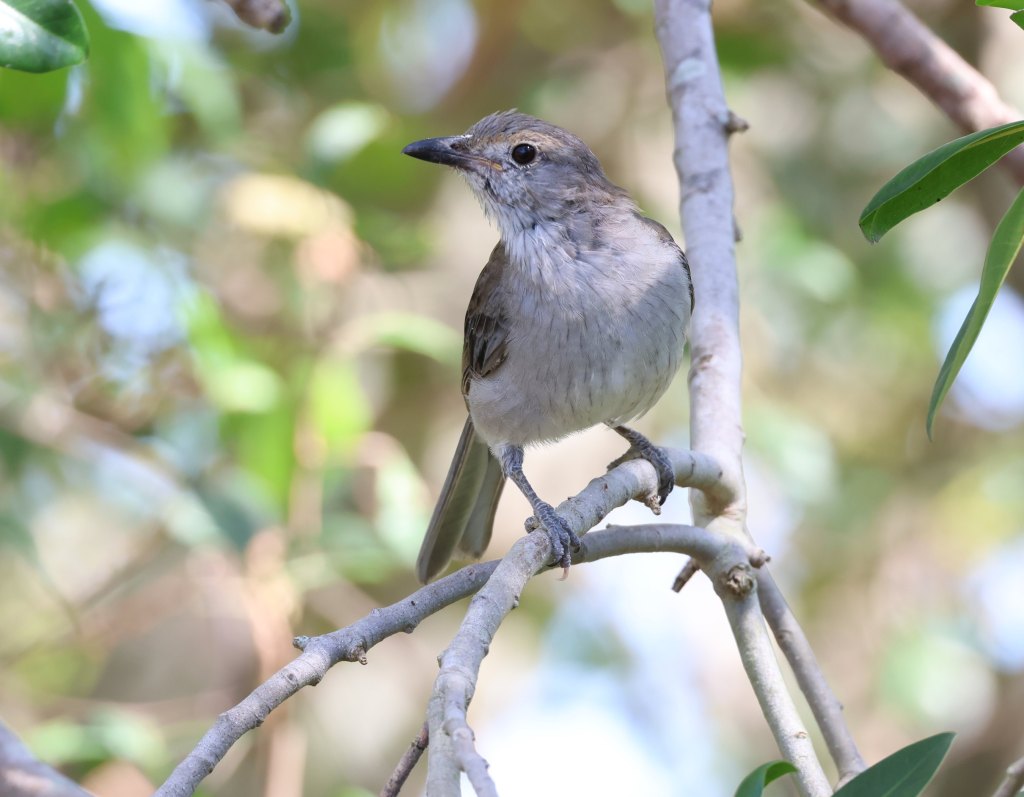
Grey Shrikethrush and Grey Fantails can also be found in the mangroves; the fantail in particular even quite commonly in the summer months – the photo below was taken in January, whereas in lots of Brisbane sites you’ll find fantails much scarcer across the summer.

White Ibis, those uber-adaptable scavengers, can be found deep inside the mangroves, usually on the exposed mud at low tide, and sometimes they rest on the mangrove branches.

At the southern end of the boardwalk, you can keep exploring or make a loop of it by taking a paved path that runs roughly parallel to the boardwalk back up to the bird hide area. Do check the mangroves and bush thoroughly here, you never know what might be hiding within – a Nankeen Night-Heron was one such memorable sighting for our Twitchathon team in Oct 2023.

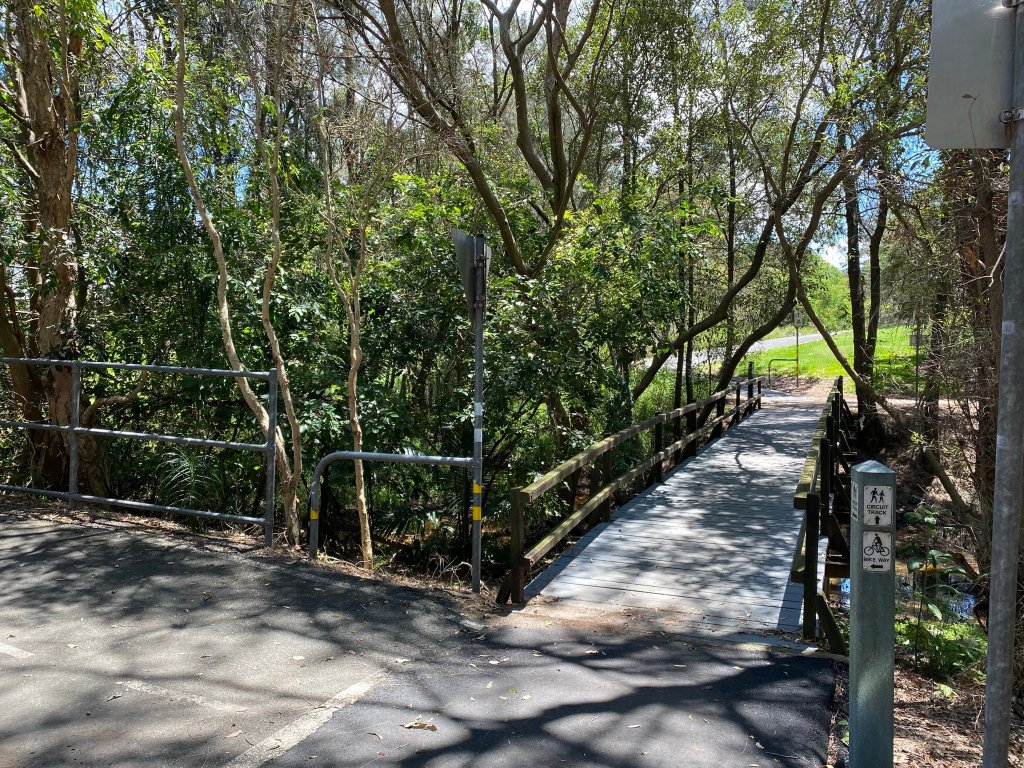
The trail lets out into grassy sports fields soon after the intersection of the boardwalk with the paved path.
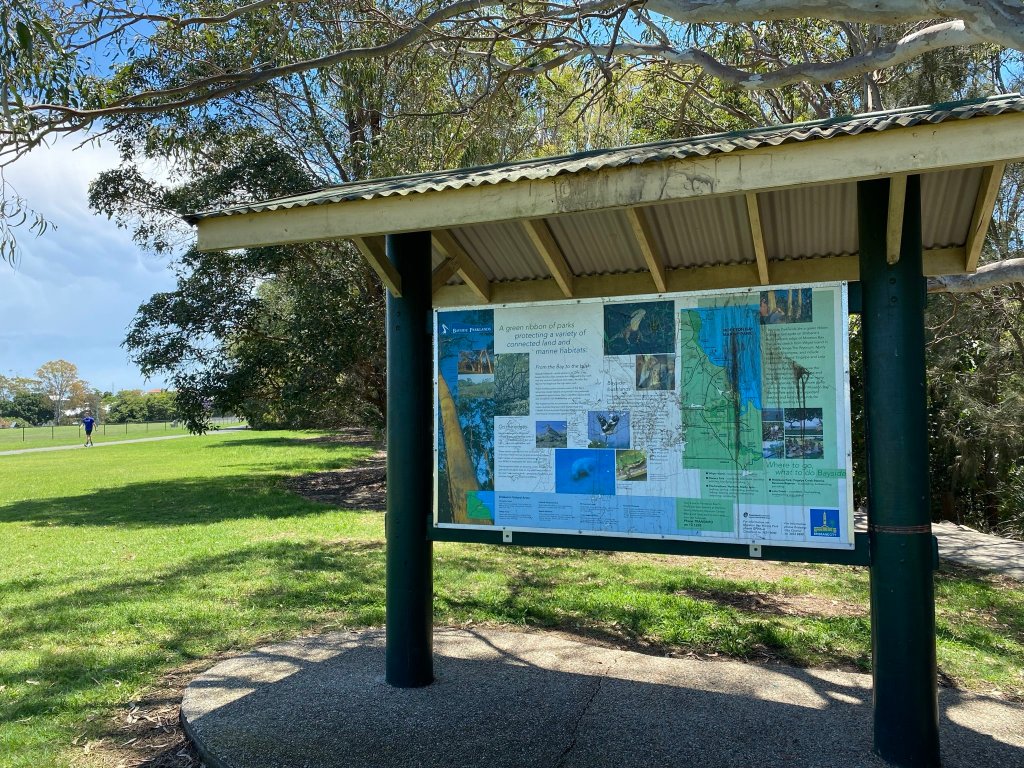

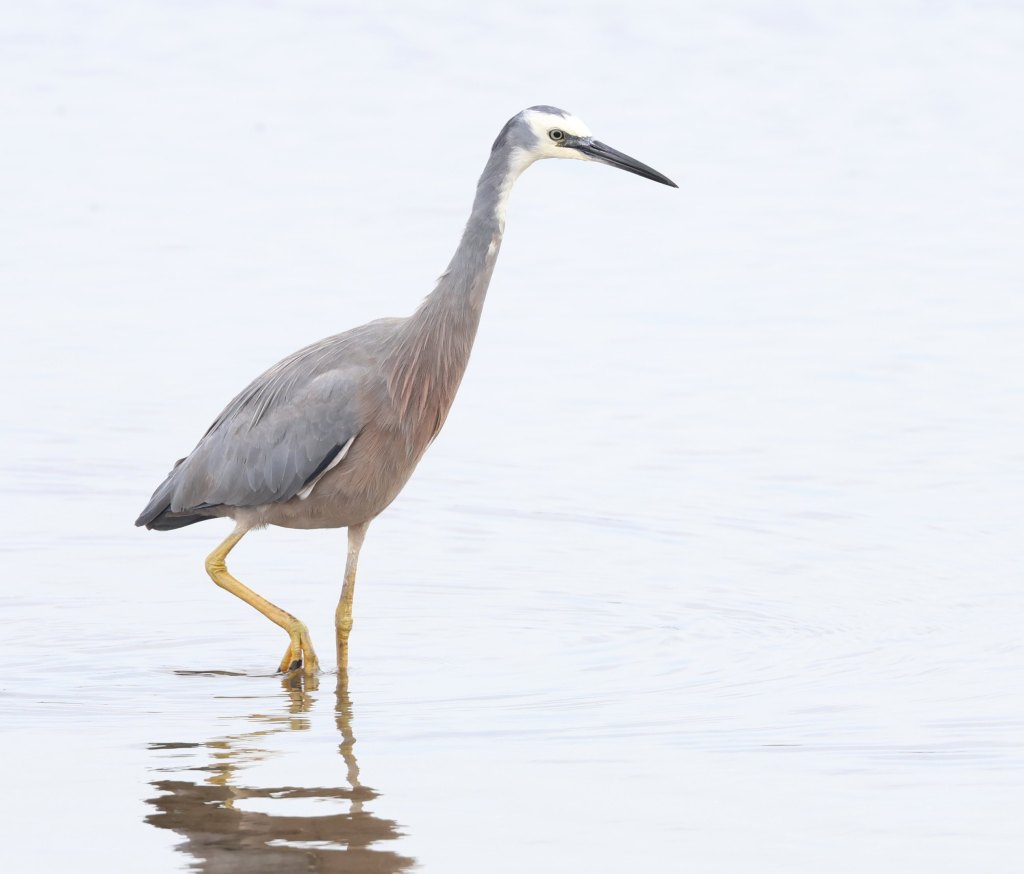
If you want to explore more of the coastal section, nearby Wynnum Esplanade stretches for several kilometres to the south. About 2km south of the southern end of the mangrove boardwalk is a good section where there is a wading pool and some pleasant seaside walking. I saw several playful Little Corella here in March 2024, and strolling along the esplanade I found a hunting White-Faced Heron and some Tree Martins too, both at very close quarters.
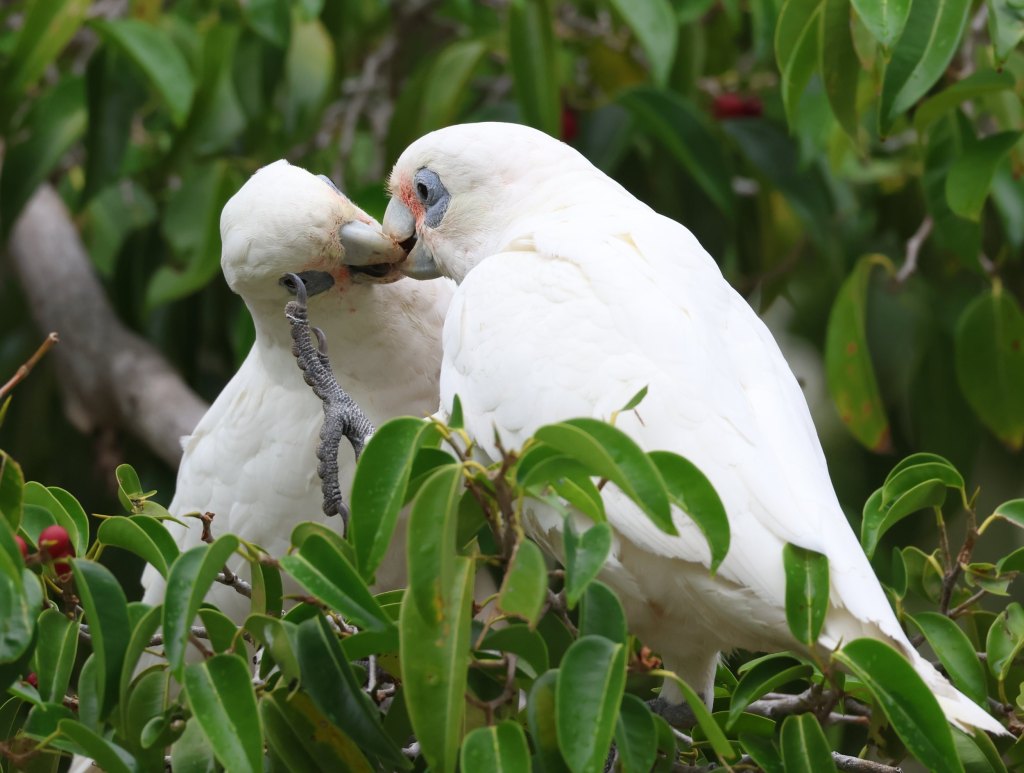
Slightly further south of the wading pool area, near Penfold Parade, there is a section of the Wynnum Esplanade foreshore that is excellent for spotting shorebirds across the summer months (see the eBird hotspot).

A few outcrops here seem to be used by the waders as a roost at higher tides, concentrating them into a limited tract. There is a concrete spit here that is great to set up at with a tripod or scope.

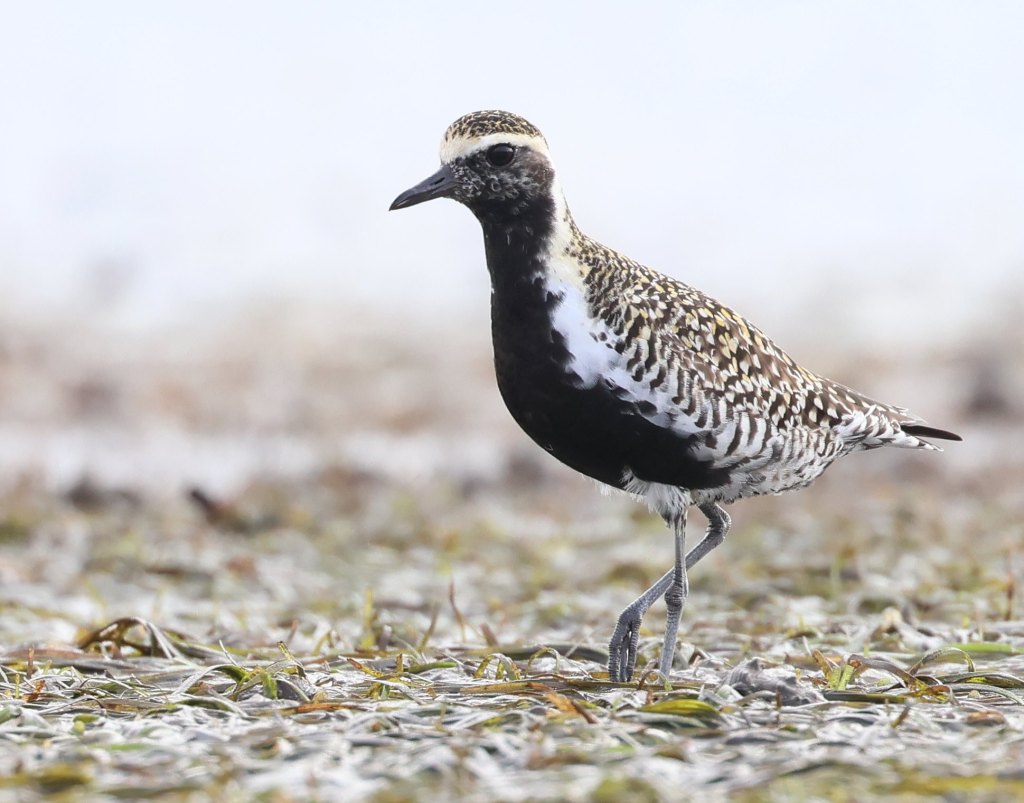
In Mar 2024 many of the Godwits and Pacific Golden Plovers I saw from this vantage point had coloured up into breeding plumage before their soon-to-come migration to distant parts north, and the PGPs in particular looked absolutely stunning.
Summary
This location is excellent for birding and also makes a very attractive morning combo with nearby Sandy Camp Road Wetlands. The bird hide, lagoon, surrounding grasses and bush provides one section of habitat while the adjoining mangroves gives you a bit of a “two for one” deal. There are usually plenty of people and dog walkers using the boardwalk, which can impact your birding as they have to squeeze past you and if you do have a tripod set up, it will vibrate from the footsteps (and be a possible obstacle to others). It can get hot in summer and insects like mosquitoes can be an annoyance, but if you can get over that, it’s worth spending some time here and enjoying the bird life, including a very watchable Grey-Crowned Babbler group.
eBird:
Note there is a Lytton Wader Roost and Wynnum Boardwalk hotspot, and a separate Wynnum Mangrove Boardwalk hotspot – what a mess!
Hotspots: Lytton Wader Roost and Wynnum Boardwalk (208 species)
Selected checklists for some of these visits: Feb 4 2024 (34 species), Oct 3 2023 (25 species), Jan 19 2023 (34 species), Mar 17 2022 (27 species)
Bird Spots Videos from this location: Australian Owlet-Nightjar, Grey-Crowned Babblers 2024, 2023 and 2022, Black-Faced Cuckooshrikes, Mangrove Gerygones, Torresian Kingfisher.
Pluses and Minuses:
+ Diverse habitats to explore in close proximity
+ Terrific mangrove boardwalk, the best in south-east Queensland
+ Best place to see Grey-Crowned Babblers in Brisbane
+ Makes an irresistible combo with Sandy Camp Rd Wetlands
+ Accessible paths – mostly quite flat and easy to traverse
– The bird hide can be very hit-and-miss – sometimes there are very few birds in the lagoons
– Insects and heat can make birding uncomfortable at various times
– Walkers and dog-walkers on the boardwalk can detract from peaceful birding
AUTHOR: ANDY GEE
BIRDERS: ANDY GEE, K-A, LUKE S
 Bird Spots
Great article, one of my spots and you covered it perfectly.
LikeLike