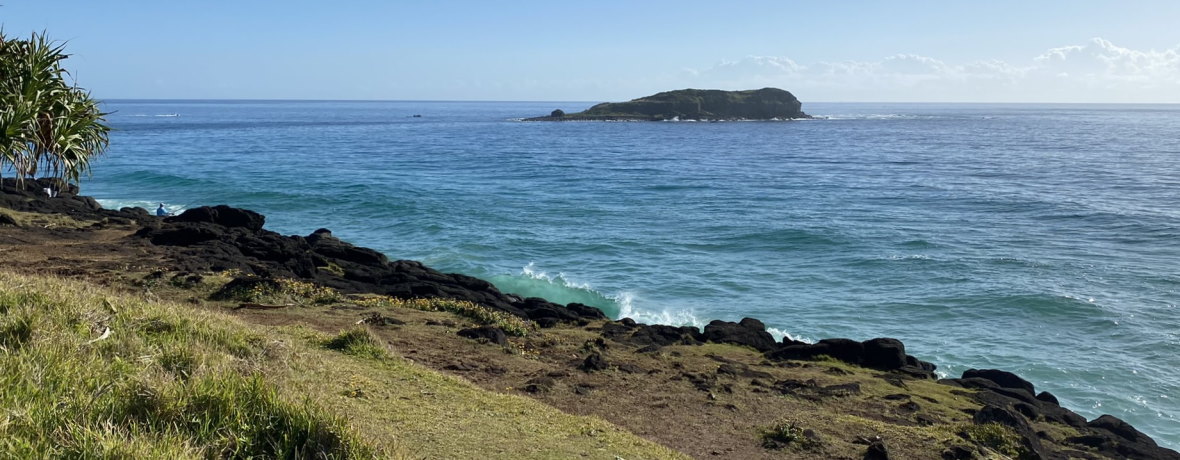
Summary: Attractive coastal landscape with a section of remnant coastal rainforest
Dates of visits: 19 Nov 2022, 17 Nov 2024
Fingal Head is the northernmost of New South Wales’ many impressive coastal headlands, just 1km south of the Qld/NSW border. It’s a pleasant spot to watch for seabirds and has some good coastal bush as well.
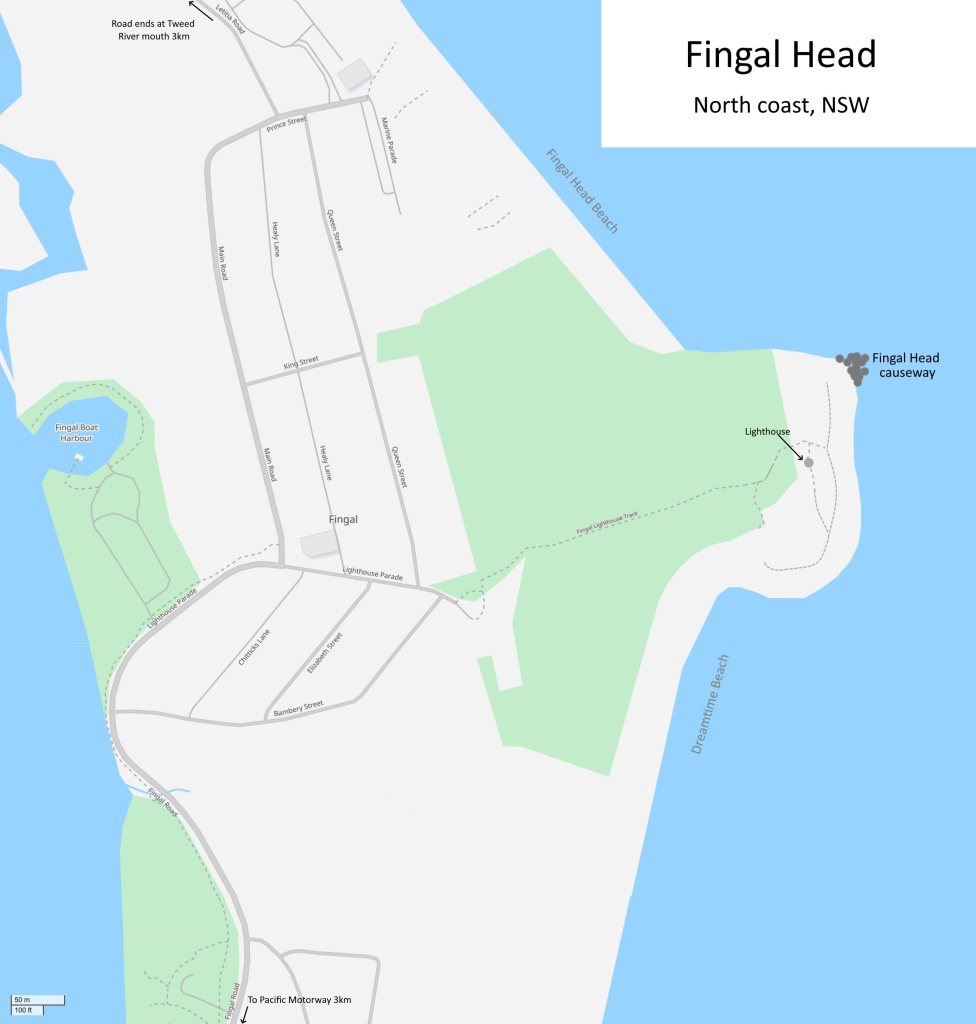
To get there you’ll likely be turning off the Pacific Motorway (M1) at the exit on the south side of the Tweed River, and from there follow Fingal Rd north-east for about 3km. Turn into the short Lighthouse Parade and follow it to the end and you’re there. The end of the road has space for up to a dozen vehicles and you’ll find you’ll have to get there early, at least on a weekend – before the swimmers and surfers, ideally – to actually find a spot. Otherwise you will have to park on the nearby streets.
But this is birding, you should start early – soon after sunrise – anyway, right?
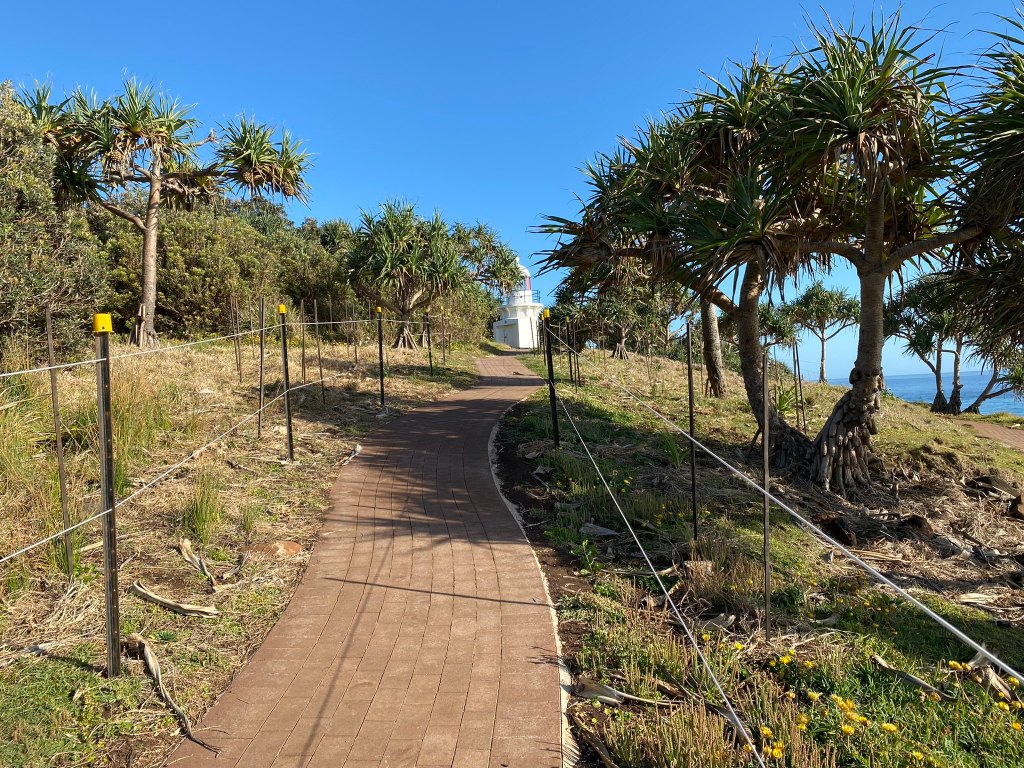
As we’ll see later, the headland is an outcrop of basalt columns likely named after a similar natural feature near either Fingal in Northern Ireland or Fingal Cave on the Scottish Island of Staffa. Fingal was a mythological Celtic giant who tried to build a causeway over the ocean. There is a short (7 metre high) lighthouse on top which dates from 1878.
The area around Fingal Head is apparently important as it has remnant pockets of littoral rainforest (plants occurring close to the sea and dominated by rainforest), as it was spared from sand mining along the Tweed Coast in the 1960s and 1970s.

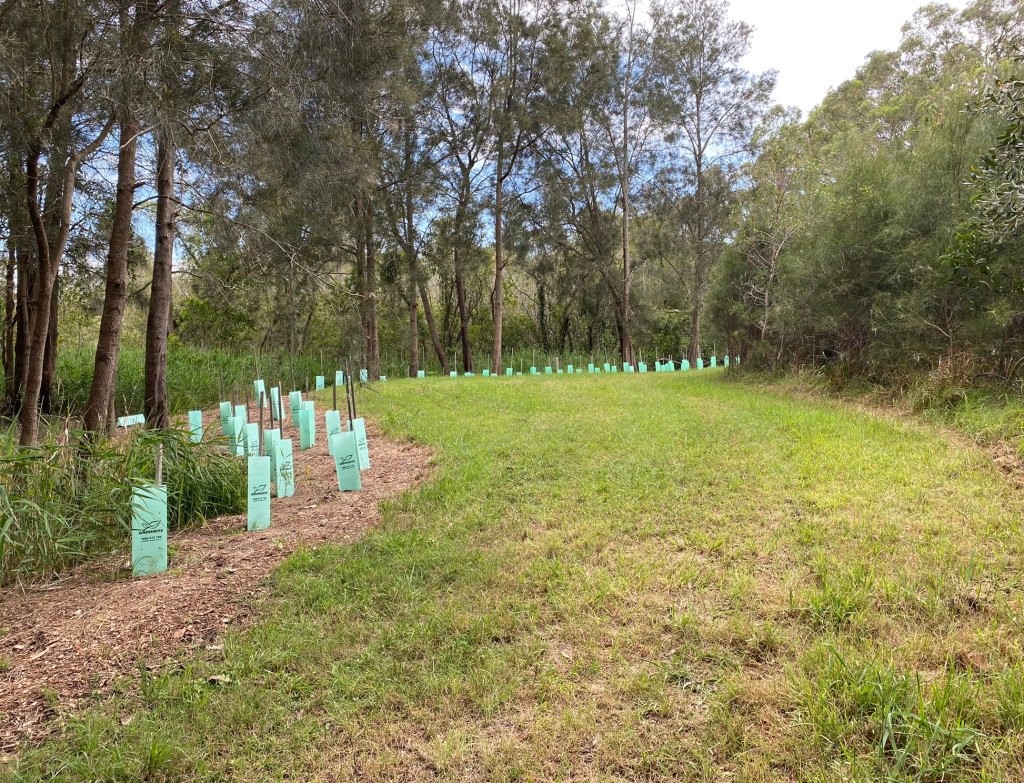
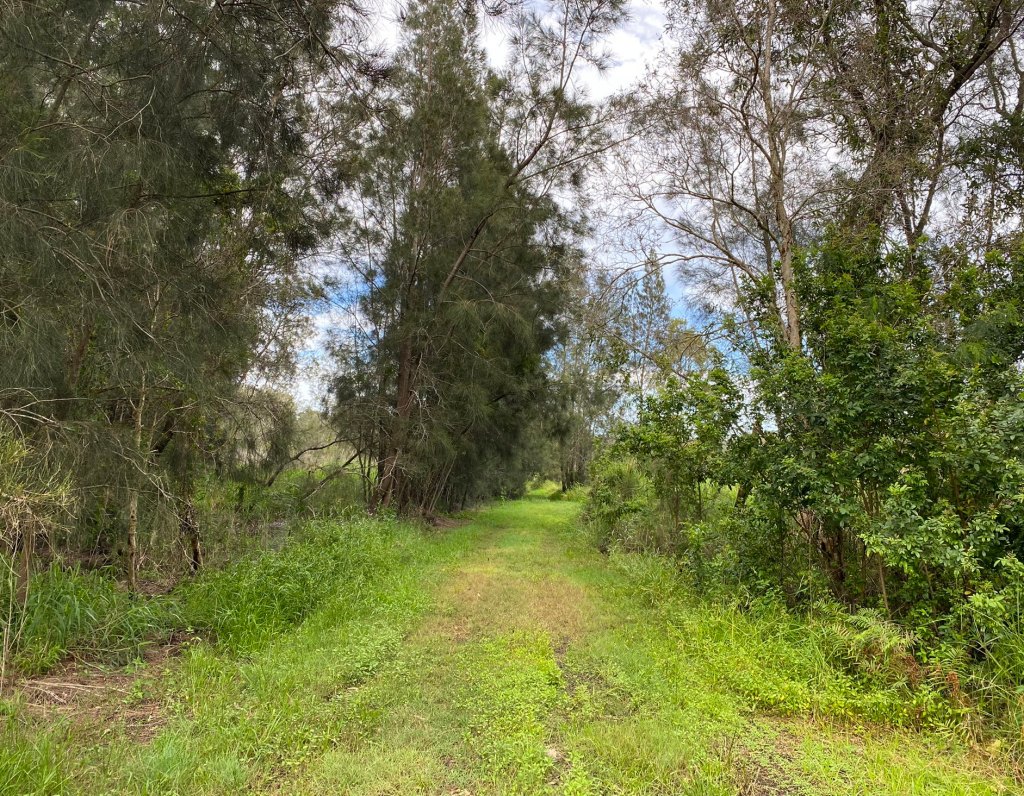
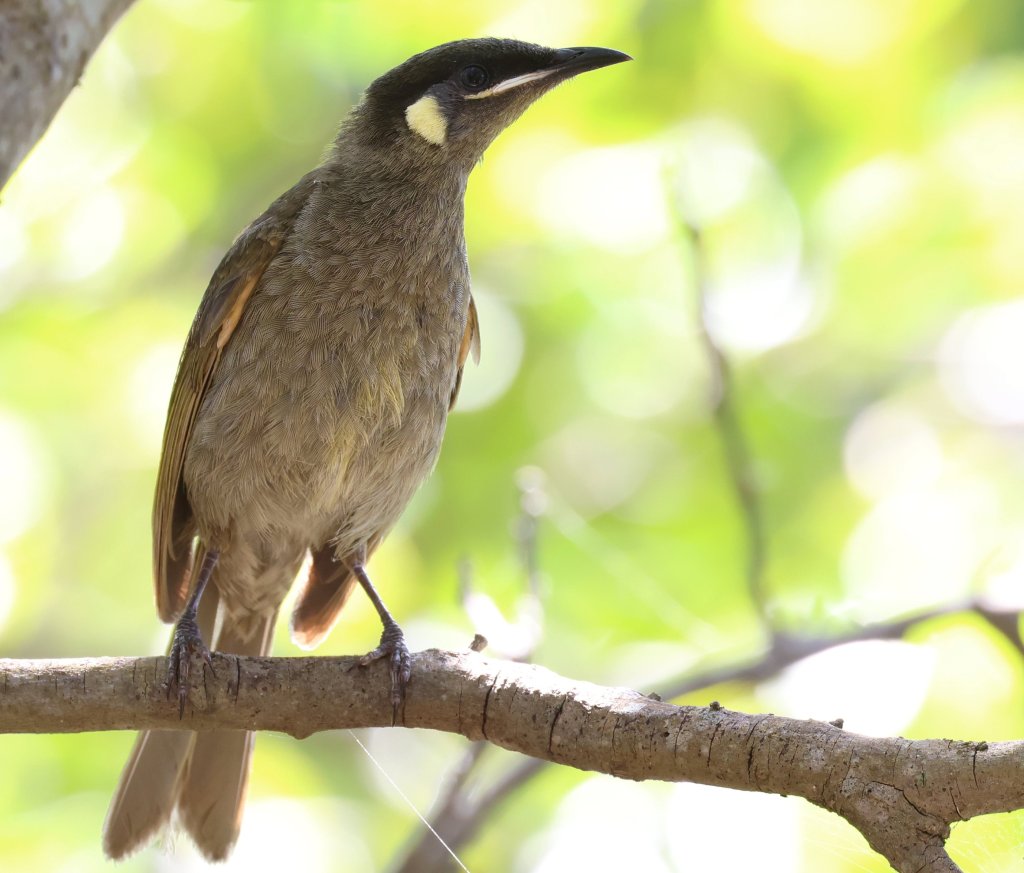
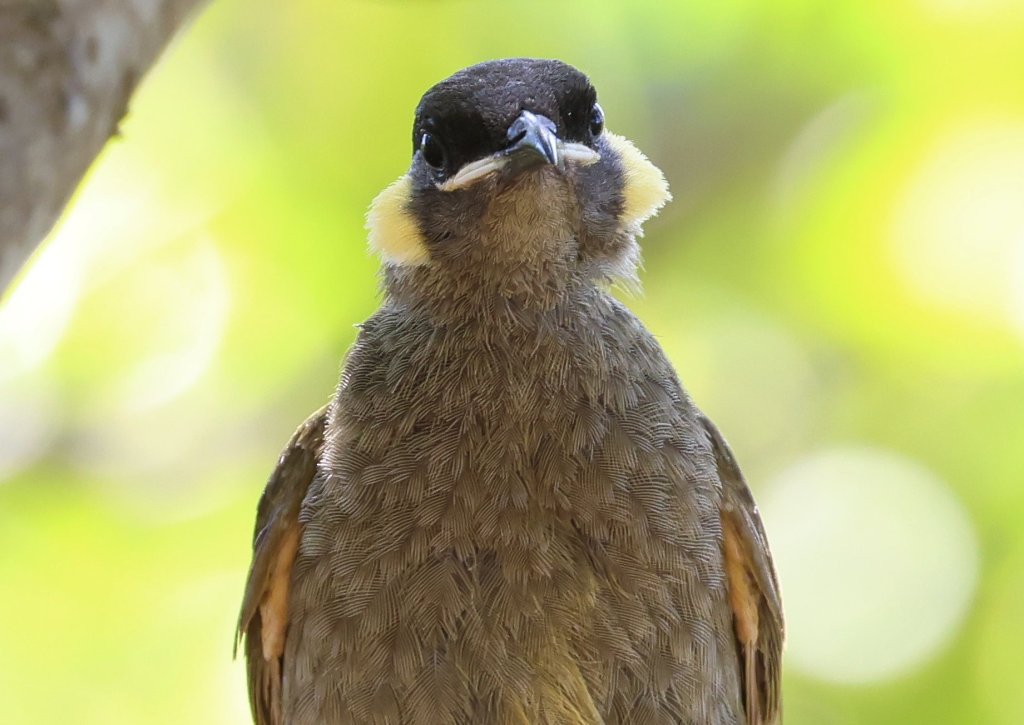
There is one main unpaved path out to the headland and lighthouse, with side-branches to the beaches to the north and south. On my first visit, I got up close and personal with a Lewin’s Honeyeater quite soon after arriving.
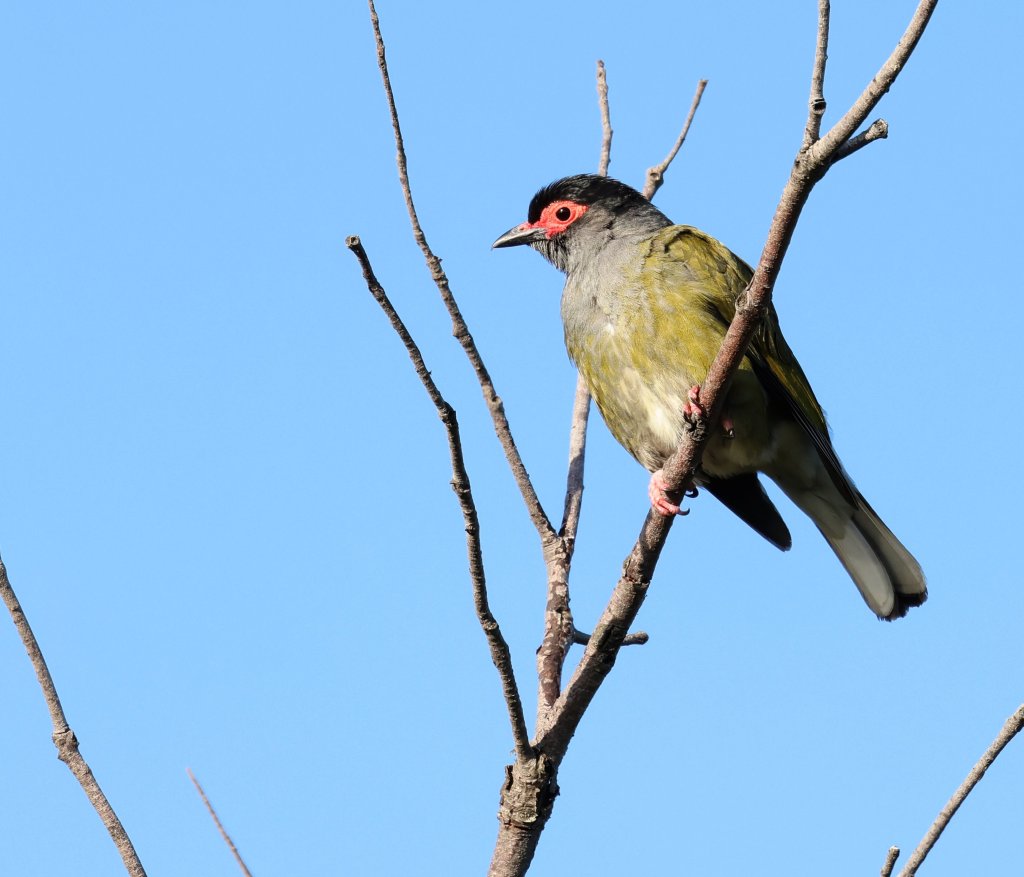
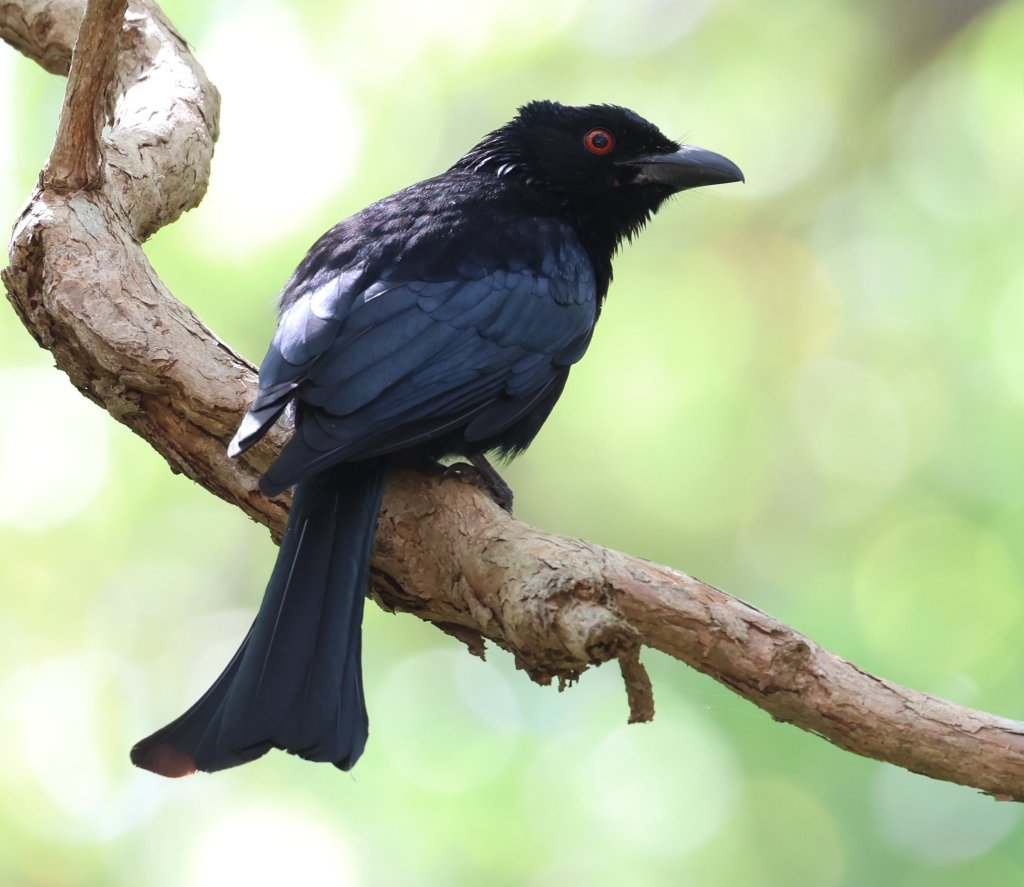
Figbirds were visible from the street and Spangled Drongos weren’t hard to find either. I also heard Whipbirds but, as is often the case with these masters of hiding in the undergrowth, managed only a brief glimpse.
The canopy at times forms impenetrable tunnel-like tangle of branches and if birds want to practise Whipbird-levels of concealment, there’s not much you can do about it except peer hopefully through the foliage, waiting for a glimpse or two of whatever’s making that bird call.
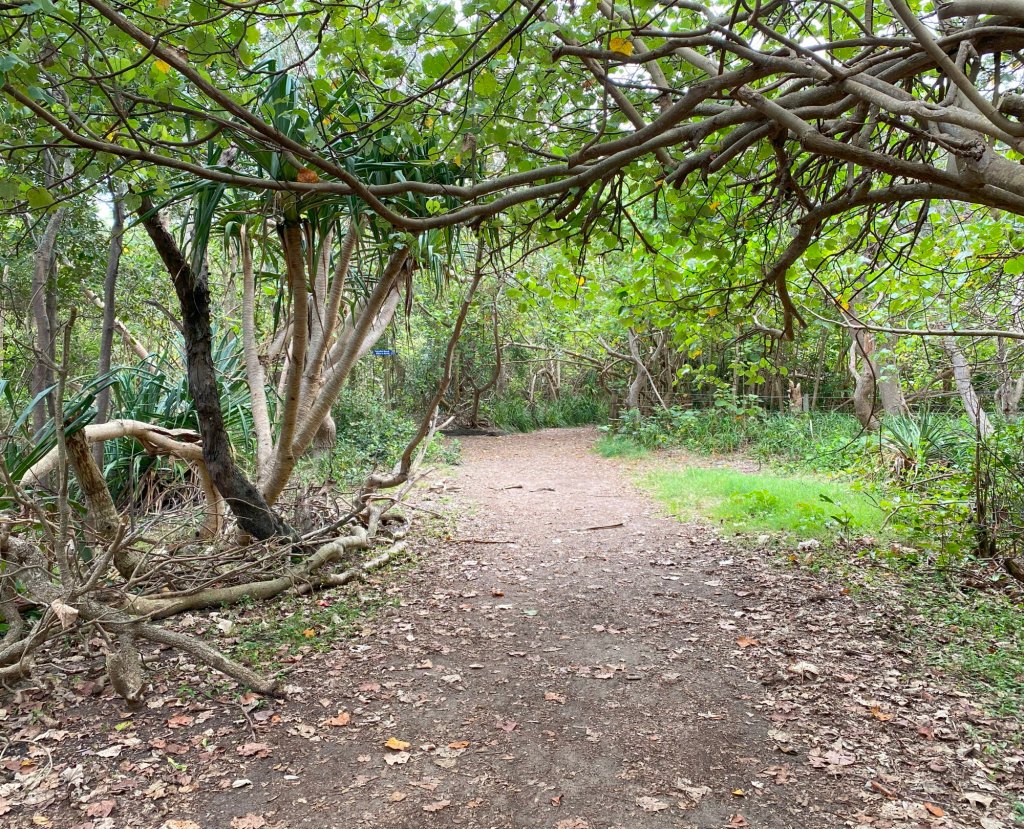

No such trouble with finding a trio of Yellow-Tailed Black-Cockatoos on my Nov 2022 visit, as these birds were feeding on a hard fruit of what I think was a large coastal banksia tree. They were almost overhead above the path. They certainly have a lot of character and are worth spending time watching as they merrily go about their munching business.


The bush here, being a type of rainforest, is more bird-rich than you might expect for coastal vegetation; the flipside is that, as mentioned, it can be dense and tangly. Eastern Yellow Robins are a good example of a bird which is uncommonly seen here, which might be because there are few numbers of them, or they are just very shy and hiding is rather easy.

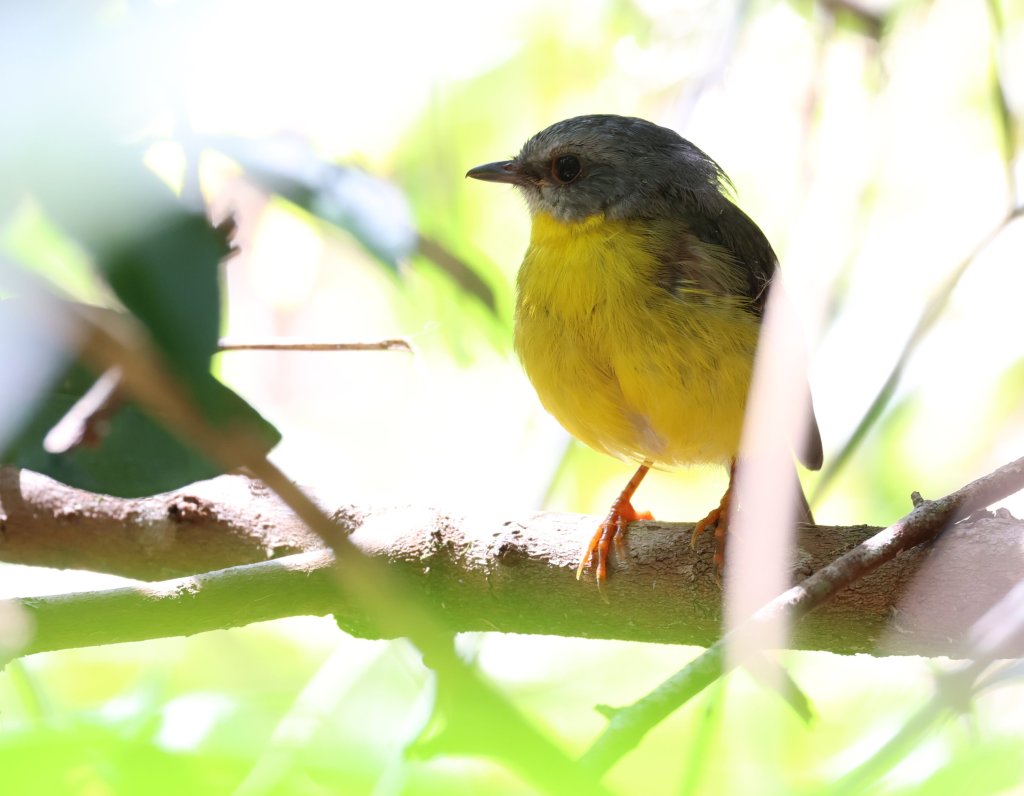
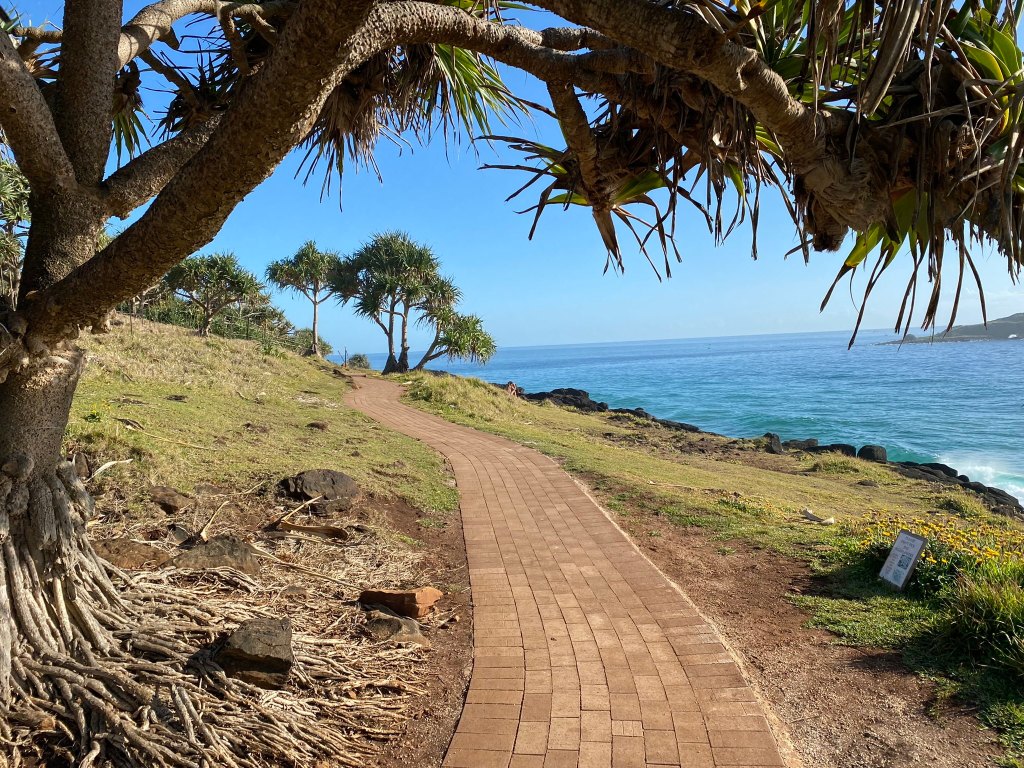
At the end of the path is a set of wooden steps leading 15 metres or so up to the headland proper, where you soon pop out onto a delightful brick-tiled path with excellent views up and down the coast.


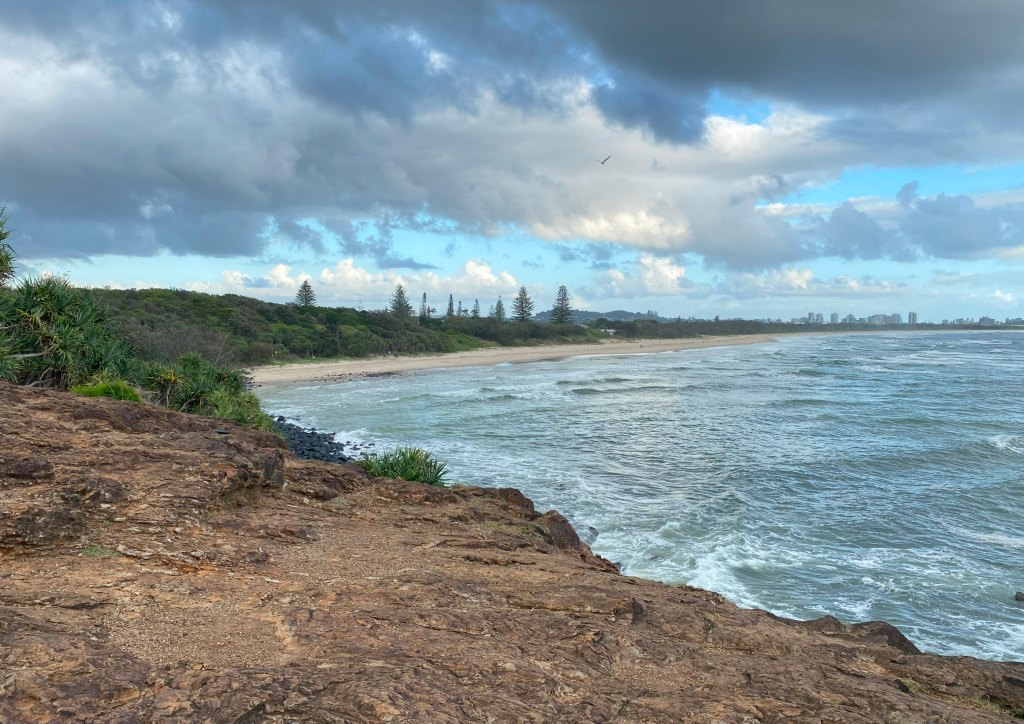
The sweeping beach to the south is called Dreamtime Beach and on my Nov 2022 visit I found two very settled Laughing Kookaburras on this side of the headland.
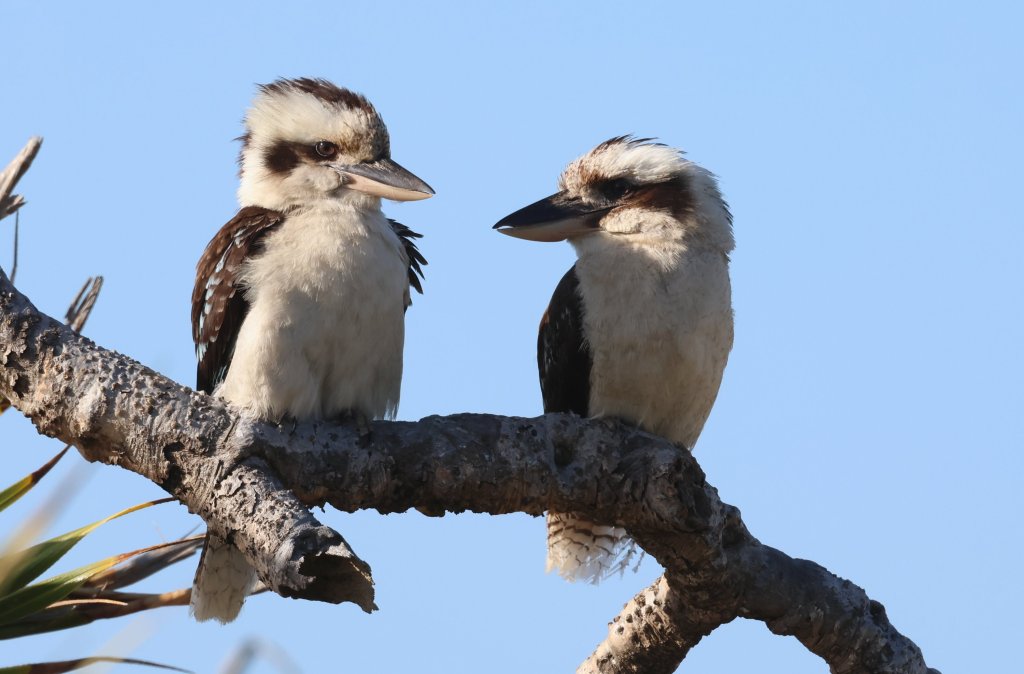
I couldn’t help taking a photo (okay, many many photos, and some videos) of the kookas with the surf beach in the background, thinking it was a quintessentially “Aussie” tableau (up there with a photo I took of Galahs with Parliament House in Canberra in the background).
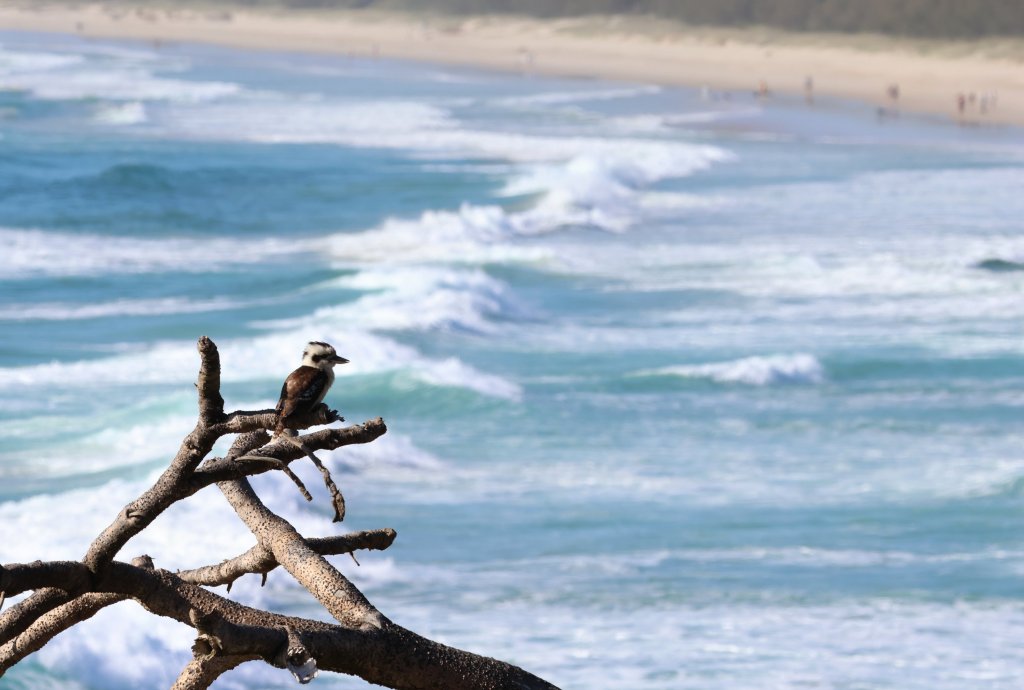
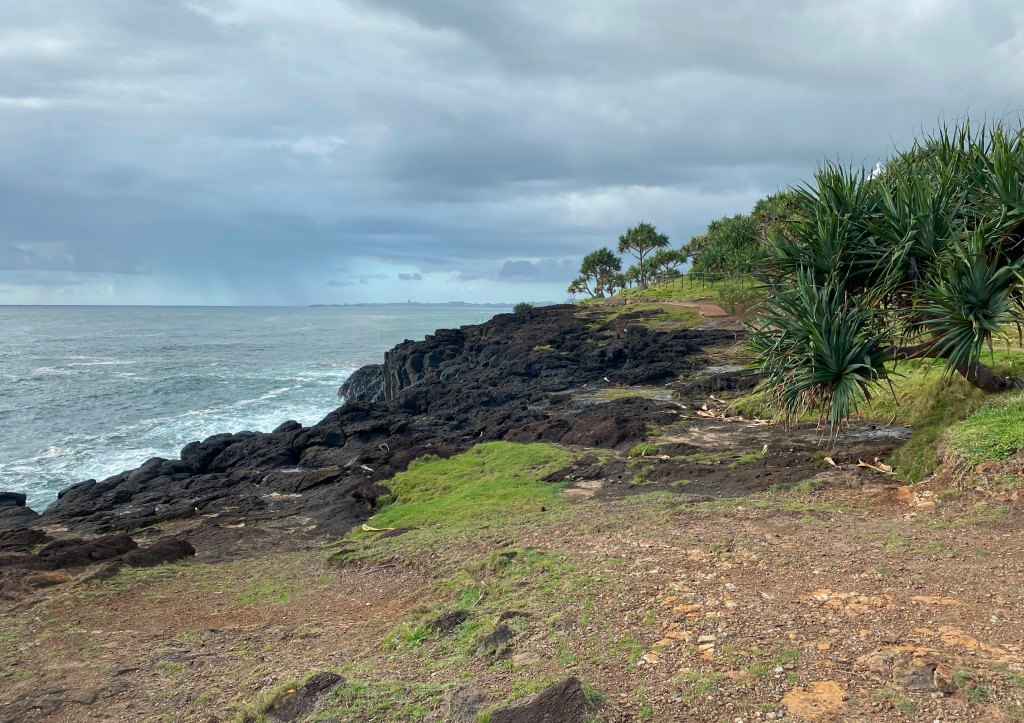
Although the photos below show the view in good weather (during my first visit in 2022), hanging around this headland in poorer weather (as in my second visit in 2024) was still rewarding from both a birding and a scenery point of view. The evolving weather patterns are interesting to observe especially if you’re there early as you might get some super nice early-morning-sun-shining-through-clouds-above-the-ocean vibes.

A fun birdy sight for me in Nov 2024 was seeing several noisy Blue-Faced Honeyeaters flying up in a squawky group. This behaviour still intrigues me; when I first started birding in 2020 I only ever saw Blue-Faces in solitary mode or at best in pairs; it was a couple of years before I saw them socialising like this (though I have since seen it several times).

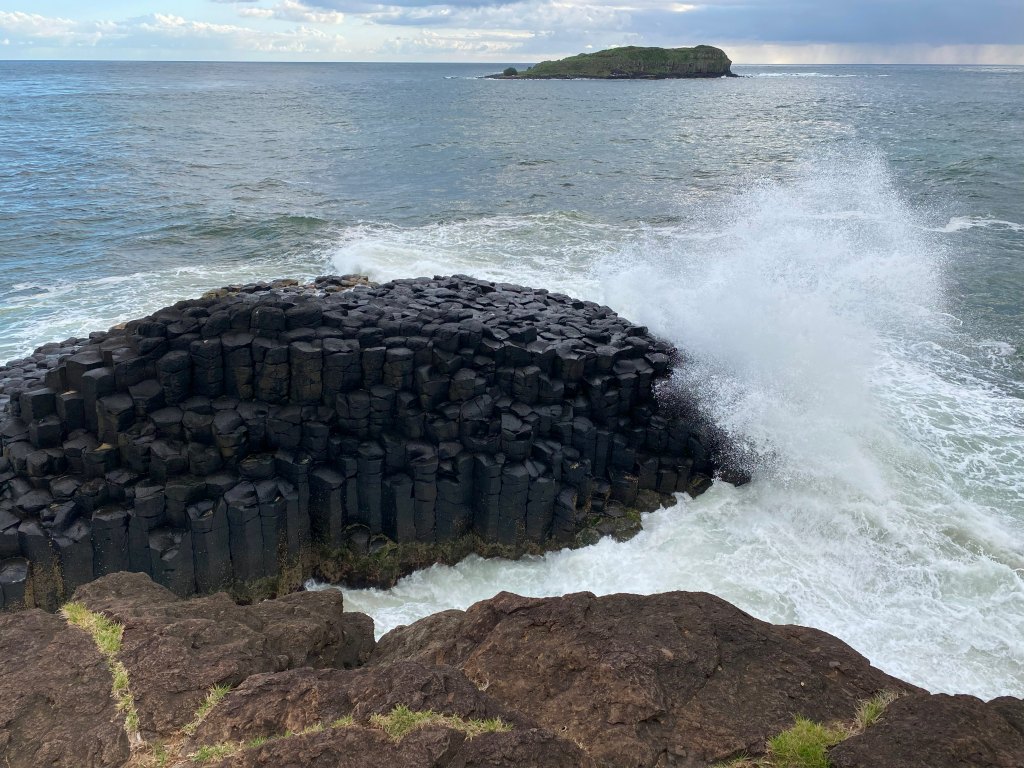
The northern end of the headland is where you can see the dark basalt columns – the so-called causeway – and I concentrated my time here on my second visit in Nov 2024, thinking I might find some interesting seabirds. Watching the mesmerising waves pounding against the rocks is also a classic NSW coastal experience.
An Osprey flew very close along the headland at one point, and then back again, seemingly scanning for the best place to hunt. It gave me quite the glare as it cruised past.


The obvious offshore island you can see from Fingal Head is called Cook Island (seen by Captain Cook in 1770) and is about 600m away. The waters around it are a marine reserve and it’s supposedly a known breeding area for a variety of seabirds such as terns and shearwaters.
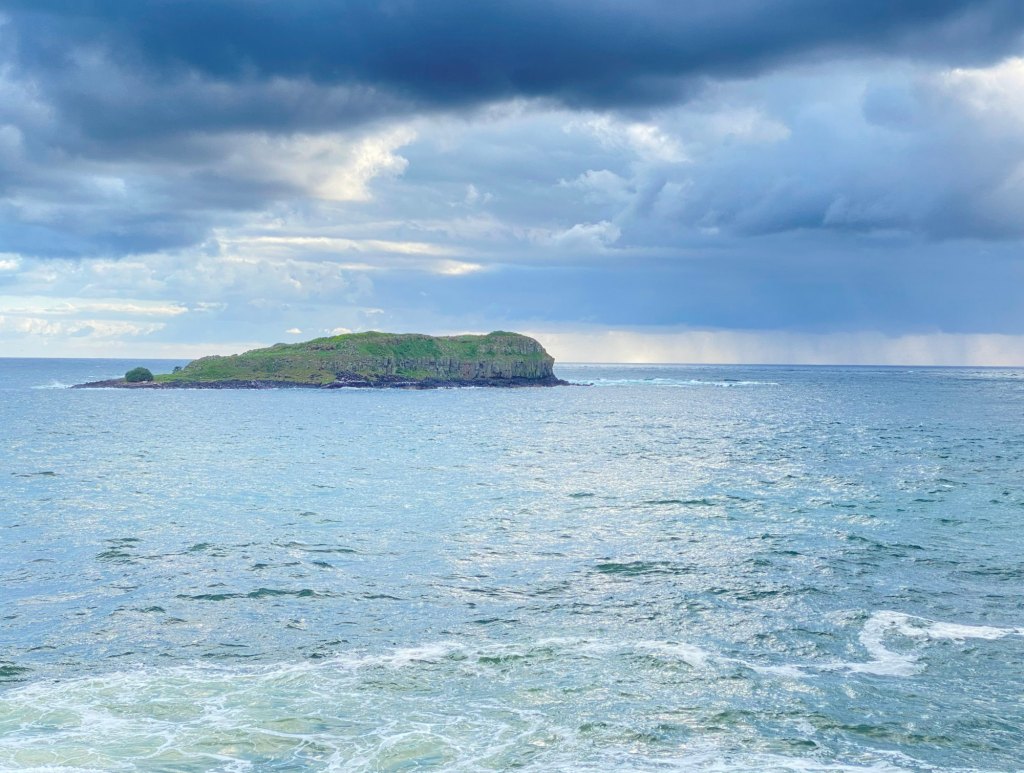
When I was there in Nov 2024, the island was heavily dominated by Silver Gulls. In fact, counting the hundreds of gulls there and in several “rafts” on the water’s surface, I came up with a grand total of 865 birds.
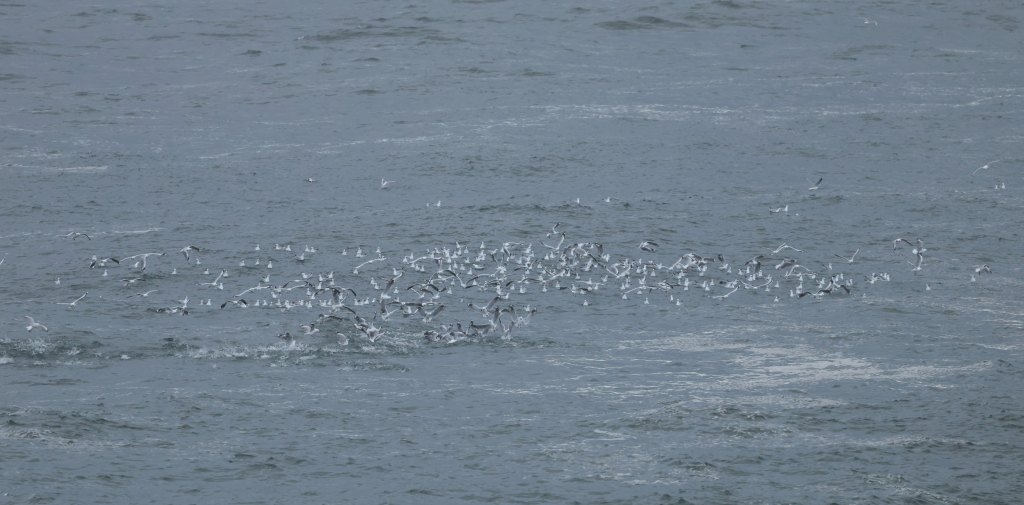
There were likely several hundred more on the other side of the island too.

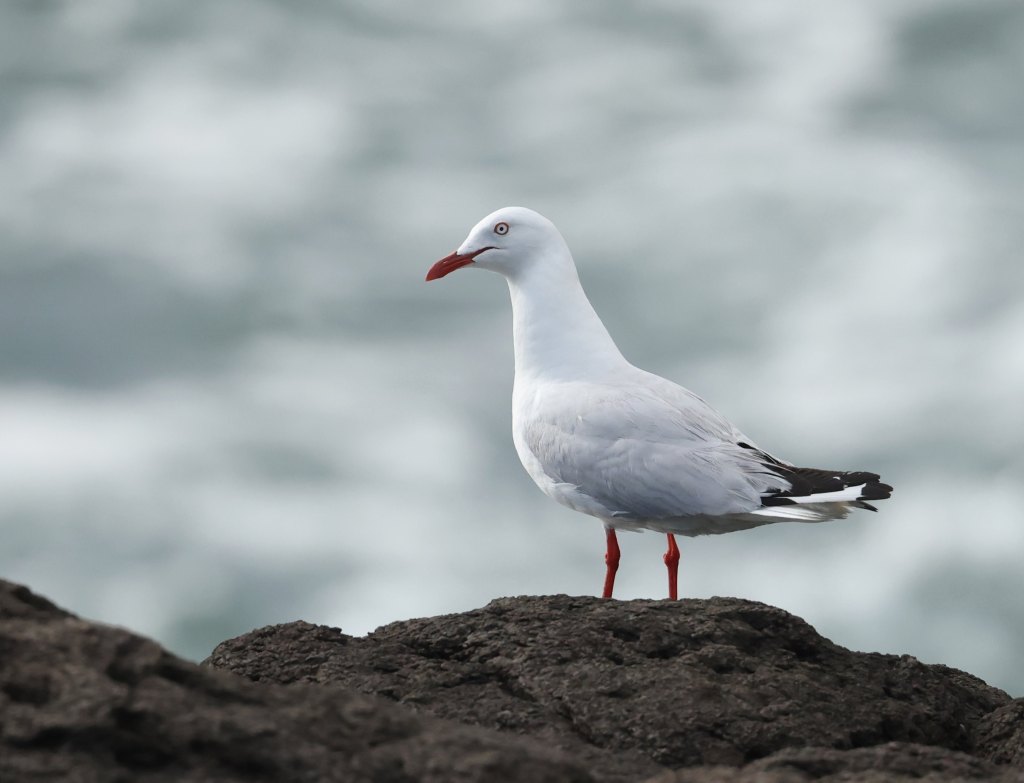
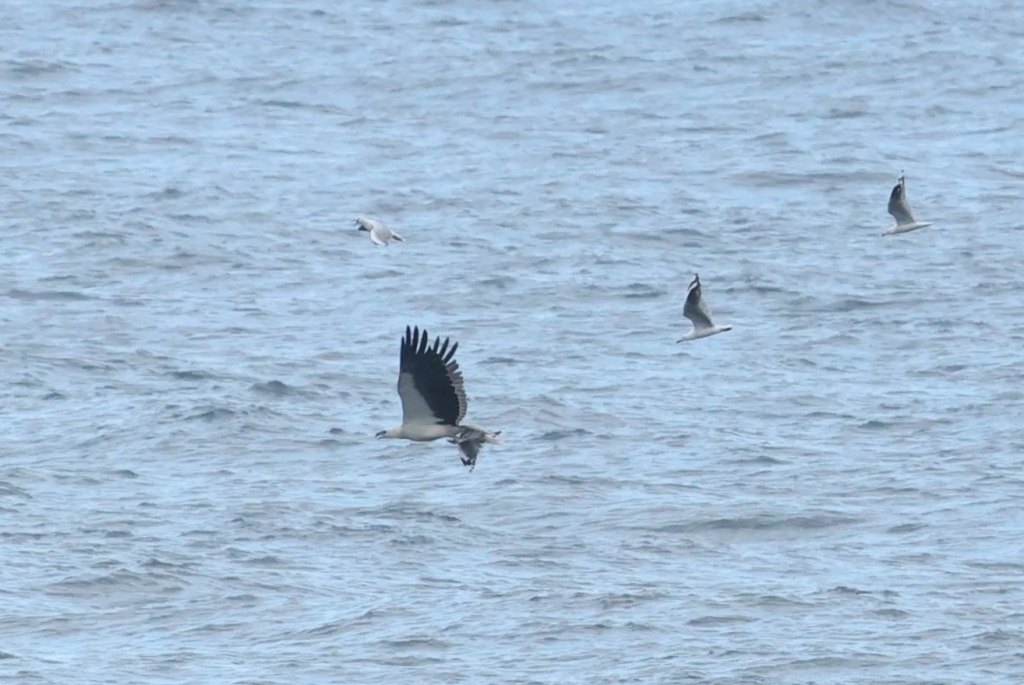
At one point a White-Bellied Sea-Eagle flew lazily across to Cook Island, disappeared over the other side of it, and re-emerged with a gull in its claws – an easy breakfast, I suppose. It was harassed all the way back to shore by several understandably irate gulls.
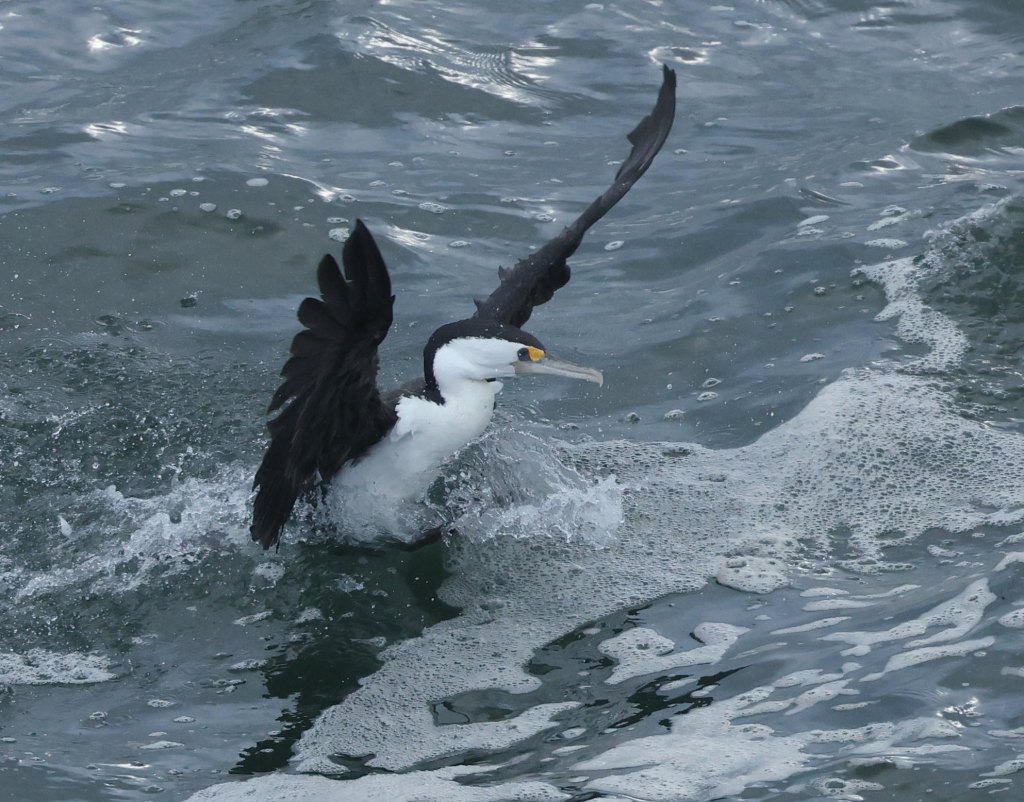
I also spotted a Gannet hanging out with the Silver Gulls on the water, very unusual for that time of year (November) – they are much more common in this region in winter. Little Pied and Pied Cormorants flew and hunted in the headland’s surrounding waters as well, and I spotted what proved to be a couple of Short-Tailed Shearwaters too. Wedge-Tailed, Flesh-Footed Shearwaters and Fluttering Shearwaters have been seen from here in the past but you’ll likely need some good optics (like a spotting scope) and a slice of luck to attain decent views of them from land.
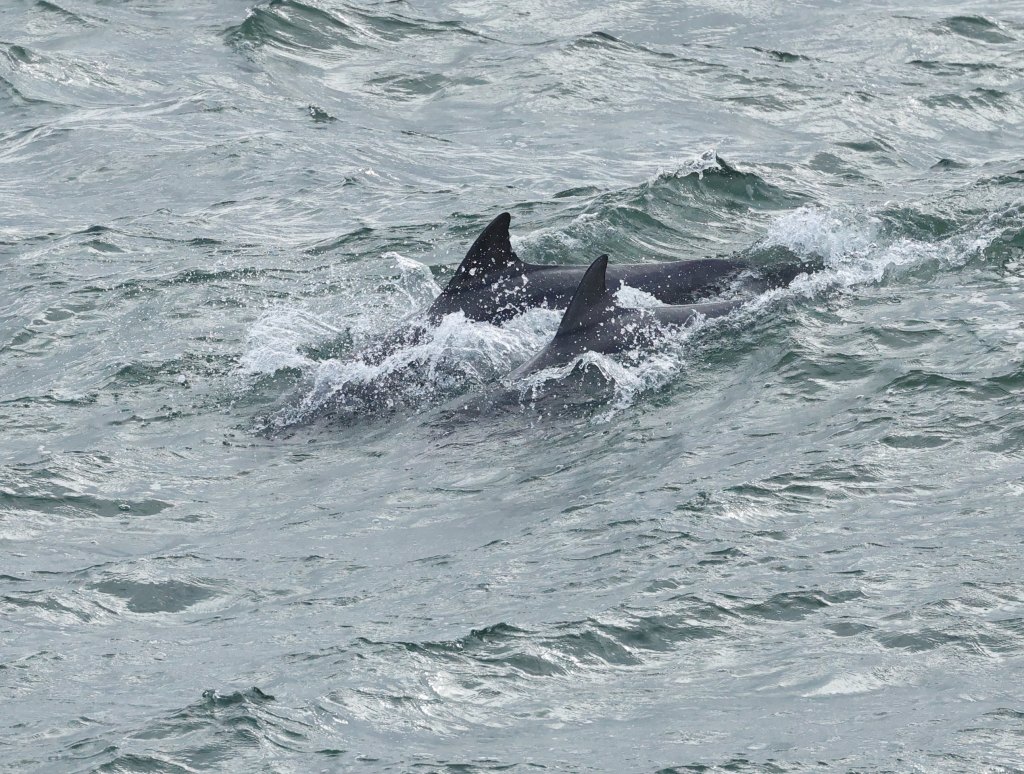

I quite enjoyed my Nov 2024 visit as the weather was interesting, the waves hitting the rocks were suitably dramatic, there weren’t many other people around on the headland itself (even though it was a weekend), and it seemed like there was always a surprise or two on the ocean, like dolphins or a gannet. I walked the path up and down the headland probably 3 or 4 times over the course of a pleasant two hours or so.
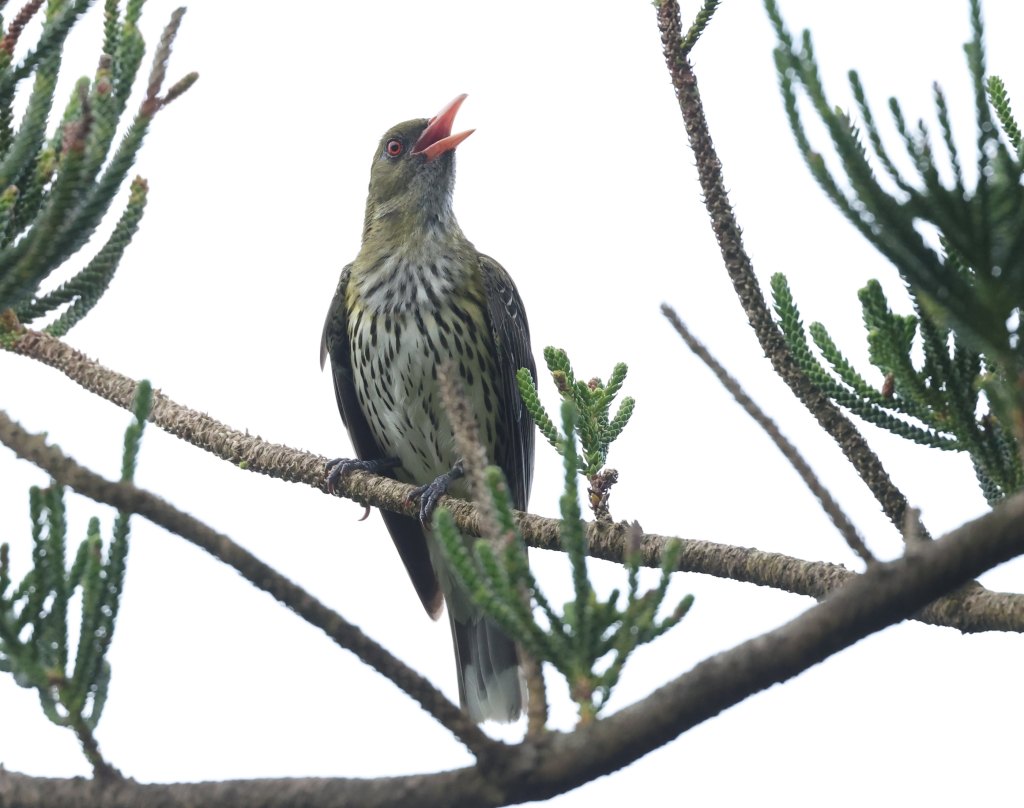
On the way back to the car, on the wooden stairs back down to the main path an Olive-Backed Oriole gained my attention by calling loudly.

Although I didn’t get any photos, Little Wattlebirds – a veritable mainstay of northern NSW coastal birding locations – were also present, as were Brushturkeys and – of course – Noisy Miners.
Summary
Fingal Head as it offers both an attractive coastal landscape which typically isn’t too crowded, as well as a couple of classic types of birding. For bush bird enthusiasts there’s a modest section of remnant coastal rainforest to explore, while the headland can give close-up encounters with Ospreys, cormorants, and gulls and (likely more distant) views of more exotic seabird species. You can definitely make a good coastal-themed morning or whole day out of visiting here along with (say) Kingscliff and Hastings Point to the south, which offer further coastal birding opportunities.
eBird:
Hotspot for this location: Fingal Head Lighthouse (127 species)
Checklists for these visits: 19 Nov 2022 (17 species), 17 Nov 2024 (21 species)
Bird Spots videos from this location: Laughing Kookaburras, Short-Tailed Shearwaters, Silver Gulls, Yellow-Tailed Black Cockatoos, Pied Cormorant
Pluses and minuses:
+ Seabird watching possibilities
+ Decent coastal bush birds
+ Scenic ocean, headland and beach views
– Short trail, not much distance to explore
– Tight car parking near the track entrance
AUTHOR: ANDY GEE
BIRDERS: ANDY GEE, DOUG
 Bird Spots