
Summary: Awesome seabird-watching trip off the south-eastern coast of Tasmania
Dates of visit: Jun 3 and 4, 2023
The pelagic boat trip from Eaglehawk Neck is one of the highest-calibre seabird watching adventures you can take in Australian waters. It starts from the south-eastern tip of Tasmania, where you have an amazing opportunity to see many different Southern Ocean birds like albatrosses, petrels and prions.
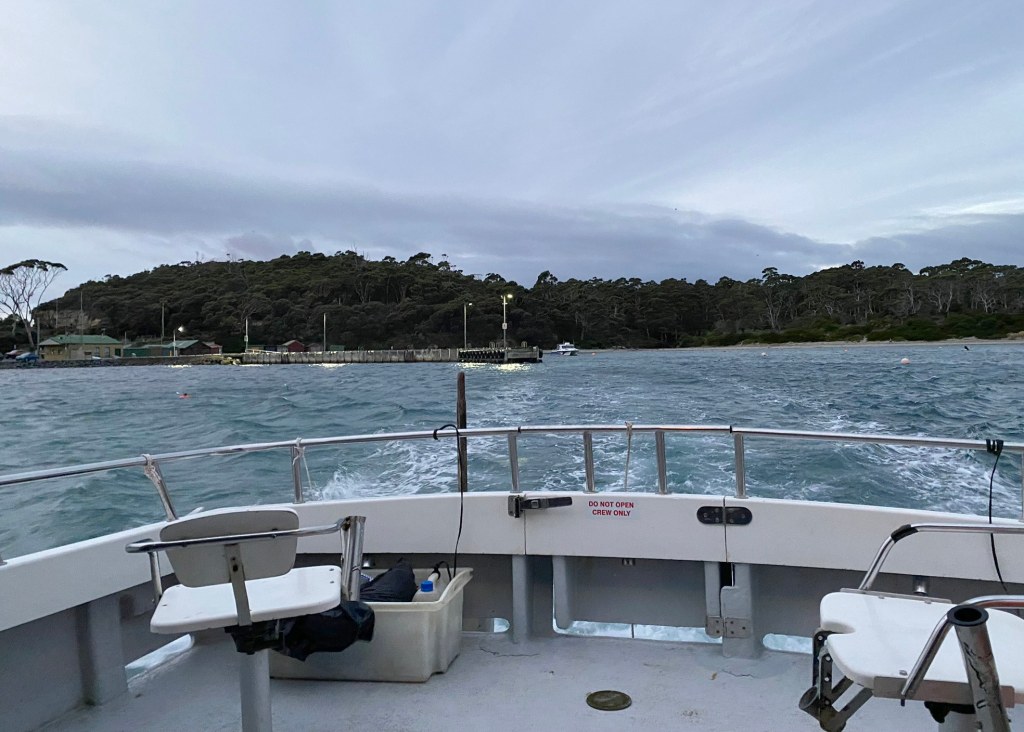
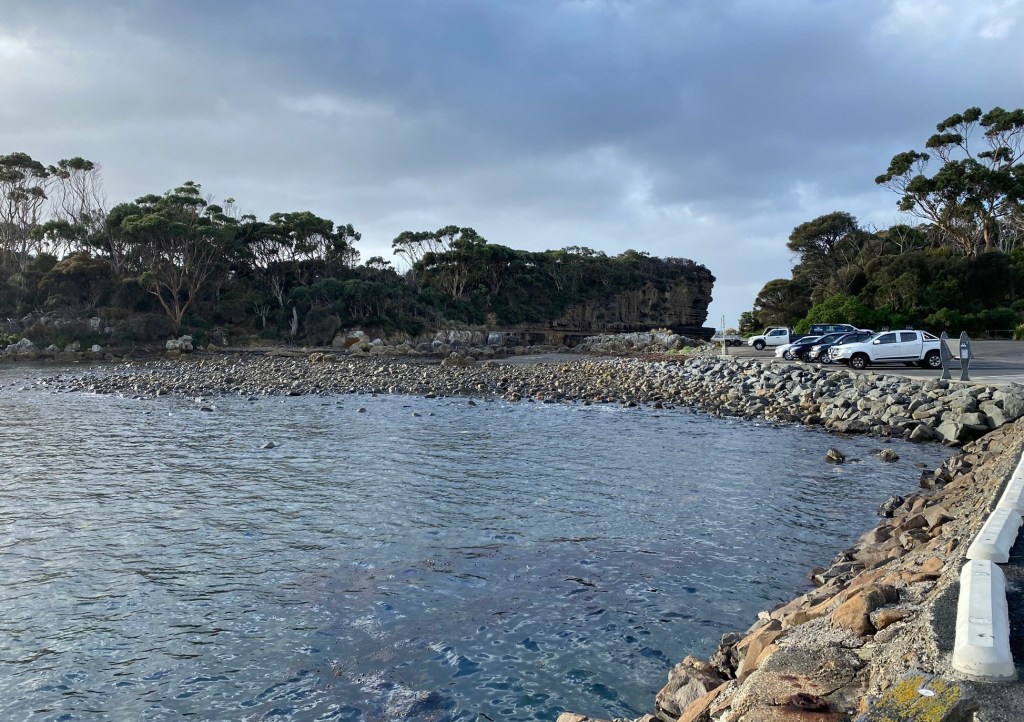
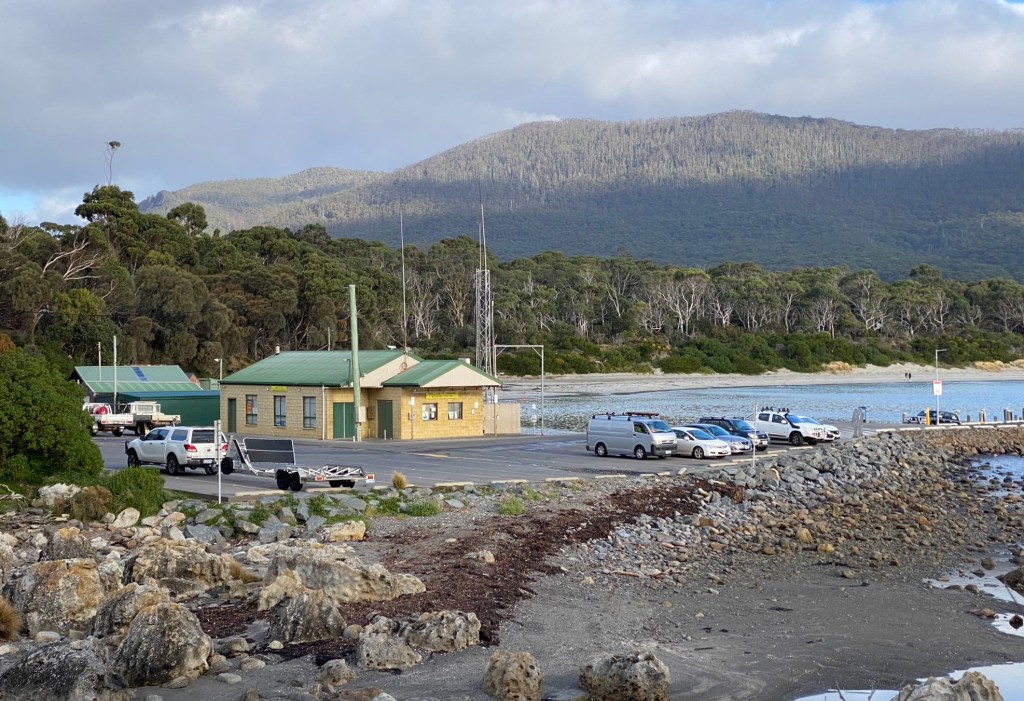
The trip starts from Pirates Bay jetty, just down from the Blowhole at Eaglehawk Neck. It is about an hour’s drive from Hobart. There is limited parking right at the jetty itself, and more up the hill – though beware that the loop car park at the Blowhole itself is limited to 1 hour (we accidentally parked there all day but were lucky enough to escape notice!) The vessel for these trips was the Pauletta and the organiser was Karen Dick, who did an excellent job communicating with the participants from well before the trip dates, via a dedicated Facebook group. Thus, everyone knew where to go, what to wear, and to some extent what to expect. Note that to get onto this trip you typically need to try and book your place well ahead (i.e. several months).

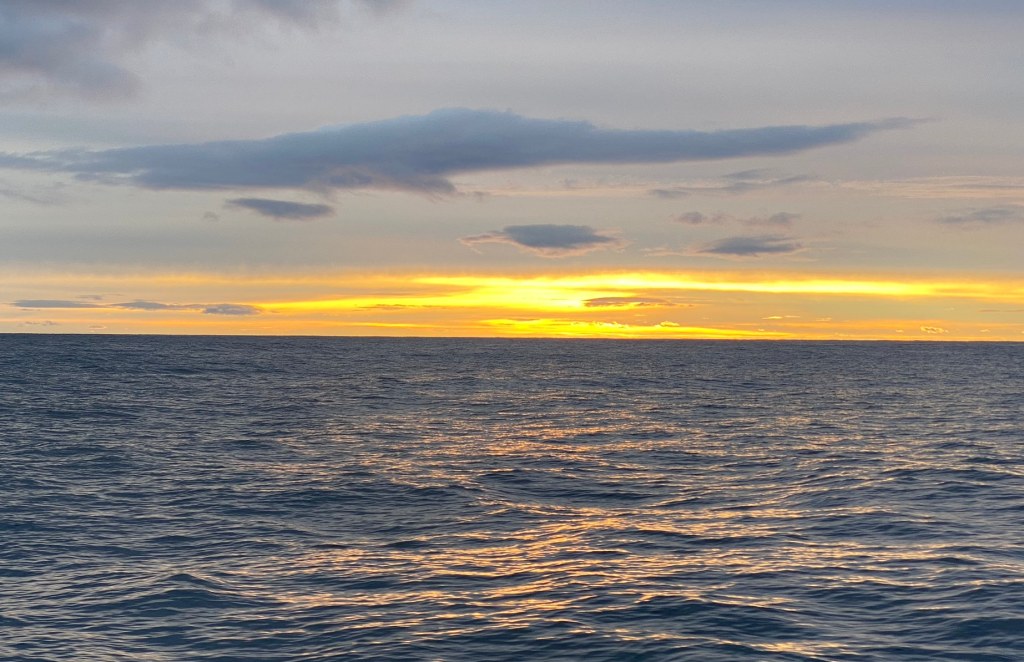
Of course, the weather is the biggest unpredictable factor. Our trip was a double-header (two separate trips on a Saturday and a Sunday) at the start of winter, so it was still dark at 7am when we arrived at the jetty, with sunrise not occurring until 7:30 – and even then, depending on cloud cover, there isn’t much light for a good while. And it was cold – very very cold. I was wearing four layers including thermals top and bottom, along with gloves, a neck warmer and beanie, and most of the other birders were similarly attired. I did not remove any of the layers or gloves/hat the entire day. Such is life in the southern climes!
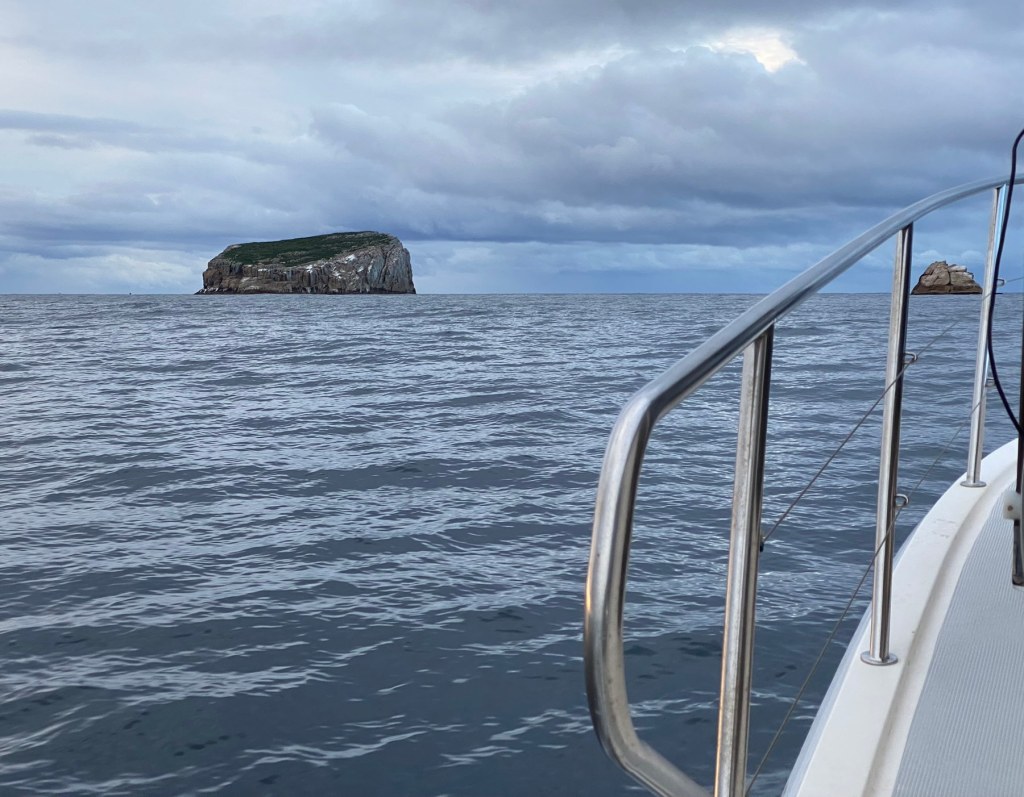
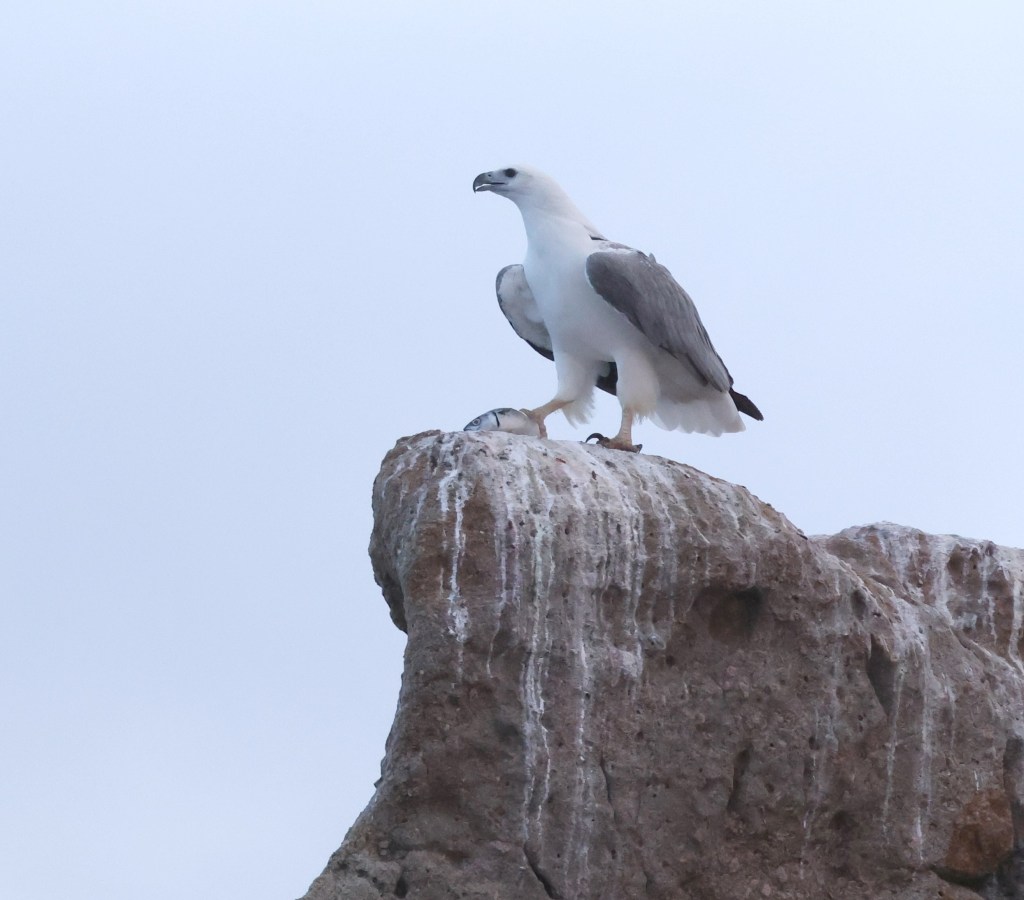
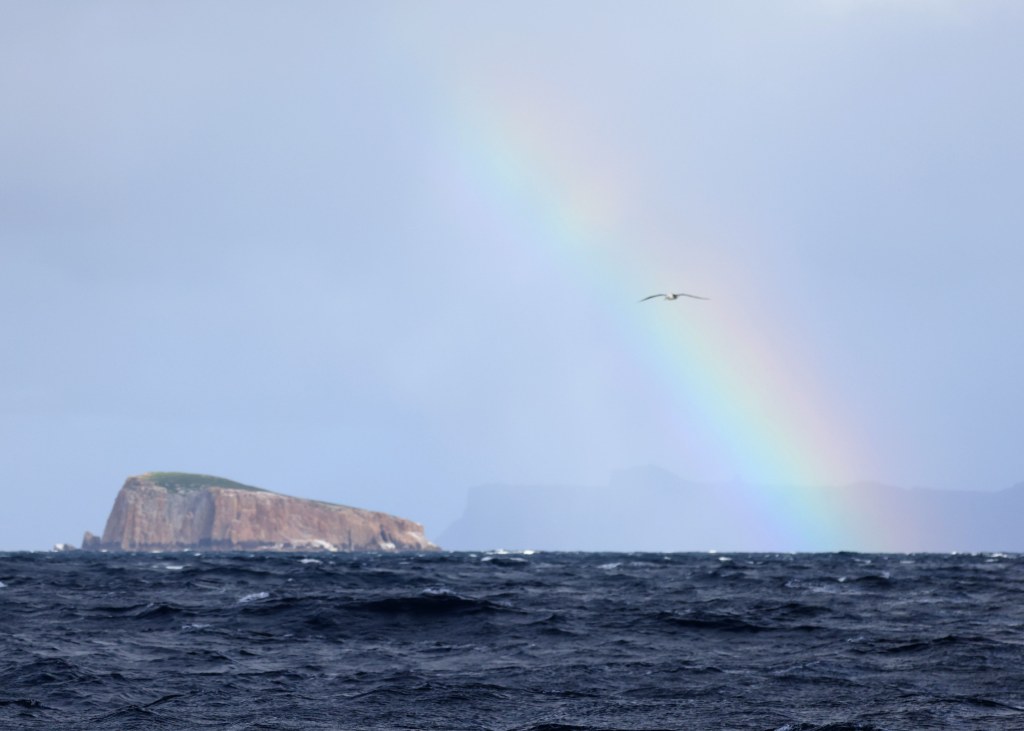
The first major stop for the boat are usually (depending on conditions on the day) the Hippolyte Rocks, two dramatic structures 13km south-east of the jetty and about 4km offshore. These rocks play host to seals, a seemingly resident pair of White-Bellied Sea-Eagles, Black-Faced Cormorants and various gulls and other near-shore birds.
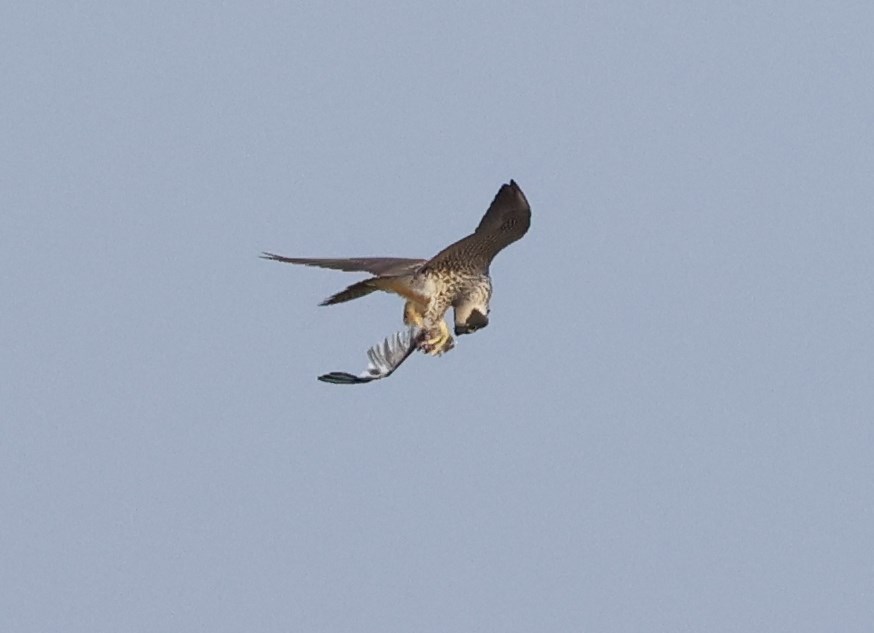
On our Saturday trip, soon after the Hippolytes, a bird with a very different flying style (it was flapping like crazy) came into view, and although distant, proved to be a Peregrine Falcon awkwardly eating while on the wing.
Between the Hippolytes and the continental shelf is a feeding ground for the Common Diving-Petrel, a small bird that can aptly be described as a “flying potato”. I had known about this bird only from eBird and wondered why there were so few photos (and fairly grainy ones at that) of this supposedly “common” bird – and now I know why: it is because they are small and fly as fast away from boats (and low to the water) as they possibly can!
Soon after that came our first close albatross encounter, with a couple of Buller’s Albatross. These birds have a yellow stripe both on the top and bottom of their bills, distinguishing them from the similar Yellow-Nosed Albatross (which we would see much later), which has just a single yellow nose stripe.
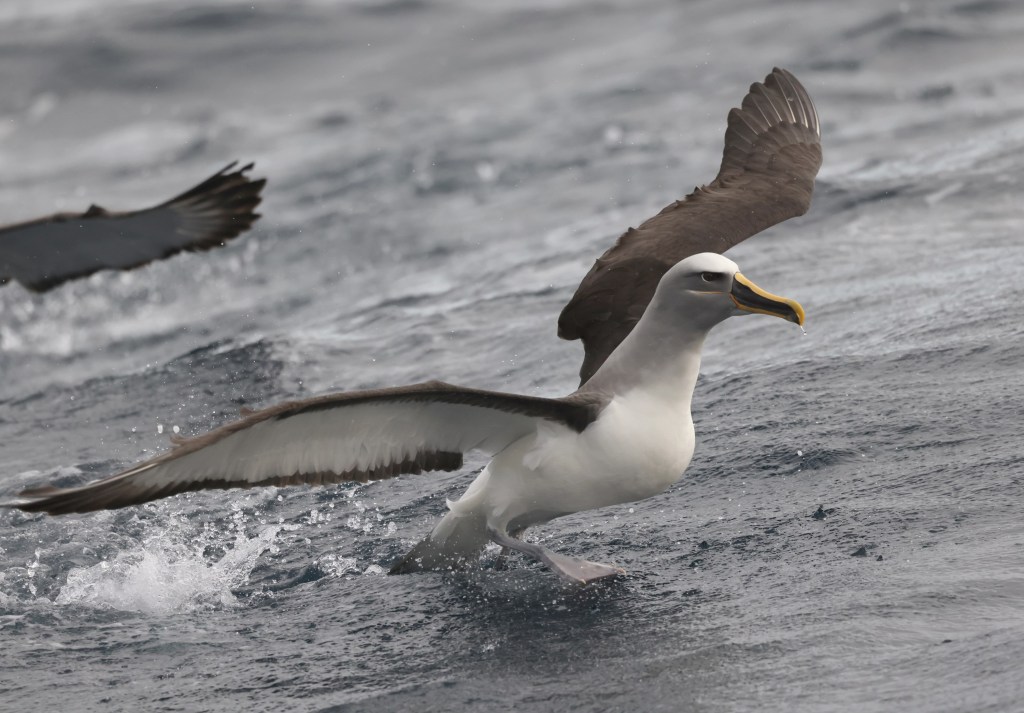
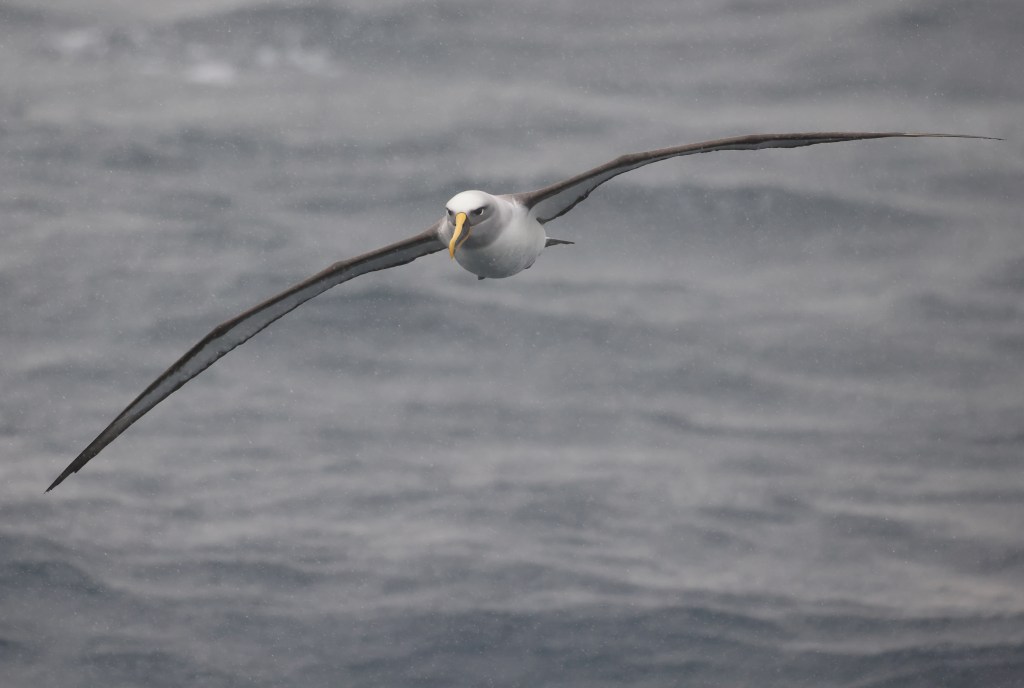
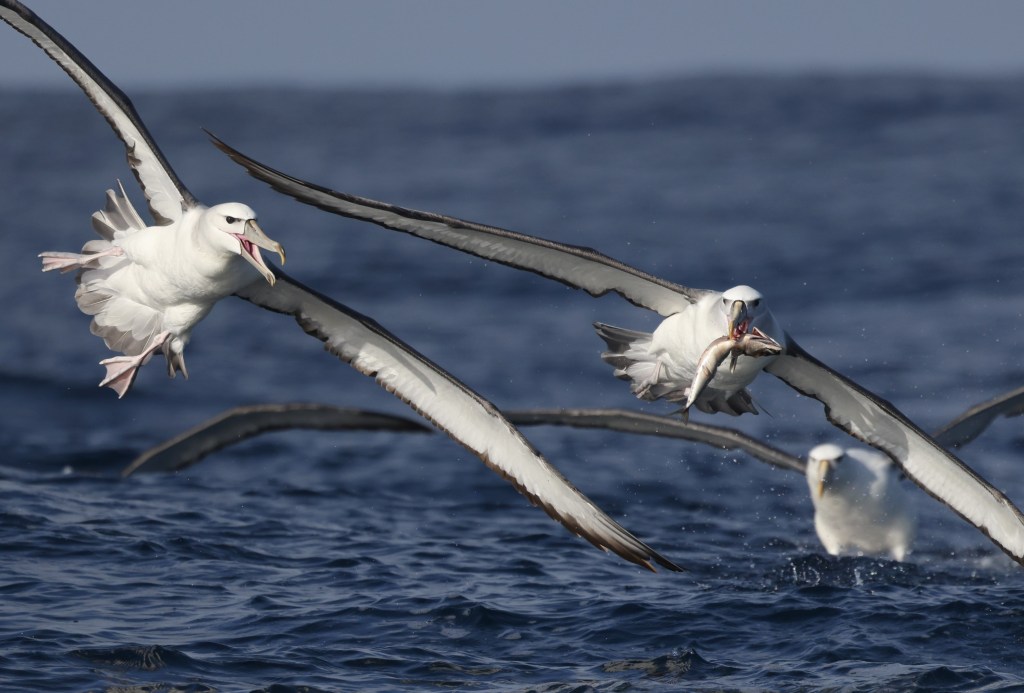
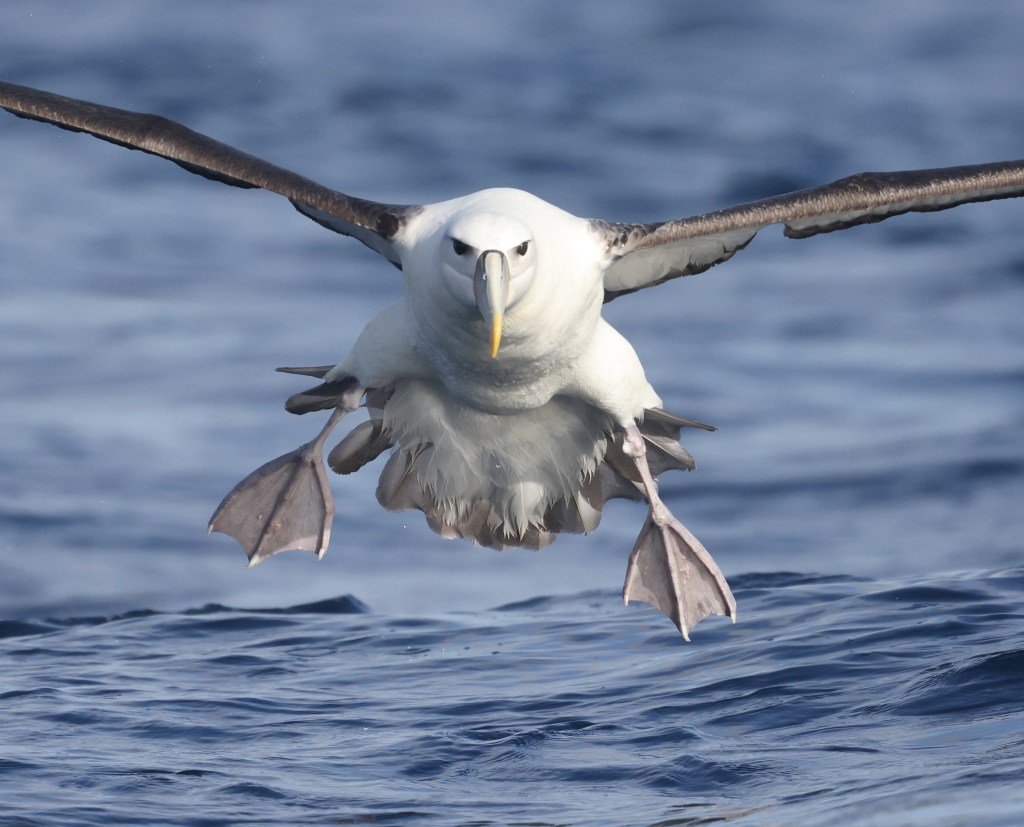
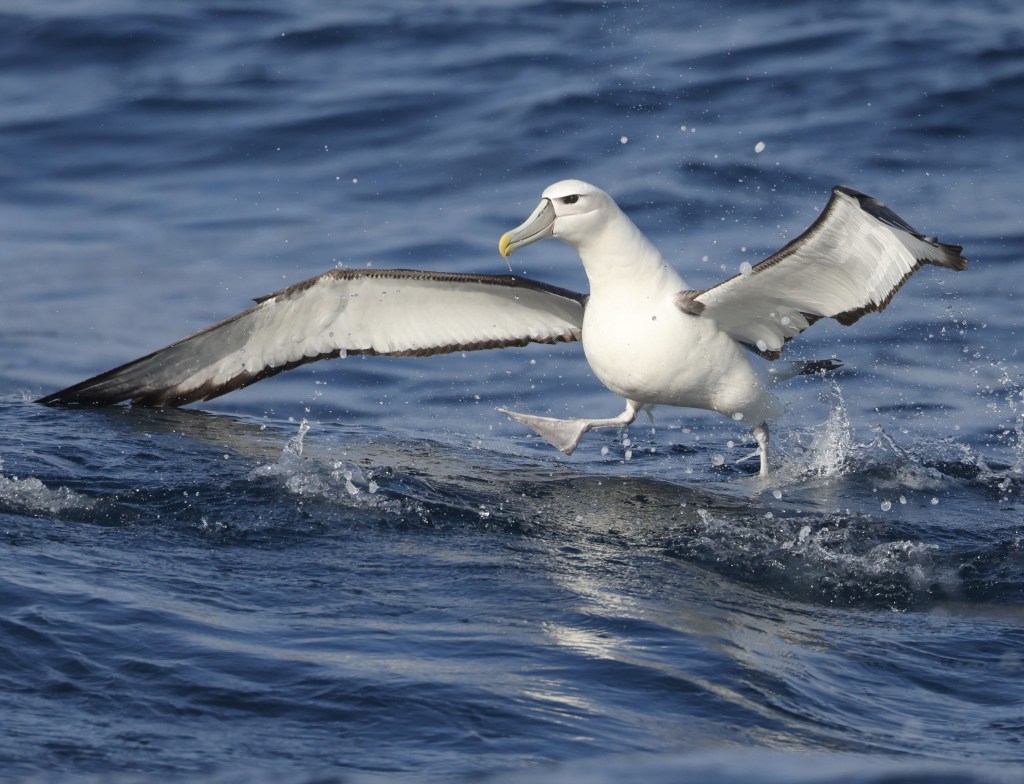
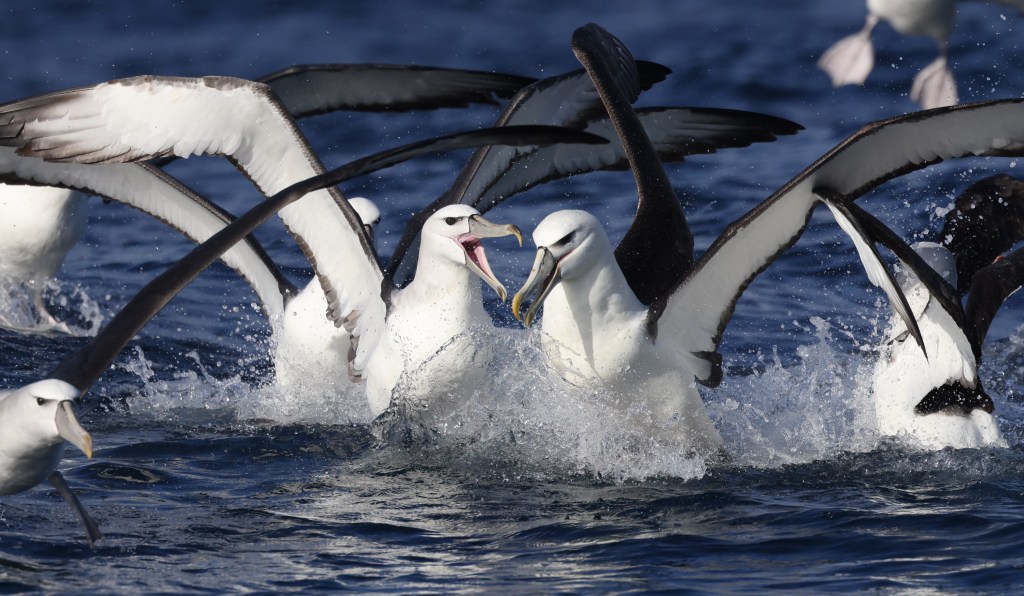
One of the candidates for the most abundant albatross on these pelagics is the ill-named Shy Albatross. We saw several dozen of these birds most days and while out near the continental shelf they constantly flew around or near the boat, indeed often congregated on the water within a few metres behind the boat. Not shy at all!
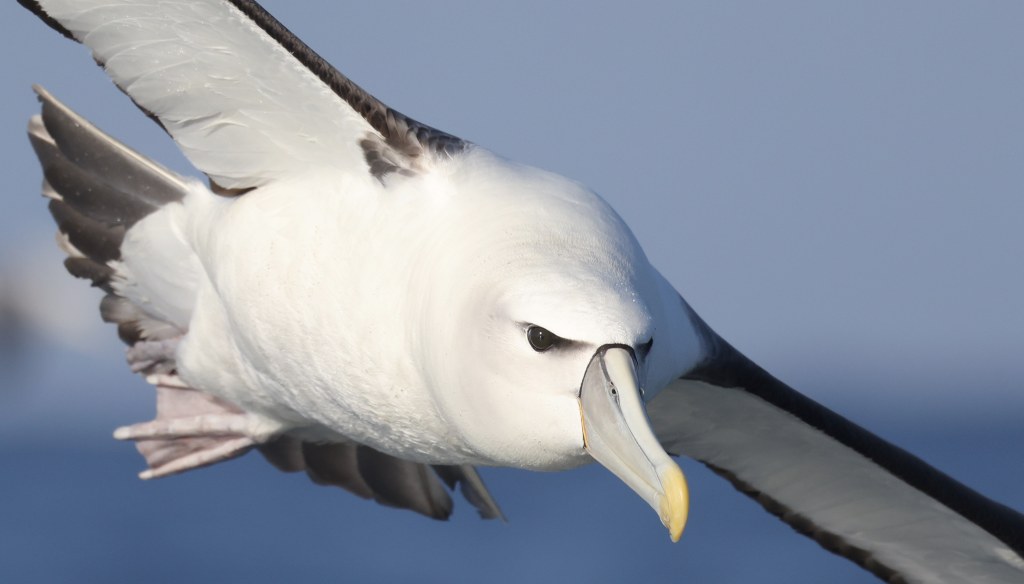
I had only seen Shy Albatross once before, on a Bruny Island boat cruise, so it was terrific to see them again, and much closer.
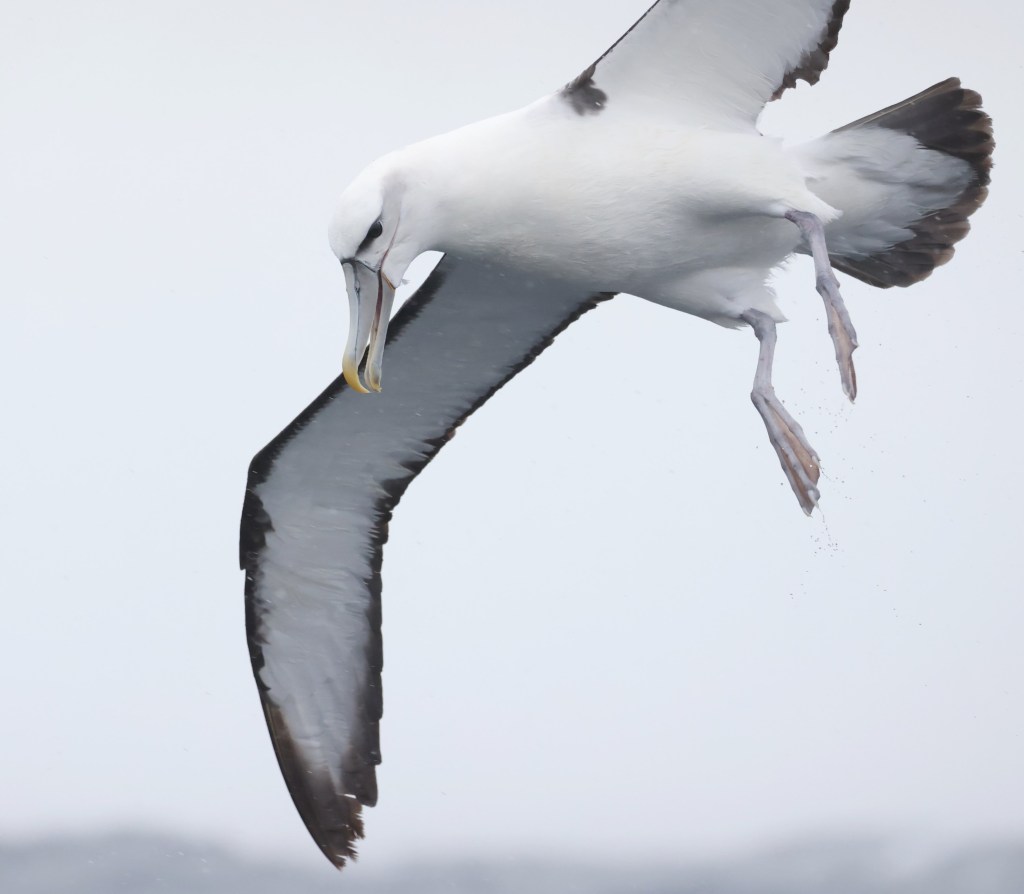
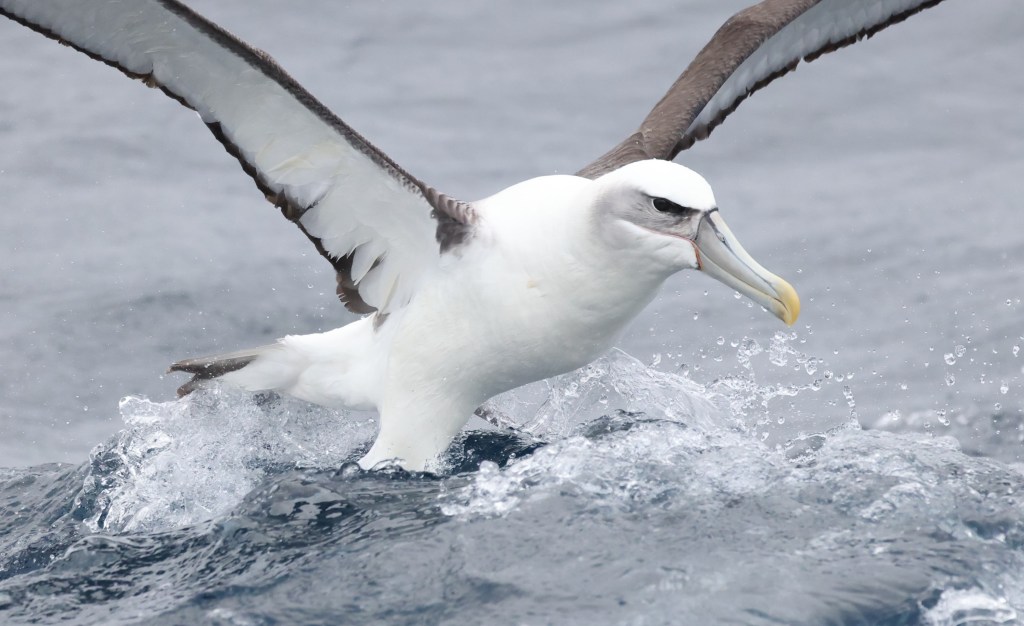
The Black-Browed Albatross has a thicker black underwing than the Shy and an all-yellow bill. The first one we saw was a Campbell’s subspecies, which has an arresting pale eye, and is reckoned as a separate species by several taxonomies (though not by eBird). It instantly became my favourite albatross species… at least until we saw a Sooty Albatross!
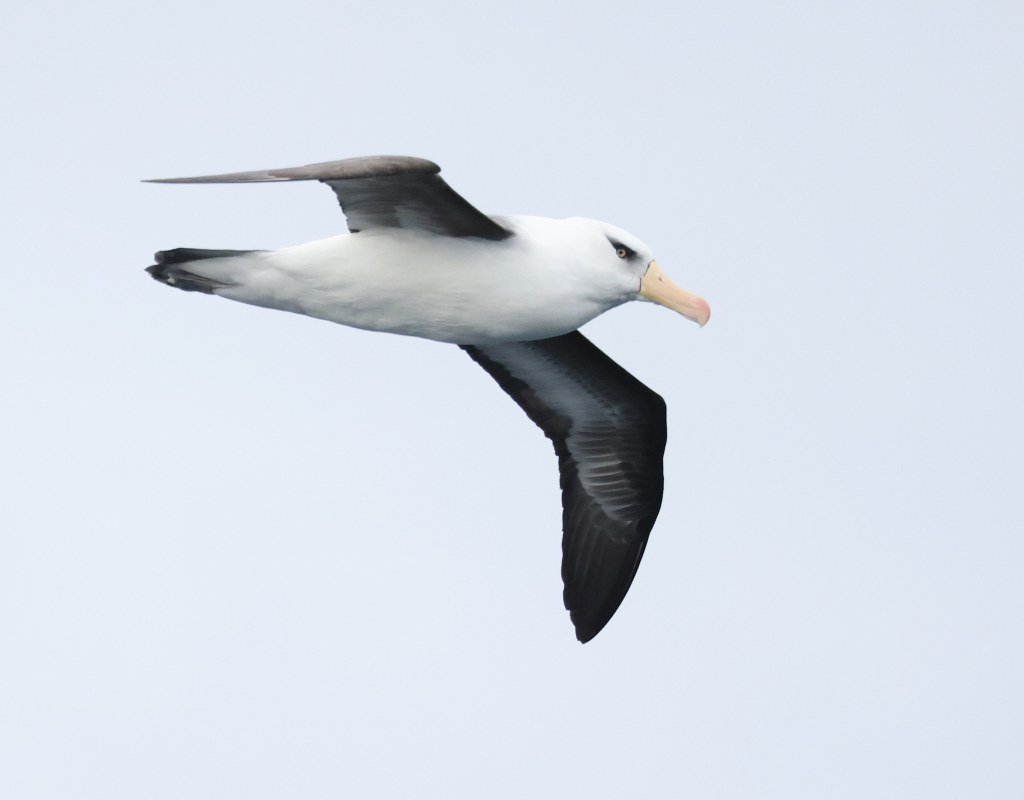
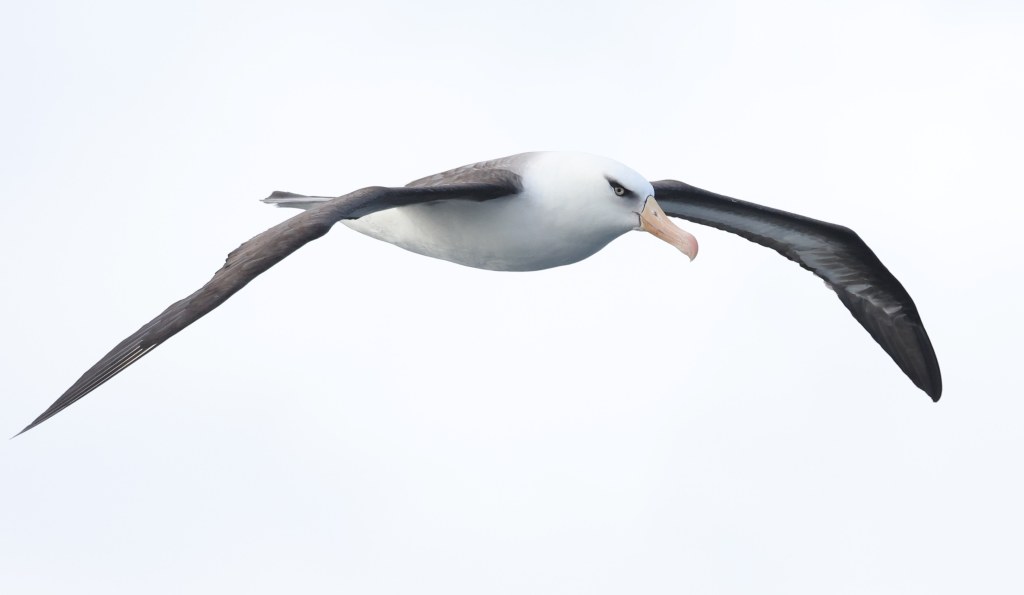
I did manage to get a decent shot of a “regular” (non-Campbell’s) Black-Browed Albatross on the Sunday trip.
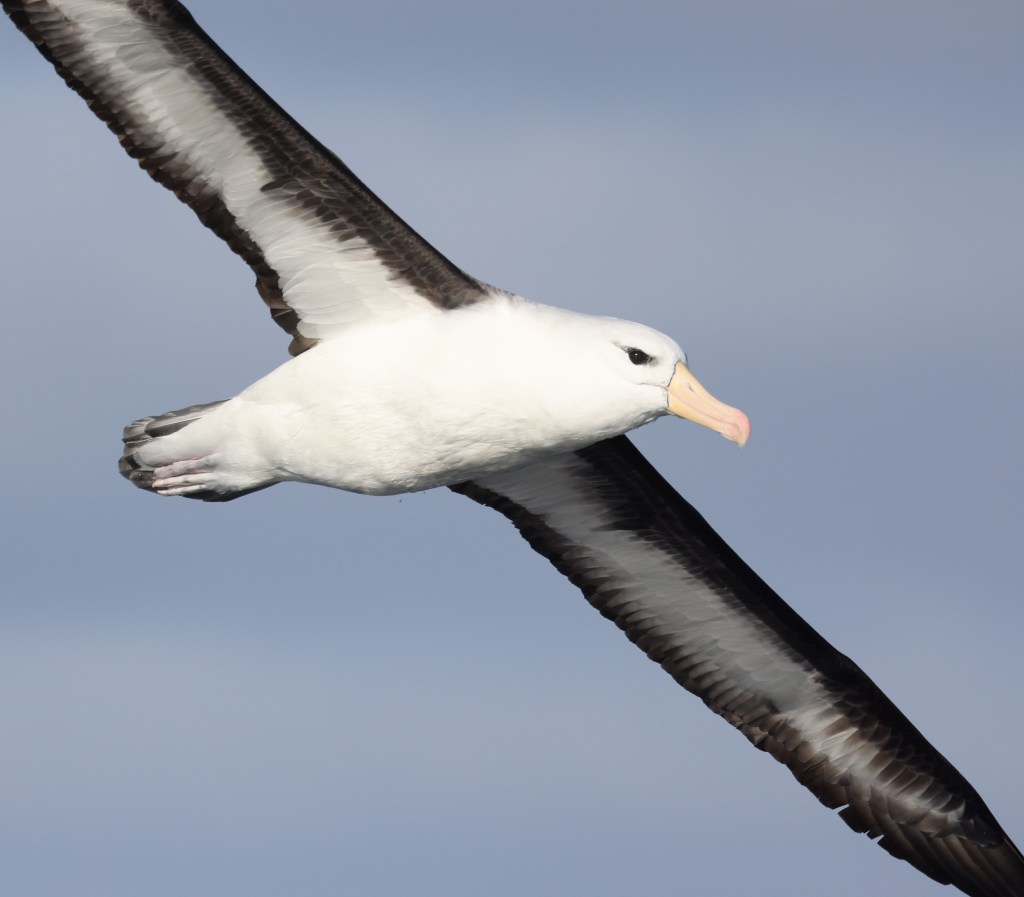
One of the marquee birds one is hoping to see on these trips is the Wandering Albatross, the bird with the largest wingspan in the world, and the pelagic did not disappoint here.
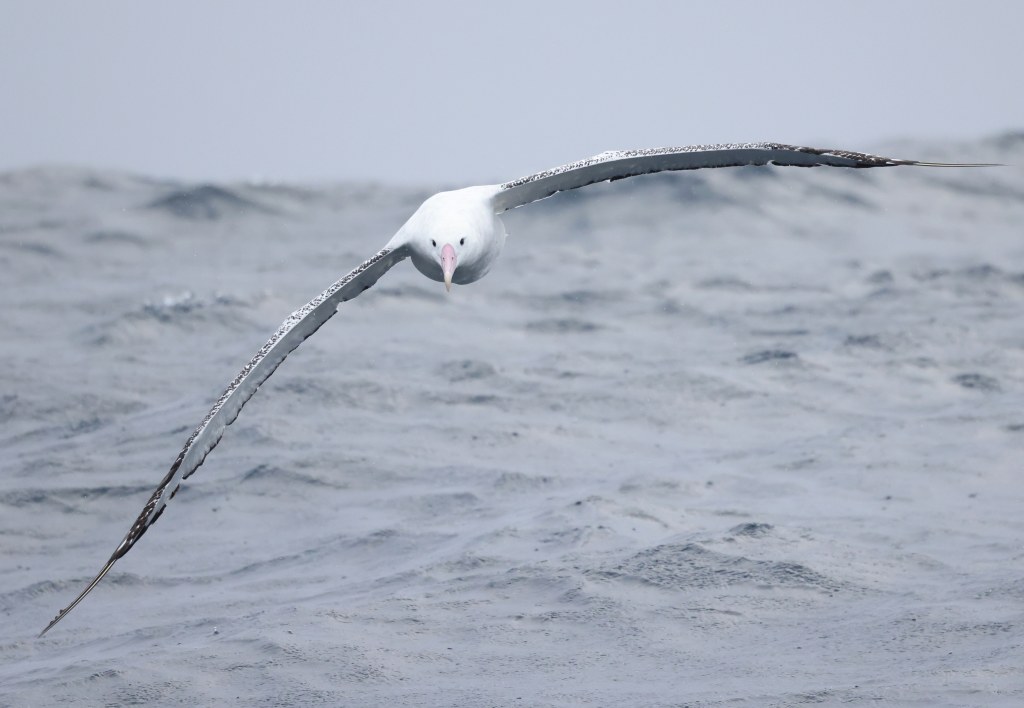
Wandering Albatross was also seen on Sunday – the Gibson’s subspecies.
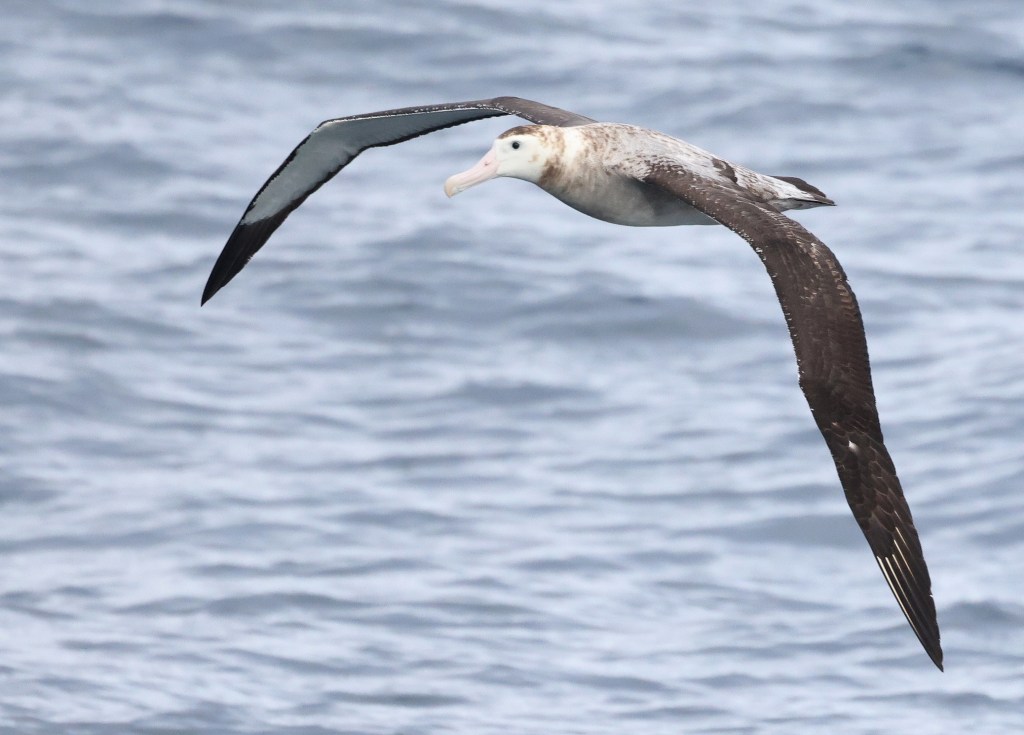
On Sunday much excitement was had at the sight of a Sooty Albatross, which flew straight towards the boat, swerved gracefully, then hung back at a fair distance for a little while before disappearing as mysteriously as it had arrived.
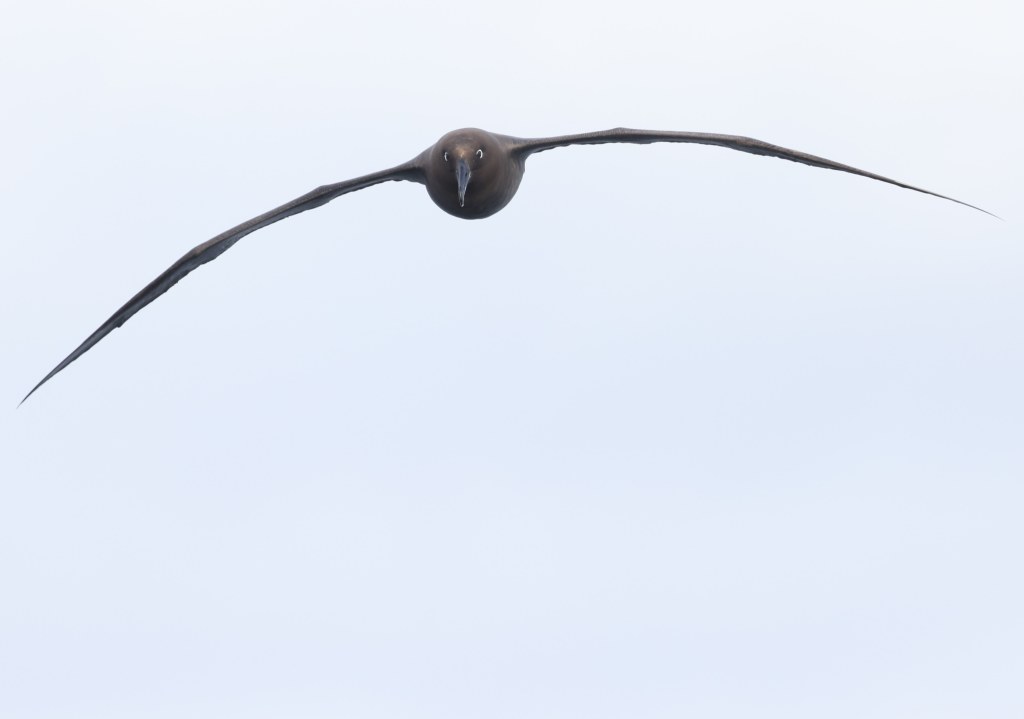
A medium-sized bird often seen on this trip (except in the high summer months) is the dark-hued Great-Winged Petrel. The lack of contrast makes it a tough bird to photograph, though they gave us plenty of chances as they often circled the boat, sometimes quite closely.
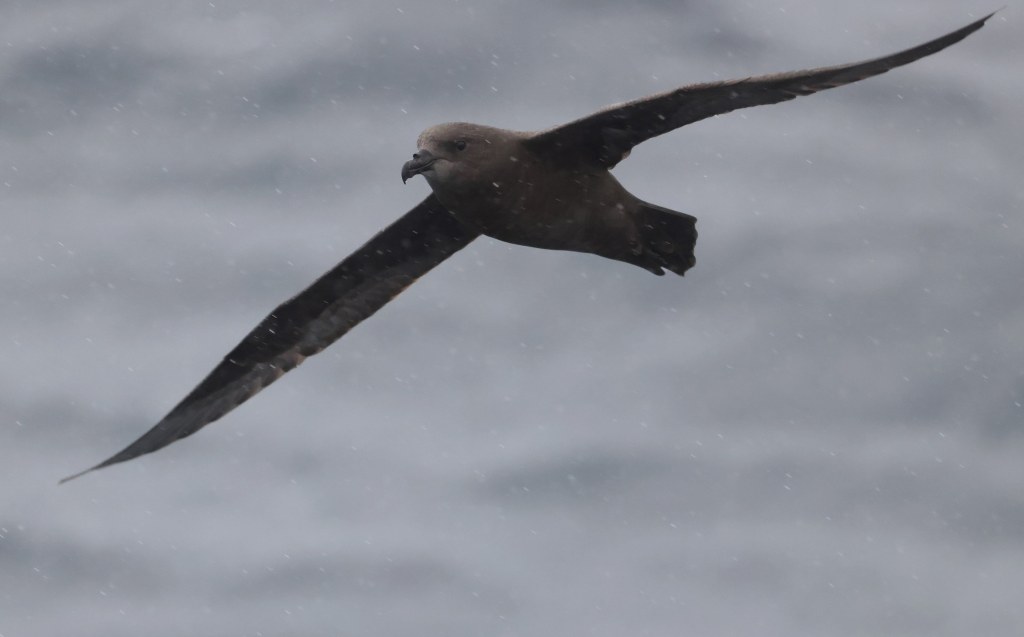
As the above photo shows, we had headed into some stormy weather as we made our way ever further from land. In fact the seas had become quite rough and there were starting to be few dry areas left on the back of the boat. Visibility was fairly poor, though the birds didn’t seem to mind and a steady stream of newcomers approached the boat through the veil of rain.
We were familiar with Wilson’s Storm-Petrel from the Southport pelagic, where it is commonly seen, but Grey-Backed Storm-Petrel – commonly seen on the Eaglehawk Neck pelagic – was a lifer bird for us, and flew across the water with similar behaviour to the Wilson’s.
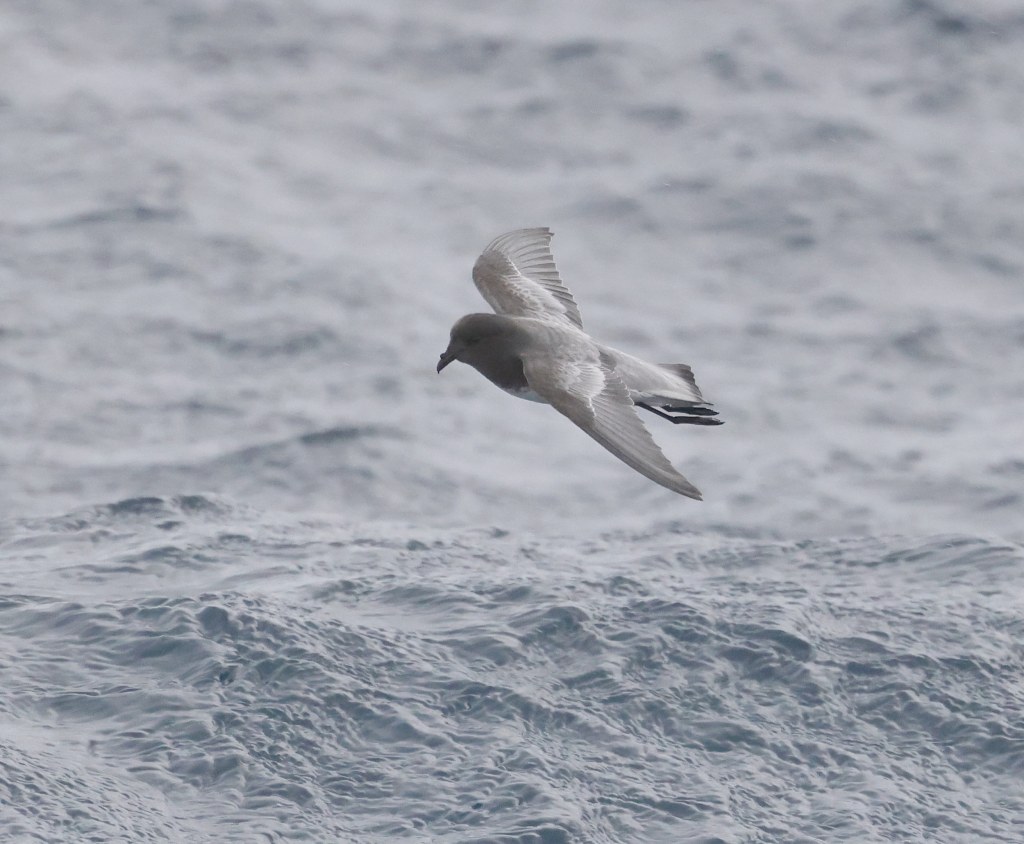
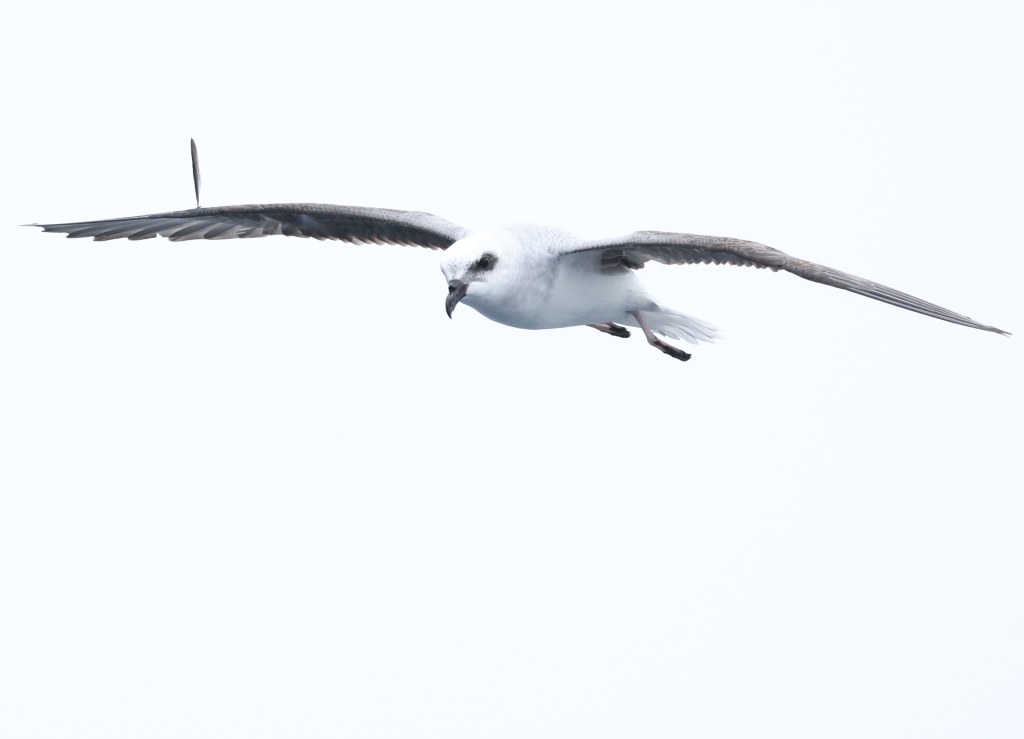
Other tiny birds included Prions, for which the Fairy Prion is the most common and is sometimes seen in the hundreds on these trips. A bigger bird with lighter colouring again is the White-Headed Petrel, which stands out against the more common and darker Great-Winged Petrels.
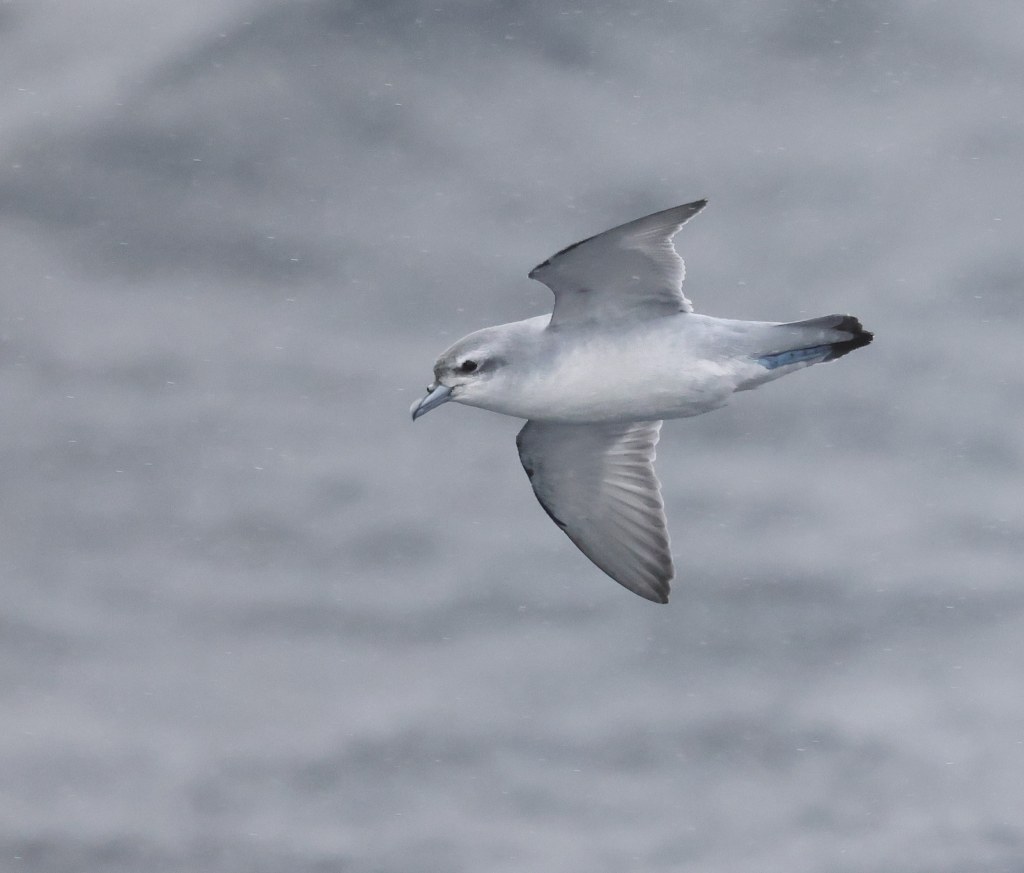
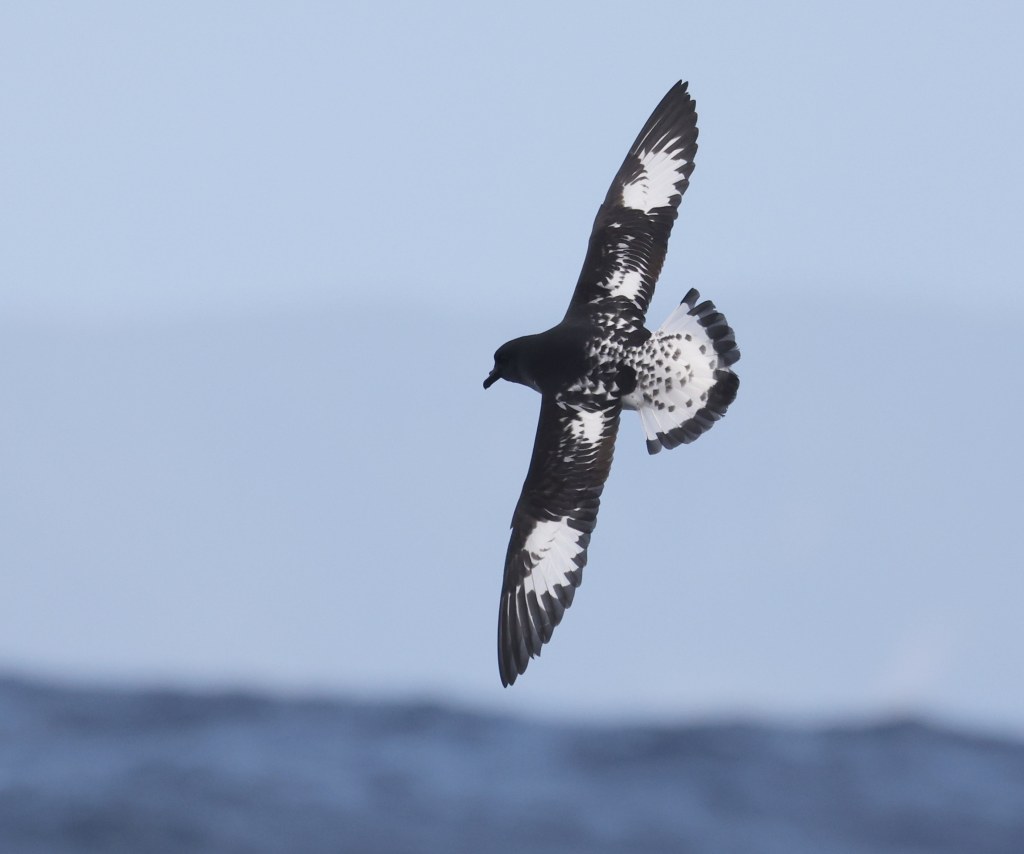
The striking, distinctive upper wing markings of Cape Petrel meant that it was unmistakable, and a regular around the boat for several hours.
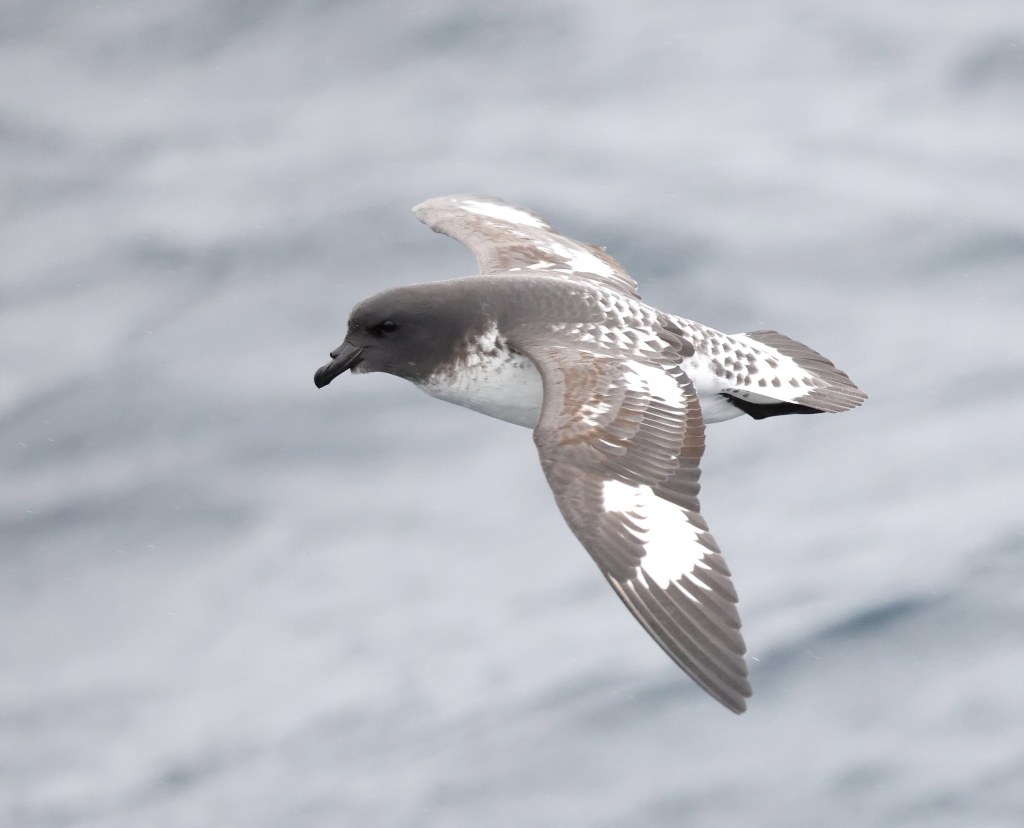
It was hard to take our cameras away from the Cape Petrel – every angle seemed to show up a new photogenic side to this bird!

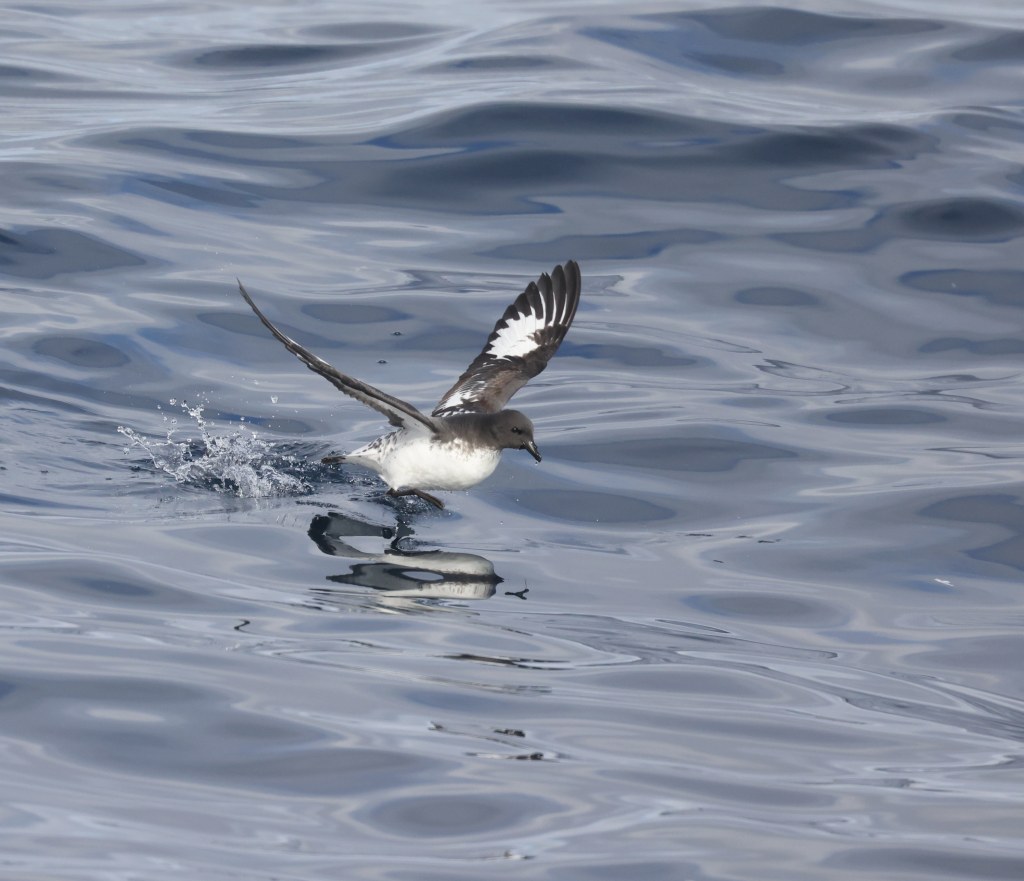
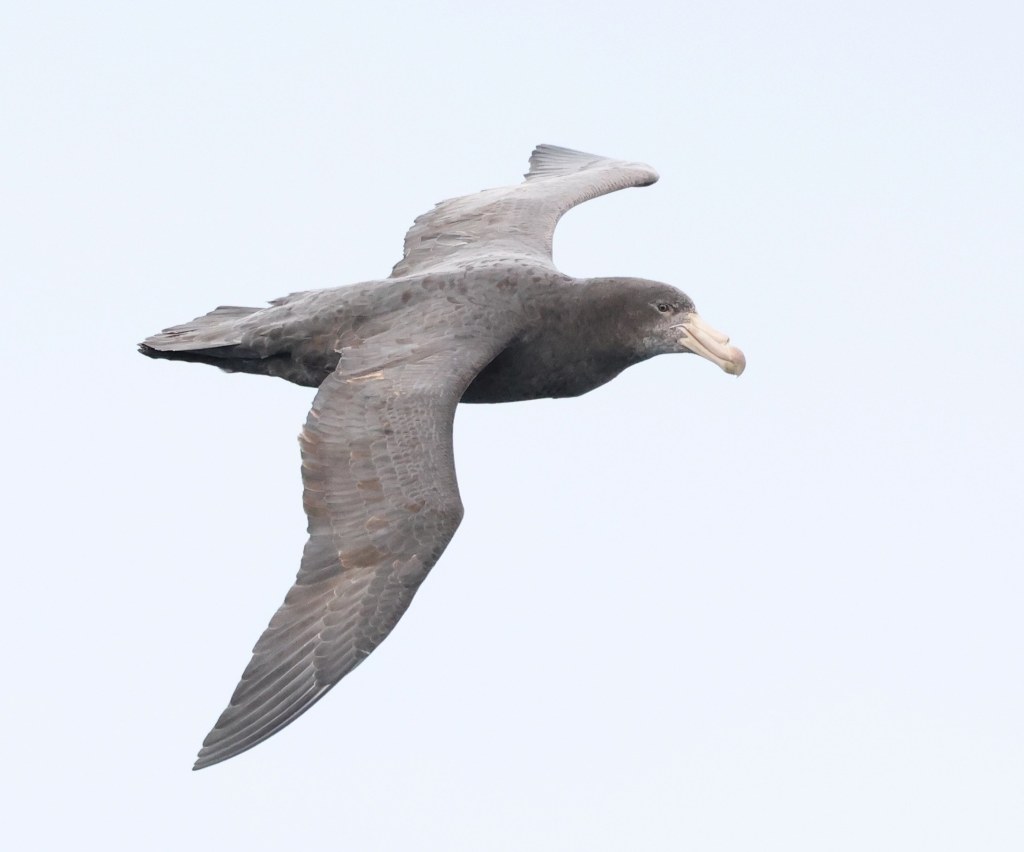
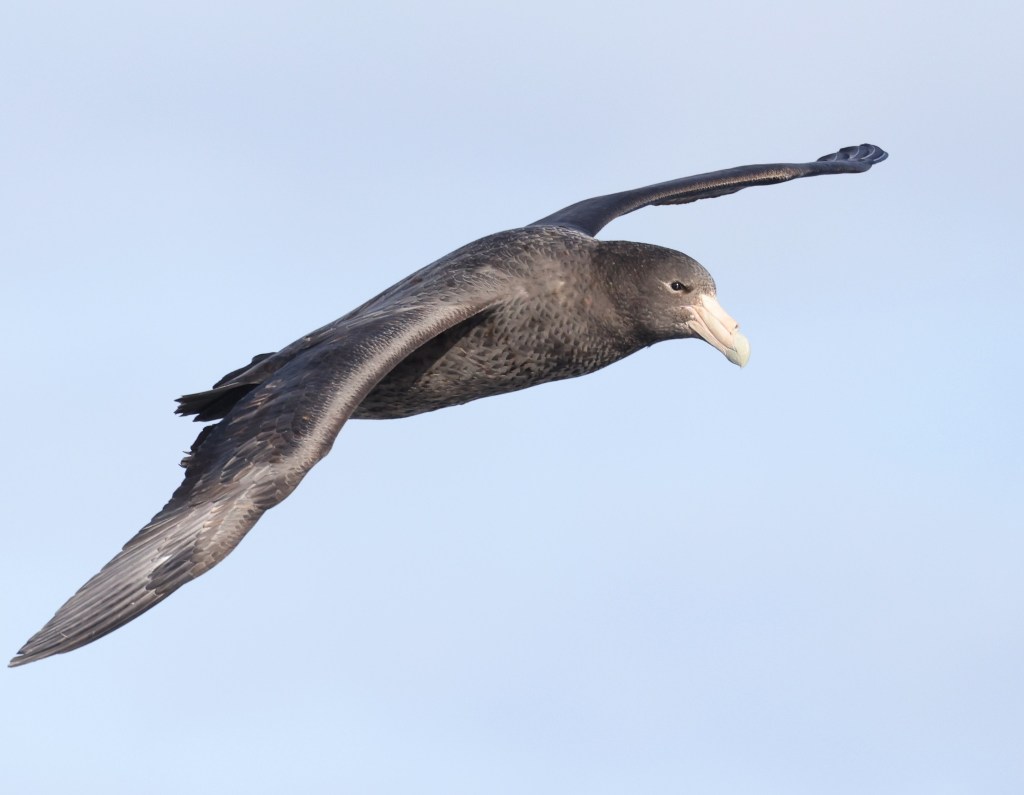
We saw two Giant Petrels over the weekend: Southern Giant-Petrel and Northern Giant-Petrel. The Southern is supposed to have a distinctive greenish tip on its bill, though I find this a subtle marker (“greenish” huh…).
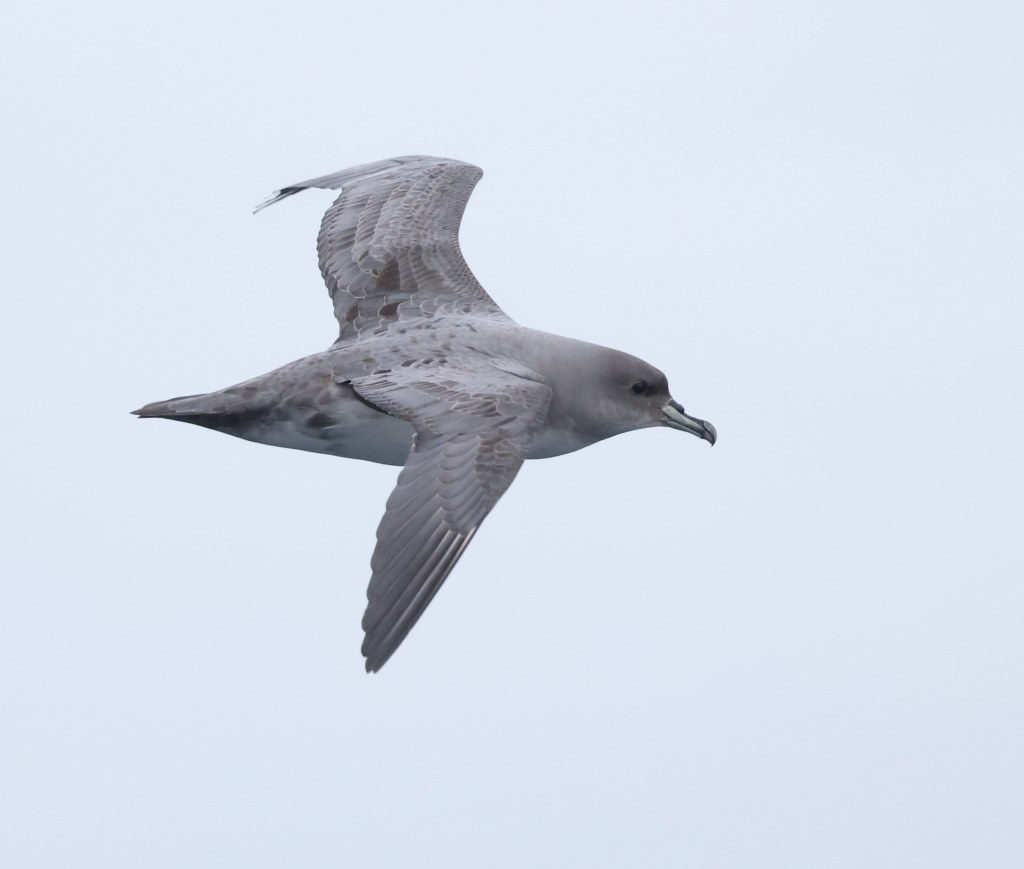
The Grey Petrel lived up to its name by being a dull steel-grey colour on top, though it is much lighter underneath. There are so many petrels!
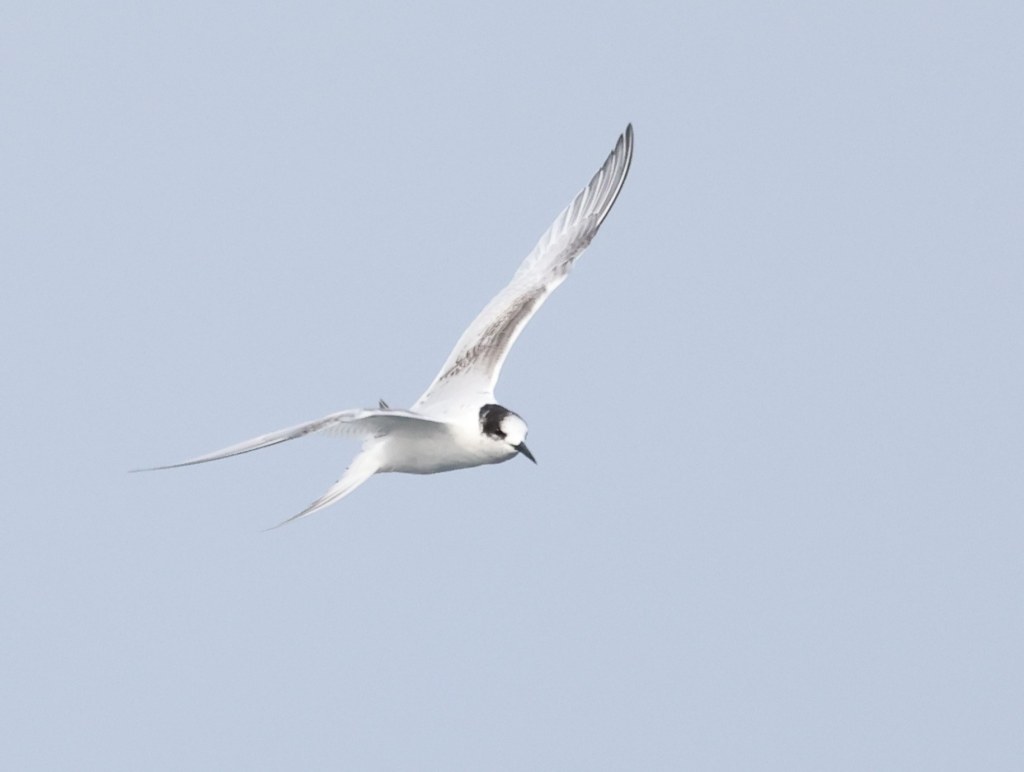
At times various gulls (Pacific and Silver) and Crested Terns circled the boat, and we knew to look carefully if any of the terns looked a little different. Sure enough, a White-Fronted Tern (yet another lifer!) was amongst the crowd.
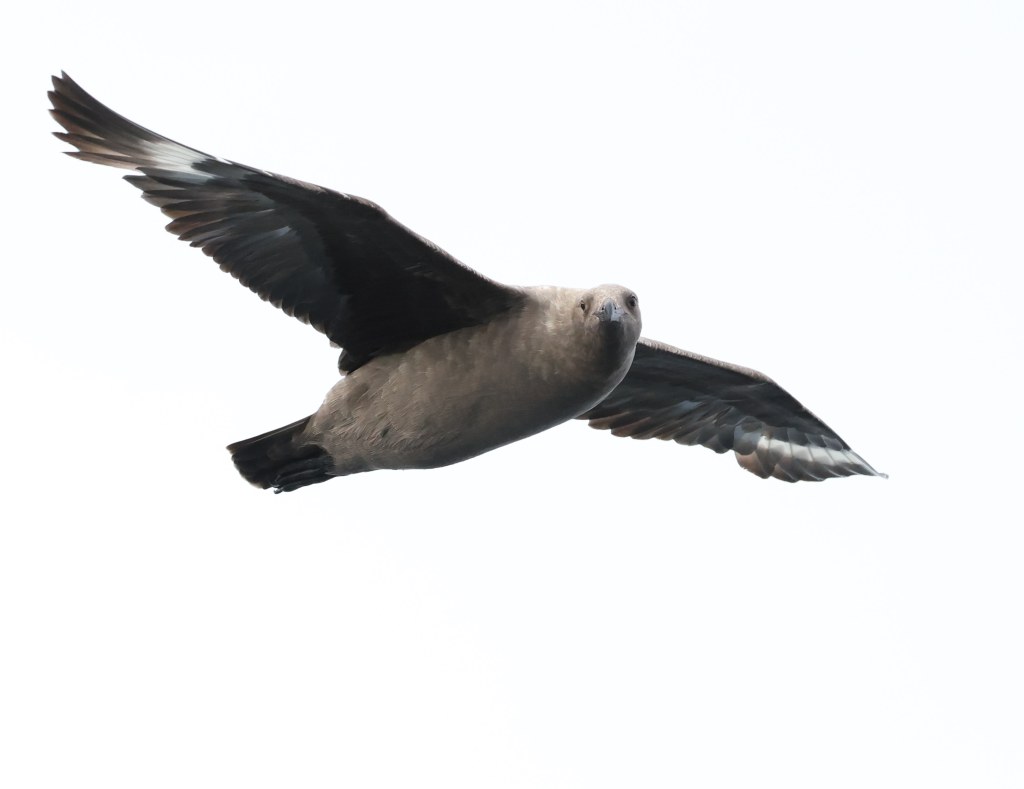
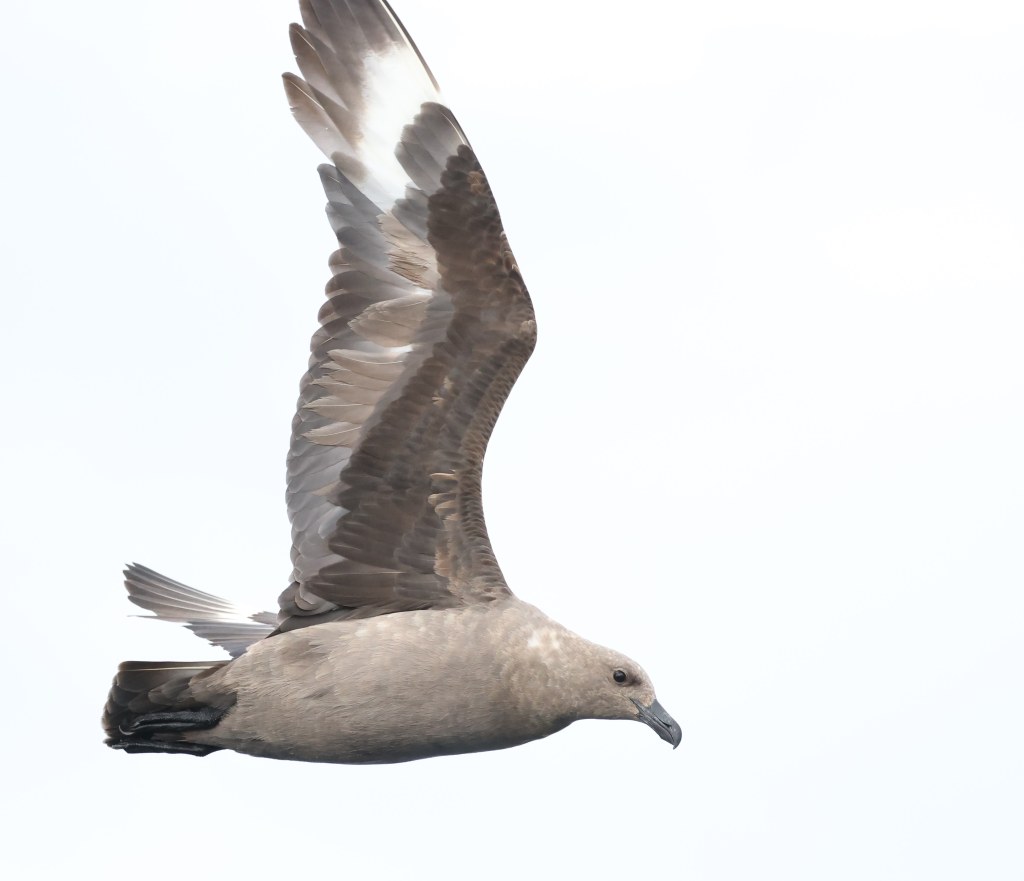
On the way back inshore on Saturday afternoon a skua (pronounced, as I later learned, “skewer“) flew pretty close to the boat and after much deliberation of photos afterwards was pronounced a South Polar Skua. At least one seasoned birder called this a “mega” (ie. very valued sighting of a rare bird) and devoted an entire blog post to it. So I guess it’s a big deal, though I am not experienced enough with seabirds to fully appreciate why. I would have been happy enough with a Brown Skua, or indeed any skua.
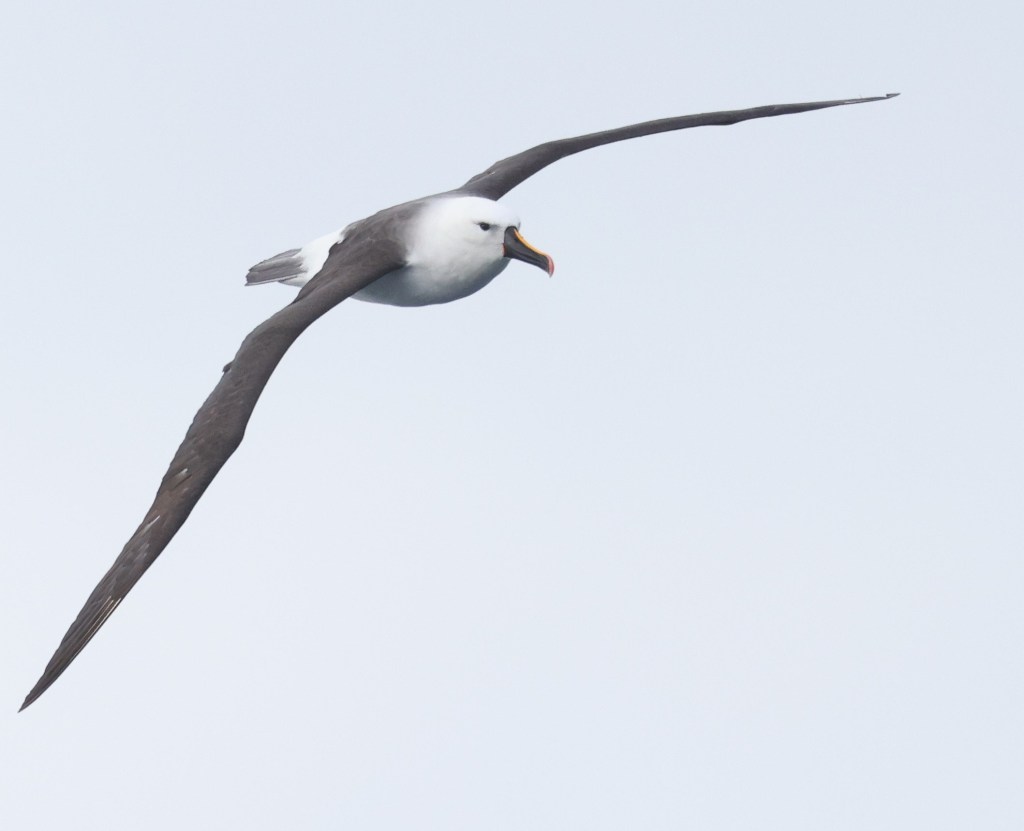
After the skua a Yellow-Nosed Albatross also appeared (remember, it has only the single yellow nose-stripe!)
The seas were still pretty lumpy most of the way back inshore on Saturday, and I was feeling lightly nauseous for a lot of the time.
On the Sunday trip – a much calmer affair with swell on the sea but much less chop – Luke S was tasked with throwing the remaining fish (mackerel) to the albatrosses trailing our boat, which made for some wonderful scenes for the photographers to capture. The birds were mainly Shy Albatross (of course), and squabbled over the bounty like comically oversized seagulls.
After we passed the Hippolytes on the way back on Sunday, a White-Bellied Sea-Eagle trailed the boat for several minutes and put on a bit of a show.
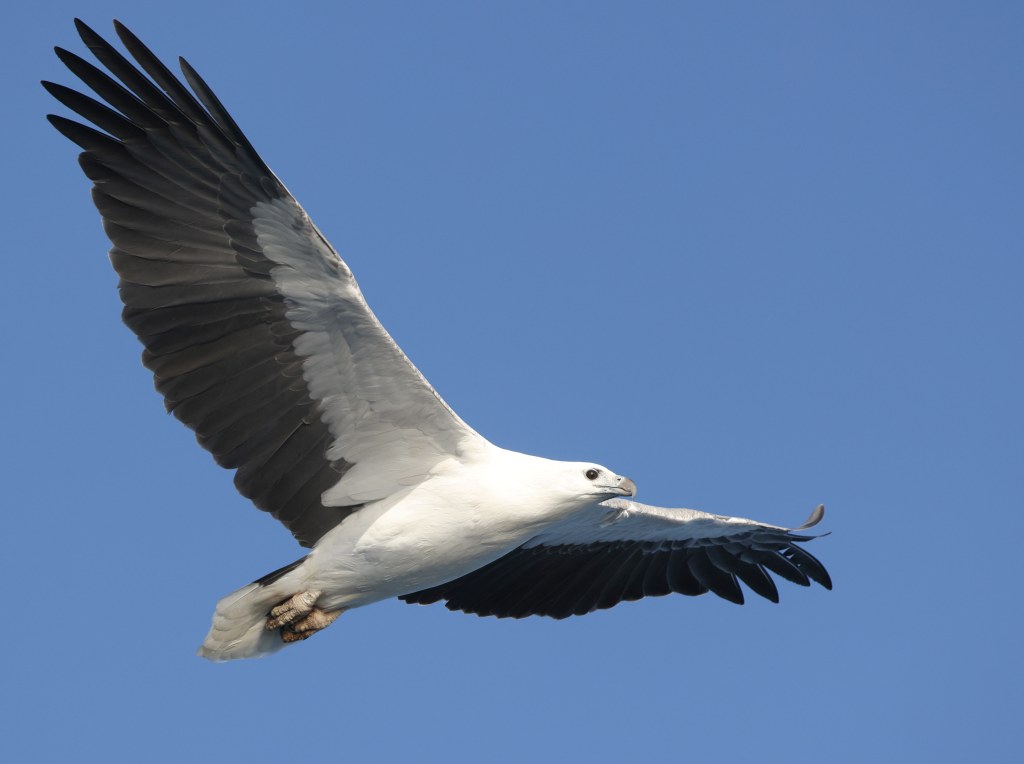
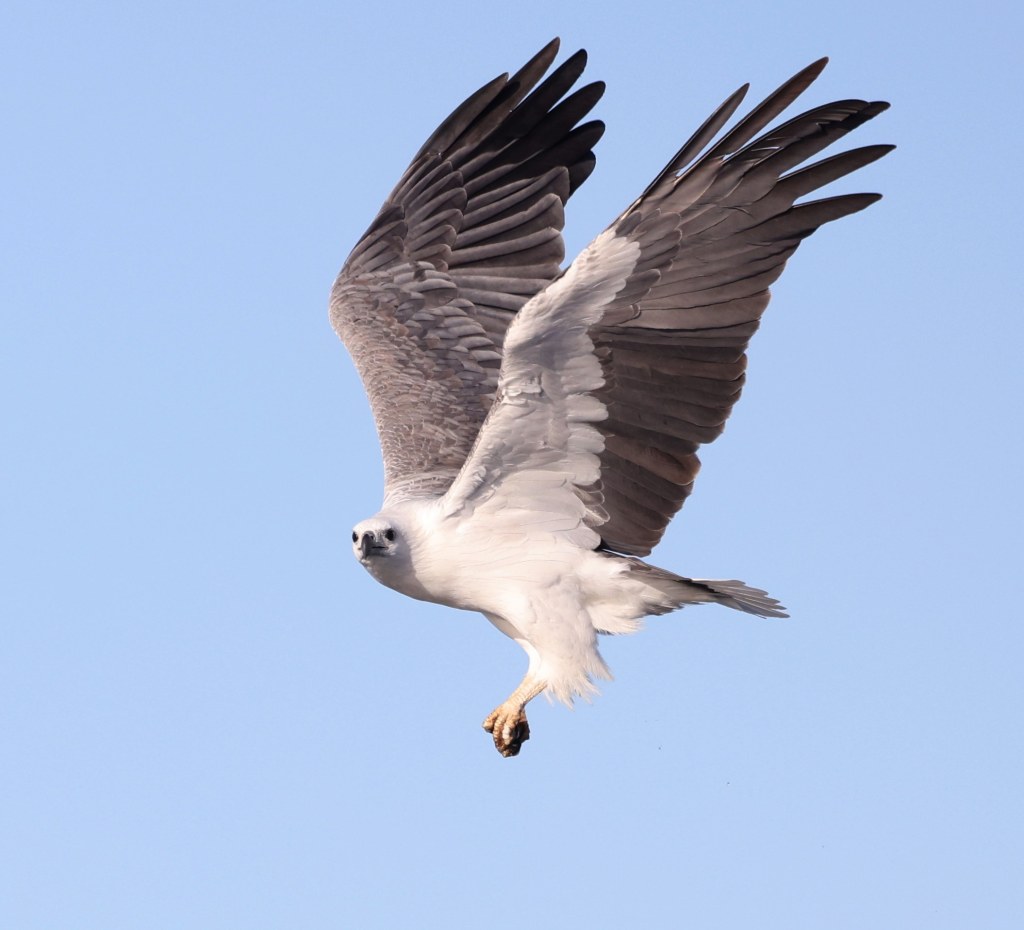
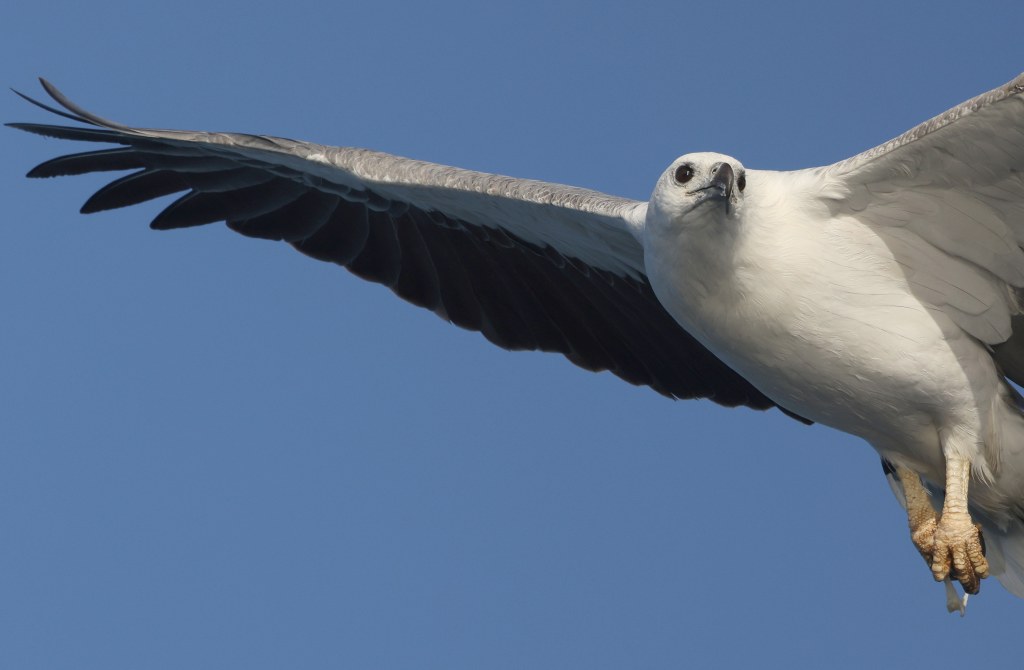
The boat arrived back at the jetty just after 2pm on the Saturday, the trip being cut a little short due to the weather and rough sea, while we finished up after 3pm on the Sunday.
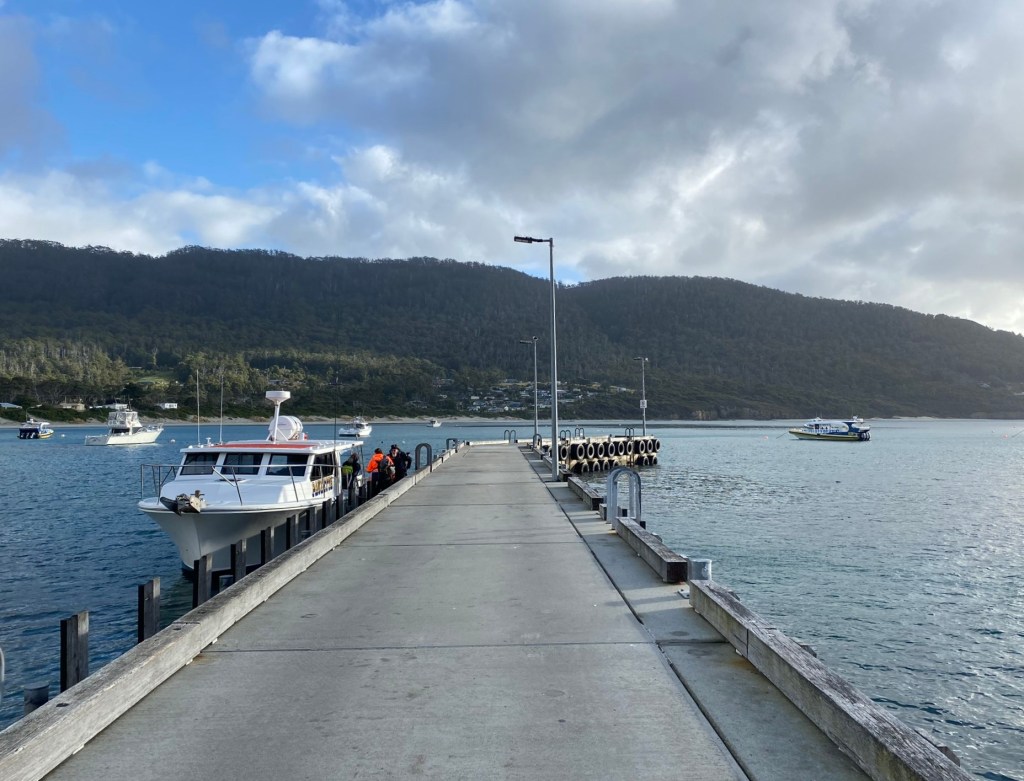
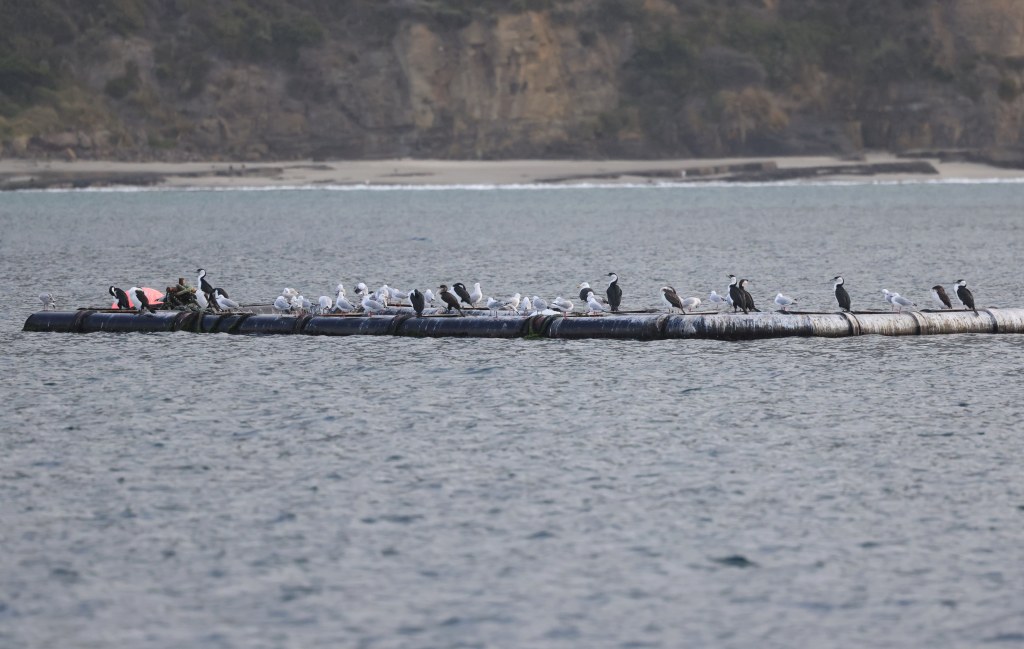
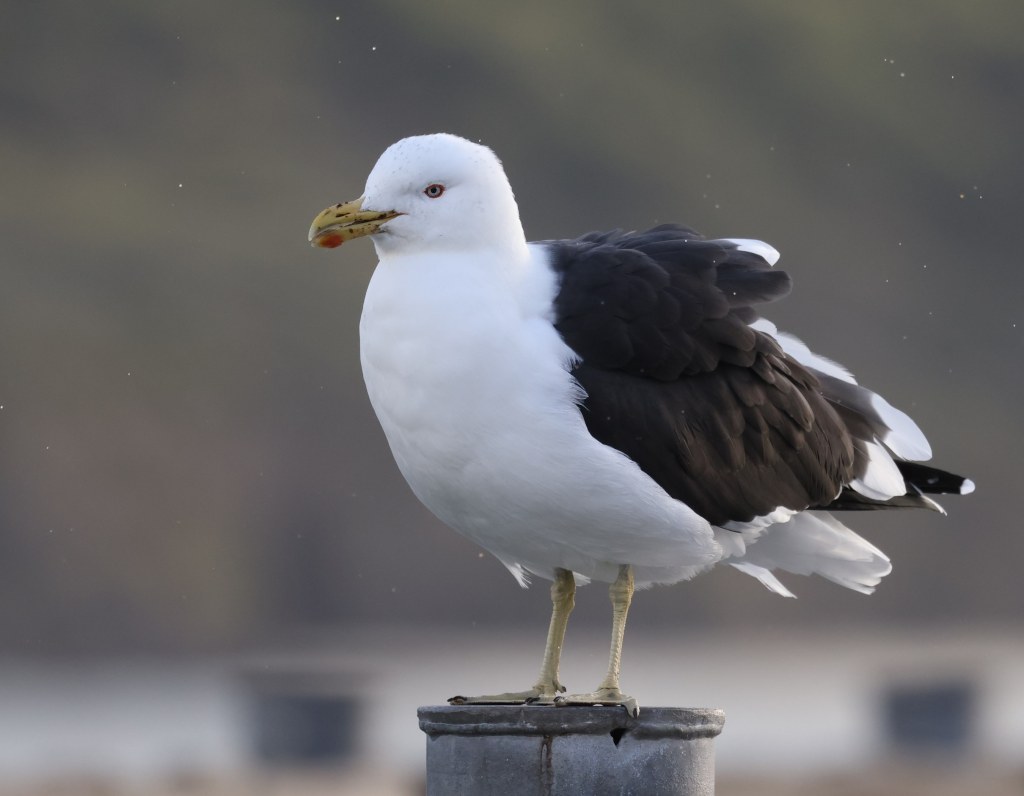
It can be disconcerting seeing “normal” birds again after all the albatrosses, petrels and prions.
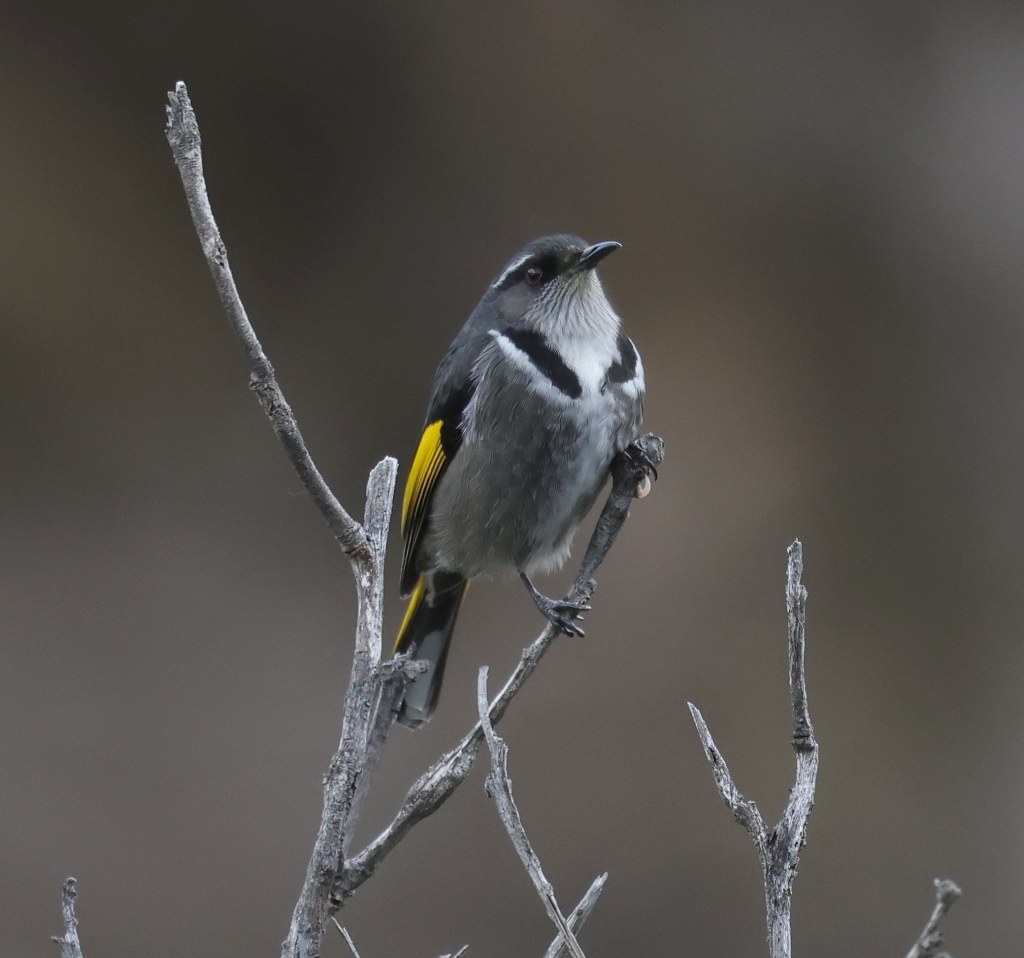
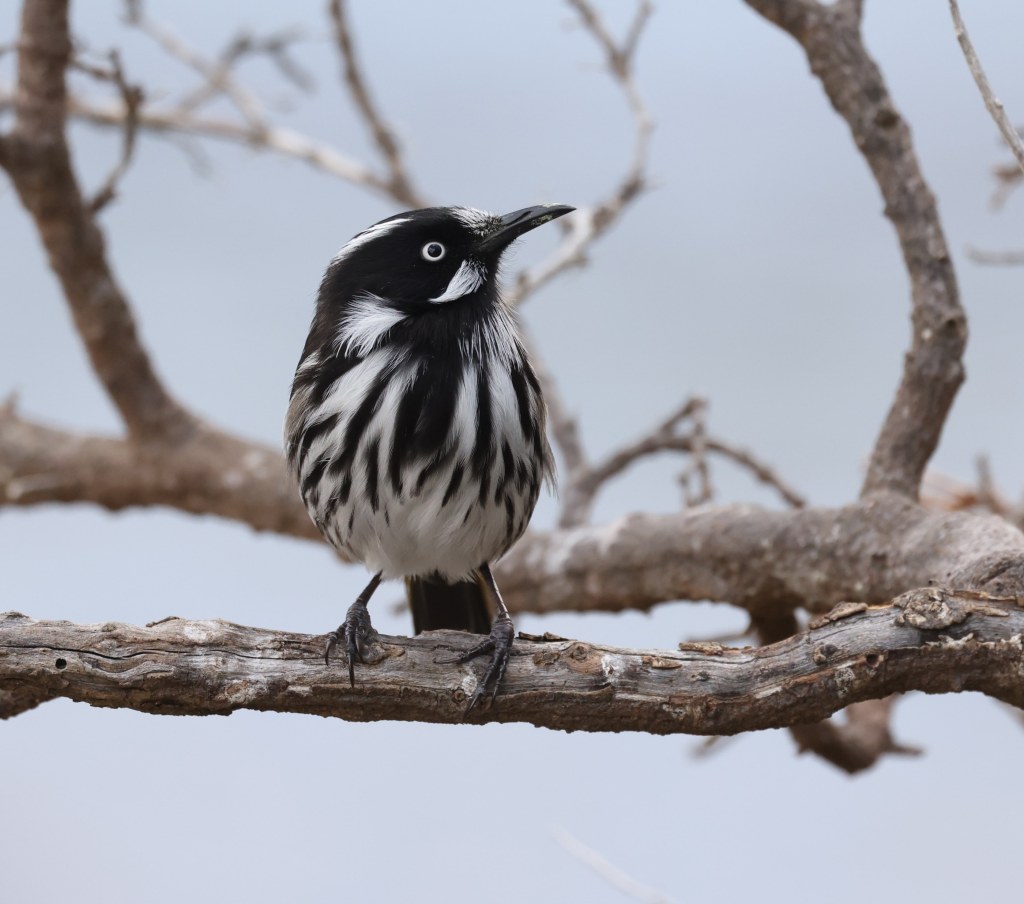
Near the jetty and the Blowhole area is a nice enough birding site (see also the nearby Tasman Arch), if you feel like yet more birding – we found a bold and vocal Crescent Honeyeater and a few New Holland Honeyeaters too.
The Eaglehawk Neck pelagic trip is not for the faint of heart but for those that can stomach being on a boat for 7 or 8 hours will likely be well rewarded. This is one of the more amazing birding adventures you can undertake in Australia both in terms of species you might see and the sheer adventure of heading out to the open ocean. You are best served considering which season to undertake such a trip, for example some albatross species (like Sooty) are much more common in winter, while some shearwaters (Hutton’s, Fluttering, Wedge-Tailed, Buller’s) are mostly only seen around the summer months – check the eBird Illustrated Checklist page to get an idea. Whichever time of year you go, this trip will no doubt be a very memorable one.
eBird:
Hotspot: Eaglehawk Neck Pelagic Trip (115 species)
Checklists for these visits: Jun 3 2023 (31 species), Jun 4 2023 (28 species)
Pluses and minuses:
+ Incredible and unique seabird encounters
+ You will fall in love with albatrosses (and probably some other birds too)
+ Feels like quite an adventure
+ Some good hotspots near the jetty too
– Photography and videography can be a challenge on a moving platform
– Identification of some of the birds can be very tricky
– Costs money and needs to be pre-booked well in advance
+/- Enjoyment factor depends strongly on how well you cope with boats (and the cold)
AUTHOR: ANDY GEE
BIRDERS: ANDY GEE, LUKE S


Hi guys, great post and very timely. Googling ‘ Tas pelagics’ I can only find Inala tours set date and expensive tours! Could you please send .e co tact deatails for the Pauletta – not Facebook though!
As you say, a great trip, if I’d been on the boat with you I would have got several lifers. Ha ha, that S Polar Skua was wasted on you! Thanks heaps.
Richard
LikeLike
Hi Richard, glad you liked the post. We don’t have contact details for the boat directly, everything for the Tas pelagic was organised through Facebook, as far as I know you would have to go through there.
LikeLike