
Summary: Village accommodation in the heart of superb bird-rich rainforest
Dates of visit: 28-30 Dec 2021
Bunya Mountains is an isolated section of the Great Dividing Range about three hours north-west of Brisbane which features some very nice rainforest, natural grassland “balds” as well as boasting the largest stand of bunya pines in the world. It’s a very decent place to go birding and has much to offer.

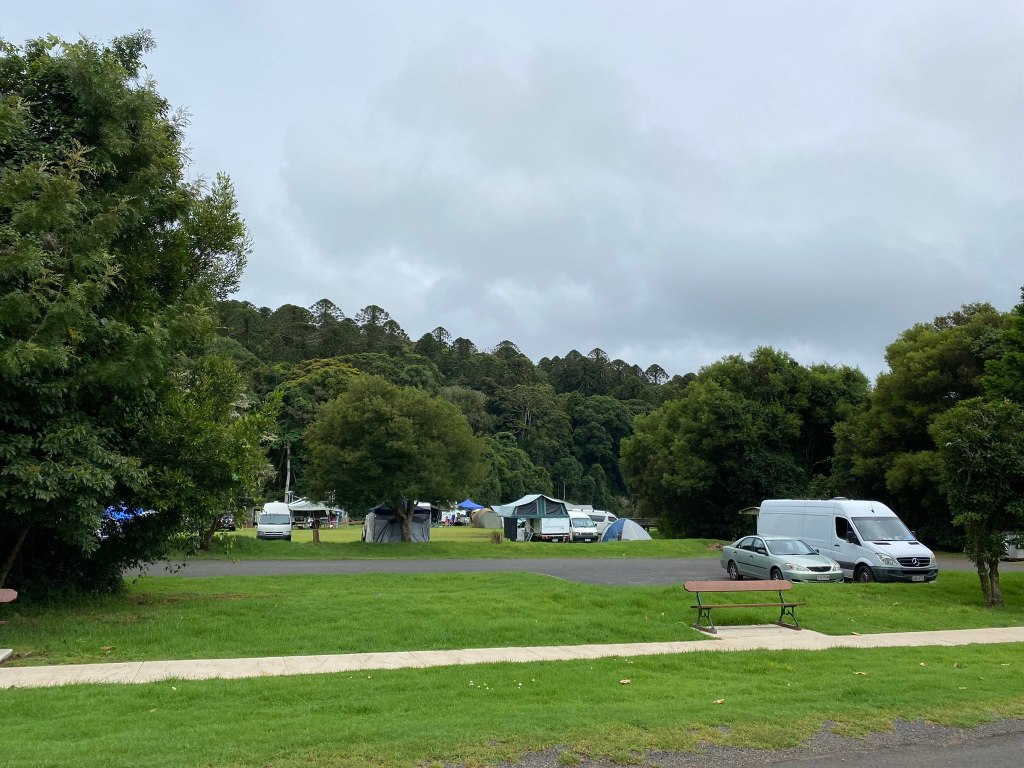
There are three main ways in: on Bunya Mountains Rd approaching from the north (e.g. when coming from Kingaroy); approaching from the south (e.g. when coming from Dalby/Toowoomba); or via Maidenwell Bunya Mountain Rd from the north-east. Either way, your first port of call will likely be the village area, where there is a cafe, restaurant, small grocery shop and a ton of accommodation, including the Dandabah Camping Area, and many houses for lease in the area. We stayed at a two-storey house which I assume is fairly typical for the area, one of the many to choose form on Rainforest Road. This road, incidentally, can only be accessed by vehicle if you are given the keycode to the gate at its intersection with Bunya Ave.
Village
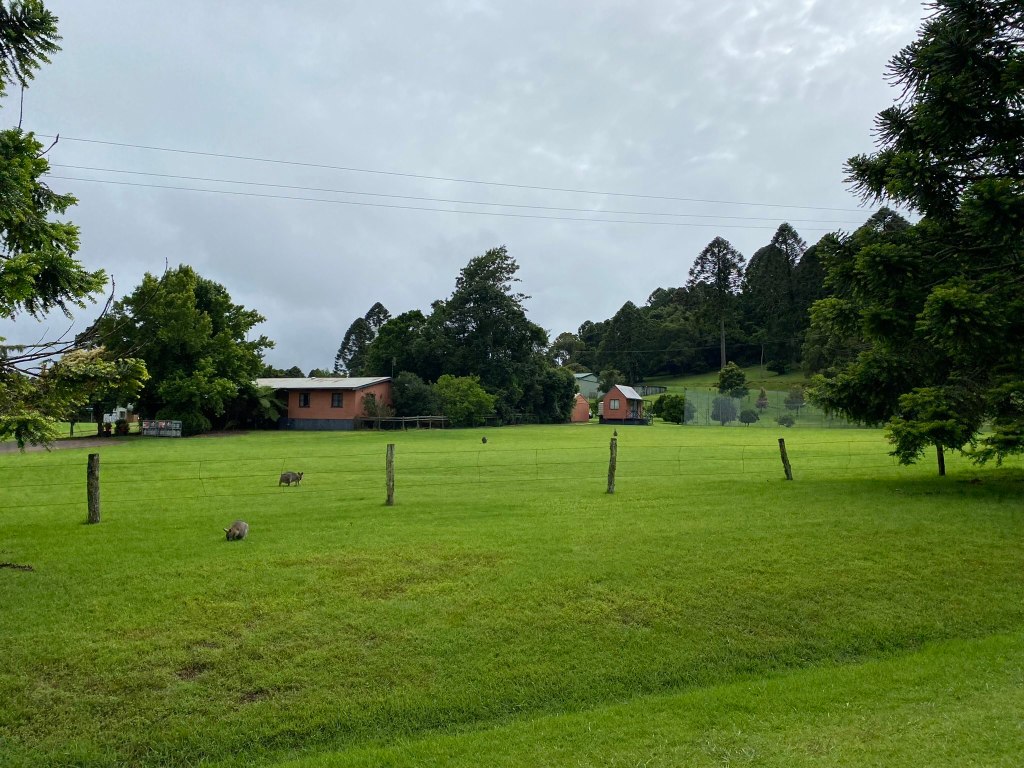
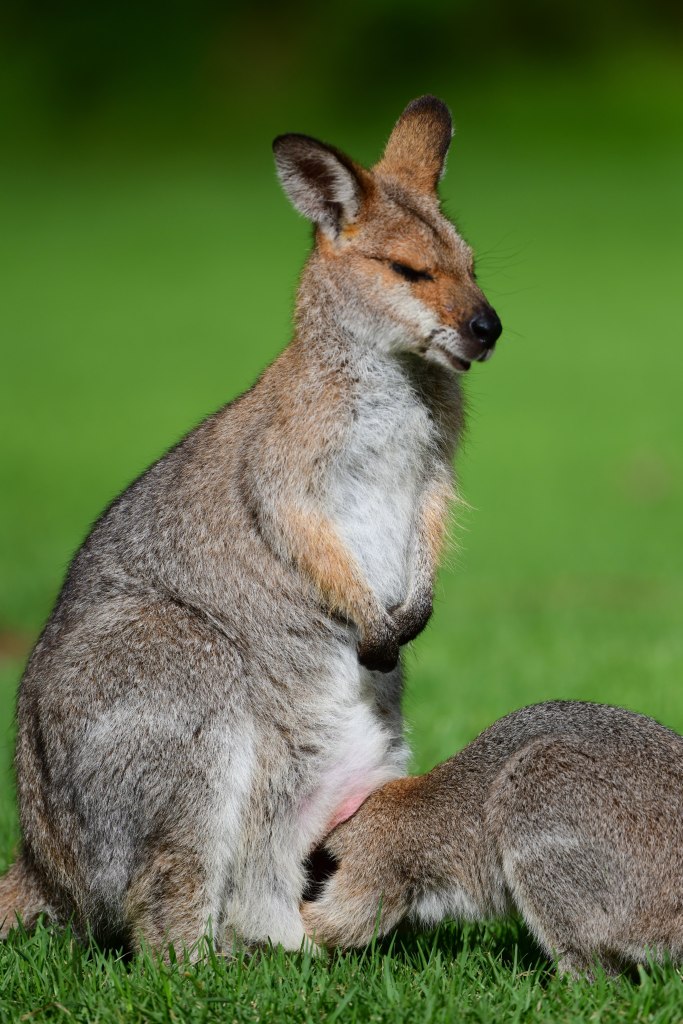
The birdlife around the village is worth investigating, with lots to see. It rivals the O’Reilly’s Retreat area in terms how approachable the birds are, including lovely rainforest species such as Satin Bowerbirds, Crimson Rosellas and King Parrots. Kangaroos also abound especially on the expansive grassed areas.
It is typically 5 to 7 degrees cooler up in these mountains compared to the surrounding plains, and even at the start of January our group found it got quite cold. Misty rain and fog passed through a couple of times and in general it felt alpine – that is, very changeable in terms of weather conditions. Take a rain jacket and be prepared for some cooler temperatures!

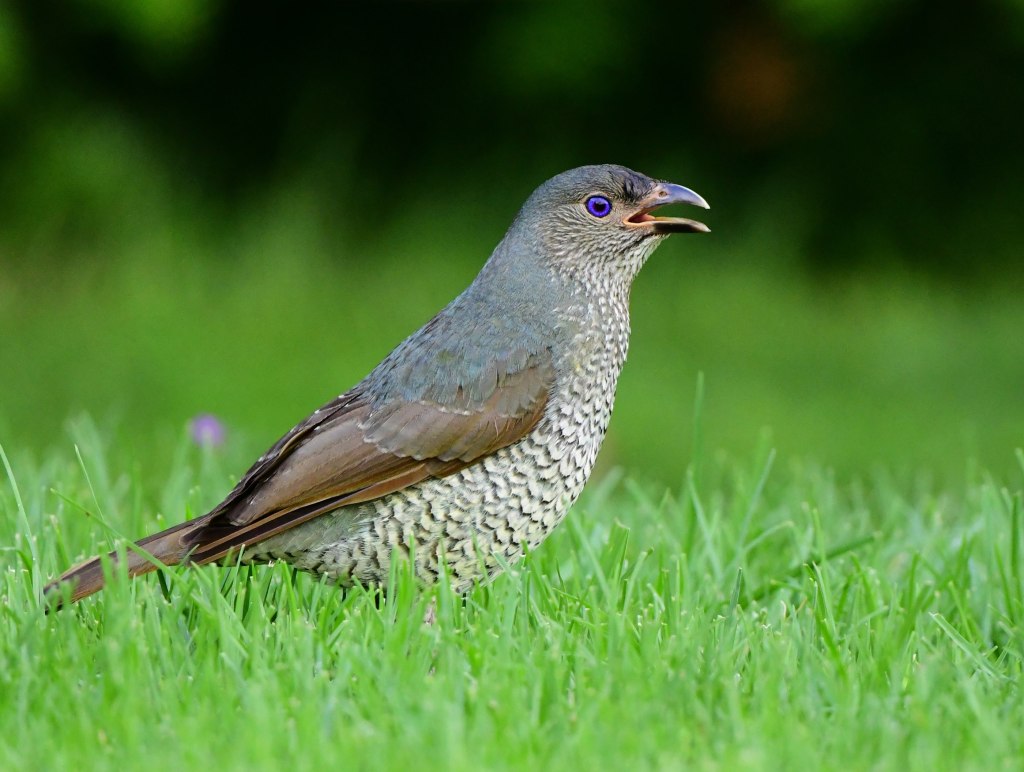
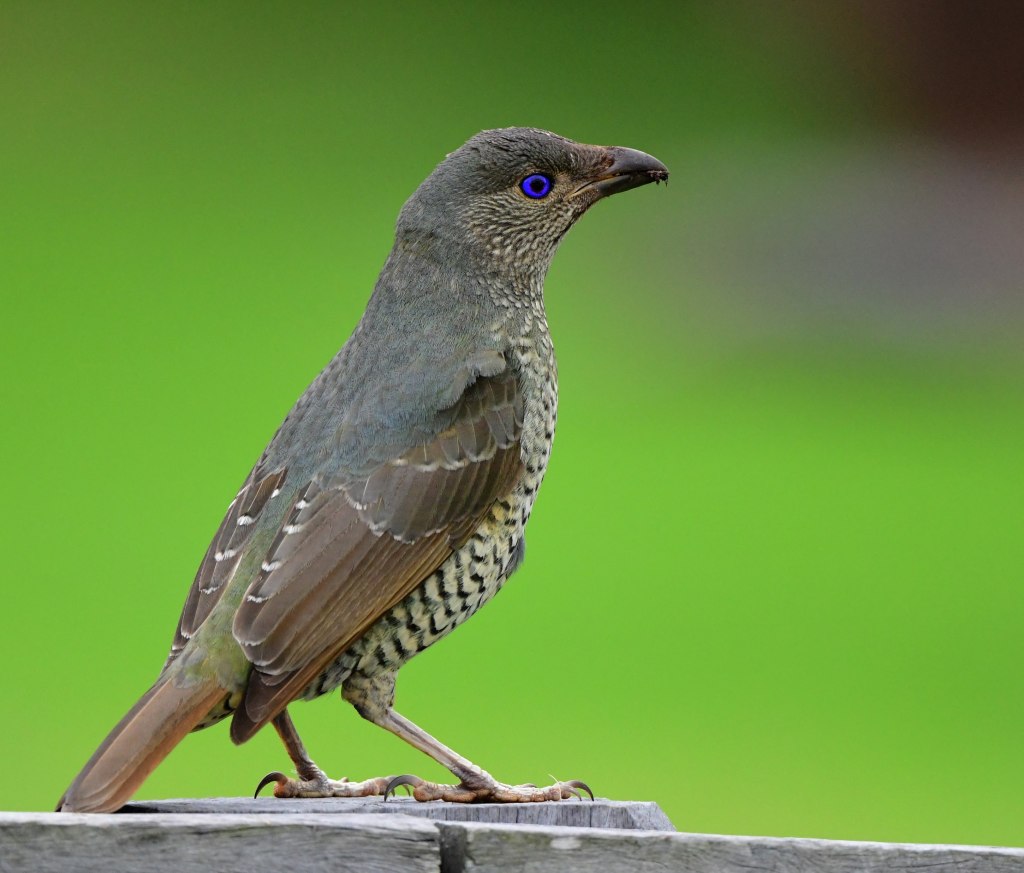
One of the treats of the village area are the many Satin Bowerbirds. I saw only females and younger males (less than seven years old), which have green wings and scaly chests; the shiny black males stayed in the deeper parts of the forest. The ones that were out in the open though were sometimes obliging enough for a photo, especially when perched up on any part of the long wooden fences.
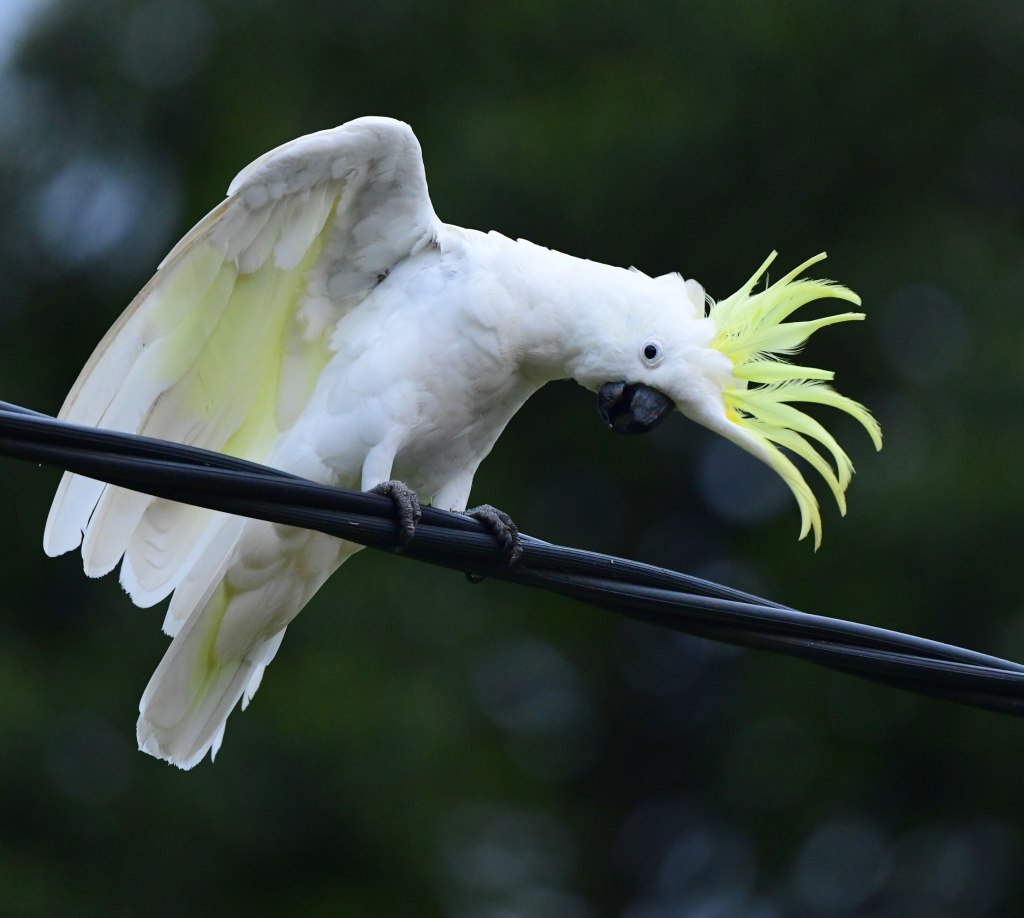
Cheeky Sulphur-Crested Cockatoos were also a mainstay.

As at O’Reilly’s Retreat, there is a small bird-feeding area near the grocery store, though I didn’t see what birds were being attracted to that spot aside from Crimson Rosellas.


The fence posts along Rainforest Road – being behind a locked gate so bearing less road traffic than the other roads – were good for alighting birds like Kookaburras and Superb Fairywrens.


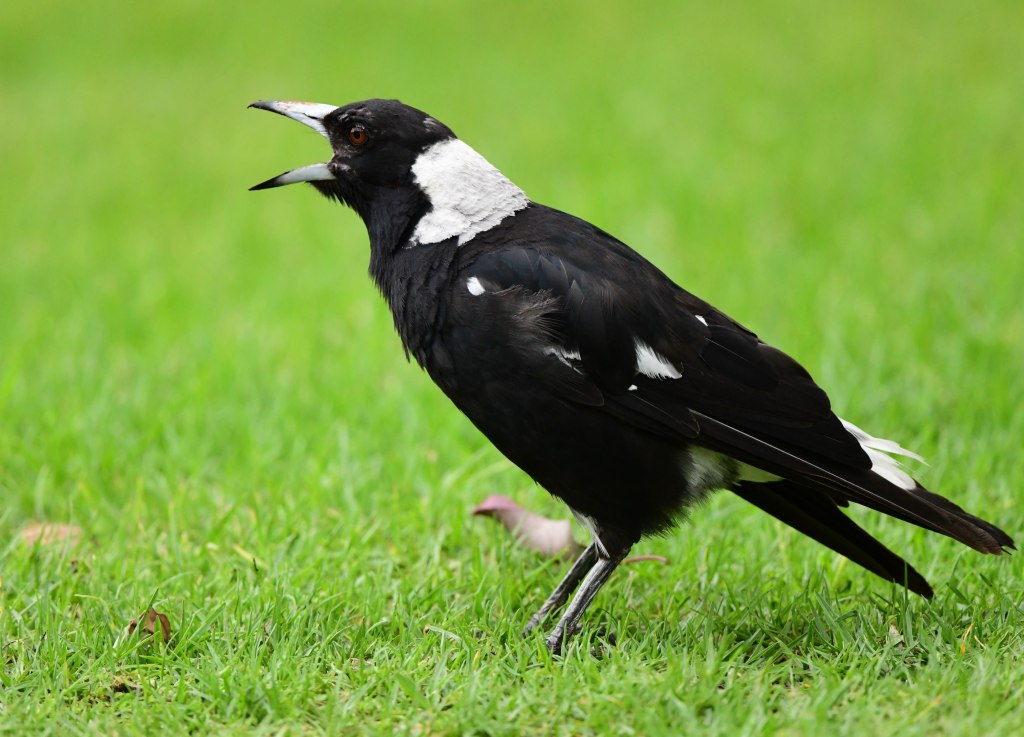
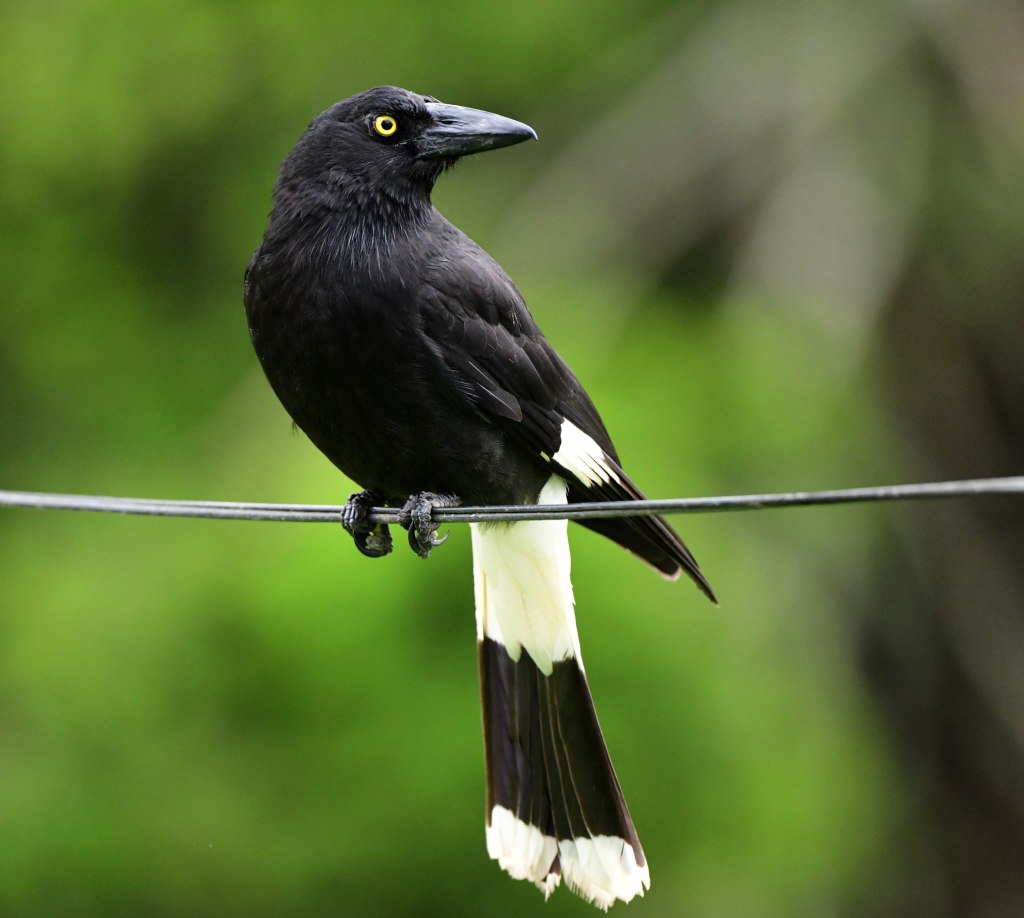
Common birds in this area also included Crows, Magpies and Pied Currawongs; like the other birds these were often seen in the long horizontal branches of the bunya pines and hoop pines as well as on the ground and fence lines.

When strolling back to the accommodation after a rainforest walk one afternoon we found a couple of Topknot Pigeons fairly low down in the canopy, which was amazing to see and the Bunya Mountains is to date is the only place I have seen this bird not at the top of some very tall tree or high up in a flying flock. They are rather goofy-looking birds up close with their wild eyes and fabulous “hair”.


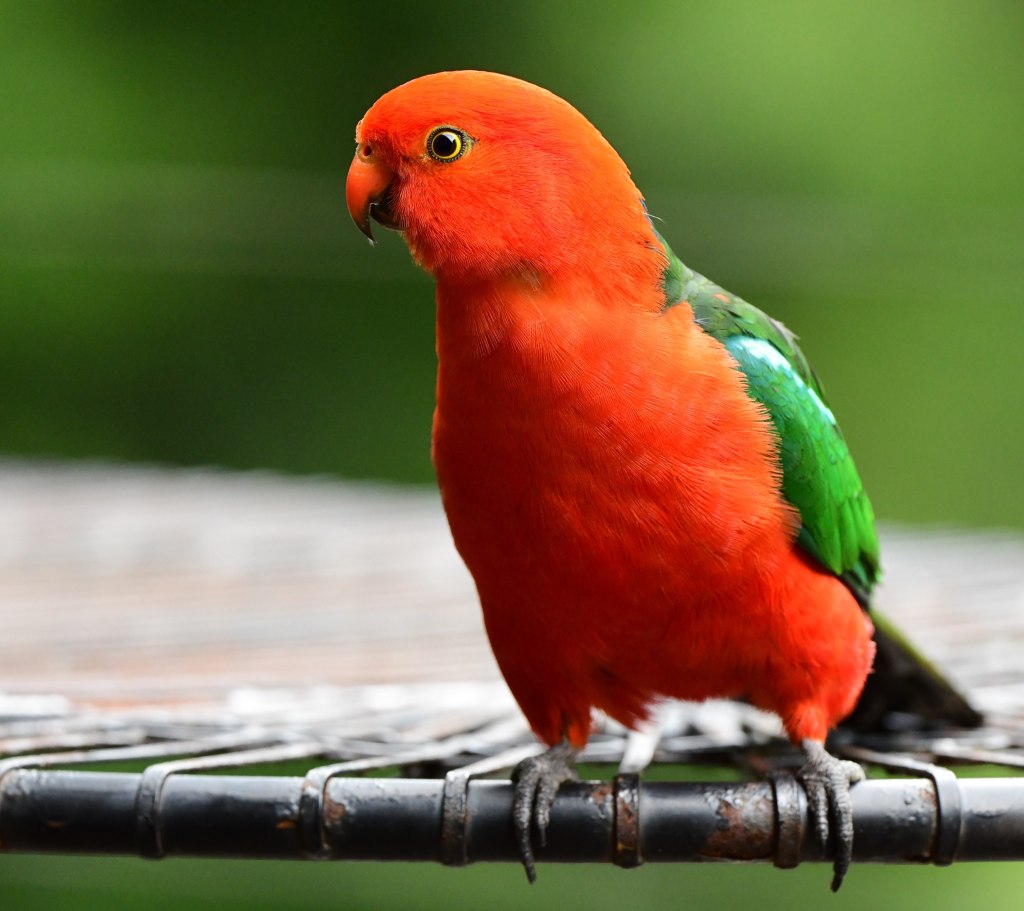
If you have stayed overnight at O’Reilly’s Retreat, you may be familiar with Crimson Rosellas and King Parrots dropping onto your balcony railing and even landing on outdoor table and chairs. We experienced the same phenomena at our accommodation, and observed wild birds coming very close to patrons at the café too. Even though this behaviour is likely a product of the birds being fed (or at least scavenging human foodstuffs) over a long period of time, it still feels magical to have them approach you so closely and fearlessly.

The resident kangaroos were also none too fazed by human presence, and I enjoyed watching and photographing them in between the bird encounters.


Festoon Falls and the Scenic Circuit
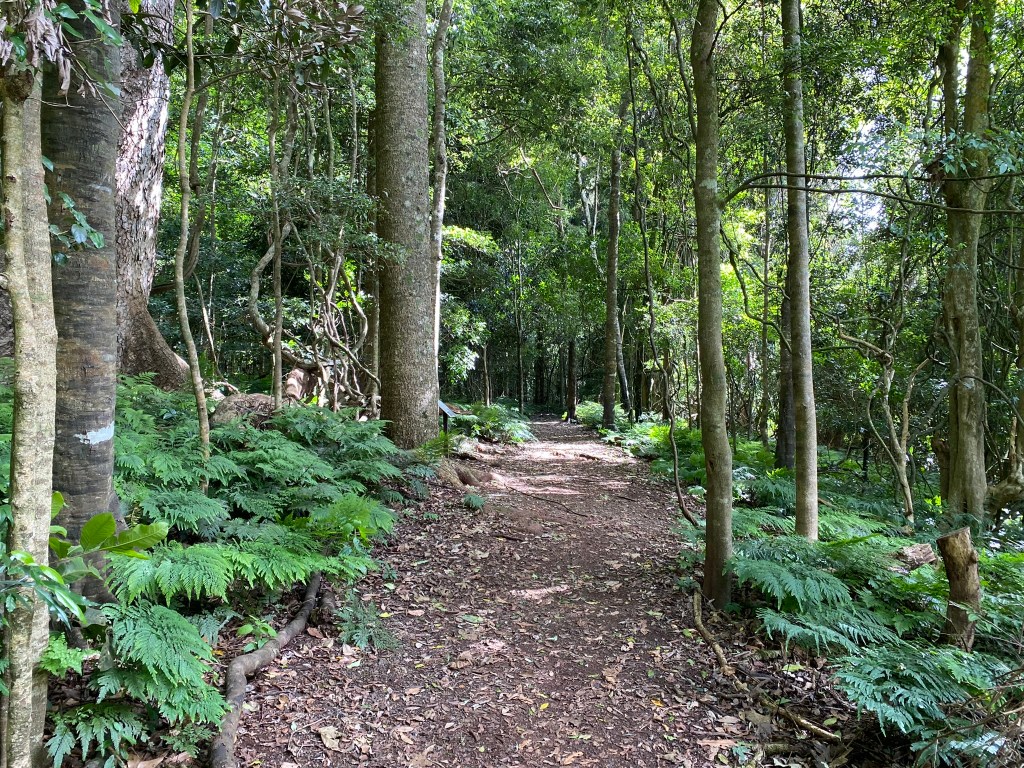
Within easy reach of the village (right on the edge of it, actually) is the Scenic Circuit, a 4km walk that plunges you into the thick of the rainforest. The paths are all excellently signed, but are dirt/mud underfoot and care should probably be taken when the trails are wet.
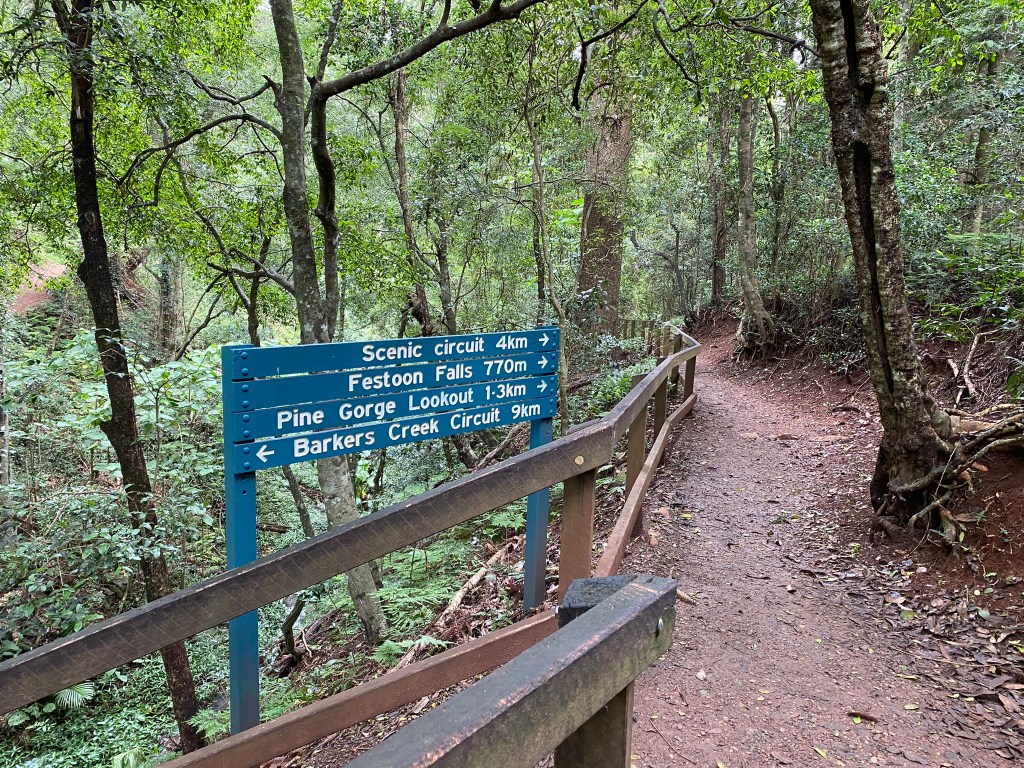
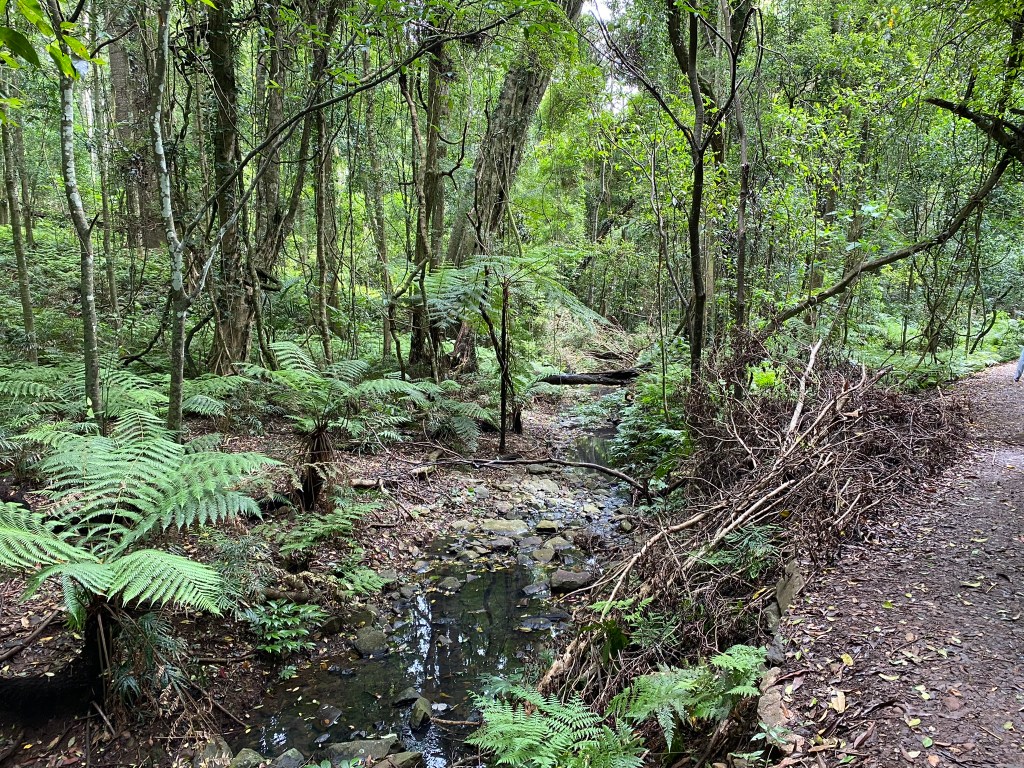

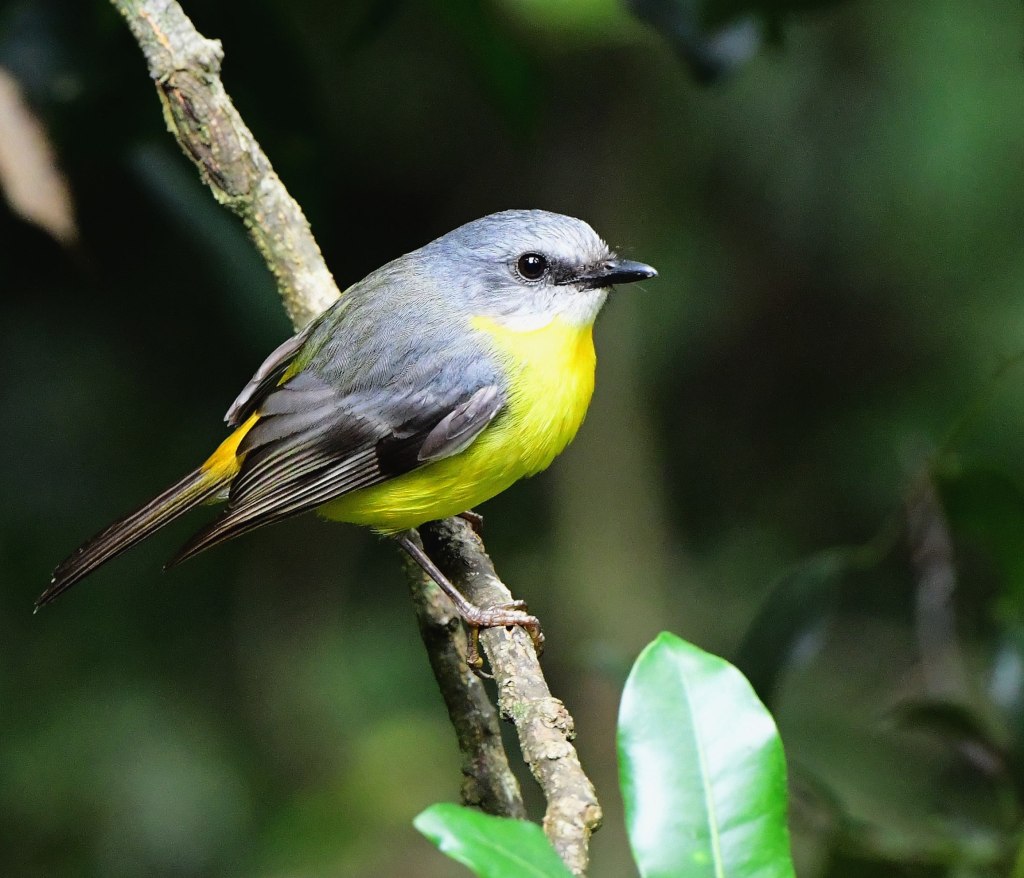
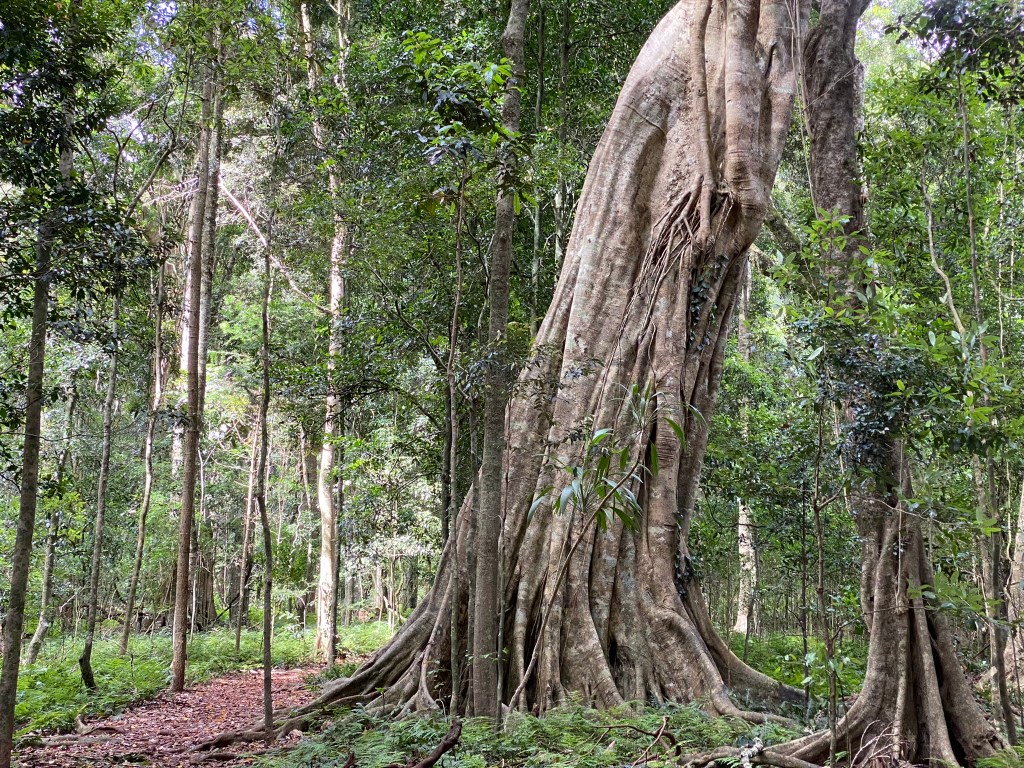
The eastern side of the circuit is very heavily vegetated with dense rainforest and tangled vines. Here there are smaller rainforest species, like Yellow-Throated Scrubwren and Golden Whistler. Weirdly, I saw plenty of Eastern Yellow Robins over the time I was there, but no Pale Yellow Robins, and eBird data for these hotspots backs this up with very few sightings.


The familiar whipcrack call of Eastern Whipbirds rang out through this forest but as always it was tough to get a good look at them.


The track opens out a little at the Pine Gorge Lookout which offers views over the surrounding landscape.
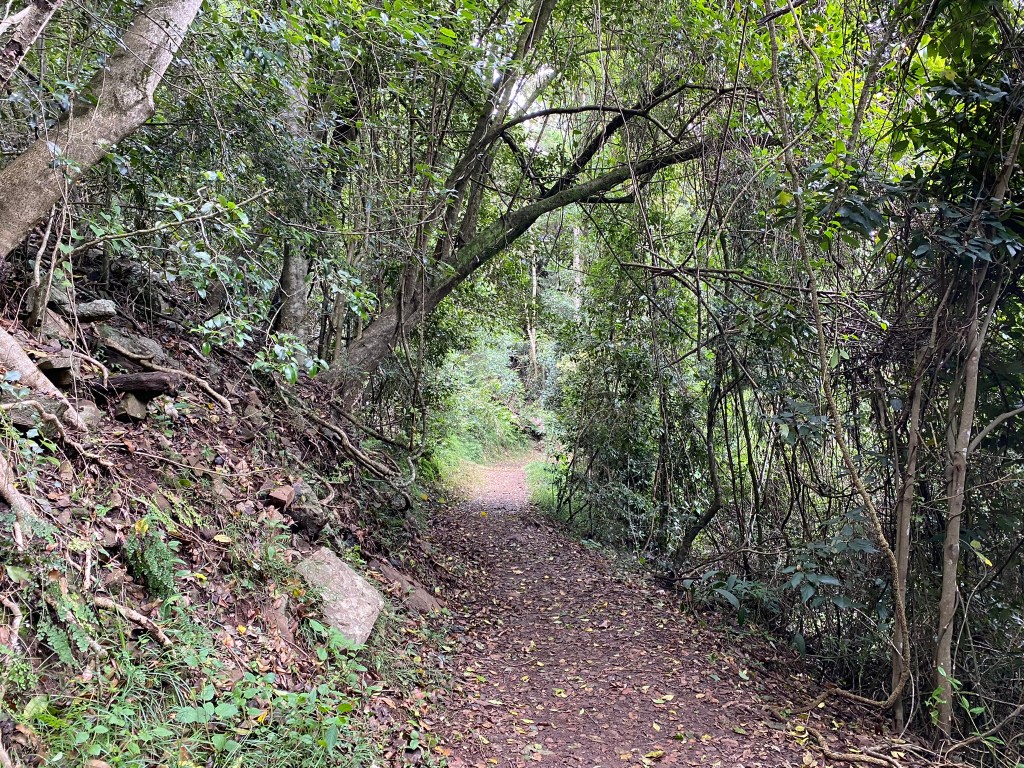

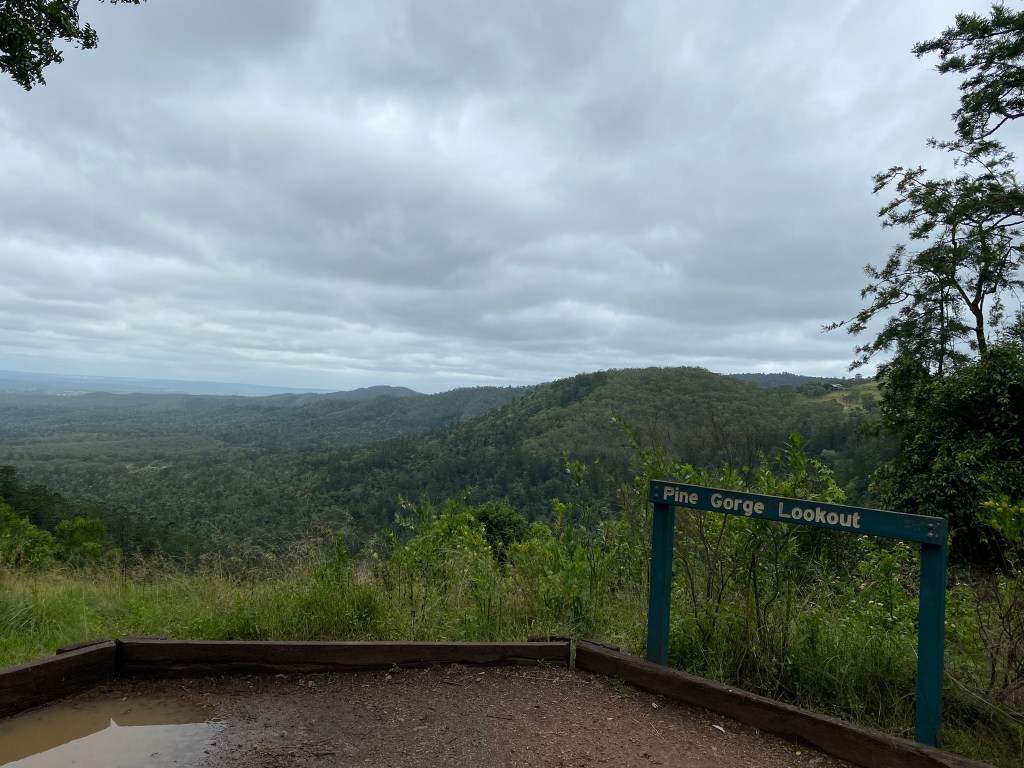
The western side of the circuit has less mid-canopy growth and there are large sections with appealing vistas of ferns in the lower canopy.

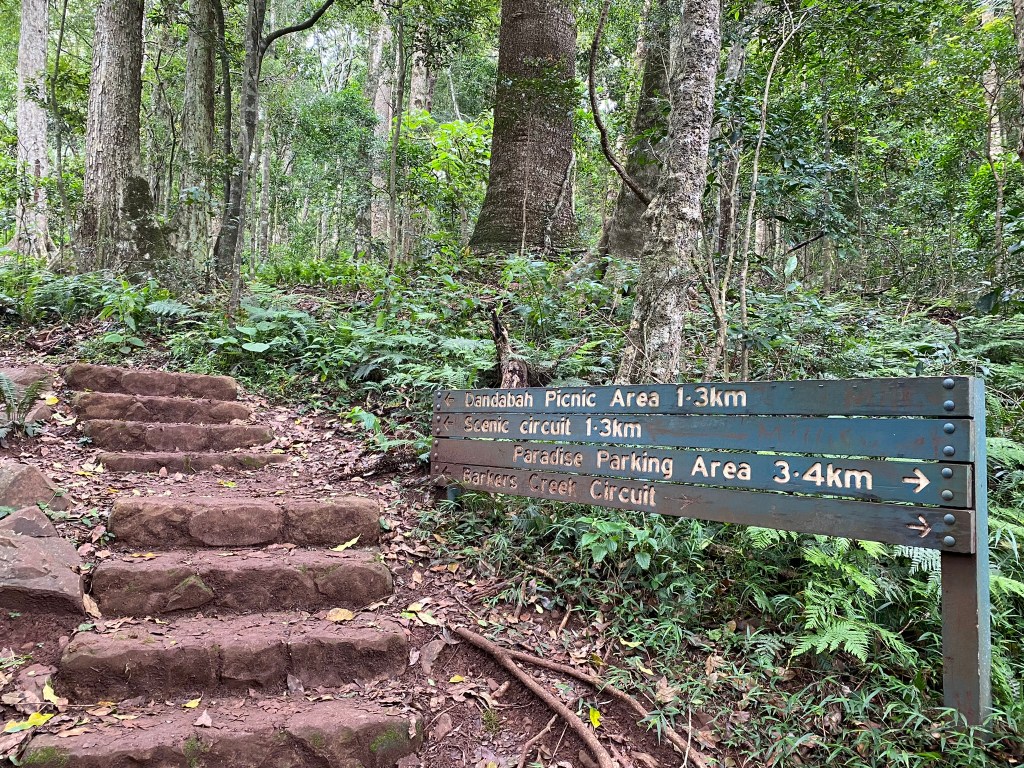

The extra space gives a better chance to spot birds and one of the highlights of the whole trip was getting a long look at a pair of Green Catbirds calling incessantly to each other one morning.

Smaller birds like Large-Billed Scrubwren and Brown Gerygone were in abundance.


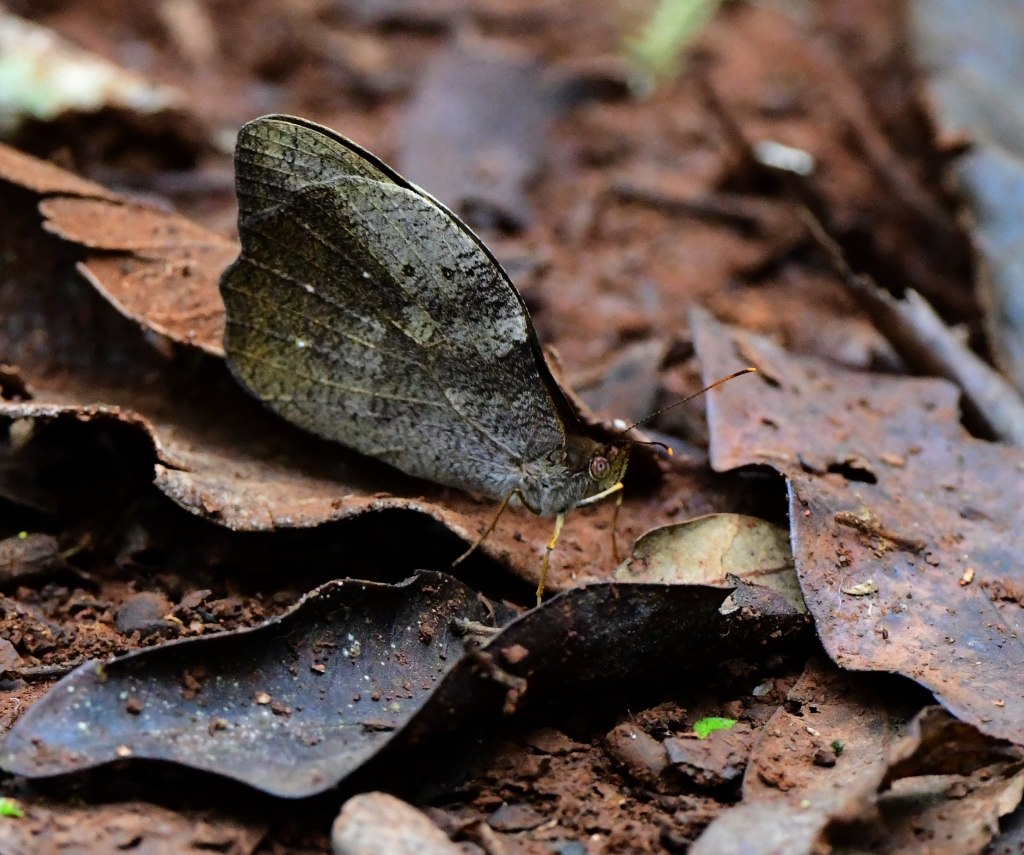
We finally spotted a mature adult male Satin Bowerbird a little ways off, after hearing the odd bowerbird calls for quite some time.


Then a Russet-Tailed Thrush foraged silently along a log and picked up a worm. Apparently both Bassian and Russet-Tailed Thrush are present here so look carefully for the identifying marks if you see one.

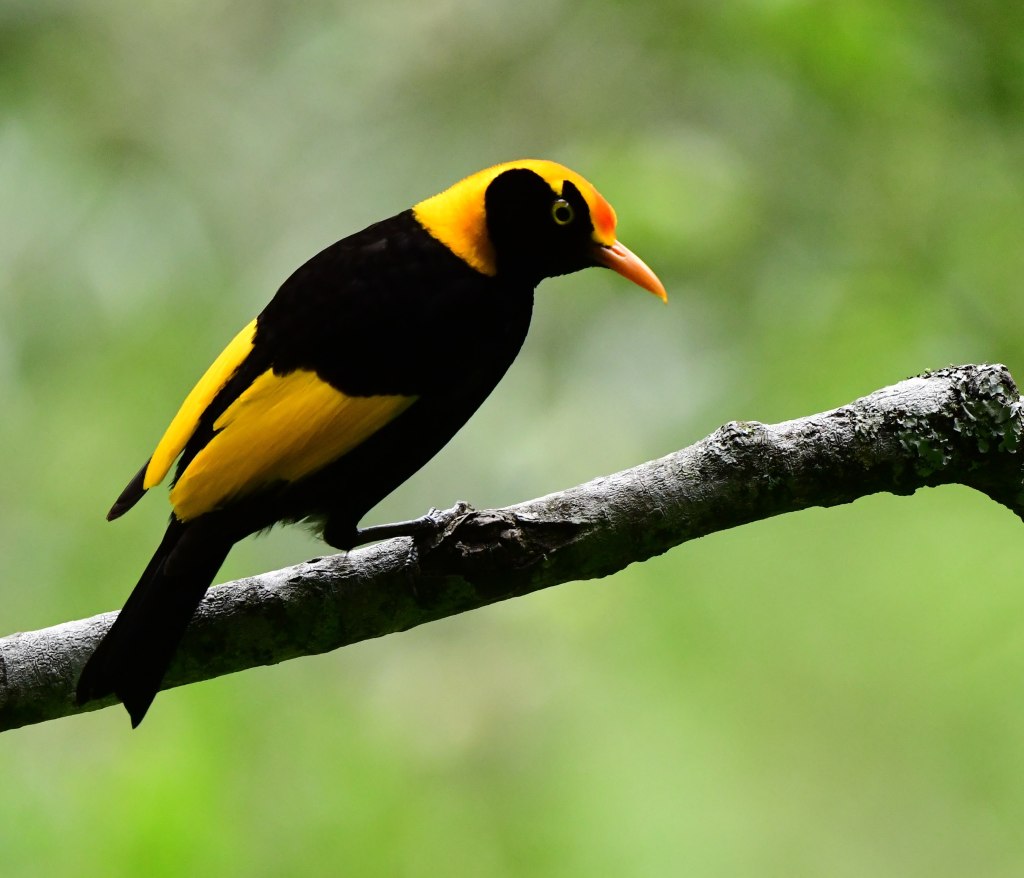
Towards the end of the circuit, not far at all from the car park, we found some Regent Bowerbirds including a male in spectacular colours. Even though I have spent several days birding at O’Reilly’s, I have come away feeling unlucky to get satisfying shots of the Regents there, so it was particularly gratifying to see this bird so well at the Bunya Mountains.

Note that while we were there a small section of the forest was closed due to a tree die-off phenomenon, and as of this writing (mid-2023) this was still the case.
Both times we walked the Scenic Circuit we picked up 22 species, including King Parrots, Crimson Rosella, Wonga Pigeon, Kookaburras and all the above-mentioned birds. For pure birding bliss my pick is the western section of this loop; the eastern section is more difficult and overgrown, though you might want to take in the Pine Gorge Lookout and the (rather underwhelming) Festoon Falls from a sightseeing point of view.
Barkers Creek Circuit (Little Falls/Big Falls loop)
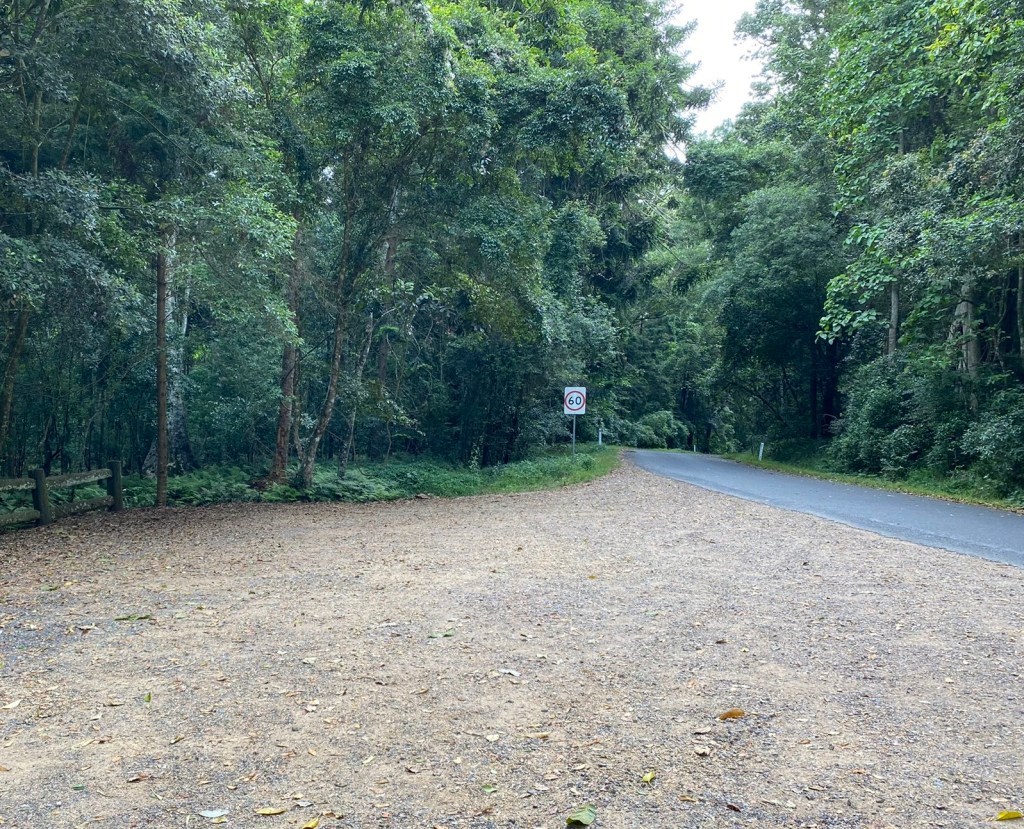
The much longer 10km Barkers Circuit loop awaits if you have the time and energy for it. On Dec 30 we got dropped off by car at the Paradise car park intending to walk the long part of the loop back to the village, cutting off nearly a third of the total distance. We were curious what the experience would be like and whether we’d find any birds much different on this walk.


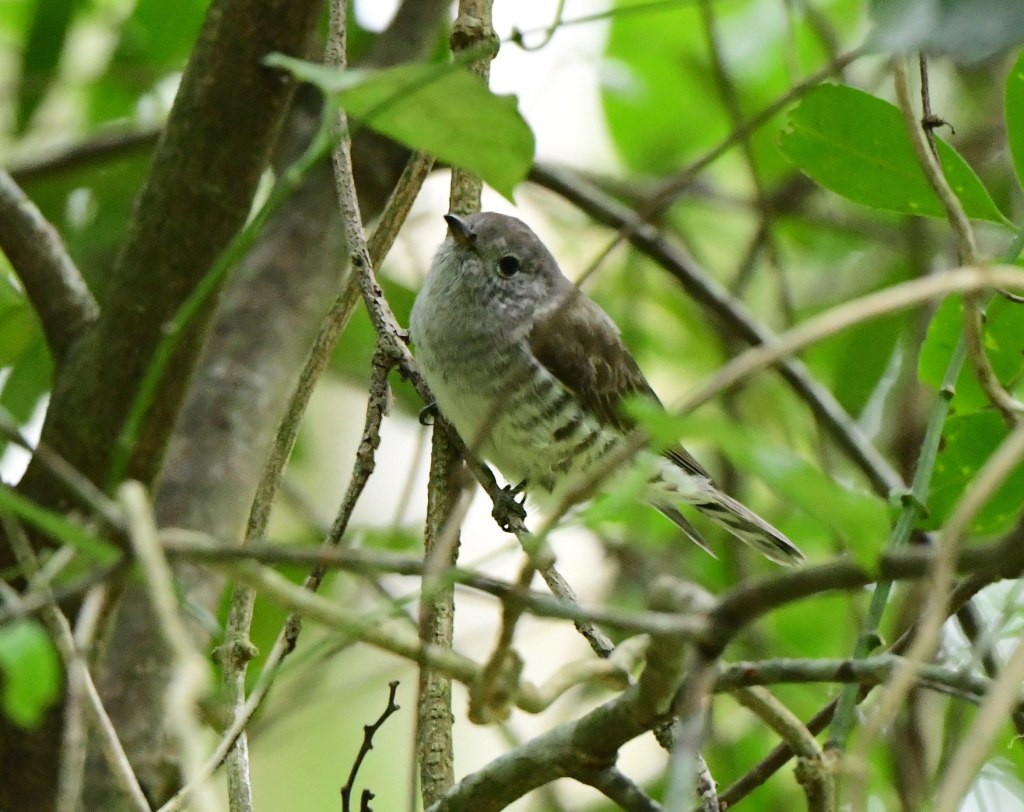
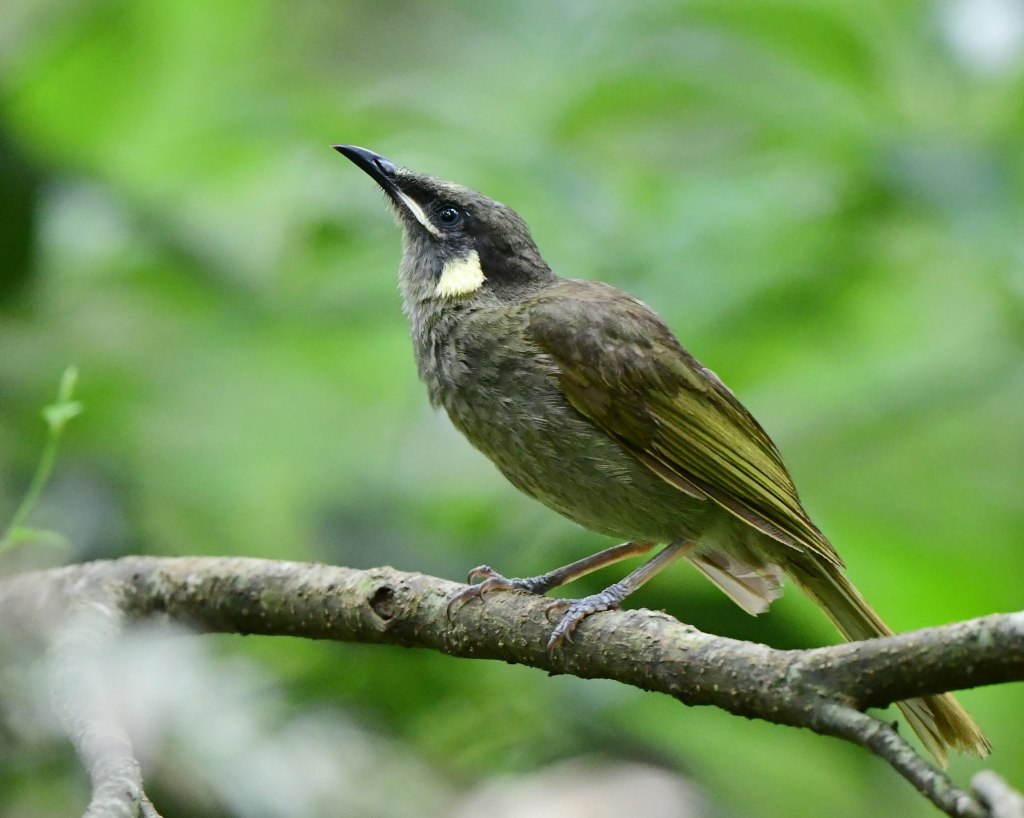
We plunged into the lush green forest at about 7:30am with very few other people about. Lewin’s Honeyeater calls were abundant and we ended up counting at least 15 of these birds on the walk. More unusual was a Fan-Tailed Cuckoo, though looking at my photo now I can’t see why it isn’t a Shining-Bronze…

At the appropriately-named Little Falls we found a White-Headed Pigeon skullking around the top of the slick black rocks.

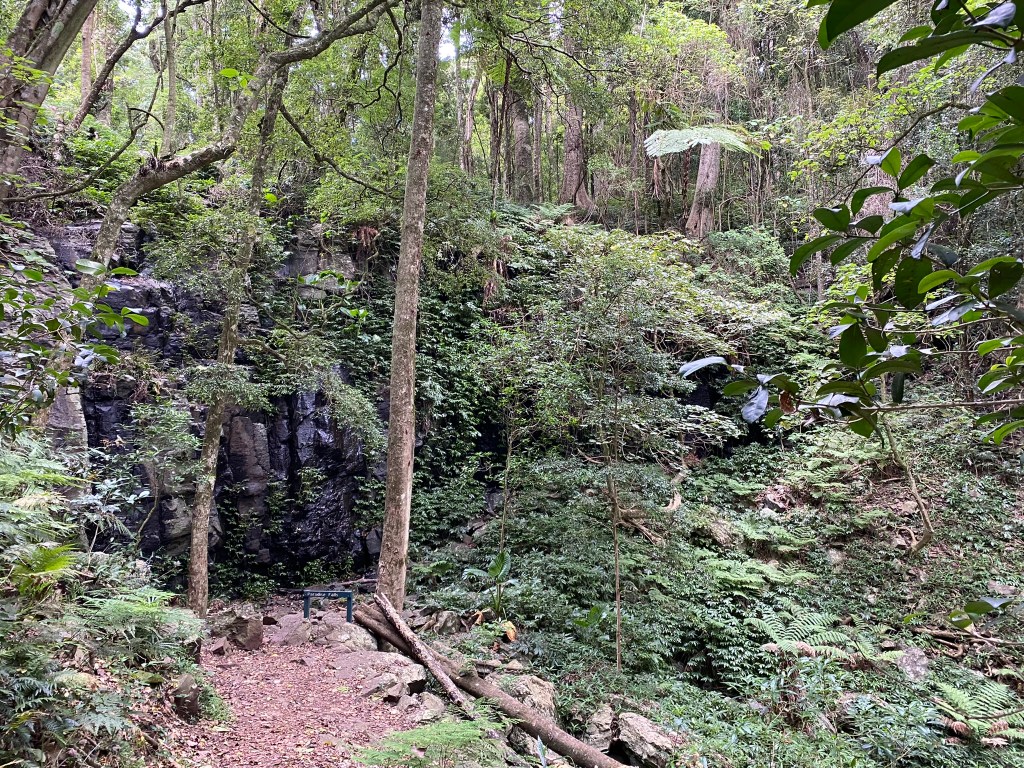
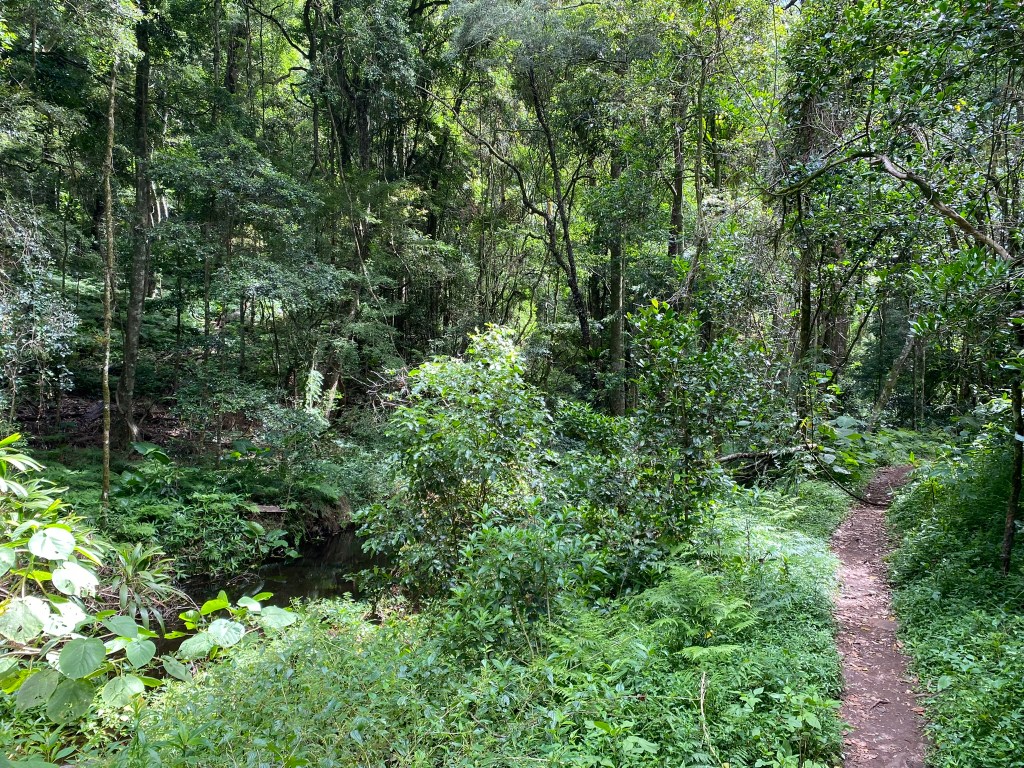
The walking here is not particularly difficult, but there are some serious challenges spotting birds in the dense foliage. Fortunately at a couple of points the track zig-zags along a slope, which gives a better chance of spying into the mid-canopy; here we were rewarded with sightings of Black-Faced Monarch and a Crested Shriketit (now named Eastern Shriketit), both birds we hadn’t seen on previous days along the Scenic Circuit.


Along the northern edge of the loop the track opens out agreeably into patches of grassland, or “balds” as they are called.
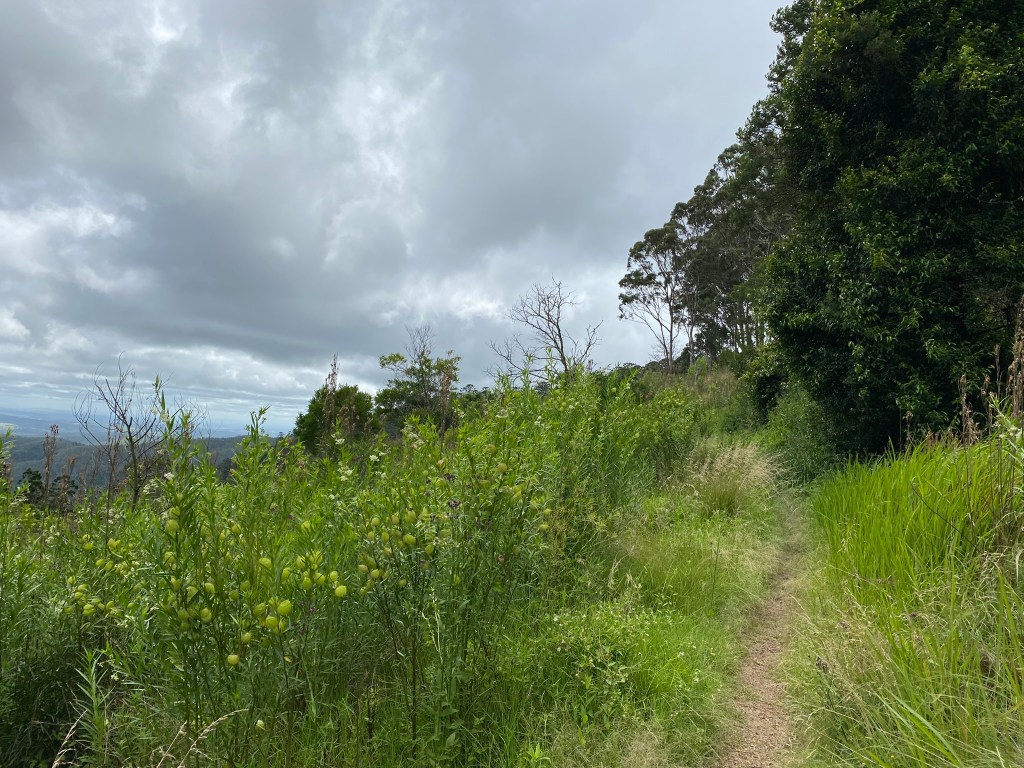
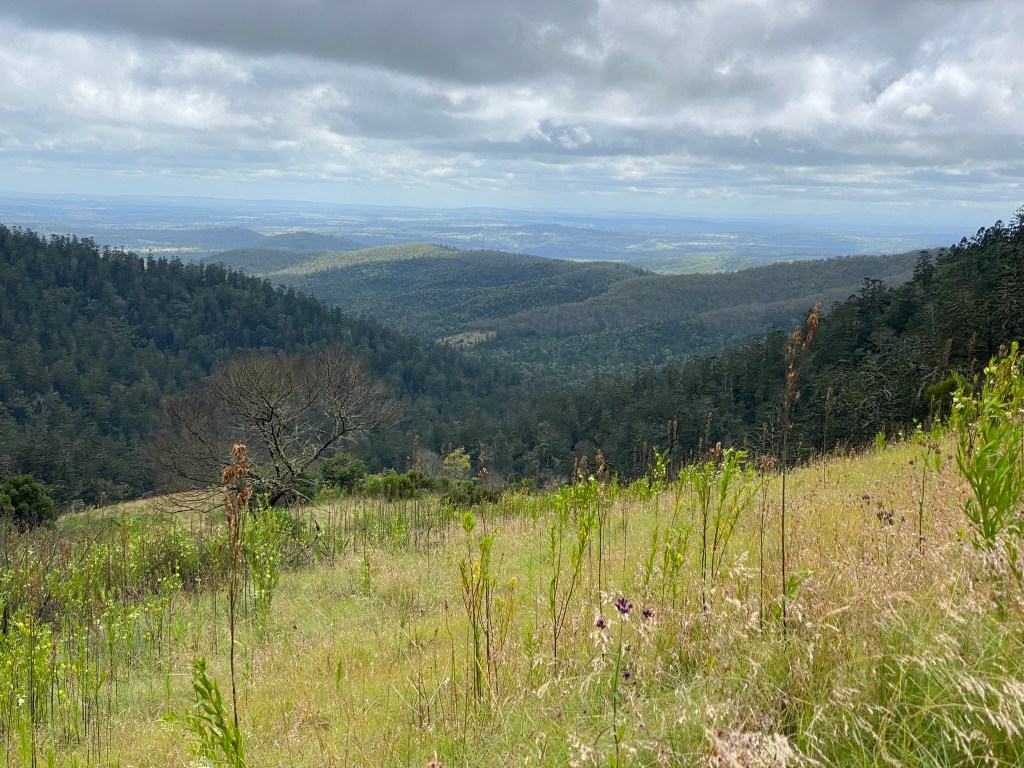
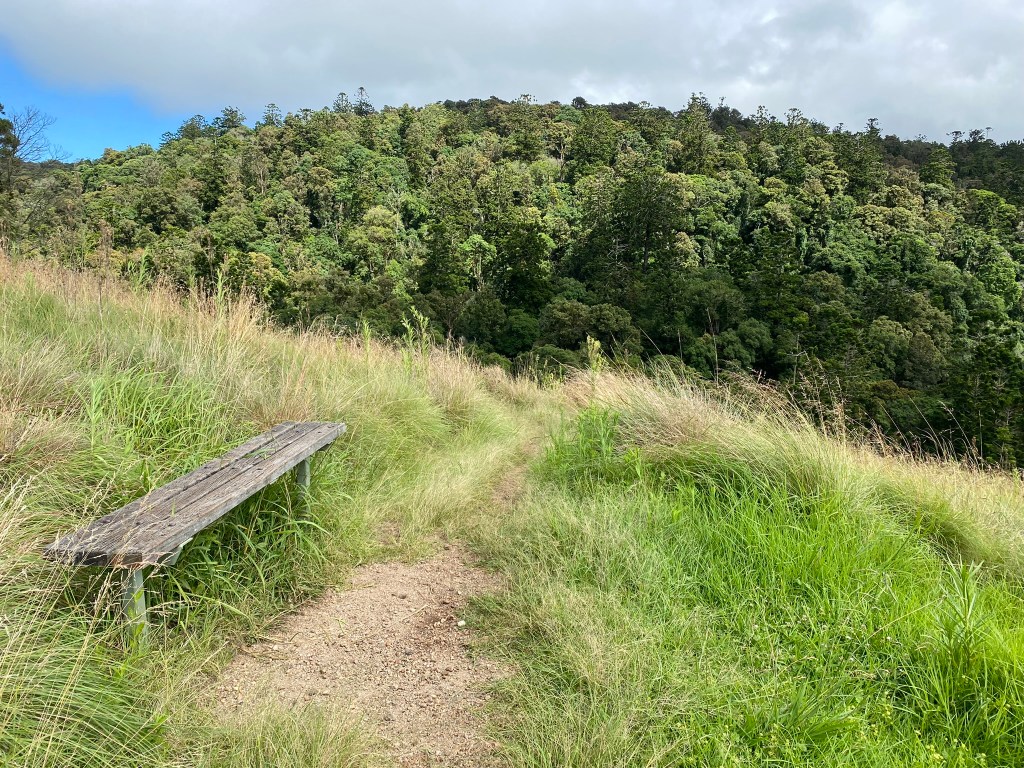
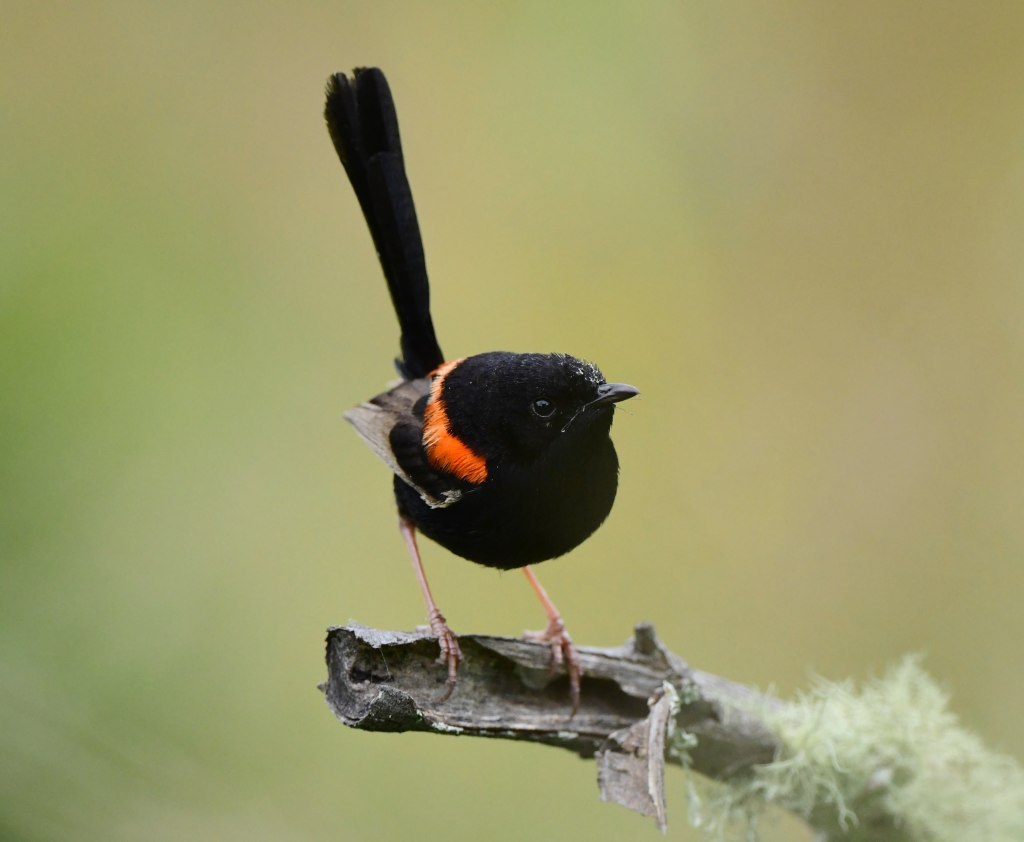
We found three Red-Backed Fairywrens in the open spaces, making a brief if welcome diversion from the more challenging rainforest birds. And a rather well-placed bench-seat-with-a-view made for a good rest stop.
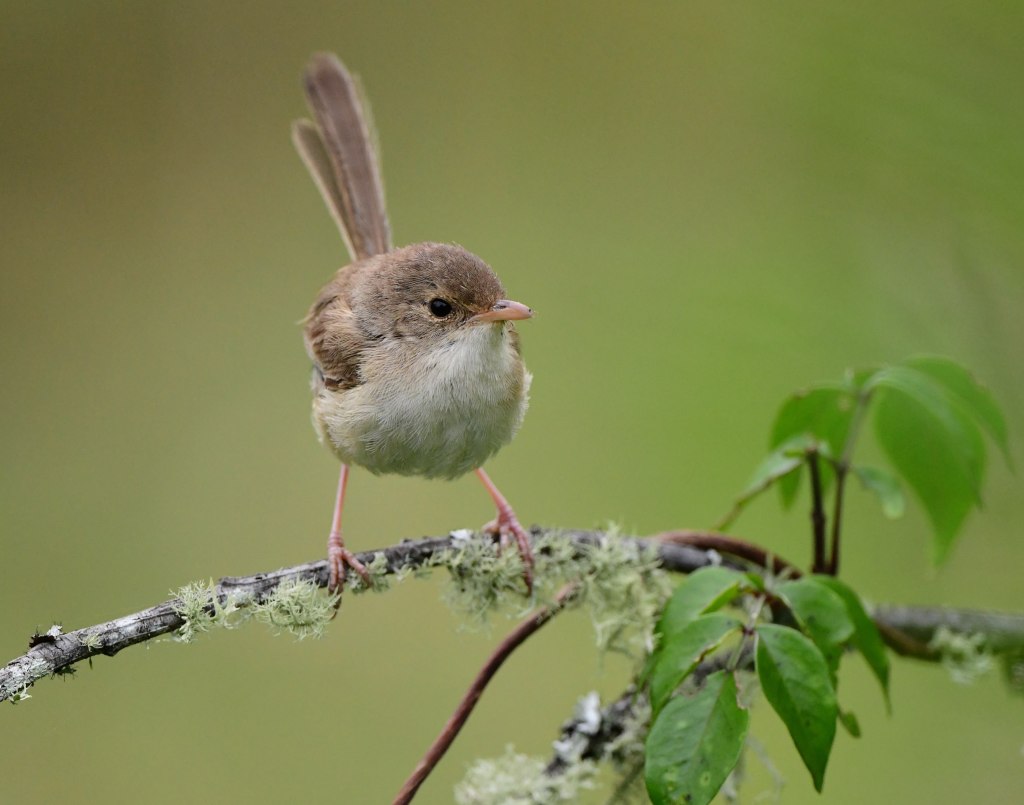
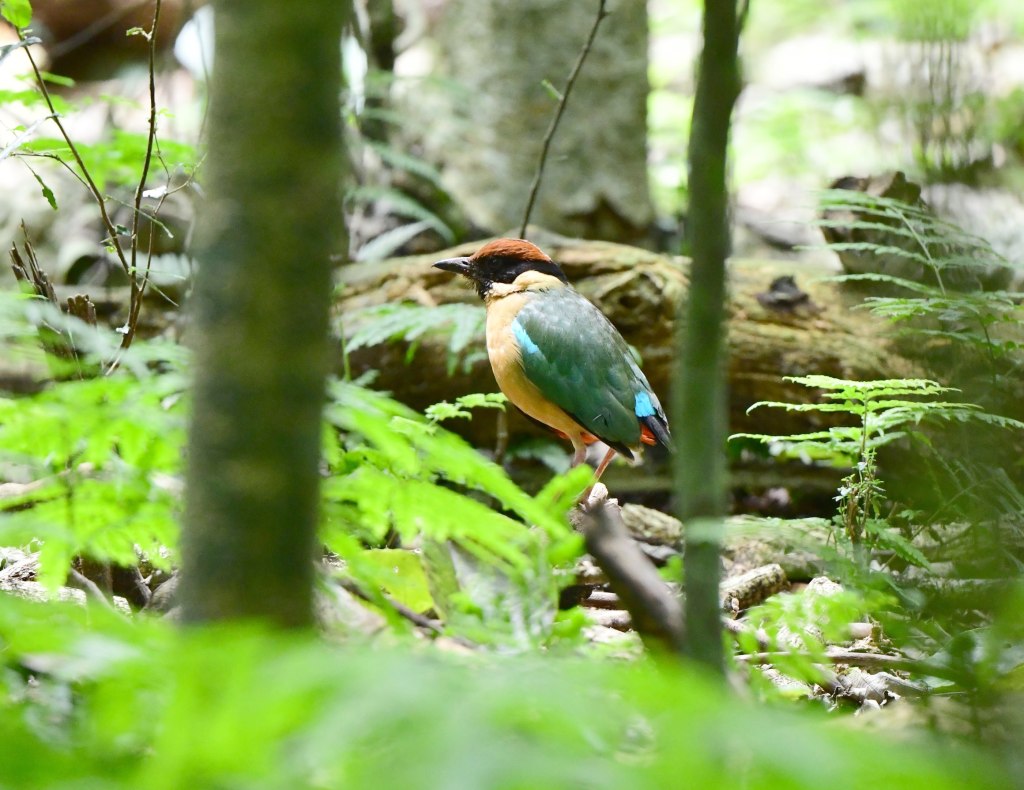
After entering the thick forest again we spied a Noisy Pitta. It wasn’t our first Pitta of the day, actually, the first being much earlier and hiding in deep shadow behind a tree trunk. This one stayed out in the open long enough for a quick photo. I’m not sure there’s anything quite as wonderful in the rainforest in this part of the world as seeing a Noisy Pitta (the shining flash of green on its wings as it flies, in particular), the exception perhaps being a Paradise Riflebird or an Albert’s Lyrebird (noting too that the former can be seen here, while the latter is not).

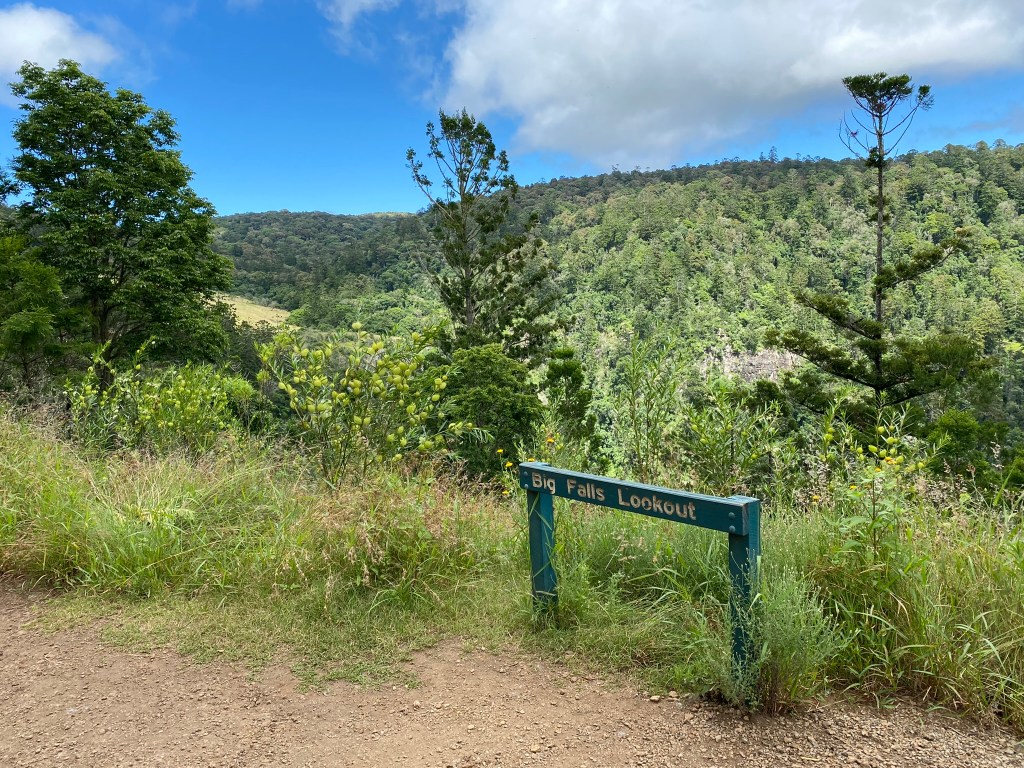
There is a single side spur to another grassy clearing – the Barker Creek Lookout, which is worth the extra effort to walk out to.
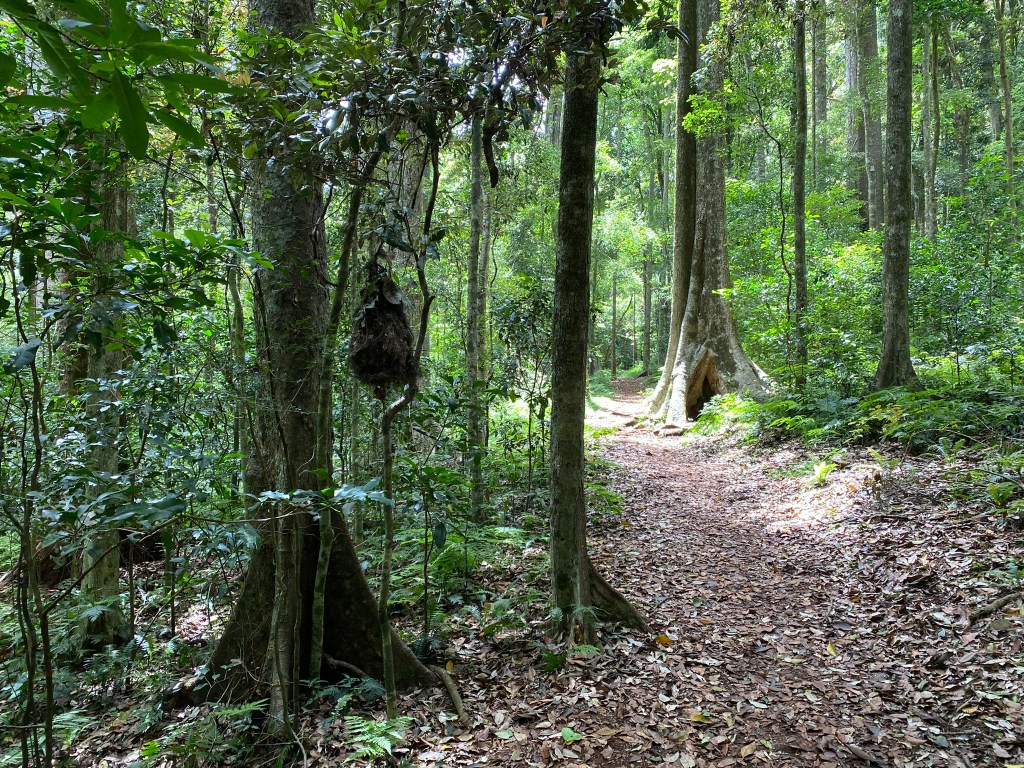
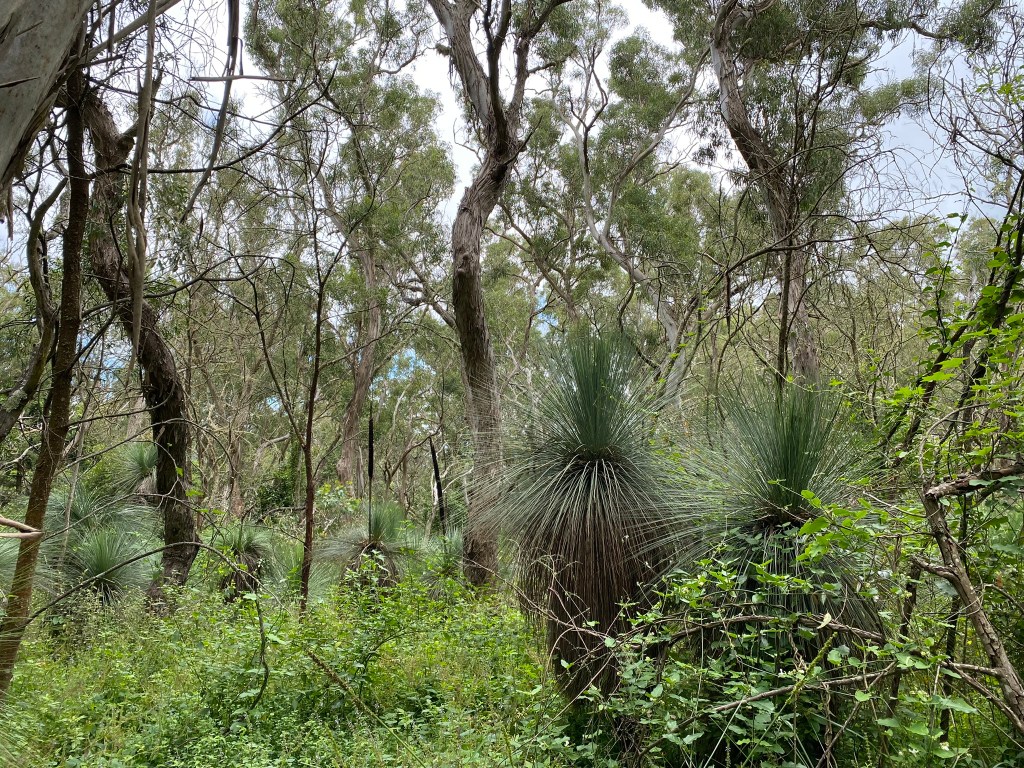
The last part of the circuit before it joins up with the western part of the Scenic Circuit features some grass trees and a more open upper canopy, adding yet more variety in vegetation to what we’d already experienced.
In 4 hours we had seen 3 Noisy Pittas, an astounding 23 Golden Whistlers, 17 Eastern Whipbirds, 12 Brown Gerygones, 6 Brown Cuckoo-Doves and handfuls of Crimson Rosella, Large-Billed Scrubwren, Eastern Yellow Robin, Satin Bowerbird (and a Regent), and more – for a total of 31 species. With all these birds and the many different moods of the trail it made for a very satisfying morning.
Westcliff
On the other side of the Bunya Mountains Road from the village lie a series of connected trails which string together to at least 15km worth of hiking. We cherry-picked the area between the Koondaii and Westcliff Lookouts one afternoon, taking around 90 minutes to explore it.


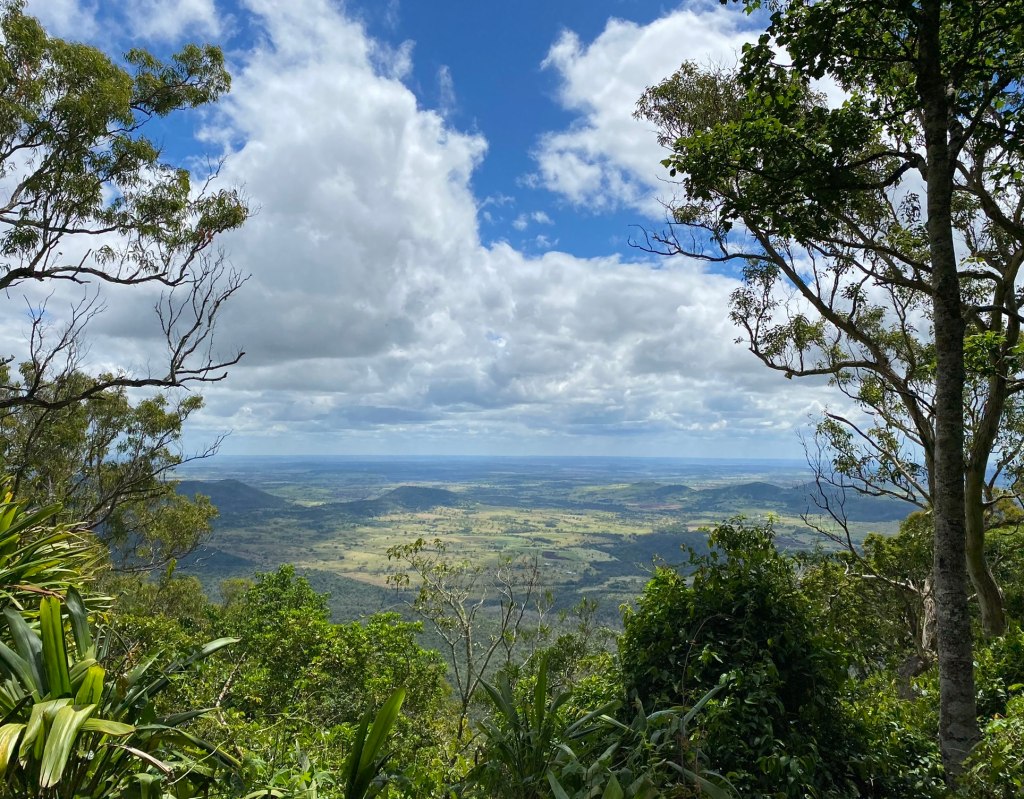
The tracks and bush are drier here than nearer to the village, and there are good views to the west across the surrounding countryside.


The birding was a little scant for a while, with just the odd fantail – we saw Rufous Fantail on the way to Westcliff Lookout, and four Grey Fanails on the Koondaii Circuit. Golden Whistler and Black-Faced Monarch were a welcome sight.


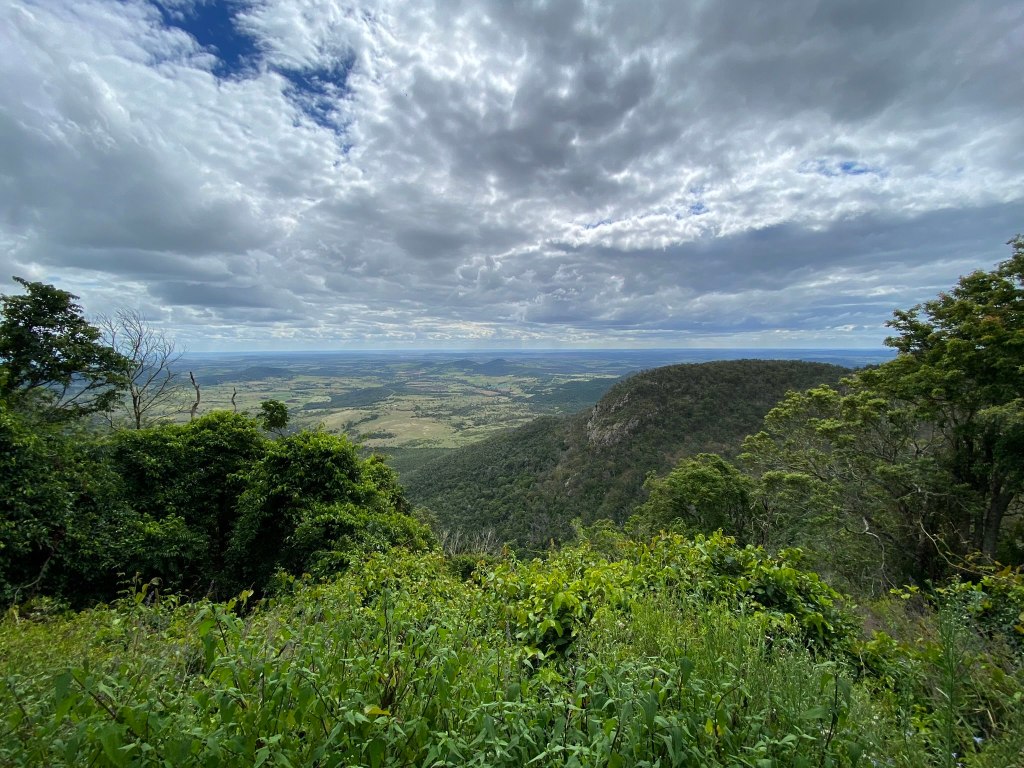
The tracks around the Koondaii Lookout gave us an eye-level view of a group of eight Topknot Pigeons, while the berry-laden bushes housed a happily munching Regent Bowerbird. The lookout itself is a well-constructed wooden affair overhanging the hillside so gives a great view outwards.


Pied Currawongs and Crimson Rosellas were also nice to spot from here, while a couple of Red-Browed Finches were glimpsed in trackside grasses, birds we hadn’t seen elsewhere.
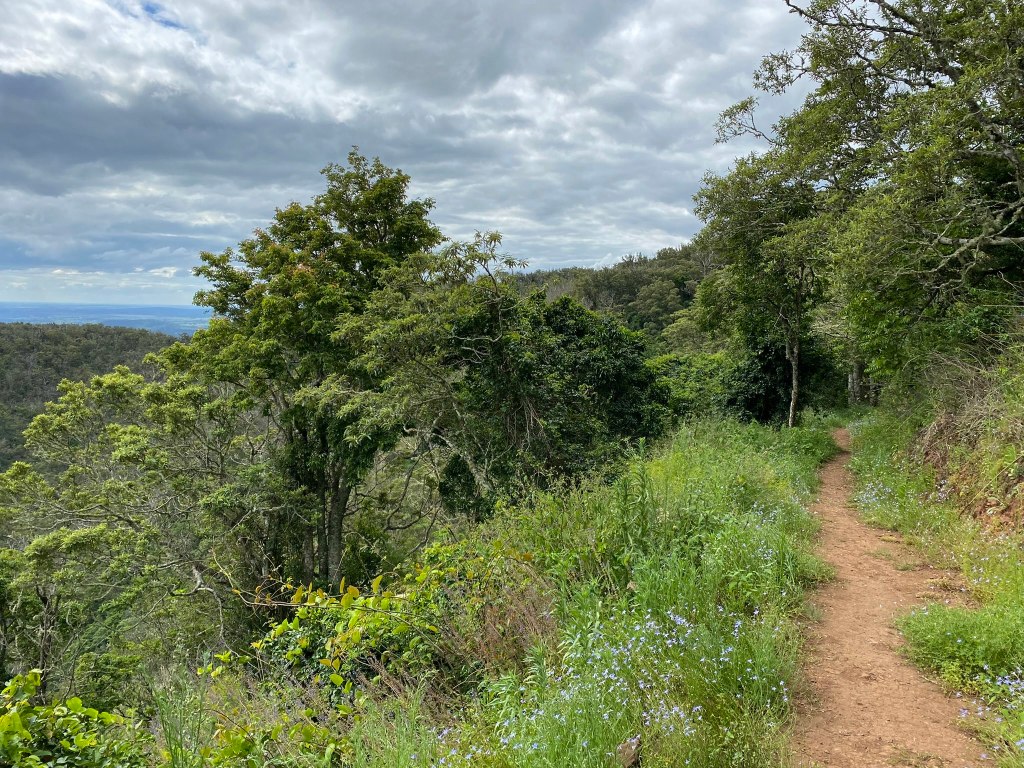


One of the most memorable bird encounters occurred on our way back to the car park, when we stumbled upon a Brown Cuckoo-Dove sitting placidly on a branch in thick vegetation just above head height, barely a metre or so away. We were probably just as startled as the bird was, and it lazily flew away when I backed up a little to try for a photo.
Summary
It is hard not to compare the Bunya Mountains as a birding destination with O’Reilly’s Retreat, several hours to the south. Both have excellent accommodation options (including camping) right in the heart of gorgeous bird-rich rainforest. And while O’Reilly’s has the edge in terms of variety of number of trails, I feel Bunya Mountains still has plenty of offer. We were there at the height of holiday season and although the village was reasonably busy, it didn’t feel over-crowded like O’Reilly’s can be; indeed some of the longer tracks were nearly empty of people. The western side of Scenic Circuit is a particularly superb section for birding, with rainforest species like Green Catbird and Satin Bowerbird providing amazing photo opportunities with luscious fern undergrowth and spacious trees. You can also get great photos and have intimate bird encounters throughout the village. There is a lot to like here!
eBird:
Bunya Mountains is unfortunately one of those locations where there is an overall eBird hotspot (Bunya Mountains National Park), which judging by its species count of 175, is more used than the many hotspots for each track/section. In addition, note that Koondaii is spelt “Kondai” in eBird.
Hotspots: Dandabah (103 species), Scenic Circuit via Festoon Falls (89 species), Barkers Creek Circuit (59 species), Kondai Circuit (52 species)
Checklists for these visits: Scenic Circuit via Festoon Falls 28 Dec (22 species), Barkers Creek Circuit 30 Dec (31 species), Kondai Circuit (22 species)
Pluses and minuses:
+ Excellent rainforest birding
+ Good around the village too, with some very tame birds
+ Lovely walks with serene forest, waterfalls and lookouts
– Quite far to get to, at least from Brisbane – at least an overnight stay is recommended
– Very changeable weather and tracks can get muddy
– Would be nice if there were more tracks from the village itself
AUTHOR: ANDY GEE
BIRDERS: ANDY GEE, K-A
 Bird Spots