
Summary: Gorgeous inner city gardens with plenty of variety of plants and birds
Date of visits: Nov 13, 2022 and Aug 1, 2023
It’s no secret that we like the bird photography possibilities at botanic gardens here at Bird Spots, with glowing reviews of Royal Tasmanian Botanic Gardens in Hobart, the George Darwin Botanic Gardens in Darwin, the Gold Coast Regional Botanic Gardens and more. Add to that list the Royal Botanic Gardens in Melbourne, because it’s also a cracker!

The name is “Royal Botanic Gardens Victoria – Melbourne” because Royal Botanic Gardens Victoria has another site at Cranbourne (on the very south-east fringes of Melbourne). The Melbourne site is just a couple of tram stops south of the CBD (using trams stopping along St Kilda Rd); another convenient public transport option is Richmond train station about 10 minutes from the north-east corner of the gardens.
Opening hours are from 7:30am to 5:30pm, and there are nine entrances. We approached via the Observatory Gate in the west, an area which includes the Shrine of Remembrance and Melbourne Observatory.
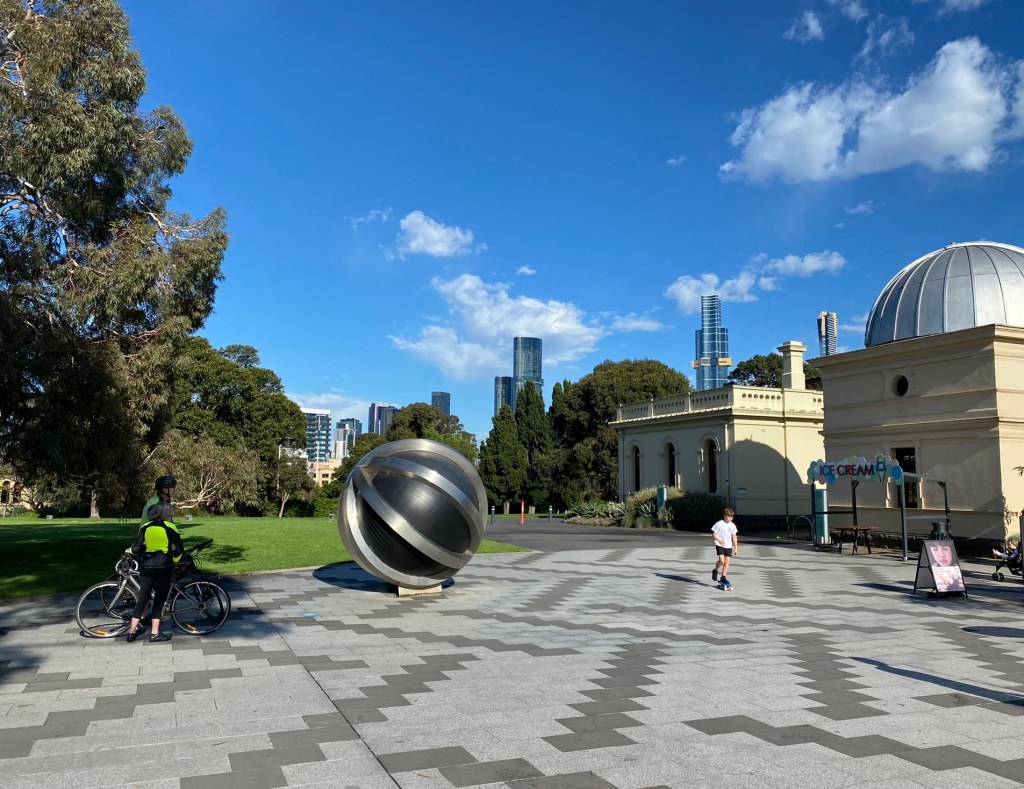

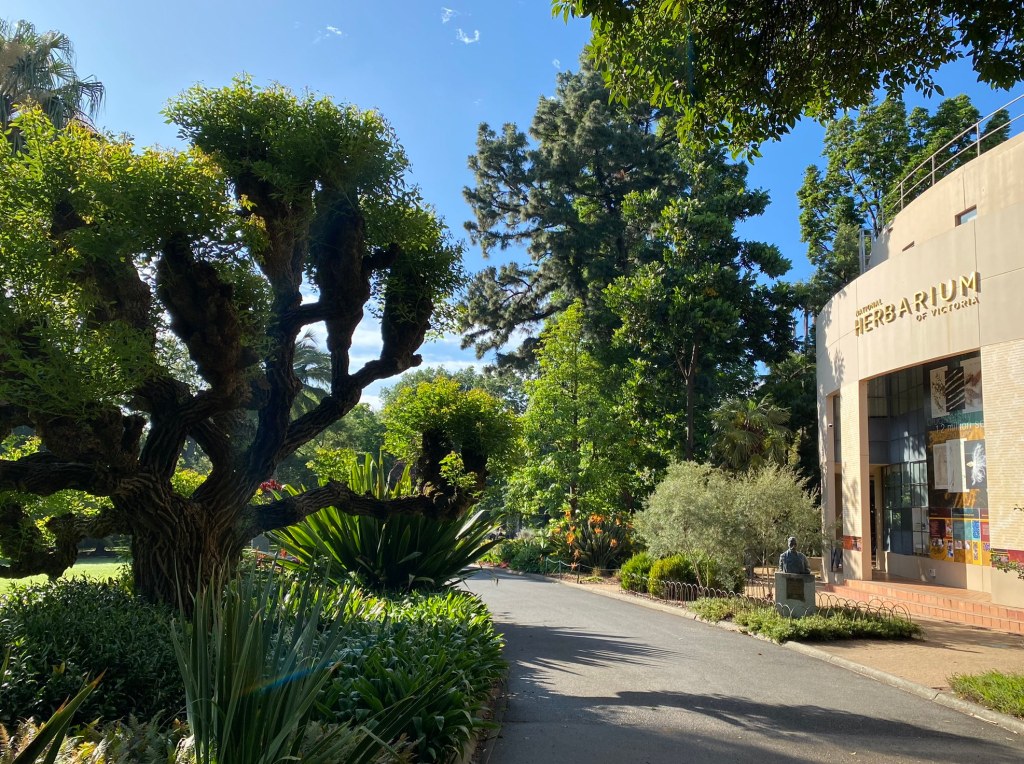
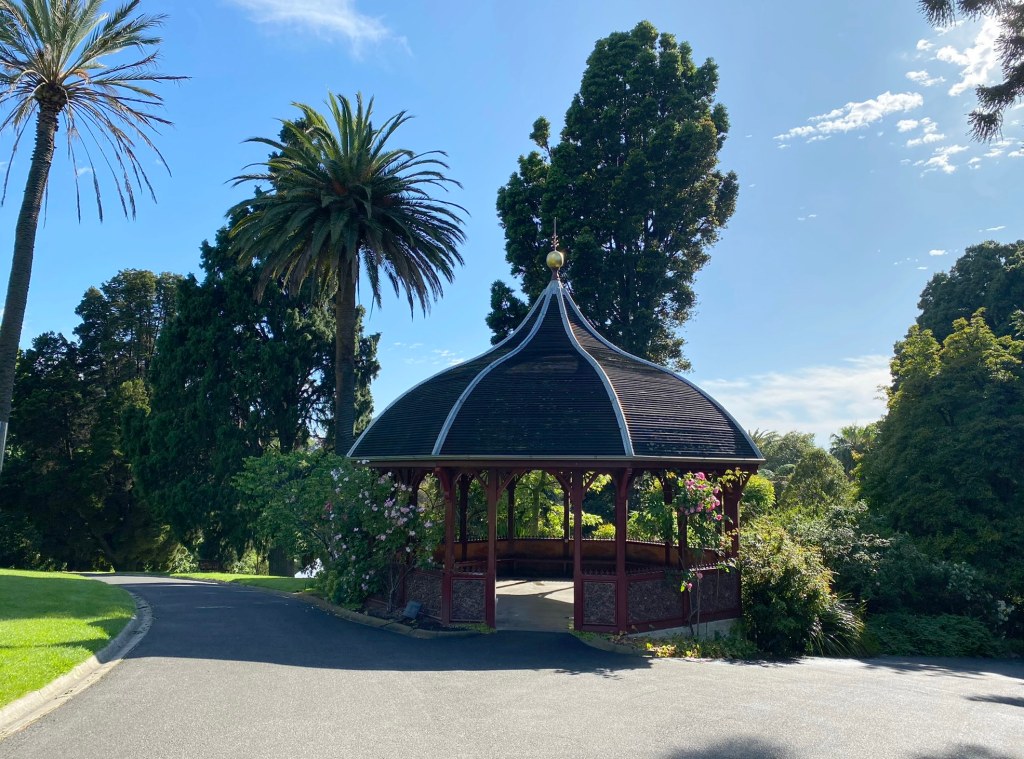
It was 7:30 in the morning on a gorgeous late spring Melbourne day when we first visited and the gardens were looking their best, with sunlit Instagrammable views around every corner. We looked forward to exploring the 38 hectares with its reported 8500 species of plants. And… who knew how many birds!


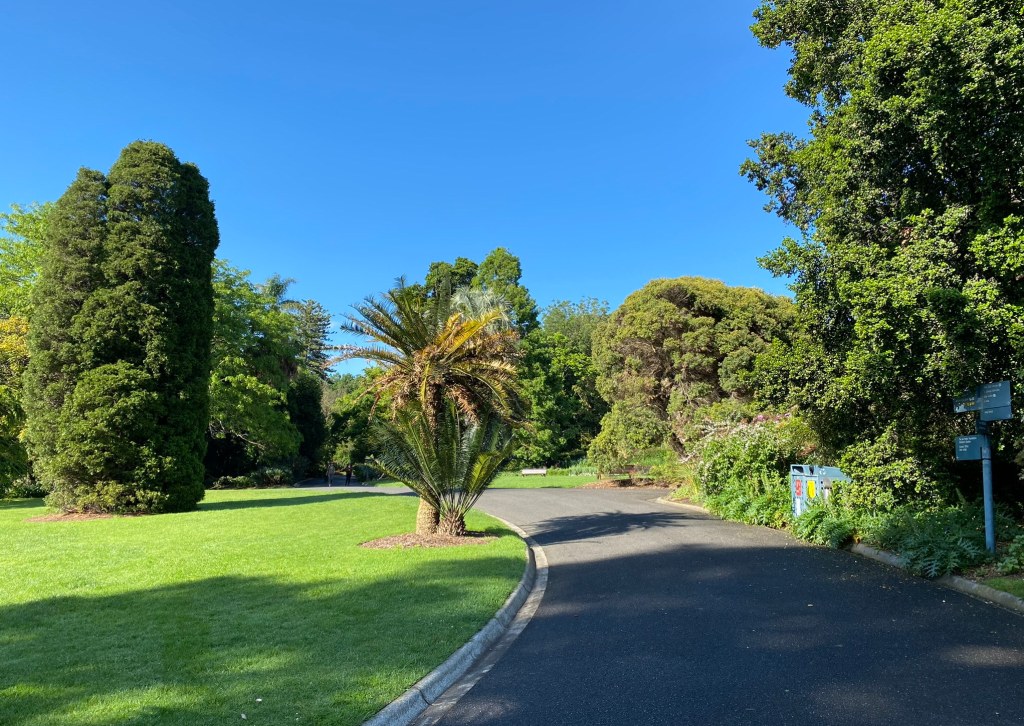
Most (perhaps all, I think) of the paths here are paved and easy to explore, with only a few mild hillsides to contend with. There are plenty of benches to sit on, drinking taps, two cafes and no fewer than six toilets. There is definitely no lack of facilities here.

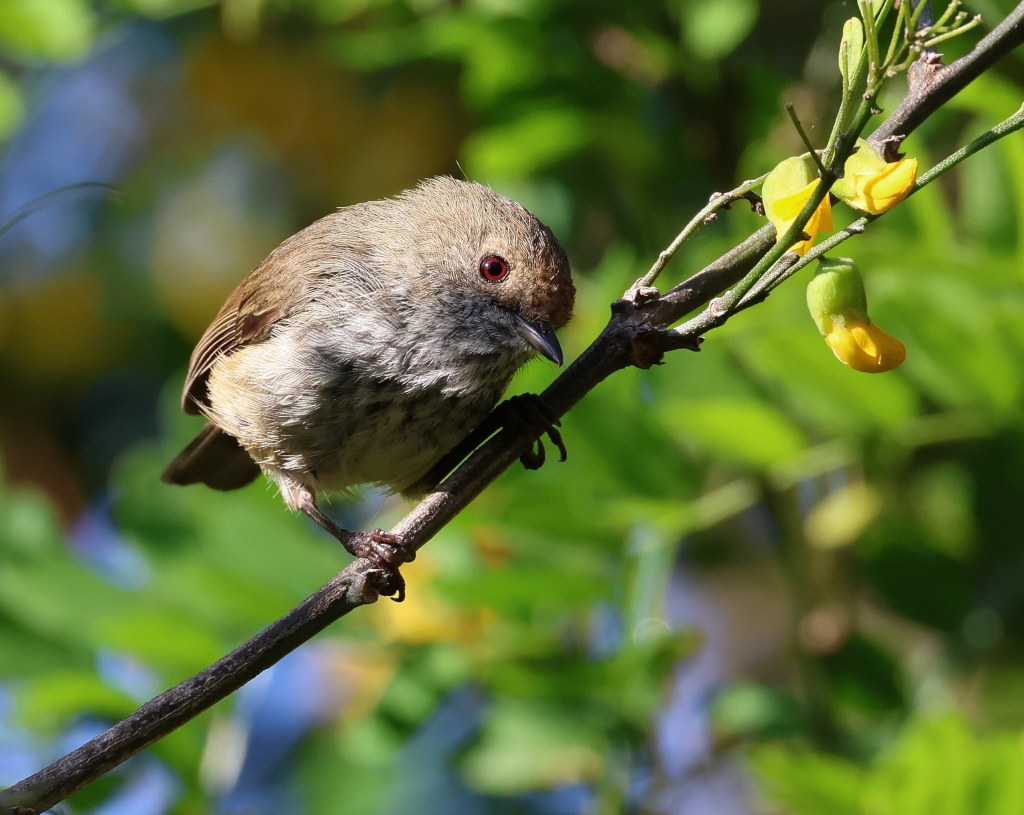
Among the first birds we saw was a Common Blackbird, closely followed by a Brown Thornbill. We got terrific views of both these often coy birds, which I put down to some of that “botanic gardens” magic dust 🙂

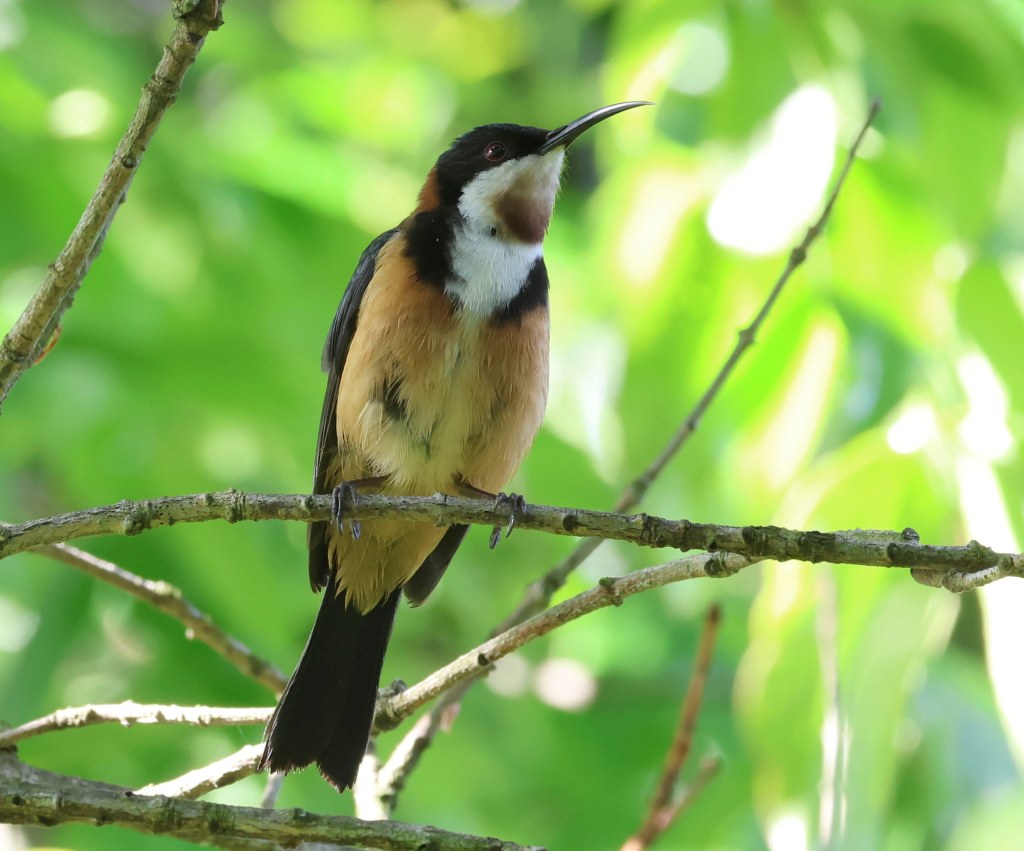
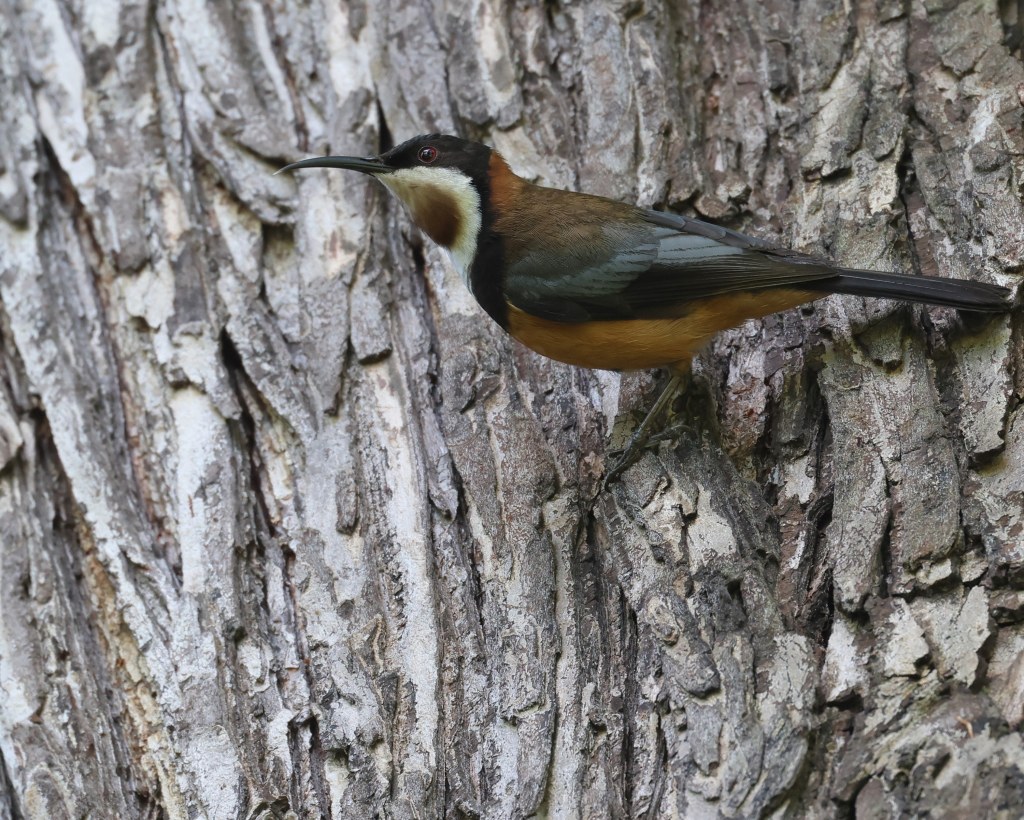
I had seen Eastern Spinebills on eBird checklists for this site, so was keen to see if I could spot one. Less than twenty minutes had passed when I saw my first spinebill, still on the western side of the gardens.
There are plenty of the common Australian east coast urban species here, like Willie Wagtails, Little Ravens, Rainbow Lorikeets and Sulphur-Crested Cockatoos.


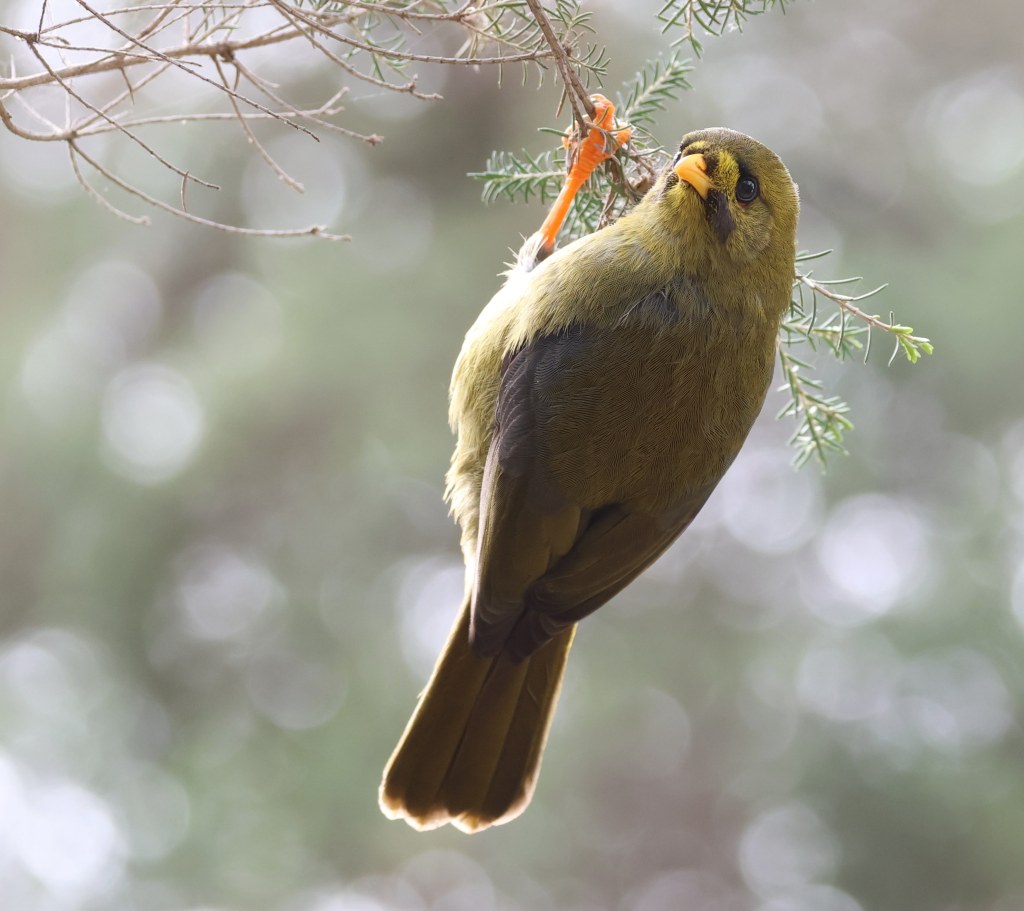
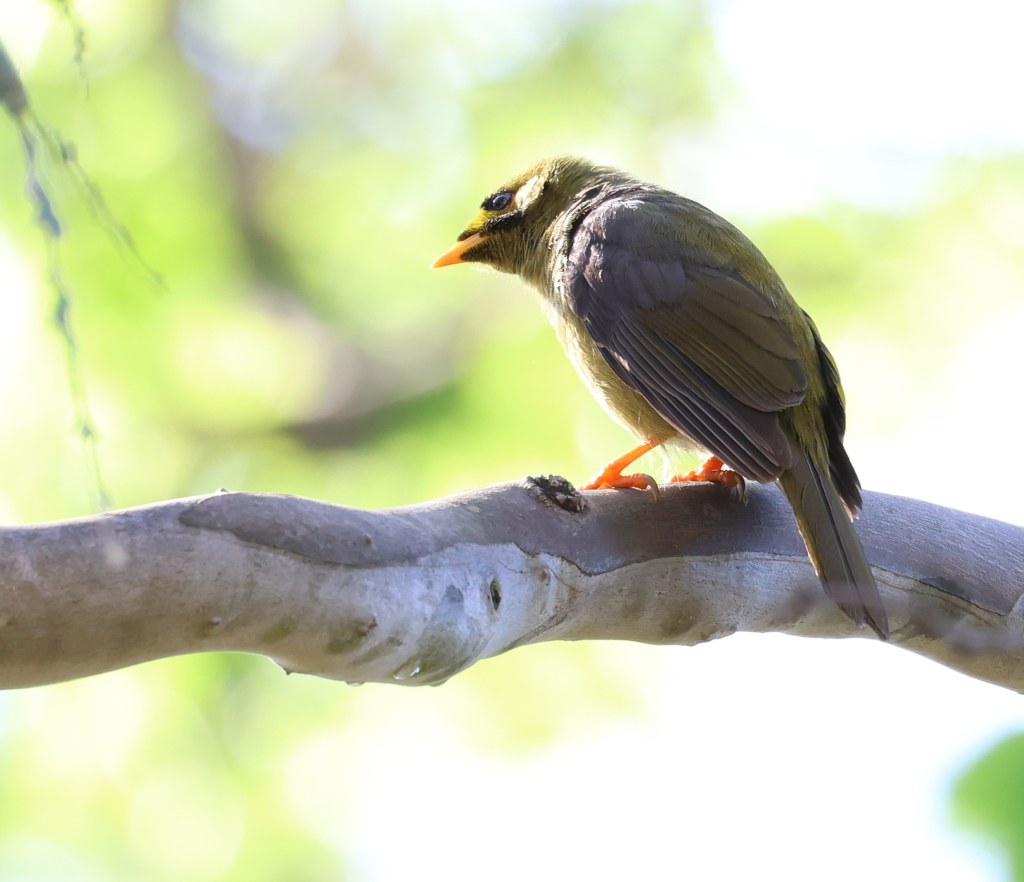
The path that goes past Long Island at the north of the gardens is particularly bird-abundant. There is a Bell Miner colony here, and they vigorously keep their small territory clear of other birds, at least above the water (they don’t seem to bother the ducks and grebes). I have seen them drive away a pair of Rainbow Lorikeets with enough alarm calls and screeching to drown out any other noise you might hear.
On the railings along this path just past the Bell Miners we came across two lovely Red-Rumped Parrots, which aren’t too hard to find in Melbourne (at least compared to Brisbane…)

There is good lakeshore access around the perimeter of Ornamental Lake, the main body of water in the gardens.

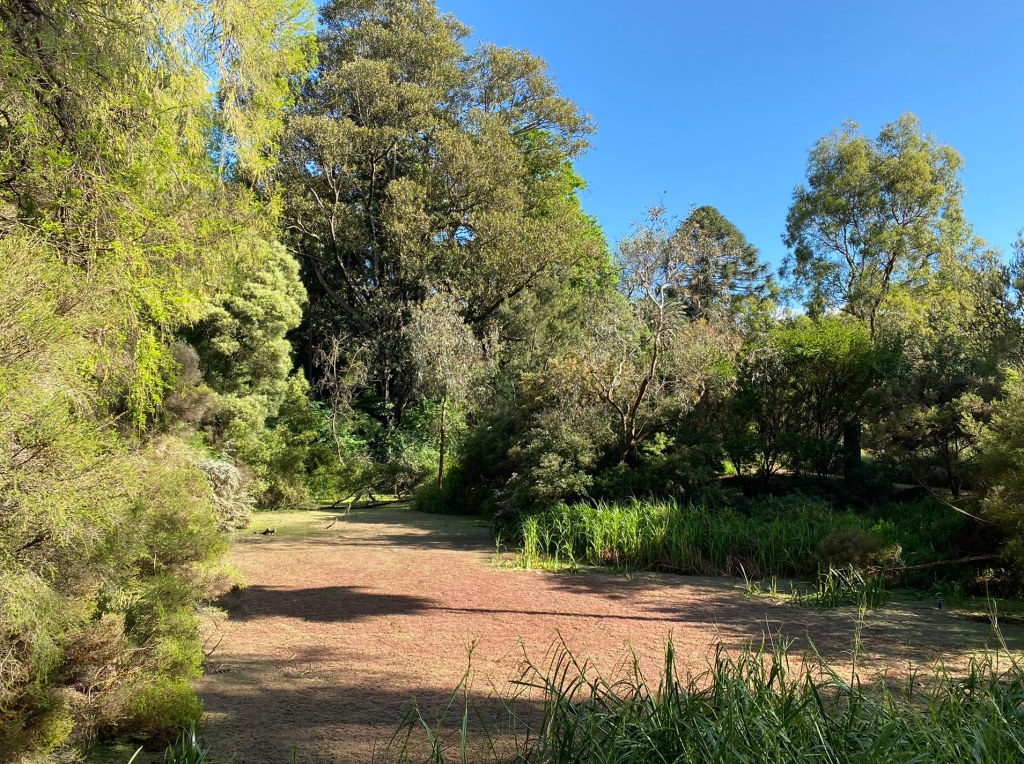
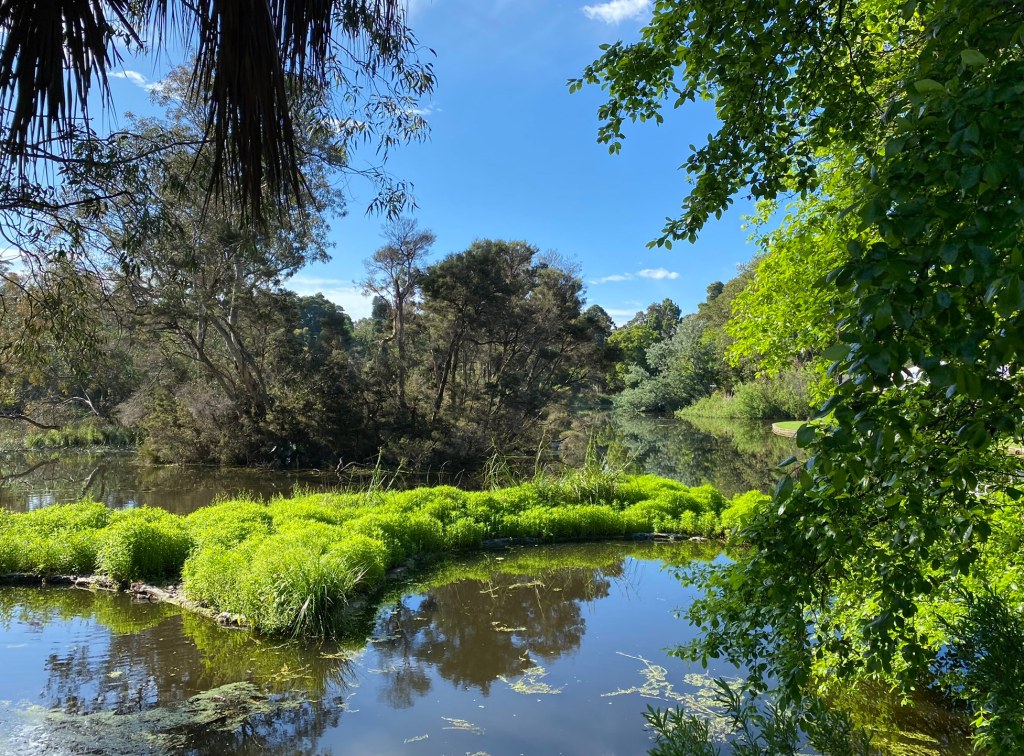
We stalked a couple of enigmatic smaller birds in the dense fringing vegetation which turned out to be White-Browed Scrubwrens, before turning our attention to the various water birds.
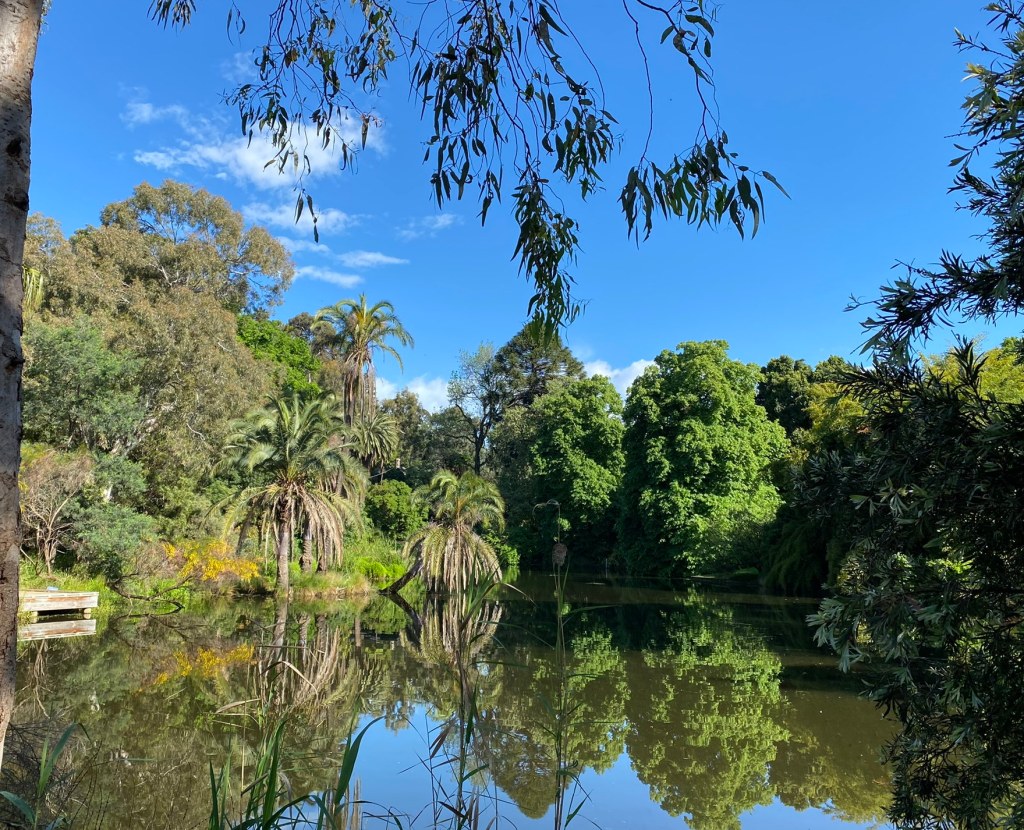
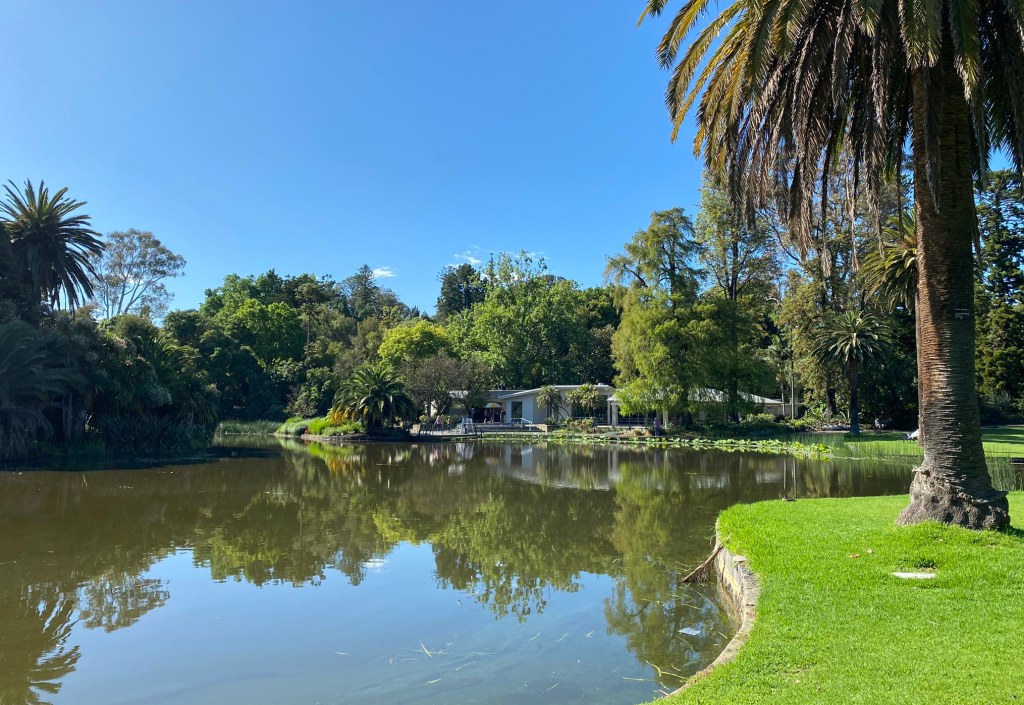

Grey Teals and Chestnut Teals were both accounted for, but strangely we didn’t manage to see any of the Black Swans that are normally reported on checklists here.


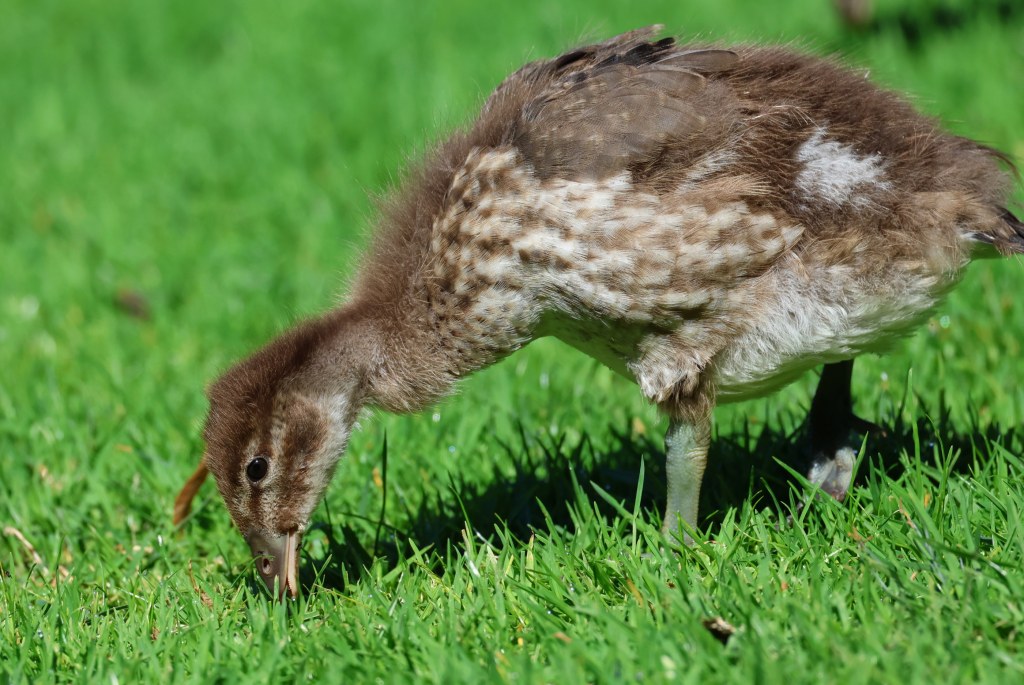
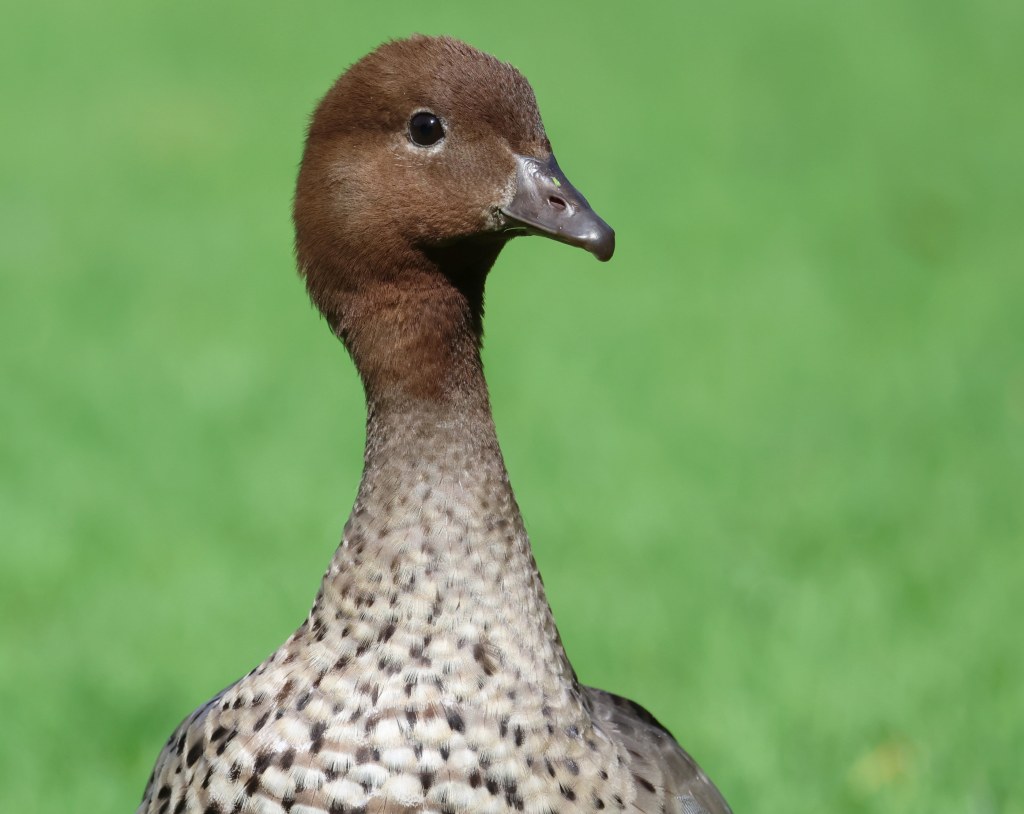
A little family of Wood Ducks provided some entertainment and as with many botanic gardens, the birds here are quite habituated to human presence and aren’t too worried about people. If you are quiet and don’t make any sudden movements you can get close enough for some very intimate duck portraits.
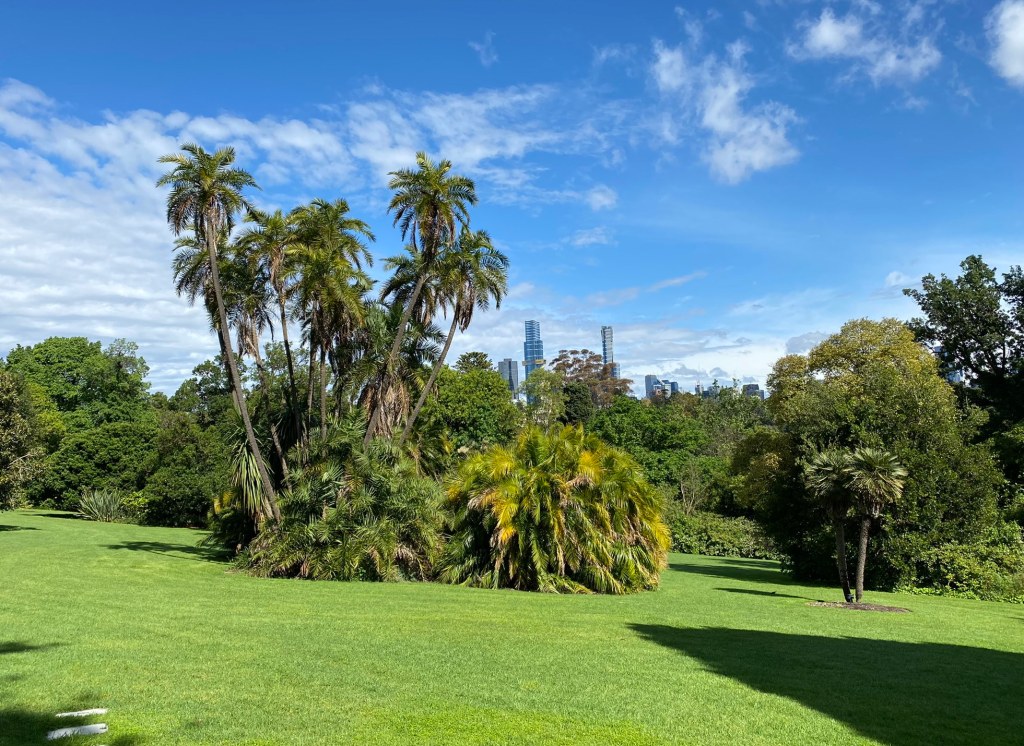
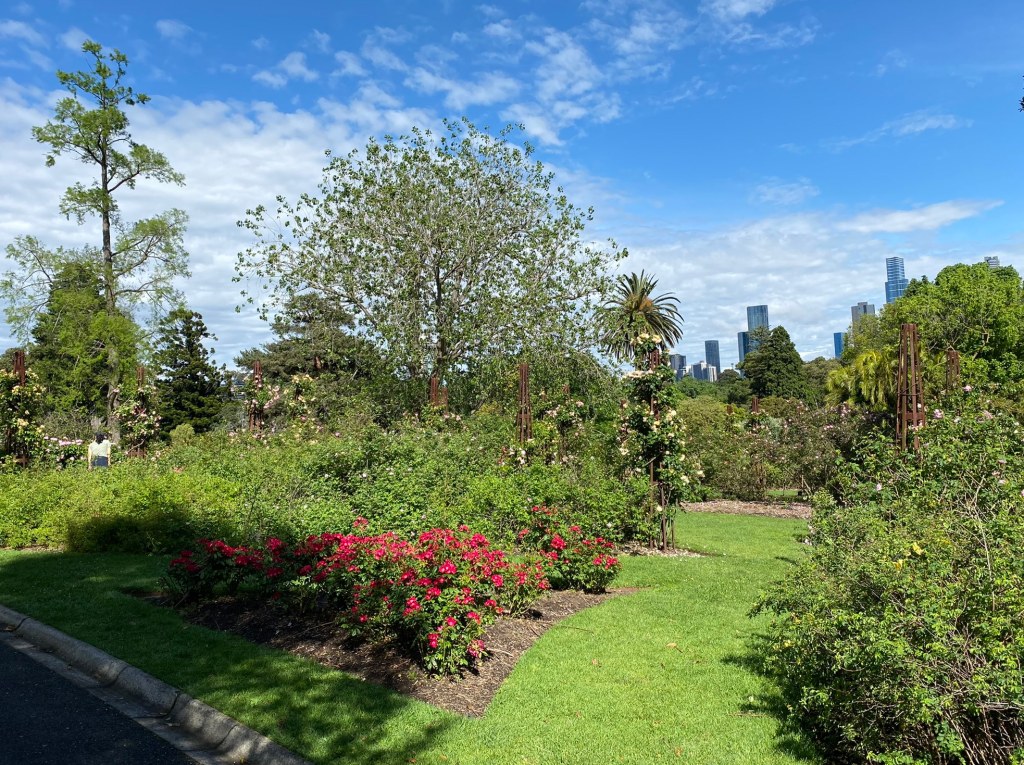
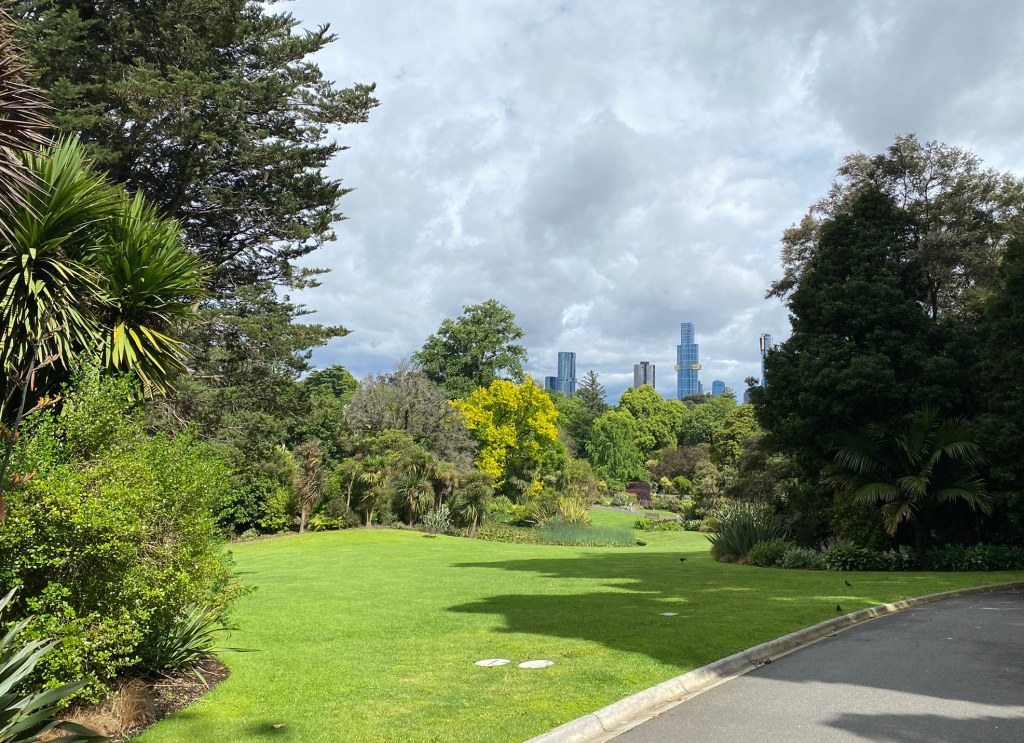
As we made our way around the lake and started exploring the eastern side of the gardens we saw the city skyline make an appearance.
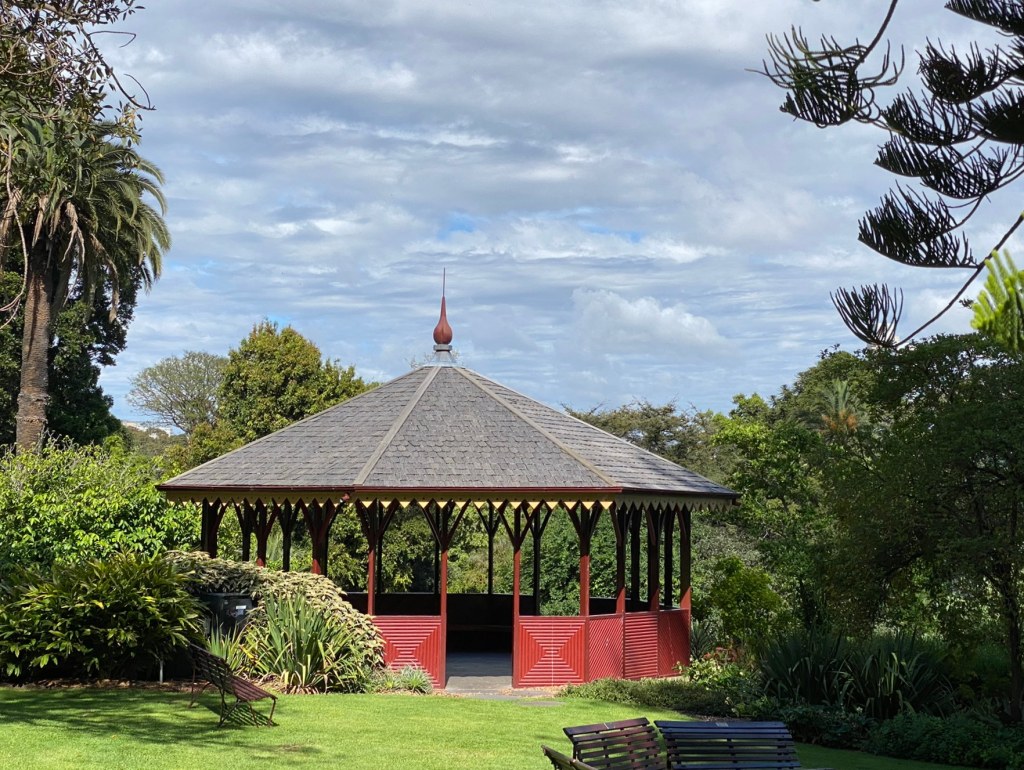
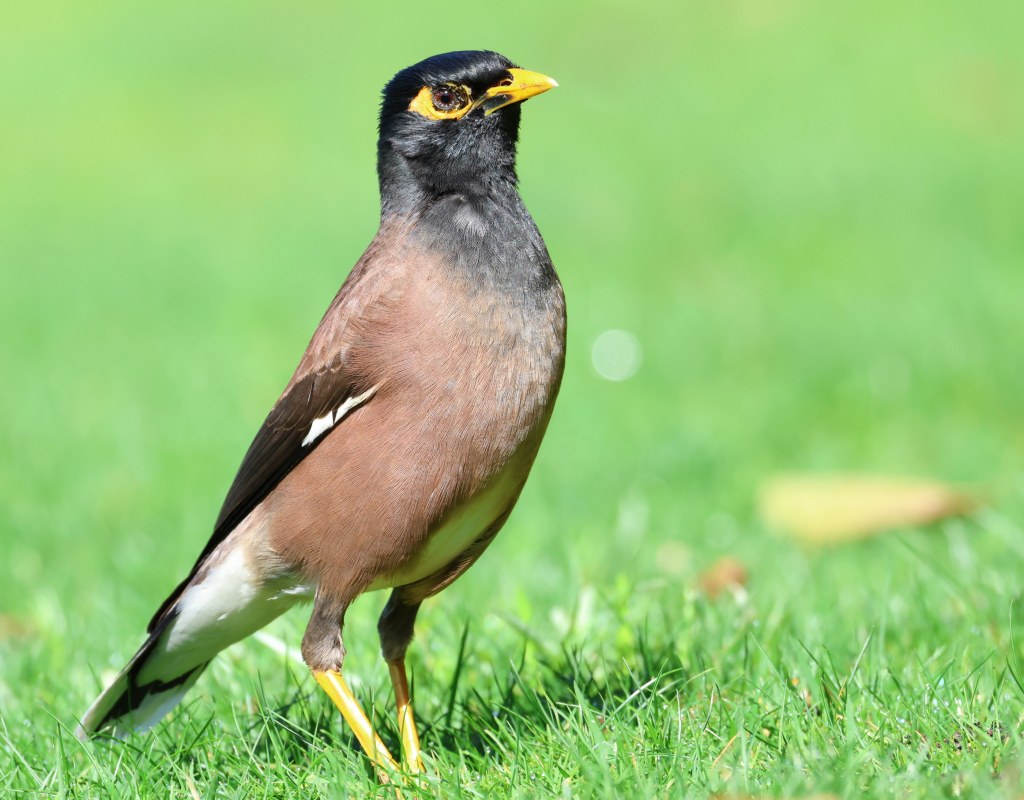
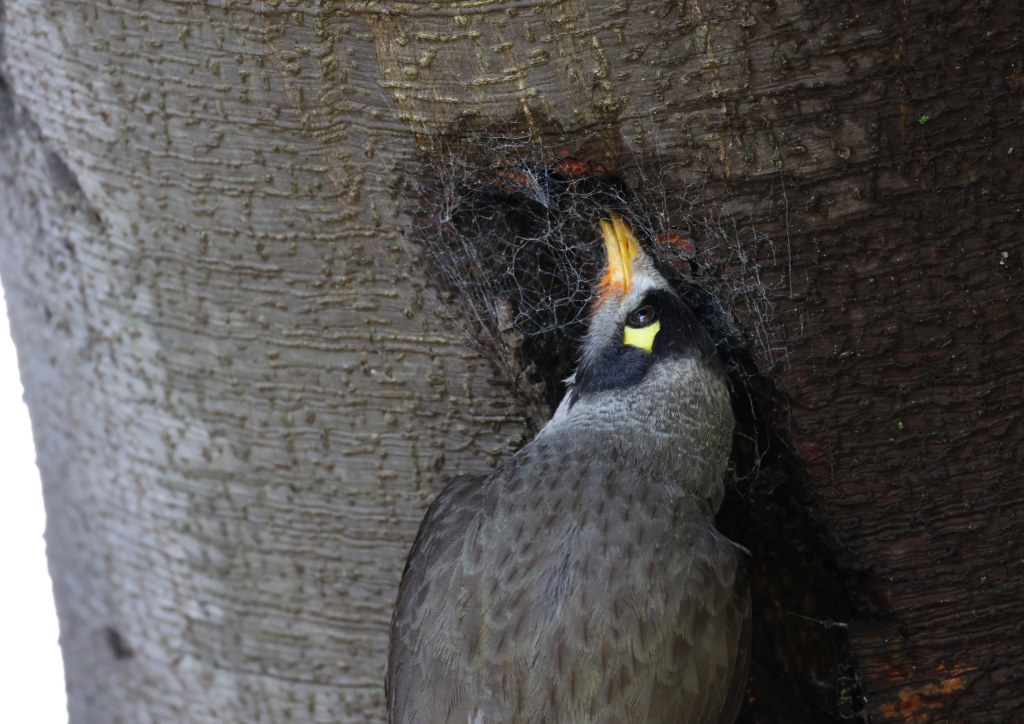
It should be noted that apart from the Bell Miners, Noisy Miners and Common Mynas are both present. The (invasive) Common Mynas seemed to outnumber the native Noisy Miners by at least 2 to 1, and were particularly abundant anywhere near The Terrace café (like, perched on the chairs, scavenging under the tables, etc).
There are some really lovely paths to wander and bushes and plants to admire here. I’m no botanist, but it seemed to me there was plenty of variety to enjoy, and my attention was definitely drawn to the many beautiful flowers when there wasn’t an interesting bird around.

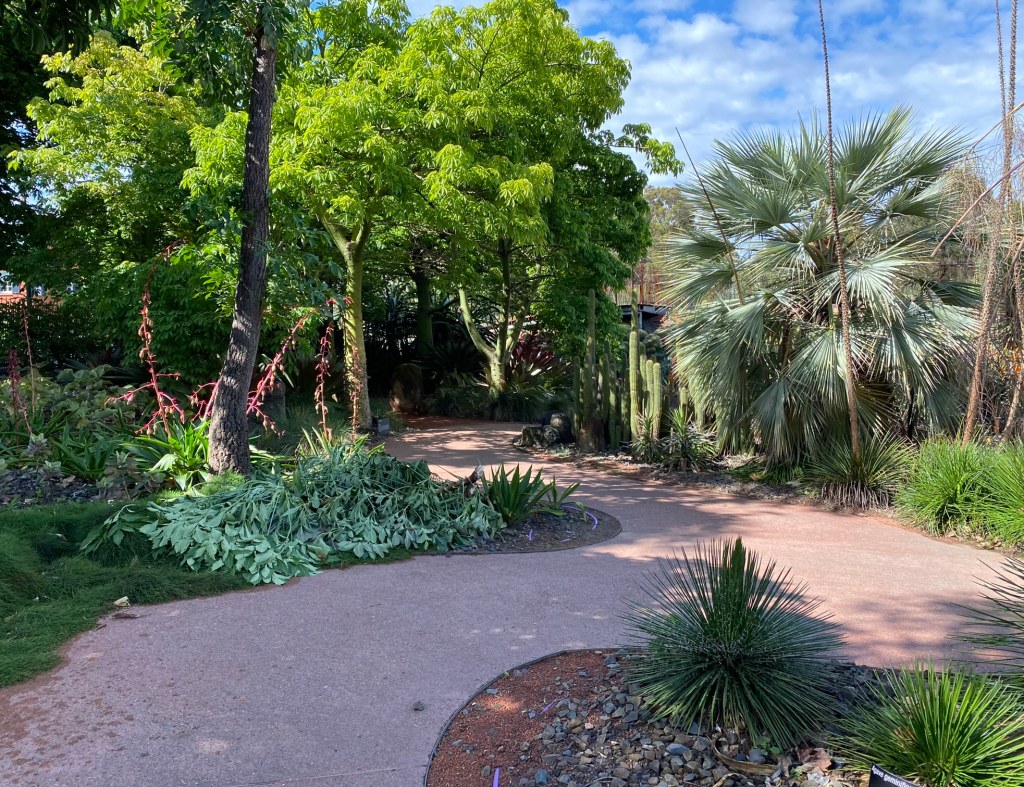
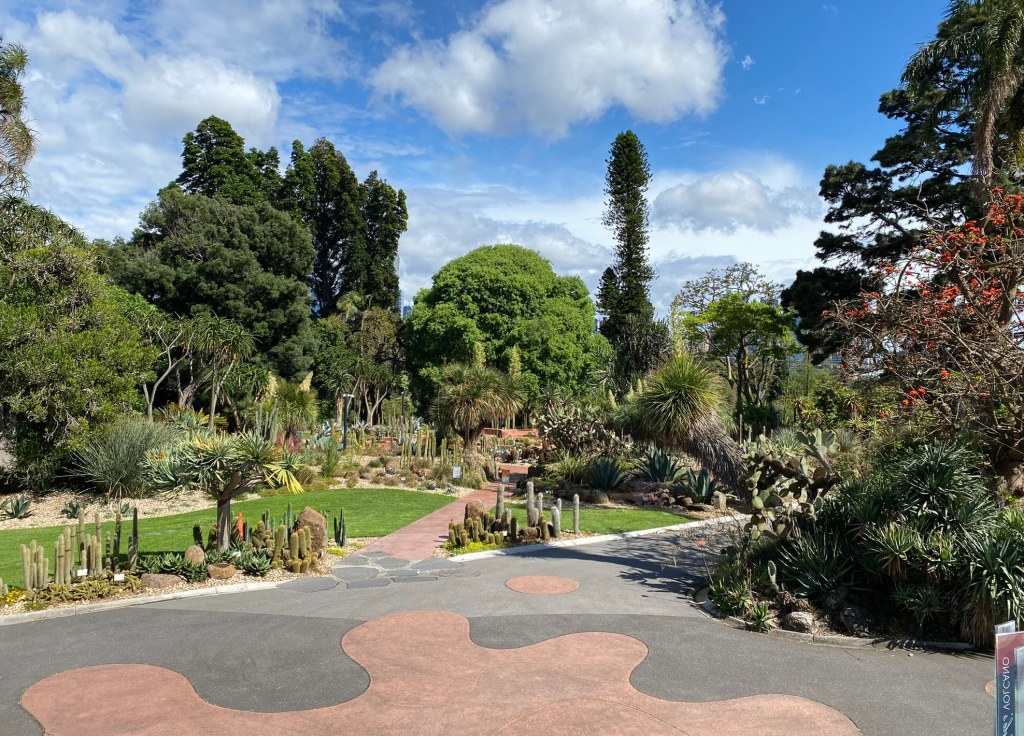
At the south-eastern extremity of the gardens is a curious area called Guilfoyle’s Volcano which features a spiral wooden path up to a little pond, and showcases succulent plants (and more views of the city).

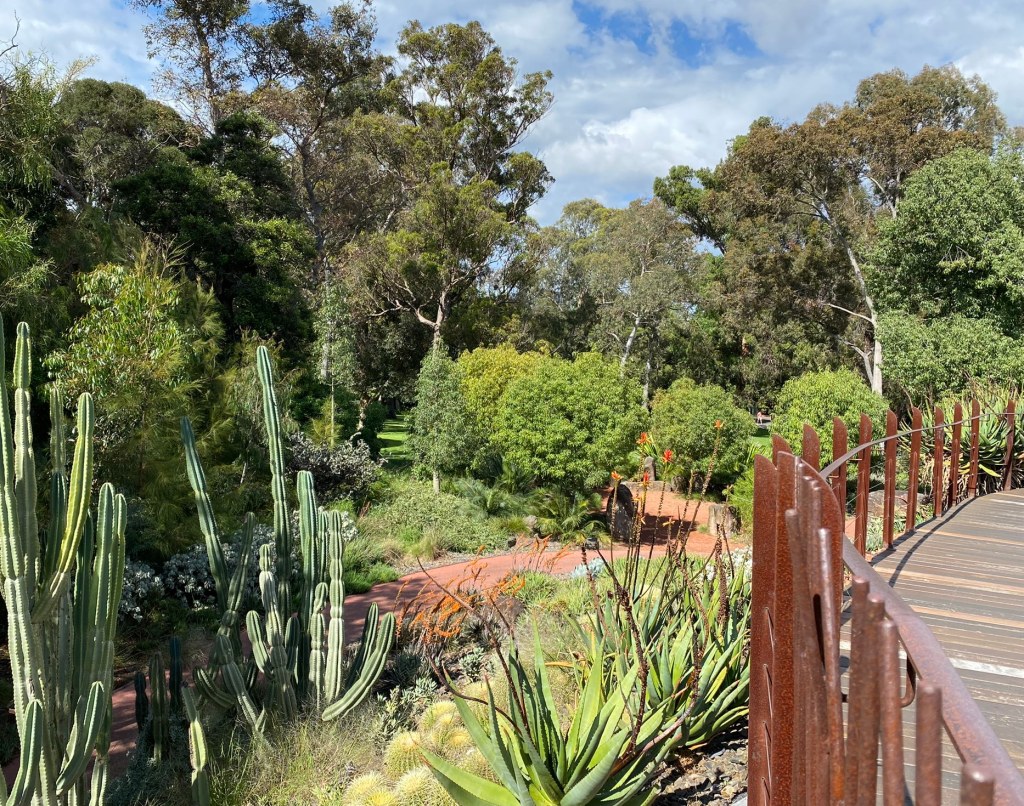

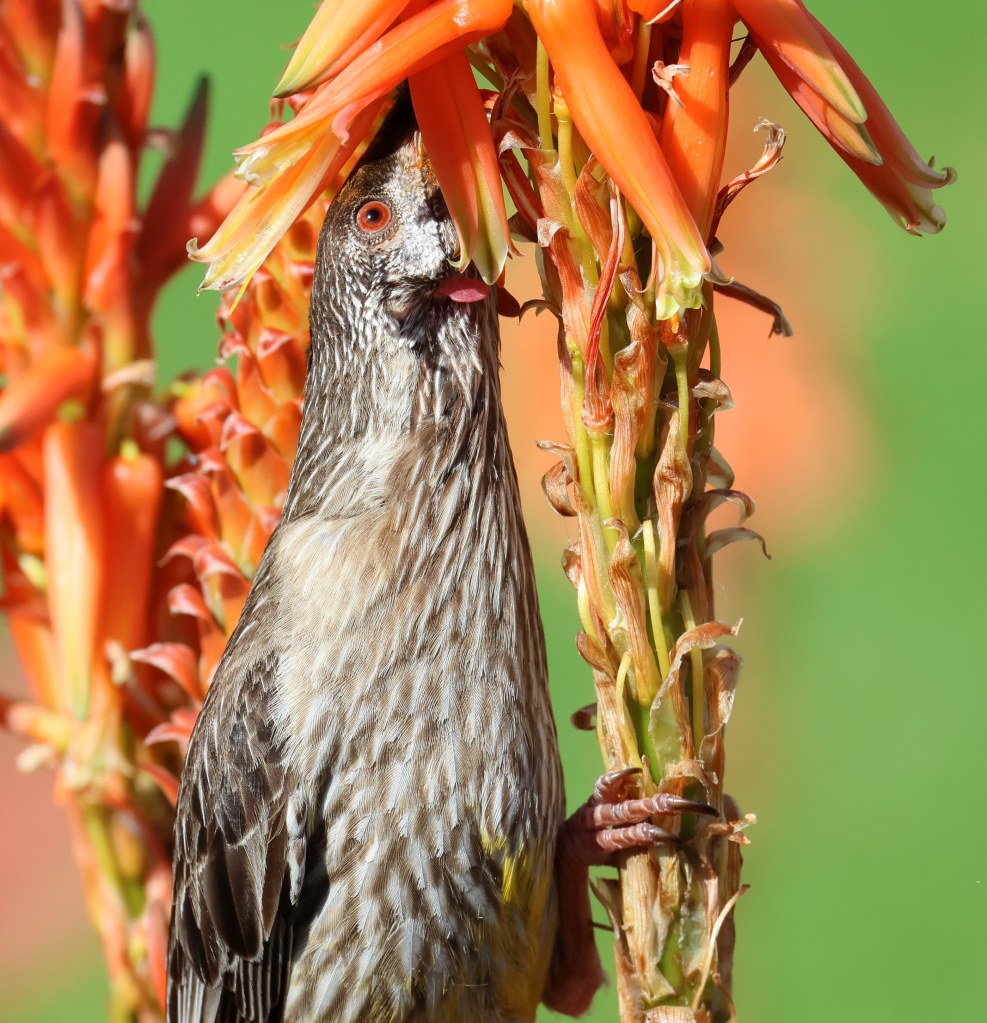
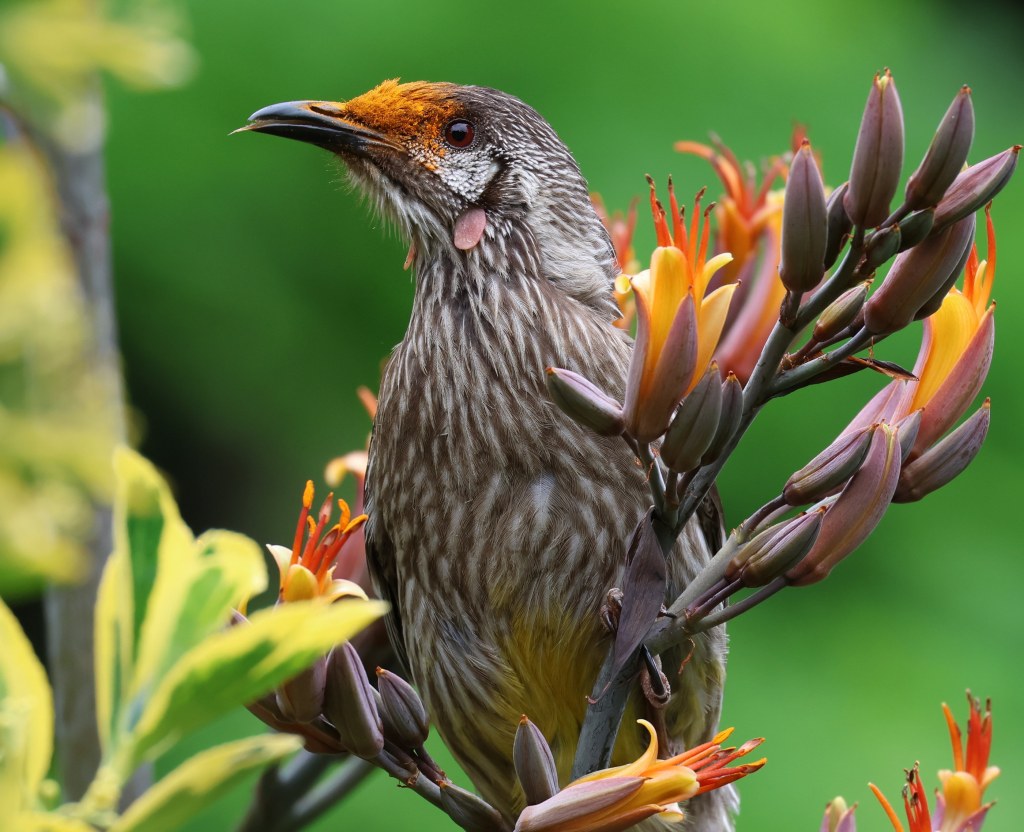
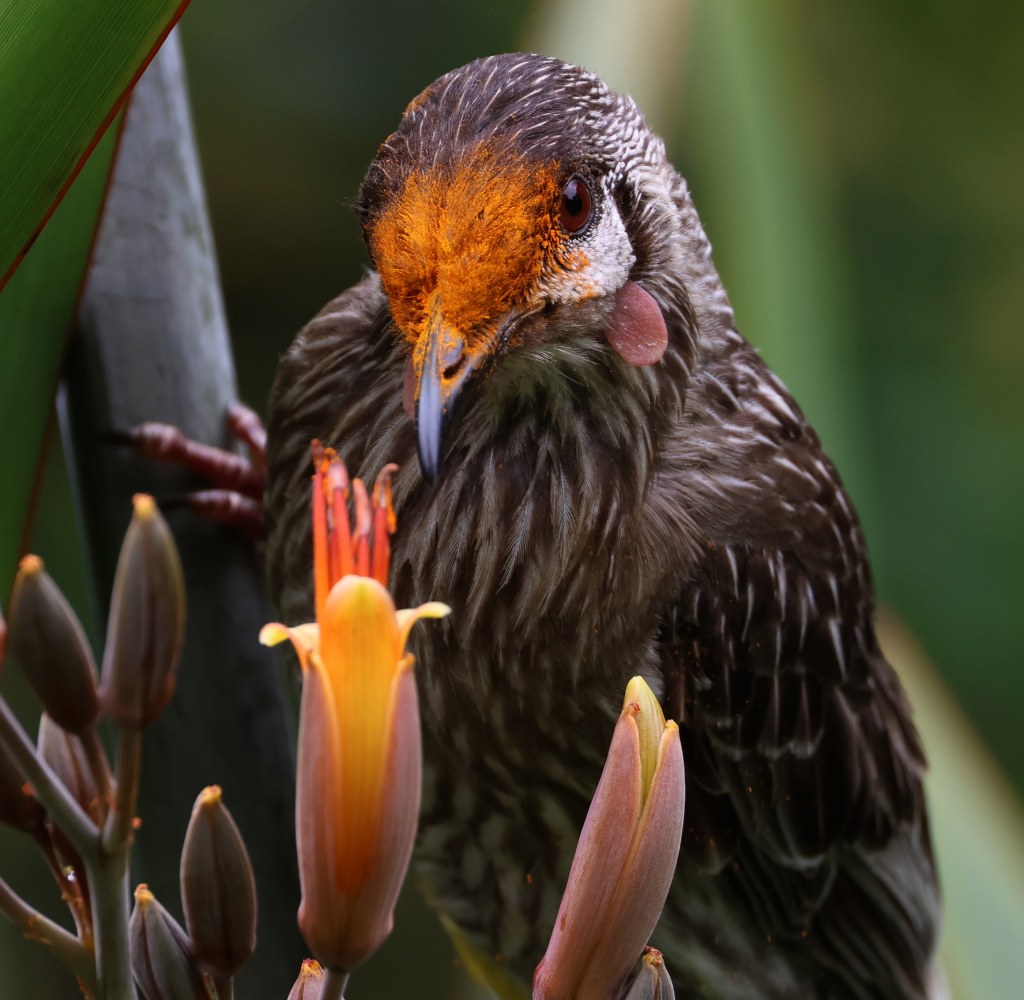
From the spiral path we got a great look (from above) at a Red Wattlebird foraging for nectar, its forehead conspicuously covered in orange dust.

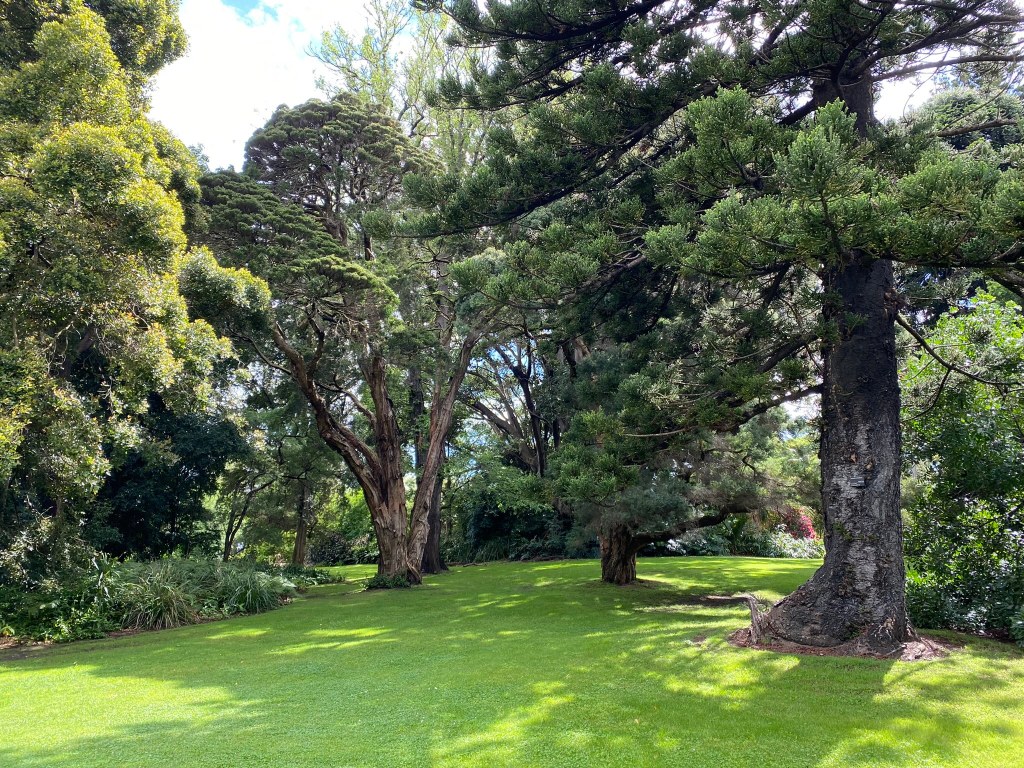
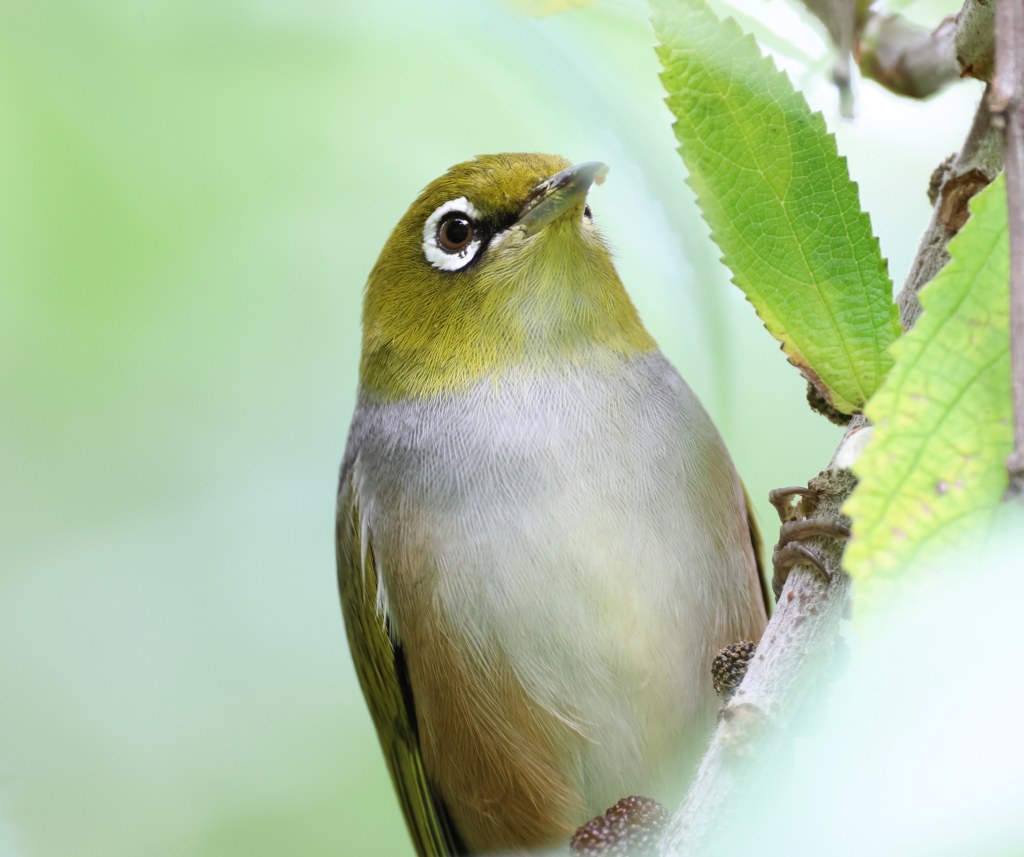
There is a secluded “Herb and Medicinal Collection” area where we found a host of Silvereyes…

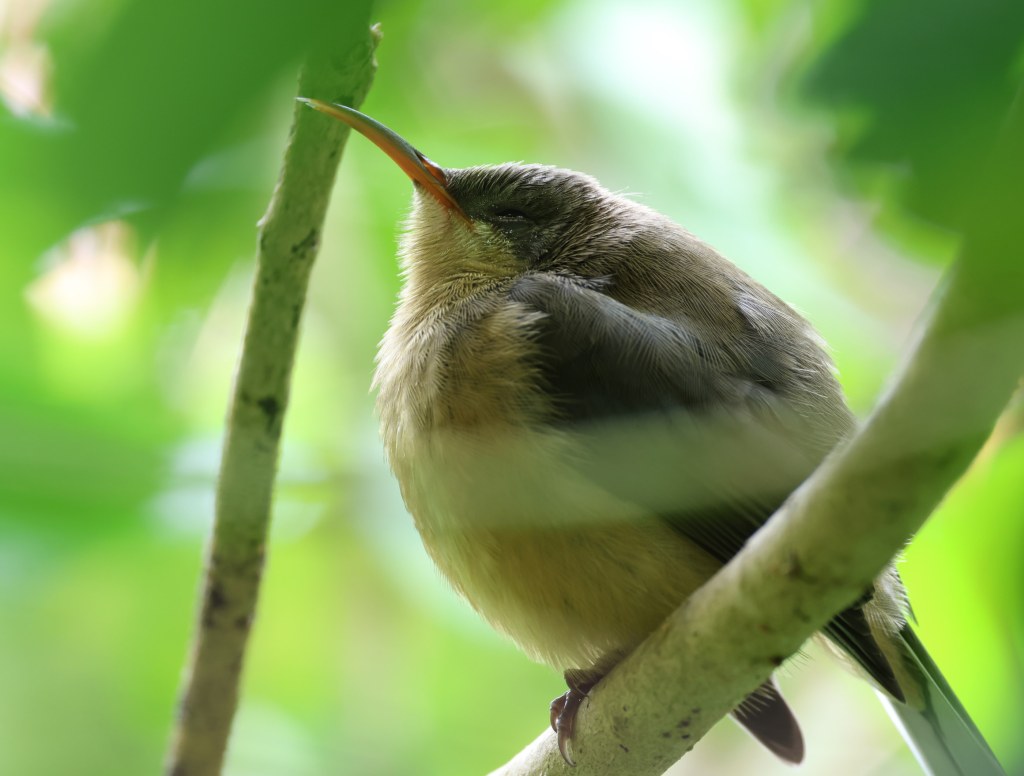
…and more Eastern Spinebills, including a very sleepy youngster who was snoozing deep inside the foliage only a couple of feet off the ground.

Back on the open paths somewhere near Central Lawn was another Red Wattlebird with a super-orange-encrusted head getting stuck into the flowers.
A couple of Rainbow Lorikeets were foraging in the same flowers.
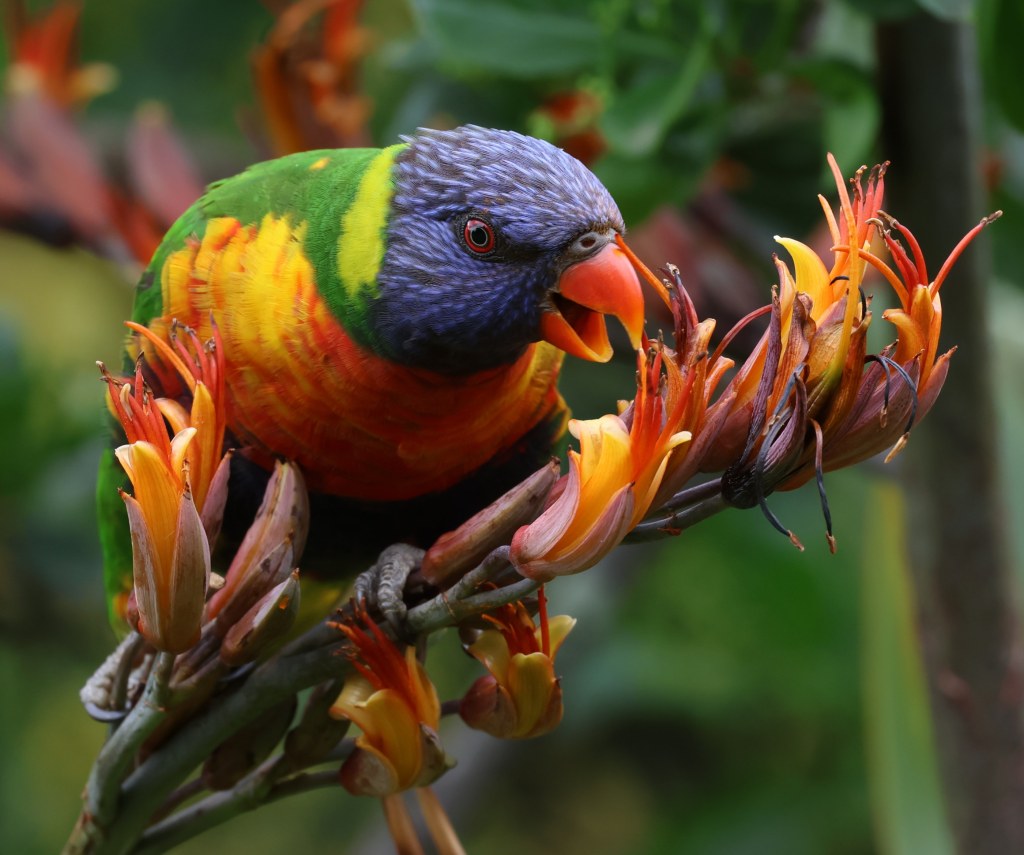
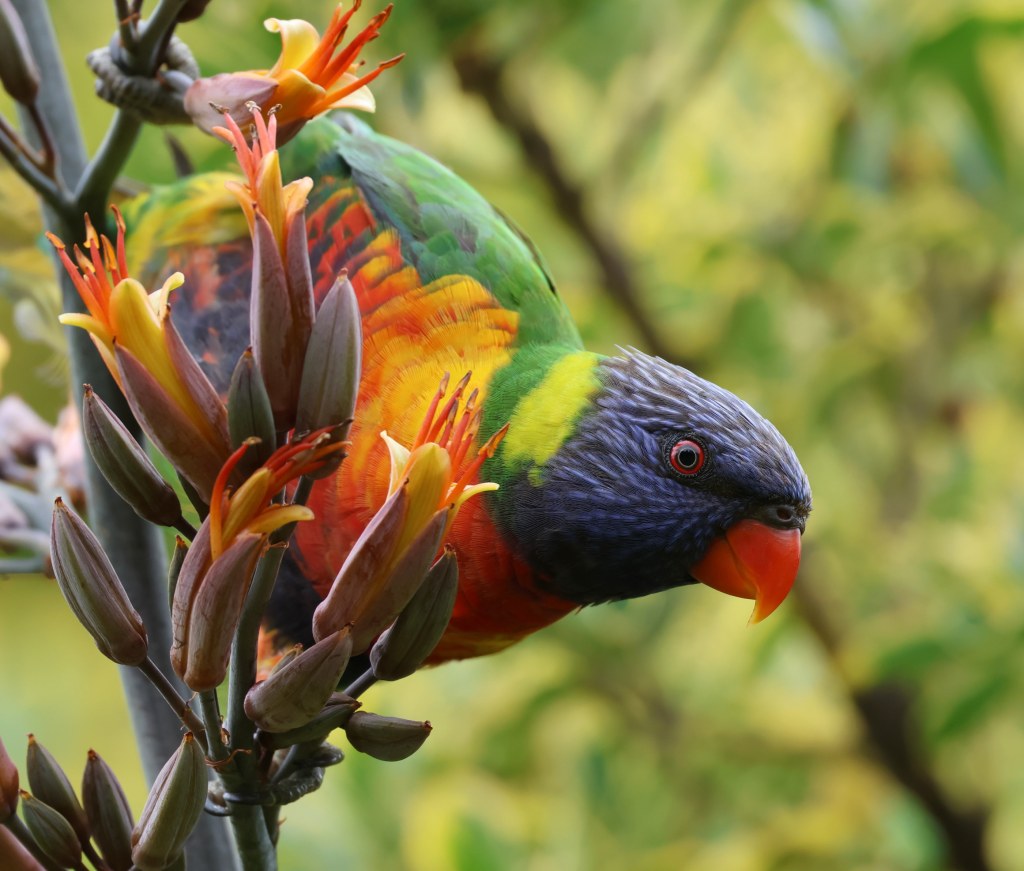

I didn’t know until now that I wanted to photograph a Rainbow Lorikeet plunging its face into a flower so much!
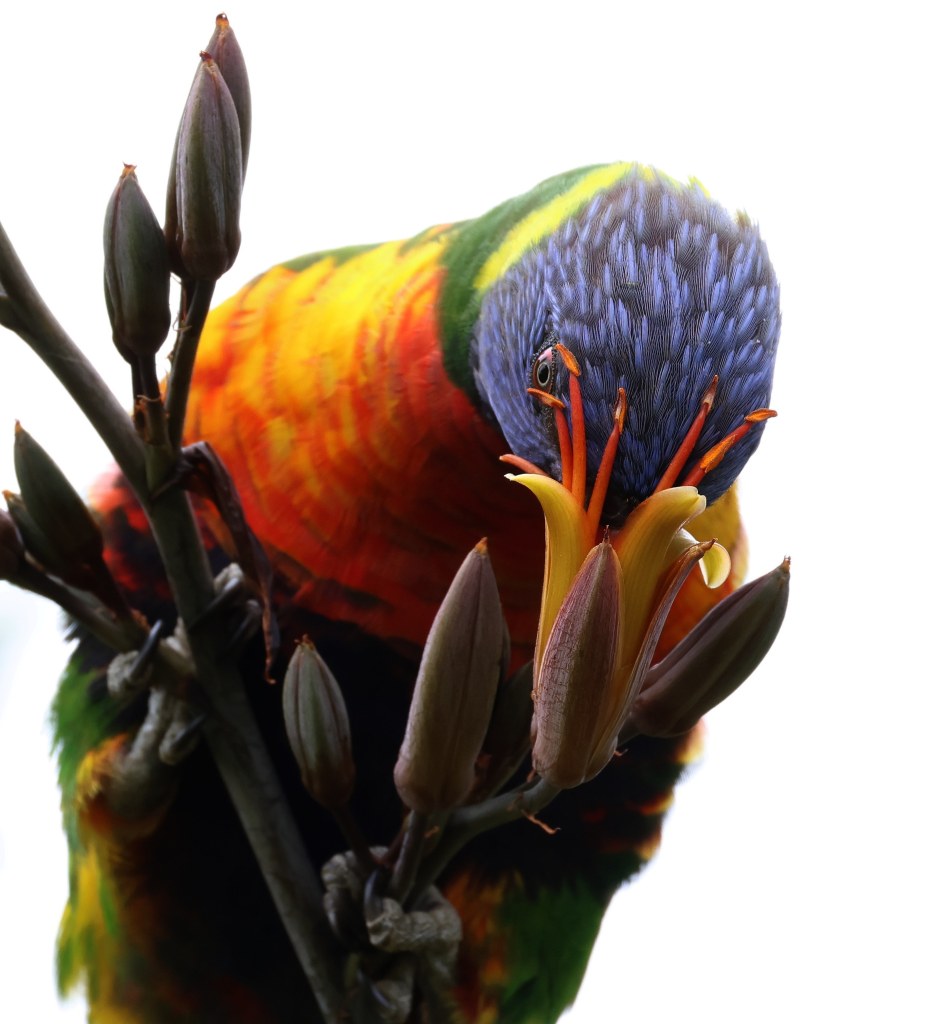

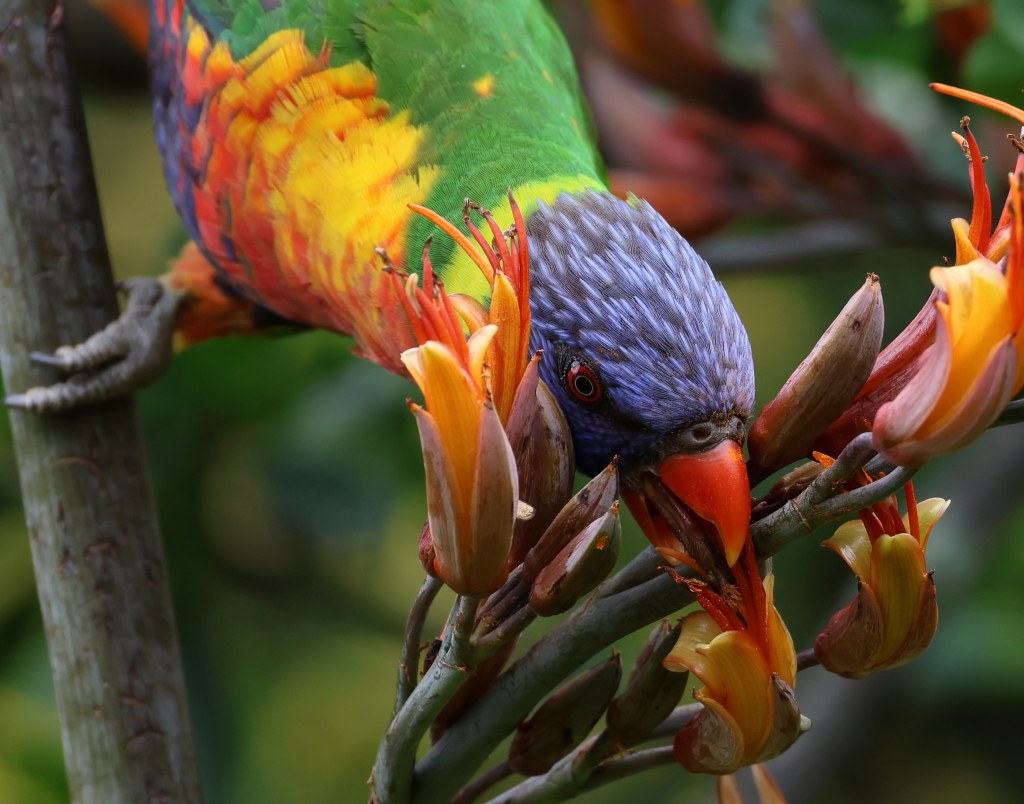
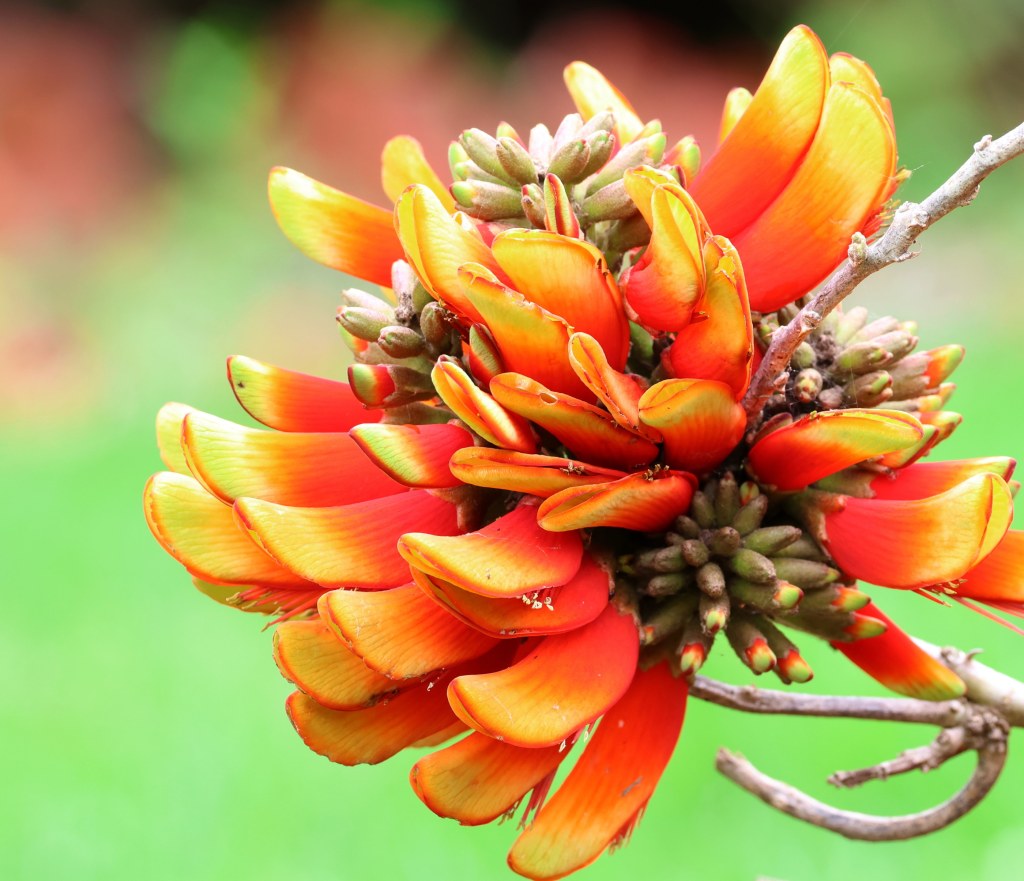
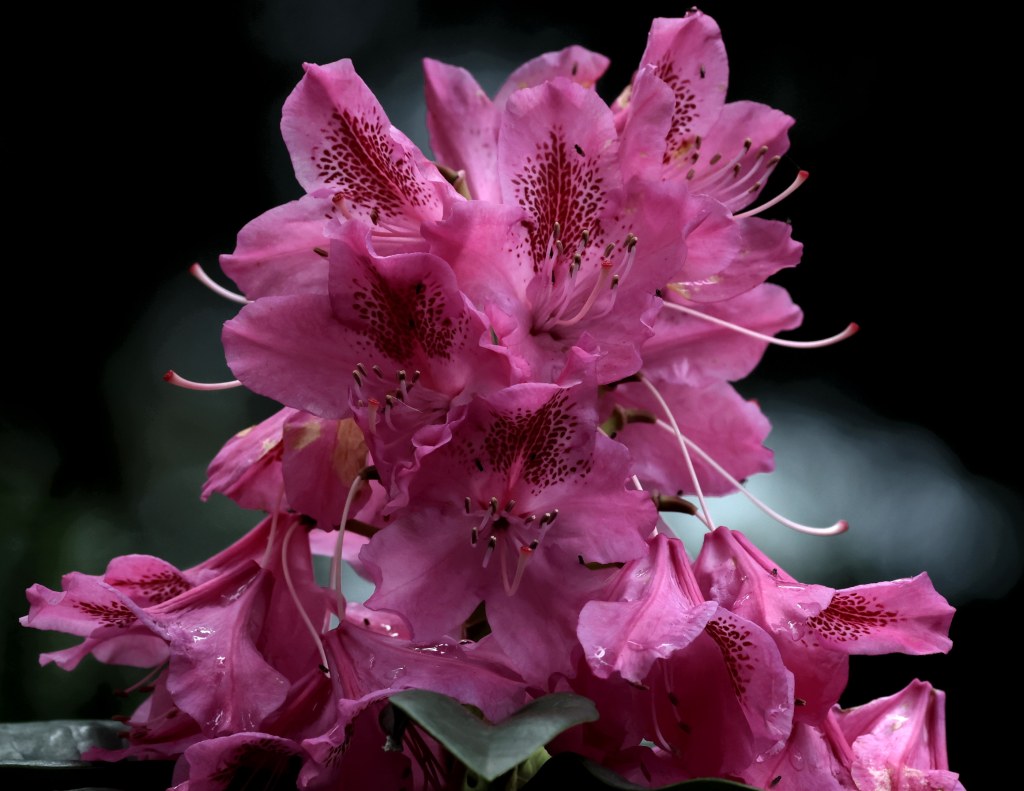
I paused the birdwatching for a bit to focus on flowers and although I have no idea what any of them are, they sure do look vivid.


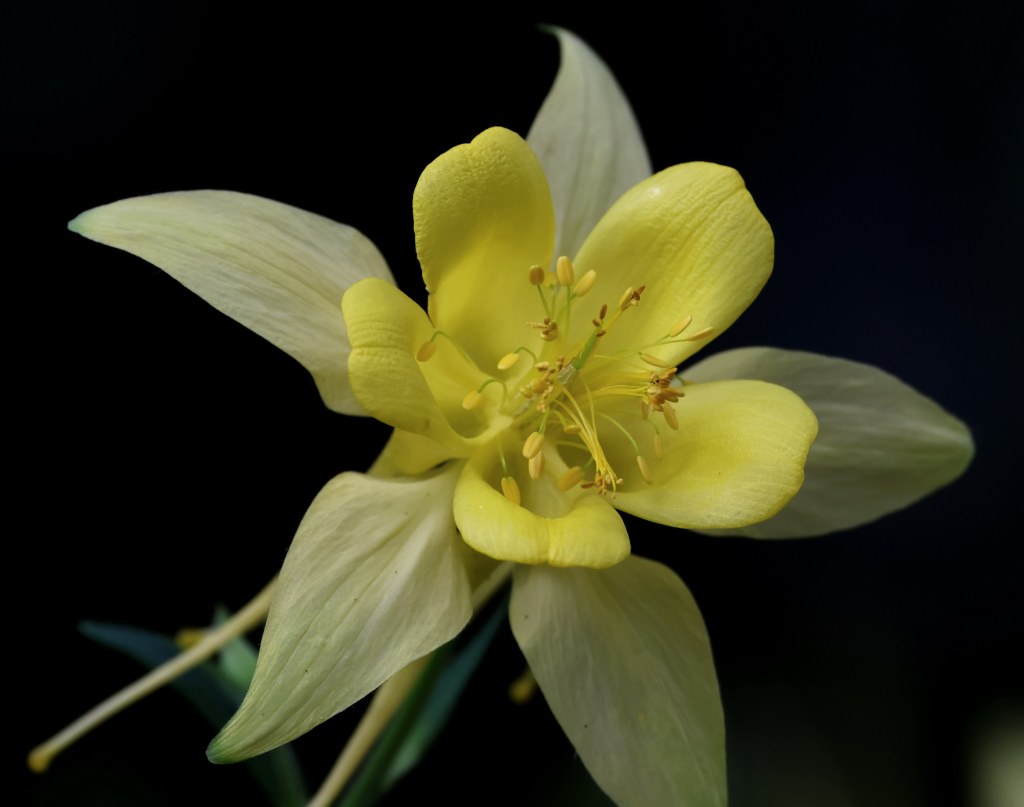
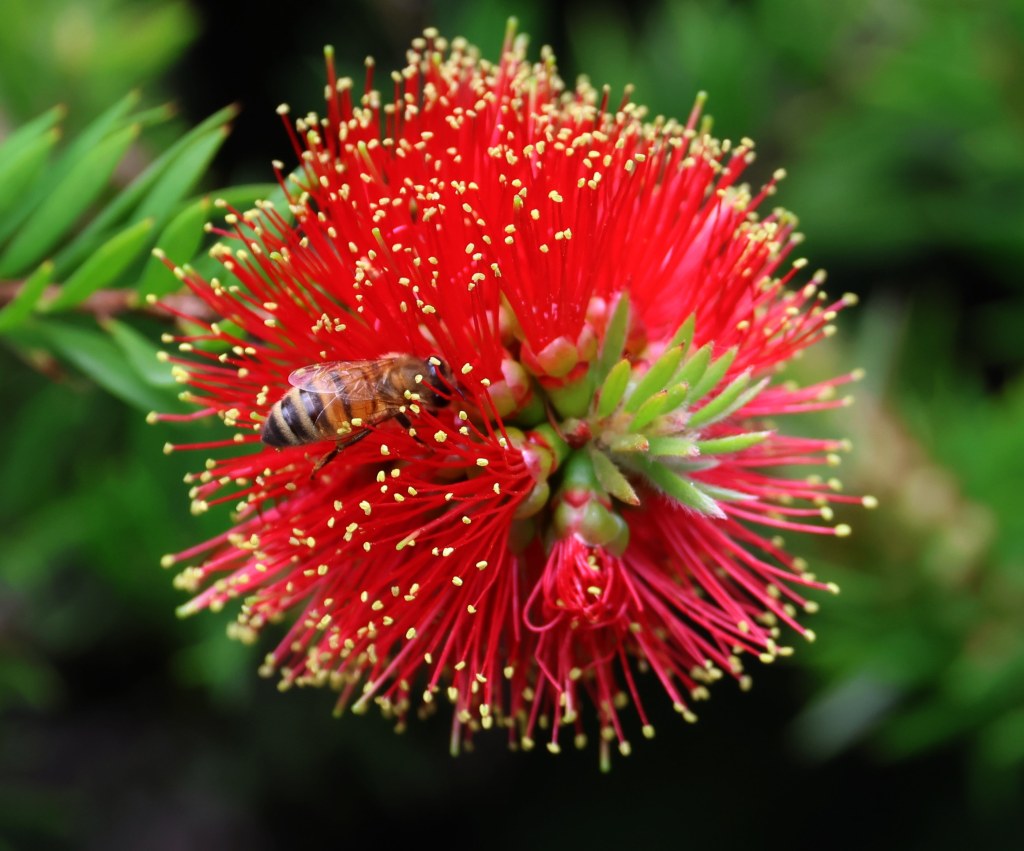
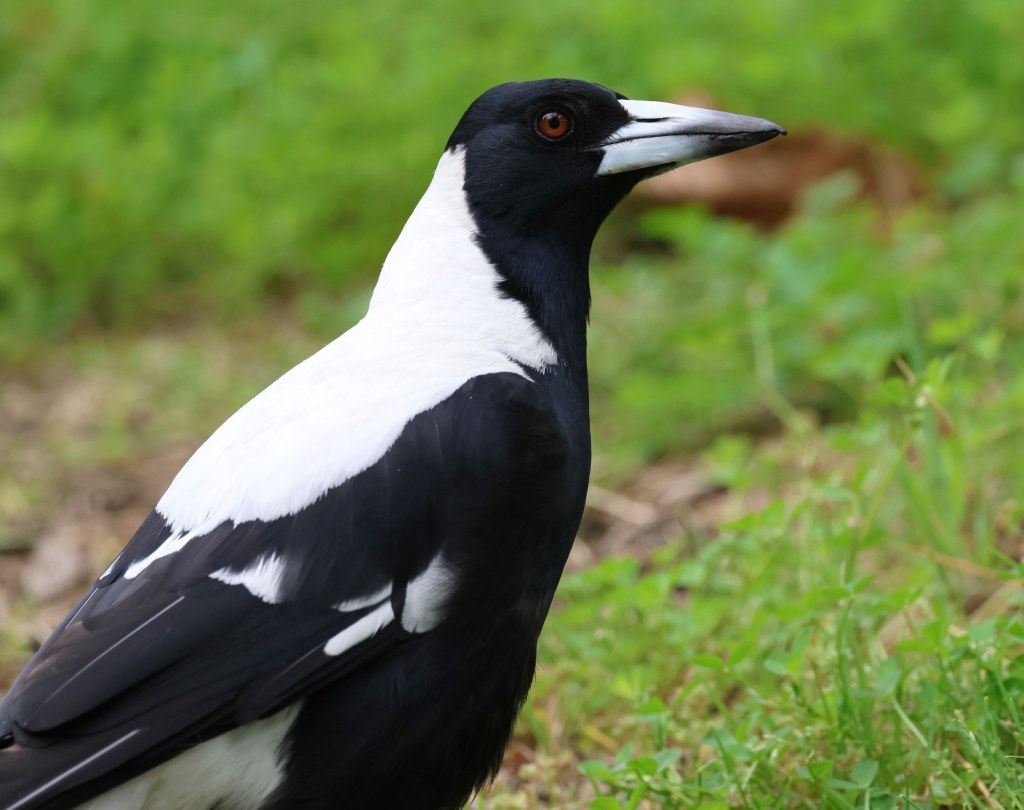
A few more common birds rounded out our 3-hour visit, which produced 29 species in all.

A Second Visit in Winter
We returned to the botanic gardens at the start of August 2023, curious to see how the site compared in the middle of winter. At the time the Lightscape event was on, with light installations around the gardens and a few sections closed off, unfortunately including some of the lake frontage.


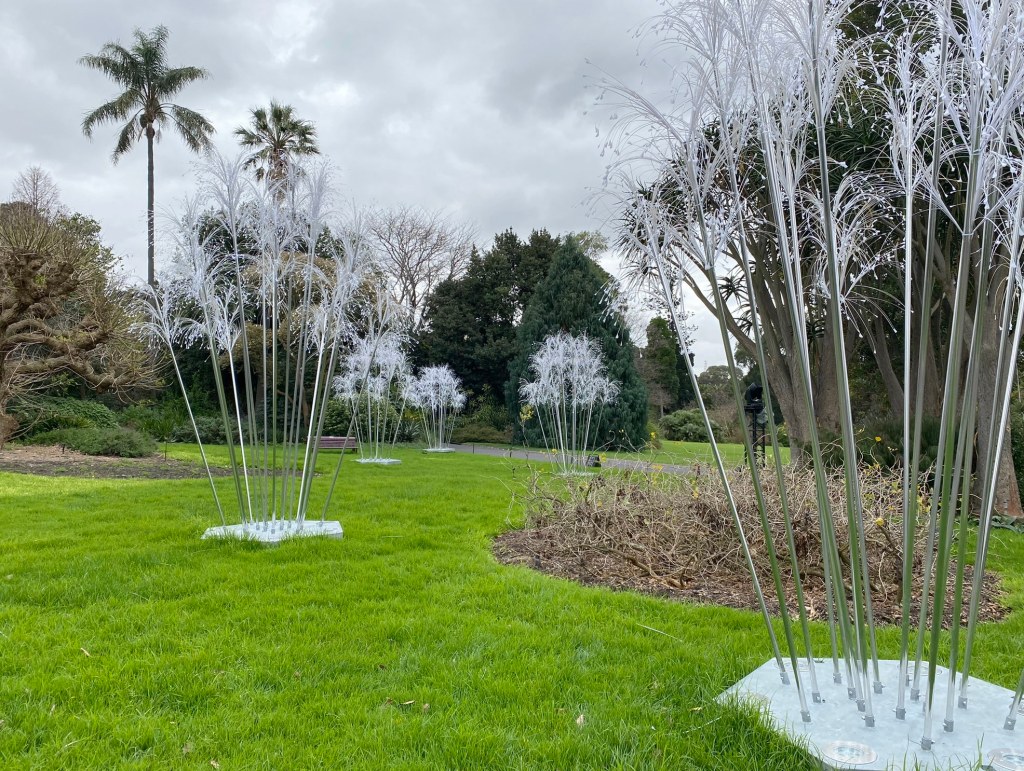
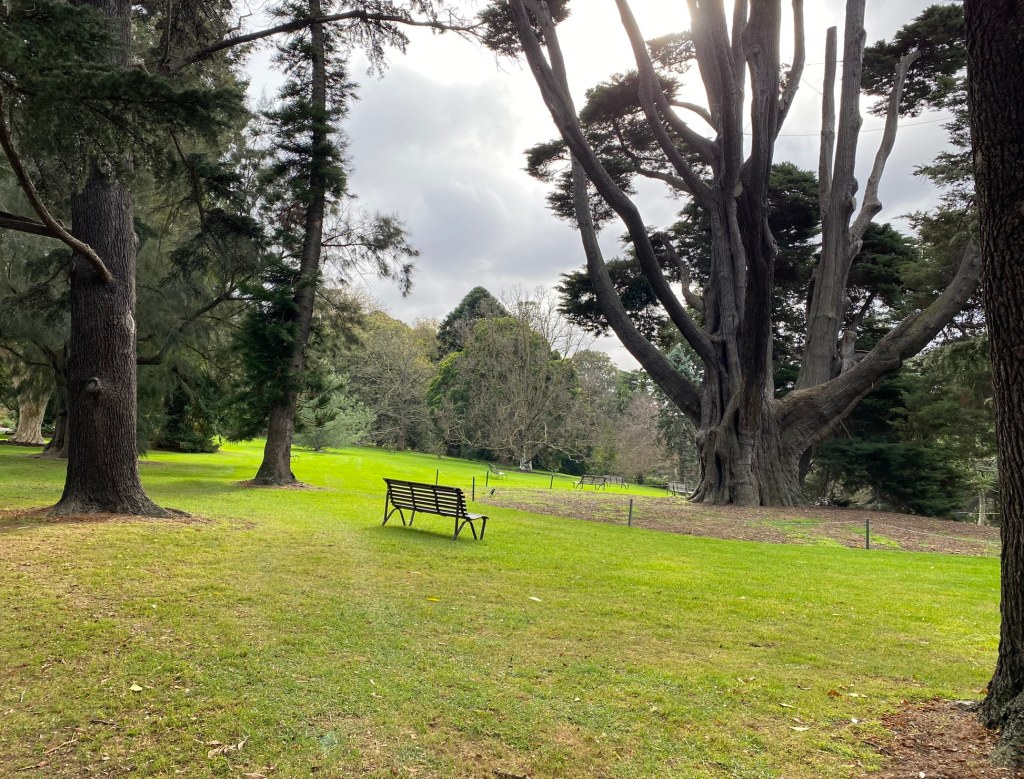
Compared to spring, some of the trees were bare (and it was definitely colder), but the gardens were still predominantly green and just as pleasant to walk around. And there were still plenty of birds!


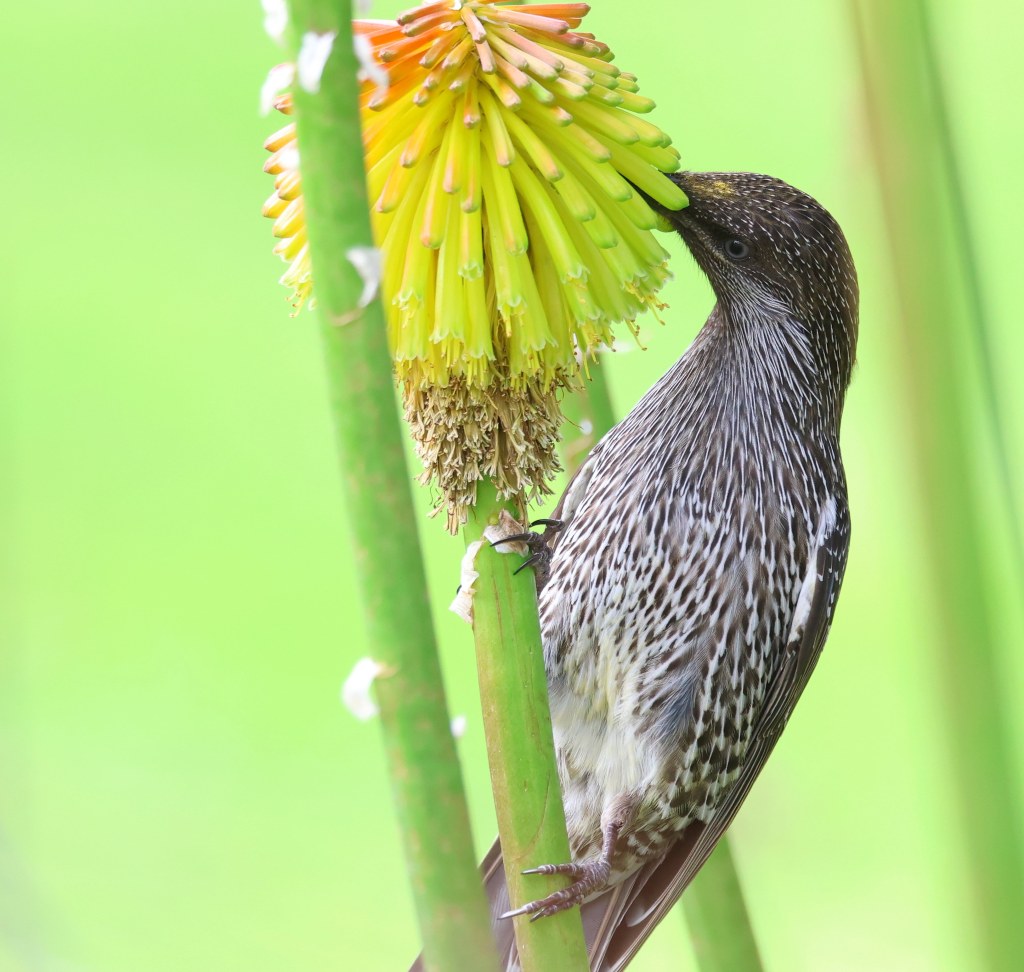
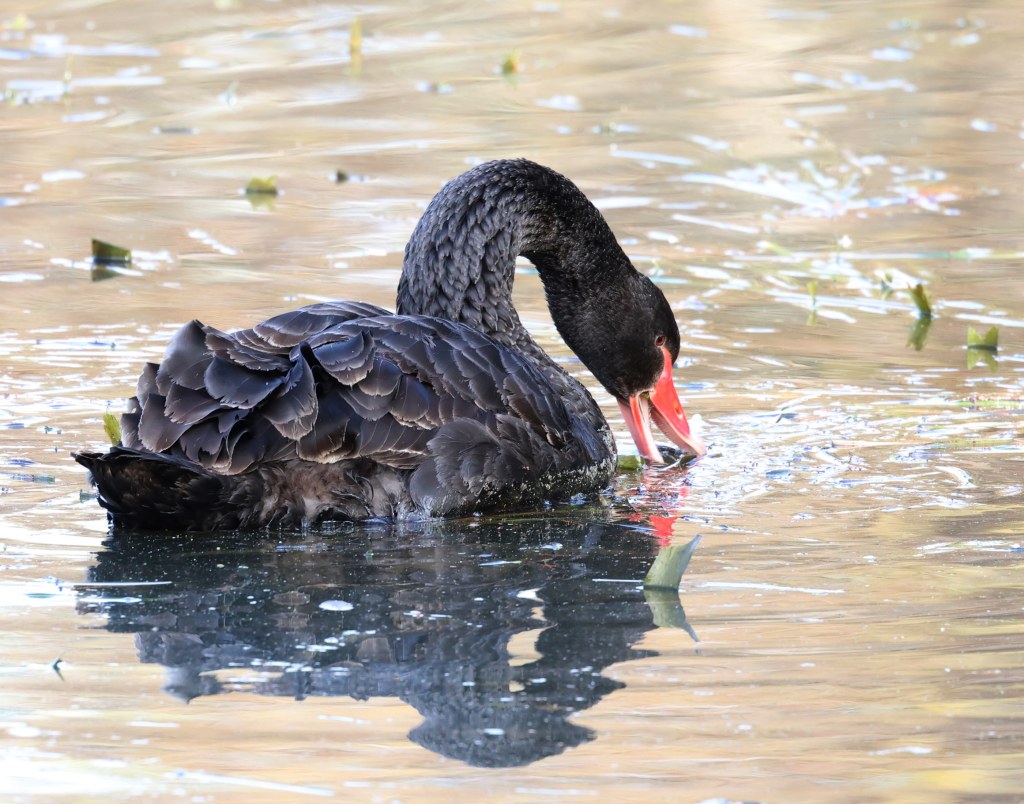
We saw a few of the Black Swans that had eluded us last time, as well as gaining better views of Little Wattlebirds. Red Wattlebirds were certainly also present as were Rainbow Lorikeets.

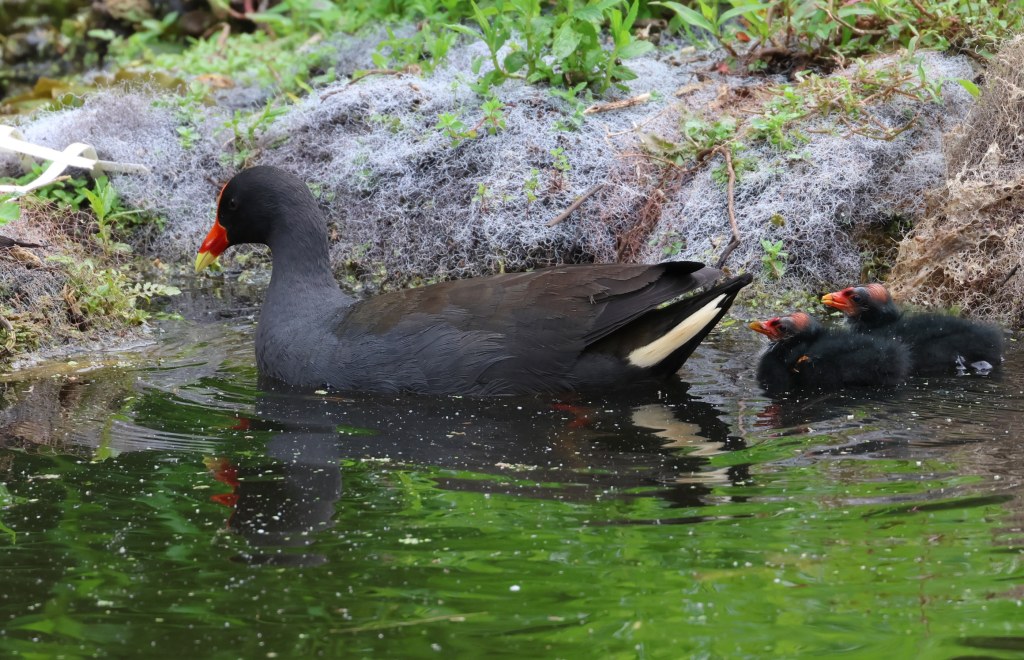
We saw both Australasian Grebes and a Hoary-Headed Grebe, and plenty of other water birds – Little Pied and Little Black Cormorants, a Darter, Wood Ducks, Pacific Black Ducks, Eurasian Coots, Dusky Moorhens and Swamphens. Some individuals of the latter two species approached us very closely (even walking right under the park bench we were sitting at!) as we had morning tea by the lake. They must be well used to supplementing their regular diets with a bit of scavenging.
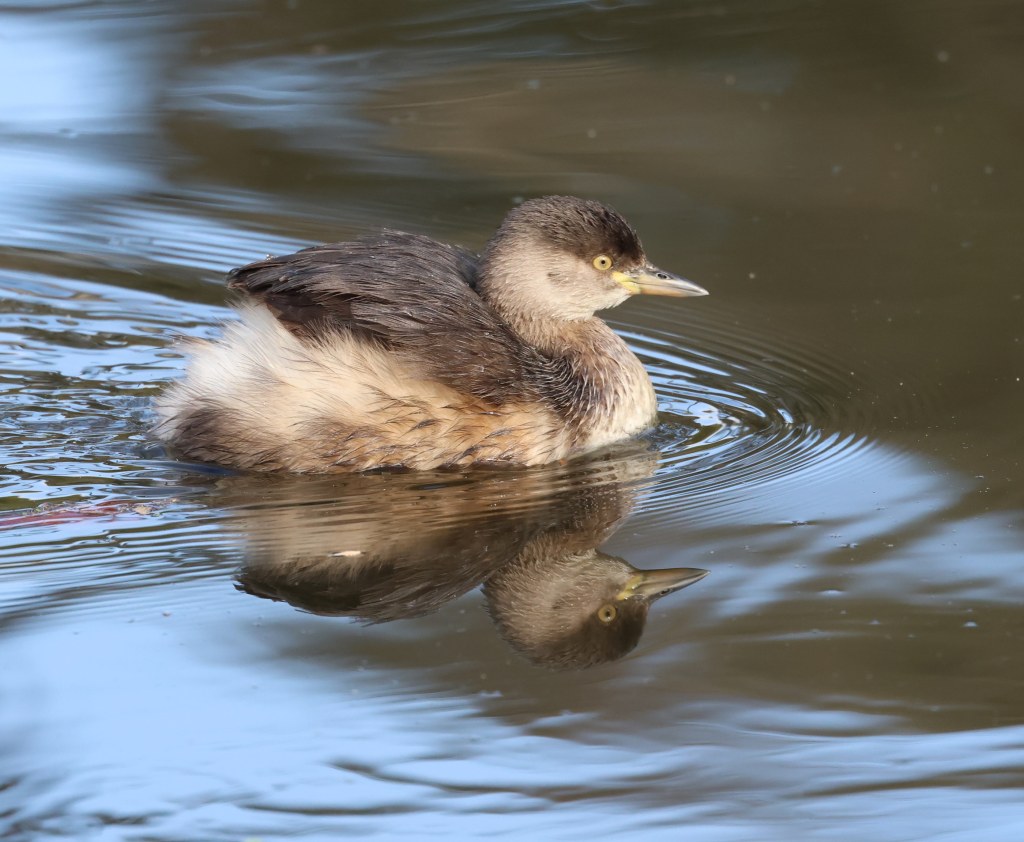
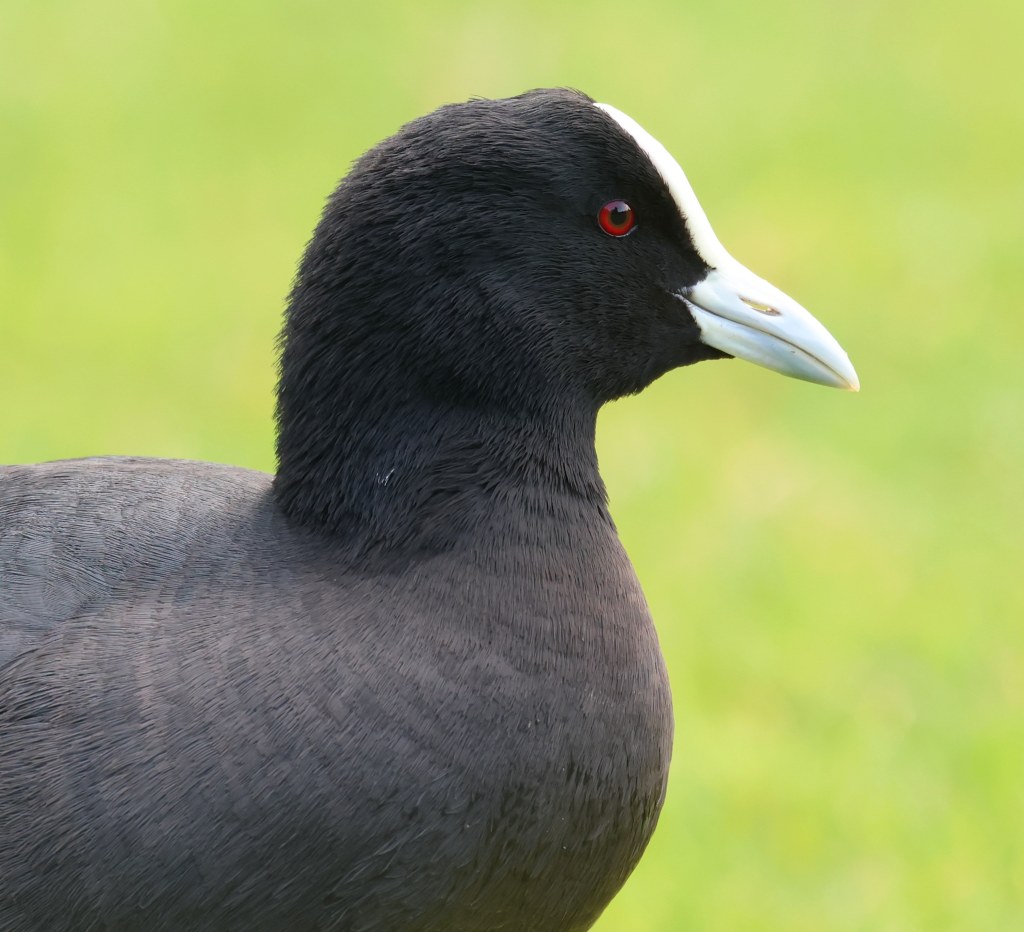
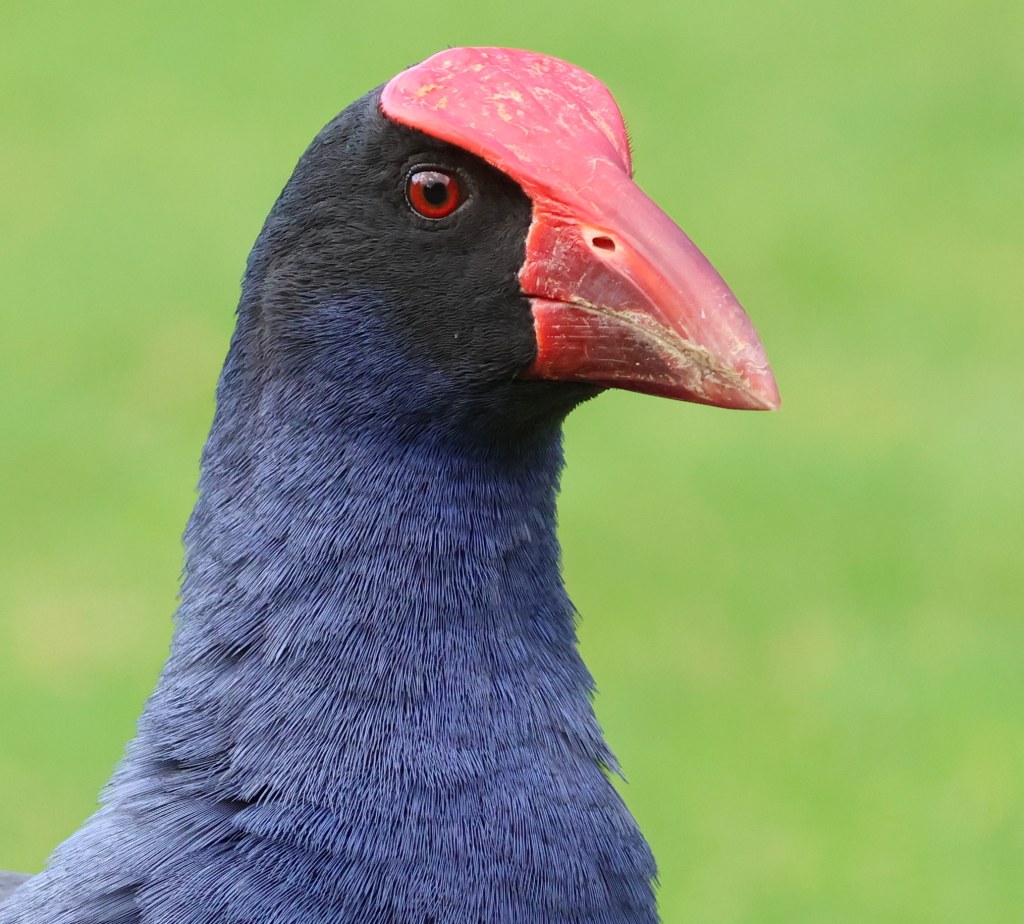
In fact we saw more species – and more birds overall – than on the previous visit, with Silvereyes and Red-Rumped Parrots notably missing on this winter checklist. Notably we did not see the very reliable (according to eBird) Nankeen Night-Heron here, though we did not at the time know to look.
Summary
There is so much to love about these botanic gardens, which are superb in every way, very public transport-accessible and facility-rich, and equally attractive for both plant- and bird-lovers in any season. Being in the middle of a very large city, most birds you will see here are no doubt going to be the more common species, but some of these – like Eastern Spinebill and Brown Thornbill – may give you truly awesome photo opportunities that would be more difficult to obtain elsewhere. The variety of flowering bushes and trees gives plenty of chances to capture that ultra-vivid wattlebird or lorikeet shot you’ve always wanted, or you can just wander around and enjoy the enchanting vistas and the bird activity. What’s not to like about that?!
eBird:
Hotspot: Royal Botanic Gardens Melbourne(147 species)
Checklist for these visit: Nov 13 2022 (29 species), Aug 1 2023 (30 species)
BirdSpots videos from this site: Red Wattlebirds
Pluses and minuses:
+ Gorgeous gardens with many paved paths and tons of facilities
+ A good variety of birds to be discovered and close encounters to be had
+ Close to Melbourne CBD with good public transport access
– Unlikely to find raptors or more exotic species
– Sometimes crowded
AUTHOR: ANDY GEE
BIRDERS: ANDY GEE, K-A
 Bird Spots
Hi Andy
Letting you know I enjoy your bird spot reviews. Read them all now, and would be rude not to let you know! For me they are a relaxing therapeutic read about birding and nature. Best of birding to you mate
Mark Clarke, Wishart, Brisbane
LikeLike
Cheers, happy that you get something out of these posts.
LikeLike
Andrew, I enjoy reading your website. Informative, well presented and engaging. I use it to assist with planning my birdwatching. Thank you for your initiative and ideas. We done. Rod
LikeLike
Thanks for the kind words, glad you find it useful.
LikeLike
Great Royal Botanic Garden shots
LikeLike
Are the RBG winning the war on Indian Myna Birds? Last time I was at the cafe near the lake, the tables and surrounds were inhabited by these pest birds that carry several diseases and pests. Disgusting! They also hunt native birds out of their nests and habitats! Kath
LikeLike