
Summary: Huge lake in the outback that acts like a giant magnet for birds
Dates of visits: July 21 2021, Sep 30 2023, Oct 2 2023
Lake Moondarra is a huge artificial lake 16km north of the outback township of Mount Isa in western Queensland. It is stocked with fish every year making it popular with the fishing crowd, but it is also justifiably frequented by birders too. Apart from the ever-present heat, the birding here is pretty relaxed and will generally find you following the shorelines or scanning the water.
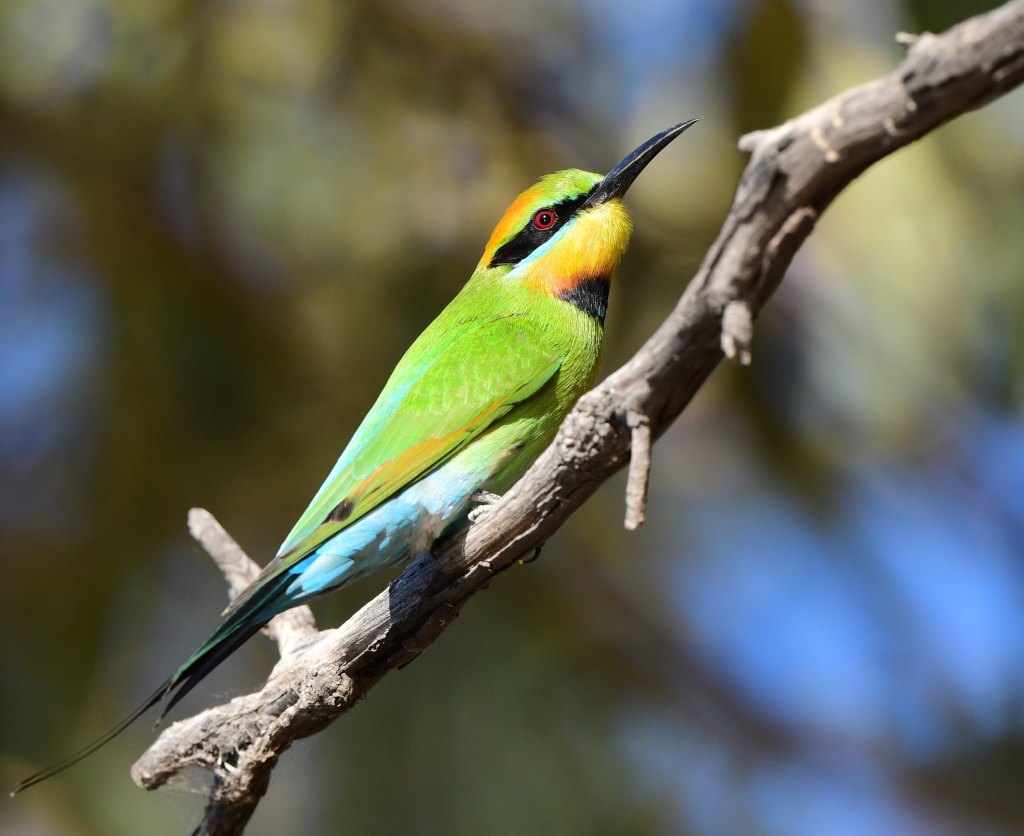
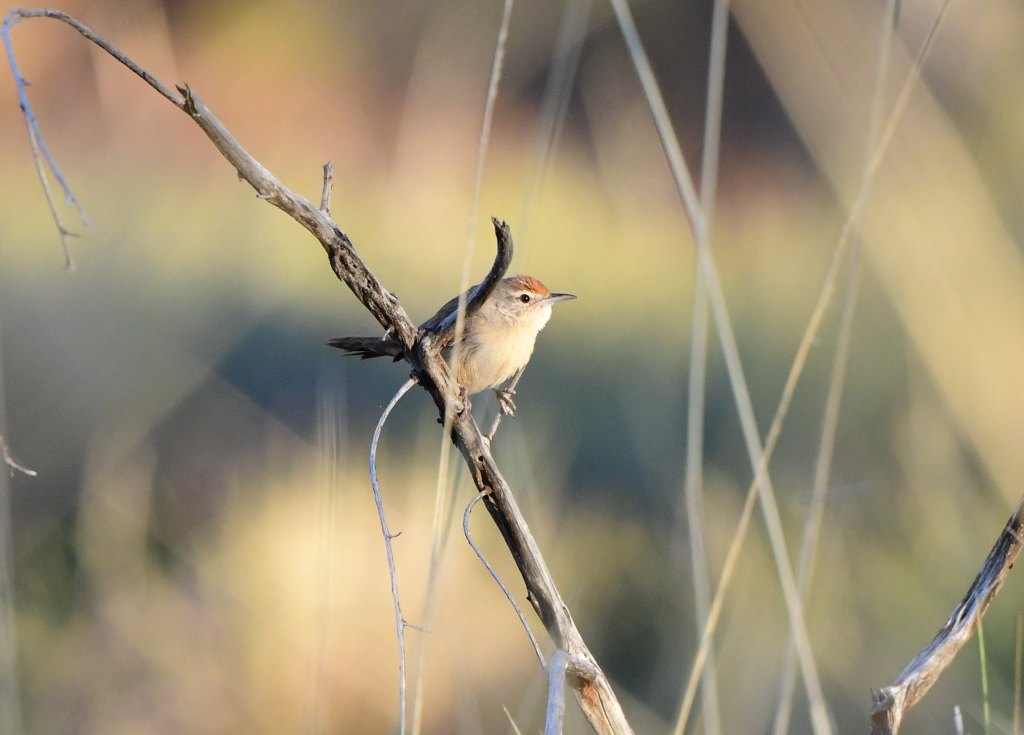
Local endemic the Kalkadoon Grasswren is occasionally seen here, as well as a good variety of parrot species – Varied Lorikeet, Budgerigar, Red-Winged Parrot, Galahs and Cockatiels to name a few; half a dozen finch species; plus quite a few honeyeaters, including decent chances of Black-Chinned Honeyeater. There are also probabilities of finding outback specialties Black Treecreeper and Spinifexbird. To top it off, most of Australia’s sandpipers and snipes have turned up here at one time or another.
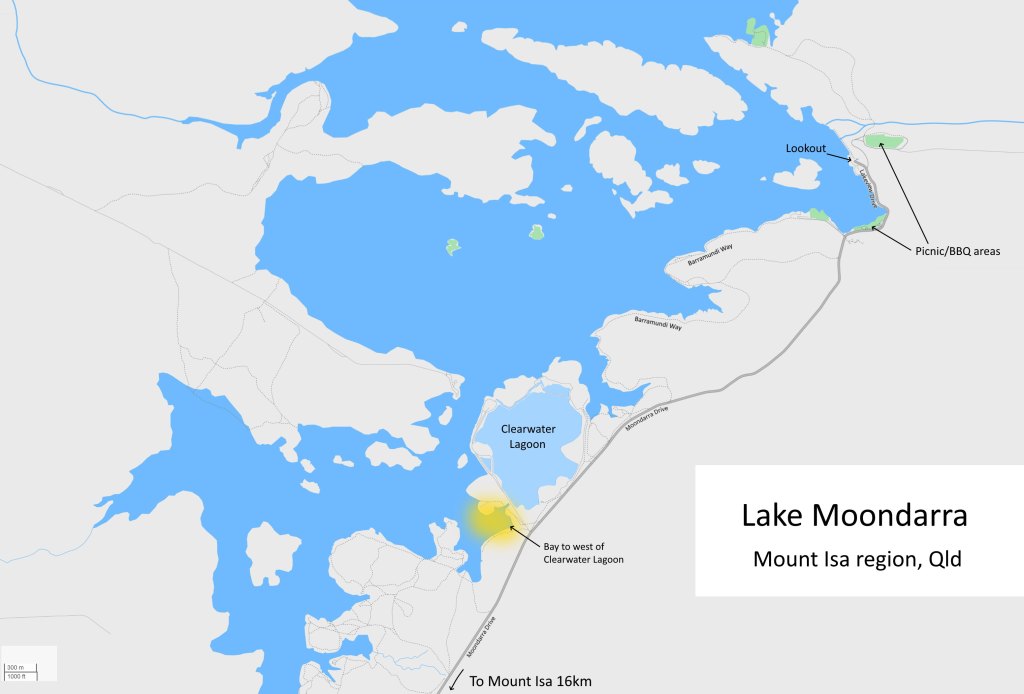
To get to the lake is pretty easy: it is a well-signed turn off the Barkly Highway (A2) onto Moondarra Drive (which is sealed), and is easily reachable from Mount Isa (16km away) if that is your overnight base.
Clearwater Lagoon Area
Our first visit to Lake Moondarra was a whirlwind afternoon one in July 2021. Here we popped into the bay that is just west of Clearwater Lagoon. Clearwater Lagoon itself is controlled by the water authority and cannot be accessed, but the bay to its immediate west is very good for birding. (I assume that all eBird checklists that use the Clearwater Lagoon hotspot are actually referring to the surrounding spots).
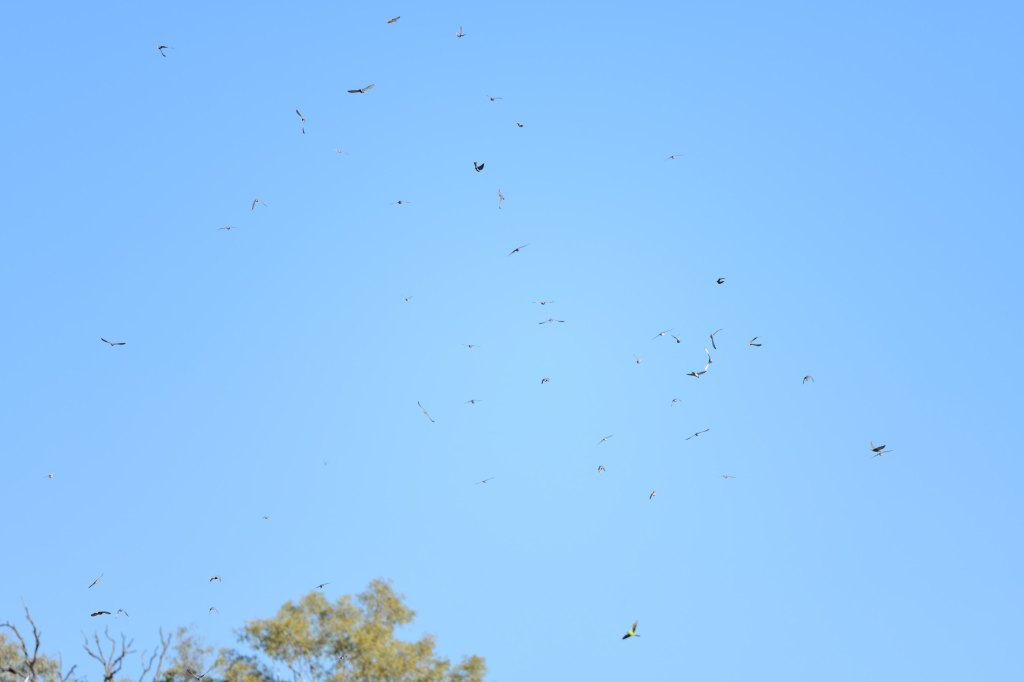
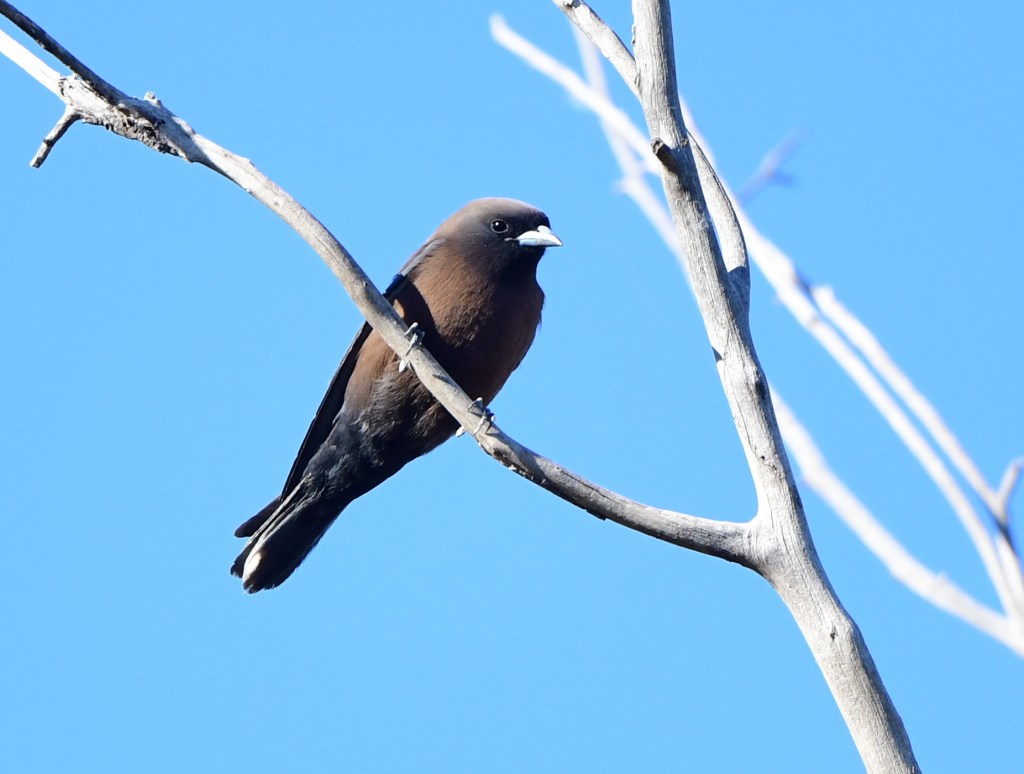
On our 2021 visit here, in the afternoon, a large mixed swarm of woodswallows was immediately apparent; the sky was thick with them! The majority were White-Browed and Masked Woodswallows (one takes a sample of the whizzing birds through the camera lens…), but White-Breasted and Little Woodswallows featured amongst the flock too.
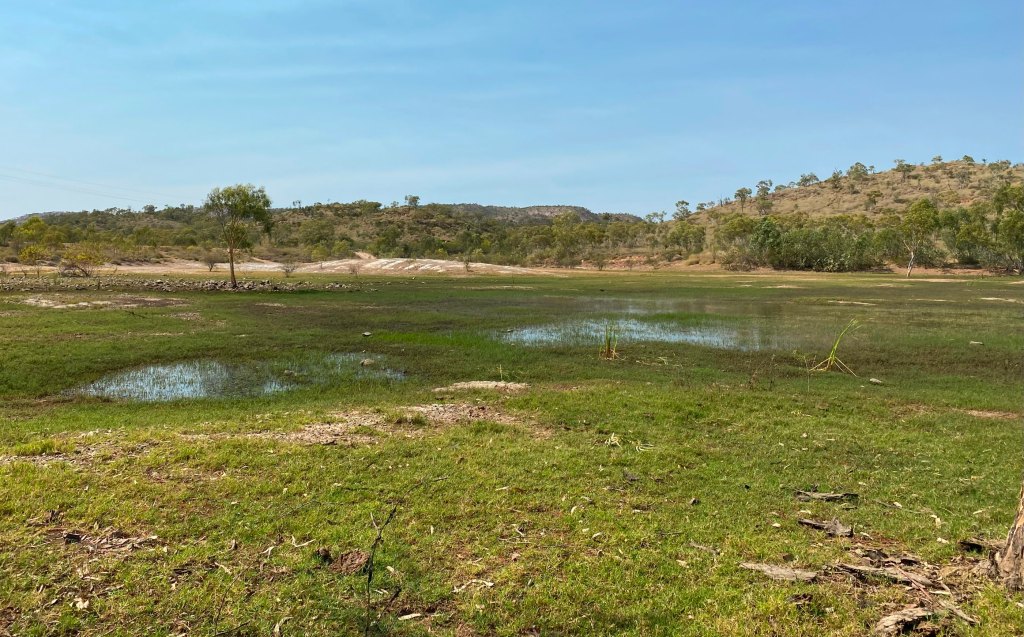
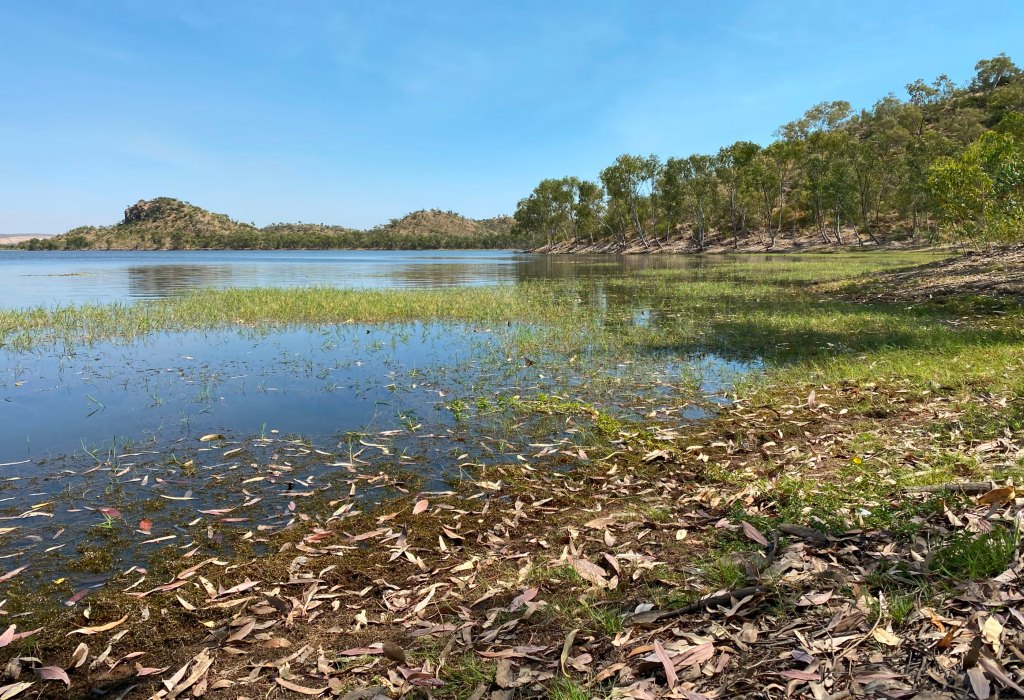
As is usually the case in the drier winter months in the outback, most bodies are water are receding, and this leaves rich hunting grounds as the lake water leaves swampy insect-rich fringes behind.

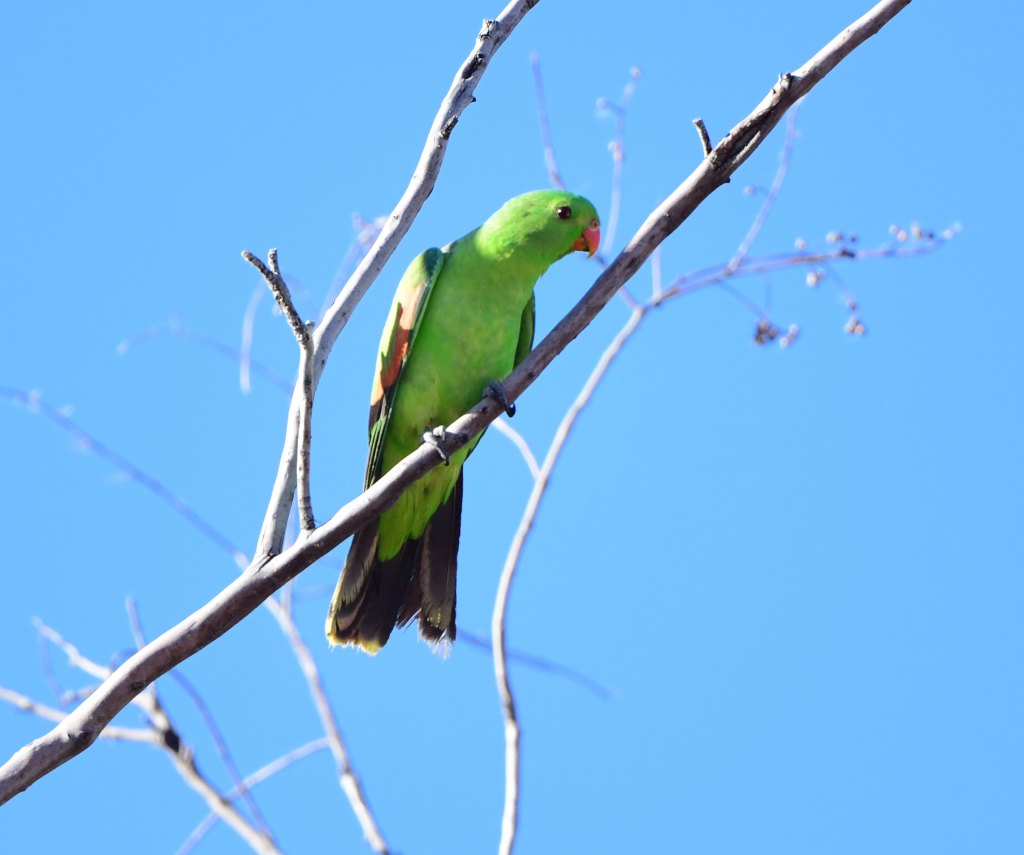
A surprise here was a Horsfield’s Bronze-Cuckoo, a lifer at the time for one of us, while Red-Winged Parrot is always a welcome sight wherever you find one.

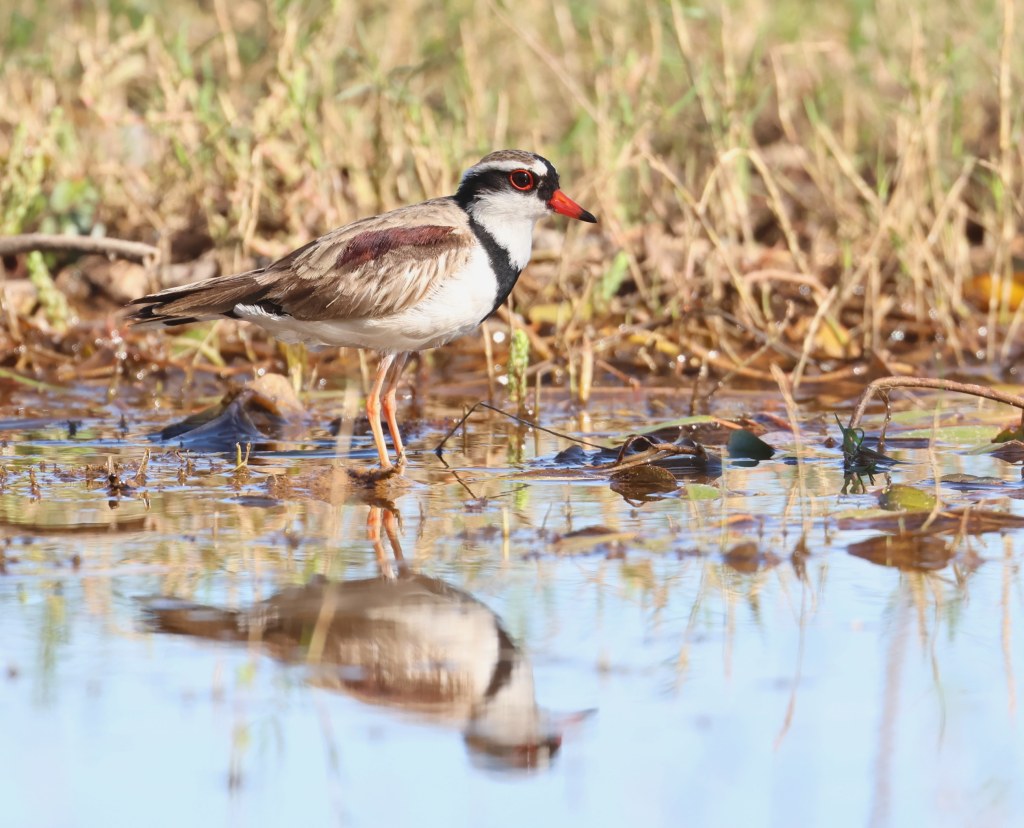
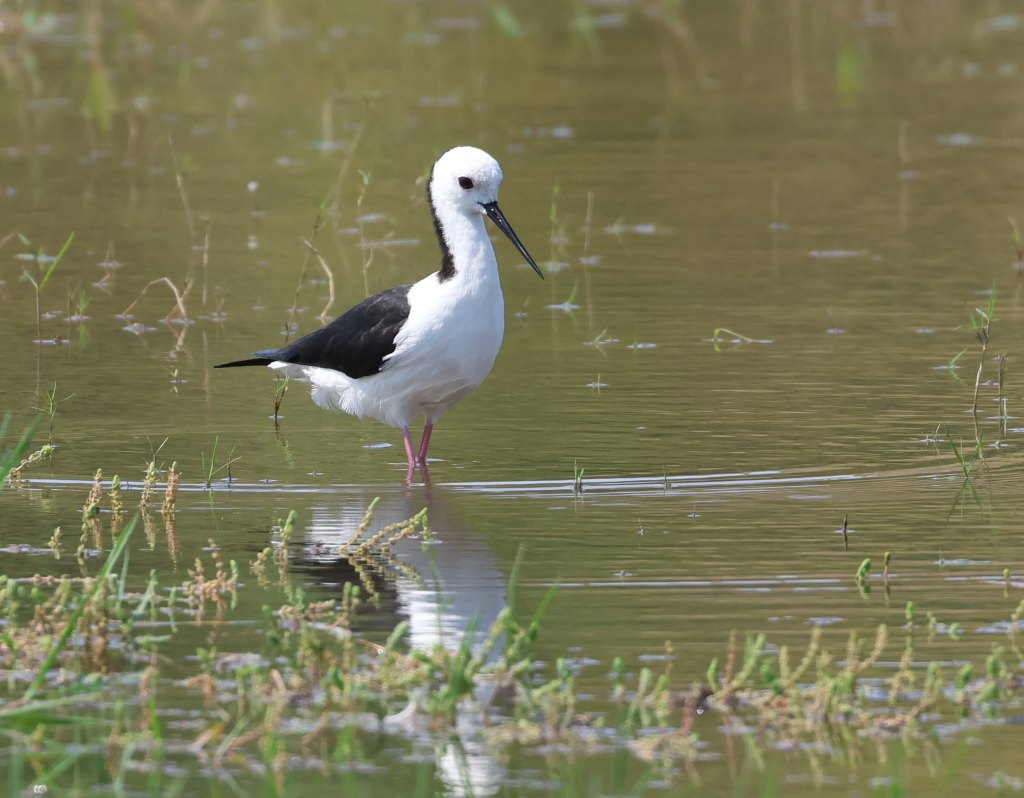
A more extensive re-visiting of this section of Lake Moondarra in October 2023 also proved very fruitful, with the shallow water and wetter fringes again attracting quite a variety of birds, including Sharp-Tailed and Wood Sandpipers, Black-Fronted Dotterels, Pied Stilts and some very vocal Masked Lapwings.
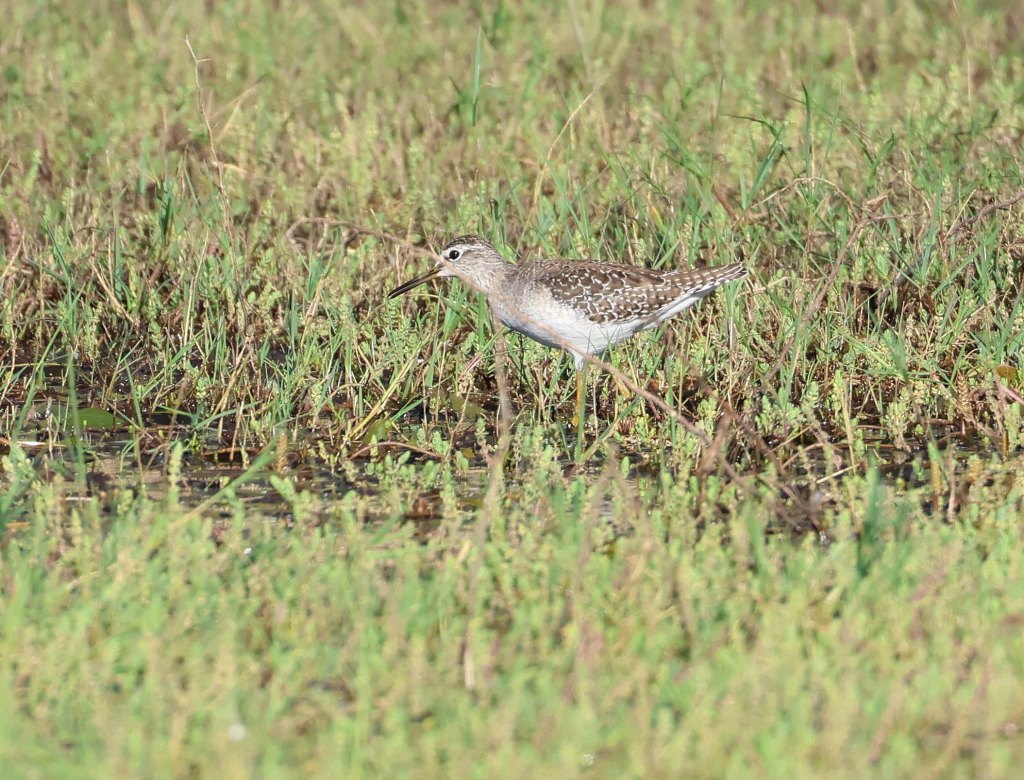
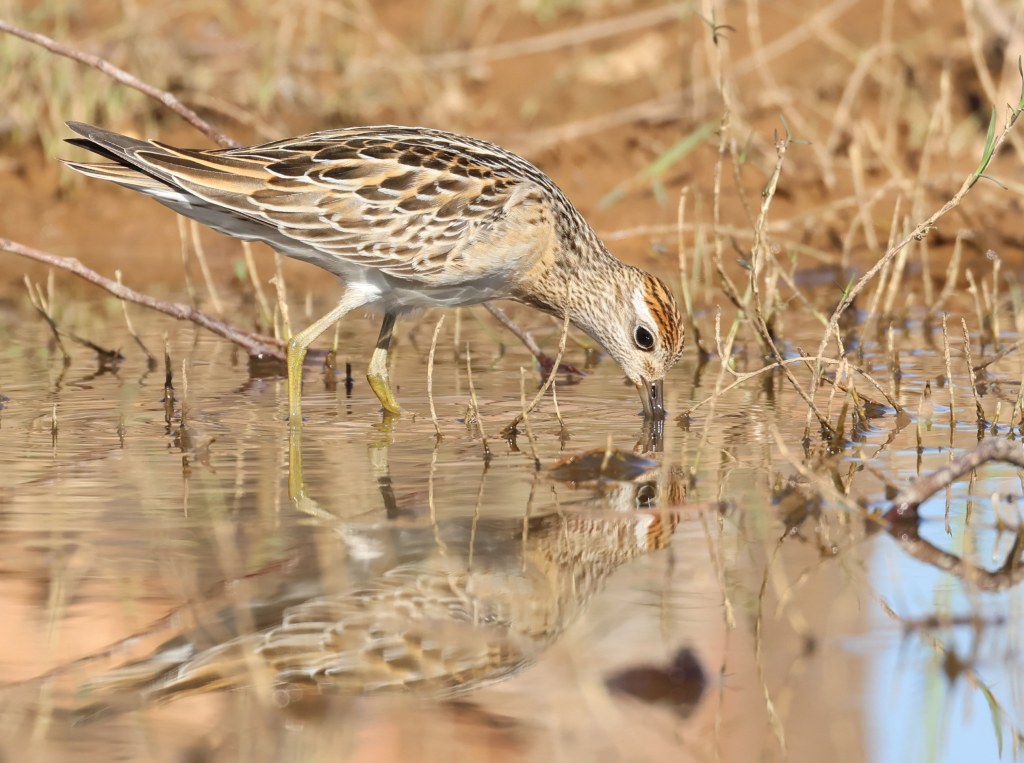
Wood Sandpipers are actually semi-reliable here from around August through November; these birds can be hard to come by as you move east across Queensland.
The cryptic Latham’s Snipe was in attendance as well, and skulking about in these marshy edges was also a pair of Australian Painted-Snipe! This is one of Australia’s rarest birds with an estimated less than 1000 birds remaining, and although 2023 was a good year for sightings (memorably, at Bell’s Swamp in rural Victoria and even for a short time at Sandy Camp Rd Wetlands in Brisbane), it was still a thrill to find them.
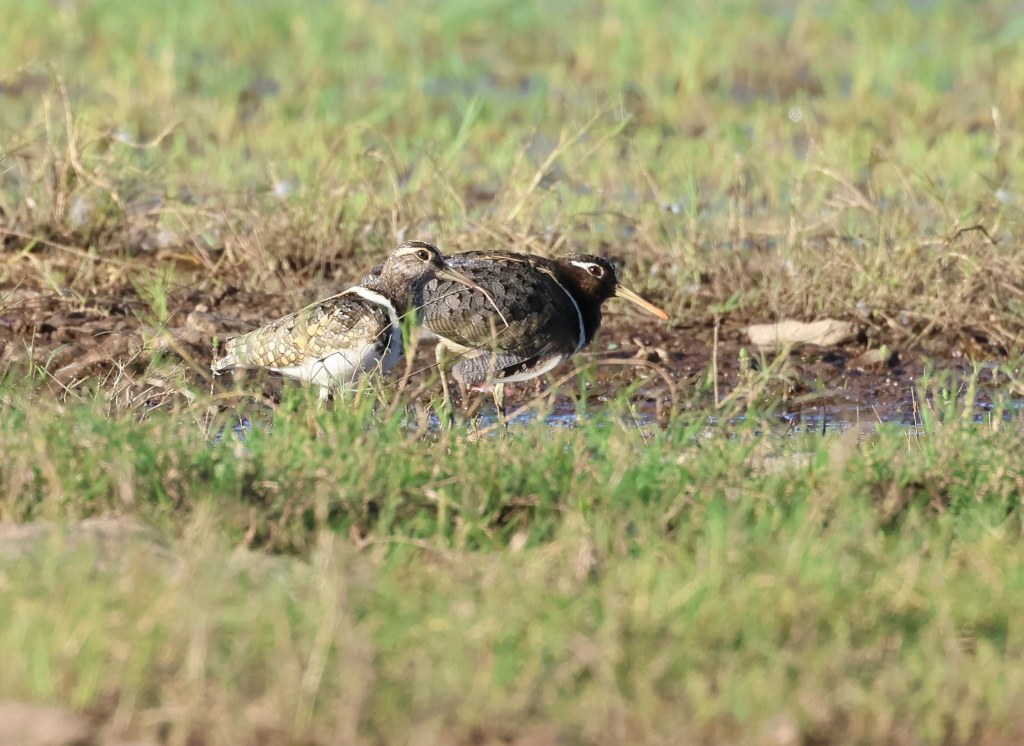
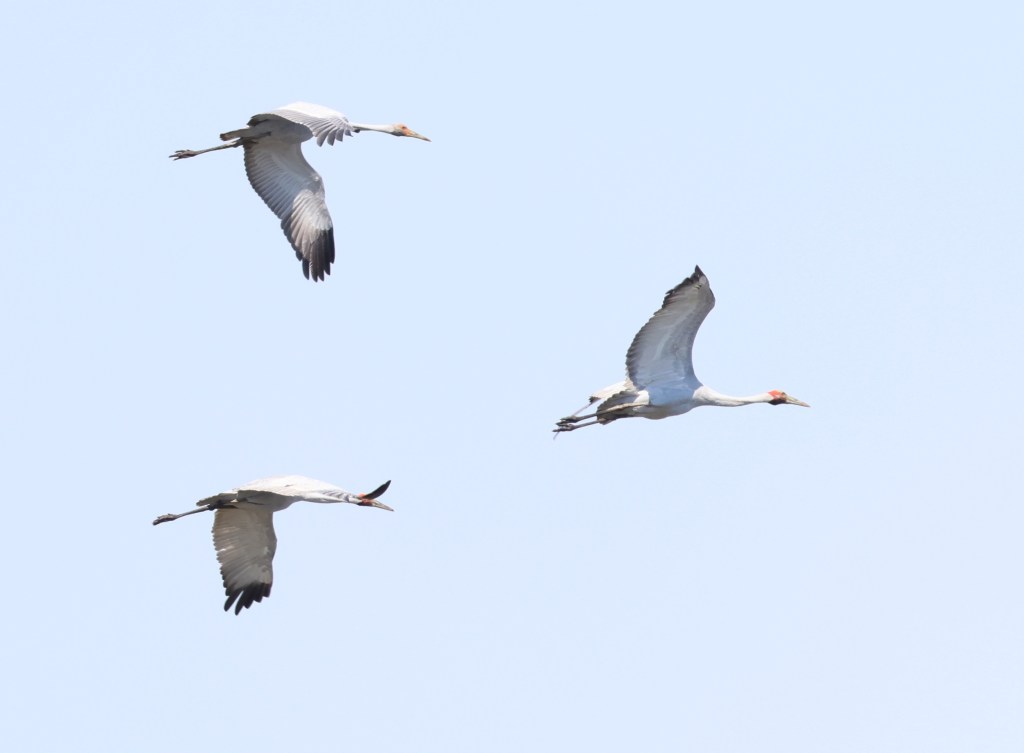
The snipes stayed long enough that we were able to see the same male-female pair again two days later. A trio of Brolga hung around across the few days we were there in 2023 as well.

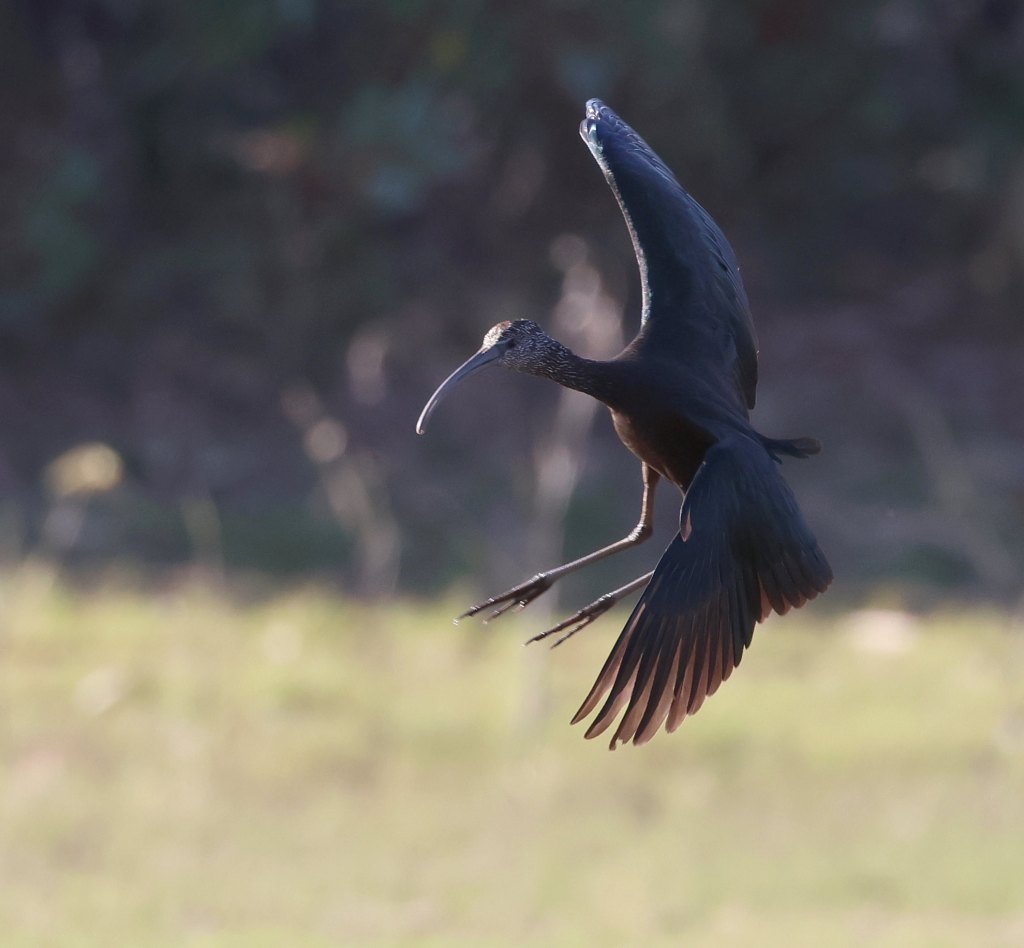
Glossy Ibis were another bird that enjoyed the foraging in waterlogged muddy lake fringes, with seven individuals counted (and a little bullying and posturing going on between them, it seemed, too).

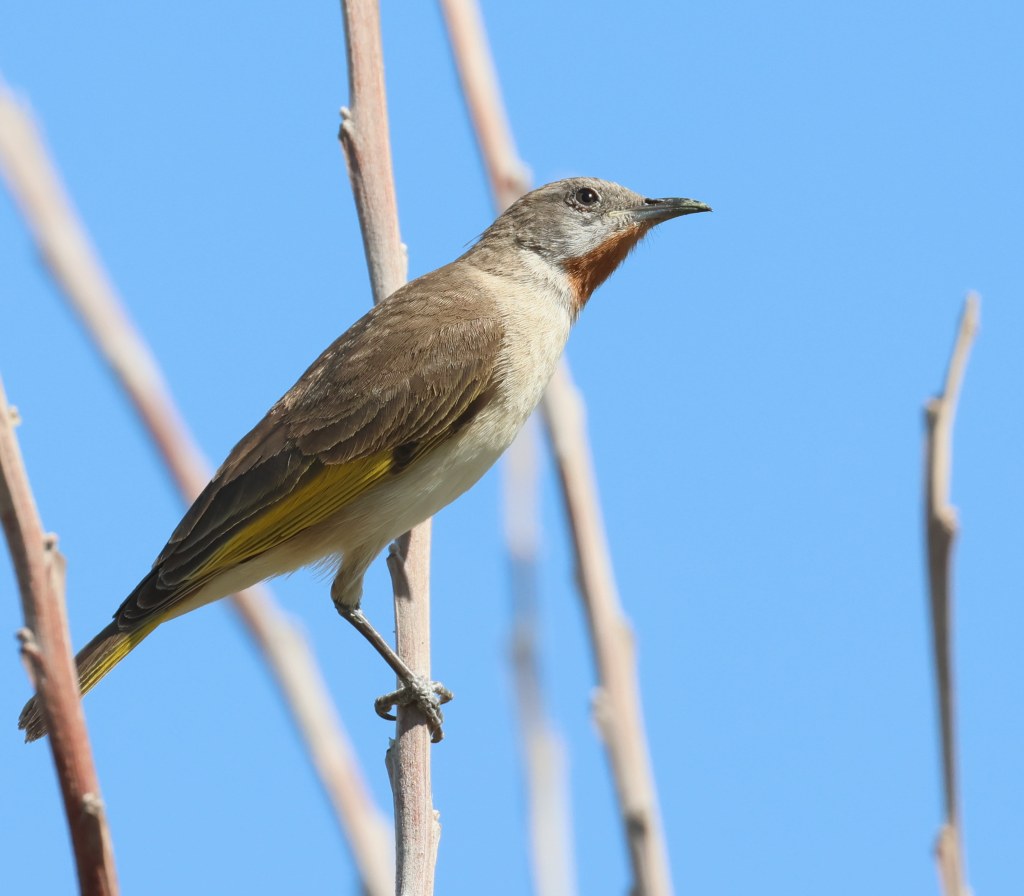
Exploring further around the bay where the bush line is closer to the water was also exceptionally rewarding, as it seemed every honeyeater in the area was keen to use the trees as cover for grabbing a drink. These included many Little Friarbirds, several Rufous-Throated Honeyeaters, some Grey-Fronted Honeyeaters, and even a Black-Chinned Honeyeater – though unfortunately only poor photos were obtained of the latter.

Half a dozen Long-Tailed Finches also appeared at the same spot, a real treat (because who doesn’t love finches?!)

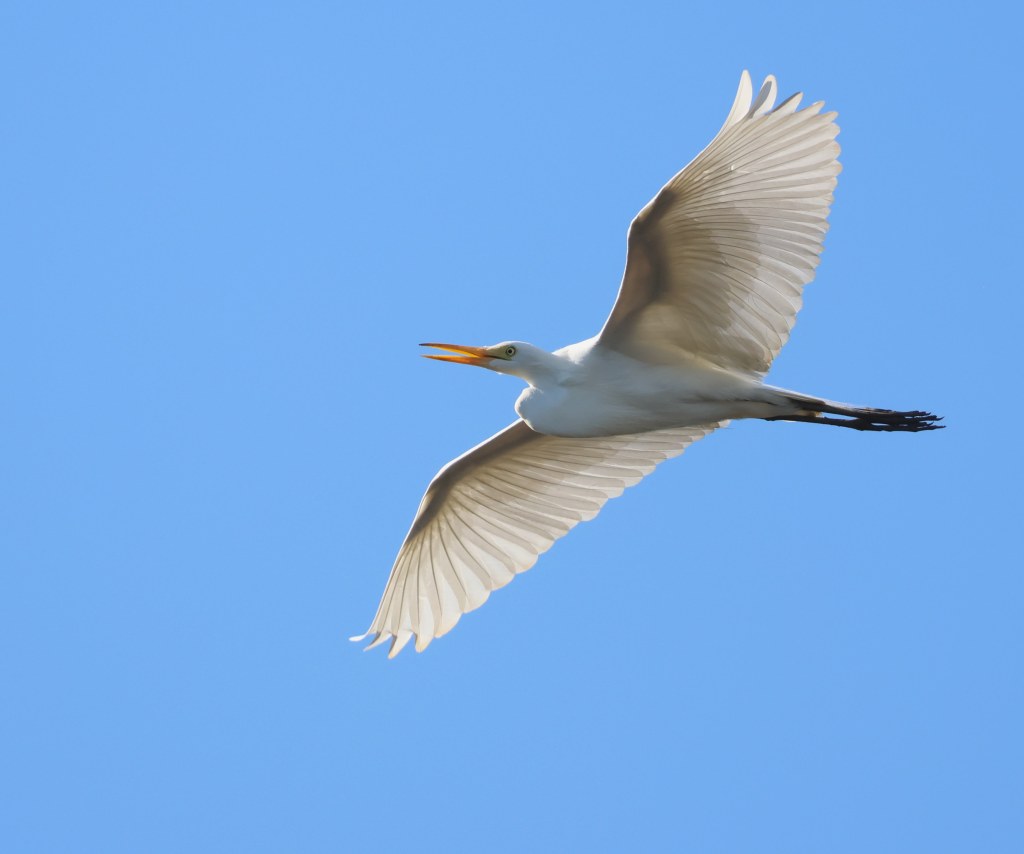
On the water there were many of the “usual suspect” water birds, including Little Pied and Little Black Cormorants, Darters, Grebes and even some Green Pygmy-Geese. The lake is so large that some serious walking or a powerful scope is required to spot and count all these water birds, but by the same token you never know what’s out there until you look.
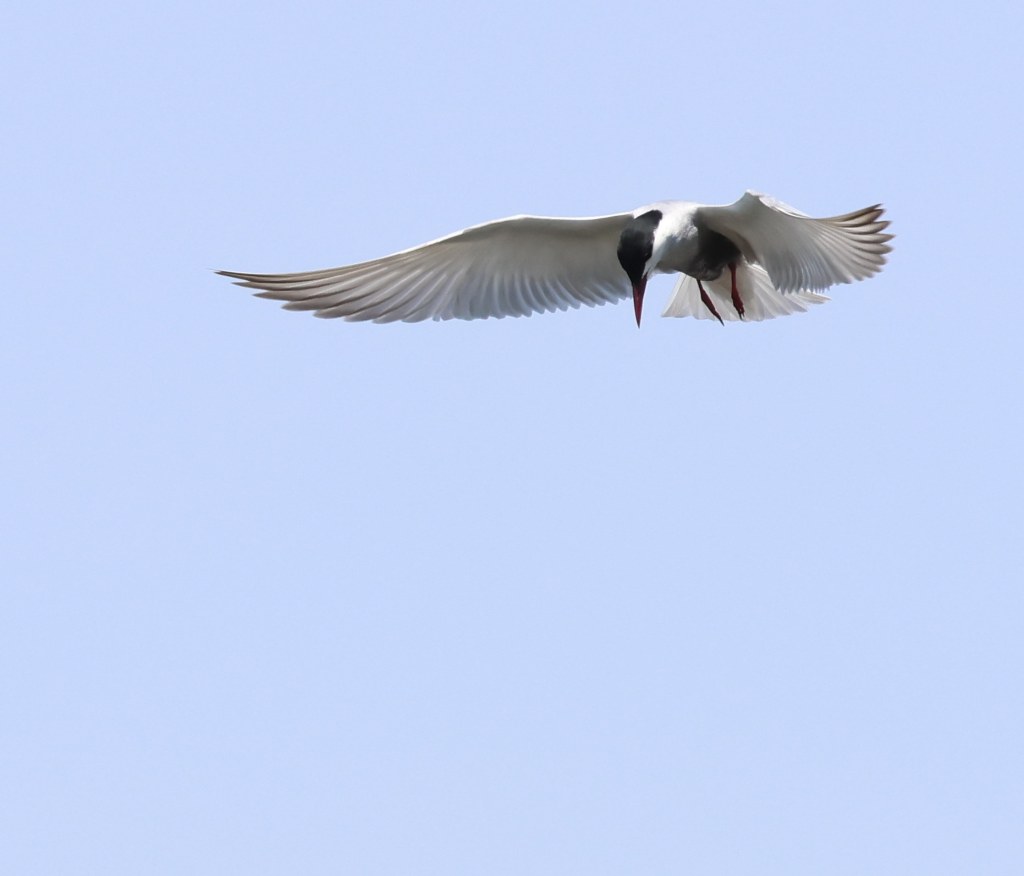
Whiskered Terns were a treat to watch as they flew above the water, their smoky belies making id’ing relatively easy.
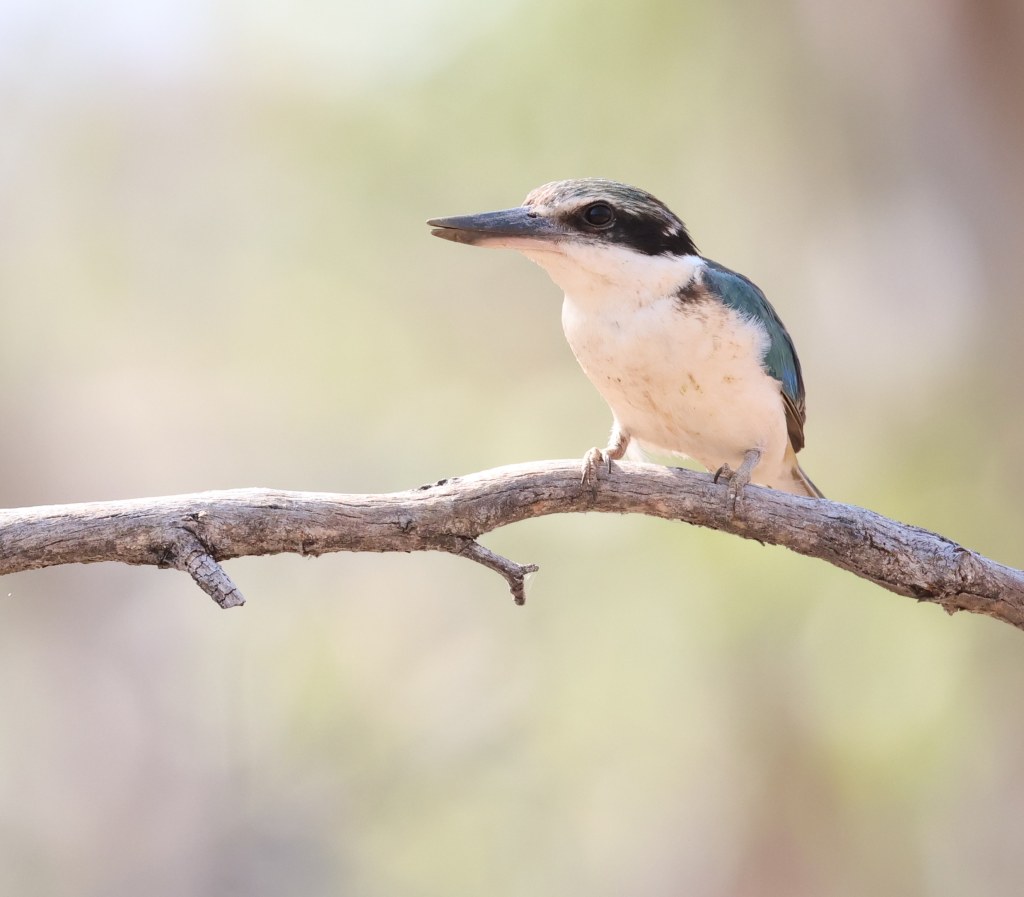
If you have the time, by no means should you restrict yourself to the area near Clearwater Lagoon. For us a random roadside stop by a very dry creekline on the way into Lake Moondarra yielded a surprising liveliness of birds including a terrific close-up encounter with a Red-Backed Kingfisher. It is no doubt the proximity of the nearby lake (following the golden rule of the outback, that most birds are found near a water source) that allows for such abundance.
Between the Clearwater Lagoon area and the picnic area to its east is a sealed road called Barramundi Way which follows the lake shoreline for around 5.5km. It is one of the few road ways with easy access to the water. The inlets here are worth exploring in particular, especially for watching bush birds coming down to drink. Note that, as with the area around Clearwater Lagoon, there are no actual walking tracks, it is just a case of wandering where you can.
Lakeside Picnic Area
Further around Moondarra Drive is the tourist’s focal point of the lake, a picnic and lookout area. This is a pleasant spot indeed, and sports toilet and BBQ facilities, some lovely shady trees, as well as a boat ramp.
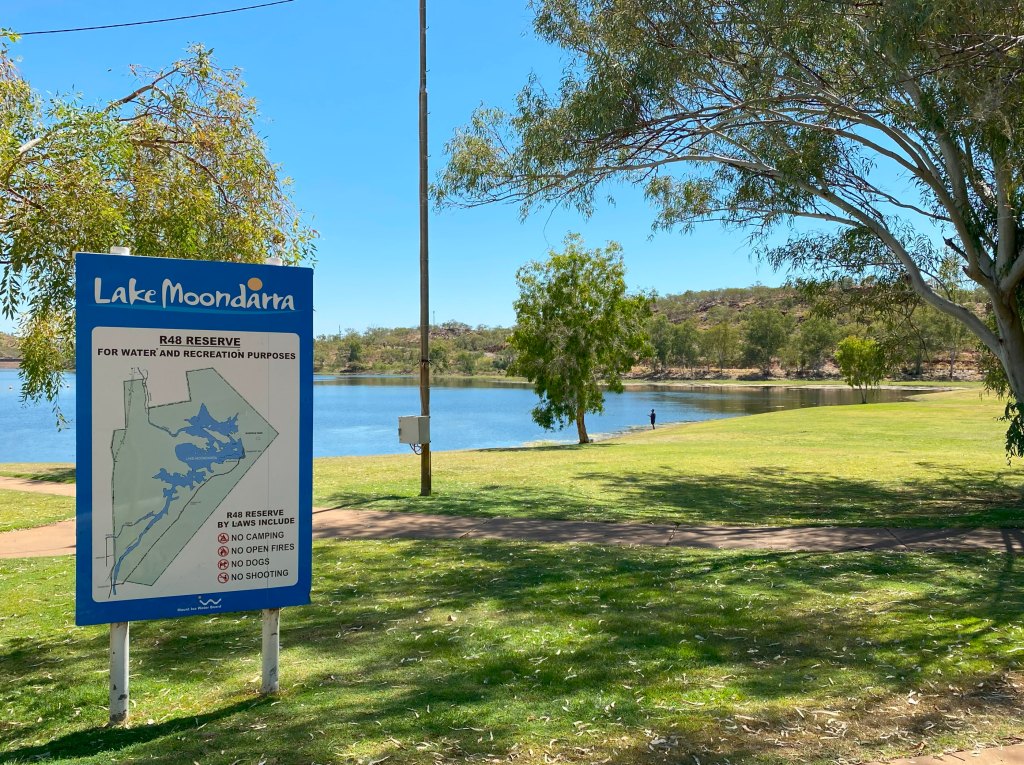
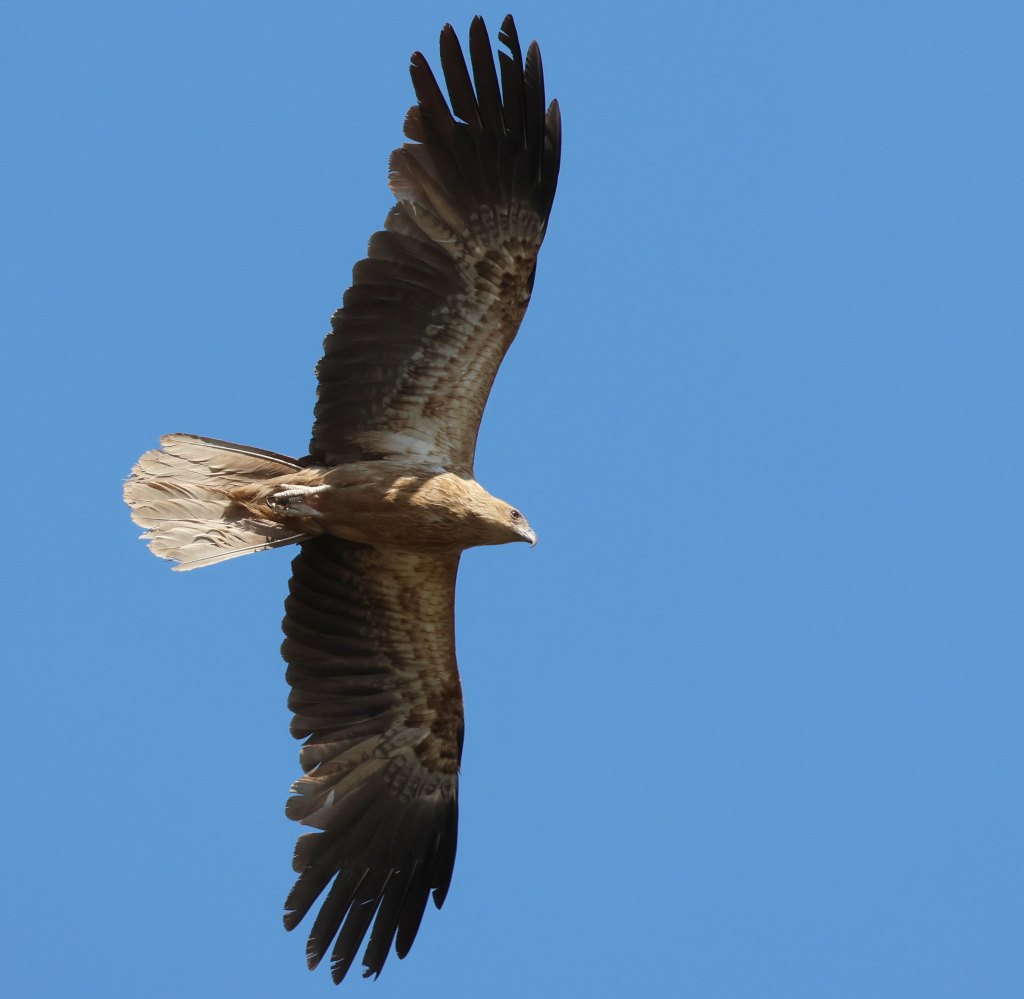
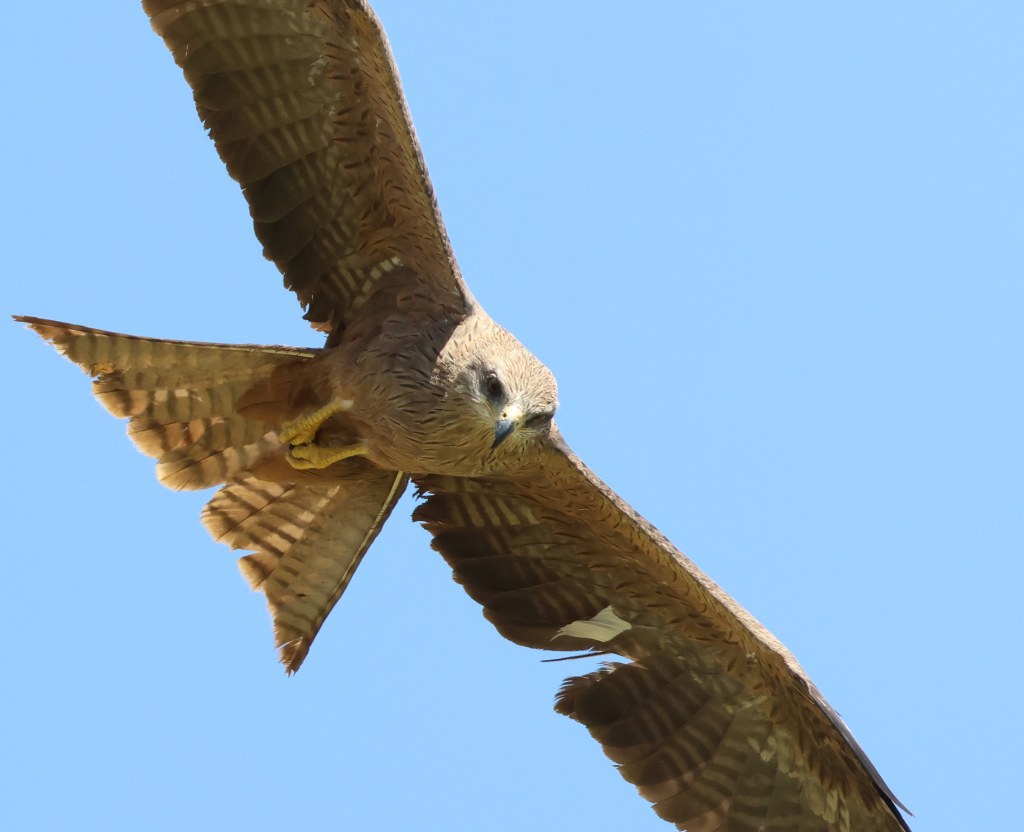
The picnic area is frequently visited by low-flying Black Kites in scavenger mode, and while we were there they made many forays around and over the lakeside. In fact, some locals threw some food to them and they swooped very close to snatch it up from the grass.
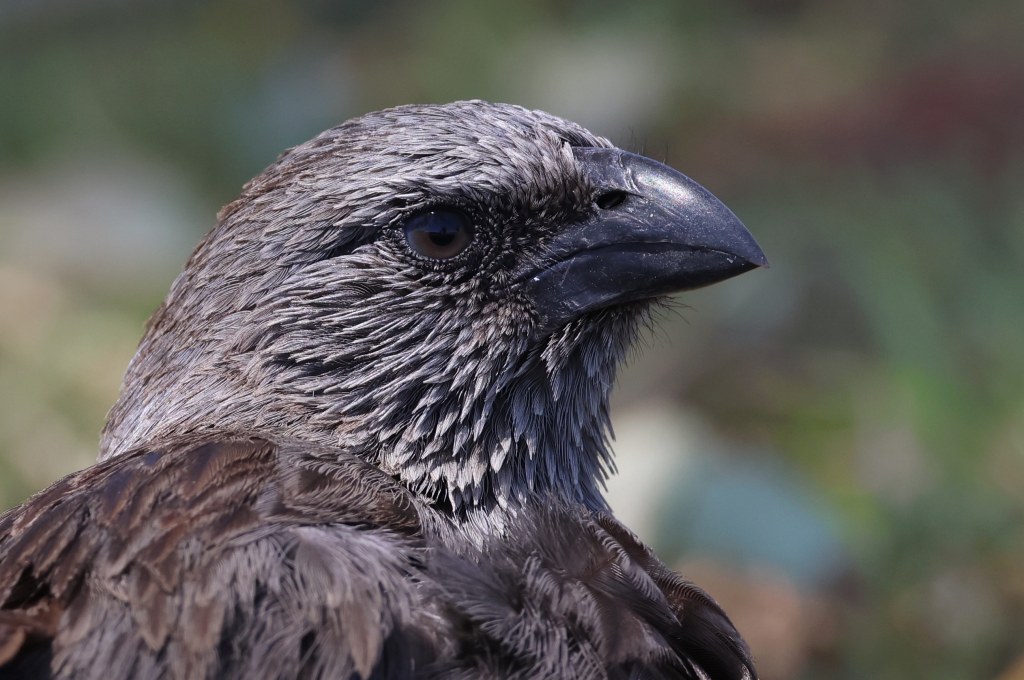
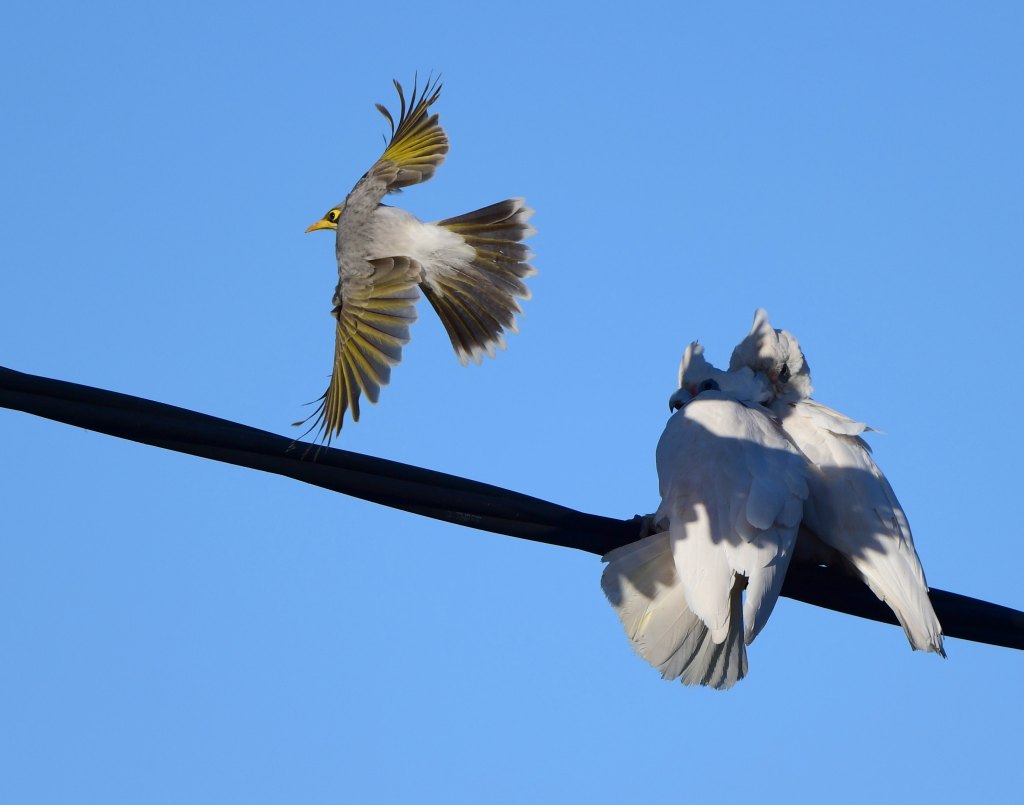
There were several flyovers of small Varied Lorikeets flocks here, while resident birds include Yellow-Throated Miners and Little Corellas, and Apostlebirds. The latter with their scratchy squawks roam the picnic area at will, and I saw one in a tree above on a nest (which is how I know they’re resident!)

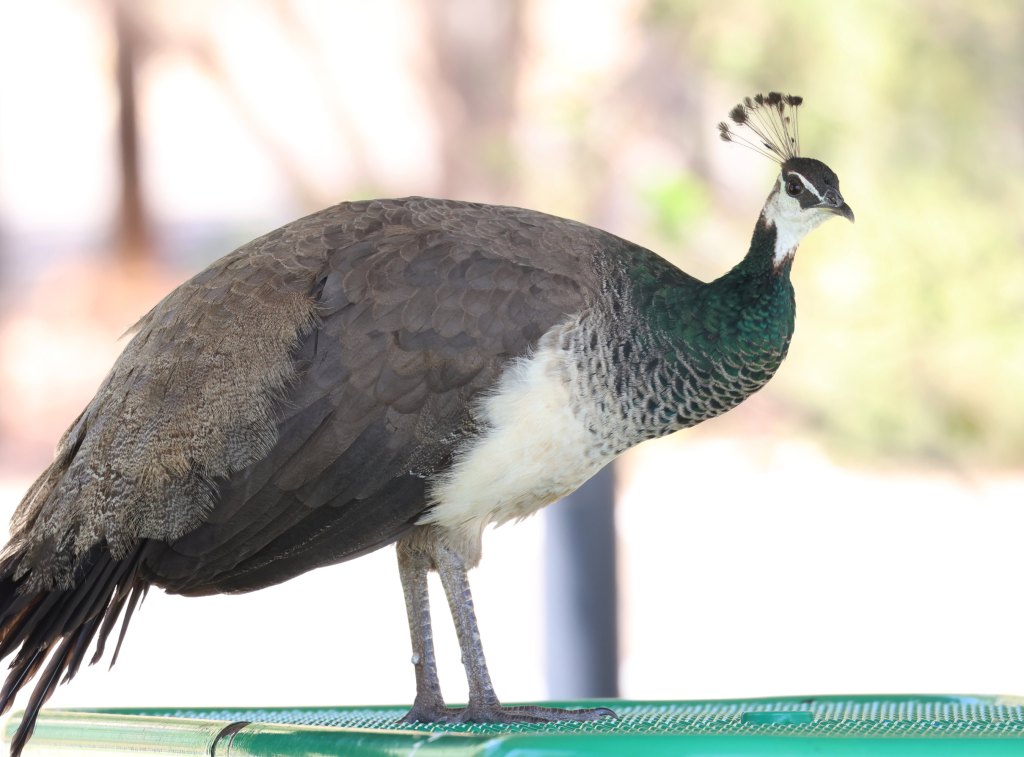
A more curious bird that can always be found here is a population (of non-native) Indian Peafowl.
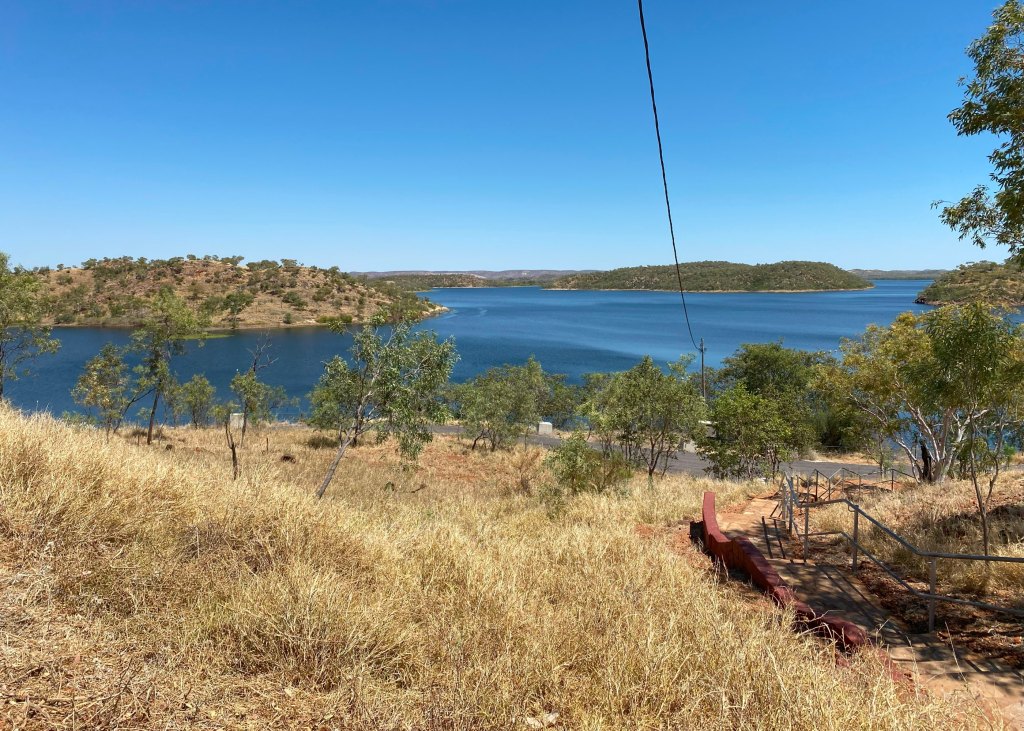
Several hundred metres on from the picnic area the road heads up to a lookout which gives great views across the lake and surrounding countryside.

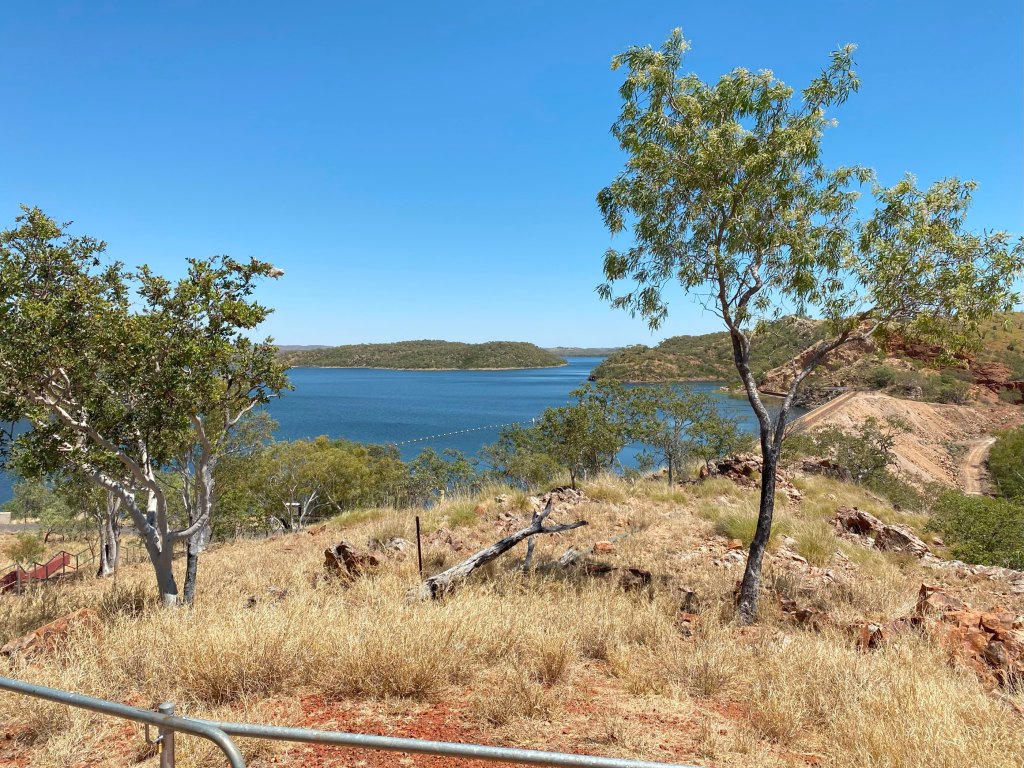
There is a second picnic area (Mt Isa Peacock Park) on the other side of the lookout from the lake, though why you’d relax there when you could be lakeside I can’t imagine.
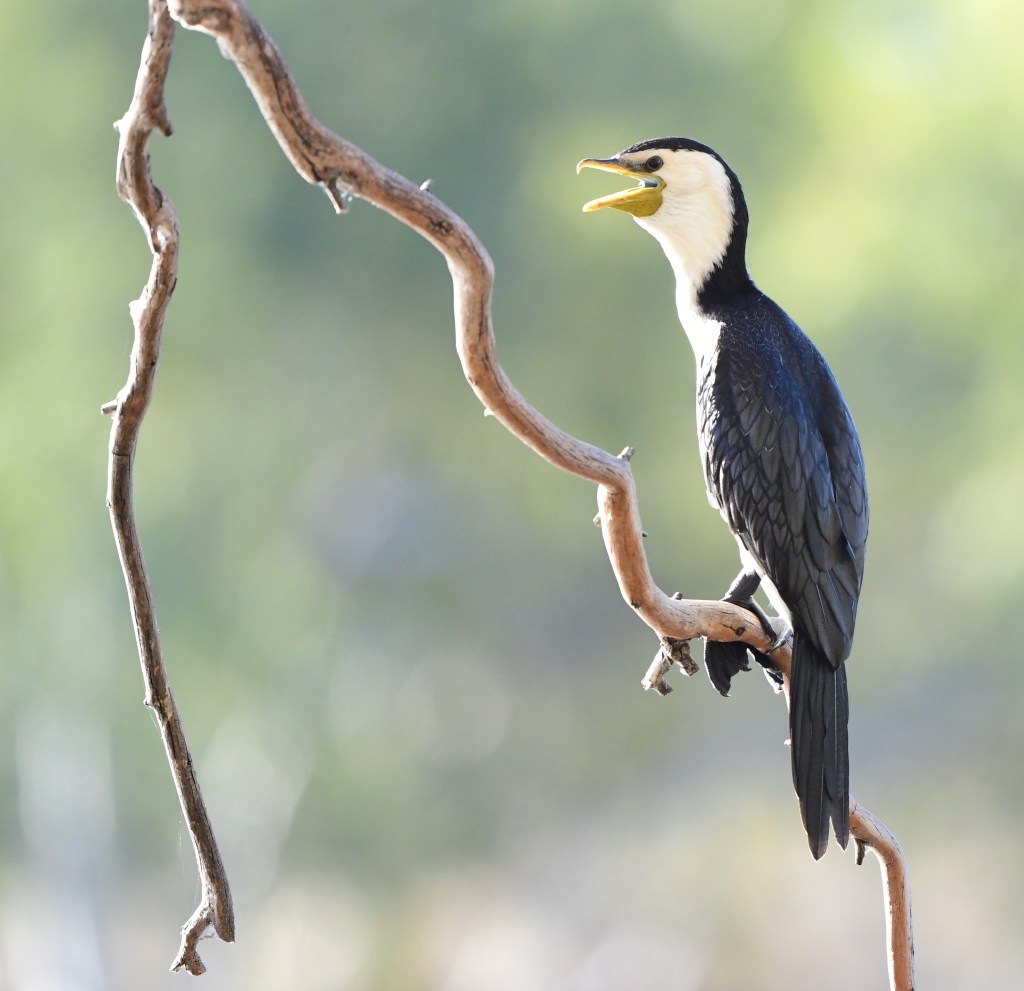
In these areas we saw more of the usual suspects, including Little Pied Cormorant, and Little Corellas (being harassed by Yellow-Throated Miners).
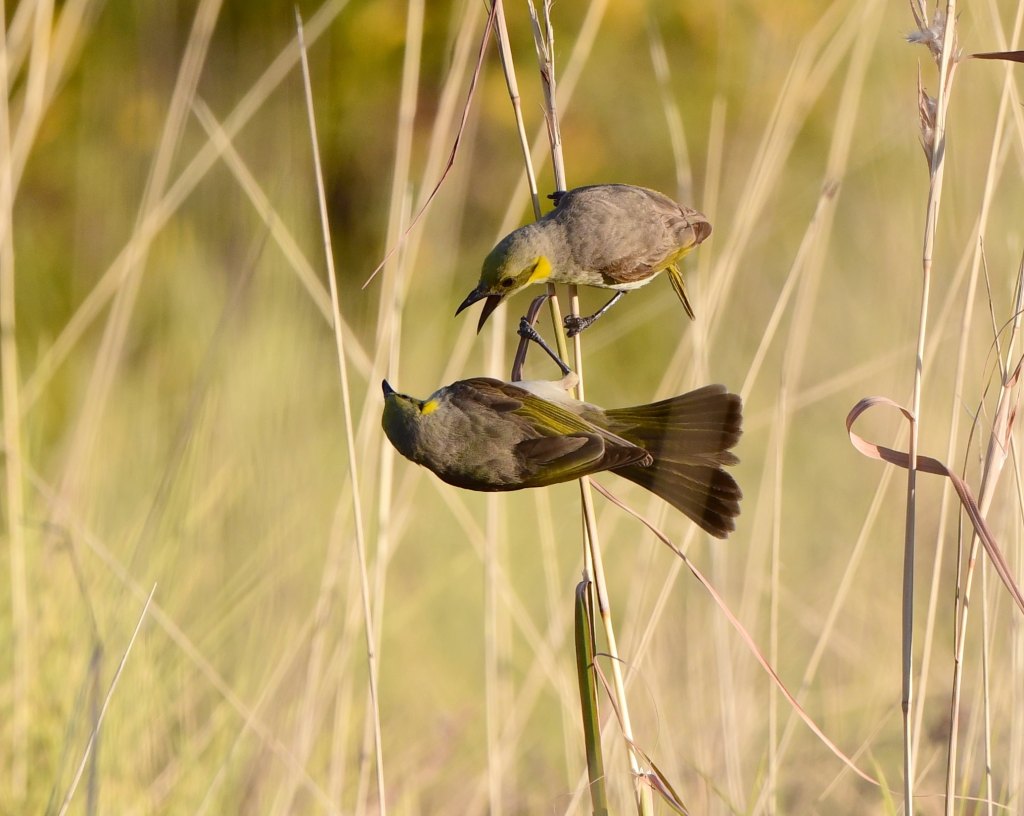
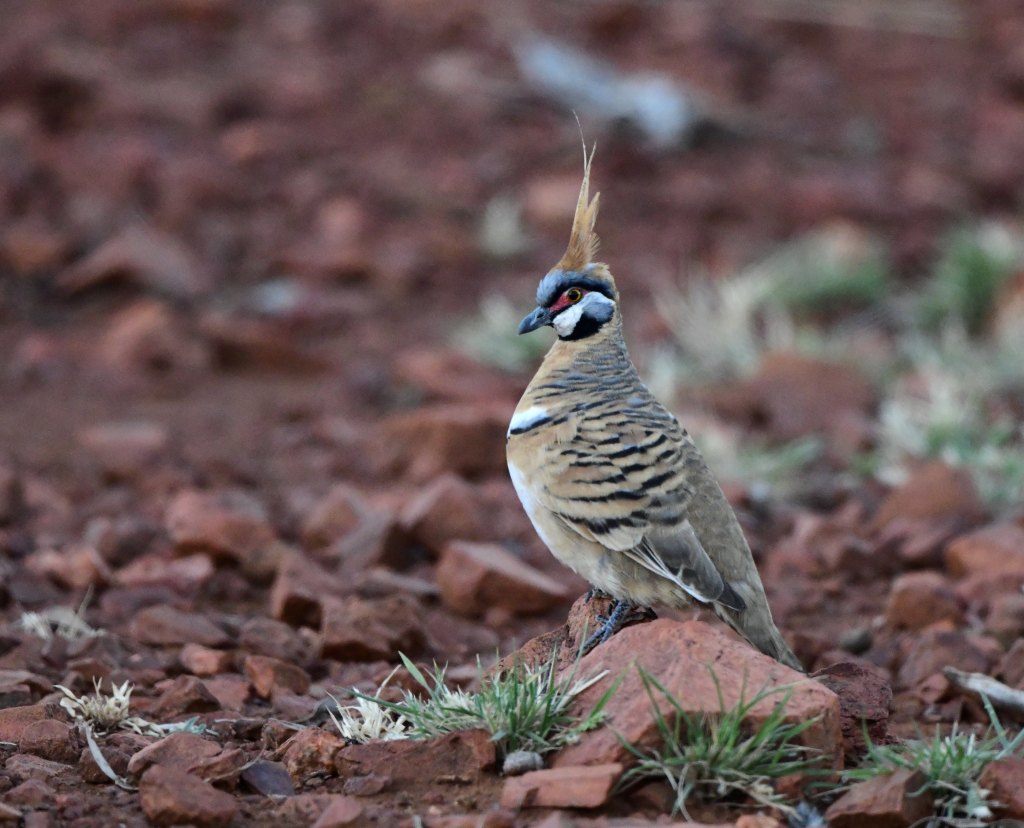
Further on from the lookout area the roads become unsealed and I’ve only briefly explored there, but did find a Spinifexbird in the dry grasses. More common are the striking Spinifex Pigeons, which are easily seen on or at the edge of the roadsides.
Summary
There is an astounding array of birds you may find at Lake Moondarra. Across the three days I spent there in July 2021 and in Sep/Oct 2023 I saw a spread of many different birds on each visit. All birds need to drink and there is no better water source in the arid outback than a huge permanent lake.
A good comparison can be made between Lake Moondarra and Chinaman Creek Dam at Cloncurry, a mere hour away. Both are man-made lakes and attract sometimes very large numbers of birds, and each allows for quite a lot of lakeside shoreline walking. Both are the largest eBird hotspots by species in their regions, but Lake Moondarra has a definite edge with around 50 species more historically seen than at Chinaman Creek Dam, and you’ll likely obtain a higher species count on a checklist at Lake Moondarra too given the same amount of birding time.
The biggest downside to birding here is the sheer size of the lake. You are best to cherry-pick a couple of sections (the bay west of Clearwater Lagoon being a prime candidate) and concentrate your birding there, unless you have a lot of time (and perhaps a boat!) There is a large network of unsealed roads that give some access to other parts of the lake, but I cannot speak about these as I haven’t really explored them.
eBird:
Hotspots: Lake Moondarra (228 species), Lake Moondarra–Clearwater Lagoon (164 species)
Checklists for these visits: Jul 31 2021 (20 species and 31 species), Sep 30 2023 (38 species), Oct 2 2023 (59 species)
Bird Spots videos from this location: Australian Painted-Snipe, Wood Sandpiper, Grey-Fronted Honeyeater, Long-Tailed Finch, Whiskered Tern, Red-Backed Kingfisher, Brolga, Diamond Dove
Pluses and minuses:
+ Huge lake with many inlets and areas to explore
+ Great birdlife with wide variety including snipes and skulking birds
+ Close to Mount Isa
– Difficult/time-consuming to access a lot of the lake shoreline
AUTHOR: ANDY GEE
BIRDERS: ANDY GEE, LUKE S, K-A
 Bird Spots
Hello,
I love reading your Bird Spots!
Are you able to change my email address to glenyspassier@gmail.com
Thank you!. Glenys
LikeLike
Glad you like the site!
I cannot change your email address, you’ll need to re-subscribe with a different one.
LikeLike
I have enjoyed all your Bird Spots writings! Thank you for the effort you put in. Not sure if you did something different with the video titled Grey-fronted Honeyeater – It tells me it’s private and I need to log in. I can access all the others. Not a huge problem but thought you should know. 😊
Thanks Andy.
Louise Lee
LikeLike
That’s weird as YouTube shows all my videos as public. Not sure what is going on there.
LikeLike
Must have been gremlins as it is now showing!! Thanks for checking. Louise
LikeLike