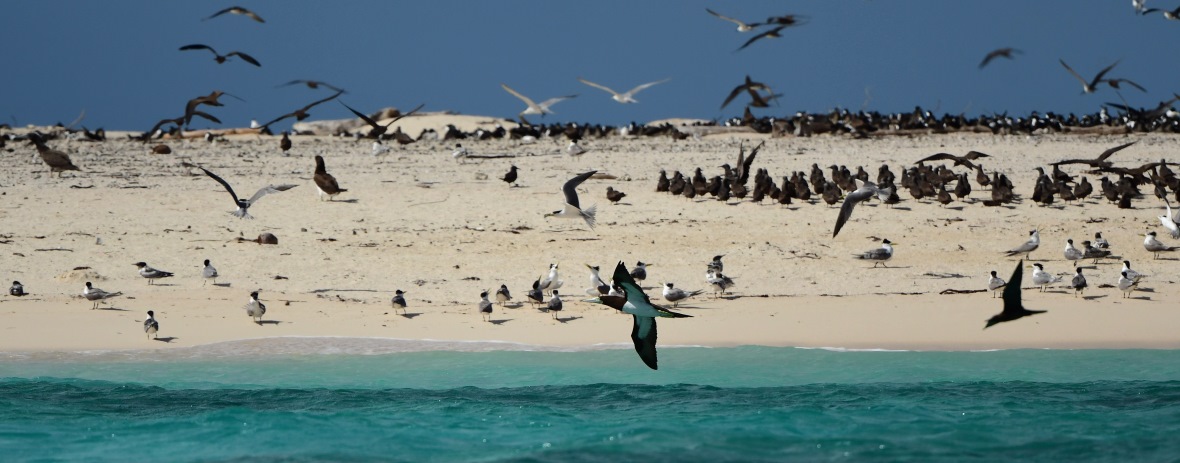
[A stop on the Cairns + Atherton + Daintree trip, 2021 trip; also visited in Aug 2026]
What would you think about taking a boat trip out to the Great Barrier Reef and being dumped on a tiny remote sandy island for an hour?
If you’re a birder, and that tiny sand island is Michaelmas Cay, you’ll absolutely love it!
Michaelmas Cay is 40km north-west of Cairns, around 90 minutes by boat. It’s only about 350 metres long, and has a little sparse vegetation, but it attracts seabirds by the tens of thousands.
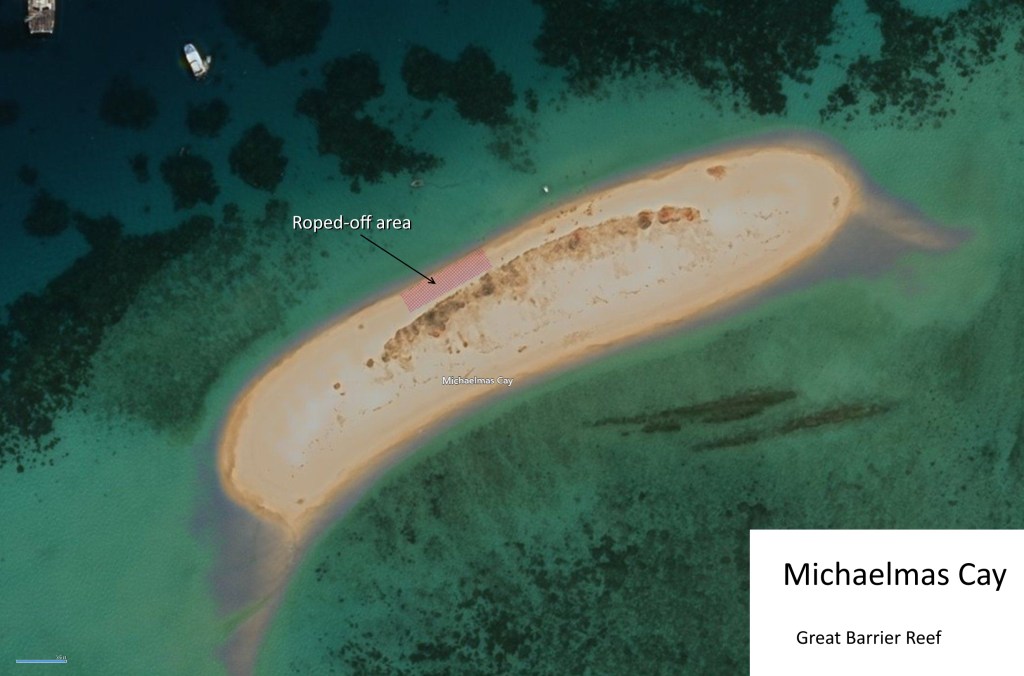
Up to 20,000 birds can be found here in nesting season (summer), and it is the southernmost limit of Sooty Tern breeding and the northernmost breeding limit of the Crested Tern. When I was there in April there were many, many birds present, including lots of adorable chicks.
I used the excellent Seastar Cruises tour, which is the first of the tour boats to arrive at Michaelmas Cay in the morning and also includes a very worthwhile snorkelling component at Hastings Reef on the way back to Cairns. It makes for an excellent day out.
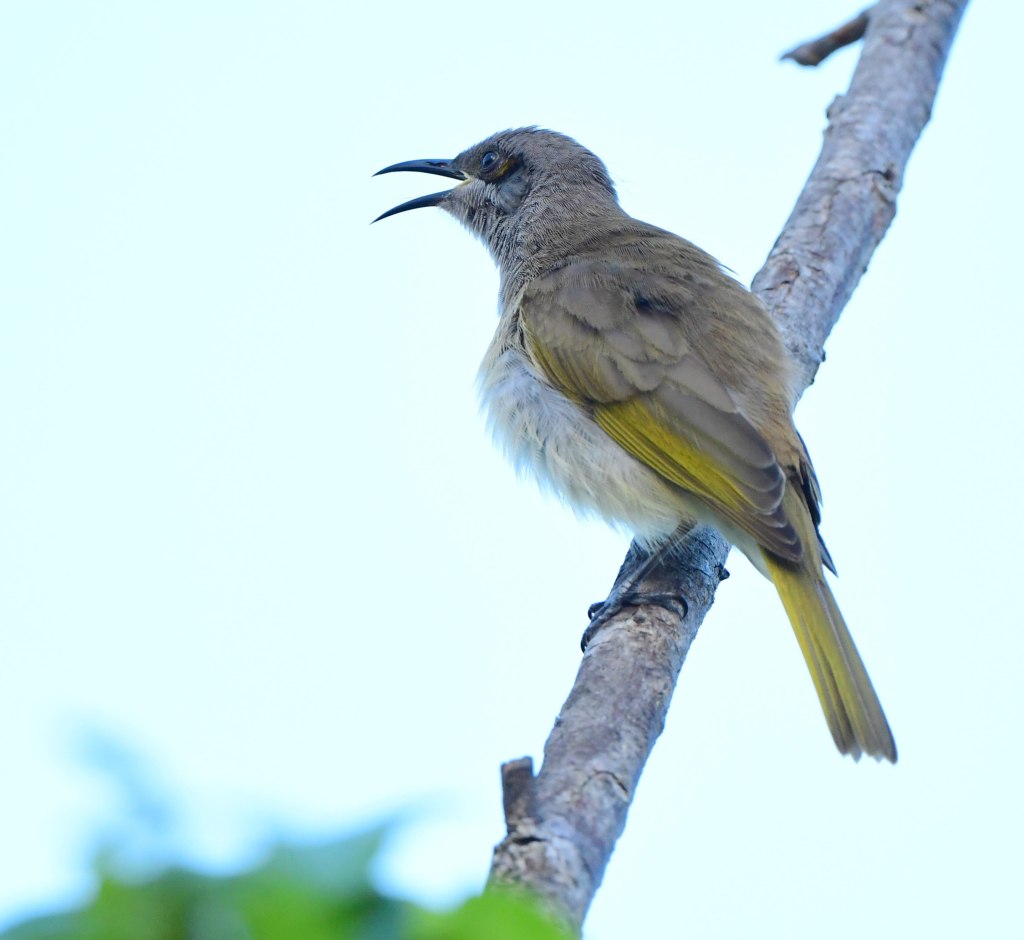
Special mention must be made of the birding possibilities at the marina area where the cruise boat leaves from, where you’ll likely have a little time to kill before the ocean adventure begins. For my first visit, this pre-boat wander included seeing a Sacred Kingfisher resting on a yacht mast, numerous Brown Honeyeaters and sparrows, Common Mynas, White-Breasted Woodswallows and a Crested Tern gearing up for the day with some diving flights over the water.


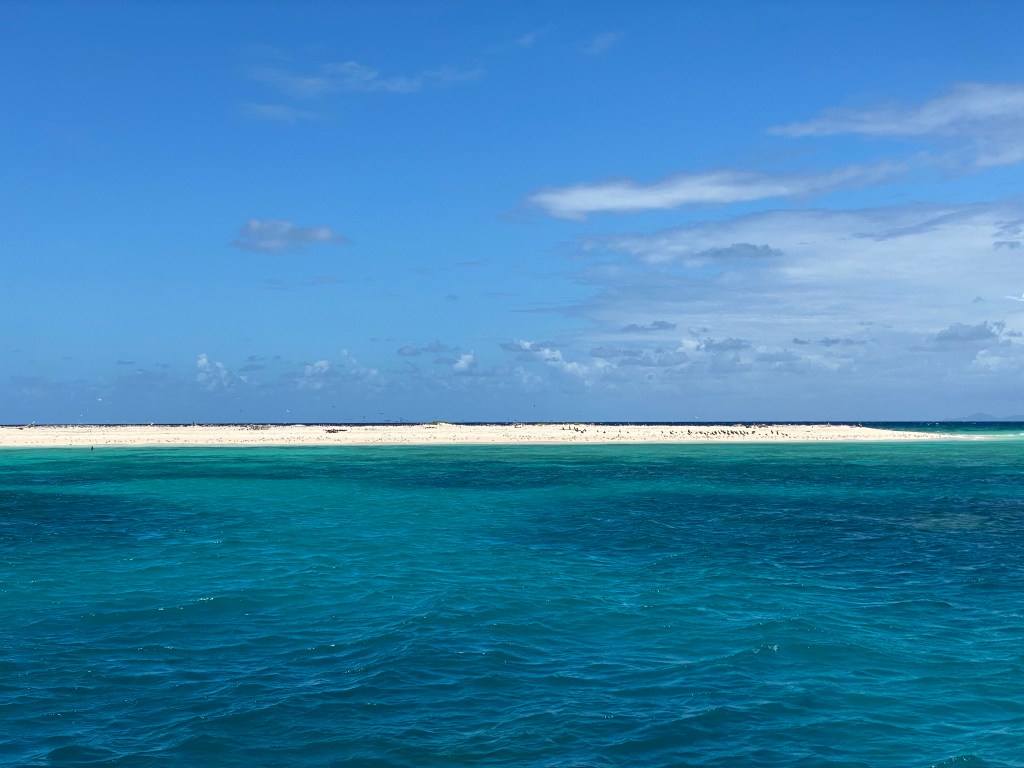
As we approached Michaelmas Cay it slowly became apparent how many birds would be viewable here – each dot in the picture is a bird!
The snorkellers and swimmers had the waters to themselves while I was the only one interested in birding. Basically what happens is a smaller inflatable boat drops you off in a roped-off area on the side of the island, then picks you up around an hour later. Fine by me, I was instantly surrounded by birds!
Sooty Tern was a lifer bird for me and there were plenty of them on the island.
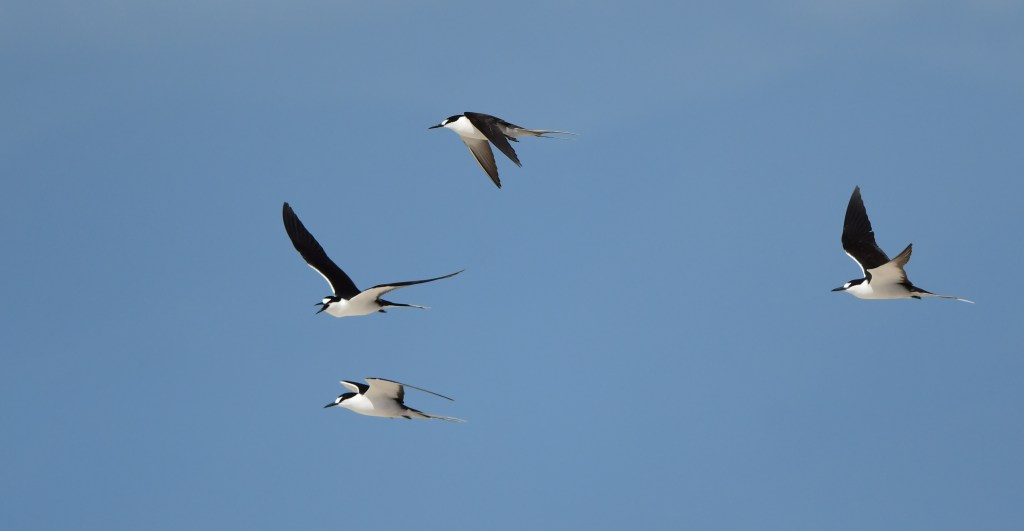
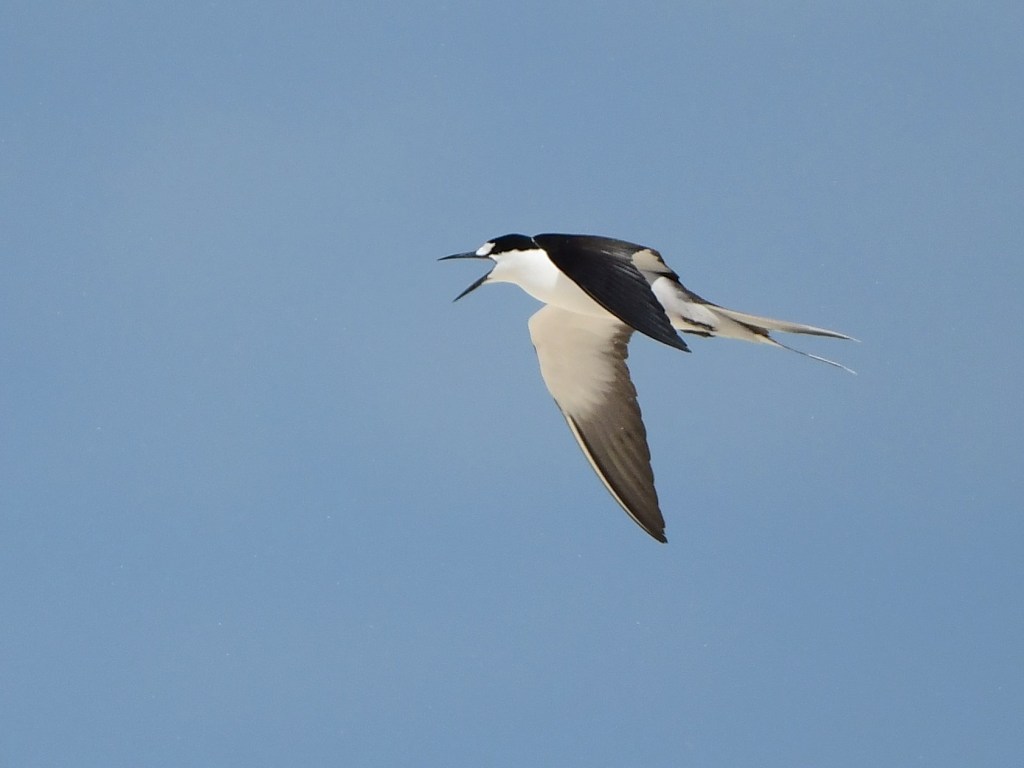
It looked like roosting space was at a premium with plenty of Sooty Terns flying in squawking and looking for space to rest.

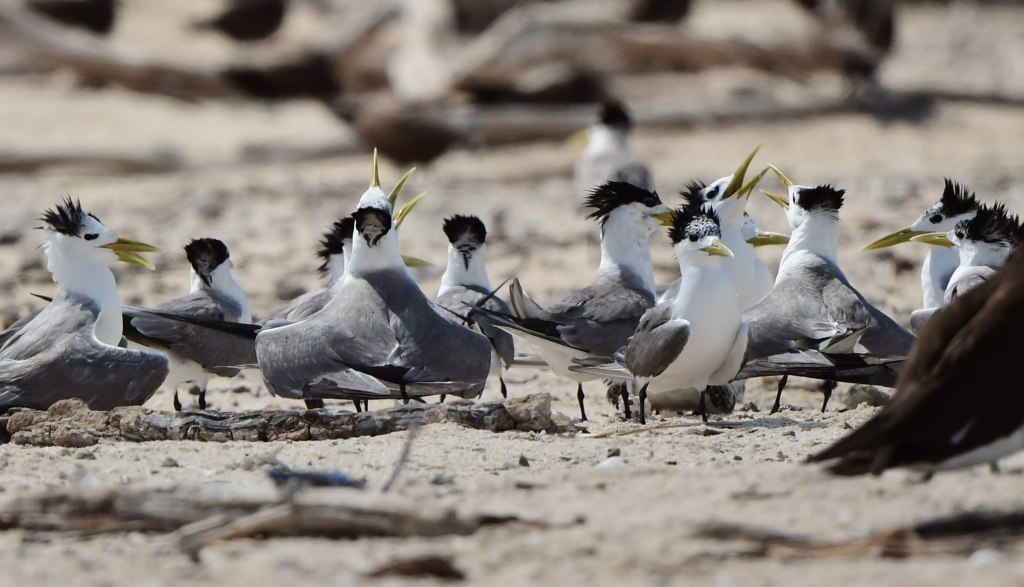
Crested Terns were also in large numbers and even though one tends to see them in many coastline environments, they are in their element here and one can also see the chicks up close. All around the island birds are coming and going, many returning with fish from the surrounding waters.

The photo below shows just how busy it is with terns returning to the island with fishy treats – at least three of the birds in flight are carrying prey.
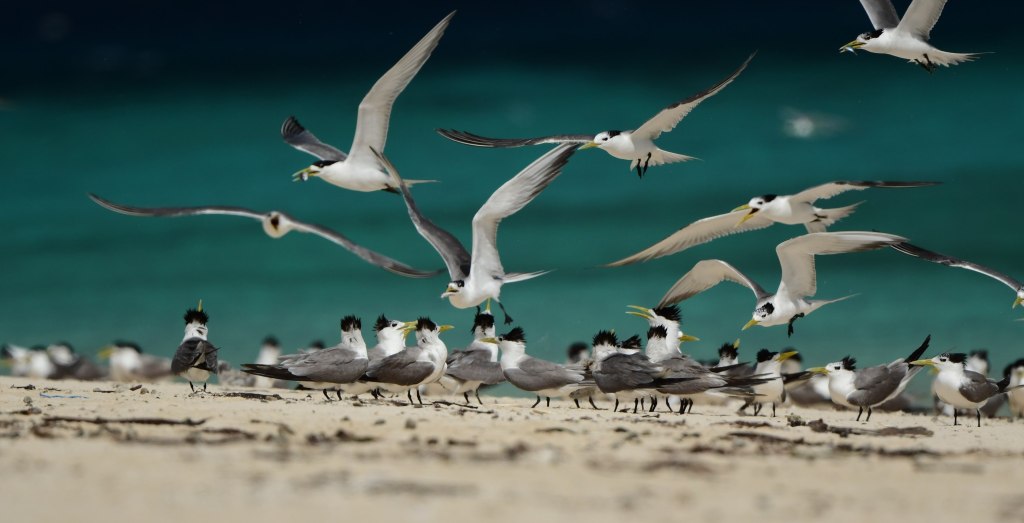
The Crested Terns managed to look “elegantly silly” when on land with their powerful wings jutting out.
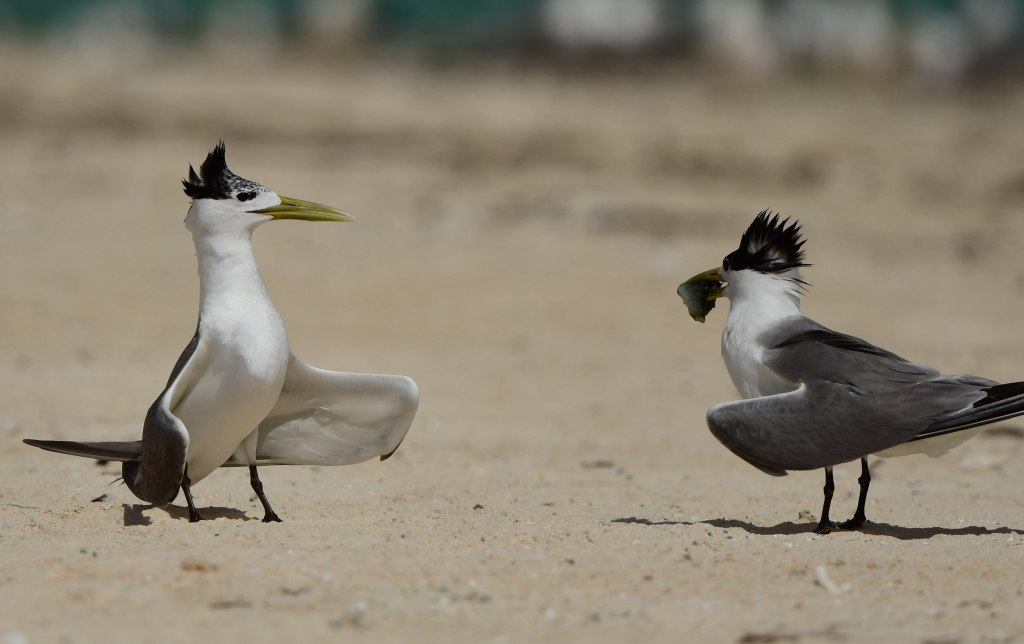
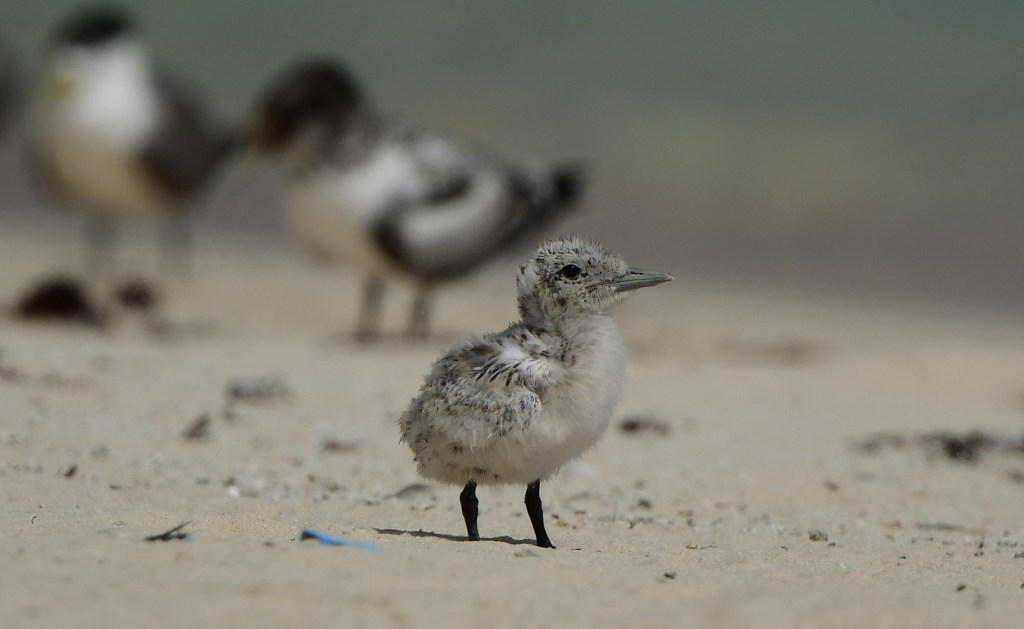
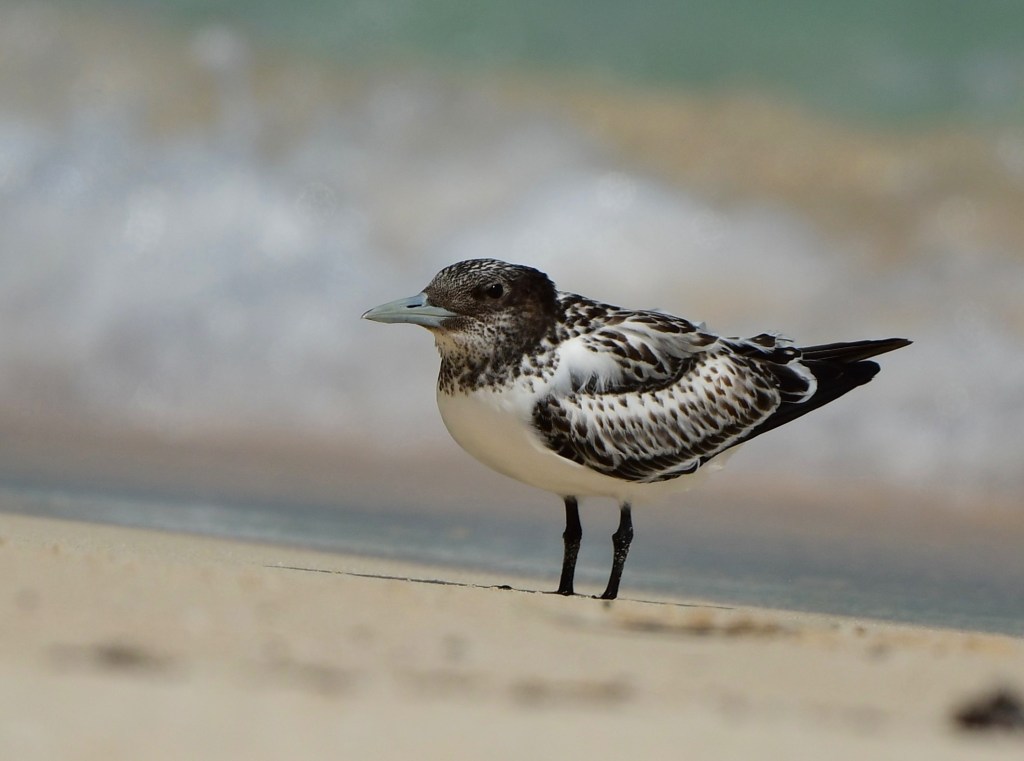
I spotted several Crested Tern chicks in various ages, some very small and fearless. Though perhaps they shouldn’t be so fearless, because apparently it can get dangerous should they stray too close to the surf, with various ocean-going predators around.
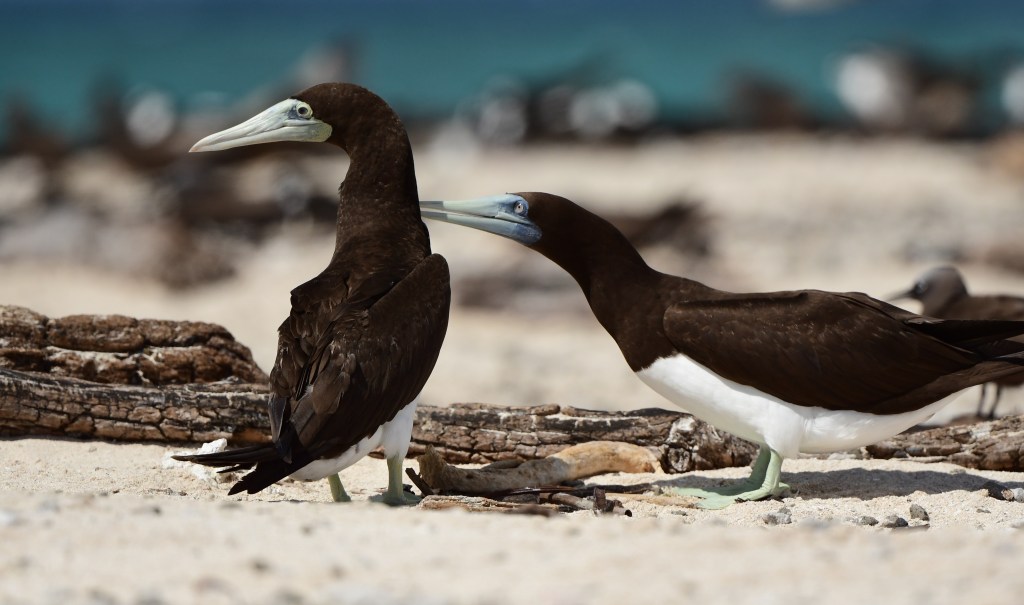
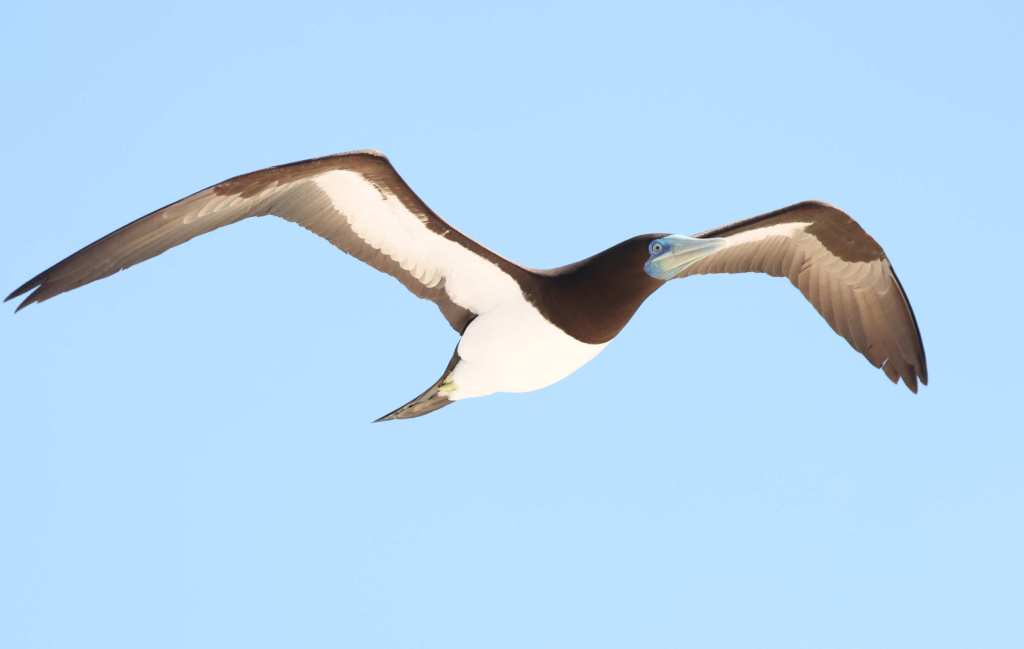
The extraordinary Brown Booby was another lifer bird for me, and the most memorable of the birds I saw. The males have a blue eye-ring, while the females are distinguishable with a yellow eye-ring.


They are the only booby of the six species to build their nests on the ground, using the warmth of their feet to incubate their eggs. The chicks have loads of adorably fluffy down feathers.
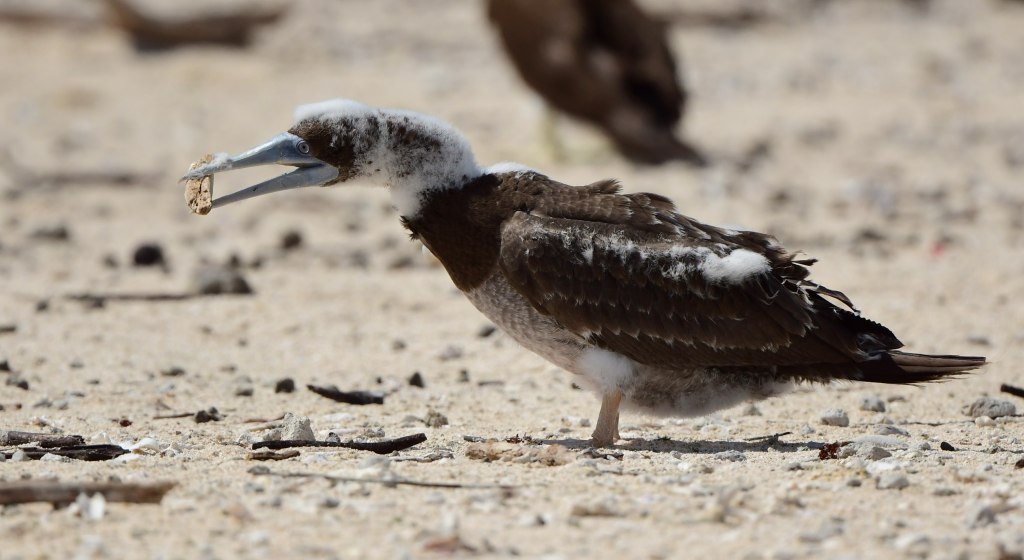
They can look rather goofy and will prod each other playfully as the below photo attests.
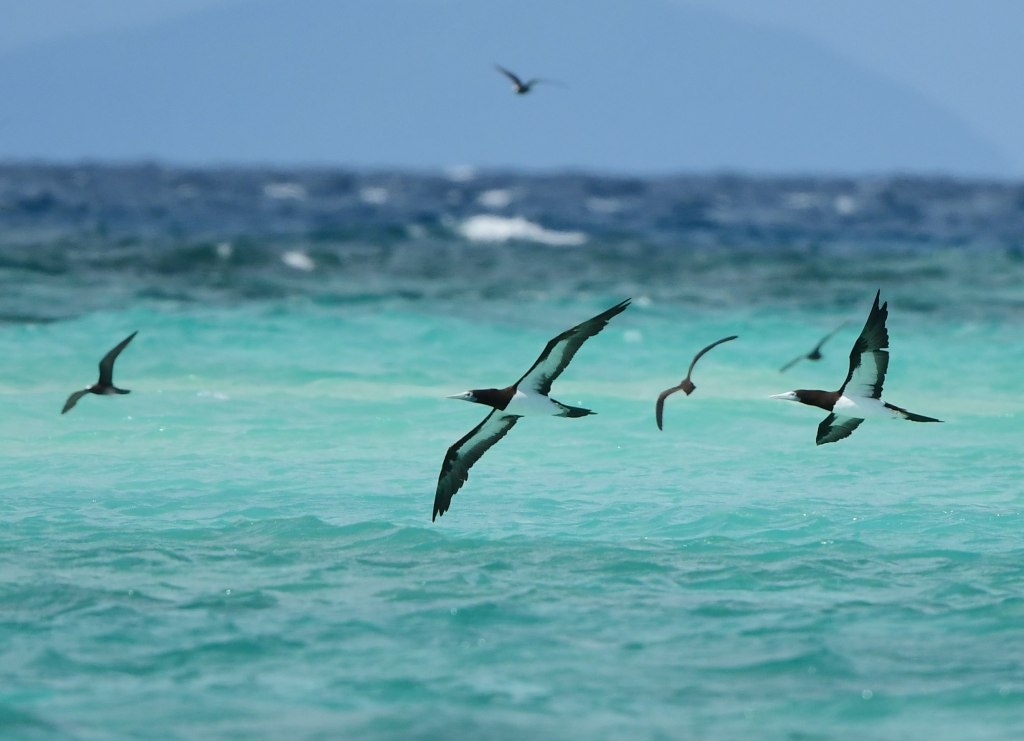
They are clumsy in take-off and landing but definitely find their grace while in the air.
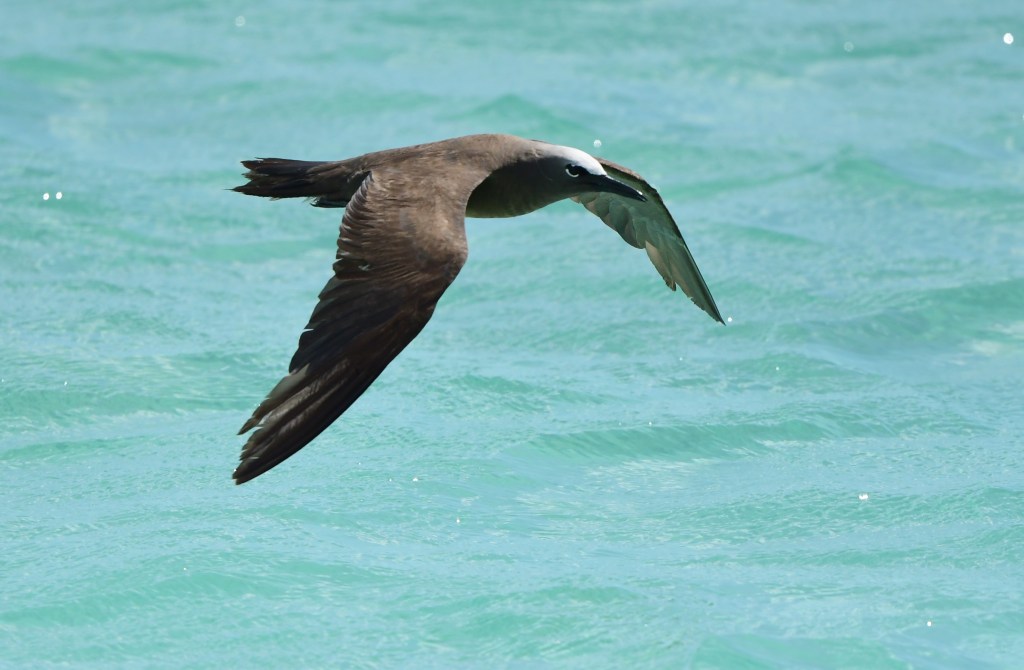
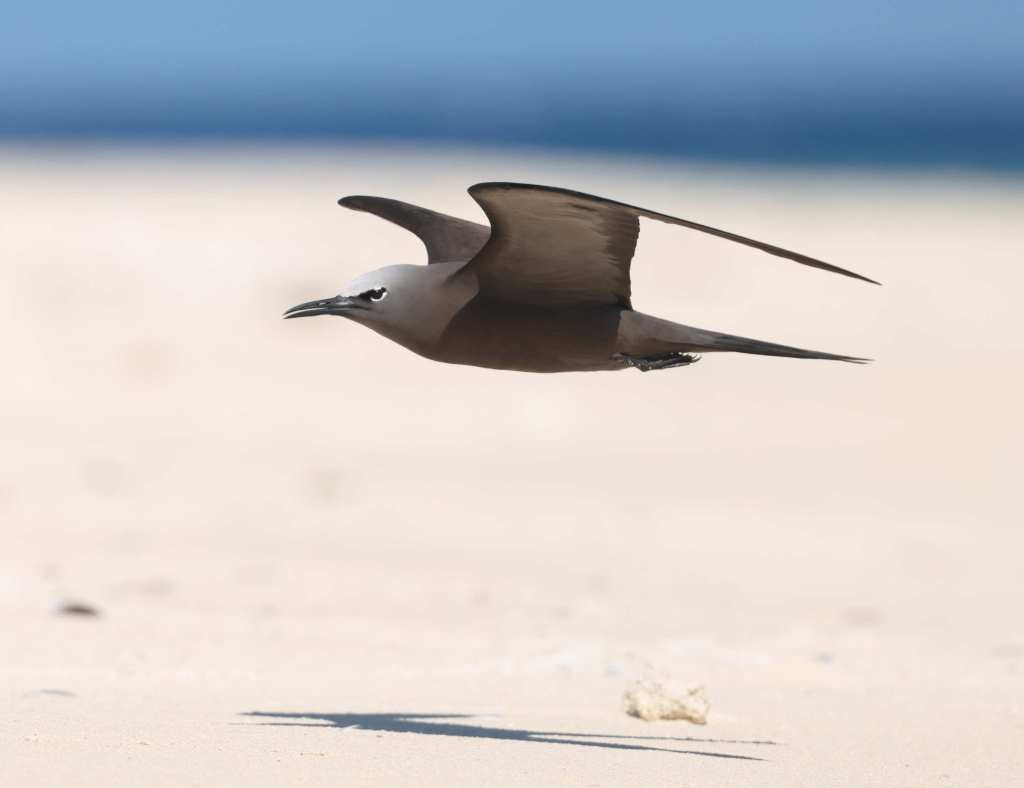
The Common Noddy – also known as a Brown Noddy – was yet another lifer bird and I found it the most difficult to photograph of the birds I saw, as I struggled to get any eye-glint and find the right exposure compensation for the dark brown feathers vs the light under the wings and the glare on their heads.
A soft rain fell for a very brief period while I was sitting blissfully on the sand with my camera, and this yielded a suitably dramatic picture of a noddy in the rain.
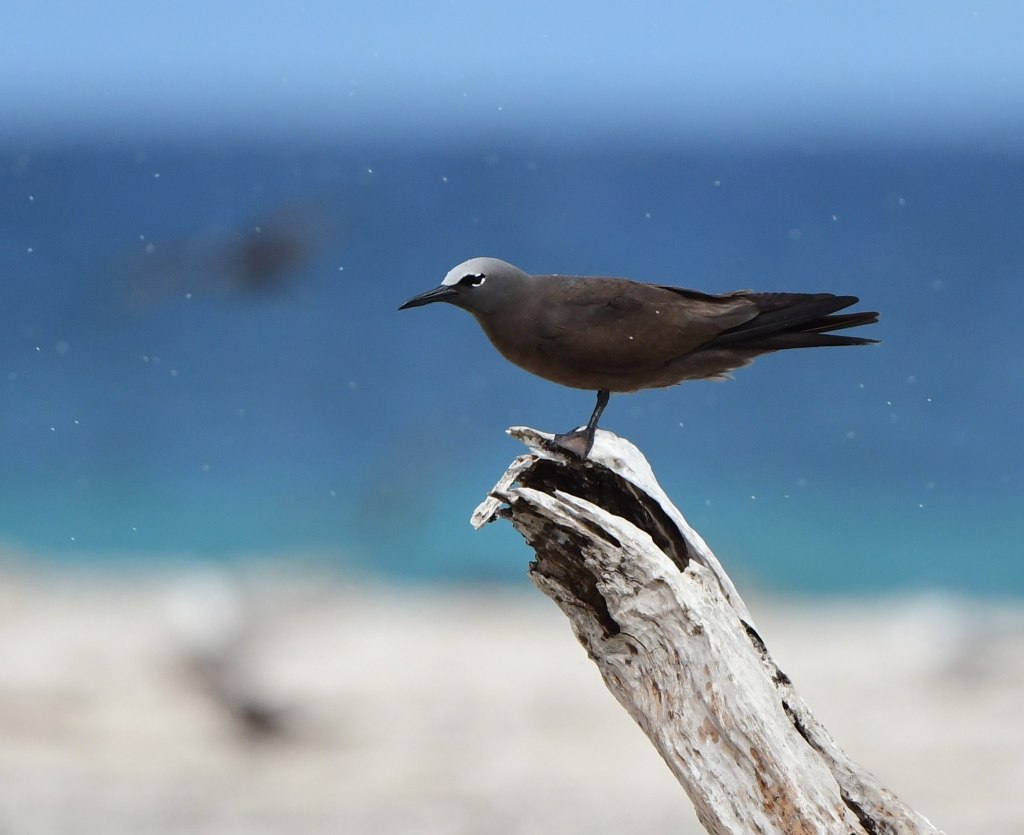
There were plenty of noddies and the below bird is a juvenile of this species.

Other birds I saw included a Ruddy Turnstone, which perhaps surprisingly is a regular on the island.
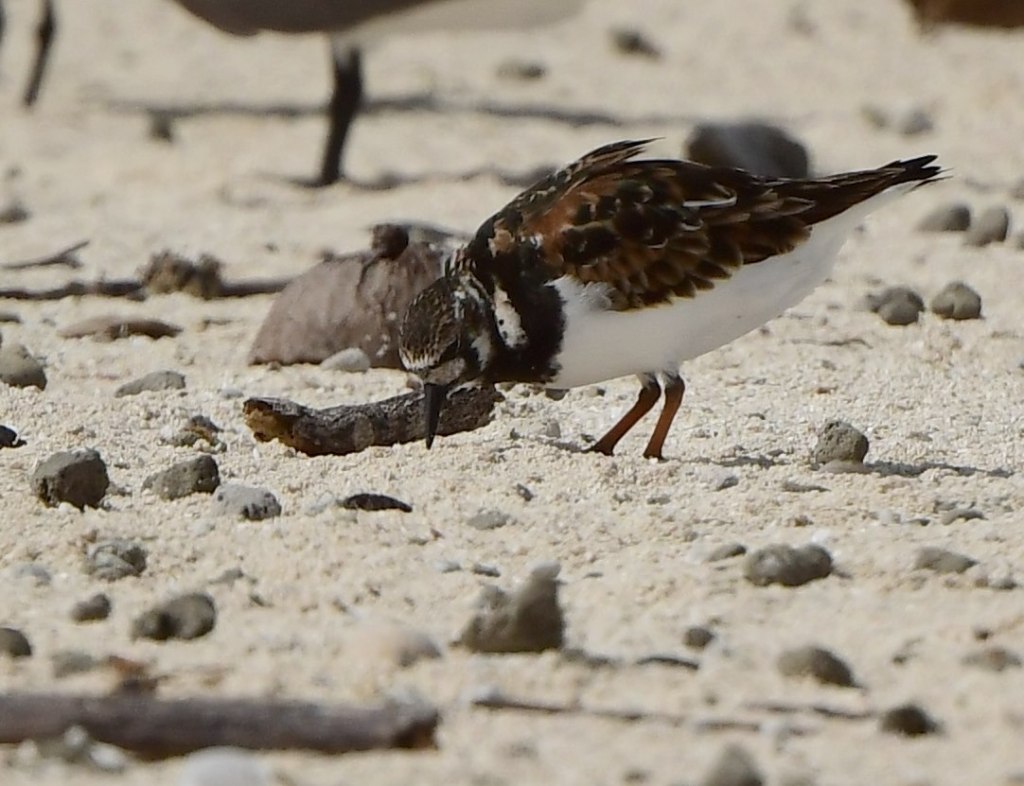
Although I did not see them, there is also have a good chance of Black Noddy, Lesser and Great Frigatebirds, Red-Footed and Masked Booby, Bridled Tern, Little Tern and Black-Naped Tern here, and there are even reasonable numbers of records of Roseate Tern on eBird.
A Revisit: August 2026
I had the opportunity to go back to Michaelmas Cay in 2026, again with Seastar cruises. The main species present were much the same as in 2021, but this time a couple of Great Frigatebirds joined the party.
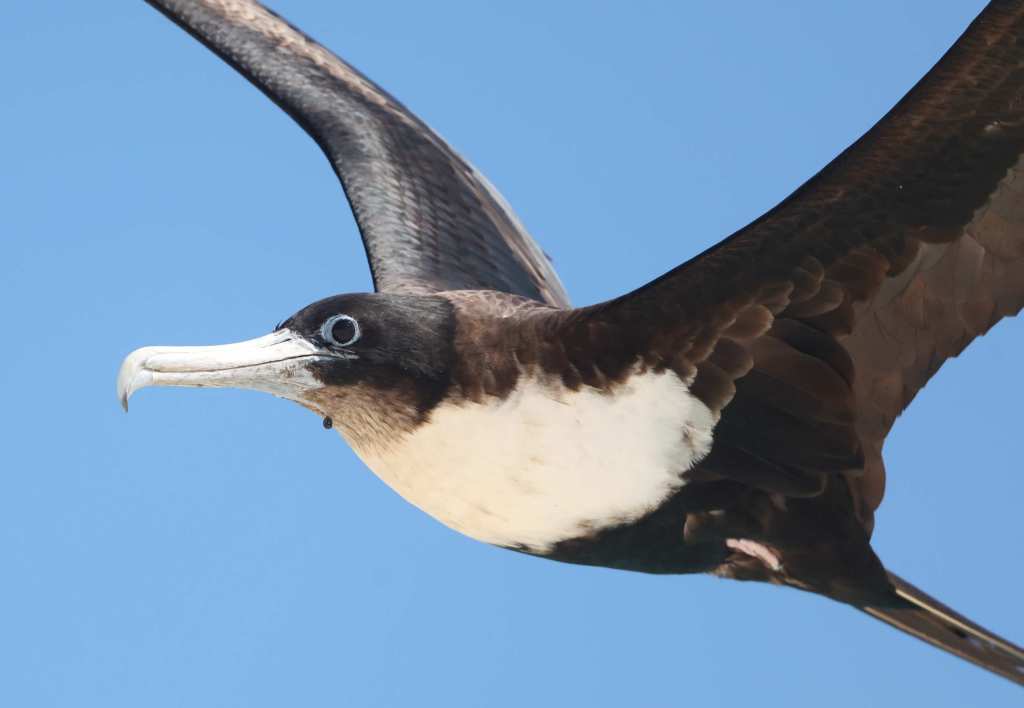
The frigatebirds were flying in and out of the flocks of other birds.
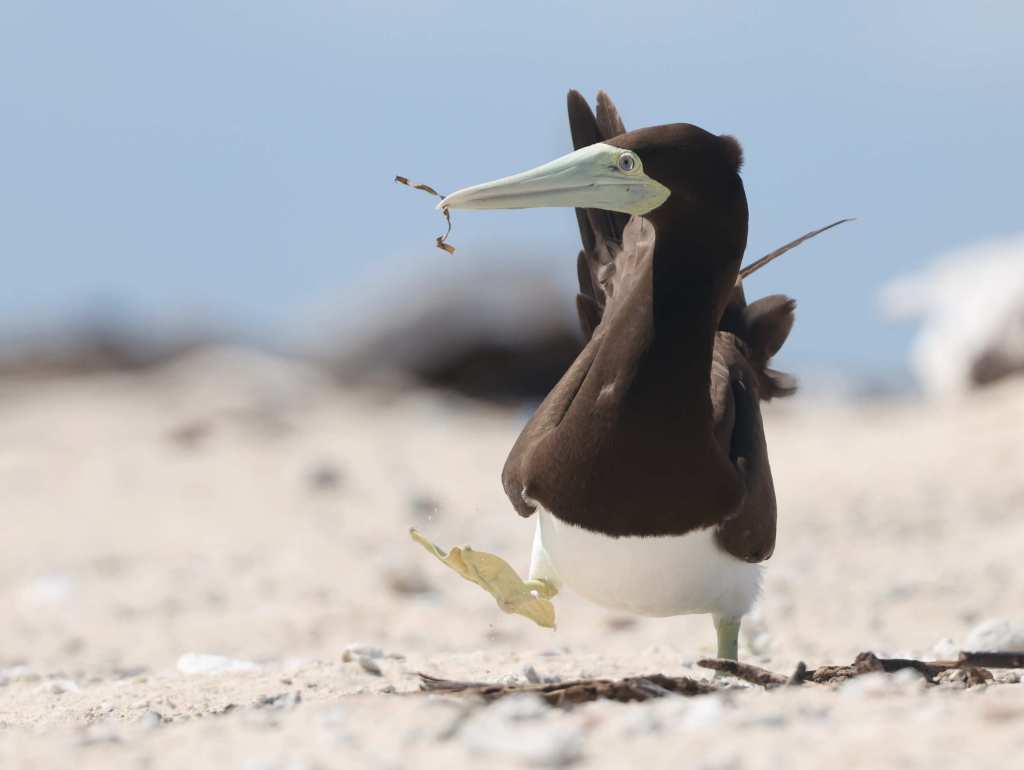
The Brown Boobies were as jaunty and endearing as ever; my favourite shot was this one collecting the daintiest small piece of nesting material.
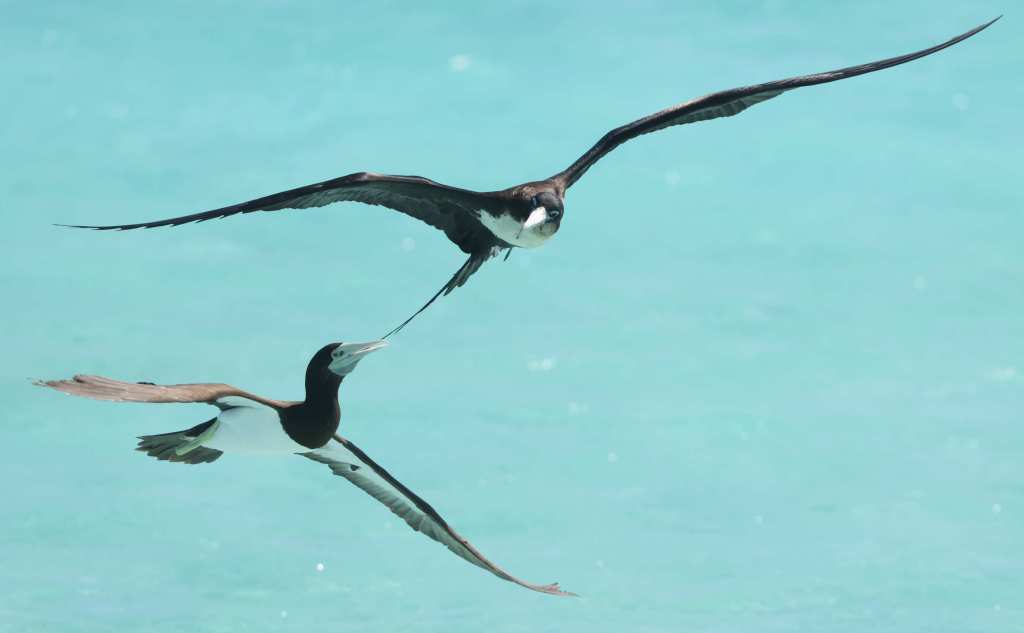
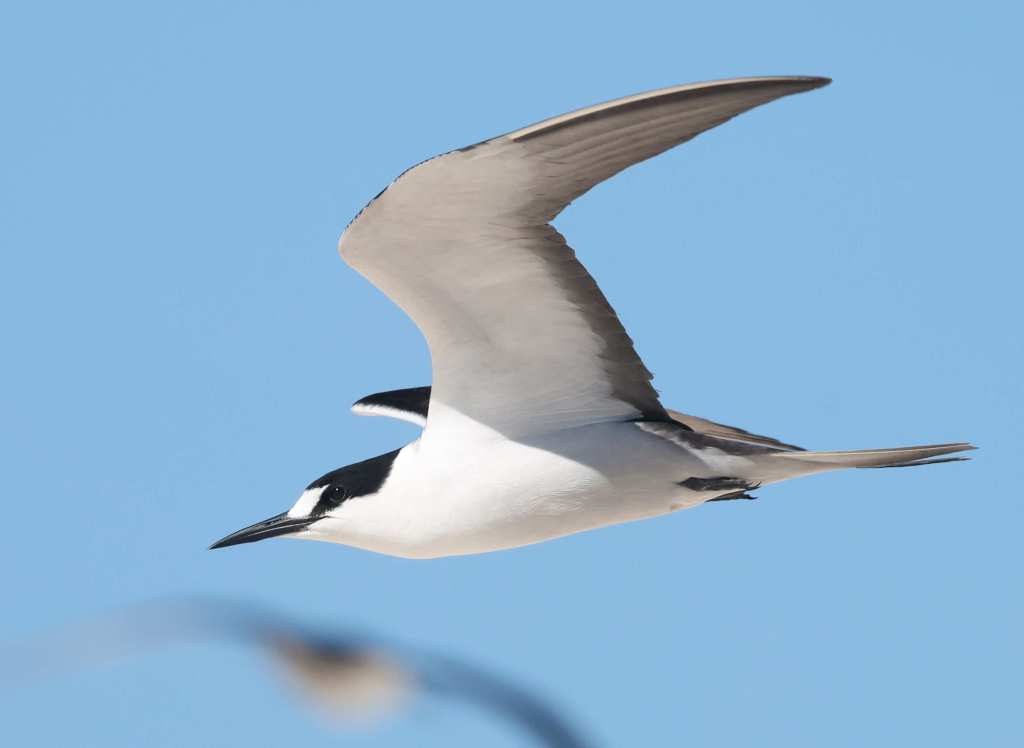
Apart from recording video this time, I was also trying to get some more birds-in-flight photos, fairly easy with modern mirrorless cameras as long as you have the glare of the sun well and truly behind you.
The cruise once again stopped at Hastings Reef and the snorkeling there was absolutely outstanding; I was still spotting new fish species even after an hour in the water, with huge Coral Trout and large, colourful Parrotfish being highlights.
Summary
I thoroughly enjoyed the both of the times I was able to spend on Michaelmas Cay. It is a very rare privilege to be able to sit quietly surrounded by hundreds or thousands of seabirds and both admire them in their natural habitat as well as come away with some very special photographic souvenirs to boot.
eBird:
Hotspot: Michaelmas Cay (96 species)
Checklist for first visit: Apr 14 2021 (7 species)
Pluses and minuses:
+ Heavenly location for observing large numbers of seabirds at close quarters
– Have to take an all-day paid cruise to get there

