Summary: Remote tropical lowland rainforest with unique and special birding
Dates of visit: Nov 13 to 17, 2023
Kutini-Payamu or Iron Range National Park is a large national park in Cape York, right at the top of Queensland. Biologically this region is heavily influenced by nearby Papua New Guinea, providing a smorgasbord of birds that can’t be found anywhere else in Australia, so for that reason alone it holds quite an appeal.
This blog post attempts a comprehensive coverage of birding at Iron Range, based on a trip made in November 2023 where our birding group of three visited all the main hotspots, many twice or even three times, across the course of four days. Things do change with the seasons and from year to year, but hopefully this write-up will give you a good idea of what to expect there… and get excited to go, if you haven’t been!
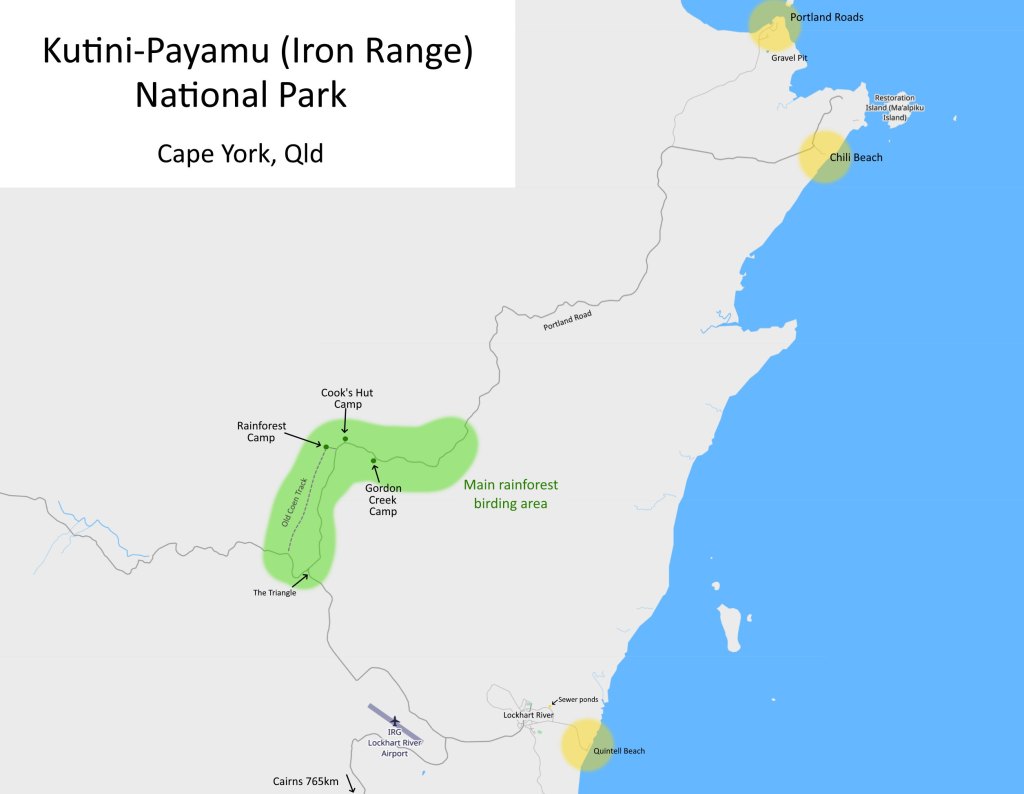
There are two main options for getting there: it is a minimum 10 hours drive from Cairns, or you can fly directly into the main township of Lockhart River on a SkyTrans flight. We chose the latter, as part of a fly/car hire/stay package offered by Portland House (see later in this post); other options for accommodation include Greenhoose (nearest non-camping accom to the national park), Iron Range Cabins (located right at the airport), and camping within the national park itself (either in the main rainforest or out at Chili Beach). In any case, you’re likely going to need a car to explore the area.
Choosing your time of year to head up to Iron Range can be a vexing question. One of the key and very desirable bird species to see there is the South Papuan Pitta (formerly known as the Red-Bellied Pitta), but this bird is a strictly summer visitor: if you must see this bird, one strategy is to search for it in early summer before the torrential summer rains (which start unpredictably around the start of January and extend to March) which means going in mid/late December. You definitely don’t want to get caught out in monsoon season as you can be literally trapped for weeks at a time. On the other hand, if the pitta is of less concern, you could target a mid-year trip where the weather is dry and slightly cooler.
There are many wonderful birds to look out for up here, most particularly including: South Papuan Pitta, Palm Cockatoo, Magnificent Riflebird, Yellow-Billed Kingfisher, Papuan Eclectus, Black-Winged Monarch, Black-Eared Catbird, Red-Cheeked Parrot, Trumpet Manucode, Fawn-Breasted Bowerbird, Yellow-Legged Flyrobin, White-Faced Robin, Northern Scrub-robin, Tropical Scrubwren, White-Streaked Honeyeater, Green-Backed Honeyeater. If this seems like a an exotic list of strangely-monikered species to you, that’s because most of these are endemic and are found nowhere else in Australia. This really is a special place!
Lockhart River township and Quintell Beach
After flying into Lockhart River and picking up some supplies from the local supermarket (whose provisions are serviceable but a bit patchy), we dropped in at the town’s sewer ponds to see if there were any interesting birds about. Yes, this is what you do as a birder, head straight for the wastewater treatment plants…
There were some fires burning on the edge of the ponds and consequent smoke.
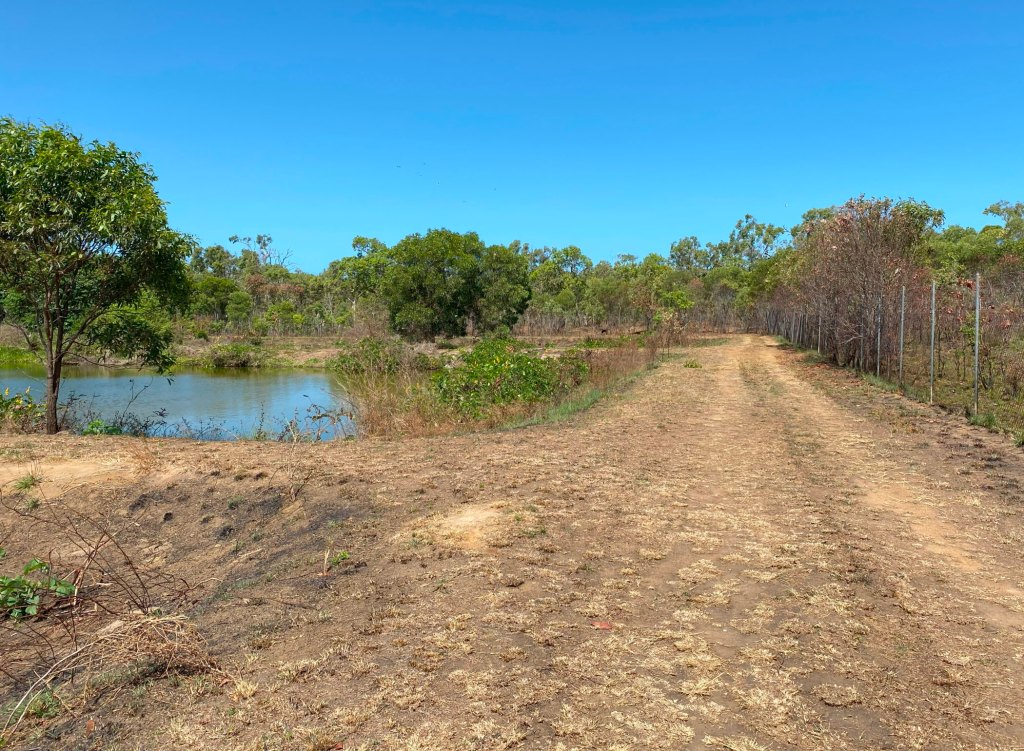
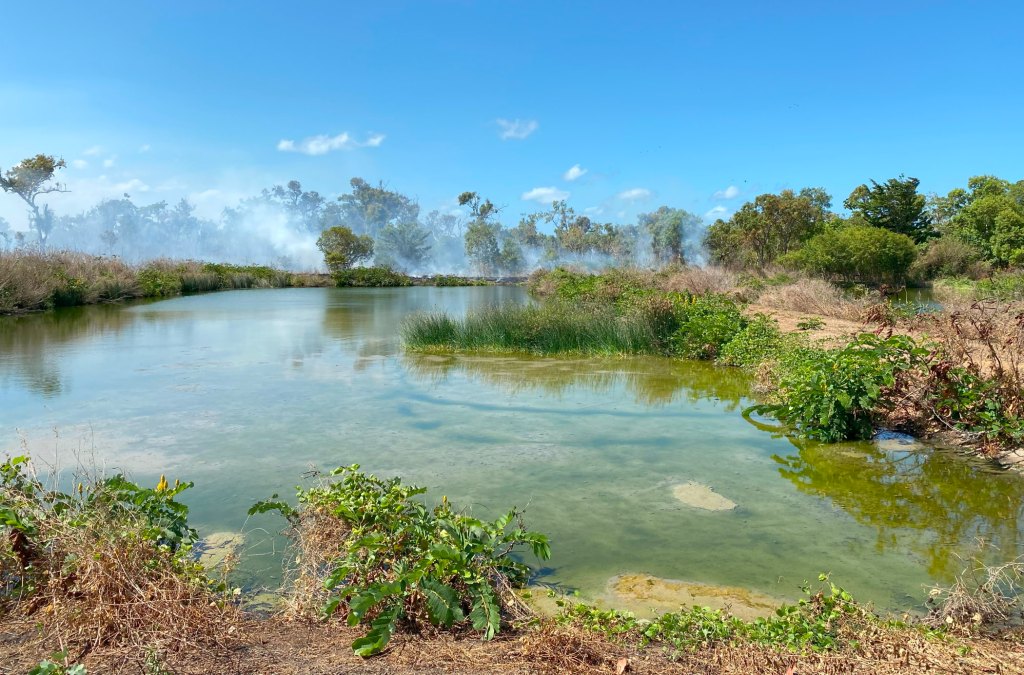
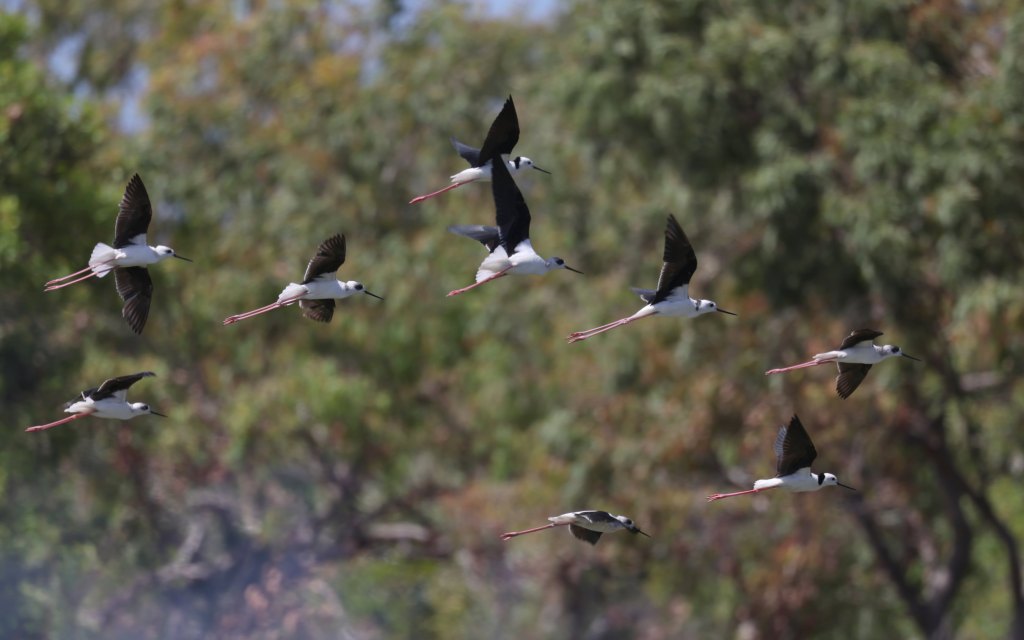
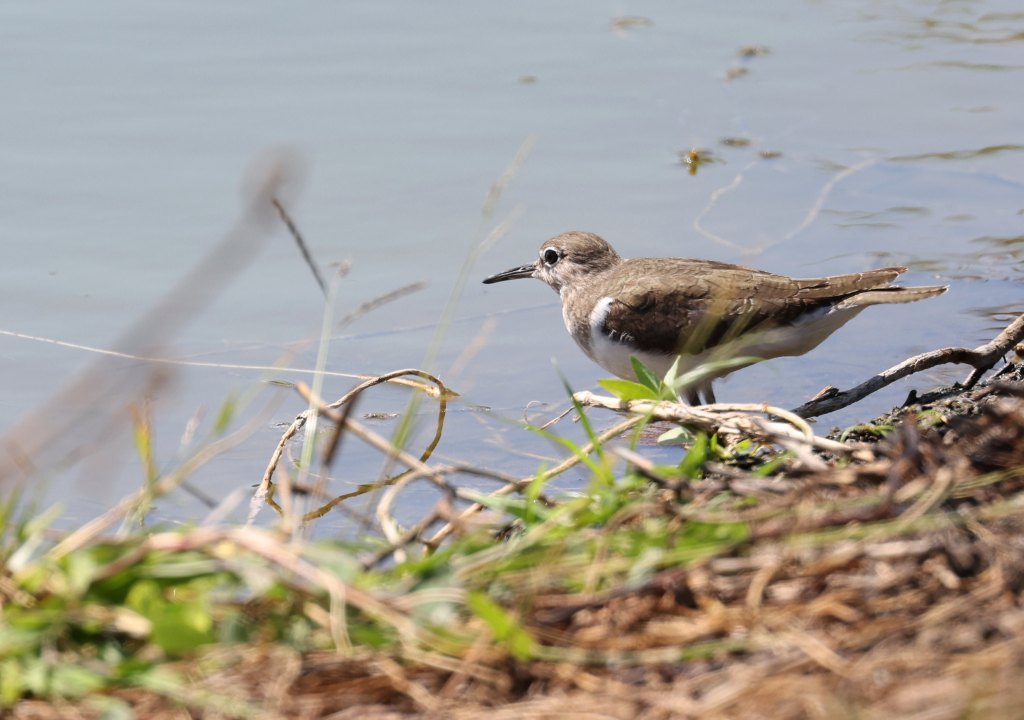
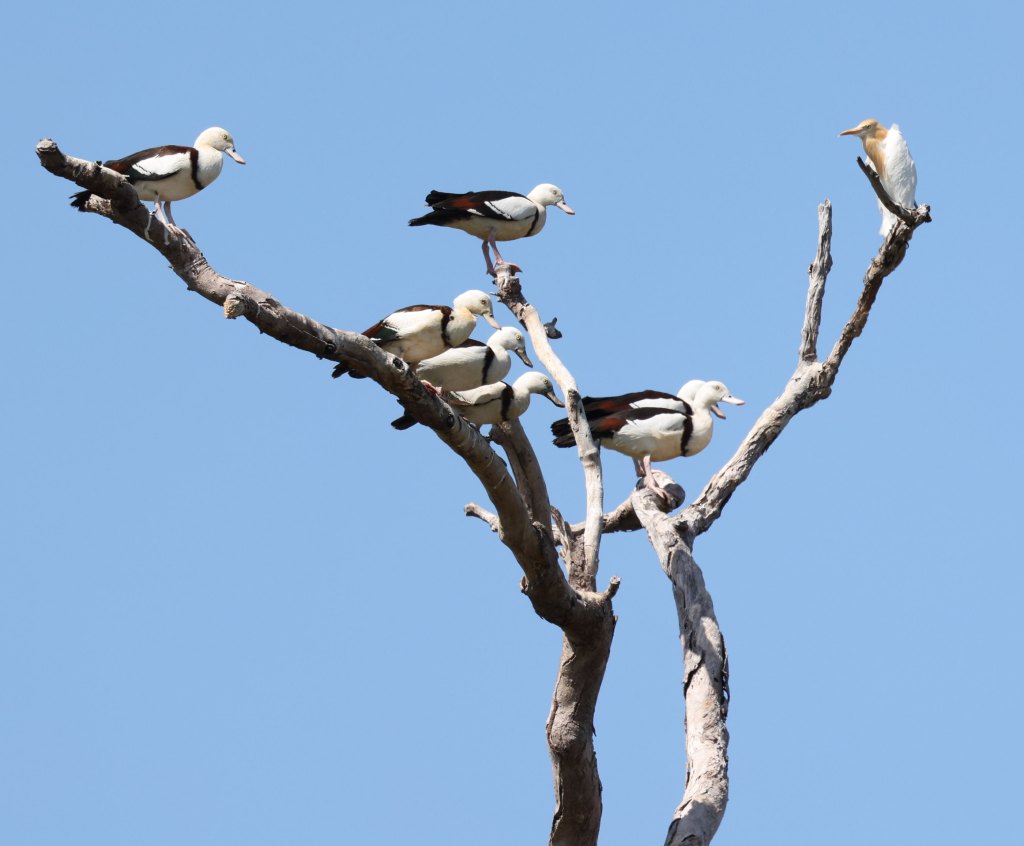
At the furthest pond away from the fires we saw some Grey Teals, Pacific Black Ducks, and Pied Stilts, while a Whistling Kite also flew over. A Common Sandpiper was the first bird we saw which was a little exotic to those of us from southern climes, as was a Pied Heron. A group of Radjah Shelducks also hung out in a tree with a Cattle Egret. Note that Spotted Whistling Ducks (which we didn’t see at these ponds) are definitely ones to look out for anywhere near ponds or bodies of water, as they are only found in far north Queensland and even then are sometimes quite hard to get onto.
A little further east from Lockhart River the road ends at Quintell Beach, a strip of coast made rather picturesque by jumbles of large boulders along the shoreline.
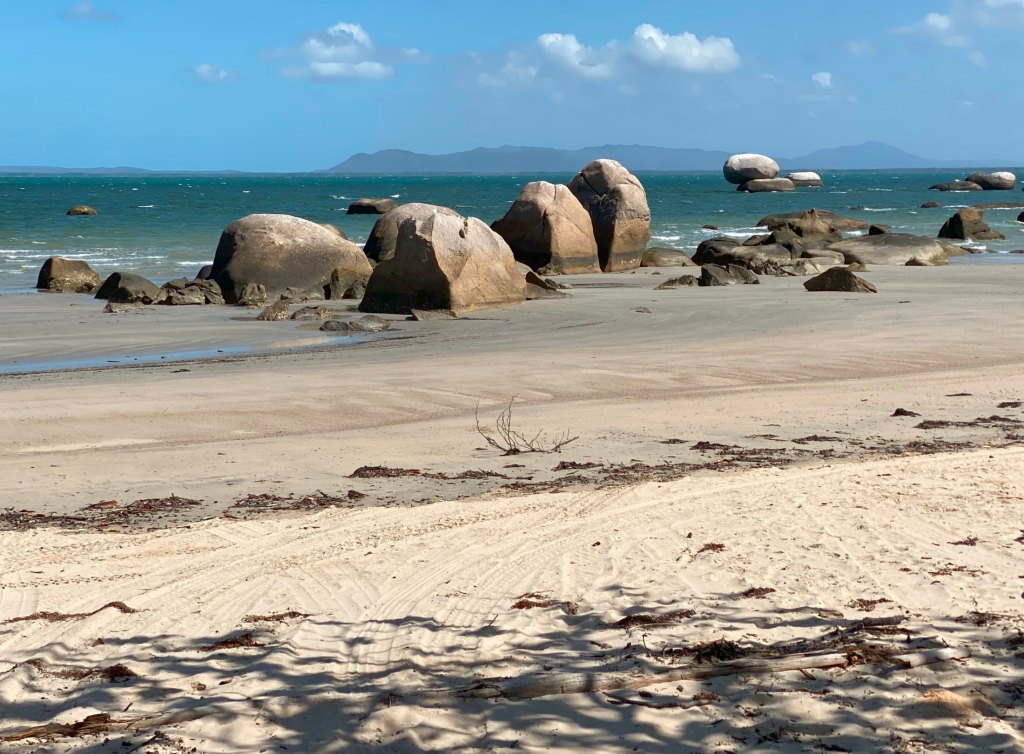
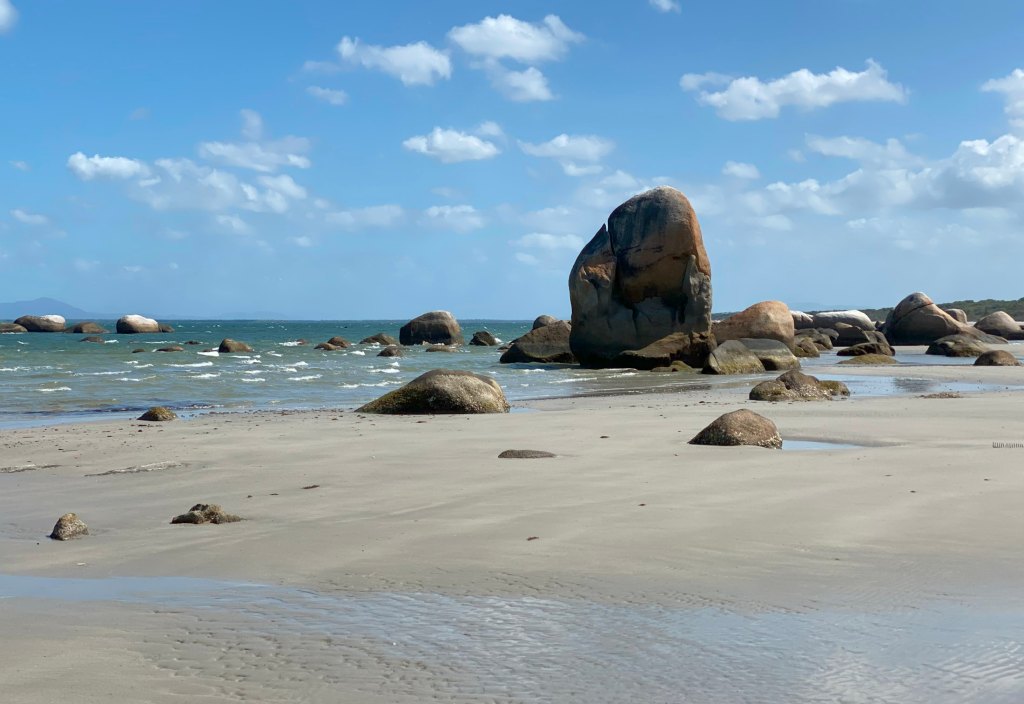
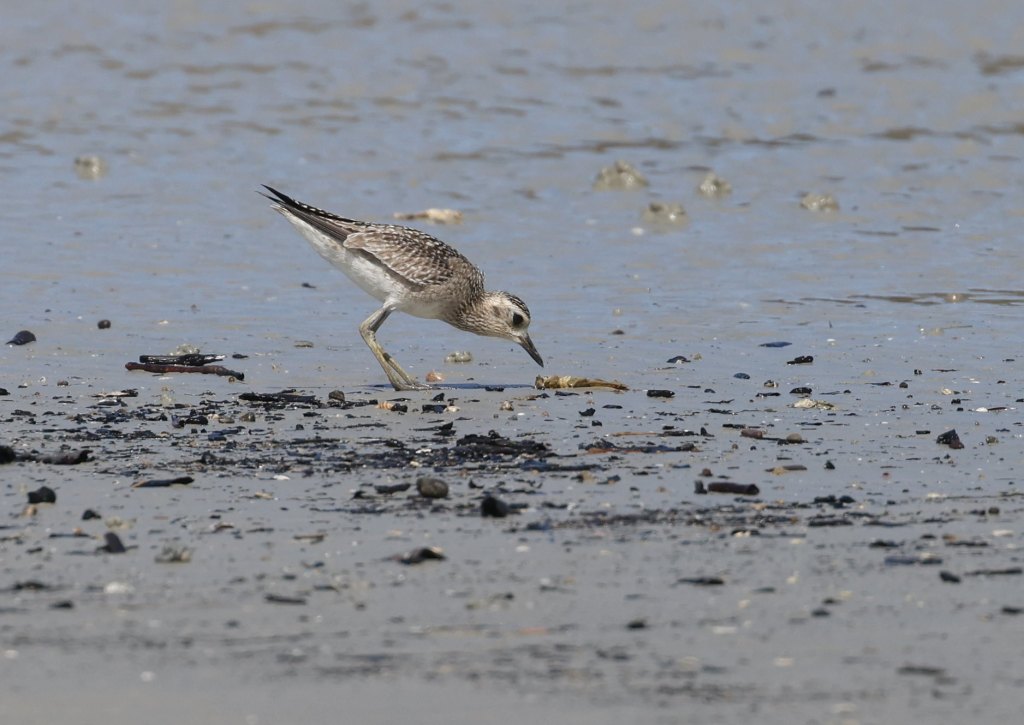
On the beach we saw another Common Sandpiper, some far-off Lesser Crested Terns and Silver Gulls, and a lone Pacific Golden Plover. eBird lists for this location show mostly plovers and shorebirds which are fairly common up and down the Queensland coast, but here you might also have a chance at a vagrant gull or tern, and you definitely have a decent shot at a frigatebird (Lesser or Great) particularly during the winter months.
The start of the Iron Range rainforest
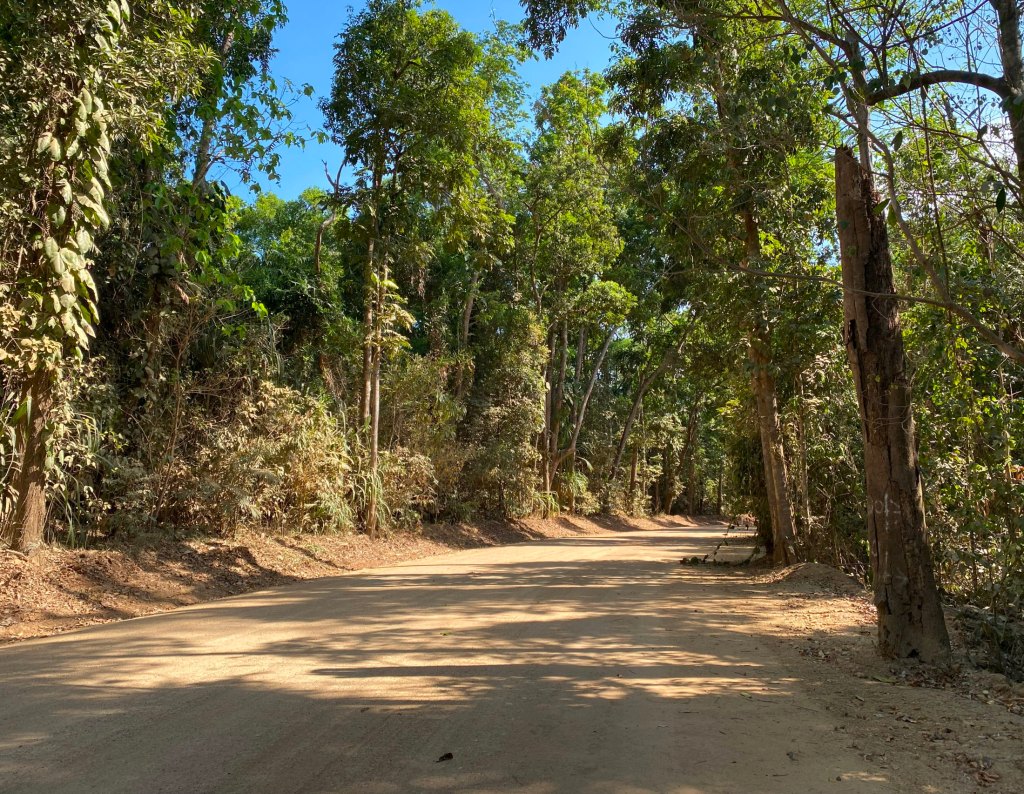
The main drawcard of Iron Range is the low-lying rainforest – in fact it is the largest tract of lowland rainforest in Australia, and is very biodiverse. A good spot to include when visiting is “The Triangle”, an intersection where Portland Rd meets Lockhart River Rd. Like much of birding Iron Range, it is a case of walking up and down the road looking into the fringing rainforest or checking what might be flying over.
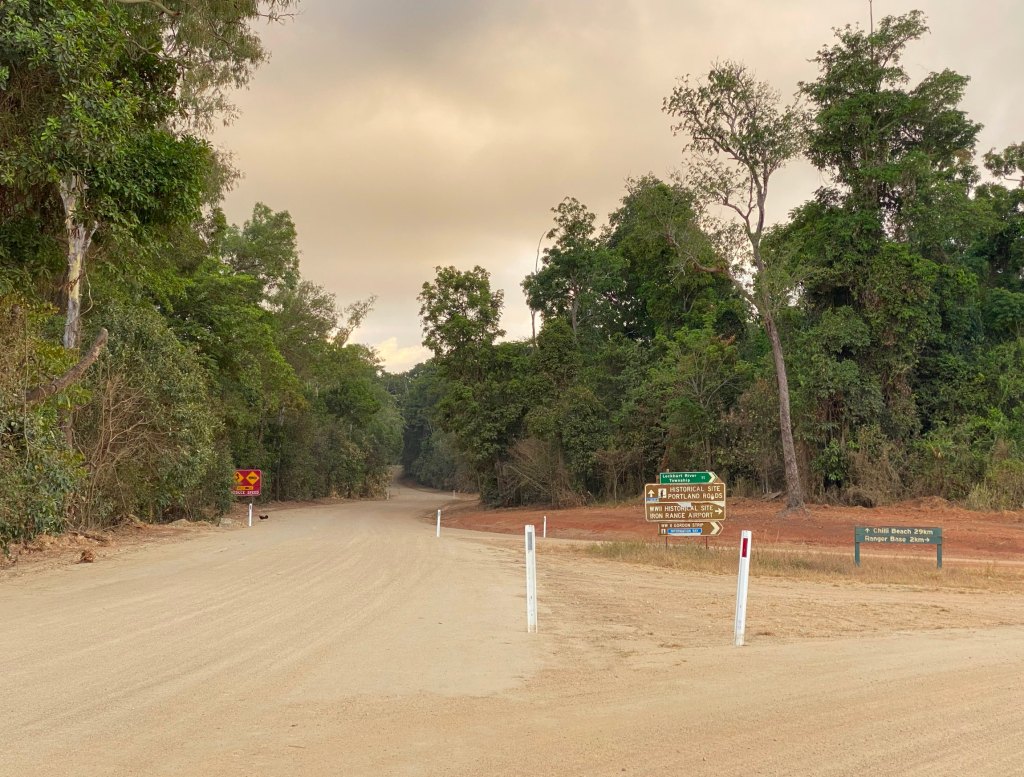
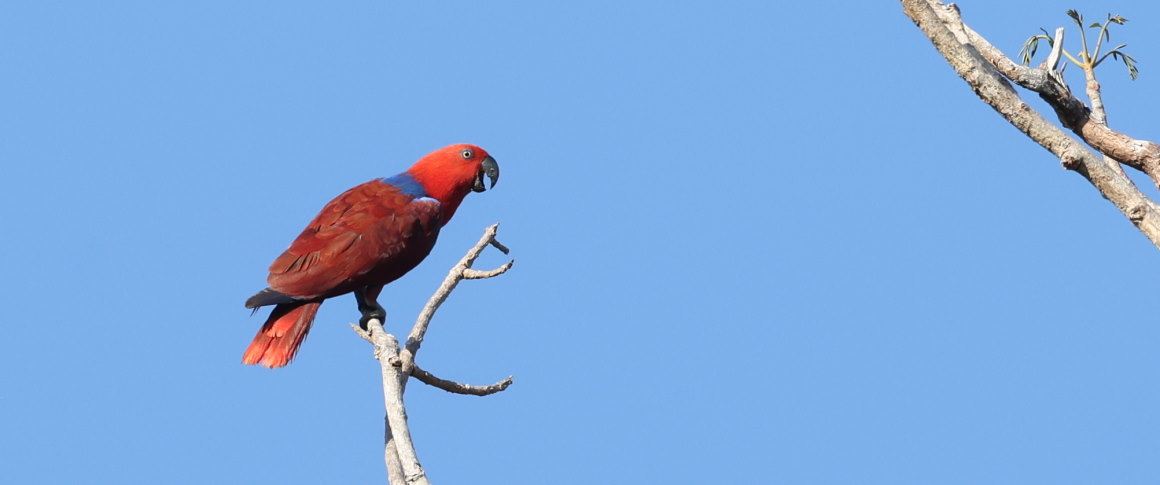
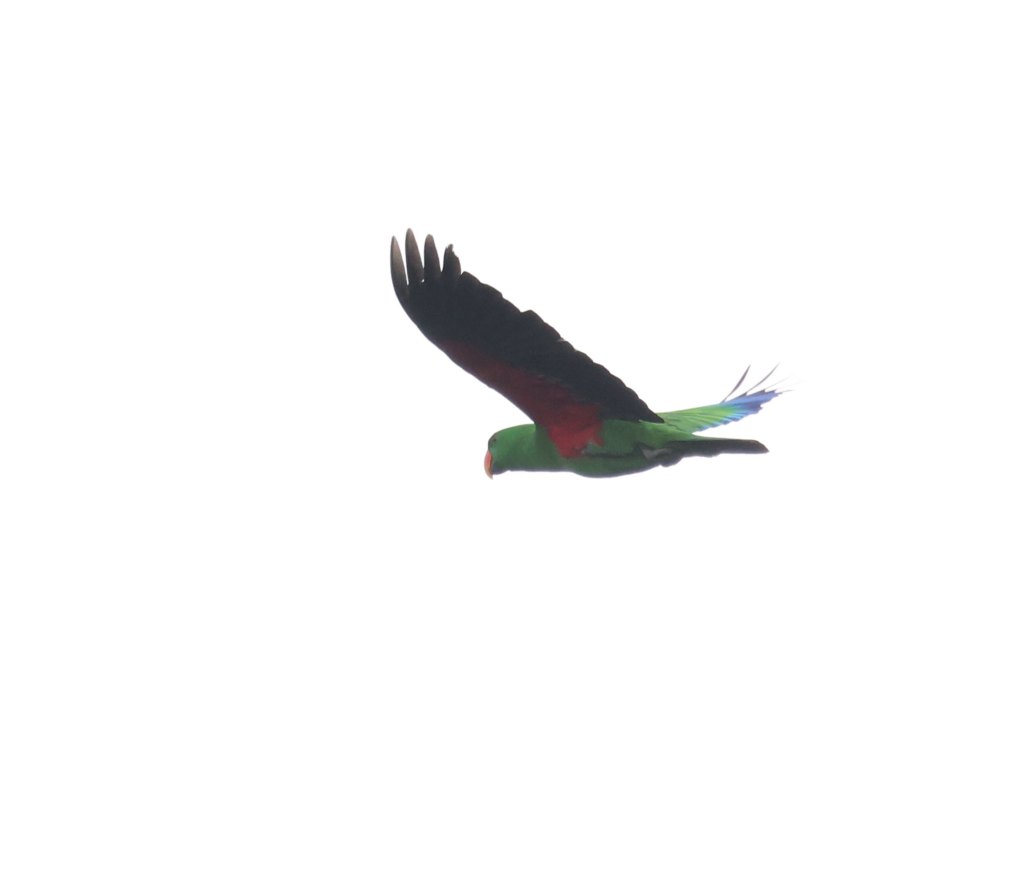
In this area we found Sulphur-Crested Cockatoos, Green Orioles, White-Bellied Cuckooshrikes and a small flock of Figbirds which had some Metallic Starlings mixed in. There were Brown-Backed and Yellow-Spotted Honeyeaters, and an Eclectus Parrot (now called Papuan Eclectus) flew over at one point, which was a tad exciting. It was a male bird, mostly green; unusually, the female of this species has the distinction of being more vividly coloured with red and blue hues.
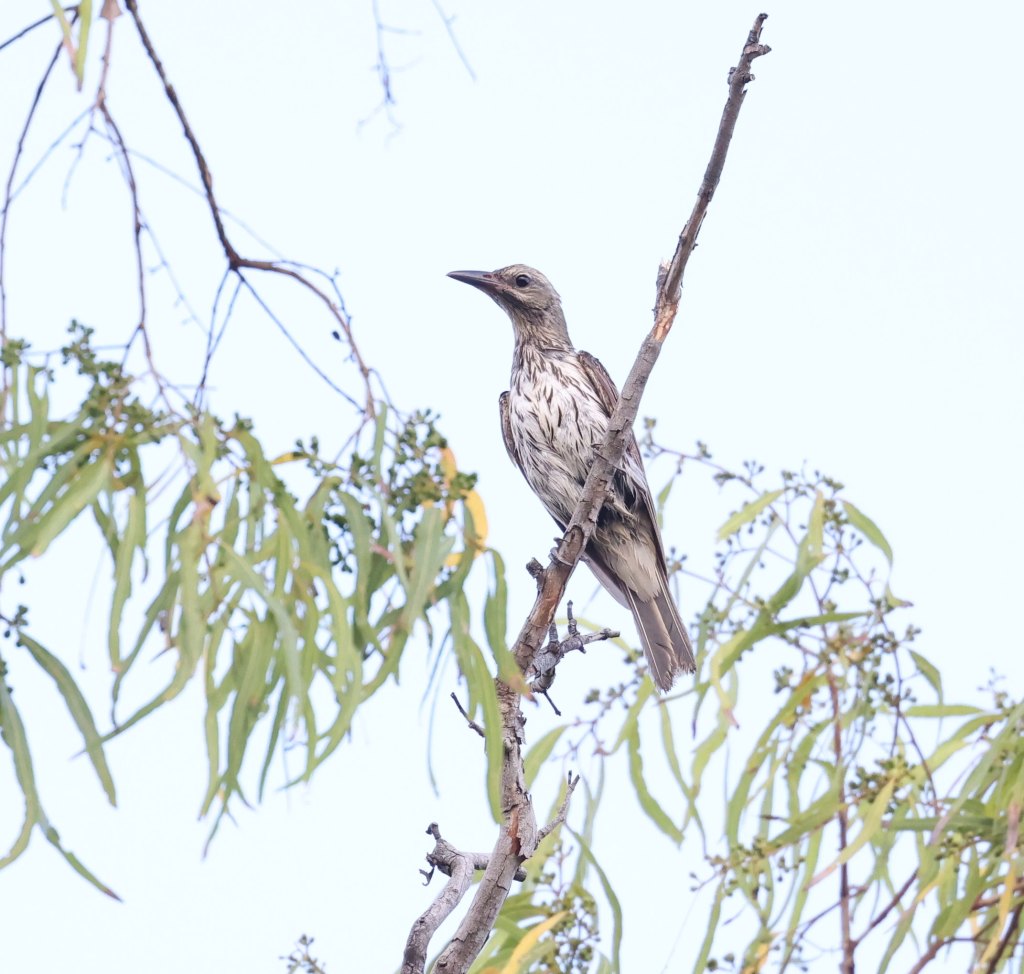
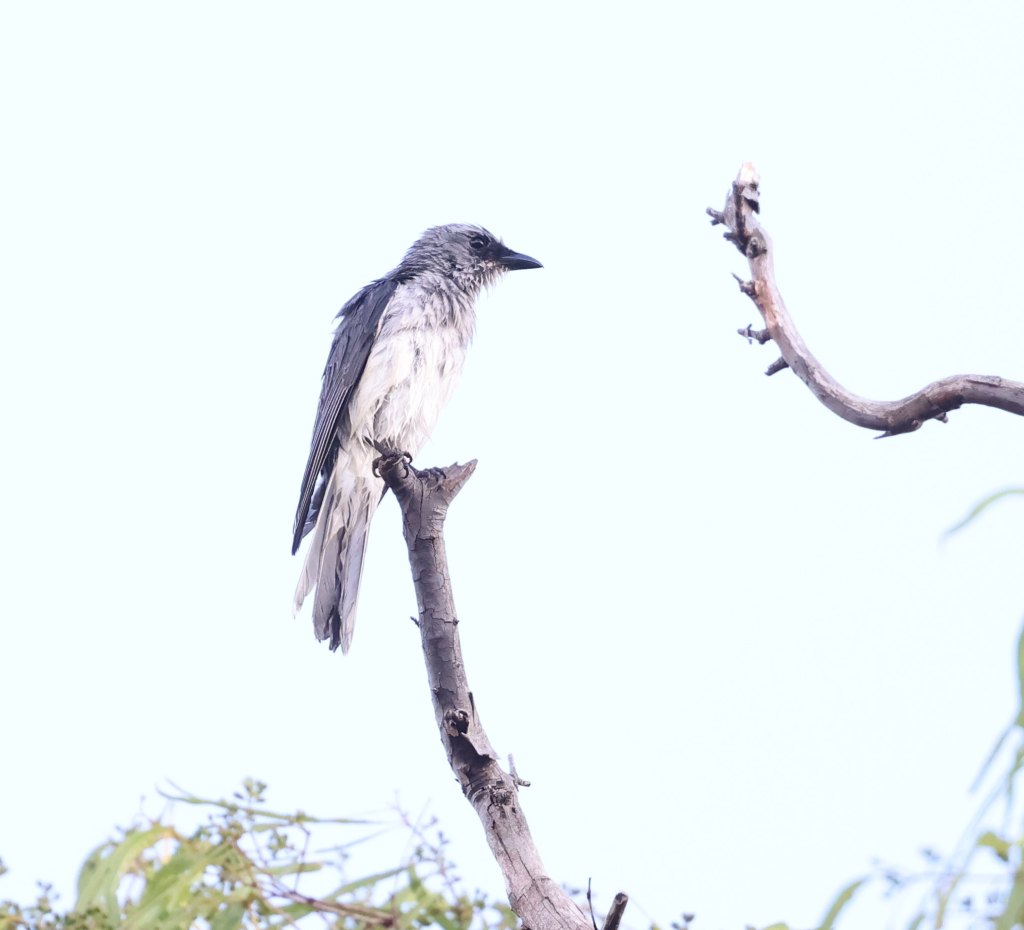
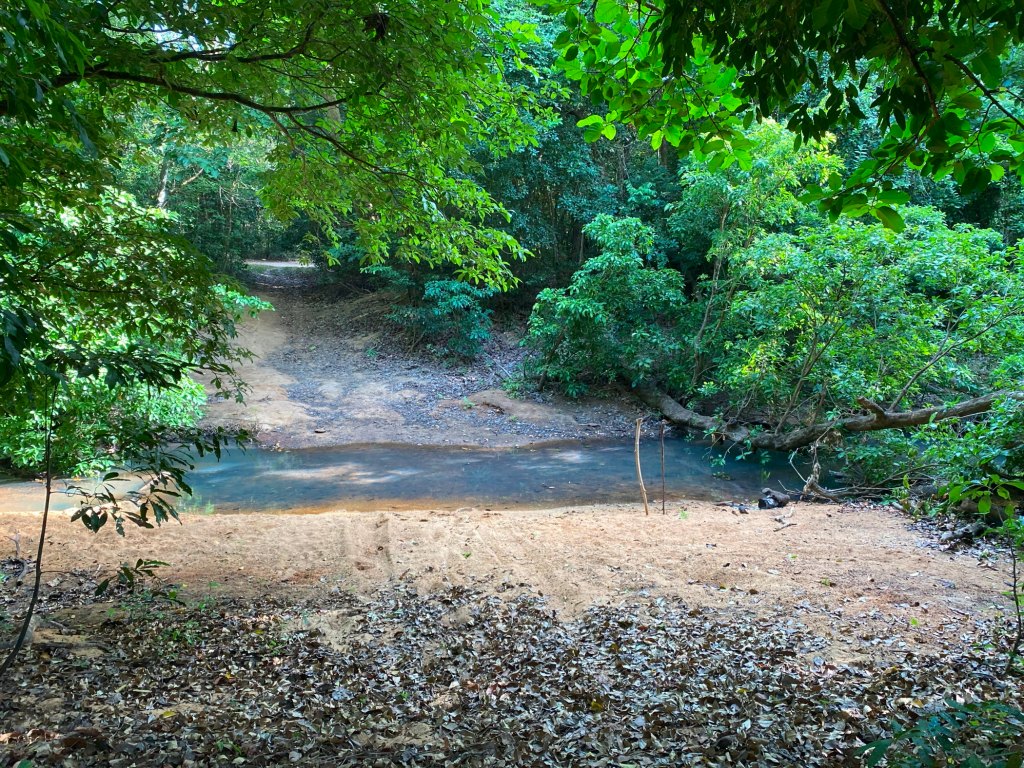
On the west side of The Triangle is the southern entrance to the Old Coen Track, one of the only long rainforest trails in Iron Range. We couldn’t go far there due to the creek crossing looking a bit dodgy, but we weren’t worried as we were keener to track down the call of a Black-Eared Catbird nearby, which we eventually did but couldn’t manage any good photos.
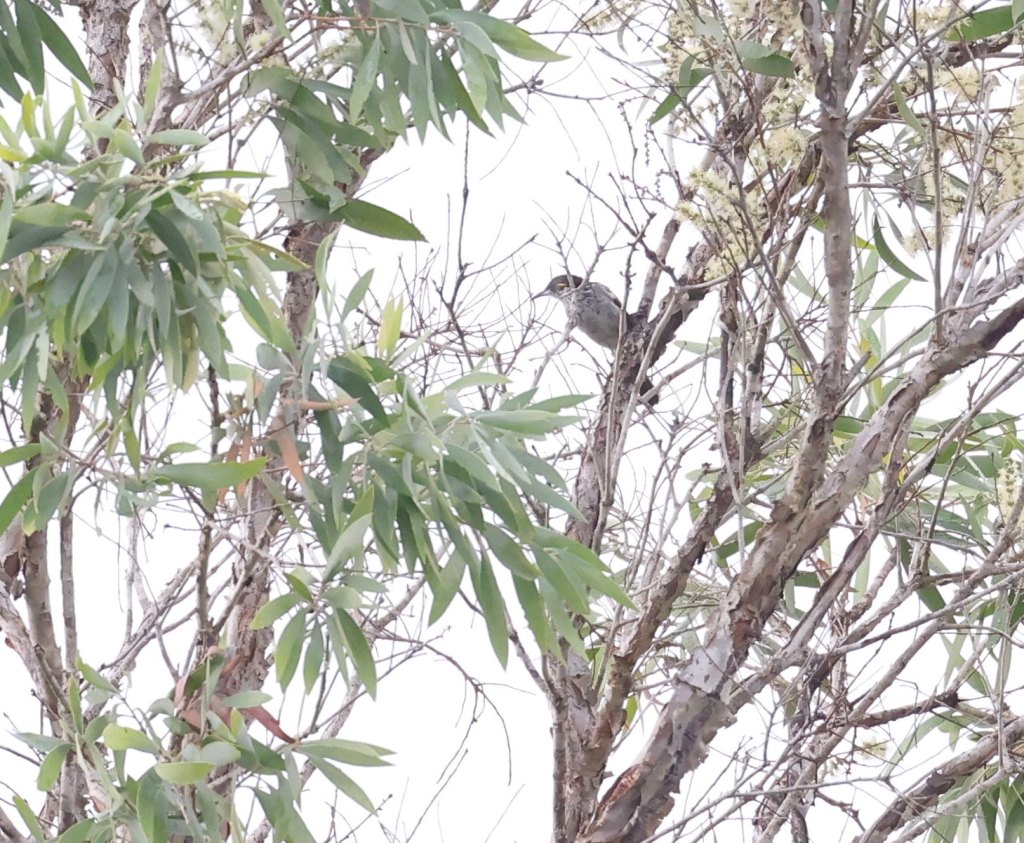
This section of Iron Range near The Triangle is reportedly a good one to find White-Streaked Honeyeater, a far north Queensland specialty, and we were lucky enough to see four, though not particularly closely.
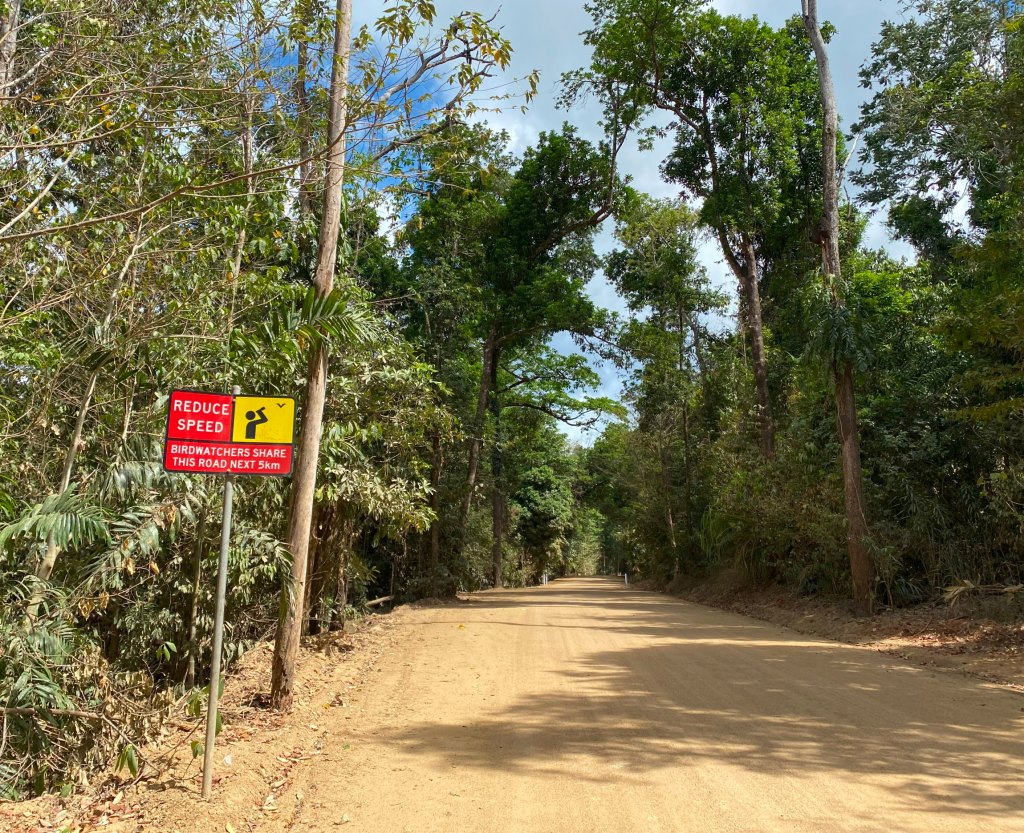
Further east from The Triangle as you go deeper into Portland Road, you will see a caution sign saying “Birdwatchers share this road” which is not something you see every day. Yes, it is often a case of opportunistic birding from the road, and you will no doubt hear the calls of Magnificent Riflebirds and other enticing species. Laying eyes on them might be a bit tougher!
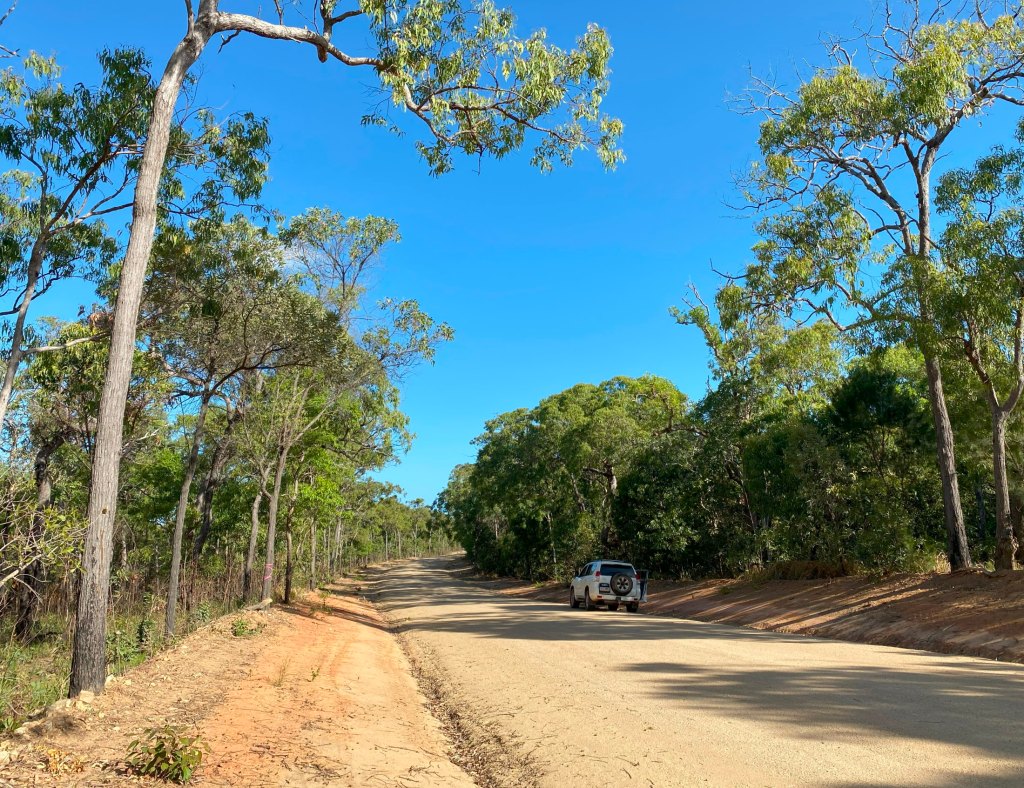
It should also be noted that the condition of Portland Road, the main unsealed road that runs through Iron Range, can vary quite a lot depending on rainfall and the recency since the last time it was graded. Apparently it can get very bad; we were lucky enough to visit in November only a few weeks after it was graded and had no problems.
Old Coen Track
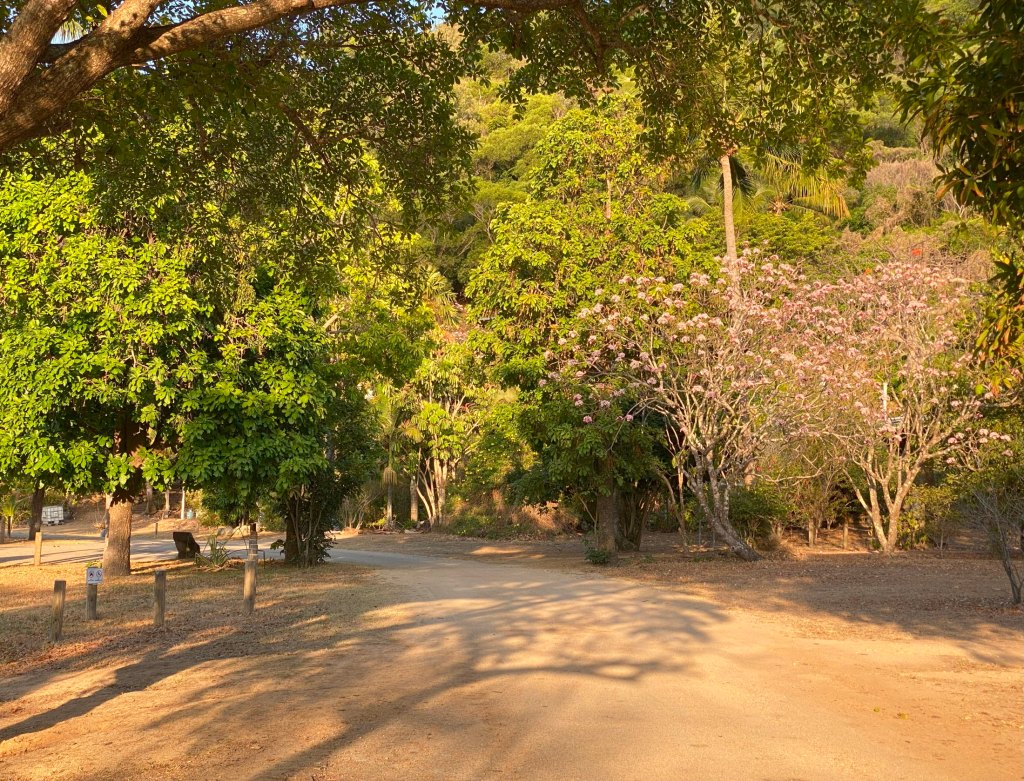
The Old Coen Track starts at the Rainforest Camping Area, and runs for a good couple of kilometres fairly straight through the rainforest, terminating just past The Triangle mentioned above. Before launching into the Coen Track, be sure to thoroughly check for wildlife around the camping area, as it is all part of the same rainforest so any of the birds along the track could also be seen here too.
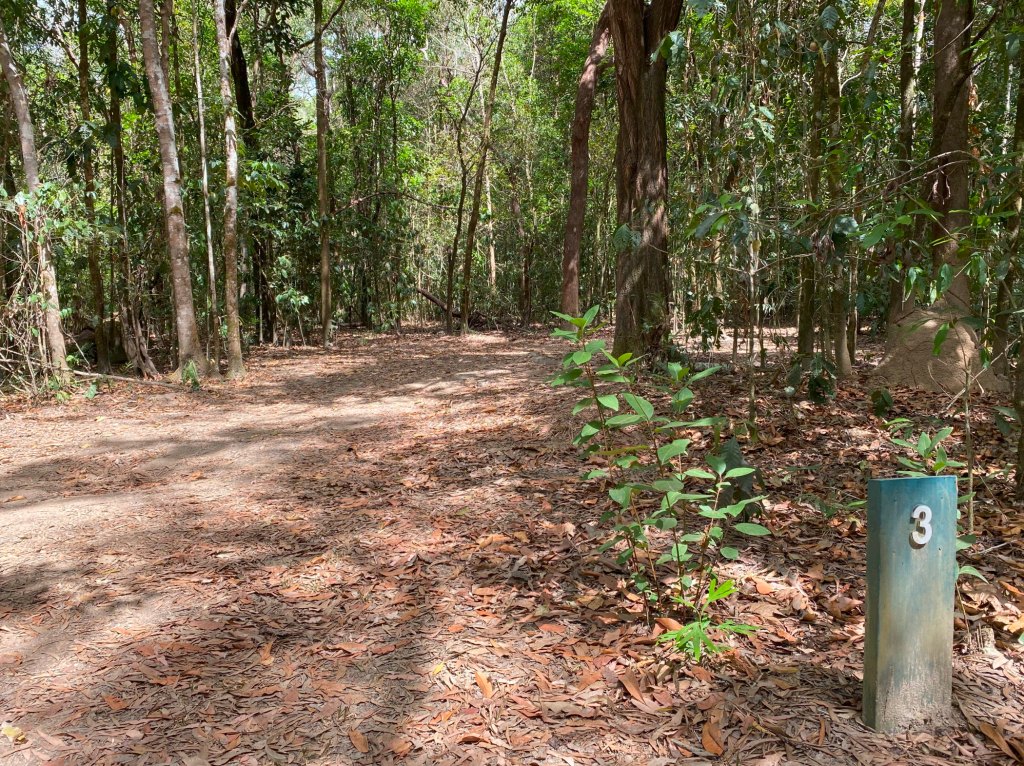
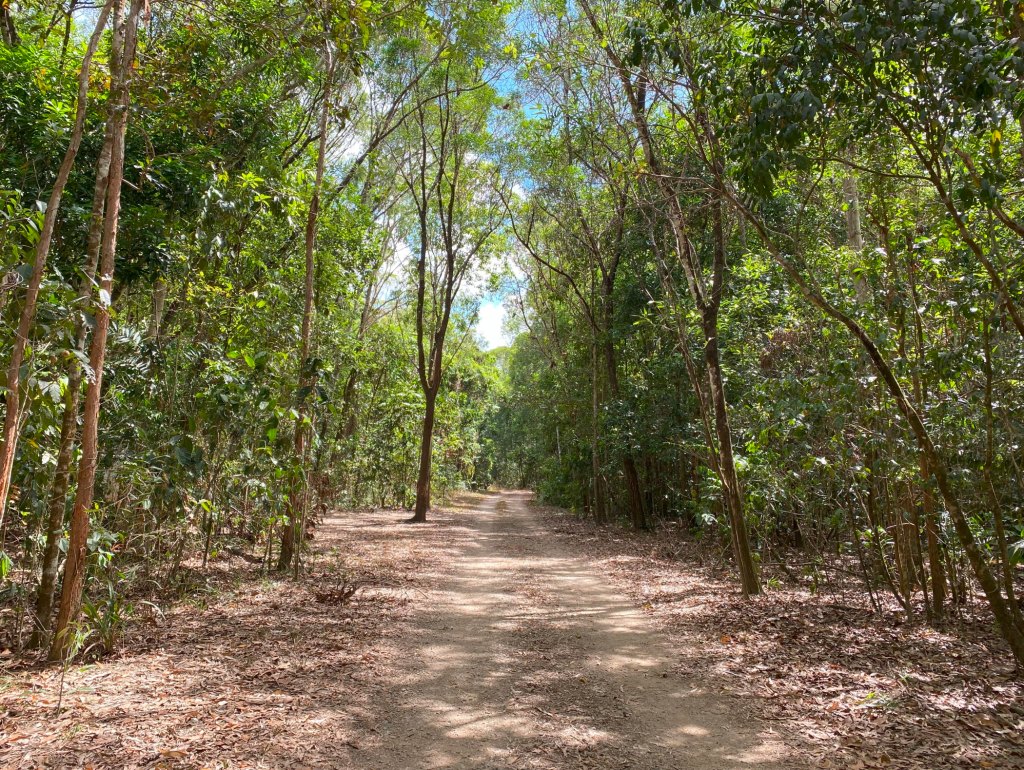
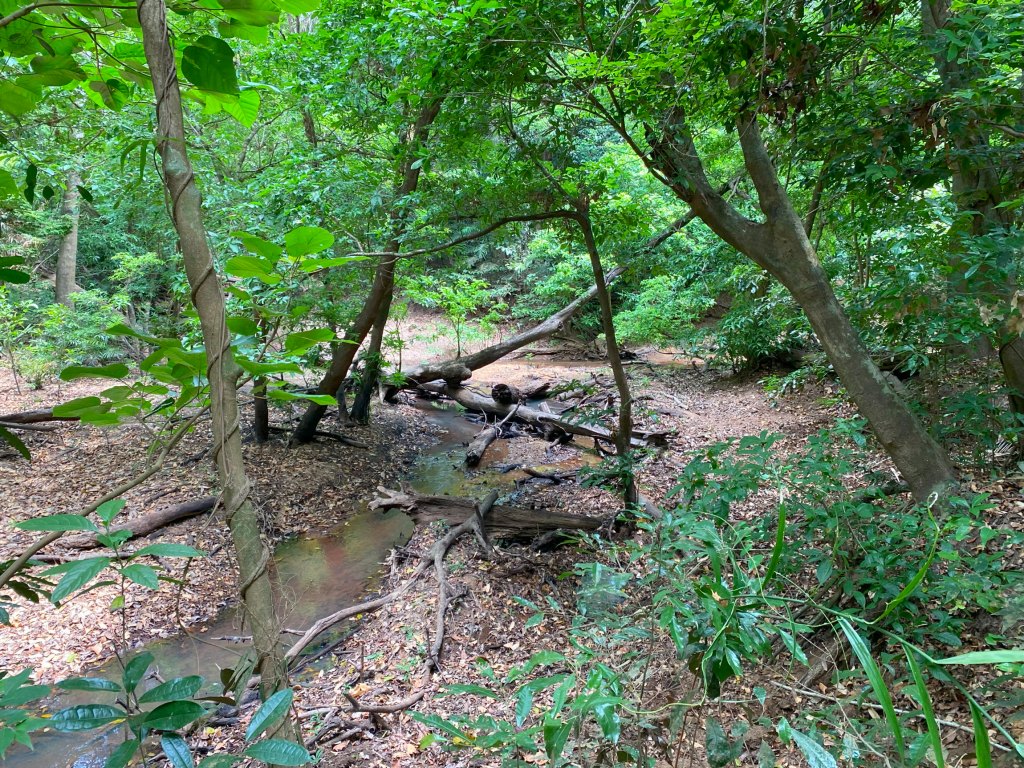
There is a creek to cross at the start of the track, which might prove difficult post-rain, but was manageable for our group of three, clambering across a fallen tree and holding onto branches to avoid getting our feet wet.
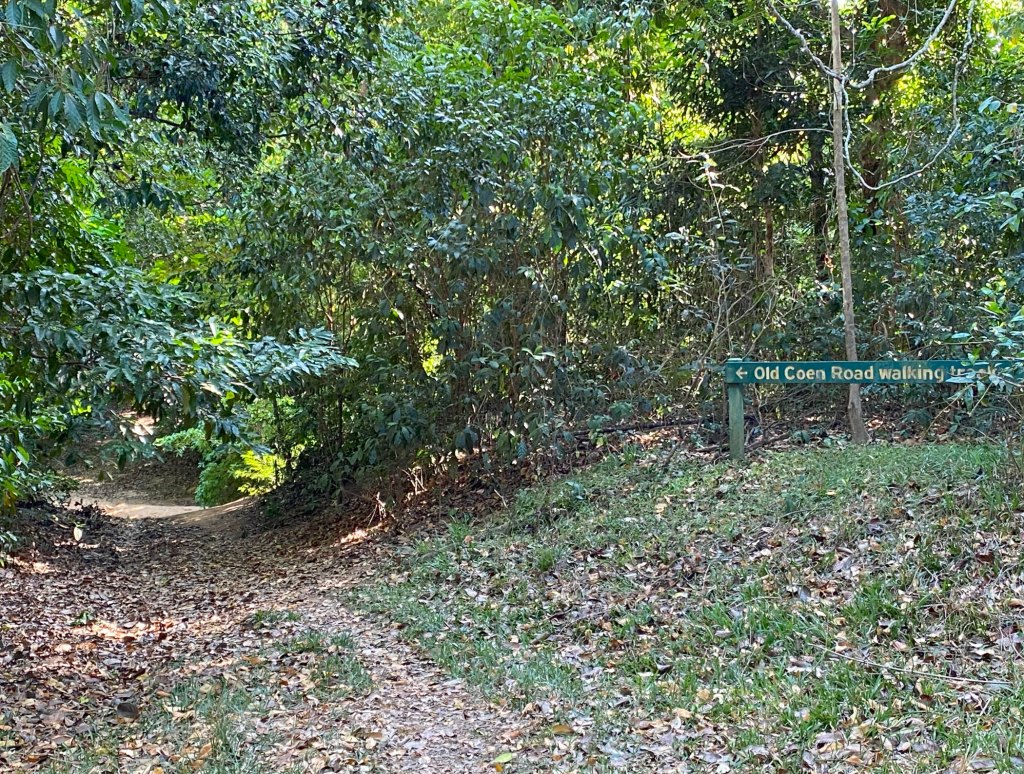
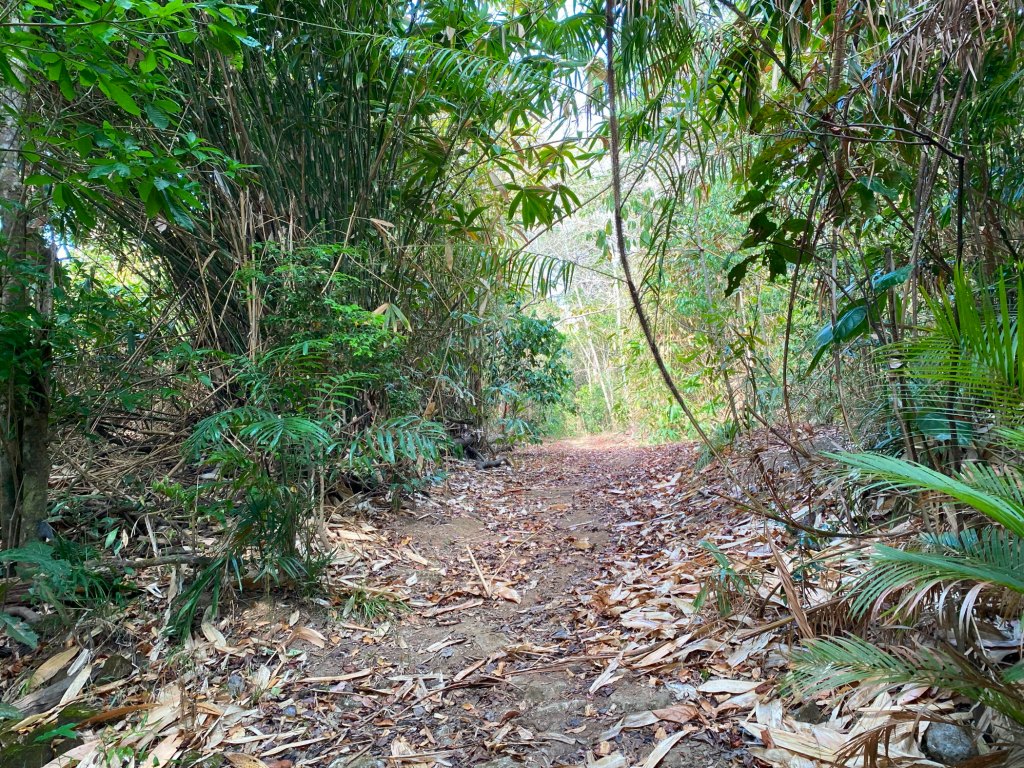
We found the track fairly wide and easy-going, and our two main morning excursions along each yielded 24 bird species, including a few sightings of both the male and female Papuan Eclectus.
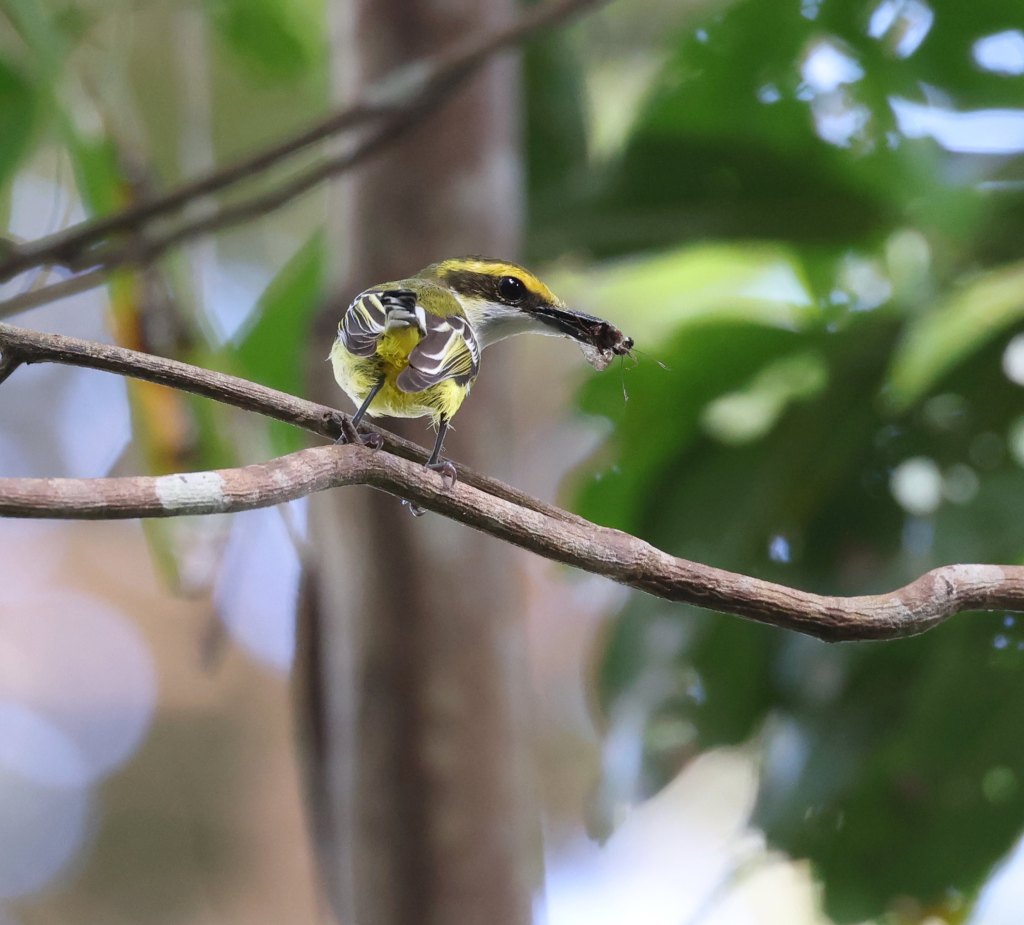
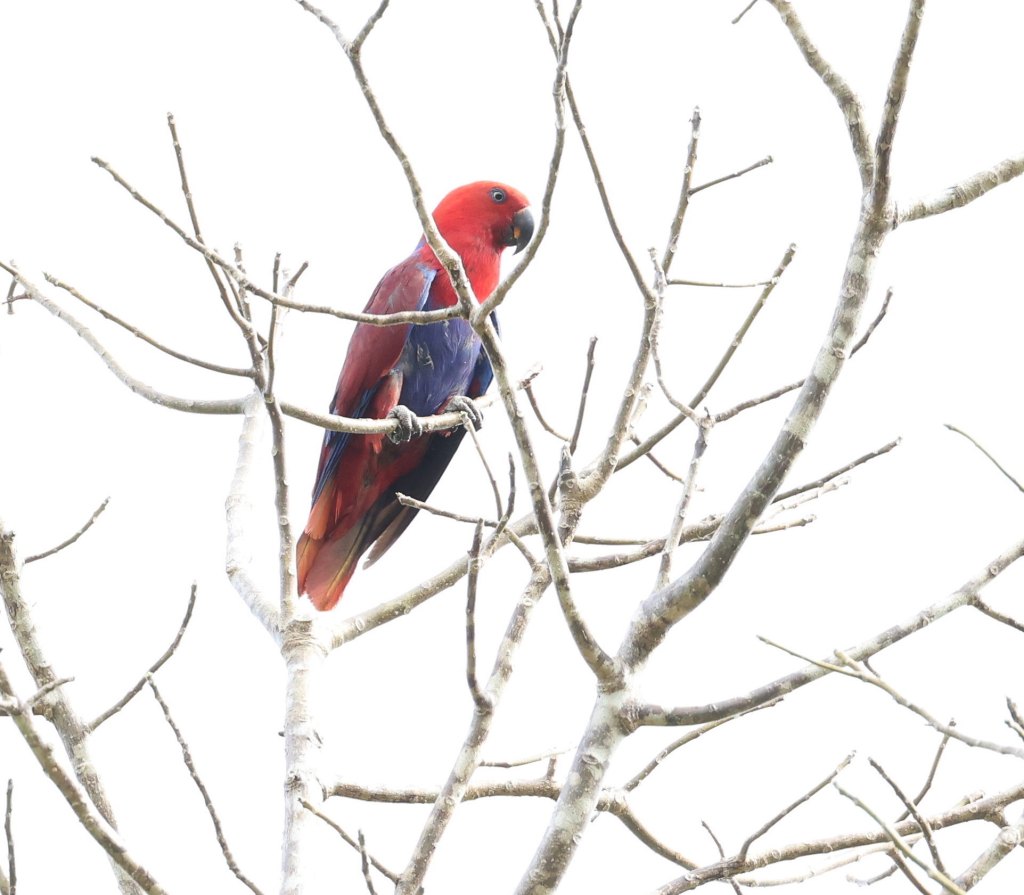
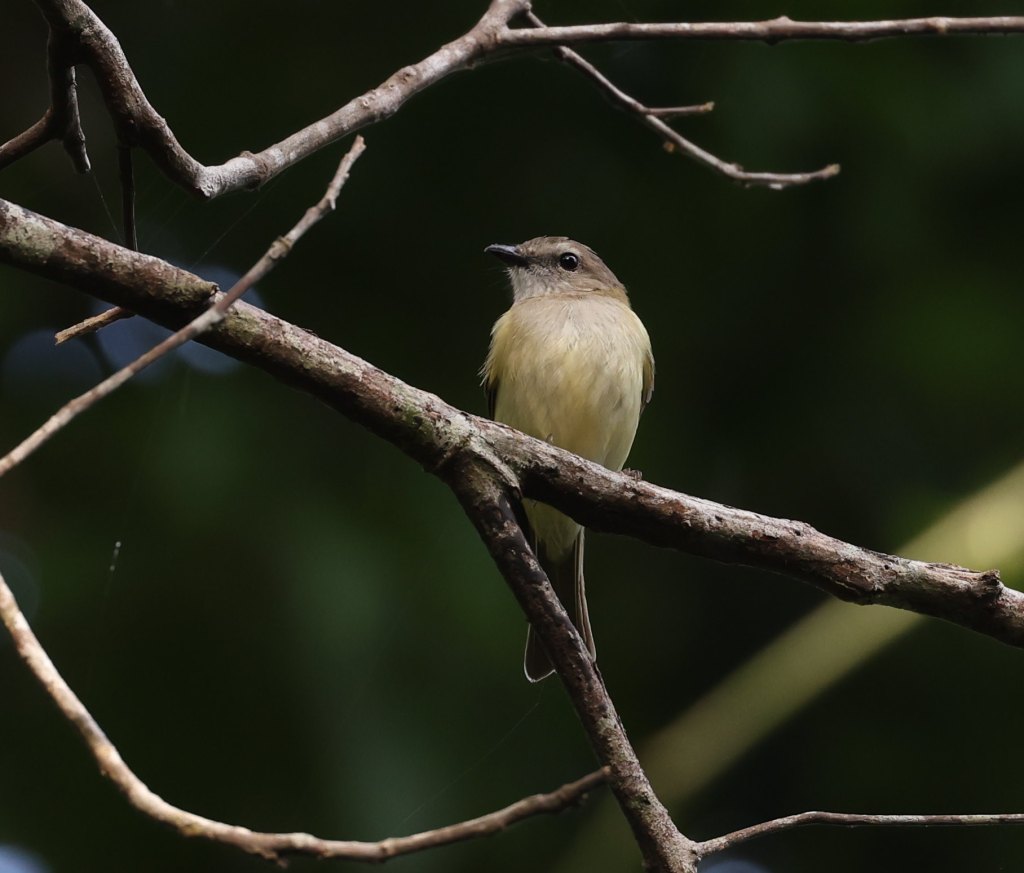
A Yellow-Breasted Boatbill (a far north Queensland bird) was a nice sight, and even better, a Yellow-Legged Fly-robin, one of the species that is only found in Australia here near the top of Cape York. We saw this bird only once in our four days in the region.

Near the creek we were treated to a Black-Winged Monarch, another amazing Cape York bird, which was tucking into a grub. It was so intent on pulling its prey apart and devouring it that it barely gave us a look!

We also saw Superb Fruit Dove and Fairy Gerygone, as well as a Grey Whistler.
Cook’s Hut
A little further east from Rainforest Camp is the Cook’s Hut Camping Area, which offers a few camping sites and some proper toilets; at the time we visited the whole campground was taken up by road workers with a noisy generator.
Behind Cook’s Hut there are a couple of short trails; one goes down to Gordon Creek and is well worth your time. It was definitely worth our time, because we saw a Yellow-Billed Kingfisher – yet another bird found only up here in the very far north – and this wonderful specimen was happily perched at eye level.

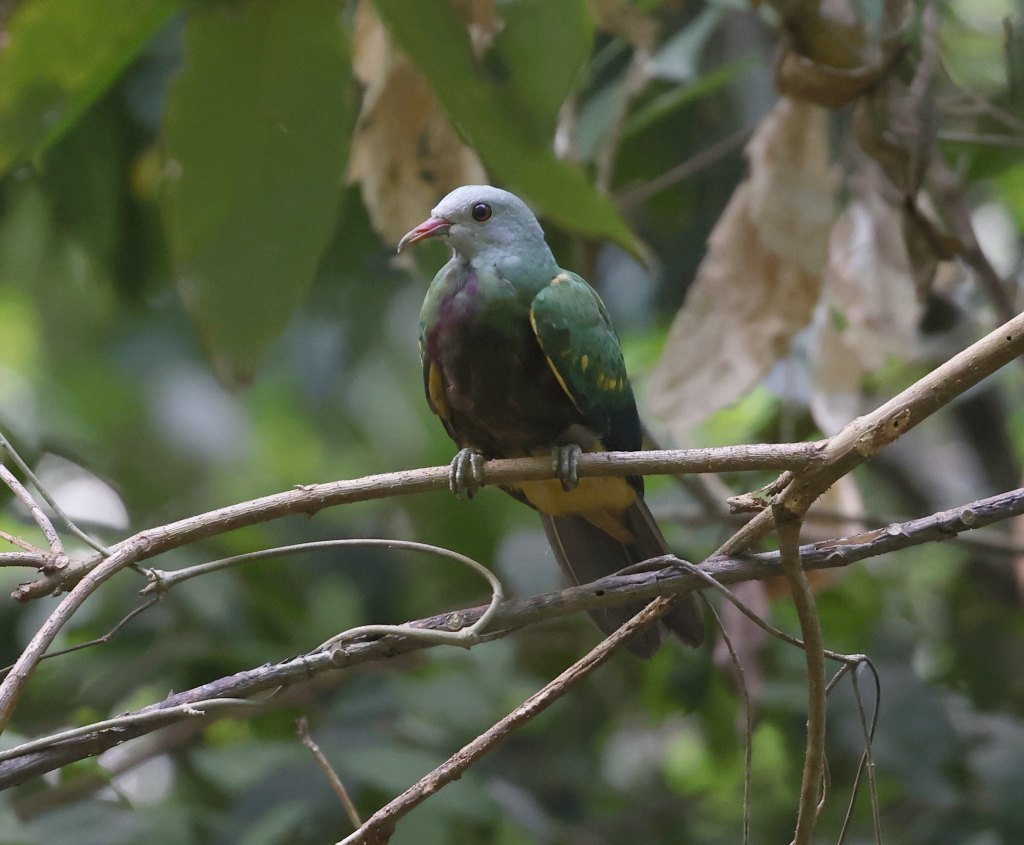
A Wompoo Fruit-Dove sat placidly by the creek for a while.
I am not sure if there is any navigable trail along the creek from here; we did explore a little, but there certainly aren’t any official tracks.
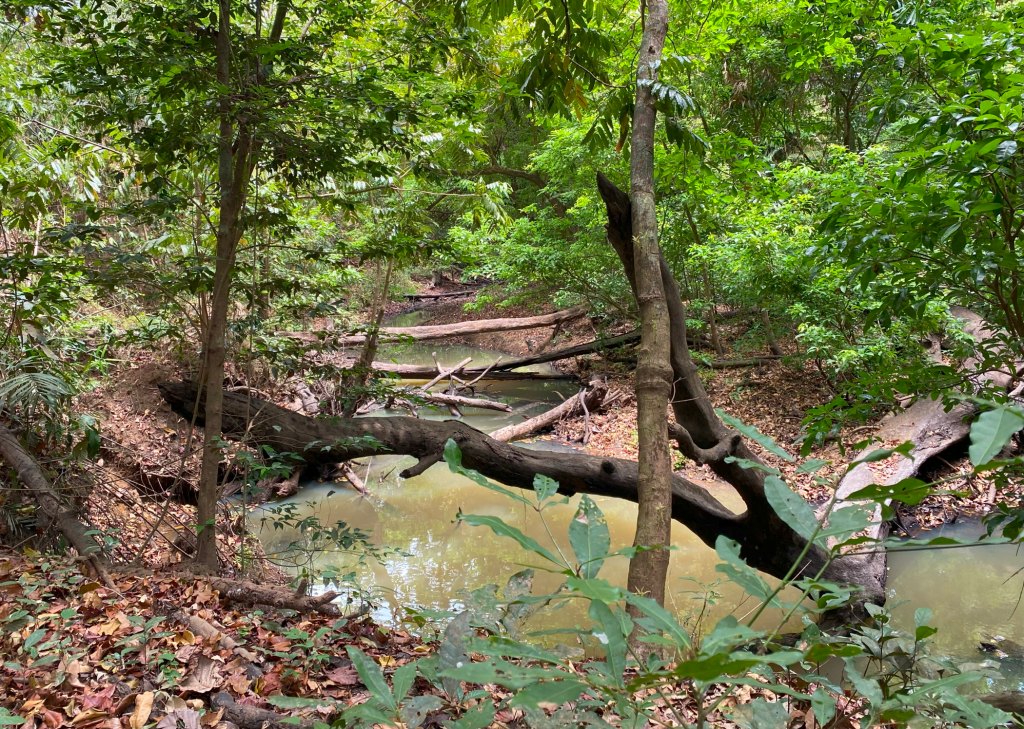
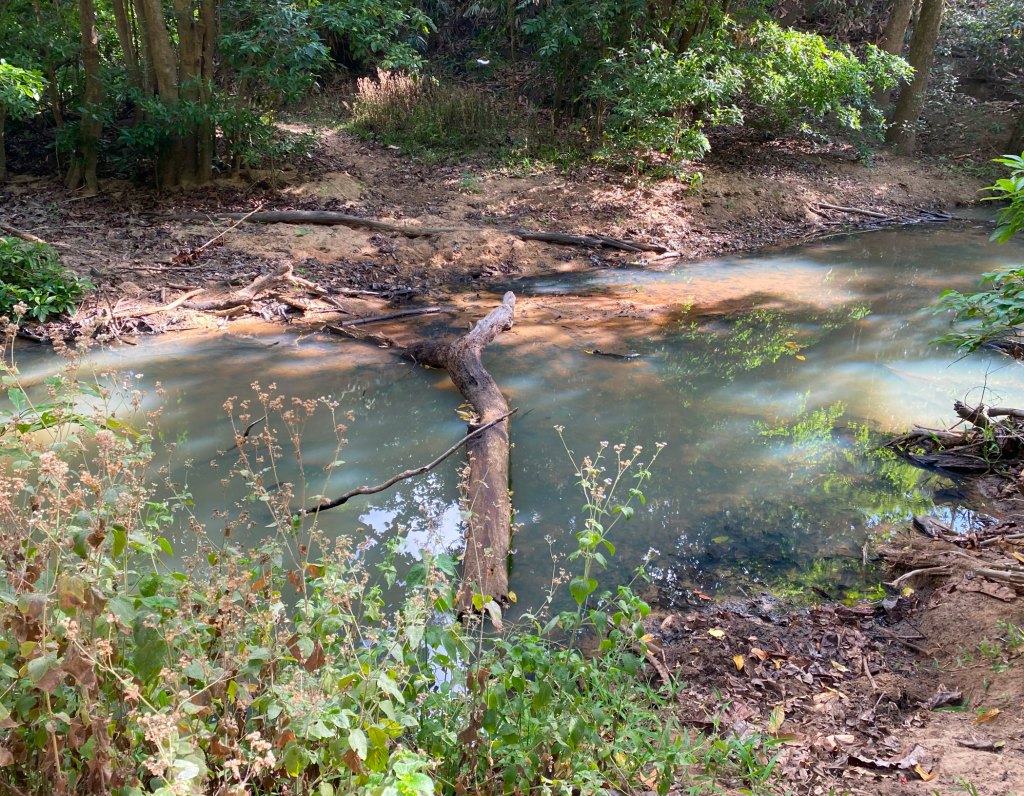
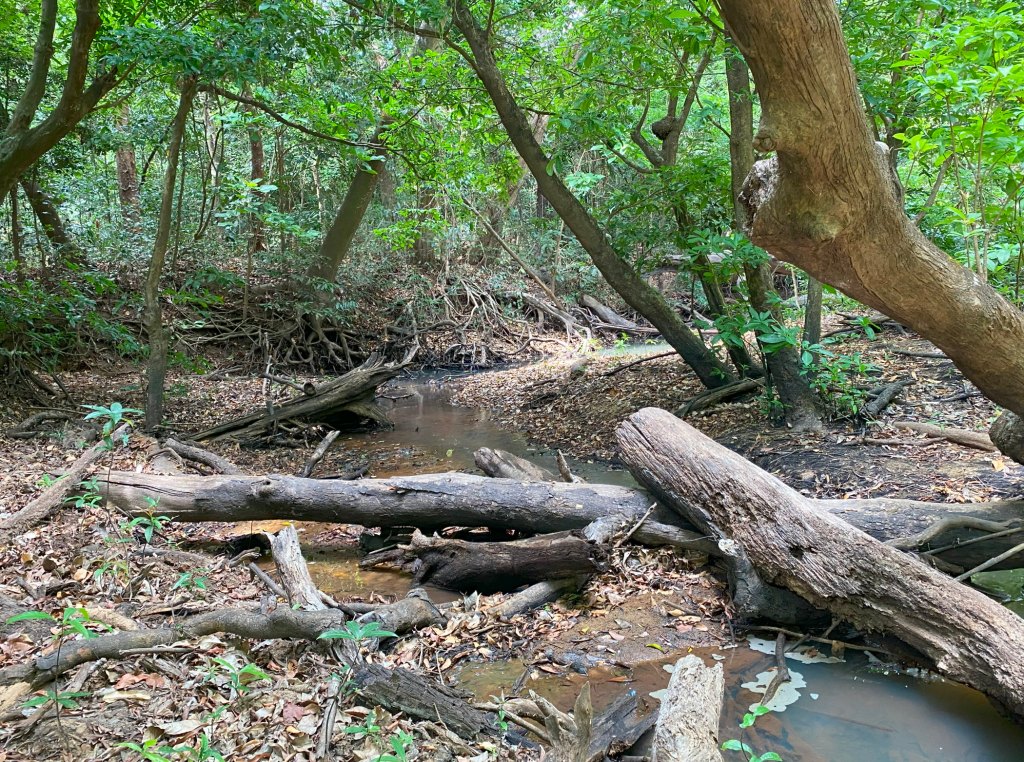
Around Cook’s Hut is supposed to be a reliable place to find the highly elusive Northern Scrub-Robin, which was one of the few species we missed on our trip to Iron Range. We did find a few White-Faced Robins – at Cook’s Hut, along Old Coen Track, and on the roadside too. They look and behave much like Pale-Yellow Robins from more southern rainforest areas.

Gordon Creek
Anywhere near where Gordon Creek crosses the road is the heartland of Iron Range rainforest birding. Although there aren’t any tracks (though see below), there are a couple of camping areas and fairly wide road shoulders that give a little access for seeing into the rainforest.
On Nov 16 we started birding at the creek crossing at 6:25am and found 30 species in 2.25 hours, probably our biggest haul of any site in the region. This included two Noisy Pitta, though they weren’t seen very well, and one of the desirable endemic birds, the Trumpet Manucode. The latter bird we heard calling and tried to track down; in the dense rainforest this was nearly impossible but we did eventually get the briefest glimpse, enough to see the bird’s colouring (somewhat akin to a Spangled Drongo or a Metallic Starling). Speaking of Metallic Starlings, be prepared for big flocks of these birds to zip by overhead, or create a noisy ruckus if they all happen to land in a tree near you.
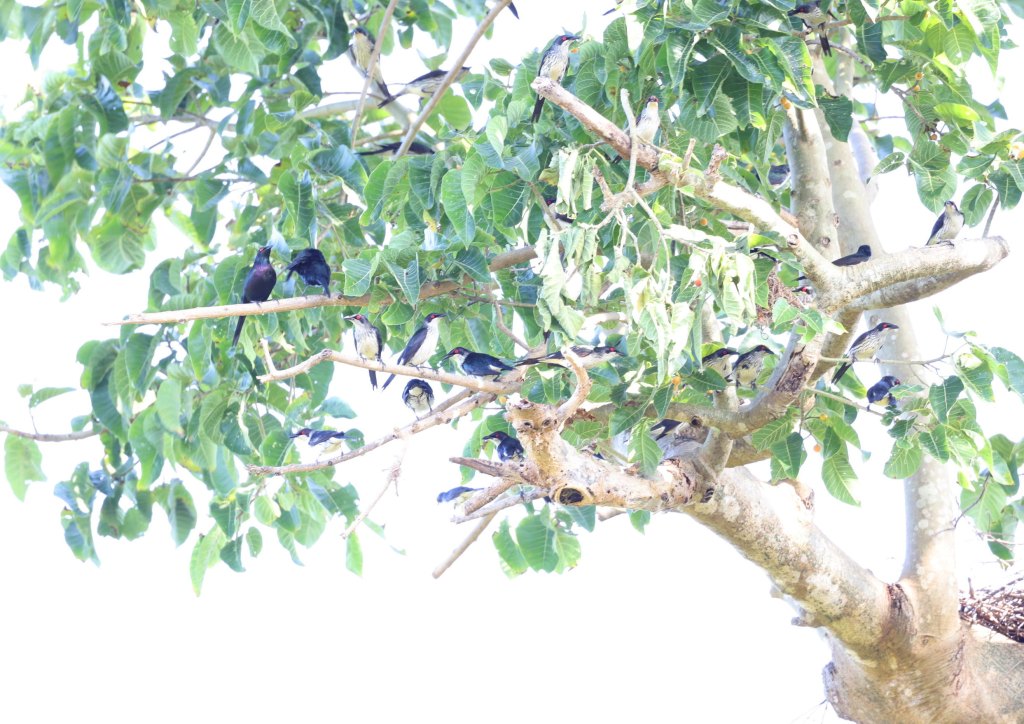
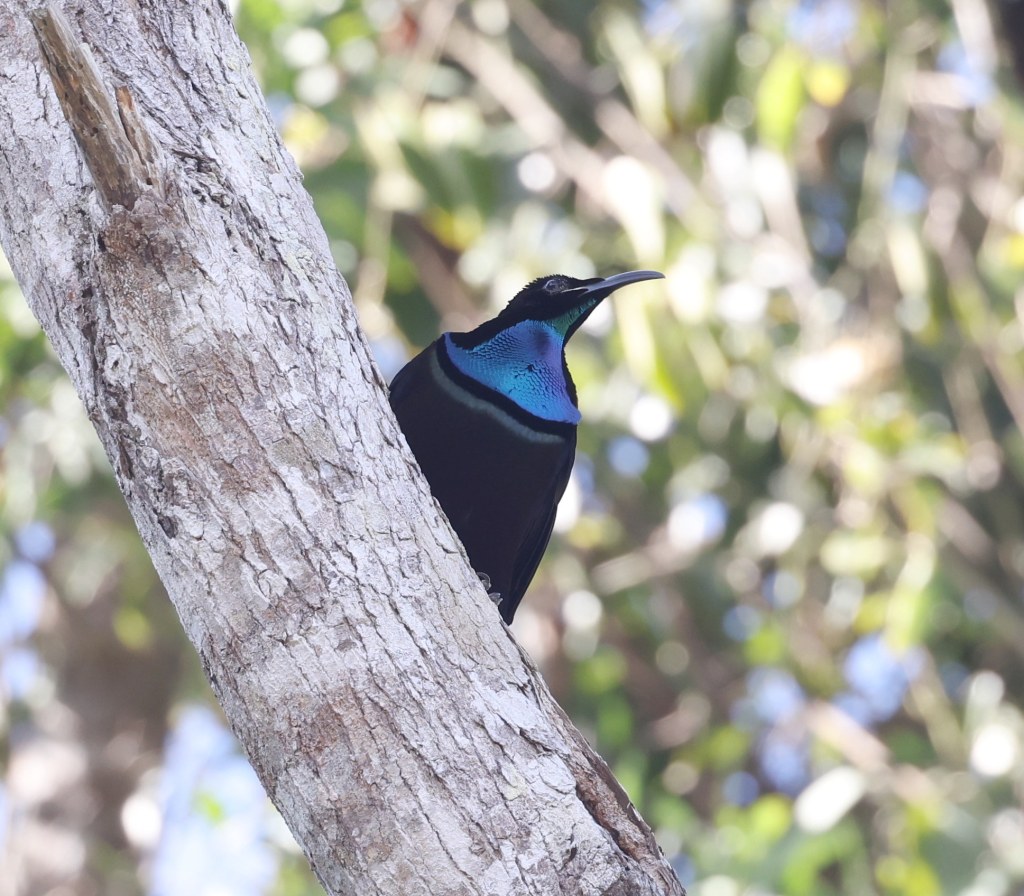
We saw Magnificent Riflebirds, yet another Iron Range endemic, relatively well from the roadside on both Nov 16 and 17 (in the early morning). We had been hearing their calls almost constantly at times, so it was good to get an extended look at one and admire their luminescent throat feathers.
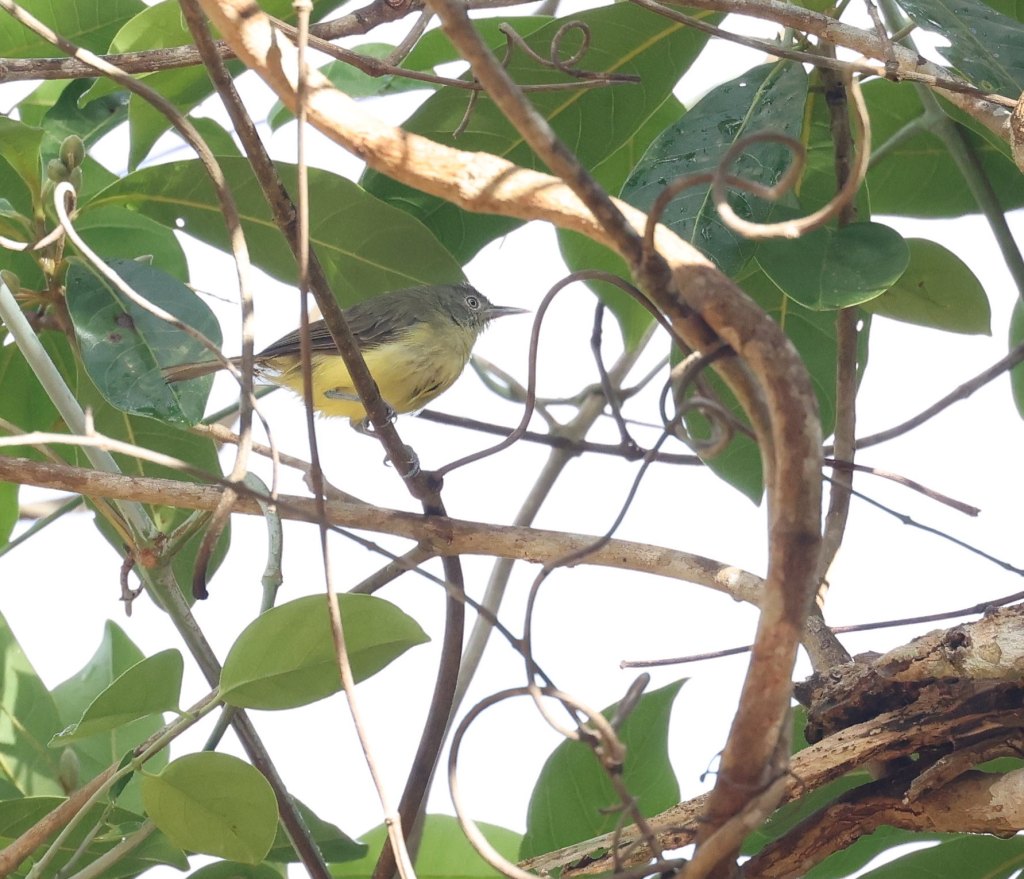
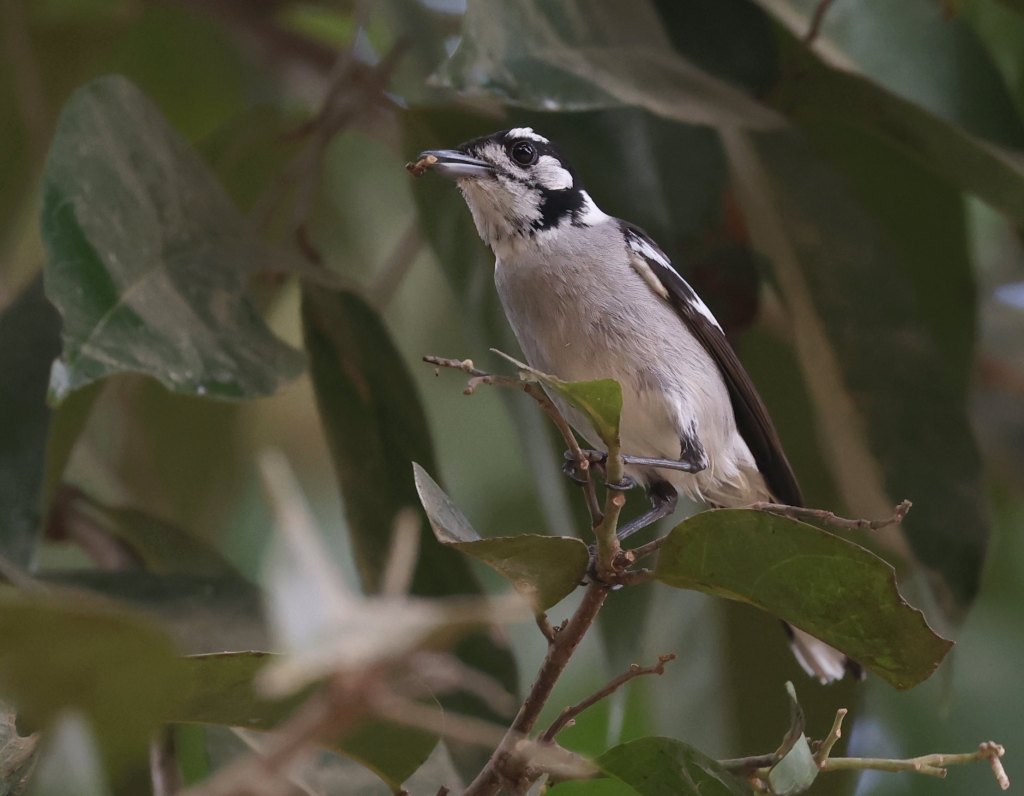
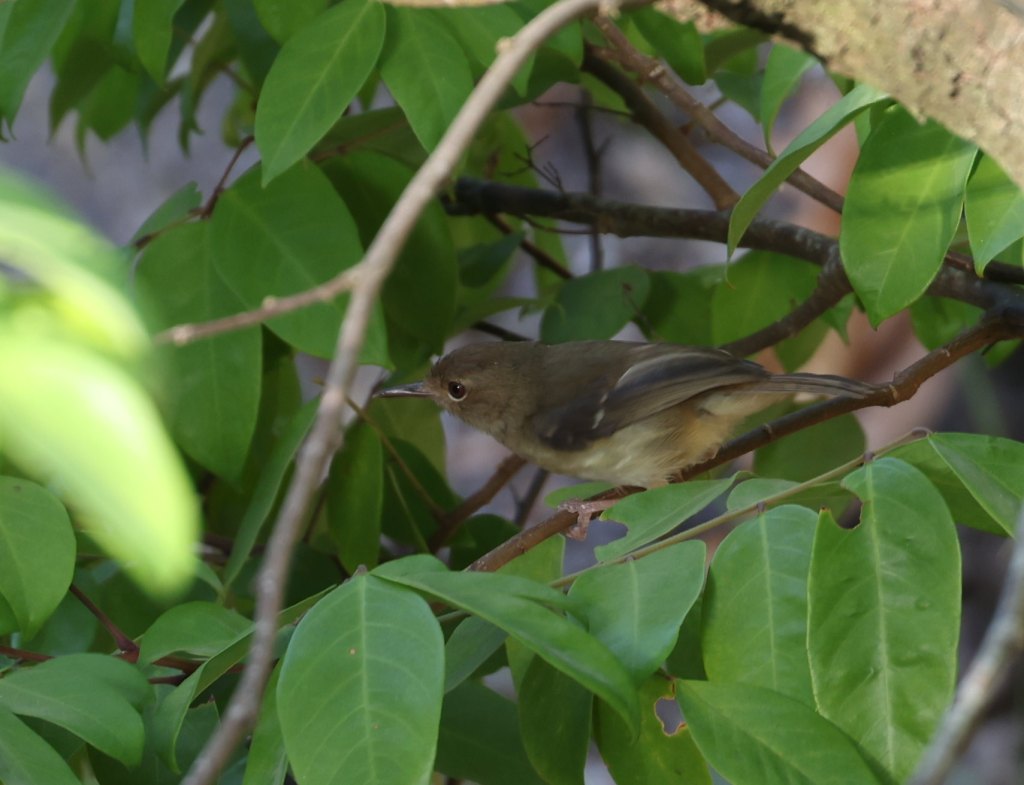
A less flashy bird to look for in this region (and only here!) is the tiny Green-Backed Honeyeater, identifiable by its pale eye (as compared to, say, a Fairy Gerygone’s dark eye). This is a species with only 80 photos ever on eBird, so we counted ourselves lucky to see (from the roadside) half a dozen foraging high up and get some photos and even a video.
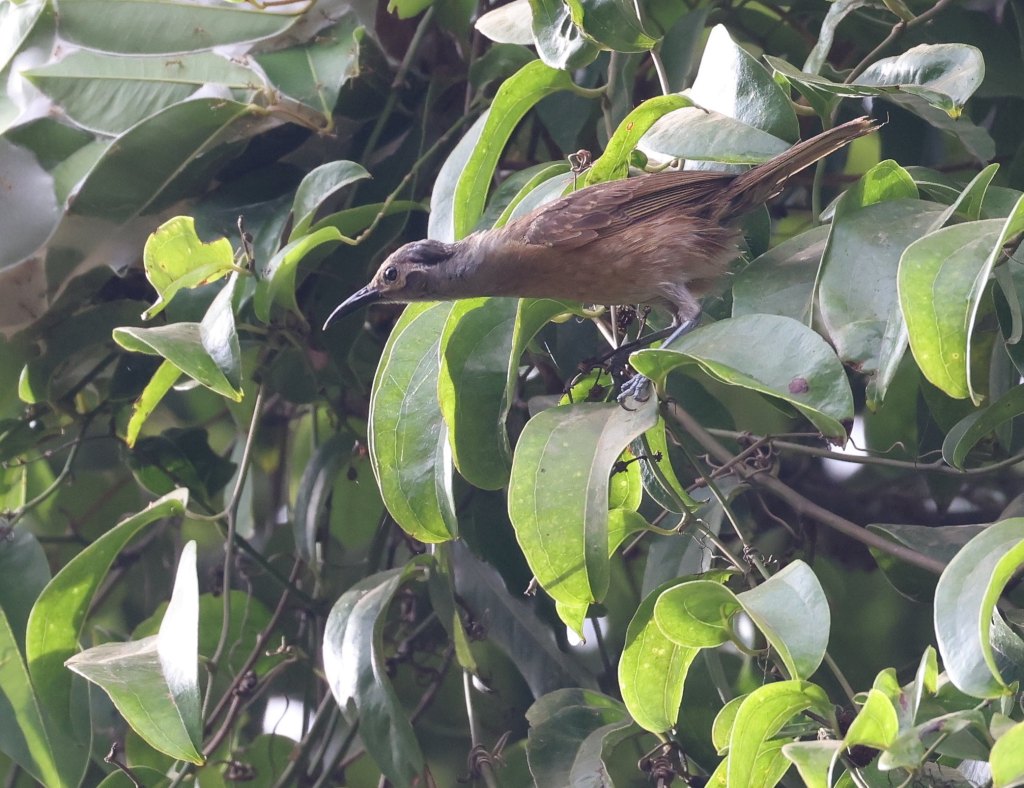
Tawny-Breasted Honeyeater is another far north endemic and we found it a little easier to find than some others.
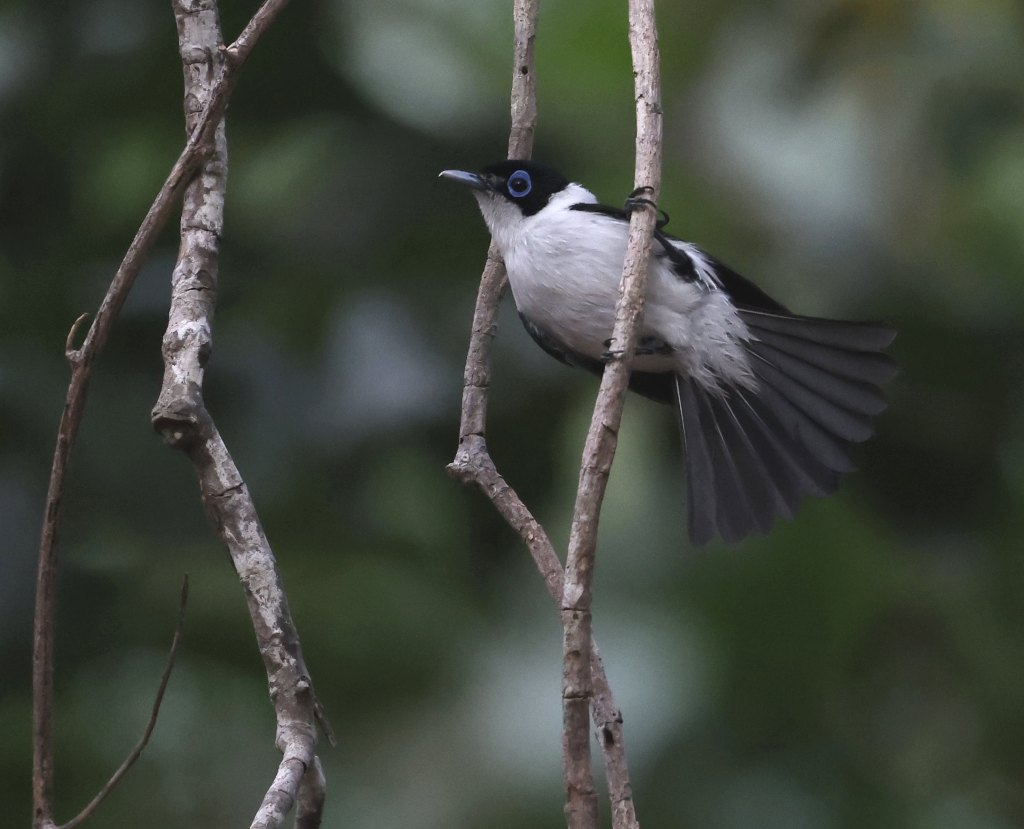
Some of the monarch species we saw (along the Gordon Creek roadside and nearby in the camp site clearings) included Spectacled, Frill-Necked and White-Eared Monarchs; the place is a real treat if you’re a fan of this bird family!
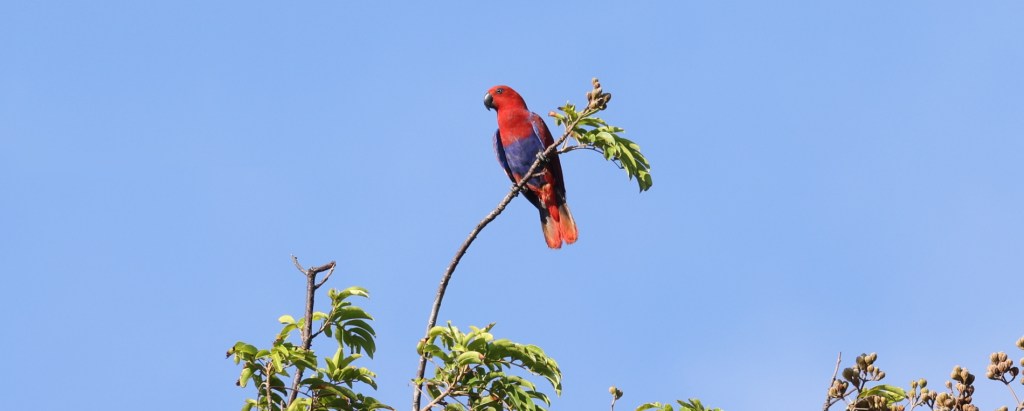
We got our best look at Papuan Eclectus from the roadside too.
As mentioned above, there is an unofficial track network that we discovered behind the Gordon Creek camp area. It rises into dry though dense forest (technically, it is probably still considered rainforest), and is quite narrow. We didn’t see many birds on these tracks and due to their somewhat confusing layout and lack of signage or navigation marks, didn’t go far. Who knows how far those tracks go.
Portland Roads
When driving east on Portland Road, the rainforest gives way to drier scrub and from here (about a 30km stretch) there is a chance to see Palm Cockatoo, one of the largest and most characterful of the cockatoo species. We only saw one of these birds in our four days in the region; it flew across the road and landed in a tree, for all of 30 seconds, and we knew exactly what it was as soon as we saw it!

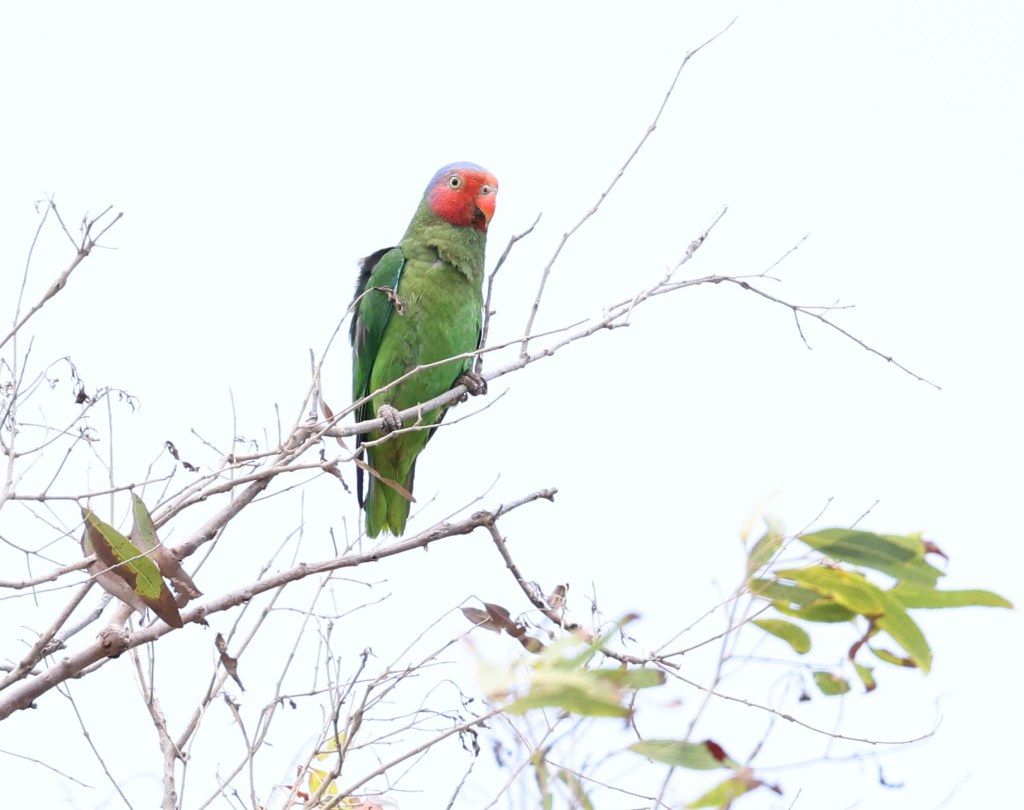
Red-Cheeked Parrot is another bird much more common in Indonesia and Papua New Guinea, but which can be seen (with a little luck) in Iron Range National Park. Our one and only sighting was also along the Portland Road roadside.
We also saw a single Fawn-Breasted Bowerbird along this stretch of road.
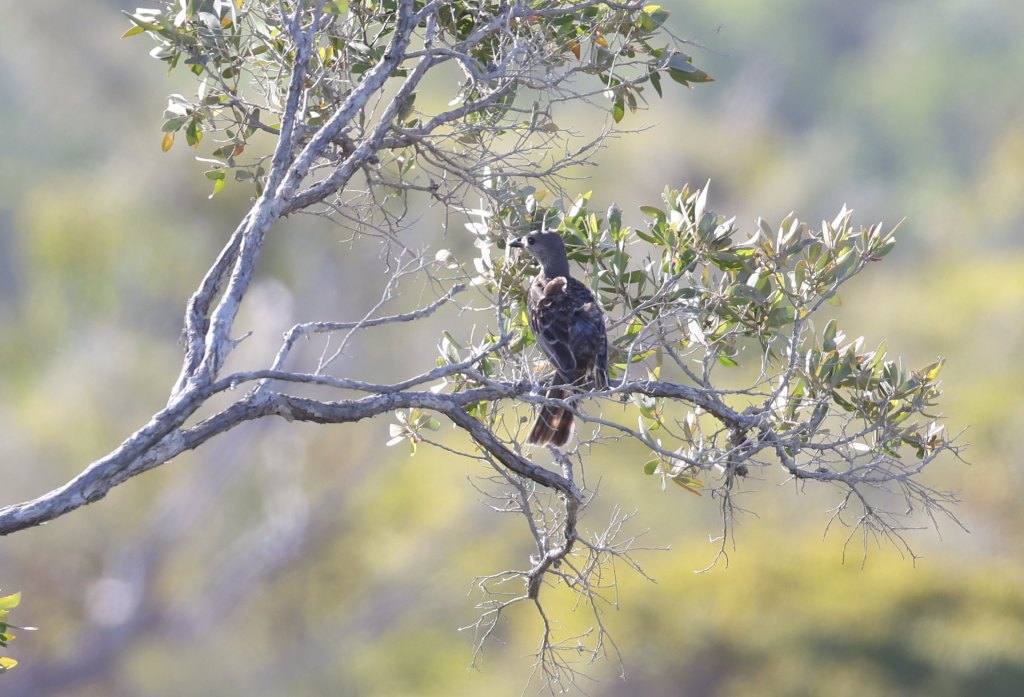
Of course, other birds with a much larger range in Australia, like Bar-Shouldered Doves and brushturkeys, are commonly seen on the roadsides. With so many exotic species to look out for, you might easily ignore these!
Portland Road terminates in the tiny settlement of Portland Roads (not confusingly named, now is it?!?) There isn’t much here, except – for us – our accommodation at the excellent beach house of Portland House; the owners also run an adjoining café (though opening times for it can be variable I believe).
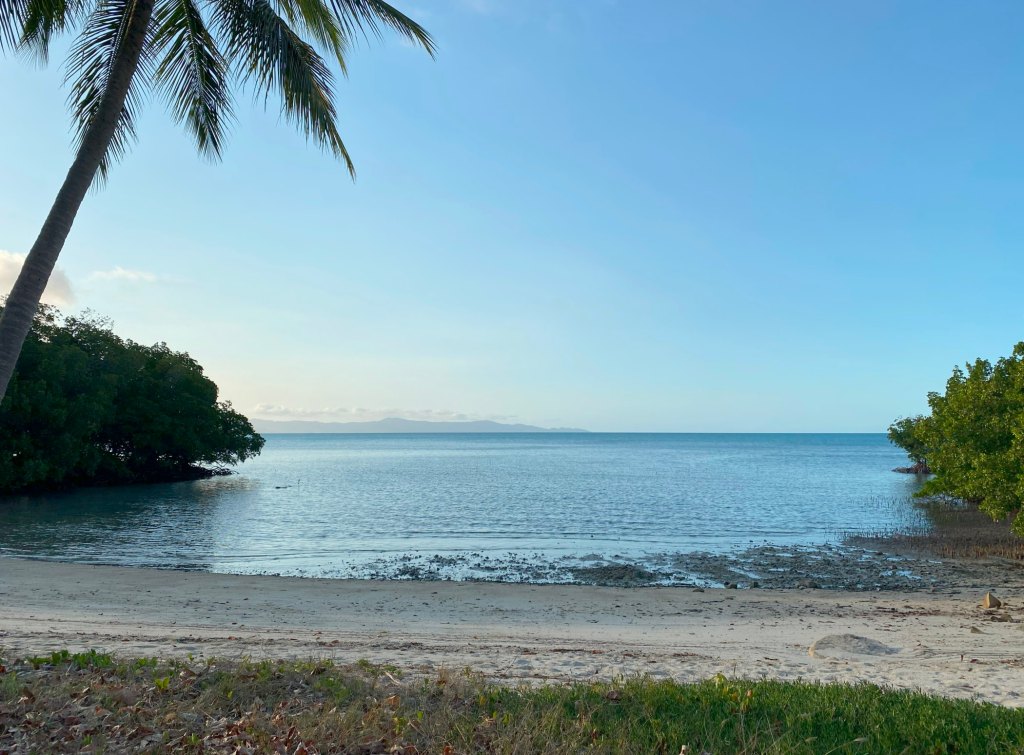
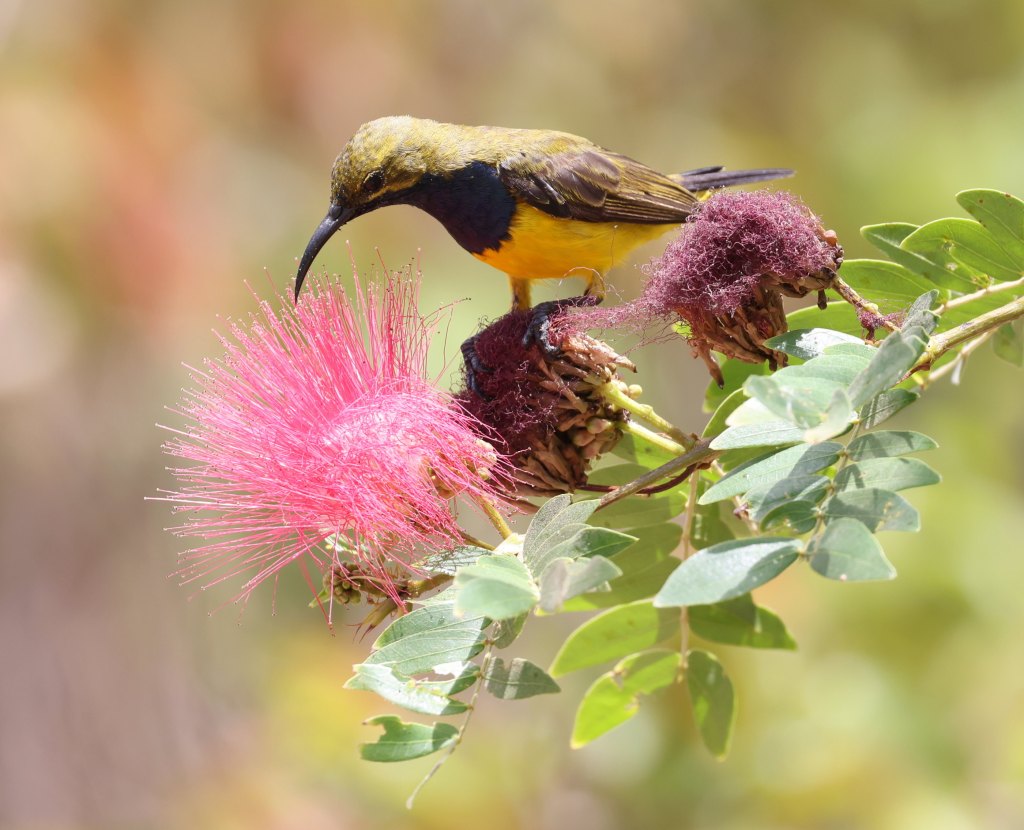
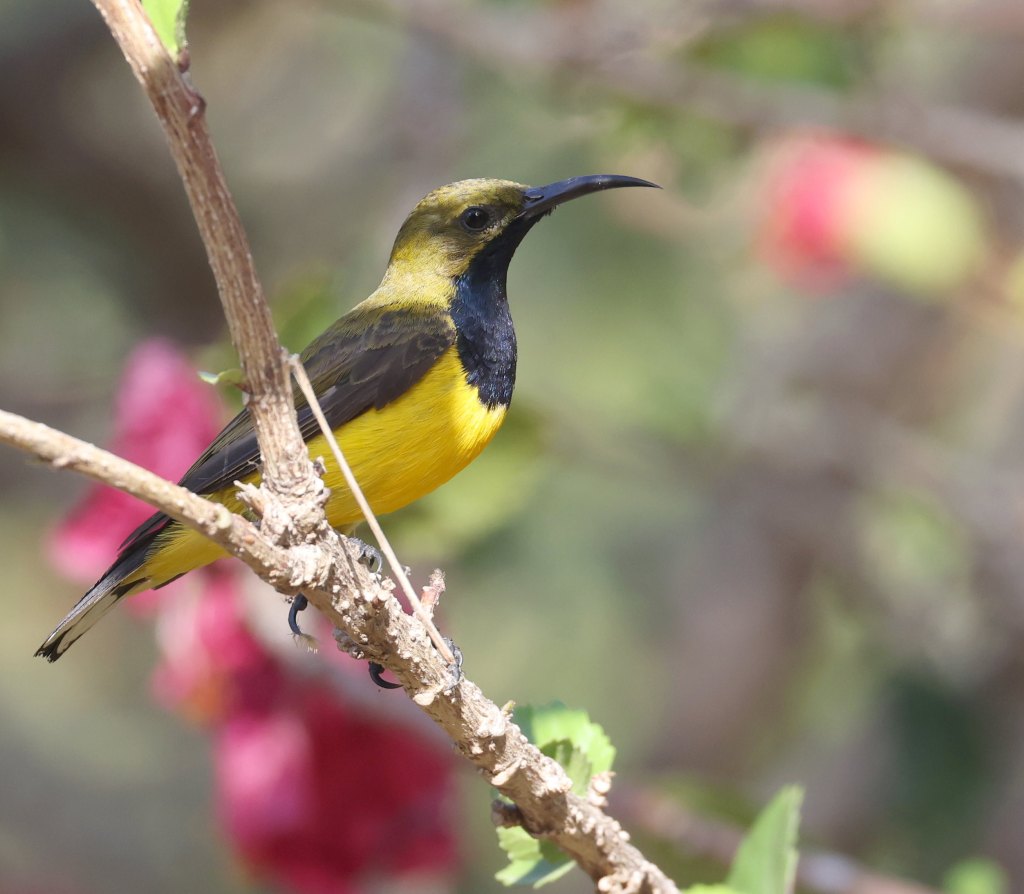
Due to various flowering trees in the local gardens, you’ll likely see Sahul Sunbirds (split out recently from Olive-Backed Sunbird), which are delightful little honeyeater-like birds. There is a also little cove here where the odd shorebird might turn up – there we saw a Whimbrel, and a Common Sandpiper.
Because we stayed here, we got to know some of the local birds and gained an understanding of which were common by frequency of call. Tropical Scrubwren – a far north specialist with only 61 photos on eBird – was a once-off sighting, while Noisy Pittas were heard calling several times; Figbirds and Orioles were often heard and seen. Rose-Crowned Fruit Dove was seen once or twice in the front garden.
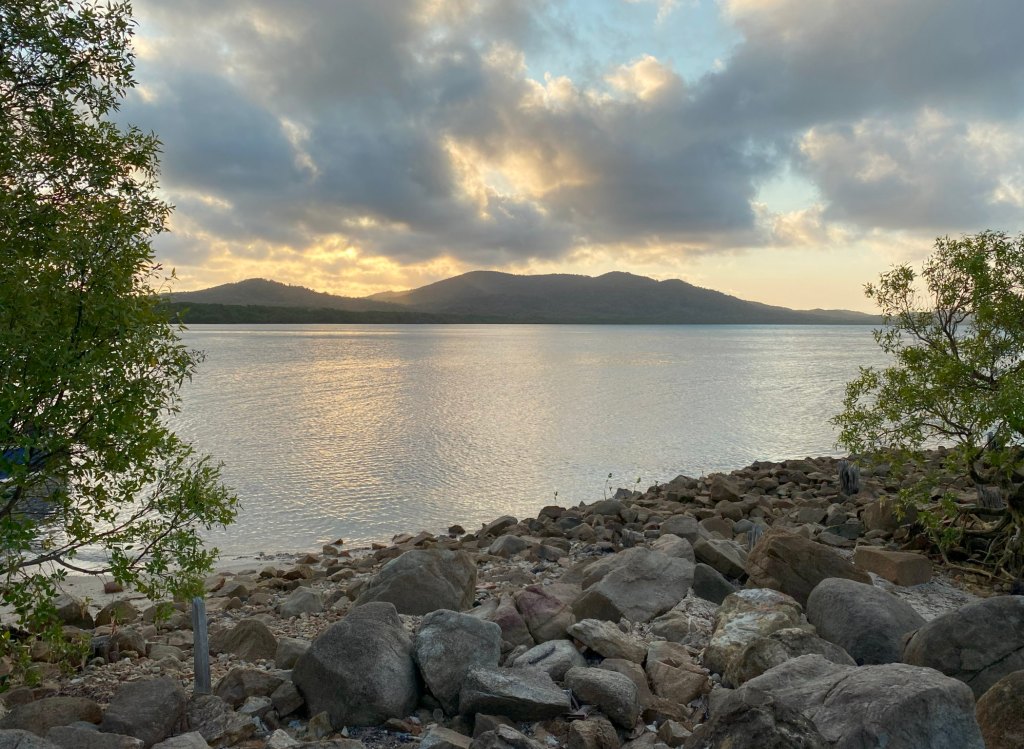
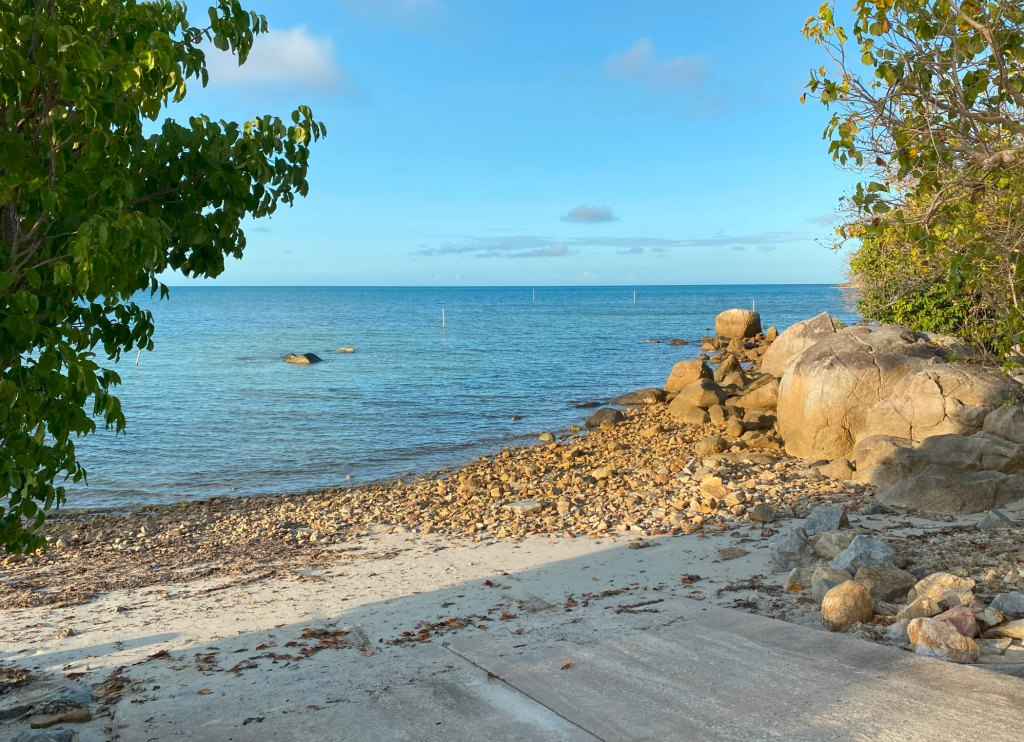
At the very end of the road there is a boat ramp and a rocky shoreline.
We were lucky enough to see a Great Frigatebird soaring above the road, with its massive forked tail obvious through the camera lens. Not bad when you can see birds from land that you’d normally only find offshore!

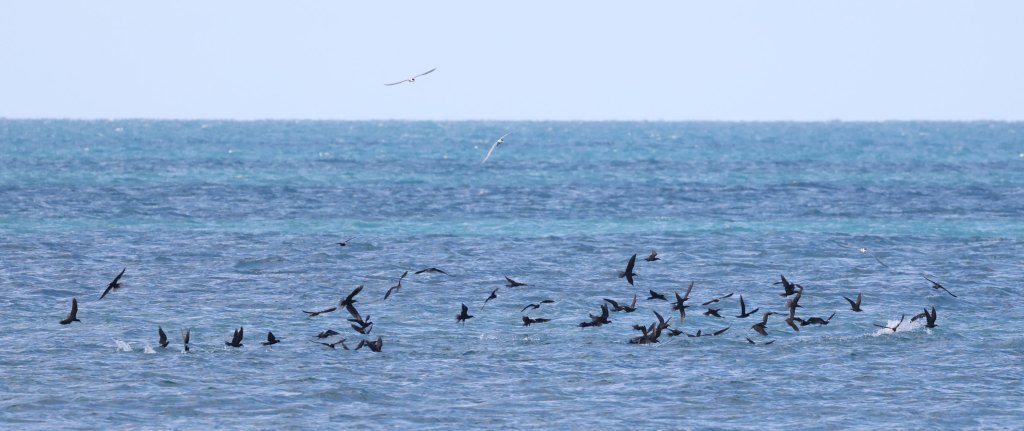
We also saw a group of around 50 Black Noddies well offshore from the boat ramp.
There is an unmarked set of trails (really half-trails) off the road as well, which accesses some dry bush and mangrove areas. It has its own eBird hotspot and we explored it late one afternoon without finding anything too interesting. Apparently there is a long-standing Fawn-Breasted Bowerbird bower somewhere in here but we didn’t find it.
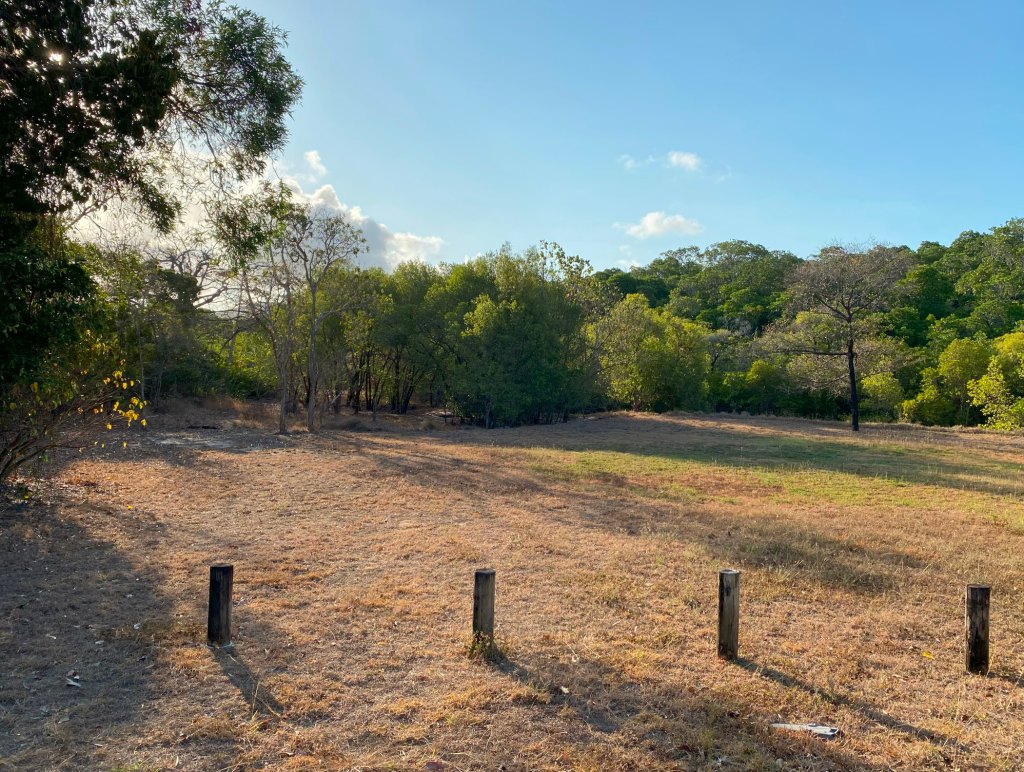
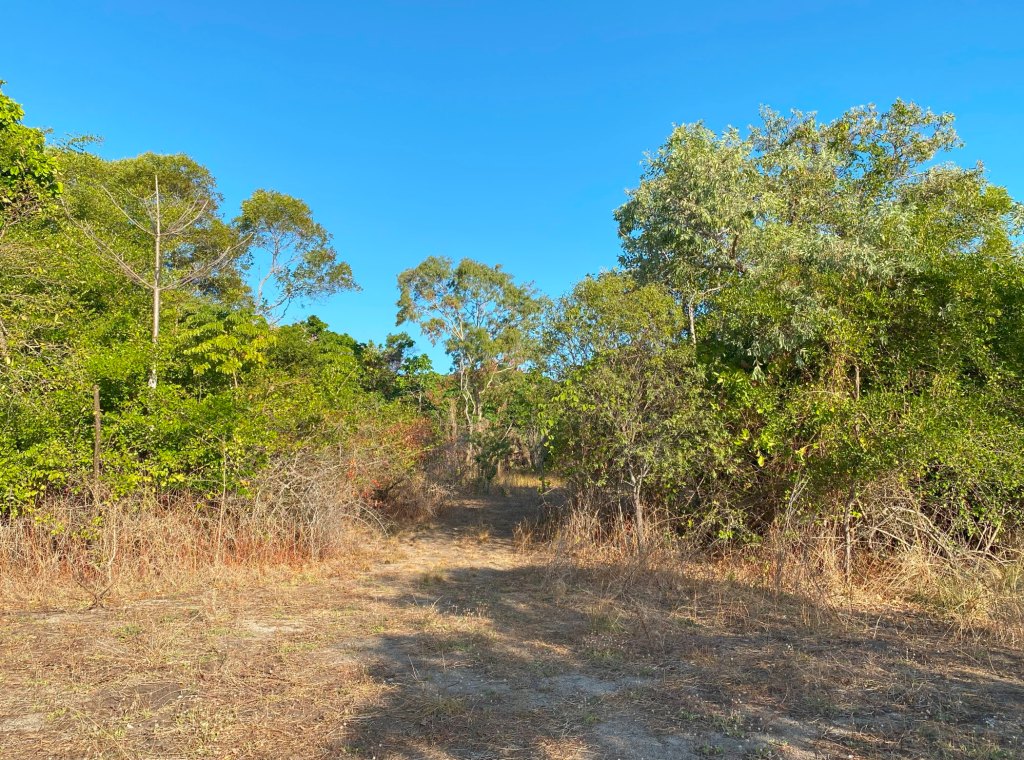
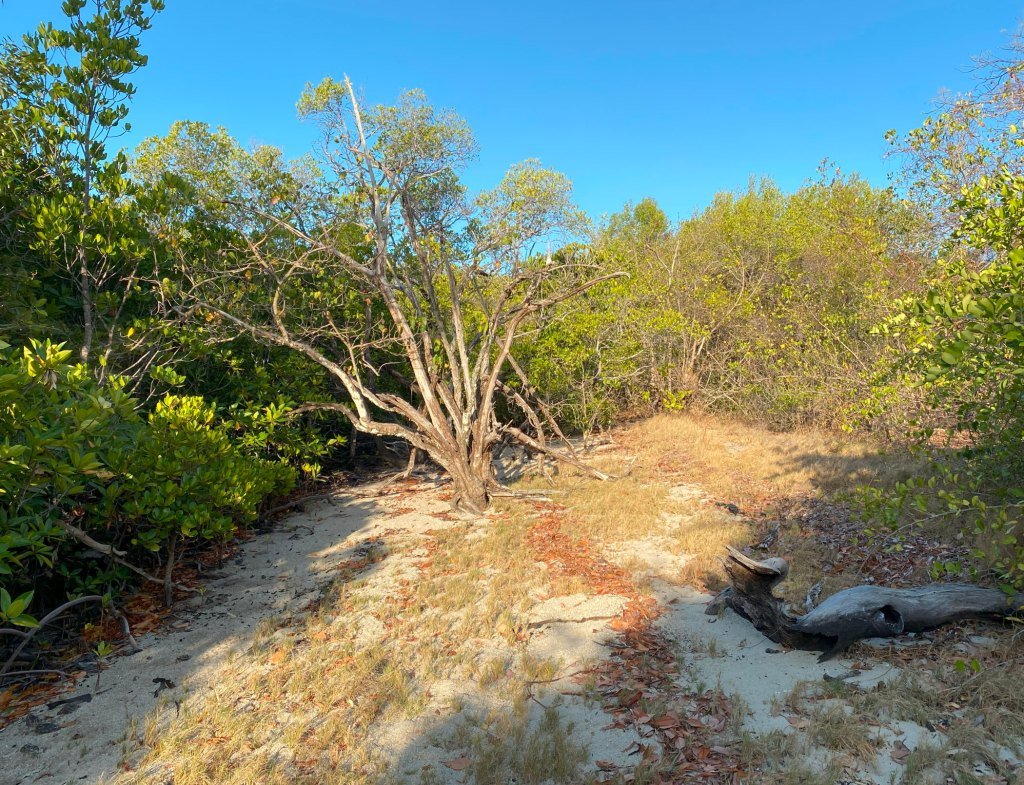
As the light was fading on our way back up to our house, we came across a Large-Billed Gerygone, very close, who did not seem to want to move away from us. After taking some photos and admiring the bird we then noticed a hanging nest a few feet away – it was guarding its nest site! Once we realised we quickly left it in peace.

Chili Beach
At the extreme eastern edge of the national park lies Chili Beach, where there is a large campground (25 sites), four toilet blocks, and a short bush trail. This campsite is a popular spot to stay in the area as the coastal breezes can make the tropical heat much more bearable.
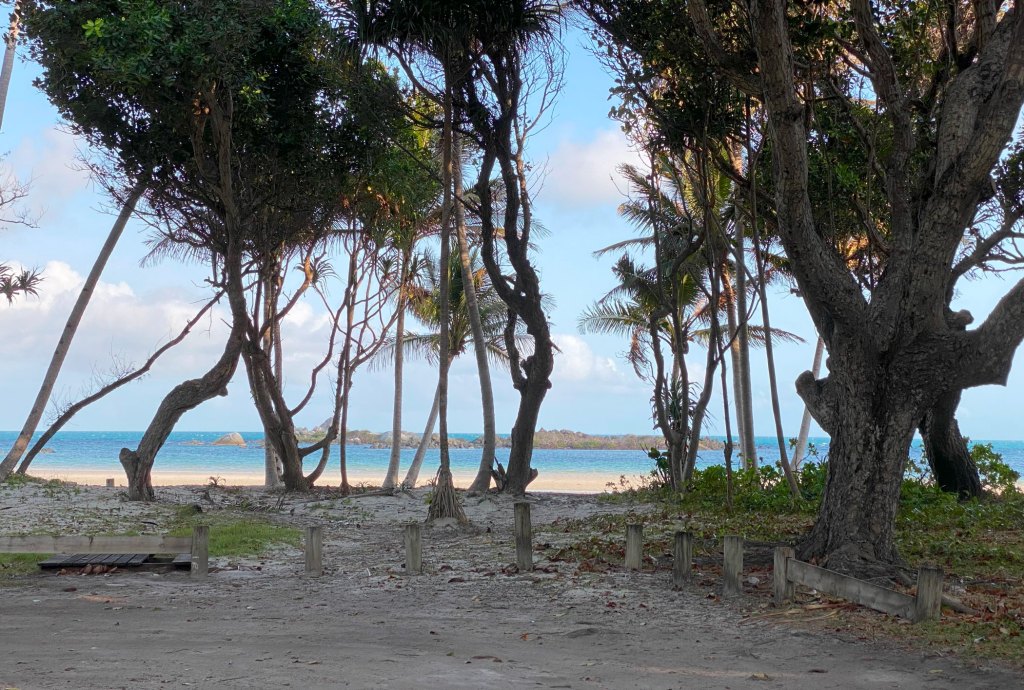
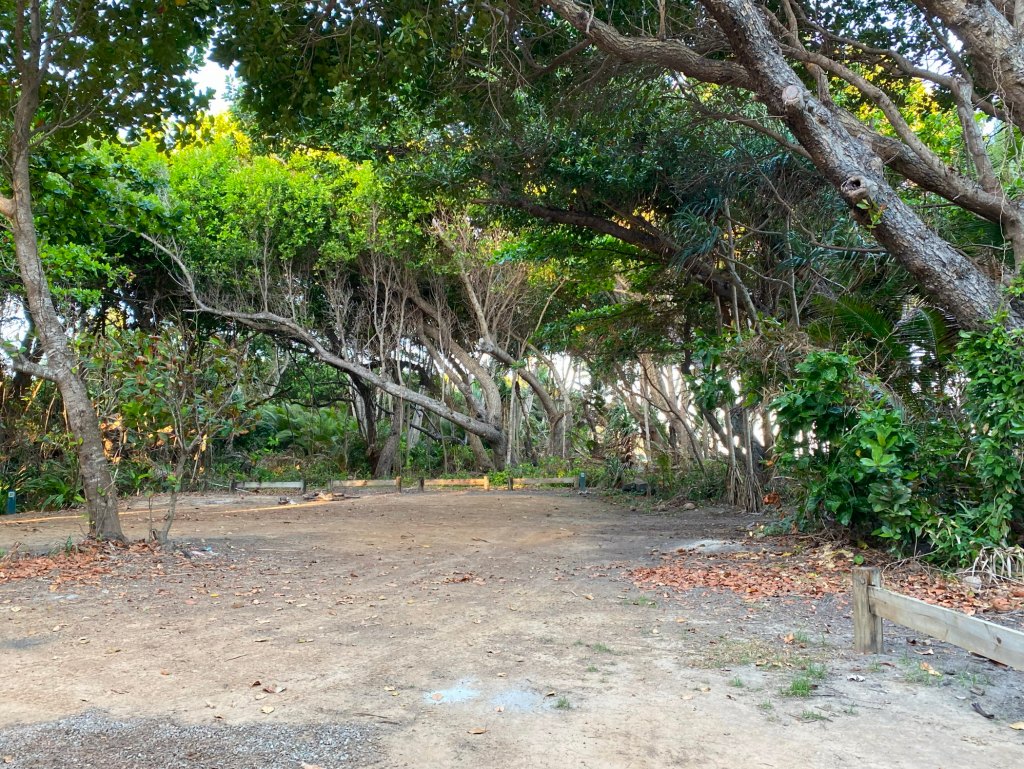
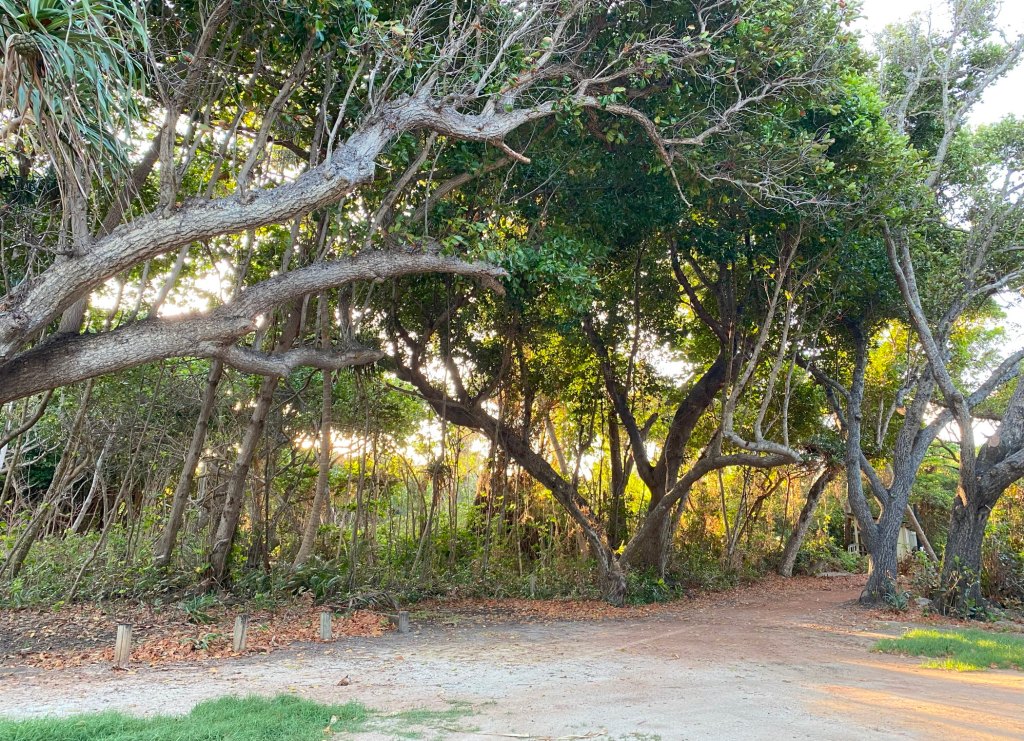
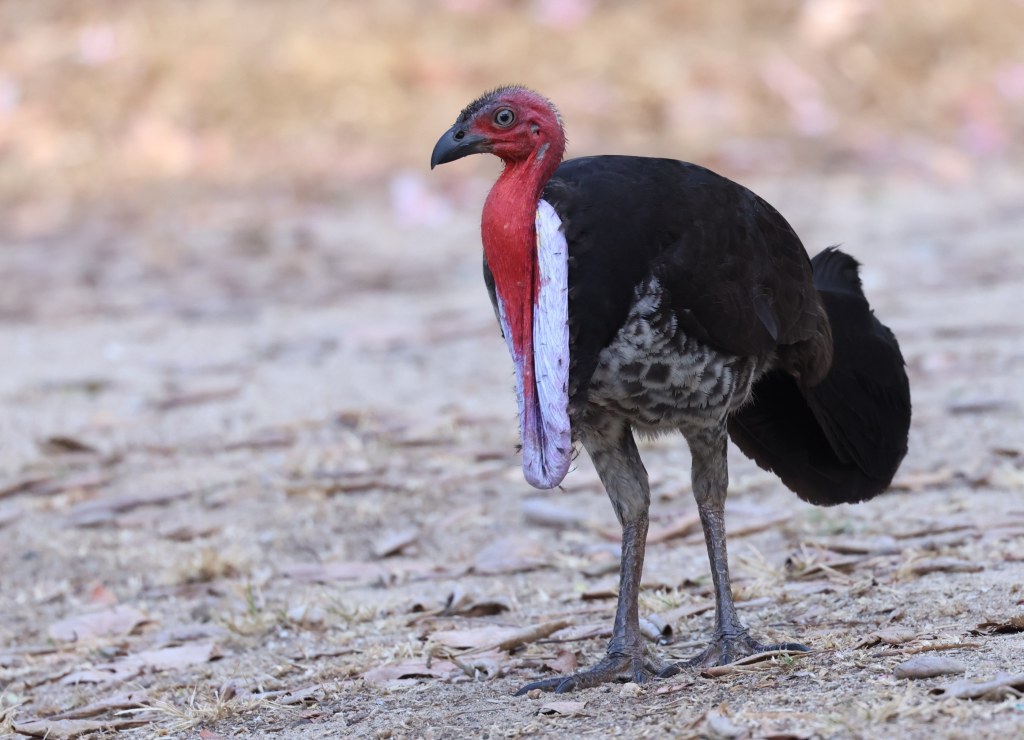
There are coconut palms fringing the beach and this can attract Palm Cockatoos with reasonable frequency, though we didn’t see any when we were there. Roaming around the campgrounds were Brushturkeys, and we got a good look at the Cape York subspecies found here which has purple neck wattles rather than the yellow wattles on the more southern birds.
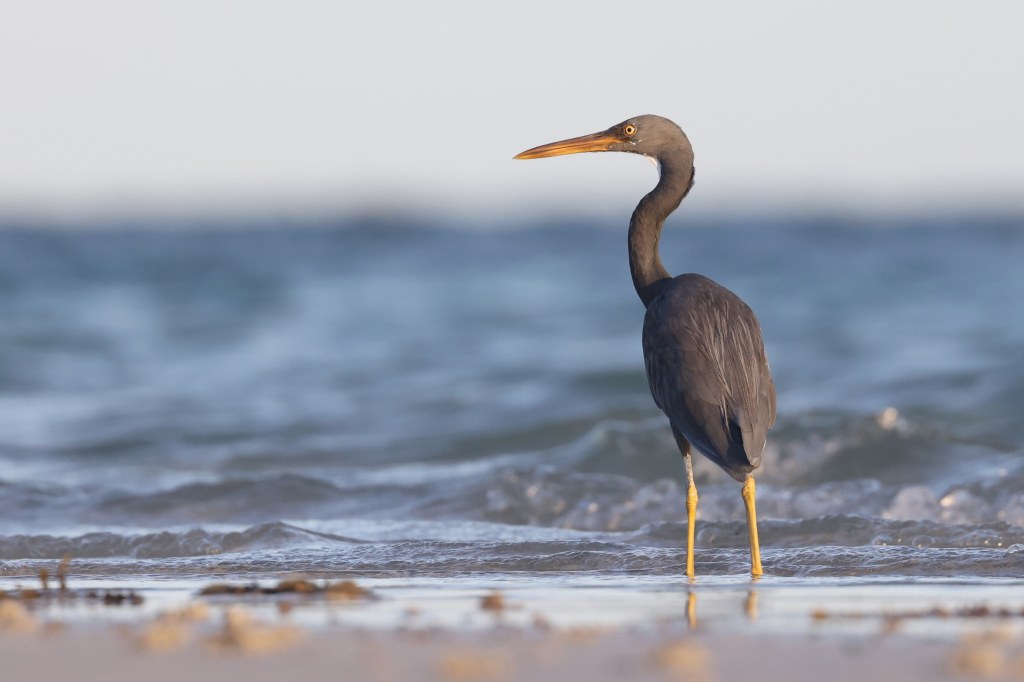
On the beach itself a lone Eastern Reef Egret hunted along the surf line, which was fun to watch.
Sharp-Tailed and Common Sandpipers, Grey-Tailed Tattlers, Red-Necked Stints, as well as Siberian and Greater Sand-Plovers and Red-Capped Plovers and Pacific Golden Plovers (and a single Eastern Curlew) provided for plenty of shorebirds.
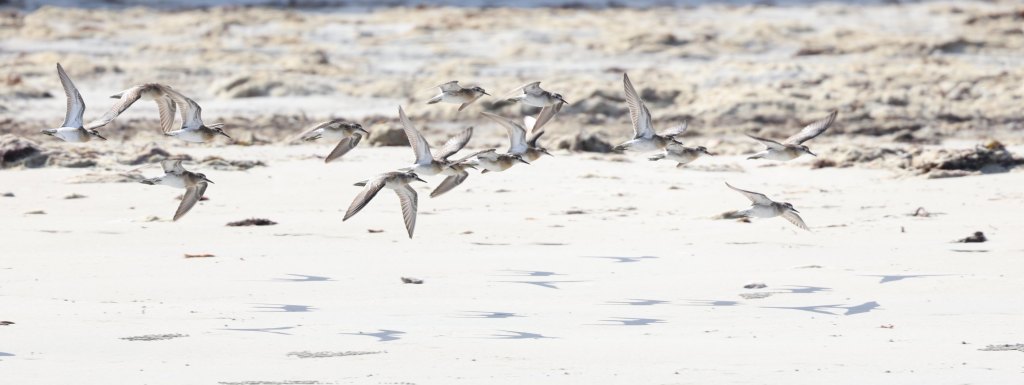
The tropical beach vibes were very pleasant as the day cooled down and the wind swept off the ocean.
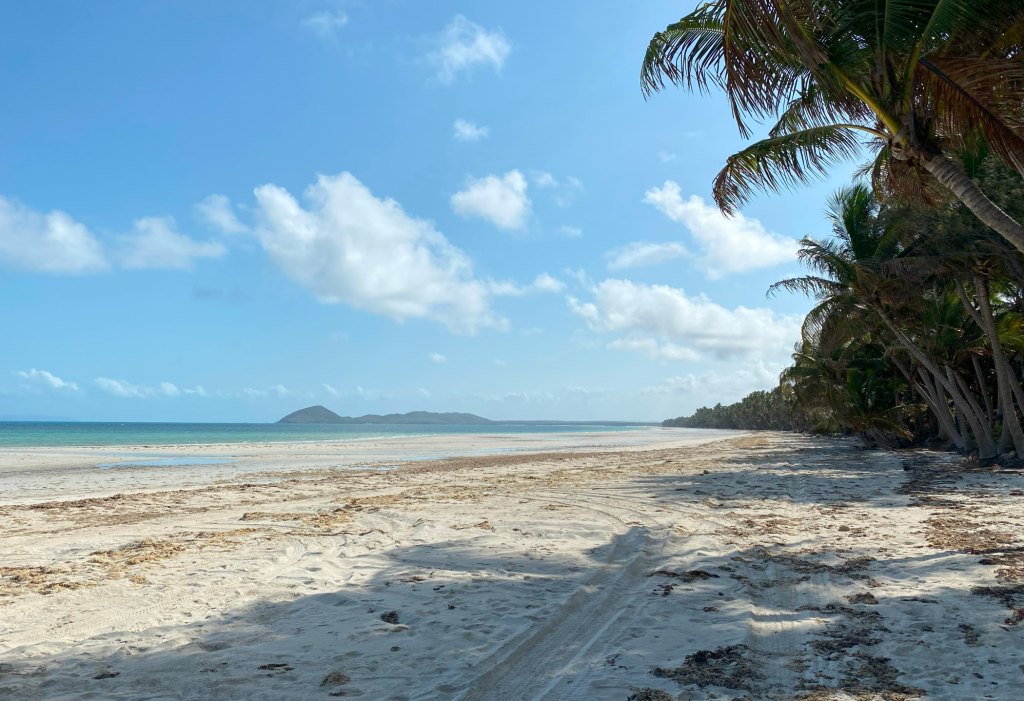
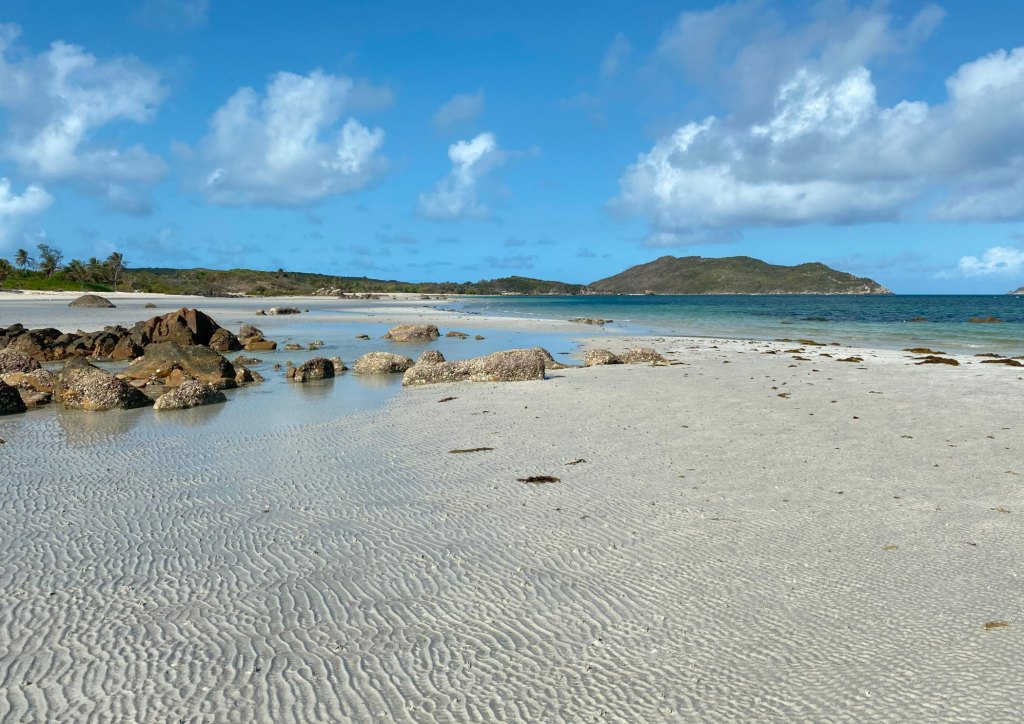
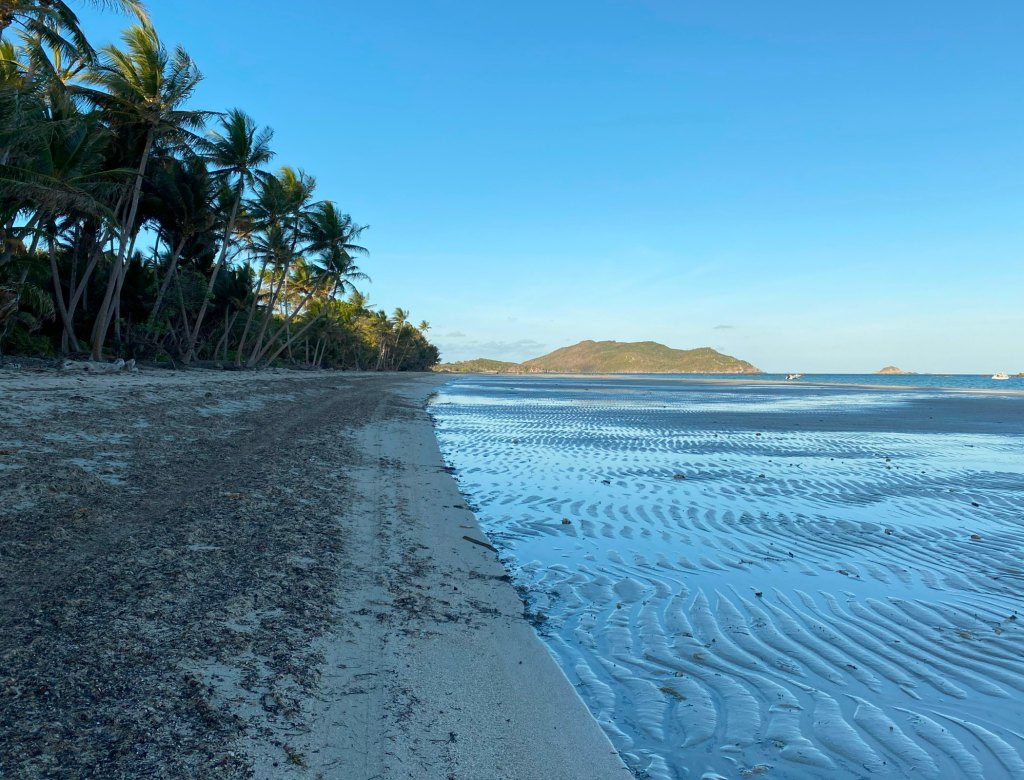
On the tern front, we found Bridled, Little and Greater Crested Terns.
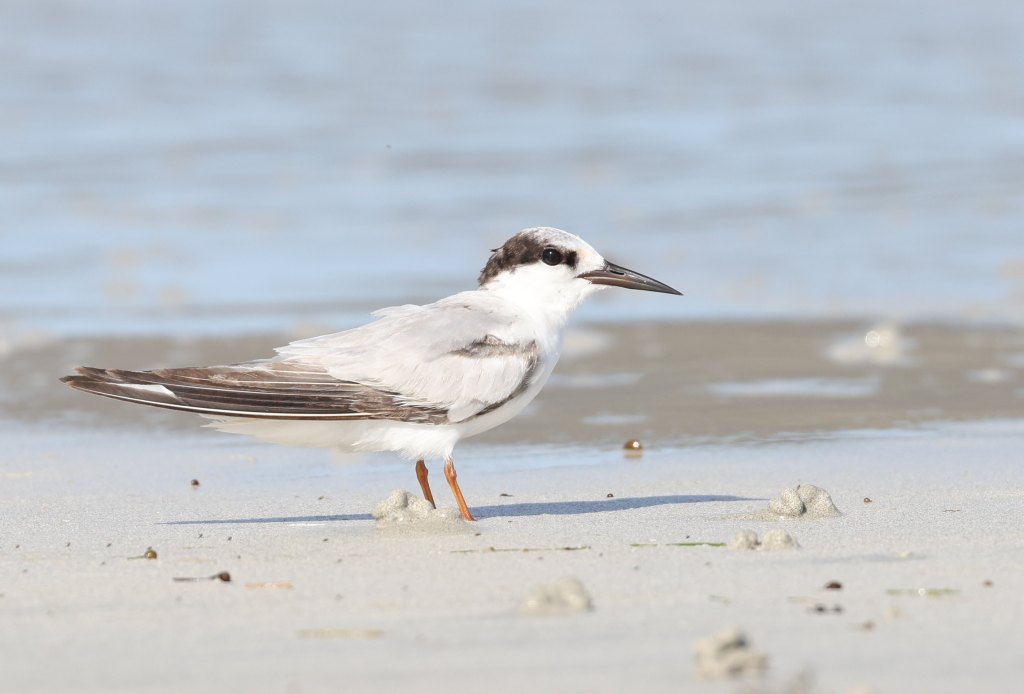
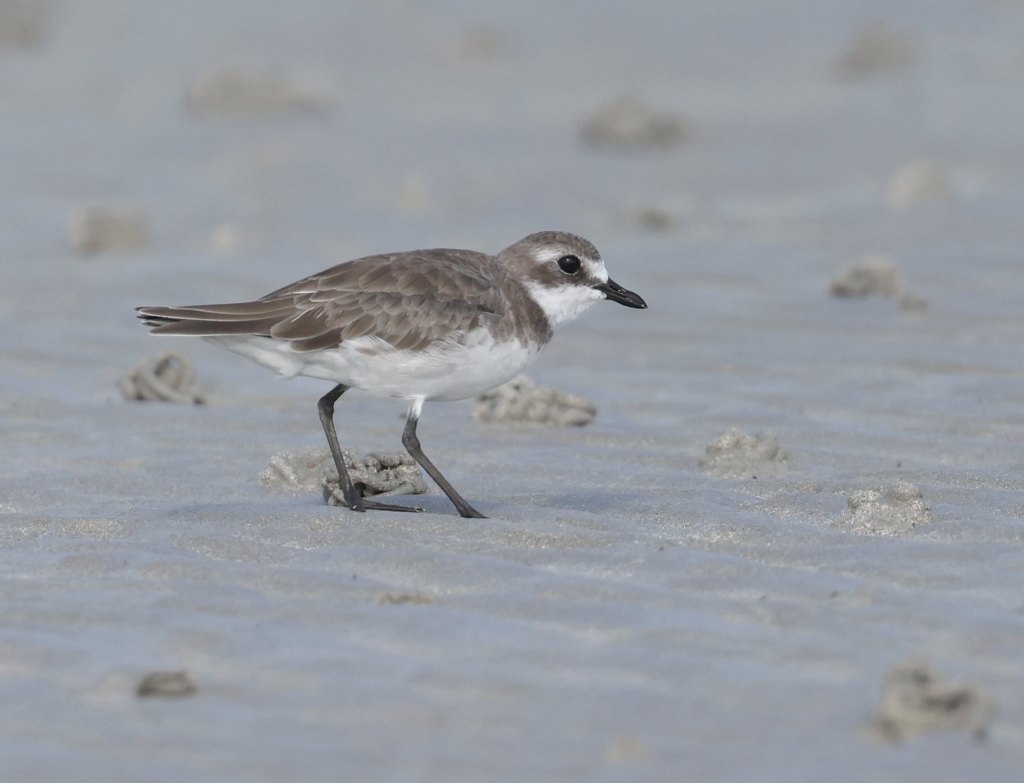
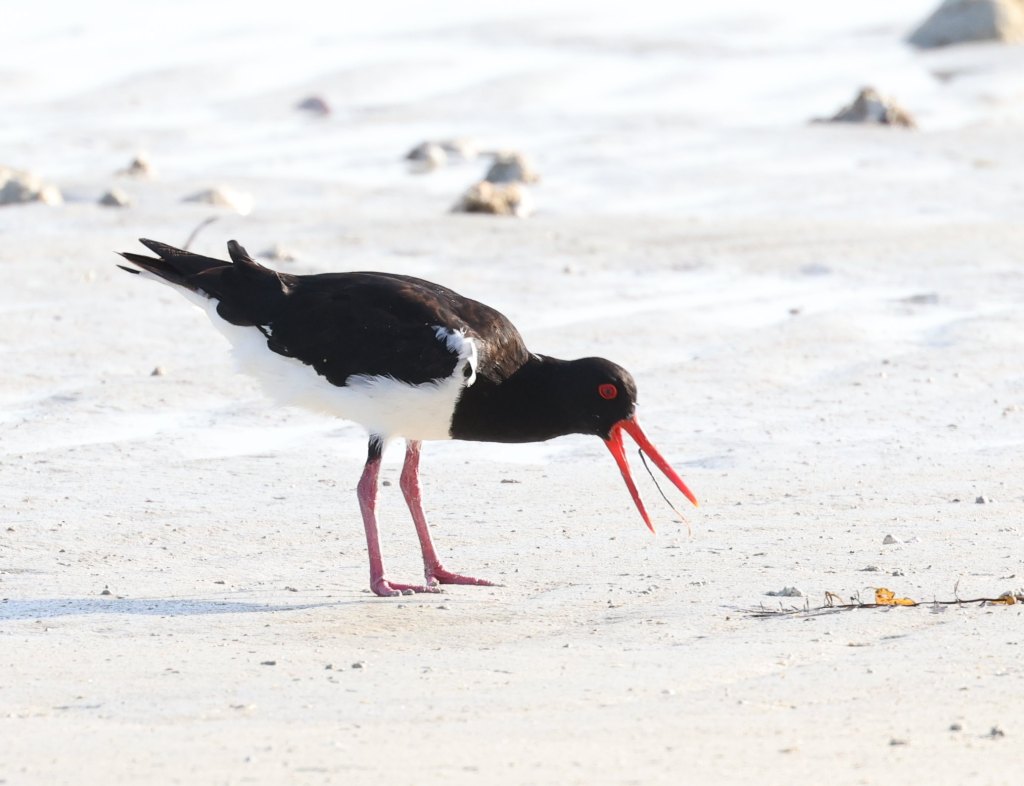
The little bush track held very few birds, just a couple of Torresian Pigeons and not much else. On another day more birds might have shown up there, perhaps.
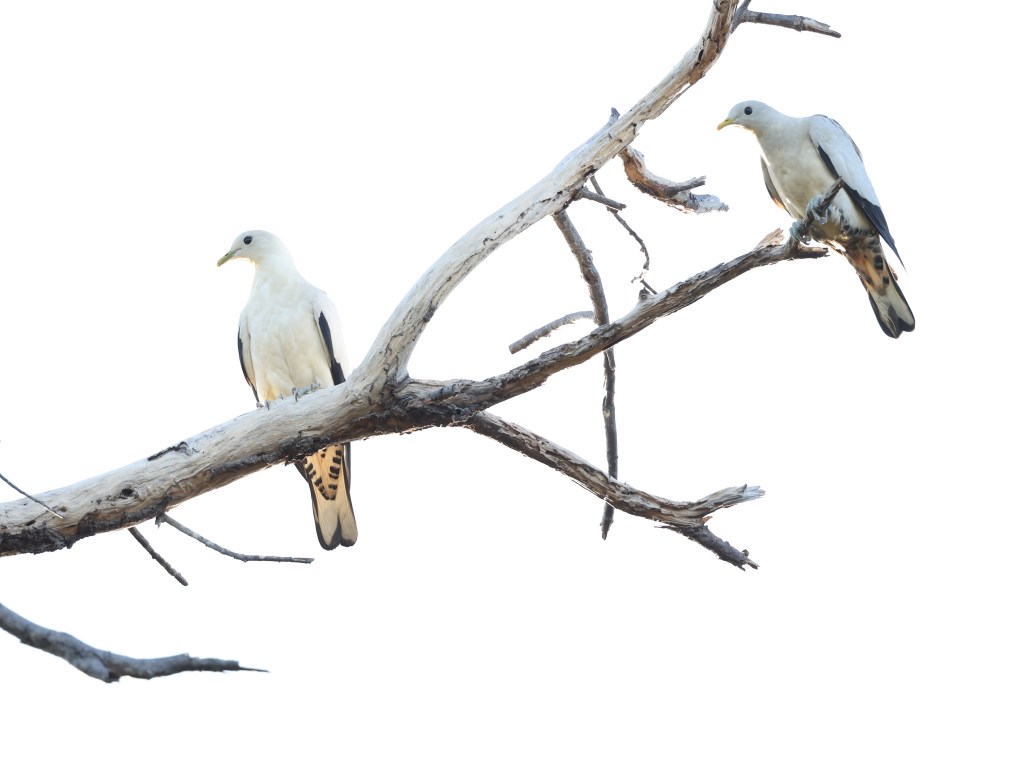
At the end of the day the Torresian Pigeons fly in dribs and drabs (eventually numbering in to the hundreds) onto the little island just off the beach, settling there for the night. Around the same time (5pm or so) and for about two hours thereafter, Metallic Starlings arrive in packs. We knew from eBird checklists that the numbers could get large, and we sat on the beach as the sun went down and counted as more and more flocks piled in – ultimately numbering almost 2400 birds!
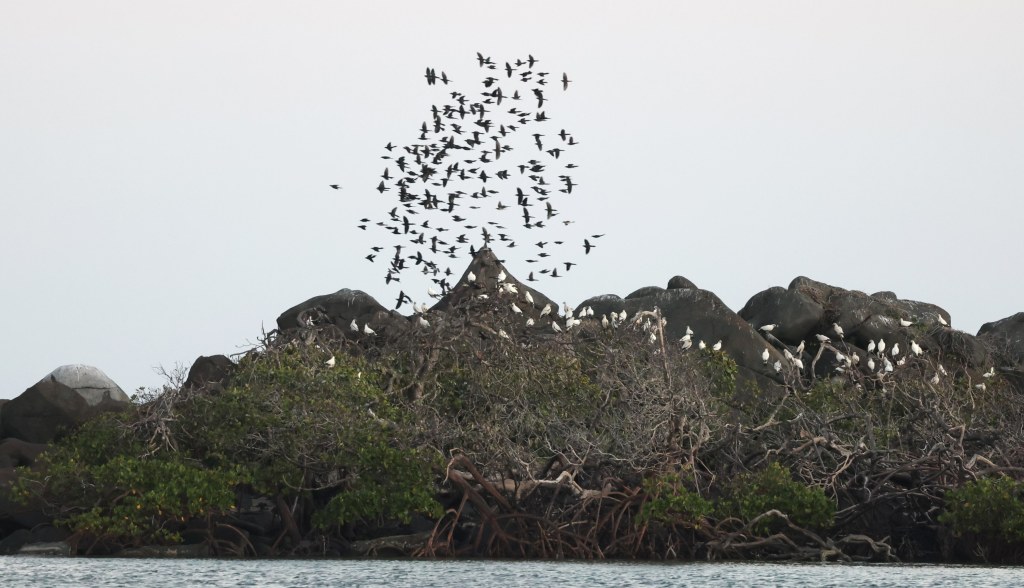

Several hundred of the starlings formed a “murmuration” which was fascinating to watch as they swirled and turned above the island. I even made a video of the phenomenon.
The Gravel Pit
One final small site must be mentioned, which is the old gravel pit accessed by a short road from a right-hand turn about half a kilometre before you reach Portland Roads.
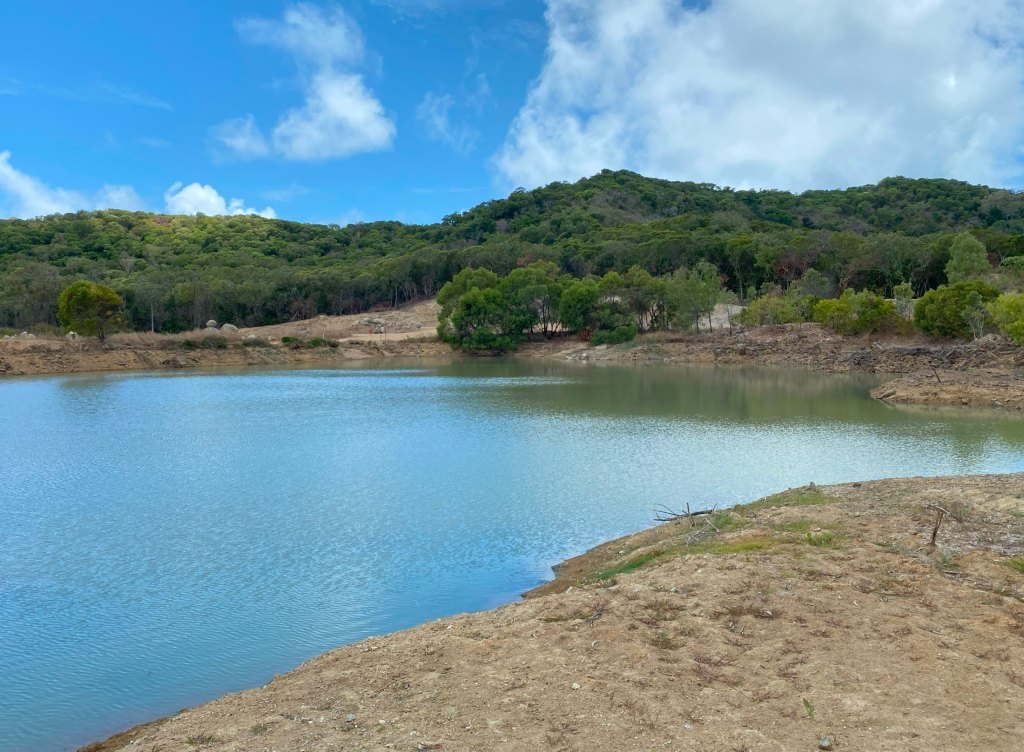
It isn’t the most scenic of birding sites but the presence of fresh water attracts ducks and waterfowl, and we were hoping to see our first Spotted Whistling-Ducks (ever!) here. It took a couple of attempts popping into the gravel pit over multiple days but we did find some – a group of seven, actually.

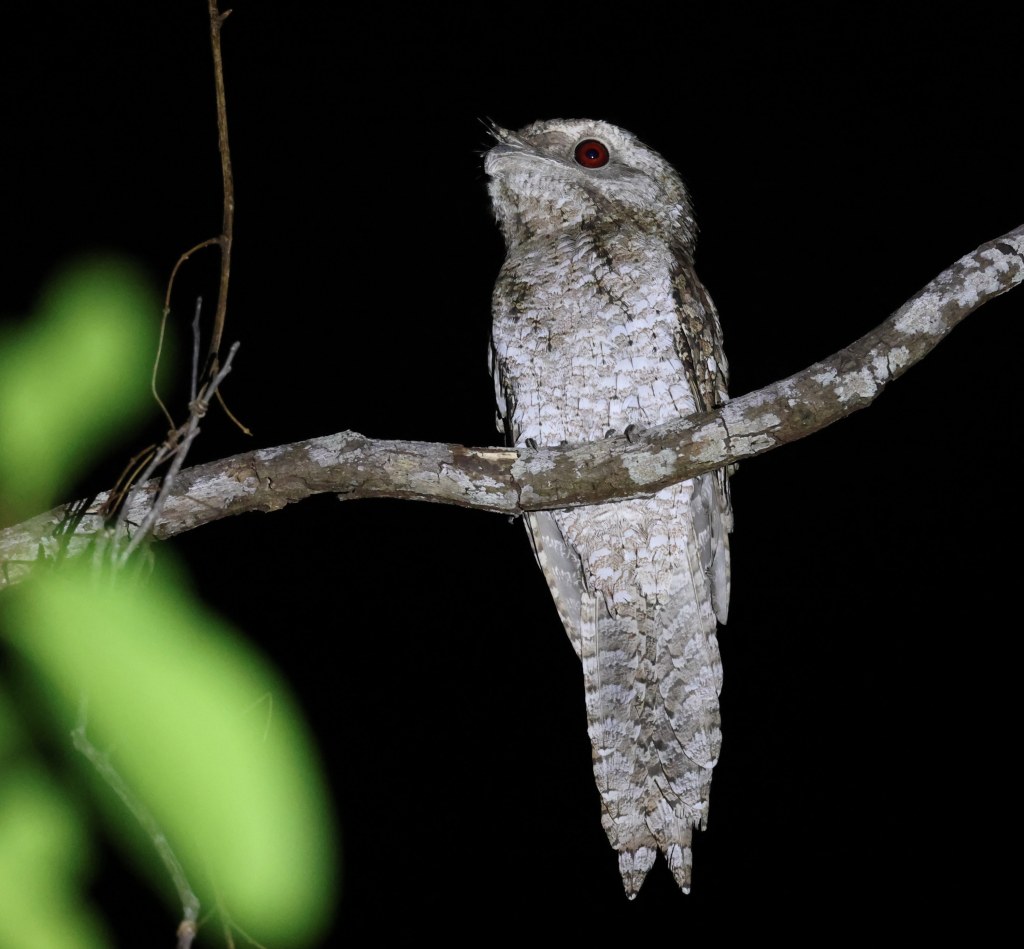
The whole national park and Portland Roads region is also good for night-time birding, particularly for Marbled Frogmouth and Large-Tailed Nightjar. Marbled Frogmouth is interesting as it has a split distribution in Australia, with a population here in Iron Range and another down in south-east Queensland. We saw one of these frogmouths on a branch above a dry creek one evening, and we also heard several Large-Tailed Nightjar calls but couldn’t locate any of those birds.
Summary
Most of our days at Iron Range involved waking up around dawn, driving the 30km or so from Portland Roads back to the rainforest sites, and birding there for 3 or 4 hours. The heat builds up by late morning and the bird action lessens considerably, so we rested up back at our accommodation during the middle of the day. Afternoons typically involved local birding at Portland Roads or nearby Chili Beach.
We found, almost to our surprise, that we were very successful in finding nearly all the specialty we hoped to see; just the Northern Scrub-Robin eluded us (and we were too early in the season for the Papuan Pitta). It is only after a day or two when you’re starting to amass a bunch of very cool “lifer” birds, like Red-Cheeked Parrots or Black-Winged Monarchs or Yellow-Billed Kingfishers, that it really starts to sink in just how special this region is.
eBird:
Hotspots: The overall eBird hotspot is Iron Range (258 species), but there are many individually-designated hotspots for all the sites mentioned above and more
Checklists for these visits: eBird Trip Report (99 species)
Bird Spots videos from this location: Iron Range video playlist (20 videos)
Pluses and minuses:
+ Amazing and unique (within Australia) bird species
+ “Lifer” birds you won’t find anywhere else on the mainland
+ Exotic vibe without being completely off the beaten track
– Few walking tracks through dense rainforest
– Remote location, takes time and effort to get to
– Typically quite hot and humid
AUTHOR: ANDY GEE
BIRDERS: ANDY GEE, LUKE S, K-A
 Bird Spots
I would like to personally thank you for delivering us, yet again a wonderful photographic dialogue of your northern travels. I love the Wattle birds and it has been a longtime since I saw the male Brush Turkey with the purple neck wattles, since 1963 in fact!
I know much about our wonderful Australian bush and just as much about our birds, fauna and flora. But recovering (very slowly I hasten to add) from a very bad ankle injury, my outback days are over for me. So I do cherish your wonderful work, personally knowing how much time, effort and indeed patience it takes to produce your wonderful post! Thank you indeed. Dr Leonard Smith Castle Hill NSW
LikeLike